Category Archives: Leaders

Karnataka hockey stadium gets new turf, new name

Bengaluru :

The Karnataka State Hockey Association stadium will now be known as the Field Marshal KM Cariappa stadium. It was renamed on Thursday during the inauguration of the newly-laid blue hockey turf by the Department of Youth Empowerment & Sports (DYES).

The grand ceremony, however, was marred by controversy after Hockey Bengaluru (formerly KSHA) – which holds the rights over the stadium land after having signed a 99-year lease with BBMP decades ago – slammed the DYES for ignoring them and not following due procedure.

“It is wrong on the part of the DYES to change the name of the ground without taking us into confidence. We are not objecting to the developments but they could have consulted us as the BBMP has leased the land to us. It’s a clear violation of the agreement,” fumed Hockey Bengaluru secretary K Krishnamurthy.

Krishnamurthy explained that the stadium cannot be renamed without a resolution passed by BBMP. “We are not aware whether DYES sought an approval from BBMP,” he said.

“The agreement signed in 1977 is in the name of KSHA. Although KSHA has been renamed Hockey Bengaluru, KSHA still exists as a trade name with an aim to promote hockey,” he said. “DYES came to an understanding with us during the 1997 National Games to develop the infrastructure and share the facility. The department has no rights over the land.”

Revealing that Hockey Bengaluru was invited only an hour before the inaugural ceremony, Krishnamurthy said: “Field Marshal Cariappa is a hero for all of us. They have put his name on a flex board instead casting it in stone. This is not the way to honour a national hero. We were not even informed about their plans to change the name.”

Blaming the DYES, he said: “Ever since the new director has taken charge we have been given raw deal. We were not informed when DYES called for tenders to upgrade the stadium.”

Krishnamurthy said they will take up the matter with the sports minister after consulting MLA NA Haris, the patron of the club.

Meanwhile, the DYES director Anupam Agrawal countered Krishnamurthy’s allegations saying they have followed the protocol. “We have an approval from the state sports minister to change the name of the stadium. We have not consulted KSHA because legally they don’t exist,” he said. “We wanted to rename the ground to Field Marshal Cariappa ground to honour his contributions,” he said.

Stadium will be upgraded: Agrawal

DYES director Anupam Agrawal said his department will upgrade the Field Marshal KM Cariappa stadium gallery and refurbish the hostel which is home to Sports Authority of India trainees.

“We have sought an additional Rs 1.5 crore to upgrade the gallery and the hostel. We will also upgrade the toilets and dressing rooms according to FIH standards.

We are in the process of installing a hockey turf at Somwarpet and upgrading the existing facility at Ponnampet as Kodagu district is the cradle of hockey,” he added.

source: http:/www.timesofindia.indiatimes.com / The Times of India / News> Sports> Hockey> Top Stories / by Sunil Subbaiah / TNN / April 21st, 2017

Karnataka government to verify disputed land in Kodagu

Bengaluru :

The state government on Tuesday took a decision to survey the disputed forest land, wherein the Jenu Kuruba tribals of Diddahalli had gone on an agitation, in Madikeri, Kodagu.

SiddaramaiahKF11apr2017

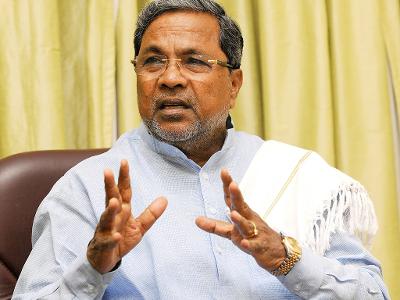
After an hour long meeting with chief minister Siddaramaiah, forest minister B Ramanath Rai, social welfare minister H Anjaneya, revenue minister Kagodu Thimmappa said the government has decided to verify the land records of Diddahalli before taking a final decision.

“After a detailed discussion, the government has decided to verify the land records of Diddahalli on whether the land is forest land or revenue land. If we verify the land records as being forest land, then we will make all efforts to provide them suitable rehabilitation area with amenities. But if the land records show that it is revenue land, then within eight days we will ensure that they have the title deeds for that land,” said Thimmappa.

The revenue minister said he will be personally camping in Kodagu on April 16 or 17 for resolving the issue.

Thimmappa said the deliberation was held with all stakeholders and that valuable inputs were shared on the case from all parties.
“The government is keen on resolving the issue and we will try to do it at the earliest,” he said.

In December 2016, the Jenu Kurubas of Madikeri who were working in the nearby coffee plantations had been agitating against the eviction by forest department and local police citing it was forest land.
Later that month, the Bettale Seve (nude protest) by a tribal woman in Diddahalli and the alleged insensitivity shown by cops in trying to disrupt the protest held by members of Jenu Kuruba (a tribe) had drawn sympathy from several quarters.

This being the last year before elections, this looter government will do anything to get the votes.

The Diddahalli faceoff had put the government in a spot, with members of civil society strongly criticizing the move.

On Monday, former MLC A K Subbaiah who spoke on behalf of the civil society, which has been seeking respite for the agitators, welcomed the government decision and expressed his hope that the state will give justice to the tribals.

source: http://www.timesofindia.indiatimes.com / The Times of India / News> City News> Bangalore News / by Sandeep Moudgal / TNN / April 11th, 2017

An Environmentalist Who is Nothing Short Of a Saviour!

Muthanna01KF05apr2017

We were born to help the world, not to destroy it… Then why we are destroying the very environment we live in?

Too much pollution, loss of biodiversity, not enough clean fresh water, soil contamination, deforestation, global warming are just some of the environmental issues we are facing today. We need to make some changes in our daily lives to live in a greener, more sustainable way.

Saving our planet, lifting people out of poverty, advancing economic growth… these are one and the same fight. We must connect the dots between climate change, water scarcity, energy shortages, global health and food security for the love of protection and preservation of the environment and wildlife.
Muthanna02KF05apr2017

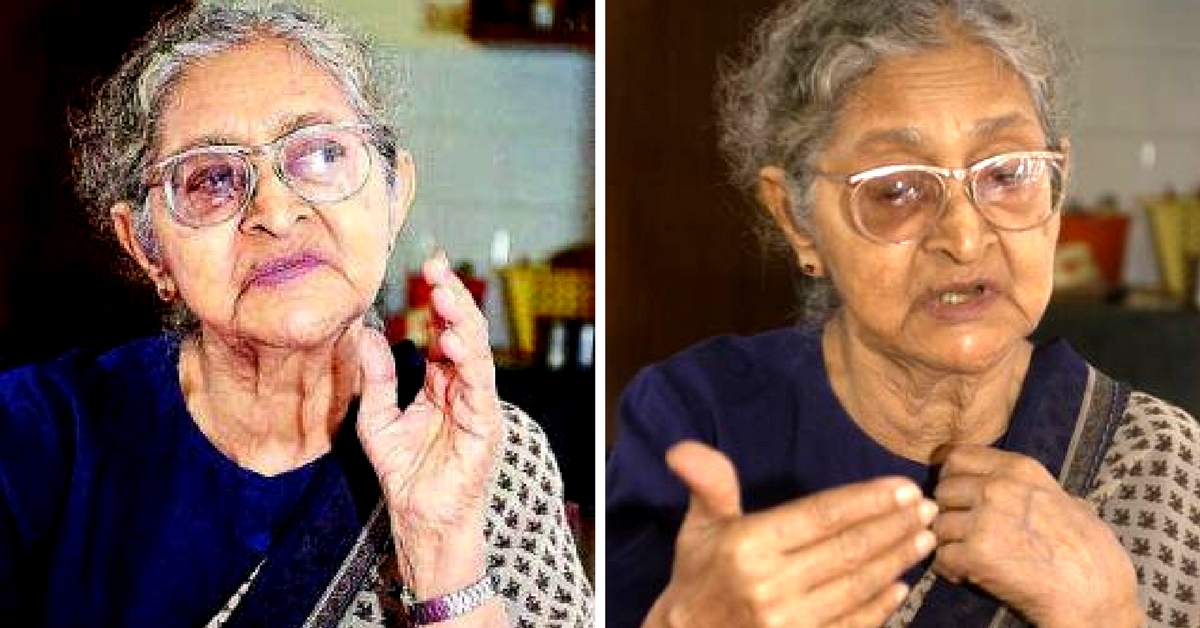
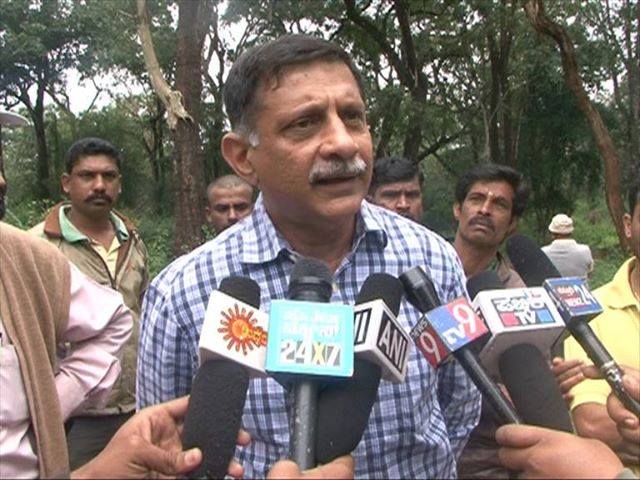
The environment is being destroyed at an alarming rate. Fortunately, there are hard-core environmentalists who are nothing short of saviours that are working tirelessly and round the clock to save our habitat. One such person is the President of the Coorg Wildlife Society – Col C P Muthanna (Retd).

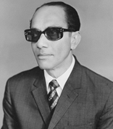
Col Muthanna was born in Coorg (now known as Kodagu) in 1953. His father, late Shri CM Poonacha, was an active freedom fighter and imprisoned a number of times and was once hung in chains for 15 days along with other freedom fighters of Kodagu. In the post-Independence era his father became the first Chief Minister of the erstwhile Coorg ‘Part C’ State, then the Chairman of the State Trading Corporation of India and subsequently the Cabinet Minister for Railway at the Centre. Later during the seventies he served as Governor of Madhya Pradesh and Orissa.

In spite of the political antecedents of his father, Col Muthanna chose the life of the uniform and joined the army in December 1972, commissioned into the 4th battalion of the Maratha Light Infantry. He moved out to a new Raising, 18 Maratha Light Infantry, which he subsequently commanded. On completion of his command tenure in April 1996, he took premature release. One of the reasons for leaving his checkered career from the army was his desire to serve the cause of protecting the environment.
Muthanna03KF05apr2017

After retirement, he founded the Environment and Health Foundation (EHF), India in 1998. The EHF has been working mainly on water related issues. He conducted a number of water management awareness programs and wrote a book in Kannada on rainwater harvesting for Malnad region. He has set up a number of rainwater harvesting structures for institutions and houses in Kodagu.

A conservationist and nature-lover at heart, he was President of the Coorg Wildlife Society from 2003 to 2009, and again from 2012 till date. In 2006, Col Muthanna received the Dr. APJ Abdul Kalam award for his work in the field of environment by the government of Karnataka. He has been nominated on three occasions as ‘Coorg Person of the Year’. He has also founded the Kodagu Boxing Association in order to tap the boxing potential in Kodagu and spot talent at a young age.

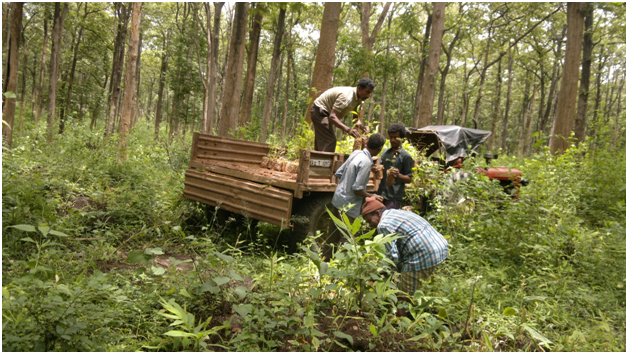
Under Col Muthanna, the Coorg Wildlife Society filed a PIL and prevented a hydroelectric project in the Evergreen Hill forests of Kodagu that would have inundated large areas of the Brahmagiri Wildlife Sanctuary in Kodagu. He has also helped a local village community in halting a large stone quarrying unit close to the sanctuary.

He has campaigned for over seven years against a High Tension Power Line through Kodagu which would result in the destruction of more than 54,000 trees. Due to his efforts the power line was realigned and thousands of trees have been saved.

Work on the power line had caused disturbance to wild elephants in the area and had increased attacks by elephants. Col Muthanna was instrumental in compelling the Power Grid Corporation of India to provide Rupees six crore to the Forest Department for mitigation of Human Elephant Conflict.

On behalf of the Coorg Wildlife Society, Col Muthanna has prepared a concept note on Management of Elephant habitat in South India. The primary habitat of elephants in South India is shared between the three States of Karnataka, Kerala and Tamil Nadu. These are known as Mysore Elephant Reserve, Waynad Elephant Reserve and Nilgiris Elephant Reserve respectively.

These three reserves represent a contiguous landscape spread across 12,587 square kilometres and with a population of over 10,000 elephants. It is the largest population of Asian Elephants in the wild. The pressures on the habitat have manifested in serious escalation of Human Elephant Conflict in this region over the past two decades.

Col Muthanna has highlighted the need for a coordinated approach by the three states with directions from the Ministry of Environment and Forests at the Centre so that there is a comprehensive and long term plan that can be implemented. He is in discussion with the Karnataka Forest Department on this very important subject. He has emphasized in his note that improvement of habitat for elephants will benefit all forms of wildlife.

The three elephant reserves also represent important river catchments and watersheds of South India and protection of these forests is vital for the water security of the region.

He is also working on a policy document for protecting the Kodagu landscape, which is the principal catchment for the Cauvery River. The Cauvery is the life line for South India and sustains 8 crore people and over 600 major Industries.

Col Muthanna often states that protection of the Kodagu landscape is in the ‘National Interest’. However, his efforts have met strong and often vicious opposition from local politicians backed by the timber lobby and land mafia. Col Muthanna jokes that the thick hide that the Army has provided him is more valuable than his Army pension!

On behalf of the EHF, Col Muthanna has prepared a proposal termed as the HIMEK Alliance for Stabilization of Climate Change in the Himalayas and the Mekong Basin. The concept is to mitigate climate change through drastic reduction of Black Carbon emissions, which have a regional impact.

This is to be coupled with a massive program of Forest Land Restoration to regain the lost glory of the forests across the Himalayas and the Mekong basin. The proposal has obtained the approval of the International Union of Conservation of Nature and involves 11 countries including the Himalayan nations, Bangladesh and the countries of the Mekong Basin.

Through his coordination, a working group including resource persons from Bangladesh, Nepal, Thailand and India are working on the draft project document. The Rivers originating from the Himalayas and flowing through the Indian Subcontinent and Mekong Basin in South East Asia sustain one fifth of the world’s population. Therefore the HIMEK Alliance could be one of the largest regional initiatives on environment ever.

He is also in communication with the army on protecting the Himalayan ecology. The army is a major stake holder in the Himalayas and he has written an article on this subject which was published in the 2015 July to September edition of the Indian Defence Review. He has also prepared a draft document on Food, Water and Economic Security for India, based on the concept of sustainable development by zoning the country and protecting important catchment areas and food producing regions in India.

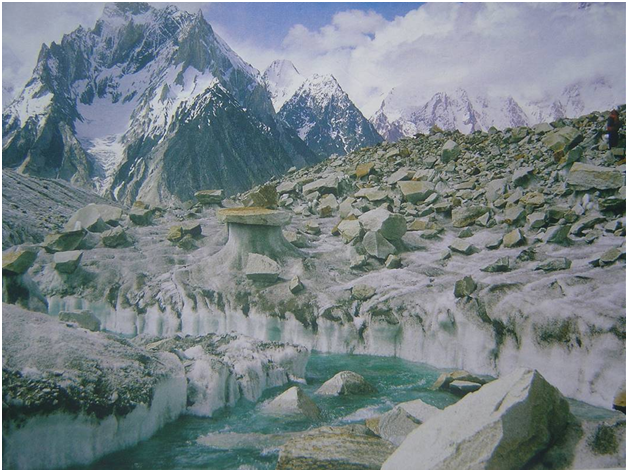
The snow fed rivers of the Himalayas sustain over one fifth of the human population. Col Muthanna stresses on the point that it is, therefore, a matter of deep concern to the entire global community and to the people of South Asia particularly that the Himalayan environment is under serious threat due to the effects of climate change. Lester Brown of the World Watch Institute in USA says that due to the effects of global warming, the pattern of precipitation in the Himalayas and the regions contiguous to the Himalayas will undergo a more drastic change in the years to come.

There is agreement that effective reduction of Short Life Climate Forces will enable the temperatures in these principal eco-regions to stabilize over a short period of time and supplement the on-going international agreements and action programs for long term reduction of CO2 levels.

The urgency of the situation has been highlighted by statements from climate scientists who say that the ‘tipping point’ may be a mere five years away. The formation of the HIMEK Alliance comes at an urgent time where the effects of climate change are critical and cannot wait.

We all have a duty to spread the word to Go Green! Dare to be a force of Nature. Each and every one of us has the power to make a difference.

~ Let us join hands to Save the Earth for future generations ~

source: http://www.thecitizen.in / The Citizen / Home> Life / by Rashmi Oberoi / Tuesday – April 04th, 2017

A KPA Founders Tale

MandepandaKF30mar2017

by : Mandepanda B Appaya was a founder and a former chairman of the KPA

I am perhaps one of the lucky planters to have participated at the inauguration of the KPA and still living. The function held at the Sports Club, Mysore was inaugurated by the late Maharaja.

Late Mr. CL Machia who was my boss, as managing director of Coffee Lands Ltd, had invited me to the function. He read a long report emphasizing the need for the association [KPA].

The late Mr. M. Appaya was seated beside the Maharaja.

As I was the then manager of the Hunsur Coffee Curing Works owned by Coffee Lands, Mr. Machia had asked me to attend the function. Here I was introduced to Mr. Lakshmana Gowda and a few other planters. My association with the KPA began when I had to leave the Hunsur Coffee Works after its sale to its present owners. I then started taking an interest in the KPA and was elected from Kodagu as member very soon, I became the vice chairman when the Late Mr. AC Shivegowda was the chairman. We had a lot of problems at the KPA Level. The Land Ceiling Act was published. Although alI agricultural lands, including coffee, tea and rubber were exempt, if anyone had any other Land, both together could not exceed 48 acres. In other words, our paddy, arecanut plantations got a severe blow. Both, Late Shivegowda and I had to toil and we stayed in Bangalore for 27 days at a stretch to solve the issue.

We met almost all members of the Assembly pleading for exemption for one ceiling area of crops excluding coffee. We had an uphill task.

Fortunately, D Devaraj Urs, the then chief minister of Karnataka, who was a good friend from my days at Hunsur, helped us a lot by convincing the Congress party our case. Thus, we were allowed one ceiling area of other crops much against the will of the then revenue minister.

Mr. UK Lakshmana Gowda, being an MP was helpful from the beginning. He helped us not only for getting the ceiling area, but also with wealth tax.

It cannot be emphasized less that he had a big hand in helping us. He was friendly with all MPs, which helped us in securing wealth tax exemptions on plantations. Mr. FM Khan, MP, has also helped us get wealth tax exemption.

I was the chairman of the KPA in 1973.

My association with the Coffee Board began in 1971. I was a member of the Coffee Board for four terms, though not at one stretch. During 1971 there was a shortage of curing works as the business was not attractive. A committee was formed to visit all the curing works and know of their expansion plans. Mr. PG Gurger and myself visited all the curing works in the state and submitted a report to the chairman. We were both traveling from Hassan to Mangalore. Enroute we heard of the surrender of Pakistan after the Bangladesh war. GeneraI Manekshaw was then made Field Marshal for the success.

Mr. UK Lakshmana Gowda who I used to call Bhishma Pitama, was of great help in the Coffee Board. When we used to have heated arguments on certain issues with the intelligent Kerala members, it was Mr. UK Lakshmana Gowda who used his knowledge and experience to solve the issues. Late Narasimha Rao, IAS, once sent me to Delhi to negotiate with Russian representatives regarding discount on coffee sold to them.

During 1988-89′ both Mr. Lakshmana Gowda and l went to Moscow for that year’s sale to the erstwhile USSR. We had to go during December and stayed for eight days. Finally we agreed to allow 38 percent discount on international prices. The then chairman of the board, Late SK Warrier had come with us.

Normally, we sold 50,000 tones to the USSR. But every year the discount went up. At New Delhi we decided to allow 37 percent discount on the International prices.

We had no choice as we had to sell one-third to the quota countries and one-third for internal consumption and one-third for non-quota countries. For sales in the internal market, the government fixed the minimum price. Thus planters suffered.

To add to their woes we had to pay 102 percent purchase tax since we had lost the case in the Supreme Court. lt was kept pending for 10 years before the retiring chief justice gave the decision on the last day of his sitting. Karnataka government, in addition to this, levied a 15 percent sales tax on every bean sold by the growers.

We met even Rajiv Gandhi in Bangalore and made representations to him. He asked us to meet the adviser to the governor as there was no government then. Mr.Rangarajan heard us patiently for 45 minutes but gave no decision. Finally there was an agitation for the abolition of pooled marketing by the growers and they succeeded and now free trade of coffee is allowed.

I became chairman of UPASI in 1983. Mr. Tika Bedi insisted l should take this position since l did not accept it due to certain physical constraints. Anyway, I served the UPASI in the committees from 1972 to 1983.

So my career in the KPA, Coffee Board ended in 1983. I served the Mysore Race Club for over 15 years which celebrated the centenary in 1992 with an eye hospital for the poor and the needy as a centenary project. I was the chairman of the Race Club from 1988-92.

I am now over 87 years old, yet take keen interest in many of the activities I used to participate in.

source: http://www.kpa.org.in / Karnataka Planters’ Association / Home> About Us> History / by Mandepanda B. Appaya

Oltmans ‘happy’ to have Halappa, Jugraj in coaching set-up

Oltmans believes Arjun Halappa has the personality to become a good coach.

Roelant Oltmans has welcomed the addition of former stars Arjun Halappa and Jugraj Singh to India’s coaching set-up. Halappa has begun working with the players at the national camp, which commenced here this week, while Jugraj is expected to arrive soon. The pair will be joined by a goal-keeping coach, with the three Indian coaches to work under Oltmans. “I had asked Arjun a number of times before to join us. So far he had said no because he wanted to play. But this time, he didn’t need more than five minutes to take his decision. I really believe he has the know-how and the personality to become a good coach. I’m really happy,” Oltmans said.

Jugraj’s expertise as a drag-flicker was important, he felt. “Arjun is more attacking while Jugraj has been a good defender and drag-flicker. We can use his experience in the area. Two very good Indian guys.”

Tushar Khandker, however, has left the coaching staff. “Tushar did a wonderful job for the period he was involved with us,” Oltmans said. “I can imagine that after such a stressful and tough year you need to spend some time with your family especially when you have young children. Because we are never at home, we are away all the time. Tushar got his deserved break. But I am sure he will come back somewhere in the system.”

source: http://www.sportstarlive.com / SportStar Live / Home / by Shreedutta Chidananda / Benglauru – March 16th, 2017

The Untold Story of C. B. Muthamma, India’s First Woman IFS Officer and Ambassador

Over the years, India has had several woman diplomats, ambassadors and high commissioners who have done stints in countries like the USA, China, Spain, Sri Lanka, Australia, Lebanon, Bangladesh, Qatar, Switzerland, Serbia, Russia, Slovakia and Ghana. We’ve also had two women Foreign Secretaries – Chokila Iyer and Nirupama Rao – who were highly respected for their tough stance and unflappable poise during their years of distinguished service.

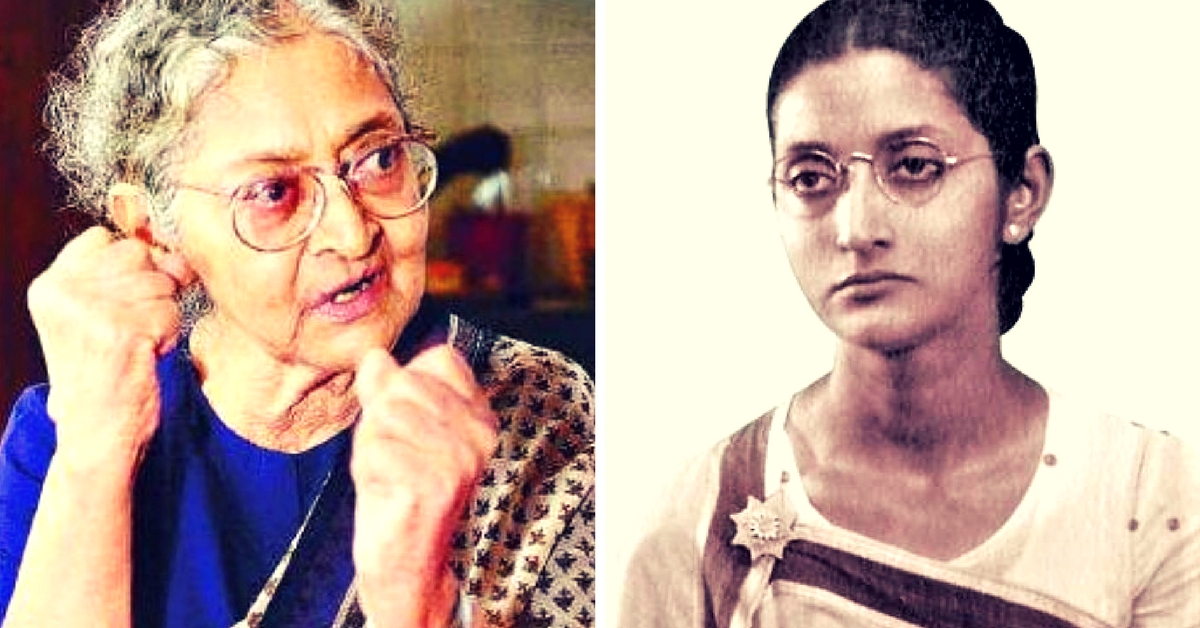
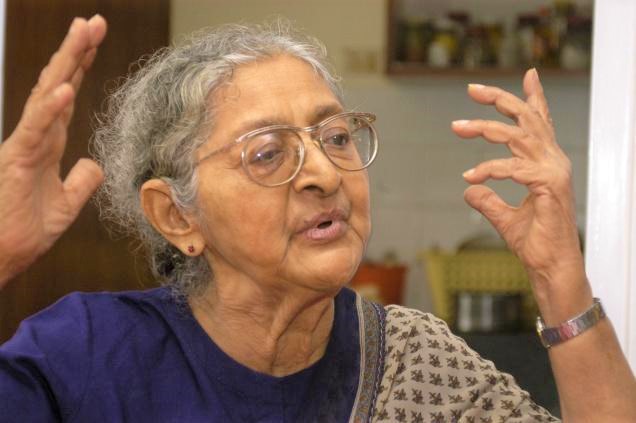
It’s a far cry from what India’s first IFS woman officer, Chonira Belliappa Muthamma, had to face when she joined service in 1949.

In an age when most Indian women didn’t even try getting into foreign service, this gutsy Kodava woman didn’t just choose IFS when she qualified UPSC, she fought gender bias, stood her ground and went on to become India’s first female ambassador.

photo source: mea.gov

Born in Virajpet in Karnataka’s Kodagu (then Coorg) district in 1924, Muthamma lost her father, who was a forest officer, when she was nine. Raised singlehandedly by her mother, Muthamma completed her schooling in St Joseph’s Girls School in Madikeri before graduating from the Women’s Christian College in Chennai (then Madras) with a triple gold medal.

Muthamma completed her post-graduation in English Literature from Presidency College in Chennai before deciding to appear for the UPSC examinations. She performed brilliantly, becoming the first Indian woman to clear the UPSC examinations in 1948. She wanted to join the Indian Foreign Service but the board that interviewed her discouraged her from joining this ‘not suitable for women’ service.

However, Muthamma was determined to get her choice of service. She convincingly argued her case, stood her ground and joined the foreign services in 1949, becoming India’s first IFS woman officer. Incredibly, she had to sign an undertaking which stated that she would resign if she got married. However, after a couple of years, the rules were changed.

For the next few decades, Muthamma served with distinction in many capacities in Europe, Asia and Africa. However, she had to fight against gender bias all through her diplomatic career. Despite serving in the foreign service for long, her case was overlooked when it came to posting her as an ambassador.

photo source: inmemoryglobal.com

Not the one to accept any injustice lying down, Muthamma filed a petition against the Indian government in the Supreme Court on the ground that she had been unjustly overlooked for promotion. The determined and stubbornly honest officer argued that the rules governing the employment of women in the service were discriminatory.

The government of India, represented by Solicitor General Soli Sorabjee, argued that that the chances of leakage of confidential information of strategic significance was a dangerous risk, should women ambassadors marry. Realising that this was flagrant prejudice against women, the court asked the Solicitor General how leakage of information was not a possibility if a male ambassador married.

Finally, in 1979, a three-member Supreme Court Bench headed by Justice V.R. Krishna Iyer quashed the government’s argument, struck down the discriminatory provisions governing foreign service personnel and upheld Muthamma’s case.

The nation’s apex court also impressed upon the government of India “the need to overhaul all service rules to remove the stains of sex discrimination, without waiting for ad-hoc inspiration from writ petitions or gender charity.” A landmark judgement for women’s rights in India, it was distributed at many a women’s meeting in support of their struggle for equality.

Consequent to this ruling, Muthamma was posted as India’s Ambassador to Hungary, the first woman from within the service to be appointed to this prestigious post. Later, she served in Ghana and her last posting was as Indian Ambassador to the Netherlands.

After 32 years of exemplary service, she retired from the IFS in 1982 but only after breaking the South Block’s glass ceiling for the women who joined the IFS after her.

photo source: alchetron.com

Even after retirement, Muthamma remained active in various fields. She was nominated as the Indian member of the Independent Commission on Disarmament and Security Issues set up by the then Swedish Prime Minister Olaf Palme. She was also a prolific writer, and during her retirement authored several works on a range of interests, from a cookbook on Kodava cuisine to a collection of scholarly articles titled “Slain by the System: India’s Real Crisis.”

People like Chonira Belliappa Muthamma come along very rarely. Civil servants like her are rarer. The courageous lady lived a life only a handful of other women of her time lived, fighting a lonely battle against the sexist principles – a few written, many more unwritten – that governed the Indian civil services of her time. A woman who broke barriers and set examples, she inspired many other Indian women to take up the challenge of civil service in the coming years.

source: http://www.thebetterindia.com / The Better India / Home> Civil Services / by Sanchari Pal / March 01st, 2017

Curators of the bitter beans

CoffeeBeansKF28feb2017

Not only do they handle business in acres, but also take utmost care to manage the crop sustainably. Care T Acres, a private initiative begun in 1998, has been helping coffee planters in Kodagu manage their properties. This initiative has become a boon to many planters who are unable to look after their estate.

“Care T Acres has stopped planters from selling their property and moving away from Kodagu,” says Nanjappa Kuttaiah, a coffee grower. With eight partners — Bose Mandanna, N K Chinnappa, N P Machaya, K M Cariappa, K Ajit Appachu, Aruna Biddappa, B Ram Bopaiah and K M Appaiah — the team comprises competitive planters with a combined experience of over 300 years!

The beginnings
Kodagu, the coffee haven that contributes to over 40% of India’s coffee production, has a lot of estate owners staying overseas. While selling the property has sentimental issues, maintaining them from overseas is illogical. This is where Care T Acres steps in, with the role of prime mover being Managing Director, N K Chinnappa. So, how did ‘Care T Acres’ come into existence? Among the founding members, Late Arun Bidappa was a well-known coffee trader. However, he needed expertise in maintaining his estate, which he developed with the help of expert planter Bose Mandanna.

Arun’s estate was the first property that received tendering from ‘Care T Acres’. “He (Arun Bidappa) said, ‘I help you trade your coffee, why don’t you help me look after my estate?’” recalls Bose. This conversation got the best planter friends together and thus began ‘Care T Acres’ with a maxim that “no one should neglect or sell their estate in Kodagu,” as Bose states.

The initiative is currently managing 600 acres, all under the constant supervision of Chinnappa — who grooms them like brides-to-be. The bottle green coffee plants nurtured by him are shaped like woven skirts. “Chinnappa’s way of raising and nurturing estates is a win-win proposition,” notes Nanjappa.

Professional care & support
The service (for estates that are more than 30 acres) begins with the client signing a five-year contract. Once done, the company starts looking after the ailing estates and fosters them like their own. When a grower approaches them, the team members visit the estate and analyse it. Then, the operations required to revive the estate are prioritised and the ‘surgery’ begins. “The person who can take care of his estate very well will not come to us. It is always the owner unable to manage his property who comes to us. In many cases, the grower would be suffering financial loss. So, the foremost ‘operation’ would be to clear the debt,” explains Chinnappa.

The team acts not just like a doctor but also that of an antibiotic as the second step towards betterment would be to develop proper infrastructure. Drying yards, labour line, proper cut roads, pulping yard and irrigation facility are developed to make the estates sustainable and self-reliant. Simultaneously, the grooming session begins — coffee plants are pruned, nourished, irrigated and shades are regulated to produce better yield.

With constant efforts, the estate breathes a new life. While they work for remuneration in the first two years, they sign up for a 30% profit from the third year. “I might be getting 70% of the profit, but that is equal to 150% of what I was earning before. Also, you get the profit without having the headache of managing it,” opines Nanjappa.

Another grower, Dalia Chengapa, has her estate being cared for by the company since 2007. She recalls how the estate owned by her father, Late A T Chengapa, lost its focus after he fell ill. “My father was a wonderful planter and he looked after the estate properly. But after his health deteriorated, the estate needed support. My sister Ramona and I stayed in different cities, and we did not have the practical knowledge for growing coffee. My father was unable to guide us as he was unwell. That is when we approached ‘Care T Acres’,” she recalls. While her estate incurred loss before the team took over, it is now making good profit.

Nanjappa’s story goes on the same lines. His mother passed on and the 45- acre estate in Suntikoppa that she looked after relied on him for tending. He had known that ‘Care T Acres’ turned the estates around and yearned for their support; eventually the deal was sealed. “Eight competitive planters, financially trustworthy and among the best planters in the district took over my estate and it was a blessing at the right time,” he says. Chinnappa started the work here and looked at two primary problems. Firstly, he pruned the coffee plants in a better way — there were more branches and nodes earlier, which reduced the picking cost. “When pruning is done properly, the plant flows down and it becomes easy to pick berries. The yield also increases,” explains Chinnappa. Secondly, the roads were laid for convenient movement.

The estates cared for by the team improve their pepper yield as well. With a systematic auction and tendering system in place, planters get an optimal price for pepper. The team has taken up risks as challenges and revived many estates. However, Mandanna explains, “While we have gone beyond limits and put money from our pockets to revive the estates, there are instances where we have rejected a few. These estates are uncultivable and there would be no absolute hope for coffee.” Chinnappa adds, “It is not just about profits but it is about leaving a legacy behind.”

One can contact the team at rkpagastya@gmail.com.

source: http://www.deccanherald.com / Deccan Herald / Home> Supplements> Spectrum / Prajna GR / November 22nd, 2016

India needs practical national security doctrine: Marshal K C Cariappa

Cariappa said the need for such a doctrine is necessary in the face of having a nuclear-armed neighbour, Pakistan.

Former Air Marshal K C Cariappa on Sunday emphasised on the need to have a “practical” national security doctrine and a “robust” nuclear policy to “reassure citizens that appropriate measures are in place to protect them.” Speaking at the second Flying Officer Nirmal Jit Singh Sekhon memorial lecture at Ahmedabad, he said a strategic defence doctrine should be put in place and endorsed by all political parties.

“We do not have a national security doctrine. The existence of such a document will dissuade adventurism and will reassure our citizens that appropriate measures are in place to protect us,” Cariappa said.
“A credible message must be conveyed to our people. A practical national security strategy and robust nuclear policy must be endorsed by all political parties,” the former Air Marshal said.

Cariappa said the need for such a doctrine is necessary in the face of having a nuclear-armed neighbour, Pakistan.

“They have created forces that destabilise our society by encouraging traditional antagonism… we need to tailor our strategic defence doctrine to create long-term measures towards a deterrent based on severe retribution as there can be no scope for indecisiveness,” he said.

Speaking on the need for a robust nuclear policy, Cariappa suggested that India’s nuclear forces must be placed under a strategic forces commander, who will be answerable to the Prime Minister, and will be the ultimate authority to launch the first strike in foreign territory.

“A command control and communication centre must be built. Our targeting philosophy must be involved and redirected to two notices, but yet the message must be loud and clear that this has been done, and that in fact our targeting policy exists,” he said.

Speaking on ‘Civil Military Relations’, former Commodore C Uday Bhaskar pointed out that there exists very little contact between India’s political establishment and military, and said the Indian Parliament exhibits “almost zero interest” in matters related to defence.

“The political establishment of India does not really have interest in military or the institution. There is a reason. Much of politics is now caught up in electoral cycle and military as an institution till recently did not represent a vote bank,” he said.

The fear of “coup” led to an understanding that the military should be kept outside the structures of formal governance, he said. “The defence ministry has ensured that military is caught in a maze of rules and regulations. And my reading is that bureaucracy does ‘Yes Minister’, keeps the fear of coup alive,” Bhaskar said at the event organised by the Air Force Association’s Gujarat chapter.
“Institutionally, Indian military has been treated as an untouchable, and unfortunately, they have not found an Ambedkar till now,” he said.

Bhaskar, however, said things have changed with OROP, and with retired military personnel becoming a force to reckon with in the Punjab Assembly elections.

“There seems to be a greater degree of politicisation of military’s retired community,” he said.

Bhaskar further said the Centre is cognisant of this and is taking into consideration various recommendations including those pointed out in the Kargil Committee Report.

Meanwhile, an expert on defence procurement, Laxman Behera, who delivered a lecture on ‘Make In India and Defence Production’, said despite government making positive efforts to involve private players to engage in defence production, a lot of concerns remains which need to be addressed.

He said government sector still wins major contracts for defence manufacturing, leaving out private players who have invested in infrastructure for the same.

“From private sector perspective, although government has undertaken a lot of reforms, no major contract has come to private sector so far. The private sector is desperately waiting for major contracts. The government will have to walk the talk and award some contracts to them,” he said.

He also said the component of capital expenditure in budgetary allocation to defence should go up, as a majority of money is spent on manpower.

“Over the last several years our budget is skewed towards our manpower. More than 42 per cent is for salary and manpower, and money for modernisation is sinking day by day,” he said.

“It is either stagnant for the last four years or is declining. So hopefully when the budget is presented in February, we will see some hike in capital expenditure, or it will be very difficult to sustain ‘Make in India’,” Behera said.

source: http://www.indianexpress.com / The Indian Express / Home> India / by PTI / Ahmedabad – January 29th, 2017

Seventh bishop of Mysuru diocese will be ordained in Mysuru tomorrow

Mysuru :

Reverend K A William will be ordained as seventh bishop of Mysuru diocese, which comprises four districts of Karnataka — Mysuru, Mandya, Kodagu and Chamarajanagar — at the Episcopal Ordination and Installation ceremony at St Philomena’s Church on Monday.

Bishop Emeritus Reverend Thomas Anthony Vazhapilly will officiate the ordination, while Bengaluru Archbishop Reverend Bernard Moras and Chikkamagaluru Bishop Reverend T Anthony Swamy, will be the co-consecrators. This will be followed by a felicitation ceremony for the new Bishop William, and the former Bishop, Thomas Anthony Vazhapilly.

The bishop is the spiritual head of all Catholic Churches in the four districts. As many as 180 Parishes, 131 Diocesan priests, 23 male Religious and 55 female religious congregations in six deaneries, apart from 136 educational institutes fall under the Mysuru Diocese.
William was appointed bishop for the diocese by Pope Francis, and the announcement was made on January 25, 2017.

His ordination is likely to witness the participation of 25 bishops from Karnataka, and neighbouring dioceses, in addition to 500 priests, sisters and other key members from the parishes. The Pro-nuncio, the Papal Ambassador to India, and district in-charge minister H C Mahadevappa, local MLAs and MPs have also been extended invitations.

“The ordination ceremony will commence at 4.30pm on Monday,” said Reverend Leslie Moras here on Saturday. Thomas Vazhapilly, who resigned on turning 75, the maximum age to hold any posts, served as bishop for 14 years from 2003. Thomas will be Bishop Emeritus of Mysuru and will continue stay here at Prashantha Nilaya, a home for retired clergy of the diocese.

About new bishop
Reverend William, a native of Polibetta, Kodagu, was educated in Mysuru. He did his schooling at Good Shepherd Convent (elementary), St Mary’s (primary) and St Philomena’s (High School) and completed his pre-univerity education from St Philomena’s college. William joined the seminary and completed theological studies from St Mary’s Minor seminary, Mysuru, and St Peter’s Pontifical seminary, Bengaluru. William has done his master’s degree in Canon Law and Christianity.

William was ordained a priest on May 18, 1993 and has served as parish priest of St Thomas Church, Thomayarapalaya and Our Lady of Lourdes Church, Martalli, Kollegala and at Our of Lady of Lourdes church, Gundlupet, Chamarajanagar and the Holy Family Church, Hinkal, Mysuru, St Philomena’s church and St Joseph’s church Jayalakshmipuram. He was the financial administrator and chancellor of the diocese for six years. William was secretary of Mysuru diocese educational society.

William worked hard to get funds to the tune of Rs 5.5 crore from government for the renovation of St Philomena’s Church, a popular tourist spot. The work on the church is under way. The Reverend has also composed a number of hymns that have been brought out in CDs.

source: http://www.timesofindia.indiatimes.com / The Times of India / News> City News> Mysore News / TNN / February 26th, 2017

Raj Chengappa re-elected President of Editors Guild

New Delhi (PTI) :

Senior journalist Raj Chengappa has been re-elected as the President of the Editors Guild of India.

At the Annual General meeting of the Guild on Saturday Raj Chengappa was unanimously re-elected as its President and Prakash Dubey as General Secretary, a statement released here said.

The Guild also elected Kalyani Shankar as Treasurer.

At the meeting, the Guild decided to take a fresh look at the criminal defamation law in India and explore legal options for seeking its abrogation, the statement added. PTI ADS DV

This is unedited, unformatted feed from the Press Trust of India wire.

source: http://www.indiatoday.intoday.in / IndiaToday.in / Home> News> PTI feed / February 19th, 2017