Category Archives: Leaders

Europe To Receive First EU Deforestation Regulation (EUDR)-Ready Coffee Verified By Rainforest Alliance

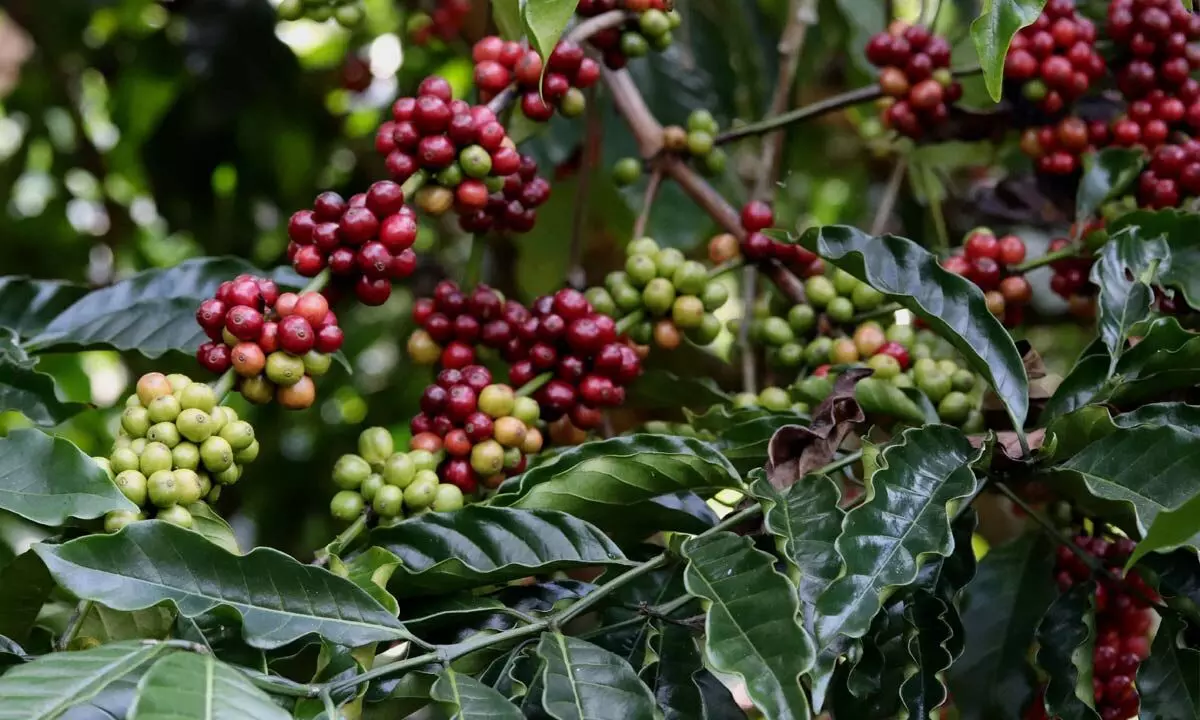
India’s High Range Coffee Curing is poised to become the first farm verified by the Rainforest Alliance to ship EUDR–ready coffee beans to Europe later this month.

The coffee farm partnered with the Rainforest Alliance to meet the necessary compliance requirements of the regulation.

Established in 1995, High Range Coffee Curing is located in the Periyapatna and Kushalnagar Coorg districts among 142 hectares of tropical forests and is known for its quality beans.

The farm supplies coffee to leading global coffee brands, roasters and traders in India, including Nestle, Unileverr, E-Com Commodities, Olam, Continental Coffee, Louis Dreyfus Company, Vidya Coffee and Allanasons.

EUDR-Ready Coffee

Zaidan M Saly, director of High Range Coffee Curing stated, “Implementing EUDR [EU Deforestation Regulation] posed significant challenges for our team, but with the invaluable guidance from Rainforest Alliance representatives in our region, we overcame them and gained confidence in the process.

“Their expertise made the seemingly daunting task entirely feasible, facilitating a smooth and successful implementation, which now not only guarantees adherence to EUDR regulations but also sparked a revolution in our approach to traceability.”

Rainforest Alliance certification enables coffee and cocoa farmers to opt in for EUDR-aligned criteria.

This allows companies to source from these farms, track ingredients along their supply chains, and leverage farm data to demonstrate compliance with the regulation’s deforestation risk assessment and mitigation requirements by the deadline, at no additional cost.

‘Sustainable Practices’

Miguel Gamboa, coffee sector lead at the Rainforest Alliance stated, “The EUDR represents an important step forward to shift the global coffee sector towards more sustainable practices.

“Yet, many smallholder coffee farmers need support to align with the requirements, including traceability, deforestation risk mapping, local laws, and practical and technical guidance on key environmental practices.”

The Rainforest Alliance has urged the EU Commission not to dilute or delay the legislation or postpone its deadline in response to calls from some companies and governments.

It has also called on companies not to scale back purchases from smallholder coffee farmers, but rather support them in meeting the deadline of this legislation.

Gamboa added, “We are also piloting a deforestation risk assessment offering for companies buying non-certified coffee and cocoa, which we plan to roll out more widely later this year.

“With this offering, we aim to support more companies in their journey to compliance, but more importantly, to also reach non-certified farmers so their products can still be sold on the EU  market.”

source: http://www.esmmagazine.com / ESM- European Supermarket Magazine / Home> Supply Chain / by Dayeeta Das (headline edited) / May 06th, 2024

Tennis Star Rohan Bopanna To Mentor 25 Underprivileged Children From Assam

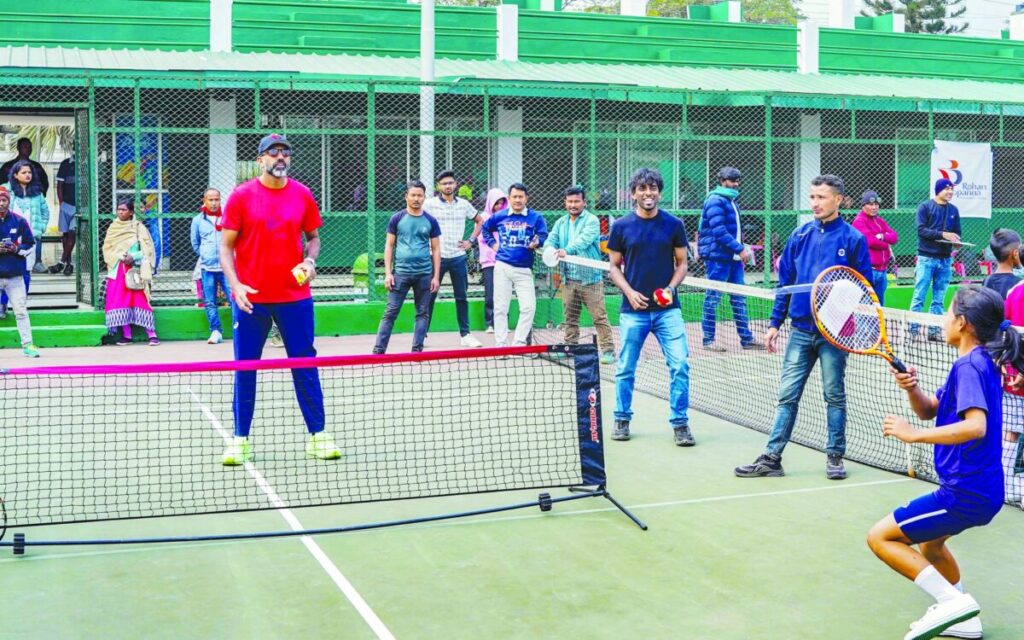
In a heartwarming move aimed at empowering underprivileged children, India’s leading tennis player, Rohan Bopanna, has selected 25 promising youngsters from remote regions of Majuli Island and Bongaigaon in Assam to receive comprehensive tennis training.

This collaborative effort between the Rohan Bopanna Tennis Academy (RBTA) and Kamal India Foundation UK seeks to provide extensive support to children aged between 9 and 11.

Following a rigorous assessment process, which saw around 300 children showcasing their skills and fitness, Bopanna personally handpicked the final 25 players for inclusion in the program.

The selected candidates will be relocated to Bengaluru, where they will benefit from state-of-the-art infrastructure, a world-class tennis curriculum, and guidance from experienced coaching staff.

Additionally, boarding and lodging facilities within the school campus, along with educational support, will be provided.

Notably, Bopanna himself will offer mentorship and guidance at RBTA.

When asked about the specific selection of players from Assam, Bopanna cited a request from a sponsor.

“One of the reasons was that a donor wanted kids to be selected from the North East. We thought why not? It does not matter which part of the country kids come from; it is an incredible opportunity,” he stated.

Expressing enthusiasm about the partnership with Kamal India Foundation UK, Bopanna emphasized the aim to nurture athletic talents while empowering children with education and life skills essential for their future.

At 44 years old, Bopanna, who recently attained the top ranking on the ATP Tour, remains committed to the program’s expansion.

“Out of 300, we got 25. Now these will remain. The plan is to support them till the 10th or 12th standard. We keep adding more kids to the program. Every year we will have players from different regions,” he affirmed.

As, Padma Shri, Rohan Bopanna prepares to compete at the Paris Games, his initiative stands as a beacon of hope for aspiring young athletes, promising a brighter future for underprivileged children through the transformative power of sport and education.

source: http://www.northeasttoday.in / Northeast Today / Home> Assam> Featured> Northeast> Sports / by NET Web Desk / May 03rd, 2024

Kundyolanda Family Cup Creates History

Earns Guinness World Record for largest field hockey tournament

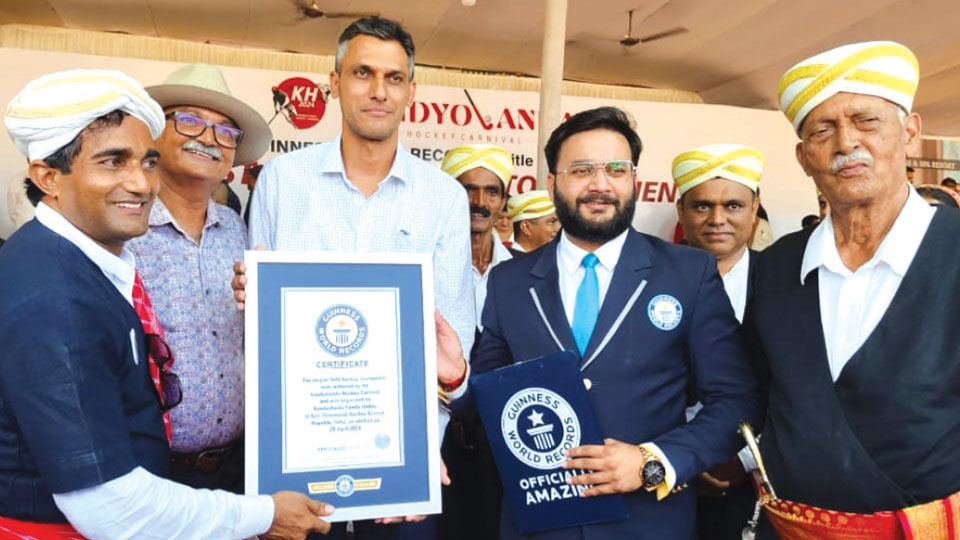
The annual Kodava family hockey tournament, hosted this year by the Kundyolanda family, has made history by earning itself a Guinness World Record for being the largest field  hockey tournament.

Originating in 1996 with just 60 teams, the festival has grown exponentially, boasting 360 teams participating this year with over 4,200 players, including men, women and children of all ages.

The achievement of this Guinness World Record is a testament to the dedication and passion of the Kodava Hockey Academy, which has elevated the Kodava hockey tournament to a global level.

The certificate from the Guinness Records Society was presented by Swapnil Dangarikar, official adjudicator and spokesperson for Guinness World Records based in London to Pandanda K. Bopanna, President of the Kodava Hockey Academy.

This year’s tournament also featured various activities such as a food fair, financial literacy camp, health care camp and marathon, organised by the Kodava families, which garnered widespread attention.

source: http://www.starofmysore.com / Star of Mysore / Home> Sports / April 29th, 2024

Battle Brews Over Coorg’s Coffee Estates: From Serenity to Sprawling Villas-locals fear environmental disaster

HIGHLIGHTS

Plans to turn 2400 acres of BBTC Coffee Gardens into large villas and townships have sparked strong opposition and deep concern among locals and environmentalists alike, creating a tempest of controversy around the serene hills of Coorg.

Madikeri:

Plans to turn 2400 acres of BBTC Coffee Gardens into large villas and townships have sparked strong opposition and deep concern among locals and environmentalists alike, creating a tempest of controversy around the serene hills of Coorg.

The proposal, orchestrated by a resort tycoon, has ignited a fierce debate, with critics decrying the potential environmental devastation and cultural erosion that could accompany the transformation of these verdant landscapes. The Codava National Council spearheaded by NU Nachappa has opposed it on two major counts.

“The roots of this dispute delve deep into Coorg’s past, tracing back to the acquisition of the land by the Bombay Burma Trading Corporation (BBTC) during the colonial era. Once communal property of the indigenous Codava tribe, the estate passed through various hands before landing in the possession of a resort magnate, sparking memories of Coorg’s colonial subjugation and indigenous displacement” Nachappa told.

Economic Gain vs. Environmental Loss

At the heart of the controversy lies the stark dichotomy between economic gain and environmental preservation. The sale of the estate, purchased at a fraction of its current market value, has raised eyebrows and suspicions, prompting calls for a thorough investigation into the transaction’s legality and ethical implications.

“The conversion of lush coffee estates into sprawling villas and townships not only threatens to disrupt the delicate ecological balance of the region but also poses a grave threat to vital water sources and biodiversity hotspots. The ramifications extend beyond environmental concerns, touching on the preservation of indigenous culture and heritage, which risks being overshadowed by the specter of unchecked development” Nachappa told in a complaint lodged with the President of India, Prime Minsiter and Chief Secretary of the union government for forests and environment.

A Call to Arms

Following the CNC taking up the issue on a global scale, voices from all over the places where Codava people have migrated and relocated “decisive action to halt the encroachment on Coorg’s natural splendour and cultural heritage. Calls for stringent legal measures echo through the hills, demanding accountability from all parties involved, from buyers and sellers to local authorities and regulatory bodies. “The urgency of the situation cannot be overstated, as Coorg stands at a crossroads, torn between preserving its pristine landscapes and succumbing to the allure of unchecked development. The fate of this idyllic paradise hangs in the balance, with stakeholders grappling with the weighty consequences of their decisions” Nachappa relayed some sentiments of his countrymen.

In the face of mounting opposition, the battle for Coorg’s soul rages on, with the outcome poised to shape the region’s destiny for generations to come. As the debate rages on, one thing remains clear: the future of Coorg hinges on the choices made today.

source: http://www.thehansindia.com / The Hans India / Home> News> State> Karnataka> Bengaluru / by Hans News Service / May 01st, 2024

Laxman: I’m a common man from a farmer’s family fighting a royal

Mysuru: 

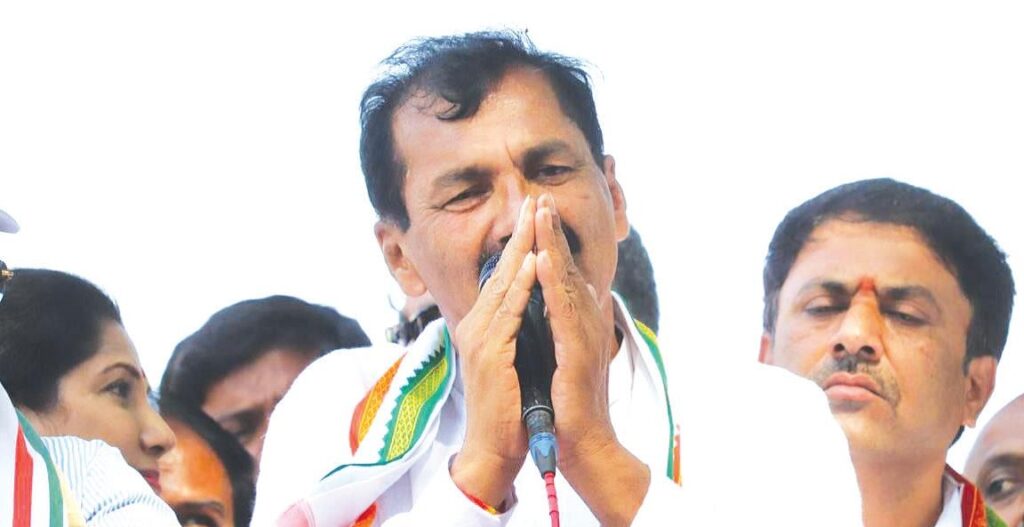
Mysuru- Kodagu parliamentary constituency Congress candidate M Laxman has campaigned in all eight assembly segments in his battle to beat the BJP- JD(S) alliance candidate and Mysore royal scion Yaduveer Krishnadatta Chamaraja Wadiyar.

His victory has become a matter of prestige for the ruling Congress as he is contesting in the chief minister’s home turf.

In an exclusive interview with News Trail, M Laxman explained his experience so far and his vision for development of the constituency.

NT- You are contesting a parliamentary election for the first time. How has your experience been?

Laxman- Even though I am contesting the LS polls for the first time, I have fought local body polls and the state legislative council polls from the teachers and graduates constituencies.

For the last 35 years, I have been working behind the scenes for the victory of my party candidates in previous Lok Sabha and assembly polls.

NT- How is the response from voters?

Laxman- I have received a huge response from voters. People praise our party’s poll guarantees schemes including Rs 2000 for women under the Gruhalakshmi scheme, free bus travel for women, Annabhagya and Gruhajyothi schemes.

Moreover, current BJP MP Pratap Simha who represented this constituency for the last ten years did not work properly.

People are displeased wih not only him but also Prime Minister Narendra Modi for not keeping his promises and for causing injustice to the state over several issues.

NT-Do you believe the poll guarantees can lead you to victory?

Laxman: Of course, 60,000 to 70,000 families are benefiting from the poll guarantees in every assembly segment.

Apart from this, Congress has won in five assembly segments including Chamaraja, Narasimharaja, Periyapatna, Madikeri and Virajpet in the last Assembly polls.

The Congress secured secured 60 percent votes in the last assembly polls from eight assembly segments. These factors will work in favor of me.

NT- Your rival is seeking votes in the name of Prime Minister Modi while the BJP ally, the JD(S) has considerable influence in the constituency.

Laxman- I did not see any Modi wave during my campaigning in the eight assembly segments. The CM, Mallikarjun Kharge and deputy chief minister D K Shivakumar are pretty popular here.

The poll guarantees as well as the Congress manifesto which assures distribution of Rs one lakh to each woman head of the family, amendment to the Constitution to increase the reservation limit and legal guarantee for minimum support price to farmers for their crops wil definitely prove beneficial to me.

NT – Your party seems to be playing the Vokkaliga card to garner votes. Will this work for you?

Laxman- My party has fielded a Vokkaliga after a gap of 47 years in Mysuru constituency which has a sizable number of community voters.

My political opponents made attempts to prove that I did not belong to the community, but later, I proved with all my records that I am a Vokkaliga.

I hope that voters of the constituency will support a common man like me who hails from a farmer’s family against a royal family member in these elections.

NT -What are your plans for development of the constituency?

Lakshman: I have brought a separate manifesto keeping in mind the growth of Mysuru- Kodagu which has enormous tourism potential.

My manifesto focuses on rejuvenation of 2000 lakes spread across both districts, establishment of trauma care centres and super specialty hospitals, a technology park at Somwarpet, protection to coffee and spice producers of Kodagu, special package for exservicemen, lobby to secure the Bharat Ratna for Field Marshal K M Cariappa, rail connectivity to Madikeri, mini airport at Kodagu to promote tourism, yoga training in all taluks, upgradation of Mysuru- Kodagu highway to six lane, establishment of a central university at Hunsur, a computer hardware centre at Virajpet, floriculture export centre at Gonikoppal and the naming of Mysuru airport after Nalwadi Krishnaraja Wadiyar or Sir M Visvesvaraya.

source: http://www.newstrailindia.com / News Trail / Home / by Ramesh Siddegowda / April 25th, 2025

The Guardian Of The Wild: Remembering K.M. Chinnappa’s Heroic Stand Against Nature’s Foes

The heroic conservation efforts of K.M. Chinnappa helped rescue the Rajiv Gandhi National Park from the brink of destruction.
The heroic conservation efforts of K.M. Chinnappa helped rescue the Rajiv Gandhi National Park from the brink of destruction. L: Sanctuary Nature Foundation R: Deccan Herald

A couple of days ago, a great man passed away. The streets of Karnataka, or rather its jungles, will never forget K.M. Chinnappa, the illustrious Range Forest Officer of Nagarahole who single-handedly stood against profit-mongering poachers, exploitative smugglers, wealthy hunters, mafia operators, and corrupt politicians and provided decades of unmatched service to make Rajiv Gandhi National Park one of India’s most thriving wildlife sanctuaries. His incredible mental fortitude along with his unrivalled knowledge of nature is now the stuff of legends.

He was born in 1941 in Kumtur village near Nagarhole. His father, a soldier who fought in the First World War, instilled in him a deep love for nature. Chinnappa spent his early years exploring the forests of his ancestral land, immersing himself in the rich ecosystem and developing a profound appreciation for the wildlife. Following in his father’s footsteps, he became a soldier , but with a unique calling – to become a gun-wielding, frontline defender of the forests, committed to safeguarding wildlife. He declared that protecting wildlife was his life’s sole purpose.

In 1967, he became a forester at Rajiv Gandhi National Park (Nagarhole), which was in a state of disrepair. The park had been heavily impacted by hunting. The practice was popular among people from various walks of life, from impoverished forest-dwelling tribes to the extravagant royalty and courtiers in bustling Mysore. As a result, there were very few deer remaining, let alone tigers and other large animals. Villagers had encroached on the swamps to cultivate rice, which were essential habitats for elephants. Tribesmen lived in groups deep within the park to gather forest resources, such as honey and berries. Livestock herders grazed their cattle on the park’s grasslands, while hunters and poachers targeted various animals and birds, including tigers and elephants. Additionally, illegal activities like timber logging and sandalwood smuggling were rampant.

Rajiv Gandhi National Park (Nagarhole)
Rajiv Gandhi National Park (Nagarhole)Unsung
Chinnappa, with the locals  at the Rajiv Gandhi National Park
Chinnappa, with the locals at the Rajiv Gandhi National ParkUnsung

The destruction of Nagarhole’s environment was facilitated by a variety of means, including the use of shotguns, snares, and poison. Wildlife protection laws were ineffective, and the Forest Department focused on logging, which led to the removal of diverse natural vegetation in favor of teak monocultures. Chinnappa knew for certain that if this devastation continued, there would be no wildlife left in Nagarhole in 30 years.

He single-handedly worked to reverse this process and he emerged successful. In less than 25 years, Nagarhole was rejuvenated, growing from 250 square kilometers to 640 square kilometres. Chinnappa was responsible for implementing the current patrol system and establishing camps in crucial areas, providing three layers of protection for the tiger reserve. Poachers have withdrawn, encroachers have disappeared, and hunters are almost non-existent, allowing Nagarhole to be reclaimed by its original inhabitants – tigers, panthers, leopards, sloth bears, jackals, wild boars, porcupines, hares, langur, and various deer species. In the past, tigers had to roam 200 square kilometres to find prey, but now they only need 12 square kilometres. The elephants have returned to their natural habitat in the lush swamps and bamboo groves.

A Gaur or Indian Bison in Nagarahole
A Gaur or Indian Bison in NagaraholeUnsung
Chinnappa with wildlife biologist Ullhas Karanth in Nagarahole National Park during the mid '80s
Chinnappa with wildlife biologist Ullhas Karanth in Nagarahole National Park during the mid ’80sUllhas Karanth

All you have to do is to stop human interference. Just leave the forests alone and they will regenerate themselves.”

K.M. Chinnappa, in an interview with Unsung

However, Chinnappa had ruffled many feathers and upset many powerful people whose profits depended upon the exploitation of the forest. In 1993, in the face of constant harassment and threats, he was compelled to retire prematurely from the Forest Department, but his crusade did not end there. Chinnappa established his own NGO, ‘Wildlife First’, intending to enlighten the local community, particularly children, about the importance of environmental conservation. By organizing forest camps, dialogues, shows, rallies, interactions and presentations, he introduced a captivating world of plant and animal life and inspired children to appreciate rather than destroy nature.

His NGO also used the legal system to battle those harming the environment for profits, no matter how powerful those individuals or organizations were. Most notable was his famous case against the iron ore mine operators in Kudremukh. They wielded their power and slapped Chinnappa with false criminal charges when he protested against their activities. The case dragged on for years but finally ended with the Supreme Court acknowledging the ecological devastation caused by those mining activities and consequently ruling in Chinnappa’s favour.

In his lifetime, Chinnappa has been awarded the prestigious Karnataka Chief Minister’s Gold Medal, WCS Certificate of Appreciation, Tiger Link Bagh Sevak Award, ESSO, and Sanctuary Life Time Achievement Award.

Chinnappa’s achievements are all the more praiseworthy as they were achieved despite great challenges. He faced setbacks, obstacles, threats, assaults, defamation, arrests, and legal battles. However, remarkably, he emerged unharmed, maintaining his innocence, bravery, commitment, and positivity. He harbored no resentment, opting to look past those who caused him trouble and instead cherish the support of both the senior officers and lower-ranking guards who stood by him.

In his death, he is fondly remembered by his family, loved ones and by kindred souls who value justice and integrity, even in the face of insurmountable odds.

If you enjoyed reading this, here’s more from Homegrown:

source: http://www.homegrown.co.in / Home Grown / Home / by Vaaswat Sarkar / February 24th, 2024

Preparing for third Olympics at 34, Ashwini Ponnappa in no mood to slow down

The badminton star says that she is grateful to have an opportunity to aim for an Olympic gold at this point in her career.

Team game: Ashwini said that the partnership with Tanisha has been exciting. | Photo Credit: RITU RAJ KONWAR

Ashwini Ponnappa has been around for a long while now but the 34-year-old has no plans of slowing down. Preparing for her third Olympics in a sport as demanding as badminton can be gruelling. To do so in doubles, with a partner almost 15 years younger, is unheard of. Ashwini isn’t bothered.

Ashwini missed the Tokyo Olympics but with Tanisha Crasto, is currently the highest-ranked Indian women’s doubles pair in the world and on top of the race to the World Tour Finals.

Having burst into the limelight after winning a historic gold at the 2010 Commonwealth Games in front of home crowds (with Jwala Gutta) for her maiden senior international title, it’s been an eventful career for Ashwini.

“I think having the CWG in India was the biggest game-changer because there was media and public attention on all sports, not just one or two. And winning in front of the home crowd put doubles in the spotlight because till then, it used to only be about singles. People started viewing doubles as a specialised event after that,” she acknowledged.

“It’s been quite a journey, having started alongside Jwala who was already an established player then and well-known on the national and international scene as a specialised doubles player. I think I got lucky because partnering with her meant that I got to play in the big league at a very young age. I have had different partners along the way and now am with someone who is 14 years younger – I never would have thought back then that something like this would happen. But it’s been an exciting journey since we got together,” she added.

Challenges

The longevity has not been without challenges but a bout of dengue in 2016 triggered a complete turnaround in her training ethos and methods.

“Even though I have had physical ups and downs, I have always been motivated. Being physically fit is most essential to be playing at this level but being mentally motivated is equally important. You cannot have one without the other. That’s something I am very stubborn about – I will not listen to just anyone, I am very fussy about my training.

“I have been training with Deckline Leitao since 2016 and that’s been a game-changer. As you get older, your approach to physical fitness is very critical. It also means that if my coach says back off or slow down, I will listen. When you are younger, you can have the hardest workouts throughout the year. But as you get older, it is important to know when to back off and not keep pushing” she explained.

And while they are equal partners on the court, Ashwini admits it took time to build an understanding with Tanisha. “It’s definitely evolved because initially there was a barrier because of the fact that I am super senior and she is up and coming, the comfort level did take time to get to and, to be honest, there is still a lot of space for improvement but it’s work in progress. I don’t think there is any other pair with this level of age gap on the circuit.

“It’s nice to play with someone who has got a really long way ahead of her. I love her enthusiasm and the curiosity of going for big tournaments,” she admitted.

The senior pro in her does come rear up occasionally, she laughed but insisted she tries to avoid being a nag.

“I don’t think there is pressure of being a senior but I just end up being kind of a mentor. It’s not like I go out and try to be a senior or didi as Tanisha calls me – I don’t want to be – but I end up being one because of what I have seen over the years and can’t help but guide here and there when you see certain things. Fortunately, she has been open enough to listen to me giving her advice now and then,” she said.

source: http://www.thehindu.com / The Hindu / Home> Sport> Other Sprots / by Uthara Ganesan / April 19th, 2024

THE WEEK Sportsroom with Rohan Bopanna: A peek into the journey of a modern Indian great

The event was presented by HSBC

Racket science: Ayaz Memon and Rohan Bopanna | Amey Mansabdar

Age no bar, cartilage no bar. Rohan Bopanna, at age 43―or level 43 as he likes to call it―became the oldest man to win a Grand Slam when he and partner Matthew Ebden won the Australian Open earlier this year. Not only was the feat impressive in itself, the fact that he did so with no cartilage in his knees made it an insane achievement.

There was a time in 2006 when, following a shoulder surgery, Bopanna wondered if he would ever compete again. Nearly two decades later, he is world No. 1 in men’s doubles and has his sights set on the Paris Olympics.

It was this journey of grit and persistence that Bopanna shared with THE WEEK’s Sports Consultant Ayaz Memon at the magazine’s Sportsroom event presented by HSBC at the bank’s India headquarters in Fort, Mumbai, on April 4.

As the stories swirled inside the colonial-era art deco building, the audience got a peek into not just Bopanna’s life, but also that of Indian tennis as a whole. The conversation―breezy and insightful―covered a lot of ground, including why there is a paucity of talent in Indian tennis currently, how Iyengar yoga and ice baths kept his body going, his love of coffee and exploring cities, the loneliness of travel, and how he came back from the dark days of his career.

As it turned out, he is proficient not only with racket in hand, but also on the mic. Sitting on stage in a light-blue jacket, wearing a gold locket with two crossed knives―a nod to his Coorgi roots―Bopanna talked about how he went from being a young singles player to a grizzled doubles veteran who is now like an uncle on the international circuit.

“Age never worried me,” he said. “We set our limitations ourselves. When you change limitations into opportunities, you have a better perspective.”

Jaswinder Sodhi, Head of Customers, Digital and Marketing, Wealth and Personal Banking, HSBC India; Ranganath Ananth, Head of Distribution, Wealth and Personal Banking, HSBC India; Bopanna; Memon; and Shubham Golash, Director and Regional Head (West), Wealth and Personal Banking, HSBC India.

His lowest point, he recalled, was in 2021, when he did not win a match for five months. That is when he told his wife, Supriya, a psychologist, that he was thinking of quitting. He was not enjoying it anymore. She told him he could do it, but urged him not to do so when he was down. And that triggered something.

Bopanna talked candidly and at length about mental and physical toughness, but he also sprinkled in some amusing anecdotes. In 2008, for instance, he made a pact with his then physio Shayamal Vallabhjee that if he entered a Grand Slam quarterfinal, they would both shave their heads. It was a self-motivation tool. So, at Wimbledon 2010, when he lost in the quarterfinals, he headed to the locker room and straightaway went next door to the barbershop. After the deed was done, he walked past his family, and his mother did a double take. She had just seen her son, with a full head of hair, playing on court half an hour ago. “It tells you that you need to have a little bit of madness in you to become a champion,” noted Memon.

Talking of champions, Bopanna also weighed in on the GOAT debate, saying that while Roger Federer was his favourite, Novak Djokovic was the best athlete. As for Indians, he said he had seen a lot of improvement in Sumit Nagal in the past one year.

Bopanna did not shy away from some of the prickly questions Memon had. For instance, on the friction in the past between the Indian tennis federation and the players. “Any time the federation was involved in picking the team, we had an issue,” said Bopanna, evoking chuckles from the 50-odd invitees, some of them lifelong tennis fans and players. “When the federation was not involved, it was smooth sailing.”

Among those in attendance were THE WEEK’s Chief Associate Editor and Director Riyad Mathew, who talked about the importance of sport in life; those from the bank were: Jaswinder Sodhi, Head of Customers, Digital and Marketing, Wealth and Personal Banking, HSBC India; Ranganath Ananth, Head of Distribution, Wealth and Personal Banking at HSBC India; Shubham Golash, Director and Regional Head (West), Wealth and Personal Banking, HSBC India; Arkaprava Ray, Head, Marketing Strategy, Brand Partnerships, IP and Sponsorships, Wealth and Personal Banking, HSBC India; and Sandeep Sethi, SVP and Branch Head, Fort Mumbai, HSBC India.

Bopanna went on to explain that in professional tennis, a player essentially does everything themselves, like entering tournaments and funding their careers, which includes paying for air fare, coaches and physios. But for events like the Davis Cup, Asian Games and the Olympics, the federation has to enter them. Also, when picking teams, the federation might not go with the pair that has been playing together for a long time. This is where the problem lies. “Doubles is like a love marriage,” he said, “and when it came to the Olympics and such events, it was an arranged marriage.”

Asked if he was going to have a go at tennis administration and what changes he would affect were he sports minister, Bopanna said, “I would love to be part of it…. We need to come together to make the sport work.” He added that the first step would be to broadcast matches of all Indians representing their country in tennis worldwide. In fact, before the event, Bopanna had told THE WEEK that he had in the past called up broadcasters to ask them whether they were going to show his matches.

Those days are now over; that he is firmly a star was evident by the rush at the end of the event to get a photo clicked with the ace.

source: http://www.theweek.in / The Week / Home> Magazine> The Week / by Anirudh Madhavan, Mumbai / Issue Date April 21st, 2024 / Updated April 14th, 2024

Kundyolanda Cup Family Hockey Fest Begins In Kodagu

The 24th Edition of Kodava Hockey Festival 2024, dubbed the ‘Kundyolanda Hockey Carnival’ and organised by the Kundyolanda Family, began with vibrant fervour at the General Thimayya Ground at Napoklu Karnataka Public School yesterday. Matches will be played on three grounds at Napoklu.

Pandanda K. Bopanna, President of the Kodava Hockey Academy, inaugurated the event by striking a silver hockey ball with a hockey stick. Virajpet MLA and CM’s Legal Advisor Ajjikuttira S. Ponnanna, Kodagu Deputy Commissioner Venkat Raja — who notably played for Coorg 11 against Navy 11 — graced the occasion.

Other dignitaries included MLC Suja Kushalappa, author of ‘The Vanishing Kodavas’ Kambiranda Kaveri Ponnappa, Olympian Paikera Kalaiah, Lt. Col Baleyada Subramani and Akhila Kodava Samaja President Paradanda Subramani.

Originating in 1997 from the visionary insight of the late Pandanda Kuttappa, affectionately known as Kuttani, a former State league referee, the Kodava Hockey Festival has evolved over the years and is now managed under the auspices of the Kodava Hockey Academy.

Scheduled from Mar. 30 to Apr. 28, this month-long festival promises an exhilarating experience for sports enthusiasts and hockey aficionados alike. This time, over 360 teams from various families have registered for the festival. It serves as an annual spectacle, drawing together families from diverse locales to revel in their shared passion for hockey and their common heritage.

The registration of 360 teams marks a historic milestone in the tournament’s history, setting a new record for participation. In addition to the thrilling hockey matches, attendees can anticipate a multitude of attractions.

A vibrant food festival showcasing authentic Kodava delicacies alongside diverse cuisines promises to tantalise taste buds. Matrimonial initiatives and cultural events celebrating the community’s rich heritage add further excitement to the extravaganza.

Before the formal inauguration, a grand procession commenced from the Napoklu Sri Rama Mandira, leading to the main playground. The procession was joined by hundreds of Kodava men, women, and children adorned in their traditional attire.

Multiple folk dances, musical instruments and art forms, imagery and symbols from the Kodava community added to the vibrant atmosphere of the procession.

In honour of the festival’s 24th edition, 24 balloons were released into the air and 24 rounds of gunfire resounded, with each bullet symbolising a participating family. Before each gunshot, the names of the families were announced aloud, signifying their integral role in the festival’s legacy.

With a staggering total of 5,760 players, 730 coaches and managers and 40 technical staff actively participating, the tournament guarantees an atmosphere filled with intense competition and promises to create lasting memories  for all involved.

source: http://www.starofmysore.com / Star of Mysore / Home> Sports / March 31st, 2024

Bopanna-Ebden clinch Miami Open title, return to world No. 1 ranking

With the win, Bopanna surpassed his record created last year when he won the Indian Wells title at the age of 43, and also reclaimed the top spot in the doubles ranking.

Ace Indian tennis player Rohan Bopanna rewrote his own record to continue to be the oldest ATP Masters 1000 champion as he and his Australian partner Matt Ebden clinched the men’s doubles crown at the Miami Open here.

Continuing their fine run this year, the 44-year-old Bopanna and Ebden fought back from a set down to pull off an exhilarating 6-7(3), 6-3, 10-6 win over Crotia’s Ivan Dodig and American Austin Krajicek at the Hard Rock Stadium on Saturday.

With the win, Bopanna surpassed his record created last year when he won the Indian Wells title at the age of 43, and also reclaimed the top spot in the doubles ranking.

“It’s amazing. As long as you are doing well in these big events, it’s what we play for,” Bopanna said after the win.

“I want to do well in the Masters 1000s and the Grand Slams. It’s good to keep that record going and keep giving everyone else a run for their money,” added Bopanna, who won his maiden doubles Grand Slam title at the Australian Open earlier this year.

This was Bopanna’s 14th ATP Masters 1000 final. Overall, it was the veteran Indian player’s 63rd ATP Tour level final and 26th doubles title.

Bopanna also achieved a rare feat as he became the second Indian after Leander Paes to reach the final of all nine ATP Masters events.

Bopanna and Ebden, the top seeds for the tournament, tapped into their deep reservoir of experience to fetch the final six points of the summit clash. They had three set points on serve at 6-5 in the opening set but their second-seeded opponents warded off all three to force a tiebreaker before taking a 1-0 lead.

“It’s tough. These guys, they fight back in tough moments,” said Ebden.

“Last time we played them it was similar, it’s a bit of a see-saw. They return so well, make so many balls and we missed one or two shots when we were up [at the end of] the first set. They played a great tie-break, and then we just reset.” Bopanna and Ebden then staged a comeback as they broke their opponent early in the second set which helped them level the game.

Like the opening two sets, the tiebreaker was also fought on an even keel with the reigning Australian Open champions emerging victorious.

Following the Australian Open triumph, Bopanna climbed to the world No.1 spot in the ATP rankings, becoming the oldest player to do so. But slipped to the second spot in the doubles rankings after a quarterfinal loss at the Dubai Championships and a round-of-32 exit at the Indian Wells Masters.

But with the win here, the pair will be back to the top spot.

source:http://www.thehindu.com / The Hindu / Home> Sport> Tennis / by PTI / March 31st, 2024