Category Archives: Leaders

A Museum That is a Repository of the Past

Bengaluru :

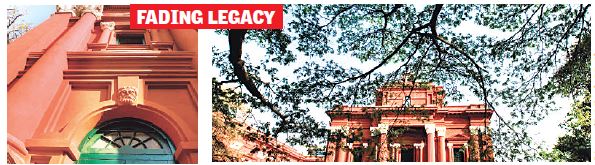
Is it enough to preserve the past or do we also need to maintain its particularities with informed respect?
museum01bf24feb2015

Architect and restoration expert H C Thimmaiah, who is part of The Indian National Trust for Art and Cultural Heritage (INTACH) in Bengaluru says, “It is heartening that we are at least talking about Bengaluru’s heritage but we must be careful with how we maintain it. The Government Museum is a beautiful building. The brick red colour of such classical buildings must not be tampered with. The museum has very specific features right from the details on its pillars to its windows that have been maintained well but all old structures require an understanding of historical and architectural context. And sensitivity towards just how they must be painted, how the flooring, ceilings, the facade must be treated.”

Restore with sensitivity

As the debate about the need to retain and maintain heritage structures in Bengaluru warms up, we are told by a source that The Bowring Institute was considering a facelift sometime back. Thankfully, the plan to replace the original flooring with marble was met with some resistance within the circle of influential members who asked for Attangudi tiles or something more contextual considering it is hard today to reproduce the classic mosaic from the past.

museum02bf24feb2015

Thimmaiah, who built a house in Kodagu with upcycled elements taken from destroyed old homes, is passionate about authenticity and recalls, “A few years ago when Bangalore Club was being repainted, a paint manufacturer scratched the walls to take a sample of the signature greyish blue paint and recreated it for a fresh coat. He later told me that the paint colour would be called Bangalore Club Blue from now on.”

Prominent buildings like the Bangalore Club and the Government Museum may be better off but the architect wishes that INTACH was more active in the city for the sake of other structures. After the death of convener H R Pratibha, INTACH has been keeping a low profile. He says, “Today, bodies like INTACH and The Archeological Survey of India (ASI) must come together to guard even the lesser known aspects of our heritage and not just the showpieces. In Bengaluru, you won’t find even a single space like Mumbai’s Dadabhai Naoroji Road.”

Are private spaces not our heritage?

Architect and urban planner Dyan Belliappa is happy that the city is looking with fresh appreciation at buildings like the Government Museum and says, “The interest in Bengaluru’s public buildings post the Balabrooie Guest House debate is welcome but the city also has a built heritage of private structures some of which were a lot older than the Guest House and have been demolished with nobody even coming to know about them. While we will probably continue to revere a Vidhan Soudha, there are private structures in the Ulsoor area, around Majestic which are going with not one voice raised in protest.”

To the right of the new Airport Road, he shares, there was a fantastic old structure built with stone masonry. He says, “That kind of stone masonry will be hard to find or duplicate and yet it was destroyed. In Begur, there is a temple linked to a lake. The temple may outlast change but will the lake be treated as part of our heritage too? Even the Malleswaram Market is a heritage sprawl but will BBMP treat it as such? One building or two or just a few are not our heritage. Our lakes were our heritage too but they were just treated as water bodies and so many are gone, as are our trees.”

He adds, “Mumbai has a structured approach towards the preservation of spaces. Some private buildings cannot be touched. Others can be modified but with sensitivity. The fact that an independent body like the Bangalore Urban Art Commission was dissolved in 2001 says a lot. Today the BMMP reflects what we value in our city but our heritage was our way of life. How does one codify that or our memories? How does one resist the haste to acquire and sell land and knock off structures because they get in the way of ‘urban development’? Our priorities are misplaced and we need to rethink the meaning of heritage.”

Contextualise the past

Organic architect professor A R Jaisim has the last word, “The Bengaluru Museum is a beautiful building. Attara Kacheri has been beautifully preserved too. Our city’s present must make space for its past because if the past is erased, we will have no memories. Heritage must be contexualised and included in the present because without it, we have no stories to pass on to the next generation.”

Trivia

The Government Museum on Kasturba Road is a reminder of Bengaluru’s colonial heritage. In 1851, after the Madras Government Museum was established, Bengaluru got its own museum in 1865 and is today, the second oldest in South India. E G Balfour, a medical officer of the Madras Army, came to Bengaluru in the 1860s and with his support, the Chief Commissioner of Mysore State, L B Bowring established the Government Museum or the Mysore Government Museum on August 18, 1865. The museum was originally housed at the Cantonment’s jail building but then a site in Cubbon Park was selected. Col R S Sankey, the Chief Engineer of Mysore planned and built the museum in 1878.

Fun facts: The museum was once known as ‘Thamashe Bungalow’. On Mondays, women in purdah visited the museum and men were not allowed.

Collections: The museum has two exhibition floors which are divided into 18 galleries covering sculpture, natural history, geology, art, music and numismatics. It has a collection of archaeological, geological artefacts and artefacts belonging to the Neolithic period.

Timings: 10 am to 5 pm (except on Wednesday when it is closed)

source: http://www.newindianexpress.com / The New Indian Express / Home> Cities> Bengaluru / by Reema Moudgil / November 03rd, 2014
Several developmental works kicked off

MLA K G Bopaiah opined that everybody’s cooperation is needed for overall development of villages.

He was speaking at a programme held in Payaswini Sahakara Sadana, after initiating various development works in Sampaje Gram Panchayat limits recently.

He said everyone should get basic amenities. The work of providing electric connection from Madikeri, which was sidelined from many years, has been completed.

He told BPL card holders to avail electrification benefits under Deendayal Upadyana electrification scheme.

Sampaje Gram Panchayat President Anitha Chandrashekhar presided over the programme. Vice President Kumar Chidkar, Payaswini Sahakara Sangha President Balachandra Kalagi and others were present.

The MLA performed ground breaking towards various development works at Sampajebail, Arekall, Aramanethotabhaga, Kuntikana, Mangalapare, Guddegadde, Kuvekadu, Ambatekaje, Chadavu, Koyanadu guddegadde, Kallala, Chittekana, Mundadka and other parts in the limits of Sampaje. Also ground breaking was done towards bridge on Kootelu Tekkitadka stream.

Meanwhile, Drinking water tank and public toilets were inaugurated.

source: http://www.deccanherald.com / Deccan Herald / Home> District / Napoklu , DHNS / March 11th, 2015

Lecture on redefining India’s neighbourhood held in New Delhi

The India Habitat Centre and Delhi Policy Group organized a lecture series on ‘Redefining India’s Neighbourhood’ in New Delhi.

The conference was chaired by former diplomat Ambassador Leela K. Ponappa and was attended by senior government officials, and representatives of various think-thanks, civil society groups and NGOs.

The lecture highlighted how India constituted its presence as a neighbour as volatile situations is occurring in some of its neighbouring countries. Topics also included a discussion on the geo-political shift, the power shift from West to Asia, the rise of China, United States pervert and its policies towards Asia, Maritime issues and Islamic factors.

India’s role in Central Asia, especially Afghanistan, was also emphasized in the discussion.

“India and Afghanistan have had historical relations over many centuries and this has been in many areas of trade, people to people movement and there have been military movements and so on but today Afghanistan searches for peace and stability, India have been a very active partner in economic and social development through projects as diverse as helping with hospitals, with agriculture, with nutritional supplies to school children, with power lines, with road building,” said Ponappa, a former deputy national security advisor.

Ponappa said she believed that Afghanistan must take charge of its own security and economic challenges, but added that India will play its role to help the former in achieving its goals.

“The kind of destabilization of Afghanistan that has taken place essentially from Pakistan I think that is well known can come to an end and where there are commitments made, guarantees provided that Afghanistan will be left alone to handle its own peaceful development and rehabilitation after many years of War. So India is partner with many other countries on this while making commitments bilaterally over 2 billion USD to help Afghanistan with its development programme. It is entirely peaceful approach and I think it has been recognized by the people of Afghanistan as a very positive contribution,” said Ponappa.

India believes in peace and development and wants its neighbours to remain peaceful.

Afghanistan has been through a dreadful set of years, decades of war and whatever it requires in terms of rebuilding it self towards establishing peaceful and prosperous society that is something India has been doing in consultation with the people of Afghanistan on the Central and the local levels.

source: http://www.business-standard.com / Business Standard / Home> News-ANI> National / ANI / New Delhi – January 22nd, 2015

MUDA chief appointment roils senior Congressmen

While Surayya Abrar assumed charge as President of Madikeri Urban Development Authority (MUDA) on Monday, several senior Congress leaders expressed their displeasure over the appointment.

Some members of city unit of Congress Party, decided to tender their resignation to the party positions, claiming that the post of MUDA President has not been given to native members of Congress. They claimed of the alleged involvement of a former MP behind the appointment of the new President. The former MP has taken the decision without the consent of the local leaders, they said.

Names of senior leaders T M Ayyappa, V P Suresh and Chummi Devaiah were apparently heard for the post of the MUDA President. But, the former MP has selected a candidate who had lost deposit in the CMC elections held last year, local Congress leaders said.

The position of MUDA President was lying vacant for two years, ever since Congress government came into power in the state. Local leaders in Madikeri unit of Congress had requested the senior partymen to appoint a senior Congress leader in Madikeri, to the post. A twelve-member committee was also constituted towards the selection of the posts of Presidents of other authorities, including Madikeri Urban Development Authority. The district Congress had recommended the names of T M Ayyappa, V P Suresh and Chummi Devaiah. But the list of the names was subject to changes in the last moment, due to the intervention of the former MP, they said.

Congress leaders said CMC President’s post has already been given to a lady belonging to a particular community and now, the MUDA President’s post has also gone to a lady belonging to the same community. The members belonging to other communities have been neglected, they added.

A Senior leader opined that the Congress has been giving priority to candidates from a particular community, to prevent erosion in its vote bank, as during last CMC elections, SDPI had earned much votes than Congress.

A discomfited aspirant said the current development will affect the results of the upcoming Gram Panchayat elections.

Delegation to KPCC

The Congress leaders in the city have been reportedly planning to take a delegation to KPCC, Bengaluru, to urge to withhold the new appointment and to give an opportunity to a senior leader from the party.

‘Discomfort is natural’

Speaking to reports, newly appointed MUDA President Surayya Abrar said it was obvious for Congress leaders to be disappointed and that things will be sorted out eventually.
She meanwhile thanked former M P H Vishwanath, district Congress unit President B T Pradip, Chief Minister Siddaramaiah and KPCC President G Parameshwar, who made possible her appointment for the MUDA President’s post.

source: http://www.deccanherald.com / Deccan Herald / Home> District / Madikeri – DHNS, March 02nd, 2015

Whose garden is this in the heart of our city?

Bengaluru :

Brigadier who carved the 22-acre Cariappa park out of defence land near MG Road slams colleagues for barring entry to public The man who opened the Army’s doors to Bengalureans has slammed his colleagues for barring the city’s residents from entering the Cariappa Memorial Park in the heart of the city.

(The 22-acre park was meant…)

The 22-acre park was meant to be the Army’s gift to the city but has been closed since 1998, two years after it was inaugurated. A board next to the now-abandoned park’s gate reads: `Restricted area’. The present Army establishment in the state says the park area, categorized as A1 defence land, cannot be made available to the public under Ministry of Defense guidelines.

Brigadier (Retd) Ashok Nagpaul, who established the park on defence land to foster closer interaction between the Army and public, said the Army cannot block entry into the park. “The land not only belongs to the defence but also to the people of Bengaluru,” said the former Commanding Officer for Karnataka and Kerala.

“There was 57 acres of land lying wasted. There were illegal activities like prostitution and other things that used to happen in that area, so I decided to build a parade ground and the park,” Nagpaul, 72, said over the phone from Pune.

A top Army official said that with defence land being rampantly encroached on, the Army cannot afford to give its land for public use.”In 1994 maybe people were not conscious about utilization of defence land, but consequent to which in lots of places we started losing defence land, and … very stringent guidelines were framed that you cannot use defence land for public purposes,” the official told ET, declining to be identified.

Until 1994, the park area was part of a larger parcel of land between Cubbon Road and MG Road.

source:http://www.articles.economictimes.indiatimes.com / The Economic Times / Home> Collection> MG Road / by ET Bureau / February 17th, 2015

Madikeri: Values that Field Marshal Cariappa Stood for Focused at 116th Birth Anniversary

Madikeri:

The 116th birth anniversary of the late Field Marshal Kodandera Madappa Cariappa was respectfully observed here on Wednesday, under the joint aegis of the Kodagu district administration and the department of Kannada and culture.

The function began at the Field Marshal Cariappa circle with the garlanding of his lifesize statue by MP Pratap Simha, MLA M P Appachu Ranjan, Tobacco Development Board chairperson T P Ramesh, zilla panchayat president Chodumada Shareen Subbaiah, vice president Allaranda Beena Bollamma, town municipal council president Julekhabi, Karnataka Kodava Sahitya Academy president Biddatanda S Thammaiah, deputy commissioner Anurag Tewari, zilla panchayat CEO Kurma Rao and other prominent citizens.

At a formal programme held in Cauvery Bhavan of the TMC premises, Pratap Simha spoke on the late Field Marshal and termed him as a solider, general and commander-in-chief beyond compare. His ideals, discipline and commitment would always remain a source of inspiration to the modern generation, he said.

He also gave a call to everyone to adopt FM’s exemplary virtues like discipline, consistency and punctuality for which he was known all along his life. Programmes of this kind to honour those personalities who had taken the status and honour of the nation to greater heights should be regularly held, he further said.

MLA Appachu Ranjan too spoke on the integrity, sense of time and efficiency of the late Cariappa, who ought to be remembered by everyone. He was the one who introduced the martial traditions and culture to regions within India and abroad, he added.

He informed that the house in Shanivarasante where the Field Marshal was born had been turned into a library. Similarly, the ‘Sunnyside’ residence here where Gen Thimayya lived would soon be converted into a memorial edifice.

Col K C Subbaiah, president of FM K M Cariappa and Gen Thimayya Forum recalled that the former was the very first Commander-in-Chief of independent India’s armed forces. He urged the members of the parliament to make efforts to have the Bharat Ratna honour bestowed posthumously on Cariappa.

He further put forward a suggestion that the FM’s birthday be officially observed as Discipline Day on an all-India basis. He also made a fervent request for the early completion of the Sunnyside memorial project.

Nadikerianda Bose Mandanna, who received the Lifetime Achievement Award for his meritorious service to various fields, also gave a call to the younger generation to imbibe the virtues which Cariappa stood for like dedication and punctuality.

Forum secretary Ulliada M Poovaiah spoke on the life of FM Cariappa. A booklet on his life was also released on the occasion.

Department of Kannada and culture assistant director Mangala Nayak was also present at the function.

source: http://www.mangalorean.com / Mangalorean.com / Home> Broadcast> Madikeri / by Richard Lasrado / Thursday – January 29th, 2015

Coorg girl and Kashmiri Boy win Clean & Clear Times Fresh Face 2014 in Mumbai

In a nail-biting national finale, MM Rashmika from MS Ramaiah College of Arts, Science and Commerce, and Zaid Shaikh from Ness Wadia College of Commerce were chosen the winners.

Akshay Kumar with winners

With the handsome Akshay and Rana in their midst and Ankit Tiwari closing the evening with a soulful show, the audience were in for a memorable evening. For the contest, the girls were dressed in creations by designer Masaba Gupta and Nisha Sainani, while the boys sported designer Kunal Rawal’s dapper outfits.

source: http://www.timesofindia.indiatimes.com / The Times of India / Home> Entertainment> Events / by Garima Sharma, TNN / January 28th, 2015

116th birth anniversary of Field Marshal K.M. Cariappa in city

CariappaKF01feb2015

Mysuru :

Marking the 116th birth anniversary of Field Marshal K.M. Cariappa, the Mysuru Kodava Samaja had organised a function at Field Marshal K.M. Cariappa Circle (Metropole Circle) here this morning.

Earlier, the gathering offered floral tributes to the portrait of the Field Marshal.

Speaking on the occasion, Maj. Gen. (retired) C.K. Karumbaya said that Field Marshal Cariappa was an epitome of discipline and hard work, who should be taken as a role model by the youth.

Corporator M.J. Ravi Kumar sought a war memorial and a statue of the great soldier in city.

Kodava Samaja President M.M. Karumbaiah, office-bearers and members of the Samaja and also of the Kodava Samaja Cultural and Sports Club were present at the programme along with some public. On the occasion, sweets were distributed.

source: http://www.starofmysore.com / Star of Mysore / Home> General News / January 28th, 2015

Recollections of a Communicator : General K. M. Cariappa made the Indian Army Truly Indian

On January 15, we will be observing Army Day with a ceremonial parade in the Delhi Cantonment. It was on this day, in 1949, when General Kodandera Madappa Cariappa took over as the first Indian Commander in Chief of the Indian Army from General Roy Butcher, a British Army Officer.

Many of us who had the opportunity of serving with the Indian Army had read about General Cariappa and the role he had played in consolidation of the Indian Army, establishing high traditions.

I first came into contact with him in 1958 when I was working as the Assistant Editor of the Sainik Samachar, the multi-lingual weekly journal of the Armed Forces, earlier known as the Fauji Akhbar, which enjoyed the status of being the premier journal available in the reading rooms for the soldiers.

A month after my taking over as the Assistant Editor, I was told to cover a meeting of the Ex-Servicemens’ Association which was being presided over by General Cariappa The meeting was being held at the National Stadium, near the India Gate in the Capital. I went to the venue about ten minutes earlier. I was introduced to General Cariappa. General Cariappa asked me my full name, where I came from and what was my educational and service background.

While making his initial statement, I was pleasantly surprised when he said that the Assistant Editor of the Fauji Akhbar was there, and mentioned that I was a post-graduate and that I would give good coverage for the meeting. He called me to sit by his side during the rest of the meeting.

When I left the meeting, he asked me to take interest in matters relating to retired soldiers. I was touched by his sense of involvement with the welfare of the troops.

The next encounter that I had with him was in 1963. I was posted in Jammu and Kashmir and had donned the uniform with the rank of a Captain.

My assignment was to cover the activities of the XV Corps-the troops on the Pathankot-Jammu-Srinagar-Leh-Chushul areas. I used to be on the road at least twenty days in a month, visiting Army units, or conducting senior journalists who were keen to observe and write how the Indian Army was being reorganised and re-equipped to face the Chinese in addition to the Pakistan Army. In the spring of 1963, I was asked to conduct B. G. Verghese who was then a senior correspondent of the Times of India to various units in Ladakh. I had arranged the itinerary for him, taking him from Leh to Chushul along the Indus, and driving up the Chang-la, the highest pass in the region. I had almost completed my task.

On the last morning, as I was getting ready to proceed with Verghese for the next appointment, the unit in which I was staying got a message that I should get in touch with the Divisional Headquarters. I rang up the General Staff Officer to find out what was the requirement. He heaved a sigh of relief and said that the Corps Commander, Lieutenant General Bikram Singh was in Leh and he wanted me around as General Cariappa was visiting the area.

I took George Verghese along with me and went to the Division Headquarters. I was ushered into the presence of Lt. Gen Bikram Singh, who was sitting on the lawns of the Alpha Mess, located near the Division Headquarters. He asked me what was I doing. I explained my assignment-that I was conducting a senior correspondent of the Times of India. He snapped back: “When the former Commander in Chief of the Indian Army is here, you have no business to muck around with civilians. Get out. You will get no facility from the Division and you may walk to Srinagar or wherever you want with that civilian”.

Crestfallen, I was climbing the steps back to the Mess, when I saw General Cariappa coming down. He said, Hey Rao, what are you doing here. I muttered that I was conducting a correspondent of the Times of India to brief him about the Army defences in Ladakh. General Cariappa, said good you are here. He patted my shoulder and introduced me to Lt. General Bikram Singh as a bright young Public Relations Officer.

Lt. General Bikram Singh nodded in acquaintance and told me to join him when the Commander-in-Chief was addressing the troops. Gone was his anger against me. Meanwhile, I arranged for an escort from the Divisional Headquarters for George Verghese. General Cariappa was from the Rajput Regiment, and so was Lt. Gen. Bikram Singh. The speech of General Cariappa was heard with rapt attention. It was not in chaste Hindustani, but very motivating for the soldiers.

He told the soldiers that he had brought with him Kala Mirch-black pepper-from Coorg which will keep them warm in the high altitude, and create the right mood to fight the Chinese. He went round the parade ground distributing black pepper to each row of soldiers. He asked them about their food, general comforts, whether they received letters from home-and when he met Sikhs and Punjabis, inquired whether they got mustard oil. He knew the habits of soldiers of the Indian Army.

After the function, I got myself dropped at the Signal Centre to file my report to Delhi. As I got down from the jeep, General Cariappa said he was going to visit Kargil and asked me whether I was coming. Lt. Gen. Bikram Singh said yes, and told me to file a good report.

Next day, we landed in a propeller driven aircraft at a makeshift airstrip at Kargil. On arrival at Kargil, General Cariappa addressed the troops more or less on the same lines as he did in Leh and finished the stock of black pepper that he had brought from Coorg.

I remember the little flutter in the Kargil mess that morning, when he asked for a ‘tailor kit’. He wanted thread and a needle. I managed it for him. He had a couple of buttons loose in his shirt. Patiently, he mended his shirt and got it pressed and wore it. All his clothes were in a small overnight bag. He was ‘properly dressed’ in a three-piece suit, when he sat down for his breakfast or dinner

It was during this tour with General Cariappa that I heard many stories about his contribution to the Army and, on the lighter side, about his Hindustani. The story was that when he addressed troops on August 15 in 1947, he told the soldiers: “Is waqt aap muft, ham muft, mulk muft hai.” For him the word muft meant ‘free’.

General Cariappa was the General Officer Commanding-in-Chief of the Western Command during the Jammu and Kashmir operations. General Roy Butcher, who was then the Commander in Chief, had tried his best to tie General Cariappa’s hands during the operations by not approving plans to evict Pakistani ‘raiders’ from some sensitive areas. General Cariappa, as GOC-in-C quietly decided to clear the Pakistani raiders from Jammu – Naushera axis. He was then fighting on two fronts, the Army Headquarters led by General Roy Butcher and the Pakistani Army led by General Messervy.

Only recently, British records of that period have been declassified. Not many know that General Roy Butcher was more loyal to the King of England than the Government of India. He used to send messages to the British Government through the British High Commissioner, over the head of the Defence Minister. He also advised the Indian Cabinet against launching the operation against the Nizam’s forces in Hyderabad.

He is reported to have said: “As your C-in-C, I ask you not to start the operations.” And he offered his resignation if his advice was not heeded. There was a general silence while a distressed and worried Jawaharlal Nehru looked around. Sardar Patel, who was the Home Minister, remarked: “You may resign, General Bucher, but the police action will start tomorrow.”

An angry Bucher stormed out of the meeting. All these indicated the importance for the Indian Army to have an Indian Army Chief. General Cariappa as Commander-in-Chief turned the imperial army into a national army. He raised the Brigade of Guards and the Parachute Regiments on an all-India caste composition and directed the raising of the National Cadet Corps and the Territorial Army.

General Cariappa was keen that Army Officers, on retirement, should have a say in the affairs of the nation. He did contest elections in Bombay, but lost. I last saw General Cariappa in 1986 when the rank of Field Marshal was conferred on him. When the order was read in the Rashtrapati Bhavan before the President Zail Singh handed over the baton, considering his age, he was offered a chair to sit down, but he preferred to stand-ramrod straight.

Not many remember that Field Marshal Ayub Khan served under General Cariappa in the British Indian Army. When his son Flt. Lt. K. C. “Nanda” Cariappa (who later rose to the rank of an Air Marshal) was taken prisoner after his Hunter aircraft was shot down during the 1965 war, Field Marshal Ayub Khan contacted General Cariappa in Mercara and offered to release his son.

The reply of General Cariappa was:”He is my son no longer… He is the child of this country, a soldier fighting for his motherland like a true patriot. My many thanks for your kind gesture, but I request you to release all or release none. Give him no special treatment”.

A great deal of credit goes to Field Marshal Cariappa to have made the Indian Army, truly Indian. Today, the nation can take pride in the role played by the Army in guarding it against external threats and insurgency promoted by hostile elements.

The views expressed in the above article are that of Mr. I. Ramamohan Rao, Former Principal Information Officer, Government of India. He can be reached on his e-mail: raoramamohan@hotmail.com.

source: http://www.business-standard.com / Business Standard / Home> News-ANI> National / by ANI / New Delhi – January 14th, 2015

Northern command dedicates Army Day to people

Army Day is being celebrated across the northern command with a theme, Indian Army: Friend of the Awam - In War and Peace.
Army Day is being celebrated across the northern command with a theme, Indian Army: Friend of the Awam – In War and Peace.

Jammu :

The northern command of the Indian Army has dedicated this year’s celebration of the army day on January 15 to the people of the state both in war and peacetime.

“The Army Day is being celebrated across the northern command with a theme, Indian Army: Friend of the Awam – In War and Peace,” Udhampur-based spokesman of the Northern Command, Col S D Goswami said.

He said that even as the Army defends the borders and combats terrorism, it has shown an exceptional spirit of service when called upon to support internal security or in response to natural disasters.

“Reiterating its commitment towards the Awam, a large number of medical and veterinary camps are being organised at various locations. For the school children and the youth, awareness lectures are specially being held at many places,” Goswami said.

He said that the army units across the Northern Command are celebrating army day that is being observed on January 15 every year.

“The event is of great significance and is observed to commemorate the assumption of the appointment of Lt Gen (later Field Marshal) K M Cariappa as the first Indian Commander-in-Chief of the Indian Army, in 1949,” he said.

He said the Army has always played a pivotal role in nation building while displaying exemplary professionalism, commitment and bravery not only in defending the nation but also in all tasks entrusted to it.

“This day inspires the troops to continue to enrich the glorious traditions of the Indian Army with their dedication and sacrifice. It is also a solemn occasion to salute the martyrs who made the supreme sacrifice in the line of duty and also an opportunity to remember the immense contribution of veterans in making our Army, what it is today,” he said.

source: http://www.timesofindia.indiatimes.com / The Times of India / Home> India / PTI / January 11th, 2015