Category Archives: Leaders

Guest house in memory of State’s first IGP planned

It will come up at an estimated cost of Rs. 25 lakh

Kodagu District Retired Police Officers’ Association has mooted the idea

They want CMC to name a road after

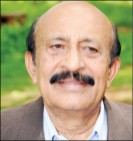
Pemmanda K. Monnappa

Madikeri:

The president of the Kodagu District Retired Police Officers’ Welfare Association, M.A. Appaiah, said here on Tuesday that a guest house in memory of the State’s first Inspector-General of Police, Pemmanda K. Monnappa, would be built near the Maitri Police Community Hall here at an estimated cost of Rs. 25 lakh.

Pemmanda K. Monnappa had served as the Commissioner of Police of the old Madras province. Later, he became the first Inspector General of Police, Karnataka (the then Mysore State), under the S. Nijalingappa government.

Funds

Mr. Appaiah, a retired Superintendent of Police, told presspersons that the guest house would be called ‘Swabhimana’. While some amount was being contributed by the Police Department in the form of grants, the rest would be mobilised through donations, Mr. Appaiah said.

Other cities

Memorials have been built in Mr. Monnappa’s memory in Chennai and Hyderabad. In Karnataka, it was the retired police officers’ idea to construct a guest house, Mr. Appaiah said. The association proposes to urge the Madikeri City Municipal Council (CMC) to name the road branching off from the College Road, near the Maitri Police Community Hall, leading towards the Subramanyanagar area, after Mr. Monnappa.

Career details

Pemmanda S. Ganapathi, a senior member of the Pemmanda family, recalled the services of Mr. Monnappa, who belonged to the Indian Police (IP) cadre. He had served in the Malabar area in Kerala and as the Superintendent of Police in Kurnool and Guntur in Andhra Pradesh. Mr. Monnappa then became the Commissioner of Police in Madras.

Milestone

Mr. Monnappa was instrumental in suppressing the Razakars rebellion in Andhra Pradesh as the Inspector-General of Police, Mr. Ganapathi said. The then Union Home Minister, Sardar Vallabbhai Patel, had chosen Mr. Monnappa to quell the mutiny in Hyderabad.

Recognition

After the reorganisation of the States in the country in 1956, Mr. Monnappa came back to the State, which was then called the Mysore State, to become the first Inspector General of Police, during the reign of S. Nijalingappa.

The British government, in recognition of Mr. Monnappa’s meritorious service, conferred on him the titles: ‘Rao Saheb’ and ‘Rao Bahadur’. He retired from service in the year 1958.

Mr. Monnappa’s son retired from service as a senior IAS officer and has now settled in Chennai.

Members of the Association, B.D. Mandappa, B.A. Poonacha, Y.D. Keshavananda, A.A. Appanna, A.B. Devaiah, A.M. Balakrishna, K.B. Belliappa and M. Achutan Nair, were present.

source: http://www.thehindu.com / The Hindu / Home> National> Karnataka / by Staff Correspondent / October 01st, 2008

Pages from history : Musings on Victoria Gowramma

By Prof. A.V. Narasimha Murthy, former Head, Department of Ancient History & Archaeology, University of Mysore

Victoria Gowramma is an enchanting but a perplexing name as it is a curious combination of western culture represented by Victoria and Hindu culture symbolised in Gowramma. In fact, an old fashioned and devoted Hindu woman with traditional virtues is referred to as Gowramma. Actually Gowri is Parvathy, the consort of Shiva. Slowly the name Gowramma is vanishing from Hindu household in preference to more modern names. However, that name still persists among the Kodavas.

I was re-reading D.N. Krishnayya’s book Kodagina Itihasa (History of Kodagu) in Kannada. It is a good book and reads like a novel but gives authentic history of Coorg. He has devoted many pages for sketching the life of Gowramma. In fact, C.P. Belliappa has made a special research on the charming lady and has written a book titled Victoria Gowramma: The Lost Princess of Coorg, which I have not been able to read unfortunately. Further he has taken the trouble in exploring and locating her cemetery at Brompton in South-West London. Thus Belliappa has given a new lease of life in history to this extraordinary Princess of Coorg and has added a new chapter to the history of Coorg. K.B. Ganapathy has also written about her in his book ‘The Cross and the Coorgs’ and its Kannada version Kodagina Mele Shilubeya Neralu. All these books are useful in understanding the personality of this Princess who passed away when she was just 23 years (1841-63).

Victoria Gowramma was the daughter of Kodagu King Chikka Veerarajendra Odeya, son and successor of King Lingarajendra. He was just 17 years when he became the king and due to bad company he became a cruel and autocratic king and people of Coorg cursed him to the maximum but were scared of him to raise their voice. Killing people when he did not like them or those who did not toe his line had become a daily affair without any mercy. A low class person by name Kunta Basava, who was looking after the Palace dogs rose to the position of a Dewan of the State and encouraged the King in all his atrocious acts. Added to it, he had a strong weakness for women and as soon as he saw a charming woman, he would get her into his harem. The British warned him but he ignored their advice. Finally he submitted himself to the British and became a prisoner in his Palace. He was first taken to Vellore and finally to Kashi where he was kept as a State prisoner. He requested the British government to permit him to take his dear daughter Gowramma with him to England and the British permitted him.

Thus Princess Gowramma went with her father and reached England in March 1852. The deposed King and Gowramma were given a rousing reception at London and Veerarajendra was actively participating in social life of London along with his daughter Gowramma. Suddenly he thought of her future after his own death and wrote a letter to Queen Victoria, requesting her to take Gowramma under her protection and convert her to Christianity and give proper education to her. The queen was very happy and Gowramma was converted to Christianity in Windsor Castle church by Canterbury Archbishop.

Queen Victoria became her guardian and gave her the name Victoria Gowramma. Chikka Veerarajendra was also present on that occasion and he expressed his gratefulness to the queen. The responsibility of her protection and education was entrusted to Major Drummond and his wife. As they did not look after her properly, she was sent to Lady Login and Sir John Login who were proficient in Hindustani. She was not encouraged to meet her father frequently and was allowed to meet him on special occasions only. Gowramma had forgotten Hindustani and Veerarajendra did not know English and hence the father and daughter talked to each other through a bilingual interpreter. Most of the time Veerarajendra was weeping whenever he met his daughter and thought that he was responsible for her plight under the British but it was too late. He became sick and when she came to meet him, he handed over a bag to her which contained a large number of precious stones and rich ornaments and asked her to wear them. Both of them cried.

Veerarajendra died in 1859 in London but Gowramma could not go to the funeral as she was living in White Island, far away from London.

His body was kept in Kansal Green Cemetery and after two years the body was brought to Calcutta through a ship. From there it was taken by road to Kashi and was buried there as per the rituals of Veerashaiva community and a tomb was built over it. The expenditure for all this was Rs. 2500 and the British government sanctioned this amount. When he died he had cash and valuables worth around rupees four lakhs and it was distributed among his relatives. Nothing was claimed by Gowramma as she was under the protection of the queen herself.

Gowramma was under the protection of Mrs. Drummond. The latter had two daughters who were active and were going to school. But Gowramma was always inactive and had no interest in learning. Hence she was being treated badly by the family. She felt that under the influence of Gowramma, her two daughters also may get spoilt and requested the queen to relieve her family from the responsibility of Gowramma. Then Gowramma was entrusted to another European woman by name Lady Login. She had a good knowledge of India, and also had the responsibility of looking after Dilip Singh. He was the first King to be converted to Christianity whereas Gowramma was the first woman to get converted.

As part of the ritual, the queen wanted her to go to Italy. The queen had sent an expensive diamond ear-ring and necklace of pearls and asked her to lead a life acceptable to God. Veerarajendra who was present on the occasion was happy at this gesture. Then Gowramma was taken to Italy (Vatican) by Lady Login and the new climate made her healthy and enthusiastic, regarding the royal life. Though some people tried to get her married to Dilip Singh, the latter did not agree as Gowramma did not come up to his expectations.

Then Gowramma came to England along with Lady Login. The latter wanted to be relieved of the responsibility of Gowramma and she was put under the care of Lady Katharine Harcourt. But the latter put Gowramma under a Junior Governess and Gowramma did not like that. Then she was put under the care of Sir James Wirhog. At that time Colonel Campbell used to visit her house. He was a young widower and showed great interest in Gowramma. They were married and they had a female child who was given the name Edith Victoria Gowramma. Campbell and Gowramma enjoyed fairly good life, visited many places and took part in royal festivals and parties. The queen was very happy and ordered that there should be no deficiency in providing funds and amenities to Campbell and Gowramma. Thus everything looked wonderful to the couple.

Gradually her tuberculosis was becoming severe. Queen Victoria made all arrangements to get her the best medical help. But the medicines did not help and finally she died in 1864 (March 30) when she was just 23 years. As per the desire of the queen her body was buried in Brampton Cemetery in London and an epitaph was carved on the marble stone as follows:

“Sacred to the memory of Princess Victoria Gowramma, daughter of ex-Raja of Coorg, the beloved wife of Lt. Colonel Campbell. Born in India, July 4th 1841, she was brought early in life to England, baptised into the Christian faith under the immediate care and protection of queen Victoria who stood sponsor to her. She died on 30th March 1864.”

After her death, her daughter married Captain Yardley and had a son who died in a road accident. Thus ended the family of Victoria Gowramma. Now she has entered the pages of history, the ultimate of everyone including kings, queens and princesses. But there is something melancholic in her life which makes us to have a soft corner for her. That is the greatness of Victoria Gowramma.

source: http://www.starofmysore.com / Star of Mysore / Home> Feature Articles / August 30th, 2014

New Chiefs Appointed to Academies

Bangalore :

The Department of Kannada and Culture has appointed heads and members to various academies.

M S Murthy (Bangalore) has been appointed the Chairman of Karnataka Lalithakala Academy, B A Mohammed Hanif (Dakshina Kannada) is the new chairman of Karnataka Beary Sahitya Academy while Kolkada Girish (Madikeri) has been appointed as the Chairman of Arebhashe Samskruthi Sahitya Academy and Biddatanda S Thammaiah has been appointed the Chairman of Kodava Sahitya Academy.

Members Named

For Karnataka Lalithakala Academy, B L Chauhan, Mahalingappa, Prabhu Urs, B K Badigera, Vishweshwari Tiwari, Devarishi, C Chikkanna, Krishna Devadiga, T H Shanmukappa, Khasim I Kansavi, Sharanappa B H, Wajid Sajid, Vedamurthy, Bargur Markandeya and C Rajashekar have been appointed the members.

source: http://www.newindianexpress.com / The New Indian Express / Home> States> Karnatkaka / by Express News Service / August 14th, 2014

The glass ceiling in diplomacy

WOMEN OF THE WORLD: THE RISE OF THE FEMALE DIPLOMAT
Helen McCarthy
Bloomsbury, London, 2014
404 plus xii pages; Rs 595

This book’s core message is how the male-dominated world of British diplomacy gradually – and grudgingly – let professional women in. As an academic, the author scores on objectivity, but the reader may miss an intimacy of personal experience that an insider might have provided. The author’s reliance on documentary material, and absence of interviews with working diplomats, produces a disproportionate emphasis on history; the book is weak on the contemporary scene.

This 400-page tome is fluffed up with an extended introduction on the evolution of the world of British diplomats from the late 19th century onwards, in which women were notable for their absence. But useful nuggets are thrown up. Who might imagine that as far back as 1893, most of the candidates recruited into the Foreign Office passed through a “crammer” called Coombes to prepare for entrance tests? It was the shortage of men during World War I that brought women into clerical-level diplomatic work in London, but few rose to executive positions. When in 1933 the Foreign Office asked embassies if women could handle diplomatic and consular work, most ambassadors were aghast. It was the Soviet Union that in 1924 appointed the world’s first female ambassador, Alexandra Kollontai, to Norway. The United States appointed its first female head of mission to Denmark in 1933 (that was a “legation”, headed by a “minister plenipotentiary”; such junior embassies, withered away after World War II, or WWII).

Two chapters (the fifth and the sixth) are devoted to the proceedings of a 1934 committee that examined and recommended against the entry of women in the diplomatic service. It took WWII to bring about real change in British mindsets. At the nine-week conference at San Francisco, five female delegates were among the participants, from Canada, China (KMT), Dominica, Uruguay and the United States; the United Nations Charter bears the signatures of four women.

The main narrative is sketched through the archival material that the historian author has tracked down after rigorous search through official papers, personal diaries, and letters and other sources. This produces fascinating pen portraits of strong characters, such as the Soviet ambassador Kollontai, fluent in 11 languages, who served in Norway, Sweden and Mexico; Dame Edith Lyttelton, the United Kingdom’s delegate to the League of Nations who argued in vain for women’s entry to the diplomatic service; and Freya Stark, a Briton who became an Arab affairs specialist in the 1930s, exploring little-known corners of Syria and the Arab peninsula, and during WWII worked with much verve in Cairo, Baghdad and Tehran. The few women that found diplomatic assignments, such as Nancy Lambton in Tehran, had to appear in academic gowns on formal occasions, since a diplomatic uniform – de rigueur in those days – did not exist for women.

It was as late as 1942 that Mary McGeachy became the first woman to be given diplomatic status, at the United Kingdom Embassy in Washington, D C. While other civil services had become accessible to women 20 years earlier, the ban on women in the service’s executive-level “A Branch” was lifted in 1946. This was preceded by a 1943 white paper that amalgamated the diplomatic and consular services, and a committee appointed in 1945 that recommended removal of the ban. But it came with two caveats: a marriage bar, and a “quota” of 10 per cent. Yet through the 1950s, women did not make up more than two per cent of the executive branch.

Presented through the eyes of female recruits, the final section of the book is fascinating, depicting the recruitment process (including the two-day “house party” where candidates that had passed the written tests were put through problem-solving and goal-achievement skills; how I wish such a process was used for the Indian Foreign Service, or the IFS). The Foreign Office was hugely behind the times in waiting till 1973 to remove the bar on marriage for female diplomats. Indian female diplomats confronted the same prejudice. They were required to resign on marriage; in the 1950s, we lost outstanding persons, such as Rama Mehta and Mira Sinha Bhattacharjea. This irrational rule was lifted in 1962 when Manorama and Hardev Bhalla, both in the IFS, married. In 1973, the United Kingdom appointed its first female high commissioner, but their first married female as ambassador emerged only in 1987. India appointed C B Muthamma (the first woman to join the IFS in 1949) as its professional female ambassador to Hungary in 1970.

The United Kingdom’s glass ceiling remains much worse for professional women than one may imagine. In 1995, the senior-most female diplomat, Pauline Neville-Jones, Foreign and Commonwealth Ofiice (FCO)’s political director, could not win the prize she sought – the Paris ambassadorship; that went to a male colleague six years her junior. She declined substitute assignments and joined a bank. Till date, a woman has not headed any of the United Kingdom’s top six missions, nor served as the FCO permanent under secretary. India has seen three female foreign secretaries since 2002, and ambassadors of both genders at virtually all its top posts.

The book evokes real issues that all foreign services face today: the old formula for wives of diplomats to immerse themselves in “housewifery and hospitality”, treating the embassy as an extended family, with roles assigned by status of their husbands, no longer works. The challenges faced by spouses taking up jobs while accompanying diplomats are all too common in all foreign ministries. One wishes the author had examined this further, looking also at practices in other countries.

The reviewer is a former diplomat, author and teacher
source: http://www.business-standard.com / Business Standard / Home> Beyond Business> Books / by Krishna S. Rana / August 10th, 2014

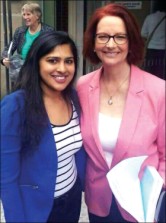
Kodagu girl dabbling in OZ politics

Charisma Kaliyanda with Australian Prime Minister Julia Gillard

Mysore :

Kaliyanda Charisma is in the thick of Australian politics. She is currently running up for election to the State Parliament of New South Wales, which is one of the States of Australia. “I hope to be elected in March 2015, at which time I will work hard to represent the constituents of the seat of Holsworthy” she said. Charisma is contesting from Holsworthy on a ticket from the Australian Labor Party, who have selected her as their candidate to contest the upcoming State election.

“I was inspired to become involved in politics by three incidents that all occurred around the same time. Firstly, my University (University of New South Wales) was making big changes to our degrees and I was complaining in class when one of my classmates asked me “what are you going to do about it?” She invited me to stand with her friends for election to the Student Representative Council (SRC) of UNSW. I realised I was just wasting my breath by complaining without taking any action, so I joined my classmate and her friends. The following year, I was elected President of the UNSW SRC,” said Charisma, speaking to Star of Mysore.

“Secondly, as part of my studies I travelled on exchange to Mexico. Here, I realised the value of being involved in politics — if people from all walks of life are not involved in politics then the decisions that are made cannot be representative of society as a whole,” she said.

“Finally, it was around this time that I was diagnosed with Type 1 diabetes. This experience made me realise that the health system we have in Australia is fantastic, and that health and education are so important to being able to succeed in life. So, I got involved in local politics,” said Charisma.

Charisma is an occupational therapist by profession. Her experience with the health system there led her to get Masters in Occupational Therapy from the University of Sydney. “I love working in paediatrics, which is why I completed a program working at a school for children with physical disabilities in Mumbai last year,” she said.

About her background, Charisma said that she is the daughter of Kaliyanda Jaya and Banumathi, from Kolakeri village, Madikeri taluk, Kodagu. Banumathi is working for NSW railways. She and her brother were born in Bangalore. When she was around four years old, her parents decided to migrate to Australia. “Although the size of the Kodava community in Sydney has increased in recent years, it was relatively small when we were growing up. However, despite having lived in Australia for over 20 years, my parents have ensured that we have never forgotten our roots, our language and our traditions,” said Charisma.

“I have always found it a privilege to be able to share my heritage, particularly with Australian friends, as Australia’s multicultural society celebrates the richness of different cultures. We speak Kodava thakk at home, and make sure to celebrate Kailpodhu, Puthari and Kaveri Shankramana with not only our Kodava friends but also our non-Kodava friends. The Kodava community in Sydney gets together for our festivals every year, but we also celebrate at home. My friends love my mum’s pandhi curry and wotti” she said.

“My family is extremely supportive – they have always encouraged me to pursue my goals wholeheartedly. I am lucky that we have been able to visit family and friends in India every 3-4 years. My father is Kaliyanda Jaya, from Kolakeri and my mother, Chottera Bhanumathy, is from Kunjalageri. We still have family and friends living in Coorg and Bangalore, however, we make it a point to visit our grandmother in Kunjalageri, whenever we are in India,” she said.

source: http://www.starofmysore.com / Star of Mysore / Home> Feature Articles / August 10th, 2014

M.C.Nanaiah urges Government to honour Joshna Chinappa

NanaiahKF15aug2014
Bangalore :

Veteran politician and former Minister M.C. Nanaiah has urged the State Government to honour Kodagu sports person Joshna Chinappa who won gold medal in the Squash Doubles in the CWG-2014.

Speaking to press persons here yesterday, Nanaiah said the Karnataka Olympics Association (KOA) must honour Joshna as she hails from Polibetta in Kodagu, with her grand parents and parents all belonging to this place.

Pointing out that her parents moved to Chennai seeking a career, Nanaiah said that Joshna was born and brought up in Kodagu and she belonged to the State. The squash player was living with her parents in Chennai and it was not correct on the part of the KOA for not honouring her citing that she was a resident of Chennai.

Noting that the KOA honoured Vikas Gowda who is settled in the US and others such as cricketer Azaruddin and tennis player Sania Mirza earlier, Nanaiah wondered why the Association ignored Joshna, who through her feat in the Commonwealth Games (CWG) had brought good name to Karnataka.

Pointing out that the Tamil Nadu and Andhra governments had announced cash rewards ranging from Rs. 20 lakh to Rs. 50 lakh for CWG achievers, the former Minister urged Chief Minister Siddharamaiah and Minister for Youth Services and Sports Abhayachandra Jain to look into the discrimination against the squash players, which has hurt sports lovers across the State and take measures to felicitate and reward Joshna as early as possible.

Referring to the spurt in atrocities and sexual violence against women in the State, Nanaiah observed that the effective implementation of the POCSO Act will go a long way in preventing crimes against women.

Reiterating the need for implementing the POCSO Act to curb sexual abuse of women and children, Nanaiah said that the Government has constituted a 26 member committee, headed by him, to look into effective measures needed for preventing sexual violence and other crimes against women and chilren, including implementation of POCSO Act.

The Committee, which is due to begin work shortly, will deliberate on the laws related to sexual violence and atrocities against women and children and come up with practical measures for tackling such crimes, he added.

source: http://www.starofmysore.com / Star of Mysore / Home> General News / August 09th, 2014

First woman SP of Kodagu takes charge

IPSofficerKODAGU12aug2014
Madikeri :

IPS officer Vartika Katiyar took charge as the new Superintendent of Police of Kodagu district yesterday.

Earlier, she was the Additional Superintendent of Police of Gokak for one year. She is the first woman to serve as the SP in Kodagu. She replaces M.N. Anuchet.

Speaking to presspersons at her office here, Katiyar said she was inspired to join the Indian Police Service to serve society and senior women Police officers were her role models.

She said that she had visited Kodagu several years ago, but as a tourist, adding that she was yet to get herself accustomed to the unique land and its people.

source: http://www.starofmysore.com / Star of Mysore / Home> General News / August 06th, 2014

Vartika Katiyar is SP for Kodagu

Vartika Katiyar took charge as the new Superintendent of Police of Kodagu on Tuesday.

Earlier, she was the Additional Superintendent of Police of Gokak for one year, and she is the first woman holding the post of SP in Kodagu.

Speaking to presspersons at Madikeri, Ms. Katiyar said she was inspired to join the Indian Police Service to serve society and senior women police officers.

source: http://www.thehindu.com / The Hindu / Home> National> Karnataka / by Special Correspondent / Mysore – August 06th, 2014

THE SUNDAY INTERVIEW : ‘Life can be a fairy tale… or a mess’

Author Kavery Nambisan / by Special Arrangement / The Hindu

Kavery Nambisan talks to the writer about her book A Town Like Ours, and juggling the roles of writer and surgeon.

Pingakshipura — where the hair on children’s head has turned white and the water runs black — is the town Kavery Nambisan created in her latest book, A Town Like Ours. Though a fictional account of a fictitious place, Nambisan’s words resonate with a dark, uncensored truth that brings to mind the fate of hundreds of villages across the country. Known for her highly perceptive and emotive style, Nambisan talks about her writing and her dual life as author and surgeon.

BookKF03aug2014

Excerpts from an interview:

Tell us a little about how you created Pingakshipura.

It grew around the character of Rajakumari. When I created this endearing, coarse-tongued prostitute and tried to imagine her life, the place that came to mind was a shapeless, noisy pell-mell town. I worked backwards from the town to what it must have been a decade or two earlier. I thought I had created Pingakshipura but, in actual fact, it was like the villages of Karnataka where I lived in my childhood that, over the decades, transmogrified into towns. The lopsided modernisation that we so timidly endorse in our greed for wealth leads to a distortion of the intrinsic fabric of society. The deep and abiding wisdom that is a part of village life is forever lost.

You choose to use Rajkumari to tell the story?

She is derived from a real characterYou know how you come across a person and she stays in your mind and cooks away in your imagination until she is no longer a strangerThe important thing about Rajakumari is not her beauty but her ability to think, and to believe in herself. Her unique position as a harlot gives her the fearlessness and the freedom to retain her dignity at all times.

As for using her voice to tell the story, who better than a whore to give an honest account of the goings-on in any place, who better to tease out the absurdities of life and people? Her voice is like the drumbeat of Pingakshipura, the collective voice of the town. She speaks in her language, namely Kannada which is also the language I grew up with in school.

Not every character’s story is resolved. This seems to be deliberate.

It is Rajakumari who speaks. She is keenly interested in the lives of four people; two couples and two children. My own experience is that the lives of seemingly disparate people come together due to the strangest of circumstances. And a novel is only a peeping-hole into something that happens somewhere. Life can be a charming fairy-tale but more often it is a mess. I look in and show what I see.

I am also very interested in the way we keep secrets from each other, the way we speak half-truths and get away with it all the time. We try to shield our own ‘imagined’ dignity or shield that of others. But see what dilemmas we can end up with. Would it not have been easier for Manohar to tell his wife about his longing for children instead of doing what he did? Or for Saroja to be utterly honest with Sampathu?

A Town like Ours seems to underline your own worries about where rural India is headed.

I guess that runs like a theme through the book, although it is not talked about much. Yes, I am depressed about the destruction, the thinning away, of our link with Nature. It is like humanity is steadily losing blood, getting more anaemic by the day and, instead of treating the cause, is trying to pep itself up by using the magic tablet of modernisation.

Is this the kind of fiction you believe in writing, one that reflects on and mirrors reality?

I did not plan anything. When I started, all I knew about writing was that you had to tell a story. I like stories that make me smile or laugh (sometimes with bitterness). But what really moves me is the grand canvas of living. We humans have a greater capacity for grief than for joy, don’t you think? At least, that is the case with me. I try to be honest, that’s what I do when I write. Everything flows from there. Injustice of all sorts fills me with disbelief about our future and I write so I can change that disbelief into something more hopeful.

Are there any similarities/overlaps in the two facets of your life: writer and surgeon?

Surgery is all about knowledge, skill and team-work. Writing, on the other hand, is done in isolation; it is a bizarre mix of observation, experience, memory and imagination, a chipping- away until something comes out on the page. But both writing and surgery require a certain confidence and the ability to take risks. Who knows what your novel will turn out to be like? In surgery, the risk is that each human body behaves differently and, although you think you know it well, it always throws up surprises. When I open an abdomen, or take on something else, I should be prepared to handle the innumerable variations. Especially in a rural area where you cannot cry for help. You succeed by staying abreast of progress, by keeping your faculties sharp and your mind open to learning. Once you say, “Yes, I can do this for you,” to a patient, you go all the way in the best way possible. By nature, I’m a risk-taker. That’s how I’ve survived as a writer and a surgeon.

source: http://www.thehindu.com / The Hindu / Home> Features> Sunday Magazine> The Sunday Interview / by Swati Dastur / August 02nd, 2014

Nanaiah to head panel on women’s safety

The 26-member committee has to submit its report within three months

The government has set up a 26-member expert committee, headed by the former Law Minister M.C. Nanaiah, to suggest amendments to the law related to sexual assault cases and enhancement of punishment for the crime.

According to a government release on Wednesday, Mr. Nanaiah will have the Cabinet Minister status. As the chairman of the committee, he enjoys powers to invite opinions and suggestions from experts and officers concerned. The committee is expected to submit its report along with its recommendations within three months from the date of its formation, the release said.

Increase in the incidents of sexual assault on women and children, followed by protests both inside and outside the House, prompted the government to constitute the expert committee comprising legislators, representatives of social organisations and women and children’s organisations, and legal experts.

Legislators Shakuntala Shetty, Y.S.V. Datta, Motamma, Jaimala, Tara, V.S. Ugrappa, Basavaraj Horatti, K.B. Shanappa, Govind Karjol, Tanveer Sait and Vinisha Nero, the former Minister Rani Satish, the former MLC Prafulla Madhukar, Leela Sampige, retired IPS officer Jija Hari Singh, writer Suchitra Rao, journalist Gouri Lankesh, Sangeetha Saxena, Krupa Alwa, Chandramouli and M.R. Hegde are members of the committee apart from four government officials from the departments of Home, and Law and Parliamentary Affairs.

source: http://www.thehindu.com / The Hindu / Home> News> National> Karnataka / Special Correspondent / Bangalore – July 31st, 2014