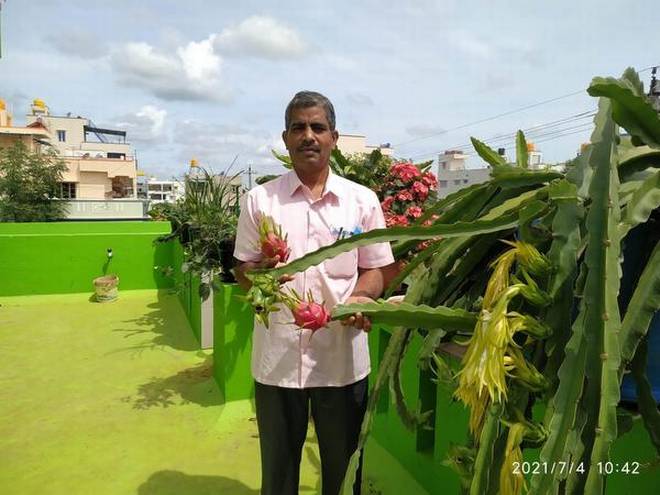
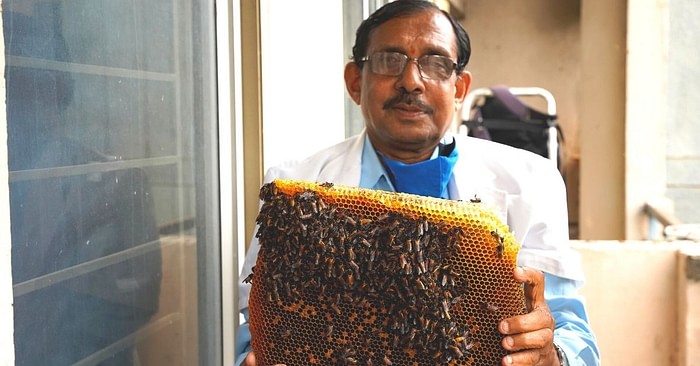
Vijay Angadi showing a Dragon Fruit plant on his terrace in Hassan.
People in urban localities, who lack sufficient space, can take up cultivation on the roof
The cultivation of dragon fruit is picking up among farmers. In Hassan, the fruits are grown on the roof as well.
Vijay Angadi, an agriculture expert and programme executive at AIR in Madikeri, has grown the fruit on his terrace garden at the 2nd phase of Visvesaraya Extension in Hassan.
Mr. Angadi, known for popularising organic terrace gardens, planted a dragon fruit sapling two years ago. “The plant grew well. We got a few fruits in the first year. In the second year, the number of fruits has gone up and I added a few more plants,” he said.
The fruit has antioxidants, vitamin C, is rich in fibre and low in calories. Given its taste, medicinal value and demand in the fruit market, many farmers are taking up cultivation in a big way. Those in urban localities, who lack sufficient space, can take up cultivation on the roof.
“The plant belongs to the Cactaceae family and is a drought-resistant variety. It can survive in high temperature as well,” said Vijay Angadi, a post-graduate in Agriculture Studies.
He suggested that people interested in earning money by selling dragon fruit can take up cultivation on the terrace. “On the roof of a house built on a 30×40 sqft area, one can grow 30 plants. Within two years, one gets the yield and can earn up to ₹30,000 a year, depending on the price in the market. Besides this, the grower can also sell plants. It adds to the family income,” he said.
As a programme executive with All India Radio, Mr. Angadi has produced hundreds of programmes for radio on farming. He has inspired many people in Hassan to take up terrace farming.
“I have around 100 pots on my terrace. I grow vegetables, green leaves and fruits in my garden without using chemicals,” he said.
source: http://www.thehindu.com / The Hindu / Home> News> States> Karnataka / by Special Correspondent / Hassan – July 05th, 2021
K A Ponnanna from Karnataka joined IISc as a security guard, but began serving as a field assistant at the Centre for Ecological Sciences and helped mentor students in handling bees and collecting samples for research.
K A Ponnanna, a native of Kodagu in Coorg, Karnataka, grew up amid peaceful co-existence with wild rabbits, lion-tailed macaques, deer, honey bees, wasps, and several other insects and animals.
He says these creatures were his pets. “The relationship between humans and wildlife was unique, as we reared and tended to wild animals and depended on them for livelihood,” he recalls.
Speaking with The Better India, Ponnanna (70) says that as he grew older, his job took him to places including Nashik, Hyderabad, Deolali, Dharangadhara and Jammu, where he served as a technician in the communications equipment field at the School of Artillery, a training institution of the Indian Army.
Ponnanna retired in 1993 and was appointed as a security guard with the Indian Institute of Science, Bengaluru. However, within a few days, his job profile took a different turn altogether.
The security guard became a field assistant and conservator of bees until he retired in 2012. Interestingly, despite the change in role, he continued his designation of a security guard and drew a salary for the same profile. He spent all his time at the Centre for Ecological Science (CES) department attending and mentoring students for their research work.
Here is his story.
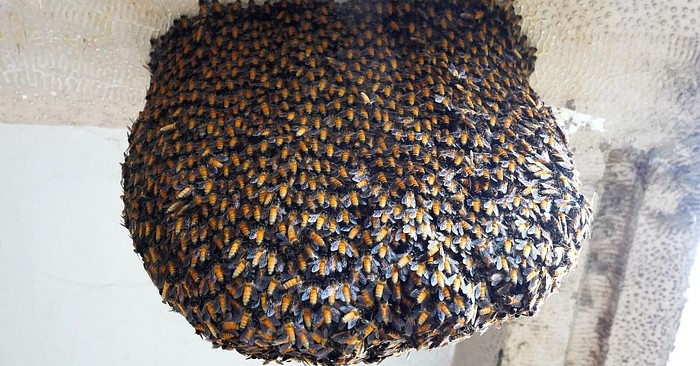
Beehive at IISc campus. / Credits: KG Haridasan.
A few days into his job as security guard, Raghvendra Gadagkar, then associate professor at IISc, struck up a conversation with Ponnanna. “He had helped rescue a few beehives in the campus and I had heard about his enthusiasm and fearless attitude. I noticed that he was interested in honey bees. Our conversation helped me understand how he grew up tending to honey bees and wasps in his native village,” Raghavendra says.
He adds that considering the experience that Ponnanna had, he requested him to volunteer in the research. “The work involves spotting honey bees and safely handling the hive, collecting samples and even bees at times. It is a delicate process. And Ponnanna proved to be brilliant in all aspects,” he says.
He adds that he was impressed by Ponnanna’s skills and passion towards bees, and that he requested the security department to transfer Ponnana to the lab with the existing designation and salary.
“It is difficult to make such arrangements in a government institution. However, the administration was flexible and recognised the value Ponnanna held,” Raghvendra explains.
A friend, mentor and philosopher
Ponnanna says he was thrilled and thoroughly enjoyed every bit of the change in his profile.
“I had never attended any classes or received formal coaching on bee handling. I’d never worn clothes, gloves or held any equipment to handle bees. Moreover, I did not know the departments and their locations,” he says, modestly adding, “In my village, everyone handled bees and wildlife, and this was not unique to me.”
Ponnanna slowly got a hang of things as he worked in the lab, assisting students and researchers. “I can now differentiate between the types of bees, insects that are poisonous and non-poisonous, reptiles and other wild animals. I used the knowledge to help students in their research and accompany them during field visits to handle bees and wasps,” he adds.
The students accompanied him in batches and took help in collecting samples for their academic requirements.
Sujata Deshpande, an assistant professor at the Zoology department of Mumbai-based St Xavier’s College, was one of the PhD students who received help from Ponnanna.
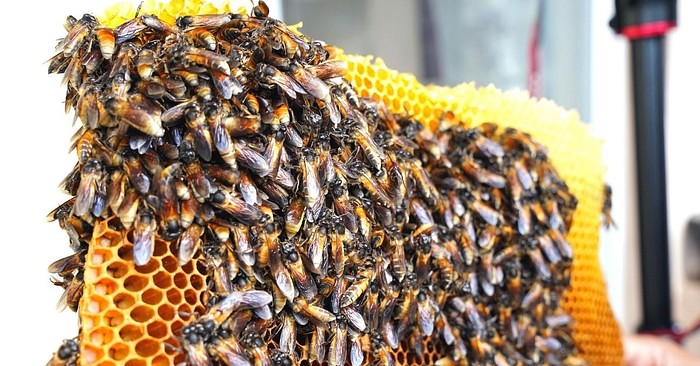
Credits: KG Haridasan.
“I was studying between 1999 and 2005, and he was more like a fatherly figure and mentor. He was always punctual and never hesitated to work late hours if needed. As students, we had to roam around a lot and search for wasps. But Ponnanna knew the most likely places that we’d find them, making our job easier. He handled bees like they were his children – with utmost care and protection,” she says.
Sujata says that hurting even one insect pained him. “The bee boxes in the campus would be safe and protected under his supervision. The chances of infections and diseases among the insects were also low because of the care he took,” she adds.
The academician says the field assistant’s traditional knowledge about bees helped students understand the insects and added value to their research.
Sujata says that over the years, Ponnanna’s role further evolved as a conservator. “The bees in Bengaluru suffered habitat losses in urban areas, and he often received calls for rescuing them. He would rush to the spot before anyone could destroy the beehives,” she adds.
Echoing her thoughts, Raghvendra says, “He has saved hundreds of beehives from destruction due to burning or spraying of pesticide and offered them a safe place inside the IISc campus. Many people wanted to get rid of the beehives around their residences, but he carefully removed them and resettled them without hurting any bees.”
He says that Ponnanna also became a friend, philosopher and guide to the students.
‘Have compassion for animals’
Raghvendra retired in 2012 and joined the institution as an honorary and Department of Science and Technology (DST ) year of science chair professor. Ponnanna retired around the same time and was reassigned as a consultant where he could continue to help students.
Credits: KG Haridasan
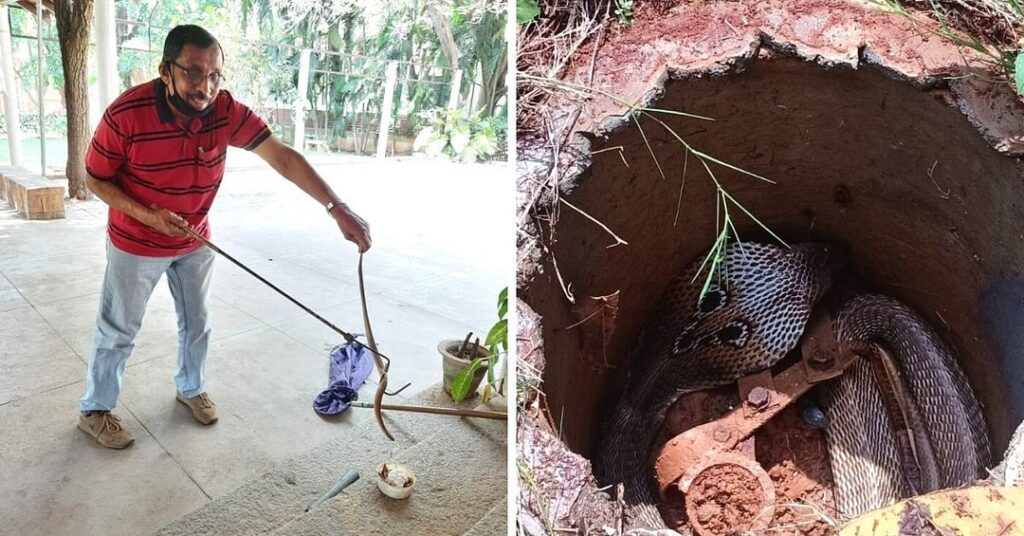
Apart from assisting researchers, Ponnanna also rescues snakes, other insects and animals.
Sharing his views on bee conservation, Ponnanna says that the destruction of habitat and beehives are contributors to adulteration in honey. “The use of pesticides in farms affects the bee population, and the insects often suffer from infection due to poor care. All these factors affect the population and honey production. To compensate, the companies adulterate the honey and sell it only because of its sweetness, but not for the medicinal properties the natural honey holds,” he says.
He adds that there needs to be a change in which the animals, insects and other biodiversity elements in nature are treated.
Ponnanna says that students should have a more practical approach and be willing to get their hands dirty in the research. “Apart from performing experiments in the lab, students should know how to handle what they are studying in the field. Only passion and sensitivity towards subjects can help achieve that,” he adds.
Citing an example, he says, “It is not difficult to catch an elephant when humans have managed to land on the moon. But we cannot hold the animal by the neck and choke it. We need to show compassion towards birds, insects, animals and other species. We should understand their anger, behaviour and other characteristics to ensure they are not harmed.”
Edited by Divya Sethu
source: http://www.thebetterindia.com / The Better India / Home> Inspirational> Karnataka / by Himanshu Nithnaware / June 23rd, 2021
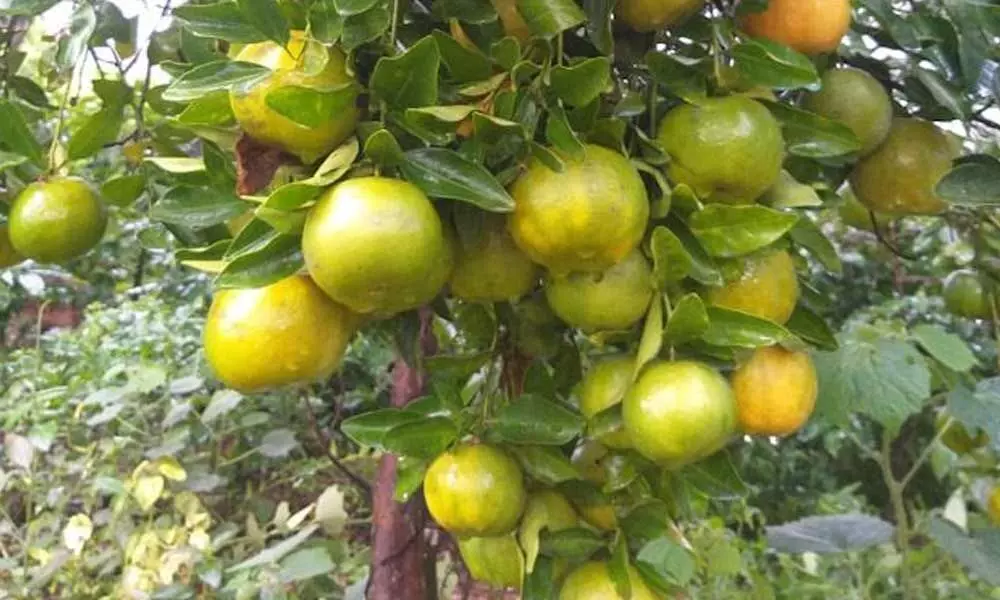
The demand for Coorg oranges, also known as Coorg mandarin, has dipped in the State owing to lockdown. Mandarin was almost wiped out in the district due to diseases a couple of decades ago.
Madikeri:
The demand for Coorg oranges, also known as Coorg mandarin, has dipped in the State owing to lockdown. Mandarin was almost wiped out in the district due to diseases a couple of decades ago. However, this variety of orange is being grown in many coffee estates, fetching a sizeable income to growers. It is being grown as a mixed crop in coffee estates along with pepper twice a year in December and June.
Grown in eight thousand hectares, this tiny district produces nearly 30 thousand metric tonnes of mandarin.
Many coffee estates have bountiful mandarin crop, but no buyers due to lockdown. Normally, coffee growers lease orange crop to Kerala-based traders. But this season there are hardly any buyers. The crop is mostly exported to Kerala, Tamil Nadu and Andhra Pradesh and other parts of Karnataka.
Though Nagapur organges have good market in the State, with good taste and aroma, Coorg variety has its own customer base. Speaking to The Hans India on Friday, a mandarin grower, Ponnachettira Suresh Subbaiah , a native of Ibnivalamudi near Madikeri, said that he has been growing the orange crop for decades, but has never faced such a situation. He said he used to export oranges to Calicut market. But this season, he sees no hope of good market for his produce. Subbaiah who grows mandarin crop in his 12-acre estate, has incurred losses this time.
There are no takers locally also as tourism has come to a standstill. The district which witnesses at least 4-5 thousand tourists daily in normal time is badly hit by lockdown and Covid restrictions.
Though production is increasing year by year in district, the demand for mandarin variety of oranges is discouraging.
source: http://www.thehansindia.com / The Hans India / Home> News> State> Karnataka / by Coovercooly Indresh / Hans News Service / June 18th, 2021
Mushrooms or toadstools are found mostly during the monsoon season especially when thunder and lightning strikes the landscape
Madikeri:
It is that time of the year when many edible mushrooms grow in the wild in the hilly district of Kodagu, making it a mushroom-lovers’ dream destination.
Mushrooms or toadstools are found mostly during the monsoon season especially when thunder and lightning strikes the landscape. As soon as the first showers hit the dry earth, residents and families, who are familiar with the areas where usually mushrooms grow, head there to reap the annual harvest — where the dormant spores lie from the previous year. And the person who sees it first, it’s all his.
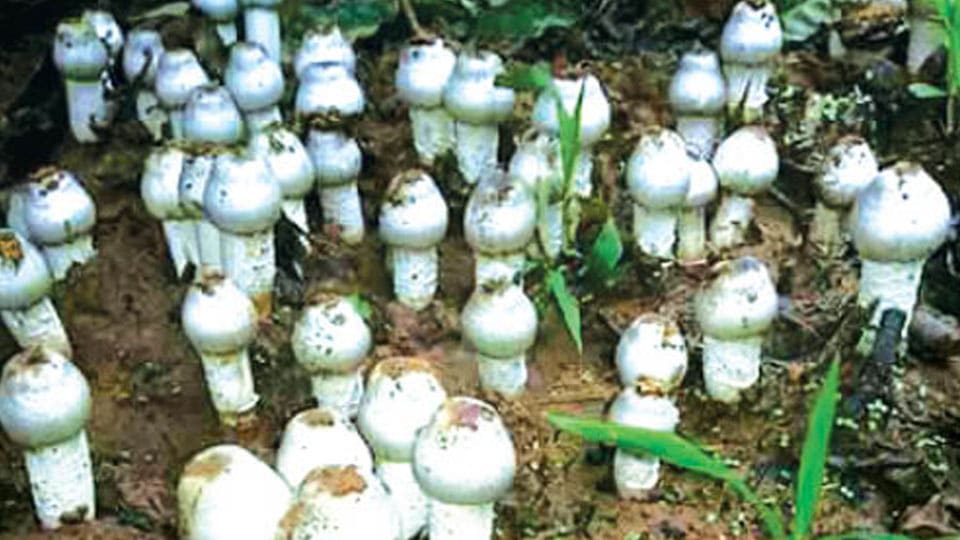
A particular mushroom that evokes interest this time is the ‘Aland Kumm’ in Kodava language. Its scientific name is ‘Agaricus bisporus’, an edible basidiomycete mushroom, native to grasslands in Europe and North America. It has two colour states while immature — white and brown.
A high-fibre content food product, these mushrooms usually rise near paddy fields and sometimes seen under dense cover of coffee estates. ‘Aland Kumm’ is prepared as curry using coconut masala or as masala fry too.
The other well-known variety is ‘Kode Kumm’ (umbrella mushroom) with scientific name ‘Termitomyces clypeatus’ (solitary, grows in soil and also on termite mounds) and ‘Nuchchi Kumm’ (Termitomyces microcarpus). The cluster of this mushroom is usually spread all throughout the location in specks of white. While the ‘Kode Kumm’ is usually salted and toasted on a raw flame in the fireplace, the others are prepared as curry to consume them with rice rotis.
Interestingly, according to an on-going research, lightning makes mushrooms more plentiful. The research is based on a Japanese traditional knowledge where they welcome storms over their fields based on the belief that lightning strikes provoke plentiful harvests of mushrooms. A research is being conducted by scientists in northern Japan where they are bombarding a variety of mushrooms in lab-based garden plots with artificially induced lightning to see if electricity actually makes the fungi multiply.
The results show that lightning-strength jolts of electricity can more than double the yield of certain mushroom species compared with conventional cultivation methods.
source: http://www.starofmysore.com / Star of Mysore / Home> News / June 14th, 2021
In a move to draw more tourists to the Scotland of Karnataka, the Forest Department and local administration have created a walk-in exotic bird aviary in Kodagu
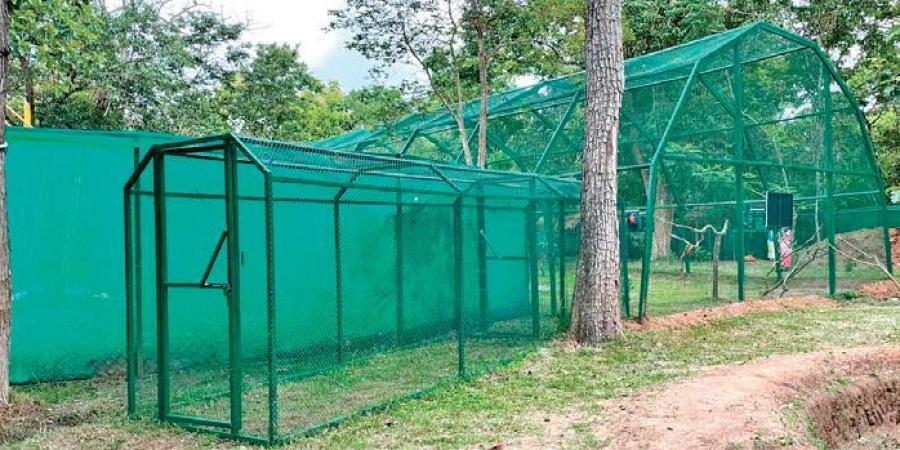
The walk-in aviary created at Cauvery Nisargadhama, Kodagu district | EXPRESS
Bengaluru :
In a move to draw more tourists to the Scotland of Karnataka, the Forest Department and local administration have created a walk-in exotic bird aviary in Kodagu. Though it was inaugurated by Housing Minister V Sommanna on Friday, it will be opened to the public only after a month.
The aviary has been created in Cauvery Nisargadhama, where a dedicated area of around 2,000 sqft for an enclosure has been created. Visitors can walk in and feed the birds. Shivaram Babu, Deputy Conservator of Forests, Kodagu told The New Sunday Express that a metal structure has been erected with mesh so that peopl e and birds are not inconvenienced.
The list of birds being procured to be housed include, budgies, African lovebirds, cockatiel, Conure varieties, African grey parrot, macaw, pheasant, turkeys, geese and ducks.
A Koi fish pond and fish spa, housing Gurra rufa (doctor fish), is also being created, he said.
The concept is very popular in foreign countries, especially the island nations. Some conservationists and activists have questioned the need for such a project in Kodagu. “The area is known for its lush green forest patches, vegetation, biodiversity and wildlife. There is no need to bring in exotic birds and have such an aviary. Instead, a bird-watching site can be created,” an activist said.
source: http://www.newindianexpress.com / The New Indian Express / Home> Cities> Bengaluru / by Express News Service / June 13th, 2021
Coffee growers find novel ways to protect their estates from herd raids
Kushalnagar:
Jackfruit is elephants’ favourite fruit and they can smell the ripe ones from miles away. Elephants are dead clever and determined. If the fruit is too high for them to reach they’ll shake the tree with their trunk until the fruit falls to the ground. And if there is an electric fence, they will break it down with a dry tree trunk and enter any plantation.
It is jackfruit season in Kodagu now and wild elephants raiding coffee estates in search of jackfruits is commonplace. They camp for days inside estates putting the lives of estate owners and also labourers in jeopardy as no one can venture into the estates till the herd or even a lone tusker leaves the property.
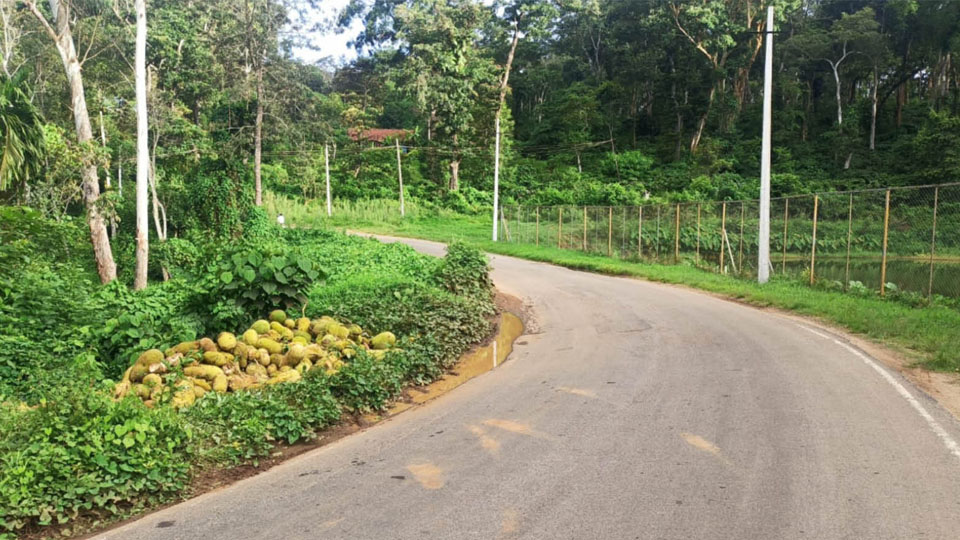
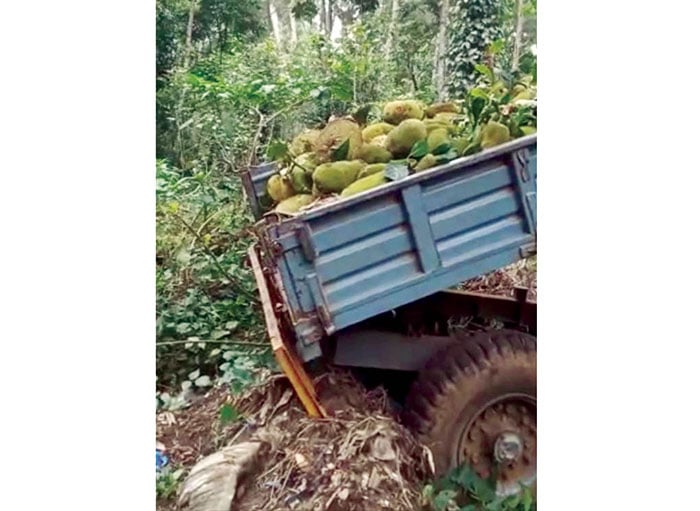
Wary of elephant raids, farmers and coffee growers have adopted newer ways and means to save their lives and property. They are plucking jackfruits from the trees and dumping them on the elephant path.
In fact, the Forest Department has to intervene in such elephant raids. But with no help forthcoming from the Department officers, who don’t even pay compensation to the loss of coffee plants, estate owners have taken this initiative and it has proved a success too. The elephants entering estates has minimised, if not totally prevented.
Wild elephant menace is rampant in Aiguru, Kandanakolli, Kodlipet, Shirangala Nakoor, Abyathmangala, Chettalli and Seventh Hoskote in the North of the district and Srimangala, Ammathi, Thithimathi, Ponnampet, Kutta and Balele in Virajpet and Ponnampet taluks.
Forests in these areas mostly comprise teak wood which is why elephants are falling short of food and in jackfruit season, they raid the estates. Repeated requests of the villagers to the Forest Department to chase elephants back to the forest have fallen on deaf ears.
Path identified and dumped
Now in this season, jackfruits are found piled up on the roadsides and growers hope the elephants hog these jackfruits instead of entering into their plantations. But the planters cannot cut the jackfruit trees inside their own estates as they do not have tree rights and have to seek permission from the Department — a tedious job, especially during COVID times.
“We identify the path usually taken by elephants roaming around and dump tractor-loads of jackfruits on the way and also near lakes that are frequented by elephants. It is a big loss if a herd of 20 to 25 elephants enter an estate. We are not worried about them eating jackfruits but in the process, they destroy many coffee plants,” says Arun Kumar, an estate owner at Abyathmangala.
On an average, over 1,000 kgs of jackfruits are dumped on the roadsides in the vicinity of every major estate. “We spend extra money and pay the labourers who make time to cut jackfruits amidst the tree-topping work,” he added.
Villagers oppose move
However, the trend has been opposed by some villagers in Abyathmangala-Kushalnagar Range who fear for their safety. They claimed that some of the estate owners’ move is endangering their lives. Anil a, villager said that despite many pleas, the estate owners dump jackfruits by the side of the road and they can’t even go on the road fearing wild tuskers.
However, Ajith Kumar, an estate owner on the Siddapura Road said that he had asked his estate workers to dump the fruits by the side of a lake that is frequented by elephant herds. “By mistake they have dumped on a roadside near the village and next time we will dump fruits on elephant path. Last year, we faced severe losses as many coffee tree branches were broken as herds entered my estate. This is the only visible solution,” he said.
source: http://www.starofmysore.com / Star of Mysore / Home> News / June 05th, 2021
Geographical Survey of India (GSI) has identified 85 places in Kodagu district, including areas in Madikeri and Virajpet towns, as vulnerable to floods and landslips.
Deputy Commissioner Charulatha Somal said necessary precautions are in place at those places following the GSI’s report. The officials had also prepared reports on places susceptible to rain emergencies based on previous years’ calamities.
The DC, while responding to Minister for Revenue R. Ashok on monsoon preparedness, gave details of the flood-prone areas and steps taken for the safety of people.
Mr. Ashok directed the DC to take steps to relocate those living in susceptible areas to safer places in view of monsoon. “Just issuing notices to the people to relocate will not serve the purpose. The administration has to persuade them to shift,” said the Minister, at a video conference on Monday with the DCs of some districts, including Kodagu, on Monsoon preparations.
Referring to last year’s landslip that took place at Talacauvery which claimed the lives of people, including the temple priest, the Minister said such instances should not recur. The people living in vulnerable areas must be shifted to relief/rescue centres which can be set up in schools or community halls, he suggested.
Ms. Somal urged the Minister to increase availability of kerosene to Kodagu since its demand goes up during monsoon. The Minister said he would speak to the Minister for Food and Civil Supplies.
source: http://www.thehindu.com / The Hindu / Home> States> Karnataka / by Special Correspondent / Mysuru – June 09th, 2021
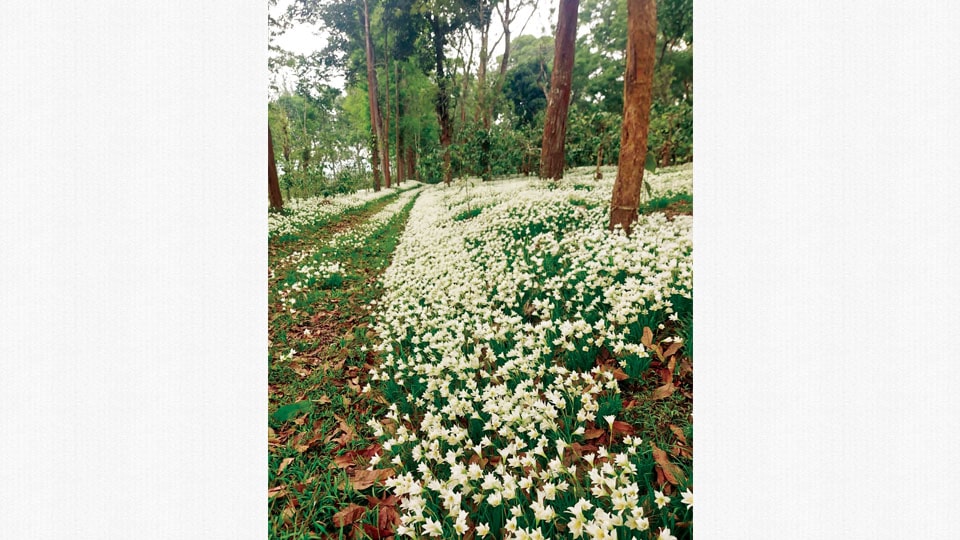
It’s raining in Kodagu and so are ‘Rain Lilies’ (Zephyranthes candida) in some coffee estates.
This photo is from an estate on Siddapura-Mysuru Road where Lilies with their inconspicuous grassy leaves have bloomed silently amidst the plantations forming a sight to behold.
These rain lilies bloom repeatedly following rains, while some bloom primarily in spring, others flower in summer.
source: http://www.starofmysore.com / Star of Mysore / Home > Photo News / April 23rd, 2021
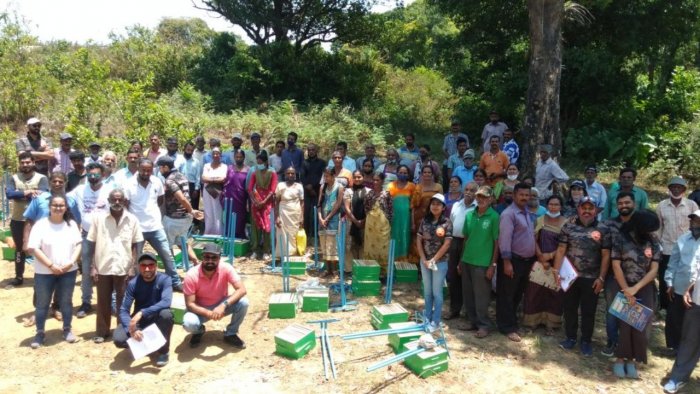
Beehive boxes were distributed to beneficiaries in Kodagu district. Credit: special arrangement
Kodagu Seva Kendra and Kodagu for Tomorrow organisation handed over beehive boxes to 130 families in Soorlabbi, Kumbaragadige, Mankya, Kikkaralli and Muttlu. Each family was given two boxes.
All the beehive boxes along with the families of bees have been procured from Everyday Honey Farm in Tumakuru.
Seva Kendra’s Pramod Sommaiah said that whoever engages in apiculture using the beehive boxes will get additional four boxes next year.
Kodagu for Tomorrow convener Ponnolatanda Kaverappa said that the organisation will impart training in beekeeping.
source: http://www.deccanherald.com / Deccan Herald / Home> State> Karnataka Districts / by DHNS, Madikeri / April 17th, 2021
Former President of Coorg Wildlife Society writes to CM and suggests sustainable ways and means
Mysore/Mysuru:
In the wake of increasing man-animal conflict and tiger attacks in Kodagu where at least three human lives have been lost within a span of 15 to 20 days, former President of Coorg Wildlife Society Col. (Retd.) Cheppudira P. Muthanna has written to Chief Minister B.S. Yediyurappa drawing his attention towards how the people are being victimised by mindless destruction of wild habitats in the name of big projects and how wild animals are entering human areas in search of food.
Keeping in mind the increasing human killing by wild animals including tigers and elephants, Muthanna has suggested the appointment of an Officer on Special Duty in the rank of Deputy Conservator of Forests exclusively for Kodagu. This officer must be based in Thithimathi with adequate staff and resources and he must be able to be a link between the Government and the people to solve pressing problems of the district, he stated.
Sharp-shooters
Secondly, tigers that kill human beings must be hunted down at the earliest to prevent further deaths and the existing regulations should be modified accordingly. “Kodagu has a number of excellent shooters and ten such shooters should be identified and provided with sophisticated telescopic rifles and ammunition. Whenever there is a dangerous situation arising due to tigers or leopards outside the forest habitat, they should be given permission to assist the Forest Department,” Muthanna said and added that local shooters will be more familiar with the terrain and conditions and would be able to defuse a dangerous situation without loss of time and it would save human lives.
According to Muthanna, a major reason for the tiger menace is due to vast areas of the forests covered by invasive species like Lantana Camara and Senna Spectabilis. “Deer and other prey congregate in small patches of forests that are free from weeds and are fit for grazing. This leads to a number of tigers also congregating in the same restricted area and causes the tigers to fight one another. In most such cases one of the tigers will be wounded and forced out of the forest. Therefore sufficient funds are required for eradication of invasive species,” he has suggested.
Some of the other measures suggested to the CM are, opening up of wildlife corridors from Nagarahole to Brahmagiri area in Kutta region of South Kodagu, establishing an Ecological Territorial Army Unit for Kodagu. “These units comprise mainly of able-bodied ex-servicemen who can join as volunteers and the unit can be utilised for forest land restoration, forest fire mitigation and eradication of invasive species,” he said.
Destruction and fragmentation of forest habitat is a primary cause of human-animal conflict and there is a need for a policy decision to prevent further destruction of forests due to so-called development projects such as dams, highways, railways, powerlines etc., he added.
Tourism has done tremendous damage to Kodagu. There should be no further investment in Kodagu for tourism. Tourism in Kodagu should be regulated and not promoted, he wrote. All the proposed project investments in Kodagu must be diverted to improve the economic condition of the people in the district through sustainable living and also to prevent human-animal conflict, he opined.
“There is a need to protect Kodagu as the principal catchment of River Cauvery and the proposals for multi-lane National Highways, railway lines and airport for Kodagu must be scrapped as none of these projects will benefit Kodagu or its people in any way and will only serve to further destroy the environment and landscape of Kodagu,” he urged the CM.
Tiger menace: Overnight protests continue
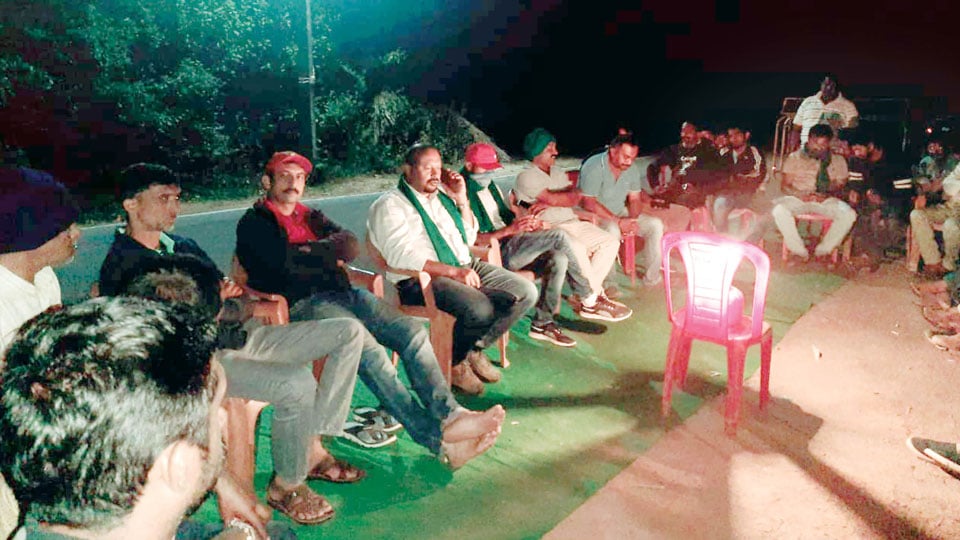
Overnight protests in parts of South Kodagu demanding the capture or shooting of elusive tiger still continues. The protests began five to six days back and residents of Bellur, Thavalageri, Shettigeri and Srimangala are participating in the dharna. They light campfires daily to keep themselves warm. Tents have been pitched by the side of the road for protection from rain. Protesters are upset as despite the Government shoot-at-sight orders and the intervention of MLAs K.G. Bopaiah and M.P. Appachu Ranjan and MLC Veena Achaiah, who came to Bellur recently, the Forest Department has failed to net the tiger.
source: http://www.starofmysore.com / Star of Mysore / Home> News / March 13th, 2021
WELCOME. If you like what you see "SUBSCRIBE via EMAIL" to receive FREE regular UPDATES.
Read More »