Category Archives: Nature

At home in the highlands

Unexpected wonders abound when immersed in the Coorg culture of southern India.

A thunderclap heralds the first, early rains of the monsoon season minutes after my arrival in the misty highlands of Coorg in southern India. From the deck of the Taj Madikeri Resort and Spa, cantilevered over a seemingly infinite valley, I have a dress-circle view of the approaching stormfront and rolling peaks silhouetted to the horizon. Swallows pirouette as front office manager Anant Marwah describes the coming wet season, when clouds billow into the open foyer and pass through the body like shivers. “You should see the monsoon — it’s amazing,” he says. “Mother Nature does most of the work here.”

Despite its name the resort is not, in fact, in Madikeri, the hill-station capital of Coorg district in Karnataka state. This is frustrating because I’d hoped to be staying in the heart of the land eulogised by Irish writer Dervla Murphy for its sacred forests and coffee-scented hills. But my disappointment is short-lived. The property, 1200m above sea level and 9km from Madikeri down a broken road flanked by rice paddies and the odd azure kingfisher, turns out to be a microcosm of Coorg culture.

A guestroom at the Taj Madikeri

Its 63 cottages and villas, carefully built over seven years to minimise disruption to the landscape, sit cloistered in 12ha of rainforest and coffee plantations. Constructed from recycled timbers and bricks made on-site from marsh soils (the quarry is now a pretty lake between the herb garden and main pool), the cottages’ external walls are coated in natural mud paint so as not to disturb wildlife. Pitched-roof interiors feature vast, screened windows over the semi-wilderness, fireplace snugs and fish-trap decorations woven by local tribal people. Barking deer stalk the grounds at night.

But it is the indigenous Kodava staff who give the hotel its strongest character and meaning. Colonel Pattamada Muthana, retired, commutes daily from Madikeri to the hotel’s onsite “conservatory”, a compact museum where he shares his people’s story with guests. Displays depict Coorgi dress, marriage rituals, faith and other traditions.

Dressed in camel corduroys, braces and impeccably polished boots, his kind face framed by specs and a faintly regimental moustache, Colonel Muthana explains how the Kodava view themselves as a distinct tribe, despite not being recognised as such by the Indian government.

“For some reason we were not scheduled, maybe because nobody knows our origin,” he suggests. But many Kodava suspect their ancestors were followers of Alexander the Great, who fled here after the Macedonian king’s failed bid to conquer India.

Guide Amaanda Pradhan Poovanna, known as Pradhan, picks up the Kodava creation story during a dawn hike to the top of Nishani Peak.

“It’s still believed we don’t belong to India, that we are descendants of Persians,” he explains as we pass by tiger pug marks, perhaps a week old, on the track.

The Kodava language, a hybrid of southern tongues and about 200 Persian words, and their distinctive features set them apart from other Indian peoples. “The ladies are fairer and they have blue eyes. The men have broader noses and curly hair, and most of them are from the warrior race.”
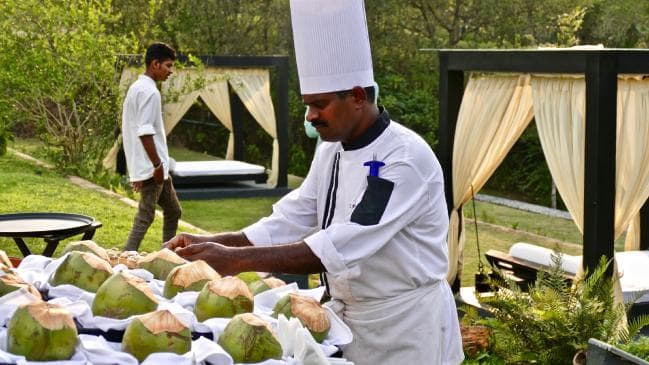
Coconut refreshment station at the end of a nature walk.

Kodava men often seek army careers. “If there are two sons, one will definitely be in the army,” Pradhan explains. “The other will be in sports. I am the only son, so my parents didn’t let me join the army. But I play hockey, for 15 years now.”

The cries of jungle fowl and yellow-throated bulbuls greet us as we emerge from a shola grove on to a grassy summit with a mesmerising sweep of highland scenery.

“What you are breathing is the purest oxygen, totally unpolluted,” he grins. I learn so much from Pradhan about life in Coorg (also known as Kodagu in post-colonial India), from the timing of the harvest calendar — cardamom in October, arabica coffee berries and rice in November-December, robusta berries in January, pepper in March — to the local diet of smoked boar meat and booze.

The Kodava are keen and resourceful drinkers, making wine out of everything from coffee to bird’s-eye chillies. “Without liquor and meat nothing happens in Coorg,” Pradhan assures me.

Privileged access and insights into local traditions are hallmarks of my 10-day, tailor-made swing through South India with Adventure World Travel. Even if I had been staying in the heart of Madikeri, I can’t imagine understanding the region as well as I do within the confines of the Taj resort.

Every aspect of the hotel is steeped in Coorgi culture, from ritual gudda baths of wood-heated local water rich in minerals and fragrant with lime leaves, to the seasonal and regional menus of executive chef Jose Thachil. Hel hails from neighbouring Kerala so is well versed in South India’s spice bounty of pepper, cloves, cardamom and kokum that has lured Roman, Greek and Arab traders to the Malabar Coast since ancient times. He prepares fish steamed in cardamom leaves and pork slow-braised in a cocktail of spices and laced with syrupy black kokum vinegar, a staple Kodava condiment so tart it makes the cheeks flinch.

On a nature walk through some of the resort’s 70ha green belt, Pradhan shares his ancestral knowledge of forest medicines.

Wild tobacco is used on the skin as a leech repellent during the monsoon. Peppercorns and basil are blended into a paste to “keep the throat clear”; Brahmi leaves are considered very good for children’s hair and memory. “If you eat one Brahmi leaf, one basil leaf and one neem leaf every morning, you will stay away from all the diseases,” he says.

There are thousands of wild elephants in these hills, though we see none. Leopards also prowl the highlands, and king cobras, the world’s largest venomous snake, come in XL sizes here. The biggest one discovered to date was 8m long.
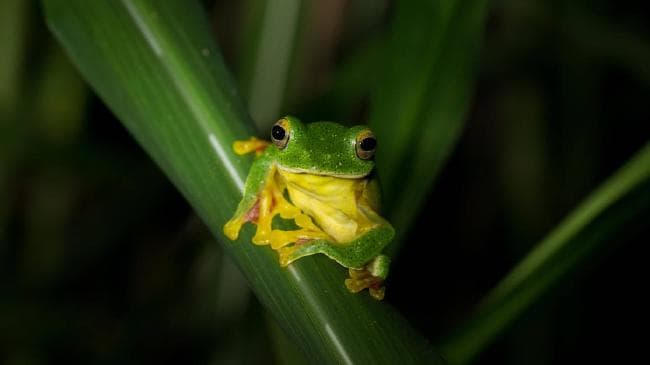
A Malabar flying frog. Picture: Alamy

Above us, flying lizards, frogs and squirrels have adapted to life in the treetops. Frogs thrive in the annual six-month monsoon, from May to October. The Malabar gliding frog is just one of more than 40 species, which include dancing frogs and purple frogs. Mushrooms are abundant too, including a fluorescent green fungus that switches on and off like a light. Only four of the 400 types are edible and Kodava children are taught to tell them apart from an early age.

We trace the boundary of a sacred grove where a temple dedicated to the fearsome Kali, goddess of destruction, protects the wilderness from trespassers.

These devara kadu, or “forests of the gods”, were once common across India but succumbed gradually to agriculture and development. They persist in the south, particularly in Kerala and Coorg, where, says Pradhan, “we value the importance of the wildlife and forests because they give us food, oxygen and rainfall”. He opens my eyes to Coorg’s charmed surroundings. After dinners I sit outside my jungle house in the blackness as fireflies blink brightly all around me.

Insect orchestras with frog percussion sections serenade me to sleep each night. The sweet song of the Nilgiri coucal and the dirge of the tone-deaf Malabar whistling thrush wake me at sunrise.

On the last morning, bags packed and waiting for a jeep to collect me, I’m taking one last, deep draught of my surroundings when something crashes into the tangle of branches outside my windows. I step closer to see what it is and stand eye-to-eye with a Malabar pied hornbill. It looks as shocked as I do to find itself so close to such an exotic creature, and stays frozen in a bid to blend into its surroundings. This is not easy when you are a large black bird with an enormous yellow bill and casque, so we just stand there, staring at each other, in a fitting farewell to an adventure defined by unexpected wonders.

Kendall Hill was a guest of Adventure World Travel and Taj Madikeri Resort & Spa.

In the Know

Adventure World Travel tailors holidays, from flights to accommodation and experiences. Its 11-night South India itinerary from Chennai to Bangalore via Tanjore, Hyderabad, Bekal and Coorg includes stays at members of the luxury Taj Hotels group, breakfasts, internal flights, tours and activities, all transfers and sightseeing by minibus. From $7295 a person twin-share.

Singapore Airlines has excellent connections between eight Australian cities and South India, flying to Chennai, Bengaluru, Hyderabad and Kochi via Singapore.

• adventureworld.com.au

• tajhotels.com

• singaporeair.com
_______________________________________

source: http://www.theaustralian.com.au / The Weekend Australian / Home> Travel / by Kendall Hill / August 31st, 2019
Built-up area in buffer zone threatens Cauvery

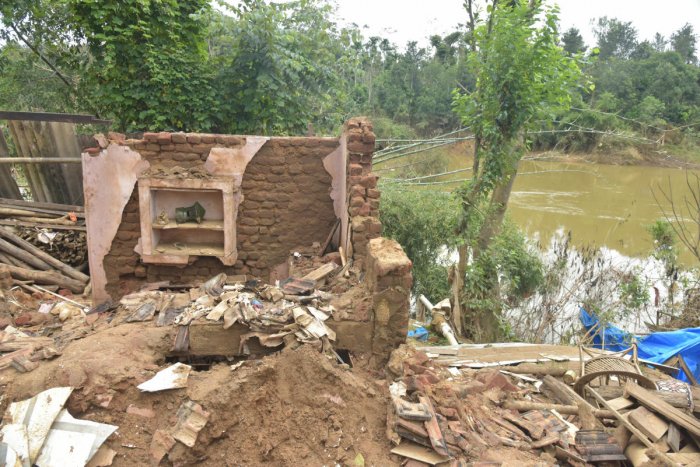
This collapsed house on the river bank at Karadikodu in Virajpet taluk of Kodagu districtis a tell-tale sign of disaster. A study by EMPRI shows that encroachment and construction activities in the 300-meter buffer zone on either side of the river pose a

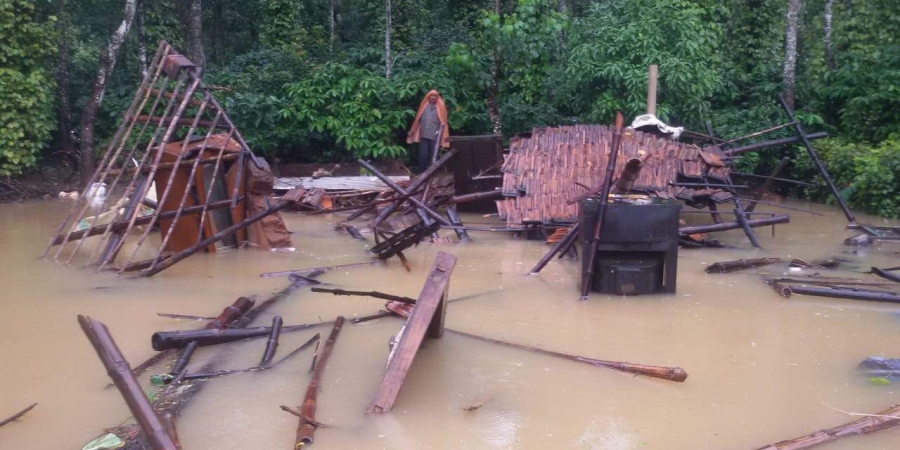
The submergence of hundreds of houses on either side of Cauvery river in Virajpet taluk may only be the beginning of a major disaster in riparian states as destruction of river ecology and encroachment of buffer zones have made the region vulnerable to climate change.

Entire villages have washed up within 100 meters from the river basin, with the distance between the house and the river reduced to about 10 feet at Bethri, Karadigodu, Guhya and Kondangeri. As flood survivors complained about the damage, Cauvery flowed quietly, taking the rejects from the houses pushed into its basin.

A study by Environment Management and Policy Research Institute (EMPRI) submitted to the government last year shows that the encroachment and construction activities in the 300-meter buffer zone on either side of the river poses a serious threat to both the river and people dependent on it.

To analyse land use, the study relied on satellite data, census maps which were verified with GPS-based data from the ground. Tracking change in land use and land cover along the buffer zone in Karnataka, experts saw that the built-up area alone increased by 941.05 acres between 2003-04 and 2014-15. “Built-up (rural area) expanded by 77% and built-up (urban area) expanded by 31%. This is identified as prominent change. In Kodagu, the total built-up area along the buffer zone jumped from 3% to 8%,” the study says.

Principal Chief Conservator of Forests (EWPRT) Ritu Kakkaar, who headed the working group that conducted the study, said the absence of a law to monitor the buffer zones should be rectified. “The 300-meter standard buffer zone should be monitored constantly. Any development activities in that area should be restricted and sand mining should be stopped immediately. These are major reasons contributing to floods,” she said.

There are 260 villages, 168 in upper Cauvery sub-basin and 192 in mid sub-basin and some, as seen in Virajpet, have come up within 100 meters of the river. Besides encroaching the buffer zones, the human activity has also eroded the river ecology.

The study has also raised concerns over the lack of coordination in monitoring water quality of the river. While the water quality data by Central Pollution Control Board revealed that 24.6% of Cauvery river stretch in Karnataka has been polluted and is unfit to drink without proper treatment, the Karnataka State Pollution Control Board data put the water quality at Class C (fit for drinking) for years. The central body’s number puts the water in Class E category.

Worryingly arsenic, chromium, copper, cadmium, zinc and lead were found in river water and the study attributed this to the human activities through industrial effluents, sewage and automobile wastes.

Minister S Suresh Kumar said he has already proposed shifting of the flood-hit villages located on river banks. “I have urged the zilla and town panchayats to pass a resolution to shift them to alternative houses in safe zones, instead of awarding compensation. Ultimately, people have to be taken into confidence,” he said.

The minister said he has told district officials to stop the flow of raw sewage into the river in Kushalnagar and set up a treatment plant at the earliest.

source: http://www.deccanherald.com / Deccan Herald / Home> State / by Chiranjeevi Kulkarni / DH News Service / Virajpet (Kodagu District) / August 23rd, 2019

‘Kail Muhurtha’ on September 1

Codava National Council (CNC) will organise the 25th annual ‘Kail Muhurtha’ at the Mand at Junior College Ground in Madikeri at 10.30 am on September 1.

CNC President N U Nachappa said that a puja will be offered to ‘Thok’ (gun), ‘Odi Katti’, ‘Peeche Katti’ and agricultural equipment on the occasion.

A procession will be taken out from Junior College Road to Capital Village, via Chowki – College road – SBI – Kohinoor Road – bus stand – GPO – Kodava Samaja – JT Circle route.

CNC members Kaliyanda Prakash, Katumaniyanda Umesh and Areyada Girish were present in the press meet.

source: http://www.deccanherald.com / Deccan Herald / Home> State> Mangaluru / by Adithya K A / DH News Service, Madikeri / August 27th, 2019

Karnataka rains: Brahmagiri Hill in Kodagu develops deep cracks

Bramhagiri Hill, a place of mythological importance and the birth place of river Cauvery, is one of the most sacrosanct places in Kodagu.

A visual from flood-hit Kodagu district in Karnataka. | Express Photo Services

Madikeri :

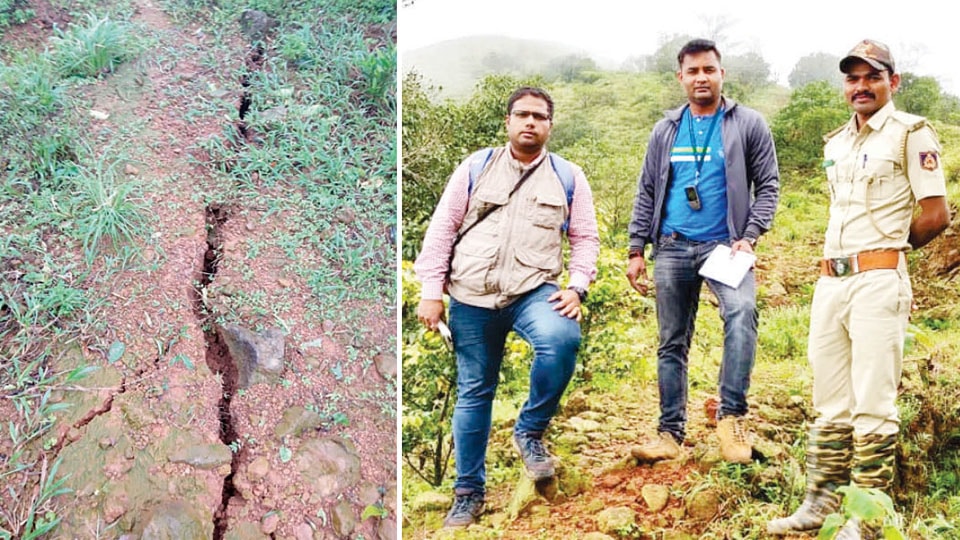
Bramhagiri Hill, a place of mythological importance and the birthplace of river Cauvery, is one of the most sacrosanct places in Kodagu. The historical place has developed cracks following incessant rain. The cracks have extended from the Talacauvery ‘kundike’ (place of holy water) to the top of the Bramhagiri Hill, sending fear among the residents of Bhagamandala and Talacauvery.

Kodagu Deputy Commissioner Annies K Joy requested scientists from the Geological Survey of India to study the landscape and submit a report.

“GSI scientists’ team has visited various spots. A detailed study and precautionary measures that need to be at these places will be submitted in a report on August 22,” he said.

Meanwhile, the residents of Bhagamandala said that the once-untouched hill has now witnessed human interference. One resident said, “During 2016, the forest department had taken earthmovers atop the hill to set up a rainwater harvesting unit. The hill was dug up for this.”

When asked, a former RFO of Bhagamandala, requesting anonymity said that this could not have been the reason for the crack.

“Recently, there had been landslides and earthmovers were used to clear it. This too might have affected the landform,” he said.

source: http://www.newindianexpress.com / The New Indian Express / Home> States> Karnataka / by Pragna G R / Express News Service / August 20th, 2019

After Cracks At Ayyappa Swamy Betta In Virajpet… Cracks In Brahmagiri Hill Worries People Of Kodagu

CracksKF22aug2019

Madikeri:

A day after inspecting cracks developed at Ayyappa Swamy Hill in Virajpet, a two-member GSI (Geological Survey of India) team visited Brahmagiri Hill range in Talacauvery on Sunday, following reports that huge cracks had developed at several locations in the Hill range.

The GSI team comprising Sunandan Basu and Kapil Sharma inspected Brahmagiri Hill range and studied the hill’s ecology, geology and geographical characteristics.

The team also got to know that the Forest Department had dug pits and planted saplings using heavy machinery, which may have caused loosening of the soil layer on the Hill range, leading to wide cracks.

Basu and Sharma also visited Korangala, where massive landslides were reported and studied about the reasons for such huge landslips.

The cracks on Brahmagiri Hill in Talacauvery, the birthplace of River Cauvery, the lifeline of crores of people along the river basin, has been a cause of worry for local people.

The residents have appealed the Government and the District Administration to take immediate measures to save Brahmagiri Hill range, which they consider as holy and also ecologically sensitive for its lush green cover.

The GSI team, after conducting a thorough study on all factors that have caused cracks in hillocks, is likely to submit a report to the Government on the measures to be taken.

Many Hills under threat of collapse

Meanwhile, many other hillocks elsewhere in Kodagu district are facing the threat of collapse, as cracks have reportedly surfaced in some of them.

After Brahmagiri Hill range in Bhagamandala, Ayyappa Swamy and Malethirike in Virajpet and Manipare Hillock at Thora village along the Kerala border, several other Hills too are said to have developed cracks, giving rise to serious concerns among local people.

Although the district has got a break from rains for the past couple of days, the people living near the hillocks still feel that their troubles are not far from over.

Many residents of Kodagu feel that this year’s rainfall is the highest in decades and has similarities with the 1972 deluge, when rain caused havoc and untold misery. But then, there were not much causalities as the population was less and urbanisation was yet to pick up pace.

But this year, the damage has been extensive with many homes collapsing and hundreds of people taking shelter in relief camps set up by the District Administration.

The district is facing the deluge for the second successive year. Last year, the deluge had devastated the district to such an extent that it will take many years for reconstruction.

Following last year’s rain ravage, a GSI team had extensively toured the district to undertake a detailed study of landslides and landslips. The GSI then had classified dangerous zones under four categories and had warned that villages coming under these zones could face nature’s fury once again. As such, the District Administration had taken many measures on a war-footing to prevent casualties and damages to properties as much as possible.

source: http://www.starofmysore.com / Star of Mysore / Home> News / August 21st, 2019

Kodagu: Battling nature’s fury for two years in a row

In action: For the people of flood-hit region, the presence of rescue personnel has infused a strong sense of security.   | Photo Credit: Special Arrangement
In action: For the people of flood-hit region, the presence of rescue personnel has infused a strong sense of security. | Photo Credit: Special Arrangement

Rescue prersonnel tread treacherous terrain in flood-affected Kodagu

Wading through slush, climbing slippery slopes, and battling inclement weather from dawn to night without respite is a matter of routine for the rescue teams stationed in the flood-affected Kodagu.

Rain may have abated but the search for missing persons continued at Thora village late on Wednesday as well, when the rescue teams recovered a body of a person buried in the mud.

The teams include three units of the National Disaster Response Force (NDRF), a column of the Indian Army, and Garuda — the State Commando team under the Centre for Counter Terrorism, apart from personnel of the Fire and Emergency Services, Civil Defence Quick Response Team, KSRP, and the local police, and hundreds of volunteers. For them it is the second consecutive year of battling a natural calamity in the district.

Thora, the toughest

A senior member of the Garuda team who was part of the mission said Thora was the worst affected this year and was comparable to Jodupala in 2018 in terms of the treacherous nature of the terrain. “There were other places too in Kodagu where people were affected by the overflowing river. But in terms of landslips and mud, Thora reminded one of Jodupala,” said the official. He said it was an impossible situation with a river of mud flowing down the hills and one was not sure if the ground beneath the feet was stable.

The team camped at a place nearly a kilometre away from the main road on sighting a few shreds of clothes and other signs of human habitation, which was otherwise obliterated. “Based on the assessment of the ground situation, we zeroed in on a specific point to dig out the mud and found the buried body,” said the Garuda force member.

The trek back was equally dangerous as they had to carry the body on a stretcher for nearly a kilometre in a terrain where their legs would sink knee deep in mud. They made it back to the base camp late in the night. This was just one of the many missions undertaken during the week when Kodagu was inundated.

For the people of the region, the presence of rescue personnel in their orange outfit — as in the case of the NDRF — has infused a strong sense of security. The Kodagu district administration had ensured the deployment of rescue teams and conducted a few rescue drills before the advent of the southwest monsoon in June. As the first signs of the unfolding crisis emerged, with water rising owing to heavy rain, the rescue teams swung into action to evacuate people to safety.

source: http://www.thehindu.com / The Hindu / Home> News> States> Karnataka / by R. Krishna Kumar / Mysuru – August 15th, 2019

How a group of eight locals rescued people stuck in flooded homes in Kodagu

Around 50 residents of Kodagu’s Goodugadde village were stranded in their flooded homes on Friday morning.

FloodKF14aug2019

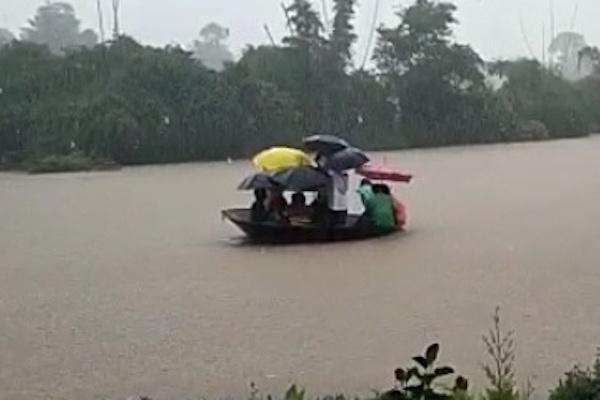
Around 50 residents of Kodagu’s Goodugadde village were stranded in their flooded homes on Friday morning, hoping that help would come before the river Cauvery would take away their lives.

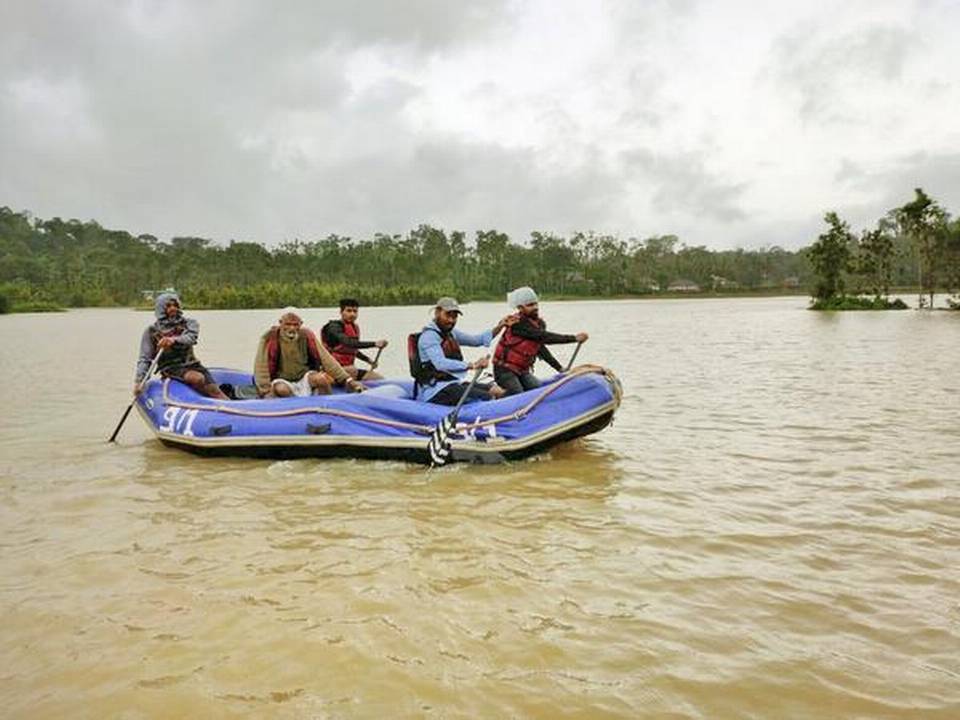
Luckily for Goodugadde’s residents, help came in the form of eight Good Samaritans, who ferried them to safe places through small iron-made coracles.

Mustafa, a 32-year-old activist from Kodagu, suspected that people were stranded in Goodugadde and other villages along the banks of the Cauvery river. Mustafa had heard from the local grapevine that many people had not left their homes despite a flood warning.

At around 6 am on Friday, Mustafa and his friends Ranjith Kumar, Afzal, Iliyas, Shafiq and four others from Siddapura, were anxious as the Dubbare Rafting Team was busy with rescue elsewhere.

Mustafa and his friends rushed to the Siddapura Police Station and requested the police to lend them the iron-made coracle lookalikes that the police had kept in the evidence room, which they had seized when they busted an illegal sand mining ring.

“We call it thappe in Kannada. They are circular, iron made vessels sand miners use to transport sand. It’s smaller than a coracle but bigger than the round vessels used to carry sand in construction sites. We wanted those so we could row it and look for stranded people,” Mustafa explains.

When the group reached Goodugadde, they found several senior citizens, children and middle aged people stranded in their flooded homes. Many were sitting on their rooftops, while some of them clung to trees, waiting for help.

“There were about 50 people. We began rescue at 7am and it went on till 11 am. We lost count of the number of trips we made to bring all of them to safety. They were sent to relief camps in Siddapura. By 12 pm, the Dubbare Rafting Team came to help us and we continued rescue operations in Baradi and Kakkattagadu villages,” Ranjith Kumar says.

Mustafa, Ranjith and the team of local rescuers claim that they are experienced swimmers and that they had volunteered during rescue operations in the floods that hit Kodagu in 2018.

“We have lived along the banks of river Cauvery all our lives. We have a very close relationship with the river and swimming is the first thing we learnt as children. We are expert swimmers and if our skill could be put to use to help people in need, then it’s our duty to help them. What is the point of being an expert at something and not helping those who could benefit from it?” Mustafa says.

Mustafa and his motley crew continue their rescue operations even now. “We will help as much as we can. Our people have seen too much damage due to rains and floods. Currently, we are going back and forth Goodugadde and recovering their belongings,” Mustafa adds.

source: http://www.thenewsminute.com / The News Minute / Home> Karnataka Floods / by Theja Ram / August 10th, 2019

Exploring the Waterfalls of Coorg: 6 sites you cannot miss

CoorgWaterfallskf10aug2019

I often observe that most people tend to cover the popular and must-see sites or engage in a particular activity when vacationing. Take Coorg for example. Most travelers, including me, have visited this beautiful hill town to discover its rich, aromatic, coffee plantations, stay at a quaint retreat, and do what travel blogs advise us to do. Until I discovered a different characteristic of Coorg in its waterfalls. You heard that right. These sparkling water bodies are the real treasures, hidden from the common sight, waiting to be explored more, but only by those who want to see beyond the obviousness of Coorg. Inspired by my own experience of this unique facet of this scenic hamlet, I made a list of the seven best waterfalls you cannot miss while touring Coorg.

When to travel
While most of these waterfalls are perennial and you can visit them any time of the year, their beauty is enhanced during the monsoon months of June through October. From rocky slopes to thick plantations, or dense mountain bluffs, you will find these waterfalls in various natural settings, each making for a magical sight.

How to explore
The best way to tour Coorg, especially if you want to do a waterfall-hopping trip, is to drive down from the nearest metro city of Bangalore. The taxi fare from Bangalore to Coorg is cheap, and you can easily keep the car with you throughout your tour. Also, when traveling in monsoon, the hilly terrain could be tricky, so I prefer to have an experienced driver take me around instead of me driving.

The Cascades of Coorg

Abbey Falls
About 6 KM from Madikeri town, this is the most popular waterfall of the district and a tourist hotspot. You simply cannot miss this, even if you want to. From the parking area, you have to take a 5-minute walk downhill to reach the falls. During the rainy season, the upper streams of Cauvery River rise in volume and cascade through thick plantations of coffee and spices. For the best view, stop by the hanging bridge, right opposite the falls and enjoy the panorama of cloud-capped mountains.is

Best time to visit: August to November
Timings: 9 AM – 5 PM
Entry Fee: Rs 15 per person.

Iruppu Falls
After Abbey, this is the next best waterfalls in Coorg. About 75 KM south of Madikeri town, Iruppu Falls sits in the Brahmagiri Hills. Note that you cannot drive up to the falls area. Once you park the car at the end of the road, you have to hike for 500 meters, down a steep path. The falls result from the overflowing Lakshmana Tirtha River dropping from a high altitude. The plush surroundings of monsoon greenery and the frothy waters of the falls is definitely a sight to savor.

Chelavara Falls
About 44 KM from Madikeri town, sitting on the edges of the Brahmagiri Wildlife Sanctuary, you will find the rapid torrents of Chelavara. Tucked amidst dense deciduous forests, this waterfall hides in plain sight, away from the prying eyes of commercial tourism. But those who have managed to discover this like me, have found this to be the most picturesque waterfall of all. With its massive size and water volume, especially during the monsoon, the scenic vistas of Chelavara Falls attracts offbeat travelers and trekkers. It is also called the Emepaare or the ‘tortoise’, owing to the shape of the rock at the pool below.

Mallalli falls
To reach this spectacular waterfall of Coorg, you have to drive to Somwarpet. From there, it is another 26 KM, from where you have to trek through forested trails to reach the catchment area of the falls. Nestled within the Pushpagiri hills, this is a sight to savor.

Best time to visit: July to November

Napandapole Falls
This waterfall is truly a treasure to unravel. If you are a true explorer and an adventurous soul, you will love the torrential flow of the Napandapole Falls, dropping from 120 feet, lying at the foothills of the Kote Betta peak. Surrounded by three smaller waterfalls, and set in rocky terrain, this cascade is a great site for rappelling and invites adventurers from all over. There are plenty of unexplored corners around the falls, which also make for a great hiking destination.

Best time to visit: August to December

Burude Falls
This five-step waterfall is a marvelous and stunning site to explore. Trek through the narrow creeks flanked by forests. If you are traveling Coorg during the peak season and looking for a respite from the bustling crowd in town, the Burude Falls and its surroundings can be the perfect spot for a day trip. Drive for about 29 KM from Madikeri town, and then hike for 1 KM to reach the falls.

My travel tips:

If you are traveling directly from the airport, get an affordable and dependable Bangalore airport taxi for your Coorg tour.

When trekking around waterfalls in the monsoon, always wear well-gripping shoes.

Some waterfalls are remotely located, so be prepared for long walks, and stay hydrated.

source: http://www.headlinesoftoday.com / Headlines of Today / Home> Sponsored Content / by Team HOT / August 10th, 2019

Both Kodagu and Kerala are fighting off an invasion of giant snails – but only one has found success

The foreign pest, which is thought to have arrived in India through trade routes, devours tender leaves and stems, completely destroying plants.

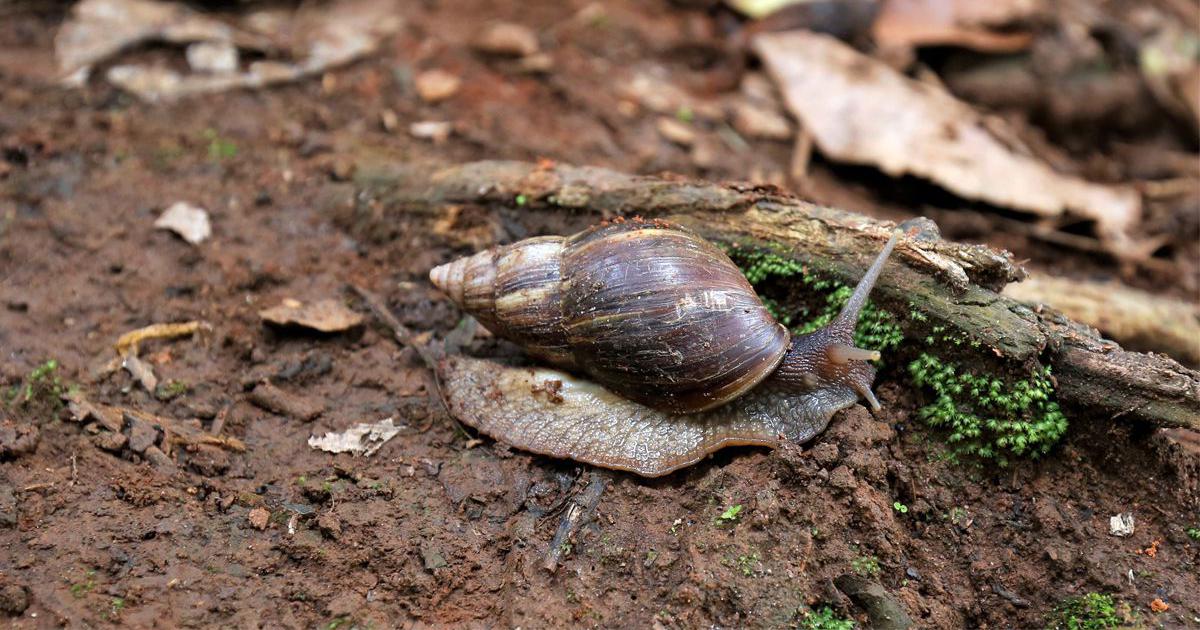
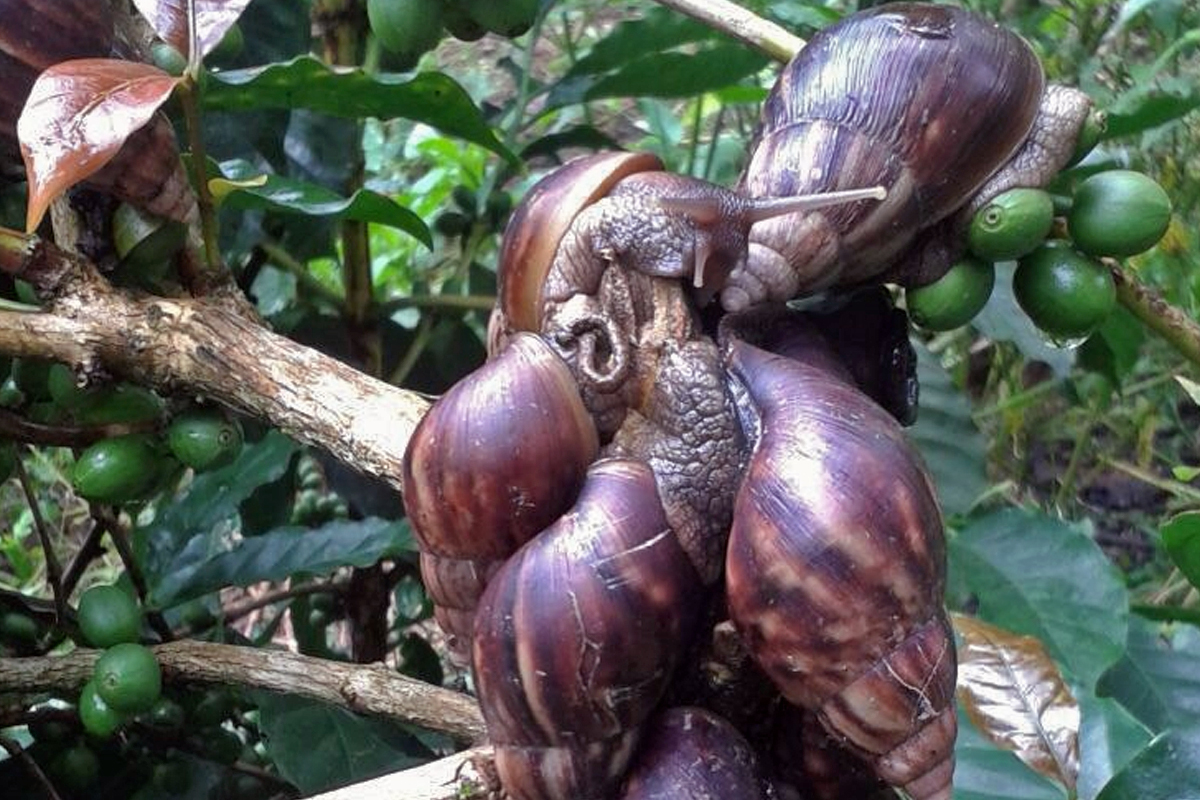
A giant African land snail, Achatina fulica, in a coffee estate in Kodagu district, Karnataka. | Abhishek Chinnappa/Mongabay

The monsoon rains have arrived late this year in the verdant hills of Kodagu – commonly known as Coorg – in Karnataka, the coffee capital of India. For some planters, it’s a mixed blessing. A delayed monsoon is bad news in the Western Ghats mountain range, where farmers and planters have found themselves at the receiving end of extreme weather events triggered by climate change. Last year in August, unprecedented rains and floods harmed crops and coffee plantations, affecting many lives and livelihoods.

In recent years, the rains have brought another problem with them – an infestation of giant African land snails that have caused massive losses to some 40-45 plantations spread over 300 acres of land in Northern parts of Kodagu.

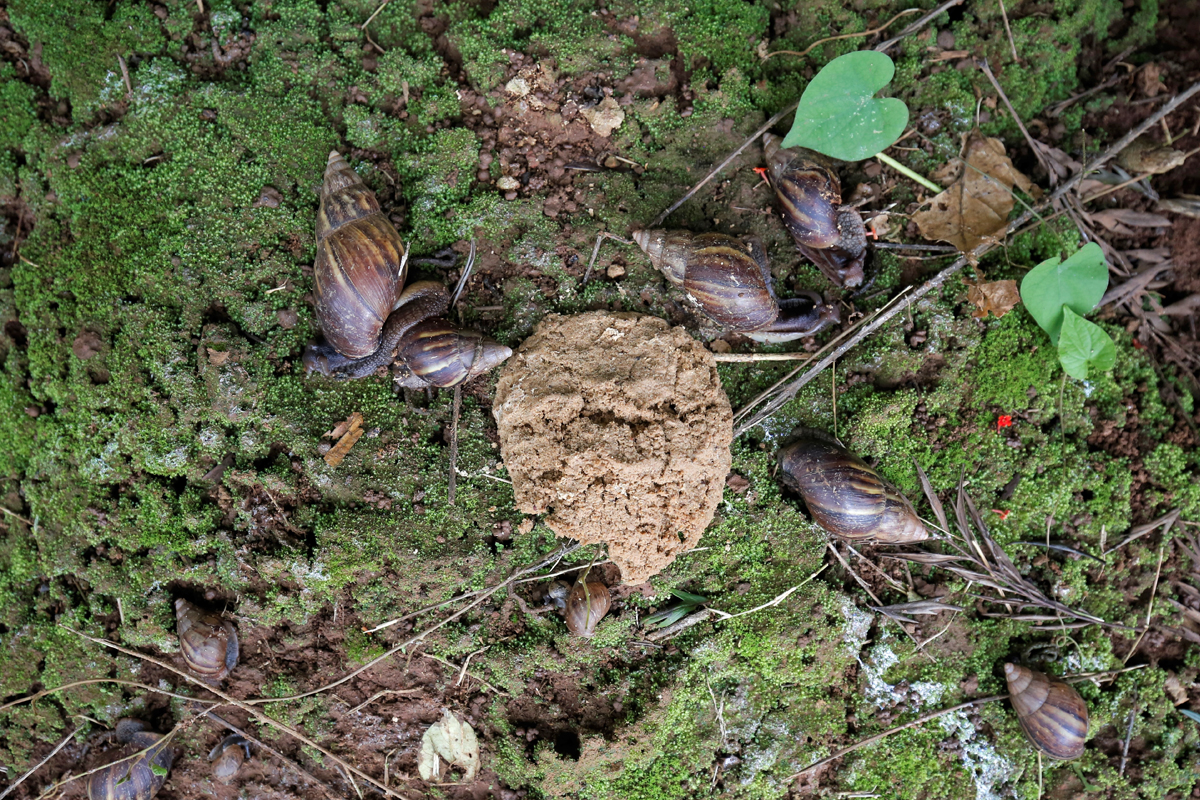
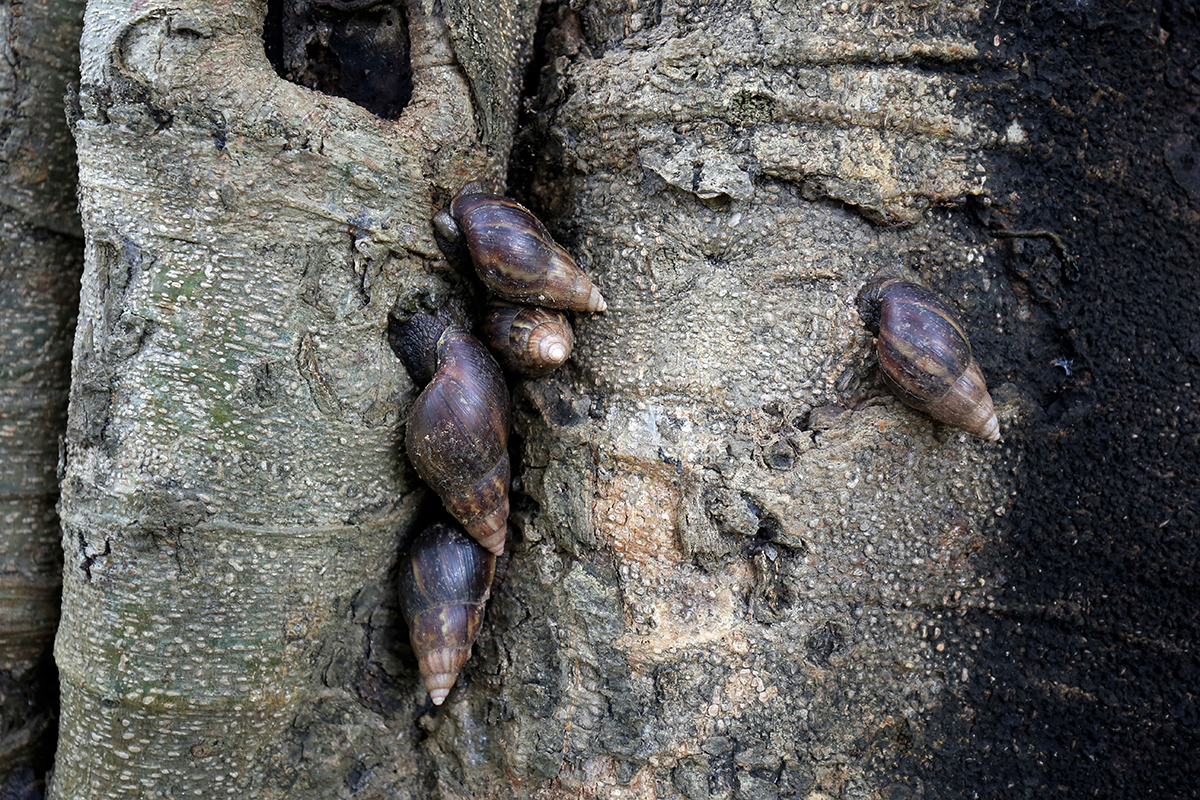
The foreign pest, which is thought to have arrived in India through trade routes, attacks young coffee plants and devours tender leaves and stems, completely destroying the plants. These giant snails, whose shells can grow up to 20 cm in length, are not picky eaters. They eat over 500 plant species and adapt easily to different ecosystems, researchers have found.

Giant African land snail, an invasive species, infest a coffee plant in Kodagu, Karnataka. Planters lose up to Rs 12,000 per acre in efforts to get rid of the pest. Credit: Pradeep Kumar/Mongabay

A fast breeder, this snail has emerged as a major problem for planters in the Shanivarasanthe area of Somwarpet taluk in Kodagu. “They multiply in large numbers within a short span of time,” said Pradeep B Shekar, who owns 40 acres of a coffee plantation.

The giant African land snail, locally known as shanku hoola or conch worm due to the shape of its shell, appeared in Kodagu for the first time in 2012-’13 in 50-60 acres of coffee plantations in Shanivarsanthe. The local plantation owners fought the infestation and thought they have ridden themselves of the pest.

But in 2017, the snails reappeared, wreaking havoc in an expanded area of 300 acres belonging to some 40-45 plantations. The planters say the pest attack costs them an additional expense of between Rs 10,000 and Rs 12,000 per acre, mainly due to the efforts to contain them. This shrinks their profit margins from the produce.

source: http://www.youtube.com

Invasive species
The International Union for Conservation of Nature lists the giant African land snail Achatina fulica as one of the worst invasive species in the world. An invasive alien species is “a problematic species introduced outside its natural, past or present distribution,” the International Union for Conservation of Nature says. “They may lead to changes in the structure and composition of ecosystems, detrimentally affecting ecosystem services, human economy and well being.”

African snails spread to new locations via trade routes, piggybacking on agricultural products, equipment, cargo and plant or soil matter. While there is no consensus on how they found their way into the pristine landscape of Kodagu, it is certain that these pesky visitors have come with no exit plan.

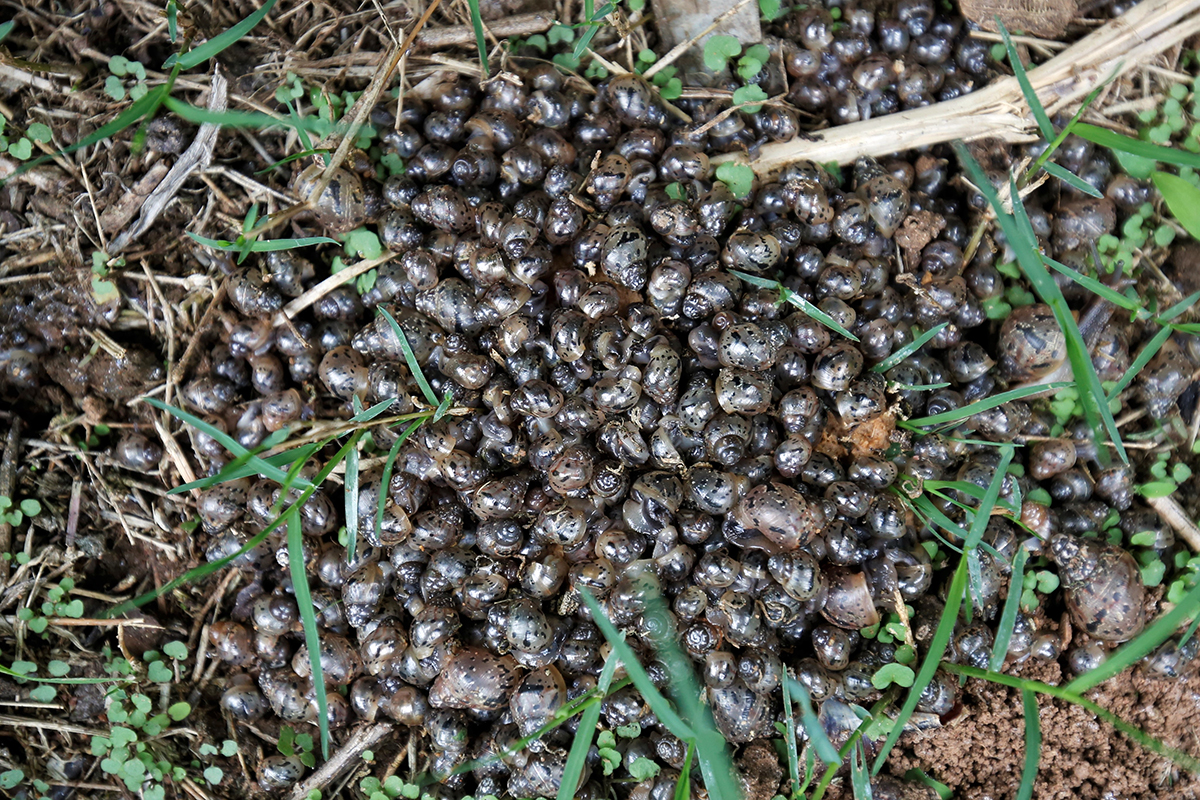
Giant African land snails in their early development stages inside a coffee estate in Handli village, Kodagu district. These fast-breeding snails have a lifespan of almost 15 years and can produce approximately 1,000 eggs in that period. Credit: Abhishek Chinnappa/Mongbay

Achatina fulica is one of the four species of giant snails belonging to the Achatinidae gastropod family native to Africa. It is classified as an obligate-outcrossing hermaphrodite, which means that just one externally fertilised snail can establish a population. These snails reproduce in large numbers.

The snails begin laying eggs at six months of age and can lay around 100 eggs in their first year, and up to 500 in the second year. Their life expectancy is around five years, and one snail can produce up to 1,000 eggs by then. The shell length of these snails ranges from 5 cm to 10 cm, though some adults may exceed 20 cm, and their average weight is about 32 gm.

Effective solution

Despite the destructive potential of the giant shells, the planters in Kodagu have been successful in tackling the infestation. They have reduced the infestation by about 90%, a remarkable achievement given that people in the neighbouring state of Kerala have been fighting this pest unsuccessfully for close to three decades.

The Coffee Board of India has emerged as the unlikely hero in this battle with the African snail. Researchers at the Central Coffee Research Institute in Balehonnur in Chikmagalur district of Karnataka and research sub-station in Chettalli in Kodagu devised a bait for the snail, in a method they dubbed “catch and kill”.

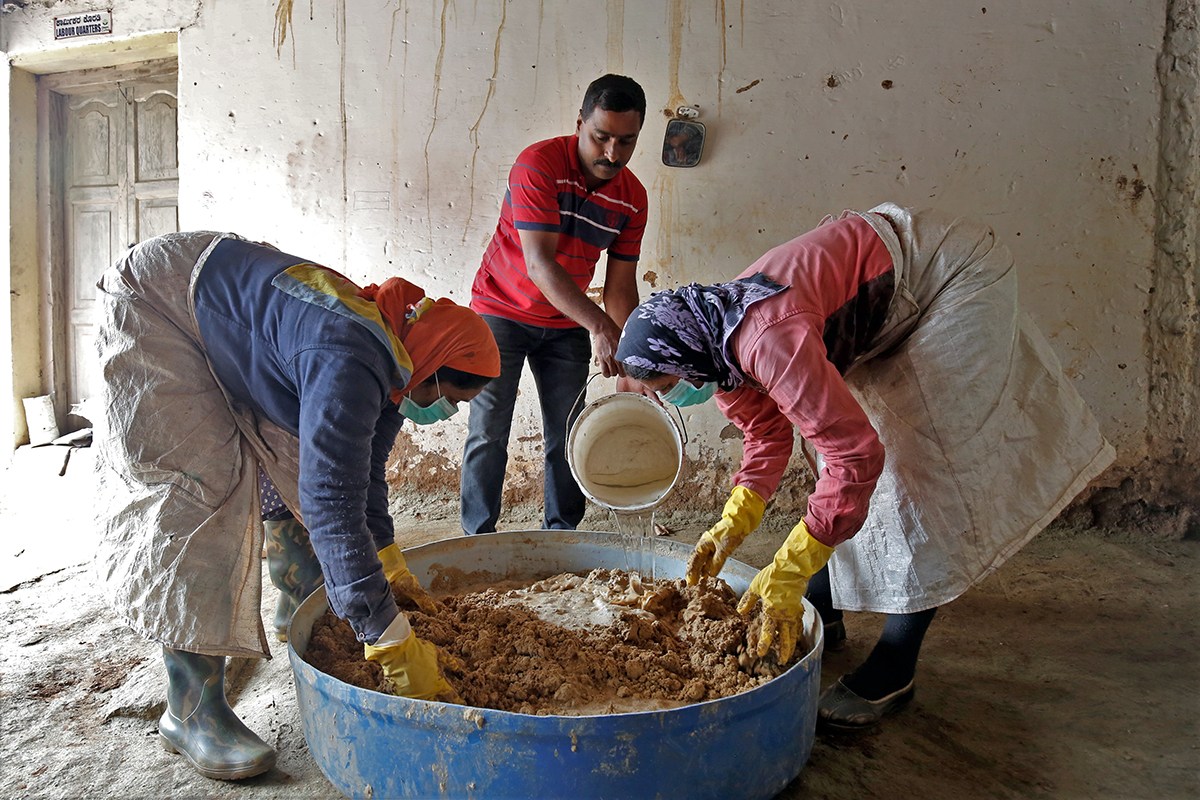
“The bait is made of rice bran, jaggery, castor oil and a chemical, thiodicarb,” explained Vishwanath Hadagalli, junior liaison officer of Coffee Board at Shanivarsanthe. “These are mixed together and balls of it are placed between four coffee plants.”

Researchers at the Central Coffee Research Institute in Chikmagalur district of Karnataka devised a successful catch-and-kill method to control the snail’s invasion. A bait made of rice bran, jaggery, castor oil and a chemical, thiodicarb, is used to lure and kill the pests. Credit: Abhishek Chinnappa/Mongabay

The researchers experimented with methomyl, a broad-spectrum insecticide, but it has been banned because the cost to the soil is too high. Thiodicarb is considered a less harmful insecticide that is effective against in killing the giant snails. “We tried every method available in the literature to get rid of these pests and this bait was found to be the most effective,” said Manjunath Reddy, assistant entomologist, coffee research sub-station at Chettalli, Kodagu.

In 2015, the Coffee Board used this bait and killed as much as 30 tonnes of snails. Encouraged by this, the Board, with active participation from Karnataka’s Horticulture Department and the Planters Association of Shanivarsanthe, upped their act through regular awareness meetings and distribution of bait kits to all the affected planters. The kit consists of a pair of gloves, 25 kg of rice bran, 100 gm of Larvin branded thiodicarb, 3 kg of jaggery and 100 ml castor oil. It costs Rs 1,000 but is distributed among the farmers at a subsidised rate of Rs 100.

Co-ordinated operation

“This has to be a collective effort,” said Pradeep Kumar, an affected farmer from Handli village in Shanivarsanthe. “If one affected farmer doesn’t participate, the infestation cannot be contained.” Hadagalli said there’s 90% success in eliminating these pests from Kodagu farms. “While we did not maintain records properly for the years 2014, 2015 and 2016, dead snails weighing 24 tonnes were collected in 2017, which came down to eight tonnes in 2018,” he said. “We expect much lower infestation this year.”

The Coffee Board also came up with the innovative idea of buying back the dead snails. It initially offered Rs 4 per kg of dead snails, which has since been increased to Rs 8 per kg. “The dead snails are disposed of in a pit that’s one-and-a-half feet deep,” said Hadagalli. “Salt is put over the dead ones to ensure even the last of the caught snails are dead and then buried.”

This burial is a precautionary measure against the spread of any disease through the snails. The giant snails are known to serve as intermediate hosts of several parasites that cause diseases in pets, free-ranging vertebrates and humans. They are hosts of rat lungworm Angiostrongylus cantonensis, which causes Eosinophilic meningitis in human beings.

Workers prepare a concoction to bait the giant African land snails inside a coffee estate. Co-ordinated efforts of farmers and officials have recently helped curb the infestation. Credit: Abhishek Chinnappa/Mongabay

Kerala experience

“In the past 5-6 years, seven children and at least one adult have been reported to have contracted meningitis through contact with giant African land snails,” said TV Sajeev, a scientist at Kerala Forest Research Institute, which who has been involved in the eradication of these snails in Kerala.

Although the fight against the snails has been largely successful in Kodagu, the experience is Kerala, where these creatures are seen as a nuisance, has been different. There have been as many as 223 outbreak points from 12 districts out of 14 in the southern state.

There is a cogent reason for this, said Sajeev. “The chemical used in the bait is not suitable for areas where there is human activity. These chemicals are found to be harmful, especially to aquatic organisms,” he said. “The case of Kerala, where the infestation is in towns and villages, is very different from that of an estate.”

Sajeev said one of the main problems that an invasive species brings with it is the invitation to use strong chemicals to eliminate them. Research has shown that exposure to chemicals like thiodicarb can be detrimental to human and animal health. The Kerala Forest Research Institute has been spraying an organic decoction of tobacco mixed with copper sulphate on snails that are lured with crushed papaya and cabbage leaves as bait.

Another big challenge in Kerala, said Sajeev, is the difficulty in organising people in these areas to work in tandem. “In Kerala, more than the destruction of agricultural crops, snails are a nuisance because they are seen in and around houses,” he said, adding that it is nearly impossible to get all the people in these houses to work together against the snails.

An escargatoire of giant African land snails on a ficus tree inside a coffee estate in Kodagu. While the infestation seems to be under control in the estates of Kodagu, Kerala is yet to find a solution. Credit: Abhishek Chinnappa/Mongabay


This article first appeared on Mongabay.

source: http://www.scroll.in / Scroll.in / Home> Pest Control / by Arathi Menon / August 05th, 2019

Little champs reign in slush-filled paddy field

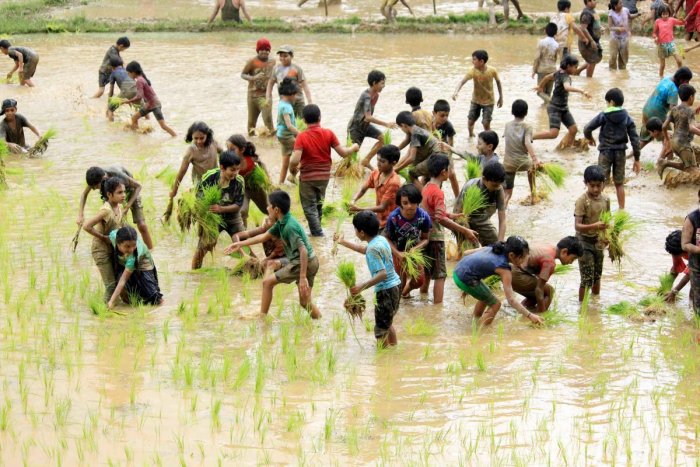
Students of Kodagu Vidyalaya transplanted paddy seedlings in a field at Ibnivadi in Madikeri taluk recently.

Children played to their hearts’ content in a slush-filled paddy field at Ibnivadi during the ‘Nati Sambhrama’ programme.

The Ibni Springs Cottage and Green City Forum jointly organised the programme – in which more than 40 students from the Kodagu Vidyalaya took part and got an experience of paddy transplantation for the first time.

Children soiled their body and clothes to gain practical knowledge of transplantation. Even though the children did not have any training in paddy transplantation, they learnt it through trial and error and transplanted paddy as they fancied.

They also took part in rounds of football, throw ball and tug-of-war that were organised in the field while their parents cheering them.

Kukkera Jaya Chinnappa, Green City Forum president, who spoke on the occasion, said that the forum intends to send out messages on environment conservation, agriculture, waste management and cleanliness to the people. Programmes are being conducted in this regard in both urban and rural areas, he added.

The winning teams were awarded prizes.

Kodagu District Working Journalists’ Association President Savitha Rai, Kodagu Press Club President Ajjamada Ramesh Kuttappa, Green City Forum founder-president Cheyyanda Satya Ganapathy, former president Ambekal Navin Kushalappa, general secretary Polakanda Rakesh and director P Krishnamurthy were present.

source: http://www.deccanherald.com / Deccan Herald / Home> State> Mangaluru / by Adithya K A / DH News Service, Madikeri / August 03rd, 2019