Category Archives: Nature

LAST PAGE – Coorg Diary

Here’s hope that Coorg will never become the tourist haven many feel it should aspire to.

CoorgKF04jul2015

Raining old women with clubs
This ancient Namibian proverb only partially describes our wet week-long sojourn in this utterly beautiful part of Karnataka. We’re 10 minutes up a steep hill (which till recently used to house a coffee plantation) in Bittangala, a short distance from the only golf course in south Coorg, or Kodagu. But no one can play golf. For four straight days and nights, it doesn’t stop raining. The wind howls for hours on end, abating for barely 10 minutes, before picking up again with renewed ferocity. Trees are uprooted, roads are blocked (and miraculously unblocked) and we survive thanks to a generator for the entire period. This continuous sound-and-water show plays tricks on the mind—and I’m not talking about board games Boggle et al. After a while, my sons Kabir and Krishna refused to go up to the bedroom alone to fetch a book—or even a gadget!

The affable Kodendera ‘Nanda’ Cariappa—the retired Air Marshal with an enviable lineage who got famously shot down and taken prisoner in the 1965 war with Pakistan—informs me that it has never rained so heavily in this part of Coorg since he’s been back 19 years ago. Located right in the middle of a forest, we soak in the green (and many more shades of green than you can imagine). Thankfully, no snakes and leeches show up.

Green politics

This onslaught of nature—mind you, the monsoons have barely begun—has given me some hope that Coorg will never become the tourist haven many feel it should aspire to. Des­pite thousands of plantations and homestays knitted together by excellent roads, connectivity to the rest of the country is poor. But given that the builder lobby is busy carving up “layouts” all over the district, there are fears that residential complexes and hotels will destroy the unique eco­system of this Western Ghats hotspot. Thanks to growth and poor sanitation, the capital Madikeri is fast becoming another Mussoorie. As writer Roopa Pai put it in a piece for the Outlook website: “Coorg is a small coffee-growing, pork-eating, hard-drinking, gun-toting district of Karnataka with a terrible superiority complex.” If you ask me, it’s in the national interest that it continues to remain so.

Right-wing rumblings

We’re in Coorg to celebrate the 75th birthday of my wife Rat­hi’s uncle G. Parthasarathy, the diplomat-turned-news-TV-hawk. There’s much family bonding—anecdotes are swapped, tall stories told, and I’m happy to report no one is provoked enough to spill a glass of wine. As word gets around, the invitations start flying in—everyone wants to meet the man on national TV! During one such interaction at a 100-plus-year-old house in Siddapur, it emerges that a key concern is “population control”—there has been a steady influx of Muslims from Kerala into the district. Despite assuring many of these guests that it is statistically impossible to overrun the Hindus, the older generation is clearly worried. The silver lining—one gets a calmer, more accepting view on migration when one speaks to some members of the younger lot.

Bittersweet partying

This is a first for me: I have never partied for an entire week with a group whose average age is 85, with the eldest being a sprightly 92-year-old Lt General Somanna, the former deputy chief of the army. His wife Renu, an irreverent and charming motormouth, was the star of one afternoon. You have to admire the zest for life here—they show up on time, eat and drink well, leave late, and drive their Dusters back to their estates themselves. Despite everyone knowing each other, I’m sure there’s loneliness and boredom too in these massive estates. And of course, there are limits to age. I get into a discussion on the joys of the drink Campari with a gentleman, telling him that some of the best things in life are bitter. A bit tipsy, he turned to me with a twinkle in his eye: “Well, I wouldn’t know if my wife’s bitter…it’s been a while since I’ve tasted her.”

National food integration

High up above the beautifully sleepy Mysore rests the famous Chamundeshwari temple. The tourist-clutter-complex also hosts Durga restaurant which has the best menu-teaser I’ve seen in a while: “South Indian meals, Kerala meals, Rajasthani thali, Gujarati thali, Punjabi thali, Bengali thali, Bombay thali, UP and MP, idly, dosa, alu parota, parota, puri, chapathi & side dishes Punjabi.” According to my vagabond friend Siddheshwar Wahi’s ast­ute analysis on Facebook, “Punjabi rulz! It appears twice.” A family elder asks an important question: “Surely, parotta tastes better than parantha?”

Last week…

While visiting Mysore, I text a colleague in Delhi whose hometown it is. I get the following response: “Good. Make sure you leave it the way I left it.”

Sunit Arora is the associate managing editor of Outlook; E-mail your diarist: sunit [AT] outlookindia [DOT] com

source: http://www.outlookindia.com / Outlook / Outlook> Magazine> Last Page> Diary / by Sunit Arora / Magazine – July 13th, 2015

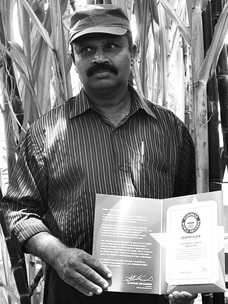
BSNL Staffer Enters Guinness Book for Growing Tallest Cane

Madikeri :

Hoovaiah, an ex-serviceman, who is serving as a mobile tower operator with the BSNL, entered the Guinness Book of World Records for growing the tallest sugarcane in the world.

As of now, the sugarcane in Convent Junction in Madikeri is 42-foot tall.

The Sugarcane grown with the support of Mobile Tower in Convent Junction of Madikeri

During an interview to Express Hoovaiah detailed the uphill task and claimed that he had to be convinced to enter the Guiness Book.

Hoovaiah, brought a stem of black variety of sugarcane from Karike four years ago and wanted to eat it once it had grown. He nurtured it with cow dung and ash apart from watering it regularly.

But when it was found that in three years the sugarcane had grown 40-foot tall with the support of a mobile tower, his friends and others advised him to get Guinness Book recognition.

When Hoovaiah approached the Guiness Book officials for recognition they asked him to pay nearly Rs 4 lakh for visiting and verifying the sugarcane.

When Hoovaiah expressed his financial constrain they asked him to submit a 22-page application as it is certified by six gazetted officers, Hoovaiah said.

Hoovaiah with the Guinness Book of Records certificate

The team that verified the documents had advocate B B Ananda, Dr Renuka and Dr Tirmala Rao of Ex-servicemen Contribution Service Scheme hospital, Dr Rajashkear and Dr Ramakrishna from Agriculture Department and Dr Sreenivasaiah of Krishi Vignana Kendra Gonikoppa. They inspected the sugarcane and sent a report to Guinness Book of World Records in California of USA on June 21 last year.

After verifying with the records worldwide, they sent a letter of record holder on June 10 this year and asked him to pay Rs 2,593 if he needed an original certificate. After he made the payment, they issued the certificate, Hoovaiah said.

He pointed out that though he was told that the sugarcane will not survive due to the radiation from mobile tower nothing happens so far. He also acknowledge the support of his family, BSNL officials and others in protecting and caring for the sugarcane.

source: http://www.newindianexpress.com / The New Indian Express / Home> States> Karnataka / by B C Dinesh / June 15th, 2015

Women in Kodlipet milk the benefits of dairy farming

KodlipetKF30mar2015

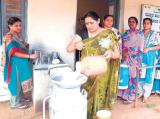
Women from the rural areas of Kodlipet hobli near Shanivarasanthe, have achieved self reliance through dairy farming and have also produced significant quantity of milk.

The Nandipura Milk Producers Women’s Cooperative Society was established in 2008 by a couple of women in Kodlipet, with an intention to attain self reliance through farming activities in the rural areas.

Presently, Pramila Ravishankar, Chinnamma and Girija Girish are serving as president, vice president and secretary of the association, respectively. While Nirmala, Yashoda, Umavathi, Kavitha, Shashikala, Manjula and Jayamma are working as directors.

248 members
There are totally 248 members in the society who are engaged in dairy farming. Out of these, 75 members are from Kyathe, Neegunda, Chikkakundha and Kelakodli villages who regularly supply milk.

The milk is tested for its purity and everyday as much as 450 litres of milk is supplied to Kodige dairy.

Thirty HF cows have been provided to members, under Amritha scheme.
The association provides Rs 24 per litre to the members while Rs 4 is be provided by the Government as the subsidy.

Nandini self help group was established after Rs 75,000 subsidy from Karnataka Milk Federation. Interest free loans of Rs 5,000 is provided to 15 members.

When a member repays the loan, another member is be provided the loan. The members pay Rs 500 evey month towards the repayment.

The members said that the income that they earned from the dairy farming had made them self reliant and also helped them save some money after managing the household expenses.

The members also run Stree Shakthi and other self help groups.

25 dairies in Kodagu

“Kodagu district has 25 dairies. The district needs a separate milk union and a better price is to be ensured. Also, the time of the delivery of milk to the dairies needs to be revised,” said one of the Directors Nirmala.

Amidst comments that the dairy farming practices are dwindling in Kodagu, the Nandipura Milk Producers Union has carved a niche for itself, by being a role model to others.

source: http://www.deccanherald.com / Deccan Herald / Home> District / Shanivarasanthe – DHNS, March 30th, 2015

Campaign on forest fires

Public awareness and local community support for prevention are the first line of defence in the fight against forest fires at Nagarahole National Park.

Wildlife First conducted 125 awareness camps on forest fire prevention in January and February. These were held around the borders of Nagarahole National Park in Kodagu district. As many as 23,000 students and 1,100 teachers residing around the national park and other forest areas participated, said Praveen Bhargav, trustee, Wildlife First.

He said two public rallies were organised, including one at Madikeri.. “During the course of the campaign, schoolchildren were told about the need to conserve forests and wildlife. Key facts that all forest fires are man-made and cause irreversible damage to wildlife and the eco-system were highlighted,” Mr. Bhargav said.

More than 30,000 pamphlets in Kannada were distributed with an appeal to alert the Forest Department in case of fire. Wildlife First is planning to put out radio and TV spots on AIR Madikeri Station.

source: http://www.thehindu.com / The Hindu / Home> News> National> Karnataka / by Special Correspondent / Mysuru -March 08th, 2015

The Couple Who Bought Barren Land In 1991 And Transformed It Into A 300 Acre Wildlife Sanctuary

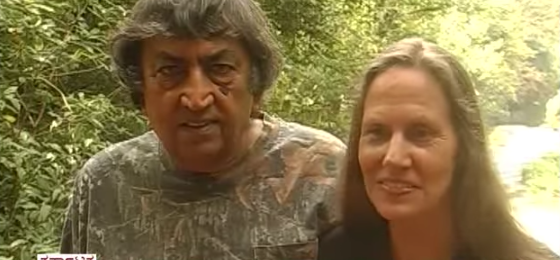
Pamela and Anil Malhotra bought 55 acres of land 23 years ago, and today they have converted it into a beautiful forest of over 300 acres. Here’s how SAI Sanctuary, the only private wildlife sanctuary in India, came to host animals like Bengal Tiger, Sambhar and Asian Elephants.

Wouldn’t it be great to wake up to the sound of chirping birds, with fresh air and splendid scenery around? In the busy lives of our cities when even house sparrows are fast disappearing, this seems like a dream. But a couple has converted this dream into a reality by creating a wildlife sanctuary of their own.


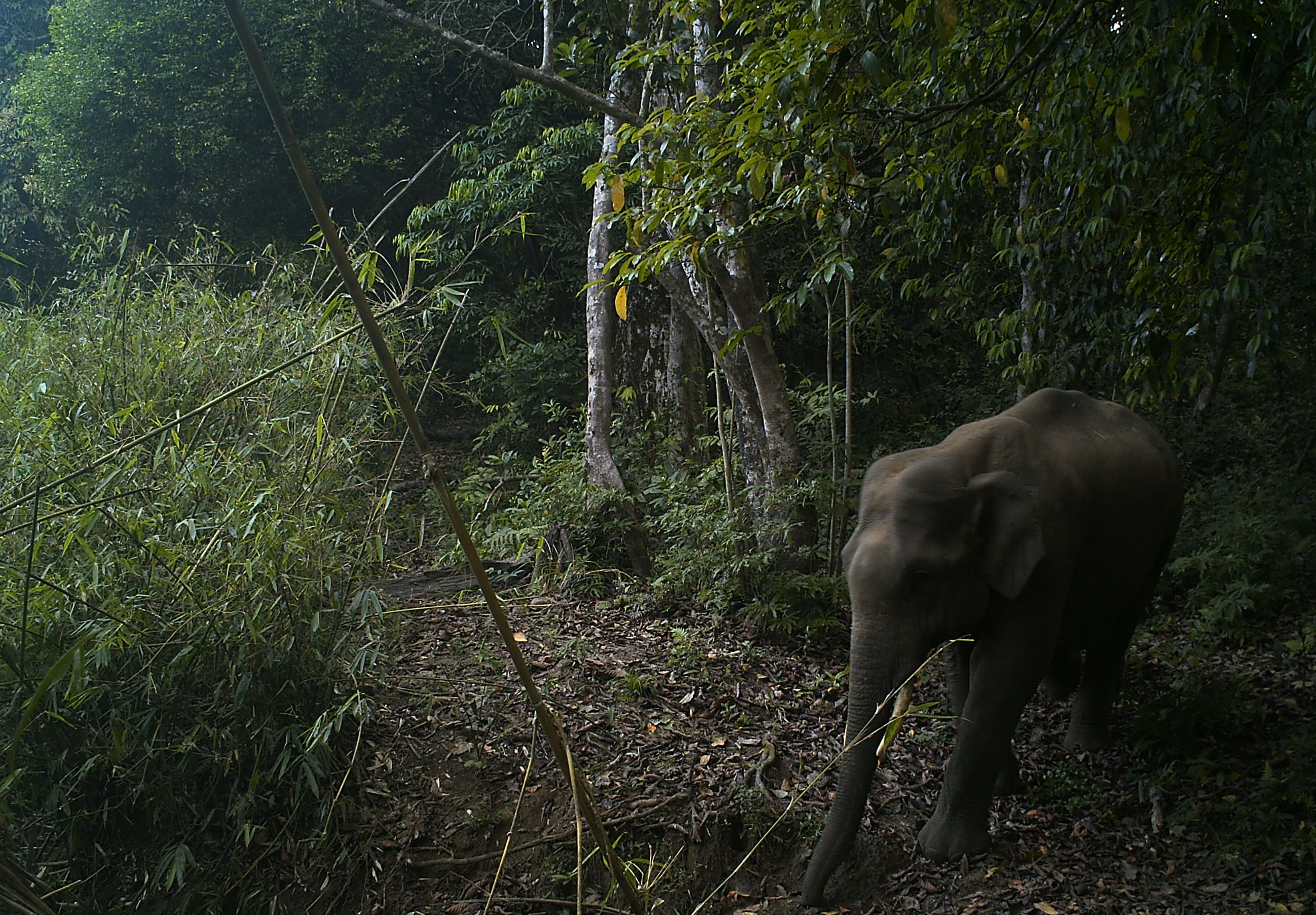
The couple, passionate about wildlife and nature conservation, bought 55 acres of land to plant native trees and protect the environment. Today, they are responsible for creating over 300 acres of wild life sanctuary that hosts animals like Bengal Tigers, Asian Elephants, Hyena, Wild Boar, Leopards, Sambhar, etc.

Dr. A.K. Malhotra and Pamela Malhotra, the NRI duo behind this amazing SAI (Save Animals Initiative) Sanctuary Trust first went to the Himalayas, but as the laws in the Northern part of the country have a land ceiling of 12 acres, they came down South to give shape to their dreams of preservation and protection of nature and wildlife.

Anil and Pamela Malhotra are responsible for a beautiful wildlife sanctuary.

“The problem is, we expect the government to do everything. Like-minded people, NGOs and other agencies should purchase land and do their own bit to conserve the wildlife,” says Pamela.

They bought around 55 acres of unused and abandoned land from the farmers who were not using it due to excess of rainfall in Kodagu district of Karnataka. “We chose Kodagu because it is the micro hotspot of bio diversity in the entire planet,” Pamela says.

The passion to expand the green cover grew stronger and they kept buying lands from farmers who weren’t using them. This way the land was used and also farmers got money to repay their debts as the land was anyway lying idle. Gradually the 55 acre forest cover became larger and today covers 300 acres of the land.


There were a lot of native trees that already existed there. The couple decided to retain those and follow three important rules: no chopping down of any tree, no human interference and no poachers.

And with this thought, the efforts to make a wildlife sanctuary started in 1991.

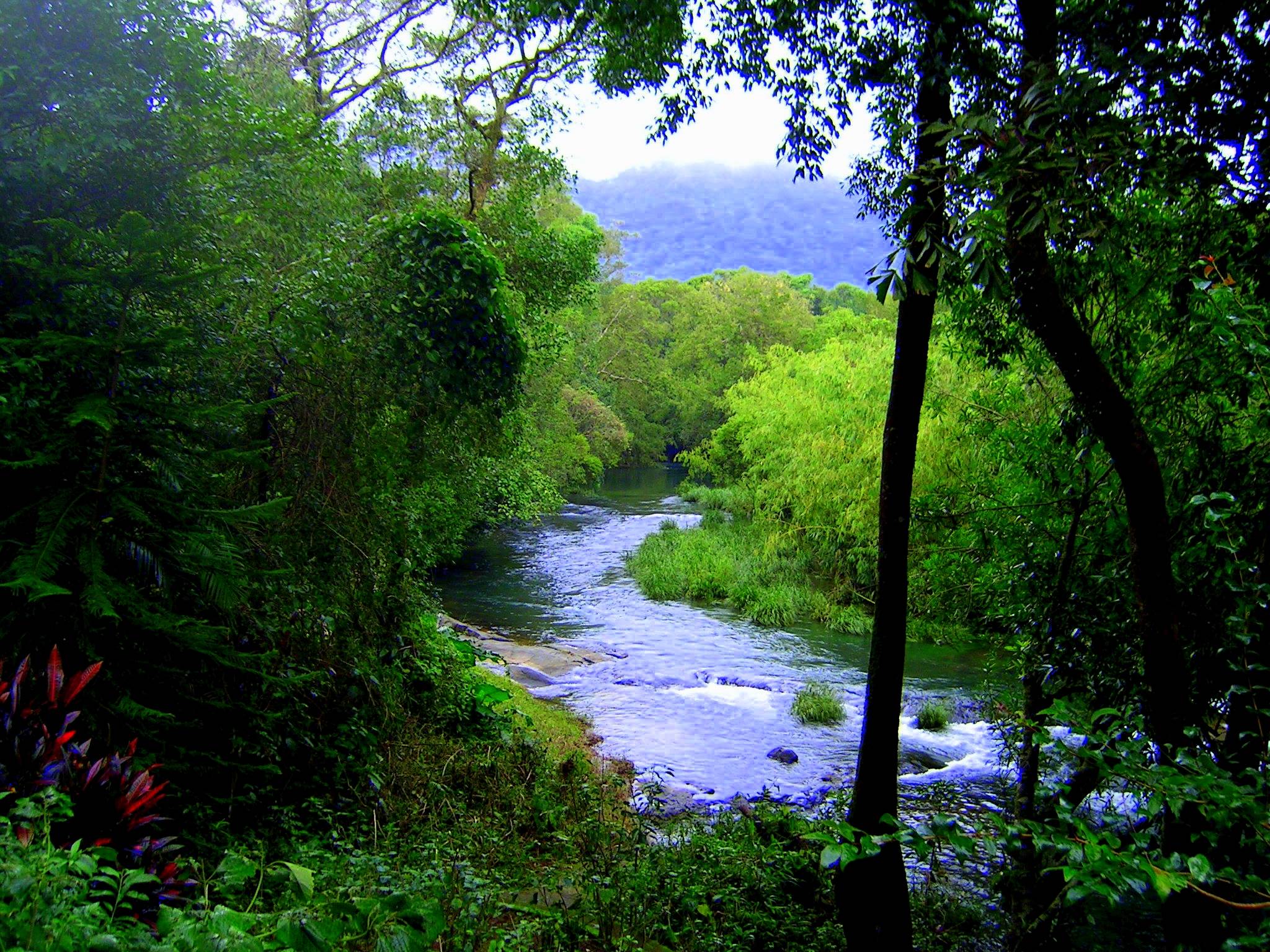
The sanctuary also has a river flowing in the heart which meets the water needs of the animals.

After 23 years, their unmatched passion for wildlife and nature has helped them transform the 55 acres of barren land in 1991 into a one-of-its-kind wildlife sanctuary spread over 300 acres, probably the only private sanctuary in the country!

The sanctuary also has a beautiful river in the middle that is home to several aquatic species like fishes and snakes, including the King Cobra.

The huge trees and thick forest has also helped several birds like hornbill find their homes. There are over 305 species of birds that visit this sanctuary regularly.

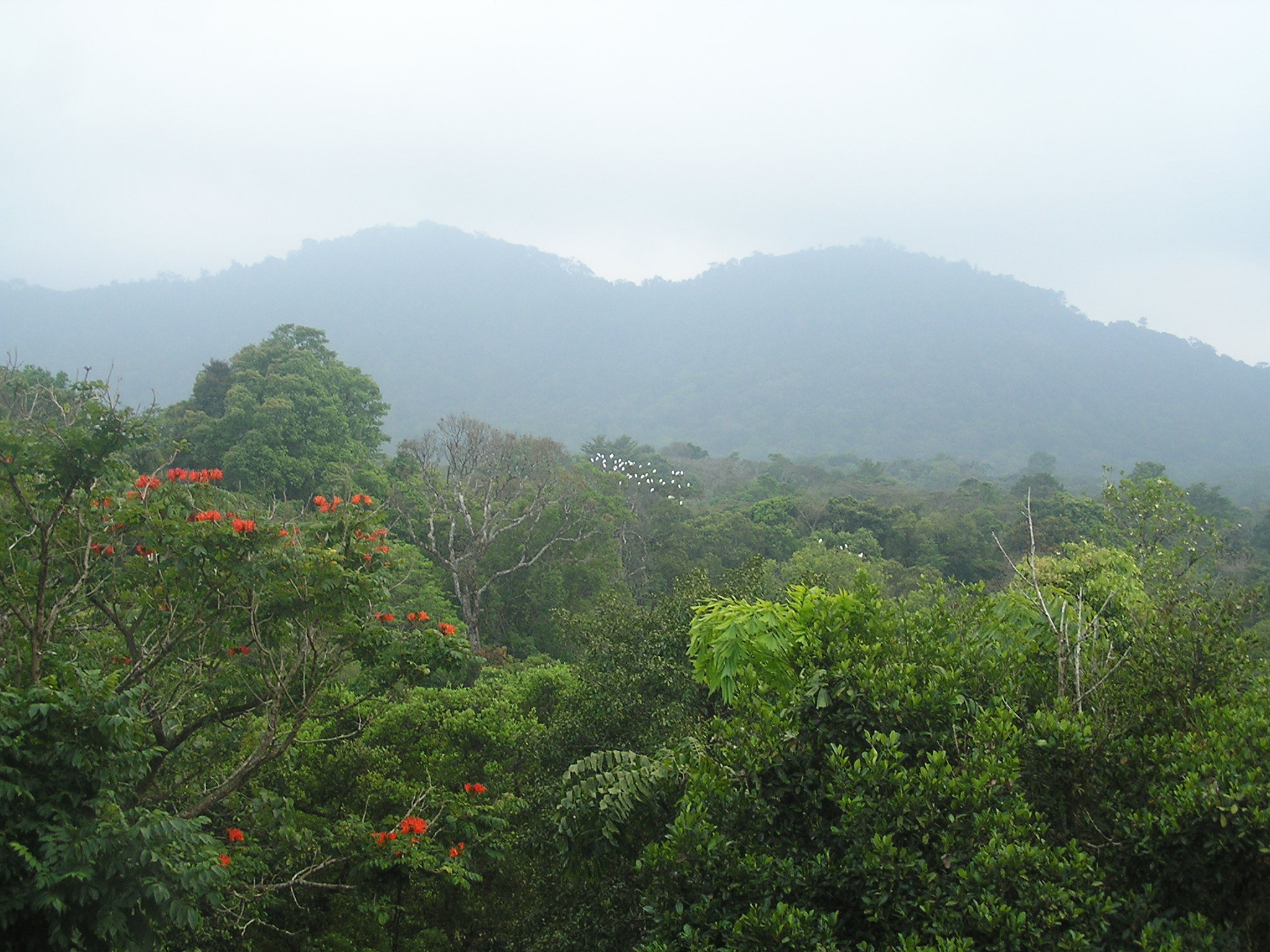
The dense forest cover.

“We make sure that we don’t interfere with these animals. Elephants are very important for regeneration of the forests as they swallow the seed completely without breaking it, unlike other species. Around 30 species of trees totally depend upon elephants for regeneration,” says Pamela.

Several cameras are installed across the sanctuary to identify new animals and keep a track on poachers. “People think that animals need the forest. But the truth is, the forest needs the animals equally. While the forest helps animals in providing shelter and food, animals help forests in regeneration – they are both inter-dependent and we should make efforts to preserve both,” says Dr. Anil.

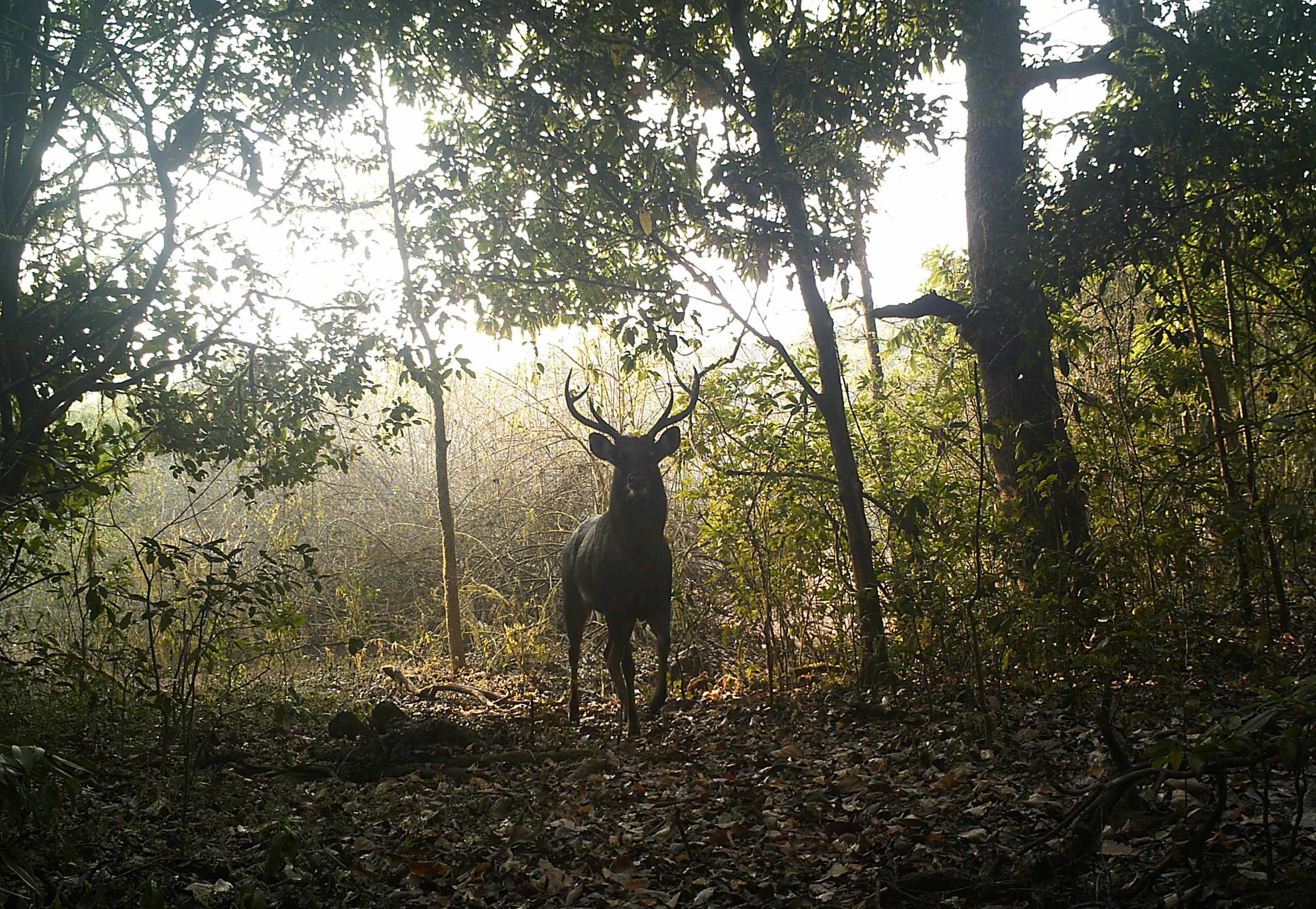
“A few days ago, I saw in the camera recording that a family of wild dogs and seven small puppies from that family were trying to attack a Sambhar just in front of my house gate. They were born a few days back and now had grown up. So, the fact that each puppy survived is commendable. That means the sanctuary is a good host to all these wild animals,” says Pamela.

When the Malhotra couple purchased the land, there were already native species of cardamom and other trees that were planted. They decided not to disturb those and planted more native trees around the existing ones.

As the green cover expanded, the animal and bird species increased too. The flora of this sanctuary includes hundreds of varieties of indigenous trees, many of which are of medicinal value.

“Our aim is to preserve the flora and fauna, especially the rainforests, for the future generation. We believe that when we die we should give back the same (if not better) Earth which we got from our ancestors to the next generation,” says Dr. Anil.

A family of elephants are frequent visitors of this sanctuary.

The duo makes sure that they do not interfere or disturb the existing eco-system. “Even the dead wood provides nutrition to the soil,” says Pamela.

The couple has grown 10-12 acres of coffee and around 15 acres of cardamom on the land. They are also involved in organic farming on the same land. The sanctuary, which offers a unique experience to the visitors, runs completely on solar and alternate energy. For days of heavy rainfall in the monsoon, the three small windmills meet the needs of providing enough electricity to the sanctuary.

“We also make sure that people who visit here are responsible tourists. We only take those people who are actually interested in exploring the beauty of nature. Smoking and drinking is not allowed as it disturbs the animals and the overall air which is so pure,” says Pamela.

When Malhotra couple started this sanctuary, they invested their own money. Now they are a registered not-for-profit trust which runs on donations which get tax exemptions.

Apart from funds, another challenge comes while patrolling the sanctuary. As the area is very large it is hard to keep track of the poachers. To counter this, they spread awareness about preserving wildlife and nature in schools and nearby villages.

The sanctuary also hosts animals like Hyena, Sambhar and Bengal Tigers.

“To avoid any mishap, we don’t allow people to walk alone here. There is always a guide or we accompany the visitors ourselves,” says Pamela.

The sanctuary also won the “Wildlife and Tourism Initiative Of The Year” award by Sanctuary Asia in conjunction with Tour Operators for Tigers in 2014.

In conclusion, Pamela has a thought she’d like to leave us with, “Overcome your fear and respect the animals’ power. The animal might not understand our words but they do understand our feelings.”

Pamela and Anil also advice people to be careful about the lifestyle they follow. Eating organic food, recycling things, using more energy-efficient devices are some of the basic things they advise everyone to follow.

“When I carried buckets of water in the Himalayas, I realized how precious it is. We should not waste it. It is only when we face problems we realize importance of things,” she says.

“For anyone who wants to bring a change, we advise them to set one single goal and believe that they can achieve it,” says the couple.

Watch the official trailer of a documentary on SAI Sanctuary being made by filmmaker Mellissa Lesh here:

This is an appeal that Pamela and Anil Malhotra have made to all wealthy Indians to save our forests, wildlife and fresh water sources. They are even willing to help anyone who is willing to try.

Want to know more about this sanctuary? Contact them at – saisanctuary@gmail.com

source: http://www.thebetterindia.com / The Better India / Home> Changemakers / by Shreya Pareek / February 23rd, 2015

Plantation Trails -Tata Coffee celebrates the ‘joy of womanhood’ this Women’s Day

This Women’s Day, Plantation Trails by Tata Coffee gives you the perfect reason to escape from the hassle of the monotonous life. Plan a much deserved holiday in the heritage bungalows of the Plantation Trails and treat yourself to the exquisite luxury.

Indulge in the delicious Kodava cuisine along with a cook and butler service. Dive into the tranquility of the coffee plantations and spend some quality time with yourself at theReading Zone. Get a glimpse into the Planter’s Lifestyle in the Bun to Cup Tour, Safari Jeep Drive along with the Bird Watching & Photography Tours.

For all the men, this could be that one opportunity to make the women in your life feel special. Gift the lady in your life a relaxing and a rejuvenating holiday with special offers handcrafted by Plantation Trails.

TataCoffeeKF04mar2015

Gautam Prakash, Head- Plantation Trails says “Women, these days, are independent and unbelievably successful in various fields of work while being superlative at guarding their families. This International Women’s day, Plantation Trails by Tata Coffee takes the opportunity to salute the women for who they are and what they do.”

source: http://www.bollywoodhelpline.com / Bollywood Helpline.com / Home> News & Gossip / by Siddharth Dhongle / Tuesday – March 03rd, 2015

Green Tribunal order a boost for Kodagu

Orders stoppage of tree-felling until MoEF approval

Protestors against the illegal felling of more than 50,000 trees in Kodagu for the sake of a power transmission line have a reason to smile. Ahead of their hearing by the Karnataka High Court, the National Green Tribunal’s order on Friday in a separate case seems to have revived their hopes of protecting the trees.

Order on activist’s PIL

The National Green Tribunal (NGT), on Friday, ordered all agencies to refrain from felling trees while executing linear projects in forest areas, unless an approval under the Forest (Conservation) Act 1980 was obtained. The NGT ruling was a response to a petition filed by Maharashtra-based activist Milind Pariwakam who objected to the National Highway Authority of India (NHAI)’s project of widening of NH-6 and NH-7 in the Vidarbha region. This would involve felling trees and diverting forest land through the fragile Tadoba Tiger Reserve in Maharashtra. The NGT ruling is likely to have a nationwide impact in preventing diversion of forest land for non-forest purposes.

The NGT clearly stated that all linear projects like railway lines, development of roads, canals and laying of transmission lines through forests must obtain permission from the MoEF under FCA -1980. Although the Chennai Bench of NGT had refused to stall the project last year, activists hope that the latest order will have an impact.

Speaking to Bangalore Mirror, Sajan Aiyappa, coordinator of the Save Cauvery Campaign, said, “Previously, when we approached the NGT’s Southern Bench, it had dismissed the petition on technical grounds and so we approached the High Court. The case has been posted for hearing on Monday. However, we welcome the order by the NGT in Maharashtra. We hope that the order will force authorities to take note of the seriousness of the issue and safeguard the fragile eco-system of Kodagu.”

The activists clarified that they were not against the project, but only concerned about the felling of 50,000 trees which would have a catastrophic impact on the rainfall of Kodagu. This, they say, would adversely affect the flow of water to the Cauvery and in turn affect the availability of potable water in Mysuru and Bengaluru.


Felling continues

“Despite the case being posted for hearing before the High Court, the authorities, a few days ago, cleared many trees within the limits of coffee estates. We have submitted scientific reports on the variety of species of trees in plantation areas. The court must take note of this and help us in safeguarding the eco-system,” yet another activist said.

source: http://www.bangaloremirror.com / Bangalore Mirror / Home> Bangalore> Others / by Niranjan Kaggere, Bangalore Mirror Bureau / February 23rd, 2015

Whose garden is this in the heart of our city?

Bengaluru :

Brigadier who carved the 22-acre Cariappa park out of defence land near MG Road slams colleagues for barring entry to public The man who opened the Army’s doors to Bengalureans has slammed his colleagues for barring the city’s residents from entering the Cariappa Memorial Park in the heart of the city.

(The 22-acre park was meant…)

The 22-acre park was meant to be the Army’s gift to the city but has been closed since 1998, two years after it was inaugurated. A board next to the now-abandoned park’s gate reads: `Restricted area’. The present Army establishment in the state says the park area, categorized as A1 defence land, cannot be made available to the public under Ministry of Defense guidelines.

Brigadier (Retd) Ashok Nagpaul, who established the park on defence land to foster closer interaction between the Army and public, said the Army cannot block entry into the park. “The land not only belongs to the defence but also to the people of Bengaluru,” said the former Commanding Officer for Karnataka and Kerala.

“There was 57 acres of land lying wasted. There were illegal activities like prostitution and other things that used to happen in that area, so I decided to build a parade ground and the park,” Nagpaul, 72, said over the phone from Pune.

A top Army official said that with defence land being rampantly encroached on, the Army cannot afford to give its land for public use.”In 1994 maybe people were not conscious about utilization of defence land, but consequent to which in lots of places we started losing defence land, and … very stringent guidelines were framed that you cannot use defence land for public purposes,” the official told ET, declining to be identified.

Until 1994, the park area was part of a larger parcel of land between Cubbon Road and MG Road.

source:http://www.articles.economictimes.indiatimes.com / The Economic Times / Home> Collection> MG Road / by ET Bureau / February 17th, 2015

Move over coffee, Kodagu now looking at high-value vegetables

IIHR is targeting 35,000 hectares of paddy land mostly left fallow for 6 months to grow vegetables

If things go according to plan, Kodagu, the land of coffee and pepper, may turn into one of the major destinations for high-value vegetable cultivation a few years from now.

A survey conducted by the Indian Institute of Horticultural Research (IIHR) showed that paddy was being cultivated on about 35,000 hectares of plain land in the hilly district of Kodagu. Most of this is being left fallow for six months from October to March after the monsoon. Vegetable experts in the IIHR want to make best use of the land during the “off- season” by motivating people to take up vegetable cultivation.

“It is possible to cultivate vegetables during the off-season as their water requirement is not as huge as paddy,” says A.T. Sadashiva, Principal Scientist in the IIHR’s vegetable Crops’ Division. Also, the weather in Kodagu is similar to that of Ooty, where vegetables are in high demand, he said. Above all, vegetable farming fetches at least one-and-a-half times more returns than paddy, he says.

Preliminary work towards promotion of vegetable cultivation has already begun. The IIHR has developed model farms on about 50 hectares in different areas of Kodagu where high-value hybrid varieties developed by it are being cultivated. “We have also held four field days since 2012 in different areas such as Suntikoppa, where cultivation of different vegetables at the model farms has been showcased. Observing the overwhelming response to such events, we plan to have two more such field days shortly,” he says, while expressing confidence that it may be possible to encourage farmers to take up vegetable cultivation on a minimum of 100 hectares this year.

At present, vegetables like okra, tomato, beans, yard-long beans and chillies are being promoted, while other vegetables such as carrot will be introduced in the next phase, he says. Onion cultivation has also been introduced on an experimental basis.

The marketing network for the vegetables in Kodagu is not advanced. The IIHR is in talks with the State Horticulture Department, which has promised to provide facilities for sale of vegetables in different parts of the district, Mr. Sadashiva says, adding that plans are also afoot to sell the vegetables to other districts and States as and when the production increases.

It is possible to cultivate vegetables during the off-season as their water requirement is not as huge as paddy

A.T. Sadashiva Principal Scientist, IIHR

source: http://www.thehindu.com / The Hindu / Home> News> Cities> Bengaluru / by B.S. Satish Kumar / Bengaluru – February 22nd, 2015

‘Coorg’s Burma bamboo shoot is non-poisonous, good to eat’

Though bitter in taste if eaten raw, Dendrocalamus brandisii in Coorg has been since slowly making it to the local menu

Till recently, it was like any other species of bamboo that dotted the vegetation. The locals have for long a fair penchant for the edible varieties of bamboo shoots but no liking for the abundantly available Burma bamboo. Nobody dared to give the bamboo shoot a try for fear of it being poisonous.

The turning point, however, came when a team of scientists from Institute of Wood Science and Technology (IWST) in Bangaluru visited Coorg to propagate the vegetarian properties of Dendrocalamus brandisii. Based on their over a decade long research on the Burma bamboo species, for the first time it was disclosed that bamboo shoot eschewed by the people of Coorg and adjoining areas for over a century in fact is considered among one of the top 10 edible bamboo species in the world.

Unlike the Chinese species, although bitter in taste if eaten raw, Dendrocalamus brandisii in Coorg has been since slowly making it to the local menu list.

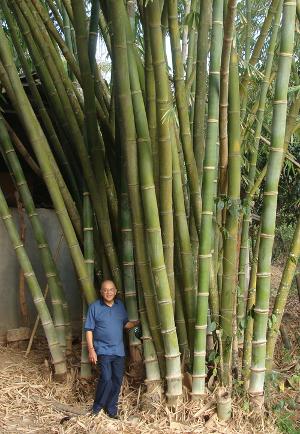
“It is surprising that in Coorg, where this species was first introduced nearly a century back in 1913, the shoots have not been commercially exploited even though shoots of other species like B. bambos and D. strictus found in natural forests in Coorg have been utilised in some form or other. Pickles made from B. bambos are traditionally an important delicacy in Kogadu cuisine,” says senior scientist Dr Syam Viswanath (in pic), spearheading the research at IWST.

BambooKF11feb2015

Much of the ignorance about the high level of edible properties of Burma bamboo has to do with the fact that its value as an edible material has never been recognised in Coorg. The common perception has been that the shoots of the bamboo species are poisonous. Further, absence of any information about the nutritional benefits, processing and consumption of the bamboo shoot have been the main reason for underutilisation of D. brandisii or Burma bamboo.

In China, D. brandisii bamboo shoots species is cultivated in Hangzhou province. The emerging shoots are harvested and after removal of the sheath, it is sliced into thin pieces and consumed raw like salad. In case of D. brandisii in Coorg, the shoots are bitter due to higher content of cyanogenic glucosides and need to be processed before they are ready for consumption.

Sowmya C , Ph.D scholar working on edible bamboo shoots in Tree Improvement and Genetics Division at IWST has found out that the nutritional composition of some of the common bamboo species exploited for edible shoots like B. balcooa, B. nutans, B. polymorpha, Melocanna baccifera found in North-eastern states is on-par with D. brandisii grown in Coorg.

The protein and carbohydrates contents in 100 gm of fresh bamboo shoot are about 2.31gm and 4.90 gm, respectively. Consumption of 100 gm of fresh shoots will supply adequate amount of protein essential for the body. The D. brandisii shoots are also rich in dietary fibre, 4.03 gm/100gm, higher than other commonly available vegetables. Dietary fibres are proven to have beneficial effects on lipid profile. It also helps in management of hypertension and obesity.

Culinary experiments with the Burma bamboo shoots have revealed that simple cooking techniques like pressure cooking and steaming can remove the bitterness in the bamboo shoots in comparatively lesser time than traditional methods like 48-72 hours of soaking in water.

Besides, the newly found edible properties of Burma bamboo by people of Coorg, the culms ofthe bamboo species have long been used in construction works, making of furniture, farm implements, baskets, handicrafts and for making ‘chandraki’ in sericulture industry. The bamboo has also the potential of making incense sticks by the agarbatti industry.

Due to its good physical and mechanical properties and thorn less character, it can be introduced in suitable agro-climatic zones like Coorg for raising compact plantations, in landscaping and in homesteads. Moreover the vegetative propagation of this species using rhizomatous side branches from culms is a simple cost effective multiplication technique according to Dr T.S. Rathore, Head, Tree Improvement and Genetics Division, IWST, Bangalore. IWST has also developed techniques for macro and micro propagation of this species for large scale commercial exploitation.

Director IWST Dr Ramakanth says, “Dendrocalamus brandisii is among the 19 commercially viable bamboo species identified by the National Mission on Bamboo Application (NMBA). This is based on assessment of inherent characteristics of the bamboo found suitable for end users.”

The very fact that it is fast growing, makes Burma bamboo ideal for exploitation in farm forestry and agro forestry in humid tropics. Its good physical and mechanical properties makes it a much sought after species by locals for farm construction, making ladders, fencing, small furniture, basket making and sericulture industry.

“Though National Bamboo Mission (NBM) and NMBA have rightly prioritized Dendrocalamus brandisii, it is essential to ack-nowledge the commercial potential of this underexploited species and aspects of value addition to effectively utilize and popularise this natural bio-resource in other suitable agroclimatic zones of India,” underlines Dr Sunder Naik, retired Indian Forest Service officer and President of Bamboo Society of India.

source: http://www.bangaloremirror.com / Bangalore Mirror / Home> Others> Sci-Tech / by Agencies / February 11th, 2015