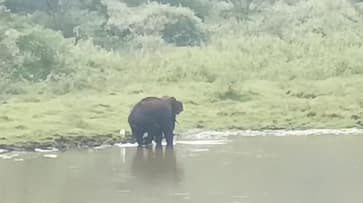
Nearly six days ago, a three-month-old male elephant calf was spotted roaming aimlessly across the estates of Maldare village in South Kodagu.
Madikeri :
Amidst the increased movement of the wild elephants across Maldare in Kodagu, an elephant calf went astray from its herd even as its cries reached the skies.
The residents spotted the elephant calf moving alone across the forest fringes even as the forest department was alerted. Rescue operations are ongoing to reunite the calf with its mother.
Nearly six days ago, a three-month-old male elephant calf was spotted roaming across the estates of Maldare village in South Kodagu. The calf called out to its mother and was roaming aimlessly even as the incident was reported to the foresters.
“After we received the information, the Rapid Response Team (RRT) started tracking the elephant calf and tried to reunite it with the herd. We tried to trace the original herd of this calf and continuous efforts for nearly five days were put in to reunite the calf and the mother,” explained Jaganath, Virajpet DCF, adding that the elephant calf was aggressive.
He confirmed that a herd of elephants was moving in close proximity to where the calf was found and the foresters left the calf at a distance to initiate the reunion. However, this herd moved away even as the effort to trace the herd continues.
“The RRT staff, alongside estate labourers and helpers from a private coffee estate, are still involved in combing operations. They are tracking the movements of the calf. The elephant calf is healthy and it can feed for itself, as coffee beans and traces of bamboo shoots were found in its dung. The calf will survive on its own. However, we are tracing its movement to ensure its safety,” he added.
source: http://www.newindianexpress.com / The New Indian Express / Home> Karnataka / by Express News Service / April 05th, 2024
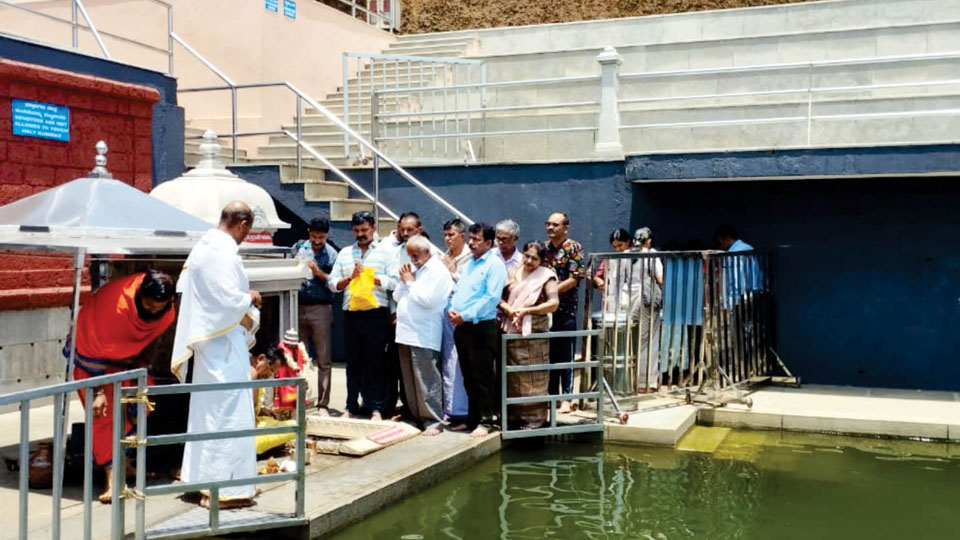
Following severe drought condition in the State including Kodagu district, special puja was performed at Sri Bhagandeshwara Temple and Talacauvery, the birth place of River Cauvery in the district today, praying for a good spell of rain, said M.B. Devaiah, President of Sri Kaaveramme Kodava Amma Kodava Hitarakshana Charitable Trust.
Devaiah said, “Mother Cauvery should show mercy on us to come out of the present drought situation. The devotees, who came from various parts of the State have offered puja at Talacauvery.”
By performing puja, we prayed for rainfall and as per the advise of tantris (priests) we did yelaneeru (tender coconut) abhisheka during the puja. All the devotees took part in the puja rituals. Following drought in the State, people, livestock and wildlife are facing severe water scarcity. Kodagu had last witnessed such a severe drought condition in the year 1924. In the later years, the district had witnessed copious rainfall contributing to better agrarian output.
Now, we have been witnessing severe drought, leading to drying up of rivers and other water bodies. The Governments should be blamed for the current situation, for taking up massive deforestation by cutting trees arbitrarily in the name of development works. The people, livestock and animals are feeling the pinch, crying for water, said Devaiah. Prominent leaders of Sri Kaaveramme Kodava Amma Kodava Hitarakshana Charitable Trust Manu Muddappa, M.K. Aiyanna, Nandakumar, Somaiah and others were present.
source: http://www.starofmysore.com / Star of Mysore / Home> News / April 03rd, 2024
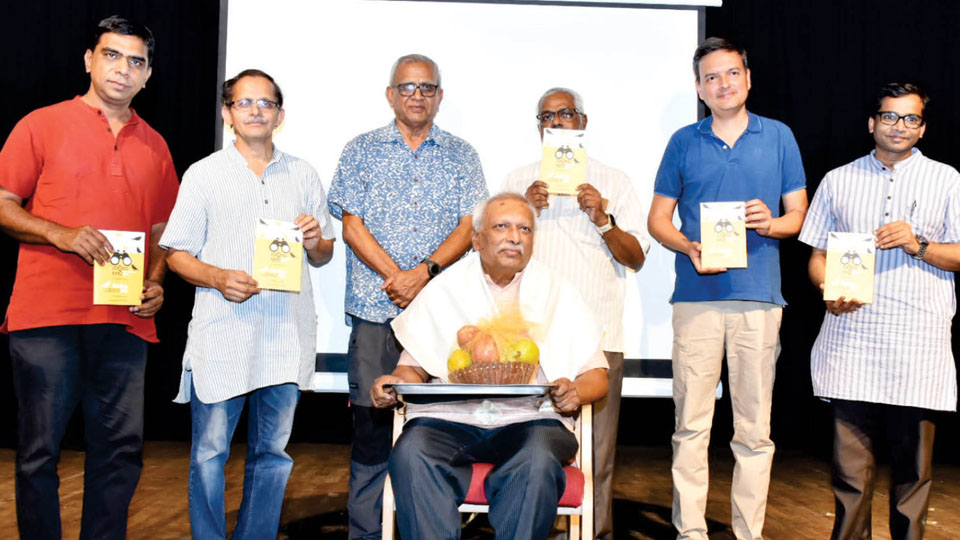
Bird watching is one of the mediums to create awareness on environment conservation, said Dr. S.V. Narasimhan, a Birder and Author from Virajpet in Kodagu.
He was speaking after receiving felicitation at ‘A Day with Salim Ali’ event jointly organised by Mysore Science Theatre Festival Trust, Kutuhali, NCF (National Curriculum Framework) and SVYM (Swami Vivekananda Youth Movement) at Kiru Rangamandira here on Saturday.
“We Indians have always understood the importance of environment since we are worshippers of nature and see divinity in all living beings. Students should learn about nature and its conservation,” he said. A doctor by profession, Dr. Narasimhan is perhaps known to many for his passion for birds.
Bird-watcher N.R. Harsha said renowned Ornithologist Dr. Salim Ali had conducted a research on birds between November, 1939 – February, 1940 in Mysuru region and that the recent research had shown the presence of 419 species of birds in Mysuru region.
“Mysuru region has 191 local species and witnesses 129 different species of migratory birds in winter season. In addition, 53 variety of local migratory birds are also spotted in our region. Among the various species of birds found in the country, Mysuru contributes about 30.7 percent and Karnataka contributes 76 percent,” he noted.
On the occasion, Kannada and English version of the book ‘Salim Ali – Wonder in the World of Birds’ (Salim Ali – Pakshi Lokada Beragu’) by Dr. M.C. Manohara/ Shashidhar Dongre were released. Artistes of Arivu Ranga staged a play while talks were delivered on ‘Salim Ali and Me’ by S. Subramanya, ‘Birds of Mysuru Region’ by N.R. Harsha and ‘Bringing Birds to People’ by Abhishek Krishnagopal.
Mysore Science Theatre Festival Trust Trustee Shashidhar Dongre, CFTRI Scientist (retd.) Kollegal Sharma, Suhail Khadar of NCF and Praveen of SVYM were present.
source: http://www.starofmysore.com / Star of Mysore / Home> News / March 25th, 2024
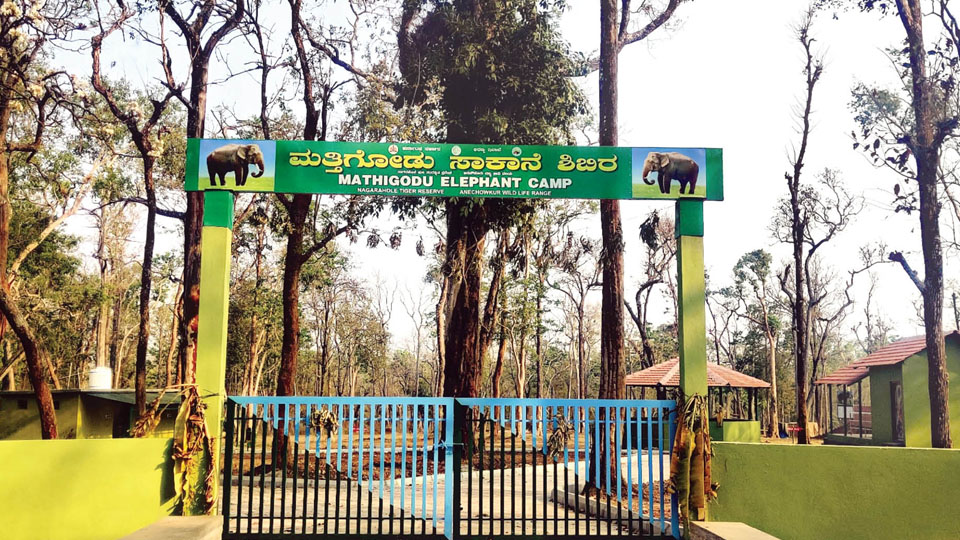
The Mathigodu Elephant Camp, situated a short distance away from the Anechowkur Gate at the entry of Kodagu district from Mysuru, has transformed into a tourist attraction and is set to welcome visitors soon. Among its notable residents are the Dasara Howdah Elephant and the fearless tusker, Abhimanyu.
Passersby along the Mysuru-Gonikoppal Road often halt their vehicles to have a glimpse these majestic creatures, albeit from a distance, as access to the camp was previously restricted for safety reasons and to maintain its exclusivity.
Capitalising on its popularity, the Forest Department has revamped the Mathigodu Elephant Camp into a tourist hub while prioritising safety measures. This camp falls within the precincts of the Nagarahole Tiger Reserve, adding to its allure. The Forest Department has spent Rs. 1 crore towards its development.
In an endeavour to raise awareness about human-wildlife conflicts, concerted efforts are underway to educate tourists visiting the Mathigodu Elephant Camp about wildlife conservation. This initiative seeks to foster a deeper understanding of the delicate balance between human settlements and wildlife habitats, with the hope of mitigating such conflicts in the future.
Despite being recognised as an ideal habitat for the State’s finest elephants by the Forest Department, the Mathigodu Elephant Camp hadn’t been optimised as a tourist destination. Meanwhile, the Dubare Elephant Camp near Kushalnagar experienced a steady influx of visitors.
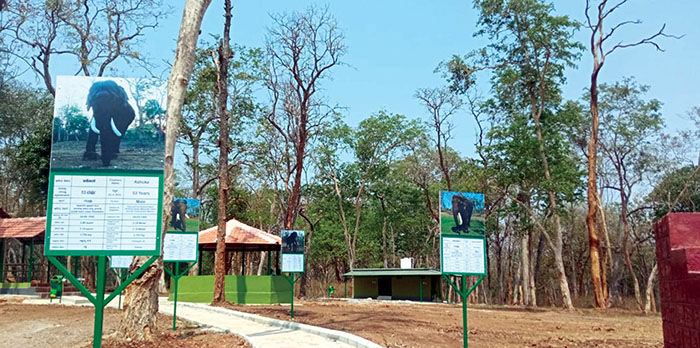
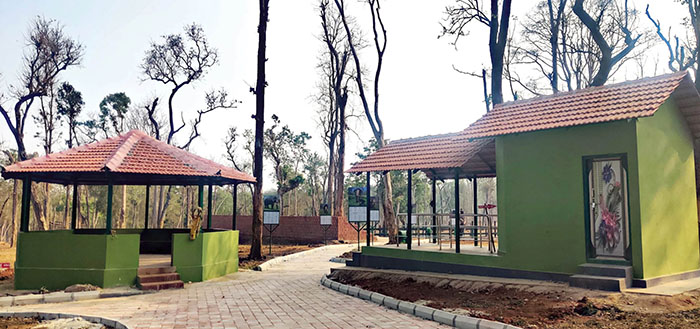
Picture shows the visitor pathway inside the camp.
Located inside a jungle
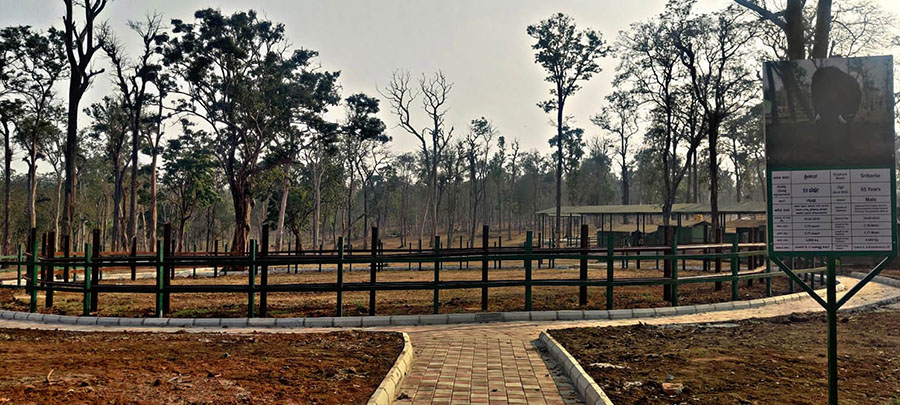
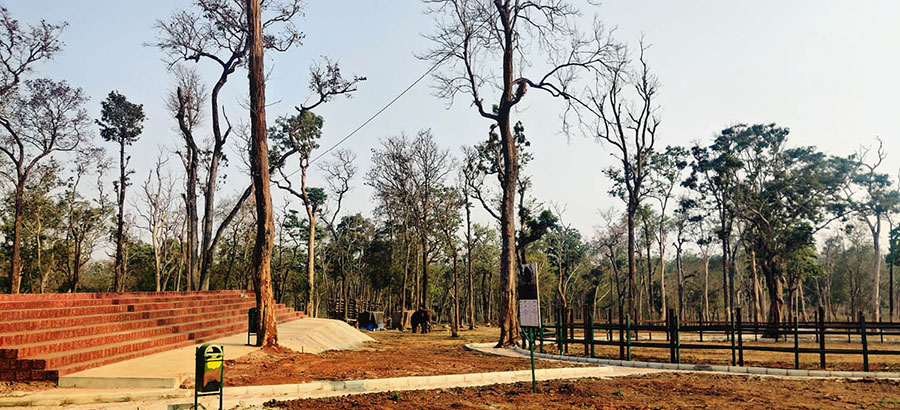
As the camp is located inside a jungle, there is no provision to open shops and hotels here to convert it into a full-fledged commercial centre. However, basic amenities have been meticulously arranged to ensure the comfort and convenience of visitors, including designated parking areas, feeding zones for the elephants and recreational facilities.
To ensure the safety of both visitors and elephants, a railway track barrier gate has been erected, effectively preventing proximity interactions. Additionally, the establishment of two designated parking lots offers travellers ample space to unwind. A dedicated walking path has been constructed, facilitating easy access from the parking areas to the elephant viewing zone.
This setup not only caters to the demand for elephant viewing but also serves as an educational platform for visitors. The place offers comprehensive insights into elephant behaviour, the significance of elephant camps, monitoring protocols, profiles of the famed Dasara elephants, methods of elephant capture, the role of Kumki elephants, feeding practices, distinctions between Asian and African elephant species and other pertinent information concerning the rehabilitation of elephants.
An information centre has been inaugurated, serving as a repository of knowledge on elephants and forest conservation. Equipped with valuable resources, it aims to provide visitors with an immersive learning experience, fostering greater awareness and appreciation for wildlife conservation efforts.
Development works worth Rs. 1 crore have been taken up including a safe elephant feeding area and an information centre.
Home for 17 elephants
Currently, the Mathigodu Elephant Camp is home to a distinguished herd of 17 elephants. Among them are Abhimanyu, Bhima, Mahendra, Ravi, Somashekhar, Masti, Ashoka, Kyaata, Chamundeshwari, Bhuvaneshwari, Srikanta, Abhi (Zoo elephant), Rama, Ekalavya and two forest elephants.
Under the leadership of Range Forest Officer (RFO) D. Devaraj, the well-being and welfare of these magnificent creatures are diligently overseen by a team of DRFOs, dedicated staff members and experienced mahouts and kavadis.
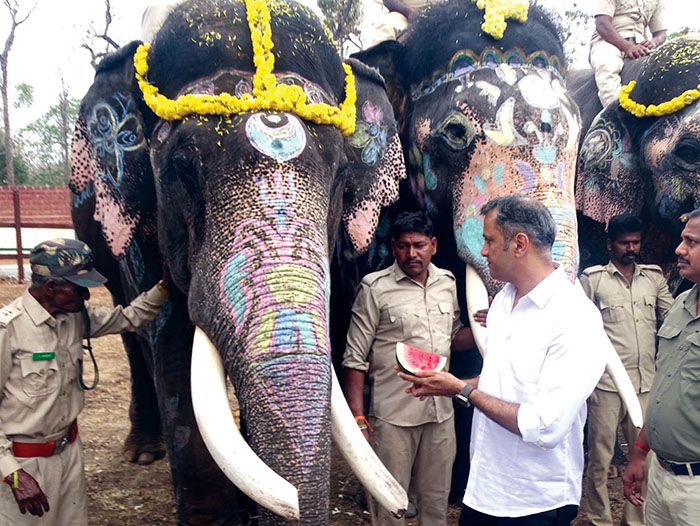
Picture shows Virajpet MLA A.S. Ponnanna feeding watermelon to a tusker during inauguration of the elephant camp recently.
Equipment for surveillance
Visitors have a unique opportunity to witness first-hand the equipment utilised by the Forest Department for managing human-elephant conflicts and operations. Within a designated room, an array of tools is on display, ranging from tranquilliser darts and guns for administering them, to ropes essential for elephant operations.
Additionally, visitors can inspect sophisticated surveillance devices such as camera traps, thermal drones, torches and wireless communication devices utilised in conflict management operations.
This immersive experience will enable visitors to gain a deeper understanding of the intricate procedures and tools employed by the Forest Department. By witnessing these resources up close, visitors can refine their perceptions regarding human-elephant conflict management, appreciating the complexities involved and the efforts undertaken to mitigate such conflicts.
Golden Howdah carriers
The Information Centre showcases a comprehensive list of distinguished elephants that have had the honour of carrying the 750-kg Golden Howdah during the Dasara festival. Among these pachyderms, Jayamarthanda stands out, having shouldered the Golden Howdah an impressive 45 times.
Other notable elephants who have carried the Howdah are Vijayabahaddur, Nanjunda, Ramaprasad, Motilal Rao, Airavata, Rajendra, Drona (19 times), Balarama (11 times), Arjuna (8+1 times), Abhimanyu (4 times), each adding their majestic presence to the grand procession.
Entry fee will be charged
The Mathigodu Elephant Camp has been enhanced to accommodate visitors, with all necessary arrangements for their convenience. Following a formal request to the Government regarding the implementation of an entry fee for tourists visiting the elephant camp, the Government has approved the proposal and granted permission. We have taken the necessary steps to prepare accordingly.—Harshakumar Chikkanaragund,Director (DCF), Nagarahole Tiger Reserve
source: http://www.starofmysore.com / Star of Mysore / Home> Feature Articles> Top Stories / by M T Yogesh Kumar / March 19th, 2024
“Chinnappa is a shining example of how a tough forest official fought for tiger conservation against immense odds, inspiring others in the processs,” said Praveen Bhargav, Trustee, Wildlife First.
While locals and supporters called Kotrangada Medappa (KM) Chinnappa a hero and phantom of the jungles; poachers called him “The Devil” who stalked their hunting grounds.
Bengaluru :
Noted wildlife conservationists and retired forest department official, Kotrangada Medappa Chinnappa (KM Chinnappa), breathed his last on Monday morning.
“Chinnappa (84) had been sinking. He had health and age-related ailments for a long time. He suffered a heart attack on Monday morning at his house in Kumatoor Village, Srimangala, Kodagu District. He will be laid to rest on Tuesday,” said his family members.
The news left a vacuum in the hearts and minds of many conservationists and forest officials who worked with him. Many conservationists and politicians, including leader of the Opposition, R Ashoka took to social media-X to express condolences. Ashoka in his X-post termed Chinnappa as a walking forest encyclopedia.
“President of Wildlife First since 1995, Chinnappa was one of India’s most respected and well-known crusader for wildlife protection. Chinnappa is a shining example of how a tough forest official fought for tiger conservation against immense odds, inspiring others in the process. With his extraordinary field craft, toughness and bravery, he led from the front. As a result of his actions, wildlife populations had dramatically recovered by mid-1980s with densities higher than anywhere in Asia,” said Praveen Bhargav, Trustee, Wildlife First.
Born in 1941, in Kumtur village near Nagarhole to a soldier father, who fought during the First World War, Chinnappa wanted to become a mustachioed soldier. He did become one but with a difference – he transformed into a gun-toting, frontline forest warrior.
Chinnappa joined the forest service in 1967 as a Range Forest Officer. During his career, he faced numerous challenges. He became a one-man army to revive the Nagarhole forest which was under threat from poaching, rice cultivation, encroachment, and timber lobbying.
While implementing a slew of measures initiated by then Prime Minister Indira Gandhi, Chinnappa paid a hefty personal price. He was arrested, jailed and transferred. His home was burnt down. In an interaction he said: “What’s the use of just going to office. I led a colourful life.”
While locals and supporters called him a hero and phantom of the jungles; poachers called him “The Devil” who stalked their hunting grounds.
In 1988, one of Chinnappa’s guards shot a local coffee planter who had killed and eaten a Sambar deer. Chinnappa was accused of being the mastermind of the murder. He was arrested and jailed for 12 days. He was later cleared of charges and reinstated. In 1992, he was again implicated in the killing of a poacher. A frenzied mob ransacked the forest department’s buildings, assaulted staffers and burnt vehicles along with large swathes of forest land and Chinnappa’s ancestral home. Even though he was cleared of charges, Chinnappa decided to quit service.
However, even after retirement, his services were regularly sought by forest department officials to train young guards and young conservationists. Since retirement, Chinnappa trained over 2,500 forest staffers in anti-poaching operations and fire protection. Chinnappa reached out to over 1,50,000 school children, teachers, rural youth and villagers through nature camps, slide shows, talks, rallies and interactions.
In one such training, during patrolling, a young recruit asked him, what one should do when one encounters an elephant. Chinnappa simply said: “You need not do anything, what ever needs to be done, the elephant will do.”
Chinnappa was awarded with Karnataka Chief Minister’s Gold medal in 1985, the Wildlife Conservation Society certificate of Appreciation in 1988, and the Tiger Link Bagh Sevak Award in 1996.
He also received the ESSO and Sanctuary Life time Achievement awards in 2000 and 2006, respectively. He donated his entire prize money of Rs 7.5 lakhs from all these awards and recognitions to the cause of wildlife conservation.
Chinnappa’s long-time associate and friend K Ullas Karanth, who met him in 1969 for the first time said: “I’m deeply saddened to hear about the demise of my friend. He was the foremost wildlife ranger in all of India in terms of accomplishments. An inspirational figure, he was known for his bravery and courage of his convictions. He also had an incredible knowledge of wildlife.”
source: http://www.newindianexpress.com / The New Indian Express / Home> Karnataka / by Bosky Khanna / February 27th, 2024
Coorg district, Karnataka, famed for its greenery, faces severe water scarcity. Kushalanagar taluk, hit hardest, endanger both humans and wildlife. Shrinking water sources force wild animals into villages, disrupting livelihoods. Forest officer Ratan Kumar highlights the need for contingency plans amid the crisis.
Coorg district in Karnataka, renowned for its lush greenery and diverse wildlife, is currently grappling with a severe water crisis. As the region experiences a prolonged dry spell, both human inhabitants and wild animals are facing acute shortages of drinking water.
Kushalanagar taluk, In particular, nestled amidst semi-mountainous terrain, has been hit hard by the relentless absence of rainfall. The dire situation has led to concerns not only for the local populace but also for the myriad species of wildlife inhabiting the area.
Covering a vast expanse of 24,278.88 hectares, the forests of Kushalanagar Zone, including reserves like Dubare and Anekadu, are home to a rich assortment of animals and birds, including tigers, leopards, elephants, deer, and sambar. Traditionally reliant on water sources such as the Kaveri River, Chiklihole Reservoir, and Harangi Reservoir, these creatures now find themselves confronting parched landscapes. The Kaveri River has dwindled to a mere trickle, while the Chiklihole Reservoir stands desiccated, leaving behind barren canals.
Within the forested areas, a handful of lakes remain, albeit with diminishing water levels. The scorching sun, with temperatures averaging between 29 to 30 degrees Celsius, poses a grave threat as it hastens the evaporation of these remaining water bodies.
The repercussions of this water scarcity extend beyond the confines of the forests. With wild animals compelled to seek sustenance elsewhere, instances of encroachment into nearby villages and coffee plantations have surged. Farmers, reliant on these plantations for their livelihoods, now face disruptions in their daily activities, compounded by labour shortages as workers are deterred by the unpredictable presence of wild animals.
Responding to inquiries, Ratan Kumar, the Forest Officer for Kushalanagar Zone, maintains that there is no immediate shortage of water within his jurisdiction. However, he acknowledges the pressing need for contingency plans should the situation worsen.
source: http://www.newsable.asianetnews.com / Asianet Newsable / Home> English News> Karnataka / by Vinay Kumar Patil / February 20th, 2024
According to the criteria, river water that has ‘A’ grade certifies the water to be good and the water can be used from the source directly after disinfection while ‘C’ grade means that the water can be used only after conventional treatment.
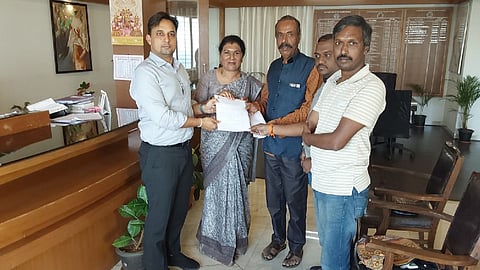
Chandramohan, alongside other members of the organization, submitting a memorandum to DC Venkat Raja demanding an action plan to preserve Cauvery. (Photo | Express)
Madikeri :
The residents and various organisations in Kodagu submitted memorandums to the district administration demanding preservation of River Cauvery in Kodagu. As per the statistics released by the Pollution Control Board, the purity of water in Cauvery has touched ‘C’ Grade at its birth district.
According to the criteria, river water that has ‘A’ grade certifies the water to be good and the water can be used from the source directly after disinfection. However, ‘C’ grade of water level at the river base of Cauvery means that the water can be used only after conventional treatment.
“The water has been graded at ‘C’ in River Cauvery at Kushalnagar. This proves that waste water is flowing into the river from commercial buildings and other set ups. Unscientific growth of tourism has also resulted in increased waste and garbage being flown into River Cauvery. If the river is not protected, we will have to face dire situations in the near future,” shared Chandramohan, the convener of Cauvery Swachata Andolana.
The incomplete UGD work is also adding to the pollution as sullage water is being released to the river directly across Kushalnagar region, he added.
Chandramohan, alongside other members of the organization, submitted a memorandum to DC Venkat Raja demanding an action plan to preserve Cauvery.
In the memorandum, the organization demanded the administration to submit a proposal to the state for special funds to establish plans to improve the conditions of the river banks and stream banks across the district, a survey be ordered to mark the territory of River Cauvery and stringent laws be passed to keep the river clean and hygienic.
They also demanded plans to be released to preserve other water bodies in the district including the Lakshmana Theertha River.
“The authorities must release plans to preserve Cauvery and prevent pollution of the river across the 22 Grama Panchayats and one Municipality of Kushalnagar, Virajpet and Madikeri taluks,” explained Chandramohan.
DC Venkat Raja assured to submit a proposal to the state in this regard. He also assured to order a survey to determine the territory of the water bodies even as he explained that orders are already in place to complete the UGD projects shortly.
source: http://www.newindianexpress.com / The New Indian Express / Home> Karnataka / by Express News Service / February 19th, 2024
The department has readied equipment including tankers mounted on jeeps, sprayers and other necessary machinery to fight the breakout of forest fires.
Nagarahole Sanctuary (Photo | Website)
Madikeri :
With summer fast approaching, the forest department is set to draw fire lines over 2000 kilometres to control accidental forest fires. As confirmed by the officials, additional staff of 400 forest watchers have been deployed to draw fire lines across the over 840 sq km area of Nagarahole Sanctuary.
They will also tend to any emergency during a fire breakout.
The department has readied equipment including tankers mounted on jeeps, sprayers and other necessary machinery to fight the breakout of forest fires. In eight ranges across the Nagarhole belt, fire lines have been drawn adding up to 2500 km inside and by the forest fringes. Watch towers have been raised in sensitive zones even as drones will be used to frequently monitor any fire breakout.
The department sources also confirmed that water is being filled with the help of tractors in the lakes inside the forest region to support wildlife. In the Virajpet division, a total of 1012 km of fire line has been drawn including the regions of Makutta forest range.
“Five teams have been deployed to keep a check on any untoward incident. The work for fire lines began in December,” confirmed Sharanabasappa, Virajpet DCF.
In the Anekaad region of the Somwarpet division, the foresters were seen drawing fire lines across the forest fringe touching the NH 275 Kushalnagar-Mysuru road.
Madikeri DCF Bhaskar confirmed that the department is also keeping track of denotified forest regions too where forest fires are usually reported.
source: http://www.newindianexpress.com / The New Indian Express / Home> Karnataka / by Express News Service / February 16th, 2024
Located in the UNESCO enlisted Western Ghats, Madikeri is home to several green gems and a densely rich biodiversity
Nagarhole National ParkShutterstock
Madikeri is a picturesque town situated at 3,840 feet in the Western Ghats of Karnataka. It is a well-known destination for wildlife enthusiasts who come to the area to witness its diverse biodiversity and stunning landscapes. The region is quite renowned for its dense forests, tranquil waterfalls, and wildlife sanctuaries. Besides natural beauty, Madikeri also boasts coffee and spice plantations and a rich diversity of Coorg wildlife. Visitors can explore the breathtaking scenery, observe the wildlife, visit national parks, and engage in various activities that make it an ideal destination for nature lovers. Find out all the things to do and places to visit when in Madikeri.
Panorama view of the foggy and cloudy hills of Madikeri Coorg Shutterstock
Madikeri is the capital of Kodagu district, and the mesmerising Western Ghats surround it. The Western Ghats add to its breathtaking landscapes and provide a home to diverse flora and fauna, including elephants, leopards, wild boars, and various types of deer in the lush forests. The rolling hills, coffee plantations, and misty valleys offer an enchanting view for visitors. The aroma of freshly brewed coffee fills the air, making it a paradise for coffee lovers. Madikeri is an ideal destination for nature enthusiasts who want to immerse themselves in the beauty of nature.
One of the major attractions of Madikeri is its extraordinary biodiversity. The Western Ghats, recognized as a UNESCO World Heritage Site, is a hub of biodiversity, and Madikeri acts as a gateway to this ecological treasure.
Places To Visit
Abbey Falls
Abbey FallsShutterstock
Abbey Falls is a magnificent waterfall located a short drive away from Madikeri. Surrounded by lush coffee plantations, it is a popular destination among nature and photography enthusiasts. The waterfall is situated on the early reaches of the Kaveri River, between private plantations with dense coffee bushes and a spice estate. The area is also home to trees entwined with pepper vines. To get the best view of the falls, travellers cross a hanging bridge constructed in the opposite direction. Previously, the Abbey Falls were known as the Jessi Falls, named after a British officer’s wife.
Nagarhole National Park, located approximately 90 kilometres from Madikeri, is a haven for wildlife enthusiasts. Established in 1988, this park is a part of the Nilgiri Biosphere Reserve and is famous for its rich biodiversity, picturesque landscapes, and unforgettable safari experiences. The park is home to Bengal tigers, leopards, and the world’s largest herd of Asian elephants. The Kabini River meanders through the park’s dense forests, providing a home for a wide range of birds and other wildlife. The park also features the beautiful Irupu Falls, which flow down tree-lined rocks.
Brahmagiri River passing through Brahmagiri Wildlife SanctuaryWikimedia Commons
The Brahmagiri Wildlife Sanctuary is a protected area in the Kodagu district of Karnataka, located just 85 km away from Madikeri. It covers an area of 181 square kilometres and is situated in the Western Ghats region, approximately 250 kilometres from Bangalore. The sanctuary is particularly renowned for its diverse bird species, attracting bird watchers from all over. It has been named after the Brahmagiri Peak, which is the highest point in the mountain range. The sanctuary is home to a variety of wildlife, including Tigers, Elephants, Gaur, Chital, Sambur, Dhole, Leopards, Common langurs, Nilgiri langurs, Lion-tailed macaques, and many bird species like Blue-winged parakeets, Small sunbirds, and White-bellied shortwings. Trekking trails through lush forests offer visitors a chance to witness the enchanting beauty of the Western Ghats up close.
Tadiandamol Peak is a sought-after destination for those chasing thrilling trekking adventures. Tadiandamol Peak is 1,748 metres high, making it the highest peak in Coorg, and offers stunning panoramic views of the hills and valleys around it. The trail takes you through dense forests, making it a must-visit destination for birdwatchers. Its name literally translates to “Large Mountain”. The trek to the top, with gentle slopes and grassy terrain, is popular among trekkers. The Padi Igguthappa Temple is a major attraction in the area. To get to the base camp, you can take an auto or hire a jeep from the bridge to Nalknad Palace. An auto ride would cost about INR 400, while a jeep would cost about INR 750 – 800.
Address: Tadiandamol, Yevakapadi, Karnataka, 571212, India
Timings: 6 am to 6 pm
Best Time to Visit: December to May; the trek to the top takes about 5-6 hours
Raja’s Seat
The garden of Raja’s SeatShutterstock
Raja’s Seat, located in Madikeri, is a stunning garden that offers breathtaking views of both the sunrise and sunset. It was a favoured recreational spot for the Kings and Queens of Kodagu, who ruled Karnataka from 1600 to 1834 CE. The garden is renowned for its picturesque scenery and is perfect for relaxation and introspection. Moreover, the historical significance of Raja’s Seat adds charm to the well-maintained gardens. The place also exhibits an evening musical fountain.
Address: Near Rajdarshan Hotel, Raja Seat Road, Stuart Hill, Madikeri, Karnataka, 571201
Timings: 5:30 am to 8 pm
Entry Fees: INR 5 per person for entry to the park; INR 20 per person for the toy train, and INR 40 for parking
source: http://www.outlooktraveller.com / Outlook Traveller / Home> India / by Waquar Habib / January 17th, 2024
Unique rural wedding: Peepal tree and gooseberry sapling united in matrimony for village welfare.
A peepal tree and a gooseberry sapling being married off at Kadagadalu village of Madikeri taluk on Monday
Madikeri :
Hundreds participated in a unique wedding ceremony hosted in the rural part of Kodagu. A tree and a sapling were wedlocked in a spiritual matrimony as the residents prayed for the welfare of their village.
A peepal tree and a gooseberry sapling were married off in a ritualistic ceremony at Kadagadalu village of Madikeri taluk. The rituals were hosted for the welfare of the village under the guidance of a priest from Kasaragod district. The wedding ceremony was organized by the Botlappa Youth Association of the village.
The association was established in the village in 1993. As it completed 10 years in 2003, the members planted a peepal tree in the village premises as it was bestowed a spiritual status, the association members shared. In 2012, as per the advise of an astrologer, they carried out a thread ceremony for the peepal tree when it turned nine years old. The astrologer had also suggested that the tree be married when it turns 21 years.
It is believed that deities Vishnu, Shiva and Brahma reside within the Peepal tree, which is associated to great sacrosanct values in rural areas. While Peepal tree was personified as a groom, a saree was draped around the gooseberry sapling and ‘kanya dhana’ and other rituals were observed in par with the Hindu wedding.
source: http://www.newindianexpress.com / The New Indian Express / Home> Karnataka / Express News Service / February 06th, 2024
WELCOME. If you like what you see "SUBSCRIBE via EMAIL" to receive FREE regular UPDATES.
Read More »