Category Archives: Nature

Karnataka to expand orange cultivation

Bangalore, Jan 03:
Karnataka is planning to expand area under orange cultivation by 50 per cent to 15,000 hectares in five years.

The horticulture department has identified Kodagu, Chikmagalur and Hassan districts for expansion of orange growing area.

“As per the plan prepared by us, about 1,000-hectare addition is planned annually till we achieve sizable production level,” S.V. Hittalmani, Additional Director, Karnataka Horticulture Department, told Business Line.

“Looking at the favourable agro-climatic conditions, the department is planning to expand annually 500 hectares in Kodagu and the rest in Chikmagalur and Hassan districts,” he added.

At present, 10,000 hectares are under orange cultivation, mainly grown as intercrop in coffee estates, though real fruit yield comes only from 5,000 to 6,000 hectares.

“After inclusion of orange under National Horticulture Mission (NHM) in the State seven years ago and also by offering Rs 15,000 per hectares as incentives to growers, we are seeing good quantity of oranges in the market,” said Hittalmani.

“Fairly good yield is being reported from Sidapura and Thitimati in Kodagu. Now we plan to replicate this in other districts where we plan to introduce the crop,” he added.

CURRENT YIELD

Current orange production (2012-13 crop year) in the State is estimated at 50,000 tonnes as against 45,000 tonnes last year (2011-12 crop year).

The department is also planning to give a boost to orange cultivation by encouraging fruit processing units in the growing regions. According to Hitalmani, at present a couple of processing units are operating under cooperative societies in Kushalnagar and Gonikoppa in Kodagu.

Hitalmani said the revival of orange in the State has led to steady demand. “Prices early in the season (November) average around Rs 60 a kg. Then it drops to Rs 45 a kg by the middle of the season (December/January) and later it quotes around Rs 50 to 60 as the season ends (February-March).

ORANGE MELA

As a step forward to develop farmer-centric business model, National Horticulture Board (NHB) and Karnataka Horticulture Department are holding an ‘Orange Mela’ in Bangalore from January 4 to 6, said Jagadeesha KG, Director of Horticulture.

For the mela, farmers from orange producing States such as Maharastra, Punjab, Rajasthan, a few States from North-East, West Bengal and Tamil Nadu are taking part.

anil.u@thehindu.co.in

source: http://www.TheHinduBusinessLine.com / Home> Industry / by Anil Urs / Bangalore, January 03rd, 2013

The hospitable heiress

Shruti Shibulal has invested in a business that’s a world apart from that of her father. But in her unassuming demeanour she’s kept to the Infosys tradition

Her 0.64 per cent stake in the company her father co-founded is worth close to Rs 900 crore at today’s prices. But 27-year-old Shruti Shibulal, promoter of the recently-launched luxury resort The Tamara, Coorg and daughter of Infosys Co-founder and CEO S D Shibulal, comes across as remarkably down-to-earth and, well, normal. “It’s something I’ve been asked about [the Rs 900 crore] but I don’t really wake up in the morning thinking ‘oh, I’m worth this much’,” says the young entrepreneur, whose casually bunched-up curly hair and black-rimmed glasses lend her an air more grad student than entrepreneur, though she has dressed for the interview in a fitted black cardigan, onion-pink silk blouse and black trousers. (The sole concession to luxury seems to be a sparkling diamond ring on her left hand, about which she will reveal only, with a smile, that “yes, it means something”.)

The down-to-earth demeanour could also have to do with the fact that she was not born with that most desirable of appendages, the proverbial silver spoon. “We had a very middle-class upbringing till the late ’90s. I grew up seeing my dad work obscenely hard and now he’s working harder than ever. We are extremely aware of the value of money,” she says.

My entry into the conference room a little earlier had interrupted a discussion between Shibulal and one of her employees about someone she has just met who was convinced that the building of resorts like hers spelt the beginning of the end for Coorg, a pristine part of Karnataka’s coffee country and the location of Shibulal’s resort. “If she just visited the resort, I’m sure she would be persuaded to think differently,” says Shibulal, with a confidence that is also unassuming. It is a confidence that might have something to do with the fact that she has already launched two popular fine-dining restaurants in Bangalore, the high-end Caperberry known for experimenting with molecular gastronomy and the like, and Faava, which serves Mediterranean cuisine.
Shibulal says she might not always have known she wanted to be in hospitality but she knew what she did not want to do, and one of those things was a career in IT. “Oh, that was decided after the tenth standard itself, when I dropped computer science,” she says. This steering off the IT path is in line with what the children of the other Infosys promoters such as Narayan Murthy and Nandan Nilekani have done. (Infosys also has in place a policy according to which the promoters’ children cannot join the company.)

College was in the US, at Haverford, where she majored in chemistry, with a minor in philosophy. “I was much better at doing things and dealing with people than academics,” she says. This and a determination to be in New York meant a stint with Merrill Lynch’s wealth management division in NYC which, while enjoyable, also made her feel she could do something more.

The foray into the restaurants business happened soon after she returned to India, and more or less by chance — she was looking around for an investment opportunity and chef Abhijit Saha, who was all ready with the blueprint for his restaurant, needed an investor. “I initially thought I’d be a passive investor because it was a business I knew nothing about, but then Abhijit convinced me to get involved,” she says. That involvement covered the entire gamut, from finance and management to taking orders, being the receptionist and spending the odd night in the restaurant. Everything that is, apart from cooking. “I wasn’t allowed to enter the kitchen,” she laughs. “They tried to teach me but I’m not a good cook.”

“When she came on board, she did not have any knowledge about the food and hospitality industry but she used this as a learning opportunity,” says Saha, who is an equal partner in the venture. Saha describes Shibulal as someone very calm and collected, who was also “a very very quick learner” and very easy to work with.

For Shibulal, the time spent in the restaurant business led to many realisations, the first of which was that starting a business in India is not easy. “It was a bit of a shock to realise you can’t get things done just because you want to, especially when you’re coming from the US, where you are used to things working.” It was a year before Caperberry could finally open, a frustratingly long period for any young and enthusiastic promoter, but a time she now views philosophically. “It took me through a lot of learning — you don’t usually have to go through so much disappointment that early in your career,” she says.

She also had to deal with the fact that at 23, she was much younger than most of the people she was working with, which meant it was that much harder to be taken seriously, even if you were one of the promoters. But there were also positives — like the instant gratification the restaurant business provides, unlike other sectors. “Within five minutes you’ll get to know whether the customer likes what you’ve served him. And that’s a bit of a high.”

Though she continues to be a promoter, her involvement in the restaurants had to take a backseat when she returned to the US, to study for her postgraduate degree in management from Columbia University. Meanwhile, The Tamara, Coorg (Tamara means lotus in Malayalam, Shibulal’s mother tongue) was already taking shape, with the land, a 170-acre coffee plantation, having been bought in 2005.

* * *

The resort, in which she is one of the three promoters, opened in April this year and, currently, that’s the business she is focusing on. With rooms starting at Rs 18,000 a night, it’s positioned at the top end of the segment, but for competition, it has to contend with the venerable Orange County and the newly opened Vivanta by Taj.

But Shibulal, who also heads corporate strategy, is unfazed. For one, she believes Coorg is nowhere near being a saturated market, even with the new Vivanta. And the Tamara, she feels, will stand out because of the kind of service it offers. “It’s a place where you can unwind completely while at the same time having the option to do that one hour of work, just in case you need to,” she says. The resort has a five-star rating on popular travel portal Trip Advisor with many ecstatic comments by guests, but then so does the competition.

In her role, Shibulal looks after the direction the company will take, including acquisitions — the next resort they are working on will be in Kodaikanal, a hill station in Tamil Nadu, and another in Alappuzha, Kerala’s backwater country, is also under consideration. She says she also has to ensure every decision the company takes is in line with its philosophy of “sustainable good living”, part of which meant getting more trees planted than were cut down during the construction of the resort, something attested to me earlier by a rival promoter.

Shibulal declines to reveal the exact investment on the grounds that it’s a privately-held company, and says only that they hope to break even in a few years.

Her family does not interfere in any of her business decisions, she says, though she does turn to her parents for advice, at times. “It’s always been that way, our professional lives are quite separate.” In fact, her father met her business partner, Saha, only six months after she had invested in the company. Neither do dinner-table conversations revolve around Infosys or, for that matter, Tamara. “There are so many other things to talk about,” she says.

Outside work, dancing used to be a passion. “I’ve been dancing from three and have learnt everything from ballet to bharatnatyam and have taught hip-hop while I was in university.” But an injury has put a stop to that.

Meanwhile, she has decided to try her hand at cooking again, though she says it’s particularly hard in a city like New York with its smorgasbord of dining options. (She divides her time between New York, where she looks after the family’s investments in the US, and Bangalore.)

The only indulgence she will confess to is travel, mostly to see her friends scattered around the globe. That and the “Tropical Iceberg” from Cafe Coffee Day a thoughtful employee suddenly enters the conference room with. “They know me well here,” she says with a smile.

source: http://www.Business-Standard.com / Home> Life & Leisure / by Indulekha Aravind / Bangalore, December 15th, 2012
Kodagu villagers teach Wayanad a lesson in tiger conservation

Kozhikode :
Just two days after the controversial killing of a tiger in Wayanad, the villagers of Nidugumba in Kodagu district, just across the border in Karnataka, have given their counterparts in Wayanad a lesson in handling a man-animal conflict.

The villagers on Tuesday swiftly rescued a tigress which had strayed into a coffee plantation and got its feet entangled in a barbed-wire fence, without baying for its blood as it happened in Wayanad.

According to Karnataka forest officials, the entire community headed by the owner of the coffee plantation, Sullimada Muthanna, ensured that there was no mobbing of the struggling tiger. The villagers stood guard on the tiger till forest officials from the Nagarhole Tiger Reserve arrived and took control of the situation.

“The villagers were very cooperative. There was no violent mob baying for blood and the tigress was tranquilized swiftly,” Bandipur Tiger Reserve director Kumar Pushkar told TOI. With 10-12 tigers per 100 sq km, Nagarahole is known to have ones of the highest tiger densities in the country. It also produces a surplus of animals each year.

The animal was soon untangled from the fence and transported to the Mysore Zoo where it is currently under medical care.

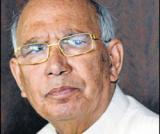
Leading tiger ecologist and director of ScienceAsia, Ullas Karanth, said that the situation in Kodagu stands in stark contrast with the recent tragic outcome in Wayanad when a cornered tiger was first tranquilized and then shot dead amidst chaos created by a local mob.

“The restraint and positive conservation attitude of the Kodagu villagers is exemplary. They responded positively and acted as the guardians of the tiger. Other communities along the Western Ghats, including Wayanad, should realize that the tiger is a very precious heritage of ours. The government also has to develop more professional ways of dealing with such situations,” he said.

Meanwhile, Wayanad Prakrithi Samrakshana Samithi president N Badusha said that historically, the people of Wayanad have coexisted peacefully with wild animals. “But over the last two months, certain vested interests, backed by political parties and religious institutions, have created a mass hysteria which has created animosity among people against animals. This hysteria has taken over even the people who usually speak up for the animals,” he said. Badusha added that even his son was attacked and house stoned for the pro-conservation stand taken by him.

source: http://www.m.timesofindia.indiatimes.com / by K R Rajeev, TNN / December 06th, 2012

Jamma Baane comes under forest : Governor

‘It is not a revenue land’

Governor H R Bharadwaj has opined that Jamma Baane land comes under forest limits in Kodagu district.

Speaking to Deccan Herald, during his private visit in Madikeri on Monday, he said that Jamma Baane land comes under forest. “People were given the right to use the land. However, it is not a revenue land,” he said.

The Assembly had passed Karnataka Land Revenue (Amendment) Act, with regard to Jamma Baane. However, the Governor had not given assent to the Act.

“As Jamma Baane comes under forest limits, I had sent the Act to the Central government for approval.”

Kodagu district is surrounded by Western Ghats, which is known for its flora and fauna. It is one of the hotspots of the world. There is a need conserve the bio diversity, he said.

Kodagu is a tourists paradise. Several tourists visit the district to enjoy the beauty of nature. There is a need to promote eco-friendly tourism, without harming the nature.

‘Provide facilities’

The Governor said that the government can solve the problems related to Maoists by responding to the needs of the people.

“There is a need to provide basic facilities in the villages. The villagers should be provided with better health care and education. To check the eviction of the forest dwellers, Forest Rights Act has been implemented. MGNREGS and others schemes of the government should be implemented effectively.

Intervention

The Governor said that he has been watching closely into the political development in the State. “I will intervene, if there was any constitutional crisis in the State.

The development is internal issue of the BJP. I can not intervene now,” he said and added “the government should function as per the constitution.”

Deputy Commissioner Dr N V Prasad, SP Manjunath Annigeri, Additional DC N Shivashankar, CMC Commissioner N M Shashikumar and others were present.

source: http://www.DeccanHerald.com / Home> District / Madikeri, DHNS / November 13th, 2012

A green route off the grid


NO TELLY, NO NETWORK Just peace and quiet! Photo: K.C. Vijayakumar / The Hindu
The road from Mysore twists up the hills that define Coorg. A palette of colours flit across, be it the red robes of Tibetan monks at Bylakuppe, the rusty brown Mangalore tiles that lend a roof to homes or the greenery split by streams that gurgle down the mountains.

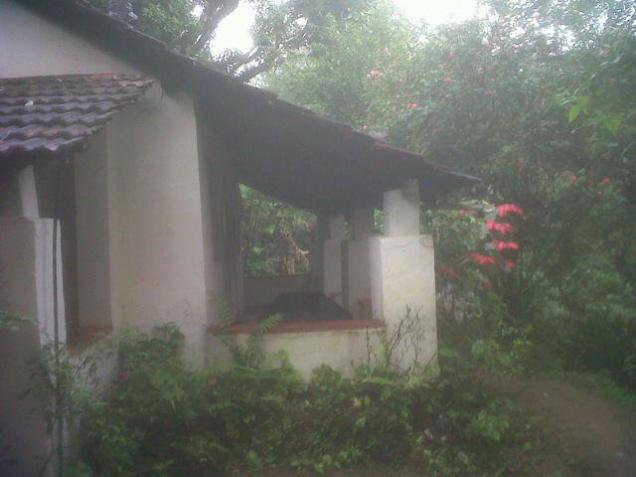
And then there is this extreme shade of green that greets you once you drive past Madikeri town and Club Mahindra. Take a right turn, climb higher into the Western Ghats and after trundling into the Rainforest Retreat, all you can do is marvel at nature’s bounty and listen to the symphony of a million cicadas. Rainforest Retreat is part of the Mojo Plantation that was launched in 1994 thanks to the efforts of the scientist couple, the Goels – Anurag and Sujata. Their objectives were twin-fold – escape the rat-race and practice what they preach: be it organic farming or supervising a tourism initiative that remains friendly to the environment.

The eco-lodge spread over undulating terrain, has two deluxe guesthouses, a plantation cottage with independent rooms and tents. Solar power runs the basic appliances here and gobar gas is the preferred ally for cooking. For those who sigh on seeing clips of the Amazon on National Geographic, this place can be a soothing balm provided you can accept that living inside a plantation that has an overwhelming air of being a forest would mean that there is no television and nor will mobile signals work.

Windows that open to damp air and dense foliage might goad the city-stressed tourist to curl up with a book but for those with the itch to explore, there are varied treks. Be it the plantation trail with Archana Shetty, who manages the resort with a smile and a kind word, or the walks through the adjoining jungle, there is enough to see and savour.

The place teems with various species of birds, animals and insects, including the world’s largest moth – the Atlas moth. Also be prepared for the occasional leech that draws blood. There is nothing to panic though and with helper Ravi’s family staying inside the leafy zone, assurance comes in a variety of languages – Kannada, Tulu, Kodava, Tamil, Hindi and English. Ravi, with ancestral roots leading all the way to Tirunelveli in Tamil Nadu, along with Jeff, who is doing an internship as part of his eco-tourism management studies in the United States, and Antonin, a French farmer, do yeomen service at the resort.

Meanwhile the affable Goels voice their concerns about a globe that is increasingly losing its green cover and their efforts to conserve nature, is truly inspiring. The Indian food can be bland at times, tailored as it is for the largely foreign clientele but the hospitality and the lessons of nature that you get to imbibe, is something that will stay with you forever.

source: http://www.TheHindu.com / Home> Life & Style> Metro Plus / by K C Viyaya Kumar / November 09th, 2012

Tribals empowered to collect minor forest produces: Rameshwar Oraon


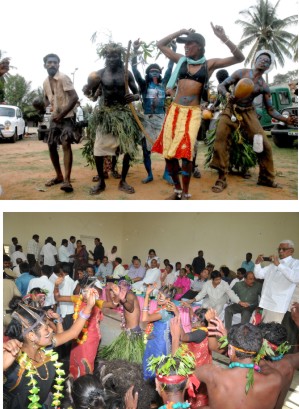
Rameshwar Oraon, Chairperson, National Commission for Scheduled Tribes, addressing tribals at Dr. B.R. Ambedkar Bhavan in Hunsur yesterday, accompanied by other members of the Commission. Pictures centre and right show the tribal dances performed to welcome the Central team.

Mysore, Nov. 9 (RK&RNN)
Tribal people have every right to collect and sell Minor Forest Produces (MFP) and no one could interfere with this, observed Rameshwar Oraon, Chairperson, National Commission for Scheduled Tribes.

Addressing members of the tribal community at Dr. B.R. Ambedkar Bhavan in Hunsur after visiting several Haadis in H.D. Kote taluk of Mysore district yesterday, he said the Union Government was taking steps to fix a minimum price for the MFP to avoid exploitation from middle men.

He also added that The Scheduled Tribes and Other Traditional Forest Dwellers (Recognition of Forest Rights) Act, 2006 made all tribal people living in the forest eligible for title deeds of their lands and urged Adivasis to take benefits due to them.

He also elicited the opinion of tribal people and others who participated in the meeting on whether they were getting the benefits given by the Centre.

Stating that the tribals would be given compensation four times higher than the existing value of the land if the same was acquired for any government purpose, Oraon added that the Centre was planning to bring legislation in this regard.

Many of those present complained that they were denied benefits like schools, angan-wadi centres, drinking water and ration under the Public Distribution System (PDS) to which Oraon replied that he would take up the issue with the State Chief Secretary at a meeting scheduled to be held today and added that he would also discuss it with Deputy Commissioner and CEO of Mysore Zilla Panchayat.

Food security to tribals

It is reported that Rameshwar Oraon has directed the District Administration to provide food security to tribals and adivasis living in the periphery of forests through Fair Price shops and also urged the District Administration to provide them alternative land for agriculture.

Stressing for education to tri-bal children at Ashraya Schools from first to seventh standards, Oraon instructed ADGP Chikkanur to withdraw false cases filed against tribals and also called for making arrangements for selling of products manufactured by tribals through Lamp Societies at good prices.

He directed early completion of probe into the missing cases of Jiyamballi Raju and Hunsekoppa Bheemasena besides ensuring avoidance of harassment of tribals by forest officials.

A traditional welcome was accorded to the visiting team by tribals who performed folk dan-ces following which Prasanna, Convenor of South India Cell for Human Rights Education and Monitoring (SICHREM) and Vaddaragudi Chikkanna gave a presentation of problems being faced by tribals.

The team consisting of Rameshwar Oraon, Commission members Kamala Kumari, B.L. Meena, Jt. Secretary Aditya Mishra, Dy. Director K.D.Bansar, SC/ST Regional Office (Bhopal) Asst. Director R.K.Dubey and others who arrived from Bangalore in the morning drove straight to Morarji Desai School Hostel in Hunsur for an inspection.

Dy. Commissioner P.S. Vastrad, ZP CEO Dr. Ajai Nagabhushan, SP R.Dileep, MLAs Chikkanna and Manjunath, Asst. Commissioners, Tahasil dars and other officials provided necessary information to the team.

source: http://www.StarofMysore.com / Home> General News / November 09th, 2012

Teppadakandi gets hanging bridge connecting Mysore, Kodagu

Teppadakandi, a small village in Guddehosur connecting Mysore and Kodagu districts, has witnessed several causalities of those trying to cross the river Cauvery. Residents, including students, cross the river to reach Rani Gate, Maroor, Doddaharave and Tomabathu Acre villages as it is the shortest route.

Now, with the hanging bridge that was inaugurated on October 30, the distance which was 18 kilometres earlier, has been cut down to three. The concept of a hanging bridge was first conceived by Guddemane Vishu Kumar, a photographer from Guddehosur who is also the brother-in-law of former chief minister D V Sadananda Gowda. When Gowda became the chief minister, Vishu Kumar generated publicity about the subject and took it to Vidhana Souda with the help of then member of Legislative Assembly M P Appachu Ranjan.

Through the Malnad Area Development Board, `83.75 lakh was sanctioned and Girish Bharadhwaj took up construction. It was finally inaugurated on October 30 by Sadananda Gowda in the presence of District In-cahrge Minister Appachu Ranjan and others who strived to make this dream a reality. Gowda said the state government had managed to reach rural areas by providing basic facilities.

Ranjan told Express that the Bharatiya Janata Party (BJP) government was committed to the overall development of the district, the hanging bridge being one such example.

Vishu Kumar told Express that after the inauguration, an average of 500 to 600 people had crossed the bridge, some even on motorbikes.

Earlier, people used rafts made of bamboo to reach their destinations, which took several hours to cross the river. During the rainy season, it was very risky and sometimes people were marooned for months together, he added.

Vincent M B from Sunticoppa, who worked with Vishu Kumar, said that a six decade-long dream had finally come true.

source: http://www.newindianexpress.com / Home> States> Karnataka / by B C Dinesh, Madikeri / November 05th, 2012

DOC CREATES AWARENESS ON WILDLIFE CARDS


Mysore, Oct.7
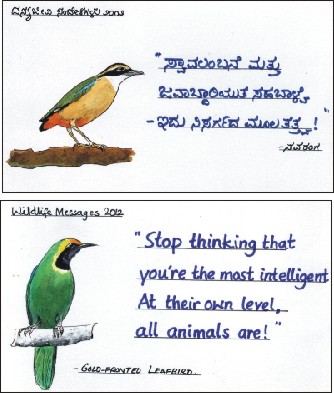
People who love environment, find a way to preserve it and also create awareness among the laymen on conserving it. Many take out rallies, conduct environment-related programmes, plant saplings and adopt animals. However, a family physician of Virajpet, Kodagu district, has found a unique way of bringing nature closer to mankind — he sends free hand-painted postcards containing wildlife messages to public as part of Wildlife Week.

An avid birder and nature lover, Dr. S.V. Narasimhan has been sending such postcards since 28 years. Author of ‘Feathered Jewels of Coorg,’ a fieldguide to 310 species of birds found in Kodagu, he has been spreading wildlife conservation messages through his unique hand-painted wildlife message cards.

This year, his message is ‘Life on Earth – a Large Extended Family.’ Till now, he has made 56,590 cards with 1,270 this year. About 8,340 people have received his cards all these years.

His Special Wildlife Messenger of this year is the Indian Pitta (Pitta brachyura), a medium-sized, stubby-tailed bird that is mostly seen on the floor of forests or under dense undergrowth, foraging on insects in leaf litter and often more easily detected by their calls. Indian Pittas breed mainly in the Himalayan foothills from northern Pakistan in the west and possibly up to Sikkim in the east. They also breed in the hills of central India and in the northern Western Ghats. They migrate to all parts of peninsular India and Sri Lanka in winter. Their seasonal movements are associated with the monsoon rains. For more such wildlife cards, visit http://drsvnarasimhan.blogspot.com

source: http://www.StarofMysore.com / General News / October 07th, 2012

Tribals will not be evicted from sacred groves: Minister

‘Hobli-level janasamparka meeting likely to be extended to State’

Hundreds of people thronged to the Janasamparka meeting held at Kutta Kodava Samaja on Saturday, seeking solution for their various problems.

The people found solution to the problems related to delay in distribution of ration cards, Sandhya suraksha yojana, pension for senior citizens, honorarium for widow and so on.
Speaking after inaugurating, District-in-Charge Minister M P Appachu Ranjan said that the government wants to reach out the programmes to the beneficiaries.

The Minister said that ‘sacred groves will be conserved. There was a need to provide basic facilities. In the name of conserving sacred groves, tribals will not be evicted.”
Deputy Chief Minister K S Eshwarappa is planning to extend the model hobli-level janasamparka meeting to the entire state.

“Janasamparka is nothing but taking the government to the people,” he said.
Assembly Speaker K G Bopaiah flayed the forest department officials for preventing the forest dwellers of Devamacchi forest from offering pooja in the temples.

The Forest Rights Act provides an opportunity for the forest dwellers to lead a comfortable life. Pseudo environmentalists are responsible for fire in Nagarahole reserve forest.

By propagating false rumours, they are engaged in getting funds from foreign countries. “Forest is house for the forest dwellers. They will not engage in setting fire on the forest. The forest has been conserved by the dwellers and not by the pseudo environmentalists.”

Various schemes were distributed among 3,440 beneficiaries on the occasion. This includes Sandhya Suraksha scheme, pension for widow and physically challenged, natural calamity relief fund, Bhagyalakshmi bond, fodder kit, ration cards, nutrition food for the tribals, financial assistance for the students, housing schemes and so on.

Cheques were distributed to 1,796 families under natural calamity relief fund.
Zilla Panchayat Vice-President H M Kaveri, Additional DC Dr N Shivashankar, SP Manjunath Annigeri, ZP CEO K B Anjanappa and others were present.

source: http://www.DeccanHerald.com / Home> District / DH News Service / Madikeri, September 30th, 2012

Wildlife film fests to showcase Maharashtra’s biodiversity

Nagpur:
At a time when coal mining and other detrimental projects are posing a severe threat to forest and wildlife, state forest department has decided to promote its rich biodiversity and wildlife through film festivals.

This will be for the first time wildlife film festivals will be organized in cities by the forest department with the help of Nature Walk, Pune. The proposal has already been approved by principal secretary (forests) Praveen Pardeshi. The schedules and detailed programme will be worked out at a meeting to be held in Mumbai on Thursday.

R R Sahay, additional principal chief conservator of forests (APCCF) for information and technology and policy, said, “It’s an attempt to give impetus to forest and wildlife. We have asked our officials to coordinate with Nature Walk.”

The festivals will be organized not only in cities like Aurangabad, Solapur, Nashik, Kolhapur and Nagpur as proposed by the Nature Walk, but in other places too, Sahay told TOI. Nature Walk has a collection of around 900 films that showcase wildlife, forest and biodiversity of our country. “We in Pune hold wildlife film festivals that are highly appreciated by the common man. There is huge viewership of wildlife on channels like Discovery and National Geographic, but these channels don’t promote much about our region,” said Anuj Khare, honorary district wildlife warden of Pune.

Khare feels these festivals will not only help create awareness but will help brand building. The publicity wing of the forest department will help with auditorium or a school hall of a capacity of at least 500 people with a good audio system. The forest officials will also help in making other arrangements.

“Plan is to hold such festivals on Saturdays and Sundays where Nature Walk team will screen the films. The films will be first introduced and then a post-screening discussion will be held. We can also have a morning nature walk on one of the days. This will help build goodwill of forest department,” Khare felt.

source: http://www.articles.timesofindia.indiatimes.com / Home> City> Nagpur / by Vijay Pinjarkar, TNN / September 27th, 2012