Category Archives: Travel, Tourism & Homestays (wef. Oct 03rd, 2021)

The Sandooka-makers of Kodagu

In the village of Bilugunda in Kodagu district is a Bhadra-Kaali temple. At the centre of its annual festival, is the ‘kudure’ procession — a group of Kodavas centred around a boy wearing a hollow frame with the head and body of a horse. During this festival, an oracle called Airira Devani accompanies the procession, as his father Boju used to in the past.

‘Kodava’ is both the name of a caste and a language. Around twenty castes of Kodagu, besides the Kodavas, speak the language. The Airi are one of them. Airira is the most common family name among this community. 

According to researchers Boverianda Nanjamma and Chinnappa, the Airi were once skilled artisans, often either achari (carpenters), thatta (goldsmiths) or kolla (ironsmiths) by profession.

Central to the Airi community and Kodagu is the local mythology built around six gods and a goddess. Igguthappa is the chief among these siblings. Pannangalathamme, the younger sister of Igguthappa, has three main temples dedicated to her in the villages of Yavakapadi, Kedamallur and Armeri.
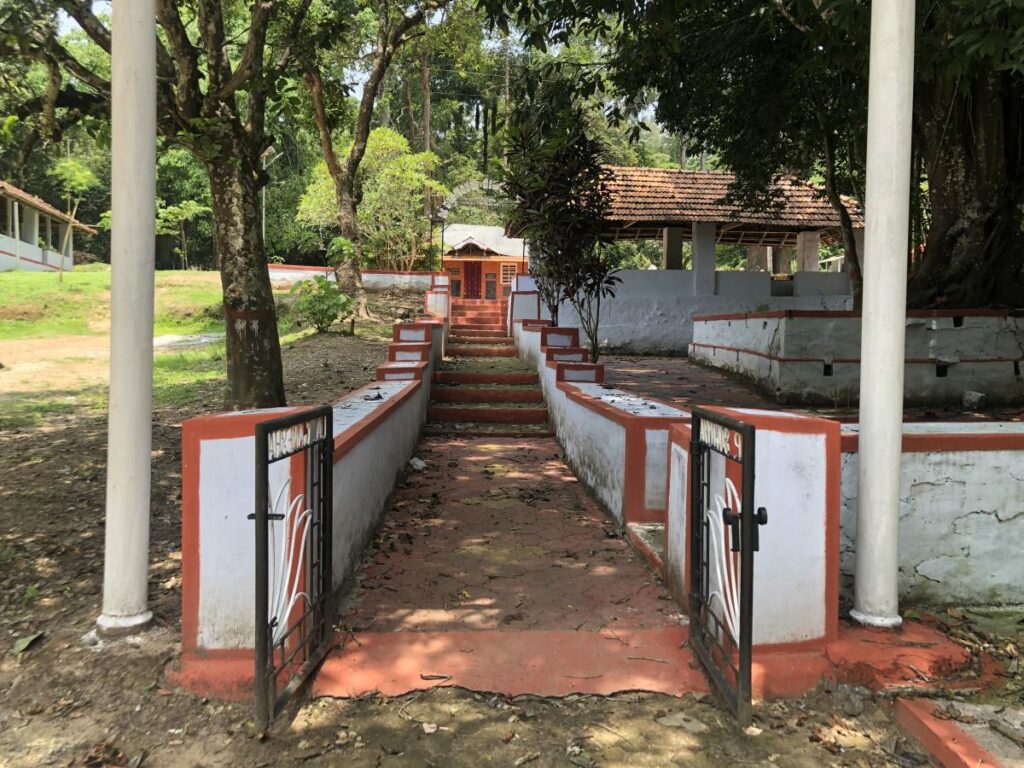
The Pannangalatamme temple gateway in Armeri

Near the Armeri Pannangalathamme temple lives an Airi family. Kaveriappa, an elder of the family, was my guide. He led me from the temple to his ainmane in Ettmani hamlet. It is an old, two-storeyed house with a red-tiled roof and in need of maintenance.

The front yard is roughly paved with large stones. The veranda has traditional wooden pillars rising from a low wall and a plank used as a seat between the pillars. Inside the house, there are pictures of various Hindu gods on the wall. 

Treasure chests

This family in Armeri is called Mookairira. The word ‘Mooka’ means ‘eldest’ in Old Dravidian. The family got its name because they were the elder of two branches of an Airi clan. The younger branch was called ‘Ele’ (younger) Airira. 
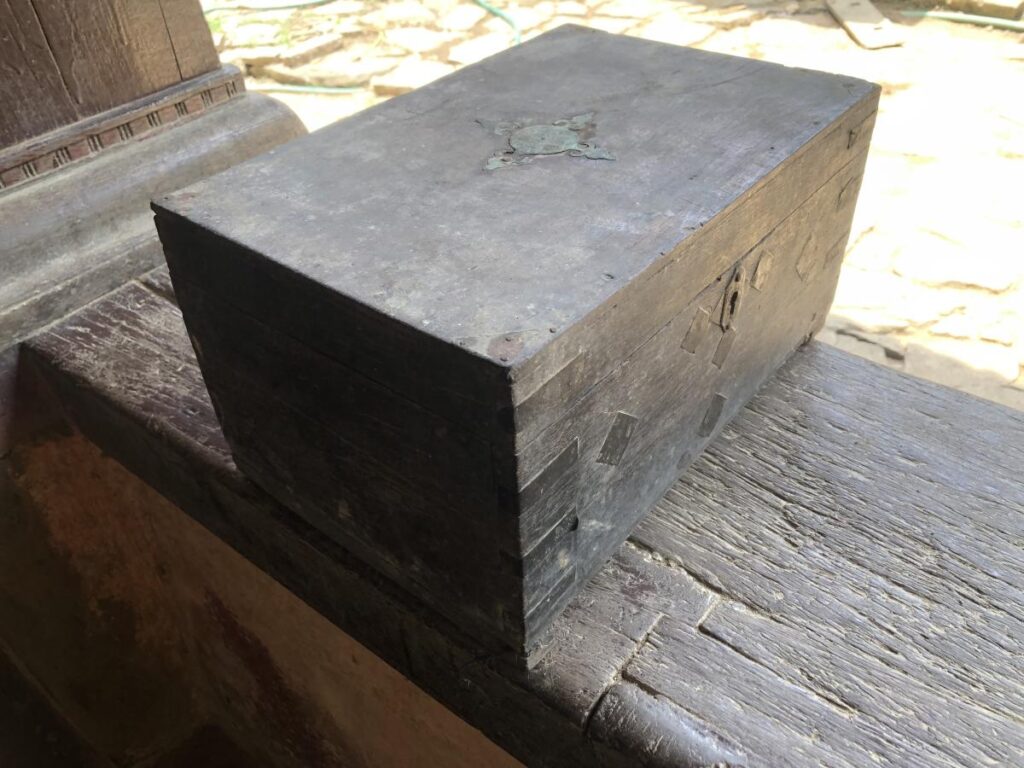
A Sandooka made by the Airis of Armeri

The Mookairira clan used to make sandookas and troughs for the kings and lords of Kodagu. Sandookas are wooden boxes used to store jewellery, documents, and other objects. It has a hinged lid, and is called a chandooka in Kodava. The family showed me an old one in their possession which had several small compartments inside.  

A sandooka is a treasure trove, used to store precious objects which invoke feelings of nostalgia, fondness, attachment and joy in its owner. Common in the old houses of the Kodavas, they were a symbol of family, heritage and inheritance.

Unfortunately, sandooka-makers are now on the decline. The Mookairira, like others in their community, have switched over to agriculture for a living.

Kaveriappa got his family members Sujay and Kiran to help him explain things to me. “We were originally from the Vishwakarma caste. We brought our family goddess Cheerambe with us and established her nearby. Every year, around April 25, we offer her paal-pann (cow’s milk and fruits),” Kaveriappa explained. 

They were given to hunting in the past. A large odikaththi war knife, probably made and used by their forefathers, was displayed on a yellow plastic stool. Like the Kodavas, the family worships their Guru Kaarana (principal ancestors) and offers them food and drink during an annual ceremony. They showed five small metal plates with crude human figures in relief on them, representing their deceased relatives.
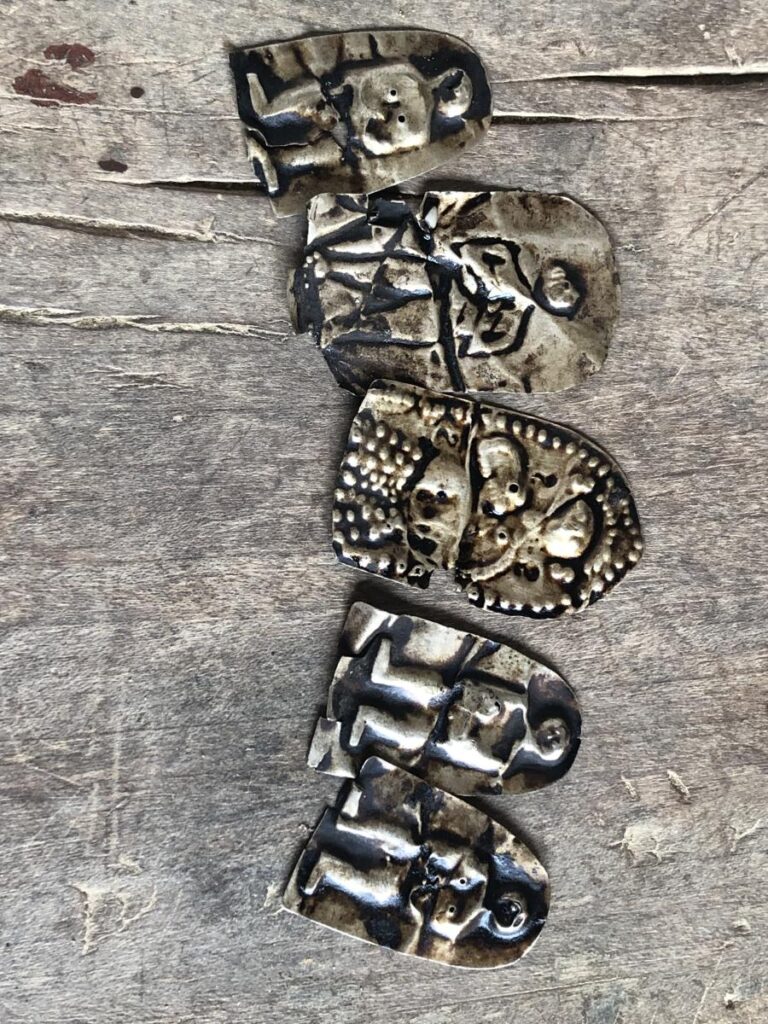
Small metal plates with the images of the deceased family members

The periphery of their settlements was lined with stone piles. They had two small stone troughs in their garden. There was an old bent stone post in the yard. A pair of old stone posts and a lane with stone steps which led down to the fields were nearby. There was a large stone trough in their fields. It was said that this was made for the elephant of Uththa Nayaka, a Kodava ruler from Armeri.

Kiran, a Class 9 student, led me across the fields to a stone quarry nearby. This must have been the place where the family procured stone for making troughs and other objects in the past. The quarry forms a depression in a hillock and hence holds a large pool of water.

The family reportedly used to make traditional knives, and woodwork in ainmanes, temples, forts, and palaces. They were also employed as goldsmiths and carpenters by the kings. Largely forgotten, these skills are no longer being learnt by the family descendants and their community. But there are people from across castes making some of these articles nowadays.

source: http://www.deccanherald.com / Deccan Herald / Home> Spectrum> Spectrum Top Stories / by Mookanda Kushalappa / February 08th, 2023
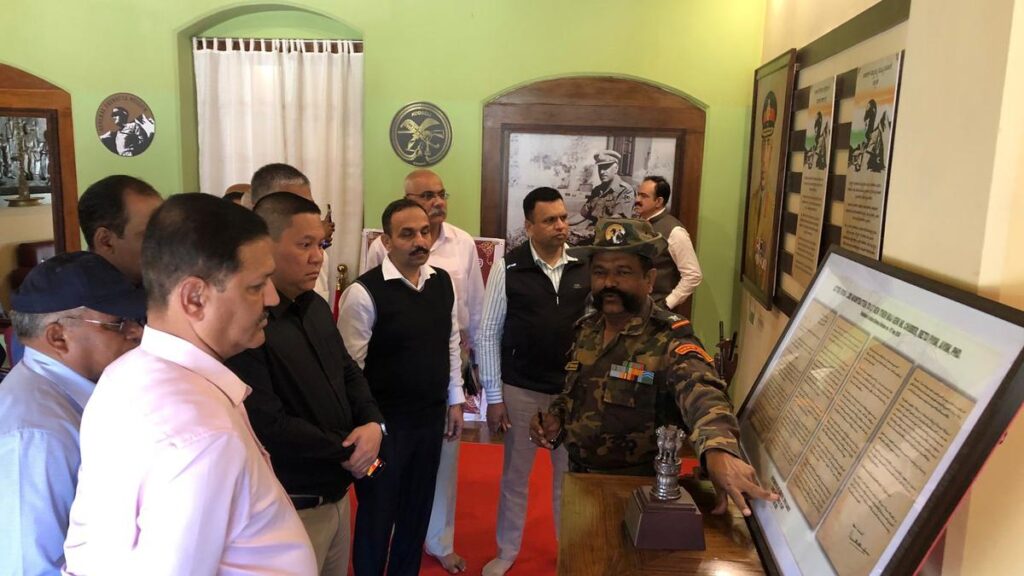
National Defence College team in Kodagu

An 18-member team from National Defence College, New Delhi visited Gen. Thimayya Memorial Museum at Madikeri in Kodagu district on Wednesday.

The team was led by Air Vice-Marshal Tejbir Singh who said that the museum is a source of inspiration for present and future military leaders and eulogised Gen.Thimayya’s role in strengthening the defence forces.

source: http://www.thehindu.com / The Hindu / Home> News> India> Karnataka / by The Hindu Bureau / February 01st, 2023

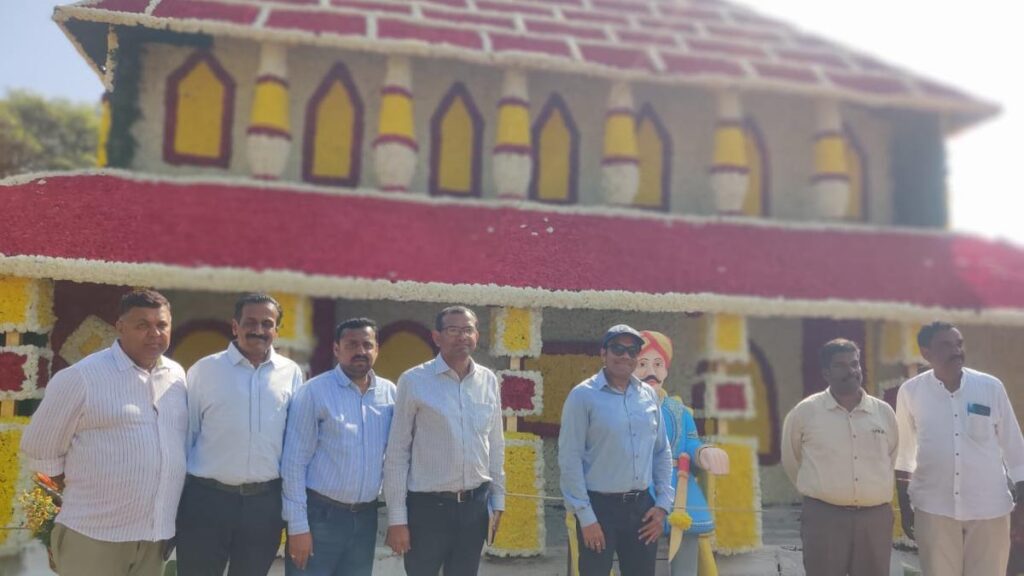
Flower show at Raja Seat

Tourist footfall at Raja Seat in Madikeri has risen with the top tourist destination and one of the most visited sites in Kodagu hosting a flower show since Friday.

The flower show concludes on February 6.

Nearly 20 species of flowers and about 12,000 plants are part of the show with special floral decorations.

The highlights of the show include varieties of exhibits created in flowers, bonsai plants and others.

The Principal Secretary, Horticulture, Rajendra Kumar Kataria, visited the flower show with Deputy Commissioner B.C. Satish on Saturday.

source: http://www.thehindu.com / The Hindu / Home> India> Karnataka / by The Hindu Bureau / February 04th, 2023

Burst of flavours: The Taste of Coorg with chef Shimon Nanjappa

The native cuisine uses products like jackfruit, bamboo shoots, wild honey, and Kachampuli vinegar along with locally-grown spices like black pepper and cardamom.

food
For representational purposes

Bengaluru : 

From traditional food to gourmet cuisine, food festivals and limited menus are excellent ways to explore the diverse gastronomic choices at restaurants in the city. They provide a great opportunity to sample a variety of new flavours while celebrating everything from regional cuisine to unique ingredients and food categories.

The Taste of Coorg at The Park, Bangalore celebrates the rich Kodava food with visiting guest chef Shimon Nanjappa.

Coorg, also known as Kodagu, is renowned for its hearty micro cuisine strongly inspired by local agriculture and traditional cooking techniques. The native cuisine uses products like jackfruit, bamboo shoots, wild honey, and Kachampuli vinegar along with locally-grown spices like black pepper and cardamom.

Chef Shimon’s home kitchen in Madikeri offers authentic local food based on sustainable food practices which she will recreate at this food festival together with the hotel’s executive chef Arvind Kumar. A few of the dishes available a-la-carte are the sigdi meen barthad (prawn), kummu nallamallu fry (mushroom), koli soup (chicken), koli kari (chicken), kori yerchi nallamallu fry (lamb), pandi curry (pork), kadambuttu (steamed rice dumpling), akki roti (rice flour flatbread) and tarkari palav, all accompanied with a variety of homemade pickles and chutneys. You can round off this soul-satisfying meal with bella paputtu and cardamom custard desserts. This is ongoing until February 5.

To commemorate Republic Day, Shangri-La Bengaluru along with plant-based protein brand Evolved, and conscious retail store and farm-to-table restaurant chain Go Native, have curated a locally-inspired vegetarian afternoon tea at the Lobby Lounge. This Rooted In Nature Hi-Chai brings to mind the long-gone chai nashta evening custom, in which families would gather each evening to enjoy tea, coffee, and savouries. Aloo patta sprout chaatlets, quinoa kerai vada with chutney, ghee roast plant meat samosa, and plant protein masala puffs are just a few of the delectable items on the menu.

Diners can also enjoy Mysore pak cheesecake, thinnai halwa tarts, and Coorg coffee mousse on choux paired with unlimited servings of masala chai, filter kaapi, sulaimani chai masala shikanji, or kokum cooler. This is ongoing through April.

On the other hand, foodies are in for a scrumptious pizza treat at Alba in JW Marriott Bengaluru. The La Pizzeria Limited Edition menu is served by the hotel’s chefs at the Italian fine dining establishment, and it truly embraces our love for this Italian delicacy. Giving a fresh twist, the pizzas will be topped with international flavours like the exotic 

Lebanese lamb shish kebab pizza, Japanese Teriyaki pizza, the unique sambal prawn pizza, or even the Indian paneer tikka pizza. Naturally, each of these wood-fired delicacies is hand-tossed with a choice of a modern New York-style base or a traditional Neapolitan base. This is ongoing until February 12.

source: http://www.newindianexpress.com / The New Indian Express / Home> Cities> Bengaluru / by Aslam Gafoor, Express News Service / January 30th, 2023

Field Marshal K.M. Cariappa Remembered

Mysore/Mysuru:

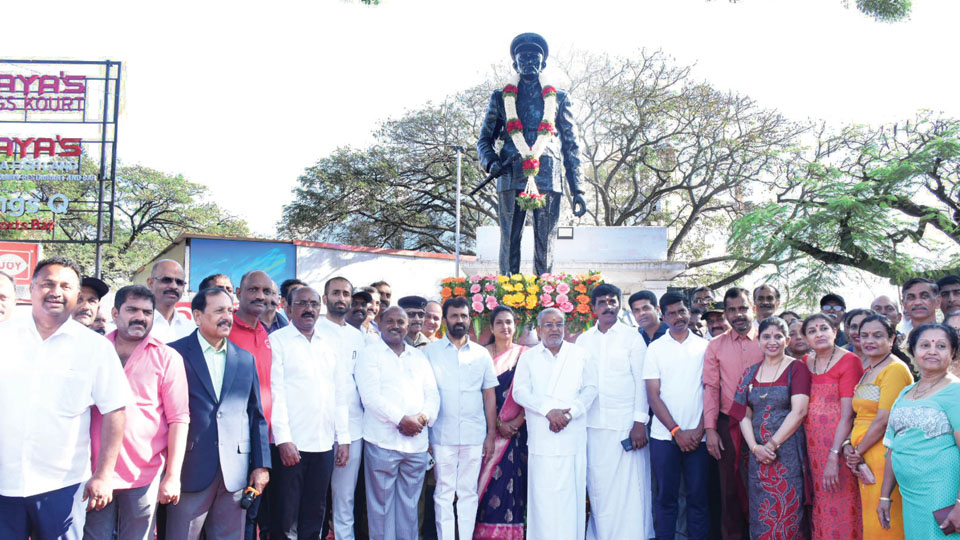
Today, Jan. 28 in Indian and World History is celebrated, observed and remembered for various reasons and one of them is the birth anniversary of Field Marshal Kodandera Madappa Cariappa, who was the first Commander-in-Chief of the Indian Army. 

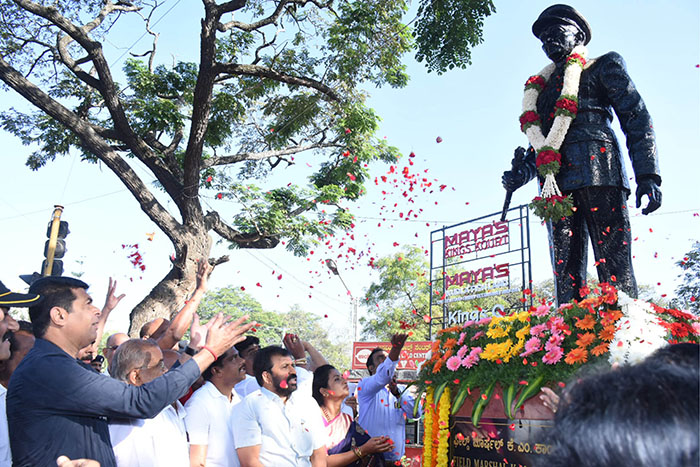
The Kodava Samaja, Mysuru, Kodava Samaja Cultural and Sports Club, Mysuru and Field Marshal K.M. Cariappa Fans Club celebrated the 124th birth anniversary at Field Marshal K.M. Cariappa Circle (Metropole Circle) in the city this morning. The statue of the celebrated supreme commander was decked up for the occasion.

MLAs L. Nagendra and G.T. Devegowda, MLC C.N. Manjegowda, Mayor Shivakumar, MUDA Chairman Yashaswi S. Somashekar and ex-Mayor M.J. Ravikumar were the chief guests.

Field Marshal Cariappa was appointed as the Commander-in-Chief of the Indian Army on Jan. 15, 1949. Army Day is celebrated on that day every year. He had adopted the slogan ‘Jai Hind’, which means ‘Victory to India’”.

MLA Nagendra recalled the dedicated and committed service of the Field Marshal and described him as the true patriot. “His time sense, patriotism, dedication, punctuality and discipline are worth emulating. Field Marshal Cariappa was instrumental in preventing many foreign invasions,” he said. G.T. Devegowda and Manjegowda also spoke.

Mayor Shivakumar too recalled the services of the disciplined Commander-in-Chief and hailed Kodagu that has produced and is still producing stalwarts who made India proud. “His distinguished military career spanned almost three decades. The Mysuru City Corporation will take steps to further beautify the Field Marshal K.M. Cariappa Circle so that it becomes a landmark and a visual attraction,” he assured.

Yashaswi Somashekar noted that the MUDA has received an application for a site from the Kodava Ex-Servicemen Association. “We will discuss the issue at the MUDA meeting on Feb. 4 and decide on the allotment,” he said.

Corporators M.U. Subbaiah, Rangaswamy, Ravindra and Pramila Bharat, Vidya Vikas Educational Trust Secretary Kaveesh Gowda, Kodava Samaja President Mechanda Shashi Ponnappa, Vice-President Malachira Ponnappa, Kodava Samaja Cultural and Sports Club President Kuttimada D. Muthappa,  Fans Club President Nayakanda Thimmaiah and others were present.

source: http://www.starofmysore.com / Star of Mysore / Home> News / January 23rd, 2023

Spices Board to hold buyer-seller meet in Madikeri on Jan. 24

It will provide a common platform for buyers and sellers of the spice industry to interact directly and establish effective business linkages.

The Spices Board of India will be holding a buyer-seller meet for spices at Hilldale resorts in Madikeri on January 24.

A press statement from the Assistant Director of Spices Board of India’s Divisional Office in Madikeri said the buyer-seller meet, which will be held between 10.30 a.m. and 5.00 p.m., will provide a common platform for buyers and sellers of the spice industry to interact directly and establish effective business linkages.

The Spices Board India, which functions under the Ministry of Commerce, Government of India, in its statement, pointed out that Karnataka holds a significant position in spice production in India by being a major producer of ginger and black pepper.

Karnataka also produces other spices such as cardamom, chillies, turmeric, garlic, coriander, nutmeg, clove, tamarind etc. During the year 2021-22, the State produced 7,09,546 metric tonnes of spices from an area of 3,75,082 hectares, the statement added.

Spices Board India, a flagship organisation for the development and worldwide promotion of Indian spices, said India’s spices exports with “a volume of 15,31,154 metric tonnes, valued at ₹30,576 crore during 2021-22, scaled the landmark level of USD 4.102 million in value realisation, besides recording a growth rate of 26.76 per cent, 38 per cent in rupee terms and 32 per cent in dollar terms, compared to 2019-20, despite the global pandemic situation”.

source: http://www.thehindu.com / The Hindu / Home> News> India> Karnataka / by The Hindu Bureau / January 21st, 2023

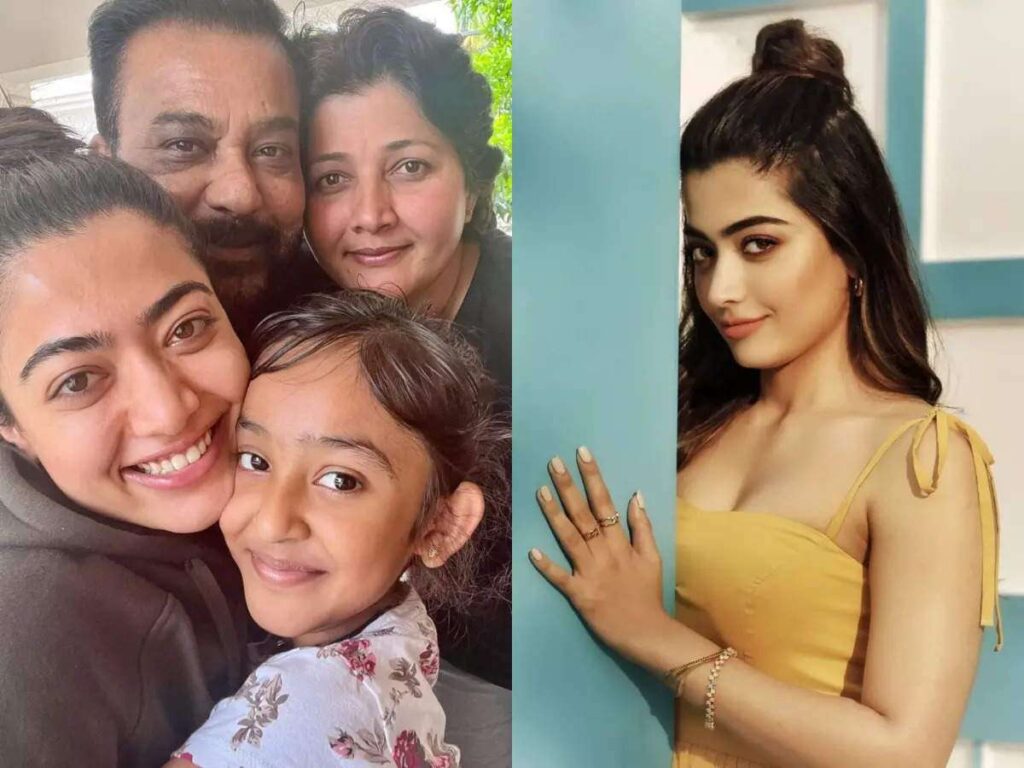
Meet Rashmika Mandanna Parents: Suman Mandanna And Madan Mandanna

Rashmika Mandanna was born into a middle-class family in Virajpet (Virajapete), Kodagu, Karnataka.

She is the daughter of Suman Mandanna and Madan Mandanna and has a sister named Shiman Mandanna.

Rashmika Mandanna born 5 April 1996, is an Indian actress who works mainly in Telugu and Kannada films, in addition to Hindi and Tamil films. She has won four SIIMA Awards and Filmfare Awards South. She made her acting debut in the Kannada film Kirik Party (2016) and she appeared in the Telugu film Chalo (2018), Tamil film Sulthan (2021), and the Hindi film Goodbye (2022).

Who Are The Parents Of Rashmika Mandanna?

Rashmika Mandanna was born in a middle-class family in Virajpet (Virajapete), Kodagu, Karnataka. She is the daughter of Suman Mandanna and Madan Mandanna.

Rashmika Mandanna’s Dad: Who Is Rashmika Mandanna’s Dad

Madan Mandanna is the father of Rashmika Mandanna. Rashmika’s father Madan Mandanna reportedly owns a coffee estate and a function hall called Serenity in Virajpet, Karnataka. The actress hasn’t revealed much about her father or family hence there isn’t enough to be said about him.

What Does Rashmika Mandanna’s Father Do For A Living?

Rashmika Mandann’s father is a businessman who owns a coffee estate and a function hall which we believe is been patronized in Virajpet.

Rashmika Mandanna’s Mom: Who Is Rashmika Mandann’s Mother?

Suman Mandanna is the mother of Rashmika Mandanna and she’s reportedly a homemaker/housewife.

What Does Rashmika Mandanna’s Mom Do For A Living?

Rashmika Mandanna’s mom is a homemaker and which means she takes care of the house and probably helps her husband at the coffee shop.

Does Rashmika Mandann Have Siblings?

Yes, Rashmika Mandanna has a sister named Shiman Mandanna and based on their relationship, the age gap between them seems to be wide.

source: http://www.ghgossip.com / GH Gossip / Home / by Juan / January 13th, 2023

Ferns Estates and Developers setting up resorts in Coorg, Chikballapur

To expand existing resort in Sakleshpur.

Errol Fernandes, CMD, Ferns Estates and Developers

Bengaluru-based real estate company, Ferns Estates and Developers, which has entered the luxury hospitality business, is establishing properties that are close to nature and easy to reach.

The company estimates revenue of Rs 363 crore in five years from the hospitality segment alone, according to Errol Fernandes, CMD, Ferns Estates and Developers.

“We started our first resort in 2021 in Sakleshpur – a luxury property spread over 100 acres, with an investment of Rs 160 crore. At present, there are 126 keys and we plan to expand the resort by adding another 76 keys. The estimated investment for this expansion is around Rs 50 crore,” said Fernandes.

Going forward, two more resorts are being set up in Coorg, which is spread over 25 acres of coffee plantation, with an investment of Rs 60 crore, and another in Chikballapur, spread over 7 acres. “The best part is that all these locations are within a day’s drive from Bengaluru, which was one of the goals in establishing them,” he added.

The company is also acquiring a resort in Goa. “In Goa, we have acquired a 100-key property for Rs 150 crore. It is on the verge of being completed. We should be able to start operations in September 2023,” Fernandes said. The property would be funded with debt to the tune of about Rs 100 crore, and Rs 50 crore from internal accruals.

Real Estate

The company, which has been in the real estate business for the last 34 years, has built gated communities, apartments, and office spaces in Bengaluru.

“For our real estate arm, we don’t intend to venture outside Karnataka; however, we plan on going to tier-two cities such as Mysore, Mangaluru, and Hubli Dharwad. Initially, we plan to set up gated communities and then get into apartments later. As of now, we are scouting for land. We are developing another vertical called branded plots in Sakleshpur,” said Fernandes.

In the case of gated communities, it expects to grow by 20 per cent every year, and typically do around 5 lakh sq feet of sales annually. Similarly, it sells around one lakh of sq feet of apartment space annually and expects to grow by 20 per cent, said the CMD.

Ferns Estates and Developers expects to end FY23 with a revenue turnover of Rs 185 crore, of which Rs 40 crore would come from its hospitality arm.

source: http://www.thehindubusinessline.com / The Hindu Business Line / Home> News / by Isha Rautella / January 06th, 2023

Talacauvery is South India’s top ‘star party’ destination

The source of Cauvery is also among the most ideal locations to gaze at the sky.

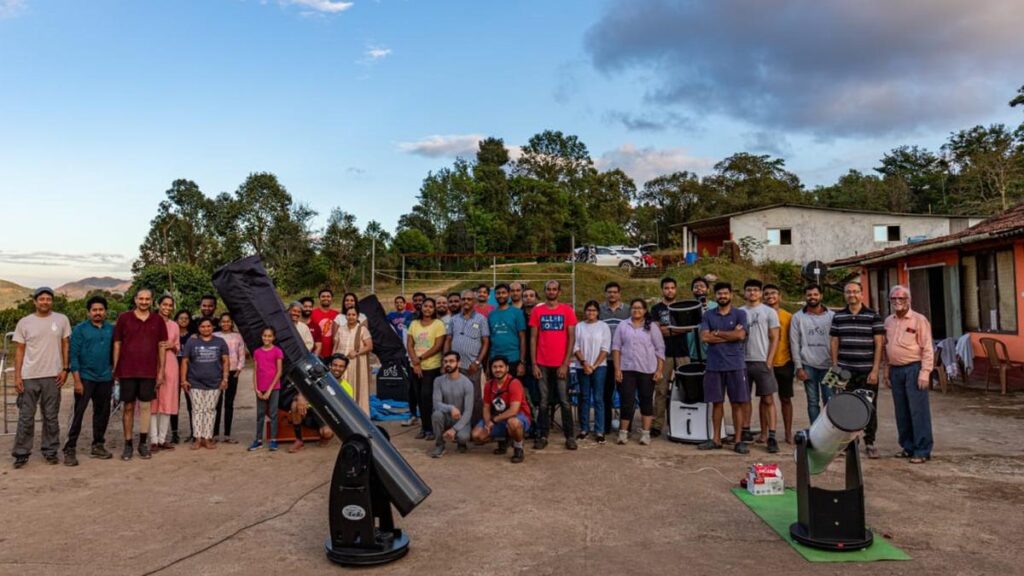
A “star party” organised by the Bangalore Astronomical Society recently at Talacauvery in Kodagu district of Karnataka. Photo: Special Arrangement

Talacauvery in Kodagu district, which is the source of Cauvery river, has emerged as South India’s Hanle, as astronomers have been hosting “star parties” there for some time now. Hanle, located in Ladakh, and known for its pristine skies and minimal light pollution, is also India’s first Dark Sky Reserve.

A Dark Sky Reserve is a designation given to a place that has policies in place to ensure that a tract of land or region has minimal artificial light interference.

In south India, most dark sky locations are in the Western Ghats or some hill ranges nearby, and according to astronomers, Talacauvery is the most ideal location to gaze at the sky and have a star party.

Voluntary work

The Bangalore Astronomical Society (BAS), a group of volunteers working for the promotion of astronomy as a hobby as well as a science, is now hosting star parties at Talacauvery. IT professionals Sudhash Natarajan, Vishwanath S.K. and Keerthi Kiran have been volunteering to conduct the star parties for BAS.

“We at BAS usually arrange star parties on New Moon weekends (Friday-Saturday-Sunday) format as it is the ideal time to observe the celestial objects which we are looking for. We inform people who are interested in joining us for the star party eight to days in advance. Members of the sky party after arriving at the dark sky location set up their equipment like telescopes, binacolours etc and the observation goes on until 4.45 am,” said Sudhash Natarajan.

Mr. Natarajan said that the group which attends the star parties are of all walks of life and that they are a mix of experienced astronomers as well as students and newbies to astronomy. He added that star parties have also been conducted in Koratagere, Hoshalli, Kavalur, and Yercaud in the past.

Less light pollution

“However, Talacauvery is possibly the best dark night location in south India due to less light pollution. In astronomy, there is something called the Bortle scale which measures the night sky’s brightness of a location on a nine level numerical scale. The lesser the numerical scale it qualifies for a better dark sky location. For example, Hanle skies would qualify as Bortle one skies, Talacauvery as Bortle two, and Bengaluru as Bortle nine,” he added.

The star parties are usually conducted in the winter months between December to March as the skies are clearer during these months which is very important for stargazing.

Mr. Natarajan said a star party was conducted between December 23 and 27, 2022, and the next one would be between January 20 and 24.

source: http://www.thehindu.com / The Hindu / Home> News> India> Karnataka / by Hemanth C S / January 04th, 2023

Cave found at Kallembi village in Dakshina Kannada could be that of Megalithic period, says historian

The cave was found accidentally while levelling the land for plantation purpose.

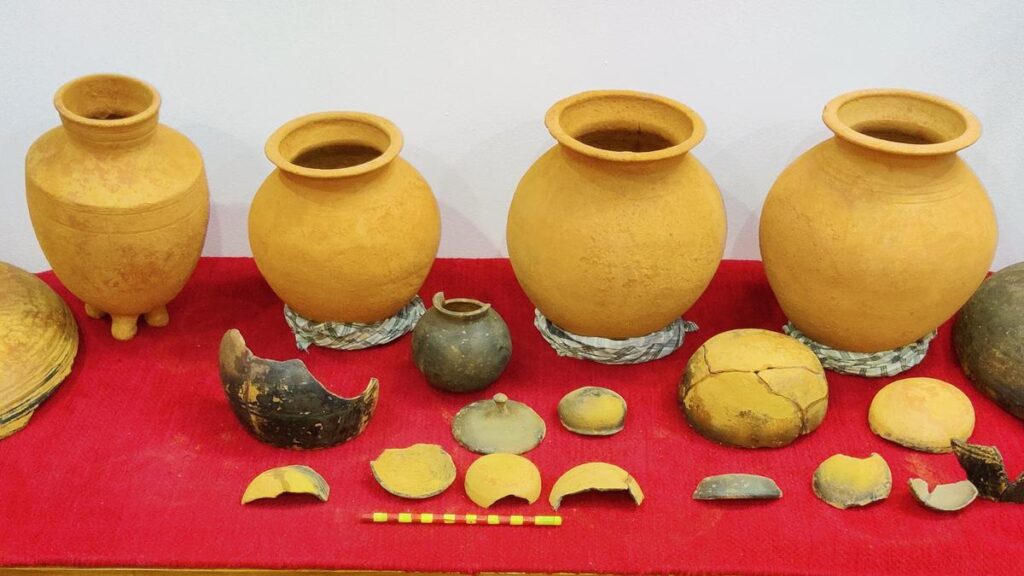
Potteries collected from a cave found at Kallembi village in Kadaba taluk of Dakshina Kannada | Photo Credit: SPECIAL ARRANGEMENT

The study of potteries, which were found in a cave at Kallembi village under Yadamangala gram panchayat, Kadaba taluk in Dakshina Kannada some time ago, indicated that the cave could be that of the iron age-Megalithic period, according to T. Murugeshi, Associate Professor in Ancient History and Archaeology, Mulki Sundarram Shetty College, Shirva, Udupi district.

“They resembled grave potteries of Mudukonaje near Moodbidri, and burial potteries of Heggadehalli and Siddalingapura of Kodagu. In addition, they were more akin to the Kerala Megalithic burials in construction and style. But side opening and underground passage with top opening, which is a common feature of Kerala burials, are not traced. It will be known by excavation only,” he said in a statement.

Mr. Murugeshi said that the small particles of husk, most probably of ragi, found inside surface of red potteries were carefully collected, and they will be sent to a laboratory for further studies.

He said that one-legged red jar of about 10 inch in height, large red lid of about 7.5 inch in diameter, another large black lid of about 8.5 inch in diameter, three red potteries of about 19 cm, 22 cm and 23.5 cm in height respectively, one small black pot of about 9 cm in height having small mouth of about 2 cm, one small red lid with knob, and black and red bowl pieces with flat bottom, lamps of red and black colour with round base were collected from the site.

Accidental find

The cave was found accidentally while levelling the land for plantation purpose. The site is located on the slope of a small hillock and watered by Kumaradhara river. It is about 16 km away from Yadamangala and just 1.5 km away from Dola. The cave was opened on eastern side by an earthmover, the historian said.

“It looks like a hemispherical dome having a central pillar. Pottery base impressions are visible on the inside surface of the cave. A heap of soil on either side of the pillar was found. Without clearing the debris proper study is difficult, and rain is also an obstacle to continue the examination. There was no trace of metals inside the cave,” he said.

According to the land (site) owner, Vishwanath Gowda Balladka, the cave was found in the afternoon on August 19, 2022. The materials were collected after conducting ‘panchaname’ in the presence of the village accountant. The study team led by Mr. Murugeshi had reached the site on August 21 after the he was informed about the finding of the cave on the evening of August 20.

Adjoining areas of Kallembi like Dola, Yenmakaje, and others are well known in the Tulu folklore, belonging to twin heroes of Tulu Nadu Koti and Chennaya and their sister Kinnidaru, he said.

source: http://www.thehindu.com / The Hindu / Home> News> Cities> Mangaluru / by The Hindu Bureau / November 08th, 2022