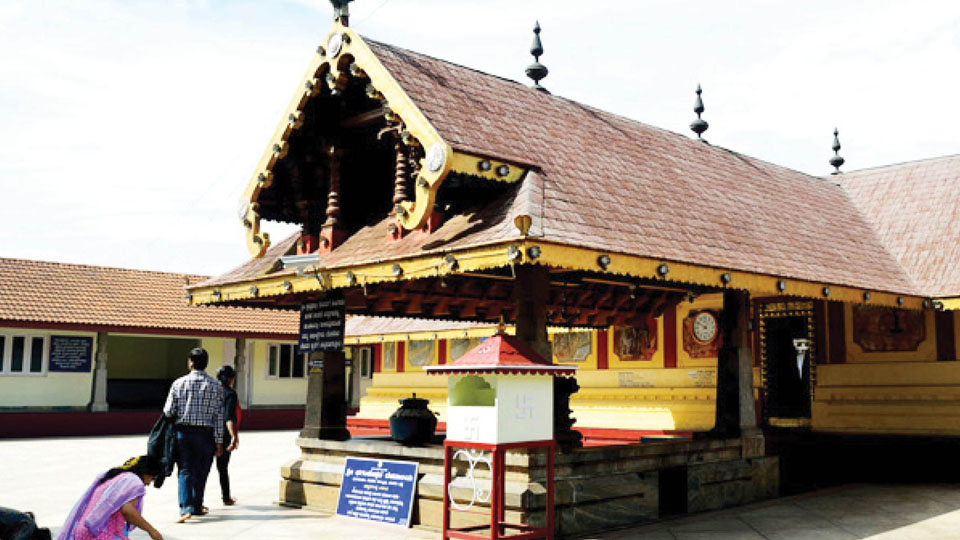
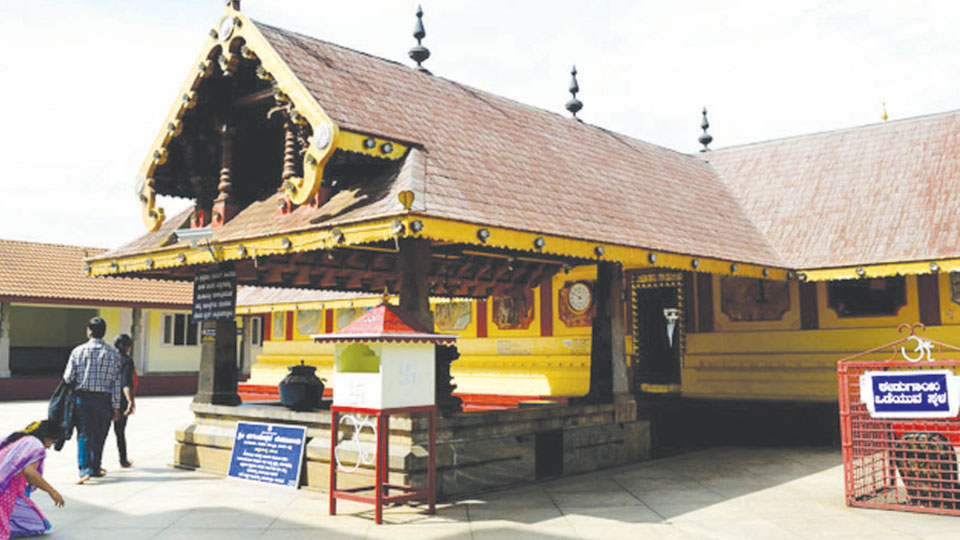
A few months back I went to my ancestral house in Kodagu and also availed the opportunity to go to the nearby Igguthappa Temple — dedicated to Lord Shiva. It is the most famous temple in Kodagu located at the foothills of Thadiyandamol near Kakkabe. This deity is considered the God of rain and grain (ಮಳೆ-ಬೆಳೆ). Understandable, Kodagu being an agricultural land of hills and valleys. A land of heavy rains and rich forests.
There in the temple was a senior priest, talkative and gently assertive, overseeing the puja proceedings and general conduct of the devotees. Being in a secluded place surrounded by greenery of paddy fields, coffee estates and forests, the rush of visitors is only during festival days.
As usual, I engaged the priest in a brief conversation standing at the front outer door, as only those who follow the specified ritual practice (vrata) are allowed inside for maintaining madi (sanctity).
Listening to his chatter was both an education about the temple and the local people, a majority of whom are Kodavas. I would like to share one episode he narrated from his experience at the temple.
It happened that once a person went to the temple at a time its doors were being closed. When the person asked this priest to oblige him saying he had come from outside the district, the response was negative with a reprimand. Recognising him as a Kodava, the natives of Kodagu, the priest told him that the temple was of Kodavas, for Kodavas and run by the Kodavas. And for centuries, it was managed and patronised by that native community. Yet they, like this person, do not observe the temple tradition and work to develop it.
I am inclined to agree. Though at present the temple is open to all, it has a Kodava family by name Paradanda as Devathakka (care-takers of the deity) to manage its religious functions.
Since the dim past, the Pattedara (Head) and the Thakka (the spokesperson) of that family (Paradanda) has been responsible for temple pujas, rituals, festivals including Kailpoldh and Puthari, fairs, astrological predictions etc. Of course, times have changed, it is now alleged that a group of Bhaktas is trying to sideline the Paradanda family from this position which is hereditary.
The person said, ‘Of course, I would help’ and suggested that sculptured stone reliefs with images representing Kodava customs, festivals, etc., could adorn the outer walls of the temple.
‘Who would spend money for it?,’ wondered the priest, still adamant refusing to open the door just for the darshan of the deity.
“What’s your name?” asked the priest.
The person, already at the tether end of his patience, simply said, “My name is Bhakta !”
“Bhakta? Not a Kodava name,” the priest said with a derisive smile and added, “anyway, you may come tomorrow.”
The next day, to the person’s surprise, the priest had already spoken to the President of the Temple Management Committee and the President was waiting.
Anticipating a bonanza of a donation, the priest, as was his wont, paid special attention to him in performing puja, offering aarathi and theertha.
As the person was about to leave, the priest beckoned him to meet the President to talk about the wall plaques he had talked about the previous evening. The person began explaining his idea in english, a language he was proficient with, but the President suddenly objected and said, “Being a Kodava, you must speak in Kodava language.
The person, taken aback, shot back: “If that is so, why should you have an english name Charlie?” That one bullet-like shot made President Charlie shut his mouth.
That ended their conversation and also the hope of the priest deeply dedicated to the temple. Whatever it was, I saw beautifully carved stone plaques, embedded on the outer walls, as if to assert the fact that primarily it is a Hindu-Kodava temple.
Recently, there was a news report about non-conventional practices at this temple being objected by the Devathakka. Modern constructions too have come up all around the temple. The stone pavings around the temple premises looks good and enables easy maintenance. But, during summer, these stone slabs get very hot for the comfort of the devotees who traverse that area barefoot, specially those who circumambulate the temple after worship. They must be allowed to wear socks or provide walk-way carpets around the temple.
Be that as it may, to this day, nobody knows who is that generous donor of those beautiful, sculptured stone plaques. The identity seems well wrapped in mystery inside an enigma. However, the donor must be a Bhakta, devotee, of Lord Igguthappa. I believe that those who donate anonymously are like divinity — invisible.
e-mail: voice@starofmysore.com
source: http://www.starofmysore.com / Star of Mysore / Home> abracadabra> Columns / by K.B. Ganapathy / September 11th, 2022
The fest will likely be organized using nearly Rs 1.50 crore funds and the family has sent a proposal to the state requesting sanctioning of Rs One crore funds.
For representational purposes (Photo | PTI)
The iconic Kodava Hockey Namme will take place next year following a break of four years. The same was confirmed in a press conference by the Appachettolanda Family on Tuesday.
“After 2018, the hockey fest did not see the light of the day due to natural disasters and pandemic situations. However, the 23rd annual fest will be hosted in 2023 in a grandeur manner. The fest will be held at Napoklu General Thimayya Ground. Over 350 Kodava families are likely to take part in the tournament,” confirmed Appachettolanda Manu Muthappa, the president of the hockey fest.
The hockey tournament will begin on February 20 and will go on till March 6. The website and the logo will be released on 2nd October at Napoklu Kodava Samaj. The fest will likely be organized using nearly Rs 1.50 crore funds and the family has sent a proposal to the state requesting sanctioning of Rs One crore funds. The press conference was headed by the Appachettolanda family patted Mittu Erappa and other family members.
‘Kodava Hockey Namme’ has been organized in the district for 22 years. However, the event was cancelled in 2018 due to floods and a pandemic situation. The 2023 event will be the 23rd year of the hockey fest. The hockey tournament played among the Kodava community has gained international fame as the tournament has broken the ‘Limca Book of Records’ and ‘Guinness World Record’ for the highest number of team participation.
The 2018 Kulletria Cup Hockey saw participation from 333 Kodava families. It was in 1997 that the first Kodava family hockey tournament was played and was organized by the Pandanda family. The game started off with international rules and standards and it continues to provide a stage for youngsters and seniors alike to unravel their passion for hockey.
source: http://www.newindianexpress.com / The New Indian Express / Home> States> Karnataka / by Express News Service / September 06th, 2022
Even as the renovation works of the famed Igguthappa Temple is underway, the temple’s Devatakka family has alleged that the temple practices and traditions have been threatened in the name of renovation.
Addressing a press meet here yesterday, Devatakka Paradanda Subramani said that the renovation of temple steps on the eastern side has been completed.
Maintaining that use of these steps has been banned since ages, he said that the steps will be allowed for use only when someone vows to make a pledge of truth under special circumstances. But some persons are now attempting to allow devotees to use the steps by advocating that these steps are indeed the main entrance to the Temple, which is not at all correct, he said.
Appealing the devotees to enter the Temple through the steps on the north-western side of the Temple, Subramani argued that using the eastern side steps is a deviation from customs and practices that were prevalent all these days.
Clarifying that they were not against Temple works that have been taken up along with the renovation, Subramani said that it is important to safeguard the customs and practices that are being followed for ages.
Devatakka and Bhakta Janasangha Vice-President Paradanda Dolly accused politicians of violating the age-old Temple customs and practices. He urged the authorities to maintain the sanctity of the Temple by following old customs and practices.
Devatakka Paradanda Vittal Bhimaiah said that the issue was discussed at a Bhakta Janasangha meeting, during which it was resolved to ban use of steps on the eastern side for entering the temple. Pointing out that the Paradanda family has been entrusted with the responsibility of listing pujas, rituals, festivals, fairs, astrological predictions etc., Bhimaiah alleged that a group was making organised attempts to sideline Paradanda family.
Paradanda family Pattedar and Takka Chief B.Appanna, Devatakka’s Paradanda Muddu Subramani and Paradanda Sada Nanaiah were present.
source: http://www.starofmysore.com / Star of Mysore / Home> News / September 03rd, 2022
River rafting in the Cauvery at Dubare in Kodagu. | Photo Credit: file photo
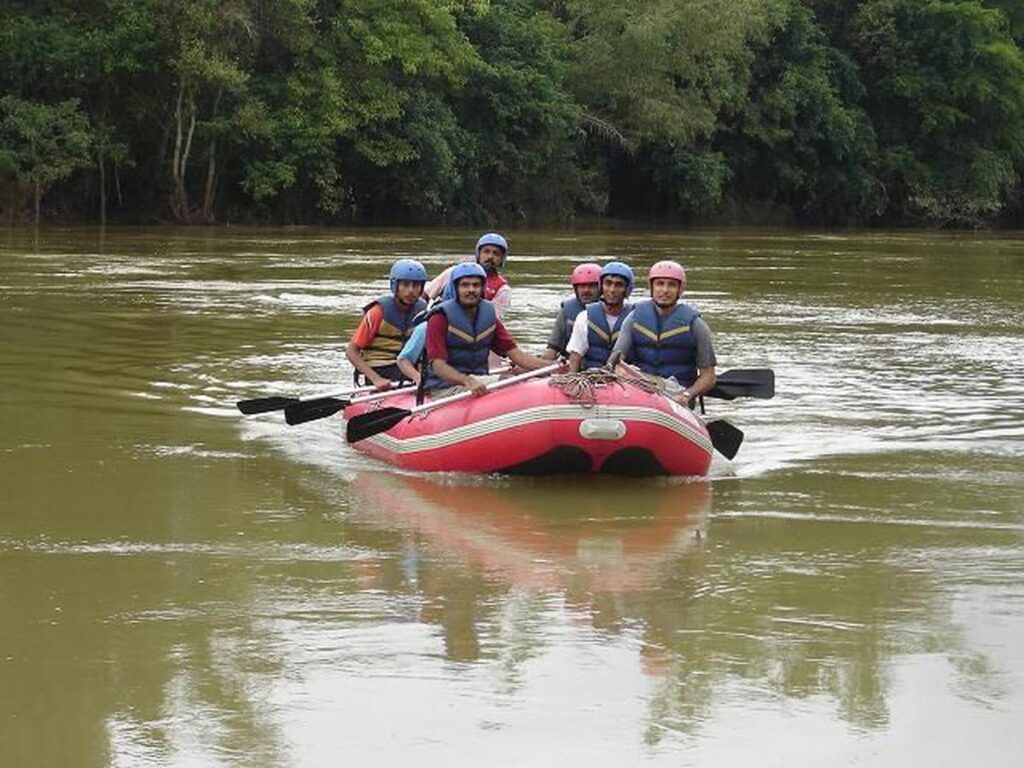
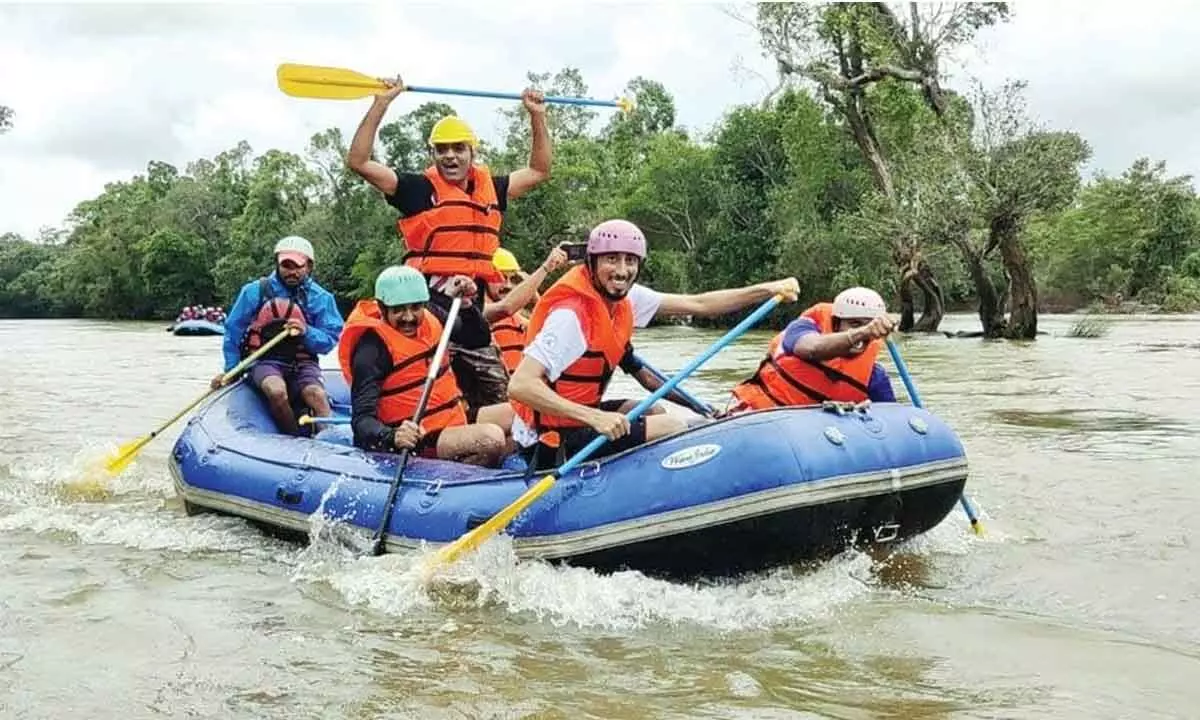
Water sports enthusiasts have to spend more to get the thrill in the fast-flowing waters as the rafting fee in Kodagu’s popular adventurous sports’ venue has been hiked.
Also, more boats will now be available for rafting with permission granted for operating additional boats at Dubare, Barapole, and Kumaradhara.
The Kodagu district administration has given its approval for operating a total of 75 boats for river rafting at Dubare near Kushalnagar.
As many as 65 boats were regularly operated and an additional eight boats were added for increasing the number of boats to meet the demand from the adventure freaks for river rafting.
At a meeting in Madikeri chaired by Deputy Commissioner B.C. Satish on Thursday, permission was granted for operating one more additional boat for rafting operations.
At Barapole rafting venue, permission was granted for operating three more boats, taking the number of boats to six.
Two agencies have come forward to operate river rafting at Kumaradhaara. In total, permission has been granted for operating four boats.
The meeting gave its nod for hiking the rafting fee at Dubare from Rs 600 to Rs 800. It was resolved to collect a fee of ₹1,200 at Barapole and ₹200 at Kumaradhara.
The Deputy Commissioner told the river rafting operators to ensure that the boats are in good condition and no inconvenience was caused to the adventure enthusiasts. He suggested that a portion of revenue earned in Dubare camp can be used for improving the infrastructure.
source: http://www.thehindu.com / The Hindu / Home> News> India> Karnataka / by Special Correspondent / Mysuru – September 01st, 2022
Kodagu, a tiny district of state with unique culture is yet to get railway connectivity. Thanks to elected representatives and government.
Madikeri:
Kodagu, a tiny district of state with unique culture is yet to get railway connectivity. Thanks to elected representatives and government. Kodagu situated amid western ghats is only district in south India deprived of railway connectivity. The cry for railway connectivity have decades of history.
It was K H Muniyappa, the then state minister for railways in the year 2011 budget announced railway connectivity to Kodagu. In the year 2012 the railway department launched the first stage of the preliminary survey works on the route at Mysuru -Kushalnagar line of 87.5 kilometres. The department completed preliminary engineering-cum-traffic survey between Mysore-Kushalnagar in four months and the project cost was estimated at Rs 651.4 crores. But even after a decade the work was not taken up. After the survey higher railway officers opined that it is economically not viable owing to less passenger traffic in the route. Amid this environmentalists objected to the project saying forest would be destroyed , thousands of trees would cut to install railway track
It was in the year 2014 Lok Sabha elections the Mysore Kodagu MP Pratap Simha in a TV debate announced that he would bring train to district before 2019 and would not contest 2019 polls if work is not done. But Pratap Simha failed to keep up his promise and even got elected in 2019 election again by promising that union government sanctioned the project. Till today the project is lying on paper and no progress was seen. The construction wing of South Western Railway (SWR) awarded tender for final location survey (FLS) in the year 2020 to Hyderabad-based company called Mata Constructions and Builders Limited to conduct the survey but the company abandoned the work and left. Again the work was awarded to Hyderabad-based Aerial Construction (P) limited but this bidder also left without conducting survey.
In July last, the SWR construction division awarded the tender for FLS to Bangalore-based Sipra infrastructure development Private limited for Rs 1.65 crores. The period for completion of work is six months , but the company is yet to begin work through drone cameras.
Speaking to this reporter on Friday SWR Mysore division senior engineer said that the company officials would start the work within a week as rains hindered the work. After completion of FLS we could know the exact amount of the project , number of bridges and number of railway stations to be constructed and other infrastructure works.
He said now as per railway estimation the project cost went up to 1852.5 crores and exact amount could be known only after FLS. He said in this final survey we could identify the exact land to be required for project with survey numbers.
He said though it is called railway link to Kushalnagar it does not enter Kushalnagar, a border town of Kodagu. The railway line comes up to Koppa village in Periyapatna taluk , just two km from Kushalnagar.
According to proposal the railway project would come up with union and state government investments at 50 per cent each. The state government should provide land for the project at its cost. After the FLS the railway authorities would submit the Railway board. After approval of the board the union government would allocate funds in budget for implementation of project. In the year 2018 itself the vernacular dailies published Mysuru-Kushalnagara new railway line under the caption what Karnataka gets in railway budget , but the project is still on cards. The industrialists, people opines that this is much needed project for overall development of district. The tiny district Kodagu accounts more than 30 per cent share in annual coffee production of the country with production of 1.2 lakh tones of the total 3.6 lakh tones. Nearly 70 per cent coffee is being exported . The railway connectivity would save lakhs of rupees expensive road transport to ports. The railway line would reduce traffic drastically in Madikeri –Bangalore national highway as more than 300 buses were plying in this route at present.
When contacted Kushalnagar based SLN coffee curing and exporters (P) Limited managing partner S L Sathappan said that most of the coffee produced in Kodagu is being exported through Cochin, Mangalore and Chennai ports in trucks. If railway comes to Kushalnagar we could ship directly through containers as majority of coffee curing works are situated here. He said more than 50 per cent of transport cost can be saved which finally beneficial to growers.
Speaking to this paper Kodagu tourism department officer H B Raghavendra said that day by day the number of tourists visiting Kodagu is swelling. Approximately 20 lakh tourists visiting the district which is also called as Kashmir of South. Of this at least 10-25 per cent coming from other states . The railway connectivity helpful to attract tourists from faraway places.
An ex- serviceman B P Kuttappa from Somwarpet told this paper that the district has at least 10 thousand personnel working in defence forces in various locations of the country. Railway connectivity would help them much and even shifted aged patients to Mysore , Bangalore hospitals for treatment and save taxi fares.
When contacted MP Pratap Simha said that the project was delayed after railway officers submitted a report that it is economically not viable and for obtaining environment clearances. Again two companies abandoned work of FLS caused delay. But now everything is cleared and work of FLS would resume soon. He said the union government even included the project in pink book and allocated Rs 1,000 crores in 2022-23 union budget itself. He said he is getting in touch with railway officers and closely watching the development and reiterated that district would get railway connectivity. But people of district feels that lack of will power of elected representatives and politicians have caused delay of the project.
source: http://www.thehansindia.com / The Hans India / Home> News> State> Karnataka / by Coovercolly Indresh / Hans News Service / August 27th, 2022
Largest ever Family reunion in Virajpet on Dec. 24, 2022
Kodava Clan is hoping to establish a World Record by organising the largest ever Family reunion in Virajpet on Dec. 24, 2022 with more than 10,000 Kodavas inter-related to each other meeting at one location. This will be the first-of-its-kind attempt across the world to beat the existing world record of 4,514 people/family members meeting in France documented in the Guinness Book of World Records.
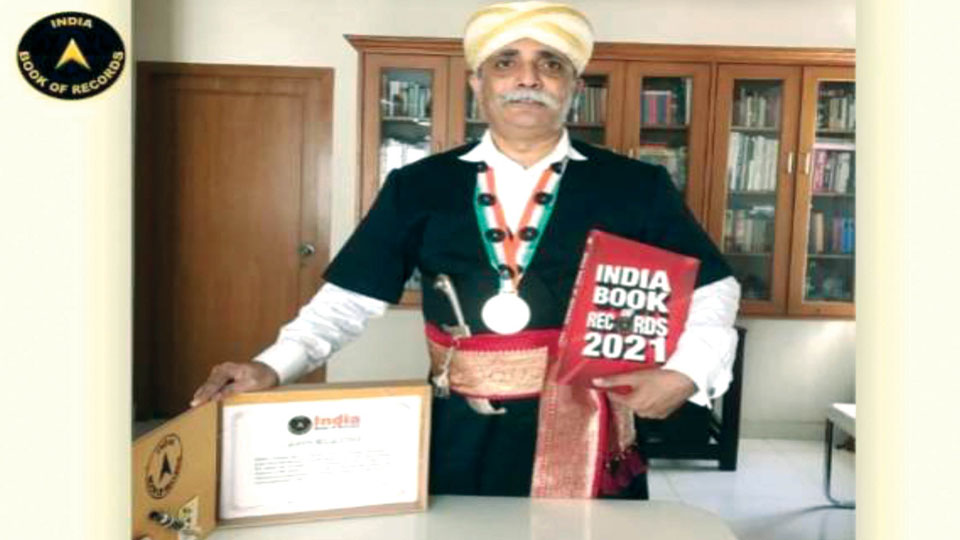
Kodava Clan, the company organising this event, is the first ever, one-of-its-kind interactive, crowd sourced virtual museum that has created the largest online family tree of the Kodava community or going back at least 15-16 generations in some cases and recognised by the Indian Book of Records.
Founded by Gummattira Kishoo Uthappa, the portal is the first online museum cataloguing data, statistics, history, culture and festivals, heritage, language of the Kodavas dating back from the 16th Century.
The Kodavas are a small but illustrious community that has contributed to the Indian Armed Forces, Government, Judiciary, Sports, Medical profession and many more across India and the world. The justification for this can be seen on the portal www.kodavaclan.com.
Kodava Clan is also a social networking site for the Kodava community to find or establish their familial association with other Kodavas, irrespective of the generation he/she maybe a part of, from any part of the world. Founder Kishoo states, “This is possible only due to the extensive research undertaken by our dedicated team in the last 5 years which includes collecting and verifying data from almost 750 Okkas we connected with.
Kodavas are proud of their culture and that is clearly exhibited in the information shared in the heritage section of the portal. The heritage section is a virtual museum with 10 categories, with over 2,500 articles in all, with achievers across sectors, Ainmanes or traditional family homes, cuisines, eminent people from the community, entrepreneurs, festival and customs, flora and fauna, history, Kodava Thakk (Kodava dialect), sports, statistics and tourism.
The Section is a ready reckoner for those requiring information on its history, unique traditional customs and rituals. Recognising the huge value in cataloguing its rich and unique heritage, scores of families have given contributions of articles, information and rare photographs to this site.
Kodava Clan has exciting and dynamic future plans for this virtual portal to make it more interactive and dynamic portal to keep any one engaged on the portal for any of his interest as it has covered the subjects of every walk of life.
As its community grows, Kodava Clan has also included an advertising feature to promote business houses and make it self-sustainable for the portal in the days to come.
source: http://www.starofmysore.com / Star of Mysore / Home> Feature Articles / August 26th, 2022
Chief Minister Basavaraj Bommai has released a grant of Rs. 1 crore towards the celebration of Madikeri Dasara.
MLA M.P. Appachu Ranjan had requested the Chief Minister to announce funds for Madikeri Dasara and the CM subsequently recommended the Finance Department to release the grants. The CM also released Rs. 50 lakh for Gonikoppa Dasara.
The Dasara Committee, which was facing a fund crunch as there was no significant contribution from people or corporates, is elated by the grants and is planning to celebrate the festival in a grand manner.
A delegation led by Virajpet MLA K.G. Bopaiah met the CM yesterday in Bengaluru and requested him to sanction funds which were agreed upon.
Gonikoppa Sri Cauvery Dasara Committee Honorary President and former ZP Member C.K. Bopanna, B.N. Prakash, Gonikoppa Sri Cauvery Dasara Committee President Ramakrishna and General Secretary Jimma Subbaiah were present.
source: http://www.starofmysore.com / Star of Mysore / Home> News / August 18th, 2022
The iconic Pandicurry is the most emblematic and popular food people identify from Coorg. But the kadi (good food) and kudi (liquor) of the Kodava region in Karnataka are as wide and wild as they could get.
The Kodava Cuisine
“Pandicurry please!”
The allure of the tangy-spicy curry keeps calling me back to Coorg, every time. Of course, I am a lover of coffee too but if I were baring my heart to you, I would tell you that pork takes precedence every time I visit the Scotland of South India. No other style of pork has made such an impact, not even the sorpotel!
Let’s agree that the iconic Pandicurry is the most emblematic and popular food people identify from Coorg. But the kadi (good food) and kudi (liquor) of the Kodava region in Karnataka are as wide and wild as they could get. From wild mangoes and mushrooms to tender bamboo shoots, the food here is full of organic ingredients that establish its supremacy over other cuisines emerging from the state.
Wild Mushrooms
In this context, it’s important to mention that Coorg was in fact a state itself, landlocked and rich with biodiversity that attracted foreign attention almost immediately when the British came to India. Ruled as a kingdom established originally by the Nayakas, the state was self-sufficient and housed a clan-based community of warrior tribes. It was the hunted boar, that actually led to the pandi curry’s foundation.
For centuries Coorg was quite inaccessible, a landlocked region. It explains the heavy reliance on locally sourced ingredients. On a recent visit to the Evolve Back Coorg which sits pretty in a 300-acre coffee plantation and traces the traditions of the valley efficiently, I found peppercorn growing carelessly creeping around jackfruit, silver oak and mango trees among the robusta coffee the estate produces.
Robusta Coffee
For the uninitiated, Coorg is also the rice bowl of Karnataka, it grows in abundance here thanks to plenty of rains and rich soil composition. Upon finding The variety of rice items alone is quite humbling at The Granary, the main restaurant at Evolve Back so I had to turn to a specialist who could explain better. Sudhansu Sekhar Jena, the senior sous chef helps me out – “Kadambuttu, Thaliya Puttu, Paaputtu, Noolputtu, Koovale Puttu and various seasonal pickles are signature dishes of Coorg cuisine, just to name a few,” he explained.
While small dumplings of steamed broken rice make the Kadambuttu, Noolputtu is a fine lump of pressed rice noodles and what makes Paputtu stand out is the addition of coconut milk and a dash of shredded coconut which is steamed together with rice. With this newly acquired knowledge, I settled for lunch with paputtus and a delicious koli curry (chicken curry).
Sudhansu Sekhar Jena , Senior Sous Chef – F&B Production, Evolve Back Coorg, shares the recipe of Paputtu and also tells the detials of the dish.Paputtu is generally known as palputtu ( pal means milk and puttu is steamed rice cakes). It’s made of akki thari (coarse ground rice rava), grated coconut, salt and water. It’s steamed in a special kind of steamer called sekala and goes very well with non-veg curries.
Ingredients:
2 cups thari or coarse rice rava 1 – 1 1/2 cups fresh grated coconut 2 cups whole milk / light coconut milk 2 cups water 1 tsp cardamom powder Salt to taste Oil to grease
METHOD:
Wash the rice thari and soak for 1/2 an hour in the 2 cups of water. Add the milk, cardamom and salt and mix well. Squeeze the freshly grated coconut to extract a little milk and add it all to the mixture. Grease the plates with little oil. Pour the prepared mixture into the greased plates till two-thirds full to allow room for the thari to expand. Divide equally between plates and steam for 25-30 minutes or until done. The puttu should look firm, with no soggy bits in the centre. Cover the plates with a clean tea cloth and allow the puttu to cool a little before cutting them into pieces.
Clean & wash Crabs, add salt, and turmeric powder, and keep aside. In a vessel heat oil, add chopped garlic, mustard seeds, ginger julienne, slit green chilli, and curry leaves. Then add onion slice and fry till light brown, add sliced tomato and all Masala powder, salt and little water and sauté till oil comes up. Now add coconut paste & simmer gently, cooking till coconut paste is well cooked. Then add Crabs and salt, and bring to Cooked. When Crabs are tender, remove them from the fire, add temper and serve.
For tempering:
Heat a little oil and add mustard seed, curry leaves, and red chilli whole. when mustard seed crackles pour into the Crabs Masala. Serve hot.
Monsoon brings even more joy for the tribe that used to be reliant on hunting-gathering in forms of mud crabs and fresh fish from the opulent rivers running through the forests of Kodagu. Mahseer, rohu, tilapia, katla, giant gourami are some of the fish which can be caught in river Cauvery, India’s fourth largest and the lifeline to this side of the peninsula.
Anjali Ganapathy, a Chef who calls herself an armchair ethnographist, has been tracing and presenting Coorg cuisine at her estate home, after running a successful catering service in Bengaluru for years. I reach out to her for more information and trivia.
“Traditionally we were hunters”, Ganapathy affirms.
“Our farms and forests had no boundaries and weaponry such as firearms and machetes were a part of every household. They were used for protection as well as hunting to provide for the family,” she tells me. It was the norm.
Meat from wild boar, venison and wild fowl came from the forests according to Ganapathy and though fast disappearing, mud crabs, river and paddy-field fish can still be found in a Coorg home kitchen, she informs. Bush meat has been replaced by commercially available chicken, mutton and pork.
I wanted to taste the Kaad Maange curry (wild mango curry) but Sudhansu informed me that the season just got over. Ruefully I decide that it’s never too late to plan another visit to Coorg. So I head to the Sidapur Coffee & Culture Museum to sharpen my coffee knowledge instead, since it is housed within the property. Welcoming a group of excited guests, Jenny starts her session with a smile and a question – “How many of you know the difference between Arabica and Robusta?
Assisted by a very skilled Barista, we embark on an aromatic journey of coffee produced in the estate, presented in a variety of concoctions including the famous Moroccan Nous-Nous (half and half) edition and Vietnamese Cold Coffee (with condensed milk to sweeten it). The beauty of a great coffee is not the design you see, but the firmness of the froth that doesn’t allow a spoon to dip, Jenny informed us with a demonstration. After six shots of coffee, I am convinced that I shall never have instant coffee again.
I still don’t know what makes the curry of the pandicurry, so I head back to Peppercorn, the specialty restaurant by the lake at Evolve Back to sit down with the sous chef.
What follows is a deep dive into the organic ingredients that make Kodava cuisine a secret.
A unique souring ingredient, Kachampuli, (Coorg’s version of a Balsamic/black vinegar) is extracted from the ripe fruits of the Garcinia Gummi Gutta tree, commonly known as Brindle berry or Malabar tamarind. The fruits are usually placed in baskets over large vessels to allow the juice to gently drip down (over a few days) as the fruit gradually becomes pulp through natural fermentation. The extract is then reduced over a woodfire to make the vinegar like black smokey sour liquid.
“It is typically used towards the end of the cooking process in many Kodava dishes (including the Pandi curry) and accentuates the flavours of the meat and the colour of the dish,” shared Jena.
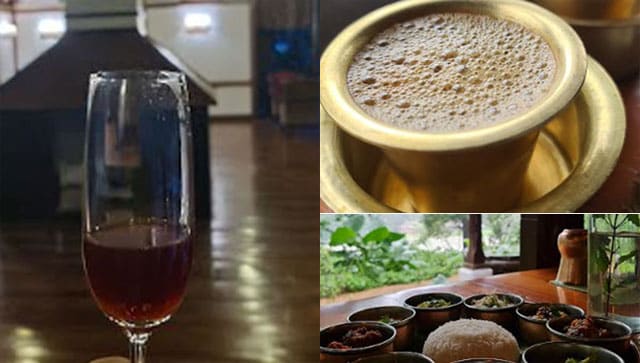
Enriched with this information, I wander into the reading room where the resort serves free coffee all day long. Looking over the rice fields being pattered with relentless rain, my mind wanders to the visual of an Ainmane, the Kodava-style clan house. I can almost smell the Baale Nuruk (a fritter made with rice flour and ripe bananas) in the kitchen in my virtual visit when my thoughts are interrupted by a gentleman dressed in khakis. I take him to be a naturalist at the resort. Sweetly he offers a glass of ‘Coffee Wine’, a dark amber-coloured liquid kept at the coffee counter. Intrigued, I take a sip and instantly, a wave of delight hits my throat. It smells of coffee and leaves the aftertaste of pepper, a unique combination indeed.
Coffee Wine
“Pigout has helped me achieve a deeper understanding of how the cuisine took shape, its evolution and a study of how to preserve and as well as prepare for what could possibly be the future holds for a micro cuisine, that is rooted in a wild landscape”, shared Ganapathy.
She has been running Pigout Coorg Kitchen from her family home (also an AirBnB) since the pandemic. “Your best bet at trying fresh ingredients with homegrown produce would be in someone’s home,” she chimes.
On my last day in Coorg, walking around the pool villa with a glass of Chukku Kaapi (also known as Bella Kaapi – coffee made with jaggery and ginger extract) I made a vow to come back to this wild land of delectable fares, soon enough.
source: http://www.firstpost.com / FirstPost. / Home> Arts & Culture / by Chandreyi B / August 12th, 2022
Call to help preserve memories of a vanishing people
While modernisation has opened many opportunities for the well-qualified, it has also distanced the young from their heritage and culture. This is even more accentuated amongst Kodavas living outside Kodagu. There is a need to establish a platform where young Kodavas could learn and keep in touch with the community’s heritage, cultural practices, folklore, music, dance, festivals and history, says Mrs. Codanda Rathi Vinay Jha, IAS (Retd.) and Chair, India Foundation for the Arts (IFA), who has initiated establishing a Virtual Museum of Kodava Heritage & Culture named ‘Sandooka,’ a treasure trove of information. —Ed
Kodavas are a micro-minority community in India, who live in Kodagu (Coorg) in Karnataka State. It is estimated that there are about 1,50,000 ethnic Kodavas within and outside Kodagu.
Kodavas, by virtue of living quite isolated in a densely wooded hilly terrain on the Western Ghats of India since time immemorial, have developed their own unique culture, physical attributes, cuisine, language, attire, religious rituals and practices.
Over the centuries, Kodavas adapted themselves to the harsh weather conditions, dangers from wild animals and the inhospitable terrain of Kodagu and transformed the land to an idyllic haven it is today. With the passage of time, they toiled literally with bare hands to cultivate paddy in the valleys.
With the forests providing bountiful supply of wild game, they became expert hunters initially with bows and arrows, and later with firearms which enabled them to emerge as a warrior race. They transformed the fertile land and were able to grow enough paddy that they could export to neighbouring areas.
The interactions with immediate neighbours in present day Kerala, Mysuru and Mangaluru, influenced the Kodava language, places of worship, construction of their dwellings and some of the religious practices as well. However, Kodavas still retain their fundamental philosophy of ancestor and nature worship. They come under the broad umbrella of Hinduism.
Kodagu was ruled by Kodava Nayakas or Palegars who were basically warlords. The Haleri dynasty established their rule in Kodagu after cleverly replacing the hopelessly divided Nayakas during the early part of the 17th century. The Haleri Rajas ruled for over two centuries until the British takeover of the administration in 1834 after deposing the last Raja. During the rule of the Haleri Rajas and later the British, Kodavas remained the prominent community very much involved in the administration.
During the British rule, education was introduced and this brought about quantum changes in the lifestyle of the Kodavas. Kodavas found several employment opportunities. Introduction and scientific cultivation of coffee and spices vastly improved the economy of the region. Kodava culture and ethos found expression in the writings by the British, European and Kodava authors.
By the time India got her independence, many Kodavas held important and high-level offices in sectors such as the Defence Forces, Administration, Revenue Department, Forest Department, Police, in the field of Education, Engineering and Medicine.
Kodavas have several distinctive elements in their social, cultural and religious practices. One of them is the deferential status given to women. There is no dowry system in the community. Centuries ago, widow remarriage was permitted. This enlightened attitude is now reflected in well-educated Kodava women shining in a variety of fields.
After India’s independence many Kodavas ventured out of Kodagu seeking better opportunities in education, employment, business and sports. Kodavas are now spread all over the globe. The last three decades has seen a large number of Kodavas migrating outside the country. There is now a sizable number of Kodava diaspora in the US, Canada, UK and Australia. In many cases, there are a couple of generation of Kodavas born and brought up outside Kodagu and outside India as well.
While modernisation has opened many opportunities for the well-qualified, it has also distanced the young from their heritage and culture. This is even more accentuated amongst Kodavas living outside Kodagu. There is a need to establish a platform where young Kodavas could learn and keep in touch with the community’s heritage, cultural practices, folklore, music, dance, festivals and history.
It is with this aim in mind that Mrs. Codanda Rathi Vinay Jha, IAS (Retd.), as Chair, India Foundation for the Arts (IFA), initiated establishing a Virtual Museum of Kodava Heritage & Culture (VMKHC). This project is evocatively named — Sandooka — a treasure trove of information. IFA has successfully supported several path-breaking projects in the field of art and culture.
Sandooka will be a living museum that will be interactive and open to receiving relevant new materials from the public. People, especially the future generations of Kodavas, will have an easily accessible platform to gather details of their heritage. Weblinks will also be given to some of the websites dealing with Kodava culture. It is hoped that this treasure trove of information will be of immense help to those who wish to carry out further research on Kodavas. VMKHC will cover the following aspects of Kodagu and Kodavas:
1. Customs and Rituals
2. Cuisine
3. Architecture
4. Clothes and Jewellery
5. Art & Craft
6. Landscape
7. Literature and Folklore
8. Community Histories
9. Festivals
The project is generously funded with a Corporate Social Responsibility (CSR) grant from Recaero India Pvt. Ltd., which is a pioneer in the field of aerospace engineering and is headed by Vinay Jha, IAS (Retd). A highly professional team has been forged to deal with every aspect of the project. The team comprises:
Lina Vincent – Project Head; Upasana Nattoji Roy – Designer (Switch Studio); Saurav Roy – Designer (Switch Studio) and Mookanda Nitin Kushalappa – Researcher.
IFA office-bearers are: Arundhati Ghosh (Executive Director) and Darshana Davé (Project Co-ordinator); Advisory Group: Rathi Vinay Jha, C.P. Belliappa and Hemanth Sathyanarayana.
Sandooka invites submission of Kodava artefacts, rare photographs, antiques including jewellery (photos) and anecdotes of yore. All accepted materials will be given due recognition and credits. Sharing your valuable knowledge and collections will enrich the contents of Sandooka.
For details of submission of materials, please visit: www.sandookamuseum.org
source: http://www.starofmysore.com / Star of Mysore / Home> Feature Articles / by C.P. Belliappa / August 01st, 2022
DC calls upon various organisations to help make the festival a success.
Deputy Commissioner Dr B C Sateesha chairs a preparatory meeting on Nadi Utsava at his office in Madikeri on Monday. DH Photo
Nadi Utsava will be held as a part of the 75th anniversary of Indian Independence in the district, said Deputy Commissioner Dr B C Sateesha.
The festival is directed towards spreading awareness on the protection of rivers, river banks and cleanliness, he said.
He was speaking during a preparatory meeting held at his office in Madikeri on Monday.
The deputy commissioner called upon various organisations to join hands with the district administration in making the Utsava successful.
Kaveri Neeravari Nigama Ltd engineer Nagesh said that the Nadi Utsava will be held on December 17 and 18.
The inaugural function will be held in Talakaveri on December 17 afternoon and the programme will be held in Kushalnagar on December 18.
A motorbike rally will be held from Talakaveri to Bhagamandala to create awareness about cleanliness. Later, a programme directed towards creating awareness on the protection of rivers will be held at Triveni Sangama.
Also, a cleanliness camp and Deepotsava are planned as a part of Nadi Utsava, he added.
Nagesh further said that a formal stage function will be held on December 18. The Nadi Utsava Jagruthi rally will be taken out from the Kaveri statue to the Ayyappa Swamy Temple.
Kaveri Nadi Jagruthi Vedike president Chandramohan said that the organisations in 23 Gram Panchayat limits and a Town Panchayat limit in Bhagamandala to Shirangala should take part in the Nadi Utsava. Information should be provided to the organisation by the administration.
Leader Monti Ganesh requested the organisers to ensure precautionary measures against Covid-19.
Kannada Sahitya Parishat district president M P Keshava Kamath called upon the youth to take part in the Utsava in large numbers.
Kodagu Gowda Samaja Federation president Surthale Somanna said that importance should be given to the cleanliness campaign in the Gram Panchayats in the Kaveri river basin.
All people should come together for the good cause of protecting the Kaveri river, he added.
During the meeting, it was decided to form sub-committees of Nadi Utsava.
Karnataka Kodava Sahitya Academy chairperson Ammatanda Parvathi Appaiah, Karnataka Arebhashe Cultural and Literary Academy chairman Lakshminarayana Kajegadde, leaders M B Devaiah and Talakaveri-Bhagamandala temple executive officer Krishnappa were present, among others.
source: http://www.deccanherald.com / Deccan Herald / Home> State> Mangaluru / by DHNS, Madikeri / December 06th, 2021
WELCOME. If you like what you see "SUBSCRIBE via EMAIL" to receive FREE regular UPDATES.
Read More »