Category Archives: Travel, Tourism & Homestays (wef. Oct 03rd, 2021)

Coorg’s Famous Aromatic Oils: Uses and Benefits

Spread the love

Full of natural beauty and a culturally rich spot, Coorg is one of the foremost tourist destinations in India. Located in southern Karnataka, the hill station abounds with green valleys, forests, several waterfalls and hills. It makes for a wonderful holiday spot for singletons and families alike, with its zigzagging roads, aromatic blossoms and cool climate. If you are planning a holiday to South India this year, we suggest booking one of the premium Coorg resorts and packing your bags.

Coorg: India’s treasure trove of natural wonders

Known as the ‘Scotland of India’ since the time of the British Rule, Coorg is known for several natural scenic wonders and the prettiest landscapes. On your list of places to visit in Coorg, you should include:

  • Abbi or Abbey Falls
  • Nisargadhama Forest
  • Iruppu Falls
  • Cauvery River
  • Talakaveri
  • Kote Betta
  • Brahmagiri Hills

Things to buy in Coorg

Most people head to Coorg to experience its hushed tranquillity, and you’ve already made a list of places to visit in Coorg . But shopping buffs are pleasantly surprised to find that the region produces several local items of superior quality. Chief among these is coffee, which is processed from the several coffee plantations in the area. You can buy coffee beans or powder from the plantations, or even the local markets. Next, you should stock up on locally produced organic honey which offers gentle sweetness and has a high medicinal value. You should also buy the region’s oranges to eat during your stay; these are best at staving off thirst and eliminating nausea. One of the significant buys, however, is essential or aromatic oils.

About aromatic oils from Coorg

Coorg is most famous for its coffee, but over the years, visitors to this hill station have discovered its other secret: aromatic oils. Coorg produces a number of aromatic essential oils that promote good health and healing. Chief among these are eucalyptus oil, tea tree oil, sandalwood oil and wintergreen oil. These are cultivated and produced locally and are of the highest quality. And you can buy them from most markets and shops in Coorg. Just ask your Coorg resort concierge about the best places to buy what you need, and you can get the best products to take home with you.

Uses and benefits of aromatic oils

Aromatic oils are the main component of the science of Aromatherapy, which aims to heal various aches and pains in the human body through aroma and the oil’s healing powers. Aromatherapy is an ancient science practised by cultures in Egypt, India, China and Greece, among other countries. It uses smell and skin absorption of the oil via creams, gels, soap, oil diffusers, lotions, bath salts, masks, compresses and inhalers. Aromatic oils are often used to manage pain, relieve stress and anxiety, ease digestive discomfort, improve sleep, improve palliative care, reduce inflammation and nausea, boost immunity and provide short term relief from chronic ailments like migraine and hypertension.

Some uses of popular aromatic oils are:

Tea tree oil: helps reduce acne, ringworm and Athlete’s Foot

Peppermint oil: eases headache, regularises digestive cycle, is a good anti-fungal and anti-microbial agent

Eucalyptus oil: clears nasal passages, relieves pain and reduces inflammation

Lemongrass oil: relieves stress, alleviates depression, and heals wounds

Wintergreen oil: improves blood circulation, reduces pain, promotes detoxification of the body, and soothes a cold or symptoms of flu

Lavender oil: treats anxiety, soothes inflammation, reduces stress and relieves the discomfort associated with menstrual cramps, eczema, nausea, etc.

Where to buy aromatic oils in Coorg

There are several markets and stores that retail aromatic oils in Coorg. The most popular ones are Coorg Greens, Aroma Coffee, Choco Coorg Spice, and Coorg Homemade Wine & Spices. Your Coorg resort concierge can recommend the best places to buy these oils; do look for products that are authentic, produced in Coorg and sold at a reasonable cost. Some retailers can even ship the oil you need online if they don’t have it in stock.

Why stay at Club Mahindra Madikeri, Coorg

Every Club Mahindra resort promises a lifetime of stupendous holidays, in the most stunning locations in India and abroad. As a Club Mahindra resort member, you and your loved ones can avail of annual holidays in over 100 domestic and international destinations, staying at the choicest resorts and affiliate properties that offer superlative rooms, best service, sumptuous food and excellent on-site activities.

How to book your holiday

That’s simple enough – just take a Club Mahindra membership and ready yourself for the best ever holiday experiences for over 25 years. Visit www.clubmahindra.com to know the Club Mahindra membership fee structure, how to pay the Club Mahindra membership fee, how to book the holiday you want, if you can choose a certain season every year for your trip, and so on.

source: http://www.mangalorean.com / Mangalorean.com / Home> Article / By EE / March 16th, 2022
‘Unofficial’ Entry Fee Rule At Talacauvery Temple

Kushalnagar:

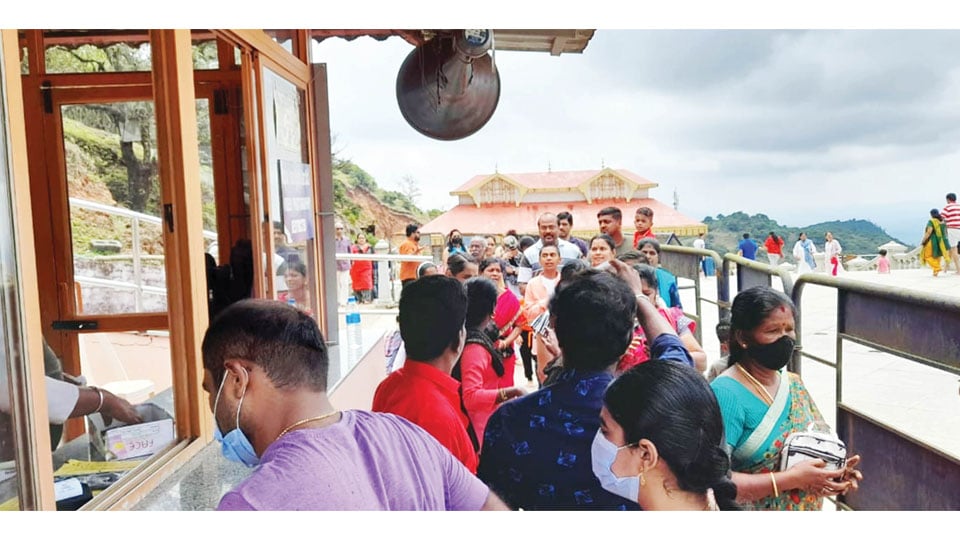
A new entry fee rule has come into force at Talacauvery Temple in Kodagu, the birthplace of River Cauvery where visitors are charged Rs. 20 and a receipt of ‘Vishesha Seve’ (Special Offering) is given after the payment.

Though the ticket is issued for ‘Vishesha Seve’, people who come there do not perform any rituals. They just enter the Temple to pray and leave. The Temple comes under the State Muzrai Department and is governed by its rules and regulations.

Interestingly, the entry fee is levied in a sly manner and whoever questions the new system are let inside without the ticket. Normally, local residents who know that there was no entry fee till now are not ready to pay and are bound to question the person who issues the  ‘Vishesha Seve’ tickets. But tourists and other people who come from outside the district meekly pay up.

Barricade for fee collection

Earlier, one could enter the Temple through the main arch gates and there was no such ticket counter and no one would stop entry. However, now all devotees who come to the Temple are made to enter through a barricaded entry point — to the right of the arch gates — and the security guards force each and everyone to take that particular line.

Moreover, there are no sign boards indicating that an entry fee has to be paid. Rs. 20 ticket is issued to one group. As there are no clear-cut guidelines and rules, many Temple goers are objecting to the practice.

The rule has been enforced recently as thousands of tourists are visiting Kodagu for the holiday season. As there are no signboards or any Government Order to indicate the Rs. 20 entry fee, it is an ‘unofficial’ arrangement to collect money.

As generally tourists will be in a hurry, no one questions the rule of entry tickets while no other major temples have  an entry fee. Only the special rituals and prasadam have tickets of various denominations. But if any devotee questions the entry ticket collection, they are told that tickets are not mandatory.

Not mandatory: Temple EO

Krishnappa, Executive Officer of Talacauvery-Bhagamandala Temple Committee said that the collected money is being used to maintain the Temple staff. “We get bare minimum funds from the Government for the maintenance of the staff. Anyway the tickets are not mandatory. Those who have the tickets will get three special mangalarathis at the Brahma Kundike, Agastheshwara and Mahaganapathi Temples,” he said.

On the barricades erected near the arch gate, he said that it is to ensure that the visitors are not skimpily clad. “75 percent of  the visitors who come here are tourists and many of them are scantily dressed. This is a holy place and body showing is unacceptable,” he added.

President of Talacauvery – Bhagamandala Temple Committee Kodi Motaiah said that there are 11 employees including priests at Talacauvery and 16 at Bhagamandala. “The Muzrai Department pays just Rs. 7,500 as salary and that too they are paid once in two or three months. We are paying them from whatever little money collected from the entry ticket,”  he added.

source: http://www.starofmysore.come / Star of Mysore / Home> News> Top Stories / April 19th, 2022

Cariappa Park At Baramulla In Kashmir Renovated With New Library

Field Marshal K.M. Cariappa’s son, family visit Park, War Memorials; recall warm ties

Madikeri :

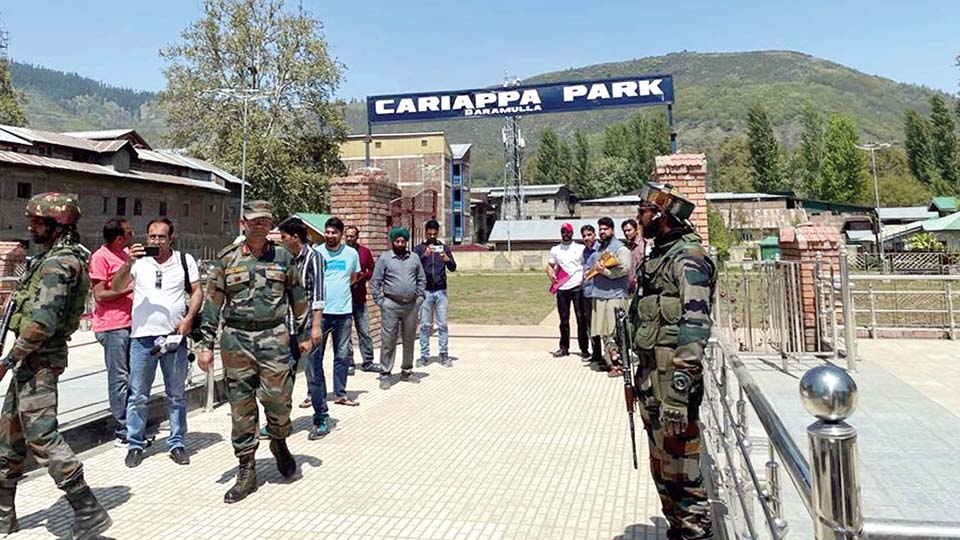
The Cariappa Park at Baramulla in Kashmir, named after India’s first Commander-in-Chief Field Marshal Kodandera Madappa Cariappa has been renovated at a cost of Rs. 3 crore.

Baramulla is located on the banks of River Jhelum, downstream of Srinagar.

It is a matter of pride for Kodagu and Karnataka that India’s legendary Armyman is being commemorated at Baramulla, a place that was once a hotbed of militants.

The winds of change began blowing through the Kashmir Valley after the Narendra Modi Government revoked the special status of Jammu and Kashmir by revoking Article 370 in August 2019 and took steps to change how the region will be governed.

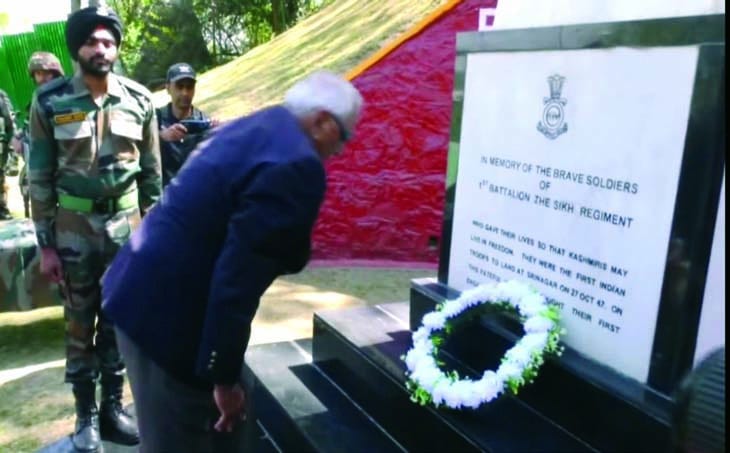
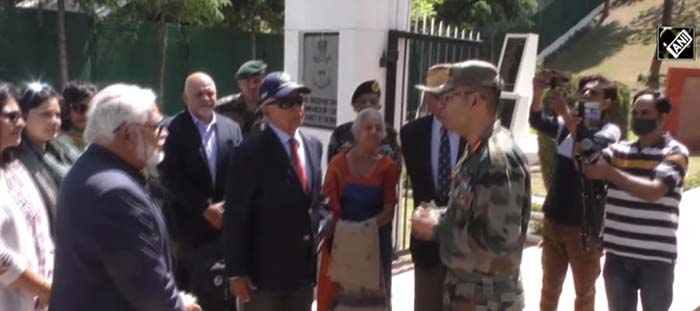
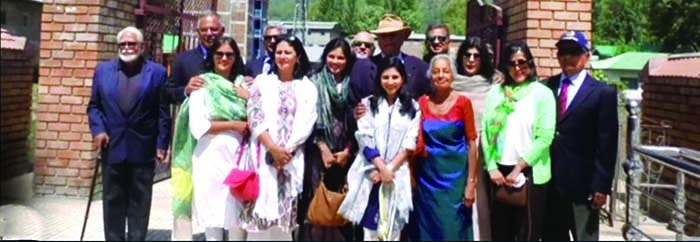
Though records are not available on when the Cariappa Park was created, its renovation began in 2020 and now it stands as a beautiful park. On Apr. 10, 2022 the family of Field Marshal Cariappa including his son Air Marshal (Retd.) K.C. Nanda Cariappa visited the park and paid respects.

The family was warmly received by officers and they also visited a Sikh War Memorial, Dagger War Memorial and the Cariappa Park in Baramulla.

Nanda Cariappa and the family appreciated the work of the Indian Defence Forces, especially the Indian Army for maintaining peace and tranquillity in Jammu and Kashmir which has won many hearts.

The Cariappa Park has been set up by the Baramulla City Municipal Council along with a hi-tech digital library and the funding of Rs. 3 crore has been obtained from the Jammu and Kashmir Government and Rajaram Mohan Roy Library, Kolkata.

Nanda Cariappa recalled his father’s association with the people of Baramulla and said that the people had a special place in the Field Marshal’s heart.

The family visited Baramulla following an invitation from the heads of Baramulla Park Trust.

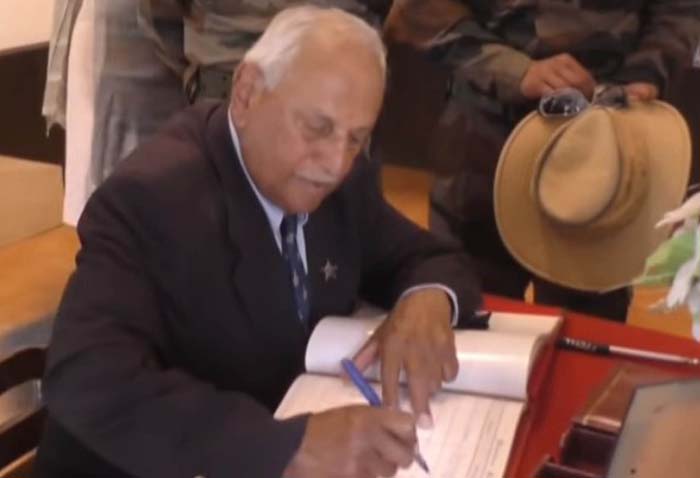
Nanda Cariappa signed the Visitor’s Book at the War Memorial and spoke to the media about Field Marshal Cariappa, Kodagu and Karnataka.

 The family also visited the digital library that has state-of-the-art services and equipped with all the facilities considering the needs of users in the modern digital era. The library is linked with the National Digital Library of India to facilitate user access to around 3.5 crore academic resources including e-books, audio-books, lecture materials, thesis, reports, articles, journals, and question papers.

 The Field Marshal’s family members K. Rohit, Sanjitha Cariappa, sons-in-law A.K. Devaiah and Saurabh Gupta, granddaughter Arushi Anand and daughter Gayatri Gupta were present.

Cariappa was close to people’s hearts

The Cariappa Park is one of the oldest parks in Baramulla and it was lying in a state of neglect. Senior citizens and political leaders in Baramulla narrate the stories of the ‘Kipper’ (as Cariappa was fondly called) and how he is still close to the people there.

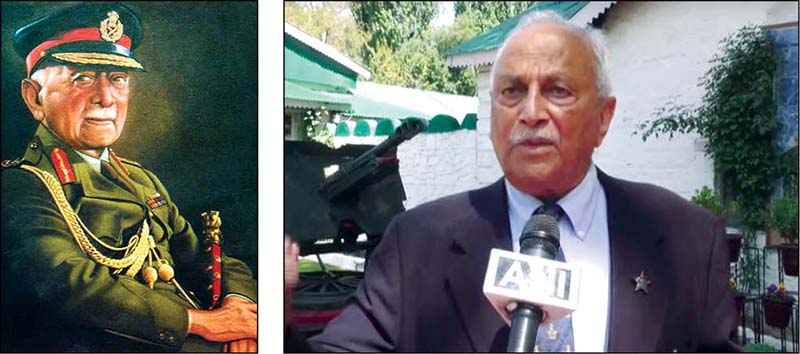
(Left) Field Marshal K.M. Cariappa. Picture right: Cariappa’s son Air Marshal (Retd.) K.C. Nanda Cariappa recalling his father’s association with the people of Baramulla.

Once, after chasing the raiders from across the border beyond Uri, Cariappa, who was travelling in a military jeep, was stopped by a group of people including women and children at Baramulla and was told that they had suffered a lot due to the absence of food supplies, including salt.

It was a puzzling task for Cariappa, a General then, as no stocks were available with the Army so that they could be distributed among hungry residents. But he fulfilled his assurance the next day when he visited the old town and distributed flour, rice and salt to the needy families.

Cariappa followed this gesture in many ways in various parts of Kashmir. His noble act was appreciated by the Government those days. K.S. Thimayya (who rose to be General later), whom Cariappa had put in command of the 19th Infantry Division at Baramulla, followed Cariappa’s gesture and continued the support to the local population. Grateful Baramullians named the park after Cariappa.

source: http://www.starofmysore.com / Star of Mysore / Home> Feature Articles / April 12th, 2022

NPSI Student’s Space Hotel Concept Bags First Place In NASA Contest

Mysuru:

Mukkatira Neerav Aiyappa, a Class 7 student of National Public School International (NPSI), Mysuru, who participated in the Annual Space Settlement Contest, has bagged the first place in Grade 7 Category for his proposal of a Space Hotel ‘DIADEM.’

He presented a design of the Space Hotel in the orbital space settlement LEO (Lower Earth Orbit) at the contest jointly organised by National Aeronautics and Space Administration (NASA) Ames Research Centre, San Jose State University and the National Space Society (NSS).

This international competition invited all students around the world up to 12th Grade to participate in its 2018 edition.

Neerav will receive a NASA certificate and has been invited to attend the NSS 37th Annual International Space Development Conference to be held at Sheraton Gateway Hotel in Los Angeles, California, USA, from May 24 to May 27, 2018 for a poster and oral presentation of his winning proposal. His project and ideas will be used by NASA for its future space programmes.

Speaking to Star of Mysore, Neerav, who has been working on the project since 11 months, said that among various forms of tourism like eco-tourism, nautical tourism, wellness tourism and medical tourism, a new concept has emerged in the form of space tourism, kindling interest to explore various destinations. Rather than seeing comets, planets, and constellations on a telescope, space tourism provides a privilege of experiencing first-hand the beauty of comets, asteroids, stars and planets, he added.

Space tourism will not only provide new vacation experience but create a new view to the earth, transforming the thoughts and perception among humans socially, culturally and emotionally, inspire new careers for the generation of engineers and will open newer fields for research in space medicine, nanotechnology, physical sciences and others, he said.

Through his project, Neerav has created a ‘Space Hotel’ providing space tourists a unique experience of a lifetime and enrich space and its potentials. “My project aims to create a ‘wow’ factor in the field of travel, provides job opportunities, ability to renew space exploration and research, explores possibility of hypersonic travel and have a newer perspective of earth,” he said.

A file photo of the then Union Human Resource Development (HRD) Minister Smriti Irani felicitating Mysuru boy Neerav Aiyappa for winning Google India Code to Learn 2015 Contest.

In his project, Neerav has detailed out the concept of the space hotel, life support system, logistics of the space hotel, economy and time-line, space laws and code of ethics.

Neerav had won the Google India Code to Learn 2015 Contest where he created a game software project using “Scratch” programming called “Wings Over Waves.” The then Union HRD Minister Smriti Irani felicitated him under Rashtriya Avishkar Abhiyaan.

He was a finalist at RYSI Award (Raman Award) held on Mar. 5, 2018 at Panchavati (Sir C.V. Raman’s residence) in Bengaluru where he demonstrated the principle fluid and thermodynamics in intermediate category  with a working model.

Neerav is the son of Mukkatira Muthanna and Kavery, residents of Yadavagiri and grandson of Mukkatira Gappu – Janaki of Ponnampet and Guddanda Nanda – Kanthy of Virajpet.

source: http://www.starofmysore.com / Star of Mysore / Home> News / March 27th, 2018

Harangi Elephant Camp Takes Shape

To be ninth in Karnataka; third in Kodagu

Madikeri:

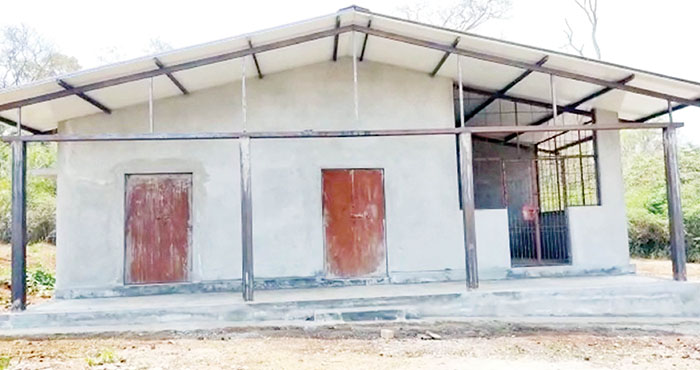
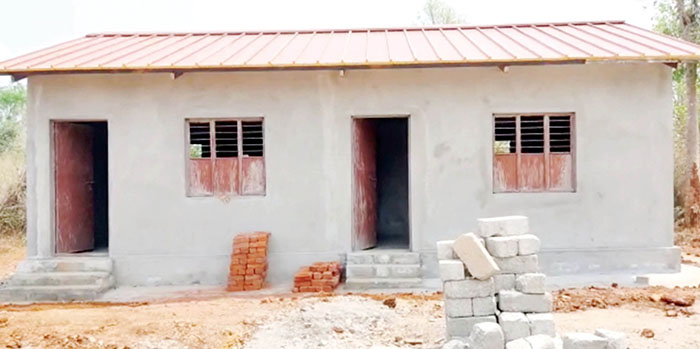
Works are in full swing to set up the third Elephant Camp in Kodagu at Harangi. The State Government has released Rs. 50 lakh for the project that is expected to ease the burden of the existing elephant camps.

Already, Kodagu has two elephant camps, one at Dubare and another at Mathigodu near Anechowkur Gate that borders Mysuru. There are eight elephant camps in Karnataka including the two in Kodagu and the Harangi Camp will be the ninth in the State.

The eight jumbo camps house more than 100 tamed elephants that are used to rescue wild animals and for logging purposes at Government timber depots. The new elephant camp is expected to reduce the burden on the nearby Dubare Elephant Camp, which currently has over 31 elephants, the highest in the State.

90 percent works complete

Over 90 percent of the works have been completed at the Harangi Elephant Camp and interestingly, the Camp houses a Tree Park, also in the same vicinity. From 2017 till 2021-22 Rs.1.38 crore has been released by the Government and works are on to create the Tree Park.

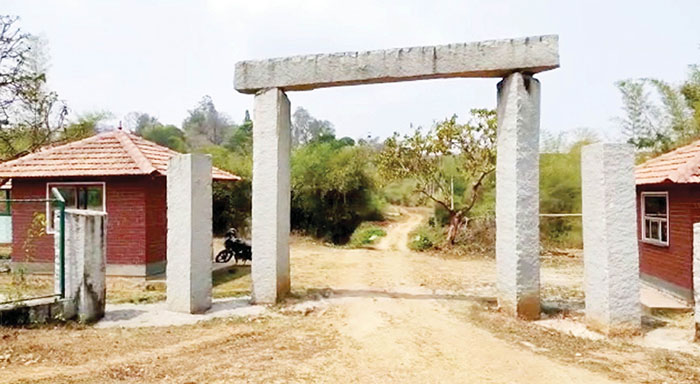
The Forest Department is establishing the elephant camp in a 40-acre land at Athur Reserve Forest beside Harangi Reservoir in Kushalnagar Taluk. The place, located near the Harangi Dam backwaters, is ideal to set up the elephant camp. The camp per se is eight to 20 acres. The Athur Range Forest extends up to 2,000 acres and it is an ideal elephant habitat with plenty of water and green swathes.

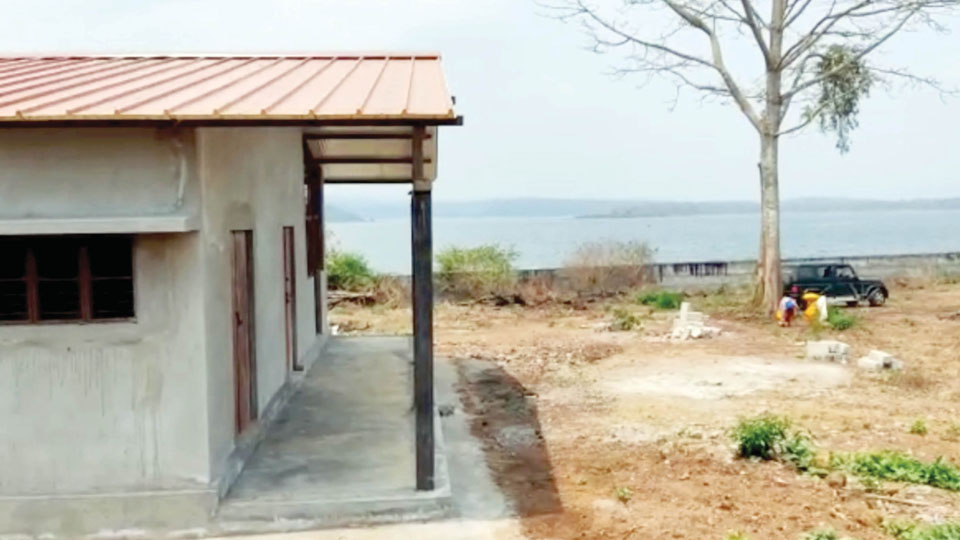
Four houses have been constructed for the mahouts and their families to stay, a vast kitchen has been constructed to prepare food for the elephants and store rooms has also been constructed. Basic facilities including toilets have been constructed for tourists who come there.

Abundant water source

Borewells have been sunk to provide a steady stream of water and as the land comes near the Harangi Dam backwaters, there is no shortage of groundwater. Electricity works are on now at the camp and enough care is being taken to ensure that the forest area is not damaged while erecting the power poles and when the power lines are drawn.

The funds for the camp have been released from Compensatory Afforestation Fund Management and Planning Authority (CAMPA). Apart from setting up a new elephant camp, there are plans to initiate other related development programmes including developing the camp as a tourist centre and at the same time provide shelter to the elephants.

Other tourism projects

The Government has also plans to closely develop Cauvery Nisargadhama in Kushalnagar and together with the new elephant camp in the region, the initiatives are set to boost eco-tourism activities.

Kushalnagar Range Forest Officer J. Ananya Kumar told Star of Mysore that once the Harangi Elephant Camp works are completed, five elephants will be shifted from Dubare Elephant Camp to immediately ease the burden. Later, 15 more jumbos will be shifted in phases. Appointment of staff and doctors will be decided by the State Government.

Among the State Government plans to improve tourism in Harangi are water sports on behalf of Jungle Lodges and Resorts, Jet Ski and para-sailing. The Kodagu District Administration is weighing various options for tourism promotion once the Harangi Elephant Camp is fully established.

source: http://www.starofmysore.com / Star of Mysore / Home> News / March 21st, 2022

Bird-watching begins in Madikeri on April 8

After being deferred in January, the eighth edition of the Karnataka Bird Festival will be held in Madikeri from April 8-10, 2022.

Image used for representational purpose only. (Photo | Express)

Bengaluru :

After being deferred in January, the eighth edition of the Karnataka Bird Festival will be held in Madikeri from April 8-10, 2022.

The festival, organised by the Karnataka forest department and Karnataka Eco-Tourism Development Board, aims to draw attention of people to bird watching, spark interest among young wildlife enthusiasts, show people the bio-diversity of forests, and shift their focus from tiger-centric wildlife safari and tourism. 

“Every year a different location, region, bio-diversity, and a different bird is focused upon to increase awareness and ensure better conservation measures.

This year, the mascot is Baza bird,” a forest department official said. Baza is a migratory bird from the eastern Himalayas, China and South East Asia. Forest officials of the region have reportedly sighted a couple of the birds now, in the onset of summer. 

Kumar Pushkar, additional Principal Conservator of Forests and CEO of the Board told TNIE that the festival was postponed because of spike in Covid-19 cases. “We always wanted to host one is Kodagu because of its bio-diversity and the many species which can be sighted there. Baza was chosen because it is sighted in winters in this region.

There will be around six to seven different trails, which the deputy conservator of forest is finalising. The event will also cover Madikeri city, and will be inaugurated by forests minister Umesh V Katti,” he said. Experts from across the country will be brought to share their experience, knowledge. 

source: http://www.newindianexpress.com / The New Indian Express / Home> States> Karnataka / by Bosky Khanna, Express News Service / March 14th, 2022


On a green path

From an abandoned barren land to a green lush private sanctuary, author Pamela Malhotra recounts the transformation.

Bengaluru : 

Pamela Malhotra’s From the Heart of Nature (`599, Penguin Random House) documents the story behind the creation of a private forest sanctuary in India. More than just the struggle, Malhotra also recounts how she connected with animals and trees both at a physical and spiritual level. 

What was the turning point in your life? 

My husband Anil and I shared that love of wildlife and that dream. This realisation initially came while living in the USA in the late 1970s and early 1980s, which is why we established our first small wildlife sanctuary on the Big Island of Hawaii in 1979. When we came to India in January of 1986, we were quite upset by the deforestation we saw, especially in the Himalayas. We had gone to Haridwar and fell in love with the Himalayas. So, we purchased land in the Uttarkashi region to help reforest that area. 

How did you zero-in on Kodagu?

There were land ceiling laws in the state (then Uttar Pradesh – now Uttarakhand) that limited a family to owning just 12 acres of land. There was not enough land for establishing a forest wildlife sanctuary through reforestation. Also, we had visited Nagarhole National Park in Jan 1986, where the then-Wildlife Warden of the Park urged us to establish our forest wildlife sanctuary in his home district of Kodagu. As a result my husband Anil travelled throughout southern India to see what he could find, finally finding suitable land in Kodagu. Purchasing larger pieces of land was possible here if the land was deemed ‘plantation’ and the purchaser was an agriculturalist which my husband was.

What were the initial struggles that you faced?

Accessing the land. It was almost impossible to bring in any kind of building materials for our home in the beginning due to the poor roads. So, my husband put loads of rocks and other road material into these dirt roads to help give us drivable access which was also a big boon for the local people. Another major challenge was the legal maze encountered in the district since lands were divided into several different categories, often with different rules/laws applying to different categories in terms of purchase and ownership. Acceptance by the local people was also initially a challenge, although the older generation did understand the importance of maintaining forests and not killing off all the wildlife. The most distressing challenges have been illegal logging and poaching of wildlife. 

The sanctuary is spread across 300 acres, what are the kinds of species that are found there?

Hundreds of species have made the sanctuary their full-time home and/or come visit frequently. A short list of species found here includes 100s of species of butterflies and birds including Great Indian Hornbills and Malabar Grey Hornbills, Bengal tiger, Asian leopard, Asian elephant, sloth bear, dhole (Indian wild dog), Gaur (Indian bison), species of deer (sambar, cheetal, muntjac/barking deer) etc. So diverse are the species found here that one Oxford scientist dubbed our sanctuary ‘Noah’s Ark’.

You first purchased the land for the sanctuary in 1992, to create a private sanctuary. How did you decide on writing a book?

I hope to sow the seeds of love of nature in the hearts and minds of all who read the book, and to create a sacred perspective when viewing and dealing with nature.

source: http://www.newindianexpress.com / The New Indian Express / Home> Cities> Bengaluru / by Monica Monalisa, Express News Service / March 02nd, 2022

Mysuru-Kushalnagar Railway Line: Project Revived As Centre Grants Rs. 1,000 Crore

Madikeri:

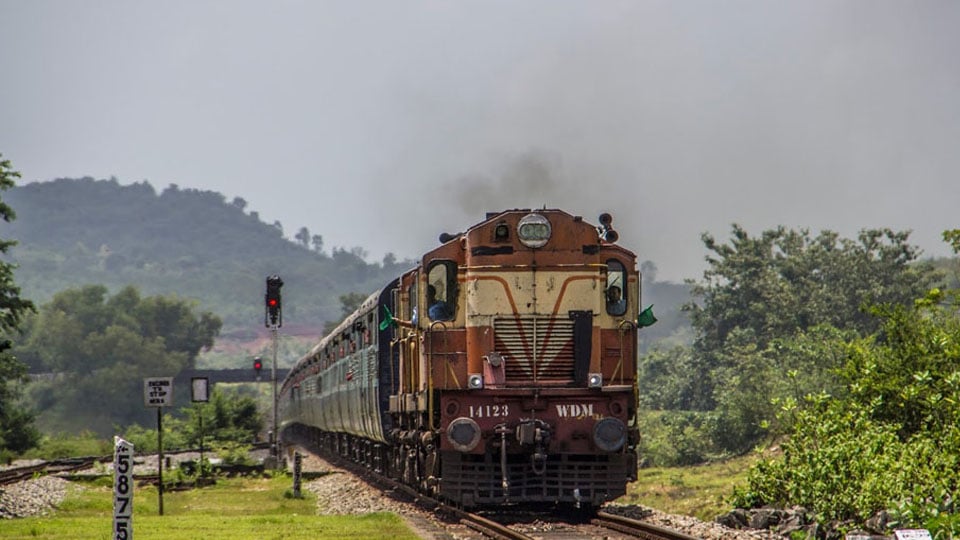
The Centre has granted Rs. 1,000 crore for the 87.2-km Mysuru-Belagola-Kushalnagar Railway line that is expected to cost Rs. 1,854.62 crore. The allocation has been made in the Union Budget 2022-2023. The cost factor has been estimated in a survey that was conducted in 2019.

If implemented, Kodagu will be placed in India’s Railway map and will facilitate the movement of people from Mysuru, Hunsur, Periyapatna and Bylakuppe. The land acquisition process is expected to begin soon for this project that was green-lighted and funds were allocated in the Railways’ Pink Book in 2019.

The Railway line will actually begin from Belagola in Srirangapatna taluk of Mandya district and end at Koppa near Kushalnagar in Kodagu district. It will pass through Yelwal, Bilikere, Uddur, Hunsur, Sathegala, Periyapatna, Doddahonnur to reach Koppa village.

It may be mentioned here that in August 2021, the South Western Railways had awarded the tender for final location survey to a Bengaluru-based company at a cost of Rs. 1.26 crore.

The project was originally mooted till Madikeri over 100 years ago and in recent times found mention in 2011 (UPA era). It was shelved after a survey commissioned by the Railways deemed the route to be unprofitable. The project, however, is being rejuvenated now, much to the chagrin of environmentalists who have opposed the project saying that the line will obstruct the natural flow of River Cauvery.

High Court ruling: Under pressure from Green activists and realising that the project will cause a disaster, the Forest Department did not give permission for a survey from Kushalnagar to Madikeri though the Railway authorities have completed the survey till Kushalnagar.

Environment activists argue that once the line comes to Kushalnagar, it is easy for the Railways to extend the same to Madikeri and then to Mangaluru and Kerala cutting through forests that are known for its eco-sensitivity and biodiversity.

Activists had even approached the Karnataka High Court and filed a Public Interest Litigation, hearing which the Court directed the Indian Railways to obtain environmental clearances before commissioning the Railway line.

The Court noted that the Railways cannot go ahead with the project in the absence of forest and wildlife clearances. Further, the Court directed the Railways to notify the petitioners while applying for clearances.

source: http://www.starofmysore.com / Star of Mysore / Home> News> Top Stories / February 18th, 2022

Karnataka’s Madikeri, Gadag top India in good air quality

Apart from Gadag, four districts of North Karnataka were also in the ‘Good’ AQI category — Hubballi (35), Bagalkot (23), Yadgir (30) and Bidar (41).  

For representational purposes

Gadag :

With an Air Quality Index (AQI) value of 22 on Tuesday, Gadag in Karnataka stood at the second position among major cities in the country with good air quality, according to the daily bulletin of the Central Pollution Control Board (CPCB). Madikeri came first in the country with an AQI value 19. 

Apart from Gadag, four districts of North Karnataka were also in the ‘Good’ AQI category — Hubballi (35), Bagalkot (23), Yadgir (30) and Bidar (41).  Gadag was in first place across the nation on June 5 and July 6 this year. Since then, it has been in the ‘Good’ and ‘Average’ category. 

Other districts of Karnataka which are in the ‘Good’ air quality category are Chamrajnagar (44), Chikkamagaluru (33), Davangere (23), Hassan (25), Koppal (46), Kolar (50), Mysuru (29), Ramanagara (40), Shivamogga (37) and Vijayapura (45).          

India follows the 500-point scale of measuring the AQI value depending on the concentration of the major pollutants. The value 0-50 is considered as Good, followed by Satisfactory (51-100), Moderate (101-200), Poor (201-300), Very Poor (301-400) and Severe (401-500). 

Gadag earning the ‘Good’ air quality tag can be attributed to the nearby hill range, Kappatagudda, and low number of industries around. Since a large percentage of villagers are into agriculture, it causes less air pollution. 

Gadag and Dharwad district’s Environmental Officer Shobha Pol said, “We have been observing the AQI value and this time many districts in Karnataka are in the Good category. Hubballi is in the list which was not there earlier. Reasons cannot be predicted as it needs a detailed study and survey.” 

source: http://www.newindianexpress.com / The New Indian Express / Home> Good News / by Raghottam Koppar, Express News Service / November 18th, 2021
 

Brush up on your homestay etiquette

The least you can do is to be respectful and responsible.

The hospitality industry was among those hardest hit by the pandemic. However, for homestays, it was a boom time. 

With cities locked down with Covid-19 restrictions, many people decided to head to cosy homestays in picturesque locations. With good Wi-Fi available at most places, travellers had the luxury of working from anywhere and gathering enriching life experiences while they were at it. 

However, while B&B owners were happy with the increase in business, the lack of etiquette displayed by some travellers left a bad taste in the mouth.

River Stream Retreat in Virajpet, Coorg. Credit: Ayandrali Dutta

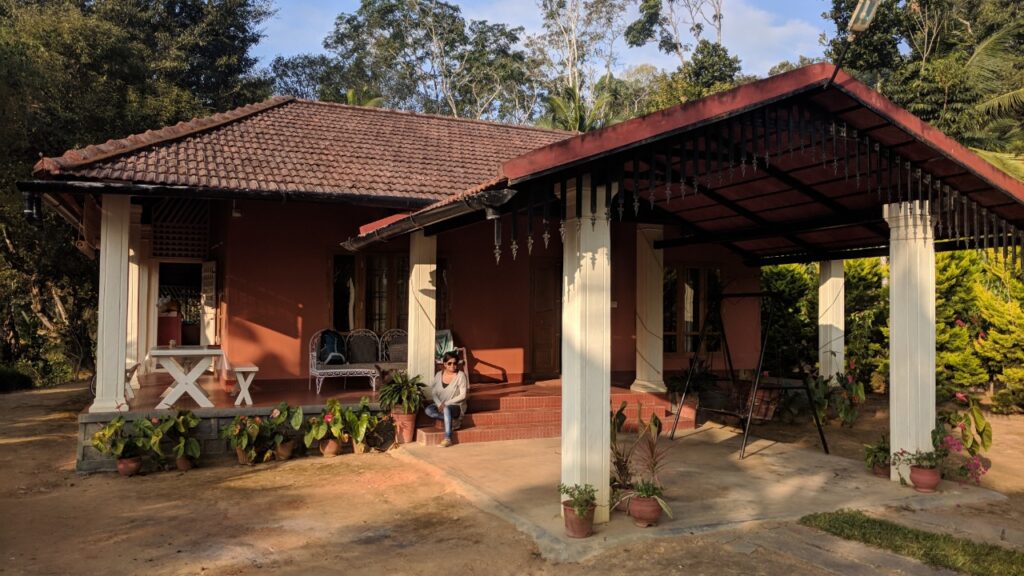
“Our retreat is your home when you stay with us, but when we open up our home to you, we want you to take good care of it,” said Karan Subbaiah who runs a quaint homestay called the River Stream Retreat in Virajpet, Coorg. “Every home has an acceptable way of living, and we respect and admire guests who live by those essential agreements of respect, discipline, care, and humility. We believe in mutual respect for our culture, things, space, and lives.”

Homestays were a breath of fresh air when travelling seemed a long-lost dream. But with it also came a basic sense of responsibility that one needed while staying at someone’s home. 

Irrespective of whether you are a beginner or a pro at staying at homestays, the dos and don’ts of living with a homestay family should never be ignored. One of the most important ways to do this is to remain respectful of cultural differences.

The Brigadiers Cottage homestay in Mussoorie. Credit: Ayandrali Dutta

“We always tell our guests to treat our property as their home and not do anything that they wouldn’t do in theirs,” said Aseem Varma, owner of The Brigadiers Cottage in Mussoorie, a boutique, pet-friendly homestay. “Small things like notifying the staff of your meal plans in advance speaks volumes about your consideration and upbringing.” 

Many homestays are located amid nature and fall under the category of “green stays.”

“You will have an amazing experience living with locals, and their help will be readily available when required, but respecting the rules of the house and maintaining decorum is important,” said Shailza Dasgupta, co-founder of Homestays of India. “Maintain hygiene, inform the host if you intend to come late, and check house rules before smoking or drinking. Also, do not expect room service. Homestays often do not have regular staff, and the owner takes care of the guests.”

source: http://www.deccanherald.com / Deccan Herald / Home> Special Features / by Ayandrali Dutta / February 23rd, 2022