The new Board members will play a pivotal role in implementing the company’s strategic plans for the future and strengthening the corporate governance.
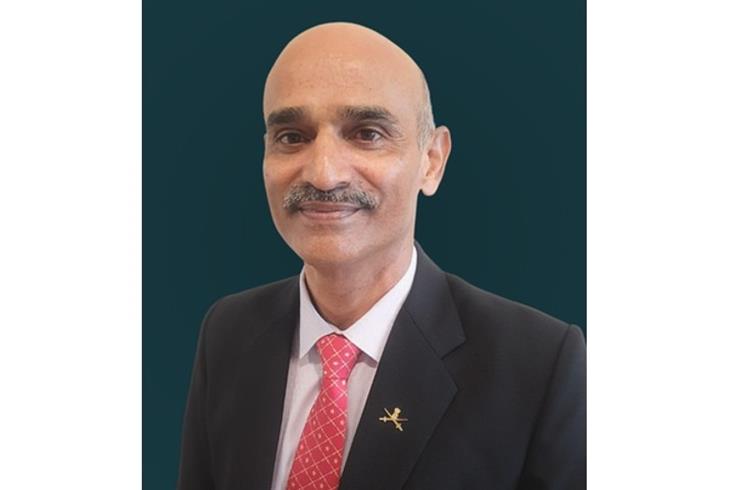
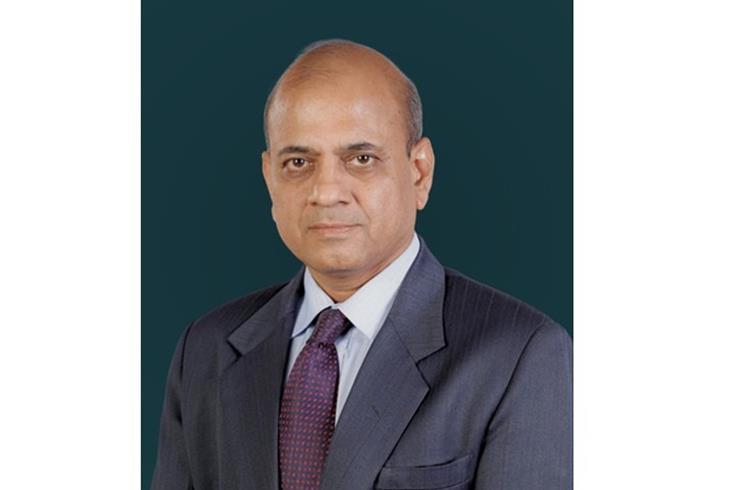
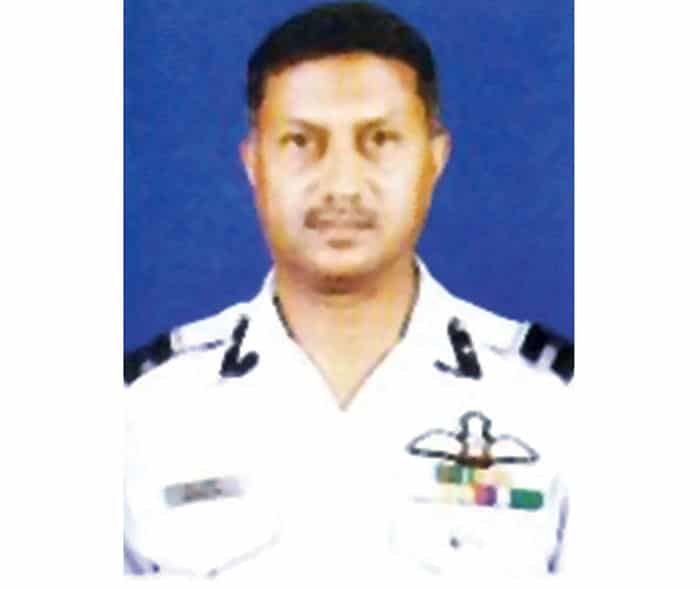
AXISCADES Technologies Ltd., a leading end to end technology and engineering solutions provider, has announced the appointment of Lt Gen Codanda Poovaiah Cariappa (Retd) and Mr. Rajendra Moholkar as Independent Directors to the Company’s Board of Directors.
The new Board members will play a pivotal role in implementing the company’s strategic plans for the future and strengthening the corporate governance. Lt Gen Cariappa and Rajendra Moholkar join the Board with over 40 years of experience, following their extensive stints with the Indian Army and Tata Consultancy Services (TCS) respectively.
Lt Gen C P Cariappa
Lt Gen Cariappa’s strategic expertise spans key strategic roles, including Military Secretary to the President of India, Principal Staff Officer to the Chief of Army Staff and Master General Sustenance, where he oversaw the sustenance of 12 lakh Indian Army troops.
Rajendra Moholkar
Rajendra Moholkar joins the AXISCADES Board following his extensive career with Tata Consultancy Services (TCS) as Company Secretary. His experience also includes leadership roles at TCS e-Serve Limited, Citigroup global Services Limited and ICICI Securities and Finance Co. Ltd and also senior level positions across leading organizations such as Raymond group, Mahindra & Mahindra, and Blaze Advertising.
source: http://www.autocarpro.in / Autocar Professional / Home> News / by Autocar Pro News Desk / September 19th, 2024
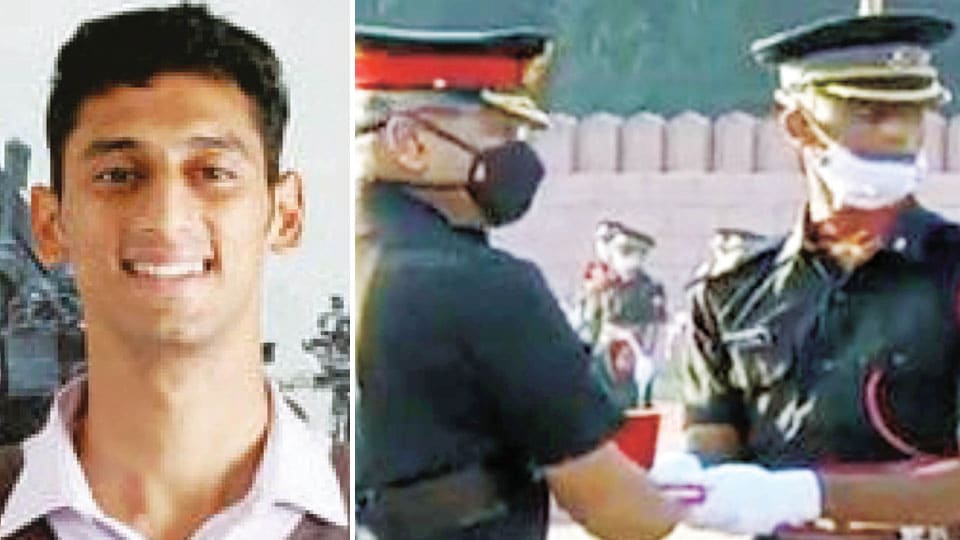
Cholanda Varun Ganapathy, an alumnus of Sri Ramakrishna Vidyashala, Mysuru, has been awarded the Sword of Honour and President’s Gold Medal after being adjudged the Best All Round Cadet and standing First in Overall Order of Merit respectively at the Passing Out Course (SS-110) held at Officers Training Academy (OTA) in Chennai recently.
He secured AIR 14 (All India Ranking) in the merit list of candidates to secure admission to OTA, Chennai, for Course Serial SSC (NT) – 110. His training commenced in Oct.2019 and on successful completion of training is commissioned as a Lieutenant.
Varun, an alumnus of Bishop Cotton Boys’ School, Bengaluru (up to Cl VII/2008), Sri Ramakrishna Vidyashala, Mysuru (PUC/2014) and Sir M. Visveswaraya Institute of Technology, Bengaluru (BE in Mechanical Engineering) had always been focused on joining the Armed Forces. To fulfil this ambition, he appeared for NDA, AFCAT and CDS examinations at various stages clearing these exams seven times. He also appeared in various SSBs, clearing it thrice.
After he secured admission to OTA for Course Serial SSC (NT) – 110, he was also selected for Air Force in Jan. 2020 having cleared AFCAT exam and SSB.
Varun Ganapathy’s success must be attributed to his determination and perseverance which was bolstered by his parents and mentors. He relentlessly pursued his dream to join the Armed Forces and went about his preparation in a very methodical manner. He kept himself updated about various entrance exams and the different syllabus for each exam. His preparation included personality development and physical fitness.
He also attended classes at Bangalore School for Civil Services under Dr. Arjun Bopanna for UPSC and KPSC exams. On being selected to join OTA, Chennai in SS-110 course, Varun was appointed as Academy Cadet Adjutant and was awarded Sword of Honour for being Best All Round Cadet and Gold Medal for being First in Order of Merit. He was commissioned into 2 Special Forces on Nov. 21, 2020.
Varun joins the following elite rank of Kodava Officers who topped their courses: Col. Pattada N. Thimmaiah – IMA Sword; Lt. Gen. Pattachervanda C. Thimmaiah – IMA Sword; Sqn. Ldr. Mallengada B. Chittiappa – NDA Gold and Lt. Cdr. Mukkatira Suraj Aiyappa – Naval Academy Sword and Gold.
Varun is the proud son of Cholanda Poovaiah (Superintendent of Police, Lokayukta, Chikkaballapura District) and Dharini Poovaiah (Manavattira, Nelaji), originally from Kalmotte, Virapet, Kodagu.
source: http://www.starofmysore.com / Star of Mysore / Home> News / November 23rd, 2020
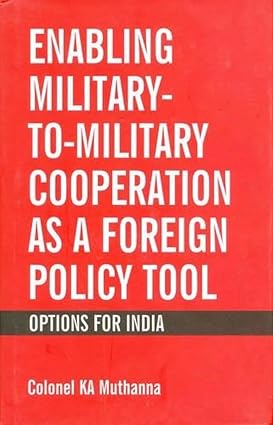
There are various facets of international defence and military cooperation as part of the larger defence diplomacy and security cooperation, which can be employed to create a peaceful security environment.
It is an institutional means of engaging foreign militaries and Defence Ministries which could weather political upheavals while affording many means of developing mutual understanding, leading to trust, reduction of threats and conflict prevention. These go a long way in impacting on the defence and security, and economic and social development of a nation.
In this context, it is interesting to comprehend the conduct of international defence and military cooperation of other countries and then in that light, analyse the Indian approach.
More power to those who dream with their eyes open, navigate through every challenge and eventually emerge as winners.
Flt Lt Punya Nanjappa, Indian Air Force
Nari Shakti being the theme of India’s 75th Republic Day celebration, the grand parade on Kartavya Path, in the heart of the National Capital, New Delhi, displayed a spectacular combination of military feat and cultural vibrancy on January 26, 2024.
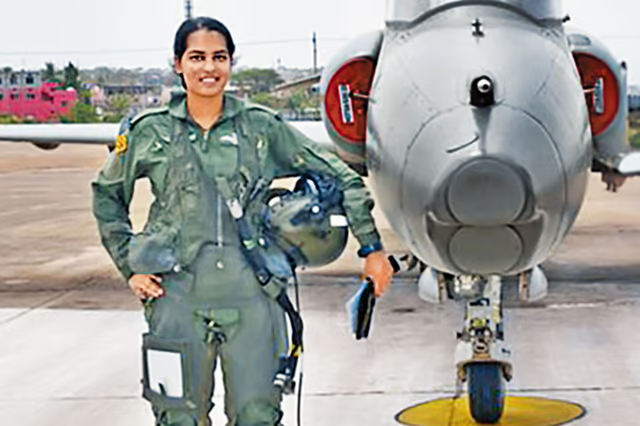
IAF showcased a breath-taking performance with a flypast featuring 51 aircraft during the Republic Day celebrations. This impressive line-up included 29 fighter aircraft, 8 transport planes, 13 helicopters, and one heritage aircraft. When 51 Indian Air Force (IAF) aircrafts zoomed over the Kartavya Path, piloting one of the fighter jets in the flypast was a young woman pilot from Mysuru. Flight Lieutenant (FLT LT) Punya Nanjappa was piloting the MiG-29 fighter and was among the eight female pilots who flew in various formations at the Republic Day parade. It was indeed a proud moment for India.
Breaking barriers is nothing new for Punya Nanjappa. She was the only girl in her batch training with 40 male cadets and the only female cadet from Karnataka to be selected as a trainee pilot for the flying branch training at the Air Force Academy, becoming the second woman from the state of Karnataka to be a fighter jet pilot after Meghana Shanbough from Chikkamagalur to do so. The training for cadets who are selected for the flying branch is divided into three stages. Punya completed Stage 1 training at the academy in Dundigal and was selected to join the fighter stream. Commissioned into the IAF in December 2020, FLT LT Punya is from the No. 47 Squadron of the IAF.
“ Flight Lieutenant (FLT LT) Punya Nanjappa was piloting the MiG-29 fighter and was among the eight female pilots who flew in various formations at the Republic Day parade. It was indeed a proud moment for India”
The sky is literally the limit! While choosing a career path, not many students are able to pursue their dreams and turn them into reality. Mysuru-based Coluvanda Punya Nanjappa is one such dreamer who followed her childhood passion to be a fighter jet pilot and worked hard towards achieving it. Not only is it a personal and professional achievement for Punya, but a social one too, a rare distinction for a woman who has her roots in Kodagu, a land of many ‘defence personnel’. Though the district basks in the glory of producing a Field Marshal, a General, and innumerable Lieutenant Generals, Brigadiers, and Majors in the Indian Army and their equal ranks in the Navy and the Air Force, for the first time a woman fighter pilot emerged from the tiny district.
Punya is the daughter of Coluvanda Anuradha Nanjappa, who served as a teacher at St. Joseph’s Central School, Vijayanagar, and the late Coluvanda P. Bala Nanjappa, who held the position of manager at Prabha Theatre. Though the family hails from a small district, they encouraged their daughter to aim high and achieve through hard work and courage.
Punya Nanjappa’s achievement represents a remarkable moment, highlighting the strides made by women in the IAF and representing women-power, equity and equal ownership in every walk of life with their male counterparts.
source: http://www.outlook.com / Outlook / Home> Brand Studio / by Outlook Bureau / March 08th, 2024
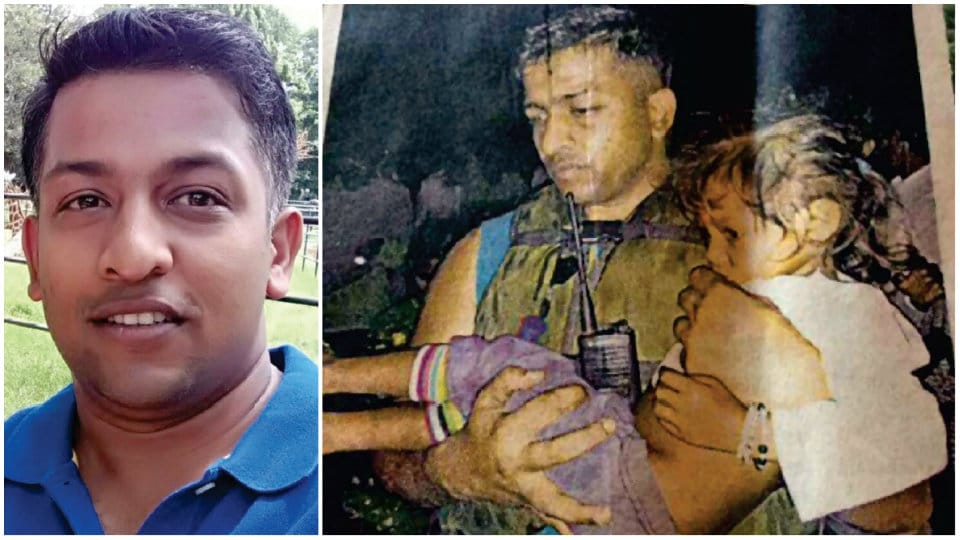
An Army Major from Mysuru has done exemplary work during flood rescue operations in Gujarat and Rajasthan. He is Ballachanda Maj. Akshay Thimmaiah, son of Ballachanda Sudha Bopanna and Ballachanda Prakash Bopanna, residents of Kuvempunagar in city. Maj. Akshay Thimmaiah is married to Mundanda Nidhi Ponnamma.
Following incessant rains in Gujarat, joint teams from the Indian Army and Indian Air Force have saved hundreds of lives and have rescued scores of people in flood-ravaged villages in Surendranagar district. Torrential rains in Gujarat have resulted in several deaths as well. The Gujarat Relief Department has confirmed 61 rain-related deaths in the State so far. Some parts of Rajasthan — especially those bordering the Northern Gujarat district of Banaskantha — too have seen heavy rainfall.
According to a report published in Dainik Bhaskar newspaper, on the night of July 25, Major Akshay Thimmaiah, along with two jawans from State Disaster Response Force (SDRF), saved the lives of 17 children, 12 women and 6 men who were stranded in Alethi village, near Sanchore in Gujarat due to bursting of Narmada Canal, causing flash floods. Maj. Akshay Thimmaiah saved the children after swimming and wading through 4-5 ft of flood waters for over 2.5 km. He showed courage in reaching the village and getting the civilians to safety despite rising water level.
Flood rescue team of 8 Cavalry Battalion under Maj. Akshay Thimmaiah saved the lives of over 100 people in Guda Malani, Rajasthan, in a daring night-long operation. The rescue operation was completed in 3 hours with water levels at 12-20 ft which had risen due to flood waters in Luni River. A total of 45 children, 32 women and 23 men were rescued and evacuated to safer areas.
source: http://www.starofmysore.com / Star of Mysore / Home> News / August 29th, 2017
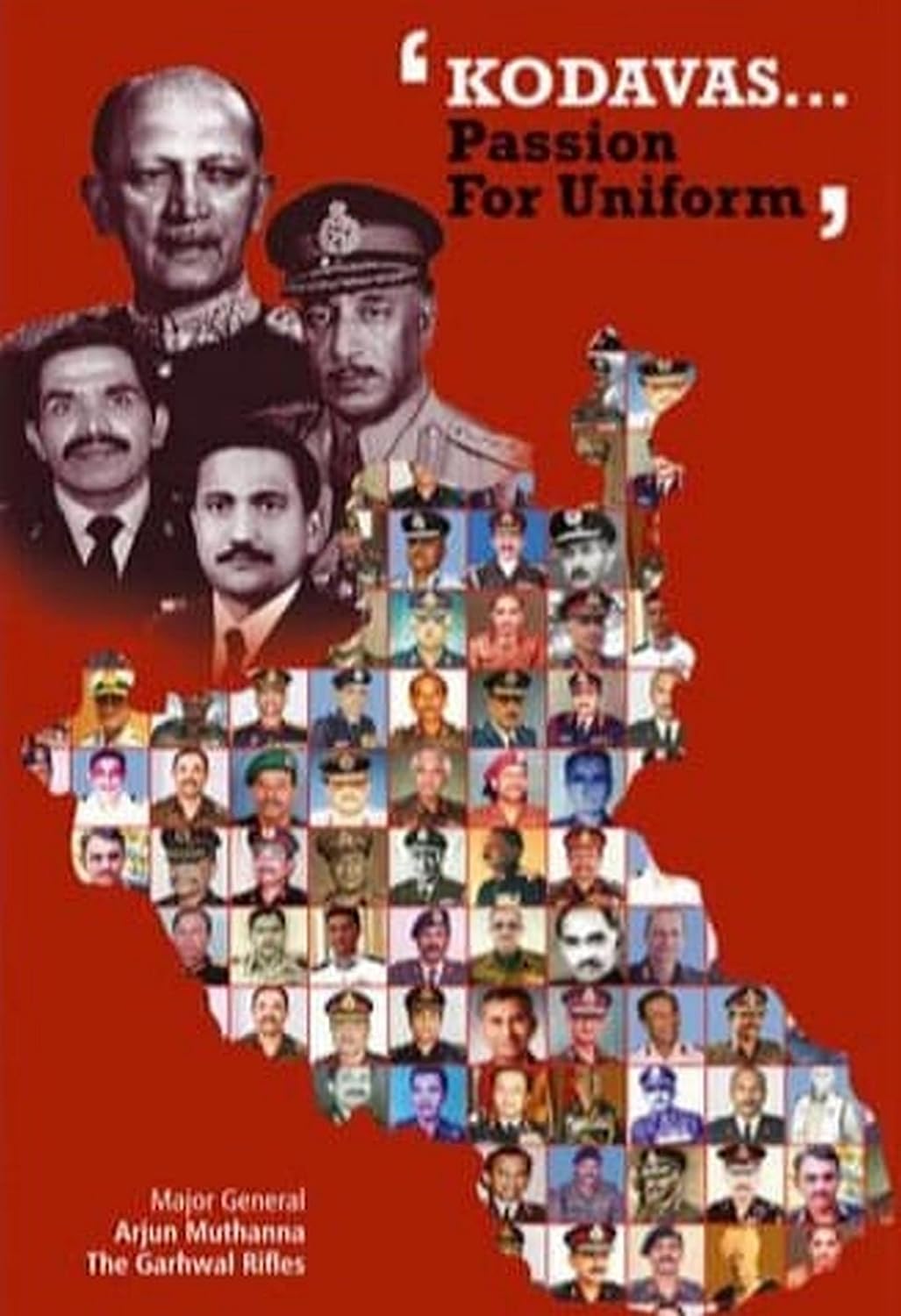
Kodavas are a unique race of people hailing from a small tract of mountainous and jungle area in the Western Ghats known as Kodagu.
The British called the area as Coorg and dominant class, the Kodavas, as Coorgs.
Today this land is a district in the Southern tip of Karnataka state called Kodagu. The terrain required extreme physical fitness and raw courage to survive the predators in the jungles and to defend themselves against any attacks by their enemies.
Families (okkas) lived jointly on their respective lands and looked up to the pathedar (head of the okka) for all decisions and to their ancestors (guru karane) for spiritual guidance and sustenance. Discipline and obedience to the Pathedar were implicit.
Rotary Mysore Midtown and Shrisainik Family had organised an event at Rotary Centre Hall on JLB Road last evening where the ‘Rotary Sainik Desh Rathna’ award was presented to Ballachanda Maj. Akshay Thimmaiah by Maj Gen. (Retd.) S.G. Vombatkere.
Akshay Thimmaiah is the son of Ballachanda Sudha Bopanna and Ballachanda Prakash Bopanna, residents of Kuvempunagar in city. He is married to Mundanda Nidhi Ponnamma.
Speaking on the occasion, Akshay Thimmaiah opined that the Indian Army always welcomed people with leadership qualities and communication skills. He added that serving in the military was a noble one. He contended that a soldier would always be an inspiration for the youth. Hence he asked the youth to join the military and serve the nation.
Continuing, Akshay observed that a soldier should have great patience and perseverance to reach a goal. However, he opined that the honour and respect given to soldiers should also be extended to their family members.
Rotary Mysore Midtown President Narendra Babu, Hon. Secretary Naveen Chandra, Shrisainik Family’s K.V. Bhaskar and G. Madhura, Akshay’s wife Nidhi and his family members were present.
source: http://www.starofmysore.com / Star of Mysore / Home> News / February 15th, 2018
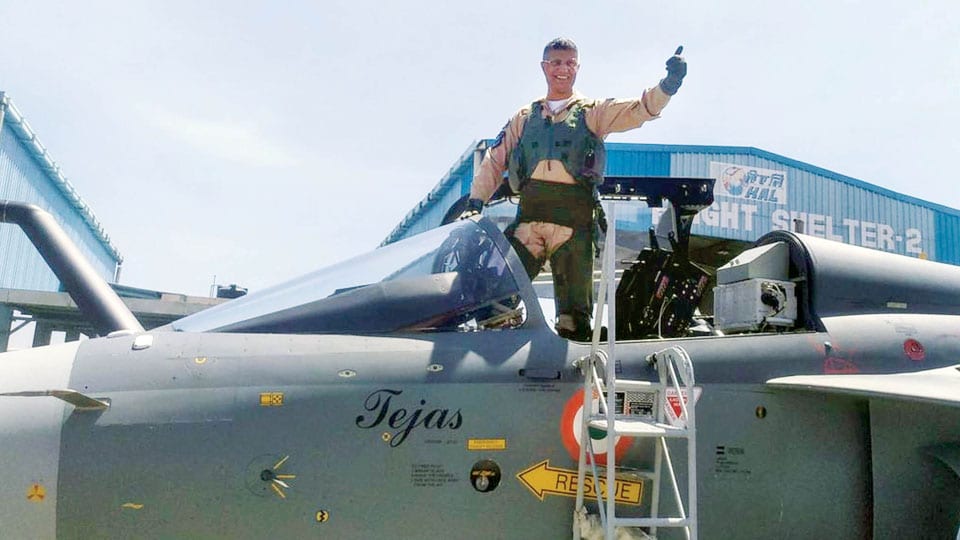
Air Commodore Kalianda A. Muthana flies indigenous fighter plane for 40 minutes
Bengaluru:
The first Light Combat Aircraft (LCA) Tejasin Final Operational Clearance (FOC)-Standard (SP-21) took to the skies for its maiden flight in Bengaluru on Tuesday last, the Hindustan Aeronautics Limited (HAL) said.
Piloted by Air Commodore Kalianda Appaya Muthana (Retd.), Chief Test Flying (Fixed Wing), the aircraft took-off from HAL Airport at around 12.30 pm, the Bengaluru-headquartered defence Public Sector Unit said in a statement. It was air-borne for 40 minutes.
This flight signifies exemplary team work between various stakeholders of the LCA Tejas programme such as HAL, Directorate General of Aeronautical Quality Assurance, Centre for Military Airworthiness and Certification (CEMILAC), Indian Air Force (IAF) and Aeronautical Development Agency (ADA), HAL Chairman and Managing Director R. Madhavan said.
K.A.Muthana
15 fighters by April 2021
HAL is targeting 15 fighters by April 2021. The flight is the first step in a series of things lined up to enable the IAF raise a second squadron of Tejas in Sulur, Tamil Nadu. The first squadron of Tejas — Flying Daggers — is already operating from there.
“HAL achieved the momentous feat within a record time of 12 months after release of Drawing Applicability List (DAL) and SOP (Standard Operating Procedure) by CEMILAC”, the statement said. “This would pave the way for production of remaining 15 fighters from FOC (Final Operational Clearance) block, which are planned to be delivered during the next financial year,” it said.
Advanced features
The FOC aircraft are equipped with advanced features such as Air-to-Air refuelling and Beyond Visual Range (BVR) missile system. “It imbibes a lot of manufacturing improvements which were based on the operational feedback of LCA-IOC (Initial Operational Clearance) fleet with IAF”, HAL said.
On February 20, 2019, the IAF had finally agreed that the indigenously developed and built Tejas was combat-ready and received the ‘release to service’ certificate — which means the fighter got the FOC — from DRDO, whose lab Aeronautical Development Agency (ADA) designed the aircraft.
First conceived in 1983
The aircraft, which was first conceived in 1983, is being produced by HAL. Although it was conceived in 1983, the project was only sanctioned in 1993. The FOC and release to service happened close on the heels of the final DAL (Drawing Applicability Lists) of Tejas was released to HAL on Dec. 31.
The aircraft was named Tejas (meaning radiance in Sanskrit) by Atal Bihari Vajpayee when he was the Prime Minister.
The cost of the programme is estimated at Rs. 39,000 crore. Tejas will eventually replace the ageing fleet of MiG-21 planes. All squadrons of Tejas will be made up of 20 planes in total, including four in reserve.
source: http://www.starofmysore.com / Star of Mysore / Home> News / March 19th, 2020
Air Cmde Muthana got a ‘dousing’ reception as he got out of the TEJAS after the flight that landed it the Final Operational Clearance
As Muthu taxied back to the dispersal after the Final Operational Clearance (FOC) sortie of the TEJAS Mk1 SP-17, now with a tail number of LA-2017, on March 17, 2019, he was clearly surprised by the reception he got. The spontaneous celebration that involved some water-dousing and hoisting him on their shoulders by his Light Combat Aircraft team and the large group of HAL employees was heart-warming to say the least.
Air Commodore Kalianda Appaya Muthana has been probably among the few outstanding fighter pilots and professionals of my generation who did not rise to the very upper echelons of the IAF leadership. Reticent and soft-spoken, but with just a hint of swagger, he was a natural flier from the word go, and though I never served alongside him in any squadron, he was a highly rated fighter jock wherever he went.
No one knows this better than Air Chief Marshal BS Dhanoa (Retd) , the IAF’s previous chief and Muthana’s squadron-mate on MiG-21s in 29 Squadron (Scorpios). Dhanoa reminisces, “We were together for the first time in the early 1980s on the MiG-21 Type 96 in Sirsa, and then again as senior squadron leaders on the same type in Jamnagar, where I was the flight commander. The squadron was assessed very highly by the IAF’s inspection team and after I left, Muthu took over as flight commander – the good run continued, with the Scorpios winning the IAF’s marksmanship trophy called Ekalavya. He was free, frank, fair and fearless.”
After tick-marking all the boxes in his career, Muthu followed the traditional path of the creamy layer of fighter pilots as he transitioned from being a flying instructor to joining the elite band of test pilots, commanding a squadron and a fighter base. Chosen to lead the SU-30 upgrade project in Russia, he returned two years later to take charge as the Chief Operations Officer of Air Force Station Pune, home to the first SU-30 MKI squadron (20 Squadron).
After leading the National Flight Test Centre (NFTC), which was closely involved with HAL in pushing the TEJAS towards squadron induction, Muthu quit the IAF to join HAL. It was a time when the TEJAS project had taken off for sure but had not lit its afterburners yet! Though the first order for 40 aircraft had already been signed and production of the initial series had commenced, the project needed further credibility as it grappled with issues of maintainability and sortie generation rates in the first IAF squadron. It was an ideal transition and a win-win situation for both HAL and the IAF as there could not have been a better professional to steer the project from Initial Operational Clearance (IOC) to the recent FOC.
His fellow HAL test pilots on the programme, Harsh Vardhan Thakur, Subroto Chaki and Pratyush Awasthi highlighted two solid outcome-driven achievements during his stint as Chief Fixed Wing Test Pilot. He first managed to convince the MoD and the IAF top brass to back the ‘doable’ TEJAS MK-1A rather than the over-the-top TEJAS MK-II. It is now almost a done deal. The second was his initiative to create a formal practitioner and subject matter expert-driven strategic process within HAL that has resulted in the emergence of synergy between pilots, designers, engineers and management, and allowed HAL to communicate effectively with users and think big. The possibility of developing a twin-engine TEJAS, both for the Indian Navy and IAF, the Advanced Medium Combat Aircraft and a range of unmanned aerial vehicles are now all within the realm of possibility.
India’s TEJAS project has still some distance to go before it wins the complete trust of the IAF’s fighter pilots, with several of them arguing that even a futuristic twin-engine TEJAS MK-II will not match up to the Rafale in every domain. However, it now appears to be on a stable footing with complete government and corporate backing, and an excellent and committed team. A current TEJAS test pilot argues, “TEJAS now represents India in a big way – not just HAL anymore. TEJAS-bashing should get behind us, sooner than later.”
If HAL can ramp up its production rates, address reliability and maintainability in the field, the TEJAS MK-1A may well have triggered a renaissance in contemporary Indian fighter development, and Muthu, who retires from HAL today (March 31), can well be certain that he has been a major catalyst in this transformation.
source: http://www.indiandefensenews.in / Indian Defense News / Home / by Indian Defense News / March 31st, 2020
(further source: Deccan Herald / March 31st, 2020 / by Arjun Subramaniam, Retd Air Vice Marshal of the the IAF, a military historian and strategic commentator)
Napoleon Crossing the Alps by Jacques-Louis David is among some famous paintings that are commonly seen in Army Messes
The portraits, paintings and caricatures commonly seen in the messes across arms
“His eyes were brown, dark brown.”
That was a detail missing from the image I had received on my phone; it was a pencil drawing.
“His moustache would cover the upper lip,” said the next message. “Couldn’t see the shape. So, only the eyes are left.”
I looked at the picture again. A handsome man in his military uniform, two stars and an Ashoka emblem on each shoulder, surrounded by a buff passe-partout, sporting a mustachio markedly niftier than my memory of it. His name tag read: C T Somaiah.
Colonel C T Somaiah
I was on WhatsApp with his wife, Indra, discussing his portrait for this article. She is a naturally indulgent person and, at seventy-four, has perfected the art of generosity. Notwithstanding the questionable shape of the facial hair, she said she liked the sketch. “It brings out the essence, somehow.”
The sketch was a memento, presented to the late Colonel Somaiah by one of the two Air Defence regiments he commanded. It was a replica of his likeness that hangs in its Rogues’ Gallery.
Rogues’ Gallery. The term carries not-so-reputable connotations. Traditionally, it stood for a collection of mugshots of criminals, used by the police to identify suspects. The name is also familiar to DC fans: a group of supervillains that Batman has had to face over the years.
But the Rogues’ Gallery I am writing about features heroes.
In a military setting, it is meant to highlight the Commanding Officers, a.k.a. Tigers, of a unit. A set of portraits, typically photographs, is displayed in the office of the incumbent CO. Another set of pictures may be found in the Officers’ Mess.
The very nature of a Rogues’ Gallery evokes esprit de corps. The greatest binding force in the Army is unit cohesion, and the two institutions by which we can gauge discipline and standard are the Quarter Guard and the Officers’ Mess. The Quarter Guard is where the guidon — a flag or symbol used to represent the unit — is housed, and is the most important establishment in the unit lines. For the purpose of this article, we will focus on the Mess.
Wedded to the Olive Green — a book considered to be the vade mecum for Army wives in India — has this to say: “As an institution, it has a great influence on an officer’s life… The customs and etiquettes, which are observed, are essential for fostering pride in the Service.”
The Mess, however, is one of the most misrepresented elements of Army life in popular culture, especially cinema. The glamour — the uniforms, the legends, the mythology — proves too much to resist, and filmmakers end up depicting a fantasy world with ballroom dances and designer gowns.
Some of the films guilty of such distortion are Hum (1991), Sainik (1993), Pukar (2000), Ab Tumhare Hawale Watan Saathiyo (2004)…the list is long. Even sensible directors like Vishal Bhardwaj and Mani Ratnam couldn’t help going over the top in 7 Khoon Maaf (2011) and Kaatru Veliyidai (2017), respectively. Films that fare much better on the authenticity scale are Prahaar (1991) and Lakshya (2004); we could add Govind Nihalani’s Vijeta (1982) to this list, but it is an Air Force film, not an Army one.
Caricatures
So, what makes an Officer’s Mess “real”?
“The Mess should be martial,” said Kuki Bawa, one of the most pukka Army ladies I know. “It must have a lot of wood, brass, and, of course, silver. Maybe some leather as well.” Jutimala Thakur, another accomplished memsahib, added vintage paintings to the list.
Some famous paintings that are commonly seen in Messes across arms are Napoleon Crossing the Alps by Jacques-Louis David, Collision of Moorish Horsemen by Eugène Delacroix, and The Combat of the Giaour and Hassan, also by Eugène Delacroix.
Then there are paintings that are specific to a battalion or regiment. “No Bengal Sappers Mess is complete without The Storming of Ghuznee Fort,” said Shabana Chowdhury Ali. As a First Lady, she has a significant role to play in matters of Mess décor. “Sensibilities are changing,” she explained. “A lot of the artwork in our Mess comes from travels of officers and veterans.”
Collision of Moorish Horsemen by Eugène Delacroix
The Combat of the Giaour and Hassan by Eugène Delacroix
Most such paintings are reproduced at Mhow, Meerut, and Kolhapur, according to artist and fauji wife Monika Tomar Saroch.
Monika was commissioned by her husband’s unit to make thirteen portraits for its Golden Jubilee of Raising. She was given oil portraits as a reference, and she replicated them in pen-and-ink. It took her about a week to complete each picture.
“What do you keep in mind while making these portraits?”
“For me, the character has to come out,” she replied. “How he was as a CO.”
Illustrator Maryam Hasan Ahmad said she looks for the most defining feature of a person. “Also, I have to be very particular about the uniform. I cannot go wrong with hard-earned medals.”
Maryam was a new bride when she saw a Rogues’ Gallery for the first time eighteen years ago. “It was a dream of mine to make my husband’s pencil sketch when and if he took over command. And my dream did come true, Alhamdolillah!”
Maryam has since made portraits for many regiments, also experimenting with canvas prints.
The bar in an Officers’ Mess is where one can see more such inventiveness. At one Mess, I saw caricatures, complete with playful captions: The Connoisseur, The Meditator, Scholar Warrior, Top Gun… The Commanding Officer wanted something quirky for that space.
A former CO — who wants to be identified simply as “a senior veteran who had the privilege of leading his regiment” — said that whatever the occasion or constraints, a Mess should be grand enough to make a visitor’s jaw drop. “But a Mess is not a five-star hotel. And it certainly isn’t a boudoir with floral curtains and valances.” He reiterated that the Mess is one of the bedrocks of a unit, and its folklore and traditions must be carefully documented.
Portraits made by illustrator Maryam Hasan Ahmad
During his tenure as a CO, he had enlisted the skills of a gifted soldier to sketch a picture of his predecessor. He had also commissioned two portraits in oils to commemorate the achievements of unit officers.
One of those paintings features a much-admired officer who was awarded the Sena Medal as a young Major. I wrote to his son, a high school student with a strong sense of history, to ask him how he feels when he sees that portrait.
“I am really glad that the unit duly honours its gallantry awardees,” replied Raunaq Singh Bawa. “It is also very heartening to see his portrait alongside the other Tigers of the unit. I feel really proud.”
As I scrolled on my phone to download Colonel Somaiah’s image, I wondered if his wife felt the same way. Mrs. Somaiah called before I could tap on Save.
“You know, Sahana?” she revealed, “This is the only picture of his that I have kept on display. Sometimes, when I am alone, I like to just stand there and gaze at him. I see only his eyes. They talk to me.”
source: http://www.thepunchmagazine.com / The Punch Magazine / Home> Non Fiction – Essay / by Sahana Ahmed / September 30th, 2020
WELCOME. If you like what you see "SUBSCRIBE via EMAIL" to receive FREE regular UPDATES.
Read More »