Kodava Samaja, Mysuru, will celebrate ‘Cauvery Sankramana’ festival at its premises in Vijayanagar 1st Stage on Tuesday, Oct. 18 by performing ‘Kani Puja’ and ‘Theertha Puja’ at 10 am.
Arrangements are being made to distribute the holy water (Theertha) brought from Talacauvery to all those present on the occasion.
source: http://www.starofmysore.com / Star of Mysore / Home> In Briefs / October 17th, 2022
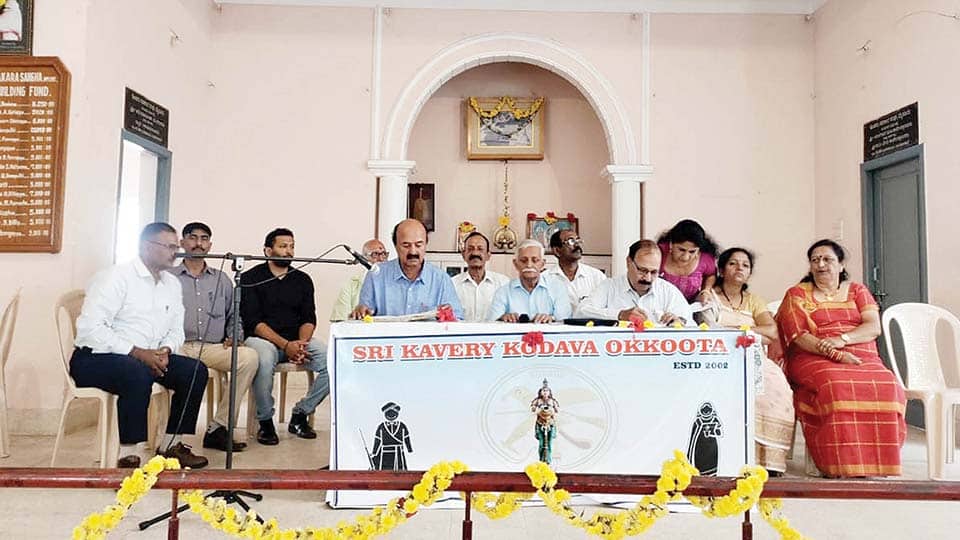
The 21st annual get-together of Sri Kavery Kodava Okkoota, N.R. Mohalla, was held on Oct. 9 at Kodagu Sahakara Sangha in Jayalakshmipuram.
Okkoota President Mallengada Pemmaiah, who inaugurated the function along with Secretary Kodira Nanaiah and Committee Members, also addressed the gathering.
Sports events for members was inaugurated by Ex-serviceman Chatranda Aiyappa. Cultural programme comprised singing, dancing and a skit which enthralled the audience.
Meritorious students were awarded and senior citizen Poyyettira Poovaiah was felicitated on the occasion.
source: http://www.starofmysore.com / Star of Mysore / Home> News / October 16th, 2022
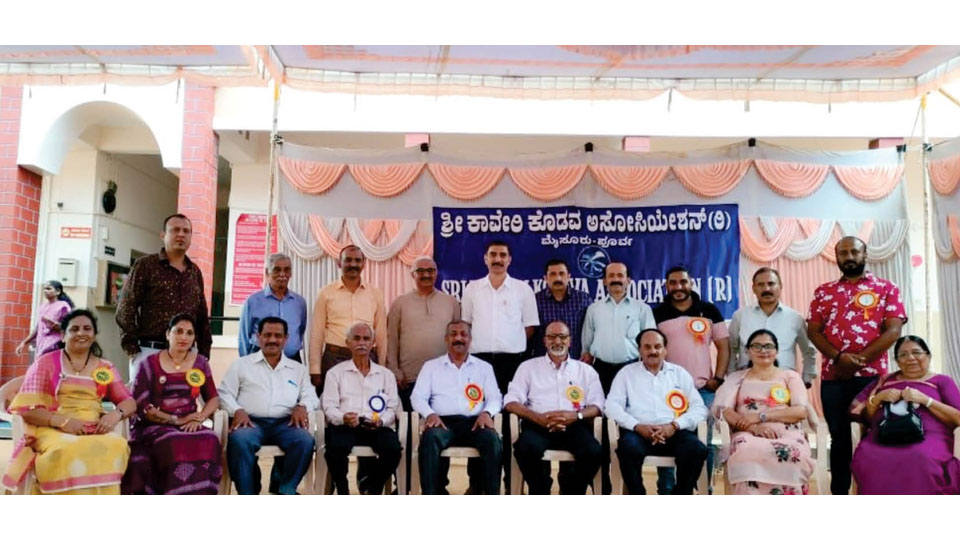
A group photo of newly elected office-bearers and Managing Committee Members of Sri Kavery Kodava Association, Mysore East, for the year 2022-2024:
President: Puliyanda S. Devaiah, Vice-President: Pandyanda K. Bopaiah, Hon. Secretary: Kademada M. Belliappa, Joint Secretary: Pemmanda D. Poonacha, Treasurer: Coluvanda M. Chengappa; Committee Members: Neravanda N. Sunil Muthappa, Pattada A. Sachin Devaiah, Pokachanda P. Narendra, Pattamada T. Charmana, Chokira Suthan Madappa, Pudiyokkada M. Chengappa, Kundranda C. Thammaiah, Chimmanda P. Subbaiah, Mookalamada B. Somanna, Mollera A. Kavitha, Medura P. Seethamma, Ajjamakkada Beena Cariappa, Chowrira K. Seethamma (Education Council Chairperson), Puttichanda Jayakumar (Building Committee Chairman) and Koppira D. Ponnappa (Internal Auditor).
source: http://www.starofmysore.com / Star of Mysore / Home> PhotoNews / October 09th, 2022
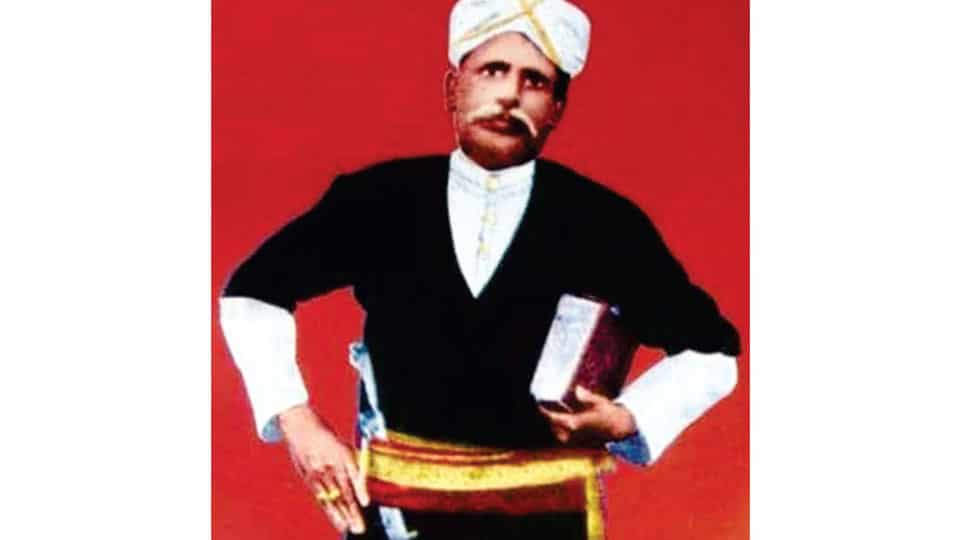
Maintaining that Haradasa Appacha Kavi was a great Kodava poet and Philosopher who followed ‘Dasa Parampare’, Rangayana Director Addanda C. Cariappa said that the Kodava community should press the Government for the establishment of Appacha Kavi Study Chair in University of Mysore.
He was speaking at Appacha Kavi birth anniversary celebrations organised by Mysuru Kodava Samaja at Field Marshal K.M. Cariappa Community Hall in Vijayanagar here recently.
Asserting that Appacha Kavi’s poems, plays and other writings were worth a study by the Kannada literary world, Cariappa argued that the Study Chair will largely help in carrying forward the rich legacy left behind by the great poet, to future generations. Kodava Samaja should exert pressure on the Government for the setting up of the chair, he added.
Continuing, Cariappa said no one should forget that Appacha Kavi was the first Indian playwright to adapt the mythological Yayathi story into a popular play. Appacha Kavi, who studied only till fourth standard, became a Sanskrit scholar and wrote exemplary plays. Through his memorable and magnificent writings, he came to be known as Kalidasa of Kodagu, he observed.
Stating that Appacha Kavi, who was born on Sept.21, 1868, was known as a Poet-Saint, he regretted that it is unfortunate that the Kannada literary world is yet to accept him and there are also no serious discussions on his plays, poems and other works. This may be because that most of his works are in Kodava language, he opined.
Celebrating the great poet’s birth anniversary as ‘Kodava Sahitya Day’ is just not enough and it should be celebrated in a more purposeful manner to attract the attention of the entire State, he added.
Artist Nellamakkada B. Kaverappa, who is also the Founder-President of city’s Bharani Art Gallery, spoke on the life and works of Appacha Kavi.
Mysuru Kodava Samaja President Mechanda Shashi Ponnappa welcomed. Kodava Samaja Cultural and Sports Club President Kuttimada D. Muthappa and others were present.
source: http://www.starofmysore.com / Star of Mysore / Home> News / September 26th, 2022
The Annual General Body Meeting (AGM) of Kodagu Sahakara Sangha for the year 2021-22 will be held at the Sangha premises in Jayalakshmipuram on Sept.25 at 10.30 am.
Sangha President A.C. Nanjamma will preside.
On the occasion, the children of Sangha members who have excelled in the 2021-22 examinations by scoring high marks will be felicitated.
The Kodavas are a small ethnic group mostly found in the coffee growing region of Kodagu and are known for their contributions to the Indian armed forces, sports and various other fields.
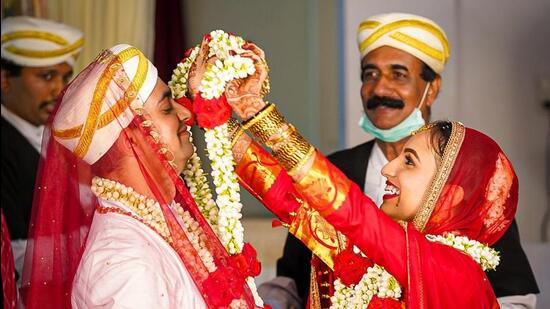
The Kodava Samaj in Kodagu district on Sunday banned the serving of liquor during the afternoon hours of any weddings as it goes against the ethnic group’s culture. (Representative Photo/HT)
The Kodava Samaj in Kodagu district on Sunday banned the serving of liquor during the afternoon hours of any weddings as it goes against the ethnic group’s culture.
“The resolution was taken today (Sunday) by the management body of the samaj and there will be restrictions for consuming liquor during Ganga puja of a marriage. After the puja, if they found consuming liquor the samaj would impose a fine of ₹25,000,” Kalimada Motaiah, the president of the Kodava Samaj, told HT on Sunday.
The statements come almost a year after it made headlines nationally after imposing restrictions on cutting of cake, opening of champagne, not allowing bridegrooms to sport beards and brides not to let their hair loose during the ceremony.
The statement adds to the increasing trend of restricting activities by so-called custodians of culture across several regions in the country in the name of “preserving and protecting” traditions.
The Kodavas are a small ethnic group mostly found in the coffee growing region of Kodagu and are known for their contributions to the Indian armed forces, sports and various other fields.
The community has a distinct culture from other parts of Karnataka or southern India.
Ponnampet is a small town in Kodagu district. Kodagu has several such Kodava samajas which often represent the people living in the specific region and is restricted to members of the community even though some of these venues are let out for weddings and events of other communities as well.
Though considered a progressive community, there have been increasing restrictions on various issues as many elders believe that their distinct identity is being compromised by the actions of youngsters and those who live outside which is not in tune with their heritage.
In 2020, the Balele Kodava samaja has decided not to allow inter caste marriages.
The Kodavas fear that marrying outside the community is leading to a rapid decline in their population, which is among the smallest ethnic groups in the country. There have been instances where Kodavas have objected to the wearing of traditional Kodava attire by those marrying outside the community.
In 2019, the Ammathi Kodava Samaja in the district has taken a decision to ban serving liquor during Ganga puja ceremony, held as part of Kodava weddings. And those breaking this rule will have to pay a fine of ₹25,000 to the Samaja.
“The decisions are being taken to preserve the original culture as youngsters in the community are attracted to western lifestyles. Young Kodava women, particularly girls, migrate to cities for education and employment and end up marrying a person from another caste. This attitude reduces the number of Kodavas who are struggling for survival,” Chaaammatiraaa Praveen Uthappa, president of the Akhila Kodava Samaja’s youth wing.
source: http://www.hindustantimes.com / Hindustan Times / Home> Cities> Bengaluru News / by Coovercolly Indresh, Kodagu / September 18th, 2022
The Annual General Body Meeting (AGM) of Kodagu Sahakara Sangha for the year 2021-22 will be held at the Sangha premises in Jayalakshmipuram on Sept.25 at 10.30 am. Sangha President A.C. Nanjamma will preside.
On the occasion, the children of Sangha members who have excelled in the 2021-22 examinations by scoring high marks will be felicitated.
Puliyanda A. Devaiah Memorial Prize will be presented to a top-scorer in SSLC and II PUC; late Ittira Kariappa and late Parvathi Kariappa scholarship to SSLC (CBSE) topper; late Mallangada Lali Ganapathy Memorial Prize to BBM and BCA topper; late Munjandira Chimmi Uthaiah Memorial Prize to a 7th std. topper; late Dasanda C. Thammaiah Memorial Prize to BA topper; late Vallanda P. Muthanna Memorial Prize to MA, M.Com or M.Sc topper.
Sangha’s scholarship to meritorious students in BE, M.A English Literature, II PUC Kannada and English.
Eligible students may send a copy of their marks card along with application to the Sangha Secretary before Sept. 20, according to a press release from Sangha Executive Director Ponjanda Lovely Appaiah.
source: http://www.starofmysore.com / Star of Mysore / Home> In Briefs / September 11th, 2022
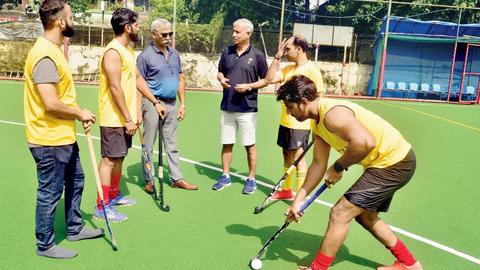
Team members Rohan Nanjappa, BK Muthana, Nitin Chengappa and BK Appachu with manager Jagdeep Nanjappa and Coorg Association Mumbai president and former India captain MM Somaya at St Stanislaus Sports Complex in Bandra where they have played tournaments in the past. Pics/Shadab Khan
An organisation founded by the people of Karnataka’s Kodagu district has persevered for 100 years in the city by supporting the Coorgi community and celebrating its culture, while forging deep ties with Mumbai.
Last week, Mumbai*s Coorgi community celebrated Kailpodh, a festival to signal the end of transplantation of the paddy crop. Agricultural implements and weapons were worshipped. “Our festivals,” says MM Somaya, president of the Coorg Association Mumbai (CAM) and former India hockey captain, “help us get back to our roots.”
Coming up next, say CAM members, is Kaveri Sankramana in mid-October that celebrates the birth of the river in Coorg. November will bring with it the harvest festival, Puttari. On these occasions, the Association*s catering committee meets in the office building in Airoli to prepare traditional delicacies such as pandhi curry (pork curry), kadambuttu (rice dumplings), akki oti (rice roti) and thambuttu (a sweet dish made with bananas). “This has been the tradition since the establishment of the Association,” says Lekha Nanjapa, head of the catering team, “Initially, people carried food from their homes, but gradually, we started gathering a day before to cook in the community kitchen, spending a fun afternoon over stories and gossip. The kitchen has old brass cauldrons with kalai coating, large enough to cook 20-25 kilos of food at one time.”
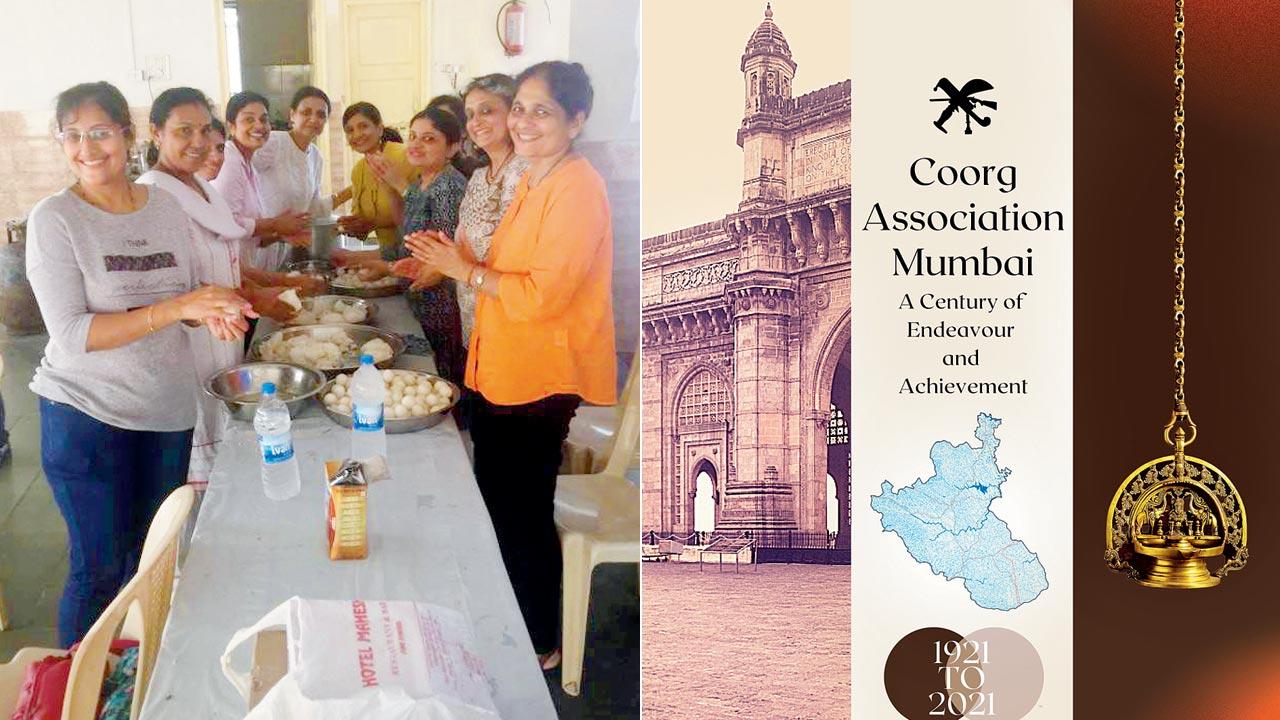
Members of the Association*s catering committee meet at the office in Airoli on the eve of festivals such as Kailpodh to prepare pandhi curry and kadambuttu; (right) CAM celebrated its centenary last year, and the members have just released a book carrying a compilation of stories, anecdotes and accounts to mark the occasion
Members of the Association*s catering committee meet at the office in Airoli on the eve of festivals such as Kailpodh to prepare pandhi curry and kadambuttu; (right) CAM celebrated its centenary last year, and the members have just released a book carrying a compilation of stories, anecdotes and accounts to mark the occasion
CAM celebrated its centenary last year, and the members have just released a book to mark the occasion. Carrying a compilation of stories, anecdotes and accounts written by members, Coorg Association Mumbai: A Century of Endeavour and Achievement, hopes to find its way to Coorgi associations in other parts of the country too.
CAM, says Somaya, was launched as a way for the community to gather and observe customs unique to their culture. Among the efforts that have kept the members close is the setting up of the Association building in Airoli in 1996. Apart from serving as a venue for events and a way to raise money for charity, it also has residential rooms available at nominal rates to youth coming in to Mumbai from Coorg for education and work. “The objective,” Somaya explains, “is to guide the younger generation and give them a chance to get a foothold in the city.
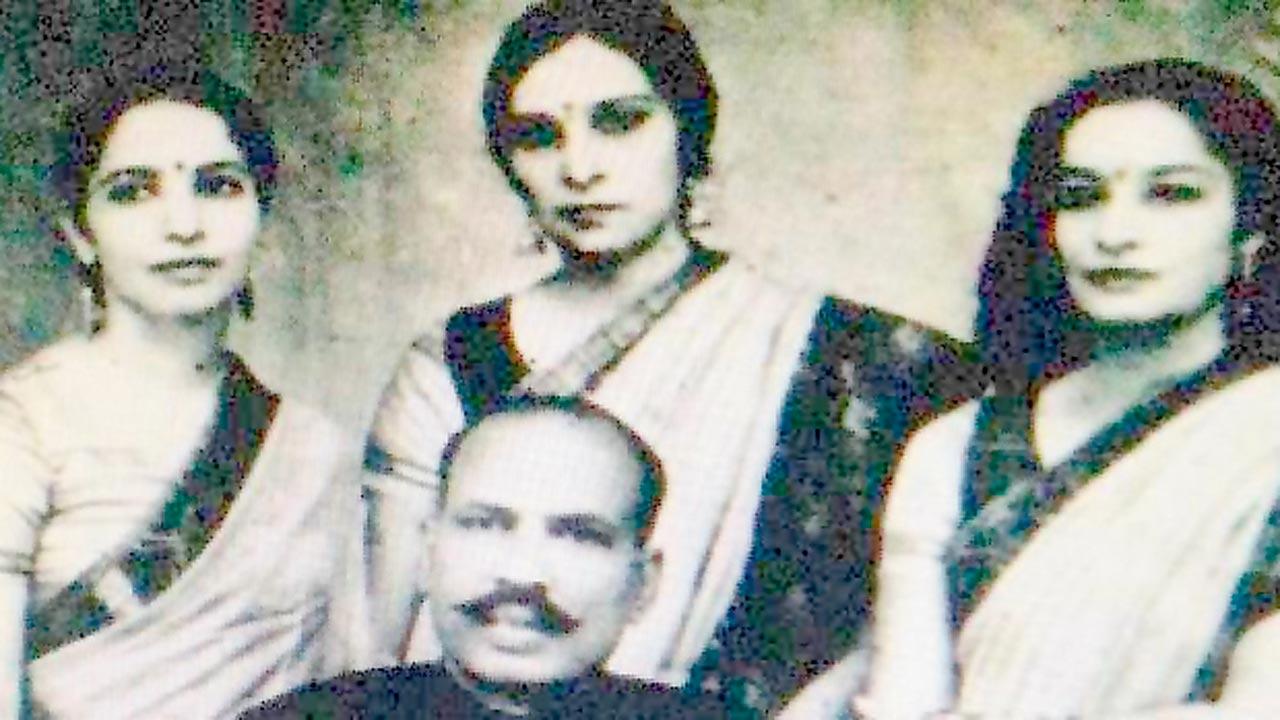
Among members of the Kodava community who flourished in Bombay were the Codanda Poovaiah sisters, prominent in Indian dance. Their bungalow at Chowpatty was regularly visited by practitioners
Among members of the Kodava community who flourished in Bombay were the Codanda Poovaiah sisters, prominent in Indian dance. Their bungalow at Chowpatty was regularly visited by practitioners
CAM*s social service initiatives include extending support to the home district at the time of natural disasters, and helping deserving candidates study further. Somaya speaks of two young girls, daughters of displaced families, who are presently studying engineering at the Coorg Institute of Technology, Ponnampet, and whose college fees, boarding and lodging expenses are being borne by CAM.
Nitin Chengappa, a senior bank executive who lived in Chennai, Kolkata, and Delhi before moving to Mumbai 18 years ago, says that the bond between its members sets the Mumbai Association apart. “I have been part of the Coorg Association in every city I have lived in, but the ties here are very strong,” he notes. “It comes from the fact that generations have lived in Mumbai, so there is a sense of ownership. The core team are family members of those who have been involved since the foundation of the Association.”
Community members have also, MM Somaya points out, merged well with the city pursuing careers in administration, the armed forces, business and sport, which has only served to further strengthen the ties. “Our people have contributed to the society here,” he states, listing individuals like Kodandera C Madappa, who held the post of Director General (Shipping) in Mumbai; Bollera C Cariappa, who used to be CIDCO Chairman and later served as head of Bombay Municipal Corporation; Kuppanda M Chinappa, the Managing Director of TATA Electric, and the Codanda Poovaiah sisters who were prominent names in Indian dance.
But the activity that has glued this small community and CAM*s members together is undoubtedly their love for sport, especially hockey. The Coorg XI Hockey team, founded by Kandarthanda Kuttappa, was registered with the Bombay Provincial Hockey Association in the 1930s and still plays in the Mumbai Hockey League. “We have endeavoured to use sport as a unifier,” admits Somaya, the Association encouraging its growth by picking up budding players from Coorg and bringing them to Mumbai to get exposure, while also supporting other games such as cricket and bridge. After a 25-year gap, when no team was playing in the league, Biddanda Jagdeep Nanjapa took over its running in 2001. Since then the team has played at prestigious national-level tournaments such as the Bombay Gold Cup.
For Nanjapa, who was born and brought up in Mumbai, the attachment to CAM has been generational. It started with his father, who migrated to the city in the 1940s and continues with his sons, who are now active members. This separates him from the floating Coorgi population that comes to Mumbai to work. The generational association has also meant that the family has borne witness to the institution*s evolution. “Things were tough initially – recession in the 1930s brought in Kodavas who found living in Coorg difficult and ventured to different parts of the country. We used to book outside halls, take small donations and were just about meeting expenses. Today, our people are doing better. The Association is also able to generate income by renting out the hall at the office building [for functions]. We are faring well as a community and as an Association.”
source: http://www.mid-day.com / mid-day.com / Home> Sunday Mid-day / by Sucheta Chakraborty / September 04th, 2022
WELCOME. If you like what you see "SUBSCRIBE via EMAIL" to receive FREE regular UPDATES.
Read More »