Category Archives: Nri’s / Pio’s

A Hindi film set in Coorg

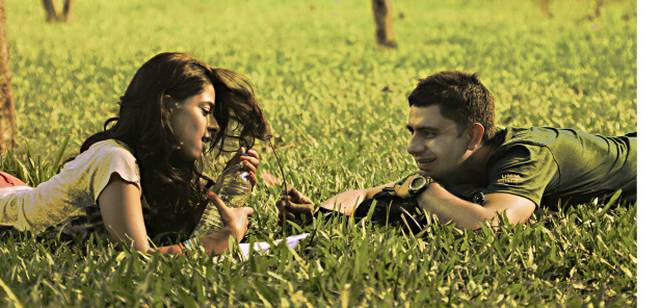
Manu Warrier and a still from Coffee Bloom

Romance blooms along with coffee in Manu Warrier’s debut feature film.

A love story set in the lush coffee plantations of Coorg, where love blooms along with the coffee flowers. And you have a Kodava protagonist in a Hindi movie! Co-written by Mumbaikar from Kerala Manu Warrier and Bengaluru man Sharath Parvathavani, Coffee Bloom is an indie inspired by the scenic plantations of Coorg.

Manu, whose directorial debut is Coffee Bloom , wanted the location to be an important part of the narrative. “My co-writer Sharath, with whom I have worked on a short film earlier in the U.S., is from Bengaluru and it dawned on us when we were working on the script that Coorg is just one night away from Bengaluru. Our story required a contained setting. We visited Elephant Corridor (a homestay in Siddapura) owned by Viju and Nimmi Chengappa and they gave us a detailed account of life there and the phenomenon of coffee blooms. We realised this could be a key factor in our story and we reworked the script around it, and adapted the story to Coorg, so that it didn’t feel gimmicky.”

Manu admits that till he visited the Chengappas, his knowledge of Coorg was limited to photographs. “The first thing that occurred to me was that it was a visual delight.”

Manu, a scriptwriter, says he’s averse to showing violence and frustration on screen. “I’m driven to working on plot-oriented subjects.” So, the story traces the life of Dev Anand, a self-proclaimed wise man who finds comfort in being a loser, having given up on life as a result of a romance gone wrong. A life-changing event takes him on a journey to a coffee plantation in Coorg, where he meets Anika, his long-lost love, currently his boss. Love blooms in an idyllic setting; and much is at stake as the yearly bloom is round the corner.

Manu admits that he was lucky when he started out wanting to make this indie. He was introduced to Bollywood producer Harish Amin by filmmaker Leena Yadav, who loved the story. He also brought on board Bollywood actor Arjun Mathur, who has earlier starred in Luck by Chance, My Name is Khan, and Fireflies, and Sugandha Ram who was part of Jaane Tu Ya Jaane Na and My Name is Khan . The film also stars Mohan Kapoor and Ishwari Bose-Bhattacharya. Manu started writing the film in 2011 and shot it in February 2013. “The climax was dependent on nature. We had to chase the seasons to ensure continuity did not suffer.” Thus the film cost Rs. 1.5 crore to make, he admits. In 2014, it premiered at the MAMI Mumbai Film Festival. At the NFDC Film Bazaar, it was marked for ‘Market Recommendation’.

It was while he was studying for his MBA in U.S.A. that Manu seriously started getting engrossed in cinema. “I wanted to make films, but my middle-class upbringing frowned on filmmaking as a career. But, in the U.S., I had access to film libraries. I started reading, and started DIY filmmaking.” He worked in HR recruitment for a while, and then decided to come home. When he moved to Mumbai, he says he was naïve enough to believe that he would write scripts and films would be made out of them. “But reality doesn’t work like that. So I started pitching myself as a scriptwriter, and as someone who would develop people’s content for them.” Things started opening up, but projects were also frustratingly shelved midway.

Manu says he had been going back and forth with filmmaker Anurag Kashyap to collaborate on a script when another great opening came his way — “Anurag Kashyap suddenly called me late one night and said there is a writing project. He didn’t tell me any more details or who it involved. I think it was about being in the right place at the right time.” Manu landed a writing job, having been given the task to write the screenplay for four episodes of Yudh , the TV series starring Amitabh Bachchan, that Kashyap had created.

Talking of opportunities available now, and the possibilities of the indie film in Hindi cinema, Manu says there are people who make films on controversial subjects to get attention, and there are others putting up their films online.

“But whatever you do, struggle is a part of the picture. I was a rank outsider. And it’s never easy. But after a point, you just want to be part of the picture, whether it’s rosy or not. But the indie scene is surely changing for the better,” says the 36-year-old filmmaker.

Coffee Bloom releases in India, U.S. and Toronto simultaneously on March 6.

source: http://www.thehindu.com / The Hindu / Home> Features> MetroPlus / by Bhumika K / March 03rd, 2015
Don’t make a killing

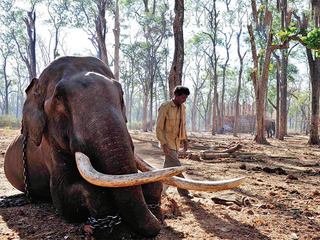
Elephant01KF05feb2018

A documentary film about the elephant-man conflict in Karnataka posits that solutions to loss of life due to elephant attacks can only come through co-existence. Not everybody agrees, though. We look for some answers.

There is a moment in Elephants in the Coffee when Naveen Cariappa (his family has farmed an area in Coorg for more than three generations) talks about how media, officials and conservationists rush to the site of an elephant death, but remain silent when a coffee plantation worker is killed as a result of conflict with the very same elephants. The lament encapsulates the kernel of the 58-minute documentary – that the solution to such man-elephant conflict lies not in taking sides, but in pursuing solutions that encourage a peaceful co-existence between both parties.

Created by author, documentary filmmaker and cultural explorer Bhaskar Krishnamurthy and journalist-turned-educator Tom Grant, Elephants in the Coffee looks at the fragile relationship between elephants and humans, and has been shot mainly around Nagarahole National Park and the coffee estates skirting it.

Krishnamurthy, who was in the city for the screening (he is based in the US) says this, his first film on the subject, was born out of a desire to understand what happens as human population grows and elephant habitat shrinks. “Are we at the threshold of cutting our relationship with animals? The more plantation workers die as a result of this conflict, the more tolerance for wildlife is going to reduce. And that doesn’t bode well,” he says. Grant adds: “Cariappa represented an important duality, or internal conflict, among farmers. He loved elephants and nature. He worked with people in the national park to help improve the situation for elephants. But when they began destroying his crops and threatening his workers, he had to seek solutions. He found no reasonable measures by which he, as a small farmer, could protect his farm from crop raiding elephants. In our minds, he is a symbol of the Indian farmer who is being forced to change his attitude toward an animal he once saw as a benevolent god. Now he, as many others, see the elephant as a menace that must be addressed.”

There are others. PC Bopanna, a farmer describes how he survived after an elephant pelted him to the ground, but today, hobbles along on a crutch, his leg badly damaged in the incident, even multiple surgeries later.

Then there is the other side – of elephants losing their habitat, of majestic creatures being robbed of their homes and reduced to residents of tiny spaces once they’re marked as violent and aggressive and eventually, captured. Krishnamurthy speaks with feeling of the 60 elephants housed in captivity in Karnataka, and how they may be alive, but living regimented lives like that for the rest of their days “is no life at all”.

Fences have not worked, as illustrated by viral videos of an elephant slipping under a railway crossing barrier at Chapramari Wildlife Sanctuary earlier this year.

Elephants in the Coffee also shows how elephants outsmart all kinds of barriers, trampling them with ease. As the film makes clear, ‘If you make a 20-foot-long moat, the elephant will walk till the 21st foot and cross over there’. Successful models have been few, such as the SMS-based warning system developed by Dr Anand in Valparai to warn workers when an elephant is in the area, or the SMS messaging system at Tata Coffee, demonstrated in the film by biologist Karthic Krishnan.

Conservationist Padma Ashok is also of the opinion that co-existence is the only way forward. She opines that solutions need to be thought of by people local to the area, by taking into consideration the topography, landscape and geographical features of the area. “From the elevation to the length of the river in that area, everything matters. And you need a combination of two-three solutions to tackle the problem, because elephants are able to outsmart most,” she says.

Not everyone agrees, though. Praveen Bhargav, former member of the National Board for Wildlife, believes harmonious co-existence is “one of the greatest myths in conservation”, a utopian idea that “rarely works in the long term with most conflict-prone large mammals”. He advocates “site-specific solutions driven by scientific knowledge and a deep understanding of the social context”. He adds: “Loss of a family member is tragic but it must be seen in perspective. In Karnataka alone, more than 10,000 people have lost their lives in road accidents in 2015 while around 15 people have died due to elephant conflict. Large swathes of elephant habitat have been fragmented/lost due to agriculture, human settlements, encroachments, dams, highways, resorts etc which is a major driver of conflict.

There is no magical solution but conflict can be minimised by spatially separating humans and large wildlife to the extent possible by deflecting developmental projects, preventing ad-hoc grants of public lands by the revenue department, incentive-driven voluntary resettlements and innovative ideas for creating viable buffers around reserves involving local communities. In some specific cases, marooned, isolated population of elephants may have to be moved out to minimise conflict.”

Krishnamurthy believes the biggest problem is a lack of education. People have no idea what impact a cup of their coffee is having in the wild. He suggests the promotion of sustainable wildlife products, say by giving “a premium to the coffee you drink”. “At least that way a part of it will go back to wildlife conservation.” He would also like more stringent requirements for ownership of coffee estates and homestays that have mushroomed indiscriminately in these areas over the past few years. “So many of them are owned by people living, say, in Bengaluru. Maybe one way to minimise the number of such estates is to lay down laws that owners have to have strong roots in Coorg,” he explains. And to ensure better welfare of the captured elephants, mahouts need to be treated better and paid more. “Otherwise they’re losing interest and daily wage labourers who are paid a pittance and have no interest in forming a relationship with the animal, are taking their place.” The best answer, though, he believes, is technology. “Even the SMS warning service is eventually a human intervention. Instead, I’m sure that in Bengaluru we can develop technology to identify elephant movement and tracking, where there is no need at all for a person to physically go out there and do it.”

For Grant, the solution also lies in people considering the cost of their cup of coffee. As he puts it: “Americans drink an average of three cups of coffee each, but they have little idea how coffee is grown. India is one of the top exporters of coffee. And now Tata has a joint operating agreement with American coffee giant Starbucks. Yet no one in America who drinks coffee knows that India’s elephants are locked in a struggle for survival with the people who grow coffee.”
The answer isn’t that people stop drinking coffee, he emphasises.

Rather, “if every coffee drinker gave a penny for elephants with every cup, we could solve this problem in an instant”.

source: http://www.bangaloremirror.indiatimes.com / Bangalore Mirror / Home> Opinion> Sunday Read / by Sowmya Rajaram, Bangalore Mirror Bureau / April 30th, 2017

Team Coorg shine at Republic Day of India Hockey Festival

Muscat:

Team Coorg overcame Oman Veterans XI to win the top honours in the Republic Day of India Hockey Festival at the Sultan Qaboos Sports Complex on Friday.

The annual Festival was organised by Friends of Naqvi Group and Team Coorg under the patronage of Indian Embassy.

In a closely-contested final of the Republic Day of India Trophy, Team Coorg outlasted Oman Veterans XI for a 5-4 victory and to lift the title for the second successive time. Belu Kutappa winning the best player award came as an icing on the cake for the triumphant Team Coorg.

Meanwhile, there was a double delight for Indian School Al Seeb with their boys team winning the Ambassador’s Cup for men after defeating Indian School Maabella and the girls squad lifting the Ambassador’s Cup for women by beating Indian School Maabella.

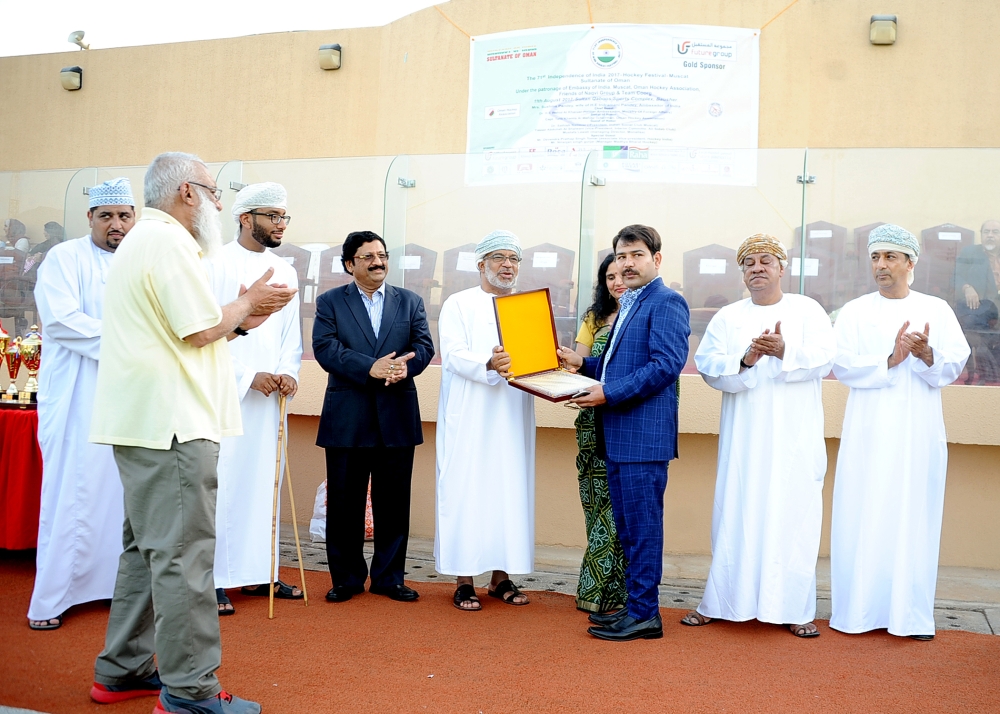
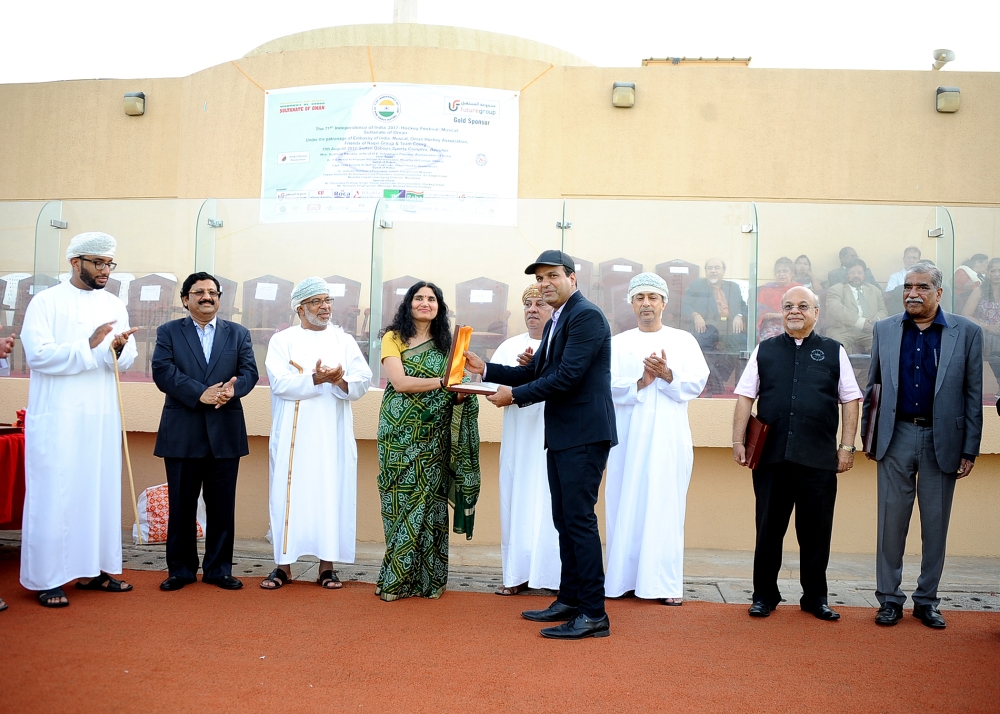
Chief guest Indian Ambassador Indramani Pandey presided over the Festival, which was also graced by Oman Hockey Association chairman Talib Al Wahaibi and former Oman Olympic Committee vice-chairman and chairman of football and athletic associations Sheikh Soud Al Rawahi as guests of honour and Syed Anwar Ahsan, an Oman Cricket official and General Manager of Raha Poly Products, as the special guest.

During the presentation ceremony, the organisers also honoured distinguished personalities from the Indian community, including Dr. Benny Panakkal, eminent cardiologist and Medical Director of Badr Al Saama Hospital, Dr. Satish Nambiar, Chairman of Indian Social Club (ISC), Leena Francis, Principal of Indian School Al Seeb. Indian School Muscat’s musical talent Santrupth Vedanthi and MK Iqbal, famous cricket coach and Ranji Trophy player from Tamil Nadu, and Inayat Naqvi, former national hockey level player from India, were also feted during the ceremony.

Mohammed Noordeen, General Manager of the Future Group of Companies was awarded the trophy and memento for being the main sponsors. The event is co-sponsored Bank Muscat, Raha Poly Products, ROCA (Khimji Ramdas Group), Monalisa Grand Mall, Mohammed Rafiq & Partners, UTSC, Team Coorg Muscat, Pocari Sweat (Muscat Pharmacy), Oasis Water Company, Al Omaniya Financial Services, Oman Hockey Association, Al Ansari Group of Companies and Oman United Insurance.

source: http://www.timesofoman.com / Times of Oman / Home> Sports> Hockey / by Times News Service / January 14th, 2018

Oman hockey: Dhyan Chand Day six-a-side hockey tournament a grand success

Muscat:

An overwhelming response from hockey aficionados and equally existing action produced by the participating teams made the 12th Dhyan Chand Day six-a-side hockey tournament a grand success.

The annual event, organised by Team Coorg and Friends of Naqvi Group under the patronage of Indian Embassy, took place at the OFA Ground in Al Qurm on Friday.

Four teams, each named after former India captains and Olympians – Dhyan Chand XI, Kishen Lal XI, K.D. Singh Babu XI and Balbir Singh Senior XI – entertained the hockey lovers while competing for the top honours in the tournament.

In the end it was Dhyan Chand XI who emerged the winners with Kishen Lal XI taking the second place. K.D. Singh Babu XI settled for the third place.

With Indian Ambassador Indramani Pandey missing the event due to other commitments, Rakesh Adlakha, the First Secretary and Head of Chancery, was the special guest and handed over the prizes.

In his speech Rakesh Adlakha paid rich tributes to Dhyan Chand who is known as the hockey wizard and spoke about the legends contribution to the world hockey.

The Indian Embassy official also spoke highly about Team Coorg, Belu Kuttappa, SAS Naqvi and other members of the organising committee and lauded their efforts in organising such hockey events.

During the occasion, the organisers also honoured the young talents and women from the expatriate community for their achievements and contribution to sports.

Among those honoured during the event were Sanskar Dubey, an Indian School Muscat student who has been excelling both in tennis and table tennis on the local circuit, and Madhulika Gupta, a well-known social worker as well as a women’s cricket and sports volunteer.

Meanwhile, the organisers thanked Dr. Hammad Hamed Al Ghafri, the former President of Oman Olympic Committee and presently the Advisor of Ministry of Civil Services, and the Future Group of Companies for their support to the event.

source: http://www.timesofoman.com / Times of Oman / Home> Sports> Hockey / by Times News Service / September 25th, 2017

Oman hockey: Team Coorg, Indian School Al Seeb triumph at Independence Day of India Hockey Festival

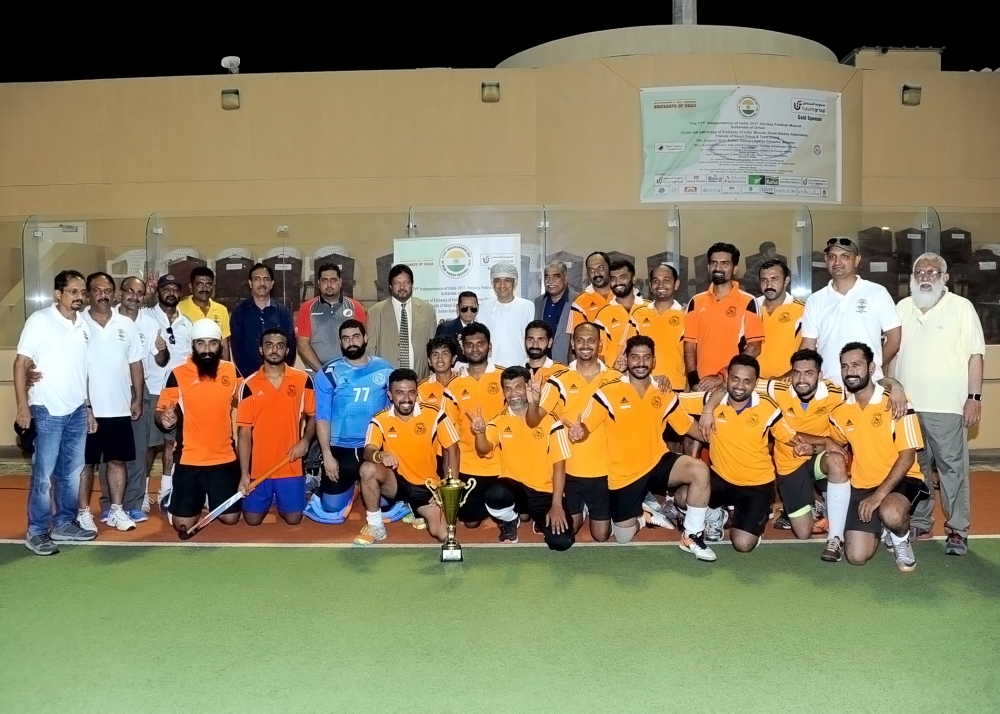
Members of Team Coorg pose for a group photo after winning the Independence Day Cup. Photo - Supplied
Members of Team Coorg pose for a group photo after winning the Independence Day Cup. Photo – Supplied

Muscat:

As expected the annual Independence Day of India Hockey Festival proved a grand success with Team Coorg and Indian School Al Seeb taking top honours at the iconic Sultan Qaboos Sports Complex on Friday evening.

The 2017 edition of the annual hockey fiesta, organised by the Friends of Naqvi Group and Team Coorg under the patronage of Embassy of India and with the support of Oman Hockey Association, turned out to be a memorable affair with FIH chief Narinder Batra and AHF CEO ‘Dato’ Tayyab Ikram sending a special congratulatory message and the organisers themselves inviting some special guests associated with Omani and Indian sports.

While the day’s proceedings included a number of cultural evens, the highlights obviously were two hockey tournaments – the Independence Day Cup and Ambassador’s Cup.

The Independence Day Cup witnessed some fierce competition among the participating teams. The tournament culminated in a thrilling final where Team Coorg Muscat overcame Oman Veterans in a 1-0 victory to lift the coveted trophy.

Team Coorg UAE, who have been regularly participating in the Festival, earlier settled for the third place.

The Indian School Al Seeb team, meanwhile, produced some exciting hockey before lifting the Ambassador’s Cup.

The Indian School Al Seeb and Indian School Mabella teams played a women’s hockey exhibition game.

Chief guest Sushma Pandey, wife of Indian Ambassador Indramani Pandey, presided over the proceedings and handed over the prizes.

The organisers also honoured the special invitees from India – Hockey India associate vice-president and Madhaya Bharat Hockey Association chief Devender Pratap Singh Tomar and Madhya Bharat Hockey Association secretary Niranjan Singh Gurjar.

Oman Cancer Association chief Dr. Wahid Al Kharusi, who previously served as the president of Asian Federation of Sports Medicine, Oman Hockey Association chairman Talib Khamis Al Wahaibi, Indian Social Club chief Dr. Satish Nambiar, Ahli-Sidab Club vice-chairman Yasser Abdullah Al Halwani and Oman Hockey Veterans team member Mustafa Al Lawati were guests of honour on the occasion.

The organisers honoured the visiting hockey officials fro India.

Mustafa Al Lawati, on behalf of Oman Hockey Veterans Committee, presented Monalisa coupons worth OMR. 100 to the schools teams and he also presented traditional Omani ‘khanjars’ to organisers Belu Kuttappa, Javis Ahmed, Osama Rawat and SAS Naqvi.

As in the past, the organisers also presented the youth awards to the talented youngsters of the Indian community and this year the awards went to talented tennis and table tennis player Sanskar Dubey and athlete Antonio Thomas Biju.

The organisers honoured the visiting hockey officials fro India.

The Festival was mainly sponsored by the Future Group which consists of Future Plastics, Future Management, Muscat Services, Quality Printers, Femco and Future Overseas

The event was co-sponsored by Khimji Ramdas, Bank Muscat, Roca, Raha Poly Products, Oman United Insurance, Al Omaniya Financial Services, Mohammed Rafeeq & Partner, Al Ansari Group, Monalisa, Team Coorg Muscat, Pocari Sweat and Oasis Water.

source: http://www.timesofoman.com / Times of Oman / Home> Sports> Hockey / by Times of News Service / August 15th, 2017

Dubai: Koddagu Dakshina Kannada Gowda Samaja concludes blood donation campaign

Dubai :

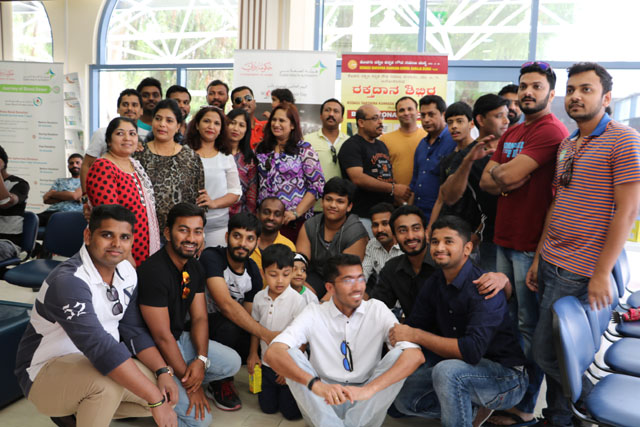
Kodagu Dakshina Kannada Gowda Samaja successfully concluded their annual ‘Blood Donation Campaign’ on Friday June 30 from 10 am to 3 pm at Sheikha Latifa Hospital, Dubai participated by very many members of the Sangha and friends.

As the requirement of blood is very much essential during Ramadan, the active members of the Sangha from Ajman, Sharjah, Dubai& Abu Dhabi voluntarily came forward in large numbers and donated blood for a good cause.

KodaguGowdaKF11jul2017

Founder President Ashok Uluvarna, Past President Ganesh Achhandira, Harish Kodi, Vice President Sunil Mottemane, General Secretary Kanneriyan Sunil Kumar, and TreasurerDilipUluvaru, were present during the campaign supporting the donors. Also present were Navin Gowda of Vokkalikgara Sangha, Dr. Nanda Kishore & Dr. Rashmi Nandakishore of Riva Laser Beauty and Spa & Dr. TrilokChandrashekar of Medi Clinic Hospital, Abu Dhabi who all participated in the blood donation campaign.

Rahul Bidappa, Ashish Kodi, AyushKodi, Meena Harish Kodi&JagadishKushalappa ably volunteered the campaign helping the donors in registering and completing the formalities. All those participated in the campaign were served with light refreshments, tea, coffee, fruits & juices by KusumadaraKodi, Ashok Ullvarana, ChandrakantKudwaje, Suresh Kumpala, SubramanyaKadikadka, Yathish Gowda, DilipUluvaru, SamarthaBantwal& Vinod Ramachandra who also sponsored the event.

Roshan Kampala& Praveen Kalagadge were responsible for the campaign while BalaSalian took charge of the programme.

source: http://www.daijiworld.com / DaijiWorld.com / Home> Middle East / by Shodhan Prasad / Wednesday – July 05th, 2017

CFO of audiology practice named business woman of the year

Albuquerque, NM :

The Professional Business Women-Albuquerque chapter has selected an executive of a hearing care practice as “Albuquerque Business Woman of the Year.” Honored was Naina Ballachanda, chief financial officer of Premier Hearing Center, which serves thousands of patients with hearing loss from five locations New Mexico, Arizona, and Texas.

In the award citation, Ballachanda was described as a “strong female leader [who] leaves an outstanding impression on people.”

The honoree is married to Bopanna Ballachanda, PhD, CEO and director of audiology at Premier Hearing Center, who was formerly on the faculty at Purdue University and the University of New Mexico.

source: http://www.hearinghealthmatters.org / Hearing Health & Technology Matters / by David Kirkwood / November 12th, 2011

Oman Hockey: Team Coorg lift Starcare Cup UTSC Gulf hockey title

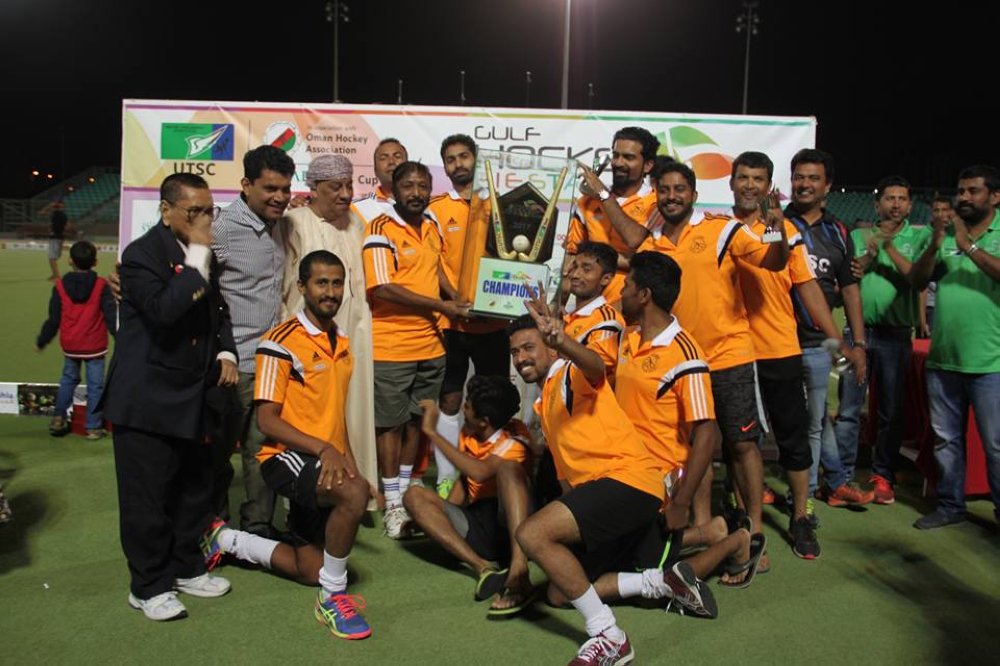
Team Coorg celebrate with their trophy after defeating UTSC in the final of the Starcare Cup Gulf Hockey Fiesta on Saturday. Photo - Supplied
Team Coorg celebrate with their trophy after defeating UTSC in the final of the Starcare Cup Gulf Hockey Fiesta on Saturday. Photo – Supplied

Muscat:

Team Coorg defeated United Thalassery Sports Club (UTSC) to retain the title at the Starcare Cup Gulf Hockey Fiesta at the Sultan Qaboos Sports Complex on Saturday.

In an exciting final, Team Coorg defeated UTSC by a 2-0 margin.

The Asian Hockey Federation (AHF) sanctioned event was organised with the support from Oman Hockey Association (OHA).

Earlier in the semifinals, Team Coorg defeated KSA Dammam 3-2 while UTSC defeated One Thousand Hockey Legs (OTHL) team from India 3-0.

The young boys of OTHL, run by noted hockey journalist K.Arumugam, were the star attraction of the tournament.

Talib Al Wahaibi, Chairman of Oman Hockey Association, and Dr. Mohammed Naseem, CEO of Starcare Hospitals, presented the prizes.

Speaking on the occasion, OHA chief Talib Al Wahaibi said: “I congratulate UTSC for this wonderful event and all teams had performed really well. On behalf of OHA, I extend my greetings and support to all of you.”

Veteran hockey personality S.A.S. Naqvi also graced the occasion.

The teams which took part in the event are Oman Veterans, Saham Sports Club junior team, Ahli-Sidab junior team, KSA Dammam, Al Naqi Strikers, Muscat Foxes, Pak Falcons, Team Coorg, OTHL, Young Stars Bahrain and UTSC.

“We are so pleased to support the Gulf Hockey Cup conducted by UTSC. It was a great event and it looked like a festival here rather than a hockey tournament,” Dr. Mohammed Naseem of Starcare Hospitals, said.

Pradhan Somanna of Team Coorg was adjudged the player of the tournament. The other individual awards went to OTHL’s Deepasau (best goalkeeper), Team Coorg’s Nani (top scorer), KSA Dammam’s Ismak (best defender) and Saham Club’s Ilyas (most prmosing youngster). Saham Club Juniors won the fairplay award.

While Starcare Hospitals were the main sponsor for the event, the other sponsors were Malabar Gold, Home Mart International, Modern Exchange, United Projects, Al Rahwan, Badar Shipping, Air India, Al Sarooj, Al Omaniya

Finance, FRiENDi Mobile, Al Nahla Solutions, FAP, Air Arabia, Lynz, Pocari Sweat, Oasis Water, Al Ain Water, Haffa House Hotel and Fairtrade.

source: http://www.timesofoman.com / Times of Oman / Home> Sports> Hockey / by Times News Service / February 19th, 2017

Creative spirit


A month-long festival of words, performance and visual art, all inspired by the ghost story is taking over the Leeds Library. Yvette Huddleston reports.

There’s a bit of a chill in the air at Leeds Library this month when it hosts a programme of events and interventions entitled The Haunting: Ghosts of Every Shade.

The Haunting is presented by Alchemy – a Leeds-based arts organisation which aims to connect people through the arts and open doors to new ideas through shared cultural experience – working in collaboration with the Library, Leeds International Film Festival and Ilkley Literature Festival.

The Library itself, on Commercial Street in the heart of Leeds, was founded in 1768 and is the oldest surviving example of the ‘proprietary subscription library’ in Britain. It is also rumoured to be haunted by a former librarian from the 19th century, so it is the perfect 
venue for the month-long programme.

“The space is very evocative – it lends itself to all kinds of interventions,” says Nima Poovaya-Smith, curator and director of Alchemy. “It is an inspirational source of stories through its diverse collections and in putting the programme together we have worked with the rhythm and ambience of the library.”

Pulling together a variety of different art-forms which complement and repsond to each other, visitors are in for a treat. Internationally acclaimed writers Simon Armitage, Imtiaz Dharker, Rommi Smith and John Siddique explore not only the thrills and chills but also the more reflective and provocative aspects of ghosts and hauntings through poetry, performance, short stories.

There are enigmatic installations from artist Zareena Bano and others, plus soundscape, dance, vocals and film with around sixteen new commissions as well as performances, masterclasses, workshops and ghostly trails.

And it’s a wide brief that’s open to all sorts of interesting interpretations. “The project grew out of my own love and passion for ghost stories, particularly the stories of M R James and Edith Wharton, but we are not just looking at haunting in the supernatural sense,” says Poovaya-Smith. “People are haunted in all kinds of ways; haunting can be metaphorical not just literal so we have a great depth with what the artists have done.”

Our fascination with ghost stories is long-standing and complex – on the most profound level they are a reminder of our own mortality – and it is a tradition that crosses cultures and continents.

“I think there are many reasons for our interest in them,” says Poovaya-Smith. “But I think one element is the concept of being ‘safely scared’ – it’s a thrill. And there is such a rich tradition of demonology and dark forces. Then there is our curiosity about the possibility of an afterlife, especially if we have lost somebody.”

A highlight of the programme is artist Steve Manthorp’s exquisitely detailed and mildly discomfiting The Haunted Doll’s House, based on MR James’ classic ghost story of the same name.

“Steve shares my passion for MR James’ work and he told me that he has been wanting to make a Haunted Doll’s House for about thirty years,” says Poovaya-Smith. “It was an idea that haunted him.”

Other highlights include ceramicist Adele Howitt’s installation which responds to Edith Wharton’s psychologically unsettling story Pomegranate Seed and a late night walk through Ilkley with Literature Festival apprentice poet in residence Mark Pajak sharing scary stories and poetry that reveal the macabre folklore and history associated with some of the town’s landmarks.

Across the month there will be numerous workshops and masterclasses including poetry masterclasses by Simon Armitage and Rommi Smith and a spooky Halloween workshop.

“None of the artists have done anything obvious, everyone has produced exquisite work, they have outdone themselves,” says Poovaya-Smith. “In the library itself we have several interventions. We have put objects in bookshelves for people to discover, so around every corner you encounter something interesting.” She adds, smiling: “All these things came together, one might say, in an almost supernatural way.”

The Haunting: Ghosts of Every Shade runs until November 7. For the full programme details visit www.alchemyanew.co.uk

source: http://www.yorkshirepost.co.uk / The Yourshire Post / Home> LifeStyle> Books / by Yvette Huddleston / Friday – October 14th, 2016

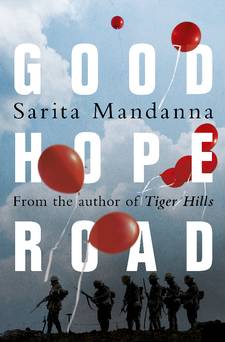
Fiction: Good Hope Road by Sarita Mandanna

Good Hope Road by Sarita Mandanna

There’s a road called Good Hope Road in Washington, D.C. and many of the events in Sarita Mandanna’s second novel occur around Good Hope Road in 1932, as America’s WWI veterans march for the passing of the Bonus Bill, legislation entitling war veterans to a decent income and health care. Vietnam and Afghanistan veterans still have these same issues today.

But this is not a political novel, rather it is a tale of how WW1 affected a rich New England heir and his unlikely best friend, a dirt-poor young black man from Louisiana.

James and Obadaiah are in Paris when war breaks out, and both decide to join the French Foreign Legion. Had they known the horrors that lay ahead, they might have just gone home.

Years later, they have lost contact and James is practically estranged from his adult son Jim. When Jim meets an actress from Boston, Madeleine, things change. Madeleine is determined to mend the rift between father and son.

With much persuasion, James Senior eventually decides to do something about his post-war embitterment and so lobbies the press about furthering the veterans’ Bonus Bill. What starts out as a letter of complaint leads to a national movement, and a new lease of life for James Senior.

The story sweeps from one World War to the next, as Mandanna explores themes of family, friendship, race, civil rights and the utter futility of war.

Epic in its scope, yet beautifully intimate and poetic in its style, it’s a keeper.

Sunday Indo Living

source: http://www.independent.ie / Independent.ie / Home> Entertainment Newsletter / by Anne Cunningham / October 10th, 2016