Category Archives: Nri’s / Pio’s

Ahli-Sidab hog the limelight

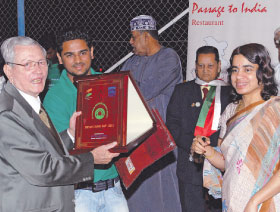
Dhyan chand celebrations: Guest of Honour Leslie Claudius receiving a memento from chief guest Swati Kulkarni, charge de affaires at Indian Embassy. Right, winners Ahli-Sidab Club with the trophy and dignitaries. – O.K.Mohammed Ali/ TIMES OF OMAN


MUSCAT:
Ahli-Sidab Club beat Coorg (Orange) 3-1 via sudden death to lift the trophy during the Dhyan Chand Day celebrations held at the Ahli-Sidab ground yesterday.

The hockey celebrations organised by the Indian Social Club Bhojpuri Club in association with Al Omaniya Financial Services and the Indian Embassy ended with an hockey exhibition by the school girls from Indian School Muscat and Indian school Al Seeb.

Ahli-Sidab and Team Coorg Orange both qualified for the final which was witnessed by chief guest Swati Kulkarni, guest of honour Olympian Leslie Claudius, special guests Hamad Hamad Al Ghafri, Mustafa Al Lawati, Mohammed Shambeh Al Raisi, hockey veteran S.A.S. Naqvi, officials from Oman Hockey Association, representatives of the sponsoring companies and a host of hockey lovers who cheered on their teams.

“It was a very exciting game, both teams played very well and that is how a good game of hockey should be played,” said Leslie, who also thanked the organisers.

The technical committee had ISC sports secretary Imtiaz Usman, Salih Thacher and Azra Aleem, who also had the spectators enthralled with their running commentary.

During the prize distribution Guest of Honour Leslie Claudius along with Charge de Affaires Swati Kulkarni and others handed the trophies to the winners, runners-up, and other individual stars.

Mohammed Ayad from Ahli-Sidab was declared the best goalkeeper where as the best defender was Nadeem from UTSC.
Taking the best forward award was Mobin from Team Coorg Orange.The Man of the final for his outstanding display of hockey was Shankar from Team Coorg Orange and the biggest award of all the Man of the Tournament was handed over to Saleh, who represented Ahli-Sidab.

The tournament was sponsored by Al Omaniya Financial Services, Passage to India Restaurant, Natural Stone LLC, Raha Poly Products, Sadolin Paints, Al Ansari Group of Companies, Air India, Purshottam Kanji Exchange, Al Taqdeer Fashions and Gulf Cricket Academy.

Speaking after the tournament, Mohammed Irshad, the convener of the Bhojpuri Wing, said: “We have been organising this special day every year and I thank all those who have come forward to support the event. I also extend my thanks to Team Coorg, UTSC and Ahli-Sidab for making the day memorable.”

Mohammed Irshad also mentioned that he was honoured to have Olympian Leslie Claudius as the guest of honour this time.
“He (Leslie Claudius) was kind enough to oblige and accept our invitation to be part of the Dhyan Chand Day programme,” he said. “I must also acknowledge the moral support provided by the Indian Embassy.”

source: http://www.timesofoman.com / Times News Service / October 29th, 2011

Independence Day Cup hockey honours shared

Goodwill:   Expat India XI Orange and Expat XI India White pose for a group photgraph along with the Indian Ambassador Anil Wadhwa and officials from the Friends of Naqvi Group before the game. – Supplied photo

Muscat:

Under the auspices of the Indian Embassy, Team Coorg in association with the Friends of Naqvi Group organised the third edition of the Independence Day of India Cup hockey match which was played on Friday at Oman Football Association Ground, Al Qurum, between Indian Expat XI White and Indian Expat XI Orange.

After a brief welcome address by Major Karriappa, a memento to bid farewell to Indian Ambassador Anil Wadhawa, was presented by P. N. Devayya, a senior member of the Coorg community living in Oman.

The match was inaugurated with old traditional bully between the chief guest Anil Wadhwa and Dr. Satish Nambiar the chiarman of the Indian Social Club, Muscat.

Keeping in line with Holy month of Ramadan the match started after the Iftar at 7.30pm and ended at 8.30pm.

The match was played in true festival spirit and ended in a draw with both the teams tied at 4 all and were declared joint winners. Moosa, Shakeel, Erappa and Maddappa scored one goal each for the Expat India XI White, where as Ganapatty scored two, Shakuntala and Javis one goal each for Expat India XI Orange.
The event was well attended by the all hockey lovers living in Oman including the Omani current and former players and OHA officials.

The vote of thanks was given by the veteran hockey legend SAS Naqvi who praised Kuttapa and Devayya for a well organised event

Dance workshops to be held in September

New York , USA:

Several New York City dancers are headed upstate to share their knowledge.

Dance workshops will be held on Sept. 9 and 10 at Adirondack Repertory Dance Theatre at 126 Glen St.

On Friday, Lisa Higley and Wilson LeBron from New York City will teach a hip-hop class from 7 to 8:30 p.m.

On Saturday, from 1 to 2:30 p.m., Heather Rigg, an instructor at Broadway Dance center in Manhattan, will teach a jazz class.

Then, from 3 to 4:30 p.m., Pavan Thimmaiah, the founder of PMT House of Dance in New York City and an instructor at Alvin Ailey, will teach a hip-hop/funk class that infuses break dancing.

A request to attend should be sent via email at info@glensfallsardt.com

The cost for the workshop is $50, and checks should be sent to 126 Glen St. (P.O. Box 2405) in Glens Falls. Money must be received by Sept. 1, or you can register at the studio from 10 a.m. to noon Sept. 3.

source: http://www.poststar.com / Glen Falls Post Star / Home> Lifestyles/  by Staff Report / Wednesday Aug 16th, 2011


Funeral Held for Keeki Thammaiah, Harrow Council’s first Asian Mayor

A PACKED funeral service was held for a former Labour councillor described as a “true ambassador of Harrow” yesterday.

Packed funeral service for Harrow's first Asian mayor

Packed funeral service for Harrow’s first Asian mayor

Former Queensbury ward councillor Keeki Thammaiah, 76, passed away following a heart attack on his sofa while his wife Naila made dinner in their kitchen last Monday evening.

The former Wembley High School teacher was elected as a councillor in 1992 and served the borough up until the elections last year, when he stepped down.

He was appointed mayor in 2000 and during his time on the council also sat on licensing and planning committees.

He was born in Coorg, in South India, and came to Britain in 1964, teaching maths at Wembley High in the Seventies before moving on to City of Westminster College in 1985.

London Assembly member Navin Shah spoke at the service referring to Mr Thammaiah as an “elder brother.”

He said: “He was a laid-back, quiet person with a smile and a glint in his eyes. For Keeki there were no long speeches, no aggression, no controversy, wherever Keeki went as the mayor he gave measured and short speeches in his own inimitable style.

“He was respected and loved and naturally carried himself as a true ambassador of Harrow.

“Keeki’s achievements and his contribution to the community are a matter of pride and celebration.”

Former Harrow mayor Alderman Keith Toms knew Mr Thammaiah for 20 years.

He said: “He was so honest and related so well to the public. Harrow became a better place because of him but he did things quietly.

“Keeki stood out simply for all the things he did to improve the area but he never did it loudly.

“He was very laid-back, unruffled and so dependable.

“He achieved everything through quietly working within the community and laying the foundations for a better area.”

Mr Thammaiah is survived by wife Naila, son Ponnu, granddaughter Sonali and grandsons Adit and Alok.

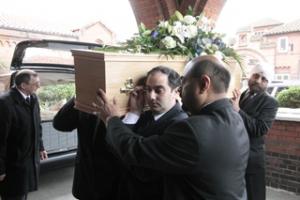
Son Ponnu, 38, was one of the pallbearers carrying his father’s coffin yesterday.

He said: “I was so touched by everybody. The visitors and messages have been non-stop.

“I was living at home when he was mayor and we are so proud of him and the work that he did.

“There was a great turnout for the funeral so thank you to everyone who came and who has supported us at this time.

source: http://www.harrowtimes.co.uk / by Suruchi Sharma / Tuesday Apr 05th, 2011

Keeki Thammaiah, Harrow Council’s first Asian Mayor, Dies

Photograph of the AuthorBy Jack Royston »


  • Keeki Thammaiah, Harrow's first Asian mayor, passed away this morning.
  • Keeki Thammaiah, Harrow’s first Asian mayor, passed away this morning
  • A “KIND hearted” former Labour councillor and Harrow’s first Asian mayor died at home yesterday evening.

Former Queensbury ward councillor Keeki Thammaiah passed away aged 76 on his sofa while wife Naila made dinner in their kitchen at around 6.30pm.

Councillor Bill Stephenson, leader of Harrow Council, described him as a “beacon”, while Navin Shah, London Assembly member for Brent and Harrow, said: “He was really very kind hearted, softly spoken and really laid back.

“He was loved right across the party divide, that’s why he also became a very effective and good first Asian mayor in Harrow.

“That feat in itself is remarkable, it was the first ever acknowledgment in Harrow of the diversity that we have had.

“I proposed he be the mayor. We were very close, I saw him as being like my older brother.”

The former Wembley High School teacher was elected as a councillor in 1992 and served the borough up until the elections last year, when he stepped down.

He was appointed mayor in 2000 and during his time on the council also sat on licensing and planning committees.

He was born in Coorg, in South India, and came to Britain in 1964, teaching maths at Wembley High in the 1970s before moving on to City of Westminster College in 1985.

Councillor Mrinal Choudhury, the current deputy mayor, spoke to Mr Thammaiah’s wife just hours before his death yesterday and was supposed to visit his former colleague today.

He said: “He left a message on my phone yesterday just to say ‘can you come and see me’. This morning his son called me. We were very close.

“I just went to see his wife this morning. He died while he was sitting on the settee. He was talking to his wife. She went to the kitchen to prepare some food.

“She came back to find that his eyes were up and she called the ambulance.”

Cllr Stephenson, current leader of the Labour Group, said: “He was a tremendously popular person.

“When he was mayor he always got on well with everybody. It’s a really sad loss. Keeki was a beacon, he was a very popular mayor, very well liked across both parties who have great regard for him.”

Councillor Husain Akhtar (Cons/Cannons) said: “I always found that Keeki and his soft smile were inseparable.

“I looked for that smile this morning when I visited his home but it was not there. I’m very sad that he is not with us any more.”

He is survived by wife Naila, son Poonu, granddaughter Sonali and grandsons Adit and Alok.

source: http://www.harrowtimes.co.uk / by Jack Royston / Tuesday Mar 29th, 2011

A Tribute …: Remembering an Indian Mayor in England


Keekira A. Thammaiah, who was the first Asian Mayor of the Harrow City, London, passed away on Mar. 29, 2011 in London. He was my contemporary in Bangalore from 1960 to 64 while practising Law, though senior to me. While in Bangalore, we were very close friends and when he left for London, we were in touch with each other through letters, Christmas, New Year greeting cards and whenever he came to India. 

While I was in London in 1992, he hosted a dinner at his house where he had invited two MPs and some Labour Party friends of his, he himself being a La-bour Party North Harrow Council Member. Later, once again while I was in London, I had an opportunity to spend some time with him and he was the Mayor of Harrow at that time.

I remember the evening I was having dinner in his house with other friends over drinks when I had a call from Mahaguru Yogi Arka of Mysore, who was camping in London at that time, as anticipated asking me to meet him. Since we were partying, we were already into our third peg of whisky and I was in a dilemma if I should go and meet Yogi Arka, who at that time was on the ascendance on his path to the stature of a Godman. I sought Thammaiah’s advice and with his trademark smile on his visage said, “Well, don’t worry, the place is just five minutes drive from here.”

He volunteered to drive me to the place, assuring me that visiting the Yogi after consuming alcohol should not be a problem as Rishis of ancient India were known to enjoy Somarasa and Bhang, which are intoxicants.

Naturally, in his passing away, I have lost a very good friend. Immediately, I wrote a letter of condolence to his wife Naila and son Ponnu.

Acknowledging my letter, they sent me an e-mail giving me some more information about the last journey of my friend.

As in life, so also in death, he was well-honoured by the community people, friends and politicians as well. His civic funeral was attended by a large number of people, dignitaries, Mayors, MPs and the media.

He was elected President for the forthcoming World (Europe) Kannada Conference to be held in London in August 2011. He had hosted a meeting at his place in this connection just the day before he passed away.

His wife Naila sent me a copy of the tributes paid to Tham-maiah (known among Coorgs as Thammy) by Kodagu Association of UK and also by Kannada Balaga of UK, which is being produced below:

The tribute

Born: 10.02.1935 Died: 29.03.2011

Late Mr. Keekira Thammaiah was born in Birunani, Coorg, India. He did his schooling in Coorg and Pre-University (A levels) at Government College, Bangalore.

He went on to do his Bachelors in Arts at St. Joseph’s college, Bangalore.

Whilst at University, he displayed his leadership qualities and political ambition by becoming the ‘President of Students Union.’

He pursued his education in Bombay at University College, Bombay and obtained M.A & LLB between 1957-60. At the University, he was the Chairman of the Students Union.

He returned to Bangalore in 1960 and was an Advocate at the Bangalore High Court until 1964 when he moved to United Kingdom to do Bar exam. He married Naila in 1971, who would be for the next 29 years, his pillar of support.

He went on to be a Lecturer in Business Law at West-minster and other colleges.

He was elected as the Labour Councilor in 1994, Deputy Mayor of Harrow in 1999 and became the first Asian Mayor in May 2000.

He was very active in his community and took his civic duties very seriously. He raised considerable amount of money for the Northwick Park Hospital Children’s wing (£20,000) and was the Governor of 3 schools in Harrow.

He rubbed shoulders with royalty in that he met the Queen three times, had tea with Princess Margaret and spoke at the Parsi community gathering in the presence of Prince Edward & Sophie.

He retired in May 2010 after 20 years service to the local community. His friends fondly called him ‘Keeki.’

He is survived by his loving wife Naila of 30 years; Son: Ponnu; Daughter-in-law Sunali and two young grandsons Adit and Alok.

Funeral service was held on 4th April, 2011 at 12.00 pm at Golders Green Crematorium, Hoop Lane, London, NW 11 7 NL.

Mourners joined the family for refreshments afterwards at Members Lounge, 1st Floor, Civic Centre, Harrow, Middle-sex HA1 2XY.

Memorial donations in memory of K. A. Thammaiah may be made to Diabetes UK, 10 Parkway, London NW1 7AA.

source: http://www.starofmysore.com / by K.B. Ganapathy


Explorers Discover 3 Billion-year-Old Life Forms Off the Coast of Michigan

In mysterious sinkholes beneath the waters of Lake Huron, scientists have been exploring strange pockets of life that shouldn’t exist on present-day Earth. The microbes researchers have found would have been perfectly comfortable on the Earth of 3 billion years ago, before we had oxygen in the atmosphere.

How did the bottom of Lake Huron get riddled with sinkholes that time forgot? Find out, and see a video of life that hasn’t existed for billions of years.

The sinkholes at the bottom of the lake are pockets of de-oxygenated water that have pooled beneath the fresh waters above. So all the creatures who live in the sinkholes might have evolved at a time on Earth when no oxygen was available. In a recent Earth magazine article about the ongoing exploration of these sinkholes, first discovered a little over a decade ago, Lindsey Doermann writes:

These pockets of water teem with microbial life similar to that found around deep ocean hydrothermal vents or beneath ice-covered Antarctic lakes, not the kinds of microorganisms normally found in our own backyards . . . Before long, the true importance of these oddities became apparent: “These ecosystems in Lake Huron are analogs of the Proterozoic,” says Bopi Biddanda, a microbial ecologist at Grand Valley State University in Michigan and one of the leaders of the sinkhole science team. “They could be windows into communities that existed 3 billion years ago.”


Though it’s possible the creatures in the sinkholes are direct descendants of creatures who lived on pre-oxygen Earth, it’s more likely that they evolved from more recent organisms to thrive in an oxygen-free ecological niche. Either way, they are the closest we’ll get to seeing life from Earth’s distant past.

But how did those sinkholes get there in the first place? As you can see from this diagram, what’s happened is that freshwater from the Earth’s surface has sunk below ground, and eventually worked its way back out beneath the lake. As the water slowly eroded the lakebed, it created sinkholes of freshwater — lakes within lakes, if you will — where anaerobic or oxygen-free ecosystems began to thrive.


In this incredible video of the sinkholes, you can see the oxygen-free freshwater bubbling up from the lake bottom. All life on Earth may have once resembled these strange, algae-furred fingers reaching up from the sinkholes. It wasn’t until about 2 billion years ago that the planet began to have a significant amount of oxygen in its atmosphere. The shift to oxygen was caused by cyanobacteria like what you see in this video, who emit oxygen as part of their digestive cycle. As cyanobacteria took over ancient Earth’s seas, geologists believe that they caused the planet’s first climate disaster, killing off all the life forms that didn’t metabolize oxygen. Essentially, oxygen was a poison gas to them and made the planet unlivable. Lucky for multicellular organisms, oxygen ushered in a new era where life proliferated and diversified in dramatic ways, eventually leading to the world we live in today.

source: http://www.i09.com /by Annalee Newitz / Lost World / Geology> / Jul 18th, 2011

Debut Author Creates A Whole New World in “Scotland of India” with her Book ” Tiger Hills”

Arts Interview  :  SARITA MANDANNA

Tiger Hills author Sarita Mandanna on buzzine.com
Some authors like to create new worlds. Others like to reflect in a world they are most familiar with. Sarita Mandanna chose to dab a little in both, creating a new world while also staying close to home in her debut novel Tiger Hills, which just hit bookstands in 18 countries and is being translated in 14 different languages, including French, Italian, Spanish, Catalan, Hebrew, Hungarian, Dutch, Russian, Slovenian, and Greater Chinese.
A native of Coorg, Sarita’s hometown provides the stunning setting of Tiger Hills. According to her, Coorg is often described as the “Scotland of India,” ergo providing an ideal backdrop for the romanticism of her story. WhileTiger Hills is quite the fictional tale about Coorg, there are a few truths to share about Sarita, such as her degree from the Indian Institute of Management, as well as an MBA from the Wharton Business School. After working as a private equity investor in New York, Sarita moved to Canada in 2010. When she finally wrote and completedTiger Hills, the novel was long-listed for the 2011 Man Asian Literary Prize and was a 2011 TV Book Club pick in the United Kingdom.
Every so often, I choose to drift from the narrative storytelling and offer you, the reader, a chance to observe a conversation in almost complete entirety. In such situations, it is far more compelling for you to feel a part of the conversation and take whatever messages, if any, you choose to take as opposed to me taking liberties of determining what is important and what is not.
With that, enjoy the conversation I had with Sarita. She is more than a promising talent; Sarita is someone who I believe will go places with her writing talents, and I certainly hope that, after reading her story below, you will go out and support her by buying her book or recommending her work to a friend. Either way, enjoy!
Parimal M. Rohit: Let’s start with the most interesting of observations. You reportedly garnered the highest advance for a debut novel. How did that come about? What was it about the story that made Penguin India believe in your story that much to pay you a high fee up front?
Sarita Mandanna: That is a question best reserved for Penguin India! It was a huge honor, of course, to have my debut novel published by Penguin and for them to express the confidence in it that they have. They were the first to come on board, and Tiger Hills has since been sold in 18 countries to date. As far as the actual amount is concerned, there have been many conjectures in the Indian media–suffice it to say that, had I received but a fraction of the amount I was supposed to have, I would be on a very expensive vacation, lounging on a beach somewhere right now!
PMR: Funny! As for the story itself, the title is very revealing, especially to those who know of the true setting of Tiger Hills in India. Tell us about the world you built and how you brought it to life through your words…
SM: Tiger Hills is named for a fictional coffee plantation in Coorg, which is a beautiful part of Southern India. It’s where I’m from–my family traces roots here for centuries. I love it dearly, and when I began to write Tiger Hills, I knew that Coorg would be the setting, and none other. Tiger Hills begins in 1878 and spans the next 70-odd years, through World War II and beyond. It traces the lives of Devi and Devanna, two childhood friends, inseparable until Devi meets Machu, a tiger-killer and a man of much honor and pride. It is the relationship between the three that sets into motion a series of events that change all three lives, with consequences that affect generations to come. While Coorg forms the highly personalized canvas of the story, the characters in the novel all struggle with universal themes. What do we do when thrust into circumstances not of our choosing? Tiger Hills explores the nexus between fortitude and acceptance, the choices we make, and the far-reaching impact they can carry.
PMR: What made you choose the time period?
SM: I wanted to write a story that was almost classical in structure–something with a large narrative arc. Tiger Hillsspans almost the entire lifetime of the central protagonist, Devi, beginning with the day of her birth and following her through maturity and into her dotage. To cover that length of time necessarily meant that the novel had to start decades in the past. The early 1900s were also a particularly interesting period in Coorg. Coffee-planting had become widespread, introduced by English and European settlers in the mid-1800s, and there was a significant influx of wealth into the region. There was a whole new generation of Coorgs still wedded to the old ways but simultaneously Westernized, being sent overseas to study, etc. That intermingling of cultures, especially in the context of the time, was intriguing enough that I wanted to explore that in the course of the novel.
PMR: Are there any characters in the book you most identify with? Anyone a fictitious representation of who you are in real life?
SM: All the characters are fictional in the aggregate but draw in bits and pieces from people I have known. As far as any of the characters representing me–not really. Devanna is bookish, and I can certainly identify with that. Devi is headstrong and, well, no surprises there either. Other than that, no, they are all completely fictional!
PMR: What do you want the reader to feel as they read the book? How about the feeling after they complete it?
SM: I take it as the ultimate compliment when people tell me that Tiger Hills is a page-turner and that they were unable to put it down. It’s also fantastic when they tell me that they found themselves exploring a new world and that they were angry, they were sad, they were laughing out loud as they read; that they were so invested in the characters that they find themselves thinking about them well after the last page is turned.
PMR: Any prospects of selling the movie rights?
SM: I haven’t really given it much thought.  I’ll cross that bridge when it I come to it, I suppose.
PMR: As this is your debut, what was the writing process like? Was it much more difficult or enduring than you realized? What did you learn from the process that’ll help you with your next book?
SM: Tiger Hills was five years and counting in the making. I wrote it while living and working in New York City. It wasn’t an easy time–while deeply satisfying in the aggregate, there were also days when I seriously questioned my sanity for taking this on.  Extracting yourself from the immediate world–the physicality of it–and immersing yourself in one of the imagination takes a bit of transitioning, and it was all the more challenging in the case of Tiger Hills because I was working full-time as well. While work took priority, I wrote in all the spare time that I had, even correcting drafts while on the treadmill. I’d write late at night, after the work day …and on all the weekends when I wasn’t working. I don’t think writing the next book is going to be particularly easier or different. I just hope it doesn’t take another five years and that I get a bit more sleep during the process than I did while crafting Tiger Hills!
PMR: Speaking of your next book, do you have any ideas of what it will be about (assuming you are planning for a second book, of course)? If there is another book, is it still in idea phase, or are you already writing?
SM: I’m in the process of researching an idea. It is still early days, and it is in very nebulous form right now. I’m excited about it, though, and am looking forward to plunging into the writing once more.
PMR: Finally, tell us about your background.
SM: I was always an avid reader, and while I did think that I would write, it was very much a “one day, some day” kind of aspiration. About seven years ago, after a particularly draining week, I came back home from work itching for a creative outlet and to do something completely removed from what I did during the day. I booted up my laptop and simply began to write. That initial output became a short story, followed by six more in rapid succession, and formed the springboard to Tiger Hills.

(Photo Credit: Dan Abramovici)
source: http://www.buzzinebollywood.com / by Parimal M. Rohit / Mar 18th, 2011


Keeki Thammaiah

Keeki Thammaiah obituary

Keeki Thammaiah 

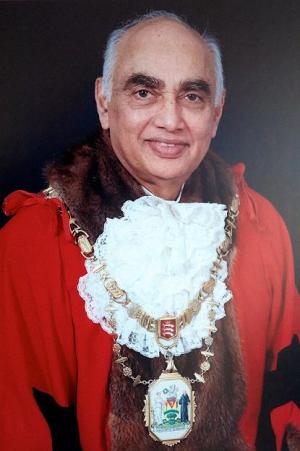
The trappings of office were relished by Keeki Thammaiah as they echoed his native Karnataka ceremonial attire

My friend the lawyer, educationist and local politician Keeki Thammaiah, who has died of a heart attack aged 76, became the first Asian mayor of Harrow, north-west London, in 2000.

He came to politics relatively late when elected as a Labour councillor in 1994. As mayor, he demonstrated his skill in working with people across the divide of politics, race and class. He relished the ceremonials – the robes and chains – not only because of his innate respect for the office but also because he felt comfortable with these trappings. Their lavishness echoed the ceremonial attire of his native Coorg in Karnataka, south India, particularly that of the traditional kupya chaleworn by Coorg men – long black tunics with red and gold brocaded cummerbunds from which intricately worked swords in gold and silver were slung.

Keeki came from an affluent landowning family, and after qualifying as a lawyer served as an advocate in the courts of justice in Bangalore. He arrived in Britain in 1964, drawn by the vibrancy of its contemporary culture (listening to the Beatles for the first time was clearly a defining experience), as well as its legal traditions. He taught business law at institutions including Westminster College for a number of years.

Keeki and Naila, his wife of 40 years, kept an open house, and visiting Indians – dignitaries, students and tourists – enjoyed the warmth of their hospitality. A champion of Karnataka culture, with its rich tradition of Kannada literature and performing arts, Keeki supported initiatives that helped younger generations living in Britain to engage with this culture. On the day before his death, he and Naila had hosted a reception to launch an initiative to promote Karnataka and its artistic heritage.

He is survived by Naila, his son, Ponnu, and two grandchildren, Adit and Alok.

source: http://www.guardian.co.uk / by Nima Poovaya-Smith / The Guardian / Thursday, May 19th, 2011