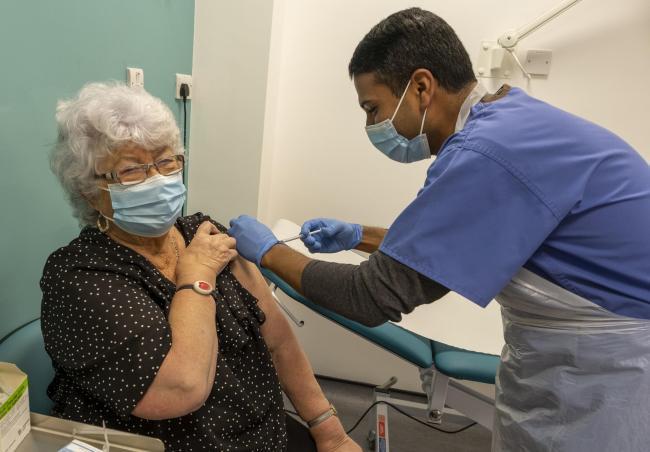
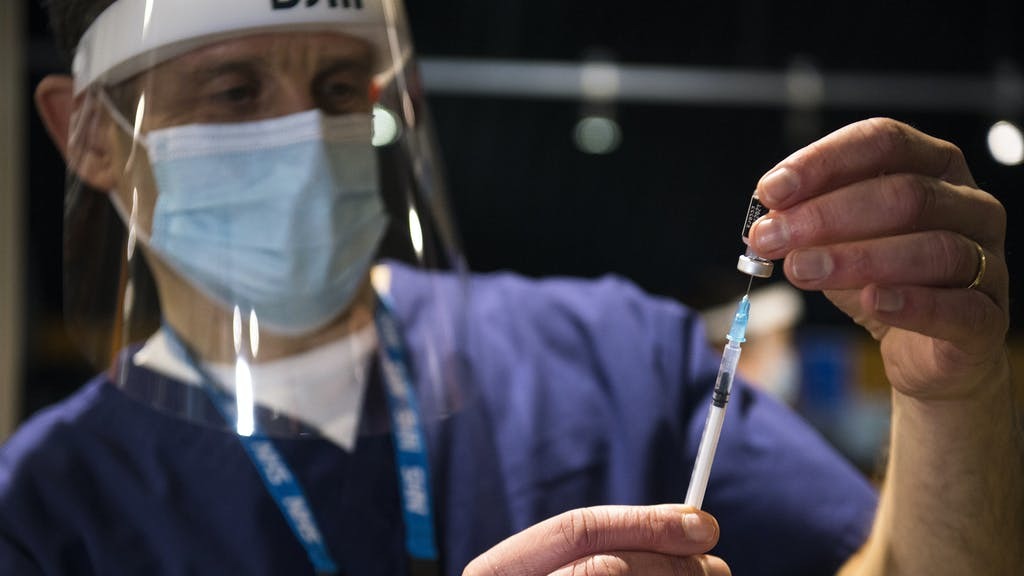
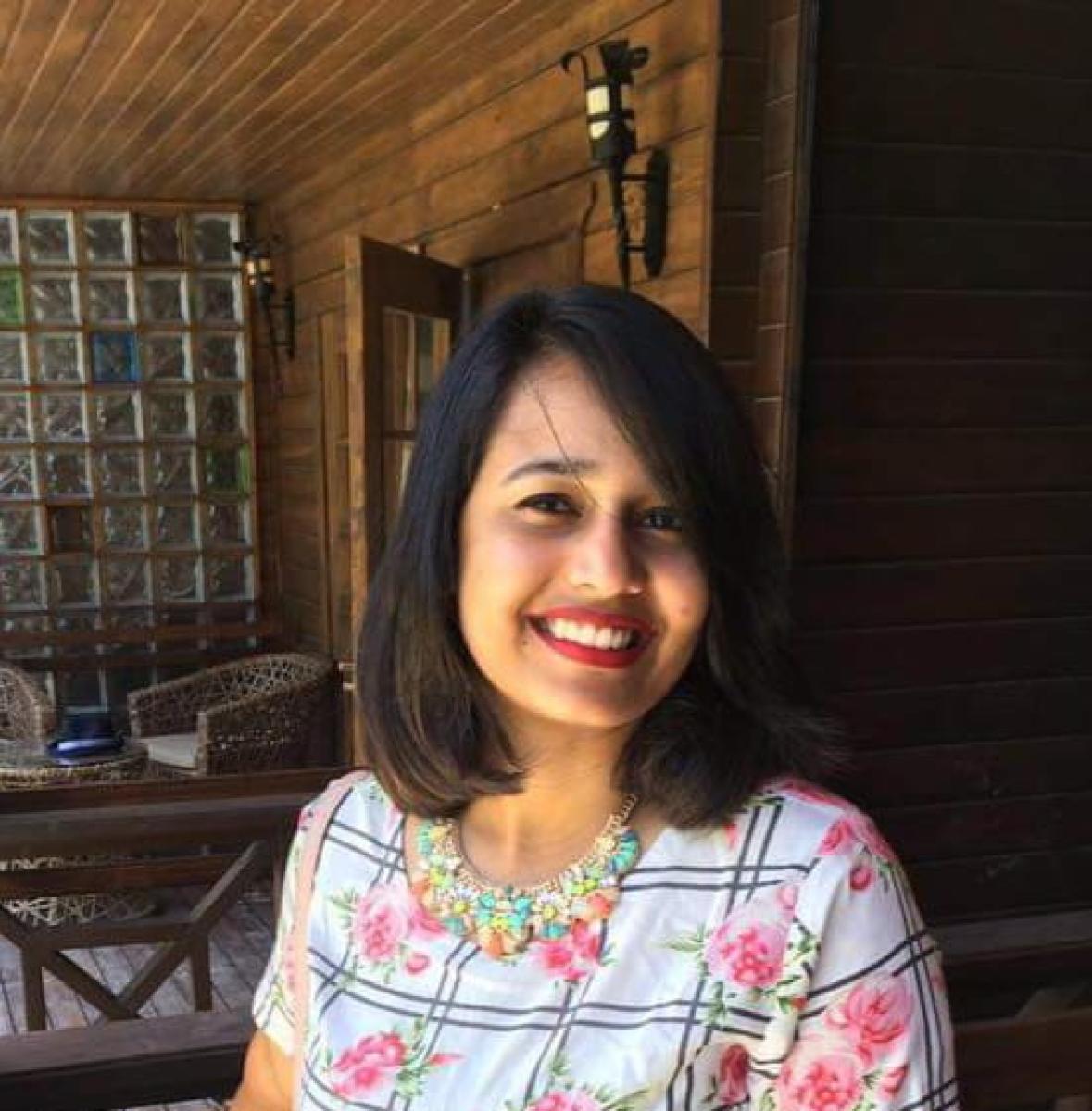
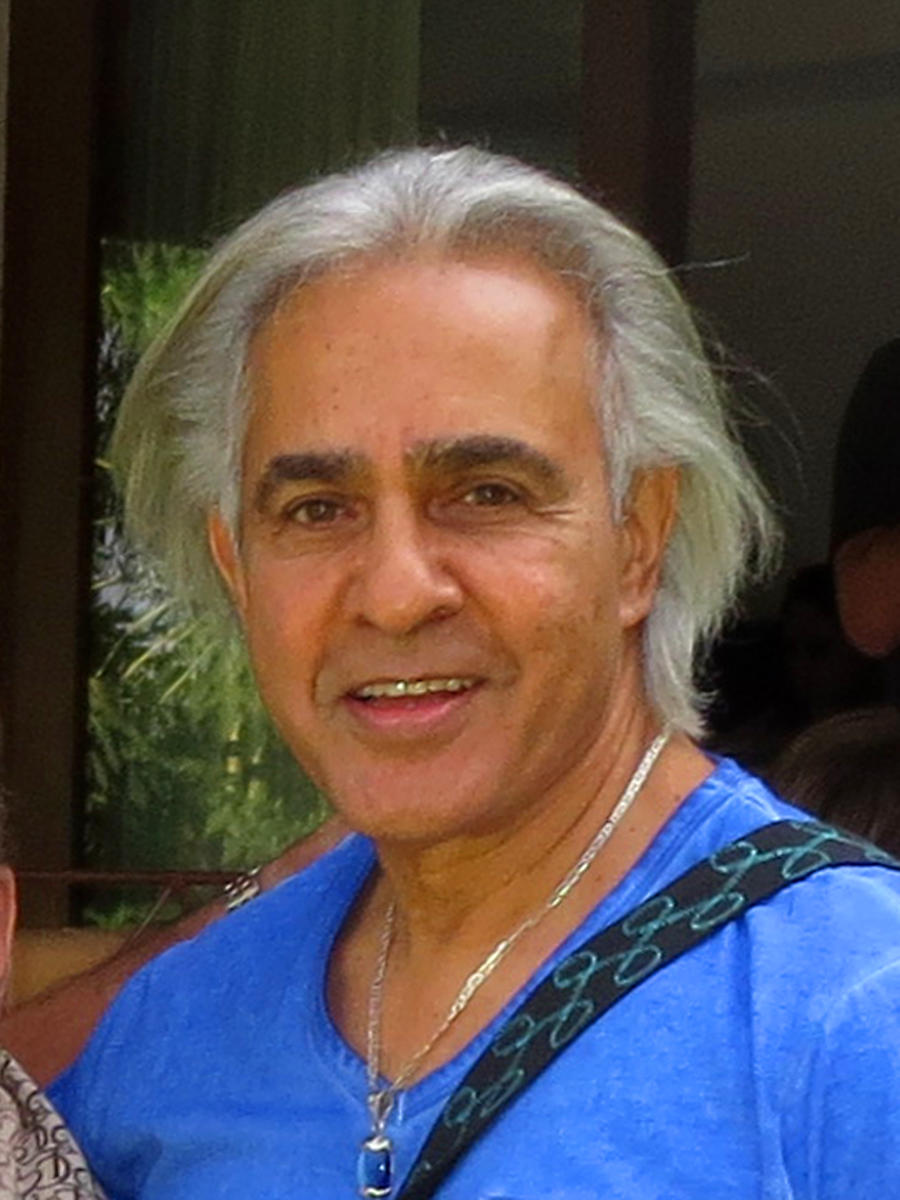
Dr Arun Mandepanda Thimmiah, a GP at the Abbey Road Surgery in Barrow, gives advice on health issues in his weekly column. This week, he addresses concerns people may have over whether their invite to receive a Covid-19 vaccine jab is genuine.
Unfortunately some people are using the Covid-19 vaccination programme in order to commit fraud.
The types of scams vary – some are trying to extract money, others are collecting personal information – so it’s really important to make sure you’re speaking to the right people.
In the UK, coronavirus vaccines are only made available via the National Health Services of England, Northern Ireland, Wales and Scotland.
You can be contacted by the NHS, your employer, a GP surgery or a pharmacy local to you to receive your vaccine.
Remember, the vaccine is free of charge.
At no point will you be asked to pay.
n The NHS will never ask you for your bank account or card details.
n The NHS will never ask you for your PIN or banking password.
n The NHS will never arrive unannounced at your home to administer the vaccine.
n The NHS will never ask you to prove your identity by sending copies of personal documents such as your passport, driving licence, bills or pay slips.
n Occasionally your local vaccine centre may ring you from a list provided by your GP surgery if you are in the group being invited to receive the vaccine at the end of the session in order to avoid wastage of vaccines.
If you have any doubts as to the caller’s authenticity, ask which organisation they are calling from, then hang up the phone and dial the official number for that organisation.
You will not miss out on your vaccine by doing so.
Please be aware that fraudsters do ‘spoof’ numbers – the number you see on your screen may not be the number that is calling you – and NHS call handlers will NOT ask you to check the number that appears on your screen; this is a common way for fraudsters to appear as legitimate callers.
source: http://www.nwemail.co.uk / The Mail / Home> News / by Dan Taylor, Senior Reporter / February 20th, 2021
Filter kaapi is an integral part of southern Indian food culture — it’s also the best part of my day
South Indian filter coffee (Getty Images)
This story first appeared on Food52, an online community that gives you everything you need for a happier kitchen and home – that means tested recipes, a shop full of beautiful products, a cooking hotline, and everything in between!
In April, my stainless steel coffee filter ran dry. Which is to say, I ran out of my favorite coffee — in the midst of a lockdown, no access to my Indian grocery store, and broken supply chains (both retail and by way of visiting aunties loaded with gifts). Anyone whose day begins with the certainty of that one precisely made cup would understand when I say: I was sad.
In the end I substituted, managed, survived. (OK, I may have begged a friend across town to mail me the dregs of her stash.) There were certainly far bigger worries to wade through, but its absence was felt. In a shaky world, it was the reassurance of that morning routine that I craved.
Filter coffee, or filter kaapi, is an integral part of South Indian food culture — and, for me, one steeped in nostalgia. When I was a child, unbeknownst to my mother, my grandmother gave me my first diluted half-mug, which carried with it the same sneaky thrill as that first furtive sip of beer a few years later.
As a teenager, the smell of freshly filtered coffee was my cue to get out of bed. As I shuffled down the stairs, my mother would be halfway through making coffee in her gnarled saucepan. Milk boiled first, to which a thick decoction (the coffee extract in the filter) was added — but never boiled — followed by sugar. The liquid was then deftly and repeatedly juggled between saucepan and mug to give it extra foam (norai)—this bit of food theater is entrenched in kaapi tradition (at many coffee houses you can see it poured from a meter high ).
Our days began with the first sip and the crackling of a newspaper, my dad reaching for a pen to begin the crossword. Coffee consumed, we’d quickly fall into our practiced rhythms. There was no lingering or going for another mugful. This was a one-and-done kind of affair.
Because, when made right, one filter kaapi is all you need .
* * *
Though deeply ingrained in morning routines today, coffee isn’t native to India, let alone South India. Regardless of whom you speak to, its arrival is shrouded in myth. Did that one Sufi pilgrim really smuggle in seven beans from Yemen in the 16th century? Did the French introduce it? What is clear is that it proliferated under British rule, as Sandeep Srinivasa carefully reconstructs in his timeline of coffee in India. By the mid 1800s, coffee plants began to thrive in South India’s hilly regions, which proved to possess the perfect growing conditions for the crop.
Coffee drinking in South India had a shaky start. Seen as a predominantly upper-class Brahmanical drink, coffee played a direct role in the early-mid 1900s, as Srinivasa writes, in the Tamil caste’s struggle for equal access to the coffee houses of the time. By the time the struggle reached its zenith in the early 1940s, the Coffee Board of India (formed to promote coffee production) was born, and South India was producing enough arabica and robusta beans not just for export, but also to be consumed domestically.
It isn’t just the beans that make South Indian filter coffee so unique, though — it’s a combination of how those beans are roasted and ground, brewed, and eventually served. A lot of these practiced rituals, along with the impenetrable sentiment for them, are passed down within families.
One of my own abiding memories from when we lived in Mumbai was accompanying my mother to a neighborhood called Matunga, a South Indian stronghold, to buy our monthly supply of coffee. There, I’d stand by as she oversaw the grind, enjoying the opportunity to practice her Tamil in what was often a lopsided conversation. On the drive home, the car’s recirculated air would be flush with the aroma escaping from the loosely bound packs of coffee. That unmistakable smell was largely thanks to the particular addition of chicory to arabica beans — in my mother’s case, in a golden ratio of 1:5.
Indeed, the subject of chicory — a caffeine-free coffee substitute used for its resemblance in color and aroma — cleaves South Indian coffee lovers down the middle. Purists hate when it appears in their coffee blend; others, like me, love its special touch of bitterness and strong aroma. (On my first visit to New Orleans, I gushed over the coffee at Cafe Du Monde, which is a mix of chicory and coffee — a rare sighting in these parts.)
According to Srinivasa, the addition of (and substitution with) chicory in filter coffee, as we know it today, took off during World War II, when coffee trade routes were disrupted and the industry suffered a setback. However, in this fascinating account tracing the roots of filter coffee, writer Vikram Doctor finds an antecedent as far back as 1876, in a Scottish drink called Camp Coffee . When mixed with hot milk, Doctor notes that the sweetened coffee-chicory essence tastes remarkably like filter coffee.
The other distinguishing feature of filter kaapi is the filter apparatus itself. A simple but effective device, it is a stainless steel or brass percolator divided into two halves, with a plunger, and an airtight lid. The bottom of the upper half is pierced with the tiniest holes, through which the coffee drips into the container below. While similarly constructed percolators find mention in cookbooks like in Culinary Jottings for Madras, which dates as far back as 1878, as Doctor mentions here , the one in use today might well be a homegrown, practical, metal version of the foreign percolators introduced to India.
I think back to my own great-grandmother, who enjoyed working with her trusty metalsmith to design rustic versions of all sorts of non-native cookware — doughnut makers and dessert molds and egg poachers — and the evolution of filters from do-it-yourself to commercially produced seems entirely plausible.
Across the oceans today, in my Brooklyn home, filter coffee gives me the familiar foundation I need to start each day. Each morning, I get out my single-serving percolator (most filters for home use are sized for one or two) and measure out two heaping teaspoons of coffee. I take care to press down with the plunger — not firmly enough and you risk the hot water running through too quickly, too hard and it goes all clogged-drain on you — before I pour over the boiling water, and wait it out. It’s this slow-brewing process that makes the coffee so special. As Vikram Doctor tells me: “The initial heat gets some of the bitter aromas that you get from espresso, but not all of it, and then the longer brewing gets the mellow flavours.”
To the patient go the spoils.
A couple months into running out of coffee this past spring, and in an attempt to find a more sustainable supply, I came across a pandemic mini-miracle: Ministry of Kaapi , a supplier of “damn fine Indian coffee” right here in New York. Founder Danée Shows was introduced to South Indian coffee when her husband Shiv’s sister sent them a batch from India. She loved it so much, she searched high and low for replenishment here in the U.S. — and failed. Taking matters into their own hands, they set up shop, selling everything from coffee blends to paraphernalia, including the traditional tumbler and davara set that’s part of the ceremony of serving filter coffee (and is widely used today, but has its own troubled origins).
Shows enjoys the challenge of introducing kaapi to a new audience that often mistake it for American drip coffee (“it is a drip but a very slow one”). And for those intimidated by the filter or the brew time, they offer bottled decoction (liquid coffee extract) that can be stored in the fridge for up to a month. “Stocking your fridge with decoction means freeing up time, while still savoring a super fresh, small-batch brew,” she says.
At-the-ready decoction is a thrilling convenience, even for someone like me who carries her filter everywhere she goes. In India, friends tell me about iD coffee, decoction sold in sachets that have been a game-changer for those unfamiliar with the filtration process — North Indians particularly, but not exclusively, are more used to tea—but who crave the filter coffee made at friends’ homes.
My own mother is very used to requests for filter coffee from her (pre-pandemic) guests, and she’s always thrilled to oblige. Her only caveat: “Do you have 30 minutes? Because that’s how long it will take.” My father at this point would shift uneasily in his seat, having already prepared his goodbyes. He’d no doubt find a bottle of decoction or a stock of sachets very handy in these situations.
For the daily, and very necessary, morning cup, however, I will always enjoy the meditative ritual of slow-brewing that single, singularly delicious cup. On days when I know I’ll be short on time or patience, I let it drip the previous night, and it tastes just as delicious. But I almost never skip the frothing trick — the stretch-pouring between saucepan and mug — a bit of early-morning daredevilry to arrive at a coffee that hits the spot every time: smooth, strong, aromatic, with a lofty, wobbly crown of foam.
Hot tips:
Pick a ratio of chicory-to-coffee that you enjoy (15:85, 20:80 . . .) You can also just pick a “pure filter coffee” (without chicory).
Store your ground coffee in the fridge so it stays fresh longer (and retains its aroma).
If you’re short on time, set the filter to drip before you go to bed. In cooler months, it will stay fresh on the counter. If it’s very warm, you might consider storing your decoction overnight in the fridge (once it has dripped).
Decoction can stay in the fridge for up to a day.
When making your cup, boil the milk, then cut the heat and add the decoction, ie, don’t boil the decoction with the milk — it loses flavor.
While the traditional way to drink it is hot, Partnerships Editor (and fellow filter-coffee fan) Erin Alexander loves drinking it cold with milk and ice (like an iced latte). “I know it’s against the rules, but it’s sooo much better than regular iced coffee,” she says. My thoughts on that? Have it as you will, as long as you enjoy it!
ARATI MENON
source: http://www.salon.com / Salon / Home / by Arati Menon / December 24th, 2020
Sanjana Kattera, a corona warrior who was part of the Oxford COVID-19 vaccine trial team, is ‘Coorg Person of the Year, 2020’, according to a release.
Kodagu-born Dr. Sanjana was involved in treating COVID-affected children. A paediatrician, she was part of the vaccine trial team at the Liverpool School of Tropical Medicine in the United Kingdom. The release said Dr. Sanjana served patients selflessly by risking her life, especially when PPE suits were in short supply initially.
Dr. Sanjana was selected ‘Coorg Person of the Year’ in a poll conducted by www.coorgtourisminfo.com, Kodagu’s first news portal, promoted by senior journalist P.T. Bopanna.
She worked with phase I/II of the trial with the age group 18-55 years by initially screening and recruiting patients as part of the eligibility criteria.
Dr. Sanjana, daughter of Suresh Kattera and Smitha Suresh, did her schooling in the United World College South East Asia (UWCSEA) in Singapore.
She studied medicine at the University of Edinburgh in the U.K. After completing her medicine, she specialised in paediatrics in a hospital in the U.K, and is currently training in NHS, Liverpool. She will be completing her Membership of the Royal College of Paediatrics and Child Health (MRCPCH) early next year.
The corona warrior had a tough competition for the ‘Coorg Person of the Year’ title from M.A. Ganapathy, IPS, director-general of the Bureau of Civil Aviation Security (BCAS), the release added.
source: http://www.thehindu.com / The Hindu / Home> News> States> Karnataka / by Special Correspondent / Mysuru – December 21st, 2020
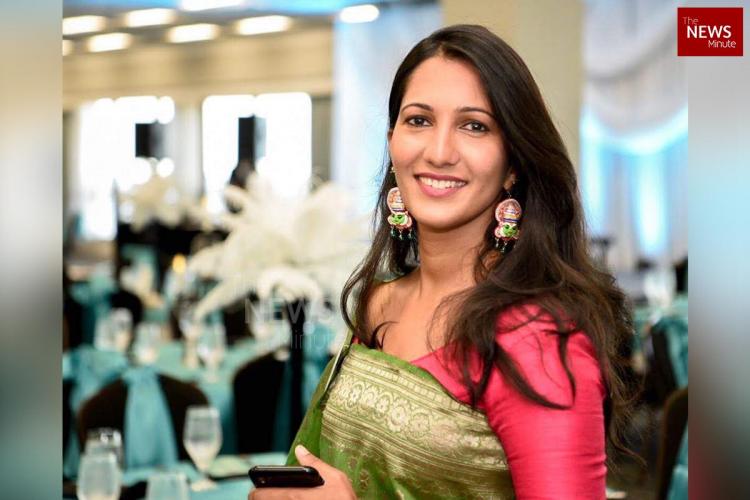
For Poonam Thimmaiah, jewellery designing began as a means to cope with personal tragedy and turned into a passion project and finally a full-time career.
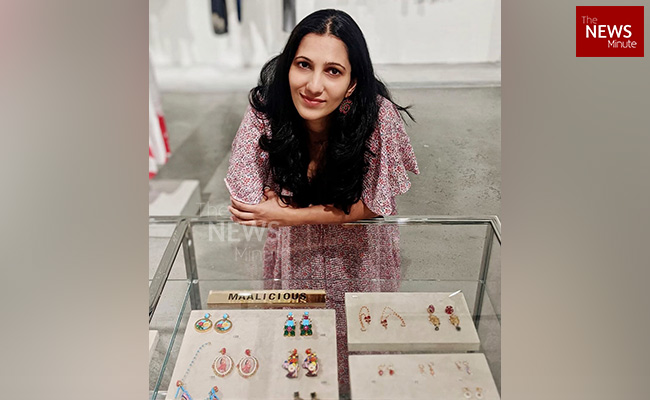
Following the devastating tragedy of losing her baby, Kodagu’s Poonam Thimmaiah, now a New Yorker, embarked on a personal journey of change, which led her to pursue her keen interest in jewellery designing and sustainable art. Poonam, who started her own brand of jewellery – Maalicious – had her work featured in the New York and Paris fashion weeks this year, just a year after she established the company. Her journey of overcoming tragedy to embracing art and making it big is an inspirational one.
In 2017, Poonam, who was working at JP Morgan in New York, had a miscarriage. Her journey into jewellery designing started as an escape from the tragedy. She returned to India to be with her family in Mysuru during this difficult time and it was here that she decided to pursue her passion.
NY Fashion week. Maalicious earrings in collaboration with Lola Elan clothing and Ochini Milinery headpiece.
When Poonam visited her Alma Mater, JC Engineering College in Mysuru, she learned of a jewelry designing course for the children with physical disabilities. Poonam, who has always made her own jewelry in the past, worked with these kids on her first collection. Together, they made earrings using sustainable materials like clay, wood and thread. “That’s when I discovered that this is what I should be doing. Along with these students, I learned a lot about the art of jewelry designing,” Poonam says.
Poonam Thimmaiah at her outlet in New York
She taught the group of 10 children in the programme how to sculpt, draw and paint. In the process, she says, she rediscovered the talent she had for designing jewellery. A few months later, Poonam went back to New York and quit her job. She decided to start designing jewellery and felt sure that she wanted to bring back the touch of handicraft to her work.
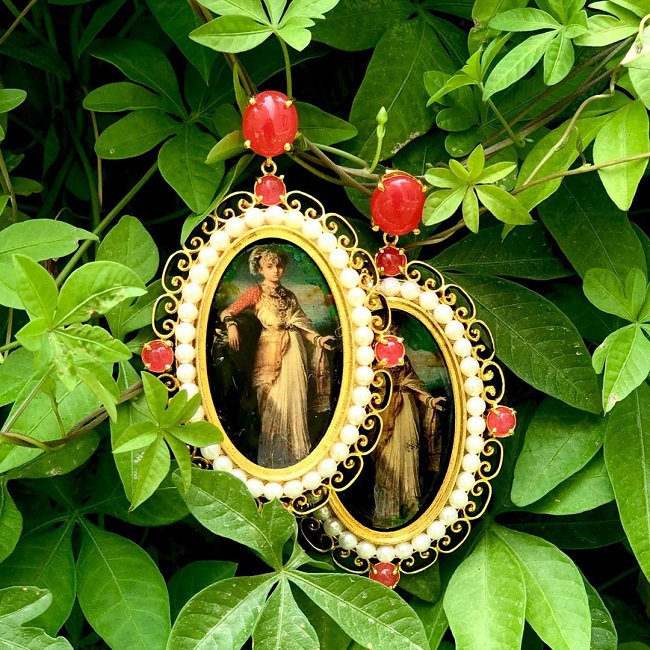
It was later in 2017 that Poonam contacted an acquaintance, Sruthi Mascarenas, a sculptor working with clay in Goa, and commissioned her to make the earrings that she had designed. Poonam says that she wanted every piece of jewellery she designed to tell a story – one of historical relevance to India. In her first piece, she envisioned a clay plate with a painting of Queen Victoria meeting her namesake – a young woman from Kodagu.
“The piece is called Victoria Repeated. It’s a picture of Victoria from Kodagu meeting Queen Victoria and both of them are wearing a lot of jewellery. These earrings were made of clay and hand-painted. It was featured in Flying Solo’s (a fashion retail space in New York) collection in the Paris Fashion Week,” Poonam adds.
In 2019, Poonam established Maalicious officially and in the year running up to it, she decided to commission her work to women in the business of making handicrafts in India. She contracts her metal and stone work to a group of 25 women in Jaipur. Anything to do with tassels, she commissions it to an artist in Mumbai, and jewellery made of polymer clay is commissioned to an artist in Chennai.
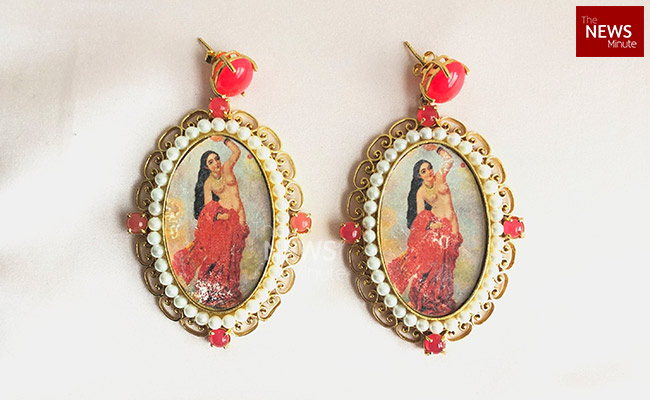
Amrita Shergill earrings. Amrita Sher-Gil, the most famous Indian painter. Today, she is known as India’s Frida Kahlo. The earrings are made by Shruti Mascarehnas.
“With Maalicious, I want to rejuvenate traditional art and workmanship with Indian charm and a touch of urban flair. I have earrings that have Amrita Sher-Gil on it. A lot of people know about Frida Kahlo and not many in other countries are aware that we have someone of our own – Amrita Sher-Gil. I also wanted to use sustainable materials like clay, wood, silk and thread. We’ve started customising our earrings so anyone can get any picture they want painted on their earrings,” Poonam says.
Celebrity endorsement: Divya khosla Kumar in Drokpa earrings, made by artisan Soniya.
Malicious began retailing with Flying Solo’s retail unit in New York and became an instant hit. With celebrity stylists visiting the store, her pieces began selling out. In 2020, Poonam carried out various social media campaigns. “We did a lot of virtual pop-ups and this summer was really good. We had a lot of celebrity endorsements on social media. Actor Divya Khosla Kumar wore our jewellery, Raadi Shetty, American influencer who is big here, endorsed our jewellery. We had a lot of Instagram influencers endorse us,” she says.
This year, Flying Solo selected Poonam’s jewellery designs to be featured for their show in the New York and Paris fashion weeks. Fourteen of her pieces were featured in the New York Fashion Week and eight in the Paris Fashion Week. Flying Solo had curated its show by collaborating with 63 designers from 14 countries. Poonam says her work was chosen as each of her designed pieces are made by hand and use sustainable materials.
“I felt like I’ve created something, where I was spoken of as a designer. People at the fashion week asked me what my inspiration was. It went from a passion project when I was pregnant and became something big during the fashion week. It’s really nice to have the appreciation. It gives me confidence,” Poonam says.
source: http://www.thenewsminute.com / The News Minute / Home> Features> Fashion / by Theja Ram / November 12th, 2020
An outburst of saxophone flurries sits you straight up in your chair. The tone is rich but with a cutting edge.
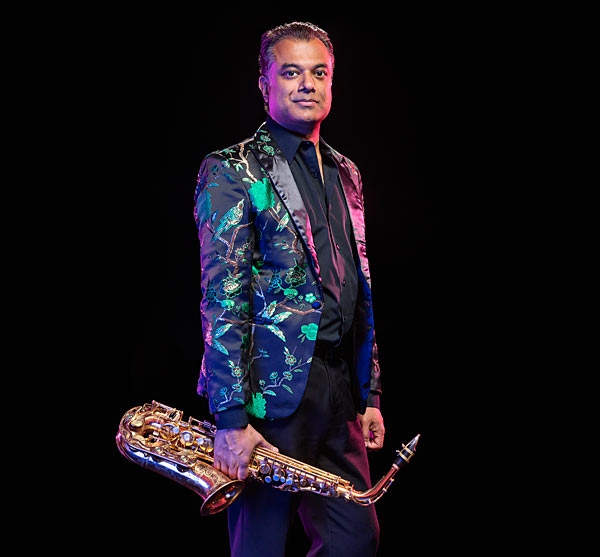
It has to be Rudresh Mahanthappa. The riveting cry of his alto saxophone is one of the most recognizable sounds in jazz.
But those darting runs coalesce into Charlie Parker’s “Red Cross.” So it can’t be Mahanthappa, can it? He has made 15 straight albums of original music. He doesn’t do covers, right?
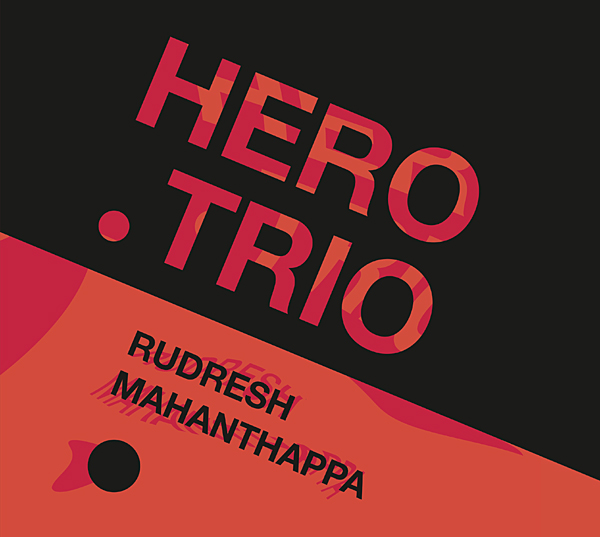
On his 16th recording, Hero Trio, Mahanthappa breaks through to the past—his and ours. He proudly proclaims Parker’s bebop—but then “Red Cross” flies apart, into free showers of 16th notes. It is startling to hear Mahanthappa playing songs you know, even lilting ones like Stevie Wonder’s “Overjoyed” and time-honored standards like “I Can’t Get Started.” Of course, his versions do not stay lilting or standard for long. By the sixth track, you’re ready for anything—except “Ring of Fire.” Rudresh Mahanthappa doing a Johnny Cash song? There must be a story there.
The story begins in Colorado—specifically, Boulder. Mahanthappa’s father is a noted theoretical physicist who came to the United States from India to get a Ph.D. at Harvard and stayed in the American academic world, settling at the University of Colorado. The school’s website says that K. T. Mahanthappa is “interested in grand unification theories, fermion mixing and masses including charge fermions and neutrinos.” His son Rudresh shares a proclivity for the intellectually challenging and the arcane, but in 16th notes, not neutrinos. (There are two more sons in this high-achieving family, both with Ph.D.s in the sciences.)
Mahanthappa grew up in Boulder, listening to people like Stevie Wonder. He started on alto saxophone in the fourth grade. He matriculated at the University of North Texas in 1988, right after it changed its name from North Texas State. The school had a reputation for turning out notable jazz musicians. Billy Harper, Lyle Mays, Bob Belden, and David Weiss went there. So did Norah Jones, briefly. (So did Meat Loaf, briefly, though presumably not in the jazz program.) Snarky Puppy started there.
Mahanthappa was not happy at North Texas. He says, “For me it was an uncreative place. There was kind of one way of doing things. And as a brown person in Texas, I never felt comfortable.” After two years, he transferred to Berklee College of Music in Boston, a school even better known for turning out notable jazz musicians. “I had always wanted to study with Joe Viola, who was one of the great American master teachers of the saxophone. Berklee was more the vibe I needed.”
When he took his degree in 1992, he did not, like so many Berklee graduates, relocate immediately to New York City. “I wanted to go to a big city that wasn’t New York, and Chicago was a place you could play a lot.” He entered a master’s program at DePaul University. By 1997, he was ready to make the move. “I always said I wanted to play with Dave Holland and Jack DeJohnette someday, and that was never going to happen if I stayed in Chicago. In the mid-’90s, you had to be in New York.”
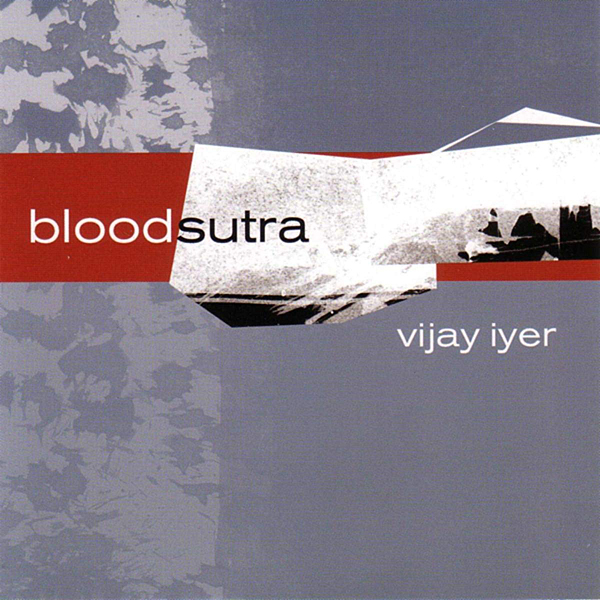
Mahanthappa hit the jazz radar not long after arriving in town, when he joined forces with pianist Vijay Iyer. They began gigging and making records, some led by Iyer (Blood Sutra on Pi Recordings; Panoptic Modes, reissued on Pi), some led by Mahanthappa (Mother Tongue, Pi), some co-led (Raw Materials, Savoy). Today, Mahanthappa and Iyer are two of the most respected, most decorated musicians in jazz.
They dominate the critics’ polls in the alto saxophone and piano categories, respectively, and most years appear at or near the top of categories like “musician of the year” and “album of the year.”
Back at the turn of the millennium, though, they were up-and-coming players who were unusual for two reasons: There were few Indian-American jazz musicians, and they played strange stuff. Iyer is an autodidact who has always had his own percussive, polyrhythmic piano language. As for Mahanthappa, when you listen to his early recordings now, he already sounds like no one else. He already has that sublime alto saxophone shriek. His art is already dizzying in its diversity, juxtaposing melodicism and dissonance, formal focus and freedom. In his playing, you hear intimations of many moments in saxophone history, from primary sources (Coltrane, Coleman), to footnotes (Jimmy Lyons, Sonny Simmons). You also hear lyricism in beautiful new jagged shapes.
All the unfamiliar sonorities led many listeners, including critics, to assume that Mahanthappa and Iyer were bringing Indian influences into their jazz. “Not so much,” Mahanthappa says. “I knew very little about Indian music at that time. When I was a kid, my mother sometimes played bhajans on Sunday mornings. They were like Hindu hymns. She had this stack of 45s. But that was it. When I became a musician, I mostly ran the other way. I got tired of people expecting me to be an expert on Indian music.”
But a revelation occurred while he was at Berklee. He went to India to play with a Berklee student band at Jazz Yatra, a festival that no longer exists. “It was my first time in India in over 10 years, my first time going as an adult, without my parents. And I was going there to play music. It was a lot to deal with. I was terrified. I was confronting head-on all these questions: ‘How Indian are you? How American are you?’ It was a mindfuck. Then I went to an all-night event in Bangalore. There is a tradition in India of concerts that go all night, ’til dawn. What I heard blew me away. It was unbelievable. I found out later that some of the greats of Indian classical music had performed that night, both Hindustani and Carnatic. I went to record stores the next day and bought as many cassettes and CDs as I could carry. And that’s about all I listened to for a couple of years.”
When Mahanthappa made the recordings with Iyer in the early 2000s, he was not yet ready to incorporate Indian elements into his work: “I kept thinking, ‘How do you put these things together and still maintain reverence and integrity?’ Because I knew that Indian symbolism and iconography had mostly been engaged very superficially in jazz. For a jazz group to bring in a tabla player did not automatically result in a cross-cultural collaboration. I knew I wanted to create something that didn’t sound like cut-and-paste. If I was going to deal with Indian rhythms or Indian melodic content, it had to be integrated.”
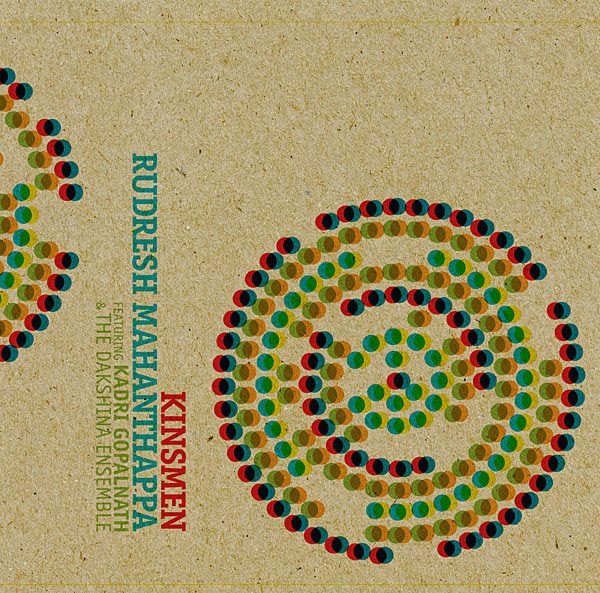
The turning point came in 2005, when he again traveled to India, this time to Chennai, on a commission. He spent time with Kadri Gopalnath, who played Mahanthappa’s instrument, the alto saxophone, but in a style that was decidedly non-Western. Gopalnath employed microtones derived from the Carnatic music of southern India. After Mahanthappa made another trip to India on a Guggenheim grant, he felt ready to record with Indian musicians. The result was Kinsmen, his collaboration with Gopalnath, released on Pi in 2008 to widespread astonishment and praise. Two dissimilar musical cultures, both prioritizing improvisation and energy, meet and commingle organically. Mahanthappa visits ragas and quarter tones, and Gopalnath visits bebop and the blues. They whip all these ingredients into wild eight- and four-bar exchanges and wailing, extended joint ventures.
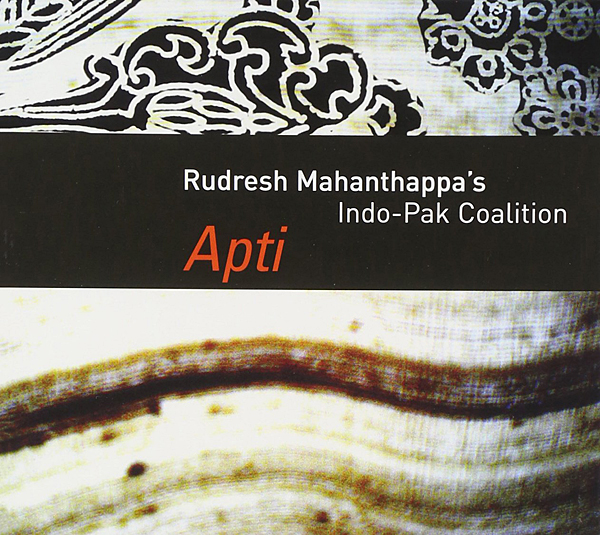
Kinsmen was important, but it was a one-off project. Around the same time, Mahanthappa formed another ensemble that drew deeply on his Indian heritage, a trio that continues to the present day. Indo-Pak Coalition is two Americans with roots in the Indian subcontinent (Mahanthappa and guitarist Rez Abbasi, born in Pakistan), and a third American, Dan Weiss, who studied for 20 years with tabla master Pandit Samir Chatterjee. Their album Apti (Innova, 2009) expanded upon the cross-cultural explorations of Kinsmen. (They released a second album, Agrima, in 2017, available as a digital download or double LP from Mahanthappa’s website (rudreshm.com) and from HDtracks.com.)
was American Songbook standards and the pop music of his youth. He says, “There was a part of me that always wanted to record standards. But when I was younger, I guess I had a certain agenda, certain ideas and energies that I wanted to get out there in the world. I didn’t want to be just one more saxophone player doing ‘Now’s the Time’ [Charlie Parker’s bebop classic]. I felt like I had a perspective that would not come across effectively if I played ‘I’ll Remember April.'”
It took Mahanthappa a long time to record with Indian musicians, and it took him even longer to record “I’ll Remember April.” But there it is, the seventh track on Hero Trio. When you hear it now, it is unclear why he had once feared that such a song would not allow his “perspective” to “come across effectively.” The perspective on “I’ll Remember April” is radical and personal. It opens with a commanding bass announcement from Franáois Moutin and violent drum detonations from Rudy Royston. Then Mahanthappa fires quick blasts that soon run together into long spilling arcs. It is a rush when Gene de Paul’s time-honored melody clarifies out of abstraction. Mahanthappa hits “I’ll Remember April” hard then spins off it for free, blistering runs, then returns to the song with fervent embellishments.
In our present jazz era, it is common for albums, especially those by younger musicians, to contain all or mostly all originals. But skilled players far outnumber gifted composers. Mahanthappa analyzes the problem this way: “A lot of new players today are coming out of academic settings. There is a kind of unspoken checklist of things you’re supposed to do. One is compose. Everyone puts ‘composer’ in their title now.” Mahanthappa’s exclusive preference for recording original music was understandable in his first 15 albums. He was defending a unique aesthetic position, and he was an accomplished composer. But Hero Trio opens new vistas. It turns out that “I’ll Remember April” does not limit jazz creativity. The opposite is true: The song provides a base pattern embedded within Mahanthappa’s own vast design. He can glance off the form, using it as a touchpoint, a known frame of reference, one resonant with historical associations.
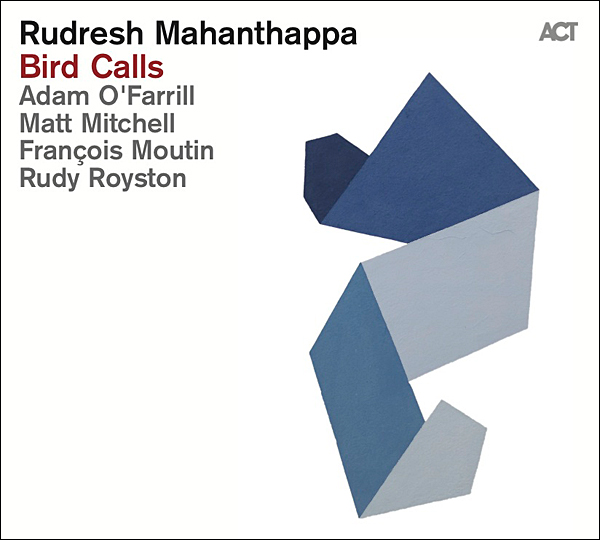
The other covers (if “covers” is the term for such unbridled acts) also lead to inspirations of memory. “Ring of Fire,” with a new beat in the third measure, is the most surprising choice, but Mahanthappa says Johnny Cash was vital to his childhood. Charlie Parker was vital from his adolescence onward. He made a widely praised Parker tribute in 2015, Bird Calls, on the ACT label, but at that time he was still committed to recording his own material. Bird Calls has music motivated by, not composed by, Parker. The decision to record three Bird tunes on Hero Trio is significant. (Besides “Red Cross,” the others are “Barbados” and “Dewey Square.”) Mahanthappa burns these iconic themes into the air then repurposes them in his own vivid timbre and energy. Perhaps the piece that is most literally a cover is Ornette Coleman’s great lament, “Sadness.” Mahanthappa’s version is faithful, concise, and passionate.
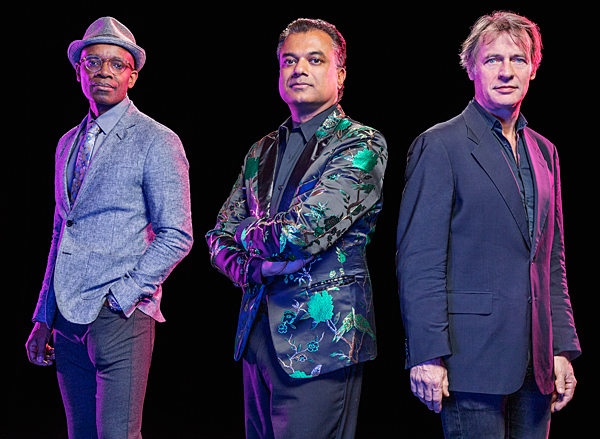
Mahanthappa has played with Moutin in various settings for more than 20 years. His association with Royston goes back to 1991, in Colorado. But until the new album, they had never played together as a trio. The saxophone trio with bass and drums is one of the foundational formats in jazz. Trios led by Sonny Rollins, Ornette Coleman, Joe Henderson, Joe Lovano (and, more recently, J.D. Allen) are important examples. Mahanthappa, with a few brief, minor exceptions, has bypassed the format—until now.
Moutin and Royston are extraordinary on Hero Trio. Their aggression establishes drama, even before Mahanthappa enters. Moutin reminds you of David Izenzon with Ornette Coleman. Izenzon was the first bassist who proved that it was not only okay, it was levitational, for a bassist to play so many notes, to become a semi-autonomous whirlwind of energy within a jazz ensemble. Mahanthappa says, “I always wanted to make a classic saxophone trio record. And I always wanted to make an album of music that was not my own. I realized that now was the time, for both. François and Rudy and I are so connected. Anything you play with them sounds fresh.”
He explains how, in live performance, the three of them developed a system of cues: “I play a melodic figure that cues a particular bass line, a certain groove. And the idea is that we can vibe on that for a while and then I’ll start playing a tune, a standard, and everybody will kind of fall in. Then I’ll cue another bass line. Let’s say I have six or seven of these cues. You can play a whole set of standards that are bridged together by these grooves. It works really well live. It’s very organized but it sounds sort of stream-of-consciousness. It puts an original light on standards. The challenge with this album was, ‘How do you capture that spontaneous thing that happens live on a studio recording, a five-minute track?'”
“I Can’t Get Started” shows how the trio meets this challenge. A quick melodic flourish from Mahanthappa, repeated twice, indeed cues a groove, an ominous, slow ostinato from Moutin. Then Mahanthappa floats in over the groove. He is playing the alto saxophone, but the sound comes from so far east of Boulder that he might be playing the double-reed shehnai of India. His wavering, hypnotic lines suggest distant ancient ceremonies and processionals. A song by Ira Gershwin and Vernon Duke is transformed. The transformation could only be imagined by someone who grew up in the presence of the American Songbook, was sent on a mission by Charlie Parker, ventured outside of Parker, then returned to where he started, on a passage that included a stop at an all-night concert in Bangalore.
“I Can’t Get Started” is the closing of a circle. Ideally, it would have been a live album. (Surprisingly, Mahanthappa has never made one.) He says, “The original plan was to play a club somewhere for maybe four nights and record everything and then figure out what the record should be.” For various practical and logistical reasons, the plan was abandoned. Hero Trio was recorded by engineer David Amlen at Sound on Sound Studios in Montclair, New Jersey, within long walking distance of Mahanthappa’s home. The upside (as is often the case when weighing the pros and cons of live vs studio recordings) is the sound. Sonically, the album is dynamic and visceral. You are close enough to Mahanthappa’s alto saxophone to reach out and touch it. The mix by Liberty Ellman brings the bass and drums far forward—appropriate given the centrality of Moutin and Royston to this trio’s impact.
You can’t talk to a jazz musician in mid-2020 without inquiring about how the global pandemic has affected their life and work. Mahanthappa says, “This was supposed to be a big touring year for me. I had some major stuff lined up, including a long tour with a project for the Charlie Parker centennial.” (It involved an all-star band co-led with Terri Lyne Carrington and was called “Fly Higher: Charlie Parker @ 100.”) “Of course, everything got cancelled. But I’m doing okay. I’ve been teaching at Princeton for four years now, so I’m less dependent on income from touring. My wife is a therapist, and she has been able to do that from home, by Zoom or whatever. Her field is actually one that ramps up in times like these. I’m more concerned for all my good friends and colleagues who rely mostly on performing. I’m glad that a lot of organizations have mobilized to help.”
When told that many musicians report an unprecedented availability of practice time while sheltering in place, he speculates, “They must not have young children.” (He has a son and a daughter, ages 7 and 4.)
“I imagine the trio will probably do a bunch of touring to support the new album in 2021.” We can only hope.
source: http://www.stereophile.com / Stereophile / Home> Music and Recording Features / by Thomas Conrad / September 04th, 2020
Dr Afreen Amir, a native of Kodagu, is now part of a research team in London that is already working towards finding a vaccine for Covid-19 pandemic.The research team has been researching on ‘Dexamethasone’, a steroid, which has given a new hope by possibly being a potent vaccine against the Covid-19.
After completing her MBBS in Mangaluru, Dr Afreen pursued her higher education in London and has been working as a doctor there. Her husband Mushir too, is a doctor in London. Afreen’s father S I Amiruddin is currently based in Dubai. He is the elder brother of Kodagu Zilla Janapada Parishat General Secretary Munir Ahmed.
“Afreen completed her SSLC from St Joseph School in Madikeri. She had emerged as the second topper in the district, in the Class 10 board exams. Currently, she is one of the seven experts who are working on the Covid-19 vaccine in London. She always had an inclination towards research in medicine”, Munir Ahmed said.
‘Dexamethasone’, the possible vaccine for the Covid-19, has been subjected to laboratory experiments. The researchers are of the opinion that with the use of the Dexamethasone, about one third of the death rate of the Covid-19 patients can been reduced. A report in this regard is expected to be out soon.
source: http://www.deccanherald.com / Deccan Herald / Home> State> Mangaluru / by DHNS, Madikeri / June 19th, 2020
When Rudresh Mahanthappa recorded Bird Calls, the alto saxophonist wanted to pay tribute to one of his heroes who was probably the greatest alto saxophonist of all time, but he didn’t want to make a straight-up Charlie Parker covers record. Instead, he re-cast Parker tunes to the extent that they became Mahanthappa originals. Five years later, he crosses completely over into playing covers of Parker and other sources for his inspiration.
Hero Trio is that ‘all-covers’ record, which is about the only thing this boundary-pushing composer, bandleader and ace reedman hadn’t yet attempted in one of the most creative jazz careers since the turn of the 21st century. And far from being just an exercise in his interpretive skills (which are unique and stimulating), here is a large window into what makes Rudresh Mahanthappa tick, what lights his fire, what shaped him into the artist he is today. It reaches across generations and genres, but ‘Bird’ still looms large.
The Hero Trio band is a pared down version of the quintet that made Bird Calls. Drummer Rudy Royston and Mahanthappa’s longtime acoustic bassist François Moutin are all who’s needed for Mahanthappa to flesh out these songs in meaningful ways because the saxophonist is so good at fully sketching out the melody and harmony of a song without chordal support and his rhythm section is so good at taking these songs into fresh new places.
“Red Cross” is what I’d call the track that perfectly bridges us from Bird Calls to Hero Trio, mainly because it’s a Charlie Parker song. The trio puts its own stamp on the tune, never fully playing out the head before diving into improv and there’s even a new bridge. “Barbados/26-2” has a funky interlude tacked on front and only after that is done we hear Parker’s 12-bar blues. Moutin gets first dibs on soloing, and when Rudresh Mahanthappa does his thing next, he stretches bebop out to its logical limits. From there, the trio transitions into John Coltrane’s “26-2”, where Trane did what Mahanthappa did on Bird Calls and built a song around the chord changes of Parker’s “Confirmation,” but that, too, is puckish and livelier than the original.
There are other vintage jazz standards on Hero Trio and none of these are treated in ways they’ve been treated ever before. For instance, Mahanthappa chose “I’ll Remember April” because he was thinking about Sonny Rollins’ performance of it on Live at the Village Vanguard from 1957 as well as Lee Konitz’s 1961 rendition. But it’s hard not to notice the crazy, contemporary rhythm Moutin and Royston keeps slipping underneath it and at one point they spill over into the leader’s space. It sounds like irresistible fun, and they do it again for yet one more Parker classic, “Dewey Square.” For an anguished take on “I Can’t Get Started,” Moutin devises a bass line that matches Mahanthappa’s sentiment instead of Vernon Duke’s melody and Royston plays to the mood as well.
A couple of jazz songs from the post-bop era show up in creative renderings. For Keith Jarrett’s 70s tune “The Windup,” Moutin undertakes Jarrett’s role in the song while Mahanthappa is playing Jan Garbarek. Moutin later is fast, dexterous and lyrical for his aside. Moutin saws with sorrow just as David Izenzon did on Ornette Coleman’s “Sadness”, and Mahanthappa wavers his notes perfectly just as Coleman did but still within his own language.
The Hero Trio finds ways to liven up old and familiar songs outside the realm of jazz, too. Rudresh Mahanthappa covers all the harmonic touch points of Stevie Wonder’s “Overjoyed” so that there’s no mistaken what song this is, but judiciously avoids adding unnecessary notes that would clutter it up. Mahanthappa exploits the phrasing irregularities in the Johnny Cash hit “Ring of Fire” as a springboard for freedom. Plus, it’s a great melody, a common trait of all of the songs chosen for this album.
Just because Rudresh Mahanthappa took a break from composing for this project doesn’t mean he took a break from creating. Hero Trio has just as many delightful surprises and audacious musicianship as any other Mahanthappa record.
Hero Trio will release on June 19, 2020 from Whirlwind Recordings.
source: http://www.somethingelsereview.com / Some Thing Else ‘ / by S Victor Aaron / June 11th, 2020
The Kodava Koota of North America has instituted a scholarship for the year 2020 to recognise and reward meritorious Kodava students studying in India.
Kodava Koota is a non-profit organisation founded in 2017 by like-minded Kodavas living in North America under the leadership of Gina Konganda, an entrepreneur based out of Dallas, Texas. She constituted a Board of 8 members (Appachu Ballachanda, Phoenix, AZ – Vice-President, Appanna Chottera, New Jersey – Secretary, Avinash Chottangada, Atlanta, GA – Treasurer, Nithan Monnanda, Philadelphia, PA – Kodagu Initiatives, Nalini Kuliyakanda, Goldsboro, NC – Culture and Traditions, Priya Pattada, San Francisco, CA – Membership and Subbaiah Cherumandanda, Los Angeles, CA – Career and Entrepreneurship), who are undertaking several initiatives both in North America and Kodagu.
In the year 2020, Kodava Koota is institutionalising multiple scholarships amounting to $10,000 (about Rs.7.5 lakh) for Kodava students in India. Kodava Koota has allocated $3,000 (about Rs. 2.2 lakh) from its membership fund and one of its members Jyothi and Pavan Pattada have donated $7,000 (about Rs. 5.3 lakh) for this initiative.
The objective of this initiative is to encourage Kodava students and reward them with scholarships as a token of appreciation towards their accomplishments and encourage other students to follow suit.
CATEGORIES: Medicine Studies (2 students pursuing under-graduate or post-graduate); Ph.D (1 pursuing Ph.D in the area of Science, Engineering or Technology); Engineering (2 under-graduate or post-graduates); Dental Sciences (1 under-graduate or post-graduate); Agricultural Science (1 under-graduate or post-graduate) and 2 students pursuing Master’s in Science and Mathematics.
ELIGIBILITY: Kodava students studying anywhere in India are eligible to apply for these scholarships. Awards will be adjudicated by Kodava Koota Board or a Committee constituted by it. The scholarships will be administered through its partners Coorg Education Fund (coorgeducationfund.com).
LAST DATE TO APPLY: Applications should reach Kodava Koota before July 31, 2020. Signature and seal of the educational institution is mandatory on the supporting documents like marks cards and letter of recommendation.
Students who are going to start 1st year of the course in 2020 are eligible to apply but will have to attach documents that confirm admission in addition to Grade 12 (or 2nd PUC marks sheet); First year students of courses like MBBS, BDS, BE where CET/NEET are applicable, applicants should upload a copy of the CET/NEET allotment order.
Fill the application forms and upload the supporting documents via: https://forms.gle/jcxPQDJMBZiNhJrQA
For more details, reach out to: kodavakoota.na@gmail.com or coorgedufund@gmail.com, according to a press release from the Kodava Koota.
source: http://www.starofmysore.com / Star of Mysore / Home> News / June 12th, 2020
I have a confession to make: secretly, I was kinda happy when India went into a total lockdown on March 25. Come on, I was feeling only what your average overworked, stressed out middle-class working woman felt. The disease was bad, but I was happy to take my staycation.
But I was not going to laze through 21 days. I had plans – house cleaning, writing, being the light of my family, getting lighter … all that good stuff.
Day 1: Woke up with a sense of awe. We were witnessing history! Realized that there was no newspaper. Worse, no housemaid. For 21 days. An icy hand clutches my internal organs. A week, I can get by, but three weeks?
Upside: Had a nice long nap in the afternoon. Felt really rested.
Day 2: My mother was absolutely right – housework never ends. No point in slaving, you have to do it all over again … in an hour’s time. New rule: no one allowed to walk on the floor or change clothes. And if anyone wants to eat the rice, sambhar, rasam, veg fry, and curds, they could use their fingers and palms only – no plates allowed.
Upside: Have started watching re-runs of re-runs old shows.
Day 3: A day of realizations.
My neighbor’s baby has colic. My neighbor has a baby. Really? Just exactly, who is this neighbor?
A family that stays at home eats too much. I have to cook often and in large quantities. Ergo, more dishes. Aaarrrrgggh!
Love my family. I just don’t want them around all the time.
Eating healthy when confined to the home – an oxymoron. Also, how long will my stash of snacks hold out
Upside: Discovering the joys of binge-watching.
Day 4: I hate housework. I-HATE-HOUSEWORK. Once this lockdown is over, I’ll burn the house down. Finding it hard to binge-watch Friends and Big Bang Theory while wondering – ‘Who the h**l is doing their dishes and cleaning their apartments when they are at that d***n coffee shop or the Cheesecake Factory?’ This thought sucks the fun out of watching the shows.
Upside: Begun reading a book … more than a page at a time!
Day 5: Going to commit murder. A man in the next building keeps singing off-key and loudly along with his stereo. Hoping his family will do him in themselves. If they can’t, I volunteer.
Hearing about immigrants in cities trying to go home. Terribly sad for them. Okay, I’ll admit – my suffering is small potatoes. By the way, do I have enough potatoes?
Upside: Gave myself the day off. Read a wonderful thriller.
Day 6: Dying of housework. Wiping all the torches, electric lamps and burned out bulbs, even gas stove – but no genie. I now know who I love the most – the maid. If anyone offers to bring my maid back in return for my family … well, I guess that’ll never happen (sob).
Sick of Friends. For just how long did this show run?
Upside: Today, a resident set things up so that we get veggies and milk packets every morning. Yay!
Day 7: Today, my husband went out, as a volunteer for shopping for our apartment complex. I suspect he was just itching to get out of the house. When my hunter-gatherer returned from the mythical land called Outside, I made him give a step-by-step account of the entire half-hour trip. It took 45 minutes. A highlight of today.
Huge Upside: Husband took over the dishwashing duties.
Day mmm-hmm: Missed a few days of journaling. Hell, missed a few days of life – got my dates wrong. I cheered when I found we had a couple fewer days to go of the lockdown. I have gone from being merely grouchy to being depressed as well.
Upside: ?????
Day something or the other: Today, my husband got another chance to escape … needed salt! Bit down hard on a pillow and stay that way to prevent myself from asking him to buy a ton of snacks.
Day sometime-during-week-two: Am all weirded out. Vocabulary stunted as we use only the words Corona Virus, Covid-19, lockdown, self-quarantine, shut up, and how the hell should I know. Still hate housework, but we now have a truce going. I’ll sweep, but the corners have to fend for themselves. If my boss can’t deal with it, she can do the work herself. Oh, wait, I’m the boss. Dang it.
Upside: All of us are healthy. We are all home, we are together. Watching TV footage of all the migrant laborers trying to get home – heartbreaking. Hunger and uncertainty in the camps – scary. And sick people in overflowing hospitals and the deaths … at least we aren’t going through that.
Day end-of-week two: Identified new syndrome – Lockdown-Induced Writer’s Block. Wonder if people will still be interested in the same things post-COVID. Still can’t get over the unreality of the situation. Is this lockdown a waste of time, or the best idea ever?
The mood around town is strange too. Most people are taking it as a time to relax. Some are going out anyway, once or twice a day. There is some seriousness but it’s not all gloom and doom.
Summer is in full swing. The heat is killing. It’s enforcing the lockdown better than the fear of Coronavirus.
Upside: Birds are singing like gangbusters. We’re seeing bulbuls and parrots far more than before.
Week 3 beginning day-(Name starts with M or something like that): Conflicting feelings:
Happy because I’ve Corona eyes – dark circles are completely gone.
Upset, because I’ve Corona hair – shaggy and roots are showing.
Day Wed/Thurs. Week 3: Yay, only one more week to freedom. I am feeling far more upbeat than before.
April 15: India’s lockdown extended until May 3.
Hell, I’m putting all activities on hold as I concentrate on saving my sanity.
Good luck to you too!
Lakshmi Palecanda moved from Montana, USA, to Mysore, India, and inhabits a strange land somewhere in between the two. Having discovered sixteen years ago that writing was a good excuse to get out of doing chores, she still uses it.
source: http://www.indiacurrents.com / India Currents / Home / by Lakshmi Palecanda / May 20th, 2020
Bangalore boy and Indipop pioneer Biddu Appaiah, at 75, continues to groove to the beat of his own drum.
Biddu
A guitar as a present on his 13th birthday set the wheels in motion for the youngster to chase his dream of “making it as a musician in the West”.
Now, all of 75, Bangalore boy Biddu Appaiah, one of the pioneers of disco and Indipop, with millions of records sold worldwide, continues to be counted among the top Indian music producers on the international scene. In fact, he was ranked 34 on British magazine NME’s ‘The 50 Greatest Ever Producers list’.
Today, Biddu can afford to take life easy, dividing his time between homes in London, Spain and India, but his journey to the top was no cakewalk. The pop icon formed a band, The Trojans, at 16 and played at the 3 Aces and small private parties in Bangalore. From then on, there was no looking back. After the group split, Biddu trained his sights on London, the home of rock-n-roll, Beatles and The Rolling Stones. His arduous journey in 1967 on a Haj ship to Mecca and then hitchhiking through the Middle East deserts is now legendary. In London, with just his clothes, his trusty guitar and a dream to make good music, the struggle continued, juggling odd jobs to earn his bread and butter until 1974, when his most recognisable production ‘Kung Fu Fighting’ with Carl Douglas, became a chartbuster.
Towards the late 70s, he collaborated with Tina Charles and soul legend Jimmy James, producing hits such as ‘Dance Little Lady’, ‘I Love to Love’, ‘Now is the time’ and others. All this and the Biddu Orchestra that produced instrumental sensations won him awards, including the Ivor Novello award, the British equivalent of the Grammys.
‘Made in India’
Biddu is also credited with writing the music for two notable movies — The Stud and The Bitch. In 1979, Indian actor-director Feroz Khan got Biddu to compose a track for his movie ‘Qurbani’ and ‘Aap Jaisa Koi’ sung by Pakistani teenager Nazia Hassan happened, again a mega hit of the era. Next, Biddu produced a disco album ‘Disco Deewane’ for HMV featuring Nazia with her brother Zoheb that became the largest selling pop album in Asian history, topping the charts in 14 countries.
In 1987, he scored a top hit in Japan for ‘The Look that Kills’ produced for Japanese singer Akina Nakamori. In the 80s, Biddu pioneered a new genre of Hindi music called Indipop, producing ‘Made in India’ with the velvety-voiced singer Alisha Chinai as well as with Shweta Shetty, Shaan, Sagarika and Sonu Nigam.
As the disco boom began fading in the late 80s and 90s, Biddu donned his writer’s hat, churning out three books. The first, ‘Made in India’, his autobiography published in 2010, an eminently readable book with his characteristic humour and honesty, was a bestseller. Next came ‘Curse of the Godman’ and ‘The Abundance of Nothing’, both set in India.
Interestingly, fans can still look forward to more music from the septuagenarian who is currently composing some new songs.
Excerpts from an interview:
You’ve been there done that. Any dreams yet to be fulfilled?
Career-wise, I am happy. I am going through my catalogue of 583 songs and picking half-a-dozen with a view to sending them to new, young singers of today. I am also working on a few new songs. I won’t produce them, but will get someone younger to do so.
Anything special for your 75th? What does this milestone mean to you?
As I said, I am working on a few new compositions. As for the milestone, at 75 years of age, it is more like a millstone!
What’s life for Biddu these days?
Life today is all about breathing, which is one way of staying alive and spending time with the family.
You left India in your early 20s. Why were you so keen to leave India for the West?
I wanted to make it in the West. India in the 60s was a poor country; we were dancing with Russia instead of rocking with the West. I needed to get out of India as my interest was Western pop music; I was never into Bollywood. I left India and walked all the way to Beirut, singing there for six months until I saved enough moolah to get to England. However, I do come to India to see my sister and relatives. I spend a couple of months in Goa in the winter. But, to be brutally honest, I would never come back to live in India. The politics and corruption would kill me, if not the pollution and the chaotic traffic!
How do you see the music scene in India today?
Frankly, I do not know anything about the Indian music scene. I do know that making music in English has a narrow bandwidth (it always had) and from what people tell me regarding Indian film music, melody has given way to beats and rap. There’s not much noise about Indian music in the West. A R Rahman had a moment and Anoushka (Shankar) is fairly well-known, but only among world music aficionados.
Youtube, TikTok, Spotify, basically Internet has changed the game…
This is the way forward. It is the avenue from where young people get their music. We, of the older generation, may not like it or find downloading Apps too complicated, but this is modern life. You can’t stop the waves from hitting the shore.
Your message to young, budding artists who want to pursue a career in music?
Be prepared for a tough slog. The chances of you not making in the music business is considerably more than you making it. There’s so much talent around, but only a few lucky ones make it. It is a tough game.
Your stint as music director for a few Hollywood films was short. Why?
I prefer making records. Firstly, it’s on the go. It doesn’t take a year or years as the case may be. Also, in films, you are being told what to do by the script, the producer/director etc. When you make pop music, you are directed by your own desires; you are the master of your destiny.
Music has been a big part of your life. What has it taught you?
Music has been great for me. I was inspired by the Beatles and Elvis and I had this fire in the belly to make a name for myself in the West. It is this desire that drove me. Doing something you love is irreplaceable. It has shown me how lucky I am to have followed my dream and succeeded in it. Success is not just about talent, but luck and opportunity, although I believe sometimes you make your own luck.
What kind of music do you listen to?
I was never a voracious listener of music. In fact, it is well-known amongst my friends that I don’t have a music collection. I listen to the radio when driving; that keeps me up on the current trends in music. I am a big fan of Ed Sheeran — great voice and great songs.
source: http://www.deccanherald.com / Deccan Herald / Home> Sunday Herald> Sunday Herald Art & Culture / by Stanley Carvalho / May 31st, 2020
WELCOME. If you like what you see "SUBSCRIBE via EMAIL" to receive FREE regular UPDATES.
Read More »