Category Archives: Science & Technology

NCoV: Info sought from foreign visitors to Kodagu

Madikeri on Friday. DHO K. Mohan is seen.   | Photo Credit: SPECIAL ARRANGEMENT
Madikeri on Friday. DHO K. Mohan is seen. | Photo Credit: SPECIAL ARRANGEMENT

The Kodagu Health Department on Friday said it will keep information shared by visitors from China and other countries affected by 2019 Novel Coronavirus (nCoV) to the district about their health status and symptoms confidential.

District Health Officer K. Mohan said the department had takenprecautions for the prevention and control of the disease. The visitors can provide information, in case they are suffering from any of the symptoms in the wake of the virus scare, on their own in a prescribed format.

The District Surveillance Officer, Shivakumar, can be contacted on 94498 43263 besides the taluk health officers from Madikeri, Somwarpet and Virajpet. The health authorities from Kushalnagar and Gonikoppa can also be contacted. Other contact persons are Srinivas on 94498 43203 and Yathiraj on 94484 48481, the release added.

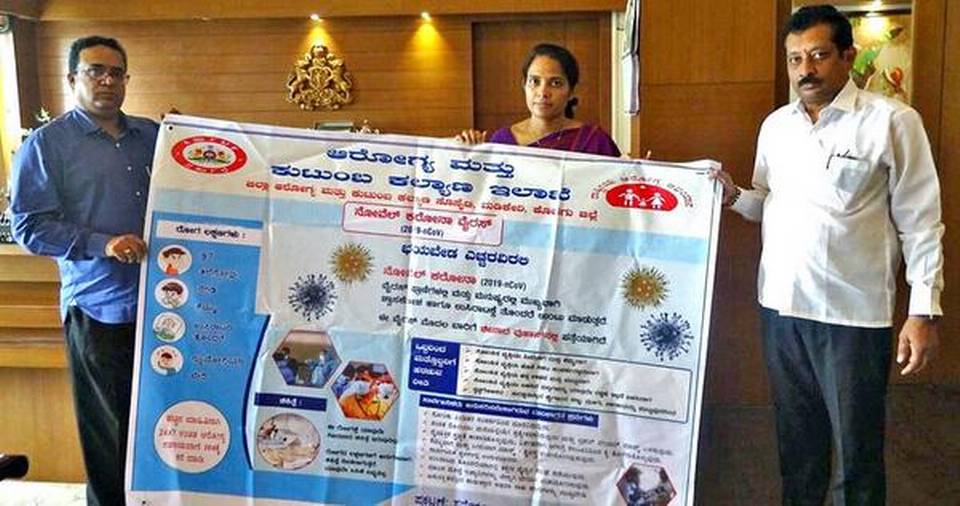
Meanwhile, posters for spreading awareness about the 2019 nCoV were released in Madikeri on Friday by Deputy Commissioner Annies Kanmani Joy. The DHO was present. Surveillance had been stepped up in the border towns of Karike, Kutta and Makutta with Kerala confirming three positive cases. The banners would be pasted in these towns for educating the public.

source: http://www.thehindu.com / The Hindu / Home> News> States> Karnataka / by Special Correspondent / Mysuru – February 07th, 2020

Kodagu Medical College hospital in expansion mode

CM to lay foundation stone for 450-bed hospital block Kodagu Institute of Medical Sciences (KIMS), which became operational four years ago in Madikeri, is being expanded with the foundation stone for a 450-bed hospital attached to the institute to be laid on Monday.

Chief Minister B.S. Yediyurappa will give a start to the construction on the existing teaching hospital premises. Once the 450-hospital facility (300-bed unit and 150-bed unit) is ready in about two years, the number of beds for healthcare services will rise to 750 as the existing hospital has 300 beds.

Deputy Chief Minister and Minister for Medical Education C.N. Ashwath Narayan and Minister in-charge of Kodagu V. Somanna will be present. MLA Appachu Ranjan addressed presspersons at Madikeri on Saturday to present details about the hospital project.

KIMS has an intake of 150 seats and currently 600 students are pursuing a medical degree and post-graduate courses. In 2016, the district hospital was converted into the teaching hospital of KIMS and it was in need of an upgrade in complying with the norms of the Medical Council of India. Accordingly, the hospital is now being expanded with additional 450 beds at a cost of ₹100 crore. The construction for 300 beds will be take place on the existing hospital premises while the 150-bed facility will come up on the premises of women and children’s hospital.

Cariappa K.B., Dean and Director, KIMS, told The Hindu that the expansion of the hospital will benefit the people of Kodagu as well as neighbouring taluks since the outpatient load had risen to 900 from 200 in three years. Multispeciality services will be convenient for those looking to Mysuru and other places for those services as Madikeri has only a few hospitals and nursing homes under private ownership.

Radiology department
On an average, 75% of beds are occupied in the hospital and the expansion will give rise to adding up of more speciality departments, he added. “We are in need of manpower for the radiology department as the hospital is equipped with ultrasound and CT scan equipment,” he said.

source: http://www.thehindu.com / The Hindu / Home> News> States> Karnataka / by Special Correspondent / Mysuru – January 26th, 2020

NIE to host session on hill slope hydrology

The National Institute of Engineering (NIE), Mysuru will be organising a three-day workshop on ‘Hillslope Hydrology and Field Research’ here from January 9 to 11.

The workshop is organised by the Department of Civil Engineering and sponsored under the grants of the World Bank-aided third phase of Technical Education Quality Improvement Programme (TEQIP).

The event proposes to popularise and promote field hydrological research and comprises a day’s lectures and two days of fieldwork in Kumaradhara field hydrological laboratory developed by NIE in Kodagu.

The Water Resources Centre of NIE has pioneered research in hydrology and has been carrying out field investigations in the experimental watersheds it has developed in the districts of Kodagu and Hassan for over two decades in the Western Ghat region of Karnataka, according to a press release.

“Relative to the other fields of science, hydrology is a new field of learning and is unexplored. Knowledge about many hydrological processes in wet and hill slope areas was little and a lot remains to be learnt on the field. The workshop provides enthusiasts with a platform to learn and research,” the release added.

The teaching faculty of Civil Engineering, PG students of Water Resources and research scholars in the field and professionals working in the water sector can participate in the workshop.

For registration, call the workshop coordinators R.Y. Putty (98802 55920), Y. Javeed (99860 62198) or Chandramouli (94487 73056).

source: http://www.thehindu.com / The Hindu / Home> News> States> Karnataka / by Special Correspondent / Mysuru – January 07th, 2020

IBM brings weather forecasting model for governments, industries, farmers

IBM has launched a global high-resolution atmospheric forecasting system, IBM GRAF, saying more accurate weather forecasting can help governments and companies greatly improve their operations. IBM said GRAF can help bridge the gap between Indian …

New Delhi :

As many as 94% of top Indian business leaders believe climate change and adverse weather conditions have had a negative impact on business operations while around 72% believe they disrupt local economy, a study by IBM and The Weather Company shows.

The report released on Thursday also said a significant number of Indian citizens said they were not confident about the local weather forecasts.

IBM has launched a global high-resolution atmospheric forecasting system, IBM GRAF, saying more accurate weather forecasting can help governments and companies greatly improve their operations.

“We work with 168 different governments today around the world, and we are in touch with Indian government as well,” said Cameron Clayton, general manager at IBM Watson Media and Weather. “We want to work on providing accurate forecasts as it has a massive impact on the GDP.”

IBM said GRAF can help bridge the gap between Indian forecasting system and global models.

The 15-day weather forecasts released in India start from 80% accuracy and by the end of the 13th day the accuracy percentage falls to 50%, Cameron said. IBM GRAF claims to keep the accuracy levels consistent throughout the 15-day.

“In the tests we ran, our model is around 30% more accurate (than Indian system) and we have so far designed to issue 12 million pieces of forecast information through IBM GRAF, which will improve the forecast quality massively in India,” Cameron said. “While we have collaborated with various governments across the country, we believe that the only way to get there is through public-private partnership.”

IBM is keen to present its forecasting models to India through a publicprivate partnership agreement.

IBM said its weather forecasting models have helped farmers in Kenya receive crop insurance in less than three days.

The company has received some interests from private insurers in India, too.

“Insurance companies are slowly consuming our data, mostly historic and advisory, to make better decisions,” said Himanshu Goyal, India sales and alliances lead at IBM. Two insurance companies in the country are using its models, he said without naming them.

Several businesses in sectors ranging from aviation to agriculture, have welcomed IBM GRAF.

Tata Coffee is leveraging IBM weather prediction products to receive accurate forecasts, soil moisture and soil temperature information for better results.

“In the aviation industry, our models have helped bring down turbulence by 50%, and the same capability is being brought to India,” Cameron said.

source: http://www.economictimes.indiatimes.com / The Econonmic Times / Home> Business News> News> Economic News> Agriculture / by Bhavya Dilipkumar, ET Bureau / December 13th, 2019

Annular Solar Eclipse On Dec. 26: Sky-Gazing At Remote Village In Kutta

KuttaEclipse01KF10dec2019

– Rare ‘Ring of Fire’ visible in South Kodagu
– Over 2,000 hand-picked students to witness celestial event from 8 am to 11 am
– Organisers aim for India Book of Records

Mysuru:

Kaimaani, a remote village in Kutta, South Kodagu, is all set to witness the rare Annular Solar Eclipse on Dec. 26 — the third and final solar eclipse of the year 2019. The Mysore Science Foundation (MSF) is organising a sky-gazing event at Kutta where nearly 2,000 children and general public will witness the spectacular event.

In the Annular Solar Eclipse, Moon does not completely obscure the Sun as the Moon is farther away from us than normal, making it appear smaller. As a result, the Sun is not totally eclipsed, leaving a ‘Ring of Fire’ around the edges.

The Mysore Science Foundation has tied up with Aseemit Edutech Private Limited, a Pune-based organisation (Mitee as its sub-group) for the event. Aseemit Edutech Private Limited is involved in secondary and senior secondary education.

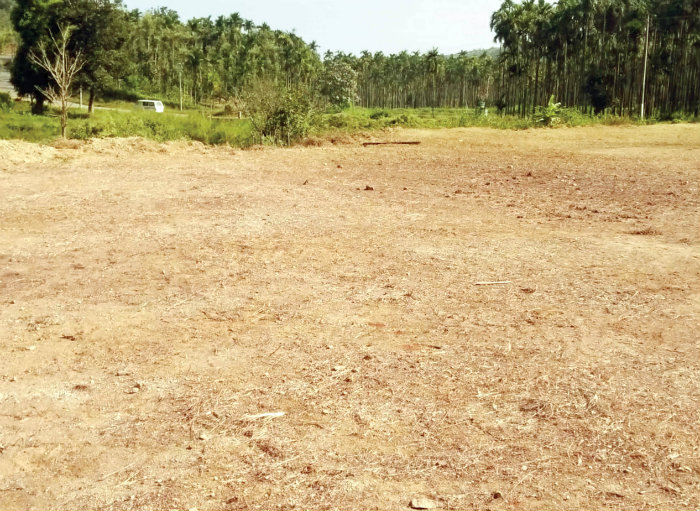
The spot in Kutta where the sky-gazing event will be witnessed on Dec.26.

Kutta falls on Solar Path

Speaking to Star of Mysore, G.B. Santosh Kumar of Mysore Science Foundation, said that Kutta falls on the Solar Path and as such, the visibility is clear. The visibility of Annular Solar Eclipse in Mysuru is only 75 percent.

“Mangala in Gundlupet, Coimbatore in Tamil Nadu, Udupi in Dakshina Kannada and Kutta in South Kodagu fall on the Solar Path where there is a clear visibility.

“We did not get permission from the Forest Department for the event as Mangala falls under the limits of Bandipur Tiger Reserve. And 2,000-strong crowd going to Coimbatore and Udupi was a distant possibility. As such, we have zeroed in on Kutta where the event can be viewed from 8 am to 11 am,” Santhosh said.

Kaimaani coffee yard

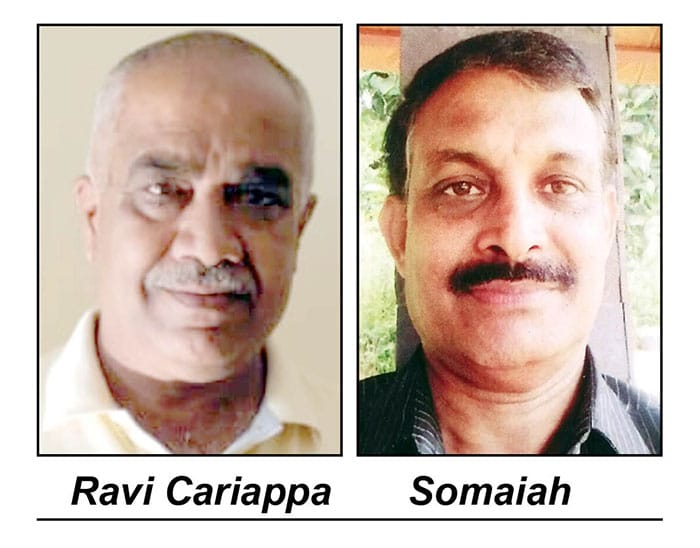
At Kutta, the event will be organised at the newly-developed coffee drying yard of Kolera Ravi Cariappa in Kaimaani village. “The place is by the side of the road and the land is in a higher altitude and there is an arecanut plantation below. This is a perfect location for witnessing the once-in-a-lifetime event,” said Kotrangada Somaiah, a teacher at Manchalli Government School, who played a key role in identifying the location for the organisers.

“People from Mitee Pune contacted me two months back and requested me to find out an ideal place in Kutta to view the event. First we considered the Government Higher Primary School Cinkona in Kutta for the event but had to cancel it as the approach road was not good. The Kaimaani coffee yard is a perfect location as it is by the side of the road. There are facilities including toilets and I have requested the local residents to allow children to use their toilets,” said Somaiah.

KuttaEclipse03KF10dec2019

India Book of Records

The event organisers have already registered in the India Book of Records for the largest gathering of children in one place to view Annular Solar Eclipse. “On Dec.17, the Mysore Science Foundation will organise another programme called “Video Viewing” where students will be seeing eclipse-related videos to prepare them for the main event. For the actual event on Dec.26, we are expecting students from Maharashtra, Tamil Nadu and Kerala,” Santhosh added.

On that day, occurrence of eclipses, types of eclipse, science behind eclipse, myths and misconceptions, eclipse watching and safety shall be explained in addition to demonstration on pressure variation and temperature variation.

Food & accommodation

For outstation students coming from Maharashtra, Kerala and Tamil Nadu, choultries have been booked in Virajpet for their food and accommodation. “Along with them, students from Mysuru, Bengaluru and Kodagu too are participating in the event,” Santhosh said.

Student selection

On the student selection process, the Mysore Science Foundation had communicated to schools to send 10 children who are interested in astronomy and a teacher. Registrations were on first-come-first-serve basis and we have kept last-minute registrations open as we are aiming for India Book of Records, he added.

source: http://www.starofmysore.com / Star of Mysore / Home> News / December 07th, 2019

BEL’s hi-tech school opens in Madikeri

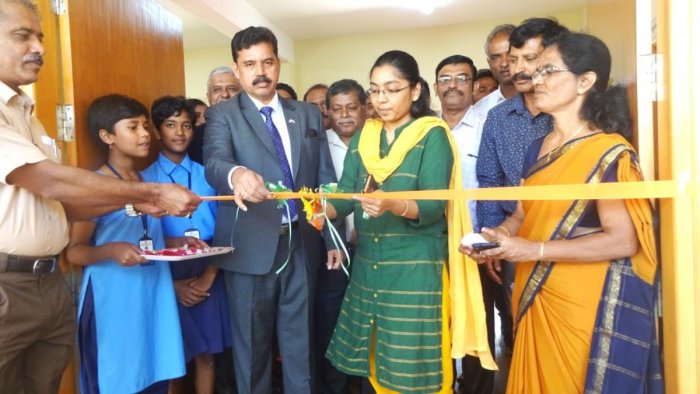
Kodagu Zilla Panchayat CEO K Lakshmi Priya inaugurates the newly built classroom by BEL in Madikeri

The hi-tech school constructed by Bharat Electronics Limited (BEL) was inaugurated by Kodagu Zilla Panchayat Chief Executive Officer K Lakshmi Priya and BEL Human Resource Department Director K M Shivakumaran, in Madikeri on Monday.

The new building of the Model Government Higher Primary School has been constructed at a cost of Rs 2.28 crore, to include classrooms, head teacher’s office, computer room, library, kitchen, physical education teacher’s room, Nali-Kali class and so on.

Speaking on the occasion, K M Shivakumaran said that the students have to utilise the facilities provided by the government and non-government organisations to make their future brighter.

He also noted that BEL has been playing a significant role in the defence sector of India. The company decided to choose Kodagu district, which has also immensely contributed to the defence.

“A new school building was constructed for the government primary school in this regard towards providing a good learning atmosphere,” he added.

Former director of the Education Department, G R Basavaraj, called upon the non-government organisations to join hands with the government to build better infrastructure in government schools.

Previously, Zilla Panchayat CEO Charulatha Somal had submitted a proposal to BEL to build a new school building, he said

School Development and Monitoring Committee President Shivashankar, DDPI P S Machado, Block Education Officer Gayathri and Akshara Dasoha Education Officer H K Pandu were present.

source: http://www.deccanherald.com / Deccan Herald / Home> State> Mangaluru / by Adithya K A, DHNS Madikeri / November 25th, 2019

Mysuru: Stone weighing 800 gm removed from 37-yr-old

An ultra sound scan indicated he had a kidney stone

Mysuru:

In a rare surgery, doctors at a government hospital in Virajpet removed a kidney stone weighing 800 grams from a 37- year- old man’s bladder on Tuesday.

Mohammed Rafiq, a daily wage worker from Kadanga village in Virajpet, was treated at the hospital after he complained of difficulty in passing urine and severe pain. “An ultra sound scan indicated he had a kidney stone. And an X- ray revealed it could be 8cm to 10cm in size, but we could not get the exact dimensions of the stone as its posterior length could not be measured. But when we opened up, we found it was much bigger. It was not easy, but after an long hour procedure, we succeeded in removing the stone. When we weighed it, we found it was 800 grams,” said Dr Vishwanth Chimpi, a general surgeon, who operated on Rafiq.

Speaking to the Deccan Chronicle, he added that while Rafiq must have had the stone for the past four to five years for it to have grown so big, it was only since the past one year that he had been getting intermittent pain, which intensified more recently. “As it was a calcium phosphate stone, it did not explode , but could not come out in the urine either as it was so huge,” he explained.

Dr Vishwanath admitted that the stone found in the daily wage worker’s body was the biggest he had come across, although three years ago he had removed a stone weighing 600 grams from a patient. Rafiq is now doing well.

source: http://www.deccanchronicle.com / Deccan Chronicle / Home> Nation> Current Affairs / by Shilpa P / October 24th, 2019

India’s coffee growers share history with Nobel winner Michael Kremer

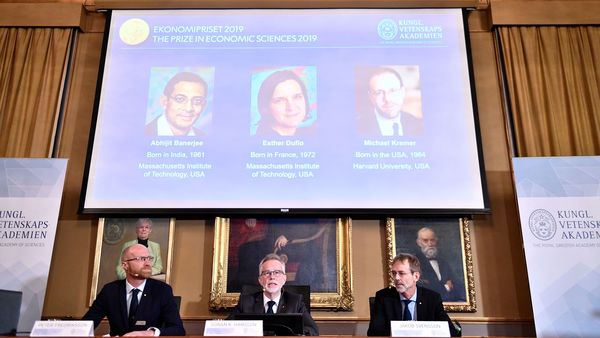
The winners of the 2019 Nobel Prize in Economics in the screen grab — Abhijit Banerjee, Esther Duflo and Michael Kremer (AP file)

– Michael Kremer, a Harvard University professor, was the co-Founder of ‘Precision Agriculture Development’ or PAD

– It advised the Coffee Board to pilot a missed-call enabled service to help coffee farmers in Karnataka
___________________________________

Bengaluru:

India’s Coffee Board, a state-run body that promotes coffee production and drinking, shares a slice of history with Michael Kremer, who won the Nobel Prize in Economics along with Esther Duflo and Abhijit Banerjee.

Kremer, a Harvard University professor, was the co-Founder of ‘Precision Agriculture Development’ or PAD, which advised the Coffee Board to pilot a missed-call enabled service to help coffee farmers in Karnataka. The IVR call service can give precise advise to the grower from scientists at Central Coffee Research Institute.

“Under his guidance and leadership, Team PAD have been working with Coffee Board of India and the coffee ecosystem for more than one year now. Thanks to the stellar efforts of Michael, Shawn, Madhur, Niriksha and Team Coffee Board, we have been able to have a positive impact on the lives of 15000 coffee farmers using a simple missed call service, free of cost to coffee farmers,” said Srivatsa Krishna, Chief Executive Officer of Coffee Board, in a statement to the media.

The service, Coffee Krishi Taranga, gives registered growers a weekly advisory on critical farm operations and daily market statistics through an automated push call when a farmer places a missed call on the helpline (080-37685000) run by the Board. It has helped growers improve productivity, profitability and environmental outlook, and will be expanded to cover 50000 growers shortly, according to the Coffee Board.

The PAD’s journey in India begun as an academic experiment in Gujarat with cotton farmers in 2011, when Narendra Modi, then chief minister of Gujarat, encouraged testing a similar service in his state called Krishi Tarang, said Srivatsa. “On behalf of the entire Indian coffee ecosystem, the finest shade-grown, hand-picked rainforest Coffees in the world, we congratulate Dr.Kremer and thank Team PAD for their contributions,” said Srivatsa Krishna.

source: http://www.livemint.com /Live Mint / Home> Explore / by Nidheesh M.K. / October 15th, 2019

Kodagu Disaster: GSI Must Be More Pragmatic And Purposeful

Kodagu01GSI17sept2019

Sir,

This is in response to the letter by Geologist Mrinmoy Chakraborty (SOM dated Aug.11, 2019) defending the views of the Geological Survey of India (GSI) published in SOM dated Apr.25. I write this to bring to light a few facts that go to show that Chakraborty has hastened to defend the warnings given by GSI a bit too early and to furnish some clarifications regarding the extreme events that wreaked havoc in Kodagu this August and perceptions arising out of them.

The series of landslides that devastated Kodagu in 2018 occurred mostly during the period 15th, 16th and 17th August. Some intriguing data on rainfall pertaining to this period tells the story. This data is from the rain gauge at Kudigana, a place near the border of the catchment of Harangi, which witnessed the worst kind of disasters in 2018.

Record rainfall

Till 6th August, the station had recorded about 5,500 mm of rain, and then on rainfall on the successive days read (in mm): 81, 250, 269, 90, 115, 121, 262, 295, 320, 461 (16th), 394, 197, 164, 95, the total for the fortnight amounting to 3,114 mm (Mysuru’s annual rainfall is 780 mm). Probably the 5-day extreme rainfall recorded then at Kudigana (1,686 mm) is the highest ever recorded in the rain gauging history of Kodagu (which extends for over 120 years now), the earlier highest being 1,462 mm in 1964 pertaining to the station of Bhagamandala.

On the other hand, the records at Kudigana for this year read thus: Total rainfall up to 1st August – 2,041 mm; then on – 30, 0, 16, 136, 183, 254, 312, 276, 298, 158, 90, 46, 35, 100 (15th), during the next 14 days – this is the period when the floods ravaged the district. The extremes here are just about 75% of last year’s and the total for season up to 20th Aug. is not even half of last year’s (nearly 4,090 and 8,614 mm respectively).
Kodagu02GSI17sept2019


Once in 10-12 years

The highest one-day rainfall recorded this year has been reported from Bhagamandala, places around which contribute to flow in Cauvery and stands at 400 mm. The seven-day extreme for this year here has been 1,142 mm. Strangely, these values have return periods of 12 years and 10 years respectively.

This means, the type of flood-causing rain that fell this year occurs, according to data available, nearly once in 10-12 years. Even the flood magnitudes in the four rivers of the basin that were reported this year have return periods of 15 – 20 years.

On the other hand, the rainfall of 2018 that caused havoc in areas around Madikeri and in the catchment of Harangi shows a return period of over 50 years! This is the reason why even though Kodagu experienced severe floods this August, only just a couple of incidents of severe landslides have occurred.

Technical data

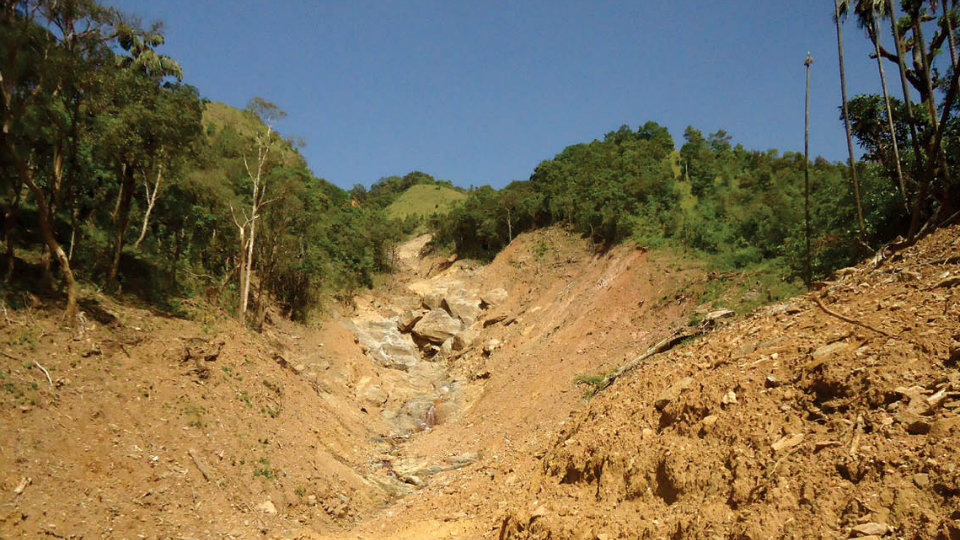
Very often, blockage of roads due to mud falls from tall and nearly vertical cuttings (Plate 1), many times triggered by uprooting of trees and washing away of the valley side road formations, are also termed as landslides, while the landslides of 2018 were removal of unimaginably large portions of hills, mostly in the valleys.

A large number of the over 150 landslides that occurred then got initiated far away from the highways and inhabitations (Plate 2), in total contrast to the common belief that tampering with nature and cutting land indiscreetly is the root-cause of landslides.

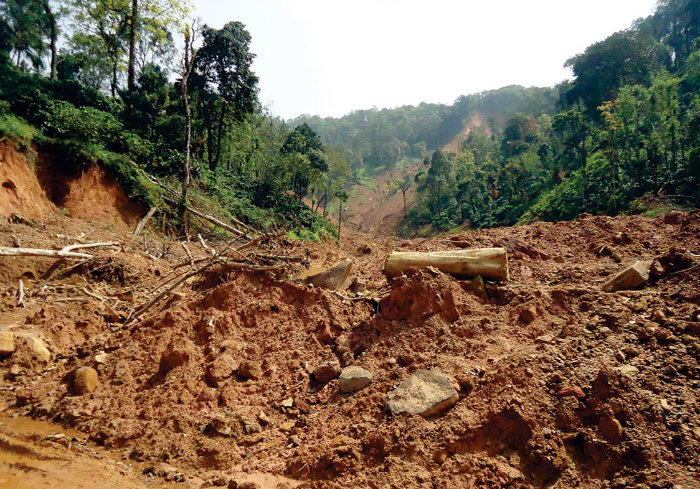
Many of these slides carried tens of thousands of cubic meters (like 200 m x 100 m x 2 m) of earth submerging hundreds of hectares of land downstream in mud (Plate 3 and 4). However, even earth falls of volume of a few hundred cubic meters (20 m x 10 m x 2 m) block roads and cause damage to houses — only one landslide of the former nature has been reported this year. It is not strange that extremes not quantified by measurements are blown out of proportion, painted colourfully and projected as catastrophes in this era of rampant use of mass and social media.

Predictions fail

Dr. H.S.M. Prakash, Director General of GSI, is reported to have explained (SOM, 25th April) thus: “There are indications of excessive downpour happening in five phases just like last year …”; “likewise, three to four more similar downpours are likely to be experienced… The rainfall in August is likely to result in floods”. Yes, one spell of rainfall has resulted in floods. But what about the rest? It is a common experience that any astrologer, once approached, would point out a number of cases in which his predictions have gone perfectly right, hiding others! The fact is that rainfall in Kodagu this year has been very poor except for that one spell — even after that week of deluge, the total seasonal rainfall for the year remains 25-40% lower than the normal (except in small pockets of Virajpet), while the last year it was about 25-50% higher than the normal.

Strong low pressure

It is claimed by Chakraborty (SOM, 11th Aug.) that the predictions for this year have been those based on “evidences”. Dr. Prakash had explained: “There is a possibility of heavy rain being caused due to volcanic eruptions in Hawaii and Mauritius. And, as if an indication, it has already started raining in Kodagu (in April)”.

It is utterly sad that an agency with a legacy of 200 years has fished out evidences for the floods in August, in the excessive rainfall of April! It is well established that the pre-monsoon rains of April and May are a phenomenon occurring due to local convections, while the monsoon rains in Kodagu are due to the global circulation, aided by strong low pressures in North/ Central India and the local orography (high rising mountains) of the Sahyadris.

It is now popularly known that the excessive rainfall of the ten days of August this year has been due to a strong low pressure that developed in the Odisha coast, and experts from GSI claim it to be due to excessive heat of magma in Mauritius!!

Better to err on safer side

Being half correct about events not known of is one hundred perfect in Statistics — probably the messengers, the people at the helm of affairs, believe that it is better to err on the safer side than on the other. Sweeping and arbitrary long-range predictions are not only unwarranted, but are also dangerous.

Rather, there shall be healthy introspection and debate on why even extreme events of smaller magnitude have been resulting in excessive damages in recent days. Further, very little of the Hydrology of this region has been understood, much remains to be done. It is hoped that the agencies concerned take a more pragmatic and purposeful look at the recent events and use them to learn about the region.

– Yadupathi Putty, Mysuru, 3.9.2019

You can also mail us your views, opinions, and stories to voice@starofmysore.com

source: http://www.starofmysore.com / Star of Mysore / Home> Voice of the Reader / September 16th, 2019

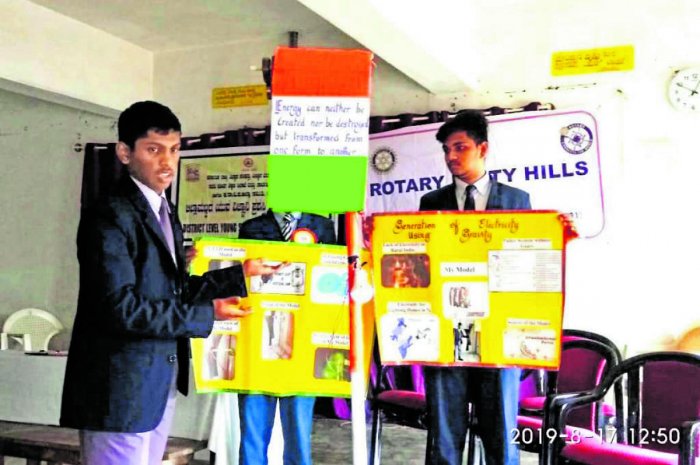
Develop research attitude, students told

A student explains his model during the district-level young scientists’ selection competition organised by the Rajya Vijnana Parishat, and the Departments of Science and Technology and Education in Madikeri.

Students should develop an attitude for research, said PU Department Deputy Director G Kenchappa.

He was speaking at the district-level young scientists’ selection competition organised by Rajya Vijnana Parishat, Department of Science and Technology and Education Department, for high school and PU students.

‘Face challenges’

Students should develop in such competitions and become researchers in the future. Students should develop an interest in basic sciences and face the challenges of science and environment. More research should be carried out in the field of science and technology, he said.

State Pollution Control Board Kodagu regional office environment officer G R Ganeshan said, “Students should create awareness on judicious use of water, check the ill effects of plastic and take part in environment-friendly activities.”

District coordinator of the competition T G Premkumar said the competitions are organised to help the students to take up inventions in science and technology.

Field of Science and technology

Young scientist awardee of last year, Likhitha Muthakka from Bharathiya Vidya Bhavana Kodagu Vidyalaya, said, “Students should take a pledge to find a solution to the problems bothering the country by taking up research in the field of science and technology.”

As many as 17 students from various schools and colleges had presented a paper on the science model prepared by them.

source: http://www.deccanherald.com / Deccan Herald / Home> State> Mangaluru / by DH News Service, Madikeri / August 21st, 2019