Category Archives: Science & Technology

Free Health Camp On Aug.11

Shree Kaveri Kodagu Mahila Sangha, Mysuru, has organised a free health camp at Rotary Midtown Academy in Hootagalli on Aug.11 from 10 am to 3 pm.

Neuro-Surgeon Dr. Kanjithanda Bopaiah will inaugurate the camp.

Sangha President Bollamma Kuttappa will preside.

Orthopaedician Dr. Devaiah, Physicians Dr. Latha Muthanna and Dr.Aiyappa, Gynaecologists Dr. Sonia Mandappa and Dr. Poovamma, Dermatologist Dr. P.A. Kushalappa, Urologists Dr. Madappa and Dr. Somanna, Paediatrician Dr. Rajeshwari Madappa, Neurologist Dr. K. Bopaiah, kidney surgeon Dr. Vipin Kaverappa, Ayurveda expert Dr. Aiyanna, Anaesthetist Dr. Padmini Kaverappa and Dentist Dr.Shruti Somaiah will be available for consultation.

source: http://www.starofmysore.com / Star of Mysore / Home> In Briefs / August 03rd, 2019

Telemetric Water Gauge At KRS, Harangi

HarangiDam01KF29jul2019

Provides sensor-based online real-time data on storage level to officials in New Delhi

Madikeri/Mysuru:

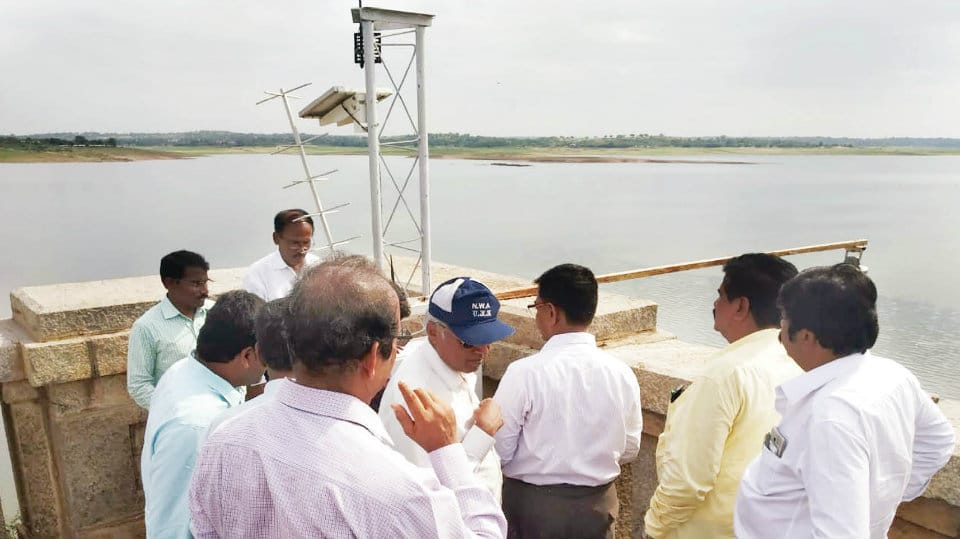
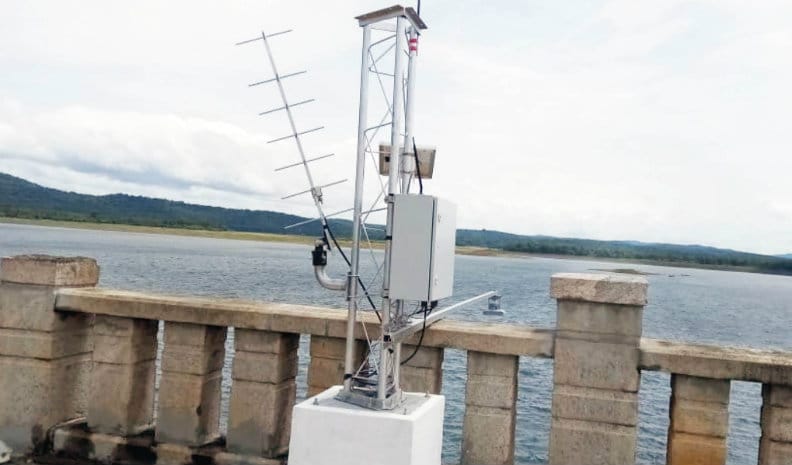
Telemetric Water Gauge has been installed at Krishna Raja Sagar (KRS) Dam in Mandya district and also at Harangi Dam in Kodagu for sensor-based real-time data on the storage level, inflow and outflow of the reservoirs.

The installation comes weeks after an Internal Committee of Cauvery Water Management Authority (CWMA) visited the two Dams in the first week of June this year. The team, after studying the water levels and reporting mechanisms, had decided to set up Online Monitoring System for all the reservoirs in Cauvery Basin through Telemetry-based Real-time Data Acquisition and Transmission.

The facility transmits data to CWMA Office in New Delhi and the authorities who decide on the water release as mandated by Supreme Court need not wait for the data from the Dams. They can easily access the data through the Telemetry Transmission system.

No room for errors: All these years, the authority sitting in New Delhi had to obtain data from each reservoir every day to determine the storage levels, inflow and outflow. This system was prone to errors as the people manning the Dams take physical measurements. Now with the new system, errors are eliminated and accurate real-time data can be accessed, making the decision-making process easy and accurate.

The Union Government has constituted the CWMA and and Cauvery Water Regulation Committee (CWRC) as directed by the Supreme Court and an Internal Committee comprising Irrigation experts from the Cauvery Basin States of Karnataka, Tamil Nadu, Kerala and Puducherry has been formed.

HarangiDam02KF29jul2019

Real-time data acquisition

During their visit, the CWMA team discussed real-time data acquisition and transmission, installation of water-level sensors, flow rate sensors at all canals / outlets taking off from all the eight Reservoirs coming under Cauvery Basin and technical issues such as capacity enhancement of Dams, safety of Dams, prevention of leakages, modernisation of canals for prevention of seepage, etc.

The new advanced telemetry system has been installed based on the directions from CWRC. Sources said that such a system has been installed at Reservoirs including Hemavathy, Harangi, Kabini and KRS in Karnataka and in Banasura Dam at Kerala and Lower Bhavani, Amaravathi and Mettur dams in Tamil Nadu.

On mobiles

Speaking to Star of Mysore this morning, Vasudev, Assistant Executive Engineer of Cauvery Neeravari Nigam Limited (CNNL) that manages KRS and Harangi, said that the Telemetric Water Gauge gives live data to CWMA and CWRC authorities and they can access the data at any given point of time on their mobile phones.

The system transmits live data from the Dams and an exclusive cell has been set up at CWMA Office in New Delhi to receive the data and send them real-time through mobile phones. “With this system, now no one can bluff the CWMA by constantly claiming more water, hiding the real storage level data at the Dams. Even the CNNL authorities can access the data,” he said.

The data will measure minute details about number of canals and their location, water levels inside the canals, their turbulence, number of sluice gates, size of gates and the amount of water discharged from the crest gates. It also records spill- over water.

source: http://www.starofmysore.com / Star of Mysore / Home> News / July 26th, 2019

Startups break new ground, use tech to help farmers

These firms are tapping governments, insurers, banks, farming co-operatives, development agencies and corporate social responsibility programs to create a business and help farmers.

Startups and technology firms are trying to break into India’s agricultural landscape using newer business models. These firms are tapping governments, insurers, banks, farming co-operatives, development agencies and even corporate social responsibility programs to create a viable business and help farmers. Most farmers have small holdings. Some even rent the land they farm on from others. Farmer distress is widespread.

Farming contributes around 15% to India’s gross domestic product. In short, India has few large farms that can pay for technology solutions. When CropIn Technologies first started out in 2010, the company tried selling its agri-tech solutions directly to farmers.

After investing lakhs of rupees, however, it managed to earn just Rs 6,000. Now, it tailors its solutions to specific needs. “Each customer segment that we deal with, we have a different value proposition for them,” said Jyoti , head of business development at CropIn Technologies. Large companies that depend on agricultural produce want information on sowing and pre-harvest activities up to harvest.

Development agencies are keen to develop sustainable farmer livelihoods, Vaddi said. CropIn is working with the World Bank in Bihar and Madhya Pradesh on a climate resilience project. It is also identifying a model where farming communities can adopt technology to create sustainable benefits — such as weather alerts on phone, best practices on farming, and advice on taking care of pest attacks. Agri-tech companies such as CropIn are also finding a market in banks and non-banking financial companies that give agricultural loans. The lenders are seeking CropIn’s expertise to help manage risk.

“If they have invested money in certain loans with farmers, the bankers want to know if it performing, how the crop is doing. Sometimes, a farmer takes a loan to sow one crop and then sows half his field with something else. There could be a genuine reason, but this is information a banker would want to know,” Vaddi said. CropIn is working with public and private sector banks as well as NBFCs. For banks and insurers, the company provides a platform that has data on the historical crop yields yields of a district. This helps in forecasting yields using machine learning.

The company also uses remote sensing satellites to determine what crops are sown in a region, using crop signatures it has collected over the past five years. Large technology companies, such as IBM and Microsoft, too are involved in the agri-tech space. The Weather Company, an IBM unit, provides hyperlocal weather information to farmers, along with data on soil moisture and temperature, which aids farmers in making informed decisions on how and when to irrigate. The company has tied up with agro-tech startup AgroStar to create crop disease prediction algorithms. “We are not expecting marginal farmers to pay for this.

We work with governments, banks, insurers, corporates who have business interests in agriculture and corporates that want to do meaningful CSR work,” said Himanshu Goyal, India Business Leader at The Weather Company. “It is not very expensive. It is cheaper than what a normal software costs and it is affordable,” he said. The company looks at delicately balancing value and cost, which even a company can appreciate, and one where people can build in affordability in business models, he said.

Microsoft is working with agrochemicals company United Phosphorus and the International Crop Research Institute for the Semi-Arid Tropics (ICRISAT) to provide agri-tech solutions to farmers. State governments and government-promoted organizations are also potential markets for agri-tech companies. The agriculture ministry signed a statement of intent earlier this month with IBM for a pilot study on using artificial intelligence and weather technology solutions in agriculture.

Tie-ups with governments also use sensors in agricultural fields to measure soil health and ground-level conditions. Pilots that require placing sensors on farms are also underway. Eka Software, which has built a digital commodity management platform that is used by the likes of Cargill and Rio Tinto, has built a blockchain platform for coffee farmers in a tie-up with the Coffee Board of India. The platform aims to help farmers get a good price for their product, while offering coffee roasters and exporters data on crop quality. “There is a lot of scope to use technology to digitise agriculture in India and curb waste,” Manav Garg, CEO of Eka Software, told ET in an interview earlier.

“We have built this platform for coffee, but we can also create similar platforms for other agricultural commodities.” State governments are also looking to invest in blockchain technology to help cashew and shrimp exports. “India is one of the largest exporters of shrimp to the European Union, and the EU has put in requirements to disclose the health of the shrimp. In Andhra Pradesh and Tamil Nadu, the governments are putting in place blockchain (technology) in which the manufacturers of the shrimp feed the content and that is made available to buyers. Kerala is doing the same thing for cashew nut,” said NG Subramaniam, chief operating officer of India’s largest IT services company Tata Consultancy Services. The blockchain technology is being launched by the state fisheries department, the Marine Product Export Development Authority and Tata Trusts, the Tata Group’s philanthropy arm. Business models are still evolving at at the farm level, experts say, whereas at the retail level — organic food or providing farm produce directly to homes — it is more established.

The government’s increased focus on improving farm incomes is also resulting in more pilot projects in the agri-tech space. “Future scale-up models will need farmers to have a stake, both to have ownership over and to demand accountability from the services. This is an emerging context,” said Amit Vatsyayan, Partner – Government and Public Sector Advisory Services, EY India. “A platform approach is very much needed for greater acceleration and adoption.”

Agritech Startups in India

CropIn
Offers farm management solutions for agricultural sectors. Works with farming companies, agri-input companies, crop insurance providers, seed production companies and government.
Total Funding: $16 million
Investors: Chiratae Ventures, Bill and Melinda Gates Foundation, Ankur Capital and 8 Other Investors

AgroStar
It provides agri-inputs including fertilizers, seeds, manures, farm equipment, etc. to farmers.
Total Funding: $15 million
Investors: Accel Partners, Aavishkaar, Chiratae Ventures and 3 Other Investors

FarmBee
Has an online platform providing data-driven agricultural solutions. It offers agricultural content, commodity prices, weather data, and contextual advice to the farmers. Enterprise customers include TAFE, RBL Bank, Pepsico etc.
Total Funding: $9 million
Investors: Sandeep Bhammer, Ravikant Banka, Shailaja Reddy and 23 Other Investors

NinjaCart
Has a B2B marketplace connecting farmers with retailers. Initially started out with a hyperlocal grocery marketplace but pivoted to B2B marketplace for sourcing fresh fruits and vegetables, staples and FMCG goods directly from farmers and brands after 6 months of launch. Currently works with about 120 retailers.
Total Funding: $48million
Investors: Accel Partners, Syngenta Ventures, Neoplux and 13 Other Investors

Stellapps Technologies
Uses IOT, mobility and data analytics to improve agri- supply chain parameters including milk production, milk procurement, cold chain, animal insurance and farmer payments. Offers a platform SmartMoo, which gathers data via sensors that are embedded in milking systems, animal wearable, milk chilling equipment & milk procurement peripherals and provides insights for management of cattle, organization of dairy farms and for logistics management.
Total Funding: $11 million
Investors: Bill and Melinda Gates Foundation, IndusAge Partners, Qualcomm Ventures and 8 Other Investors

source: http://www.economictimes.indiatimes.com / ET Rise / Home> Business News> RISE> Startups> News Buzz / by Jochelle Mendonca, ET Bureau / July 26th, 2019
Costly solar-powered insect trap; farmers in shock

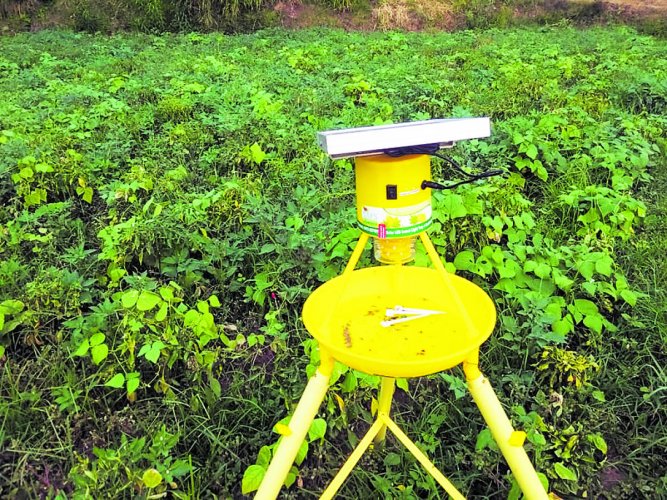
The expensive solar light-powered insect traps being sold to unsuspecting farmers under the centre-sponsored PMKSY by Agriculture department in Kodagu district.

A suspicion among farmers about subsidised farm equipment and accessories being overpriced due to unholy nexus between officials and private entities appears to be true.

The department of Agriculture in Kodagu district under Pradhan Mantri Krishi Sinchai Yojana (PMKSY), scheme to improve farm productivity, has procured 150 solar light-powered insect traps after placing an indent for 350 such insect traps from Kalaburagi-based Fortune Sales Corporation to be distributed among the farmers.

According to information obtained by RTI activist Sanjeeva Kabaka from Puttur, each unit, including GST, purchased from Fortune corporation had cost over Rs 11,800. The department of Agriculture in its reply to the queries under RTI had revealed paying Rs 17,38,373 for over 150 units.

Sanjeeva says the haste to purchase such expensive solar-powered insect traps despite the availability of low-cost solar-powered insect traps had raised eyebrows.

“A farmer-cum-inventor Karibasappa’s indigenous solar-powered insect trap is priced at Rs 4,800, including GST and door-delivery charges,” he points out.

Karibasappa, when contacted, said that he had sold his units, each priced at Rs 4,800, to the Department of Agriculture in nine districts, including Shivamogga under ATMA scheme.

“By selling units that are three times more expensive than my unit proves that officials are making money,’’ said Karibasappa, who is in New Delhi participating in an exhibition.

He said the insect traps purchased by the Agriculture department in Kodagu district cannot withstand high wind speed and is made of plastic. Its battery life lasts only about six months.

“My prototype is able to withstand high wind speed, is made up of metal and the lithium battery has a shelf life of four years and covers two acres,” he said.

Incidentally, Karibasappa’s prototype has the backing of officials in Agricultural universities and also had won Infosys Foundation’s Aarohan Innovation award.

Joint Director of Agricultural Department, Kodagu, Raju did not respond to calls.

Watershed development department Director Padmanabh Naik when contacted said the standards for procurement of insect traps were laid by the Agriculture Department under the directions of Minister for Agriculture.

Kodagu Deputy Commissioner Annies Kanmani Joy, when contacted, promised to look into the issue of Agriculture department selling expensive solar-powered insect traps to farmers.

source: http://www.deccanherald.com / Deccan Herald / Home> State> Mangaluru / by Harsha, DH News Service, Mangaluru / July 20th, 2019

‘Sinkholes to Stars’ Monday at GLMHC in Sanctuary Series

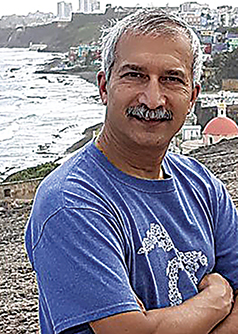
Professor Bopi Biddanda

On Monday from 7 to 8:30 p.m. is the next program in the Sanctuary Lecture Series, “Sinkholes to Stars: Diving into Lake Huron’s Sinkholes while Reaching for the Heavens.”

Doors open at 6:30 p.m. for this free program at Great Lakes Maritime Heritage Center, 500 West Fletcher St., Alpena.

Grand Valley State University Professor Bopi Biddanda will share the excitement of over a decade of exploration of life in Lake Huron’s sinkholes carried out in collaboration with Thunder Bay National Marine Sanctuary, and ponder the relevance of these findings to major issues of both scientific and societal interest such as Earth’s current biologic and physiologic diversity, oxygenation of early Earth in the distant past, and humanity’s ongoing search for extra-terrestrial life.

Biddanda is an aquatic microbial ecologist studying the movement of carbon driven by microbes at the Annis Water Resources Institute at GVSU. He grew up in the lush subtropical mountains of Southwest India, and came to the U.S. in the 1980s to obtain a Ph.D. in ecology from the University of Georgia. Subsequently, he went on research and teaching adventures at the Alfred Wegener Institute for Polar and Marine Research (Germany), National Institute of Oceanography (India), University of Texas Marine Science Institute, University of Rio Grande (Brazil) and University of Minnesota.

For the last decade and a half at GVSU, he has been studying the microbial cycling of elements in the Laurentian Great Lakes — exploring life in extreme environments such as Lake Huron’s sinkholes and operating a world-class time-series buoy observatory in Muskegon Lake.

Courtesy Photo A diver navigates a sink hole in Lake Huron.

He teaches classes in marine biology and aquatic ecology, and directs NASA’s Michigan Space Grant Consortium programs at GVSU. He hopes to continue to study Earth’s lakes — one of our most vital freshwater commons — as sentinels of change.

For more information, contact Stephanie Gandulla at steph.gandulla@noaa.gov or 989-884-6200.

source: http://www.thealpenanews.com / The Alpena News / Home> Life / June 06th, 2019

Coffee Board takes tech route to help growers boost yield

App-solutely smart: In the case of white stem borer, growers and the Board have validated 90% accuracy.   | Photo Credit: Reuters
App-solutely smart: In the case of white stem borer, growers and the Board have validated 90% accuracy. | Photo Credit: Reuters

Apps fed with data help forecast weather, predict leaf rust

For the 3.5 lakh coffee growers in India, 98% of whom are small-scale, challenges affecting production include labour shortage, climate change and pest attacks.

One way to manage these is by adopting technology, which the Coffee Board is trying to bring about for the growers.

Last year, Eka Software Solutions took up a pilot project for the Coffee Board of India on machine-learning based applications. According to Shuchi Nijhawan, vice president – agri business for Eka Software, the Board and the company took up three areas to try machine learning based apps. One was addressing the white stem borer problem, another was weather forecasting, and the third, predicting leaf rust.

Machine-learning

“Based on the data, photos provided, we created a machine learning algorithm to forecast each of these issues (for a grower). We worked with 20 liaison officers of the Board and they coordinated with the growers.

“The success of the app depends on the data fed in. In the case of white stem borer, the growers and the Board have validated 90% accuracy,” she says. Eka’s digital platform for agriculture aggregates data from different sources and applies the algorithm to provide insight to the coffee growers.

Srivatsa Krishna, chairman of the Coffee Board, adds that though there is no exact data, it is learnt that in the last 10 to 15 years white stem borer would have brought down Arabica production by 25-30%. “The growers do need solutions for such issues.”

“Despite the Coffee Act having been around for more than seven decades, farmers have zero technology. The only way to increase productivity is by bringing in technology,” he says. Even before smartphones became popular, coffee growers had checked prices on the London and New York exchanges almost on a daily basis.

Hence, adopting technology should not be difficult for them. The Board has plans to scale up the analytics technology for adoption by more farmers.

Currently, 90% of the estates depend on labourers for most of the work and there is not much technology adoption among coffee growers in cultivation or to increase production.

“If someone is ready to do it [technology] for us, we will adopt it. It will help increase yield,” says Sundar Subramanium, executive director of Mother Mirra Coffee Plantations. Ms. Nijhawan says the company is exploring partnerships for other crops too. “Indian farmers want such technology services. There are several agriculture institutes and cooperatives in the country that have a lot of data. I see a huge potential for these technologies.”

source: http://www.thehindu.com / The Hindu / Home> Business> Industry> Green Shoots / by M Soundariya Preetha / June 02nd, 2019

Project Radio Collar Launched To Track Elephants In Kodagu

ProjectCollarKF19may2019

Siddapura:

Concerned at the increasing instances of elephant-human conflict, the Forest Department, for the first time in Kodagu, has put radio collars on elephants to study their migration patterns.

The Department has decided to put radio collars on selected elephants so that their migration patterns can be studied. An analysis of their movements will help in avoiding human-elephant conflict that results in deaths of humans and damage to crops, said Department officials.

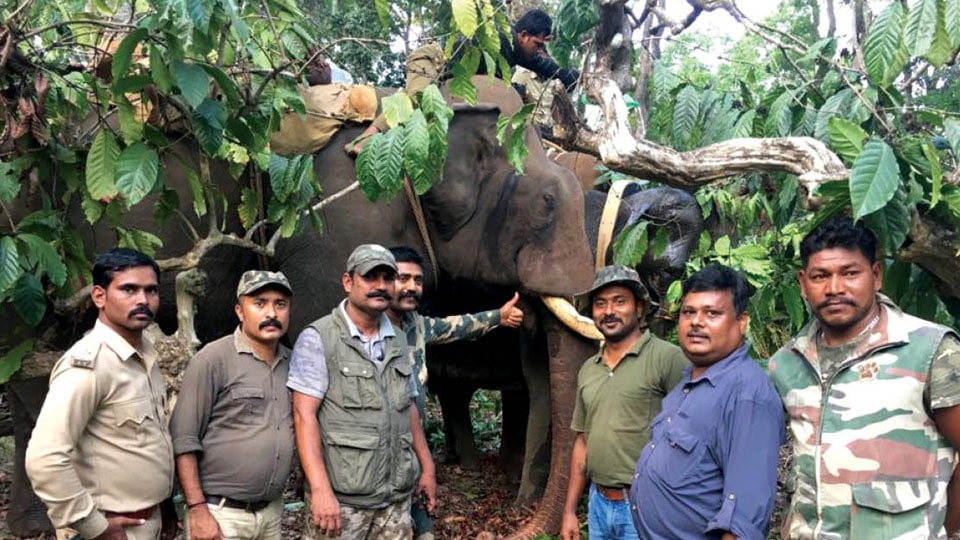
Accordingly, over six elephants that usually enter coffee estates and fields have been radio-collared in places including Virajpet, Madikeri, Kushalnagar, Maldare, Ammathi & Pollibetta. These areas have witnessed increased elephant attacks in the recent past.

The collars were fitted on the wild pachyderms with the help of tamed elephants including Bhima, Abhimanyu and Krishna. Last time, over four collars were fitted on the elephants and the Department staff was able to successfully track the elephant movements and prevented them from entering the human habitats.

Department officials said that radio collars could further strengthen the elephant corridor management strategy. It could also become an early warning system for villagers in order to avoid conflict with elephants as the collars could provide real-time information. Radio-collaring of animals is a tried and tested method of studying free-ranging wild animals that has been in practice for several decades. It is primarily used for tracking the movement and activity patterns of the tagged animal, with the signals being sent to a handheld device or to a computer via a satellite.

It is often the only method that is available for studying the movement and activity patterns of a secretive species like the tiger or a wide-ranging species like the elephant. Information obtained from the use of radio telemetry is of high scientific and conservation value. The GPS-enabled radio collars will provide updates in real-time about the location of a herd and help track them within the State as well as during migration. A tool embedded in the collar will send signals 24X7.

“Once we receive signals on the presence of the elephant herd near human habitation, the ground-level Rapid Response Team of the Dept. will be alerted on their mobile phones so that they can rush to the place and launch an operation to drive elephants back into the woods,” said District Forest Officer Maria Kristhu Raj.

The kumkis (tamed elephants) will infiltrate the herd and scatter the elephants. When the female leader is isolated, the experts perched on the nearest kumki will shoot her with a dart loaded with a tranquillising drug called xylazine. The dosage will be decided according to the size and strength of the matriarch. “After being hit, the elephant will walk like it is intoxicated for 10 minutes and then it will fall asleep. So, our men have a window of about 40 minutes to put the radio collar on the elephant,” he explained.

“In the 40 minutes the animal was under sedation, the team fixed the radio collar and activated it. Soon, veterinarians injected a drug to revive it. The entire operation was over in 50 minutes and the animal started heading back into the forests,” the DFO added.

source: http://www.starofmysore.com / Star of Mysore / Home> News / May 14th, 2019

Kodagu: Emergency response mechanism strengthened

The Kodagu district administration has taken various measures to cope with any exigencies arising out of natural disasters and has constituted committees to deal with the same.

It has also urged the public not to panic over speculations of fresh outbreak of any natural calamity.

A release said senior officials of the district administration and the district in-charge minister had reviewed the existing system to cope with emergencies some time ago and strengthened the response mechanism in case of a natural calamity.

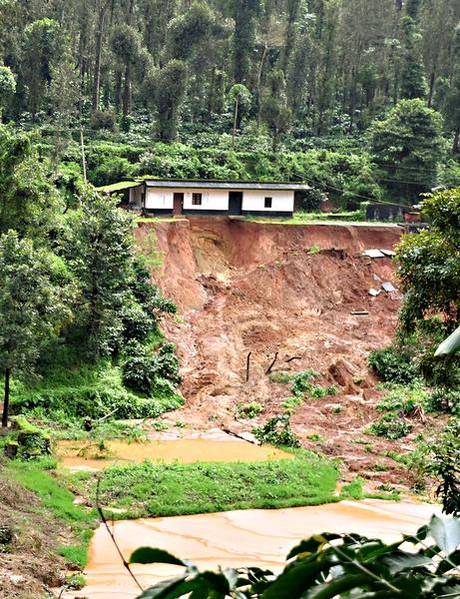
A file photograph of a landslide caused near Makkandoor in Kodagu district during the floods last year.

Consequent to last year’s disaster caused by incessant rains and landslips, the authorities have identified areas which are prone to such events and an Emergency Relief Response and Recovery Committee has been constituted.

In addition, there is an Early Warning and Evacuation Committee, Search and Rescue Committee, First Aid, Mass Casualty Management Committee, Shelter Management Committee etc.

This in addition to constitution of a specific groups to ensure nutrition in shelters, relief management, animal protection and carcass management, psychological first aid, damage assessment, reconstruction and rehabilitation among others. Such committees have been established at the taluk and gram panchayat levels as well, the release stated.

In addition, steps have been taken to put in place a Disaster Management Plan in consultation with the Geological Survey of India, Administrative Training Institute, District Training Institute, and other organisations.

The authorities said an awareness programme and a simulated exercise on response in case of any emergency, has been held in rural areas. In addition, a team of National Disaster Resonse Force (NDRF) has been allocated to the district and will be deployed by the end of May.

Besides, the final report of the GSI survey to identify sensitive and hypersensitive areas is expected in due course and all measures will be taken to minimise the impact of any calamity.

The district administration has also taken steps to ensure that there is no dearth of medical assistance in case of any emergency and hence the public has been asked to eschew fears over the issue.

source: http://www.thehindu.com / The Hindu / Home> News> States> Karnataka / by Special Correspondent / Mysuru – April 28th, 2019

Science expo brings students’ skills to fore

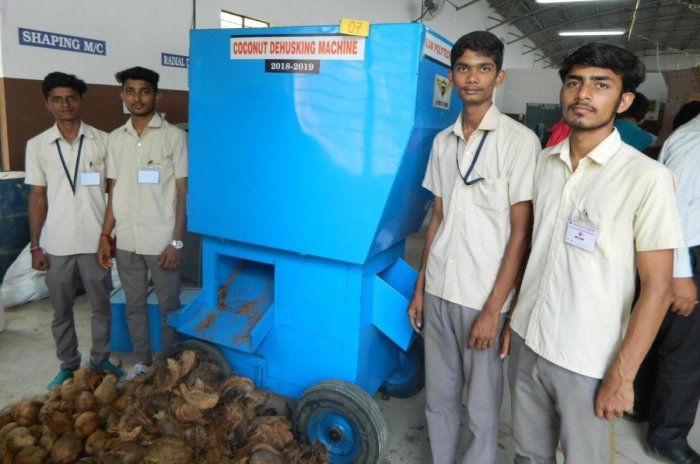
Students of the Mechanical Engineering Department of SDM College, Ujire, showcase their innovation - a coconut dehusking machine - during ‘Anveshane-19’, the state-level exhibition organised by Halligattu Coorg Institute of Technology in Gonikoppa.
Students of the Mechanical Engineering Department of SDM College, Ujire, showcase their innovation – a coconut dehusking machine – during ‘Anveshane-19’, the state-level exhibition organised by Halligattu Coorg Institute of Technology in Gonikoppa.

Scientific technology was put to useful applications by the students of various technical institutes during ‘Anveshane-19’, the state-level exhibition organised by Halligattu Coorg Institute of Technology in Gonikoppa recently.

Around 400 students from the branches of civil, electronics and communication, computer science and mechanical engineering from various polytechnic colleges across the state took part in the event.

Several innovations displayed at the scientific expo featured devices which enable surveillance, remote access and management through mobile phones.

A machine capable of dehusking 260 coconuts in an hour was developed by the mechanical engineering team of SDM College, Ujire. Another team from the same college came up with a solution to plastic waste by designing interlocks out of plastic waste.

A milling machine made by Kaveri Polytechnic College, Gonikoppa, was developed to carve letters on hard substances. Kurunji Venkataramana Gowda College, Sullia, students designed an automatic jumper system, which makes use of mobile technology to easily identify the problems in electric lines.

source: http://www.deccanherald.com / Deccan Herald / Home> State> Districts / by DH News Service, Gonikoppa / March 22nd, 2019

20-year-old student develops robot to monitor farms, forest fires

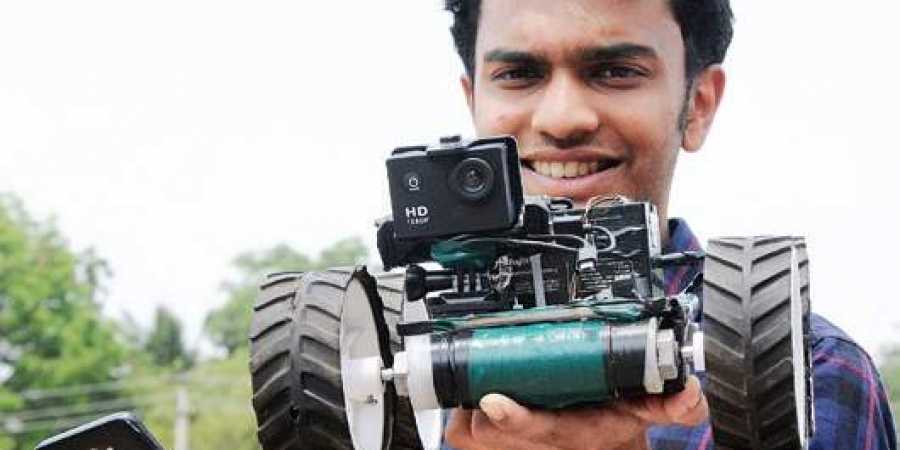
An unmanned ground vehicle, the size of a college bag, it sports four wheels to move around as well as a basic handset with a SIM and camera to record videos.

Sharan Poovaiah, a student of NIE, Mysuru, has designed the robot to help the farming community | udayashankar S

Bengaluru :

Twenty-year-old Shravan Poovaiah’s visit to his native Ammathi in Virajpet last year led him to design a machine which would help reduce his mother’s burden of not just monitoring several workers at their coffee estate on her own, but also receive alerts on wild animal movements and forest fires. Shravan, an engineering student studying BE (Mechanical) at National Institute of Engineering in Mysuru, comes from a family of farmers and designed the robot to help the community at large.

An unmanned ground vehicle, the size of a college bag, it sports four wheels to move around as well as a basic handset with a SIM and camera to record videos. Explaining how it works, Shravan said the prototype of the robot has a camera which can record all activities across the farm. The robot is designed to rotate 360 degrees to capture videos, and its owner can dial into the handset from anywhere in the world to connect to the robot.

Once connected, the owner can use the dial pad (numbers 2, 8, 4 and 6) to control the movement of the vehicle in four directions.“This is similar to games played on cell phones. The equipment hardly weighs 1kg and is very compact,” he said.

The robot prototype is designed in such a way it can move on any quality of surface. It is also suited to operate under any weather condition, including rains. It runs on solar power batteries.

“It is designed in a such a way that users can monitor the video recordings on their phones. The speed of the robot prototype is adjusted in such a way that recording can be watched with more clarity,’’ he said.

The cost of the equipment is Rs 3,000. Shravan, who worked on the prototype for six months, said it can also be used to check for wild animal movements and fires within the property and keep a track od workers.
Shravan recently demonstrated his prototype on National Science Day (February 28) at his college. His work, which was backed by his Physics professor Dr M V Deepa Urs, was met with applause.

Furthermore, former Director of the Karnataka State Open University, Prof B S Vishwanath, also assured Shravan to assist him further with the project.

source: http://www.newindianexpress.com / The New Indian Express / Home> Cities> Bengaluru / by Ashwin M. Sripad / Express News Service / March 04th, 2019