Category Archives: Science & Technology

Free Medical Camp By Kaveri Mahila Sangha On July 15

Mysuru:

Shree Kaveri Kodagu Mahila Sangha, Mysuru, has organised its annual free medical camp at Mahaveer Vidya Mandir, C-A/2, LIC Colony, 2nd Stage, Srirampura, on July 15 from 10.30 am to 4 pm.

Dr. Mathanda Aiyappa will inaugurate the camp on Sunday. Sangha President Jerry Ponnappa will preside.

Physician Dr. Latha Muthanna, Dermatologists Dr. P.A. Kushalappa and Dr. Poovamma, Urologists Dr. Madappa and Dr. Somanna, Orthopaedician Dr. Devaiah, Paediatrician Dr. Rajeshwari Madappa, Dr. Aiyappa (General Medicine), Dr. Aiyanna (Ayurveda), Gynaecologists Dr. Poovamma and Dr. Sonia Mandappa, Dr. Padmini Kaverappa, Dentist Dr. Shruthi Somaiah, Nephrologist Dr. Vipin Kaverappa and Dr. Sonam Bopanna (Speech & Hearing Pathologist) will take part in the camp along with representatives from Sigma Multi-speciality Hospital and Nethradhama Super-speciality Eye Hospital.

For details, interested public may contact President Jerry Ponnappa on Mob: 99015-36733 or Secretary Kavya Kuttappa on Mob: 99642-36284.

NOTE: The general public attending the camp must compulsorily bring the old medical records, if any.

source: http://www.starofmysore.com / Star of Mysore / Home> News / July 11th, 2018

A better way of detecting bogus coffee beans

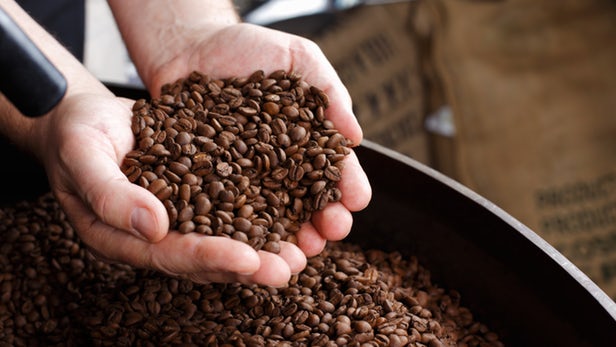
These coffee beans look good, but they may not be what they seem(Credit: racorn/Depositphotos)

If you’ve seen even one advertisement for premium coffee, then you’ve probably heard someone going on about “100 percent pure Arabica beans” … but does the coffee really only contain Arabicas? A new method makes it quicker, cheaper and easier to find out.

Arabica beans are generally considered to be better tasting than cheaper Robusta beans, which trade at as little as half the price. Combined with the fact that Robustas are higher-yielding and easier to grow, this makes it tempting for some companies to surreptitiously cut their Arabica-based coffee with a bit of Robusta.

Traditionally, the only way of checking the purity of Arabica coffee involves testing samples for the presence of a chemical known as 16-O-methylcafestol (16-OMC) – it has long been thought that the compound is present in Robusta beans, but not in Arabica. Unfortunately, samples need to be sent off to a lab for analysis, and processing of those samples takes approximately three days.

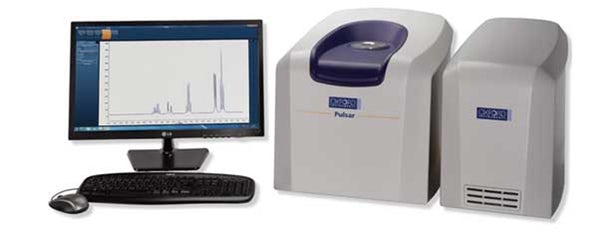
Now, however, researchers from Britain’s Quadram Institute have discovered that a Pulsar benchtop NMR (nuclear magnetic resonance) spectrometer made by Oxford Instruments can do the same thing on-site in just 30 minutes. The device uses radio waves and magnetic fields to obtain information about the molecular composition of a sample, and can reportedly be easily operated by non-specialists. It’s previously been utilized to detect horse meat in ground beef.

SpectrometerKF17may2018

In lab tests, it was used to analyze 60 samples of supposedly 100-percent Arabica coffees gathered from 11 different coffee-growing countries and regions around the world. While 90 percent of those samples were deemed to be pure, the rest had high enough 16-OMC levels to indicate fraud.

The spectrometer can detect Robusta concentrations as low as 1 percent in blended coffees. In fact, it turned out to be sensitive enough to reveal that even Arabica beans do contain small amounts of 16-OMC. Therefore, the testing procedure had to be adapted to allow for a threshold amount of the chemical, which will be detected regardless of whether or not Robusta is present.

A paper on the research was recently published in the journal Food Chemistry.

Sources: Quadram Institute, Oxford Instruments

source: http://www.newatlas.com / NewAtlas.com / Home> Science / by Ben Coxworth / May 17th, 2018

Hearing Loss Blog, Hearing Health & Technology Matters, Celebrates 7 Years

Tucson, Ariz.:

Hearing Health & Technology Matters (HHTM), an organization bridging the knowledge gaps in treating hearing loss, is proud to celebrate its 7 year anniversary. The HHTM website is a resource for people who share the belief that Hearing Health & Technology Matters!

The editor’s at HHTM strive to provide timely information and lively insights to everyone who cares about hearing loss.

“Being a member of the HHTM writing team for the past 7 years and to see its growth has been exciting. People with hearing loss tell me that learning more about hearing and the view from the professional side has helped them deal better with their personal hearing loss,” said Gael Hannan, editor of the Better Hearing Consumer.

“Hearing Health & Technology Matters has filled a long-needed gap in the hearing healthcare industry; a series of reasoned and thoughtful blogs touching on underlying causes of issues without being constrained by any one ‘party line’,” said Dr. Marshall Chasin, an expert on music and hearing issues and editor of Hear the Music.

CELEBRATING HHTM MILESTONES:

Over the past 12 months, HHTM has exceeded 1 million unique pageviews. Since January 2018, the site has already witnessed greater than 20% growth in visits compared to 2017.

January 2018: Brian Taylor, AuD, was named Editor-In-Chief of HHTM and Amyn Amlani, PhD, was welcomed as new section editor of Hearing Economics.

March 2018: HHTM underwent a significant brand refresh. The website undertook major updates, including a new company logo. This update significantly enhanced the overall performance of the site and user experience.

March 2018: HHTM launched new section, Innovations in Hearing Healthcare, and welcomed new editor, Bopanna B. Ballachanda, PhD.

March 2018: HHTM’s Jane Madell, PhD, editor of Hearing and Kids, and Emmy and Peabody Award-winning director, producer, writer and cinematographer Irene Taylor Brodsky, premiered their documentary The Listening Project on March 9th at the American Cochlear Implant Alliance’s (ACIA) annual scientific meeting in Washington, DC.

“I take great pride in my role of Editor In Chief of the Hearing News Watch at HHTM. We strive to be an independent source of accurate and timely information. Like all credible journalists, our top priority is to inform our readers, who are combination of hearing healthcare professionals and lay-people, with unbiased reporting and thoughtful opinions about topics related to hearing healthcare,” said Dr. Brian Taylor, Editor In Chief.

HHTM articles and reporting have been cited and republished frequently over the last several years by authoritative sources inside and outside the hearing industry, including HHTM news reports cited in the influential “PCAST” report from the Obama Whitehouse in the fall of 2015.

“When I was first invited to work on the blogs, I hardly knew what a blog was… and I am not too sure many of our authors knew either. I had probably been to a blog but did not really know the term for it. It has really been hard work – but lots of fun – to be part of a blog that has gone from zero hits to millions of hits over the past 7 years. I must say, however, that the dedication of our initial investment team, our web site administrator and our authors that spent hours and hours of their time putting together blogs for our site once per week has allowed it to get to where it is today,” said Dr. Robert Traynor, editor of Hearing International.

The editors of Hearing Health & Technology Matters regularly add fresh content, including the latest industry news, so be sure to visit the website regularly for new articles. To view a full list of editors, visit: hearinghealthmatters.org/about-hearing-health-matters.

source: http://www.prweb.com / PR Web / Home> News Center / Tucson, Arizona – April 12th, 2018
‘Karnataka to have six more mobile digital planetariums’

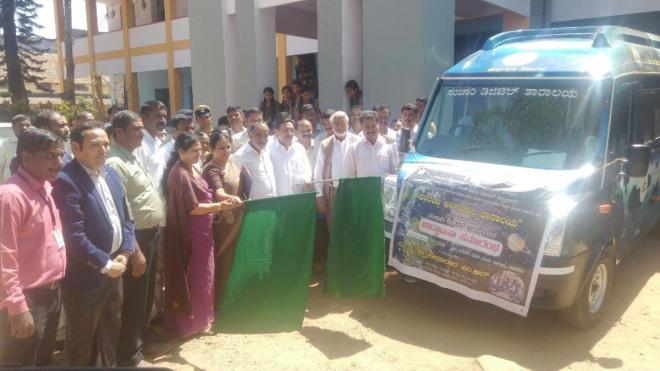
District-in-charge Minister M R Seetharam, MLC Veena Acchaiah inaugurate the mobile digital planetarium at Government PU College premises in Madikeri on Sunday.

District-in-charge minister M R Seetharam flagged off the mobile digital planetarium at Government PU College premises in Madikeri on Sunday.

Speaking on the occasion, he said it would help school students in rural areas get the planetarium experience and will guide them in astronomy and science-related issues. The planetarium will have screenings based on the high school syllabus.

Under the banner of “planetarium for school premises,” it will visit a few government schools in the district. Teachers and students should make use of the facilities, added Seetharam.

He said that the government had purchased five vehicles for mobile planetarium at a cost of Rs 6 crore last August. This has benefited 1.50 lakh government schoolchildren. Now, in accordance with the budget announcement, six more such mobile planetariums will be purchased.

The planetariums provide an immersive, digital experience of space for students. Visuals of planets in our solar system are projected on a dome. Each show will last 20 minutes. It has details on astronomy, rocket launch, and others.

source: http://www.deccanherald.com / Deccan Herald / Home> District / DH News Service, Madkeri / February 18th, 2018

Karnataka halts Kerala in its tracks, saves Kodagu

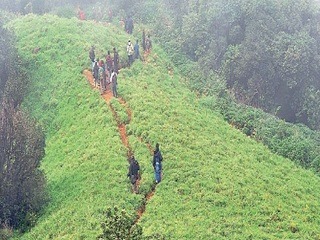
CoorgKF28feb2018

Says it has not approved the Thalassery-Mysuru rail link

A burgeoning environment movement across Kodagu was put to halt — albeit breifly — by the state government on Wednesday.

Putting an end to the rising levels of anxiety among thousands of Kodavas and green activists, the state government clarified that it has not approved the controversial rail link connecting Thalassery (Kerala) with Mysuru (Karnataka) via Kodagu. Further, the state government clarified that it would not even allow preparation of detailed project report (DPAR) for the proposed rail link as the project would jeopardise the fragile ecosystem of the pristine Western Ghats.

Allaying the fears of thousands of people, RV Deshpande, Minister for Large and Medium Scale Industries and Infrastructure, told the state legislature that the government expressed its opposition for the project. Drawing the attention of the state government, BJP MLA from Virajpet KG Bopaiah alleged that both Karnataka and Kerala already met once and agreed to carry out survey for the proposed rail link amidst stiff opposition from the local population.

Deshpande acknowledged that a meeting between secretaries of Karnataka and Kerala did take place recently, however, the Karnataka government had not consented for the project. “Holding a meeting does not ensure our approval for the project. We have not consented for the rail link project. Further, the project is yet to be approved by the Railway Board and thereafter a formal request has to be made by the Kerala government. Only then, we will be able to take a decision,” Deshpande revealed.

Going further, Deshpande stated, “We already had discussion about the project at government level. Our forest department has not only expressed reservations but also opposed the project as it would jeopardise the green cover and affect elephant corridor through which the rail link passes. Hence, the state government in principle has not consented for the project.” According to Bopaiah, as per the Railway minister’s reply in the Lok Sabha in December 2017, a joint meeting between Kerala and Karnataka secretaries had resolved to take up survey along the route only if the Kerala government submits a proposal to Karnataka provided it does not cause disturbance to wildlife areas. Interestingly, the rail link spanning more than 200 km would pass through Wyanad of Kerala and enter Kodagu at Kutta to pass through thick forest regions like Balele-Nittor-Canoor and Thithimati to reach Mysuru.

Perturbed that the new railway line with a project cost of Rs 6,685 cr would result in clearing of about 40 per cent of Kodagu’s forest, Kodavas, including retired defence officials, planters, environmentalists and public had staged massive protest rallies recently at Kutta and Madikeri. Fighting against the projects that would spell doom over the fragile eco-system of Kodagu where the River Cauvery originates, people from Kodagu, Mysuru and Bengaluru had launched Save Kodagu and Cauvery campaign led by Coorg Wildlife Society. Col (Rtd) Muthanna had even accused Kerala political leaders, including Congress parliamentarian KC Venugopal, of misusing his office as the Congress in-charge in Karnataka by leading Kerala delegations to push for destructive projects cutting through Kodagu benefiting Kerala.

source: http://www.bangaloremirror.indiatimes.com / Bangalore Mirror / Home> News> States / by Niranjan Kaggere, Bangalore Mirror Bureau / February 08th, 2018

Full of beans: Coffee grounds to help power London’s buses

A new biofuel, which contains part coffee oil, is being added to the London bus fuel supply chain where it can be used without the need for modification.

Transport for London has been turning to biofuels to curb carbon emissions, trialling a fuel made with used cooking oil from the catering industry.(Shutterstock)

Waste coffee grounds will be used to help fuel some of London’s buses, Royal Dutch Shell and clean technology company bio-bean said on Monday.

A new biofuel, which contains part coffee oil, is being added to the London bus fuel supply chain where it can be used without the need for modification, the companies said in a statement.

Bio-bean and partner Argent Energy have so far produced enough coffee oil to power one bus for a year, if used as a pure-blend for the 20 percent bio component and mixed with mineral diesel to form a B20 fuel, they said.

Transport for London has been turning to biofuels to curb carbon emissions, trialling a fuel made with used cooking oil from the catering industry, the transport operator said on its website.

Bio-bean said the average Londoner drinks 2.3 cups of coffee a day, producing over 200,000 tonnes of waste a year. It collects waste grounds from high street chains and factories, which are dried and processed to extract coffee oil.

“It’s a great example of what can be done when we start to reimagine waste as an untapped resource,” bio-bean founder Arthur Kay said.

The coffee fuel technology has been supported by Shell.

source: http://www.hindustantimes.com / Hindustan Times / Home> World / by Reuters, London / November 20th, 2017

Conference of Urinary Tract Surgeons at Virajpet from Nov 3

UTIkf30oct2017

Mysuru :

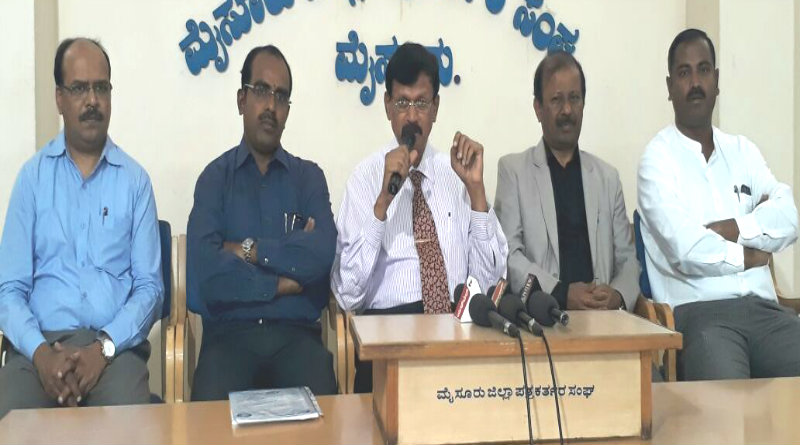
Karnataka Urinary Tract Surgeons’ Association and Mysuru Urinary Tract Surgeons’ Association is jointly organising the 22nd conference of Urinary Tract Surgeons at Virajpet from November 3 to 5, said Dr Prakash K Prabhu, organising president of the conference, at a press meet held at Mysuru Press Club here on Monday.

“Titular king Yaduveer Krishnadatta Chamaraja Wadiyar will inaugurate the 3-day long conference at Club Mahindra Resort on November 3 at 5:30 pm. Srikantha Siddalinga Raje Urs of Manteswamy Mutt will release a souvenir on the occasion. Robotic expert from Gujarat Dr Pranjal Modi will be the chief guest and will deliver a special lecture,” he added.

Dr Madappa, Dr H S Prakash, Dr H M Prasad and others were present.

-(MR/KMR)
source: http://www.citytoday.new / City Today / Home> Headlines> Mysore / CT Bureau / October 30th, 2017

Four Kodagu students selected for state-level science competition

In the recently held district-level Inter-Collegiate Science lecture competition in Kannada, four students from Kodagu got selected for the state level.

The competition was organised by the Department of Collegiate Education.

The district-level competition meant for Science degree students was held at Field Marshal K M Cariappa College.

Winners

The events were held in various Science subjects of Physics, Chemistry, Biology and Mathematics. Students of Field Marshal K M Cariappa College, T V Prithvish, G Shimla, Sherol Ammanna and M N Ben Bopaiah won in the district-level competition and will represent the college in the state-level competition to be held in Bidar in the second week of October.

Giving away prizes to the winning students, Cariappa College Principal Dr Parvathi Appaiah called upon degree students to take interest in the research of basic sciences.

source: http://www.deccanherald.com / Deccan Herald / Home> District / Madikeri – DH News Service / October 06th, 2017

Madikeri DC tells engineers to expedite water works

Deputy Commissioner Richard Vincent D’souza on Monday has threatened the engineers concerned that they would be held accountable for any complaints/problems pertaining to drinking water supply.

Chairing a meeting on drinking water works and fodder issues, the deputy commissioner expressed his anguish against the engineers over the tardy progress in the drinking water works taken up at a cost of Rs 1 crore last year. The DC was upset over the underutilisation of funds sanctioned for the water works. “If there is failure in utilising the amount, sanctioned last year, to its fullest, how can we seek funds for the current year, the DC questioned.

The deputy commissioner directed the engineers to expedite the water works and address the water woes in the district.

Additional Deputy Commissioner M Satish Kumar said, “A Cabinet sub-committee headed by Revenue Minister Kagodu Thimmappa has been constituted. The sub-committee should be apprised of the measures taken.”

The officials should furnish information related to measures taken to address drinking water complalints, cattle feed among others, he added.

The Addl DC also instructed the officers to speed up drought relief works.
Zilla panchayat deputy secretary, planning director, chief planning officer and executive officers of respective taluk panchayats were told to work in tandem to mitigate drought.

Rural Drinking Water Engineer Shashidhar, along with assistant executive enginers from three taluks in the district, apprised the meeting of the status of the works taken up in the district.

source: http://www.deccanherald.com / Deccan Herald / Home> District / DHNS – Madikeri, December 13th, 2016

This lab uses coffee grounds to extract lead and other toxins from water

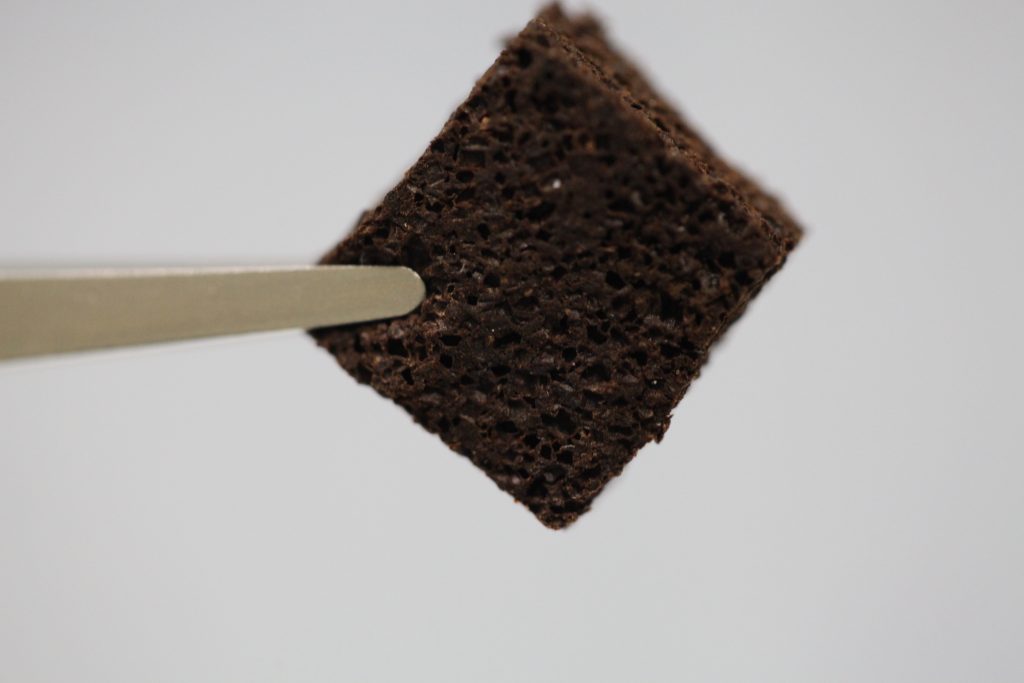
This coffee-infused bioelastic foam can filter lead from water. Photo by Chavan et al., ACS Sustainable Chem. Eng., 2016

Tune in tonight on PBS NewsHour where Miles O’Brien will look at the hazards and history of lead as part of his Leading Edge series.

Needless to say, humans have a coffee obsession.

Last year, global coffee consumption weighed in at 10 million tons — or one and half Great Pyramids worth of beans ground into caffeinated oblivion. Now, a lab at the Italian Institute of Technology wants to put those discarded grounds to good use.

The team has engineered a coffee grounds-infused foam that removes hazardous metals, like lead, from water. Though still in its prototype phase, this foam might be able to clear the worst levels of lead contamination found in places like Flint, Michigan, within a few hours.

“The proposed method is cheaper [than current large-scale filtration systems], since it uses principally costless waste,” said IIT physicist Despina Fragouli who led the project. “and more sustainable compared to other systems, where synthetic materials are used.”

The idea isn’t entirely new. Scientists have known for years that coffee contains chemical groups — called carboxylates — that stick to metals. Early attempts at this water remediation concept tried smashing the coffee grounds into a fine powder, which was then mixed into lead-tainted water. The toxic metals bind the powder, and together, they are filtered out of the water. But this procedure is a bit redundant — you need a filter for a filter.

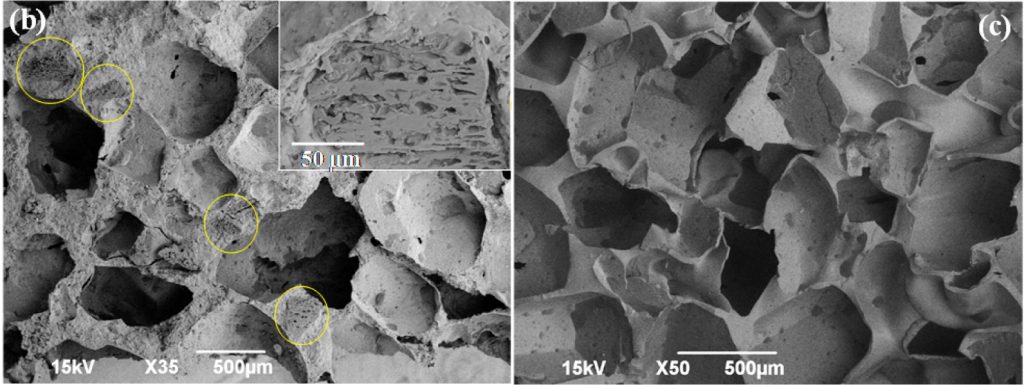
Fragouli and her colleagues simplified this process by chemically infusing the coffee powder onto a elastic foam. The final spongy foam is 60 to 70 percent coffee by weight.

Left panel: Bioelastic foam with the spent coffee powder indicated by the yellow circles and the inset. Right panel: Pure elastic foam without coffee powder. Photo by Chavan et al., ACS Sustainable Chem. Eng., 2016
Left panel: Bioelastic foam with the spent coffee powder indicated by the
yellow circles and the inset. Right panel: Pure elastic foam without coffee powder. Photo by Chavan et al., ACS Sustainable Chem. Eng., 2016

“Both the coffee and the heavy metal ions are entrapped in the foam,” Fragouli said of her findings published in ACS Sustainable Chemistry and Engineering. “Therefore, no additional procedures are required for the removal of the [coffee] adsorbents and the pollutants from the water.”

So, a water official would simply pull the foam from the water to take out the metal toxins. The rate of removal depends on how much lead is in the water. If Fragouli’s team started with water containing nine parts per million of lead — 360 times higher than most common amount found during the Flint water crisis — the foam could remove a third of the contamination in 30 minutes.

Though promising, Fragouli said more research is needed to determine if the foam can obtain lead and mercury levels appropriate for drinking, especially with gunky water flowing through real-world pipes. So far, the sole field test occurred with wastewater from the IIT’s chemistry department, which contained a mixture of metal ions.

“The results show that the metal ions of interest can be effectively removed,” Fragouli said.

source: http://www.pbs.org / PBS Newshour / Home> The Run Down> Science / by Nsikan Akpan / September 28th, 2016