Project to improve treatment of neurological disorders was launched January
Soon diagnosis and timely treatment of common neurological problems, such as epilepsy, headache, stroke, dementia and brain infections, can be done from the grassroots level of primary health centres, secondary-level district hospitals and NIMHANS at the tertiary level in the State.
Recognising the need to improve treatment and prevent neurological disorders in the community, the State Government in association with NIMHANS and Niti Ayog launched the Karnataka Brain Health Initiative (Ka-BHI) in January.
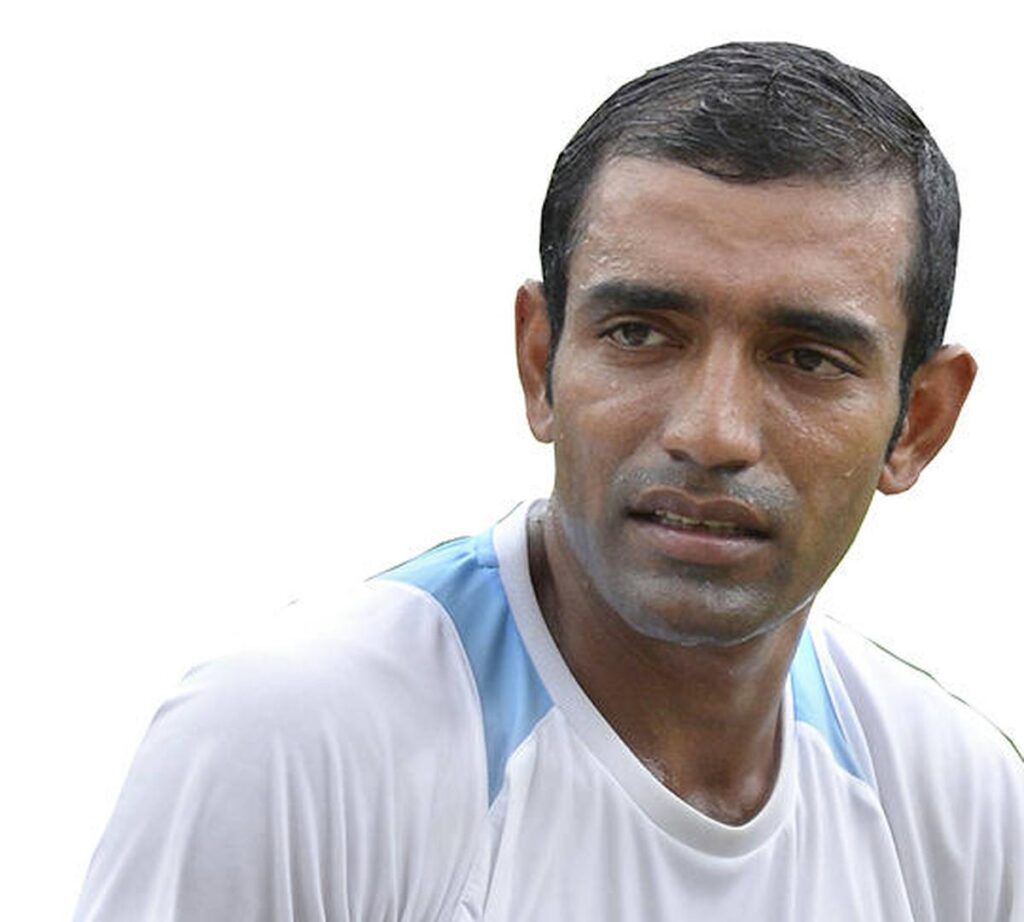
While training of doctors and preparations to start Brain Health Clinics in the three pilot hospitals – Jayanagar General hospital in Bengaluru Urban, SNR Hospital in Kolar and District Hospital in Chickballapur – has begun, the Government has appointed cricketer Robin Uthappa as the brand ambassador for brain and mental health programmes. The pilot project has also been announced in this year’s State Budget.
State Health Commissioner Randeep told The Hindu that brain health promoting activities such as physical exercises, yoga, sports, traditional art and crafts, stress reduction and nutritional support will be initiated in three pilot districts. “This is a first of a kind initiative in the country that will facilitate early diagnosis and timely treatment, for common neurological diseases,” he said.
NIMHANS Director Pratima Murthy said the burden of neurological disorders is rapidly increasing in India and is posing a challenge to the health of the society. “Neurological diseases, including stroke, epilepsy, headache, dementia and brain infections, contribute to immense disability in the community. Since brain health, mental health, non-communicable diseases, maternal and child health and elderly care overlap, coordination between the different national programmes under the National Health Mission is being strengthened through this pilot project,” she said.
“Ka-BHI will develop a model for prevention and management of neurological diseases and promote brain health, from grassroots level of primary care to tertiary care. This pilot study in three districts can become a model and be implemented in the whole State and at the national level in the coming months,” Dr. Murthy said.
Suvarna Alladi, professor and head of the Department of Neurology at NIMHANS, said the training programme for PHC medical officers was initiated on March 11. “Three in-person training workshops have been conducted for all the PHC doctors in the pilot hospitals. Overall 180 doctors, including 26 neurologists from NIMHANS, are involved in this. The protocols for diagnosis and management of neurological disorders have been drafted and weekly online neurology interactive teaching sessions are going on,” she said.
“The training of PHC doctors will be completed in June and they will be certified in treatment of common neurological diseases. Training programme for ASHA workers and community health officers has been developed. They will be provided with a 15-point questionnaire that can be used to screen patients with neurological disorders from the community level and Health and Wellness centres for early identification and timely treatment in referral centres,” Dr. Alladi explained.
source: http://www.thehindu.com / The Hindu / Home> News> National> Karnataka / b y Afshan Yasmeen / Bengaluru – April 15th, 2022
It is quite natural for small children to develop an affinity towards their toys or toy vehicles. Unlike other children of his age, this boy never thought of buying toy vehicles from shops. He created his own toy vehicles and had fun. At that young age itself, he would wish if he could manufacture his own vehicles.
By the time he finished school and entered college, his desire to manufacture vehicles grew by leaps and bounds.His ITI education supported his aspirations. He has made several vehicles and sold them. His vehicles have a uniqueness or fingerprint of his own.
The prodigious boy is Akash, a resident of Biligeri village near Madikeri. After completing MMV in the ITI, he started to work for some vehicle manufacturers. As the urge to manufacture his own vehicles catapulted into a passion, he left his job and returned home.
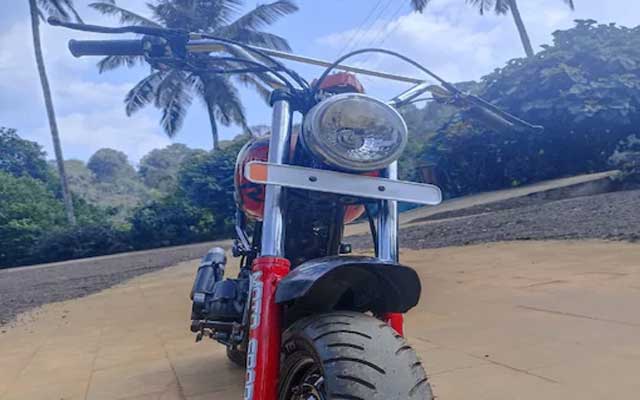
Initially he began with bikes and also cars which could be pedaled. He then fixed engines to them and succeeded in making indigenuous vehicles. In the past few years, he has forayed into manufacture of bikes, agricultural machinery, various equipment and also other vehicles.
Another unique skill he has is custom making the vehicles as per the client’s desire by procuring spare parts of different makes and assembling them at home. He has also sold bikes without gears and scooters with gear. So he could rightfully be called the Frankenstien of automobiles.
Akash has now made a unique bike that also grabs eyeballs. .So far he was making fuel driven vehicles. Now he has manufactured vehicles which run on a battery. The bikes and small cars made by him ideally suit the requirements of resorts and homestays in Kodagu district. Therefore, owners of some resorts have purchased their custom made vehicles from him.
He has immense interest in making agricultural machinery. Machines which dry cardamoms and pepper, those which separate chilli from their stalks etc. He has also made four trolleys that can carry different weights, and sold them. Some organizations which have noticed his achievements, have come forward to help him. They are thinking of providing him with a showroom so that this rural talent gets recognition in the outside world.
source: http://www.daijiworld.com / Daijiworld.com / Home> Karnataka / by Daijiworld Media Network – Madikeri (SP) / February 23rd, 2022
Manu, a 48-year-old man, was brought to Apollo BGS Hospitals, Mysuru on Mar. 30, 2022 at 12.32 pm from CSI Holdsworth Memorial Hospital, in a critical condition. Initial CT scan showed brain stem infarct. He was shifted to ICU immediately for life support and intensive care.
On Mar. 27, Manu suffered a stroke and was rushed to the nearby hospital by his relatives as his wife and son were at Bengaluru. Manu’s family immediately rushed to Somwarpet and took him to Madikeri followed by Hassan for further treatment on Mar. 28. The next day when his condition worsened, he was referred to Mysuru at a tertiary care centre for treatment.
Manu hailed from Somwarpet in Kodagu and had recently moved to Bengaluru with family.
Manu was kept on life support for two days while he was in a very critical state. On the third day, Apr. 1 at 9.30 pm he was declared brain dead due to brain stem failure as per the hospital protocol stipulated by the Transplant of Human Organs Act 1994 by panellist doctors at Apollo BGS Hospitals, Mysuru, which is now a Licensed Centre for Multi-organ Transplant (OTC).
Manu was healthy before this incident and further tests confirmed his eligibility for organ donation. After his family was counselled for organ donation, the deceased patient’s wife and son came forward to donate his organs. As per organ donation protocols, officials from Jeeva Sarthakathe initiated the process of organ recipients waiting list. At around 2 am on Apr. 2, Manu’s organs (2 Kidneys, Liver, Heart Valves and Corneas) were harvested with cross clamp done at 5.03 am at Apollo BGS Hospitals.
“India is struggling with acute shortage of organs for transplantation. It is estimated that more than a million people suffer with end stage organ failure, but only a handful of 3,500 transplants are performed annually. At least 15 patients die every day waiting for organs and every 10 minutes a new name is added to this waiting list,” said N.G. Bharateesha Reddy, Vice-President & Unit Head, Apollo BGS Hospitals, Mysuru.
Stating that donors like Manu have turned to be a beacon of hope giving a new lease of life for the wait-listed patients, he also lauded the efforts of Jeeva Sarthakathe team for being in the forefront in achieving and carrying out sustained deceased donor transplantation activities and educating the public on organ donation.
The organs donated are as follows:
Sl. no
Organs Donated
Recipient Hospital
1.
Liver
Apollo BGS Hospitals, Mysuru
2.
One single kidney
Apollo BGS Hospitals, Mysuru
3.
One single kidney
Apollo BGS Hospitals, Mysuru
4.
Heart valves
NH Hospital, Bengaluru
5.
Corneas
Lions Eye Bank, Mysuru
source: http://www.starofmysore.com / Star of Mysore / Home> News / April 07th, 2022
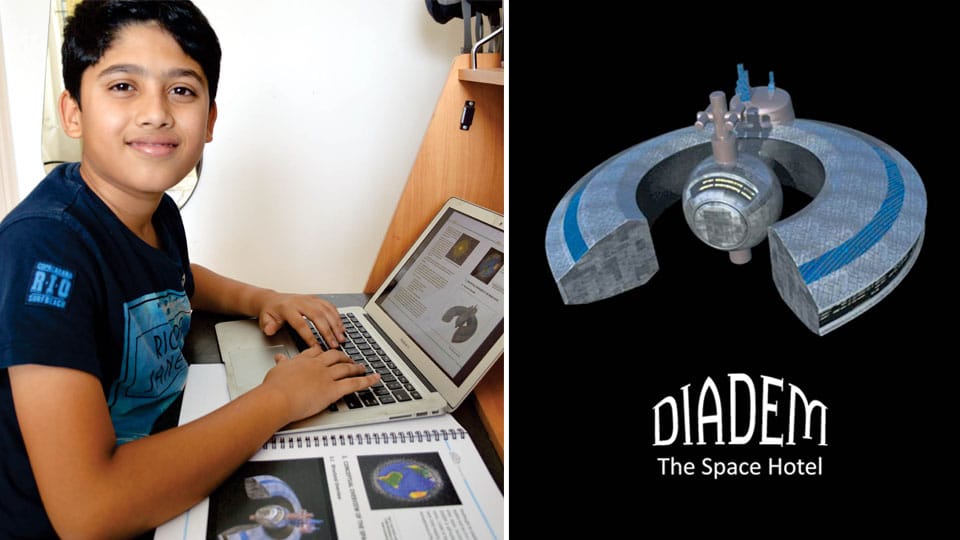
Mukkatira Neerav Aiyappa, a Class 7 student of National Public School International (NPSI), Mysuru, who participated in the Annual Space Settlement Contest, has bagged the first place in Grade 7 Category for his proposal of a Space Hotel ‘DIADEM.’
He presented a design of the Space Hotel in the orbital space settlement LEO (Lower Earth Orbit) at the contest jointly organised by National Aeronautics and Space Administration (NASA) Ames Research Centre, San Jose State University and the National Space Society (NSS).
This international competition invited all students around the world up to 12th Grade to participate in its 2018 edition.
Neerav will receive a NASA certificate and has been invited to attend the NSS 37th Annual International Space Development Conference to be held at Sheraton Gateway Hotel in Los Angeles, California, USA, from May 24 to May 27, 2018 for a poster and oral presentation of his winning proposal. His project and ideas will be used by NASA for its future space programmes.
Speaking to Star of Mysore, Neerav, who has been working on the project since 11 months, said that among various forms of tourism like eco-tourism, nautical tourism, wellness tourism and medical tourism, a new concept has emerged in the form of space tourism, kindling interest to explore various destinations. Rather than seeing comets, planets, and constellations on a telescope, space tourism provides a privilege of experiencing first-hand the beauty of comets, asteroids, stars and planets, he added.
Space tourism will not only provide new vacation experience but create a new view to the earth, transforming the thoughts and perception among humans socially, culturally and emotionally, inspire new careers for the generation of engineers and will open newer fields for research in space medicine, nanotechnology, physical sciences and others, he said.
Through his project, Neerav has created a ‘Space Hotel’ providing space tourists a unique experience of a lifetime and enrich space and its potentials. “My project aims to create a ‘wow’ factor in the field of travel, provides job opportunities, ability to renew space exploration and research, explores possibility of hypersonic travel and have a newer perspective of earth,” he said.
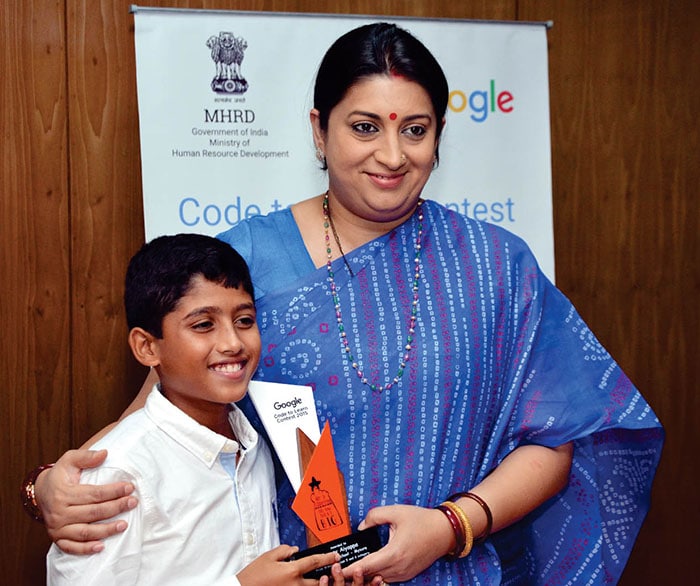
A file photo of the then Union Human Resource Development (HRD) Minister Smriti Irani felicitating Mysuru boy Neerav Aiyappa for winning Google India Code to Learn 2015 Contest.
In his project, Neerav has detailed out the concept of the space hotel, life support system, logistics of the space hotel, economy and time-line, space laws and code of ethics.
Neerav had won the Google India Code to Learn 2015 Contest where he created a game software project using “Scratch” programming called “Wings Over Waves.” The then Union HRD Minister Smriti Irani felicitated him under Rashtriya Avishkar Abhiyaan.
He was a finalist at RYSI Award (Raman Award) held on Mar. 5, 2018 at Panchavati (Sir C.V. Raman’s residence) in Bengaluru where he demonstrated the principle fluid and thermodynamics in intermediate category with a working model.
Neerav is the son of Mukkatira Muthanna and Kavery, residents of Yadavagiri and grandson of Mukkatira Gappu – Janaki of Ponnampet and Guddanda Nanda – Kanthy of Virajpet.
source: http://www.starofmysore.com / Star of Mysore / Home> News / March 27th, 2018
Vishwa Cariappa is a native of Kodagu and currently resides in Bengaluru. He is the Chairman and Managing Director of Vasan Infrastructure Private Limited.
Madikeri:
A native of Kodagu has written to Prime Minister Narendra Modi urging for the establishment of a multi-speciality hospital in the district. The uniqueness of Kodagu has been highlighted in the letter alongside the immediate need for a multi-speciality hospital.
Vishwa Cariappa is a native of Kodagu and currently resides in Bengaluru. He is the Chairman and Managing Director of Vasan Infrastructure Private Limited. He has written to the Prime Minister urging for the establishment of a multi-speciality hospital in Kodagu.
In his letter, Vishwa highlights the uniqueness of the district and the people’s increased contribution to the Indian Military. The contributions of Field Marshal KM Cariappa, General Thimmayya and other noted personalities have been highlighted in the letter. Further, the dire situation of the people of the district post the 2018 natural disaster has been brought to the fore and the absence of good road connectivity and the absence of improved medical facilities especially in hilly regions have been highlighted.
The plight of the patients who are forced to travel out of the district to get medical treatment has also been highlighted. He has then requested the Prime Minister to establish a multi-speciality hospital in the district and Vishwa has assured to donate Rs One Crore to the government for the establishment of the same. He also assured to help the government find land in the district for the establishment of the hospital. The letter has been posted to the PM and other cabinet ministers of the central government.
source: http://www.newindianexpress.com / The New Indian Express / Home> States> Karnataka / by Bosky Khanna / Express News Service / March 20th, 2022
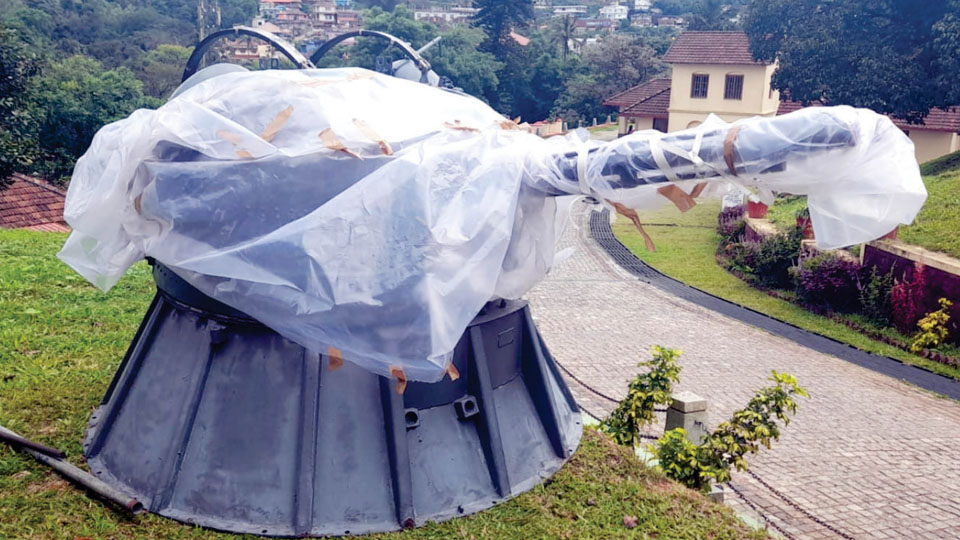
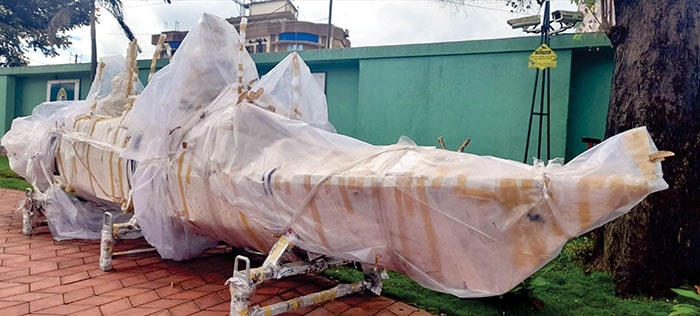
New war machines brought to Sunny Side, General K.S. Thimayya Museum
The submarine, INS Shivalik model and the anti-aircraft gun were brought to Madikeri from Visakhapatnam Naval Base in giant many-wheeled trucks and have been placed on the museum campus for a formal handing over and opening.
The formal handing over will take place in Madikeri either in December this year or January 2022. The Flag Officer Commanding-in-Chief, Western Naval Command of the Indian Navy, will arrive in Madikeri and officially hand over the new items to the Deputy Commissioner and they would be open for public display.
Till now, only one ship anchor was on display in the museum and not many of the Indian Navy relics were there. But now with the addition of the INS Shivalik and a submarine being added to the existing attractions, it is a befitting tribute to the celebrated General who is Kodagu’s pride.
About INS Shivalik
INS Shivalik is designed to escape detection by normal radars and surveillance equipment. Special aerodynamics, equipment and material used in designing and building these ships makes it very difficult to monitor their movements. That’s why they are called ‘stealth frigates.’
With INS Shivalik, India made it to the elite club of eight nations that build stealth warships, adding new fire power and muscle to its Navy. Apart from India, only the US, Russia, UK, France, Sweden, Japan, Italy and China have the capability to build stealth warships of this size and class.
The vessel was ordered in 1999 and saw its keel laid down on July 11, 2001 by shipbuilder Mazagon Dock Limited. As a multi-role warship, the INS Shivalik is fielded with a varying group of armament options to contend with aerial, surface and underwater threats.
Rear Admiral’s contribution
Rear Admiral Ichettira Uthappa, who is a relative of Col. (Retd.) Kandrathanda Subbaiah, the President of Field Marshal Cariappa and General Thimayya Forum, had visited Sunny Side four months back and Subbaiah had drawn the attention of the Rear Admiral to the fact that the museum did not have a warship.
Uthappa promised Subbaiah that he will pursue efforts to bring a warship model to the museum and accordingly, the war machines were brought to Madikeri. Rear Admiral Uthappa interacted with Navy authorities and sanctioned INS Shivalik warship model that is 24-ft in length and a submarine which is 8-ft in length.
Even the anti-aircraft gun that was brought to Madikeri from Visakhapatnam had served the Navy for years and the cost of all the latest additions to the museum is estimated to be Rs. 20 lakh.
According to Field Marshal Cariappa and General Thimayya Forum Convener Major (Retd.) Biddanda Nanjappa, Rear Admiral Uthappa bore the transportation costs of shifting the naval items to Madikeri and in the coming days, a suitable place will be made to accommodate these war machines, he added.
source: http://www.starofmysore.com / Star of Mysore / Home> News / December 01st, 2021
During my career, I have tried to learn broad-based skills rather than restrict myself to surgery alone, says Dr Kavery Nambisan
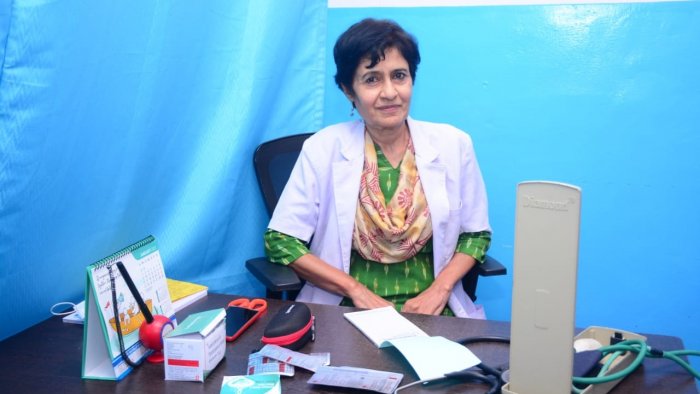
Dr Kavery Nambisan at her health clinic. Credit: DH Photo
I wound up my surgical career of 36 years in 2015 and all I wished for was to hang up my white coat and stay in the dream home that me and my husband Vijay were building in a village near Ponnampet in Kodagu, Karnataka. A house with a freshwater well, enough space for a garden, a few beautiful old trees; and a high-tiled roof that has leaked faithfully during the rains.
But secretly, secretly, I knew it was not finished. I found myself dreaming of operations (visualising them step by step), of hospital wards, a nurse’s shout, of stretchers screeching between my ears, the irascible phone bullying me out of bed.
Surgery is a bold and often risky venture. Risky because your work is a hair’s breadth away from life throbbing inside minute channels within flesh and bone; your fingers move in a disciplined trance and if you are a fraction of a millimetre off your target, you might nick life itself.
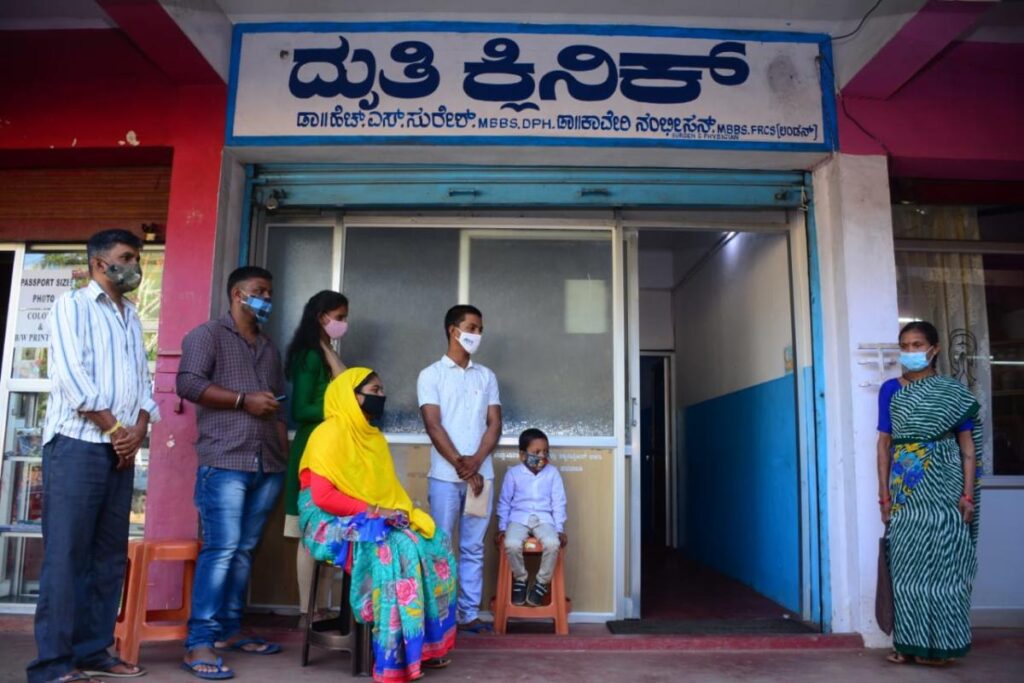
Patients line up outside her clinic. They mostly come in the morning hours from distance of up to 20 km
A month later there I was, with my rented room nestling between two barber shops. “Any professional doubts you might have, you can seek their advice,” teased Vijay as we drove back home. “Righto. When you come to me as a patient, I’ll borrow their instruments.”
Unobtrusively, I made the switch from the scalpel to the stethoscope. During my career, I have tried to learn broad-based skills rather than restrict myself to surgery alone. I worked in various departments of bigger hospitals and in teaching institutions. . It helped me enormously. As a general practitioner too, I am asked to attend to a wide variety of cases. I try to keep abreast of my medical knowledge by reading, and interacting with colleagues.
In cities, the medical profession is compartmentalised into specialities but in a small rural town, most people do not have the means to hop between doctors. My clinic is open in the morning hours only, so patients started to come home. They were the daily wage-earners who live near us and neighbours on ‘friendly visits’ who inveigle you into checking blood pressure or treating migraine or a skin rash. We partitioned off a portion of the veranda and I stocked up essential medicines and, injections, bandages and splints. Rural cordiality ensures that patients are willing to wait while I finish bathing, boiling the milk, burning chapatis or finishing a call. The telephone, especially the ‘mobile’ pins down the user in more ways than one. We doctors have it hard. “Dactre, are you at the aaspathre? No? My son has earache. I’ll bring him to your house right away.”
Some of the privileged classes are put off by the equalizer effect of my scruffy clinic. “You should discourage these labourers. They spread all sorts of diseases. And how can you trust them? They will observe everything, then come back and rob,” says a neighbour. Never mind that there has been no such incident in the village. The fish-seller stops by late in the evening. He has had no time to go home for a bath before coming to the clinic and is apologetic about the odours that waft in with him. A woman I am treating for her arthritic pains regularly requests me to ‘hide’ a few hundred rupees for her, safe from her husband. I think the man knows, or do I imagine the scowl on his face when he meets me?
Excitement is always round the corner. Patients come in with the warning signals of a ‘heart attack’, with epileptic seizures, dog bites and injuries following drunken brawls.
Between patients, I have time to reflect. I can help patients by treating them when they fall sick but the real need is to prevent them from falling sick. The irony is that my surgical career is almost all about cure and not prevention. You have a lump? I’ll cut it out. A blockage? I can unblock it. Broken bone? I’ll fix it. The results are immediate and patients, grateful. The great bulk of medical thought, medical progress and medical expenditure goes into curing patients after they fall sick. In comparison, a negligible amount is spent on prevention of disease. In medical colleges, the learning of Preventive Medicine (and Community Health) gets low priority and is somehow made to seem dull and uninspiring. It is a huge mistake.
The average citizen is led to believe that the entire responsibility for his malady rests with the doctor. Not so. It is important to understand how the body functions and to learn about your illness by asking the doctor. I like explaining to patients and those that listen find it far easier to overcome their illness because it encourages them to take charge of their own bodies.
The first step is for the patient to understand the why of his or her ailment and then the how of treatment. The main causative factors of illness are heredity; environment; diet; stress; and lack of physical activity. If every citizen is provided with clean surroundings, uncontaminated water, simple nutritious food and the amenities for physical exercise, and if mental wellbeing is ensured, many of us can live beyond a hundred years, in good health.
We live because of it, (and at times for it) but we cannot live without it: Food. Nearly half the world’s population survives on less than the required amount; the rest of us eat way too much. We worry about the waistline but care little about wastage. Sixty percent of the patients who visit my clinic are well on their way to weakened hearts, afflicted livers and the degeneration of other organs all brought on by ill-considered eating. Diseases that were once the privilege of the upper class now punish all of society. Awareness about healthy food reaches the educated first. A person moving from poverty to relative wealth goes for fried snacks, bakery goods and fizzy drinks.
The director of a company that produces a popular brand of biscuits said in an interview that Indian mothers are ‘aware’ of the health benefits of biscuits. They use it as the first solid food given to babies. The power of advertising! A young woman who works as a domestic help told me that she never cooks breakfast. Her family of four starts the day with tea and glucose biscuits. India will definitely need more dentists to take care of a generation with early dental caries. The media supplies misinformation in the form of advertisements tangled with facts. Unhealthy high-end pap is shamelessly lauded by celebrities who will not touch them. The more expensive the goods being sold, the more treacherously untrue the superlative qualities extolled.
Mental wellbeing is an ill-understood term. The mind must be able to function in a smooth and happy manner for the individual to get the best out of life. Emotional grace provides us with the ability to understand and act towards the collective betterment of people everywhere, without the prejudice of narrow divisive factors. Even in our (seemingly) tranquil rural setting where I work, stress is a constant factor. Nothing is more worrisome than hunger, homelessness, unemployment and a lack of dignity.
Many ailments are triggered or aggravated by the occupation one pursues (see box). Almost always, patients are surprised when you tell them such facts. Some of them make the effort to address the problem.
Lessons from the pandemic
The Covid pandemic taught me many things. The one fact that came back to me strongly during these two years is that the pandemic itself would not have happened if the world was more tuned to prevention of infectious disease.
An infection is when another living organism (bacteria, virus, or parasites) invades some part of the human body, multiplies and destroys the equilibrium. A simple example is when there is a cut injury to the skin which gets ‘infected’ and pours out pus; as also a common cold, where a virus enters the nose, throat and lungs, causing various respiratory symptoms like nasal congestion, throat pain, cough and fever. The defence mechanism of the body called the immune system tries to fight the invader by sending an army of white blood cells to the breached zone. If the body immunity manages to win, it stops the virus from multiplying. The cut injury heals fast, the cold is cured with ease. If immunity is weak, the virus gains easy entry through the skin and soft tissues or rampages through the throat and lungs causing serious problems.
The mechanism is no different in Covid patients. A person who has a strong immune system can fight the virus and thus avoid infection or get away with a mild attack. Those with weakened immunity, (diabetics, hypertensives and patients with kidney disease or malignancy) are more prone to serious disease.
With hindsight, it is easy enough to point out that the first ‘lockdown’ in March 2020 was botched because of the abrupt manner in which it was introduced. Our Prime Minister announced it a mere four hours earlier, giving no time whatsoever for those employed in various jobs and industries to make any plans for the fallow period that followed. (South Africa announced its lockdown four days early; Bangladesh gave a week’s notice before shutting down.) The plight of millions of our migrant workers suddenly rendered homeless and foodless, trudging back to their villages in inclement weather, their suffering and deaths cannot be forgotten. We had just one positive case of Covid infection in our district of nearly six lakh people. For several months afterwards, the lockdown was our problem. With no public transport, patients who suffered from chronic and acute ailments were unable to seek medical help.
Based on the experience of doctors in other parts of our country and abroad, I started using Ivermectin in early cases and referred only the more severe cases to the Madikeri hospital. I also used the drug as preventive medicine in a once-a-week dose for family members of infected persons and in all frontline workers in society, like the police, traffic inspectors, autorickshaw and taxi drivers, shopkeepers, vendors — all those who have to go out on work. It is best supplemented with immunity-enhancing vitamins and minerals — Vitamin C, Zinc and Vitamin D3, B complex and iron. I have been taking weekly Ivermectin through this entire period.
During the course of two years, the above method (along with simple antibiotics and cough medications) has been used in several European, Asian, African and South American countries. In Australia and the US, it is used by private practitioners but not advocated by the government. India has done a flip-flop, chiefly because of the confusing signals put out by the WHO. It is difficult to understand why the above simple measures to combat the virus have not been checked more vigorously; and why, when there are over sixty peer-reviewed trials that prove the efficacy of Ivermectin in humans, it is dismissed as “horse medicine”. WHO only needs to check its own statistical records which clearly states that over three billion doses of Ivermectin have been used worldwide since its discovery in 1976. If it were indeed ‘horse medicine’, how come we are not seeing serious side-effects or deaths due to its use?
In India, we have reputed doctors in cities and villages who have consistently used the drug to treat early Covid infections. Several state governments (UP, Odisha and Goa among them) have quietly added it to the medicine kits given to health care workers who treat quarantined Covid patients. The number of Indians treated so far would run into lakhs.
It is possible that with early and judicious use of Ivermectin, we could have avoided most of the hospital admissions, the use of antiviral drugs of doubtful efficacy, non-essential CT scans, oxygen dependence, ICU care and even death. It is puzzling and downright appalling that the WHO should continue to undermine its efficacy and safety, quoting a single hastily conducted clinical trial as the reason for its disbelief and ignoring all the other successful trials done the world over.
Effective vaccination for all, physical distancing and hygiene and early detection with treatment will curtail suffering and deaths. Our vaccination drive must pick up more speed and reach everyone. Many countries having vaccinated only a minuscule number of people, the danger of a prolonged Covid War which affects all countries might become a reality. We in India cannot afford to have another deadly surge. Malnutrition and undernutrition have increased by nearly 20% as compared to 2019.
The aftermath of the Covid years will shape the course of our nation and define the quality of life we leave for the younger generations. One can only hope that we will have learnt something from our failure. The most important lesson I have learnt is that the scales which are heavily tilted in favour of curative medicine must tilt in favour of preventive measures. And when a cure is necessary, we must try to opt for the most basic method or drug that will do the work.
I have used up a great deal of space to state a single, most obvious truth: Keep it simple.
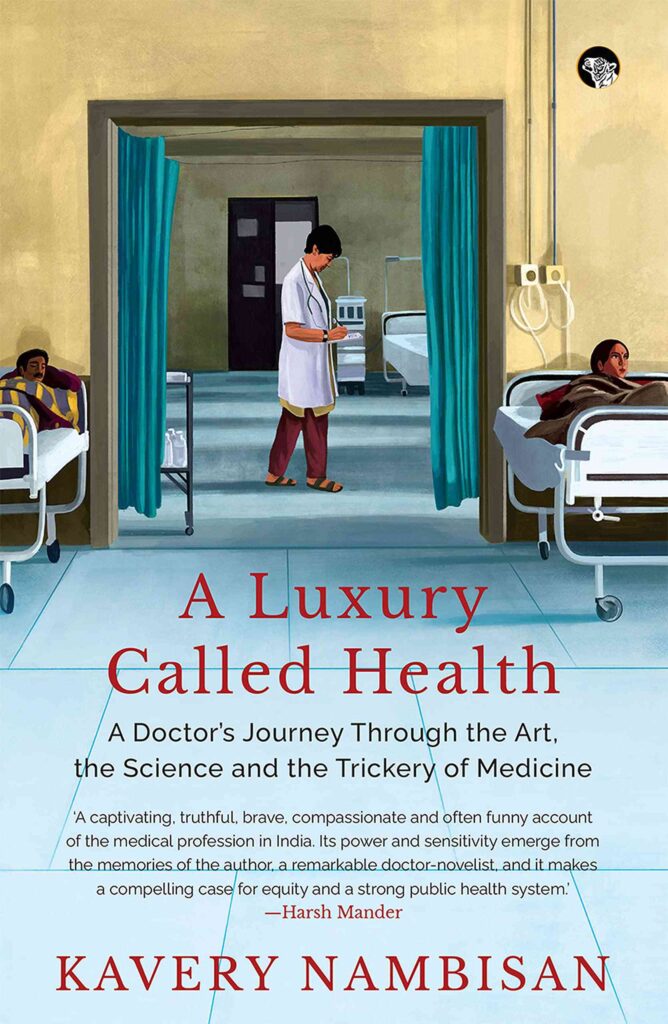
(Kavery Nambisan is a surgeon and novelist. Her latest work ‘A Luxury Called Health’, published by Speaking Tiger, is now available online and on the stands. She can be reached at kavery.nambisan@gmail.com)
source: http://www.deccanherald.com / Deccan Herald / Home> Special Features / by Kavery Nambisan / January 29th, 2022
‘A Luxury Called Health’, written by a doctor who is also a novelist, needs to be not only read but also discussed.
Kavery Nambisan. / Modified from screenshot via YouTube / Author TV
What do you get as a reader when a writer of fiction, and also a surgeon who has worked closely in both the public as well as private health sector, picks up her pen to write on the state of the health system in the country?
The answer is easy: you get a book that lays bare the fact that the health of the citizens of a nation is an investment, that the health system is a part of nation building and effective governance and that it is time to learn from mistakes that have been made and continue to be made.
You get a book that comes from years of working amidst the dust and the grime of government health care set-ups, from having observed the profit-oriented approach of the private sector. A book that offers quiet hope that things can, and must, improve.
What’s wrong…
Kavery Nambisan’s first work of non fiction, A Luxury Called Health: A Doctor’s Journey Through the Art, the Science and the Trickery of Medicine, is exactly what its title says, with little drama or exaggeration. It is an honest examination of this thing called healthcare, of the systems that are working and not working, of the people who are its faces and, at times, because of whom, healthcare turns into what it should be: effective, affordable and something that can be trusted by everyone.
A passage from Fyodor Dostoevsky’s The Brothers Karamazov, where a doctor examines a terminally ill patient in a very poor home, that features in the introduction is an apt reminder of what happens when the poor try to access healthcare: the hope and despair felt by the patient’s loved ones and the disdain that the doctor projects. It sets the tone for what follows in the subsequent chapters.
Later, Nambisan conveys how patients and their families often put doctors and healthcare staff on the pedestal of demigods and do not try to find out about the nitty gritty of how illnesses are treated. This makes them resort to threats and abuse when things do not go as they should.
From the early traditional medical practices to the first steps taken in India to institute a medical institution to train and educate health-workers and medical staff, the author puts the focus on how the poor health of individuals affects the overall well-being of a nation. She takes readers into the time the seeds of a new nation were being sown and, along with them, the hopes and aspirations that went to building the health care system. It was a task made more difficult by entrenched caste practices, such as those of not even touching corpses, leave alone dissecting them as medical students.
Nambisan’s note of appreciation for the first wave coming from Kerala when it was still a profession that had few takers soon after Independence is a reminder of how far the health care system has come. But, as she shows with anecdotes and analysis, with this has come disparities between the public and the private sphere when it comes to health.
… And what’s right
What works for this book is that it stays clear of rhetoric or the blame game. Instead, it injects humaneness through personal insights while making a point on how the health system is interconnected to nutrition, poverty, hygiene, water, and sanitation. Nambisan makes the point that urban development ends with more buildings but little attention to, among other things, waste and rainwater management and water resources, which in turn, affects the health system. She emphasises that treating medical situations on a case by case basis, without a holistic strategy for improving health, leads to little progress.
Thankfully, none of these heavy-duty issues weigh down the book and for that we have the quality of her writing to be thankful to. Perhaps only a writer of fiction used to the economy of words would have been able to cover such complex matters in a little over 300 pages. There are no appendices with tables and data, for the author speaks from her own long years of practice, with quiet, unwavering authority.
The use of anecdotes from the history of medical practices across the world and in India, peppered with the author’s own experiences, makes the book come alive in a way that is informative as well as thought-provoking. In one chapter that details the list of medical procedures in a health set-up, Nambisan admits how easy it is to treat patients as mere technicalities, and that it takes a lot to probe further or ask questions of a supervisor or senior colleague.
There is little of handwringing or giving into hopelessness, even when the book details corruption and political apathy, as well as greed. In a chapter titled “Doctoring Reality”, the author highlights rural initiatives started by medical practitioners who have given up lucrative placements to set up affordable and accessible services. It makes you wonder why we don’t see many of these inspiring stories in the mainstream media.
Towards the end the author takes readers into her personal space, as a spouse having to play part- bystander and caregiver when her husband, the acclaimed poet Vijay Nambisan, is diagnosed with cancer.
Kavery Nambisan’s voice is gentle but firm, with words of caution about how critical it is to listen to the voices on the ground, the doctors who work in remote areas with poor resources. For they are the ones whose intervention saves lives, instead of following protocols laid down by international organisations like the WHO, especially in the wake of the Covid-19 pandemic.
A Luxury Called Health is an important book, one that needs to be read and discussed. It exposes the failings of the medical system in the country over the years, but it also shines a light on the people who mend worn-out bodies and organs, bringing hope and succour.
Chitra Ahanthem is former editor of Imphal Free Press, a newspaper published in Manipur. She is also a Manipuri-to-English translator.
A Luxury Called Health: A Doctor’s Journey Through the Art, the Science and the Trickery of Medicine, Kavery Nambisan, Speaking Tiger Books.
source: http://www.scroll.in / Scroll.in / Home> Book Review / by Chitra Ahanthem / December 19th, 2021
Kavery Nambisan speaks to us on her new book ” A Luxury Called Health: A Doctor’s Journey Through the Art, the Science and the Trickery of Medicine”
Kavery Nambisan belongs to a rare breed of writers – the doctor who writes fiction.
She is a general surgeon – a domain where women are uncommon. Another uncommon thing about her career is that she is a rural doctor, having practised for the most part of her career in rural India.
She has published seven critically acclaimed novels. “A Luxury Called Health: A Doctor’s Journey Through the Art, the Science and the Trickery of Medicine”. A Luxury Called Health is her first book-length foray into non-fiction.
This book is not easy to classify. At one level, it has strong elements of the memoir but it also contains social commentary, history, and feminist critique. She writes in moving detail about her late husband, the poet Vijay Nambisan’s battle with cancer and her unnerving experience with the hubris endemic in the medical profession.
She also talks about her experience in treating hundreds of patients with Ivermectin, the drug’s remarkable efficacy against COVID-19, and why it hasn’t been more front and centre in the battle against the pandemic.
A common thread running through the book is a desire to engage with fundamental questions about health, sickness and medical treatment. She speaks to The Hindu about her book, what prompted her to write it, and her concerns about the medical profession today.
Guest: Kavery Nambisan
Host: G. Sampath, Social Affairs Editor, The Hindu
Edited by: Reenu Cyriac
source: http://www.thehindu.com / The Hindu / Home> Multimedia> Podcast / by G. Sampath / December 15th, 2021
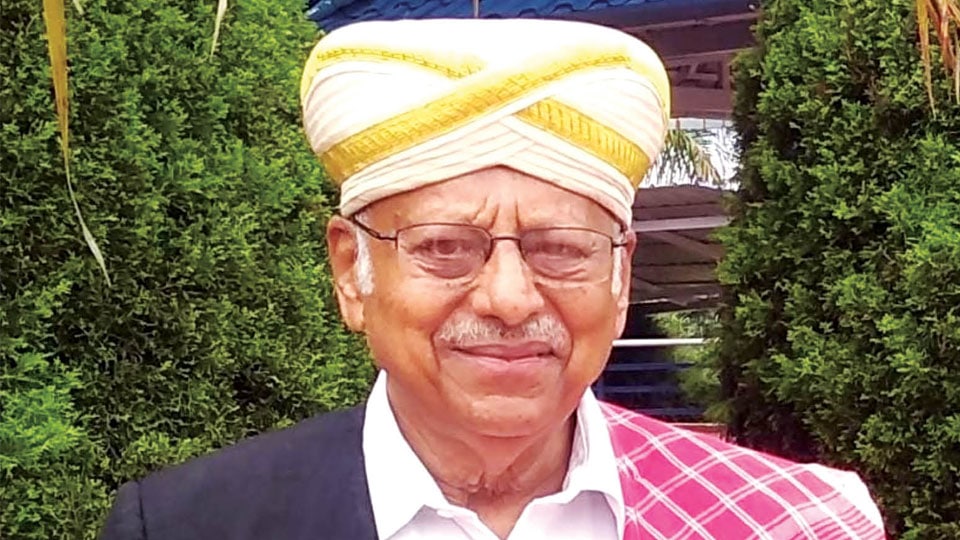
Dr. Adengada A. Kuttappa, who passed away early this morning at his residence, was one of the most jovial and exemplary Dentists of our city for the past over 40 years.
Past President of Mysore Kodava Samaja, Dr. Kuttappa was a man genuinely concerned about Kodavas and very helpful too. He led the Kodava Samaja during his tenure smoothly without controversies.
He was a good listener to ideas and suggestions from others.
I was blessed to work closely with him during his tenure as the President of Mysore Kodava Samaja, when I organised a mega Fund Raising event by Fashion Guru Prasad Bidappa during 2000 at Kaynes Resorts.
This was the largest ever fund raiser organised by Mysore Kodava Samaja to date which finally culminated in Mysore Kodava Samaja making a clear profit of approximately Rs. 20 lakh those days. Dr. Kuttappa had total faith in me and had given the full responsibility of organising this event and completing it successfully. He was a leader who had the ability to identify those with talent, nurture and encourage them for the common good of the community. Dr. Kuttappa ensured that he was present in almost all functions of Kodavas both during celebrations or mourning.
Dr. Kuttappa made his mark in Rotary Mysore too and was very popular in Rotary circles.
Dr. Kuttappa was a good speaker who added colour and poise to any event he addressed. His pun and humour was of a very trademark style. He could carry the gathering very well by his impish sense of humour which Mysore and especially the Kodavas are going to miss immensely.
As for his professional side, he was a Doyen among the Dentists in Mysore who was probably among the first to establish his Dental Clinic at K.R. Circle during late 60s. Of course, he was a highly sought after dentist and during his heydays, was a dentist of such fame and repute that it was not easy to get an appointment with him.
Dr. Kuttappa was very jovial and bore a pleasing personality and demeanour. The minute a patient sat on his dental chair he would make him or her forget the impending treatment in store by the power of his sheer humour and jokes that he would crack during the treatment.
He knew the art and style of ensuring his patients forgot the pain during the course of treatment. That was unique only to Dr. Kuttappa’s Dental Clinic. Now it is more than a decade since Dr. Kuttappa retired from being a practicing dentist but many of us, his regular clients, remember him and his dental chair. Above all, the great humour and conversation thrown in as a fringe benefit of visiting his clinic.
May his soul attain moksha is my prayers for him. The front chair which he used to occupy in almost all functions at Mysore Kodava Samaja shall forever remain empty will be a reminder to us about his eternal absence. RIP dear friend Shyam. Personally, it is a great loss to me that my dear friend Shyam is no longer with us.
source: http://www.starofmysore.com / Star of Mysore / Home> Feature Articles / December 03rd, 2021
WELCOME. If you like what you see "SUBSCRIBE via EMAIL" to receive FREE regular UPDATES.
Read More »