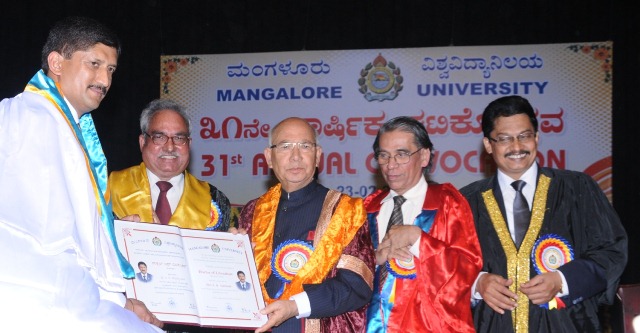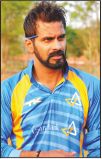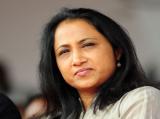
National Badminton Coach Gopichand and former national athlete Aswini Nachappa being felicitated by ANU Vice-Chancellor A. Rajendra Prasad on Sunday. Registrar P. Rajasekhar and Rector K.R.S. Sambasiva Rao are seen.— Photo: T. Vijaya Kumar
Tech strides making GenX lazy, says ace shuttler Pullela Gopichand
A week-long seminar involving internationally acclaimed sports experts and coaches in formulating a physical and sports literacy programme and ways and means to inculcate sports into everyone’s life will be held at Acharya Nagarjuna University from Monday.
Speaking to the media persons, Chief National Badminton coach Pullela Gopichand, the chief patron of ‘Sports for Life – India’ initiative here on Sunday, said that technological advancement was creating imbalance in the lives of the youngster generation making them languid and inert.
“Spending a big chunk of time talking over mobiles, watching television, surfing laptops and eating unhealthy food is taking a heavy toll on the youngsters. Rural games like Thokkudubilla, Karra Billa, Donga Police and hide and seek gave an opportunity for the erstwhile generation some physical movement in the evenings making them strong and fit. The experts will be discussing several aspects before coming up with suggestions as per the Indian conditions,” said the ace shuttler.
He said experts like Canadians Mr. Richard Way, a long term athlete development expert, Dr. Stephen Norris, a sports physiologist, Mr. Ram Nayyar; head coach of Canadian national badminton team and Ms. Ashwini Nachappa, former international athlete, would participate in the seminar.
Curriculum for schools, colleges
Senior coaches like Mohammad Arif (badminton), Ramesh Nagapuri (Athletics), Ms. Aradhana Sharma, sports nutritionist, Ms. Mala Honnatti, a marathoner, Mr. Aashish Contractor, sports medicine expert and others will help the core team formulate a curriculum for the schools and colleges.
Right age for initiation
At the seminar, several stakeholders such as physical education teachers, district sports administrators, sports association members, students of Sarva Shikhsa Abhiyan and Kastruba Gandhi Balika Vidyalaya will take part.
The experts will discuss the right age for the initiation into sports, creating opportunities to excel and sprucing up right kind of infrastructure and right quantity and quality of food intake and several other basic components.
Draft to be prepared
“The findings from the seminar will be culled in to a draft and would be presented to the powers-that-be for the future course of action in the 13 districts of the Andhra Pradesh,” said Gopichand.
Acharya Nagarjuna University Vice-Chancellor P. Rajendra Prasad felicitated Arjuna awardee Ashwini Nachappa.
source: http://www.thehindu.com / The Hindu / Home> News> Cities> Vijayawada / by Special Correspondent / Vijayawada – March 14th, 2016
Robin Uthappa’s wedding to long-time girlfriend Sheethal Goutham on Thursday morning may have been an intimate affair with only close family and friends in attendance.
But the reception at a city star hotel saw the who’s who of the cricket world make a beeline to greet the newly-weds.
Among the early birds at the reception were Anil Kumble, GR Vishwanath, Brijesh Patel, EAS Prasanna, RP Singh, Vinay Kumar, Roger and Stuart Binny and Praveen Amre, among others.
Rahul Dravid, who had just flown into the city from Delhi, came directly from the airport to be a part of the celebration.
S Sreesanth, with whom Robin had a business venture earlier, was conspicuous by his absence.
Adding filmi glamour to the proceedings were Bollywood actress Elli Avram, and Sandalwood stars Diganth and Aindrita Ray.
Notable among the guests were the parents of Robin’s pals who could not make it to their big day.
Shikha Tandon, who resides in the US now, was represented by her parents, while Pankaj Advani sent his mother and brother.
The do, which began with the couple greeting their guests on an elegantly decorated podium, extended well into the night, with Robin and Sheethal leading their friends on the dance floor.
source: http://www.timesofindia.indiatimes.com / The Times of India / News Home> Entertainment / TNN / March 05th, 2016
For the past two decades, Kodavas from all over the world have come back to the tiny district to take part in the annual tournament.
Kaveri Ponnapa, author of the book The Vanishing Kodavas: A Cultural Exploration of the Kodava Community, vividly remembers the frail, old lady she encountered while watching a hockey match in Coorg many years ago. “I heard her yell once during the match, ‘Avan mara khethiyandula, hockey kalchandille’ (He is chopping wood, not playing hockey),” she says.
But these are common enough scenes at the Kodava Hockey Namme, or the annual family hockey festival. Held every summer, soon after the coffee season, the Namme is a spectacle that should not be missed.
Women dressed in their stylish best, shaded from the heat by Jackie O sunglasses and broad-brimmed hats, cheer and gossip while their menfolk, some perched precariously close to the dusty field, focus intently on the brightly clad players scuttling frenziedly across it.
Children, clutching on to neon wigs too big for their small heads, weave in and out of the crowds, scrambling over the makeshift bleachers. There is no lack of food, drink or entertainment: think pork, rum, music, dance and even a few brawls on the sidelines.
“By the semifinal, these matches see almost 8,000-10,000 people congregating at the grounds,” says Sandhya Kumar, a Bengaluru-based, national award-winning filmmaker, whose 2015 documentary film, Hockey In My Blood, chronicles this very festival. “The energy from the crowds as they cheer and shout for their favourite players is incredible.”
It is that time of the year when all of Kodagu comes together; when the usual discourse revolving around coffee and politics is taken over completely by hockey. And it isn’t just the actual inhabitants of Coorg who live here all year-round, who attend this annual Namme. Kodavas from all across the country and beyond make a trip here at around that time, crossing sea and shore, to be part of this event. The month-long tournament is estimated to have almost 50,000-60,000 people attending it.
Photo courtesy the Shantheyanda family.
Coorg’s sporting culture
Nestled in the Western Ghats, in the south-west corner of Karnataka and bordered by Kerala on one side, the little district of Coorg, or Kodagu, is the heartland of Indian hockey. For the inhabitants of this district, which has churned out more than 50 international hockey players, the game is inextricably woven into the fabric of their everyday existence.
Despite a hectic routine, which includes visits to the estates, trips to the district’s centre and a fairly active social life, the average young planter inevitably manages to squeeze in a game of hockey at the local ground, nearly every day. And for the young men holding regular day jobs outside of Coorg—say, in Bengaluru or Mysuru—there are the matches organized by the local Kodava samaja.
Sport is simply an extension of this naturally athletic community’s culture, agrees Ponnapa. “The constant need to prove yourself physically is everywhere and hockey is an offshoot of this,” she says. “It is the nature of the place we inhabited, I think. You needed to be very fit and alert to survive here.”
The annual Namme stands testimony to this. The festival, which was started in 1997, has been going strong for exactly two decades. Open only to members of the Kodava community (anyone can attend though), matches are played between the members of different mane-pedhas, which can be loosely translated as the family name or clan name. The mane-pedha precedes the individual’s name and brings with it a unique identity.
Meet a fellow Kodava and this is the first thing that you will be asked, “Daada-re?” (which mane-pedha do you belong to?).
There are around a thousand such family units of varying sizes—some are huge, with members spread all over Coorg (and beyond), while others are restricted to tiny pockets of the district.
Kodendara, for instance, is a big family name here. Not because it is a particularly big family, but because Madappa Kariappa, India’s first field marshal, hails from it. General Subayya Thimmiah, chief of army staff from 1957 to 1961, also belonged to the same clan on his father’s side.
And while a lot of people from this community have distinguished themselves in the armed forces, their achievements in sport are not far behind either.
Other clans that have produced distinguished offspring include the Mulleras and the Anjaparavandas—former professional hockey players and Olympians Poovayya Ganesh and Bopaiah Subbaiah belonged to the two families, respectively.
“I have played in every edition of the family tournament that I could attend,” says Subbaiah, today an Indian hockey team selector. “I have only missed it when I was playing for India. Our family has won the tournament three times so far,” he adds proudly.
The Karada connection
In February, coffee processing is at its peak and the flavourful bean has taken over the lives (and land) of everyone here. Globules of ruby-red berries are drying on large, polythene sheets, spread across backyards in the district, including a large field in Karada (Virajpet) where the very first family tournament took place.
There are berries (and clothes) drying outside Pandanda Kuttappa’s little homestead in Karada. The family hockey tournament, started in 1997, was the brainchild of this sprightly 89-year-old. A former State Bank of India employee and an ex-first division referee, Kuttappa remembers attending the Asian Games in 1982, where he saw India lose to Pakistan.
“The score was 7-1,” he recalls, “Only one player, M.M. Pooviah was from Coorg. It made me realize that though we have such good players, they do not get enough opportunities.”
When he retired in 1995, he “decided to start a family hockey tournament and spent Rs15 lakh from my own pocket”, he says. Today, the budget stands at around Rs1 crore, with the money sourced from the government, sponsors and private individuals.
The first tournament, which was held in 1997 at Karada, saw 60 clans from across the region participating. “We wanted to make Karada the Sansarpur of Kodagu. Sansarpur in Punjab has so far produced 23 Olympians from its village, including the great Pargat Singh,” he smiles, adjusting his gold-framed spectacles.
The Kodava Hockey Academy, an organization set up to oversee this festival, was started soon after. Every year, a different clan or family conducts the match and it is this organization that regulates the process.
“The Kodava Hockey Academy allots the hosting rights to a family,” explains Ravi Uthappa, secretary of the Kodava Hockey Academy, adding that the family gets only one chance to host a tournament. “We have enough families battling to host the tournament. It is booked till 2020 and we have applications till 2024.”
By 1998, the number of participating teams had nearly doubled: 116 teams played the game in 1998 at the tournament hosted by the Kodira family. The popularity of the game continued to grow, reaching an all-time high in 2003 with 280 teams fighting for the Kaliyanda Cup.
“We have found a place in the Limca Book of Records as the largest field hockey tournament in India,” says Kuttappa.
“It is an extraordinary event,” says Kumar, the filmmaker, adding, “A lot is talked about leaving a legacy of sports and it is very inspiring to see a system that is making that possible within the community.”
She also believes that the tournament helps make young people economically independent. “Young boys are often spotted by Sports Authority of India (SAI) officials and end up getting a spot in the state team, which helps them ultimately get government jobs.”
Kuttappa agrees, “This tournament became a platform for youngsters to get jobs as they play with all their heart for their families. Over the years, 900-1,000 people have gotten jobs in excise, customs, banks, etc.”
Subbiah, on the other hand, is not convinced. He says that though it is certainly true that there is chance that a good player may get spotted by a SAI official at a match and may be called for a selection, “no one has got a job playing in this tournament. Only players who have gone up all the way to state and national hockey have actually gotten jobs,” he says.
He adds, however, that “there could be times when the army has come in looking to recruit players based on their hockey talent”.
In addition to this, “family hockey has created a lot of enthusiasm and inspired many people to take up the game”, he says, adding that in a few cases, matches have led to match-making. “I have heard that sometimes a good player is spotted and an alliance is fixed,” he laughs.
The Shantheyanda Cup 2016
The narrow, curved road that leads to the hill station town of Madikeri, the capital of Coorg, is flanked by tall trees with pepper vines snaking around them. Mist-swathed hills loom in the distance; lovesick cicadas compose ballads to eligible females, seduction on their minds; the omnipresent aroma of coffee merges with that of vanilla and fresh earth.
It is in these pristine, beautiful surroundings that the hockey matches will be held this year. Hosted by the Shantheyanda family, a clan dating back to the 11th century, with around 150 members, the 20th edition of the game will be held at the FMKMC College grounds in April-May.
“We started bidding three years ago and finally won it. We took over the flag in mid-May last year,” says Namrata Vikas, convener of the tournament, who married into the Shantheyanda family. Incidentally, women also participate in the tournament—they can choose to represent either their father’s family or their husband’s.
“We gave ourselves a break of about three months and then launched our logo on 9 September,” she says, adding that ground preparation is underway.
Photo courtesy the Shantheyanda family.
A crowd of people and one humongous earthmover toil under a searing late-morning sun at the FMKMC College grounds. The labour is necessary—the Shantheyanda family is trying to expand the size of the ground and accommodate a 400m track. “We want to leave something behind for the college, and hopefully a future tournament,” Vikas says.
The bidding process, though hugely competitive, is only the tip of the iceberg. The actual organizing of the tournament is a daunting task.
The host family needs to raise funds, prepare the fields and the galleries and stalls surrounding it, reach out to various other clans to ensure plenty of participation, manage schedules and ceremonies and garner media support. In addition to that, it has to come up with new and interesting ways to etch its name into the hearts and minds of every participant and visitor. And yes, it needs to brush up on its game.
The tournament, a surprisingly well-organized affair considering the scale, has rules that may put to shame many sports bodies in the country. Every team has a unique jersey, a family logo and flag; they must all be in proper uniform and carry the right equipment (some of which, including the goalkeeper’s kit, is provided by the hosts).
Professionalism is a vital part of every match: the referees are certified ones, strict timelines are adhered to; there are medical teams on standby and refreshments for all the players.
And the Shantheyanda family is pulling out all stops to make this year’s edition the biggest ever in the history of the tournament. “We hope to have at least 300 teams participate this year,” says Vikas Achaiah, the tournament’s director.
To ensure this, the family has sent out a flurry of invites, reached out to youth clubs and the heads of the families, and attempted to mobilize radio and local Kodava newspapers to drive home the message. “Many families who participated in earlier editions have stopped now. We are trying to find out if it is money, distance or any other reason. We will try and bring them back,” says Achaiah.
After all, “everyone makes time for hockey”, chips in Ravi Kushalappa, the tournament’s president.
With families spread so far and wide, practice sessions haven’t yet begun. “They will start (to practise as a family team) by mid-March,” says Vikas, adding that people from all over the world usually take a month’s leave from work and come down to Coorg to play.
“Earlier, if Kodavas did not get leave from their jobs to come play for a tournament, people would send a telegram saying, ‘Grandfather dead, come home immediately’,” says Kuttapa. “It was the best way to get the family members to come and play for the team back then.”
Subbiah believes the tournament does have a chance of becoming really big this year because it is now part of the Hockey India national schedule. “I am trying to bring the Hockey India League president to the game this time,” he says, adding, “Coorg hockey was dying at some point because all good hockey players were employed in places outside the district. This tournament ensures that they all return.”
More importantly, as Ponappa says, “The festival brings all the clans together. And since teamwork and community are the foundations of our society, hockey fits in here perfectly. Sport always proves to be a great binder of people.”
Comments are welcome at feedback@livemint.com
source: http://www.mintonsunday.livemint.com / LiveMint / Home> Mint on Sunday> The Small Story / by Preeti Zachariah and Sharan Poovanna / Sunday, March 06th, 2016
The winner, Paras Bindra, will take part in the World Barista Championship, which will be held in Dublin this year
Photo: Ramesh Pathania/Mint
Bengaluru:
If you are a coffee aficionado and haven’t tasted it yet, order the Kaapi Nirvana the next time you walk into a Café Coffee Day outlet. The iced espresso with its coconut undertones, laced with shards of dark chocolate and topped with whorls of light-as-air whipped cream is delightful. And I’m not the only one who thinks so: it won the silver medal at the 2002 World Barista Championship in Oslo.
Vikram Khurana, who was working with Café Coffee Day when he won the medal nearly 15 years ago and was a judge at the 2016 National Barista Championship held in Bengaluru on 25-27 February, says that the coffee culture in India has evolved considerably since then.
“We are the sixth largest producer of coffee, but only one-third of what we produce gets consumed here. However, recently I have noticed there are a lot more cafes opening up in tier 2 and 3 cities here,” he says, “It is a good thing—coffee helps people get more connected.”
The energetic wave of applause that greets 20-year-old Nahid Khan, one of the finalists at the competition, seems to confirm it. With a shy smile, she acknowledges the applause and says, “The people who grow and pick coffee are women, but those who make coffee at baristas are almost always men. This is for all the women behind coffee in India. I wanted to prove that a woman could make coffee well too,” she says, proceeding to do exactly that.
Out of 100% finely roasted Arabica beans, she prepares three sorts of coffee—an espresso, a milk-based beverage and a signature special coffee blend—which need to be made in 15 minutes without waste or spillage and served to the judges. Incidentally, there are eight of the judges around: four to focus solely on the tasting, while the other four hover around the contestant, grading the efficiency with which he/she makes the coffee. Obviously, coffee is taken very seriously here.
“The winner of this championship will attend the World Barista Championship, which will be held at Dublin, Ireland, this year,” says Aarti Dewan Gupta of the Coffee Board of India, which is organizing the national competition. “We hope to streamline the coffee industry and attract more girls and boys to it.”
Young talent is certainly not in short supply here. Take Sachin Krupakar, another finalist, whose signature drink had people in the audience clambering on to the stage to taste, “It has khus syrup, cheesecake with cream and coffee in three distinct layers,” he laughs, pointing out that the vermillion, white and green colour of the drink also bore a patriotic message.
“It is a great event that showcases the coffee industry in India,” says one of the judges, Sunil Pinto, who works with Tata Coffee, “It is a happening industry today. After all, coffee shops aren’t so much about the coffee as the experience.”
And it certainly has been a fantastic experience, agrees this year’s winner Paras Bindra, whose signature concoction of reduced orange juice, espresso and cinnamon will take him to Dublin this year.
“I have already started thinking about the flavours that I will take abroad. What works on an Indian palate may not necessarily work on a western one,” says the 30-year-old.
And we certainly hope he nails it.
As Khurana says, “No coffee-producing nation has ever produced a champion yet. I hope India will be the first.”
source: http://www.livemint.com / Live Mint / Home> Consumer / by Preeti Zachariah / Wednesday – March 02nd, 2016
On the occasion of International Women’s Day, IDL Foundation, a non-profit organization, is all set to organize a unique and innovative programme – IDL Blind Pinkathon – for the benefit of blind and visually-challenged on March 6 at NGO Hall, Cubbon Park.
Speaking with Iamin, Dr P K Paul, founder and executive trustee of IDL Foundation, said that the NGO plans to organise similar programmes at other cities for the benefit of blind and visually-challenged people. “Our objective is to provide a platform to the special people to showcase their talent and provide opportunities to celebrate womanhood in a special and unique way by organising a programme for interaction among abled, differently abled and celebrities which will be a life time memory for the participants,’’ Dr Paul said.
Participation is open to all on the first come first basis, provided they possess a Medalor Blind Certificate.
Sandalwood actress Harshika Poonacha, the brand ambassador of this project, had launched the IDL Blind Pinkathon logo in the presence of blind and visually-challenged couples on Valentine’s Day at Cubbon Park recently. “I am inspired to see the love and affection I received from the special people. I appeal general public to come forward to lend a helping hand to blind and visually-challenged people to cross roads, to board BMTC buses, read books, and write exams,’’ Harshika Poonacha said.
According to Dr Paul, there are loads of goodies awaiting special people. “We have made arrangements to give Rs500 each as honorarium for 500 participating blind and visually-challenged women, girl students and children. Each participant will get a designer ladies bag and five gifts such as talcum powder, oil, shampoo, soap, cream and moisturizer as a token of appreciation of participating and memorabilia,’’ he said.
Those who want to participate in the programme may contact at 880268787/7813018787/7813028787.
When: Sunday, March 6.
Where: NGO Hall, Cubbon Park, Bangalore.
source: http://www.dnaindia.com / DNA / Home> Locality> Bangalore Central / by Y M Reddy / Tuesday – March 01st, 2016
Team Coorg celebrate with the trophy. Photo – Supplied
Muscat :
Team Coorg Oman clinched the top honours at the Gulf Hockey Fiesta for Starcare Cup organised by United Thalessery Sports Club (UTSC) in association with Oman Hockey Association (OHA) at the Sultan Qaboos Sports Complex in Bausher on Friday.
In an exciting final of the Asian Hockey Federation-recognised event, Team Coorg defeated Qatar Wanderers 4-1. The eventual champions scored two quick goals through Kavan and Pradhan Somanna to take 2-0 lead just five minutes into the match.
Pradhan struck his second and team’s third goal in the 14th minute and a minute later Omani player Ali Salim made it 4-0.
Qatar Wanderers managed to pull one back in the 16th minute.
Earlier in the semifinals, Qatar Wanderers edged King Khan Hockey Club of Dubai for a 1-0 win while Team Coorg defeated UTSC 4-2.
A total 12 teams, including seven from outside Oman, took part in the event, which was officially inaugurated by Indian Ambassador Indramani Pandey by hitting the ball to PR. Sreejesh, the Indian hockey team vice-captain and goalkeeper, who flew in from India to preside over the event as the chief guest.
Later, the prize-distribution ceremony was graced by OHA’s former chief Dawood Al Raisi, present general secretary Mohammed Redha Taqi Al Lawati, popular hockey personality SAS Naqvi, Starcare Hospital vice-chairman C.M. Najeeb, CEO Dr Mohammed Naseem, ISD President Abdul Rahim, Indian School Muladha Principal SI Sheriff, Mohammed Riaz LLC Chairman Mohammed Riaz, Aziz of Al Jadeed Exchange, Oman hockey veterans Mohammed Shambeh Al Raisi and Abdulrahman.
The best goalkeeper award went to Ahmad Alam, a former Pakistan goalkeeper and Olympian. Best defender award was claimed by Ali Salim of Team Coorg. Future player award went to Geroge Extel of Bahrain Hungry Humoours while Juniad of Qatar Wanderers was adjusted the man of the tournament award.
During the ceremony, a raffle draw was conducted which saw several gifts presented includng two gold coins of eight grammes each, return air ticket to Sharjah and two return tickets to Mumbai.
Starcare Hospital was the main sponsor for the event and the other sponsors were Mohammed Riaz LLC, Al Jadeed Exchange, Majan Distrubters, Foodlands Restaurant, Lynx, FAP, Al Nahla Solutions, Times of Oman and Gulf Madhyamam.
source: http://www.timesofoman.com / Times of Oman / Home> Sports> Hockey / by Times News Service / February 28th, 2016
Star Indian doubles player hopes to get facility with four clay courts running by April
Dubai:
Indian doubles ace Rohan Bopanna will launch his tennis academy in Bengaluru next month.
35-year-old, who has struck a successful partnership with Romanian Florin Mergea on the ATP World Tour said that the focus of his academy will be on tapping talent in the 4 to 14 years age-group.
The academy that will be located on the outskirts of the country’s IT capital, is a personal initiative from the Indian Davis Cup player.
“I want to do this my way. I want the primary focus to be on fitness because that’s the most important factor in our sport today, also if the child then doesn’t want to play tennis, he or she can play another sport because they will already have the necessary early training,” Bopanna told Gulf News after he and Mergea had lost in the doubles to the veteran pairing of Daniel Nestor and Radek Stepanek.
Bopanna disclosed that he is teaming up with former South African professional Piet Norval and fitness trainer Yash Pandey in his new venture.
“Piet has done a fantastic job with kids back home in South Africa,” Bopanna said.
“He will visit the facility once every month for a week. I want to focus on juniors to begin with and then see if I want to expand in the future. Right now it’s all about a wholesome exposure to children who want to play the sport. I’m only having clay courts now because it’s easier on the body, more so when kids are learning the sport,” the 35-year-old added.
Bopanna will launch the academy with just four courts late next month before going into business probably a month later. “I’ve spoken to a lot of schools and the response so far has been very good. The idea is to get as many kids as possible playing the sport. The more the numbers, the greater our chances for success,” he said.
Bopanna and Mergea, ranked 8 and 12 individually, and placed 14 as a team, haven’t had a great start to the new season. Last year, the pair surprised a few when they sailed into the doubles final at the season-ending Barclays ATP World Tour Finals held at the O2 Arena. After Dubai they are scheduled to play Indian Wells and Miami before they hit the European trail for the clay court stretch.
source: http://www.gulfnews.com / Gulf News / Home> Sport> Tennis / by Alaric Gomes, Senior Reporter / February 27th, 2016
Niranjan Nikam in conversation with Yamini Muthanna.
Mysuru is the Ashtanga Yoga capital of the world, a sobriquet which is music to the ears of Mysureans, after the cleanest city tag for the second time. The city has also produced two of the finest yoga exponents in the world, B.K.S. Iyengar and Pattabhi Jois. However, there is one more Guru, who is quietly doing his bit on whom many discerning yoga practitioners swear — it is B.N.S. Iyengar.
Bengaluru-based Yamini Muthanna, dancer and yoga exponent, is one such. She was in city recently to participate in the launch function of her book “The Power of Yoga” at Dhvanyaloka Open Air Theatre.
After the book launch, organised by the Mysore Book Club, a first-of-its-kind experiment in Mysuru, Yamini, who gave a breath-taking yoga demonstration, shared her views on how the book shaped, the power of yoga, the undue importance for competitions and why everybody should practice yoga, with Senior Journalist N. Niranjan Nikam. Excerpts. — Ed
by N. Niranjan Nikam
SOM: We just saw your demonstration of yoga. I was thinking all the time, aren’t children the best yogis because their body is so flexible. How is it that we lose all that and only when we see people like you, we say to ourselves, “I wish I was like her — flexible, elastic and graceful.”
Yamini Muthanna: Children are natural Yogis. They are so free in their mind and body so the Asanas are easy for them. They do not have points of resistance either in their body and mind due to stress or tension that an adult might have. Therefore, I personally feel that flexibility in a Yoga Asana practice is a product of freeing the body and mind rather than putting in a lot of imposed effort. Anybody can train to be flexible with proper training of the body and freedom in mind. Yoga Asanas are patterned so beautifully that the body can be slowly animated into an Asana with proper judgement and care.
SOM: Yamini, you started yoga at a young age and you have come a long way. What made you write “The Power of Yoga?”
Yamini: My practice of Yoga has been extremely beneficial for me in all circumstances of my life. It helped me cope during my teenage through motherhood. I have been in constant touch with my body and mind and Yoga has helped me to be always aware. Once I started teaching from 2001 onwards, I noticed it was helping my students also to deal with situations better than how they used to handle things before they started practice. I started documenting their progress and started prescribing need-based specific practice sessions. It was helping my students and, therefore, I decided to share it for a larger group of yoga enthusiasts. My message in the book is you can choose your daily practice according to your day’s needs and have tried to explain how it works.
SOM: I learnt a little bit of yoga about 25 years ago from a Guru here. Later, I practiced for quite some time with the book, “Light on Yoga,” by B.K.S. Iyengar. Your book is equally interesting as you make it look very simple, how far have you come?
Yamini: Guru B.K.S Iyengar’s book is my Bible for my personal Asana study. He has set the benchmark of perfection in the Asanas and I am yet to come across another book equal to that of “Light on Yoga.” The book has been my Guru ever since I started personal practice. I did personal practice from 1996 to 2001 before I started to teach. I did a thorough study of the book, summarised by Guru B.N.S. Iyengar’s teachings and built up my practice, experimented my understanding and documented them in a way which would be easy for a Yoga Practitioner to comprehend. My book is not about loads of information but it is a guide to delve deeper in the practice by triggering a curiosity.
SOM: Yamini, you were talking to me about angles and Trikonasana which is the cover page that has caught you in action is such a perfect pose. Share a little about angles and sequences with our audience.
Yamini: I have a strong understanding that Yoga Asanas are geometric patterns from the Sri Chakra Yantra. I do not want to go to the details of it as I do not have proof and specific information about it. Just as Guru B.N.S.Iyengar mentioned in his speech earlier that the body will get chiselled into a fine cut diamond with perfect glitter in the body with the practice of Asanas and Pranayama. I would like to add that perfect geometry exists in pyramids and prisms also creating certain beneficial energy source forming specific benefits in the universe. It is in the same lines I personally feel that Asanas are also patterned to generate specific benefit to the body. Therefore, it is very important to maintain perfect lines in an Asana construction.
SOM: You have talked at length about asanas, chakras, mudras, pranayama and their benefits, all with photographs and you yourself doing each one of them. However, you have not mentioned time needed for each asana, or have I missed it?
Yamini: No I have not gone too much into the details of these deeper practices of Hatha Yoga as I do not want practitioners to try them on their own with the help of a book as they could be dangerous. It is very important that their first instruction comes from a Guru. I have just mentioned them as an information guide into the future practice.
SOM: You said that you do not believe in giving certificates. I would like to share my experience — I had written a story about yoga talking to a teacher about four years ago titled “Posturing ‘Olympics’ (op)position.” I had read an article in Deccan Herald about a move to include yoga performance in Olympics. The yoga teacher had opposed this idea and I had even quoted that B.K.S. Iyengar was also not in its favour. You yourself and a few noted yoga exponents including Sharath Jois, grandson of Pattabhi Jois, whom I met the other day does not favour it. When I sourced this article of mine which I had promptly forgotten, after four years, I was pleasantly surprised to see that there were 39 comments on it but all blasting me away to glory.
Yamini: I do not agree that Yoga Asana be treated as sports. Yoga is all about a personal well-being routine rather than challenge or competition. Your practice is your personal journey and you don’t need to get a medal or stand on a victory stand to announce your success. You silently practice yoga and reap the glory of the practice by using it in life and your routine mundane activities. It’s not sports.
SOM: But you yourself had participated in competitions earlier. In fact that is how you started your tryst with yoga.
Yamini: I did go for two competitions in 1986 and 1987, won the championships and understood it was a mistake. Master was also not too pleased by it. I did not inform him before entering the contest, because I knew he would not let me. I was sorry for a long time for that mistake.
SOM: What is the difference between a Nadia Comãneci’s perfect ten and yoga postures is the question many ask? Can you highlight the difference?
Yamini: Well, I am going to answer this in brief. Gymnasts use a lot of kinetic energy in their postures and expel a lot of force and energy to get into their perfect positions. Yoga uses potential energy with holds and binds in the asanas conserving energy. So some of the postures look the same but the benefits and the source of construction are different in both Yoga and Gymnastics.
SOM: Yamini you are a Kodava — and Kodavas are slim, tall, elegant, beautiful, handsome, rugged and with wiry bodies. The trouble sometimes is, we stereotype people. Did you turn a vegetarian when you started practicing yoga?
Yamini: I am a proud Kodavathi rooted in my Kodava culture and tradition. I have not given up anything at all. But my personal development has adopted various principles from my study of the two classical disciplines. They are my personal principles that do not interfere with my home culture, which is Kodava. [Daughter of Chendrimada Raja (late) and Sundari, Yamini is married to Kotera C. Muthanna].
No I did not turn vegetarian when I started practicing Yoga, though I changed a lot of principles to suit my practice. However, I am not a great fan of non-vegetarian food. You can call me a “No-fussytarian.” I eat whatever is healthy.
SOM: How much of your yoga has influenced your dance?
Yamini: A lot, in terms of energy and health. Breathing especially gets regulated when we do rigorous dancing. It has helped me keep my body agile and supple and less injury-prone.
SOM: What are your future plans and why the word ‘Power’ in the title of the book?
Yamini: Future plans — I shall keep doing what I am doing with more passion and conviction. I shall keep replenishing my knowledge in these two subjects. With the blessings of my Gurus, I have no doubt in accomplishing this; I will need their support and guidance always. I have already started my next book on Yoga, which would be exclusively for women from 18 to 80. The contents are just shaping up. I feel it will give an interesting perspective on woman’s body and how Yoga could benefit maintenance.
“Power,” I can’t think of a better term for Yoga. Yoga is a source of Power to better your life. As one adapts Yoga into his/her lifestyle, it becomes more and more obvious. I am using the term to emphasise this fact… It’s been my personal Power.
source: http://www.starofmysore.com / Star of Mysore / Home> Feature Articles / by Niranjan Nikam / February 24th, 2016
It is a known fact that cricket is a popular sport in many countries including India, Sri Lanka, Pakistan, England, Australia and others. But, the sport slowly is steadily gaining popularity in countries such as Namibia, Nepal, Netherlands, Afghanistan, UAE and others. The common factor among the countries where cricket is gaining popularity is the Indian factor.
Chillavanda Darshan Chinnappa (left) with former South African cricketer Jonty Rhodes.
There are many Indians who have been promoting cricket worldwide. One such person who has been popularising the sport in United Arab Emirates (UAE) is Chillavanda Darshan Chinnappa, a native of Bilugunda village in Kodagu district who has joined hands with legendary cricketers like Ramiz Raja, Aravinda De Silva and Naveed Nawaz to start Future Legends Cricket Academy (FLCA) in Dubai.
Darshan Chinnappa, who is currently residing in Bengaluru, is the son of Chillavanda Chinnappa, a retired official of Survey of India and Chillavanda Parvathi, a retired employee of Co-operation Department. He is married to Chillavanda Nirmala and the couple is blessed with a daughter Raha Darshan.
FLCA was started two months back with former Sri Lankan skipper Aravinda De Silva, former Pakistani cricketer Ramiz Raja, Imran Zafar, Shahid Rafique Sheikh and former Sri Lankan cricketer Naveed Nawaz.
The academy has been providing world class facilities to children and also conducts master classes by inviting top cricketers from India, Sri Lanka, Pakistan and others countries. Legendary cricketers like Kumara Sangakara and Jhonty Rodes have already conducted master classes.
Darshan believes that the academy would be recognised at an international level and gain more popularity. Details on the academy are available at futurelegendsca.com and in the facebook page.
source: http://www.starofmysore.com / Star of Mysore / Home> Sports News / February 22nd, 2016
“Look at me… don’t you notice any change,” said Jwala Gutta, displaying her toned down body.
“This is what our doubles coach has done. I am much fitter now. He brought a number of changes to our game, more particularly to my fitness,” said Jwala, who lost at least 11 kgs in the last five months. Earlier, it was difficult to push Jwala in many aspects. But new doubles coach Kim Tan has found a way on how to deal with talented senior players.
Ever since he took over five months back, Kim is working hard with the doubles teams. After acrimonious exchanges with national coach P Gopichand, which made headlines, Jwala and her partner Ashwini Ponnappa came back to train at the Gopichand Academy and started working with Kim. Kim took time to understand the doubles scenario in India and succeeded in creating a working atmosphere.
“My contract with Badminton Association of India is up to 2020. I have to make some good contributions before that. When I came here I was happy with the things around. I realised that I had to deal with two aspects, the senior doubles team like Jwala-Ashwini, who have achieved success, and a few junior doubles pairs. So I have a plan for them,” Kim said.
Kim is also planning to use Ashwini in mixed doubles. Known for effective smashes which are packed with a lot of power, Ashwini hardly played in mixed doubles events. “Manu Attri and Ashwini will be playing the mixed doubles event. We have finalised on that. They will make an exciting pair,” said Kim, adding that he has plans for others as well.
source: http://www.timesofindia.indiatimes.com / The Times of India / News Home> Sports> Badminton / M Ratnakumar / TNN / February 18th, 2016
WELCOME. If you like what you see "SUBSCRIBE via EMAIL" to receive FREE regular UPDATES.
Read More »