Category Archives: Sports

Stars bask in awards glory

Bengaluru :

Governor Vajubhai Vala congratulated the top athletes and coaches of Karnataka including Asiad gold medalists Ashwini Akkunji (athletics) and Sushmitha Pawar (kabaddi) on Wednesday for winning the Karnataka Olympic Association (KOA) awards 2014 and said more laurels could be won through the combined efforts of state government and KOA.

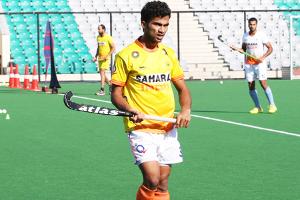
Addressing the gathering in Raj Bhavan, Vala said the state can be proud of its achievements in sports. “I’m happy to note that there are seven players in the Indian hockey team from Karnataka. Likewise, there are many others from the state who have done well at the international level,” the governor said after giving away KOA’s special awards to hockey players SV Sunil, Nikkin Thimmaiah, VR Raghunath, discus thrower Vikas Gowda, badminton player Ashwini Ponnappa, pistol shooter PN Prakash and other medal winners at the Incheon Asian Games.

The governor also recalled the Gujarat model of sports development which is now rated highly. “There is competition at the village, district and zonal level before they reach the state level and winners at all these levels are rewarded,” said Vala, who also served as the finance minister of Gujarat.

He also exhorted all youngsters to take up sports. “Today we see the absence of good character in many youngsters and that’s why sport is important as it helps in character building,” he said.

Chief minister Siddaramaiah stayed clear of committing anything more on the sports cess, despite being prodded by KOA president Govindaraj, but reaffirmed the government’s commitment to support sportspersons. “I’ve never said no whenever the sportspersons have come to me for help. We are improving the infrastructure in all the districts and that will help athletes from rural areas,” he said.

Ace badminton doubles player Ashwini Ponnappa was happy to receive the award in what was a big year for her. “It was a satisfying year as we have improved a lot winning medals in ABC, Uber Cup and Commonwealth Games. It is going to be another busy season from January with the World Championship in August,” Ashwini said.

Middle distance runner Ashwini was all smiles after collecting two awards. The lanky athlete said the awards are a big motivation to improve further. “This was a big surprise I was never expecting it,” she said.

The KOA also honoured several coaches including N Lingappa (athletics), DY Biradar (athletics), Manoharan G (boxing), Aslam Khan (football), Jude Felix (hockey) and Vasant Madhav (tennis). TOI’s principal photographer Syed Asif also received the honour.

Earlier, Govindaraj said the government has cleared the proposal for the construction of the Olympic Bhawan at the Sree Kanteerava stadium. “Karnataka will only be the second state after Andhra Pradesh to have their Olympic Bhawan,” he said.

source: http://www.timesofindia.indiatimes.com / The Times of India / Home> Sports> More Sports / by Biju Babu Cyriac, TNN / November 28th, 2014

Robin Uthappa should be used as limited-overs specialist, not as ‘reserve’ batsman

RobinUthappaKF10dec2014

If form is anything to go by, Robin Uthappa has by far been the best Indian batsman this year. He changed the fortunes of the Gautam Gambhir-led Kolkata Knight Riders earlier this year where during an incredible run, the wicket-keeper batsman scored 11 consecutive 40 plus scores, which was a new world record in T20 cricket.

It was his red-hot form, which got him back into the reckoning for the Indian team, after six years.

But when he was included in the Indian squad for the three-match ODI series against Bangladesh earlier this year, it was because the main players had either been rested, or had opted out. The same happened against Sri Lanka, where Uthappa was included for the last two ODIs, as Shikhar Dhawan was rested. Despite scoring heap of runs, for reasons unknown, he wasn’t the first choice to open the innings for India in ODIs.

While Uthappa scored 69 runs against Bangladesh in three matches, including a half-century, he managed just 35 runs in two innings against Sri Lanka. Not to forget, in both the matches against the Lankans, Uthappa batted much lower down the order as the top slot was fixed for the likes for Rohit Sharma and Ajinkya Rahane. Also, in the 4th ODI against Sri Lanka, Uthappa made sure he gave most of the strike to Rohit, who went on to score a historic knock of 264 runs.

Ajinkya Rahane has been in sensational form for India while opening the innings, but both Rohit Sharma and Shikhar Dhawan haven’t tasted much success while batting overseas. Since the beginning of this year, while playing away, Rohit has played seven matches and has scored just 218 runs, 79 being his highest score. Dhawan on the other hand has accumulated 264 runs from nine innings, 97 not out being his best against New Zealand. While they have scored some big knocks playing in India, their consistency while playing abroad has cost India dearly.

On the other hand, Uthappa’s consistency is known to all. The argument could be that all of Uthappa’s runs have come in India. But how is he supposed to score runs overseas, when the selectors stick with the same players, again and again? And how long is he supposed to keep performing in all formats of the game, despite being regularly snubbed by selectors? He has improved his game, technique, temperament, fitness, what else does he need to do to deserve a place in the playing eleven as a first choice?

Even in domestic cricket, Uthappa showed his resurgence as a batsman hitting a century (120) against East Zone followed by scores of 80 and 30 against Central Zone.

Uthappa is no more the batsman he was when he came into the Indian team in 2006. Though his ability to hit seamers over midwicket after charging down the pitch looked quite Hayden-esque, he was dismissed on most of the occasions while attempting similar strokes. Like most of the youngsters, he too was keen to clobber every delivery out of the park. But once he went in exile, he has done everything possible to gain attention from the cricketing cognoscenti.

Over the years, we have seen the best cricket teams use different players for different formats. For example, England used Alex Hales as a T20 specialist for several years. In the bowling department, they used Jade Dernbach as a T20 bowler. During his initial years, David Warner was used as a T20 specialist by Australia and it was only after a few years that he became a regular in all formats of the game. While the Indian team isn’t known for such experiments, the sort of comeback Robin Uthappa has made, he can definitely be used as a limited-overs specialist.

It would be unfair if the selectors judge him on the basis of his knocks in the last two ODIs against the Lankans. They got to rate his overall performance this year, and he should be the frontrunner as an opener for the forthcoming Australian tour and the ICC World Cup.

source: http://www.zeenews.india.com / Z News / Home> News> Exclusive / by Suyash Srivastava / Thursday – November 20th, 2014

Poovamma, Uthappa honoured

PoovammaKF10ec2014

Quarter-miler MR Poovamma and cricketer Robin Uthappa walked away with the top awards at the Sports Writers Association of Bangalore’s (SWAB) annual award’s ceremony at the Karnataka State Billiards Association here on Sunday.

While Poovaama was recognised as the Sportsperson of the Year (female) for the second year in a row for her medal winning performances in the year, Uthappa was adjudged the best Sportsperson of the Year (male) for his feats in the IPL, Vijay Hazare Trophy and Ranji Trophy in the season gone by.

Both the award winners weren’t present due to prior commitments.

The Karnataka cricket team, which won three trophies in less than two months at the start of the year, was identified as the Team of the Year.

After winning the Ranji Trophy, the team defeated a Rest Of India side to corner glory in the Irani Cup before capturing the Vijay Hazare Trophy.

J Arunkumar and Mansur Ali Khan, the batting and bowling coaches respectively of the team, won the Coaches of the Year award.

Former Indian women’s hockey captain Elvera Britto was presented with the Lifetime Achievement award.

Gagan Narang, bronze medalist in 10-metre air rifle shooting event in the 2012 London Olympics, was the chief guest for the occasion.

Winners: Coaches of the year: J Arun Kumar and Mansur Ali Khan (Cricket); Junior sportsperson of the year (male): S Chikkarangappa (Golf); Junior sportsperson of the year (female): Aditi Ashok (Golf); Behind the scene award: Raghuprasad (Hockey); Featured Association (2012): Karnataka State Billiards Association; Featured Association (2013): Karnataka State Cricket Association; Featured Association (2014): Karnataka Volleyball Association; Sportsperson of the year (male): Robin Uthappa (Cricket); Sportsperson of the year (female): M R Poovamma (Athletics); Lifetime achievement award: Elvera Britto (Hockey); Team of the year award: Karnataka State Cricket Association (Cricket).

source: http://www.deccanherald.com / Deccan Herald / Home> Sports / by DHNS – Bengaluru, November 17th, 2014

Teaming up with Ivanov helping my game: Ashwini Ponnappa

Ponnappa says finding the right mixed doubles partner is a tough task. (TOI Photo)

Pune :

For a Sania Mirza or Leander Paes, combining with a foreign partner is a part and parcel of the game. But the trend isn’t very popular in badminton.

Though it started as an experiment for doubles specialist Ashwini Ponnappa, the Karnataka shuttler is hopeful of her newly-formed partnership with Russian men’s player Vladmir Ivanov.

Playing with Ivanov will not only add another dimension to her perspective, but also help do better in women’s doubles with Jwala Gutta.

“With Ivanov, I will learn new training methods, techniques, which are followed in that part of the world. It will also help me do well with Jwala in women’s doubles, which is my pet event,” said the 2011 World Championship bronze winner.

Ponnappa, who has played with Ivanov in three tournaments so far, says finding the right mixed doubles partner is a tough task.

“It is a trial-and-error thing until you find the right partner,” said the 25-year-old player, who has previously partnered compatriot Tarun Kona.

For Ponnappa, the idea struck after her stint in the Indian Badminton League (IBL) last year. “You can say that the IBL experience of playing with Joachim Fischer has been the best for me so far. I learnt a lot while playing with Joachim. It made me open up to the idea of having a foreign partner for international meets,” the Bangalorean said.

With Ivanov, Ponnappa is aiming to improve her mixed doubles world ranking. “I have played three tournaments together with Ivanov and hopefully we will participate in more, next year. Improving on the mixed doubles rankings would be priority,” she said.

Though the association is allowed in Super Series, World Championships and other open championships, she will not be able to carry it to the Olympics or the Asian Games.

source: http://www.timesofindia.indiatimes.com / The Times of India / Home> Sports> Badminton / by Tushar Dutt, TNN / November 15th, 2014

Star this Week : Ekalavya Awardee Navaneetha

NavaneethaBF22nov204

Basketball is a very popular sport in the International sporting scene and it’s a game which demands speed, ability and stamina. Our city’s women’s basketball player P.U. Navaneetha has been a outstanding performer for Karnataka in the senior and junior levels. She has represented India in the FIBA Asia Youth Cup and has also attended the Indian Junior camp. She was recently awarded the prestigious ‘Ekalavya Award’ for her feats in the sport at a grand function held at Vidhana Soudha last week. She is our ‘Star This Week.’

Navaneetha, 20, is the daughter of P.P. Udhay Kumar and P.U. Girija, residents of Suntikoppa, Kodagu. A 1st year MA student at Teresian College for Women, Mysuru, and a product of the Department of Youth & Empowerment Services (DYES, Mysuru), Navaneetha has been performing consistently in National and State basketball scene.

Encouraged by her parents, she joined Sports School, Vidyanagar and later on joined Sports Hostel, Mysuru, in 2006. Initially she was coached by B.S. Girish, SAK Basketball coach and presently she is being trained by DYES & SAK Basketball coach M.B. Patil at DYES, Mysuru.

A forward, Navaneetha is an attacking player and impresses with her skilful play. She began her career by representing Karnataka in the School Nationals held at Punjab in 2008 and from then on has never looked back. She has represented the State in the women’s Nationals, Youth Nationals in 2009 and 2010. In 2011, she represented the State in the Senior and Junior Nationals in Delhi.

She represented the Mysore University in the Inter-University Championships in 2011-12 at Kannur and has been a regular in the team from then on.

In 2009-10, her excellent play in the Nationals earned her the Indian cap when she donned Indian colours in the 1st FIBA Asia U-16 Championships held at Pune. She also took part in the NBA All India Tournament held at Delhi in 2001-12.

She took part in the Junior Indian and Youth Indian camp held at Deli and Tamil Nadu respectively. She represented Karnataka in the Federation Cup held at Gujarat in 2013-14.

Encouraged by her parents, coaches, DYES, Teresian College and the Mysore University, Navaneetha intends to work hard and represent the country in the senior level

source: http://www.starofmysore.com / Star of Mysore / Home> Sports News / Sunday , November 16th, 2014

India’s forgotten track and field athlete – Ashwini Nachappa

Ashwini Nachappa
Ashwini Nachappa

Ashwini Nachappa was one of the most promising Indian athletes during the 1980s. She came into the limelight after she beat P.T Usha on two occasions. She was referred as India’s FloJo due to her agility on the track.

Ashwini represented India in three South Asian Federation games – Nepal,1984(she won two silver medals), Bangladesh,1986(she won two silver medals) and Pakistan, 1988 (she won three gold medals). She won a silver in the 4 X 100m relay at the 1990 Beijing Asian Games. She was also part of the Indian contingent for the World Championships in 1987 in Rome and 1991 in Tokyo.

Ashwini received the prestigious Arjuna award for her contribution to Indian athletics. The Karnataka girl forayed into films and won Nandi award for best debut actress for the film Aswani, her own story. However, her achievements on the track are not known to many.

She is a social worker, educationist and has also built a school. She is currently the president of the Bangalore Urban District Athletics Association.

source: http://www.sportskeeda.com / Sports Keeda / Home> Athletics> Analysis / by Jai Prakash / November 10th, 2014

Birthday special: Lesser known facts about Robin Uthappa

Indian wicket-keeper batsman Robin Uthappa turns 29 today. We bring to you some interesting facts about the Karnataka player on his birthday.

Robin Uthappa. Pic/ AFP

Robin Uthappa scored 86 runs on his ODI debut against England in 2006. It was the highest score by an Indian player on a debut in ODIs.

He is nicknamed ‘The Walking Assassin’.

Uthappa became the first Indian player to score a half-century in a T20I match. He scored 50 runs against Pakistan to take the team total to 141. The match ended in a draw.

Robin Uthappa was the costliest player, behind Gautam Gambhir, to be purchased during the IPL 2011 season. He was bought by Pune Warriors India for USD 2.1 million.
He won the Orange cap (top scorer of the tournament) in the IPL 7 season with 660 runs scored for Kolkata Knight Riders.

He holds the record for most consecutive 40+ scores in 8 games consecutively.
He broke Matthew Hayden’s record of most 40+ scores in a single season by scoring so 11 times.

His impressive performance during the IPL 7 season saw him selected as captain of the India A team touring Australia.

In all he played for four Indian Premier League teams – Mumbai Indians, Royal Challengers Bangalore, Pune Warriors India and Kolkata Knight Riders.

source: http://www.mid-day.com / mid-day / Home> Sports News> Cricket News / by A Correspondent / November 11th, 2014

Chikkarangappa clinches TAKE Solutions India Masters

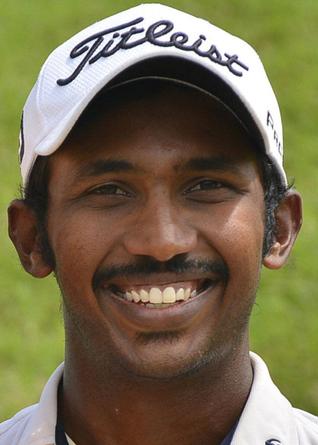
Local favourite Chikkarangappa S. made a valiant comeback with a final round of five-under 67 to earn his maiden international win at the Asian Development Tour’s TAKE Solutions India Masters in Bangalore on Saturday.

Chikkarangappa, playing at his home course Eagleton, overcame the overnight six-shot deficit as he posted a tournament total of 18-under 270 to achieve a remarkable two-stroke victory at the $70,000 event.

Abhishek Jha, another Bangalorean and good friend and practice partner of Chikka, shot a contrasting three-over 75 to finish runner-up at 16-under 272 despite starting the day with a six-shot lead.

Chikkarangappa (64-70-69-67), who was overnight tied second and nursing an injury in his left wrist, had a three-shot swing early in his favour as he converted a 25-footer for birdie on the third even as Abhishek Jha (66-66-65-75) dropped bogeys on the third and fourth.

Abhishek three-putted on the third and found the trees on the fourth.

Chikka narrowed the gap to two shots after making a tricky 10-feet birdie putt on the eighth. Both the Eagleton-based professionals birdied the 10th but Jha conceded another shot with a three-putt for bogey on the 12th. Chikka finally drew level with Jha thanks to a 30-feet birdie conversion on the 15th.

Chikka, who became the second Indian after Sujjan Singh to win on the Asian Development Tour, said, “I’m delighted to finally win at my home course. Last few events I was right up there on the leaderboard but couldn’t somehow take my chances.

The 30-feet birdie putt on the 15th was the turning point today. I felt I had the momentum from there on. Then after Abhishek’s double-bogey on the next hole, I made sure I birdied the 17th.

“I felt I came back really well after the setback with the triple-bogey on the second day and the injury to my wrist on the third day. I couldn’t sleep till late last night due to the pain in my wrist and had to keep applying ice on it to be ready for the final round. I dedicate this win to my late grandfather who passed away last week.”

Sweden’s Nils Floren fired a 67 in the final round to finish third at 14-under 274. C Muniyappa of Bangalore returned a 66 to share fourth place with Niall Turner of Ireland at 13-under 275.

source: http://www.thehindu.com / The Hindu / Home> Sport> Other Sports / PTI / Bangalore – November 01st, 2014

Harinderpal, Joshna reign

Harinderpal Singh Sandhu dethroned Saurav Ghosal while Joshna Chinappa pocketed her 13th title, beating Sachika Ingale to take the titles.

Harinderpal Singh Sandhu ushered in a change of guard, dethroning Saurav Ghosal in the final to clinch his first title at the senior National squash championships.

“If it had to be anybody to beat me, I am happy it is him,” remarked the latter after losing the men’s final in 74 minutes. Harinderpal won in five sets, 11-2, 11-9, 9-11, 8-11, 11-9.

Two sets up, Harinder found himself at the receiving end when Saurav got into the groove to wrest the third and fourth and take the title clash into the decider. “I committed a schoolboy error,” he said. “Saurav does not allow you to get back after such mistakes,” he said.

Winning the decider against the champion demanded mental preparation. “I was ready to grab the chance. It is about restricting my thinking to within four walls of the court and shutting out anything happening outside.”

Harinder led 9-0 in the first, 4-0 in the second, and did not allow the loss of next two sets to disrupt concentration in the decider.

The newly-crowned champion flew out on Saturday night for the Asian Beach Games at Phuket, along with Kush Kumar for company.

Joshna Chinappa pocketed her 13th title, blasting past Sachika Ingale 11-3, 11-3, 11-6 in just 22 minutes.

Commenting on the competitors, Chinappa said: “Playing the pro circuit is the only way forward for these young girls, instead of playing the junior circuit.”

The results (finals):

Men: Harinderpal Singh Sandhu (TN) bt Saurav Ghosal (TN) 11-2, 11-9, 9-11, 8-11, 11-9. Women: Joshna Chinappa (TN) bt Sachika Ingale (UP) 11-3, 11-3, 11-6. Professionals: Parminder Singh (Del)) bt Parthiban A (TN) 11-8, 8-11, 11-8, 13-11.

source: http://www.thehindu.com / The Hindu / Home> Sport> Other Sports / by Nandakumar Marar / Mumbai – November 09th, 2014

Pravin Amre: India’s most sought after batting coach

Suresh Raina, Ajinkya Rahane and Robin Uthappa have all ironed out the creases in their batting and mental make-up by lending their ears to coach Pravin Amre and following his guidelines Salman Ansari DNA

What is common between Uthappa, Rahane and Raina? They all went to Pravin Amre to get their act together. Derek Abraham talks to former Test player from Mumbai to find out what makes him the most sought after batting coach in India today

Like any true-blue Kodava, he is known to live life king size. Hailing from Coorg, the picturesque south Karnataka district which uber-rich coffee planters call home, Robin Uthappa is as cool as they come.

Supremely talented and fiercely proud, his bravado with the bat is more exciting than assuring. That said, the right-hander is often accused of being laid-back. Perhaps, his not-so-impressive returns in 41 ODI appearances, spread over over eight years, are to blame.

Somewhere at the back of his mind, Pravin Amre harboured similar thoughts. During the 2012 IPL season, he conveyed the same to Uthappa. “You are not working hard enough. You must come out of your comfort zone,” Amre, then assistant coach of the now-defunct Pune Warriors India, told the team’s superstar player. Taken aback, Uthappa retorted, “How can you say that? I know I am working very hard.” Amre’s reply was even blunter. “Whenever you decide to work harder, give me a shout,” he said.

The IPL was over before anyone knew it and Uthappa went on a holiday. “One day, I got a call from Spain. It was Robin. He admitted he wasn’t putting in the hard yards,” Amre recalls. He promptly told Uthappa to enjoy his trip.

A month later, Uthappa touched down in Mumbai. His first meeting with Amre turned was an eye-opener. “I told him was to shed 16 kg off his upper body,” Amre says. How did Uthappa go about it? “I am just a batting coach. So his fitness isn’t my concern. He has a team of dieticians and trainers. All I wanted was a fitter, hungrier Robin,” Amre says.

Three months after that ‘top-heavy’ conversation, Uthappa returned in top shape. The ensuing two-year period saw the 28-year-old force his way back into the ODI side after six years, excel for Karnataka on the domestic circuit and play a key role in the fortunes of Kolkata Knight Riders. Nowadays, when the selectors sit down to pick a side, Uthappa features in their discussion.

Uthappa may be the first, but he is not the only one seeking Amre’s help. Simply put, the 46-year-old Mumbaikar, who happens to be from the stable of a certain Ramakant Achrekar, is the country’s most sought-after batting consultant today. Technically sound, knowledgeable, practical, approachable and a great manager of men, Amre also counts Ajinkya Rahane, Suresh Raina, Naman Ojha, Dinesh Karthik among his wards.


Player to coach: the journey

So when did he get bitten by the coaching bug? “Nothing was planned. It happened by default,” Amre says in a tête-à-tête at the iconic Shivaji Park Gymkhana in Mumbai.
The former India batsman happens to be the president of the club that produced him and 20 other Test cricketers. As we sit down in the swanky conference room on the first floor, Amre, sporting a slick Roger Federer cap and training gear, points to a framed picture of Shivaji Park. “It was taken in the 1950s,” he says. “This is where we are sitting,” he points to the black and white photo, probably shot from a chopper. A few hundred metres away, at the Bengal Club, he runs Amre Coaching Clinic where 30-odd Under-14 boys ply their trade.

“Not many know that I played provincial cricket for Boland, South Africa,” Amre says. Incidentally, he had played the first of his 11 Tests in that country. His debut, in Durban, was memorable to say the least. “That 103 I scored against Allan Donald, Brett Schultz, Brian McMillan, Meyrick Pringle and Omar Henry in 1992 was the highlight of my career,” he adds. Predictably, Amre fell in love with the country. “Not only did I play domestic cricket there, but I also cleared the coaching and umpires exam,” he reveals. “Despite years of isolation, the South Africans showed us what they were made of. This fascinated me. And that’s why I decided to understand their cricket structure.”

When Amre returned home in 2001, he was in for a rude shock. The BCCI categorically told him that it doesn’t “recognise” the South African system. “So I had to do undergo the Level II coaching programme all over again (Test players are exempt from giving the Level I exam). And when it was time to appear for the Level III exam, the Mumbai Cricket Association told me I couldn’t represent them as Chandrakant Pandit and Lalchand Rajput had taken the slots. So, I requested Brijesh Patel, head of the National Cricket Academy, to consider me. Thankfully, he agreed,” Amre says. And so, in 2002, Amre and some others like Rajput, Pandit, Venkatesh Prasad and Robin Singh passed the exam with flying colours. “I had never studied so hard in college. The curriculum was vast, but I did my best,” Amre says.

Amre then started an academy at Shivaji Park Gymkhana. “I trained players like Siddhesh Lad, Kevin Almeida, Shardul Thakur, Harmeet Singh and Gaurav Jathar. A few years later, the MCA asked me to if I wanted to coach the Ranji Trophy team. I agreed.” The period from 2006-07 to 2010-11 saw Amre guide Mumbai to three Ranji Trophy triumphs.

Amre, who never wanted to become a coach because he was “short-tempered”, doesn’t know how it all fell into place. Perhaps, Achrekar was an inspiration. “Achrekar Sir is a very strong, a very different personality. I can never be like him. He is a father figure to his players. He is just too great,” Amre concedes.

Why does he say so? “Listen to this incident. Everyone knows Sir has five daughters. He also fathered a son. But the poor infant died the same evening he was born. The next day, Sir was about 30 minutes late to practice,” Amre recalls. “Then, he went about his business. To him, cricket is paramount. Your personal life is secondary. As a father, I know what Sir must have gone through. And believe me, I heard this story from my Shivaji Park seniors many years later.”

For someone who tallied less than 1,000 runs in international cricket, Amre agrees he could have done a lot more as a batsman. “That’s why I feel happy when a player I coach scores a hundred. Look, when I was a player, my God was my godfather. I had a first-class average of 87 when I first played for India. But things didn’t turn out they way I would have liked them to.”


Team coach to personal coach

After spending five years with the Mumbai team, Amre went on a long break. “It got monotonous,” he says. “As someone who had coached Mumbai with great success, I could have gone to another state. But I decided to stay put in Mumbai. I knew I had to reinvent myself as a coach.”

Amre did just that. For starters, he collected as many videos as he could and watched them, one by one. “Don Bradman, Garfield Sobers, Graeme Pollock, Barry Richards, Viv Richards, Sunil Gavaskar, Sachin Tendulkar… I watched them all,” Amre says. So what was the underlying theme? “What I understood is that all great batsmen have something in common. Their stance, back-lift and approach may be different, but the moment they prepare to face the ball, they somehow get in line. In other words, they offer the full face of the bat to every delivery. That’s why they are great.”

As Amre delved deeper and deeper, he realised that a coach’s job was more than just giving throwdowns and finalising the playing XI. “One must find the root cause (of a problem or defect). A coach must be like a doctor,” he says. Asked why decided to play ‘doctor’ to Uthappa, Amre comes up with a straightforward answer. “I thought he was not justifying his talent.”

Amre spent three years watching videos, studying bio-mechanics, reading and devising papers and presentations. “There are three aspects to a players’ game: physical shape, mental shape and skills. Most players have two boxes ticked. A coach’s job is to ensure a player gets everything right,” Amre says

When Amre decided to take up Project Uthappa, he changed “everything” from the batsman’s stance and grip to back-lift and head position. And he also cautioned his ward that, initially, his performances would suffer. “Are you ready to go down and then up,” Amre told Uthappa. He was referring to the career graph that would witness a dip after so many fundamental changes. “Sir, I have tried everything. This is it. Now, I want you to take me to the next level,” Uthappa conceded.

Soon, Amre went about his business of “dismantling” Uthappa the batsman. “His grip was bottom-handed and locked. I asked him to ‘unlock it’ so that he could hit the ball straighter,” Amre says. “I then worked on his stance, footwork, shoulder position, head position. In short, I changed him from head to toe. It was course correction all the way through.”

How receptive was Uthappa? “Look, this is a science. The results are showing only now. Ever since we started working, people critcised me for ruining him. But Robin knew of the ‘down and up’ we had spoken of. He was quietly confident. Today, he is batting better than ever before.”

Amre says he has made Uthappa bat in different cities, on all types of wickets and against all kinds of bowlers. “One has to have cricketing smartness. You can’t play all your shots on every wicket. You may be technically sound, but you have also got to be smart,” he says.


Helping Rahane

Amre knows Rahane since this Under-17 days. It is during Amre’s time that Rahane scored 1,000-plus runs season after season. “Do you remember his Test debut?,” Amre asks. For the record, Rahane earned his maiden Test cap against Australia in New Delhi last year. India won the series 4-0, but Rahane had a forgettable outing. “He was all over the place. He got hit on the head before a rash shot cost him his wicket. It didn’t take the media too long to brand him a failure. They conveniently forgot that he had a first-class average of nearly 70 then.”

Soon, Amre took Rahane under his wings. “I had to help him with his technique. He was getting out to the incoming ball. On some occasions, he was getting caught behind. Today, he is one of the best batsmen in India,” Amre says proudly. “I remember taking him to Sachin’s place. The master told him to target the next five years. Once you play for five years, you can think of playing for 10 years. And automatically, you will have 10,000 runs under your belt.”

Rahane, who has never missed a practice session in all these years, spent 19 Tests on the bench before making his debut. “You have no idea of the number of people, including IPL franchise officials, who told me that Rahane is not ‘international material’,” Amre says. Guess they must be feeling silly now.

“If your technique is strong, nobody can stop you from scoring runs in all formats. People used to tell Ajinkya that he must bat like Virat Kohli. But I told him that God has made you like this for a reason. You can’t be Virat. So, be Ajinkya. Be the one who can bat in any situation. Today, he is just that,” Amre says.

During the World Twenty20 earlier this year, Amre employed a few baseball techniques to help Rahane hit the ball longer, harder. “It’s all about bio-mechanics. Tennis, baseball, cricket and a number of sports follow similar principles like hand-eye coordination, focus. Baseball players use their core muscles — abdomen and back — to generate power. I made some adjustments to his back-lift and he started hitting the ball better,” Amre says.


Ojha, Raina and Karthik

Amre has coached Ojha and Raina at Air India. Of late, Ojha has been dealing in double hundreds at the India ‘A’ level. Again, that is Amre at work.

“I never tell a player I want to work with him. I wait for the player to approach me. But one day, I told Naman there was a problem in his game. But he never bothered to check with me. A couple of years later, he came back,” Amre says.

When Ojha approached him, Amre put him through the same grind and made him a better player. “There wasn’t much wrong with Naman’s game. His technique was good; so was his mindset. He came across as a simple boy who was very committed, hardworking,” Amre says. Did the wicketkeeper in Ojha ever bemoan the presence of that chap called Dhoni? “I told him not to think of any competition. Just do your thing and your chance will come,” Amre told him. But for how long? “I gave him the example of Michael Hussey. And I told him that the Test cap is worth waiting for.”

So what is it that works for Amre? “The fact that I got a hundred on debut in Durban gets me respect. I guess the players believe in me. After all, there must be something in my technique and my template that seems right. There are several others who are more knowledgeable than me, but I have something called experience,” Amre says. “Whenever I get time, I discuss cricket with Sachin. Whenever I have a doubt, I call him. Like I said, I have taken Ajinkya and even Robin to him.”

Amre holds Raina in high regard. “Let’s go back to the 2011 World Cup. Yusuf Pathan was picked ahead of Raina. It was only after the group-stage matches that the team turned to Raina. Naturally, he was very low. I told him to wait for his chance,” Amre says. For the record, Gary Kirsten, the former India coach, maintains that Raina won India the World Cup with his brilliant displays against Australia and Pakistan.

Over the years, Raina has drawn flak for throwing away his chances in the Test arena. That he has a problem with the short ball is common knowledge. “But why don’t you also say that he is the second-best finisher in Team India?” Amre retorts. “Look at the way he is batting now. Do you remember how he played in the ODI series in England this year?”

Coaching, Amre says, is all about having faith in each other. “I have to be accountable. If my player fails, then it’s my failure too. People will blame me for ruining someone’s career. I know what I am doing. All my wards have got their basics right. I can happily say that.”

Not surprisingly, Amre is open to coaching India some day. “Why not?” he says.

This following episode throws light on the emphasis Amre puts on mental strength. Abhay Poyarekar, a retired customs officer and Amre’s relative, raided huge quantities of RDX at the Mumbai port in 1993. The underworld troubled him for eight years. He was provided with ‘Z’ security and won the President’s medal for bravery. “That RDX was meant to destroy Mumbai during Ganeshotsav. I took Ajinkya and Robin to this man. To me, he is a real hero. He explained how the dons harassed him and attacked his family for years together,” Amre says. Till date, Rahane gets goose bumps thinking of Poyarekar and his heroism. Cricket, after all, is just a game.


AMRE’S WARDS

Robin Uthappa
They got together two years ago. Amre changed everything in Uthappa’s game — grip, stance, head and shoulder positions, back-lift. The results are showing. Amre flies to watch him to every part of the country. During the off-season, Uthappa rents grounds by the hour in Mumbai or Bangalore. Amre joins him here too

Ajinkya Rahane
The two have known each other for over 10 years. Amre honed Rahane’s technique during his time as Mumbai coach. Now, he has helped his ward go to the ‘next’ level. He has even contributed to Rahane’s mental toughness

Naman Ojha
Ojha, Amre says, is a very hardworking lad. What he lacked was confidence. Amre gave him the example of Michael Hussey, who scored more than 10,000 runs before earning a Test cap.

Suresh Raina
Amre came to Raina’s rescue when he was feeling low during the 2011 World Cup. Yusuf Pathan was picked ahead of him. Amre told Raina to wait for his chance. Raina came good in the quarters and semis. Today, he is the second-best finisher in Team India

Dinesh Karthik
Amre took Karthik under his wings only recently. A talented wicketkeeper-batsman, Karthik approached Amre after he saw the positive impact he has had on the above players

source: http://www.dnaindia.com / DNA / Home> Sport / by Derek Abraham / Place: Mumbai, Agency: DNA / Sunday – November 09th, 2014