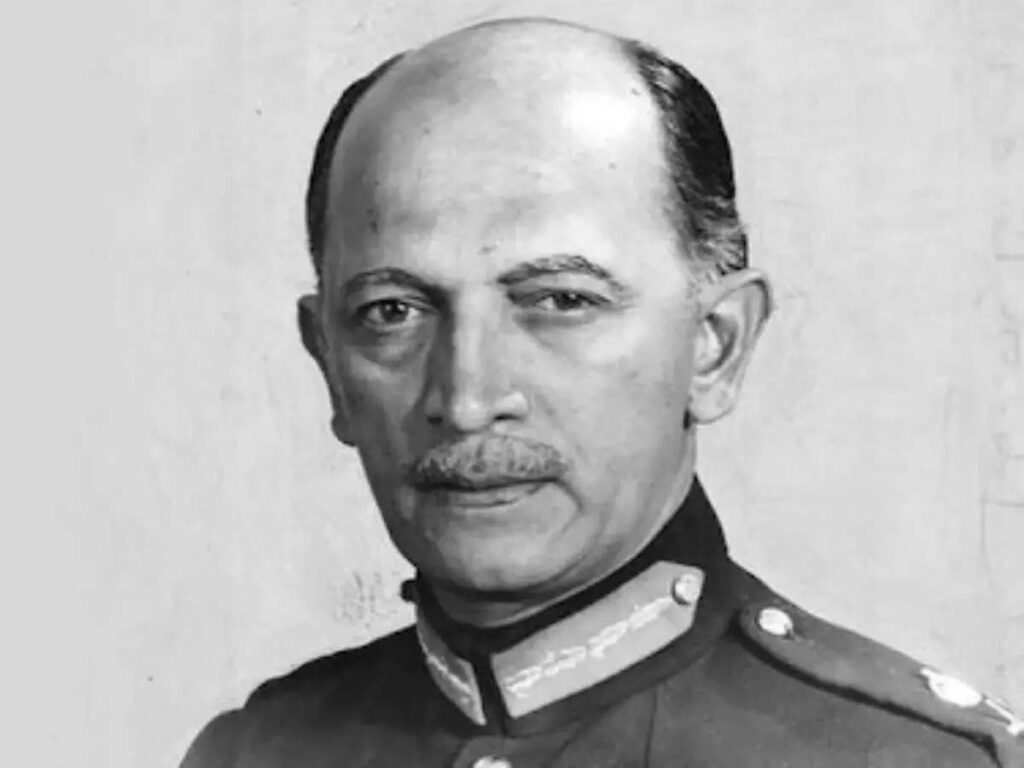
KM Cariappa was the first Field Marshal of the Indian Army in independent India who was made the Chief of Army Staff on 15 January 1949. He started his job with the appointment of a Second Lieutenant in the Rajput Regiment of the Indian-British Army. Along with being the first army chief, Cariappa was the first five star rank officer of the Indian Army. KM Cariappa served the country by serving in the army for 30 years and retired in 1953. But it was not at all that after retirement he stopped his service. Even after retiring, he continued to contribute to the army in one form or the other. On 15 May 1993, KM Cariappa merged with the Panchatattvas.
There is a very popular story about KM Cariappa when he told Pakistan not to release his son and treat him like other prisoners of war. But why did he say this, let us know. The talk is about the 1965 war when it was the last day of the Indo-Pak war. On this day Squadron Leaders KC Cariappa, AS Sehgal and Kukke Suresh were given orders to bomb Pakistani positions. But in the first round of bombing, Pakistani soldiers attacked the aircraft of AS Sehdal with anti-aircraft guns. Although AS Sehgal survived the attack, he had to go back to the base camp.
After his departure, KC Cariappa and Kukke remained in the field and were busy destroying the positions of their enemies. But in the meantime Cariappa’s plane became a victim of continuous Pakistani bullets. Cariappa’s plane got damaged and landed like a ball of fire in Indian territory but Cariappa’s body fell on Pakistan side. After falling, Pakistani soldiers surrounded him and took him into custody. When KC Cariappa was caught, he was asked if he was a relative of KM Cariappa, he told the Pakistanis only his name and rank.
As soon as the President of Pakistan Ayub Khan came to know that KM Cariappa’s son had been taken into custody by Pakistan, he immediately made an announcement over the radio that KM Cariappa’s son had been taken into custody. He conveyed information to KM Cariappa through the Pakistani High Commissioner in India that his son could be released if he wanted, but KM Cariappa, a firm believer in his principles, refused. He said that KC Cariappa is not only his son but the whole country, so he should also be treated like other prisoners of war, but if he wants to leave then other prisoners of war will also have to be released. Other prisoners of war are also like my sons. KC Cariappa remained in the custody of Pakistan for several days and was later released along with other prisoners.
source: http://www.newsdayexpress.com / Newsday Express / Home> Career / by Bhagyashree / August 17th, 2022
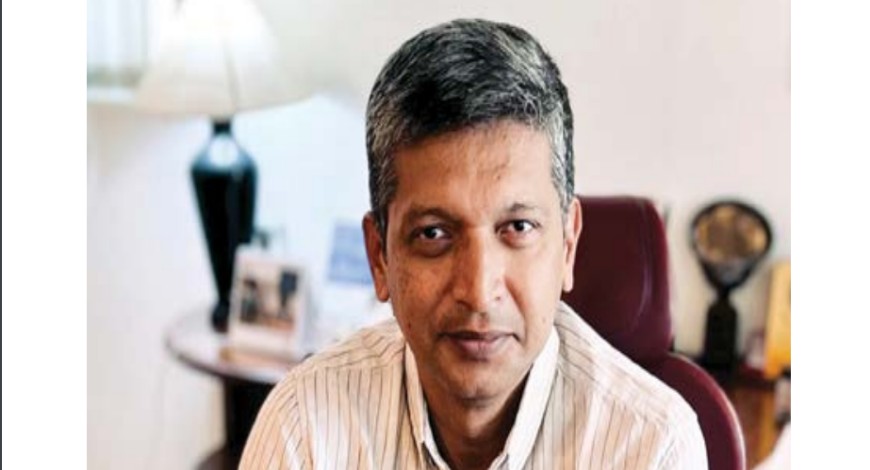
Chacko Thomas, the managing director and chief executive officer at Tata Coffee, has nearly three decades of rich experience in the Plantation industry
Chacko Thomas is a Bachelor of Science with a specialisation in Computer Science from University of Jodhpur. He has rich experience in Plantations, Business Strategy, Sales and Marketing. Thomas has been associated with Tata Coffee since August 2015. Before joining Tata Coffee, he was the MD of Kannan Devan Hills Plantations Company at Munnar. Thomas is an alumnus of INSEAD Fontainebleau having done his advanced management programme there.
Thomas has a strong track record in business transformation, delivering sustainable results and building and leading high-performing teams in India and Vietnam, according to his online profile. He also has an extensive experience in general management, setting up distribution channels and running own businesses. He has held board positions in companies in US, Sri Lanka and India. Currently, as its MD and CEO, Tata Coffee is today one of the largest integrated coffee companies serving over 40 countries.
The company states that its suit of major products like Green Bean, Instant Coffee, Tea and Pepper are all about giving consumers a taste of the Tata Coffee goodness. The company has around 8,000 MT annual capacity of shade-grown Arabica and Robusta. Around 90 per cent of its washed Arabica is exported as premium green bean to roasters. The company has 13 Arabica estates that are Starbucks C.A.F.E. Practices certified.
The company’s instant coffee comes in various customised blends that appeal to the palate of its customers, brands, private labels, distributors and large global roasters. Being eco-conscious, all three of its plants – in Theni (Tamil Nadu), Toopran (Telangana) and Vietnam – are fuelled by renewable energy sources.
The company’s distinctive variants of instant coffee are packaged in a fully automated packing unit and delivered across countries like Russia, Africa, Europe and emerging markets like Southeast Asia and the Middle East.
Business Growth
On a yearly basis, consolidated net profit of Tata Coffee surged 10.32 per cent to Rs 233.40 crore on a 4.81 per cent rise in revenue from operations to Rs 2,363.50 crore in FY22 over FY21. Tata Coffee’s revenues from instant coffee business consisting of India and Vietnam grew by nearly 9 per cent during the fourth quarter, driven by improved realisations despite lower exports from India consequent to delay in despatches. There has also been an improved margin driven by higher proportion of specialty/differentiated products as well as lower costs. The sales to all key markets have been robust. For the financial year, the revenues from instant coffee business grew by 20 per cent with improved margins. The order book continues to be healthy both, at India and Vietnam, the company said.
Commenting on the performance, Thomas, said, the performance of instant coffee business continued to be robust. “Our Plantation performance on Green Bean Coffee and Pepper during the year had also been strong, aided by improved realisations. Our subsidiary, Eight O’Clock Coffee [EOC] recorded improved performance during the quarter owing to better realisations and favourable channel mix,” he said.
In March, Tata Consumer Products (TCPL) had announced the merger of all businesses of Tata Coffee with itself as part of a reorganisation plan in line with its strategic priority of unlocking synergies and efficiencies.
The plantation business of Tata Coffee (TCL) demerged into TCPL’s wholly-owned arm TCPL Beverages & Foods (TBFL). The remaining business of TCL, consisting of its extraction and branded coffee business, merged with TCPL.
source: http://www.businessworld.in / Business World / Home / August 17th, 2022 / Magazine August 23rd, 2022
Some growers, however, are sceptical because heavy rains in July and August have dampened prospects for the next crop.
Tight supply concerns are likely to affect the cost of coffee
India’s coffee sector is poised for a good spell with forecasts of a good crop in the next harvest and strong export potential amid projections of a lower crop in Brazil, the biggest producer. The outlook for Vietnam, the second-largest producer, is also not rosy.
India appears to be better placed than other major coffee-producing countries for a good crop. The Coffee Board, a government entity that oversees the sector, projected a 15 percent increase in its post-blossom estimate to 393,400 tonnes for the 2022-23 crop, comprising 277,000 tonnes of robusta and 116,400 tonnes of arabica.
The India estimates came amid possibly lower output estimates for Brazil and Vietnam, the top two coffee producers.
Brazil’s national supply company (Conab), in its second survey, cut an earlier coffee crop forecast for 2022-23 by 2.3 million bags to 53.43 million bags. That’s still 12 percent higher than last year, although it is 15.3 percent lower than the record crop of 63.1 million bags in 2020. It cited last year’s drought and frost for the reduction, mainly in the arabica crop.
The company revised arabica production downwards by 3.1 million bags, while robusta output was raised by 760,000 bags because of better productivity and expanded acreage.
Robusta and arabica are the two main types of coffee beans. Arabica is considered the more popular coffee bean.
The United States Department of Agriculture pegged coffee production in Vietnam, comprising mostly robusta, at 30.9 million bags, down 700,000 bags from last year. It attributed the lower output to an escalation in fertiliser prices that led to their reduced use.
Higher prices
Global coffee futures have fallen to $2.12 per pound after hitting a 10-year high of $2.60 per pound early this year on supply concerns from Brazil and robust demand. The industry reckons global prices may stay at a higher level as supply issues continue to dog Brazil and Vietnam. A year ago, prices hovered at about $1.75 per pound.
However, some growers are sceptical about India’s coffee exports this time.
“Heavy rains in July and August have dampened the prospects, particularly in the south Coorg area. We can get a clear picture only in September,” said N Ramanathan, chairman of the Karnataka Planters’ Association.
Karnataka accounts for the largest share of coffee produced in the country.
Coffee exports from India increased by 16 percent to 264,191 tonnes in the period from January 1 to August 9 from a year earlier, according to data from the Coffee Board. The rise came mainly from robusta cherry, whose shipments have gone up by 30,000 tonnes. Export growth was as high as 25 percent in the earlier months as pending orders were executed.
India had record coffee exports of 394,343 tonnes in 2021, bettering the 378,909 tonnes achieved in 2017. The country exports 70 percent of its coffee output.
Europe has traditionally been the strongest market for Indian coffee, especially Italy, Germany, and Belgium.
“This year, purchases from the Middle East and North African countries also increased,” said MP Devaiah, general manager of Allanasons, an agri-based commodity and product company in Mumbai.
India had the advantage of lower freight rates to Europe than the South East Asian coffee-producing countries Vietnam and Indonesia.
Instant coffee
India’s instant coffee exports also picked up after initial hiccups following the onset of the Russia-Ukraine war. Exports to Russia, a big buyer of instant coffee from India, rebounded in the past few months. India also benefitted from lower instant coffee exports to Russia from Brazil.
“Brazil’s instant coffee exports to Russia stopped following sanctions by the US,” said N Sathappan, director of SLN Coffee.
Brazil is predominantly an arabica coffee exporter. A large share of robusta produced in the country is consumed internally and of the remainder, a major portion goes into making instant coffee for exports.
According to the latest report of Cecafé, the Brazilian Coffee Exporters Council, outbound shipments from the South American country fell 5.9 percent to 22. 4 million bags (60 kg each) during the first seven months of 2022 from a year earlier. However, export earnings rose to a record $5.23 billion, up 62.4 percent, on higher prices.
Exports of green coffee – coffee that hasn’t been roasted – reached 20.2 million bags. Shipments of arabica were little changed (+0.1 percent) at 19.3 million bags, while robusta exports plummeted to 939,334 bags, the lowest level since 2019 and down 60 percent, it said.
Over 70 percent of instant coffee exports from India are through value addition of cheaper produce imported from South East Asian and African countries while the rest is produced from local beans. This year, growth in re-exported instant coffee was marginal while shipments of instant coffee from local beans increased sharply.
“Imports from other origins became costly because of freight rate hikes and logistics problems. Hence there was a rise in the use of local beans,” Devaiah pointed out.
The Coffee Board data showed that while re-export of instant coffee after value addition rose by 4 percent, instant coffee made from domestic beans surged by 45 percent in the period from the beginning of the year to August 9.
Sathappan said exporters are now going in for more imports as Indian coffee has become costly with robusta prices going up by 40 to 50 percent. Robusta beans are selling in the range of Rs 4,500 to Rs 4,700 per 50 kg.
The International Coffee Organisation’s latest provincial outlook for global production in the coffee year 2021-22 (October to September) remains unchanged at 167.2 million bags, a 2.1 percent decline from the previous year.It projects world coffee consumption to grow by 3.3 percent to 170.3 million bags, exceeding production by 3.1 million bags.
source: http://www.moneycontrol.com / Money Control / Home> News> Business / by P K KrishnaKumar / August 12th, 2022
The troops and peasants controlled the Amara Sullia region, Puttur, Bantwal and Mangaluru for nearly 13 days. (Photo credit: Twitter/ @girishalva)
Historians say the foundation for the Amara Sullia Uprising was laid in the early 1830s.
Highlights
In 1834, Chikka Veera Rajendra of the Haleri dynasty, the king of Kodagu, was deposed by the British
After capturing the entire Mangalore city, the British Union Jack was lowered and the rebel flag was hoisted
Many are unaware of Coastal Karnataka’s role in the fight against the British: Dayananda Kathalsar
Bengaluru:
In 1837, 20 years before the 1857 Sepoy Mutiny – the First War of Indian Independence – and nearly a hundred years prior to the Civil Disobedience Movement, the people of coastal Karnataka and Kodagu led an armed rebellion against the British and were successful in holding the port city of Mangalore (now Mangaluru) and other regions for nearly 13 days before the rebellion was crushed.
Dr Peter Wilson Prabhakar, a renowned historian from Dakshina Kannada, who narrated the timeline of events of the Amara Sullia Uprising to News9 opines that the foundation for the uprising against the British was built in the early 1830s.
In 1834, Kodagu king Chikka Veera Rajendra of the Haleri dynasty was deposed by the British leading to an immediate revolt in the region. (The British controlled Dakshina Kannada – South Canara – after Tipu Sultan’s death in 1799, while Kodagu was an independent state until 1834).
Swamy Aparampara started the revolt in Kodagu along with Hulikaadida (the one who killed a tiger) Nanjayya. But within two weeks, Aparampara was arrested in Manjarabad and hanged.
Another revolt led by Kalyanaswamy in 1835, who claimed to be a descendant of the former king of Kodagu, was crushed by the British. He was imprisoned and hanged to death in 1836.
This is when soldiers, who belonged to the army of Chikka Veera Rajendra, chose one among them named Putta Basappa and presented him as Kalyanaswamy to the people. They needed a figurehead as the real Kalyanaswamy was dead.
The soldiers trained Putta Basappa at a hill in Kodagu and presented him to the public as Kalyanaswamy.
Varying reasons for rebellion in South Canara-Kodagu
While the invasion of Kodagu resulted in a rebellion in the region, for the people of Sullia and Puttur in Dakshina Kannada the administration and revenue changes made by the British lit the fire.
“Earlier the Amara Sullia and Puttur Magane (revenue divisions) were under the control of the king of Kodagu. In 1834, it was separated from Kodagu and added into the Canara district,” Prabhakar told News9.
Earlier, in 1830-31, the British had made a major change to tax collection.
“Up to the 1830s, the revenue tax was in kind (payment in the form of goods like pepper etc). But in 1830-31, the people were asked to pay tax in cash and not in kind,” the historian said.
The high tax was a burden on the people, which sparked agitation.
“Separation of Sullia and Puttur from Kodagu, high taxes and payment in cash instead of kind, were the main reasons,” he added.
Before the rebellion in Kodagu in 1834, due to the imposition of these high taxes and change in the revenue system, there was a rebellion in South Canara.
It was popularly called “Koots” – meaning a group – rebellion. Almost the present Kasaragod, Dakshina Kannada and Udupi revolted against the British in 1830-31.
“While the Civil Disobedience Movement by Mahatma Gandhiji began in 1930, a hundred years before in South Canara, the no tax movement was started,” Prabhakar said.
1837 – The Amara Sullia Dange (Uprising)
In 1837, when the soldiers of Chikka Veera Rajendra, led by Kalyanaswamy (Putta Basappa) along with the people of Kodagu started moving towards Sullia. They travelled through the Bisle Ghat and not through the present route of Sampaje.
Through the ghats, the troops first entered Bellare and destroyed the British Treasury in Bangle Gudde.
The British Treasury in Bellare. (Photo credit: Anindith Gowda Kochi Baarike through a special arrangement)
After that, the troops were divided into three divisions. One was sent to Dharmasthala and Uppinangady. Another was sent to Kasaragod and Kumble.
The third division was sent to Puttur, through Bellare and Kumbra.
The first battle between the troops of Kalyanaswamy and the British took place on March 30, 1837, on the outskirts of Puttur.
The British were defeated. Those who survived retreated to Mangalore (presently known as Mangaluru) – it was where the British Collector was seated.
On March 31, the British Treasury in Puttur and the entire city were under the control of the peasants and soldiers led by Kalyanaswamy.
On April 5, the troops, who had gained military aid from the kings of Vittla and Belthangady, entered the port city of Mangalore and started capturing the city.
At the time the district headquarters of the British was located at the present-day Balmatta. After destroying the British buildings and plundering the district treasury, the entire Mangalore city area was captured.
The troops controlled the Amara Sullia region, Puttur, Bantwal and Mangalore for nearly 13 days. The British Union Jack was lowered and the rebel flag was hoisted in Bavuta Gudde – the hill with the flag – in Mangaluru.
This is also noted in the Dakshina Kannada District Gazetteer. Many believe the flag to be of the Haleri dynasty since the troops belonged to the Kodagu king Chikka Veera Rajendra.
Rebellion crushed by the British
The rebellion angered the British, who brought in reinforcements from Bombay and Madras Presidency.
The British then crushed the rebellion led by Kalyanaswamy and the peasants of the Amara Sullia and the surrounding regions. The movement was labelled by the British as the loot of Kalyanappa – Kalyanappana Katakayi – to lower its significance in the region.
“Kalyanaswamy, Beeranna Banta, Guddemane Appayya and Laxmappa Banga Arasa – the king of Nadavara – were hanged to death in present-day Bikarnakatte in Mangaluru,” historian Prabhakar said.
The others, who were captured, were deported to Singapore and other islands.
Anindith Gowda Kochi Baarike, who has authored the book on the uprising titled Recalling Amara Sulya that will be published soon, told News9 that not many know that in May-July 1837, a court marshall took place and the people who led the uprising were charged with treason.
“It was not a mutiny. It was a mass movement led by the people of the region,” he added.
Rich history forgotten
Many are unaware of the rich history of coastal Karnataka and its role in the fight against the British, says Dayananda Kathalsar, the president of the Karnataka Tulu Sahitya Academy.
“All the youth should love their mother tongue. Tulu, the ancient Dravidian language spoken by people in coastal Karnataka, should be included in the 8th schedule of the Constitution of India,” Kathalsar told News9.
Now, a ‘youth revolution’ for the Tulu language, Kathalsar added, is underway in Mangaluru.
“Nearly 25,000 people in Mangaluru have learned Tulu and its script after a ‘revolutionary’ effort by youth of the region,” he added.
“This shows that when the youth are led in the right directions, the impossible can be achieved.”
Kochi Baarike, the author of Recalling Amara Sulya, said that several areas in present coastal Karnataka could be called the “cradle of the Indian freedom movement”.
“Despite a mass movement, they were charged with treason. And till we got independence in 1947 – 110 years after the uprising – there was no avenue to discuss this,” Kochi Baarike said.
“The least we could do now is document what happened,” he added.
(Note: The timeline of the events of the Amara Sullia Uprising has been reported in this feature as narrated by historian Peter Wilson Prabhakar)
source: http://www.news9live.com / News Nine / Home> State> Karnataka / by Prajwal D’Souza / August 14th, 2022
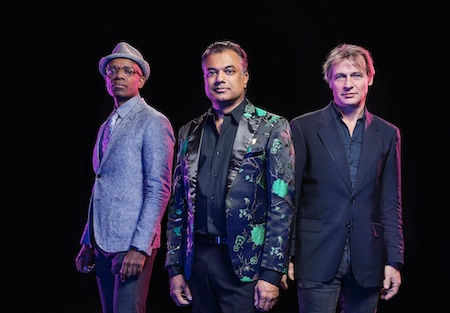
Saxophonist Rudresh Mahanthappa’s Hero Trio will make their NYC Debut this August to celebrate Charlie Parker’s Birthday at Smoke Jazz.
Located at the junction of 106th and Broadway (aka Duke Ellington Boulevard), Smoke Jazz Club is one of New York City’s premier live music venues. Renowned for offering top-notch programming of accessible, timeless jazz featuring legendary performers, modern masters, and rising stars, Smoke stands apart with its candlelit dining room, stellar acoustics, and classic American cuisine.
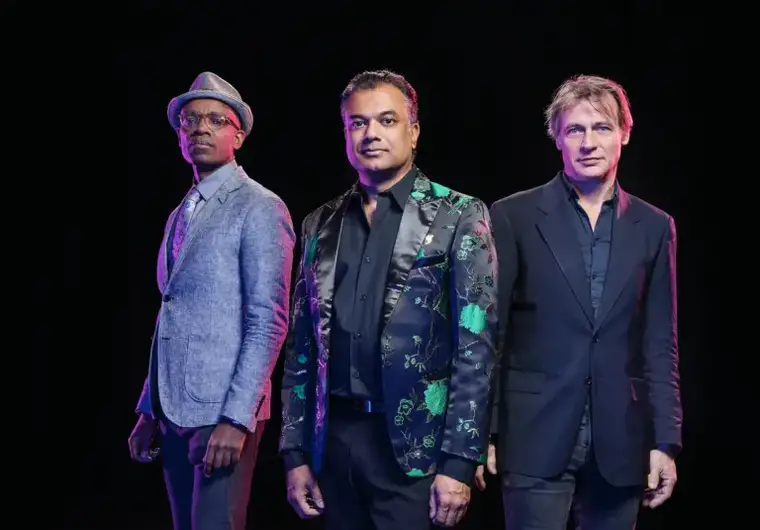
Rudresh Mahanthappa’s Hero Trio also includes bassist Harish Raghavan and drummer Rudy Royston. Their performance will set on Thursday and Sunday at 7 and 9 p.m., and on Friday and Saturday at 7, 9 and 10:30 p.m.
Hero Trio earned high praise for its eclectic 2020 self-titled debut and the 2022 follow-up Animal Crossing. Animal Crossing is a digital-only EP featuring four new songs, each an unlikely addition to the canon of jazz standards which is also the titular theme from the wildly popular video game.
At Smoke, Mahanthappa will explore Parker’s compositions, classic standards, and modern covers with the Raghavan and Royston. “The idea behind Hero Trio was to turn the idea of playing a set of standards on its ear and freshen up the idea,” the saxophonist explains.
Rudresh Mahanthappa is widely known as one of the premier voices in jazz of the 21st century as well known for his exellent alto saxphone performances. He has been recognized by multiple jazz magazines including DownBeat Magazine, Jazz Journalists’ Association,and JazzTimes Magazine. He has also received the Guggenheim Fellowship and the Doris Duke Performing Artist Award, and is currently the Anthony H. P. Lee ’79 Director of Jazz at Princeton University.
For information visit https://www.smokejazz.com/calendar/.
source: http://www.nysmusic.com / NYS Music / Home> Blues-Jazz> NYC Metro> Upcoming Shows / by Savanna Tong / August 07th, 2022
Call to help preserve memories of a vanishing people
While modernisation has opened many opportunities for the well-qualified, it has also distanced the young from their heritage and culture. This is even more accentuated amongst Kodavas living outside Kodagu. There is a need to establish a platform where young Kodavas could learn and keep in touch with the community’s heritage, cultural practices, folklore, music, dance, festivals and history, says Mrs. Codanda Rathi Vinay Jha, IAS (Retd.) and Chair, India Foundation for the Arts (IFA), who has initiated establishing a Virtual Museum of Kodava Heritage & Culture named ‘Sandooka,’ a treasure trove of information. —Ed
Kodavas are a micro-minority community in India, who live in Kodagu (Coorg) in Karnataka State. It is estimated that there are about 1,50,000 ethnic Kodavas within and outside Kodagu.
Kodavas, by virtue of living quite isolated in a densely wooded hilly terrain on the Western Ghats of India since time immemorial, have developed their own unique culture, physical attributes, cuisine, language, attire, religious rituals and practices.
Over the centuries, Kodavas adapted themselves to the harsh weather conditions, dangers from wild animals and the inhospitable terrain of Kodagu and transformed the land to an idyllic haven it is today. With the passage of time, they toiled literally with bare hands to cultivate paddy in the valleys.
With the forests providing bountiful supply of wild game, they became expert hunters initially with bows and arrows, and later with firearms which enabled them to emerge as a warrior race. They transformed the fertile land and were able to grow enough paddy that they could export to neighbouring areas.
The interactions with immediate neighbours in present day Kerala, Mysuru and Mangaluru, influenced the Kodava language, places of worship, construction of their dwellings and some of the religious practices as well. However, Kodavas still retain their fundamental philosophy of ancestor and nature worship. They come under the broad umbrella of Hinduism.
Kodagu was ruled by Kodava Nayakas or Palegars who were basically warlords. The Haleri dynasty established their rule in Kodagu after cleverly replacing the hopelessly divided Nayakas during the early part of the 17th century. The Haleri Rajas ruled for over two centuries until the British takeover of the administration in 1834 after deposing the last Raja. During the rule of the Haleri Rajas and later the British, Kodavas remained the prominent community very much involved in the administration.
During the British rule, education was introduced and this brought about quantum changes in the lifestyle of the Kodavas. Kodavas found several employment opportunities. Introduction and scientific cultivation of coffee and spices vastly improved the economy of the region. Kodava culture and ethos found expression in the writings by the British, European and Kodava authors.
By the time India got her independence, many Kodavas held important and high-level offices in sectors such as the Defence Forces, Administration, Revenue Department, Forest Department, Police, in the field of Education, Engineering and Medicine.
Kodavas have several distinctive elements in their social, cultural and religious practices. One of them is the deferential status given to women. There is no dowry system in the community. Centuries ago, widow remarriage was permitted. This enlightened attitude is now reflected in well-educated Kodava women shining in a variety of fields.
After India’s independence many Kodavas ventured out of Kodagu seeking better opportunities in education, employment, business and sports. Kodavas are now spread all over the globe. The last three decades has seen a large number of Kodavas migrating outside the country. There is now a sizable number of Kodava diaspora in the US, Canada, UK and Australia. In many cases, there are a couple of generation of Kodavas born and brought up outside Kodagu and outside India as well.
While modernisation has opened many opportunities for the well-qualified, it has also distanced the young from their heritage and culture. This is even more accentuated amongst Kodavas living outside Kodagu. There is a need to establish a platform where young Kodavas could learn and keep in touch with the community’s heritage, cultural practices, folklore, music, dance, festivals and history.
It is with this aim in mind that Mrs. Codanda Rathi Vinay Jha, IAS (Retd.), as Chair, India Foundation for the Arts (IFA), initiated establishing a Virtual Museum of Kodava Heritage & Culture (VMKHC). This project is evocatively named — Sandooka — a treasure trove of information. IFA has successfully supported several path-breaking projects in the field of art and culture.
Sandooka will be a living museum that will be interactive and open to receiving relevant new materials from the public. People, especially the future generations of Kodavas, will have an easily accessible platform to gather details of their heritage. Weblinks will also be given to some of the websites dealing with Kodava culture. It is hoped that this treasure trove of information will be of immense help to those who wish to carry out further research on Kodavas. VMKHC will cover the following aspects of Kodagu and Kodavas:
1. Customs and Rituals
2. Cuisine
3. Architecture
4. Clothes and Jewellery
5. Art & Craft
6. Landscape
7. Literature and Folklore
8. Community Histories
9. Festivals
The project is generously funded with a Corporate Social Responsibility (CSR) grant from Recaero India Pvt. Ltd., which is a pioneer in the field of aerospace engineering and is headed by Vinay Jha, IAS (Retd). A highly professional team has been forged to deal with every aspect of the project. The team comprises:
Lina Vincent – Project Head; Upasana Nattoji Roy – Designer (Switch Studio); Saurav Roy – Designer (Switch Studio) and Mookanda Nitin Kushalappa – Researcher.
IFA office-bearers are: Arundhati Ghosh (Executive Director) and Darshana Davé (Project Co-ordinator); Advisory Group: Rathi Vinay Jha, C.P. Belliappa and Hemanth Sathyanarayana.
Sandooka invites submission of Kodava artefacts, rare photographs, antiques including jewellery (photos) and anecdotes of yore. All accepted materials will be given due recognition and credits. Sharing your valuable knowledge and collections will enrich the contents of Sandooka.
For details of submission of materials, please visit: www.sandookamuseum.org
source: http://www.starofmysore.com / Star of Mysore / Home> Feature Articles / by C.P. Belliappa / August 01st, 2022
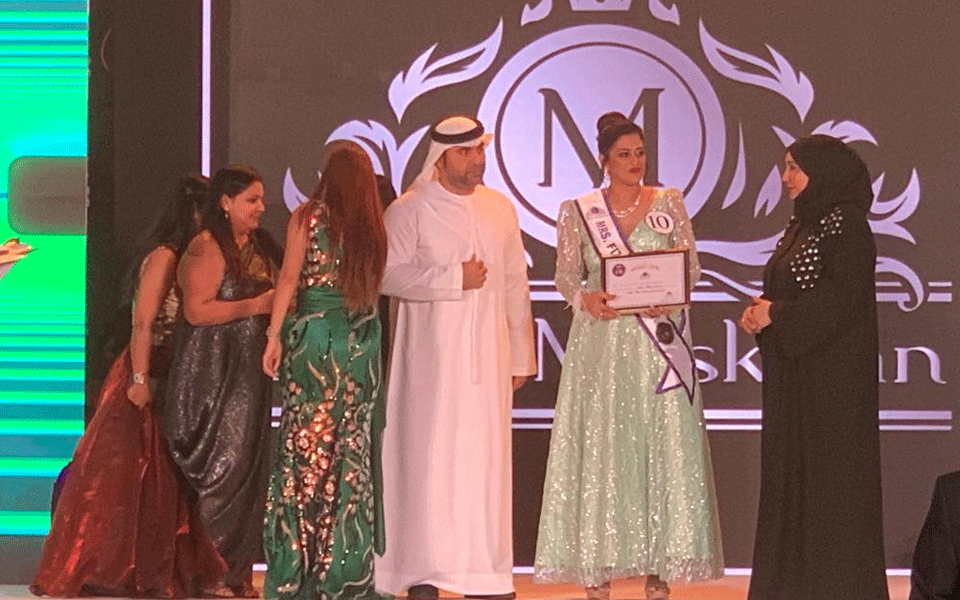
Dechamma Poonacha(Dechamma A.P) has won the Mrs Fitness Queen Title at Mrs UAE International by ‘Being Muskaan’, a leading UAE based brand launched by Meena Asrani, focused towards women empowerment.
The contest was held on June 26th at Radisson Red, Dubai Silicon Oasis and was open to all nationalities residing in UAE.
Mrs. Dechamma is currently a home maker. She is a former student of Rotary English Medium School Moodbidri and also was the student of the first batch.
She further continued her high school an PU education at Jain highschool and PU college Moodbidri.
She pursued her graduation at Sri Bhuvanendra College Karkala where she won Miss. Bhuvanendra in 1997 and Miss. Jaycee Kulyadi queen, Karlala in 1998.
She was born in Coorg but was raised in Moodbidri.
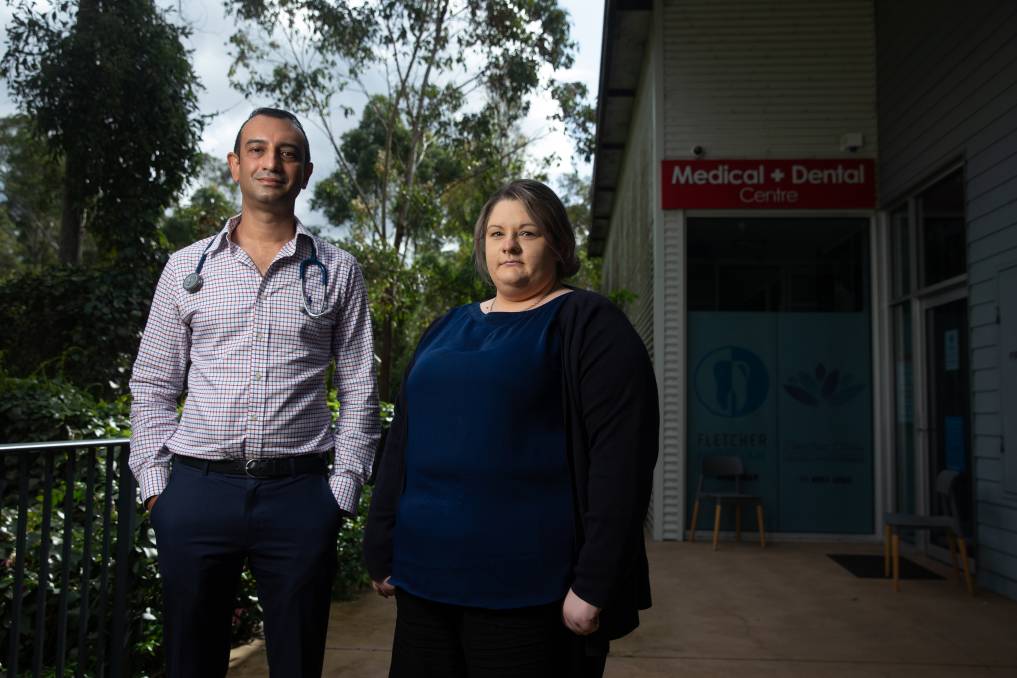
Doctors wanted: Fletcher Clinic’s Dr Poonacha Kanjithanda and practice manager, Maddie Ingall have two empty rooms despite growing demand for medical services. Picture: MARINA NEIL
A CRITICAL shortage of GPs could soon leave some Hunter towns “up the creek” without a doctor.
National modelling predicts there will be a shortfall of almost 11,500 GPs by 2032, but parts of the Hunter are already struggling – with Cessnock, Murrurundi, Scone, Denman, Merriwa, Muswellbrook and Singleton identified as being particularly vulnerable.
Most of the 404 practices in the Hunter and Central Coast are actively recruiting doctors already, as they grapple with an increasing workload, a retiring workforce, and fewer medical graduates pursuing a career in general practice.
The Hunter New England and Central Coast area has lost close to 100 GPs in the past few years. Unless the trajectory changes – and soon – the region’s Primary Health Network (PHN) says it will only get harder and more expensive to see a GP.
“Over time, it will reduce access for regular people in the community to see their local doctors,” PHN chief executive Richard Nankervis said.
“There will be an impact in terms of increases in waiting times, but also cost, and that’s a general trend that we’re already starting to see across various parts of the region.”
The most recent data the PHN could provide from 2020 shows one full time equivalent GP for every 1224 residents across the region.
But in areas like Dungog, that ratio jumped to more than 2900 people for every one doctor.
Mr Nankervis said there were about 1890 GPs in the region in 2018. It is now closer to 1800, and 239 of those are registrars.
Cessnock, Murrurundi, Scone, Denman, Merriwa, Muswellbrook and Singleton are among the Hunter areas the PHN has identified as being at risk of current or imminent closures.
But areas of high population growth – like Maitland and the Central Coast – are also under increasing pressure to meet the growing demand.
“It seems to be as bad as we have seen since the PHN began in 2015,” he said.
“We are worried about a whole range of towns, but we have probably got about 10 towns that are of greatest concern after a couple of years of population growth.”
Places like Wee Waa and Barraba only have one doctor at present. If those doctors retire, leave, or become unwell, residents will have to travel to access a GP until a replacement is found.
It comes as a Deloitte report forecasts demand for GP services will increase by almost 40 per cent by 2030.
But if the number of new GPs entering the market do not keep pace with the growing demand, there will be a shortfall of 9,298 full-time GPs – the equivalent of 25 per cent of the GP workforce – within eight years.
Since 2017, there has been a 30 per cent drop in medical graduates applying to do general practice.
“We are seeing a significant reduction in the number of medical students choosing general practice, and it is largely because more are choosing specialities, which are attractive because they are remunerated well, and often offer very good lifestyles for them and their families,” Mr Nankervis said.
The region’s practices say a “melting pot” of challenges, setbacks, and cuts have also contributed to this “crisis” and that there needs to be “carrots and sticks” to encourage more GPs to the industry – particularly in regional and rural areas.
Unsustainable: Hettie du Plessis, of Waratah Medical Services, will close her Central Coast practice next months due to rising costs and an inability to recruit GPs. Picture: Max Mason-Hubers
‘You can’t replace them’
Hettie du Plessis, of Waratah Medical Services at Morisset, Kanwal and Cooranbong, says she has been left with no choice but to close the Central Coast practice next month due to rising costs and an inability to recruit replacement doctors.
“At Morisset, I have lost four doctors, and at Cooranbong I’ve recently had one retire – and you just can’t replace them, it is a real struggle,” she said.
“That’s why I made the decision to bring the Kanwal doctors over here. Which is sad, because I have left people without doctors there, but financially, it just wasn’t sustainable to have two practices at half capacity.
“Someone said the other day that if you dropped 1000 GPs in NSW, you wouldn’t even know where they disappeared to, because we need so many. Everyone is struggling.”
Ms du Plessis said there were currently 600 GP positions available from the Central Coast to Singleton as most practices, like hers, sought to recruit more than one doctor.
About 100 practices are actively advertising for doctors on the PHN and Rural Doctors Network websites. But the PHN says many practices have “given up” advertising on those sites.
Ms du Plessis said recruitment agency fees can cost practices about $25,000. But the shortage of doctors in the region was just one part of the problem.
A 2018 change that re-classified Morisset as “metro” instead of “regional” meant her doctors took a 50 per cent cut on incentives to bulk bill.
“You get $39 for bulk billing, and if you are regional you’d get another $12 for the doctor to bulk bill,” she said. “Once we were changed from regional to metropolitan, that changed from $12 to $6.”
Her practices offer mixed billing – but being an entirely bulk billing practice was no longer sustainable to meet operational costs.
Locations in Australia with a shortage of medical practitioners are given Distribution Priority Area (DPA) status from the federal government. This allows international medical graduates working in these areas to be eligible for Medicare.
DPA status was recently returned to Morisset after heavy lobbying from three local medical centres in the South Lakes area.
But Ms du Plessis said even with DPA status, it still takes about a year to recruit a doctor from overseas due to red tape, paperwork, and having to jump through various “hoops”.
The doctor shortage meant demand was high – and their cancellation list was long – but they deliberately kept some on-the-day appointments available for patients who needed to see a GP urgently.
She said it was infuriating to have about 20 “no shows” at her practices most days – with no courtesy calls to cancel – as those spots could be given to those on the cancellation list.
Ms du Plessis and Maddie Ingall, the practice manager at Fletcher Clinic, both said the growing demands on GP services meant educating patients to book in for prescription-renewal appointments as soon as the “last repeat” sticker appeared on their script from the pharmacy had become a necessity.
Missed it by that much
Dr Poonacha Kanjithanda has spent the past two years trying to recruit a doctor to his practice.
He bought the Fletcher Clinic in 2019, and after a year their books were full.
“We couldn’t offer same day appointments, and people were getting angry and upset,” Dr Kanjithanda said.
For 18 months, the practice advertised through the primary health network, spent thousands advertising on Seek. At one point they had 21 recruitment agencies searching for suitable candidates while offering a $20,000 sign-on bonus.
The clinic came close to recruiting a GP a couple of times – but because those doctors were overseas-trained, they needed to work in a Distribution Priority Area.
Fletcher just missed out on meeting the criteria by “one point”, as it shares a catchment area with Newcastle. This means Fletcher has the same classification as Sydney’s CBD.
They applied for an exemption; wrote to local politicians. But ultimately, they still have two vacant rooms. Clinic staff hope the new federal Labor government delivers on its promise to restore DPA status to the region’s practices.
Practice manager Maddie Ingall said she understood that Fletcher was not in the same boat as places like the Northern Territory, but nor was it like Sydney’s CBD.
“There has to be some leeway in areas like Fletcher that are building up fast,” she said.
“From 2016 to 2019 there was 7000-odd new residents in Fletcher alone. Where are they meant to go if we only have 2.5 full time equivalent doctors and no one is taking new patients?”
Dr Kanjithanda said it should never have come to this “extreme shortage” of GPs. But now he would like to see some reform with long term solutions.
The current training pathway gives medical students more exposure to hospital roles than general practice, and becoming a GP was not seen as lucrative.
“A lot of GPs will be retiring soon,” he said. “Medicare rebates are not keeping up – so the pressures are building up while income is going down. Students see someone who started at the same time as me driving a Porsche versus me driving a Toyota – and they would prefer to drive the Porsche.
“But it’s not just money… GPs have some lifestyle benefits that the students haven’t been exposed to, because they only come in as medical students in third and fifth year to sit in on consults.”
He said having enough GPs was vital, as they kept people out of the hospital system but could also recognise when someone needed emergency hospital care.
“For each person presenting to the ED who actually occupies a bed, they spend about $1000 for that patient,” he said. “The government could save so much money by just funding general practice a bit better, and making sure we have the right amount of trainee doctors.”
Carrots and sticks
The Hunter New England Central Coast Primary Health Network recently offered bush GP and registrar grants in a bid to help rural areas recruit doctors.
It covered recruitment costs to help entice GPs to practices in Quirindi, Narrabri, Taree, Wee Waa, Glen Innes and Tamworth, and registrars to Moree, Gunnedah and Inverell.
Dr Simon Holliday, a GP and addiction physician in Taree, said these grants were “good” and helpful – but they were only one piece of the puzzle.
“There’s an enormous amount of costs involved in recruiting and in relocating doctors to rural areas,” he said.
It could take years for the “small handful” of overseas-based doctors interested in working in rural areas to go through Australia’s approval process. But competition was so fierce for international medical graduates too, who also needed adequate support to get settled, that it was not always financially viable or a long-term solution.
“I think we do have to ask ourselves as a nation, as a health system – why is it that we’re relying on medical conscription of international medical graduates to supply health care in the bush?” Dr Holliday said.
“I think the process we’ve been seeing over the last decade will just continue… And unless we get some coordination and some vision to solve this, I think we’re up the creek.”
source: http://www.singletonargus.com / The Singleton Argus / Home / by Anita Beaumont / June 27th, 2022
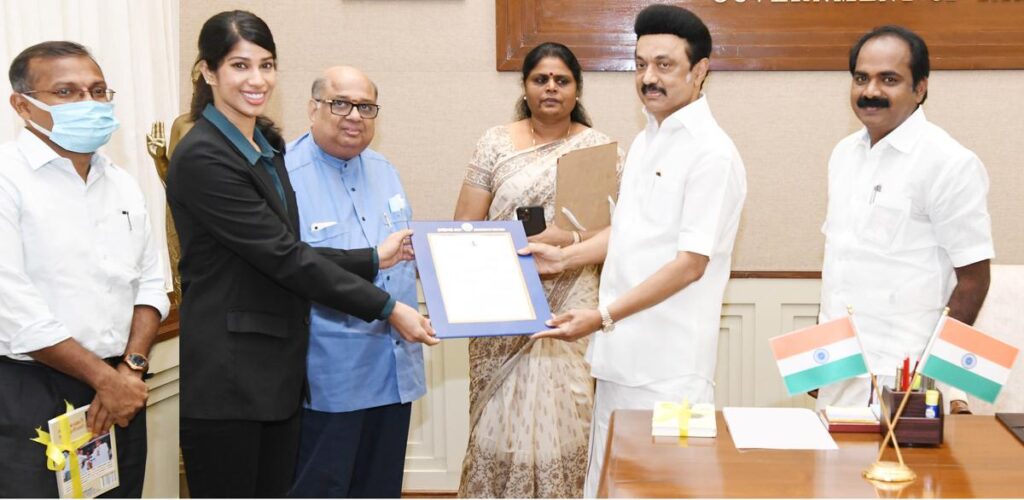
Chief Minister M.K. Stalin handing over a cheque for ₹75 lakh to squash player Joshna Chinnappa in Chennai on Thursday. | Photo Credit: SPECIAL ARRANGEMENT
Chief Minister M.K. Stalin on Thursday handed over a cheque of ₹75 lakh to squash player Joshna Chinnappa, who won a gold medal in world doubles championships in Glasgow recently.
Minister for Sports Development Siva V. Meyyanathan and senior officials were present.
source: http://www.thehindu.com / The Hindu / Home> News> National> Tamil Nadu / by JDennis Solomon Jesudasan 10525 / Chennai – April 29th, 2022
In this rare iteration of the DownBeat Blindfold Test, all three musicians were asked to comment on selections consisting entirely of trio music. (Photo: David Crow)
Seeing a colorful press photo of Rudresh Mahanthappa and his bandmates adorned in masks, tights and capes might lead one to believe that they are the comic book-like heroes from which the trio’s name is derived. But the alto saxophonist has been clear: He is paying homage to his own musical heroes — Charlie Parker, Sonny Rollins and Lee Konitz, for starters. Rollins and Konitz virtually trademarked the chord-less trio format embraced by Mahanthappa and his rhythm section players, both of whom work regularly in other highly regarded trios: bassist François Moutin with pianist Jean-Michel Pilc, and drummer Rudy Royston with guitarist Bill Frisell.
In this rare iteration of the DownBeat Blindfold Test, all three musicians were asked to comment on selections consisting entirely of trio music. It was Mahanthappa’s second Blindfold Test, and the first for Royston and Moutin. The following article originally ran in two installments in DownBeat’s May 2022 and June 2022 issues.
ORNETTE COLEMAN
“Dawn” (At The Golden Circle Stockholm, Blue Note, 1966) Coleman, alto saxophone; David Izenzon, bass; Charles Moffett, drums.
Rudresh Mahanthappa: That’s Ornette Coleman, At The Golden Circle, with David Izenzon and Charles Moffett. This is on Blue Note, not Atlantic, I believe. When I was at Berklee in the ’90s, I wanted to do a recital of all Ornette Coleman music. It had a horrible name — it was called “Ornette, or Not.” We ended up doing a ballad called “Dawn” — this is it? There it is, I hear the melody now. 5 stars.
François Moutin: I don’t know of anything else that David Izenzon did, but he’s a monster bass player.
JERRY BERGONZI TRIO
“Have You Met Miss Jones” (Lost In The Shuffle, Double-Time, 1998) Bergonzi, tenor saxophone; Dan Wall, organ; Adam Nussbaum, drums.
Mahanthappa: It sounds like Steve Grossman when he was in his Sonny Rollins phase. It has a Jerry Bergonzi vibe to it, too. It’s not Dan Wall, is it? Adam Nussbaum? Jerry is great. For better or for worse, Grossman, Brecker, Jerry Bergonzi, even George Garzone, to some extent Dave Liebman — these guys were like the kings of this post-Coltrane [sound]. I think Grossman was the forefather of all those guys, including Michael Brecker. Steve was playing like that when he was only 19 years old with Elvin Jones.
Moutin: There’s one lick in there that could have been you on tenor, Rudresh.
Mahanthappa: It’s the same source material, just up a fifth. I tried playing tenor in high school; I sounded terrible on tenor.
Rudy Royston: Adam Nussbaum is on! I like all the energy, rhythm, big fat sound … not like that “clean” stuff that was going on at that time.
Moutin:I’ve played with him half a dozen times, and every time, it was an incredible experience.
Royston: He’s a cat who believes in the drums leading the band, the drums leading the vibe. He came to UNC when I was there. He said, “You should be able to tell what the tune is from what I’m playing.” You could hear it in his rhythms and how he was defining stuff around the melody. He’s still a bad cat.
Mahanthappa: 5, shall we go 5 stars on that?
Moutin: Yeah.
Royston: Everyone was killing on that.
MELISSA ALDANA & CRASH TRIO
“Turning” (Melissa Aldana & Crash Trio, Concord, 2014) Aldana, tenor saxophone, Pablo Menares, bass; Francisco Mela, drums.
Royston: Is that Melissa Aldana? The thing I love about Melissa is how she uses space. She’s never in a rush. She always waits, and then she does that thing where she starts low, I don’t know what it is [sings the line]. And the way she uses … falsetto?
Mahanthappa: Altissimo. I like Melissa a lot, I don’t know her playing real well. One of the things that’s hard for me to realize is that there’s a whole generation of folks that were influenced by people our age. Melissa told me a story about how into Mark Turner she was, and how he gave her a seven-hour lesson once.
Royston: That’s a great trio. I saw them at Dizzy’s. They were a good trio.
Moutin: Good composition, too.
Mahanthappa: 5 stars.
CHRIS SPEED TRIO
“Arrival High” (Platinum On Tap, Intakt, 2017) Speed, saxophone; Dave King, drums; Chris Tordini, bass.
Moutin: Triplicate?
Mahanthappa: No, it doesn’t sound anything like that. It kind of reminds me of Bill McHenry. Is it George Garzone? It definitely sounds like it could be someone of our generation. It could be Rasmus Lee, or it could be …
Moutin: Donny McCaslin?
Mahanthappa: No, it can’t be, that’s not Donny’s sound. Or guys that I went to Berklee with, like Matt Renzi … all these cats that played all that modern shit, but with harder reeds and a darker sound, as opposed to Donny. It was almost like a reaction to Michael Brecker, “We’re going to go dark!”
Royston: I know this drummer, man.
Mahanthappa: It could be Chris Speed, too. Is this the trio with Dave King? There you go. Chris was a little older than me, but he was still in Boston when I was in school, but he was hanging out, playing his ass off. 5 stars. Chris is a bad motherfucker and more people should know who he is.
Royston: I knew that it was [Dave King on drums], but I just couldn’t put my finger on that sound. Big tom sounds, and you can hear all that facility with the rim shots and the bells. You can hear all that stuff in the Bad Plus.
… To be continued in the June 2022 issue of DownBeat. Same Hero Trio time. Same Blindfold Test space!
Rudresh Mahanthappa’s Hero Trio (Part 2, June 2022)
Previously on The Blindfold Test: Our three heroes, led as always by the indubitable alto saxophonist Rudresh Mahanthappa, and ably assisted by his sideman sidekicks François Moutin and Rudy Royston, added to their legerdemain with a perfect four-for-four on last month’s treacherous playlist, a feat they accomplished even while blindfolded (figuratively speaking). After easily nailing the mysterious Ornette Coleman and killers Jerry Bergonzi and Melissa Aldana, a bit of high drama occurred as their last unknown audio assailant proved elusive until Mahanthappa deduced the culprit to be Chris Speed at the 11th hour. But this month, new and more dangerous challenges lie ahead. Can our heroes pull of a perfect score, or will they succumb to the weight expectations they’ve already set? Read on to find out!
Rudresh Mahanthappa: Sounds like Arnett Cobb. It’s not rough enough to be Turrentine.
Rudy Royston: Sounds like Turrentine right there.
François Moutin: It’s not Turrentine?
Mahanthappa: It’s so of another generation. It reminds me of Houston Person records, or even Lockjaw. But I could also see Seamus Blake totally playing like this, and doing it convincingly, and sounding like an old cat. I could see Josh Redman playing like this too. But I’m stumped.
Moutin: It’s not Ron Carter, is it? There’s something in the sound … I don’t know.
[afterwards]
Mahanthappa: I would have never gotten that.
Moutin: You tricked us.
Mahanthappa: Branford definitely has his own sound, but then he can kind of inhabit all these other things, historically.
Royston: “Tain” came to my mind with that ride cymbal, but I was like, “I don’t think so.” I needed to hear a “Tain”-ism.
Moutin: 5 stars.
Royston: I didn’t know Branford could do that. Branford was getting a lot of lip back then, going to Sting’s band, and all the jazz cats were like, “Oh, man!”
Moutin: Makes me realize how much Ron Carter borrowed [from] Milt Hinton.
Mahanthappa: I’m a little embarrassed; Branford and I just hung out last week.
ANNA WEBBER
“Forgotten Best” (Idiom, Independent Release, 2021) Webber, tenor saxophone; Matt Mitchell, piano; John Hollenbeck, drums.
Mahanthappa: It’s killing, whoever it is.
Moutin: European?
Mahanthappa: Sounds like Anna Webber, kind of? With Matt Mitchell and John Hollenbeck? Anna’s ridiculous, she can do anything. 5 stars, 5½! I had Anna come and speak to my advance improv class last semester. She was amazing. She’s actually kind of codified and demystified “free improvisation.” She had this beautiful list of all these techniques to work on. Imagine Jamey Aebersold’s scale syllabus, but it was techniques and strategies for free improv. It was literally just one sheet of paper, and it was a lifetime of stuff to work on.
Moutin: Matt Mitchell is amazing.
Mahanthappa: Matt was in Bird Calls. He was practicing [his piano etudes] in sound checks for every gig we did.
Royston: He did those every day when we were in Dave Douglas’ band. You just knew it was going to come [mimics atonal piano sounds]. I used to try to play with him to figure out [the time].
JEFF BALLARD TRIO
“Western Wren (A Bird Call)” “Mivakpola” (Times Take, Okeh, 2014) Ballard, drums; Miguel Zenón, alto saxophone; Lionel Loueke, guitar.
Moutin: It’s killing. I don’t know what it is, but it’s great!
Mahanthappa: That’s insane. I can’t even …
Royston: And that wasn’t Jeff on drums? Jeff Ballard?
[afterwards]
Mahanthappa: I never would have guessed that.
Moutin: I should have guessed that.
Royston: I thought that was Jeff, because you can hear that staccato style. When Jeff plays, he plays “off” the drums. Everything is precise and staccato.
Mahanthappa: Oh, god, Matt sounds amazing. That sounds great. I don’t know Josh’s playing well enough to recognize it, to tell you the truth. But he always sounds great.
Royston: Hutch man, wow. We’re friends. He came to Denver when I was in high school. He was playing with Roy [Hargrove’s] band. We had this jam session in Diane Reeves’ basement. I was trying to play all this “Tain” stuff. Roy was there. Then, Hutch comes in, he’s got the flu. He has this big bomber coat on, he sits on my drums and my cymbals and he just [gestures a seriously minimal ride pattern]. I wanted to leave after that. That was a lesson learned right there. I went upstairs and ate some of Diane Reeves’ cooking. DB
The “Blindfold Test” is a listening test that challenges the featured artist to discuss and identify the music and musicians who performed on selected recordings. The artist is then asked to rate each tune using a 5-star system. No information is given to the artist prior to the test.
source: http://www.downbeat.com / Down Beat / Home> News / by Gary Fukushima / June 14th, 2022
WELCOME. If you like what you see "SUBSCRIBE via EMAIL" to receive FREE regular UPDATES.
Read More »