Category Archives: World Opinion

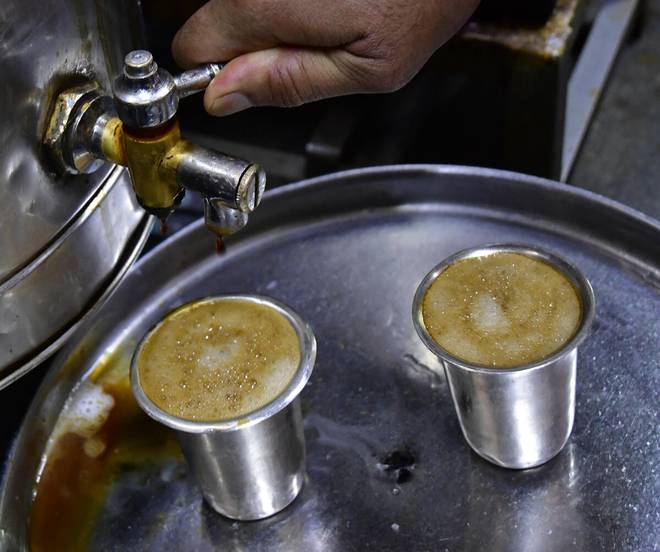
Andhra Pradesh coffee exports touch $ 142million

Andhra Pradesh coffee exports touch $ 142million

HIGHLIGHTS

Andhra Pradesh, the country’s second-largest exporter of coffee, exported coffee worth $142 million in the financial year 2020-21.

Vijayawada:

Andhra Pradesh, the country’s second-largest exporter of coffee, exported coffee worth $142 million in the financial year 2020-21.

The State government is encouraging the coffee production in Araku valley and other places during the past few years. The share of Andhra Pradesh accounts for more than 50 percent of India’s instant coffee exports.

The State possesses many manufacturing plants that process green coffee beans to instant coffee, which commands a 31 percent share in India’s coffee exports basket.

Drip Capital Inc, a global trade finance company, recently released a report examining the coffee trade across different regions of India. From analysing proprietary and publicly available data, getting insights from coffee exporters in the country, to understanding several emerging market trends brewing in the industry, the report speaks in-depth about the dynamics of the coffee sector.

The coffee exports from this region have been growing at a 3 percent over the past five years. The largest and the most famous coffee-growing region in Andhra Pradesh is Araku valley plantations.

According to the Coffee Board of India, on average, 3100 MT of (mainly) Arabica coffee is harvested from this region. Exports of instant coffee are rising from Andhra Pradesh due to increased export value realisation for the commodity.

Pushkar Mukewar, Co-Founder and CEO, Drip Capital, said, “as a commodity, instant coffee enjoys the product feature of convenience- a quality in high demand and vital to today’s global, fast-paced life. Hence, Indian exporters must stay abreast of developing trends in the instant coffee exports market. Also, to boost India’s overall coffee exports, many other States could benefit from mimicking Andhra Pradesh by setting up several coffee processing plants.”

source: http://www.thehansindia.com / The Hans India / Home> News> States> Andhra Pradesh / by Hans News Service / July 26th, 2021

Cheering Indian hockey players with equal gusto from sidelines

Cheering Indian hockey players with equal gusto from sidelines

New Delhi :

Ten Indian hockey enthusiasts including two from Mumbai who were to land in Tokyo on the opening day of the Olympics, will now have to watch hockey on television. All of them were going to watch and support the Indian hockey teams at any Olympics for the first time.

These 10 persons in the 30 to 65 age group from different Indian cities are members of the core group of the One Team One Dream (OTOD) and were looking forward to watching and cheering for the Indian men and women hockey teams. Following an announcement by the Japanese government that no spectators would be allowed at the Olympic Games, they abandoned their travel plans. They were to be joined by 11 other OTOD members and Persons of Indian Origin from Canada, Finland, New Zealand, Malaysia and the United Kingdom.

One Team One Dream is a group of passionate hockey lovers who follow the Indian national hockey team around the world. The OTOD was formed in 2010 after some hockey lovers met during the World Cup and the Commonwealth Games in India. Their dream is to see India win at the Olympics and win the World Cup again. The group is easily recognised at the hockey events with their white turbans and white head scarves.

Leo Anthony Devadoss, a banker turned coordinator of the group who once represented Karnataka State at the junior level, said while 18 OTOD members had booked in a private apartment in Shinagawa and made an advance payment of Rs2 lakh, their friends from Canada, Finland and Malaysia had made their own arrangements. Anthony has also volunteered as a coach at the Dhanraj-Ballal hockey academy. “Raja Namdhari, a sports goods dealer in Delhi is actually the driving forcing behind One Team One Dream. Our OTOD members were excited about meeting after a year and a half. We last met at FIH Pro League in Bhubaneshwar in January 2020. It is not just about the money we lost. We are worried about the opportunity we lost. We are confident the hockey men’s team will make it the victory stand and we hope the Indian women’s hockey team will make it to the quarterfinal. They have it in them to beat any team in the world. We are lucky the Mumbai based sole ticketing agent of the Tokyo Olympics has promised to reimburse a certain per centage of the ticket money which will be refunded by the Tokyo Olympic Committee. The apartment owner has been very understanding and he has agreed to refund us the amount. It is however a huge disappointment but it has been softened by the knowledge no spectators policy at the Games is in the interest of public health. We were also looking forward to buying tickets for boxing, wrestling and badminton.’’

Devadoss acknowleded help from Siegfred Aikman, the national coach of the Japanese men hockey team. “Iakman has been a good friend of OTOD. We met Aikman, designated as the FIH (International Hockey Federation) High Performance coach, at the 2018 World Cup in Bhubaneshwar. He was guiding us regarding our tour to Tokyo. So was my friend’s mother, Dr Yashoda, a second generation Japanese paediatrician who runs a private clinic in Bengaluru. She was also to go to Tokyo to watch the games as many of her archer son, Rakshak’s friends were going but even she is not going now as there are no spectators.’’

Devadoss said the OTOD group is now planning to meet in Bengaluru from August 1 to 6. “We will miss the live action at the Oi hockey stadium would have been only three miles from Shinagawa city where we were to stay. We will now be watching the quarter finals, semi finals and finals of the men and women’s hockey team. We have arranged for a big screen to be put up just for our group.

On August 4, we have arranged for a lunch and reached out to 17 Bengaluru based hockey Olympians.

Of them, eight hockey Olympians including Arjun Halappa, Sabu Virkey, Poonacha, Bharat Chetri, Ashish Ballal, Nikin Thimaiyya V.R. Raghnunath and SK Uthappa have promised to join us. Hopefully, we will be able to persuade them to join us in cheering for the Indian women hockey team at the semi final match the same day.’’

source: http://www.freepressjournal.in / The Free Press Journal / Home> India> Olympics Special / by Tripti Nath / July 23rd, 2021

Sailor K.C. Ganapathy All Set To Make A Mark At Olympics

For the first time, India will have more than two sailors at the Tokyo Olympics, including Kodagu-born Kelappanda Chengappa Ganapathy and Nethra Kumanan, the first Indian woman sailor.

This is also for the first time India will be competing in more than one sailing event — Laser Radial, Laser Standard and 49er

While Nethra Kumanan will be in Laser Radial and Vishnu Saravanan in Laser Standard, K.C. Ganapathy and Varun Thakkar will be in 49er.

According to Varun and Ganapathy, sailing, unlike other sporting disciplines, does not have multiple events to win, like a freestyle swimmer can swim in 100 mts 500 mts and so on and likewise an athlete can run in 100 mrs 400 mrs etc.

It is noteworthy that only in 2021 sailors from India have qualified for the Olympics and will be participating as qualified sports persons, as till date all entries have been through wild card entries or quota slots. Asia has one slot in each sailing class and Japan being the host country.

Ganapathy is the son of Kelappanda late Deepak Chengappa and Reshma Chengappa (from Allaranda family). His mother Reshma runs a furniture business in Chennai and the family is settled there. His grandparents are Kelappanda late Pratap and Padma Prathap. Padma resides at Kolthodu village near Hatur village in South Kodagu.

source: http://www.starofmysore.com / Star of Mysore / Home> Sports / July 22nd, 2021

Kodagu-Born Fitness Coach Helps Athletes Create History

Enables Indian swimmer Sajan Prakash, the first Indian to do so, to make the Olympic ‘A’ cut.

Sajan Prakash had gone through a tough phase over the last year or so including a career-threatening injury and he overcame it with sheer hard work and perseverance. In that tough phase, Bengaluru-based Physical Preparation Coach Kulletira Jeeth Devaiah helped Sajan Prakash overcome his difficulties and finally make it to the Olympics. Jeeth has his roots at Napoklu in Kodagu. In a chat with Star of Mysore, Jeeth spoke about his personal goals and achievements, future plans and training Sajan for the biggest stage in international sport.  Excerpts:

Ace swimmer Sajan Prakash is preparing hard for the Tokyo Olympics. It was a case of now or never for the Kerala swimmer who qualified for the world games at the 58th Sette Colli Trophy in Rome with a timing of one minute, 56.38 seconds in the heats, 0.10 seconds quicker than the Olympic Qualifying Time (OQT) to make the direct cut to Olympics. It was also his second straight Olympics, which no other Indian has been able to achieve previously.

Star of Mysore (SOM): As a Physical Preparations Coach, tell us your association with Sajan Prakash and how your training and mentorship helped him.

Jeeth Devaiah: Sajan Prakash was in Railways and I too was. So we had a common ground. He was always a high performer and in 2014 just before the Rio Olympics — where he was the only swimmer to qualify — he had some kind of a niggle and since he knew me well he came to Pro Care Galen and Performance Centre in Bengaluru where I and my physiotherapist Dr. Gautham worked on him. Then he went to Rio and we were connected since then. 

Sajan Prakash’s skills being evaluated.

SOM: What was the nature of his problem?

Jeeth Devaiah: After Rio, Sajan moved to Thanyapura in Phuket, Thailand, where he was selected by the FINA Academy. During training, he was complaining of neck and shoulder pain. He wanted me to go there and help him out. In swimming, we call  it a ground-based activity where we do a lot of core work, strength work and injury prevention work. I was in Phuket for a couple of months where I brought him to a level of fitness.

We had our plans cut out but unfortunately he had a major injury and which again not many could diagnose. Then he came back to Bengaluru and stayed with me in my house. I took care of him personally for 2 to 3 months where we did a proper rehab session and made him stop swimming temporarily. Later he went to Phuket where he started swimming and the pain recurred.

OM: Was he able to overcome the pain?

Jeeth Devaiah: Yes, he was pretty hardworking and he could manage both swimming and pain management. We were in touch online on what needs to be done for injury management and things like that. He later moved to Dubai where his coach Pradeep and other physiotherapists took over. We had absolute trust that he would qualify for the Tokyo ‘A’ cut. Also, Sajan is disciplined and has a great sense of self-belief. We are proud of him. 

Jeeth Devaiah training Sajan Prakash.

SOM: Do you have any plans to go to Tokyo to see Sajan perform?

Jeeth Devaiah: Fitness has always been my forte. Not many people will dare to dream big. I trained at the highest level in cricket, hockey and football. I have been a hockey player myself and I started a job in Railways at the age of 19. In 2004, I forayed into a full-fledged career in physical preparation and started work with Indian Railways for the Ranji Trophy and that year, we won the trophy.

I have not looked back since then and my career graph went up. In 2004, I joined the Indian Cricket Team along with many trainers under Coach Greg Chapell, who was very particular about Indian players experiencing the best in the fitness scenario and the latest advancements. I was one among the four trainers selected to be with the Indian team and trained various teams till 2010. The same year I trained the Delhi Daredevils (now known as Delhi Capitals). And the same year I got an opportunity to train the women’s hockey team before the London Olympics but unfortunately we did not qualify.

Jeeth at work

SOM: Where did you train football teams?

Jeeth Devaiah: That was Esbjerg Football Club, Denmark, in 2019 and also Esbjerg Academy Team. We won a tournament in Holland and people were shocked to see an Indian running behind the Danish team and it was a good experience in my career to understand how professional they are. Their sessions are all planned months in advance and I learnt to bring back the same to India. In 2014, I went to Australia and worked with the Australia National Rugby Team and Sydney Kings Men’s Basketball.

I also worked with I League team Sudeva Delhi FC last year and we were only Indians and no foreigners as the promoters wanted to give maximum opportunity to Indian players. We fared pretty well considering we trained under a bio-bubble environment (no going outside) for months. Staying in a bio-bubble is draining physically and mentally as everything is restricted and your freedom is completely curtailed.

Sajan Prakash in Bengaluru training with Jeeth Devaiah

SOM: How was it working with Women’s Hockey Team?

Jeeth Devaiah: That was in the World Cup and the girls had been to Argentina where they were beaten badly. At that time the team coach too was from Railways and we had a good understanding. They had no concept of fitness. I had to go in and change their mind-set. I had to teach the women that fitness is also important and made them follow strength training guidelines which they are still following for Tokyo Olympics.

There was a misconception that women should not lift more weights and I broke that. In fact, at one place in China where we had been for Asian Champions Trophy and just before the match we did one set of strength training, a warm up and straight ventured into the field to play. That was the confidence the girls had. And after 2010, the girls started understanding that fitness plays a crucial role and it was a good experience for me also.

With Esbjerg Football Club-Denmark.

SOM: How do you plan fitness programming? 

Jeeth Devaiah: We plan the fitness programming according to the muscular and skeletal assessment. Our players are keener on skills rather than fitness, I would like for them to focus on both equally. My focus as a preparation coach is that they should not miss any games in terms of injuries so the first priority is strength and condition coaching. If you keep them fit without pain and aches they will be able to play more and give their best.

SOM: What are your goals and ambitions for the future?

Jeeth Devaiah: My goal is to work with an ISL (Indian Super League) team. I have worked with Sudeva Delhi FC and also with the Denmark League. ISL is more challenging and I am already in talks with a couple of teams.

source: http://www.starofmysore.com / Star of Mysore / Home> Feature Articles / by B.C. Thimmaiah / July 22nd, 2021

Present Hockey Team is Fittest to Leave Shores of India: Maneyapanda Muthanna Somaya

A former employee of Bharat Petroleum, Somaya hails from Coorg in Karnataka and is settled in Mumbai.

Present Hockey Team is Fittest to Leave Shores of India: Maneyapanda Muthanna Somaya
MM Somaya, former Indian Hockey Captain (Credits IANS)

M.M. Somaya or Maneyapanda Muthanna Somaya, the 62-year-old Arjuna Award-winning hockey player was the former captain of the Indian Hockey team in the Seoul Olympics of 1988. He has represented the country in the 1984 Los Angels Olympics also as part of the Gold medal winning Indian Hockey team of the 1980 Moscow Olympics under Captain V. Bhaskaran.

A former employee of Bharat Petroleum, Somaya hails from Coorg in Karnataka and is settled in Mumbai. One of the most decorated Right Wings the country has ever produced, the former captain speaking to IANS on the possibility of the present Indian team in Tokyo Olympics and a wide array of subjects related to Hockey in particular and sports in general.

Q: Indian hockey team is playing in Tokyo Olympics. As a former international, how do you rate the team?

A: The Tokyo Olympic team is one of the fittest to leave our shores. This enables them to play high-intensity hockey for the entire duration of a match.

Besides, they are more aware tactically than earlier teams. The ‘rolling substitution’ rule in particular is being leveraged well by the team and this should enable them to maintain a blistering pace right through the tournament.

Mentally too the team seems more composed and has conquered the fear of playing higher-ranked teams.

The team has beaten the best in the FIH PRO League and other matches over the past 2-3 years. They will therefore be entering the Olympics with a lot of positive energy. They more than justify their 4th position in the FIH rankings.

Q: You were part of the Indian team which won gold in the Moscow Olympics. Please narrate the experience.

A: I made my international debut directly at the Moscow Olympics. It was my first trip out of India and it was the first time I was seeing poly grass which was the artificial surface used in the 1980 Olympics. India didn’t have an artificial surface then. I was also seeing a European for the first time on a hockey field and was awestruck by their fitness and size!

‘Adapt’ became the buzzword for me.

I was fortunate that I had a great Coach in Balkrishen Singh and Captain in Bhaskaran who mentored me and ensured that the Moscow Games were memorable on and off the field. The American led boycott of the Games saw hockey having a depleted field. So winning Gold with a young team was extremely satisfying but did not fill us with euphoria.

Q: You participated in 1980 Moscow, 1984 Los Angeles and captained Team India in 1988, Seoul Olympics. Tell us the memories?

A: The three Olympics were memorable for different reasons. In Moscow winning the Gold medal saw the team get onto the victory podium for the award ceremony. This was a childhood dream and so very special.

At Los Angeles, we had probably the best team India has ever had after introduction of astroturf. We played fantastic hockey but lost out a semifinal berth on an inferior goal difference. Being on that team with skipper Zafar Iqbal, Mohd Shahid, Mervyn Fernandis, Joaquim Carvalho and Marcellus Gomes was indeed an honour.

At Seoul, I had the opportunity of captaining the team which was another high point of my career. Jointly creating game plans with the team and watching them play out in matches was immensely satisfying. Here again, we were pipped to a semifinal spot but finished in the top six.

Difficult to believe that this sixth position has not been matched to date by Indian teams over the seven subsequent Olympic Games.

Q: Has Covid affected the performance of the Indian Hockey team?

A: There were a few players who had tested positive last year but have recovered fully. The team’s preparation did receive a bit of a setback when the last few PRO League matches had to be cancelled due to COVID. However, the coaches have ensured that high-intensity matches were played in the training camp between the team and other probables at the training camp in Bangalore.

In fact, COVID could be a major factor during the Games. Any deviation in protocol or laxity could see players and entire teams losing out. I’m certain that the Indian team like others has trained adequately for this extraordinary situation.

Q: India and Pakistan were two countries that relied on dribbling. Has the change in style of the game affected the performance of the Indian team?

A: Dribbling and other intricate stick skills were effective during the period when hockey was played on the grass. Both India & Pakistan have changed their style of play to suit the gruelling demands of modern hockey artificial turf. India seems to have forged ahead during the past 10-12 years. Scientific training has enhanced the physical condition of players. So they have been able to adjust better to the breakneck pace of today’s game. Teamwork has finally taken precedence over individualistic play. The more robust stick skills like the slap shot, tomahawk reverse and the drag flick are now strong weapons in the Indian arsenal. The shift from playing artistic hockey to playing effective hockey has been working well for India.

Q: What according to you are the major differences you find in hockey during your playing days and presently?

Q: Hockey has had a major makeover due to many rule changes. The abolishing of ‘offside’ has transformed the game completely. Artistic build-up with short passing has given way for the frequent long heave into the striking circle in search of poaching forward. The alteration of the ‘turning’ rule has made it difficult for defenders since an attacker can now shield the ball with his body and then speed off in any direction. And the latest ‘rolling substitution’ rule has seen the game being played at an explosive pace. So tactics have changed to suit these rules. Field hockey has certainly undergone a major transformation over the past three decades.

Q: What are the major strengths of this Indian team?

A: This Indian team fears no one. Wins against Australia, Belgium, Argentina, Germany and Holland during the past 1-2 years has infused a lot of self-belief. Internationally acclaimed coaches like Rolent Oltmans, Terry Walsh and the present incumbent Graham Reid have ushered in a more flexible system of play. In defence, the team maintains excellent shape right through a game. There is better structure in building attacks from deep in their own territory. The transition from defence to attack and vice versa is done in a flash. Drag flicks from penalty corners are more consistent. But for me, the shift from play being centred around one or two players to now being shared among all outfield players is most heartening. I have always believed that Individual play wins matches whereas team play wins tournaments.

Q: Has Cricket overshadowed the national sport hockey, How do you rate the junior level tournaments in the country, I mean school and College level?

A: All Sports have their own strengths and attractiveness. To my mind, the commercial and marketing success of sports is not the only indicators of whether a sport is doing well. Hockey is a truly global sport with more than 100 countries playing competitively. The frenetic pace and specialised skills have made it more challenging and stretch the limits of endurance. There has never been the taint of match-fixing or drug abuse in hockey. Hockey has done well to maintain its status as an Olympic discipline. However, efforts should be made to improve visual appeal to keep the turnstiles ticking and for the benefit of the television viewer.

The junior-level tournaments in India have got a shot in the arm by the introduction of the inter-Academies tournament. Hopefully, this will be the platform for juniors to showcase their talent. Privately run academies and government-run Sports Hostels are throwing up some fine talent. Punjab, Odisha and Haryana have emerged as big hockey hubs. UP, MP and Karnataka are showing signs of revival in terms of talent identification & grooming. A National Hockey Academy in Delhi has also been established. More advanced and scientific training in these Academies and Sports Hostels will broaden the talent pool. Khelo India has U17 and U21 tournaments for the top state teams. These and other junior tournaments need special attention from selection committees to identify potential champions.

Q: You would have interacted with several athletes during your Olympic tournaments. Can you explain?

A: I have seen many sports superstars from close quarters at the Olympic Villages. Sprinter Carl Lewis, Tennis stars Stefan Edberg, Steffi Graf, and Gabriella Sabatini and gymnast Nadia Comaneci were a few of those who we would frequently see. I preferred not to meet any of these stars since everybody in the Village was focused on their respective events and desired their own space during the intervening period. Being in the same village as these superstars and seeing them carry themselves with poise and dignity was in itself inspiring for me. Meeting Vijay Amritraj in the 1988 Olympics was fun. We stayed in the same building and went to the stadium with his brother Anand to watch him play Henri Leconte. He too used to come for our hockey matches. He had International popularity and was a great ambassador for sport.

source: http://www.india.com / India.com / Home> Sports / by IANS / July 18th, 2021

Kodagu Hockey Coach Leaves For Tokyo With Women’s Team

Hockey India has announced the 16-member Indian women’s hockey squad for the upcoming Tokyo Olympics, which starts from July 23. After the 1980 and 2016 Olympics, the Women’s Team will be playing their third Olympics in Tokyo.

Ankitha Suresh, a Hockey Coach from Kodagu, who has made a mark in national and international-level hockey, has left for Tokyo Olympics along with the Indian Men’s and Women’s Hockey teams. She has been selected as Assistant National Coach by Hockey India for the Indian Senior Women’s Hockey Team.

She will be a part of the coach team comprising Graham Reid, Sjoerd Marijne, Shivendra Singh, Gregg Clark, Johanna Schopman and Piyush Dubey of both Men’s and Women’s teams. Along with the team, 19 players from each side including four alternative players and two reserve goalkeepers have also left India.

Scientific advisors for the teams are Robin Arkell and Wayne Lombard, masseur/masseuse are Arup Naskar, Radhika Chaudhari, physiotherapists are Kannan Bose and Nivedita Chopra and video analysts who have been selected are Ashok Kumar and A. Perumal.

Ankitha Suresh is the daughter of B.A. Suresh and B.S. Dharmavathi, residents of Madikeri. She is married to Honnampadi Suresh. Ankitha started her sports career as an athlete and had won medals in 3,000-mts and 5,000-mts running races in national levels. While studying in Junior College in Madikeri, she stumbled upon hockey and her passion for the sport grew after she joined SAI Hockey Hostel in Madikeri for training.

Ankitha also has the distinction of being the one among the five women from Karnataka who have been selected for the Level-3 coaching course offered by Hockey India as well as only Level-2 Technical Official to be selected from India and from Karnataka for the FédérationInternationale de Hockey (FIH) World Cup Women’s Hockey.

She has completed Hockey India Level-1, Level-2 and FIH Level-1 and 2 and also FIH Level-3 conducted by Hockey India and FIH Hockey Academy. A post-graduate diploma holder in e-Finance and Gym Instruction, she holds Masters in Commerce and has a Diploma in Sports Coaching (National Institute of Sports).

source: http://www.starofmysore.com / Star of Mysore / Home> Sports / July 18th, 2021

Mysurean Boxer To Tokyo As Head Coach

C.A. Kuttappa to lead a team of nine pugilists for post-COVID Olympics

India’s Chief Men’s Boxing Coach Subedar Chenanda Achaiah Kuttappa will be the Head Boxing Coach for 32nd Olympic Games to be held in Tokyo, Japan, between July 23 to August 8.

A resident of Gokulam in Mysuru city, he was nominated for the Dronacharya Award-2018 in boxing. He took over as the Chief Coach for men’s boxing in India in 2018 and has played a significant role in the rise of Indian boxing as a force after the disappointment at the 2016 Rio de Janeiro Olympics and will travel to Tokyo alongside the nine qualified boxers for the world event.

The team will leave for Tokyo from their training base in Assisi on July 17. An unprecedented nine Indian pugilists have qualified for the Tokyo Olympics this time, including five men and four women. All of them are giving final touches to their games preparations in Assisi. The Games will open on July 23 with boxing competitions starting the next day. The men who have qualified are world number one and Asian Games champion Amit Panghal (52kg), Manish Kaushik (63kg), Vikas Krishan (69kg), Ashish Kumar (75kg) and Satish Kumar (+91kg).

The women’s squad comprises six-time world champion MC Mary Kom (51kg), Simranjit Kaur (60kg), Lovlina Borgohain (69kg) and Pooja Rani (75kg). India’s qualification performance in boxing this time was markedly better than the 2016 Rio Games where only three made the tournament-proper, none of them women.

The country did not win any boxing medals in the previous Games. India’s first boxing medal in the Olympics came in 2008 when Vijender Singh claimed the middleweight bronze, followed by Mary Kom’s medal in 2012.

Making India proud

Kuttappa is the second son of late Achaiah and Shanthi (Thamane – Katimada). He married Ashwini (Nancy), daughter of Palangiyanda Uthappa and Greshi Uthappa, residents of Mysuru. They are blessed with a daughter Yudhi, studying in sixth standard.

Kuttappa did his primary schooling at Mahaveer School, Mysuru till seventh standard and continued at Army School Bangalore to study up to 12th. He then joined the NIS Diploma in Sports Coaching in Boxing 2006-2007 and continued with AIBA Star 2 Coaching Course 2017, Rohtak (India), AIBA Star 3 Coaching Course 2019, South Korea and AIBA Cutman course 2017, Uzbekistan.

Kuttappa completed his BA from Bangalore Open University. He joined the Indian Army in 1996 and is presently working as Subedar and is the Head Boxing Coach, Elite Men National Boxing. Kuttappa has made India proud on numerous occasions. He started by winning bronze in the Sub Jr. YMCA Boxing championship in 1994.

He did not look back from then on. After winning nearly 30 matches in the international arena at the age of 30, he became the coach of the Indian boxing team. He has represented India as a coach at many international events including the Olympics.

source: http://www.starofmysore.com / Star of Mysore / Home> July 14th, 2021

Girl power is Gold power ft. Ashwini Ponnappa & Sikki Reddy

Kotak Mahindra Bank is encouraging the ambition of promising young champions, in collab with the Gopichand Academy.

The Tokyo Olympics is less than 10 days away and like every time, everyone is abuzz with excitement. However, unlike any other year, this time expectations on the Indian contingent are higher than ever.

India is projected to break the record for most medals hauled at any Olympic Games. Until now, the country’s best tally was at the London Olympics in 2012 with six medals.

At the 2016 Rio Olympics, again, hopes were high but mostly, the Indian athletes disappointed. The only two medals were won by two women, Sakshi Malik in wrestling and PV Sindhu in badminton.

Truth is, in recent years, the encroachment of the nation’s sportswomen has seen a sharp spike.

Kotak Mahindra Bank Ltd. (KMBL) released the “Girl Power is Gold Power” video as a part of their initiative to promote female athletes via Kotak Karma.

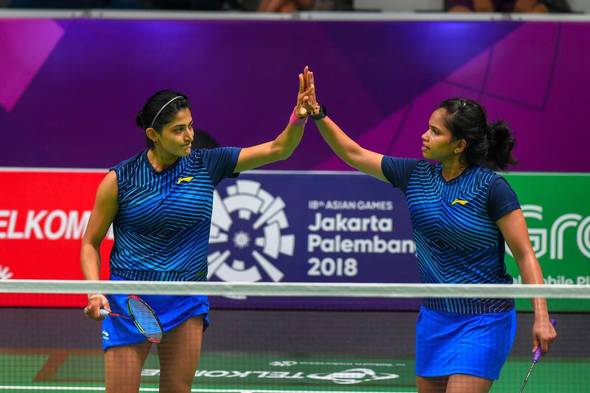
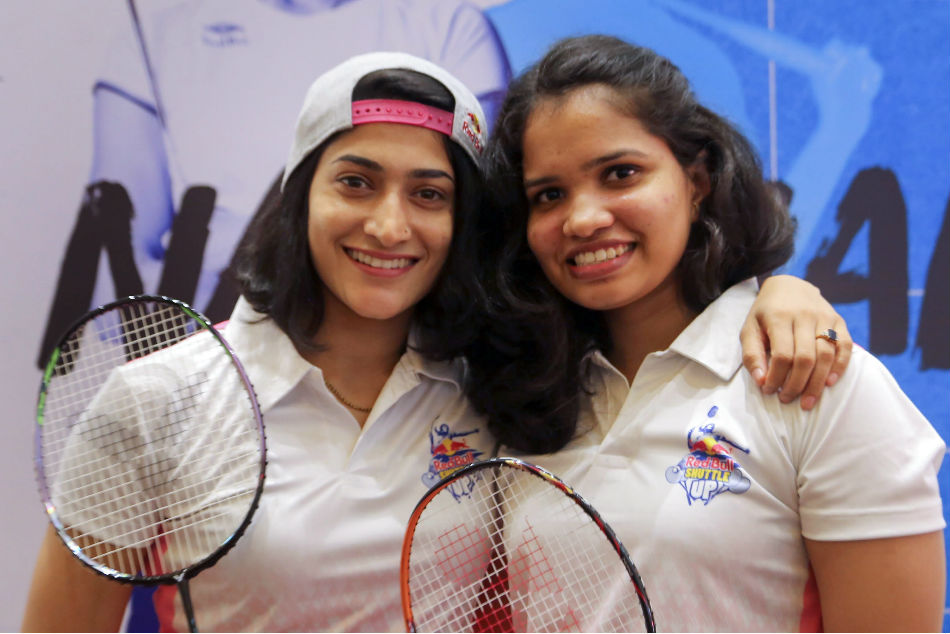
The video features star Indian shuttlers Ashwini Ponnappa, a World Championship bronze medallist, and N Sikki Reddy, Gold medalist at the South Asian Games 2016. It carries a special message that honours young women who chase their dreams no matter how crazy they may be labelled, no matter the stigmas, no matter what society says. It heralds young women who want to follow in the footsteps of Ashwini and Sikki.

The one-minute film also pays tribute to those who support these young, crazy dreamers, the family members and the coaches, who often sacrifice almost as much as these athletes to help pave the way to their glory.

“Every empowered child is a product of an enlightened ecosystem – comprising family, friends and acquaintances who have extended their support. With the world’s biggest sporting event upon us, this is a good time to remind us all that investing in the dreams and aspirations of the next generation can give us returns beyond measure,” Rohit Rao, Joint President & Group Chief CSR Officer, Kotak Mahindra Bank Limited stated at the campaign launch.

Kotak Karma is the Corporate Social Responsibility (CSR) identity of the Kotak Mahindra Group. Under its CSR Projects on Sports, KMBL has collaborated with the Pullela Gopichand Badminton Foundation based in Gachibowli, Telangana to develop a state-of-the-art badminton training facility with advanced infrastructure and amenities, and international standard coaches that will help India produce more world-class players. Both the athletes featured in the film train at the Pullela Gopichand Badminton Foundation.

source: http://www.thebridge.in / The Bridge / Home>Videos> Badminton / by The Bridge Desk / July 14th, 2021

This team has a habit of scoring in dying minutes: Subbaiah

Bengaluru :  

Former India hockey goalkeeper AB Subbaiah said he has seen a noticeable shift in the mentality of the current men’s hockey team, and that unlike in the past, the side has now acquired the “habit of scoring in the dying minutes”.

“I like the shift in the mentality of the current team. Nowadays, the Indian team has the habit of scoring in the dying minutes of the game whereas earlier they used to concede goals in the final period,” said the two-time Olympian, who was also part of the team that won gold at the 1998 Bangkok Asian Games, on Friday.

“The team has an experienced defence line. Sreejesh has been consistent for many years, Harmanpreet looks confident in his drag flicks. The midfield looks solid and energetic, led ably by Manpreet Singh, and the forward line is extremely opportunistic and sharp. If the team can emulate their performances from the last two years and play to their potential in the Olympics, then I am sure that they can win a medal this time around,” opined Subbaiah.

“The people of India are looking forward to a good performance from our athletes in Tokyo. I hope that both, the men’s and women’s hockey teams, can lead the way for the rest of the contingent.”

Recalling his experiences from the 1992 Barcelona and 1996 Atlanta Games to stress that the Olympics remain the gold standard in competitive hockey, Subbaiah said, “No other tournament can be compared with the Olympics. The Olympics are the benchmark in the competitive hockey circle. Every team adopts a four-year cycle to their preparation because of the Olympics. This is why so many veterans retire after the Olympics, and new players are given a chance to prove themselves.

“You train for four years to compete at this stage. The top teams always have some new tricks up their sleeve which they don’t reveal in any tournaments or test games before the Olympics,” he said.

source: http://www.daijiworld.com / DaijiWorld / Home> Sports / by IANS / July 10th, 2021

Legendary India hockey player BP Govinda recalls his equaliser in Bronze Medal match in Munich Olympics

File photo: BP Govinda (second from left)

New Delhi :

With less than 30 days to go for Tokyo 2020, the Olympic fever is slowly gripping the entire sporting world. While the Indian athletes are leaving no stones unturned and carrying out high-octane practice sessions, it’s time for hockey fans to relive the memories from the triumphant Olympic campaigns in the past through Hockey India’s Flashback Series.

In this article of Hockey India’s Flashback Series, the fiery centre-forward BP Govinda went on a nostalgic trip, fondly talking of his hay days as an iconic figure with a distinctive headband. “Our Coach KD Singh Babu made me play as outside-left in the Bronze Medal match against the Netherlands,” recalled the stylish striker.

“All through the tournament in Munich, I had played as centre-forward, but our Coach insisted I change my position for this match, and it so happened that I scored the equaliser and then Mukhbain Singh scored the winning goal through a penalty corner which helped us win the match 2-1,” recalled Govinda, who was drawn to hockey from his school days in Somwarpet in Coorg.

Having won a Bronze Medal in 1968, India had fielded a young team in Munich which saw stalwarts like Michael Kindo, Ashok Kumar Dhyanchand and BP Govinda make their Olympic debut. But the campaign didn’t go as expected despite a good start against teams like the Netherlands (1-1 draw), Great Britain (5-0 win), Australia (3-1 win), Poland (2-2 draw) and Mexico (8-0 win). India had also beaten New Zealand 3-2 to make the cut for the semi-final.

“But we lost 0-2 in that match. I think we played particularly well in the second half. Almost the entire 35 minutes, we were in their D and we were attacking with all our might, but it was so disheartening that we couldn’t convert a single goal. All our shots would go near the goal mouth, and we would miss. It was as though we were jinxed,” explained Govinda, who is also part of Hockey India’s National Selection Committee.

The former India skipper who led the team to a Silver Medal at the 1978 Asian Games rued missing an opportunity to play for the World XI side at the Munich Games, but the match was called off due to the Palestinian terrorist attack on Israeli athletes. He said, “West Germany had beaten Pakistan in the Final to become the new Olympic Champions and the organisers had planned an exhibition match between World XI and the Olympic Champions. I was chosen from India to play for the World XI side but due to the Black September incident, they called off that match. Though there was no safety concern for us within the village, our contingent was quite close to where this incident happened.”

Another instance Govinda regrets to this day is the penalty stroke he missed against Pakistan in the 1973 World Cup in Amstelveen. “I had scored the only goal (in the 62nd minute) against Pakistan in the semis and that goal of mine took India to the Final against the Netherlands. I had become an instant hero back home but unfortunately; I couldn’t replicate that in the Final. Surjit Singh had scored two goals and the score was level at 2-2 when we earned a penalty stroke towards the dying minutes of the match.”

“Barring Harmik Singh, Ajitpal nobody was coming forward to take the penalty stroke. I told (teammate) MP Ganesh, no one is going so shall I go? I went voluntarily. Before taking the strike, I had decided I will hit the left corner of the goalkeeper but when I lifted my stick, it went underneath the grass, and the ball didn’t connect properly to the stick. My shot didn’t even reach the goalie. We lost the opportunity, and the match went into extra time, and we eventually lost,” recollected Govinda.

However, he fondly remembers from his playing days is his formative days when he played for Mohun Bagan. “That’s where it all began for me. In 1967-68, we won the first division and the Beighton Cup. I was very fortunate and lucky to have played with greats like Gurbux Singh and Vece Paes. I got my first call up for India in 1970,” he said.

Consistent India team stand great chance to finish on podium in Tokyo 2020

Speaking of the current Indian hockey team led by Manpreet Singh, Govinda said, “They have been playing consistently in the past two years, and they have shown a lot of promise. But my advice to them is to take it match-by-match and their first aim should be to make the Quarterfinals. I would say, once they have crossed that hurdle, it is anybody’s game in the Semis and Final.” “This team has been doing well under Graham and have shown that they are capable of beating big teams like Australia, Netherlands, Belgium and even the Olympic Champions Argentina. I have no doubt that they can perform well in Tokyo,” he added.

Source: HI Release

source: http://www.mykhel.com / My Khel / Home> English> Hockey> News / by Avinash Sharma / July 01st, 2021