Category Archives: World Opinion

Appointed As Justice Of Peace In Australia

Mysore/Mysuru: 

Shravan Manjunath Nagesh, a native of Kodagu, has been appointed as Justice of the Peace (JP) in the State of New South Wales, Australia. He took Oath of Office in Court during February 2021.

After passing the ‘Justice of the Peace’ exam with 100 percent marks, Shravan was nominated by a Member of Parliament (MP) following which the Governor of New South Wales State approved his appointment. 

A native of Gonikoppal, Kodagu, 28-year-old Shravan was born to Nagesh Krishna and Deena Nagesh.

As his father was working as a Senior General Manager at a Multi-National Company in Sydney, Australia, Shravan did his basic education at Australia and completed his graduation in Mechanical Engineering at BMS Engineering College in Bengaluru.

His mother Deena is a realtor.

Shravan is the grandson of late B.S. Ganesh Kumar, Joint Director of Agriculture, Mysuru district.

source: http://www.starofmysore.com / Star of Mysore / Home> News / April 15th, 2021

Emirati Coffee set to expand into Saudi Arabia

  • Emirati Coffee reported a 3,135 percent increase in online sales in 2020, fueled by strong market demand for its specialty coffee produce

Jeddah : 

Emirati Coffee, the UAE’s first specialty coffee roastery, is expanding into the Kingdom with the opening of its first Saudi branch in July 2021. The chain, which currently has 160 locations worldwide, will open in Alkhobar under the brand name Knowhere.

The company is preparing to open an outlet in Riyadh in 2022.

Mohamed Ali Al-Madfai, CEO of Emirati Coffee

Mohamed Ali Al-Madfai, CEO of Emirati Coffee, told Arab News that the Riyadh outlet would be called the Emirati Coffee Roastery.

Al-Madfai said he believed there was great potential for growth in the Saudi market and that he is aiming to capitalize on the brand’s popularity among Saudi travelers, “especially those that came to love that brand when visiting Dubai pre-pandemic,” he said. Emirati Coffee reported a 3,135 percent increase in online sales in 2020, fueled by strong market demand for its specialty coffee produce.

The busiest period was during the first two months of the pandemic, when the UAE launched a national sterilization campaign to contain the virus. “Coffee was already the number one e-commerce grocery product before 2020, but the pandemic boosted the growth due to greater consumption at home.

Coffee buyers cut back on trips to the supermarket and coffee drinkers can’t go to the cafés,” Al-Madfai said.

He added: “Consumers resorted to online purchases and with the availability of our own delivery fleet, they were able to get their hands on their cup of coffee.”

source: http://www.arabnews.com / Arab News / Home> Business> Latest New / by Deema Al-Khudair / April 13th, 2021

‘Brain Glue’ repairs traumatic brain injuries

Lohitash Karumbaiah, assistant professor in UGA’s College of Agricultural and Environmental Sciences, led the team that designed and created Brain Glue.

Hydrogel mimics the composition and mechanics of the brain.

For an update to this story, visit Brain Glue, Part 2

Researchers at the University of Georgia’s Regenerative Bioscience Center have developed Brain Glue, a substance that could one day serve as a treatment for traumatic brain injuries, or TBIs.

The Brain Glue is a hydrogel matrix with a gelatin-like consistency that acts as a scaffolding for transplanted stem cells, which are capable of repairing damaged tissue. With the unique ability to take the shape of the void left in the brain after a severe trauma, the Brain Glue will enable a more natural healing environment for stem cells to colonize and regenerate.

Lohitash Karumbaiah, assistant professor in UGA’s College of Agricultural and Environmental Sciences, led the team that designed and created Brain Glue. The main difference between Brain Glue and other synthetic hydrogels, according to the team, is the variety of possibilities to trap neural stem cells, improve integration and reduce the likelihood of rejection.

“It’s very common with these invasive injuries that surgeons will actually remove the part of the dead brain leaving behind a cavity or hole,” said Karumbaiah. “The question is, then, can you replace that with something like our Brain Glue, loaded up with compounds native to the brain together with a mix of protective agents that can be incorporated for the best therapeutic outcome.

“The cool thing about this chemistry is that you can take our Brain Glue liquid formulation and then very briefly expose it to long-wave UV light and form a hydrogel in any shape you like,” he said.

Every day, 153 people in the U.S. die from injuries that include TBI, according to the Centers for Disease Control and Prevention. Those who survive a TBI may live with impaired thinking, memory, movement or sensation. TBIs can also lead to personality and emotional changes.

The new approach is described in the journal ACS Biomaterials Science and Engineering and a recently awarded abstract from the International Brain Injury Association.

For more than two years now, Karumbaiah has been awarded seed-funding for his collaborative TBI work with Maysam Ghovanloo, associate professor of electrical and computer engineering at the Georgia Institute of Technology. The TBI research was initially funded by the Center for Regenerative Engineering & Medicine, known as REM, a collaborative initiative launched in 2011 between the University of Georgia, Emory University and the Georgia Institute of Technology.

The REM collaboration is an extension of Karumbaiah’s work to further study neuroplasticity: the brain’s ability to self-renew, adapt and compensate for injury and disease. His future studies will focus on how neural networks form and change in response to traumatic insults, and he will investigate the therapeutic use of electrical stimulation to help return loss of function in any given region of the brain.

“Multiple methods are needed in these kinds of studies,” said Karumbaiah. “The Brain Glue is where we make the scaffold, and the neuro-network function is really this other arm — learning how neurons fire and wire together and what this really means in terms of function.”

Steven Stice, director of the Regenerative Bioscience Center, is working with Karumbaiah on a licensed technology for commercialization of the new Brain Glue, which was recently named best abstract at a meeting of the International Brain Injury Association.

Karumbaiah’s work recently attracted a four-year, $1.5 million research grant from the National Institutes of Health.

“Lohitash sets an example for other junior faculty to emulate,” said Stice, GRA Eminent Scholar and D.W. Brooks Professor in CAES. “To be recognized internationally at such an early stage takes great skill and dedication.”

A full version of ACS Biomaterials Science article is available online at http://pubs.acs.org/doi/pdf/10.1021/acsbiomaterials.6b00805

The Regenerative Bioscience Center at the University of Georgia links researchers and resources collaborating in a wide range of disciplines to develop new cures for devastating diseases that affect animals and people. With its potential restorative powers, regenerative medicine could offer new ways of treating diseases for which there are currently no treatments-including heart disease, Parkinson’s, Alzheimer’s and stroke. For more information, see www.rbc.uga.edu.

source: http://www.news.uga.edu / UGA Today / Home> Health & Wellness> Science & Technology / by Charlene Betourney / December 19th, 2017

ITF men’s tennis tournament: Niki Poonacha caps dream run with trophy

Niki Poonacha, who had won the National championship in 2019, beat fourth seed Oliver Crawford of the US 6-3, 7-6 (5) at the DLTA Complex in New Delhi on Sunday.

Champion Niki Poonacha in the ITF men's tennis tournament in Delhi on Sunday.
Champion Niki Poonacha in the ITF men’s tennis tournament in Delhi on Sunday.

Where there’s a will there is a way. Former national champion Niki Poonacha had a fairy tale finish to his dream run in the $15,000 ITF men’s tennis tournament as he beat fourth seed Oliver Crawford of the US 6-3, 7-6(5) at the DLTA Complex in New Delhi on Sunday.

“I am very happy with this trophy. I had no expectations coming into the tournament. I had retired in the last tournament in Pune with a wrist injury. My hope was to stay pain free,” said the 25-year-old Niki, after his second victory in the professional tour.

Niki had won his first title as a qualifier in Indonesia in 2018. He won the National championship in 2019. During the pandemic, he had tried to stay fit, training at the Rohan Bopanna Tennis Academy in Bengaluru.

“I haven’t had good results in the last six weeks. Once I started winning here, I kept my focus to one match at a time, playing without any expectations,” said Niki.

He was treated by physio Anand Dubey right through the tournament. Even though the pain had gone away, there was heavy taping on his forearm as a precautionary measure.

Even though Niki served big and stroked with purpose, there was no doubt that Crawford who had won the title last week in Pune, was woefully off colour, quite uncharacteristically, on the important points.

For three weeks in Egypt, followed by the three events in the country in Lucknow, Indore and Pune, Niki had failed to win a match.

Once he settled into his groove with the wins over Nishant Dabas, Filip Bergevi of Sweden and Lorenzo Bocchi of Italy, luck smiled, as his semifinal opponent Dalibor Svrcina of the Czech Republic gave a walkover on medical grounds.

In the final, the twist to the tale came in the ninth game of the second set, when facing three set points at 3-5, 0-40, Niki managed to hold serve with one of his six aces in the match. In the tie-break, Crawford led 4-2 and the only point the American won of the next six, was through a double fault by Niki.

Niki converted all the three break points he forced and saved four of five break points that he faced in the match.

After Zane Khan of the US had won the first two tournaments in the current circuit, and Crawford beat Zane in the final in Indore, it was a welcome sight for the home fans to have an Indian champion in singles.

“I will train for three weeks in the academy and then plan my next series of tournaments’’, said Niki.

source: http://www.sportstar.thehindu.com / SportStar / Home> Tennis / New Delhi – April 04th, 2021

Kodagu girl wins the UN H2021 Water Summit storytelling competition

During the lockdown situation, when the world took the virtual path, Yashmi was introduced to the UN Ocean Decade Summit and she took part in the virtual programs conducted by the initiative.

Manavattira Yashmi Dechamma

Madikeri :

“The earth is already in a bad state and it will be inherited by us tomorrow. We want to breathe the same pristine air that our grandparents breathed,” shared Manavattira Yashmi Dechamma, a ninth-grade student who has been selected for the UN Ocean Decade Summit to be hosted in Hawaii soon.

Yashmi earned this opportunity after her video documentary on the theme ‘Water is sacred’ won the H2021 Water Summit storytelling contest in the 13-17 age group category.

A native of Nelaji village in Kodagu, Yashmi is currently pursuing her studies in Acharya Vidya Kula in Mysuru.

During the lockdown situation, when the world took the virtual path, Yashmi was introduced to the UN Ocean Decade Summit and she took part in the virtual programs conducted by the initiative.

“While I was aware of climate change, I learnt from speakers all across the globe about what climate change did to the earth. I knew that the earth was in danger. But I obtained clarity on the growing problem after attending the virtual summit,” shared Yashmi.

She was then introduced to the H2021 Water Summit where she attended virtual sessions for four consecutive weekends and it is here she learnt about the storytelling competition.

“Each session was based on a particular theme. The theme ‘Water is sacred’ was close to me as I am from the Kodava community and we worship River Cauvery,” she shared. Yashmi visited Kodagu and shot some beautiful captures of River Cauvery.

With a Kodava song playing in the background of the video, she has highlighted the sorry state of the river today – which has become a victim of pollution.

The video then moves to highlighting the efforts from the youngsters in reviving the river and the documentary ends with a strong message ‘Let us heal her (River Cauvery) and not fix her’.

“I have heard my mother explain the beauty of Kodagu that existed during her childhood times. The district witnessed heavy rainfall then too. However, it is only now that the incessant rainfall is causing destruction and damage. The summits I attended helped amplify my voice and I shot the video with the support from my cousin Bhuvana Nanaiah and her father Nanaiah,” explained Yashmi.  

Daughter of Manavattira Kushalappa and Nalini, Yashmi looks forward to strengthening the Youth Advisory Council in the country and has written to the concerned about her vision for a better future.

source: http://www.newindianexpress.com / The New Indian Express / Home> Good News / by Prajna GR / Express News Service / March 31st, 2021

Coffee waste can boost forest recovery: Study

New York :

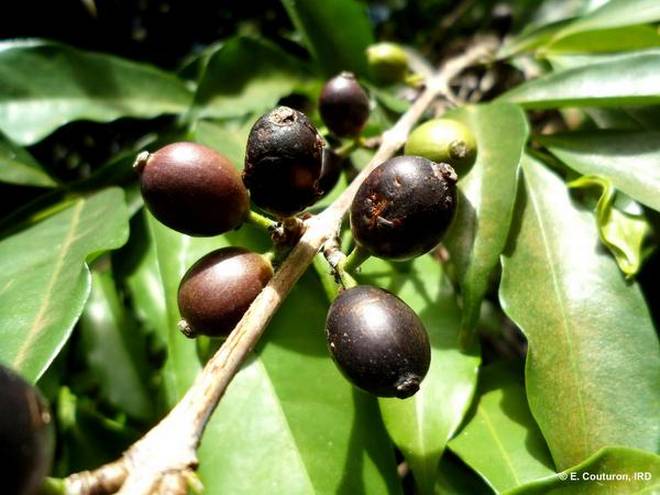
 Coffee pulp, a waste product of coffee production, could be used to speed up tropical forest recovery on post agricultural land, suggests a new study.

In the study published in the journal ‘Ecological Solutions and Evidence’, the team spread 30 dump truck loads of coffee pulp on a 35-40m area of degraded land and marked out a similar sized area without coffee pulp as a control.

“The results were dramatic”, said lead researcher Rebecca Cole from the University of Hawai’i in the US.

“The area treated with a thick layer of coffee pulp turned into a small forest in only two years while the control plot remained dominated by non-native pasture grasses,” Cole added.

After only two years, the coffee pulp treated area had 80 per cent canopy cover compared to 20 per cent in the control area. The canopy in the coffee pulp area was also four times taller than that of the control area.

The addition of the half metre thick layer of coffee pulp eliminated the invasive pasture grasses which dominated the land.

These grasses are often a barrier to forest succession and their removal allowed native and pioneer tree species, that arrived as seeds through wind and animal dispersal, to recolonise the area quickly.

The researchers also found that after two years, nutrients, including carbon, nitrogen and phosphorous, were significantly elevated in the coffee pulp treated area compared to the control.

For the study, the researchers analysed soil samples for nutrients immediately prior to the application of the coffee pulp and again two years later.

They also recorded the species present, the size of woody stems, percentage of forest ground cover and used drones to record canopy cover.

source: http://www.daijiworld.com / Daijiworld.com / Home> Health / by IANS / March 29th, 2021

Kodagu residents shower their passion for hockey by organizing open tournament

While the district annually hosted the record-breaking hockey tournament, the same has met with hurdles from the past three years.

The Coorg Challengers Chickpet Association members. (Photo | Express)

Madikeri :

The passion for hockey in Kodagu is unmatchable and the district has contributed largely to the Indian Hockey team.

Nevertheless, the passionate hockey lovers have alternate platforms to showcase their enthusiasm and one such pompous hockey tournament will soon be launched at FMKM Cariappa Hockey Arena in Bengaluru.

CCCA 5 A side open Hockey tournament will unfurl from April 2 to April 4 and will witness participation from 24 teams across South India.

What is notable about this tournament is that it is being hosted by hockey enthusiasts from Kodagu – who call themselves the Coorg Challengers Chickpet Association (CCCA).

Further, this tournament will enable a close competition among hockey veterans even as NRIs from Kodagu who recently moved back to India following the pandemic, have formed a new team to take part in the tournament.

“CCCA is a group of hockey-loving people. The group consists of nearly 40 individuals from 14 different Kodava families. And we are all natives of Chickpet in Virajpet who are now settled in Bengaluru,” explained Mukkatira Somaiah, one of the core members of CCCA.

He stated that CCCA was formed with a vision to promote hockey while also providing support to the needy.

“Through CCCA 5A hockey tournament, we raise funds from hockey lovers and philanthropists. The money from the tournament is then donated to Cheshire Home Bangalore in Bengaluru,” he said. The association also promotes sports learning among youngsters as it has supported many sports aspirants financially.

“The tournament is organized under the aegis of Hockey India and Hockey Karnataka and will witness participation from many professional hockey players. We have chosen 5A Hockey tournament as this is a skillful game and it involves unique stick work. The cash prizes to winners are also elaborate,” he added.

The tournament has grabbed the attention of hockey players from across the country even as a new team from Kodagu – Team Coorg Gulf will take part this year.

A group of residents who are natives of Kodagu and who were settled in Muscat and UAE continued their passion for hockey aboard with the founding of Team Coorg Muscat and Team Coorg UAE a few years ago.

“Mekerira Bellu Kuttappa, a hockey enthusiast who was working in Muscat founded Team Coorg Muscat. Similarly, natives of Kodagu working in UAE formed the Team Coorg UAE. We used to often take part in hockey tournaments in Oman. However, all of us have returned to India following the pandemic and the two teams have been reformed as Team Coorg Gulf,” explained Vikram Uthappa, one of the core members of the team.

While the pandemic situation had put most of the sports activities to rest, the Team Coorg Gulf members are excited to launch themselves in India with the CCCA 5A hockey tournament.

While 24 teams have registered for the tournament, three teams in total will take part from Kodagu. Further, veteran hockey players VR Raghurathan, Nikhin Thimmaiah, and Arjun Halappa among others will be part of the event.

Somaiah also confirmed that hockey player Dhanraj Pilay is likely to be present during the final game of the tournament, which is likely to witness an exhibition match between former Olympians and international hockey players.

source: http://www.newindianexpress.com / The New Indian Express / Home> States> Karnataka / by Prajna GR, Express News Service / March 28th, 2021

From kattan kaapi to Chameli Americano, Manoj Kumar’s inspirational Araku journey

Kumar worked with adivasis in Andhra’s Araku Valley for decades, grew coffee of the highest quality and took it to Paris in 2017. On March 19, Araku Coffee opened its first café in India in Bengaluru. Kumar wants to replicate the Araku model for other crops as well, he tells us how

Cafe L'Orange
Cafe L’Orange

In the late 1990s, the late Kallam Anji Reddy, founder-chairman of pharmaceutical company Dr Reddy’s Laboratories, appointed developmental economist Manoj Kumar as the head of his NGO, the Naandi Foundation. Kumar’s brief was to foster sustainable livelihoods in rural India.

One of the many projects Kumar embarked on in the early 2000s was to get adivasi farmers in Andhra Pradesh’s Araku Valley to grow specialty coffee, which, simply put, is organic and sustainably grown coffee of the highest quality. To many people, it appeared to a quixotic endeavour. Araku was not a traditional coffee-growing region. Kumar, who grew up in Kerala drinking kattan kaapi, the traditional home-brewed black coffee, had no real knowledge about coffee; and the Araku Valley had been riddled with Naxal insurgency for decades. Kumar worked with, and lived among, the tribals for over a decade and through biodynamic farming and the formation of an adivasi cooperative, one of the world’s largest fair-trade and organic certified cooperatives, he achieved the seemingly impossible.

In 2017, Kumar opened the first Araku Cafe and store in Paris and about a year later, Araku Coffee bagged top honours for the best coffee pod at the prestigious Prix Epicures OR awards in Paris. On March 19, Araku opened its first cafe in India. The 6000 sq ft, two-level flagship cafe in Indira Nagar in Bengaluru features, among others, an in-house roastery, the country’s first Specialty Coffee Association-certified Coffee Academy, a book store, and food that is sustainably procured.

In an interview to Moneycontrol, Kumar talks about the growing interest in specialty coffee in India, its transformative potential, and about replicating the Araku model in other parts of the country. Edited excerpts:

How do you see Araku’s flagship cafe take the specialty coffee story forward in India?

By and large, the production of specialty coffee in India has so far been almost nil, barring a few micro estates. We have been a notable exception. Our success has made coffee growers realise that it is possible to get much higher value and definitely profits if they can elevate their coffee to the level of a specialty coffee. I’m hoping that this desire to excel will be infectious to the community of coffee growers in India. They could learn to look at coffee as being more than just an average-to-poor-quality mass-produced commodity, which is neither financially rewarding nor sustainable. We are blessed to have the climate and topography to grow coffee. Europe and most of the coffee-drinking nations don’t grow coffee. I see our cafe in Bangalore as a place where people can interact and learn more about the power of specialty coffee. And we would want to take it beyond producers to policy makers and to everyone through a consumer movement to inculcate a certain pride in the opportunity we have to make coffee a profitable Indian-origin commodity and revive India’s agriculture to an extent. Araku is not a traditional coffee-growing region, and yet we have grown world-class coffee there. So, you can imagine the potential of places such as Chikmagalur and Coorg…

Tamagoyaki Toastie is on the menu of Araku’s café in Bengaluru.

Have you met people from the coffee-growing community who want to get into specialty coffee?

Absolutely. When we started the Araku journey, we had only between 10 percent to 20 percent of farmers whose coffee could be rated as specialty coffee. Today, I have 80 percent of my farmers all growing specialty coffee. I have requests from many small estate and large estate owners, and even people who are into wine now want to know if we can help them with the same regenerative agricultural practices that made our coffee world-class.

Araku Coffee co-founder Manoj Kumar

You’ve been to specialty coffee hotspots across the world. How have your experiences shaped the flagship store?

Scandinavia inspired me a lot. The quality of service there was based predominantly on knowledge. Every brewer, roaster, and barista I met had a completely different level of knowledge and that knowledge was shared with the customer. A relatable example would be going to an Apple store for the first time and discovering that every staffer has an in-depth knowledge about the products. So, one of the things I took away from there was that our team had to be knowledgeable about what they were selling, even if it meant setting up a coffee school at the cafe. Our team is not just selling a random service, they are selling coffeeology. And our prices are extremely competitive. Somebody even mentioned that a lot of the coffee we serve is, more or less, the same price as the coffee you get at Starbucks.

The Naandi Foundation has been at work replicating or adapting the Araku model in other parts of India. How has that worked out?

The Naandi Foundation is now massively expanding its agricultural footprint. We are now in a large way expanding into Wardha and the Vidarbha region, replicating the Araku model with other crops. We started off with pomegranate and that is very much on track but we are also exploring or expanding into other portfolios. Turmeric in that region is world-class, and it has a Geographical Indication tag. Then, we looked at red gram and other pulses. The idea is to have a bouquet of produce for the farmer to get it to be profitable and to identify one or two which become unique to that region. I think the winners here will be turmeric, pulses, and organic cotton. We are also looking closely at working in Meghalaya and Kerala and the Konkan belt.

You first went to the Araku Valley in 2001. Looking back, which was the turning point of your journey?

I’d think earning the trust and respect of the tribals was the turning point. I had started with just 1,000 farmers, and I would tell them that one day their land would produce a coffee that would be world-class. And they would always tell me that they wouldn’t let me down. That kind of love and trust from their end really made all the difference.

MURALI K MENON works on content strategy at HaymarketSAC.

source: http://www.moneycontrol.com / MoneyControl / Home> News> Trends> Features / by Murali K Menon / March 20th, 2021

New Assam plant species may aid anti-cancer battle

Members of this group have a secondary metabolite used in colon cancer: Expert

Researchers of western Assam’s Bodoland University have recorded a new plant species that may go a long way in fighting cancer.

The species, named Ophiorrhiza recurvipetala, has been found at 675 metres above mean sea level in central Assam’s Dima Hasao district. It has been classified under the Rubiaceae family of flowering plants, to which the plant yielding coffee belongs.

Recurvipetala means petals curved back.

The finding was published in the March 2021 issue of the Nordic Journal of Botany.

“This is a new species to plant science and may be a potential anticancer research candidate. All members of this group have a secondary metabolite called Camptothecin used in colon cancer,” Sanjib Baruah, assistant professor of Bodoland University’s Department of Botany said.

He co-authored the study with research scholars Birina Bhuyan of Bodoland University and Selim Mehmud of Guwahati’s Cotton University.

“It is now our turn to find the Camptothecin content occurring in this novel species. There is a possibility to cultivate this species as a promising medicinal plant for the northeast, but its agrotechnology is not known,” Dr. Baruah told The Hindu.

The researchers had spent a few months in the hilly areas of Jatinga and Haflong in Dima Hasao district to locate a few plants on a wooded mound. “The new species is restricted to this area where it grows in moist shady places,” he said.

Ophiorrhiza is a predominantly herbaceous genus distributed from eastern India to the West Pacific from South China to northern Australia. According to the World Checklist of Selected Plant Families, 2017, it is a notably species-rich and taxonomically complicated genus with about 318 species worldwide.

In India, 47 species and nine varieties have been recorded and among them 21 species and one variety are from the northeast.

The Ophiorrhiza recurvipetala is a perennial herb with a maximum height of 60 cm and is branched. It yields a creamy white flower.

source: http://www.thehindu.com / The Hindu / Home> News> National / by Rahul Kamakar / Guwahati – March 19th, 2021

The Tragic Life of Victoria Gowramma: How Victorian Monarchy Tried To Evangelise India Through An Unwilling Princess Of Coorg

The Tragic Life of Victoria Gowramma: How Victorian Monarchy Tried To Evangelise India Through An Unwilling Princess Of Coorg
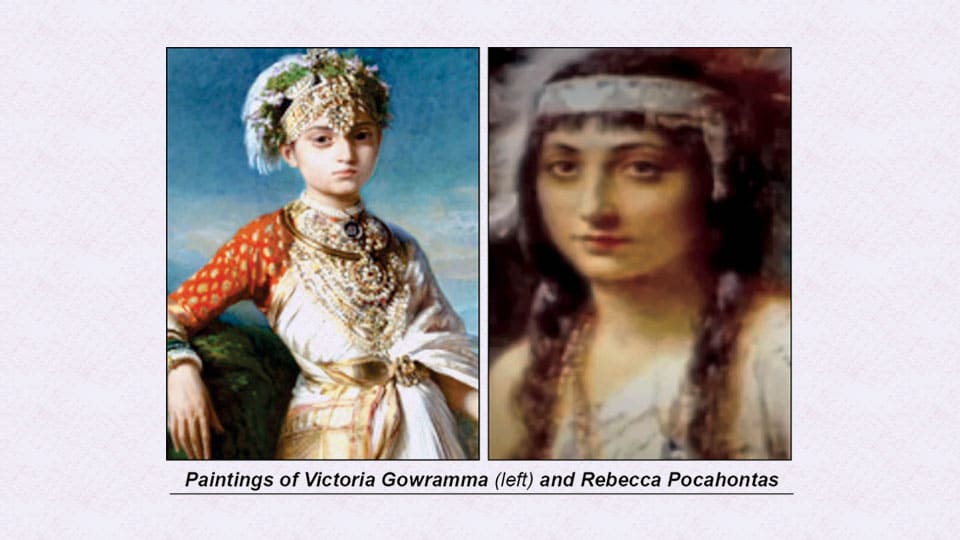
Princess Gouramma depicted in Indian dress and rich jewellery, leaning on an Indian table. She is holding a Bible, an allusion to her conversion to Christianity. (Franz Xaver Winterhalter)

______

Snapshot
  • The short life of princess Gowramma of Coorg serves as a reminder of the potential detachment and loss of identity a fiercely Western education can ensure.

_______

Meghan Markle and Prince Harry’s recent interview with Oprah Winfrey has brought to fore the tumultuous relationship the British monarchy has with all things concerning race. Markle alleged that a member of the royal family had expressed concerns over how dark their baby Archie’s skin would be.

Notably, the Duchess of Sussex is not the first person of colour to be subjected to royal racism.

The institution’s colonial past is filled with instances of the ‘firm’ ( as Markle calls it) taking upon itself the duty of civilising the ‘coloured’ citizens of the colonies it conquered.

In this regard, the remarkable life of Princess Gowramma, the Princess of Coorg and the goddaughter of Queen Victoria, provides interesting insights into the treatment of people of colour by the imperial echelons of the nineteenth century British society.

Princess Gowramma was born in Banaras, to the deposed king of Coorg — Chikka Veerarajendra Wodeyar, who had been exiled by the British in 1834.

She was the Raja’s favourite daughter and was thus his natural choice when it came to accompanying him on his journey to England, where he intended to demand in court the return of his wealth from the East India Company.

Some sources claim that Veerarajendra conveyed his intent of converting Gowramma to Christianity to gain the good graces of the company, so as to receive permission to travel to England.

Governor General Lord Dalhousie and other directors of the company found the idea of voluntary conversion by an Indian royal quite appealing, especially since it would help improve their sagging image in Britain.

Thus, in 1852, after Gowramma had received an education in Christian mannerisms and scripture, she and her father set sail to become the first Indian royals to ever set foot in England.

Gowramma and her father soon after they arrived in London. ( Credit: Illustrated London News)
Princess Gouramma depicted in Indian dress and rich jewellery, leaning on an Indian table. She is holding a Bible, an allusion to her conversion to Christianity. (Franz Xaver Winterhalter)

Upon reaching the island, the 11-year-old Gowramma was presented to Queen Victoria. The Queen, quite taken by the princess declared that she would become the godmother and even endowed Gowramma with her own name — ‘Victoria’.

The Princess of Coorg was then baptised by the Archbishop of Canterbury, at a private chapel in the Buckingham Palace, in the presence of Queen Victoria, her family, senior officials of the government and directors of the company.

Post the baptism, the Queen gifted Victoria Gowramma a bound and autographed Bible with gold embellishments. She then entrusted the princess to the care of Major and Mrs Drummond, who were to groom her with Western thought and education.

Queen Victoria took great initiative in expanding Gowramma’s social circles. She would invite Gowramma to regularly interact with her children and also bestowed upon her a title that made her equivalent to European princesses.

However, Gowramma, who was made to abandon her traditional Indian clothing for Western wear was depressed. She was cut off from all connection with her father and was instead forced to talk, dress and behave like a British aristocrat.

Unable to cope with the pressures of high society, Gowramma tried running away multiple times. She often expressed her desire for privacy and even stated that she rather live like a servant with the handmaidens than suffer the compulsions of regal life. Her troubles were dismissed by the Queen and her consort Prince Albert as ‘innate oriental weakness’ that seeks to escape civilisation.

Meanwhile, back home in India, the British had defeated Maharaja Ranjit Singh to annex Punjab. They then took his minor son, Duleep Singh, under their care.

Exiled to Fatehpur and kept away from Lahore so as to avoid chances of revolt, Duleep Singh was subjected to a Western education that eventually culminated with his acceptance of Christianity out of his own ‘free’will. He then set sail to Britain in order to formalise his conversion under the Church of England.

The Queen, to whom Duleep Singh presented the Kohinoor Diamond, took an instant liking of the Maharaja and became his godmother. She and Prince Albert in cahoots with the company plotted an alliance between Singh and Gowramma.

The hope was to use the influence generated by the marriage between two Christian Indian royals as a tool for proselytising the Indian population. This idea also had the endorsement of Singh’s English guardians — the Logins. They were firm believers in the European responsibility of spreading the word of the Bible amongst the pagan worshippers of India.

However, upon introduction, Singh was lukewarm in his response to Gowramma. He made it known to the Logins that he considered the princess more an honorary sister than a potential wife.

Gowramma, who had earlier been forgiven by the Queen for her torrid affair with a stable boy and her attempted elopement with an under-butler decided instead to marry a close friend of Singh — Lieutenant Colonel John Campbell, who had served in Bellary and was 30 years her senior.

Meanwhile, Chikka Veerajendra, who had lost a seven-year-long legal battle with the company had died.

Gowramma gave birth to a daughter named Edith Campbell on 2 July 1861. By the time Edith was three years old, Gowramma had developed signs of tuberculosis.

She died from the disease on 30 March 1864 just a few months short of her 23rd birthday.

Lieutenant Campbell, who in their short marriage had either neglected his wife or had persistently pestered her for money, disappeared after her death along with the crown jewels of Coorg that had been in her possession.

It is believed that he had only married the princess for her 1,000 pound allowance, the Queen’s favour and of course the jewels of Coorg.

The tragic life of Victoria Gowramma, a princess who had been alienated from her own land and language, was perhaps the paradigm the Britain had for the citizens of her colonies to follow.

Had Duleep Singh and Gowramma not fell short of the royal scheme envisioned by Queen Victoria, they might have had a significant role in shifting India’s religious history.

After all, colonial rulers did find religious conversion a greater instrument for the control of the colonised than plain force.

Gowramma today serves as a reminder of the potential detachment and loss of identity a fiercely Western education can ensure.

Victoria Gowramma was buried in the Brompton Cemetery, her tombstone bears the epithet composed by Queen Victoria, it contains the poignant words — “Other sheep I have, which are not of this fold” (John X,16).

source: http://www.swarajyamag.com / Swarajya / Home> Ideas / by Adithi Gurkar / March 17th, 2021