The Tamara Coorg has been announced the winner in the “Rural Accommodation Category” at the recent Skål International Sustainable Tourism award 2020. The prestigious award function was part of the 19th Edition, with 23 countries competing where winners were chosen from 9 different categories at the virtual General Assembly of Skål Clubs Delegates held through Zoom.
The Skål International Sustainable Tourism Awards are geared towards enhancing the visibility and grant recognition to entities from the Travel and Tourism industry. The selection has been made based on the pillars of sustainability of the Responsible Tourism Institute and the winner offered a one-year free Biosphere Certification in one of their available categories.
Shruti Shibulal, CEO and Director, Tamara Leisure Experiences Pvt. Ltd, said “At Tamara Leisure Experiences, our core ethos has always been based on a foundation of workplace ethics and sustainable business practices. To that end, every Tamara property is designed, built and operated with a conscious emphasis on environment and community. This award is an encouraging recognition of our effort and strengthen even more our commitment to responsible hospitality.”
Tamara is deeply committed to responsible tourism, respecting and supporting local culture and practices and intruding on the surrounding natural environment as little as possible. To this end, all Tamara properties are constructed with care and respect for the environment, aiming to create the experience of a Sustainable Good Life for every guest
The Tamara Coorg is a luxury experience nestled in the heart of the hills, where you can rediscover the joy of being in nature; where your quest for serenity ends. The Tamara Coorg spans 180 acres where you will experience nature and luxury at its best as you wake up to the breath-taking view and the calming silence of the hills, disturbed only by the chirping birds and the rustle of leaves. The unique nature-based experiences at The Tamara Coorg includes Forest Therapy, Trekking, Plantation Tours, Blossom to Brew, Bird Watching amongst others.
The exquisite cottages at The Tamara Coorg are designed to provide guests with a rustic, luxurious space to unwind, and enjoy an unmatched view of the hills in the distance, while suspended in nature. Relaxation gets even better at the award-winning spa and wellness centre, The Elevation Spa. It offers signature spa treatments, while the fitness centre includes a steam & sauna, a state-of-the-art fitness center, and a Yoga Temple.
source: http://www.voyagerworld.in / Voyager World / Home> Hospitality / by VW Bureau / October 28th, 2020
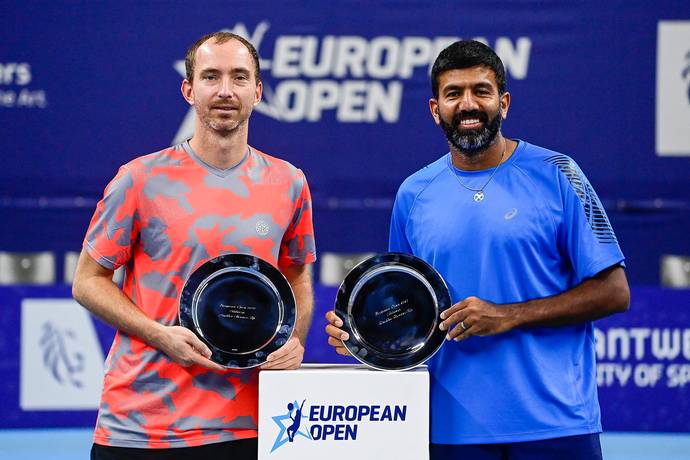
Rohan Bopanna and Matwe Middelkoop finished runners up at the European Open in Antwerp, losing to second seeds John Peers and Michael Venus in the final.
Rohan Bopanna and Matwe Middelkoop pose with their runners up titles. – EUROPEAN OPEN WEBSITE (HTTPS://EUROPEANOPEN.BE)
The Indian-Dutch team of Rohan Bopannaand Matwe Middelkoop was beaten 6-3, 6-4 by second seeds John Peers and Michael Venus in the doubles final of the European Open in Antwerp, Belgium.
It was the first time the Indian-Dutch duo has reached a final. Bopanna and Middelkoop had earlier beaten Sander Gille and Joran Vliegen 4-6, 6-3, 10-8 in the semifinal.
Elsewhere in the Wolffkran Open challenger in Germany, seventh seed Prajnesh Gunneswaranlost 7-6 (6), 6-1 to Botic van de Zandschulp in the semifinal.
The results:
European Open in Antwerp, Belgium
Doubles (final): John Peers (Aus) & Michael Venus (Nzl) bt Matwe Middelkoop (Ned) & Rohan Bopanna 6-3, 6-4;
‘It took me 45 days of continuous work to complete’
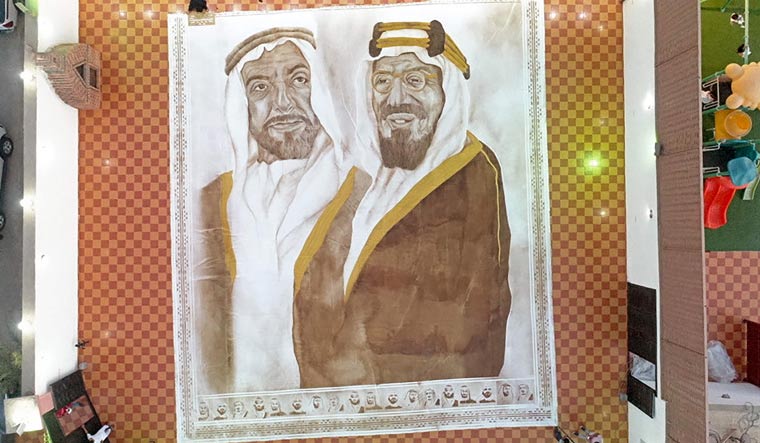
The world’s largest coffee painting by Saudi artist Ohud Abdullah Almalki depicting founding fathers of Saudi Arabia and the UAE, the late King Abdulaziz bin Abdul Rahman (R) and the late Sheikh Zayed bin Sultan Al Nahyan, in Jeddah | AFP /GUINESS WORLD RECORDS
A Saudi artist became the country’s first woman to enter the Guinness Book of World Records by making the world’s “largest coffee painting”. Ohud Abdullah Almalki used expired coffee to illustrate renowned leaders from the country and the neighbouring UAE in a 220 square metre piece.
“It took me 45 days of continuous work to complete, under the watchful eyes of two witnesses, video recording and drone footage,” Almalki said.
The artwork created on a canvas of seven connected cloths is called Naseej and was created in the Saudi city of Jeddah. Approximately 4.5 kg of expired coffee powder mixed with water was used to create the painting. The edge is done in a traditional Bedouin decoration style known as ‘Al-Sadu’.
“My aim is to remind the world of the centuries-old entente between the two nations,” Almalki said. The painting features the founding fathers of Saudi Arabia and the UAE — the late King Abdul Aziz bin Saud and the late Sheikh Zayed bin Sultan Al-Nahyan.
In 2015, 8,264 women joined together in Saudi’s Riyadh to form the largest “human awareness ribbon”, to create awareness for breast cancer.
source: http://www.theweek.in / The Week / Home> News> World / by Web Desk / October 19th, 2020
For the first time Kodagu coffee growers, who formed a farmer producer company, Biota Coorg FPC, have exported their crop directly to a roaster in Europe.
IB Bopanna, one of the founding directors of Biota Coorg
After suffering 50-70 per cent crop loss due to excessive rainfall and landslides over the last three years, small, mid-sized and large coffee growers in Kodagu district of Karnataka, who pooled in their coffees under Biota Coorg, are set to receive a 15-20 per cent premium, on an average.
Incorporated in January, Biota Coorg made its first direct export shipment of bulk branded coffees to a large roaster in Europe last week. A container consisting of 320 bags (60 kgs/per bag) of Robusta Cherry AB sourced from 75 of its members was shipped from Mangaluru port on September 30. The company plans to ship 10 more containers to different roasters across Europe, of which two containers are scheduled to be shipped in October and the rest by December. In addition, since its inception, Biota Coorg has directly sold Arabica coffees to local roasters and local cafes at a premium. The 10 founding directors of Biota Coorg, collectively have over 100 years of domain expertise in coffee growing and allied areas including exports of agri commodities, global marketing of coffees, agro-forestry, plantation management, organisation development and coffee quality enhancement through cupping.
Unique flavour
Grown under the shade of multiple species of endemic rainforest trees at an elevation of 3,000– 4,000 feet above sea level, Coorg coffees have distinct fruity notes because of the wild figs, citrus fruits that grow in the rainforests and caramel notes from the leaf litter-enriched soil. Because of the higher elevation, Robusta coffees from Kodagu take a longer time to mature and ripen, thereby resulting in a softer cup.
“The objective of incorporating Biota is to market and put Coorg Coffee on the world map by elevating its quality based on the region’s ecology and biodiversity,” IB Bopanna, one of the founding directors of Biota Coorg and former Senior Global Director- Coffee, The Coca-Cola Company, Atlanta, USA, told BusinessLine.
“Earlier growers were selling their coffee in bulk with little differentiation to local traders, at prevailing market prices. We are a cohort of 75 members (in our first year of operation) who have committed to superior on-farm harvesting and post harvesting standards that will command a premium in the international and domestic markets. We are committed to uphold the legacy of the region’s biodiversity by adhering to an audited standard in addition to RFA (Rainforest Alliance) certification, which we have applied for. All the coffee we procure is 100 per cent traceable. Every grower’s coffee is segregated, processed at the Tata Coffee facility in Kodagu, cupped and prepared specially to fit the requirement of high quality roasts, blends and brands.”
Community initiative
MB Ganapathy, former Chairman of KPA, said: “There are many large coffee growers who export their coffees in their individual capacities however, the majority who are small growers are dependent on the local traders to sell their coffee. Biota Coorg is a great community initiative that will benefit small coffee growers who can join hands and realise better prices for their produce by following quality practices set by Biota that will adhere to international standards of roasters.”
Bose Mandanna, a large grower and Biota member, said: “The advantage for international roasters is that they are ensured of a consistent supply of quality coffees from Biota. We have received a standard of good agricultural practices from Biota which we strictly follow including the use of chemicals and labour. We harvest the coffee at the right time, pulp it on the same day, wash it clean and dry it to the correct moisture levels, after which it is inspected by a Biota representative, who then further processes it in the curing works.”
source: http://www.thehindubusinessline.com / Business Line / Home> AgriBusiness / by Sangeetha Chengappa / Bengaluru / October 05th, 2020
The Coffee Board of India has released geographical indication (GI) tag for five coffee varieties grown in the country. Of this, three are from Karnataka and one each from Kerala and Andhra Pradesh. The GI tag will help all the five coffee brands get maximum market and price for their premium produce across the world. These varieties are Coorg, Bababudangiri, Chikmagalur, Araku Valley and Wayanad coffees.
The Board had obtained GI registration for unique regional coffees grown in these regions during March 2019. Previously, GI registration was obtained for two specialty coffees such as Monsooned Malabar Arabica and Monsooned Malabar Robusta in 2008.
The region-specific GI tags will increase the credibility and visibility of Indian coffees in the international market which will further boost export earnings, the Coffee Board said in a statement.
Further to the registration, the GI tagged coffees are promoted in various national and international forums, it said.
The board has also invited coffee growers to register their coffees with the board so that they can brand their product before selling in the domestic and international markets.
The Coffee Board has also collaborated with Indian Missions in key destinations such as Berlin, Helsinki, Tallinn, Burssels, Shanghai, Moscow and Sao Paulo for an effective overseas promotion of Indian coffee.
As part of its efforts to promote the consumption of coffee in the domestic market, the Board is taking up a year-long, nationwide programme with the help of a special grant of $90,000 from International Coffee Organisation (ICO) for building capacity of nearly 200 entrepreneurs in coffee business, a Coffee Board official said.
This is expected to help in bridging the gap in coffee value chain in the domestic market, especially in non-southern regions of the country. Apart from the capacity building programmes for budding entrepreneurs, the Board proposes to conduct awareness programmes for promotion of coffee consumption in India, the Board said in a statement.
source: http://www.deccanherald.com / Deccan Herald / Home> Business> Business News / by Mahesh Kulkarni / DHNS, Bengaluru / October 01st, 2020
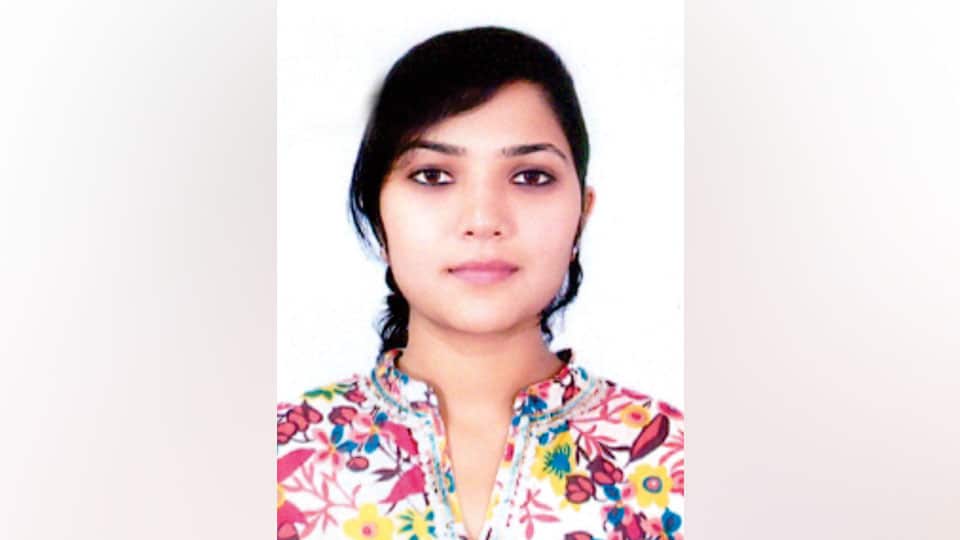
Dr. Chaitra Narayan, an entrepreneur, has been appointed as the Syndicate Member of University of Mysore.
As per the notification issued from the Office of the Governor, the term of office shall be for a period of three years with effect from Sept. 22, 2020.
Dr. Chaitra, Founder of Codagu Agritech and Shivam Distillations, holds a Ph.D and MSc in Microbiology from the University of Mysore.
She was selected by Rashtrapathi Bhavan, New Delhi, for the Festival of Innovation and Entrepreneurship in 2018 to present her ideas before President Ram Nath Kovind. She also presented the Biocapsule technology, which is a ‘Make in India’ initiative before Prime Minister Narendra Modi.
Currently working for the farmers of Kodagu, Hunsur and Periyapatna regions since 2016 towards alternative farming which involves cultivation of medicinal and aromatic plants, it has successfully led to an increase in revenue generation of farmers along with an assured buy-back market.
Codagu Agritech is a Biocapsule Manufacturing Company which helps farmers go for safe and sustainable farming while Shivam Distillations focuses on providing farmers of Hunsur and Periyapatna regions to cultivate aromatic crops as an alternative to tobacco cultivation.
An aromatic plant processing and distillation unit has been set up in the region to provide the farmers with the market at their doorstep.
source: http://www.starofmysore.com / Star of Mysore / Home> News / September 29th, 2020
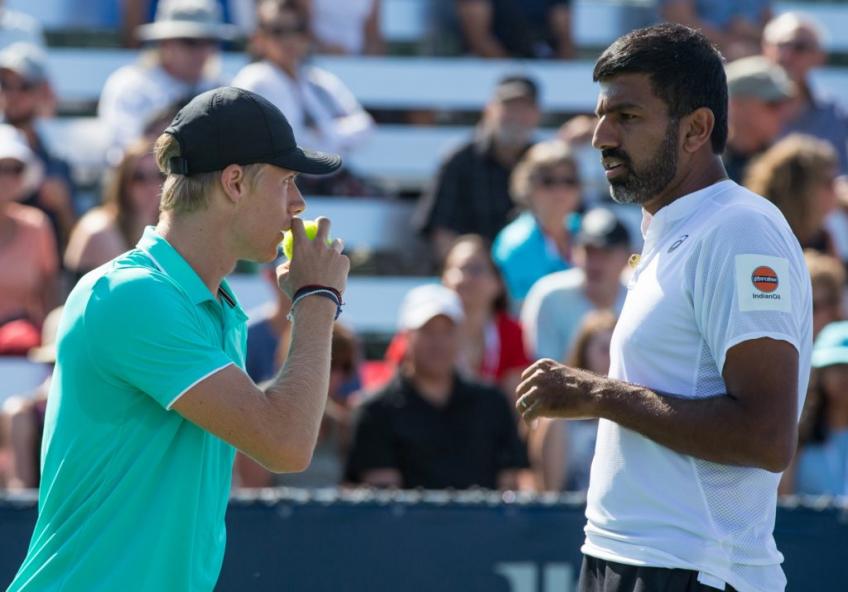
Indian doubles star Rohan Bopanna, 40, was desperate for a partner at the Indian Wells Masters last year, and when he saw that Denis Shapovalov was available to play, he hit him up. Bopanna, a 19-time doubles champion, was positively surprised by the quick response from rising Canadian star Shapovalov, who accepted to play.
Since then, Bopanna and 21-year-old Shapovalov have played together at 14 more events. Shapovalov, who is enjoying a career-high ranking of No. 10, is focused on his singled career but he occasionally plays doubles with Bopanna since the two have a good connection.
“My partnership with Denis is truly unique, given he is almost 20 years younger than me(laughs),” Bopanna told the Indian Tennis Daily. “It all started at Indian Wells last year when I was looking for a partner and you need to combine rankings to get into the doubles draw.
All the doubles specialists already had partners so I was checking on as to which singles players I can play with. I saw Denis’ name and decided to send him a text. And Indian Wells is an event where all singles players end up playing doubles as well.
So it was nice of him to say yes. Right away, from the first match, we enjoyed the camaraderie between us. “I think I bring in special experience into the doubles format. And his super-fast speed, power and flamboyance, helped my game tremendously as well.
So that combination worked for us. Slowly, we started committing to more events – be it 250, 500 or Grand Slams. Slowly, we started to enjoy each other’s company, and I got to know him a lot better. He’s a fantastic guy and he’s doing so much for tennis.
It has transformed into an honest friendship and as long as we enjoy playing together, that is what gives us success at the end of the day.
source: http://www.tennisworld.org / Tennis World / Home> Tennis News> Tennis Interviews / by Dzevad Mesic / September 29th, 2020
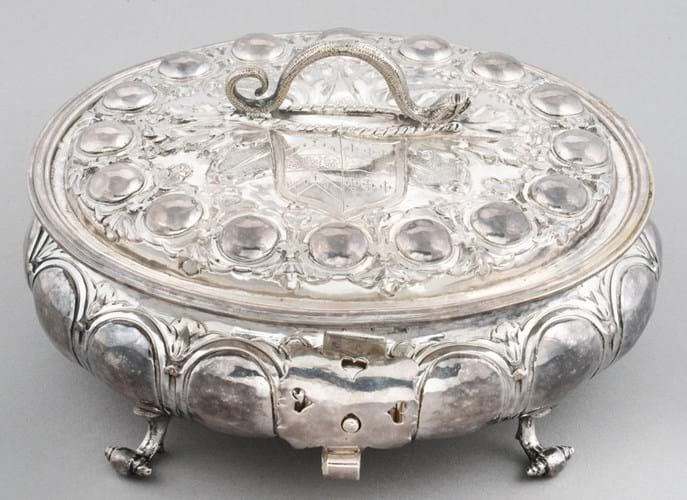
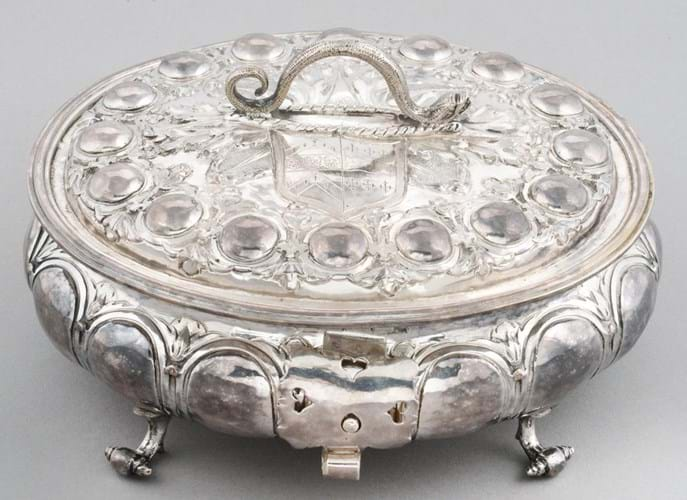
ATG’s weekly selection of items that caught bidders’ eyes includes a rare Charles II silver sugar box described as “in an exceptional state of preservation” that sold above estimate in Nottingham.
Charles II silver sugar box – £19,000 at Mellors & Kirk.
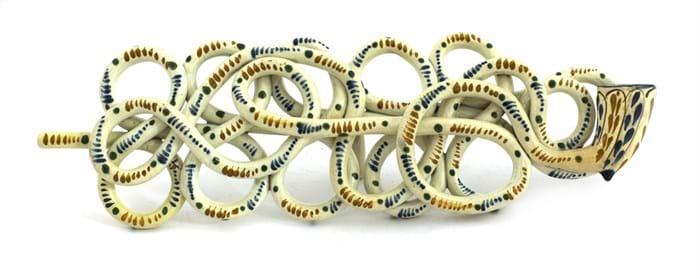
1. Prattware coiled pipe – £880
Prattware coiled pipe – £880 at Sworders.
Sworders in Essex is dispersing one of the world’s finest collections of pipes and smoking accoutrements across a number of sales this year. The Trevor Barton (1920-2008) collection represents more than 50 years of acquisition and study by a Hertfordshire pipe collector known to many in the antiques trade as ‘The Pipe Man’.
Barton began collecting pipes and other tobacco-related items in 1947, shortly after he was demobbed. In addition to regular visits to Bermondsey market, he travelled widely during a sales and marketing career which helped him to grow his collection.
Selected items from the Barton collection were sold at Christie’s in 2010, but the remainder were kept by the family. The first tranche of the collection formed part of Sworders’ Fine Interiors auction on September 22.
Every lot (many of them multiples) sold above top estimate including this Prattware coiled pipe c.1820, elaborately coiled and painted in ochre and blue dashes. Expected to bring £400-600, it made £880.
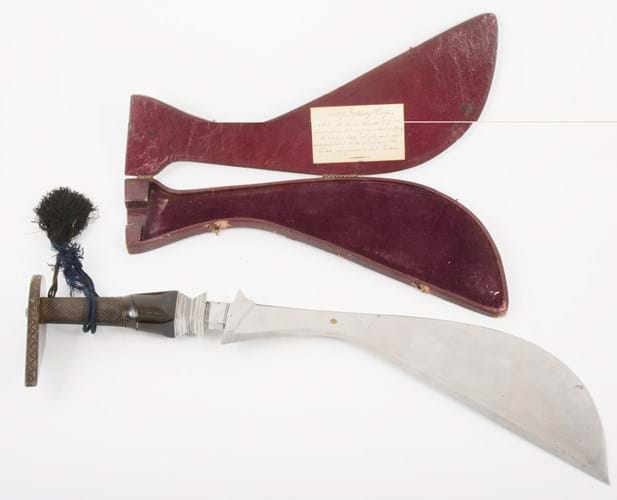
2. Coorg War knife – £8000
This 19th century Indian knife with a shaped and carved horn handle comes in its original morocco case. A handwritten label says it was gift from the Raja of Coorg to Colonel George Mackenzie Stuart, the commander of a column of the Madras Army at the taking of Coorg and commandant at the fortress of Vallore where the Raja was later held.
This appears to reference the Coorg War fought between the British East India Company and the small south Indian state in February-April 1834. British losses during the campaign were 93 killed before the British ensign was raised and Chikavira Rajendra, the last ruler of the Coorg kingdom, was sent into exile.
Coupled with this provenance, this fine knife sold for £8000 (estimate £400-600) at Gildings of Market Harborough on September 22.
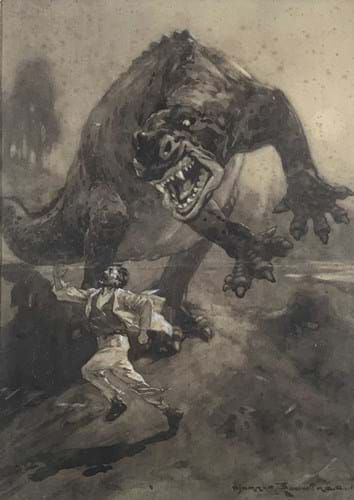
3. Harry Rountree illustration – £2600
An illustration for ‘The Lost World’ by Harry Rountree – £2600 at David Lay’s in Penzance.
It was estimated at £40-60 but this 14 x 10in (35 x 25cm) pen and ink by New-Zealand-born artist Harry Rountree (1878-1950) sold for £2600 at David Lay in Penzance on September 17.
Fully signed, is one of the original grisaille illustrations created for Conan Doyle’s sci-fi classic The Lost World. The story of an expedition to a plateau in the Amazon basin where prehistoric beasts still survive has spawned many films (the first in 1925). However, it was originally published serially in the Strand Magazine during the months of April-November 1912 with Rountree supplying the illustrations.
4. Charles II silver sugar box – £19,000
Charles II silver sugar box – £19,000 at Mellors & Kirk.
In family ownership for several generations, this 27oz Charles II sugar box was described by Nottingham auctioneers Mellors & Kirk as “in an exceptional state of preservation, with hardly any sign of wear and no damage or repair worthy of note”.
Probably last on the market a century ago, it is engraved with an armorial crest and fully marked to the rim, lid and hasp for London 1681 and the maker’s mark AR with a mullet and two pellets below.
Estimated at £10,000-15,000 on September 16, it took £19,000.
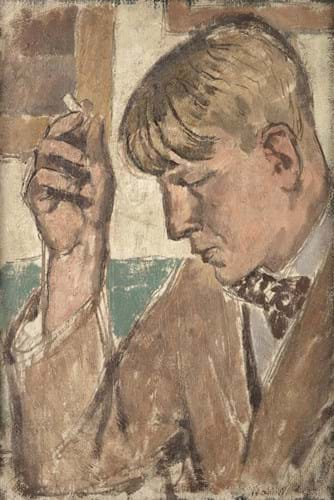
5. Portrait of WH Auden – £28,000
Portrait of WH Auden by Maurice Feild – £28,000 at Bonhams.
This oil on canvas portrait of WH Auden (1907-73), offered for sale at the Bonhams Modern British and Irish Art sale on September 16 is by Maurice Feild (1905-1988). It came by descent from the artist to a private collection in the UK.
Feild and Auden were colleagues and friends during their time teaching at the Downs School, Colwall during the early 1930s with this informal 22 x 15in (56 x 38cm) portrait signed titled and dated verso 1937. It was a key year for Auden: his visit to Spain where he experienced first-hand the horrors of civil war, provided the inspiration for his poem Spain.
Feild, an associate of the Euston Road School of painters, later went on to teach at the Slade in 1954.
A picture of obvious literary interest, it was pitched at an appealing £800-1200 but found sufficient admirers to bring £28,000.
source: http://www.antiquestradegazette.com / Antiques Trade Gazette / Home> News> 2020 / by Roland Arkell / September 25th, 2020
Its distinct taste can be traced to the geographical speciality of its plantation in Coorg
Image Credit: Supplied / gulfnews.com
You experience the flavour of Levista, right from the beans to the coffee you drink. The beaming spirit of SLN Group is like a perfect cup of coffee — fulfilling, hearty, crisp, wholesome and so gratifying since 1956.
Levista’s distinct taste can be traced to the geographical speciality of its plantation, which is rooted in Coorg, the coffee capital of India. It is born from the rich expertise of a company that supplies coffee to leading Indian and global coffee companies, and is among the top ten coffee exporters of India. Millions of coffee drinkers wake up to Levista every morning. It is the coffee for coffee lovers, and across the world, people have placed their trust in the timeless flavour of its legacy.
Wafting across the world
Levista has definitive plans in place to spread its aroma across 10 countries, and has undertaken brand building associations with leading entities.
It also has Café Levista, located strategically across cities for discerning coffee lovers, to enjoy a wholesome experience with friends and loved ones. By 2025, 500 such outlets will be operational in India and overseas to deliver its rich taste and heritage. Levista pours the best quality brew made from handpicked beans, with offerings across instant, filter, and artisanal range of coffees.
An association befitting Kings
Recently, Levista has proudly associated with the Chennai Super Kings (CSK) as their official licensed coffee partner.
It’s a distinctive milestone for two big brands to come together during the Indian Premier League, as the action shifts to the UAE this season.
To make it truly memorable, there will be CSK combo packs which will be retailed as a limited edition, along with the team’s memorabilia.
It will indeed be an unbeatable mix for coffee and cricket fans, when the world is watching. The quality and flavour of Levista resonates with the vivacity and passion of CSK.
source: http://www.gulfnews.com / Gulf News / Home> Lifestyle> GN Focus Report / September 13th, 2020
An outburst of saxophone flurries sits you straight up in your chair. The tone is rich but with a cutting edge.
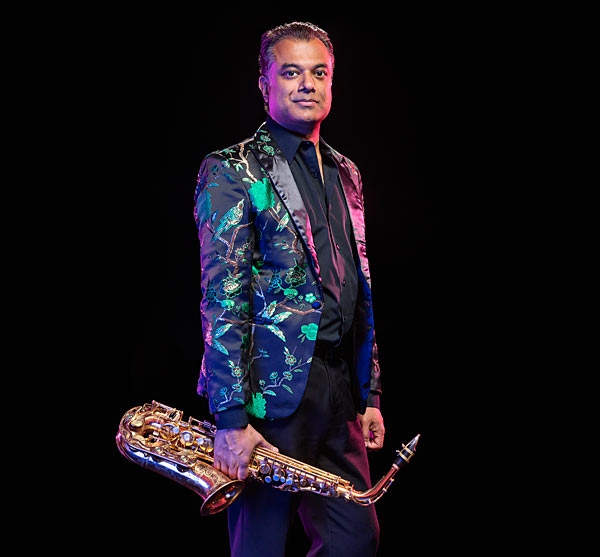
It has to be Rudresh Mahanthappa. The riveting cry of his alto saxophone is one of the most recognizable sounds in jazz.
But those darting runs coalesce into Charlie Parker’s “Red Cross.” So it can’t be Mahanthappa, can it? He has made 15 straight albums of original music. He doesn’t do covers, right?
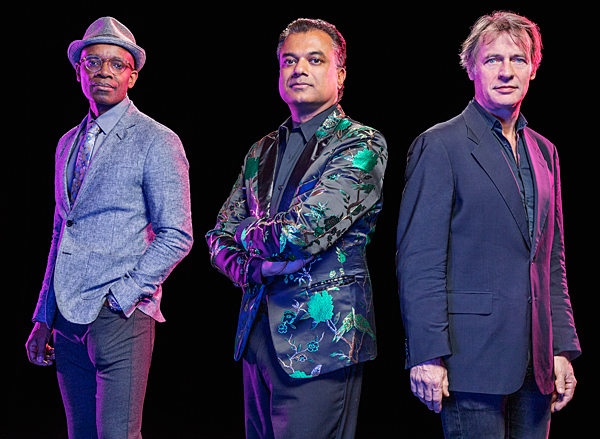
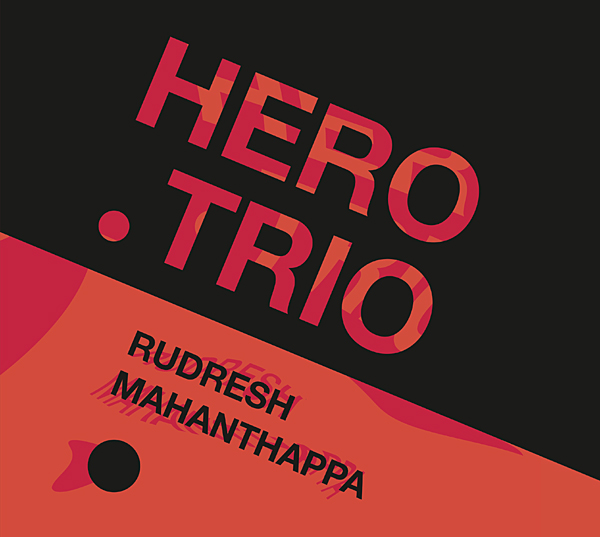
On his 16th recording, Hero Trio, Mahanthappa breaks through to the past—his and ours. He proudly proclaims Parker’s bebop—but then “Red Cross” flies apart, into free showers of 16th notes. It is startling to hear Mahanthappa playing songs you know, even lilting ones like Stevie Wonder’s “Overjoyed” and time-honored standards like “I Can’t Get Started.” Of course, his versions do not stay lilting or standard for long. By the sixth track, you’re ready for anything—except “Ring of Fire.” Rudresh Mahanthappa doing a Johnny Cash song? There must be a story there.
The story begins in Colorado—specifically, Boulder. Mahanthappa’s father is a noted theoretical physicist who came to the United States from India to get a Ph.D. at Harvard and stayed in the American academic world, settling at the University of Colorado. The school’s website says that K. T. Mahanthappa is “interested in grand unification theories, fermion mixing and masses including charge fermions and neutrinos.” His son Rudresh shares a proclivity for the intellectually challenging and the arcane, but in 16th notes, not neutrinos. (There are two more sons in this high-achieving family, both with Ph.D.s in the sciences.)
Mahanthappa grew up in Boulder, listening to people like Stevie Wonder. He started on alto saxophone in the fourth grade. He matriculated at the University of North Texas in 1988, right after it changed its name from North Texas State. The school had a reputation for turning out notable jazz musicians. Billy Harper, Lyle Mays, Bob Belden, and David Weiss went there. So did Norah Jones, briefly. (So did Meat Loaf, briefly, though presumably not in the jazz program.) Snarky Puppy started there.
Mahanthappa was not happy at North Texas. He says, “For me it was an uncreative place. There was kind of one way of doing things. And as a brown person in Texas, I never felt comfortable.” After two years, he transferred to Berklee College of Music in Boston, a school even better known for turning out notable jazz musicians. “I had always wanted to study with Joe Viola, who was one of the great American master teachers of the saxophone. Berklee was more the vibe I needed.”
When he took his degree in 1992, he did not, like so many Berklee graduates, relocate immediately to New York City. “I wanted to go to a big city that wasn’t New York, and Chicago was a place you could play a lot.” He entered a master’s program at DePaul University. By 1997, he was ready to make the move. “I always said I wanted to play with Dave Holland and Jack DeJohnette someday, and that was never going to happen if I stayed in Chicago. In the mid-’90s, you had to be in New York.”
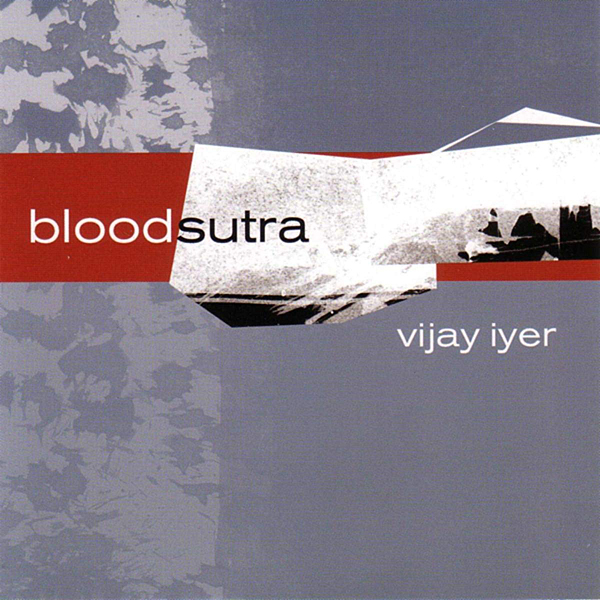
Mahanthappa hit the jazz radar not long after arriving in town, when he joined forces with pianist Vijay Iyer. They began gigging and making records, some led by Iyer (Blood Sutra on Pi Recordings; Panoptic Modes, reissued on Pi), some led by Mahanthappa (Mother Tongue, Pi), some co-led (Raw Materials, Savoy). Today, Mahanthappa and Iyer are two of the most respected, most decorated musicians in jazz.
They dominate the critics’ polls in the alto saxophone and piano categories, respectively, and most years appear at or near the top of categories like “musician of the year” and “album of the year.”
Back at the turn of the millennium, though, they were up-and-coming players who were unusual for two reasons: There were few Indian-American jazz musicians, and they played strange stuff. Iyer is an autodidact who has always had his own percussive, polyrhythmic piano language. As for Mahanthappa, when you listen to his early recordings now, he already sounds like no one else. He already has that sublime alto saxophone shriek. His art is already dizzying in its diversity, juxtaposing melodicism and dissonance, formal focus and freedom. In his playing, you hear intimations of many moments in saxophone history, from primary sources (Coltrane, Coleman), to footnotes (Jimmy Lyons, Sonny Simmons). You also hear lyricism in beautiful new jagged shapes.
All the unfamiliar sonorities led many listeners, including critics, to assume that Mahanthappa and Iyer were bringing Indian influences into their jazz. “Not so much,” Mahanthappa says. “I knew very little about Indian music at that time. When I was a kid, my mother sometimes played bhajans on Sunday mornings. They were like Hindu hymns. She had this stack of 45s. But that was it. When I became a musician, I mostly ran the other way. I got tired of people expecting me to be an expert on Indian music.”
But a revelation occurred while he was at Berklee. He went to India to play with a Berklee student band at Jazz Yatra, a festival that no longer exists. “It was my first time in India in over 10 years, my first time going as an adult, without my parents. And I was going there to play music. It was a lot to deal with. I was terrified. I was confronting head-on all these questions: ‘How Indian are you? How American are you?’ It was a mindfuck. Then I went to an all-night event in Bangalore. There is a tradition in India of concerts that go all night, ’til dawn. What I heard blew me away. It was unbelievable. I found out later that some of the greats of Indian classical music had performed that night, both Hindustani and Carnatic. I went to record stores the next day and bought as many cassettes and CDs as I could carry. And that’s about all I listened to for a couple of years.”
When Mahanthappa made the recordings with Iyer in the early 2000s, he was not yet ready to incorporate Indian elements into his work: “I kept thinking, ‘How do you put these things together and still maintain reverence and integrity?’ Because I knew that Indian symbolism and iconography had mostly been engaged very superficially in jazz. For a jazz group to bring in a tabla player did not automatically result in a cross-cultural collaboration. I knew I wanted to create something that didn’t sound like cut-and-paste. If I was going to deal with Indian rhythms or Indian melodic content, it had to be integrated.”
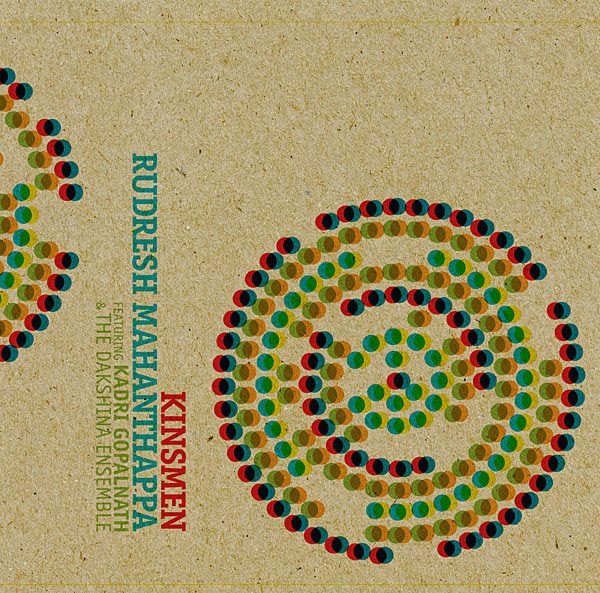
The turning point came in 2005, when he again traveled to India, this time to Chennai, on a commission. He spent time with Kadri Gopalnath, who played Mahanthappa’s instrument, the alto saxophone, but in a style that was decidedly non-Western. Gopalnath employed microtones derived from the Carnatic music of southern India. After Mahanthappa made another trip to India on a Guggenheim grant, he felt ready to record with Indian musicians. The result was Kinsmen, his collaboration with Gopalnath, released on Pi in 2008 to widespread astonishment and praise. Two dissimilar musical cultures, both prioritizing improvisation and energy, meet and commingle organically. Mahanthappa visits ragas and quarter tones, and Gopalnath visits bebop and the blues. They whip all these ingredients into wild eight- and four-bar exchanges and wailing, extended joint ventures.
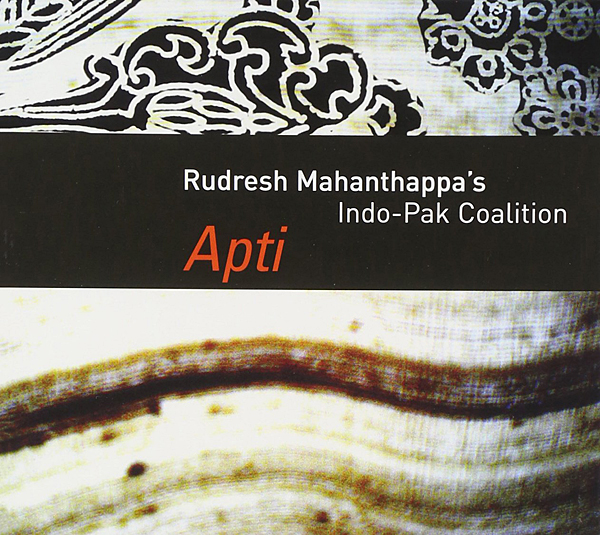
Kinsmen was important, but it was a one-off project. Around the same time, Mahanthappa formed another ensemble that drew deeply on his Indian heritage, a trio that continues to the present day. Indo-Pak Coalition is two Americans with roots in the Indian subcontinent (Mahanthappa and guitarist Rez Abbasi, born in Pakistan), and a third American, Dan Weiss, who studied for 20 years with tabla master Pandit Samir Chatterjee. Their album Apti (Innova, 2009) expanded upon the cross-cultural explorations of Kinsmen. (They released a second album, Agrima, in 2017, available as a digital download or double LP from Mahanthappa’s website (rudreshm.com) and from HDtracks.com.)
was American Songbook standards and the pop music of his youth. He says, “There was a part of me that always wanted to record standards. But when I was younger, I guess I had a certain agenda, certain ideas and energies that I wanted to get out there in the world. I didn’t want to be just one more saxophone player doing ‘Now’s the Time’ [Charlie Parker’s bebop classic]. I felt like I had a perspective that would not come across effectively if I played ‘I’ll Remember April.'”
It took Mahanthappa a long time to record with Indian musicians, and it took him even longer to record “I’ll Remember April.” But there it is, the seventh track on Hero Trio. When you hear it now, it is unclear why he had once feared that such a song would not allow his “perspective” to “come across effectively.” The perspective on “I’ll Remember April” is radical and personal. It opens with a commanding bass announcement from Franáois Moutin and violent drum detonations from Rudy Royston. Then Mahanthappa fires quick blasts that soon run together into long spilling arcs. It is a rush when Gene de Paul’s time-honored melody clarifies out of abstraction. Mahanthappa hits “I’ll Remember April” hard then spins off it for free, blistering runs, then returns to the song with fervent embellishments.
In our present jazz era, it is common for albums, especially those by younger musicians, to contain all or mostly all originals. But skilled players far outnumber gifted composers. Mahanthappa analyzes the problem this way: “A lot of new players today are coming out of academic settings. There is a kind of unspoken checklist of things you’re supposed to do. One is compose. Everyone puts ‘composer’ in their title now.” Mahanthappa’s exclusive preference for recording original music was understandable in his first 15 albums. He was defending a unique aesthetic position, and he was an accomplished composer. But Hero Trio opens new vistas. It turns out that “I’ll Remember April” does not limit jazz creativity. The opposite is true: The song provides a base pattern embedded within Mahanthappa’s own vast design. He can glance off the form, using it as a touchpoint, a known frame of reference, one resonant with historical associations.
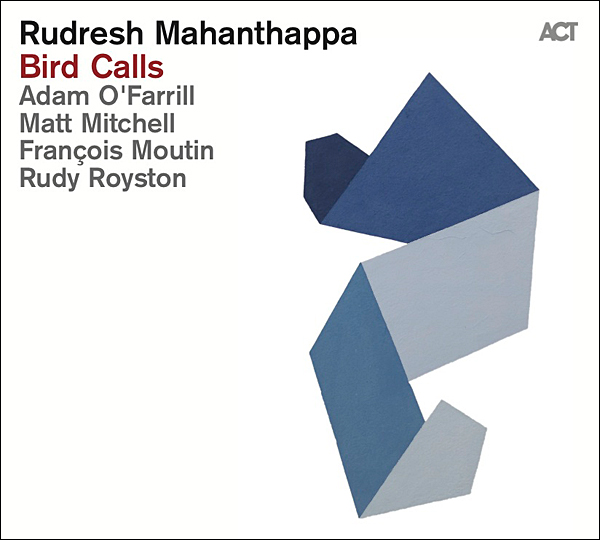
The other covers (if “covers” is the term for such unbridled acts) also lead to inspirations of memory. “Ring of Fire,” with a new beat in the third measure, is the most surprising choice, but Mahanthappa says Johnny Cash was vital to his childhood. Charlie Parker was vital from his adolescence onward. He made a widely praised Parker tribute in 2015, Bird Calls, on the ACT label, but at that time he was still committed to recording his own material. Bird Calls has music motivated by, not composed by, Parker. The decision to record three Bird tunes on Hero Trio is significant. (Besides “Red Cross,” the others are “Barbados” and “Dewey Square.”) Mahanthappa burns these iconic themes into the air then repurposes them in his own vivid timbre and energy. Perhaps the piece that is most literally a cover is Ornette Coleman’s great lament, “Sadness.” Mahanthappa’s version is faithful, concise, and passionate.
Mahanthappa has played with Moutin in various settings for more than 20 years. His association with Royston goes back to 1991, in Colorado. But until the new album, they had never played together as a trio. The saxophone trio with bass and drums is one of the foundational formats in jazz. Trios led by Sonny Rollins, Ornette Coleman, Joe Henderson, Joe Lovano (and, more recently, J.D. Allen) are important examples. Mahanthappa, with a few brief, minor exceptions, has bypassed the format—until now.
Moutin and Royston are extraordinary on Hero Trio. Their aggression establishes drama, even before Mahanthappa enters. Moutin reminds you of David Izenzon with Ornette Coleman. Izenzon was the first bassist who proved that it was not only okay, it was levitational, for a bassist to play so many notes, to become a semi-autonomous whirlwind of energy within a jazz ensemble. Mahanthappa says, “I always wanted to make a classic saxophone trio record. And I always wanted to make an album of music that was not my own. I realized that now was the time, for both. François and Rudy and I are so connected. Anything you play with them sounds fresh.”
He explains how, in live performance, the three of them developed a system of cues: “I play a melodic figure that cues a particular bass line, a certain groove. And the idea is that we can vibe on that for a while and then I’ll start playing a tune, a standard, and everybody will kind of fall in. Then I’ll cue another bass line. Let’s say I have six or seven of these cues. You can play a whole set of standards that are bridged together by these grooves. It works really well live. It’s very organized but it sounds sort of stream-of-consciousness. It puts an original light on standards. The challenge with this album was, ‘How do you capture that spontaneous thing that happens live on a studio recording, a five-minute track?'”
“I Can’t Get Started” shows how the trio meets this challenge. A quick melodic flourish from Mahanthappa, repeated twice, indeed cues a groove, an ominous, slow ostinato from Moutin. Then Mahanthappa floats in over the groove. He is playing the alto saxophone, but the sound comes from so far east of Boulder that he might be playing the double-reed shehnai of India. His wavering, hypnotic lines suggest distant ancient ceremonies and processionals. A song by Ira Gershwin and Vernon Duke is transformed. The transformation could only be imagined by someone who grew up in the presence of the American Songbook, was sent on a mission by Charlie Parker, ventured outside of Parker, then returned to where he started, on a passage that included a stop at an all-night concert in Bangalore.
“I Can’t Get Started” is the closing of a circle. Ideally, it would have been a live album. (Surprisingly, Mahanthappa has never made one.) He says, “The original plan was to play a club somewhere for maybe four nights and record everything and then figure out what the record should be.” For various practical and logistical reasons, the plan was abandoned. Hero Trio was recorded by engineer David Amlen at Sound on Sound Studios in Montclair, New Jersey, within long walking distance of Mahanthappa’s home. The upside (as is often the case when weighing the pros and cons of live vs studio recordings) is the sound. Sonically, the album is dynamic and visceral. You are close enough to Mahanthappa’s alto saxophone to reach out and touch it. The mix by Liberty Ellman brings the bass and drums far forward—appropriate given the centrality of Moutin and Royston to this trio’s impact.
You can’t talk to a jazz musician in mid-2020 without inquiring about how the global pandemic has affected their life and work. Mahanthappa says, “This was supposed to be a big touring year for me. I had some major stuff lined up, including a long tour with a project for the Charlie Parker centennial.” (It involved an all-star band co-led with Terri Lyne Carrington and was called “Fly Higher: Charlie Parker @ 100.”) “Of course, everything got cancelled. But I’m doing okay. I’ve been teaching at Princeton for four years now, so I’m less dependent on income from touring. My wife is a therapist, and she has been able to do that from home, by Zoom or whatever. Her field is actually one that ramps up in times like these. I’m more concerned for all my good friends and colleagues who rely mostly on performing. I’m glad that a lot of organizations have mobilized to help.”
When told that many musicians report an unprecedented availability of practice time while sheltering in place, he speculates, “They must not have young children.” (He has a son and a daughter, ages 7 and 4.)
“I imagine the trio will probably do a bunch of touring to support the new album in 2021.” We can only hope.
source: http://www.stereophile.com / Stereophile / Home> Music and Recording Features / by Thomas Conrad / September 04th, 2020
WELCOME. If you like what you see "SUBSCRIBE via EMAIL" to receive FREE regular UPDATES.
Read More »