Karnataka teems with different versions of Kannada. There are more than 30 dialects of the language, which contribute to the linguistic richness of present-day Karnataka.
Kavirajamarga, the earliest available work on rhetoric, grammar and poetics in Kannada, from the 9th century CE, speaks of the two major dialectic divisions of Kannada: Dakshina and Uttara. Sri Vijaya, the author of Kavirajamarga alludes to many varieties of Kannada, hinted at by the use of the phrase “Kannadangal”.
Today, traditional linguists broadly classify Kannada into four geographical regions: Mysuru, Mangaluru, Dharwad and Kalaburagi Kannada. In these regions, various communities use a specific dialect as their mother tongue, whether it is Halakki Kannada, Havyaka Kannada, Kota Kannada, Rama Kshatriya Kannada, Badaga Kannada (spoken by the Badaga community in the Nilgiri region in Tamil Nadu) or even Arebase.
Arebase is a dialect of Kannada spoken by the Gowda community in the Kodagu and Sullia regions of Dakshina Kannada, and also in the eastern parts of Kerala’s Kasaragod district.
Arebase is also known as ‘‘Gowda Kannada”, a term first coined by the late Prof Mariappa Bhat, a renowned Kannada scholar.
In 15th century CE, the Gowdas from the ‘Aiguru Seeme’ of Hassan district migrated and settled down in different regions of Dakshina Kannada and Kodagu. However, over the centuries, those who settled amidst the Tulu-speaking communities in Puttur, Belthangady, Karkala, Vitla of Dakshina Kannada adopted the culture of Tulu Nadu, picking up the local language and worshipping deities in the tradition of ‘Daivaradhana’ of coastal Karnataka. In Kodagu, they picked up aspects of Kodava culture.
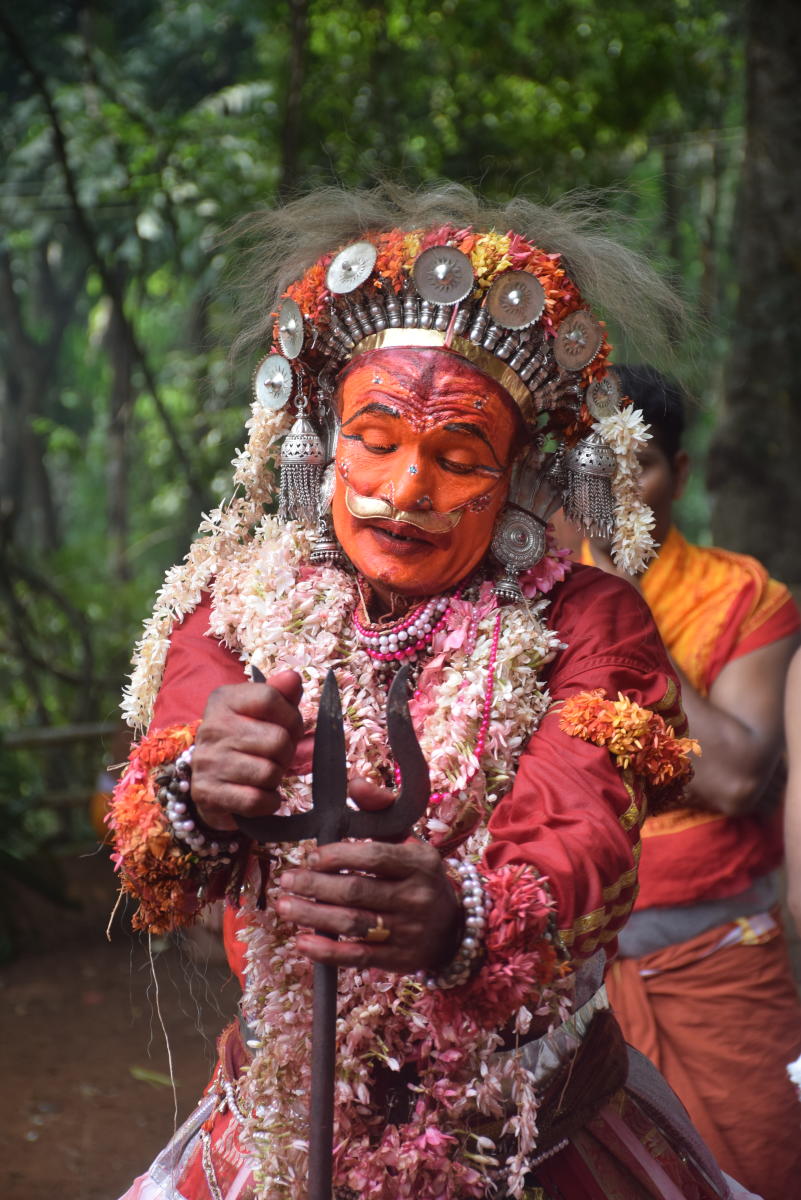
Purusha bhootha, the Kannada speaking deity of Arebase communities. Photos by Lokesha Kunchadka
However, the community also developed its own distinct identity, preserved through its language. For instance, the community worships the daivas (spirits) in Arebase.
Arebase shows differences in phonetics, syntax and morphology when compared with standard Kannada. Some of the vowels not present in the Kannada alphabet are considered phonetic in Arebase. The meaning of a word also changes with a change in pronunciation, an aspect of Arebase that is difficult to capture using standard Kannada font.
There are three major variations within Arebase: Subrahmanya, Peraje/Sampaje and Madikeri/Bhagamandala Arebase.
In literature and theatre
Today, there are earnest efforts to ensure the representation of this dialect in literature and theatre. Prof Kodi Kushalappa Gowda, who was a Kannada professor in Madras University, has written Ramayana in Arebase called Manasa Ramayana. Academician K R Gangadhar had prepared a lexicon for Arebase. Then there are Dr Purushothama Bilimale — who has studied the Gowda community, Dr Vishvanatha Badikana — who studied the folk tales of the language, Dr Poovappa Kaniyuru, A K Himakara, Sanjeeva Kudpaje, Kaveramma and Vidyadhara Baddadka who are prominent writers, poets and scholars in Arebase.
Lokesh Urubailu is a young theatre artist who directs Arebase dramas like Mayaka. ‘Mudupu’ is a popular monthly magazine in Arebase run by Vinod Mudugadde.
“Most of the minor languages like Arebase have been restricted to specific communities or caste. These languages should come out of that frame. All the minor languages in India which have been listed in 2011 census should be empowered. India should develop a proper language policy for that,” says Dr Purushothama Bilimale, Professor of Kannada and Kannada Language Chair at Jawaharlal Nehru University, New Delhi.
However, it would be a mistake to limit this dialect to a particular caste; in Sullia, for instance, almost all the merchants communicate in Arebase.
The best example of this exchange of cultures, perhaps comes from a Yakshagana Prasanga written in Arebase by Kepu Ajala, who is a non-Gowda.
The World Arebase Literary Meet (virtual) scheduled on August 3 is expected to give a push to language enhancement and cultural exchange.
source: http://www.deccanherald.com / Deccan Herald / Home> Spectrum> Spectrum Top Stories / by DHNS / August 01st, 2020
In Nov 1948, Thimayya moved Stuart tanks in utmost secrecy by dismantling their turrets and used them in direct firing role that led to the capture of Zoji-la which had evaded capture on previous instances. It was because Zoji-la was in our hands that liberation of Kargil was possible in 1999.
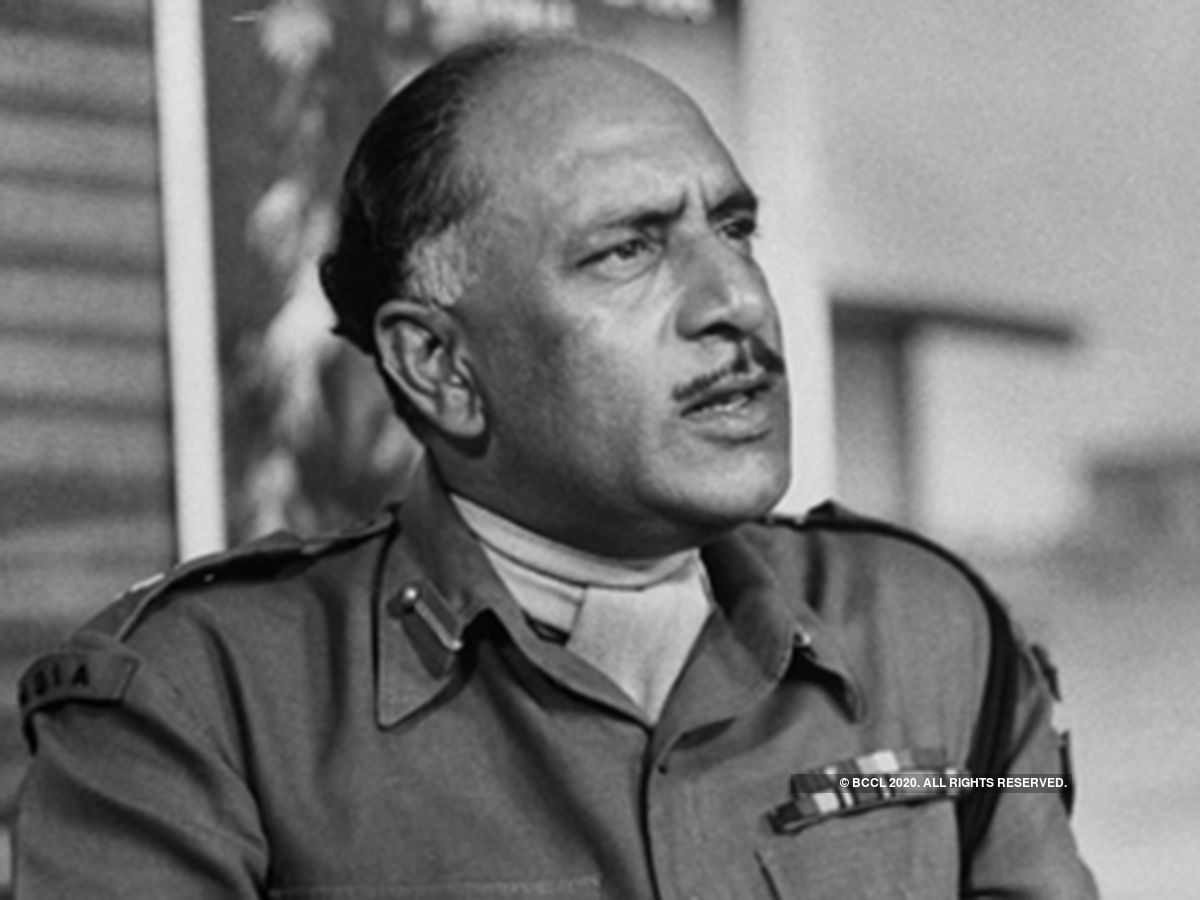
General KS Thimayya
There were three elements to India’s largely unknown role in the Korean War 1950-1953. This is the second in a continuing series on that conflict. For the earlier story on the 60th Para, click here (https://bit.ly/2DW0PHS)
India became a member of the United Nations when the organization was founded on October 24th, 1945. Established to ensure world peace—among other goals— after a ruinous World War, the UN has had a mixed track record. One of its successes, however, was the bringing of the Korean War to a close. India played a unique role in bringing the conflict to a speedy conclusion by advocating against a policy being debated at the UN which could have led to the war’s prolongation or escalation. That war was also the first commitment to a UN assignment by an independent India and the Indian Army. This contribution and the men who made it a success are still celebrated as heroes for their commitment and courage.
The Korean War began on 25th June 1950 and would rage for three long years between the Western alliance—led by the USA under a UN resolution called the UN Command—and a Socialist alliance of North Korea and China (known as the Korean People’s Army (KPA) and the Chinese People’s Volunteers (CPV)) supported by the Soviet Union. The two sides reached a military stalemate by the middle of 1953 and had agreed on the terms of a ceasefire. In truth, the war would have come to an end in 1952 if the peace talks held at Panmunjom on October 25, 1951 could have reached a decision on the question of prisoner swaps. This was a contentious topic, and one where India finally found the solution—a solution accepted nearly unanimously by the UN, allowing for the signing of the Korean Armistice Agreement on July 27, 1953. India’s efforts to find a compromise failed more often than not, increasing tensions between India and the United States, and even South Korea. The US had reasons to suspect Indian neutrality as we were among the first countries to recognize China diplomatically, even advocating for their seat at the UN in 1950.
A major issue that defied agreement was how to deal with a large number of Korean and Chinese prisoners—about two hundred thousand of them—held by the UN Command. Many prisoners refused to return to their original countries. There were also a few similar UN prisoners, mostly Americans, held by the Korean People’s Army (KPA) and the Chinese People’s Volunteers (CPV))
The Armistice agreement stipulated that a Neutral Nations Repatriation Commission (the NNRC) would be established with two countries from each bloc, and headed by India—underscoring our nation’s reputation as a neutral country. Thus the NNRC had Czechoslovakia and Poland from the Eastern Bloc, and Sweden and Switzerland from the West. India was also tasked with providing a brigade of soldiers to provide security for the prisoner exchange.
The NNRC decided the fate of the remaining 20,000 POWs —and their repatriation—also called the Big Switch. It followed Operation Little Switch in April-May of 1952, which saw the exchange of wounded and sick soldiers held by both sides. The solution included handing over these prisoners to the NNRC headed by India. A full Indian contingent of nearly 6000 called Custodian Force of India (CFI) were to take over physical custody of these prisoners; this was our nation’s initiation into peacemaking and conflict resolution.
Led by General Thimayya as Chairman, and Ambassador B.N. Chakravarty, IFS, as the Alternate Chairman, the Neutral Nations Repatriation Commission (NNRC) was a task that many did not think Indians would be able to handle or deliver, because of its layered complexities and intrigue.
The Indian government had made sure to send their best medical unit 6oth Para Field Ambulance earlier ( https://bit.ly/2CrHWfn) and now, in sending General KS Thimayya—later to be the COAS— they displayed the same intent.
The force behind the NNRC
Kodandera Subayya Thimayya was one of three brothers born to a rich coffee planter of Cheppudira clan in Madikeri in the district of Kodagu. He joined Bishop Cotton School in Bangalore before enrolling at the Prince of Wales Royal Indian Military College (RIMC) in Dehradun; he was one of six Indian cadets later chosen to attend the Royal Military Academy at Sandhurst along with Gen PN Thapar who would later succeed him as the Chief in 1961 and be made a scapegoat for failures in 1962. Gen Thimayya’s brothers too joined the Army and his elder brother Ponnappa later joined the INA inspired by Subhas Chandra Bose and his younger brother died in the first war in Kashmir.
Thimayya graduated from Sandhurst in 1926 and received a commission into the British Indian Army, going on to become the first Indian to command an Infantry brigade: the 268th Indian Infantry Brigade—part of the post-World War II British Commonwealth Occupation Force in Japan. He received the British Distinguished Service Order for his service for the British military during World War II.
General Thimayya was also chosen to lead the counter offensive in Kashmir and headed the Jammu Kashmir force from April 1948 . The J&K force was split as Srinagar and Jammu Division, Gen Thimayya headed the Srinagar Div in May 1948 . Immediately he set about recapturing territories lost to the marauders with his daring and dynamic brigade commanders – Brig LP Sen of 161 brigade in Uri Sector, Brig Atal of Para Brigade tasked to recapture Zojila and Harbaksh Singh in command of 163 in Handwara – Kupwara . They were on a recapturing spree when Nehru decided to unilaterally declare suspension of operations as the case was referred to the UN much to the protestations of the army brass. Fortunately Pakistan didn’t comply with the UN resolution allowing the re – commencement of operations. This window of opportunity saw the consolidation of Ladakh with the capture of Zojila Dras and Kargil. Leh a weakly held garrison was saved by the sheer audacity and courage of Thimayya and Air Cmde Mehar Singh who landed in a Dakota together for the first time in Leh paving the way for beefing up troops that saved Leh from enemy hands . In another audacious move for capture of Zojila tanks of 7 Cavalry was used in a direct firing role which completely destroyed the enemy morale leading to its capture . Thus Ladakh was saved in the nick of time by November 1948 before winter set in . Seeing the change in pace and tempo of operations Pakistan quickly agreed to the terms of the UN resolution calling for a ceasefire before it lost all other territories held by them. The rest is history but what stood out is the sheer character and audacity which made him a national hero for saving Kashmir .
Another anecdote that revolves around him is the detention of a senior politician’s son after he and some goons passed lewd remarks and even tried to molest the wife of an Army officer of 5 JAT in Amritsar in 1959 . With the personal involvement of none less than that of the CM Of Punjab the ripples of this action went up to Parliament. General Thimayya was summoned for an explanation and his response that silenced the opposition was “If we cannot defend the honour of our women, how can you expect us to defend the honour of our country?”
His ability to project India’s honor was on full display during his handling of the NNRC in Korea.
The NNRC through CFI was responsible for gathering non-repatriated prisoners into camps; that included nearly 170,000 prisoners held by UN forces who didn’t want to return to either China or North Korea.
In the face of Chinese demands for the forceful repatriation of their soldiers, the UN and the CFI worked hard to explain to each prisoner their rights and privileges; they could then choose to go home or remain with the side that captured them.
This called for compassion, fairness, and neutrality on the part of the Indian Custodian Force, who rendered yeoman service during the entire span of their mission from September 1953 to March 1954. On several occasions, intricate situations were resolved only because of the patience and tact of General KS Thimayya and Major General SPP Thorat. They proved their mettle, earning well-deserved praise for their command and for India.
It was an unenviable task; in the end only less than 100 who wished not be repatriated to either country came back to India once the NNRC and CFO concluded their operations. A few Koreans chose to resettle in India, while others were repatriated to Brazil.
General Thimayya is not only an Indian military hero he is also a hero of the Korean War . It has been 66 years since the end of the Korean war but even till day he is remembered by Koreans with gratitude and affection. He was awarded a Padma Bhushan in 1954 for his service in Korea.
General Thimayya went on to become the COAS from 1957-1961. After his retirement the UN again requested for his service in 1964 to command UN troops operating on Cyprus in keeping with his reputation of impartiality displayed in Korea . He would however die of a massive heart attack on December 18, 1965 at the age of 59.
————–
Col ( Dr) Divakaran Padma Kumar Pillay, Shaurya Chakra, PhD is a Research Fellow, with the Manohar Parrikar Institute for Defence Studies and Analyses. His twitter id is @dpkpillay12.
—————
source: http://www.economictimes.indiatimes.com / The Economic Times / Home> National> Business News> News> Defence / by ET Contributor – Col.(Dr)Divakaran Padma Kumar Pillay / July 21st, 2020
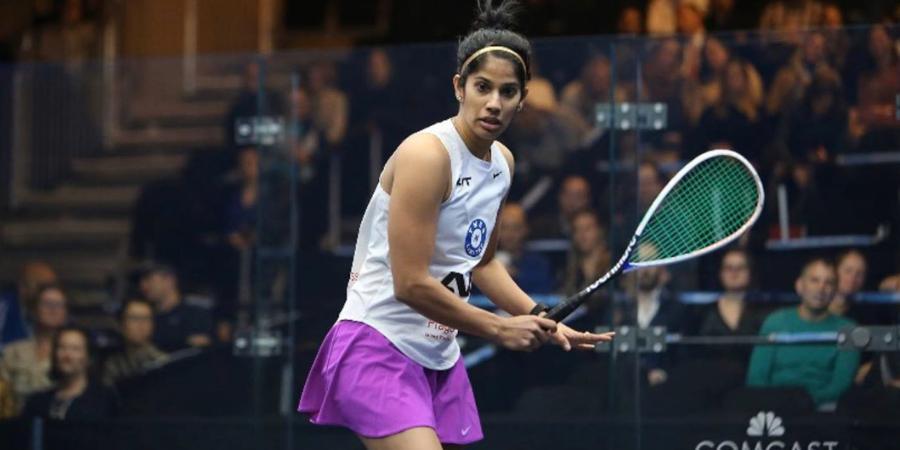
India’s ace squash player Joshna Chinappa (left) recently broke into the top-10 of the women’s world ranking. FILE PHOTO
Joshna Chinappa has experienced a hankering to return to the squash court once before. It was when she tore her ACL (anterior crucial ligament) in 2012. She was out of action for 10 months then.
This time, by admission, the 18-time national champion is at her fittest – reflective in her jump to No.10 in the latest issue of world rankings – and yet, all she can do is attach therapeutic significance to household chores while hoping for the Covid-19 pandemic to subside.
“Initially, it was fine because as an athlete you console yourself, saying it’s the break you deserve, and that it’s all going to return to normal soon,” Joshna tells DH. “…but after the first few weeks, it became very hard because of all the uncertainity.Trying to stay fit in a small space isn’t easy. More importantly, you don’t even know what you’re training for. Usually, you have a tournament, a goal you’re working towards. This time, there isn’t one, but you do it because you don’t want to start from scratch when the sport returns.”
Going by Professional Squash Association’s announcement from a few of weeks ago, the tour should restart mid-August. By that, Joshna, who last played in Egypt in March before hurrying back to India upon news of the virus outbreak, will have not have played in five months. She, however, reckoned it’s going to be a lot longer before resumption.
“It will take some time to get back, especially a sport like squash because there is quite a bit of contact with the opponent. There are so many guidelines which need to be followed if we’re back to competing again,” says the 33-year-old.
“I don’t see us returning to the court till October or November, and even then it will be vastly different from what it used to be.” she adds.
While the PSA has remained tight-lipped about its SOPs, Joshna offered glimpses, saying the tour is likely to enforce stringent testing measures and play without crowds.
“I also think they will host several tournaments in one location. What that does is keep all the players and support staff in one area. This way we can be monitored better,” she says. “Even then there will be a fear among athletes to compete. It’s going to be difficult to break away from that but I think we should just get on with it.
“I don’t think we’re properly safe until they come up with a vaccine, but we can’t endlessly wait for that to start living once again,” she opined.
source: http://www.deccanherald.com / Deccan Herald / Home> Sports> Other Sports / by Roshan Thyagarajan, DHNS-Bengaluru / July 13th, 2020
Theatre personality Prakash Belawadi to direct the play based on acclaimed author’s popular novel
Mysore/Mysuru:
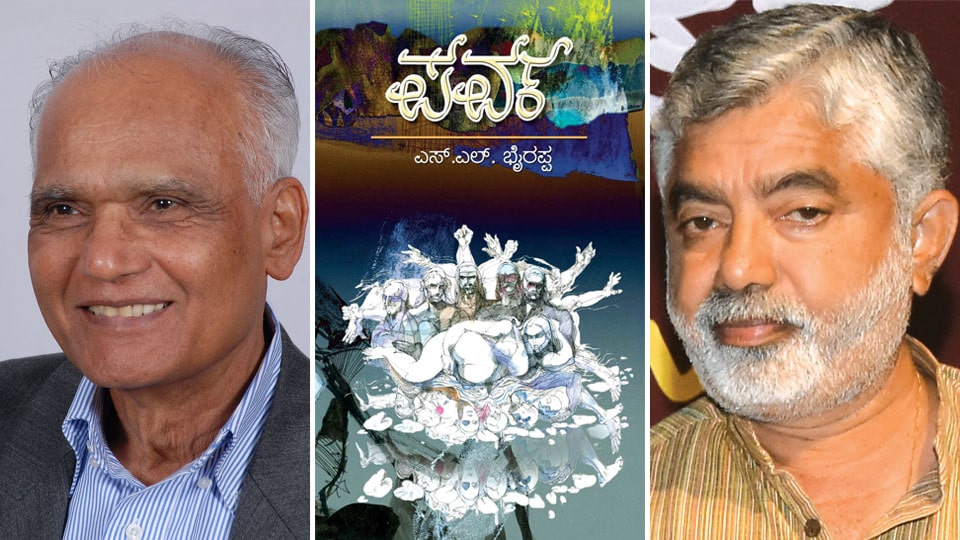
Saraswathi Samman recipient and acclaimed Kannada novelist Dr. S.L. Bhyrappa will soon catch the imagination of theatre lovers as his novels will be adapted into plays at theatre repertoire Rangayana.
Though the novelist’s works have been translated into English and many regional languages, Rangayana had not so far experimented on them as there was a prejudice that Bhyrappa is a right-wing writer. Though art and literature transcends the boundaries of caste, creed, sex, personal prejudices and religion and one cannot brand a writer as right wing, left wing or neutral, Dr. Bhyrappa was an anathema to many theatre activists, artistes and people who were in the forefront of theatre in Mysuru.
Dr. Bhyrappa hails from Mysuru and despite this, Mysuru’s Rangayana never thought of adapting his novels as plays to reach the mass audience. Now with Addanda C. Cariappa as the Rangayana Director, things are moving in the right direction without any bias, vested interests or prejudice. Bhyrappa’s novel ‘Parva’ will be adapted into a play and work has begun in this regard.
Rangayana has the distinction of bringing Kuvempu’s ‘Sri Ramayana Darshanam’ and ‘Malegalalli Madumagalu’ into theatre and both the plays received tremendous response. Rangayana artistes said that this ‘Parva’ adaptation is an ambitious project and the nitty-gritty of the project has begun with the artistes examining the finer details in the novel.
After the first show at Rangayana, ‘Parva’ will be staged across the State including places like Shivamogga, Dharwad, Kalaburagi, Chikkamagalur, Hubballi, Udupi, Chitradurga, Davanagere and other places.
Considering Dr. Bhyrappa’s popularity and a wide reach – thanks to the universal appeal of his novels – artistes are sure that the ‘Parva’ play will be well-received.
Actor Prakash Belawadi, a multi-faceted personality who has created a niche in theatre, will direct the play. If COVID pandemic eases, the play will be ready to be staged during Navaratri. “It is an ambitious project and as promised to the audience during last Bahuroopi, we will adapt Bhyrappa’s novel into a play. We will meet Bhyrappa and Prakash Belawadi soon and discuss the plans, chapters to be adapted, theme, overarching message and finer details,” Rangayana Director Cariappa told Star of Mysore.
Dr. Bhyrappa’s ‘Parva’ was written in 1979 and has entered 41st year. It has seen many reprints and is among the popular works of the acclaimed novelist. Recently, Kannada and Culture Minister C.T. Ravi had discussed about adapting ‘Parva’ into a play at a meeting of Ranga Samajas.
Booker Prize Winner Aravind Adiga on ‘Parva’ plot
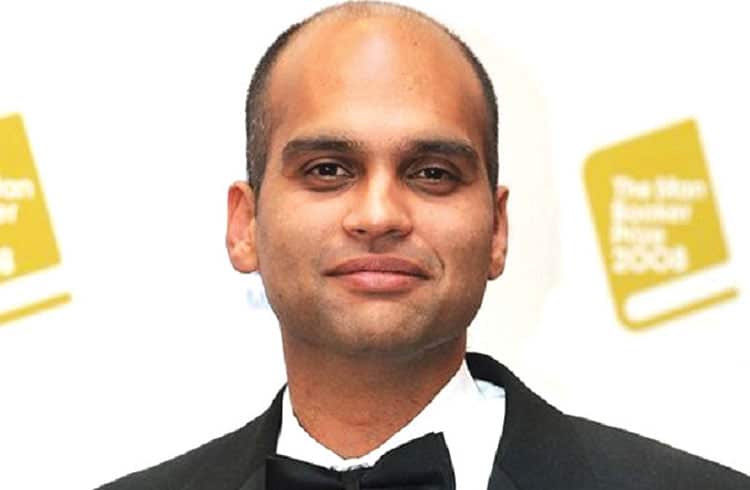
Aravind Adiga, an Indo-Australian writer and journalist whose debut novel, ‘The White Tiger’, won the 2008 Man Booker Prize, describes ‘Parva’ in the following words:
“By the mid-1970s, the novelist’s genius for detail — the smell of sandalwood soap on a lover’s body, the toothache that distracts the hero, the tiger’s skin against which the scholar rests to study the Vedas — and his ability to create memorable voices, especially for his women, were strengthened by a new interest in formal experimentation. In 1979, after having won the Sahitya Akademi award for ‘Daatu’, his novel about caste, Bhyrappa published the work that defines him for many readers: Parva.”
“On the surface, it is an anthropological retelling of the Mahabharata, in which the Kurukshetra war is freed from mythology and magic and presented as an actual historical event, the novel is really a study of human character under extreme stress. Innovative in structure, ‘Parva’ is built around long interior monologues that are like arias; one by one, Bhyrappa enters into the minds of the major players, Pandava and Kaurava alike, to create complex, almost Cubist, character portraits,” Adiga says.
“First we see Karna being stupid and lustful, goading the Kauravas on to rape Draupadi; then, we see him about to bathe in the Ganga, thoughtful and insecure, having just discovered that he is the illegitimate son of Kunti; now we see him in battle, a cold-blooded killer; and finally, as a man torn between his loyalties, who lets himself be killed rather than betray either side. Melancholic in tone — the world of the Mahabharata is coming to an end in every page — ‘Parva’ reads like a Hindu Gotterdammerung. Though Bhyrappa’s characteristic failings are present here — repetitiousness and occasional verbosity — it is one of the most breathtaking of 20th-century Indian novels,” Adiga adds.
source: http://www.starofmysore.com / Star of Mysore / Home> News / July 10th, 2020
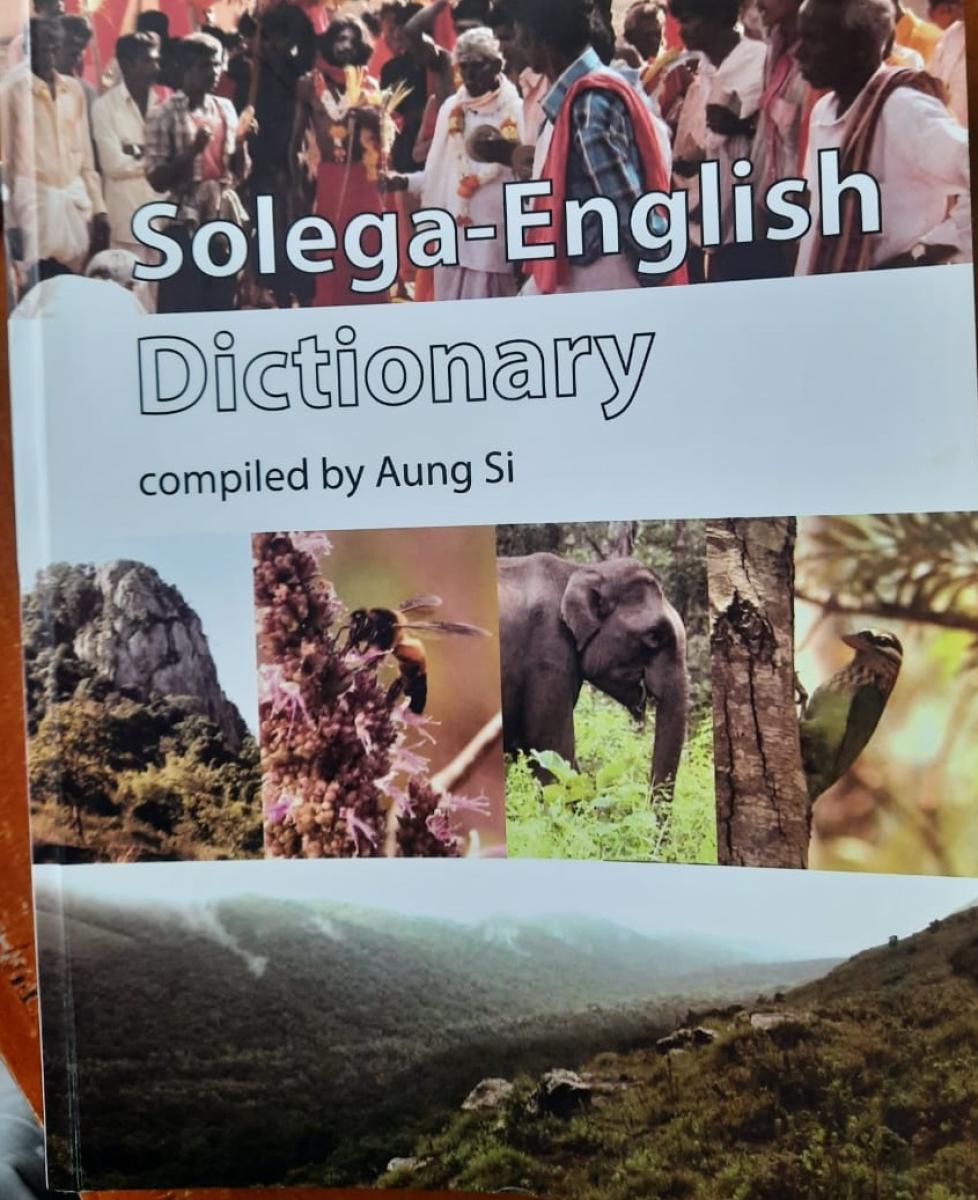
A researcher from Myanmar has compiled an English dictionary on the words used by the people of Soliga tribe, living in and around Biligiri Ranga Hill in Chamarajangar district.
Aung Si has compiled the words used only by the six Soligas tribes, living in the tribal hamlets. The 445-page dictionary has more than 1,500 words, used by Soligas. The words have been written in Kannada script and the explanation and meaning is in English. The book has pictures of rare trees, plants and animals found in BR Hills.
Aung Si has printed around 150 copies, priced Rs 1,500 each. He has handed over the responsibility of the book sales to the Soliga leaders, asking them to utilise the money earned for the development of the tribals.
Aung Si has earned a PhD from the Australian National University, conducting a research on the lifestyle of Soligas in 2012. He has been working hard for around 12 years, from 2008. He has interacted with the tribe of Soligas, learning about their languages.
He has sought the help of Ashoka Trust for Ecology and Environment in BR Hills, to compile the dictionary. He has also taken the help of Soliga leaders and other research persons for his work.
Scientist C Madegowda of Ashoka Trust told DH that there are 148 Soliga tribal hamlets in the district. Only six particular tribes of Soligas in 55 hamlets of BR Hills, still use the words and language, which are on the verge of extinction. Others speak Kannada and have adapted to the new lifestyles. Youngsters are not well versed in Soliga language and culture. This dictionary may be useful for them in future. It will also help those involved in further research on the language, he said.
source: http://www.deccanherald.com / Deccan Herald / Home> State> Karnataka Districts / by Gayathri G R, Chamrajnagar / July 06th. 2020
Joshna Chinappa, who has not played since March due to the COVID-19 pandemic, moved up a spot to be in 10th position.
Indian squash star Joshna Chinappa (Photo | Joshna Chinappa Instagram)
New Delhi :
India’s squash star Joshna Chinappa has broken back into the top-10 of the PSA world rankings following the shock retirement of Egyptian world number one Raneem El Welily.
Joshna, who has not played since March due to the COVID-19 pandemic, moved up a spot to be in 10th position.
The 33-year-old had entered the top-10 for the first time in 2016.
Dipika Pallikal is the other Indian female player who has achieved the feat.
Egypt’s Nouran Gohar is the new world number one following Raneem’s retirement.
Raneem had held the top spot for 19 months before announcing a sudden retirement last month.
India’s top male player Saurav Ghosal remains 13th in the latest rankings.
The PSA tour is suspended until at least mid-August due to the coronavirus outbreak.
source: http://www.newindianexpress.com / The New Indian Express / Home> Sport> Other / by PTI / July 08th, 2020
On a pre-scout exploring Coorg’s dramatic landscape
It all started with an email out of the blue. A world-class chef was shooting a food/adventure show in India in 2020 and was looking for ideas.
Only later, we learnt it was none other than ‘GR’ — the crew’s codename. ‘Gordon Ramsay’ was as unmentionable in public as the expletives he spews. The horror stories of chefs facing him in Hell’s Kitchen outdid the B-grade Bollywood horror flicks made by the Ramsay brothers back home whom we were more familiar with.
This was the second season of Gordon Ramsay: Uncharted. Ramsay gets out of the studio and into the wild outdoors to explore remote places and learn local food secrets with a dose of heart-pumping adventure. The emphasis lay in foraging and going back to the source. He would meet rising star chefs and embark on a culinary adventure that ended in a big cook-off. Locals would critique his take on the region’s cuisine, albeit with none of GR’s trademark vitriol with which he roasts amateur chefs on Twitter. He has likened someone’s poached egg in noodle soup to ‘toxic scum on a stagnant pool’, another’s Scottish breakfast as ‘heart attack on a plate’, a poor bloke’s rice as ‘older than me’, an attempt at empanadas as ‘camel hoofs’ and somebody’s overdone steak as ‘Gandy’s flip flops’.
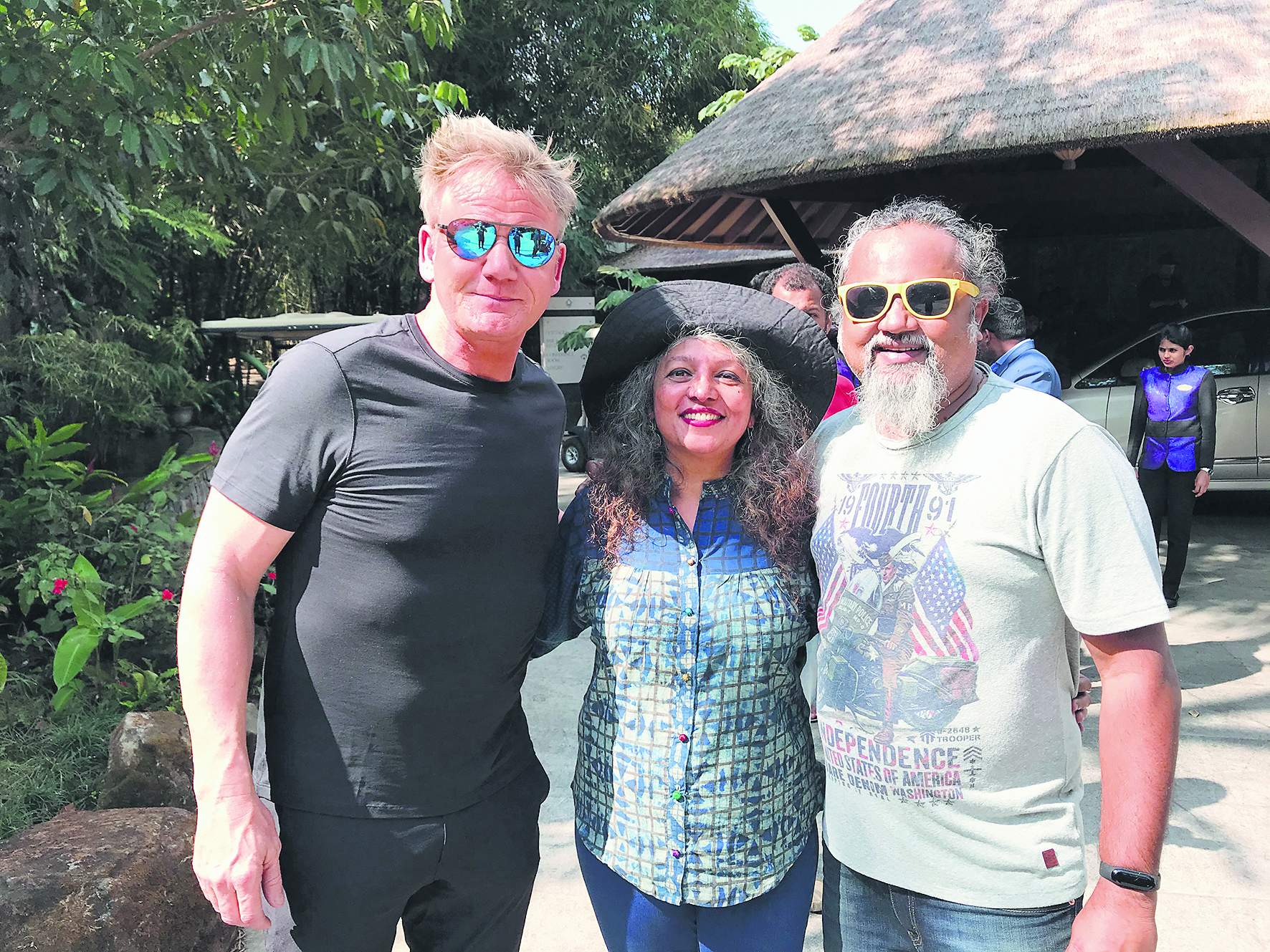
Gordon with Priya and Anurag
What could we suggest to an ill-tempered firebrand Michelin-starred chef who seemed to have done it all?
Season 1 saw Gordon rappel down a waterfall in Morocco to hunt for the perfect mushroom and go spearfishing in Hawaii. In New Zealand, he waded in a stream to catch an eel with his bare hands, tasted grubs from a rotten tree trunk, and dived for paua shells and sea urchins, braving strong currents and sharks. He jumped into the Mekong River in Laos to catch snails and learnt how to cook a giant water bug called ‘toe biter’. In Peru, he dangled perilously from a cliff edge to harvest a plant for insect larvae while in Alaska, he scaled the 60-ft Chimney Rock to make tea from ‘old man’s beard’.
Season 2 upped the ante with bigger, bolder and better stuff, injected with a healthy dose of jeopardy to the food.
From snuba diving (a mix of snorkeling/scuba) in Tasmania for rock lobster, jumping off a helicopter into Durban’s shark-infested waters and using rhino poop to catch tilapia in South Africa, trying swamp rat and Cajun cuisine in Louisiana’s Bayou, hunting Arowana fish with bow and arrow and roasting the Goliath birdeater (one of the largest spiders in the world) in Guyana’s remote rainforests, fishing for freshwater prawns in a flood-prone cave in West Sumatra, to scuba diving for scallops in the frigid fjords of Norway and making reindeer blood pancakes. So what challenges could India offer?
Hunting crabs in Malabar
Gordon was no stranger to India. His 2010 series for Channel 4’s Gordon’s Great Escape, took a deep dive into our culinary traditions and his quest for curry. He rode in a dodgy pantry car of the rattling Mangla Express, slicing onions and cooking veg curry for 400 diners, before playing apprentice to biryani masterchef and ‘King Qorma’ Imtiaz Qureishi for a wedding feast in Lucknow. He described Qureishi as the “Dog’s bollocks in the region” (No 1). Gordon’s glossary is colourful — ‘Bloody Hell’ could mean ‘Absolutely Delicious’ and **** could be anything. He rode a Royal Enfield, jumped onto a running train, cooked khud gosht in a desert pit he dug, sampled mahua and chapda chutney in Bastar, hunted with the Konyak tribe in Nagaland, tasted blood sausages and the world’s hottest chili bhoot jolokia in the North East, and cooked with ‘Sambar’ Mani in Dharavi, while trying everything from bullock cart racing and climbing a coconut tree to vegetarianism at Sadhguru’s ashram, besides grabbing karimeen (pearl spot) out of Kumarakom’s backwaters.
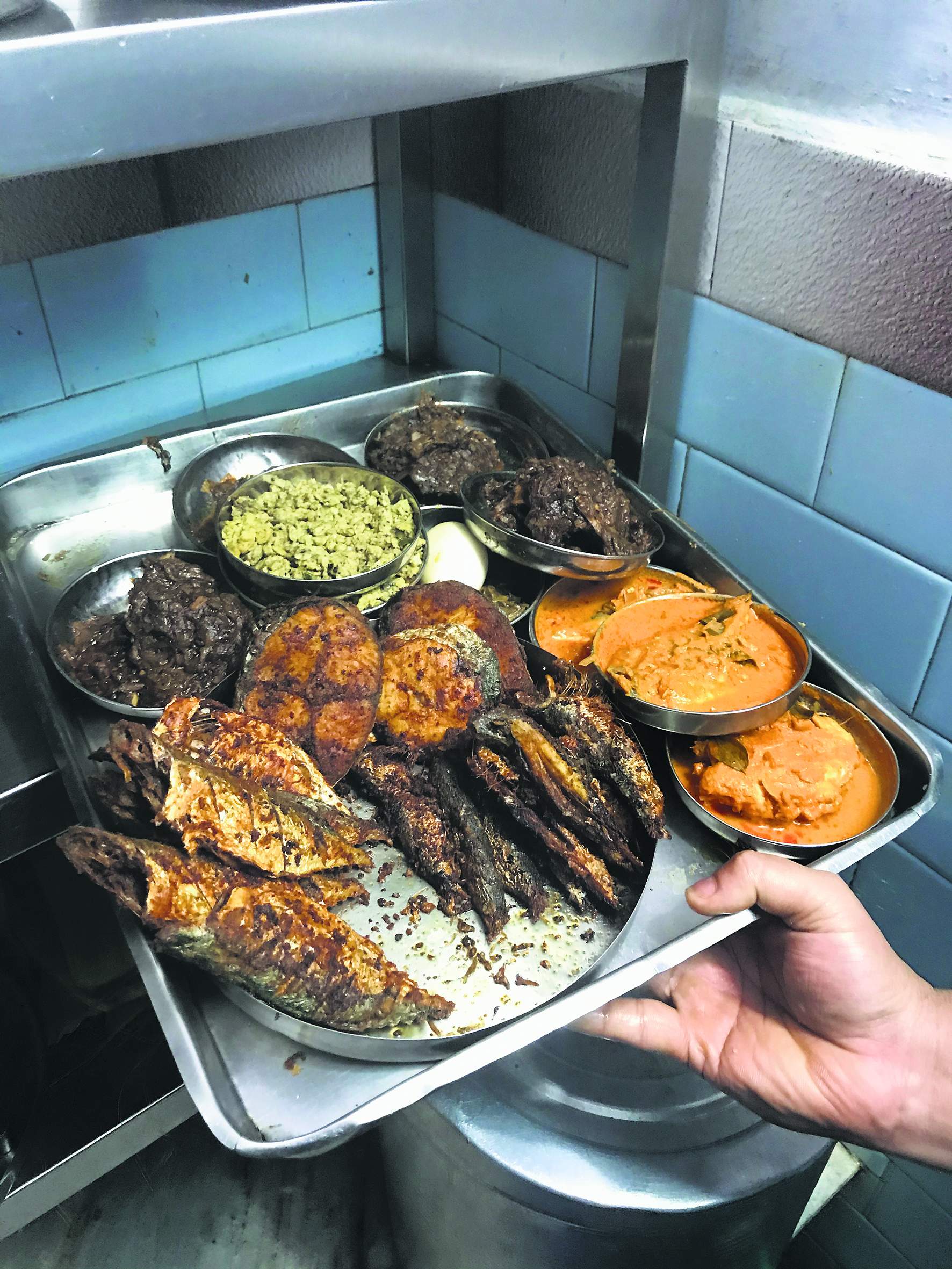
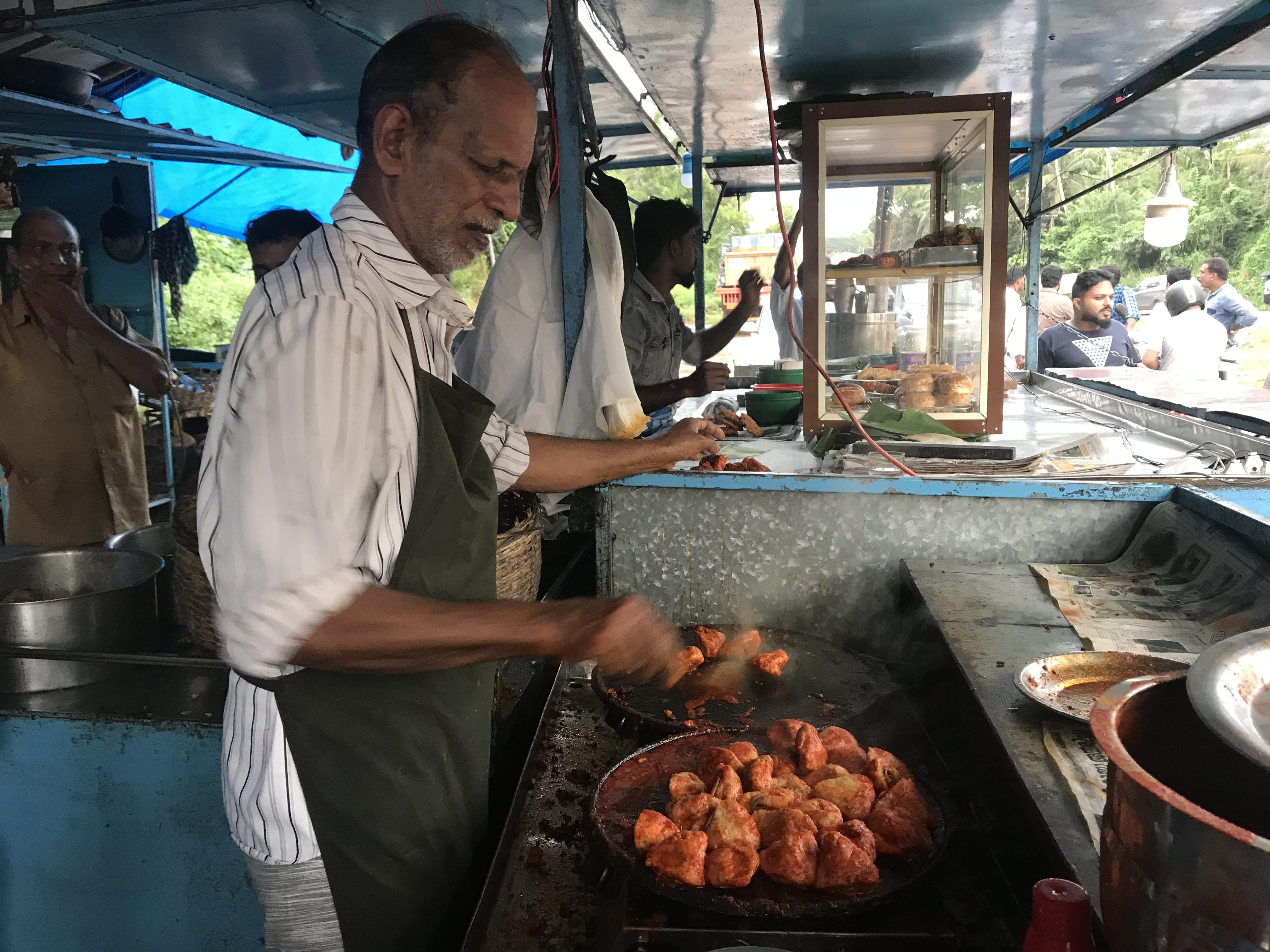
This was his second trip to Kerala and South India, but to a different part — the historic northern nook of Malabar. From Greek and Roman times to the European Age of Discovery, Kerala’s Spice Coast lured traders and travelers alike. For centuries, Arab seafarers controlled the lucrative global spice trade and often anchored in Kerala to tide the monsoon. Intermingling with the local populace resulted in a Malayalam-speaking community of Muslims called Mapila — derived from ‘Maha-pillai’, an honorific term for the new groom or son-in-law. As Kerala’s second-largest community, Mapilas are known for their distinct cuisine. In 1498, ambitious Portuguese explorers found a direct trade route to India to bypass Arab middlemen. Propelled by monsoon winds, they sailed across the Indian Ocean to reach Malabar, paving way for the Dutch, French and British. The English established a fort at Thalassery to protect their trade in ‘Tellicherry’ Pepper, prized as ‘Black Gold.’ It was befitting that a British chef was seeking culinary inspiration here. We were keen to get GR to try local fare like ari kaduka (rice stuffed fried mussels), kakka erachi (clam fry) and tackle audacious challenges.
Seafood in Kannur
Gordon is no pushover — a 6’2” tough-as-nails Scotsman, footballer, swimmer, karate black belt and Kona Ironman finisher. Yet, for all the potentially dangerous activities, we had to keep the host unharmed. We didn’t want to go down in history as the couple that got the world’s most renowned celebrity chef maimed! We vetoed the arduous boat ride on the high seas to dive for kallumakai (green mussels) around rocky islets due to the time crunch. On our recce in October, our old friends Nasir and Rosie of Kannur Beach House put us onto local fishermen. The late monsoon washed in surplus freshwater into the sea, thereby reducing its salinity, which resulted in lesser vitt (eggs) spawning on the rocks. So the spectacular beaches around Kannur had to suffice. The big question was where next?
The pristine backwater of Valiyaparamba for clam diving was too north. The Empress of Mapila cuisine Abida Rashid was far south in Kozhikode. An extension to Wayanad would make the show too Kerala-centric, a destination that features extensively in international shows.
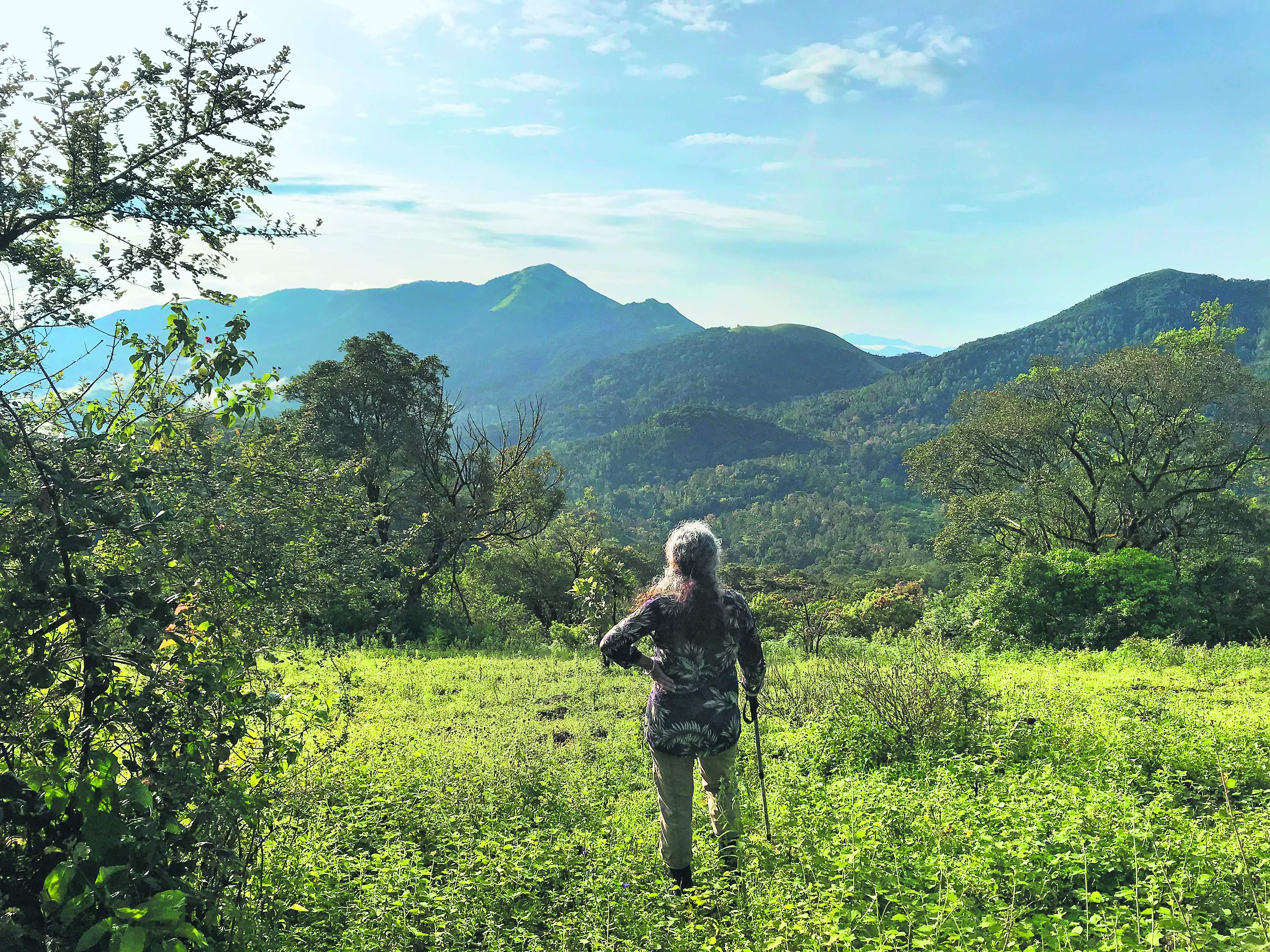
So we suggested Kodagu (Coorg) — a region GR hadn’t visited before. After the unending stretches of human habitation in Kerala (India’s third most densely populated state), Coorg would be the perfect antidote. As Karnataka’s most forested district, its rolling hills and wild vistas were ideal for a show like Uncharted. It lay in the Western Ghats, one of the world’s eight hottest biodiversity hotspots, the fountainhead of South India’s most important river Cauvery, a record producer of honey, cardamom and coffee (80 per cent of India’s coffee comes from the area) with the highest concentration of sacred groves in the world.
Ari kaduka (green mussels)
Though Coorg and Wayanad are adjacent districts with similar topography — hills, coffee and spices common to both — the difference lay in the cultural/culinary uniqueness. Coorg is home to the Kodavas, a fascinating martial community who lived off the land while preserving their unique culture, cuisine and traditional attire. Unlike Wayanad, Coorg has a well-defined cuisine with charming homestays run by hospitable Kodavas. The new Kannur International Airport at Mattanur was strategically located at an hour’s drive from Kannur and two hours from Virajpet. It was no surprise that the production team was bowled over by Coorg’s beauty on the pre-shoot scout and unanimously chose it as the locale for the ‘Big Cook’. For us, the great clincher was getting a Scottish chef to a region dubbed ‘The Scotland of India’.
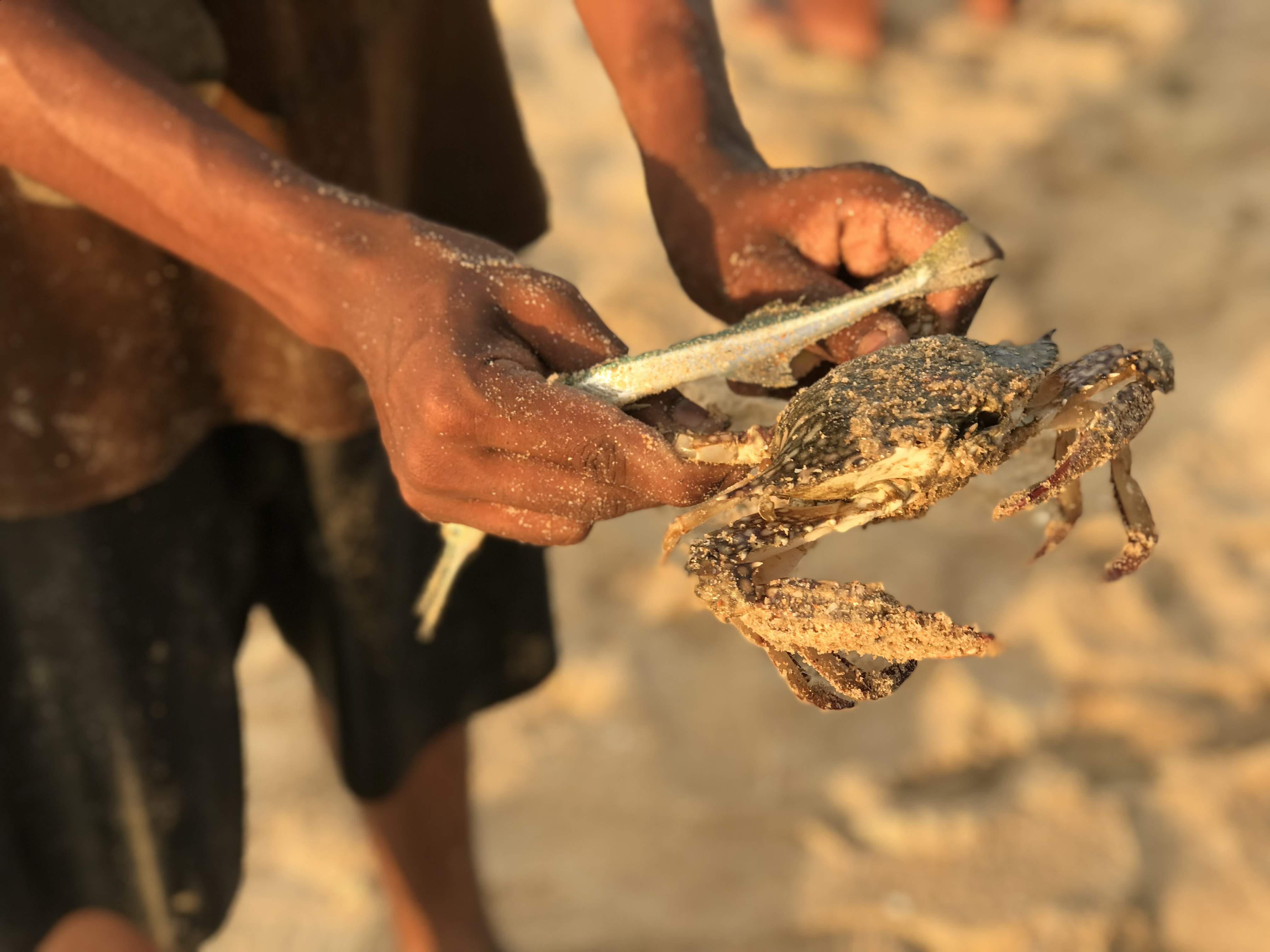
The shoot was scheduled for late January this year. So monsoon-centric activities like foraging for termay (fiddlehead fern), kemb (colocasia), bemble (bamboo shoot) and kumme (wild mushrooms) was out. Nor could one collect ripe garcinia fruits to make kachampuli, the dark vinegar that’s integral to Kodava cuisine. We were too early to harvest honey with the Jenu Kuruba tribe. Seasonality dictated our choices. Trekking to hills and waterfalls for vistas that were dramatic yet accessible, we scouted streams for crab hunting spots. Catching crabs traditionally involved baiting them with a gutted rotting toad wedged in split bamboo. The smell was enough to entice crabs from their rocky lairs, though we weren’t sure if a TV audience could stomach Kodagu’s wild old ways. We kayaked in hidden rivers for fishing options and hunted out two old wizened men of the Meda tribe, experts in mat and basket weaving to make fish baskets for us — a dying tradition. Signature dishes, rare treats, interesting locals and adrenalin-tinged tasks for GR — our job was to supply the ingredients — the world’s best chef and his team had to make a delectable episode out of it.
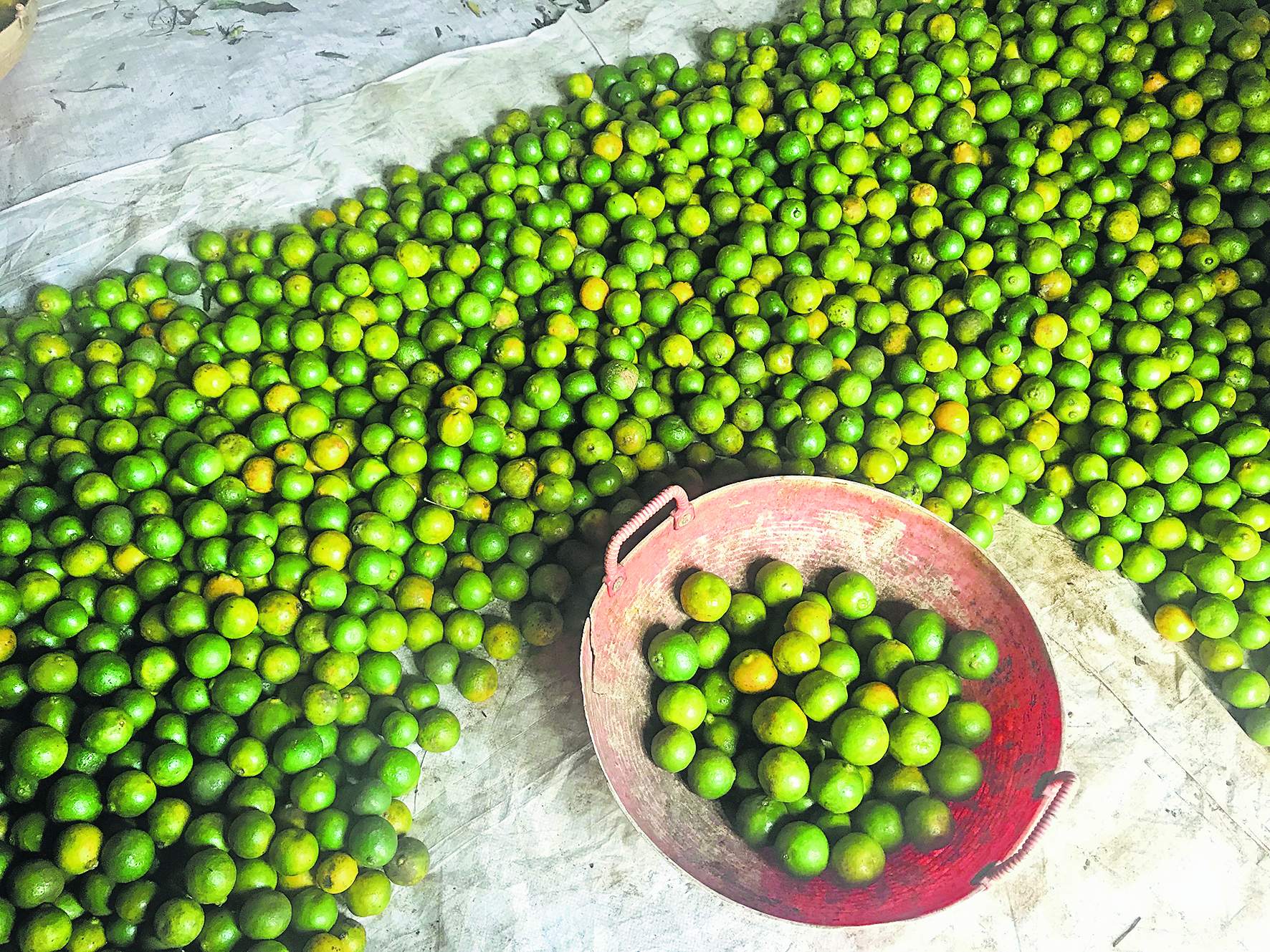
Coorg oranges
Production was shouldered by Adarsh NC of Felis Creations, with over a dozen blue-chip documentaries for Nat Geo, BBC and Animal Planet. Their recent three-part home-production Wild Cats of India was filmed by Sandesh Kadur and the third part India’s Wild Leopards is currently on Disney Hotstar. Adarsh says, “Primarily, we are into nature/wildlife and are happy filming tigers, leopards and counting scat on the field. We have covered the Western Ghats extensively and there was an adventure quotient to the program. But handling an international show with a star chef like Gordon was a dream come true. They were several challenges — two locations, multi-cam set up, high profile celeb, large crew, time crunch, permissions, travel, logistics… We were on the threshold of Corona with India’s first COVID cases reported in Kerala, so sending them back safely without harm or any adventure was nerve-wracking!” “It’s location, not a vacation”, was the oft-repeated mantra of Director Neil DeGroot. Executive Producer Jon Kroll admits, “The weakest episode this season is stronger than the strongest episode from last season!”
Gordon Ramsay: Uncharted Season 2 premiered on National Geographic in the USA at 10 pm on June 7, and Disney Hotstar, with the India episode slated for release in July.
source: http://www.indulgexpress.com / The New Indian Express – Indulge Express / Home / by Anurag Mallick an Priya Ganapathy /June 26th, 2020
Kodagu-born Mathanda Reema Ramesh has completed her Fellowship in Paediatric Haematology and Oncology from Cleveland Clinic, USA.
The Fellowship programme provides an outstanding opportunity for the future Paediatric Haematologist-Oncologists to learn to diagnose and treat a broad range of common and rare blood disorders and cancer.
Located at Cleveland Clinic main campus, the Paediatric Haematology-Oncology & BMT Department plays a significant role in promoting the outstanding recognition of this world-renowned tertiary referral centre.
Reema Ramesh is the daughter of Mathanda A. Ramesh and Beena, residents of Virajpet, Kodagu. She is the sister of Dr. M.R. Aiyappa who works as a General Physician and Diabetologist at Brindavan Hospital, Mysuru. Mathanda Ramesh has been the President of Kodagu District Central Cooperative Bank.
Reema studied in Vijaya School, Kadanga, Cauvery School, Virajpet and Coorg Public School, Gonikoppal. She completed her MBBS at Kasturba Medical College, Manipal and MD in Paediatrics from University of Southern Illinois, USA.
source: http://www.starofmysore.com / Star of Mysore / Home> News / June 26th, 2020
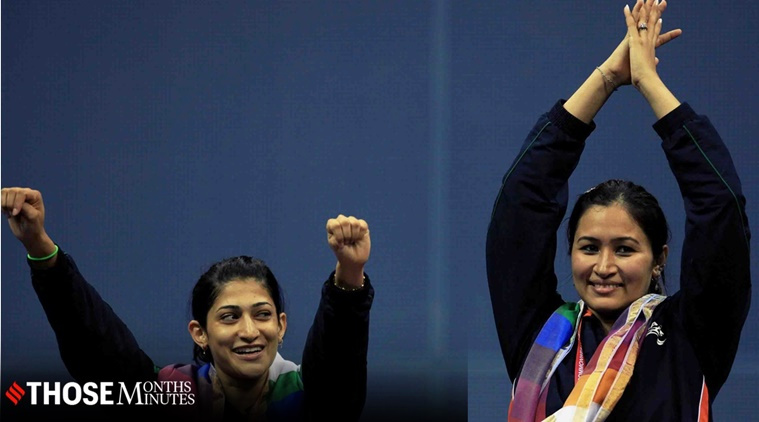
Confidence steered Jwala and Ashwini, and in turn India, towards their first-ever doubles World Championship medal for badminton in 2011 at Wembley and kicked off a decade in which singles stars PV Sindhu and Saina Nehwal would follow the trailblazing duo onto the Worlds podiums every single Championship year.
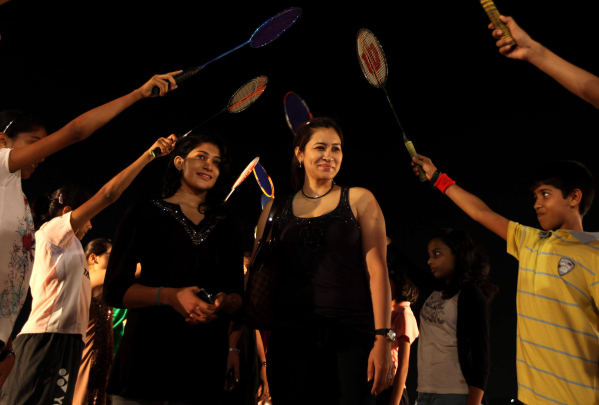
Jwala Gutta and Ashwini Ponnappa won their first-ever doubles World Championship medal for badminton in 2011 at Wembley (Source: PTI)
Everyone knows Jwala Gutta loves to fire the opening salvo. It comes entirely from her playing credo: “You can’t be a good doubles player if you can’t serve well.” The first shot sets the tone.
After she split with Shruthi Kurien at the start of 2009, Jwala was scouting around for potential partners to play with. Her mixed doubles career with V Diju was going swimmingly well as they’d beaten the Korean World No. 1s that year and entered the Top 10.
But before she zeroed in on Ashwini Ponnappa, she sprung a thunderbolt on her mother by almost sending the daughter-mother entry for the Nationals that year. Her mother ticked the only box that Jwala sniffed around for, when deciding partners: “I didn’t really have to think a lot. Mom’s serve was very good.” Jwala knew she could mop up the rest.
This confidence steered Jwala and Ashwini, and in turn India, towards their first-ever doubles World Championship medal for badminton in 2011 at Wembley in London, and kicked off a decade in which singles stars PV Sindhu and Saina Nehwal would follow the trailblazing duo onto the Worlds podiums every single Championship year. Jwala-Ashwini’s was the first medal since Prakash Padukone won in the 1980s.
“When I decided to play with Ashwini, she wasn’t even a Top 4 in India. I just saw in her that no fear of losing, and knew I could mentor her,” Jwala says.
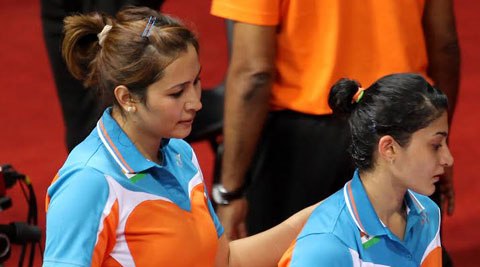
Ashwini wasn’t pickled in the ways of doubles, where plenty of mental disintegration gets induced. (Source: Express Photo by Ravi Kanojia)
Doubles was Jwala’s battlefield where she needed only an ally. “I really could combine well with anyone – Diju of course, Chetan, Vidyadhar, Gopi also, Shruthi,” she explains. “Only this – the partner should be able to serve properly.”
So when a friend and batchmate pointed out the whiplashing Ashwini to her at the nationals, Jwala wasn’t distracted by what was Ashwini’s very-noticeable big booming smash. “My friend told me – she smashes really hard. I immediately asked, but how’s her serve. I don’t care about the smash as long as it’s hit at the right time and right place. I’m not bothered by how hard she hits. I watched her at the start of the rally – her serve was fine. She was still young.” The pair was good to go.
More than callow, Ashwini – a fearless, formidable, free-spirited hitter – wasn’t pickled in the ways of doubles, where plenty of mental disintegration gets induced.
“At the start of the rally, that’s where you put pressure on the opponents. Top pairs understand the importance of a good serve that opponents struggle to return. I always got my points when I served well,” Jwala says.
Those incisive all-noticing eyes analysed the scene before her like a computer processor when Jwala served.
“I was observant even as a junior. Where is the receiver’s foot facing? How’s he holding the racquet? Which weakness must I attack….” there were a dozen cues that Jwala would factor in when she set out to serve.
Ashwini reckons they combined seamlessly and beyond the obvious advantage of being a left-right combo.
“She had a great serve. And I focused on what I had to do,” Ashwini says. A part of the reassurance that Ashwini brought to the court for Jwala came from Ashwini’s unalloyed conviction in her own smash. Polite and always soft-spoken, Ashwini though takes blazing pride in her smashing where the hissing thwack could well be pronounced as “but of course”.
The bite to the smash comes from Ashwini’s total rejection of breaking it down. The Ashwini smash is just one Macbethian uninterrupted striking down of the axe in one fell swoop.
At the start of this decade, the young and agile Ashwini could rain down 15-20 smashes one after another. She didn’t just eschew nuance in that shot – she chewed and spat out violently any notions of prettying up her whippy welt.
“I just know one smash – that’s my smash,” she says with rare curtness, if one asks her to dissect her favourite flogging action with a badminton racquet. “There’s very little touches there,” she says shredding all pretensions to artistry. “It’s like a hockey whack,” the proud Coorgi raises the violence meter, “it’s a lot about power and just doing it. No thinking. When I’m smashing well, I’m just flying on court.” It’s never not good – the Ashwini smash.
“I’m not apprehensive about what’ll happen after I smash. I’m not scared of losing.”
Out of this fiery pair of prides – Jwala: unquestionable of her serve and Ashwini: unrepentant of her smash – was forged India’s first and hitherto only doubles medal in the World Championship.
But first came the dazzling of Delhi.
***
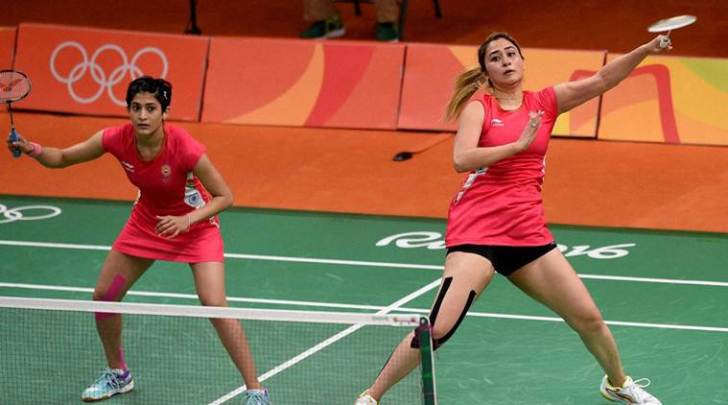
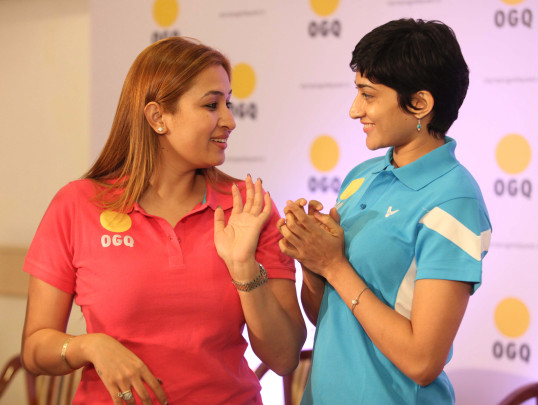
Jwala Gutta and Ashwini paired for the first time together in 2009. (Source: PTI)
When they got together in 2009, India was racing towards hosting of the 2010 Commonwealth Games, an event that singlehandedly provided the impetus to unearth and groom a bunch of medallists across sports.
The budgeting had changed immediately after the 2006 bronze at the Melbourne CWG, four years after India lost the team bronze in Manchester. “Melbourne was our first mixed team medal. It put us in the ‘A’ list of priority sports. Exposure trips increased from 2008-9 to prepare for the CWG. Dedicated doubles training started and I was on the court nearly 8-9 hours a day morning and evening,” Jwala recalls.
In came the Indonesian Master Shifu, Indonesian Atik Jauhari, who smiled compulsively and cracked the whip in training with even more gnashing teeth. “He brought in positivity and believed in me,” Jwala says.
Her frequent disagreements with coach Pullela Gopichand over how much to train and how much to compete (an intractable problem that persists with players to this day), had unsettled her from the task at hand though she and Diju emerged as the cleverest pairing on the circuit in 2009 when they made the year-end Super Series Finals. “We’d won Chinese Taipei and Bitburger. But the whole perception changed after CWG for badminton and I was happy to be part of it,” she says.
Though it started with a bout of sneezing and allergy as Delhi’s dust and heat got to her that October, and she was bed-ridden. But the Commonwealth Games had been a jet booster to many Indian athletes, who revelled in being prioritised and taken care of for the first time ever.
“For the first time, I’d play in front of my family because they couldn’t afford to travel. I really enjoyed playing on home turf in front of my parents,” Jwala remembers. The belief translated into India’s 33rd gold that helped the hosts level with England on the medal tally.
Jwala had played on all 12 days without a break in front of a packed Siri Fort. “You could hardly hear the shuttle, I told Ashwini ‘let’s just focus on the next point’.”
Like her serve, Jwala tends to look ahead only at Round 1 of any tournament. No muddling the head with conjectures of a semi-final. “That’s a stupid way of looking at tournaments. Always only focus on the next point,” she bosses. Jwala also always fronted the media even when she lost, never disappearing from the backdoor and remained aggressive and animated on and off the court.
The surge took the Indian pair past the Malaysian top team and then she combined with Diju to secure India’s first win over the top English pairing which had Nathan Robertson, till then unsurmountable.
She addresses a long-pending allegation over her questionable fitness – as combatively as ever. “If I wasn’t fit, I wouldn’t have dominated. Yes, I don’t have the athletic body type, but you don’t have to look muscular to be able to hit,” roars the southpaw. “People said I was a slow mover. But i was really tall. I didn’t need to scramble!” she says.
Accustomed to questions being thrown at her because both Diju and a yet inexperienced Ashwini remained soft-spoken, Jwala gleefully stabbed at questions while speaking her mind unfettered.
The gentleness and bottomless patience she reserved for the only one who she believed deserved it: her younger partner Ashwini.
“Not just on court, I decided to take her along through the whole media-training-competing routine. I never referred to any situation as ‘you’ or ‘me’. It was ;us’” always. I’d patiently correct her strokes by telling her not to take stress and be fearless always,” Jwala remembers.
Ashwini was soaking it all up like a sponge. “The programme was structured with coach Atik and specialised coaching. And the 2010 win was a miracle booster. It was our biggest win as a pair,” Ashwini says.
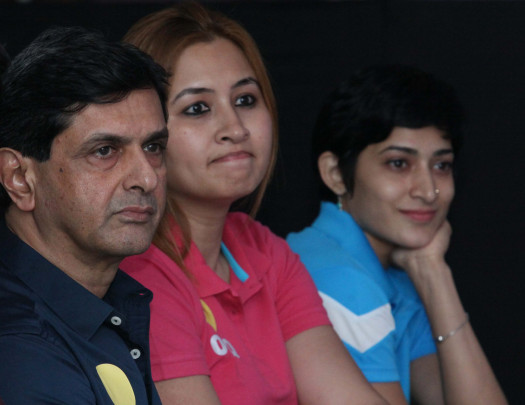
Jwala Gutta and Ashwini Ponnappa at a felicitation program of Badminton 45 Silver Jubilee at Bombay Gymkhana (Express photo by Prashant Nadkar)
It was the beginning of Ashwini learning a very important drill from Jwala, something that suited her own unhassled temperament. “I remember starting this at the Sudirman Cup where I could really switch on and switch off. We’d do well in a match and relax,” she recalls of the thriller against the Thais that the Indians won 21-19 in the third. Indian doubles was taking its infant steps and Ashwini remembers learning something as basic as where to stand on court and what worked and what didn’t. In the lead-up to the Korean Open that year, Jwala-Ashwini had eked out a 22-20 in the decider against Hong Kong and another confidence-enhancing three-game win against the Japanese.
London was only the pair’s second World Championship together and they’d strung up some good results at the French Open in the run-up. Her trainer Declan had travelled that year and Ashwini recalls a rare time when playing well coincided with having fun. “Sometimes you don’t enjoy the journey and the wins and losses don’t matter. But I remember being able to switch off the pressure and just having a lot of fun playing that one. I loved being in the stadium,” she says of a happier time.
Declan not only put her mind at ease about recovery but also pointed out something that the painfully shy woman shrugged off like a jumper.
“Declan told me I should not look down on the floor and always walk with chin up and head high. I remember doing it all consciously and how it helped my confidence and I walked tall,” Ashwini remembers.
The fidgety nervousness that comes with being impatient on court and in finishing points (botching them) was left behind at home, as Ashwini distinctly recalls walking slowly and calmly on court and not scurrying about cluelessly.
The Indians started against the Americans where Wembley’s unique atmosphere had to be internalised. “It’s a different atmosphere at Wembley because the crowd there is always blackened out so the spotlight is on the shuttle. Courts tend to appear brighter and you have to adjust to the visibility,” Jwala recalls. Indians would win 9, 18 against the Americans.
Unseeded and running into World No. 2 was familiar as was being pipped in the opener 21-19 – the result against Room Lok Yan and Tse Ying Suet, wasn’t. “We were prepared because their serves weren’t as good though they were good at defence,” Jwala sensed her opportunity to pounce. “Even after losing the first game, I was confident.” They won 19-21, 21-10, 21-17.
Jwala-Ashwini’s was the first medal since Prakash Padukone won in the 1980s. (Express Photo by Vasant Prabhu)
Up next were the Indonesians who seemed to have taken the Indians lightly and combined that with their own iffy confidence levels. Jwala is quick to acknowledge that Vita Marissa is a bit of a mixed doubles legend, but on the brink of her retirement and a reputation to guard, the Indonesian was under pressure.
It wouldn’t have helped her that Jwala had x-rayed her defence down: “On the brink of retirement, Vita wasn’t a great mover. She could smash hard but couldn’t hit as many times. Tiring her out was the plan.”
Feeding her drops bringing her to the net, the weakening limbs and the under-confidence saw Jwala preying on her tiredness. And while Ashwini peppered her from the back with smashes, Jwala would use the big boomer to soften her for a further bag of deceptions: her wicked serve.
The garden variety backhand serves in doubles don’t offer much variety for the Serve Queen. “Vita not being confident enough to return my serve made me even more adventurous.
“Even the low serves have variety. There are 5-6 variations even to that width so you keep opponents guessing,” Jwala says with glee of a web she weaves at the outset that eclipses the rest of the rally. Her antennae were buzzing even as Ashwini had to stay in front because the shuttle was coming back very fast.
Typically, Jwala takes 2-3 rallies to get a complete read on her opponent: “I focus on movements. I just remember how I lost my last point. If I win a point, I try to win on the same strategy. But you can’t think too much or brood over a lost point.”
Receiver’s styles got 3D imprinted on her mind, and her superior anticipation that afforded just 2-3 chances even when she played singles, helped her give clear succinct serving instructions to Ashwini. The Indian duo chipped away at the 17-21 first set reversal for a 17-21, 21-10, 21-17 win.
She remembers feeling a shiver of excitement on the podium thinking of her parents. “I showed emotion that day though after reaching semis, where we were assured of the medal, we did nothing unusual. Same things – though we might have eaten at a Chinese restaurant.” After the semis against the Chinese including the legend Zhao Yunlei was lost – 14, 16, it struck her that something historic had been achieved by the really unheralded pairing.
Ashwini remembers a happy time. “We dealt with pressure well against the Indonesians and knew we had created history because only Prakash Sir had a Worlds medal before us from India. Always being compared to singles used to be maddening,” she laughs.
She doesn’t remember any rancour associated with the Worlds medal. “We were in a good space. We had good meals, we laughed a lot,” she says.
Reactions to Jwala-Ashwini’s World medal were underwhelming. (Express Photo by Vasant Prabhu)
Reactions in India were underwhelming – the duo reckon out of ignorance. “There was no reception and now I think that was strange. Later, the way Sindhu was received was wow. Ours was no big deal for anyone. There were no questions about why doubles wasn’t doing well, so no celebration of when we did well either,” she says.
Ashwini says the bronze ought to be put into perspective. “Maybe, doubles was not as decorated as singles. But ours was historic, right? The first one for women. Kids can look up to us. If you’re comparing, we had little support, no endorsements. But not being received when we came back hurt a little.”
Doubles itself changed a lot – faster and tougher to get points. “We worked hard, nobody can fault us on effort. We were smart on court. We played quite often to prove ourselves in what weren’t the easiest of times,” she says.
It was when her support system – parents, brother, then boyfriend-now husband huddled around her. “Getting into the zone was tough playing doubles back then. We would get bogged down with one loss. And people would be questioning us. I’m grateful my family understood what I was going through,” she says. One of the reasons the medal sits in her parents’ home.
Finding an oasis of good form, a good vibe and success amidst the storm became doubly challenging when London itself threw up one giant tantrum. “There were riots raging in London that time. It used to be an adventure just going to the stadium. They started after we landed. We would go under shuttered restaurants for our meals. We even got out once through the backdoor. Having never been in such a situation, it was erm… different,” Ashwini says. Young and adventurous, they even afforded themselves a tingling of excitement finding beauty in breakdown.
Jwala remembers an incident opposite Wembley. “We witnessed some rioting from across the street. It was quite disturbing. But you know what happens right in such situations – after every match, we would just forget about the match, look for food, enjoy every morsel and be grateful for the basics. So effectively, we didn’t let a win settle into our system. We hardly discussed the match. It was about playing – going to a nice place to eat – walking a lot and only ensuring we were safe.” In other words, living in the moment – with all its warts and all.
A year on, London would give Jwala-Ashwini another heartbreak at the Olympics. “It was unfair and disappointing that some teams tried to fix the draws and jeopardised our chances. We had gone there well prepared. But that Japan / India / Chinese Taipei situation – it was just sad.”
It’s a scab best reserved for dark moments. But London for Ashwini will always be about India’s least-known World Championship medal and finding her heroic moment of glory and pride amidst chaos of the famous city up in flames. They can almost remember it all in slow motion, such was the drama of the bronze that came out of fire.
source: http://www.indianexpress.com / The Indian Express / Home> Sports> Badminton / by Shivani Naik / June 25th, 2020
Dr Afreen Amir, a native of Kodagu, is now part of a research team in London that is already working towards finding a vaccine for Covid-19 pandemic.The research team has been researching on ‘Dexamethasone’, a steroid, which has given a new hope by possibly being a potent vaccine against the Covid-19.
After completing her MBBS in Mangaluru, Dr Afreen pursued her higher education in London and has been working as a doctor there. Her husband Mushir too, is a doctor in London. Afreen’s father S I Amiruddin is currently based in Dubai. He is the elder brother of Kodagu Zilla Janapada Parishat General Secretary Munir Ahmed.
“Afreen completed her SSLC from St Joseph School in Madikeri. She had emerged as the second topper in the district, in the Class 10 board exams. Currently, she is one of the seven experts who are working on the Covid-19 vaccine in London. She always had an inclination towards research in medicine”, Munir Ahmed said.
‘Dexamethasone’, the possible vaccine for the Covid-19, has been subjected to laboratory experiments. The researchers are of the opinion that with the use of the Dexamethasone, about one third of the death rate of the Covid-19 patients can been reduced. A report in this regard is expected to be out soon.
source: http://www.deccanherald.com / Deccan Herald / Home> State> Mangaluru / by DHNS, Madikeri / June 19th, 2020
WELCOME. If you like what you see "SUBSCRIBE via EMAIL" to receive FREE regular UPDATES.
Read More »