Category Archives: World Opinion

‘Sinkholes to Stars’ Monday at GLMHC in Sanctuary Series

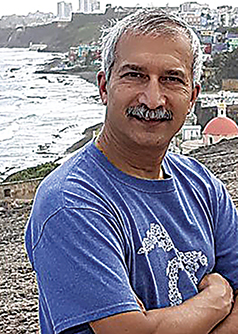
Professor Bopi Biddanda

On Monday from 7 to 8:30 p.m. is the next program in the Sanctuary Lecture Series, “Sinkholes to Stars: Diving into Lake Huron’s Sinkholes while Reaching for the Heavens.”

Doors open at 6:30 p.m. for this free program at Great Lakes Maritime Heritage Center, 500 West Fletcher St., Alpena.

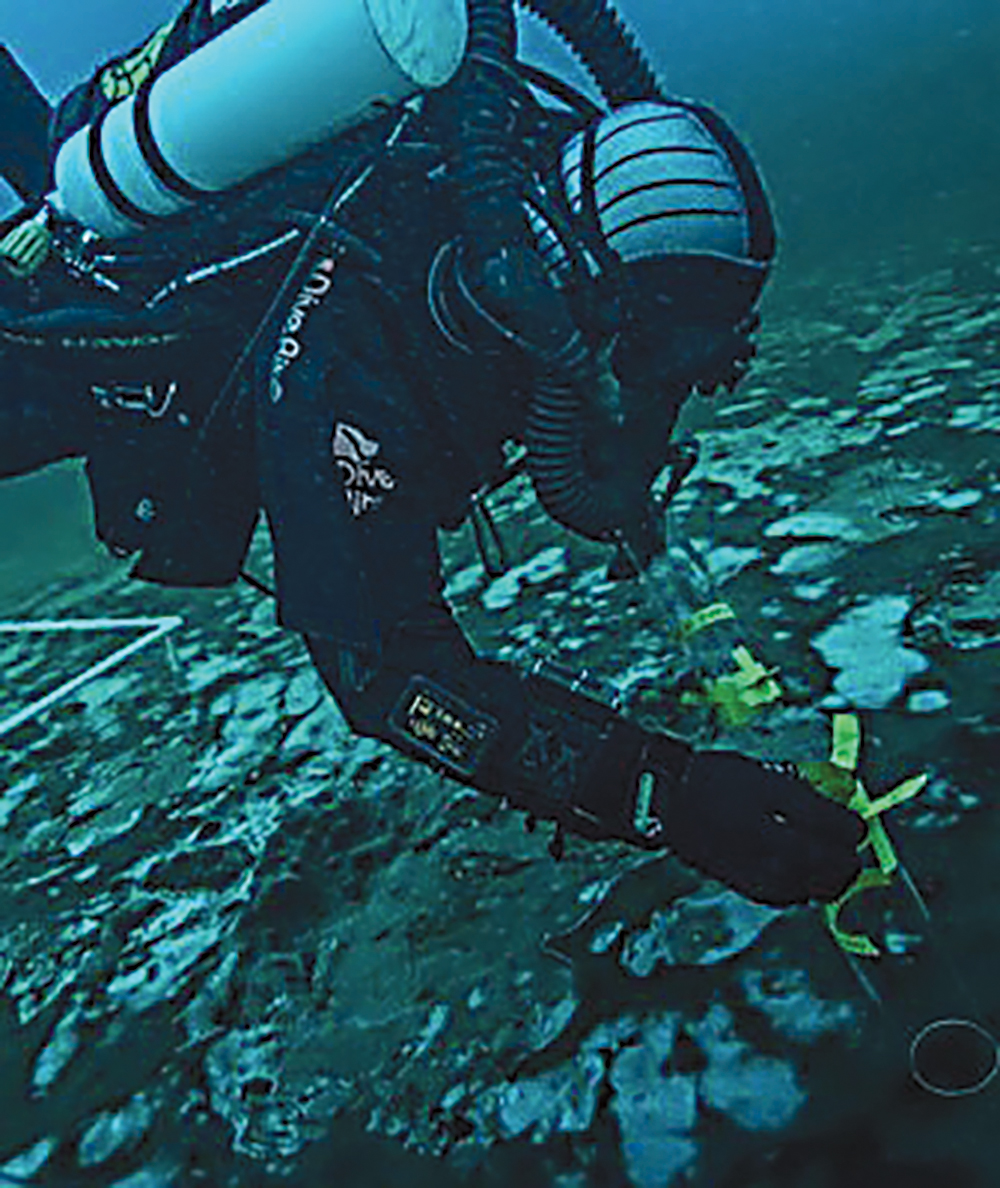
Grand Valley State University Professor Bopi Biddanda will share the excitement of over a decade of exploration of life in Lake Huron’s sinkholes carried out in collaboration with Thunder Bay National Marine Sanctuary, and ponder the relevance of these findings to major issues of both scientific and societal interest such as Earth’s current biologic and physiologic diversity, oxygenation of early Earth in the distant past, and humanity’s ongoing search for extra-terrestrial life.

Biddanda is an aquatic microbial ecologist studying the movement of carbon driven by microbes at the Annis Water Resources Institute at GVSU. He grew up in the lush subtropical mountains of Southwest India, and came to the U.S. in the 1980s to obtain a Ph.D. in ecology from the University of Georgia. Subsequently, he went on research and teaching adventures at the Alfred Wegener Institute for Polar and Marine Research (Germany), National Institute of Oceanography (India), University of Texas Marine Science Institute, University of Rio Grande (Brazil) and University of Minnesota.

For the last decade and a half at GVSU, he has been studying the microbial cycling of elements in the Laurentian Great Lakes — exploring life in extreme environments such as Lake Huron’s sinkholes and operating a world-class time-series buoy observatory in Muskegon Lake.

Courtesy Photo A diver navigates a sink hole in Lake Huron.

He teaches classes in marine biology and aquatic ecology, and directs NASA’s Michigan Space Grant Consortium programs at GVSU. He hopes to continue to study Earth’s lakes — one of our most vital freshwater commons — as sentinels of change.

For more information, contact Stephanie Gandulla at steph.gandulla@noaa.gov or 989-884-6200.

source: http://www.thealpenanews.com / The Alpena News / Home> Life / June 06th, 2019

Coffee Board takes tech route to help growers boost yield

App-solutely smart: In the case of white stem borer, growers and the Board have validated 90% accuracy.   | Photo Credit: Reuters
App-solutely smart: In the case of white stem borer, growers and the Board have validated 90% accuracy. | Photo Credit: Reuters

Apps fed with data help forecast weather, predict leaf rust

For the 3.5 lakh coffee growers in India, 98% of whom are small-scale, challenges affecting production include labour shortage, climate change and pest attacks.

One way to manage these is by adopting technology, which the Coffee Board is trying to bring about for the growers.

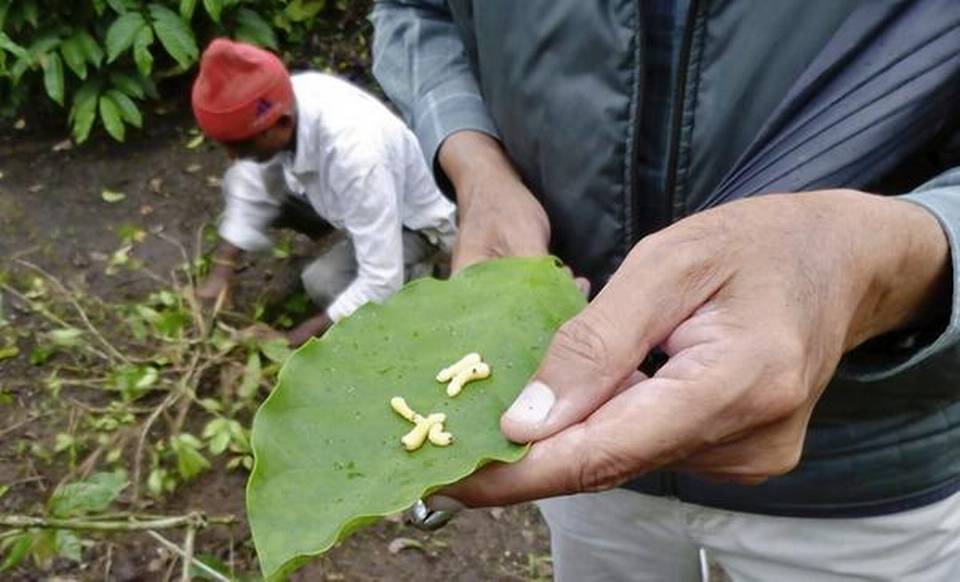
Last year, Eka Software Solutions took up a pilot project for the Coffee Board of India on machine-learning based applications. According to Shuchi Nijhawan, vice president – agri business for Eka Software, the Board and the company took up three areas to try machine learning based apps. One was addressing the white stem borer problem, another was weather forecasting, and the third, predicting leaf rust.

Machine-learning

“Based on the data, photos provided, we created a machine learning algorithm to forecast each of these issues (for a grower). We worked with 20 liaison officers of the Board and they coordinated with the growers.

“The success of the app depends on the data fed in. In the case of white stem borer, the growers and the Board have validated 90% accuracy,” she says. Eka’s digital platform for agriculture aggregates data from different sources and applies the algorithm to provide insight to the coffee growers.

Srivatsa Krishna, chairman of the Coffee Board, adds that though there is no exact data, it is learnt that in the last 10 to 15 years white stem borer would have brought down Arabica production by 25-30%. “The growers do need solutions for such issues.”

“Despite the Coffee Act having been around for more than seven decades, farmers have zero technology. The only way to increase productivity is by bringing in technology,” he says. Even before smartphones became popular, coffee growers had checked prices on the London and New York exchanges almost on a daily basis.

Hence, adopting technology should not be difficult for them. The Board has plans to scale up the analytics technology for adoption by more farmers.

Currently, 90% of the estates depend on labourers for most of the work and there is not much technology adoption among coffee growers in cultivation or to increase production.

“If someone is ready to do it [technology] for us, we will adopt it. It will help increase yield,” says Sundar Subramanium, executive director of Mother Mirra Coffee Plantations. Ms. Nijhawan says the company is exploring partnerships for other crops too. “Indian farmers want such technology services. There are several agriculture institutes and cooperatives in the country that have a lot of data. I see a huge potential for these technologies.”

source: http://www.thehindu.com / The Hindu / Home> Business> Industry> Green Shoots / by M Soundariya Preetha / June 02nd, 2019

University of Hyderabad professor awarded

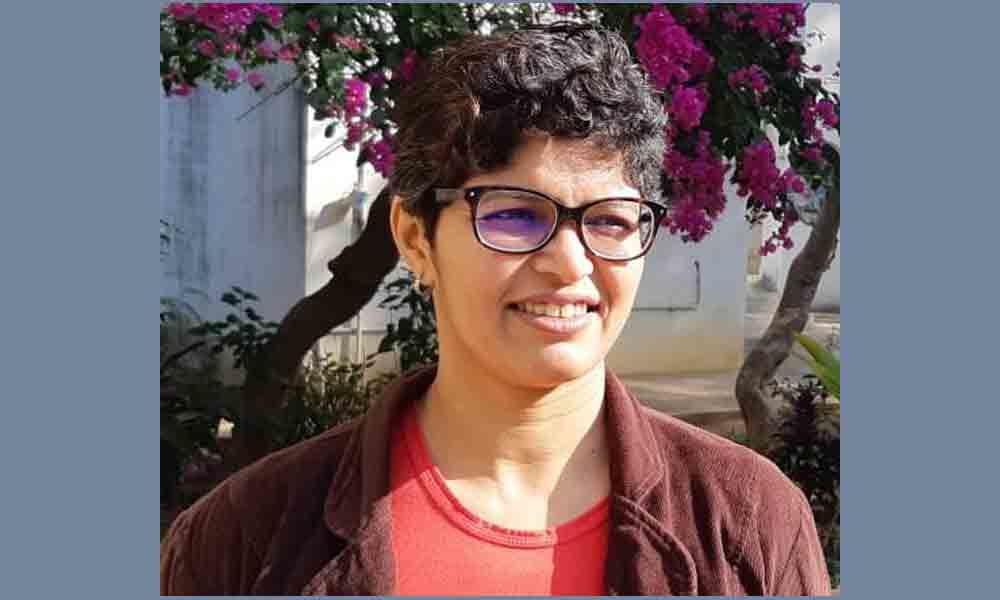
Dr Sowmya Dechamma
Dr Sowmya Dechamma

HIGHLIGHTS
Dr Sowmya Dechamma C C, Associate Professor at the centre for comparative literature, University of Hyderabad (UoH) has been awarded the Fulbright-Nehru Academic and Professional Excellence Fellowship for the year 2019-2020.

Hyderabad:

Dr Sowmya Dechamma C C, Associate Professor at the centre for comparative literature, University of Hyderabad (UoH) has been awarded the Fulbright-Nehru Academic and Professional Excellence Fellowship for the year 2019-2020.

She will be hosted by the Department of Comparative Literature, Queens College, The City University of New York where she will teach a course on “Modern Indian Literary Cultures” and work on her research project “Understanding the Modern: Of Oralities and Languages”.

Dr Sowmya Dechamma’s Fulbright proposal aims to look at how and in what ways issues concerning languages spill-over and charge other spheres of our lives. By foregrounding minority languages (specifically Kodava language) and its relationships with major languages (Kannada and English), the project seeks to understand the nature of modern for speakers of minority languages.

Emerging from this concern around the modern is the course she plans to teach – “Modern Indian Literary Cultures”. Her research and teaching aim to investigate the notions of modern that emerge through these texts; the manner in which they are connected to ideas of community and of region, nation; Ways in which texts engage with the constant presence of oralities in their own cultures; and what acts of writing tell us about the cultures written about.

source: http://www.thehansindia.com / The Hans India / Home> Hans> Young Hans / by Hans News Service / May 31st, 2019

Tata Coffee opens first freeze-dried production plant outside of India

Tata Coffee has opened its first free-dried instant coffee plant outside of its native India after GEA, a tech supplier for food processing, completed work on the new Vietnam plant.

After Brazil, Vietnam is the world’s second largest producer of green coffee and the new plant based in Binh Duong Province produces 5,000 metric tonnes per year of free-dried coffee.

GEA supplied the entire production line from roast bean treatment right through to the packing of the freeze-dried powder.

This isn’t the first time GEA has undertaken work for Tata Coffee, having built a coffee extraction and evaporation plant for the company in 2013.

“This type of project is ideal for us at GEA because our expertise and scope of supply allows us to build the entire coffee line using our own resources,” said Kim Knudsen, Head of Sales, Coffee and Freeze Drying at GEA.

“This means we can maintain control and take responsibility for the entire project from start to finish.”

source: http://www.fdiforum.net / Food & Drink International / Home> Production / by Dominic Cuthbert / May 28th, 2019

Lest We Forget Their Sacrifice-1 : The Story Of Field Marshal K.M. Cariappa

Cariappa01KF29may2019

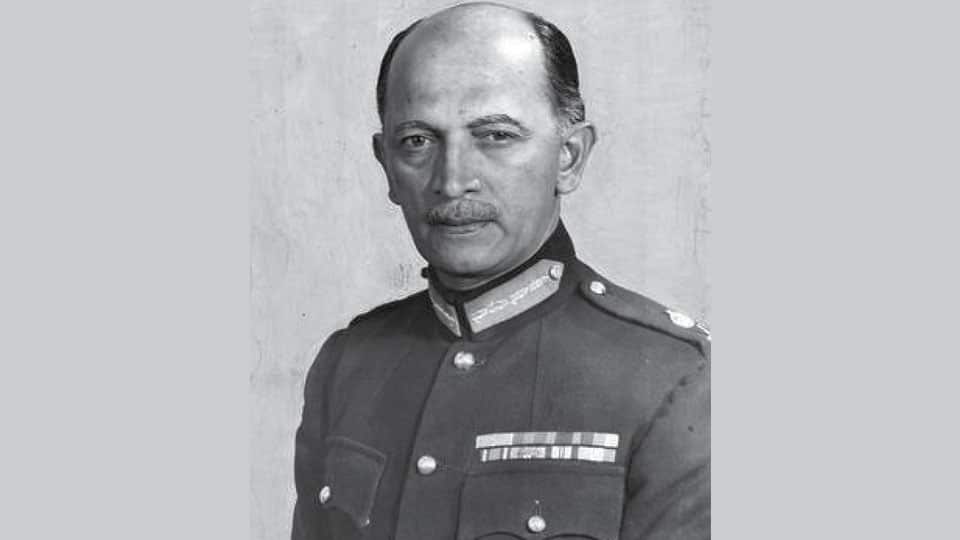
Leader, Commander, Benevolent Father to his children and a guiding beacon that led an entire nation and her armed forces — Field Marshal Kodandera Madappa Cariappa was the first Indian Commander-in-Chief of the Army. He was to his men the epitome of gentlemanly conduct and selflessness. His ideals still hold sway in the Indian Military Establishment. His greatest gift to the Indian People, probably was a fighting force that was no less compared to any other in the world and yet had the commendable restraint that prevented the Army from ever meddling directly in the political machinations of the country. This delineation lent a sense of integrity and unique purpose to the Military Establishment that has held it in good stead all these years. The credit for this must go to K.M. Cariappa. May 15, 2019 was his 26th Death Anniversary and it would indeed be a good time for a look back on his life and events…

By Dr. S.N. Bhagirath

On the 28th of January, 1899 the residents of Shanivarasanthe in Coorg heard a shot fired from the revenue quarters heralding the birth of a baby boy. The boy’s parents were Kodandera Madappa and Ammayya. He was the second among six children and was fondly called ‘Chimma.’ Madappa was a Sub-divisional Magistrate in Shanivarasanthe at that time. Chimma would one day command the Indian Army in Independent India and play definitive roles in WW-II and wars with Pakistan soon after Independence. He nurtured an Army that has stood the test of time. Till the very end of his life, he dedicated to the Army, a spirit of camaraderie and patriotism which remains legendary to this day.

Field Marshal K. M. Cariappa stuck to one particular daily habit — he would get up every morning, finish his ablutions and before his breakfast, walk up to the fire place by his bed side to render his salute to three things lined up there — the two photographs of his mother and father and a small silver statue of the unknown Indian Soldier! Like a true gentleman he sat for breakfast wearing a full suit, often alone.

K.M. Cariappa had his schooling at Madikeri. His English teachers C. Rensford and W.H. Whiteworth made quite an impression on the young Cariappa and imbibed British values in him. He was fond of playing Cricket and Hockey. In 1918, he went to Presidency College at Madras for his graduate studies. On his return to Coorg, there was an ongoing recruitment for the post of “Commissioned Officers” for the Army. Chief Commissioner Cobb was impressed by K.M. Cariappa and selected him over others.

Cariappa joined ‘Daley Cadet College’ on June 1, 1918. His first posting was in the 88th Carnatic Infantry (2nd Battalion) wherefrom he was transferred to 125 Napier Rifles. This regiment was stationed at Mesopotamia (Iraq) for two years. At the end of two years, he was transferred to ‘Prince of Wales’ 37th Dogra Regiment, which was at that time stationed in Afghanistan. During these postings, Cariappa learnt and incorporated into his men the tricks of guerrilla warfare — a move that caught the attention of his British superiors which eventually resulted in his promotion to the post of Quartermaster. He is believed to have got the nick-name ‘Kipper’ around this time. This nickname was later adopted by Nehru and Indira Gandhi as well!

As a representative of the British Indian Army, K.M. Cariappa had the opportunity to visit and observe many other armies. While in Japan, he sadly lost his mother in India. Upon his return, his reputation as an able officer had begun to make rounds in the higher echelons of the British administration. He was entrusted with the onerous task of escorting Viceroy Lord Irwin to Madikeri on an official visit. Cariappa was just 24 years old ! By 1927, Cariappa was a Captain in the Army. Cariappa’s coaching at Royal United Services Institute in 1932 and his time at Small Arms School (SAS) and Royal School of Artillery (RSA) prepared him well enough to clear the Quetta Staff College Entrance Examination. In 1936, he was appointed as Staff Captain and in 1938 he was promoted to the rank of Major.

Cariappa02KF29may2019

Personal Life

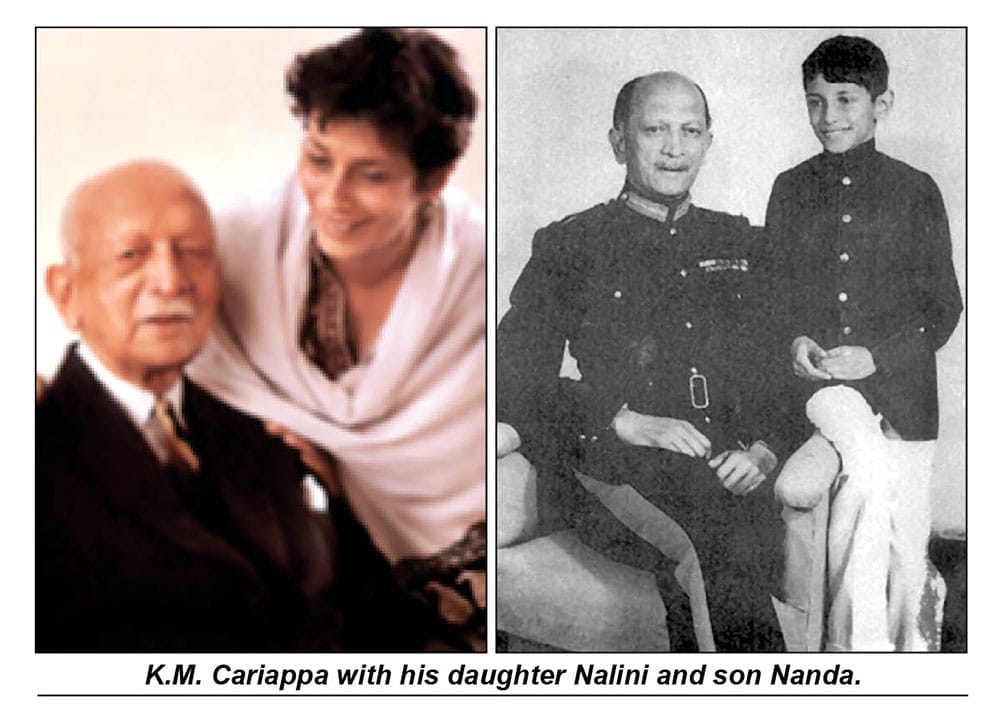
On his 37th birthday, he was sent back to India and was stationed at Hyderabad. In the same year, he got married to Muthu in a traditional Coorgi style wedding. He had his first child, a boy (Nanda Cariappa) in January of 1938. His daughter Nalini Cariappa was born in February of 1943. His tedious and hectic schedule and the constant transfers across the continent eventually took a toll on their marital life. The couple separated in 1946. After the separation, Cariappa took both his children (aged eight and three years) under his wings. He was ably assisted in this effort by his sister. A sudden transfer for Cariappa’s sister’s husband to Andaman & Nicobar Islands meant that he could no longer take care of both children by himself. He decided to send his daughter with his sister and retained his son with himself. In 1954, Cariappa learnt of the sad demise of his former wife Muthu in a car accident.

Professional Life

At the start of Second World War (1939), K.M. Cariappa was stationed in Iraq under General Slim in the Tenth Indian Division. By the end of 1939, Slim recommended Cariappa for the prestigious ‘Mentioned in Dispatches’ distinction. The next year (1940) saw Cariappa taking command of the Indian Divisions in Iran & Syria. In the succeeding decade, Cariappa became the first in Indian history to be offered the post of a ‘Commander.’ He took command of the ‘Rajput Machine Gun Battalion’ as acting Lieutenant Colonel in 1942. In 1943, the Japanese army occupied Burma and Andaman & Nicobar Islands. K.M. Cariappa was transferred to Calcutta (Eastern Command) to take back territories of Burma and Andaman & Nicobar Islands. His valour and able leadership at the height of Second World War earned him the ‘Order of the British Empire’ in 1944. Soon after World War II, he was promoted to the post of Brigadier.

[To be continued tomorrow]

bugs2beatles@gmail.com

source: http://www.starofmysore.com / Star of Mysore / Home> Feature Articles / May 29th, 2019

Madikeri Square: Suggestion By SOM Reader

MadikeriSquare01KF27may2019

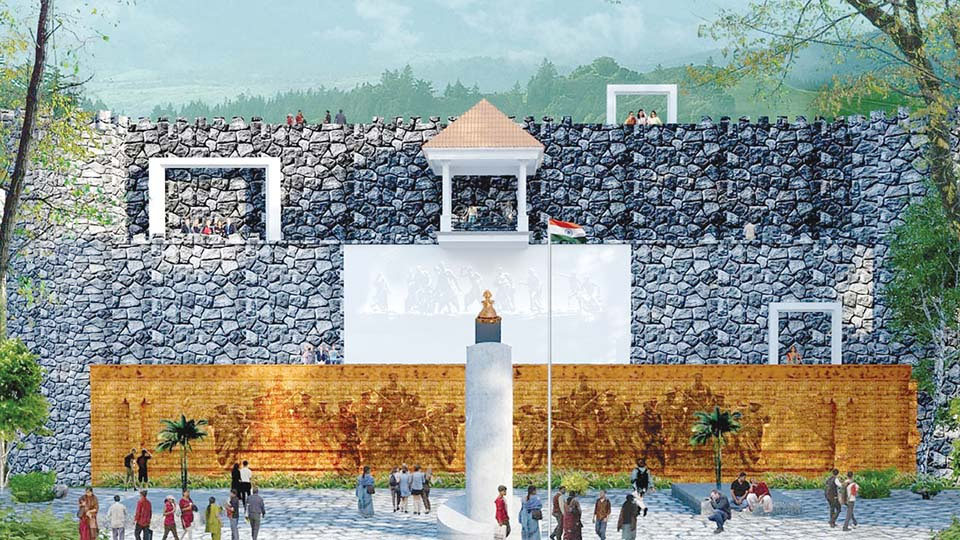
The old private bus stand at Madikeri in Kodagu is in the news of late, thanks to Star of Mysore Editor-in-Chief K.B. Ganapathy (KBG), who mooted construction of a Public Square at the spot, which is situated in the heart of the hilly town and converted the place into a tourist attraction.

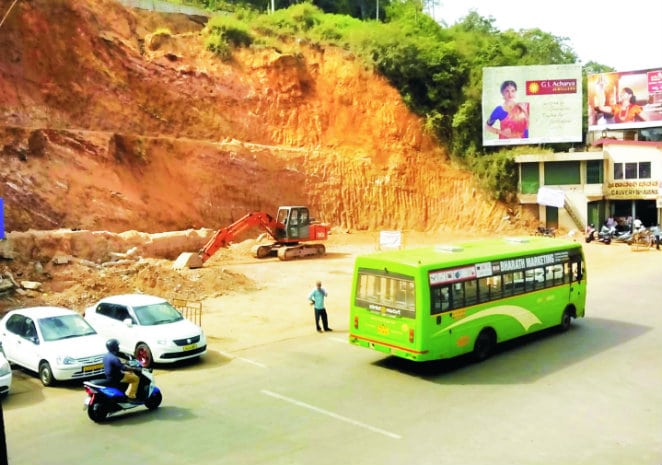
The old private bus stand was constructed in 1936 by the British. The landslides and floods that occurred in August 2018 resulted in a portion of the bus stand collapsing and the entire building was demolished later to avert further accidents.

A view of the private bus stand spot in Madikeri

Following this, KBG, who hails from the district, in his column ‘Choomantra,’ published in Mysooru Mithra, a sister concern of Star of Mysore, on Nov.1, 2018, had suggested construction of a Public Square instead of building a commercial complex on the lines of Trafalgar Square at the centre of London City, in honour of India’s first and one and the only Commander-in-Chief Field Marshal K.M. Cariappa, who too hailed from Kodagu.

Taking note of the suggestions, Tourism Minister S.R. Mahesh, who is also the District in-charge Minister of Kodagu, proposed similar ideas. Though meetings were held in this regard a consensus is yet to be arrived at by the stakeholders concerned and the Madikeri City Municipal Council.

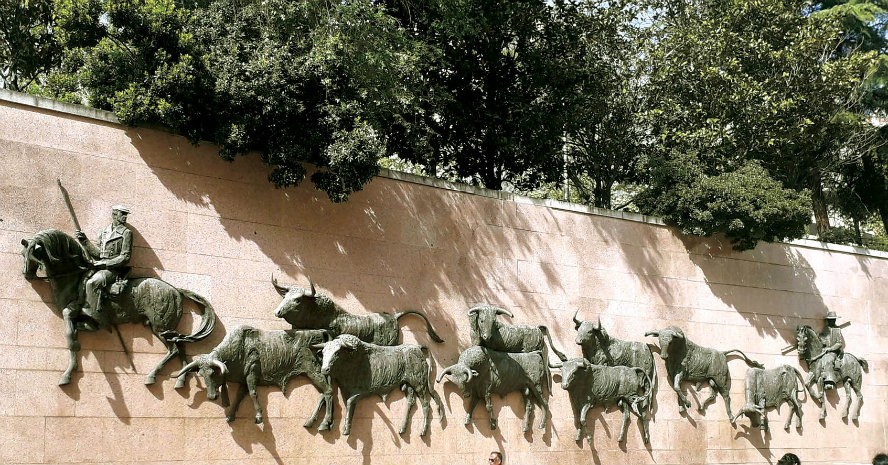
The Bull Fight Arena in Spain which is a major tourist attraction

Meanwhile, an ardent SOM reader R. Chandra Prakash, who was on a 22-day tour of 12 countries across Western Europe, has emailed two photos from Madrid, Spain, Bull Fight Arena and suggested a similar Arena in Madikeri Square depicting the history, heritage and valour of Kodavas on the wall of the old bus stand which will add great value for tourism.

source: http://www.starofmysore.com / Star of Mysore / Home> News / May 27th, 2019

How many coffees are really in your cup?

India is the seventh-largest producer of coffee beans in the world. Some varieties are so prized abroad, you’d be hard pressed to find a cup here. Take a look at six of the most special Indian beans.

Drinking coffee used to be a simple matter of instant or filter. When Café Coffee Day and Barista first began to spread at the turn of the millennium, we began to be able to tell our lattes from our cappuccinos, but we still know more about where our wine comes from, than our brew.

India is currently the seventh largest producer of coffee in the world, and there are Indian coffees so sought-after by foreign markets that they’re hard to find here at home. According to the Coffee Board of India (CBoI), we produce about 3.1 lakh tonnes of coffee beans a year. Most, and the best, of it is exported to Italy, Germany and Russia. “About 75 per cent is exported,” says Babu Reddy, deputy director of market research at the CBoI.

There are 13 major coffee-growing regions in the country, Coorg and Chikmagalur in Karnataka being the largest. Coffee is also grown in parts of Orissa, Andhra Pradesh and the north-east.

Six Indian varieties have recently been awarded the Geographical Indicator (GI) tag by the Government of India, meaning that their names can only be ascribed to beans from those specific regions. Here’s a look at the six, and the brands where you might encounter them.

BABA BUDANGIRI & CHIKMAGALUR ARABICA: DESI MOCHA

Taste notes: Intensity and clarity of a rich mocha flavour
Used by: KC Roasters, Dope Coffee Roasters

The Baba Budangiri hills in Chikmagalur, Karnataka, are where coffee was first grown in the country. According to legend, seven coffee beans were smuggled here from Yemen in the 17th century, hidden in the tunic of a Sufi saint. His name was Hazrat Shah Janab Allah Magatabi, or Baba Budan. The coffee grown here takes his name.

WAYANAD ROBUSTA: THE INSTANT BEAN

Taste notes: Bitter, pungent, but with a mild flavour and full body
Used by: A number of instant coffee and filter coffee brands

The gently sloping hills and rich laterite soil of low-lying Wayanad district in Kerala is excellent for the cultivation of Robusta beans. According to the Coffee Board of India, Wayanad produces 90% of the state’s coffee.

Broken Robusta beans are used to make instant coffee as well as in filter coffee blends. Indian filter coffees are usually a blend of Robusta and Arabica, combined with chicory for a strong flavour base. This type of blend is best suited for the milk-and-sugar coffee that Indian coffee drinkers prefer.

ARAKU VALLEY ARABICA: THE DESI EXPAT

Taste notes: Exhibits a full body coupled with bright citric flavours and striking aroma with a note of chocolate and a sweetness in the finish.
Used in India by: Araku Valley Coffee House in Vishakapatnam

Getting your hand on a cup of Araku Valley coffee might be easier in Paris than in India. This smooth, mellow, complexly flavoured bean grows in a single region on the borders of Orissa and Andhra Pradesh, by tribals who follow traditional practices of growing, selective picking and management. The cherry ripens slowly in the mild climate at the high altitude of Araku Valley, but as with the Ratnagiri Hapus, most of it is exported.

COORG ARABICA: SOUTHERN STAPLE

Taste notes: A well-balanced and mildly sweet taste with subtle body, it’s neither bitter nor sour, has low acidity levels and a mild chocolatey aftertaste.
Used by: Dope Coffee Roasters, Blue Tokai Coffee Roasters

Coorg is the largest coffee-growing district in the country. The Coorg Arabica is identified by its uniform beans that lend itself to an even roast. It is cultivated at high altitudes, and registers a slow growth rate, which prolongs the time for the cherry to ripen. Its balanced flavours are best extracted through a medium roast and hot brew.

MONSOONED MALABAR

Taste notes: Mellow, musty and fruity-flowery flavour, mildly aromatic and reduced acidity
Used by: Marc’s Coffees, Dope Coffee Roasters, The Coffee Co

The Monsooned Malabar was identified and branded as a specialty coffee by the Coffee Board of India in the 1960s. It is harvested just before the monsoon and left to soak up the moisture laden winds of the Western Ghats during the rains, in order to replicate the conditions created during its rocky voyage from India to Europe centuries ago. As the story goes, owing to the monsoon winds en route, the swollen beans at the end of the journey acquired special characteristics that resulted in reduced acidity and mellow taste. It is usually blended with stronger and more acidic varieties of coffee.

source: http://www.hindustantimes.com / Hindustan Times / Home> More Lifestyle / by Natasha Rege, Hindustan Times / May 26th, 2019
Bike riders take a voyage to Himalayas

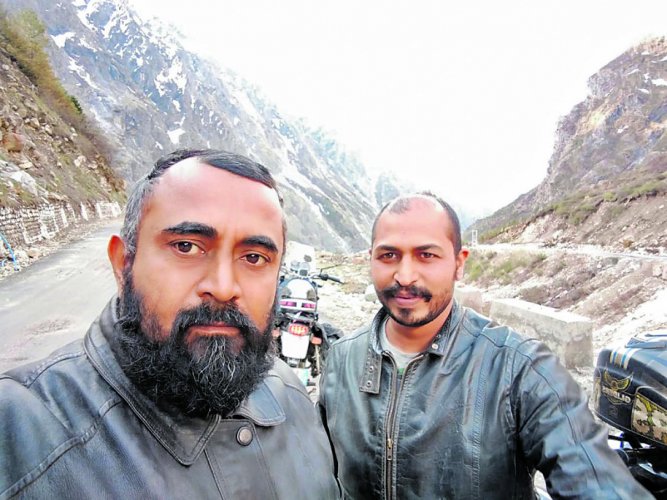
Bikers Ranjith Kiggal and Kashyap Mekeri.

Ranjith Kiggal and Kashyap Mekeri from Kodagu have successfully undertaken a bike voyage to the Himalayan region.

The bike ride named ‘The ride of life Part-2’ kick-started in front of General Thimayya statue in Madikeri on April 14. After the completion of the ride, the duo has returned to Madikeri.

Ranjith and Kashyap have visited Nainital, Badrinath in Uttarakhand and the Himayalan regions, on their Royal Enfield bike.

The distance covered by them was approximately 6,200-km and the preparation began three months ago.

Both of them got in touch with bike riders who had already visited these places by bike. They took the Madhurgiri-Anantapuram-Hyderabad-Nagpur-Jhansi-Bareli route to reach Nainital in Uttarakhand on the sixth day of their ride.

In the course of their journey, they visited Jhulaghat on India-Nepal border and also Rishikesh and Haridwar. From Haridwar, they took the route of Mathura-Agra-Shirdi-Satara-Belagavi-Davanagere-Hassan to return to Madikeri.

Rider Ranjith Kiggal said that they had a fresh experience in visiting these places. They encountered a different atmosphere, people and culture on the route.

Appanderanda Yashwant Kalappa guided their tour, he added.

source: http://www.deccanherald.com / Deccan Herald / Home> State> Districts / by Adithya K A / DH News Service,Madikeri / May 20th, 2019

Field Marshal KM Cariappa 26th Death Anniversary: Remembering First Commander-in-Chief of Indian Army

Field Marshal KM Cariappa (Photo Credits: indianarmy.nic.in)

Field Marshal Kodandera Madappa Cariappa breathe his last 26 years ago on May 15, 1993. He was the first Indian Commander in Chief of the Indian Army. Cariappa took command of the Army from its British Commander in Chief, General Sir Roy Bucher. He was also nicknamed “Kipper”. Cariappa was born on January 28, 1899, in Madikeri, Kodagu which is today part of Karnataka.

Field Marshal Criappa had his formal education in Madikeri and pursued his college education from the prestigious Presidency College in Chennai. Cariappa joined the British Indian Army in 1919 and was commissioned in the 88th Carnatic Infantry at Bombay (now Mumbai) as Temporary Second Lieutenant. He was granted permanent commission on September 9, 1922. In 1927, he was promoted to the rank of Captain.

During the World War–II, Field Marshal Cariappa actively served in Iraq, Iran and Syria in 1941–1942 and then in Burma in 1943–1944. Back in India in March 1942, he was posted as second-in-command of the newly raised 7th Rajput Machine Gun Battalion at Fatehgarh. Cariappa was posted as AQMG of the 26th Indian Division stationed at Buthidaung in Burma. The division played an important role in pushing the Japanese back from Arakan. For his services in the operation, Cariappa was awarded the Order of the British Empire (OBE) in June 1945.

In the same year, Cariappa was made the commander of the Bannu Frontier Brigade in Waziristan. During this period, Colonel Ayub Khan – later Field Marshal and President of Pakistan from 1962–1969 – served under him. In 1947, Cariappa was the first of two Indians selected to undergo training at the Imperial Defence College, at Camberly, in the UK, to attend the higher command courses.

After Independence, He was promoted to the rank of Major General and was appointed as deputy chief of the general staff. In November 1947, Cariappa was appointed as the Eastern Army commander after being promoted to a rank of Lieutenant General. As the situation worsened in Kashmir in 1947, Cariappa was moved as General Officer Commanding-in-Chief, Western Command. He directed operations for the recapture of territories seized by Afghan tribals backed by the Pakistani Army.

On January 15, 1949, Cariappa, took over the reins of the Indian Army. The day is now celebrated in India as the Army Day. He served in the Indian Army for over 30 years. After his retirement in 1953, he served as the Indian high commissioner to Australia and New Zealand until 1956. On April 28, 1986, the Government of India conferred the rank of field marshal on Cariappa. He was the second Field Marshal of the Indian Army after Sam Manekshaw. Cariappa’s health began to deteriorate in 1991. He suffered from arthritis and heart problems. He died in his sleep on May 15, 1993, at the Bangalore Command Hospital.

Cariappa was married in March 1937, in Secunderabad, to Muthu Machia. The couple had a son and a daughter. Their son, K.C. Cariappa also known as “Nanda”, joined the Indian Air Force and rose to the rank of air marshal. During the 1965 war, Nanda was shot down over Pakistan. He was captured and held as a prisoner of war (POW). After realising the identity of the captured IAF officer, General Ayub Khan, the then president of Pakistan himself contacted Cariappa to inform about his son. When Ayyub offered to release Nanda, Carriapa asked him to give his son no better treatment than any other POW. Field Marshal Carriappa was a recipient of Indian Independence medal, Burma Star and General Service Medal.

source: http://www.latestly.com / LatestLY / Home> Lifestyle> Festivals Events / by Team LatestLY / May 15th, 2019

Second phase of study on Kodava genealogy begins

The second phase of the study on Kodava Genealogy began on May 1, said Codava National Council President Nandineravanda U Nachappa.

Addressing reporters in Madikeri on Friday, he said that the features of Kodava community are being studied. The objective of the study is to provide statutory protection to the Kodavas.

The study is being done under the supervision of the Central and the state governments, he said.

The study in the second phase includes the subjects of ‘Devanele’, traditional healing methods in Kodagu, tribes, folk sports, agriculture, Kodava almanac, festivals, ‘Oor mand’, ‘Nadmand kol’, ‘Manepatt’, ‘Kail poldh’ and ‘Kaveri Changradi’.

Nachappa added that the study of the social, educational and financial conditions of Kodavas was carried out in the first phase.

CNC office-bearers Pullera Kalappa, Chambanda Janat and Kandera Suresh were present.

source: http://www.deccanherald.com / Deccan Herald / Home> State> Mangaluru / by Adithya K A / DH News Service / May 03rd, 2019