Category Archives: World Opinion

Tata Coffee Ltd appoints Mr. Chacko Purackal Thomas as MD & CEO

Based on the recommendation of the Nomination and Remuneration Committee, the Board of Directors of Tata Coffee Limited at their meeting held today, the 24th December 2018, has appointed Mr. Chacko Purackal Thomas (who is currently the Executive Director & Deputy CEO) as ‘Managing Director & CEO designate’ with effect from 24th December 2018.

Mr. Chacko Thomas will assume charge as Managing Director & CEO of Tata Coffee Limited, effective 1st April 2019 after the retirement of Mr. Sanjiv Sarin, the current Managing Director and CEO, whose term of office would expire by 31st March 2019.

Mr. Chacko Purackal Thomas is a Bachelor of Science with specialization in Computer Science from the University of Jodhpur. He has over 26 years of rich experience and expertise in the field of Plantations, Business strategy, Sales and Marketing and overall leadership.

He has been associated with Tata Coffee Limited as the Executive Director & Deputy CEO since 4th August, 2015. Before joining Tata Coffee, he was the Managing Director of Kannan Devan Hills Plantations Company Private Limited, Munnar.

Shares of TATA COFFEE LTD. was last trading in BSE at Rs.95.45 as compared to the previous close of Rs. 94.45. The total number of shares traded during the day was 19718 in over 263 trades.

The stock hit an intraday high of Rs. 95.7 and intraday low of 94.45. The net turnover during the day was Rs. 1877889.

source: http://www.equitybulls.com / Equity Bulls / Home> Stock Report / December 25th, 2018

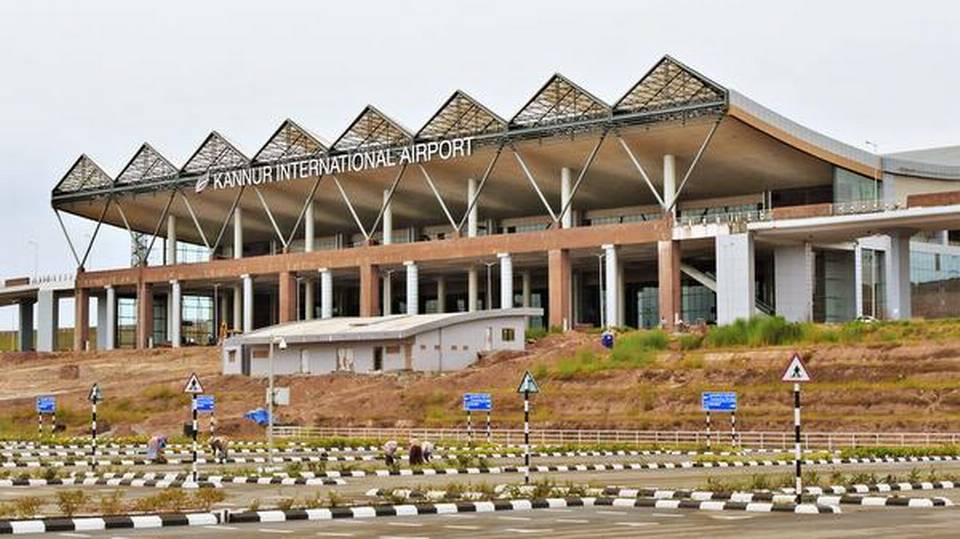
Kodagu set to gain from proximity to Kannur airport

KannurAirportKF18dec2018

The newly opened Kannur International Airport has brought smiles to Karnataka’s bordering district of Kodagu.

The closest airport from Madikeri, Gonikoppal, and Kushalnagar is Kannur, and tourism stakeholders are hoping that the new airport may prove a big advantage for tourist footfall in the coffee land.

Kushalnagar, a commercial town surrounded by tourism hotspots, is around 100 km from Kannur, while Madikeri and Gonikoppal are about 95 km and 55 km, respectively, from the Kerala city.

“Certainly, the airport will benefit Kodagu, both in terms of business and tourism. Whether the benefit will be felt immediately has to be seen. But, tourists travelling by road from Bengaluru airport may prefer Kannur airport to reach Kodagu,” said Kodagu Hotels, Resorts and Restaurants’ Association president Nagendra Prasad.

He, however, said the road linking Kannur and Madikeri should be developed within the State limits since the route till Kerala–Karnataka border from Kannur is a four-lane road. The Karnataka government should take immediate steps to develop the single-lane road till the border to facilitate tourist arrivals, Mr. Prasad urged. While the journey by road from Bengaluru to Madikeri takes about five hours, the route from Kannur to Kodagu is less than two hours.

Mysuru Travel Mart president B.S. Prashanth said the airport would open a new gateway for tourism developmentand eventually improve connectivity between the two States, thereby boosting tourism.

People flying to Kannur need not have to bother about traffic to reach their destination — Madikeri — unlike from Bengaluru, according to Mr. Prashanth as during weekends and holidays, the Mysuru–Bengaluru highway witnesses bumper-to-bumper traffic.

The new airport may also open a new route for tourists visiting Wayanad and Ooty — the other two popular destinations in south India.

source: http://www.thehindu.com / The Hindu / Home> News> States> Karnataka / by Shankar Bennur / Mysuru – December 15th, 2018

Cultural canvas at airport

KodaguArtworkKF10dec2018

Local art and culture and that of Kodagu find place in airport interiors

The luxurious interiors of the terminal building of the Kannur International airport could not have asked for better arts works to adorn its walls than the elegant paintings and murals featuring the local art and culture of north Malabar. The paintings also depicted the cultural legacy of neighbouring parts of Karnataka.

The paintings and murals on display at the terminal building represent the cultural legacy of north Malabar, especially Theyyam forms and feats of Kalaripayattu as also paintings depicting life and culture of the State.

Among the latest additions to the art works that adorn the walls of the airport terminal, to give a visual experience to passengers and provide a vista of the land’s culture and history, are two works that illustrate the heritage of neighbouring parts of Karnataka.

One art work represents the culture of Kodagu in Karnataka. Madikeri, the district headquarters of Kodagu, is around 90 km away. The metal art work on Kodagu was prepared by artists of the Charu Art Gallery, an art consultancy based in Mysuru.

In the picture, a woman clad in traditional Kodagu attire holds a cup of coffee while a man, also clad in traditional Kodagu attire, holds a gun and wears a dagger. The background of the picture features coffee beans and the frame also includes birds and elephants.

Airport officials were told by Bheemesh A.N., managing partner of Charu Art Gallery, that the coffee mug in the hands of the woman, dagger and gun in the hands of the man, and coffee beans in the background symbolise the Kodava culture, while the birds and elephants represent the wildlife of the region. The second art work is a big picture of Yakshagana, the traditional theatre art form of Karnataka. The picture, in a 9-metre high and 6-metre wide frame, is a creation of a team of mural artists led by painter K.R. Babu.

source: http://www.thehindu.com / The Hindu / Home> News> States> Kerala / by Mohamed Nazeer / Kannur – December 08th, 2018

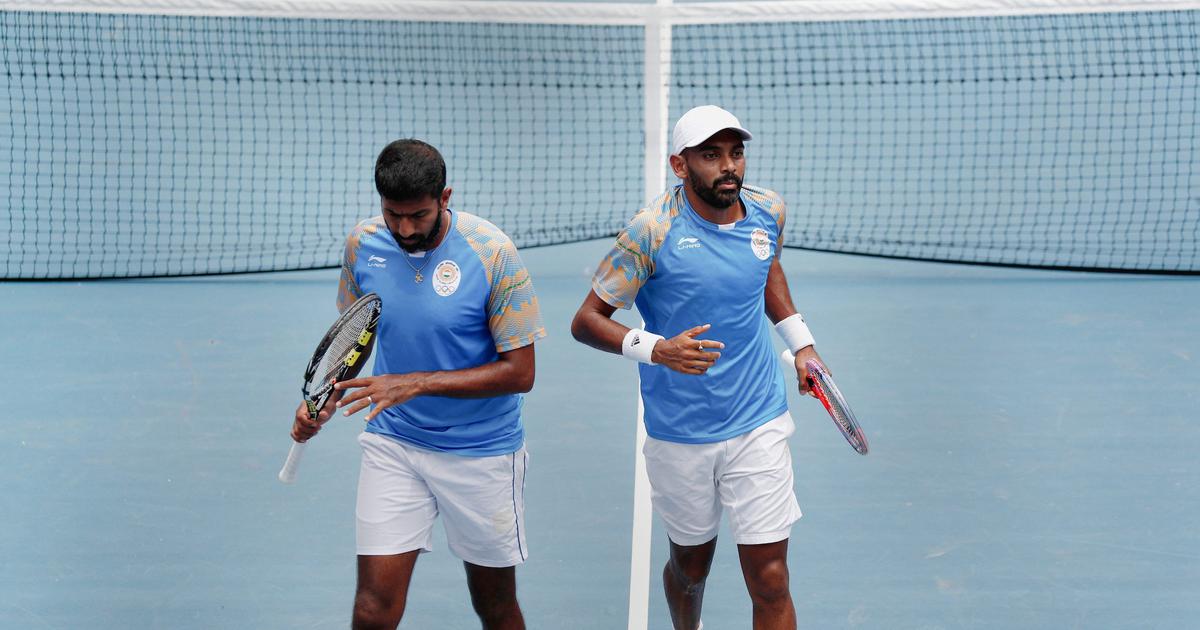
Rohan Bopanna and Divij Sharan, India’s Asiad gold-winning pair, to partner on ATP Tour from 2019

The all-Indian doubles pair will start their season at home in the Maharashtra Open.

PTI
PTI

India’s 2018 Asian Games gold medal winning pair of Rohan Bopanna and Divij Sharan has decided to form a permanent partnership and will play together on the ATP Tour from the 2019 season.

Bopanna and Sharan – ranked 37 and 39 in the ATP year-end doubles ranking respectively – will start their season at the Maharashtra Open in Pune and will play one more tournament before taking part in the Australian Open, the first Grand Slam of the year.

“We have played with each other before and we gel well. Plus we have similar rankings so we can enter the bigger tournaments together,” Sharan told Scroll.in. “Both of us are from India and it is always nice to play with someone from your country,” he added.

The idea to pair came up organically and was something both of them were keen on, especially after their title-winning run in Indonesia in August this year. “We have been in touch and were thinking about this, especially after the Asian Games. I enjoy playing with Rohan and we form a good pair,” he said.

But the partnership can also go on to be a lot more meaningful for Indian tennis with an eye on the 2020 Tokyo Olympics. An all-Indian doubles pair with the experience of playing together on the circuit will be a welcome addition the squad.

On his part, Sharan did say that playing together now will give them the opportunity to play more tournaments together for India in the future. The duo displayed good chemistry when they played together in Indonesia and more tournaments together will give them a chance to get better. Much like the pair of Leander Paes and Mahesh Bhupathi in the early part of this millennium.

After the Maharashtra Open, the pair plans to play in either Sydney or Auckland depending on the entry list and then the Australian Open. There is a strong possibility that they will team up in the Davis Cup as well, when India take on Italy in February in the qualifiers for the Finals.

The 32-year-old Sharan is a late bloomer and has had a great season in 2018, reaching a career-best 36 and was briefly the highest-ranked Indian in doubles ahead of Bopanna as well. Sharan had a host of partners in the last year, after ending his long-standing partnership with fellow Indian Purav Raja. Last year at the Maharashtra Open, Sharan had played with Yuki Bhambri while 2016 Chennai Open champions Rohan Bopanna and Jeevan Nedunchezhiyan had played together.

source: http://www.scroll.in / Scroll.in / Home> The Field> Indian Tennis / by Zenia D’Cruz / December 07th, 2018

Hockey World Cup Memories: AB Subbaiah remembers 1994 edition, where India’s chances were undone by South Africa

Playing as a goalkeeper for the Indian team, AB Subbaiah was part of the 1998 Asian Games gold medal winning side. He has been feted with the Arjuna Award. He spoke to Amit Kamath.

I was India’s goalkeeper in the 1994 World Cup, which was held in Sydney. What a memorable tournament it was!

We had a great team consisting of players like Dhanraj Pillay, Mukesh Kumar and Mohammed Riaz.

Our preparation for the World Cup was also excellent. The 1994 World Cup was one of the first coaching assignments of Cedric D’Souza and he had prepared the team really well. I remember that a lot of players came from either Mumbai or Karnataka at that time.

While most of our other coaches used to train us by working on our strengths, Cedric was the one who made us prepare by focusing on our rivals’ strengths and tactics. Cedric had a technical style of coaching which involved studying other teams. It was a modern style of training which helped us prepare for each and every situation.

We played some great hockey against the best teams in the world. That tournament saw us register wins over South Korea and Belgium in the group stage. We also had close matches against Germany and the Netherlands.

It was a great team and we had done very well but one unfortunate thing was the 2-2 draw against South Africa in the league stage. That proved to be the difference between us and Germany in qualifying for the semi-finals. At that time, just two teams from the group were to qualify for the semis.

I remember that after our last group match, we had to wait for the match between the Netherlands and Germany to end to see if we could qualify. They played out a draw, which led some of us to feel like they had an understanding.

But there were a few things which proved to be our undoing in that tournament. Against the good teams in our group we performed really well, but against an under-rated team like South Africa, we were a little slack in our approach. That was probably because we were focusing on the bigger teams in the tournament. When you play at an event as big as the World Cup, you have to prepare equally for each opponent however big or small it is.

What also hurt us was a misplaced pass by Shakeel Ahmed when we were up 1-0 against Germany. The Germans capitalised on the error, stormed into out D and equalised!

Another memory that sticks out from that tournament is the goal the Netherlands’ Taco van den Honert scored against me in our group match. At that time, players would whack or slap-hit the ball towards goal in penalty corners. But when the Netherlands played us, Taco drag-flicked the ball into the top right corner. It surprised all of us! It was the onset of the era of drag-flicks.

What also went against us was that one of our most prominent forwards, Sabu Varkey, was not available during the tournament. If he had played, he would have been a livewire at the front and the results would have been different.

Eventually, we could not qualify for the semis and had to play Argentina in the playoffs for the 5th to 8th position spots. We won that match in an exhilarating tiebreaker. We beat them comprehensively! At that time, finishing 5th and 6th was commendable because it also meant that the team would qualify for the Champions Trophy. So, on one hand, we were happy, but on the other hand, we felt that since a lot of young players had come from the junior team, so we could have done really well in this tournament.

And then we beat England for the fifth-sixth position match which made it a memorable tournament for us. Finishing fifth at that tournament was not that bad because it was just one step away from the semi-finals. We were unfortunate to miss the chance in that way. But what was more unfortunate was that at the Atlanta Olympics two years later, we again missed the semi-final cut narrowly like that.

That was what teams need to realise! We were good enough to make it to the semis at the 1994 World Cup. But it was just because of one underrated team beating us in one match that we missed out.

For the full Hockey World Cup 2018 schedule, click here

source: http://www.firstpost.com / FirstPost. / Home> Latest News> Sports News / by A B Subbaiah / December 02nd, 2018

Kodagu district and Kannur airport to be catalysts for mutual growth

Mangaluru :

Kannur International Airport Ltd (KIAL) and Kodagu district are betting big on the proximity factor and the tourism potential for mutual growth. Kodagu, the hill district of Karnataka, will be one of the major beneficiaries of the Kannur International Airport that will begin operation on December 9.

V Thulasidas, Managing Director of KIAL, recently told BusinessLine in Kannur that Kodagu passengers would find this airport convenient because of its proximity to major towns in the district.

Proximity
Virajpet in southern Kodagu is just 58 km away from the airport (which is located at Mattannur), and Madikeri in northern Kodagu is around 90 km from the airport.

G Chidvilas, former president of the Kodagu District Chamber of Commerce, said though Bengaluru is located around 260 km from Madikeri, it requires around seven hours of travel. “From there you need at least one hour to reach the Bengaluru airport,” he said.

The Mangaluru International Airport is around 140 km from Madikeri, and around 170 km from Virajpet. The Kannur airport is much closer to Kodagu towns than these two airports, he said.

Tourism potential
Stating that coffee crop and tourism are the two major contributors to the economy of the district, Chidvilas said the district is a major tourism destination in Karnataka. Many corporates in the hospitality sector have opened resorts in the district. Apart from this, the district has many home-stay accommodations.

“Since Kannur is an international airport, we are expecting an influx of foreign tourists into Kodagu,” he said.

Cargo to Gulf
Thulasidas said KIAL has had several interactions with the chambers of commerce from its catchment areas, including the Kodagu chamber. “I went to Madikeri and had meetings with the chamber. We will work together as a team to promote tourism in this catchment area,” he said.

On the potential for cargo handling from the Kodagu region, the KIAL MD said the presence of an airport nearby offers scope for exporting flowers and spices from the district to the Gulf destinations. From there, these cargoes can go to Europe. The construction of the cargo complex at the airport is expected to be completed in one-and-a-half years.

Road connectivity
Chidvilas said Kodagu, which is known for floriculture activities, is now dependent on the Bengaluru airport for export. The Kannur airport will provide another alternative to the floriculturists to tap the export market.

Asked about the condition of roads between the Kodagu centres and the airport, he said the problem is with the stretch of roads in Kodagu and not Kerala. A stretch from the Kerala border to Virajpet, which needs to be widened, passes through a reserve forest, he said.

Thulasidas said the road from Kannur town to Mattannur (where the airport is located) and from there to the Karnataka border will be a National Highway. The road from Mattannur to the Karnataka border, which is already being developed by the Kerala government into two lanes under another scheme, is almost completed.

The development of the roads will help people from both Kannur and Kodagu areas, he added.

source:http://www.thehindubusinessline.com / Business Line / Home / by A J Vinayak / December 03rd, 2018

No Ordinary Bean

Spit, dung and more — these expensive coffees are not for the faint-hearted

The Indian Bean
The Indian Bean

The first sip tastes almost like a regular cup of Joe — it’s earthy, smooth but minus the usual bitterness. In fact, it tastes so unique that no one can pinpoint for sure its complex flavours. Some say it even has a hint of chocolate or fruity taste. Wonder what kind of coffee this is? Considered one of the most expensive coffees in the world, the secret ingredient behind this coffee might make you reconsider your love for the drink. This famous brew called Kopi Luwak or civet coffee is made from the faeces of civet cat and has its roots in Indonesia. Don’t be surprised, because cat poop coffee is just one of the many new trends in the coffee industry.

Civet cats consume coffee cherries for the fleshy pulp of the beans

Civet cats have a natural tendency to roam around in coffee plantations. More often than not, they pick on coffee cherries — the perfectly ripped ones of the lot. These coffee cherries are picked by civets for the fleshy pulp of the beans. During the digestion process, a unique fermentation process occurs, such that after passing through the civet’s intestines, the beans are defecated with other faecal matter. While this might just be faecal matter for some, others consider this a treasure. Rajat Badami, founder and CEO of Kingsmen Coffee says, “The sale of this coffee is primarily outside India. There is demand for this coffee in the US and many European nations.” But the process doesn’t end at collecting cat poop, argues Badami. He says, “Identifying the civet’s faeces, handpicking it and then washing, drying and pounding is a long and tedious process. Since so much effort goes into making it, we sell this coffee at $600 a pound in Western countries.”

On the other hand, Thamoo Poovaiah, managing partner of Ainmane brand of coffee, the first company in India to make Kopi Luwak prefers to keep the rates lower for Indian audiences. He says, “We have more than 235,000 acres of coffee plantations in India and we produce 40% of India’s coffee. Since civet coffee is hard to obtain naturally, we can get only five to 10 tonnes of it per annum.” Ainmane sells civet coffee for 1,060 per 100gms.

While coffee made of litter selling for a few thousands might seem like an absurd concept, there is more to it. The brainchild of Thailand’s Anantara Resort produces coffee straight from elephant dung. Known widely as Black Ivory Coffee, this unique product finds a place in the list of ‘rare and expensive coffees of the world’. A single cup of this coffee is said to cost around $50. Its producer, Black Ivory Coffee Company, maks a very limited amount on an yearly basis, given that this natural process is time-consuming. Blake Dinkin, founder of Black Ivory Coffee is wants to keep the process a secret. He believes many people have mistaken the idea to be as easy as collecting elephant dung containing coffee beans.

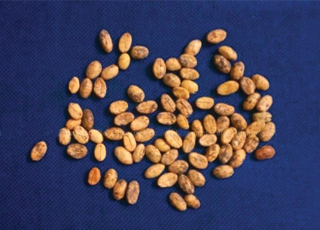
Another special coffee with animal component is the monkey parchment coffee produced near Araku Valley. The process of collecting beans is slightly different than the previous varieties. The monkeys, just like the civets, pick on the ripest coffee cherries. The difference being they eat only the flesh, but instead of swallowing the bean, they usually spit it out. The natural enzymes in their saliva give the coffee beans a tinge of acidity. Kunal Ross, founder and CEO of The Indian Bean says, “It is difficult to spot these spit beans in a forest, as compared to civet or elephant litter. A bite mark on a coffee bean is how we distinguish our beans.” This makes the discovery process longer, but once collected, the beans are washed under running water and dried to ensure the consistent roasting. The Indian Bean’s monkey parchment coffee costs around 4,000/kg. These beans are collected around October, and what makes this coffee even more exclusive is its limited number of vendors in India. Coffee lovers are slowly warming up to the idea of artisan coffees, but it would be intriguing to see what new ingredient will join the list next.

source: http://www.outlookbusiness.com / Outlook Business / Home> C’est la vie> The Good Life / by Aishwarya Parikh / July 21st, 2018

‘Who Are We Kodavas?’ By NRI Kodava To Be Released In City Tomorrow

BookWhoKodavasKF25nov2018
Mysuru:

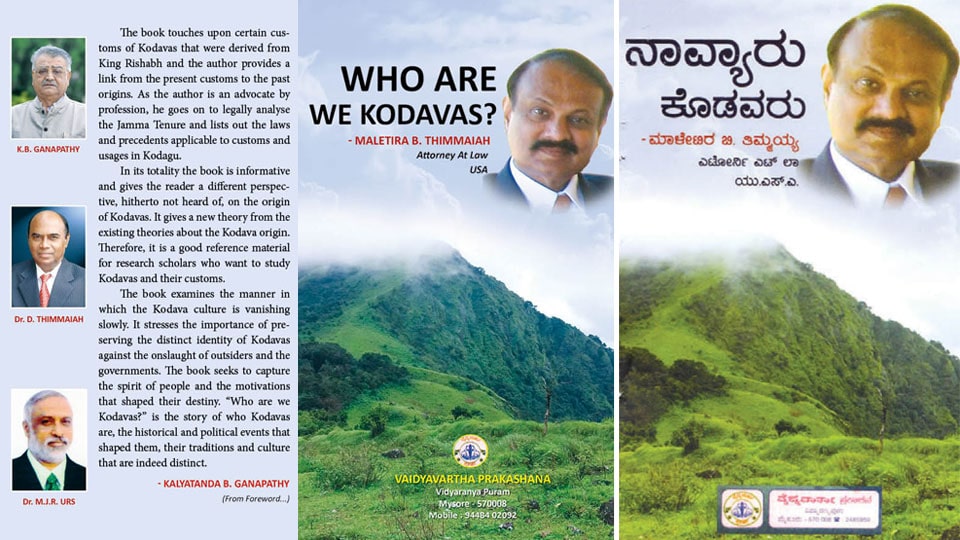
D.M. Trust has organised a function at Rotary Hall on JLB Road here tomorrow (Nov.25) at 5 pm to release the books ‘Who are we Kodavas?’ (English) and ‘Navyaaru Kodavaru?’ (Kannada), written by Maletira B. Thimmaiah, Attorney-at-Law, USA.

Star of Mysore Editor-in-Chief K.B. Ganapathy will release the books. City advocate J.M. Aiyanna will preside. D.M. Trust President Dr. D. Thimmaiah, Joint Commissioner of Commercial Tax, Shivamogga, H.G. Pavithra and Vaidya Vartha Prakashana Founder-Director Dr. M.G.R. Urs will be the chief guests.

Published by Vaidya Vartha Prakashana, the English version of the book has 84 pages while Kannada edition has 80 pages, both priced at Rs.50.

Here we publish the Foreword to the book by Kalyatanda B. Ganapathy, Editor-in-Chief, Star of Mysore and Mysooru Mithra:

This is a book about the people of Kodagu, the land inhabited by Kodavas with their own distinct identity recognised and recorded in history as unique. Written by Maletira B. Thimmaiah, Attorney-at-Law, Staten Island, New York, United States of America, the book traces the origin of Kodavas, their customs, rich history of more than 5,000 years and how a land of such uniqueness was being systematically ravaged by invaders, modern laws and urbanisation thereby depriving the future generations of the rich natural beauty and more importantly the environment.

From time immemorial, Kodavas, with their unique folklore culture, have shown affection, tolerance and respect towards the people who helped them regardless of the communities they belonged to. Showing their gratitude in the form of providing them space and work, Kodavas still regard their guests as God — ‘Athithi Devo Bhava’ and perhaps this attitude has cost them dear when it came to preserving their culture, language and properties.

Supported by extensive research on history, religious books, encyclopaedia, customs and physical features and himself as a member of Kodava community, the author Maletira B. Thimmaiah traces the origin of Kodavas and their customs from ancient times. Kodavas must prepare the future generation to stand tough in defending their heritage against intrusion of outsiders. And to stand firm against outside influence and lobby, each Kodava must know his/ her origin, he writes.

According to the author, the first advent of human habitation in Kodagu is prior to 3000 BC. Rishabh, a ruler from Magahada, abdicating the throne as King of Ganges Valley Civilisation, shared his kingdom among his 100 sons, renounced everything and travelled to Kodagu, then called ‘Kutaka’ in Sanskrit and named it ‘Kudaga’ in ‘Pali’ and other South Indian languages called ‘Prakrits.’

While the first son of Rishabh named Bharat ruled northern half with Ayodhya as capital, the second son Bahubali ruled the South with Paudanapura as capital. The rest of the 98 sons of Rishabh were given different kingdoms. The final fight between Bharat and Bahubali took place in the south and the battle resulted in Bahubali renouncing his kingdom. Later, all the sons of Bahubali went to Rishabh who lived in ‘Kutaka’ for advice. This was how an uninhabited Kodagu became the place to live for North Indian Ganges Valley people.

According to the author, Rishabh believed in ‘Shramana’ school of thought that did not have God, Soul and Creation and where the philosophy of procreation dominated — human being is procreated by his parents and in turn, parents were procreated by their parents. Thus ancestors were the reason or ‘Karana’ (cause) for the continuity of generations to generations. Explaining this theory, the author draws similarities with Kodava customs where families still worship the ‘Karana’ and ‘Gurukaranas’.

The book then touches upon Hinduism and argues how Kodavas do not belong to Indus Valley Civilisation but Ganges Valley Civilisation. Elder-oriented or elder-centric customs and practices existed in Kodagu before the advent of Hinduism to India. Priests were not involved in Kodava traditions in any manner with a major role played by elders or village ‘Thakkas’. Brahmins had to work under the ‘Thakkas’ and they did not have any supremacy. As such, Brahmins felt belittled and ignored. Hence they considered Kodavas as descendants of Kroda King, born to a ‘Shudra’ woman who was low in caste (according to Hindu caste system) and was unchaste. They called Kodavas as ‘Ugras’ and said the name Kodava was derived from Kroda king.

The book argues that this was the revenge of Brahmins or the priest class against Kodavas who did not allow them to their ‘Ainmanes’, ‘Kannikombare’, ‘Kaimada’, festivals, marriages and other auspicious ceremonies.

The author then traces Lingayat religion and kings who influenced Kodavas. Kodavas were pitted against Kodavas. They killed each other while the Lingayat Rajas watched the fun. Then came Islamic invasion led by Hyder Ali and Tipu Sultan where Tipu converted a large number of Kodavas into Islam and massacred those who did not comply with his orders.

Next came the Britishers who introduced coffee. They tricked Kodavas to part with their Jamma lands to cultivate coffee and institutions like “Consolidated Coffee Estate” was born. The book describes how the British exploited Kodavas to serve their own interests in India and world over. The physical strength and bravery of Kodavas were well used by the British and moved many Kodavas from paddy fields to war fields. While a few got acclimatised, many Kodavas died unnoticed and unsung. The British even imposed heavy land revenues and brought in land laws for their advantage. Some of the unjust and illogical regulations introduced by the British continue even today even after Kodagu State was annexed into Karnataka.

After the British rule, the elected governments, with ignorant and self-centred lawmakers, brought in more restrictive laws without understanding the ground realities. This was done with no representative from Kodagu while framing such rules. Many land laws have been questioned in the Court of Law. The book illustrates how Kodagu has become a looting place for outsiders since independence. The laws enacted by Karnataka government like Land Revenue Act, Forest Act, Management of Reserved Forest Rules and land tenures have dealt many fatal blows to Kodava customs, traditions and land holdings, says the author.

The book touches upon certain customs of Kodavas that were derived from King Rishabh and the author provides a link from the present customs to the past origins. As the author is an advocate by profession, he goes on to legally analyse the Jamma Tenure and lists out the laws and precedents applicable to customs and usages in Kodagu. Probably the author is unaware of the fact that Jamma tenure is no longer existing since 2011 following an amendment to the Karnataka Land Revenue Act, 1964.

In its totality the book is informative and gives the reader a different perspective, hitherto not heard of, on the origin of Kodavas. It gives a new theory from the existing theories about the Kodava origin. Therefore, it is a good reference material for research scholars who want to study Kodavas and their customs.

The book examines the manner in which the Kodava culture is vanishing slowly. It stresses the importance of preserving the distinct identity of Kodavas against the onslaught of outsiders and the governments. The book seeks to capture the spirit of people and the motivations that shaped their destiny. “Who are we Kodavas?” is the story of who Kodavas are, the historical and political events that shaped them, their traditions and culture that are indeed distinct.

‘Who are we Kodavas?’ by NRI Kodava to be released in city tomorrow

source: http://www.starofmysore.com / Star of Mysore / Home> News / by November 24th, 2018

The Academy of Home Staging and Design announces another Student Success Story: Prathibha Kokkalera.

Prathibha has found a way to have a successful business and to help people in the process.
PratibaKF14nov2018

Astaic, Calif. :

Prathibha saw people losing their homes to foreclosure. Not only were they losing their homes, they were losing their futures. Prathibha created a business to help these people.

She buys houses before the bank forecloses on them so the owners can protect their future. She creates a home for a new owner, and the neighborhood gets an upgrade. This helps everyone, including Prathibha who loves combining her passion for interior design with serving people in need.

“My education at AHSD in interior design made it easy for me to visualize, transform and remodel every room I was flipping. And my home staging education helped sell the properties faster!”

Prathibha’s Companies are http://www.iStageElegantInteriors.com and http://www.ReviveProperties.com.

She thanks AHSD and credits Academy owner Kim’s on-going mentoring for her success. For those who have similar aspirations, she believes AHSD is just the ticket. “If you are considering doing one or both these courses as I did, you will have no regrets.

Apart from the knowledge and intense training, the continuing help Kim and her team extend after the program is valuable. It is sure to put you right on the path to success!”

Doing what you love and helping others is how The Academy of Home Staging & Design defines Success. Keep up the great work Prathibha!

source: http://www.virtual-strategy.com / Virtual Strategy Magazine / Home> News> PRWeb> Business / by Kim Kapelluch, The Academy of Home Strategy & Design / November 12th, 2018

The Ghana coffee sector and its economic potential

GhanaCoffee01KF11nov2018

I have been busy during the last few months talking to people (COCOBOD, various ministries, Universities and Research Institute) about the current ‘State-of-the-Art’ of coffee in Ghana. Talking also to plenty friends, colleagues, associates and coffee-lovers too, I realized that very few people are aware that Ghana grows coffee and that coffee does have the potential of boosting our economy if it were to be paid the right attention.

Allow me to start with a simple Question and Answer:

Is coffee grown in Ghana? The answer is Yes

Brief overview of the Ghanaian coffee

Known predominantly as the World’s Second largest Cocoa producer, Ghana is increasingly entering the coffee market. Ghana’s relatively small coffee production made it the third smallest coffee producer in sub-Saharan Africa: just behind Liberia and the Central African Republic (which produce about 600 tons each annually). The primary coffee plant variety historically grown in Ghana is Robusta.

General Statistics on Ghana Coffee

– 12,250 tons of green coffee beans exported in 2015 (Ghana Export Statistics); this figure does not include leakages to neighboring countries and internal sales within the country

– An increase of about 550% in coffee price, over the past 5 years
+22% of Ghanaian Coffee Farmers are women

– Currently Ghana has 65% supply deficit that needs to be filled and government is trying to do that by providing new coffee seedling varieties and revamping old farms to increase productivity.

– We also have 15% penetration rate of retailing

– Current price of unhauled coffee of 64kg is going for a price between GH?200 -250 and

– The price of hauled green beans is going for GH?400-500 for same amount

Note: all these statistics are not absolute but estimated.

Coffee regulatory bodies

For every industry to be successful there is a need for institutions to govern their activities to ensure smooth flow within the sector.

Government and private bodies have established such bodies within the coffee industry.

Noted among them are:

– The Ghana Cocoa Board,

– International Coffee Organization and

– The Cocoa Research Institute of Ghana (CRIG)

1. The Ghana Cocoa Board (CoCoBod)

Cocobod was established by ordinance in 1947 with the sum of ¢ 27 million (being Ghana’s share of the net profit of the West African Produce Control Board) as its initial working capital. The Board traces its beginning further back to the cocoa hold-up of 1937.

Cocobod’s mission is to encourage and facilitate the production, processing and marketing of good quality cocoa, coffee and sheanut in all forms in the most efficient and cost effective manner, and maintain the best mutual industrial relation with its objectives.

It also issues license to businesses that want to trade (export) coffee by issuing them export certificates; these certificates are issued after due- diligence of course, and require annual renewal.

Support Examples from Cocobod:

– Under the CDP, Cocobod supplied free inputs-seedlings, fertilizers, wellington boots, cutlasses, etc-to Ghanaian coffee farmers to boost their interest in the sector.

– Payments toward land preparation, lining and pegging, weeding and transportation of seedling were also made to participating farmers.

– In addition, Cocobod has developed high stock of planting materials through its subsidiaries, Cocoa Research Institute of Ghana (CRIG) and Seed Production Division (SPD) for distribution for farmers for free.

2. ICO – The International Coffee Organisation

In July 2009 Ghana became a full member of the International Coffee Organisation (ICO) at a ceremony at the headquarters of ICO in London. ICO is the main inter-governmental organisation for coffee, bringing together producing and consuming countries to tackle the challenges facing the world coffee sector through international cooperation.

Ghana first assented to the International Coffee Agreement in September 1964, and has been a signatory to all the agreements, with the Ghana Cocoa Board as the implementing agency for the government.

By this deposition of the instrument of ratification to the ICO, Ghana indicated its consent to be bound by the ICA 2007, and has full voting rights as a member of the International Coffee Organisation.

3. Cocoa Research Institute of Ghana (CRIG)

The Cocoa Research Institute of Ghana (CRIG) was administered by the National Research Council, which was later superseded by the Ghana Academy of Sciences and the Council for Scientific and Industrial Research (CSIR).

The objectives of the Institute were subsequently expanded to include research on other indigenous and introduced tree crops that produced fats similar to cocoa butter.

The Institute’s Mission with regards to coffee is “to undertake research aimed at developing appropriate technologies and strategies for healthy and economic cultivation of coffee”.

4. Coffee Improvement Thrust

The main aim of the Coffee Improvement Thrust is to develop coffee planting material that will meet the challenges of growers by:

– modifying the genetic make-up of the plant

– adopting strategies to improve overall quality of the produce

Sector outlook

Production

The country is the second largest cocoa exporter in the world behind neighbouring Ivory Coast. Production of coffee, which was introduced to Ghana at the same time in the 18th century, trails in comparison.

But it has rebounded in recent years, thanks to a growing overseas demand and a blossoming domestic market that is giving farmers hope of growing a major cash crop. A government scheme launched in 2011 to revive the sector has transformed production and marketing of Ghanaian coffee. It led to 2,400 hectares of new and revitalised coffee plantations, with farmers attracted by the introduction of fair prices for the crop.

Government has since last month begun the distribution of four million coffee seedlings to farmers in the production area of the country under the Planting for Export and Rural Development (PERD) programme, Deputy Local Government Minister, Collins Ntim has revealed.

This, according to him, this would help the country bridge the huge deficit of 65 per cent in coffee production and supply. It is expected that by 2023, this programme will enable coffee production to reach 50,000 tons.

African Challenges

Currently Africa supplies only 10% of global coffee volumes, while coffee was first discovered in Ethiopia.

In most African origins:

– yields are low,

– quality is inconsistent, and

– supply chains are inefficient

Ghana: Do we have a problem?

Coffee industry in Ghana in spite of its ability to rig in millions of dollars as foreign exchange earning to help boost the economy has not receive the kind of attention it needs, noted problems faced by the industry are;

1.low government support – input supply and regulations

2. aging farmers and farms

3. mostly cultivated by small holder farmers

4. unstable pricing

5. inadequate access to market information help investors and farmers

After interacting with some coffee farmers and buyers, there is a need to have a second look at the commodity that some describe as the next oil, looking at the rate of consumption and the foreign income being earned from its export.

Brazil which is known as one of the largest beneficiaries of foreign exchange earners from coffee have adopted various climate smart coffee farming methods that has revamped their coffee industry and put them on top of the world chat.

Sustainable farm gives back as much to the land and people as it receives. Sustainable farming also minimizes pollution, takes steps to care for the environment, and cares for its employees.

Sustainable coffee farming looks at aspects like modern farming practices, which include:

– planting shade trees to check erosion

– using organic or animal waste as fertilizer to reduce carbon emission

– water efficient irrigation methods and mixed cropping

– proper harvesting practices, and

– reuse of coffee husk as manure

Many countries like Ethiopia, Togo, Rwanda, Gabon, Kenya, Brazil just to mention a few through the support of organizations like Solidaridad and CABI have successfully introduced such practices to coffee farmers in these countries and have seen significant improvements in their coffee industry.
GhanaCoffeeKF11nov2018

These sustainable coffee projects after implementation in the above mentioned countries have resulted in

1. improvement of quality of coffee,

2. farmers are able to keep records which enable them to access financing

3. using of advanced processing machinery in the coffee value chain

4. and a significant increase in gourmet coffee export

Prospects in the sector

To know the prospects in a particular industry the value chain of that industry has to be well defined and clearly stated in order to identify opportunities and various aspects needed to make the industry successful. This also applies to the coffee industry in Ghana; below is a brief showing a possible coffee value chain that can be taken advantage of both for job creation and economy improvement.

Coffee Farming

In Ghana coffee is mostly grown in six (6) of the regions out of the ten (10). This means that there are large areas of land available for anyone to inter into coffee farming.

Coffee harvesting run from September through to January and planting mainly starts on the onset of the rains in May.

A well- maintained farm can produce an average of 1.8 tons of coffee cherries per hectare.

Through effective regulations and stakeholder engagements, average farm gate price of unhauled coffee rose from GHc40 for 65kg in 2010 to GHc250 for 65kg in 2016. In addition, under good farm management practices, an average net income of about GHc6, 988.30 (US$ 1,767.50) per hectare is estimated to be obtained by the farmer.

Processors

1. Haulers/Agents – there are very few people in this sector of the value chain and they all have their charges or approved means of making income; they tend to double as agents for both the farmer and coffee beans buyers they normally charge about GHC 1.00 for kilo to source for the beans for any interested buyer and they employ women to sort and grade the beans paying them about GHC 1.00 per kilo for well sorted beans.

Currently, there are thirty (30) Licensed Buying Companies (LBCs) registered to engage in internal purchasing and exports of coffee in Ghana and there is room for more.

2. Coffee Roasting in Ghana

Other than cafe retailers who brew per cup, roasting is the point on the value chain where coffee experiences its most lucrative transformation.

For any potential new roasters, coffee roasting can be profitable both locally and off shore. The export market provides avenues for revenue generation so far as quality standards are met, granting producers access to a multi-billion dollar industry.

Locally, there has been an increase in coffee consumption as a result of Ghanaians growing appreciation for cafe culture and an influx of expatriate residents. The rising number of cafes in the country, distributed coffee products and machinery are key indicators.

The increase in demand for roasted coffee is an excellent opportunity for local manufacturers, especially with raw material availability being secured long term through government initiatives to boost local coffee cultivation.

3. 3Retailers – in recent times many coffee shops are springing up in Ghana,.

This might be the start of coffee culture, even though most people still prefer the instant coffee, Ghanaian taste are becoming more sophisticated leading to a booming coffee shop business.

There is a very stiff competition in this sector from foreign franchise operated coffee shops but one that source fresh coffee locally has a competitive advantage over the rest.

In conclusion

Coffee may contribute to sustainable development in Africa’s rural areas. In 2007 and 2008, for example, Ghana received modest earnings of US$1,331,308.36 and US$2,767,378.00, respectively, from coffee exports.

The Ghanaian Coffee sector presents opportunities for Ghana to make great strides towards economic transformation. The following conditions can to help boost or move the Coffee Sector:

– Enhanced access to extension services,

– Favourable weather for the Robusta,

– Competitive and growing local market characterized by high demand for the produce.

– Reliable and increasing farm gate prices.

– Increasingly high farmer motivation.

– Growing interest among the youth.

– Buyer- perception of the quality-value of certain coffees from Africa.

– Our potential to increase volumes to meet growing demand.

This implies that coffee production, if boosted, can generate substantial income to supplement revenue generated by government from other sources and has good investment opportunities for private sector.

Let’s all work together to position our Ghanaian Coffee produce as the Best possible one(s)

Thank you,

Benedicta

About the Author:

Coffeepreneur Benedicta Tamakloe, is the Founder of Bean Masters (www.BeanMasters.Coffee ), a Ghanaian StartUp focused strictly on the coffee trading business.

She can be reached at +233 20 296 2988 and she also welcomes all remarks/questions/ feedback via email at coffeeinghana@gmail.com

source: http://www.ghanaweb.com / Ghana Web / Home / by Benedicta Tamaloe / November 07th, 2018