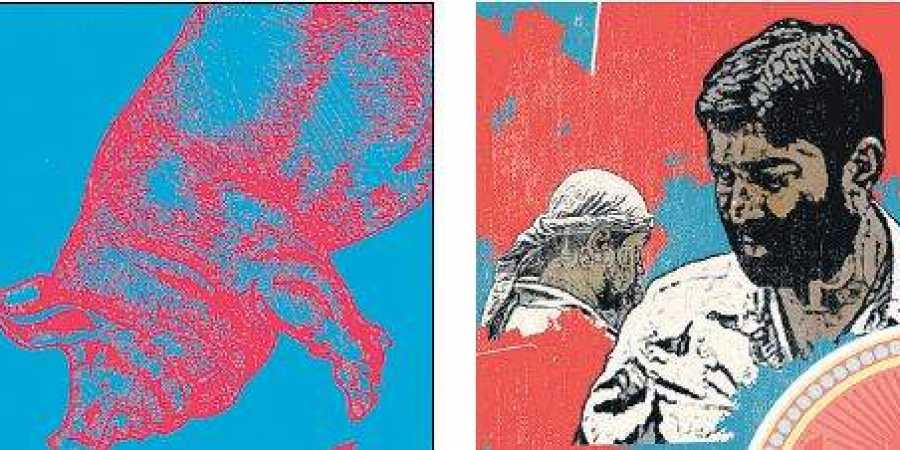
Paarane will be the first ever Kodava language film to compete in international film festivals.
Kodava’s movie Paarane’s first look poster and teaser will be released by the director Sanal Kumar Sasidharan, of Sexy Durga fame, today. This is yet another film that digs into identity crisis in the border area of Karnataka and Kerala. It is an experimental film by Shreelesh S Nair, who is a Keralite currently residing in Bengaluru.
Interestingly the film is made in Kodava, a language which is rarely explored.
The film is titled after a village named Paarane located in Kodagu, and the story is based on the struggles of existence and identity faced by the people,” says the debutant. “Paarane explores the land and culture of the region, and has people revolting against the invaders who try to encroach on their native land to safeguard their motherland. This is the theme of my story,” explains Shreelesh.
Interestingly, this film is made with a shoestring budget of Rs 3.5 lakh and has non actors in its cast. The cinema was shot without a written script. “We considered the actors from the same village Paarane, and filmed around Coorg district, which has sync sound and mise en scene,” says the director.
Director is thrilled to know that Paraane has been nominated for a couple of festivals. “A Kodava langauge film making it to film festivals, which is first time in India, has definitely excited the team. It has been nominated at Indonesia Film Festival and a small festival to be held in Berlin,” he mentions.
source: http://www.newindianexpress.com / The New Indian Express / Home> Entertainment> Kannada / by Express News Service / November 08th, 2018
Harshitha was India’s leading scorer as the team progressed to Division A after beating Kazakhstan in the final.
There’s a sense of inevitability when Harshitha Bopaiah picks up the basketball for her sixth free throw in the Division B final of the FIBA Under-18 Women’s Asian Championships. Her body language doesn’t attempt to mask with fake nonchalance the pressure within. Her face doesn’t give false looks of insouciance. She’s focused.
Kazakhstan’s an easy opponent on paper as they lost two of their three group games and only won against Samoa. But they are in the final after beating Syria.
This is Harshitha’s first final of any tournament as an India player. She’s performing in front of her family and friends at Sree Kanteerava Stadium and the home crowd has not stopped cheering. There’s tension which you can see on her face. But all her five previous free throws of the night – and two in the semi-final – were executed to smooth perfection. Hence, the sense of inevitability.
Harshitha picks up the ball, pauses for a fleeting moment, breathes twice and, once again, makes the perfect parabola that earns her team an additional point. Six free throws out of six.
The point stretched India’s lead in the third quarter to 47-24 in the third quarter. They eased to a 68-45 win over the Kazakhs to earn a berth in Division A of the Championships in 2020.
Harshitha, who’ll turn 20 by then, won’t be there to play that tournament. It’s been just three years since started playing basketball. But she reluctantly admits to having bigger ambitions.
“I would like to play for the Indian senior team, and perhaps, play abroad as well,” she tells Scroll.in.
But she barely had those ambitions when she began hooping back in Coorg.
The 18-year-old was encouraged to participate in various sports as a kid as sports ran in her family but of a different kind. Her dad played hockey for the state team and her brother represented his University side.
However, Harshitha excelled in athletics – long jump and high jump – at school.
“I’d come for a selection trials for athletics. A coach there told me that I have the height (now 5’9) for basketball. So, I went for the selection… and, got into the team.”
As a 15-year-old she joined the sports hostel in Vijaya Nagar for further training. Initially, she would face challenges on the court having never trained in the game before. But with time she adjusted.
“But I enjoy playing the game a lot,” she says.
The Indian team was without the injured teenage sensation Vaishnavi Yadav, who scored 71 points in a Junior Nationals Game in Ludhiana. But in her absence, Harshitha stood out, scoring 75 points in five games to finish the tournament as India’s leading scorer.
Putting the ball in the basket, of course, is fun for Harshitha. But she finds greater relish whilst defending – blocking and stealing the ball from the opposition (she made four steals in the final against Kazakhstan).
But Harshitha never imagined herself playing in front of her home crowd in the Indian jersey. Atleast not so early in her career.
“I never thought I’d make the side. I gave my best in the national camp. And, when I got into the team, it was a little scary because I knew I would be playing in front of my home crowd. But, two-three matches later, I got encouragement from the crowd, the coach. I felt proud of myself that I ended up as my team’s leading scorer in the tournament,” she said.
Certainly, India coach Zoran Visic was proud of her. He is incharge of India’s three teams – U-16, U-18 and the senior – in Bengaluru. But he was more than impressed with her consistent performance.
“Harshitha was very good, on both the rebounds as well as scoring points for us. In the semi-finals, too, she got a double-double, almost triple-double. And, she’s an important member of this team,” Visic said.
Both Harshitha and Visic would hope that she can be an important member of the senior team as well.
source: http://www.scroll.in / Scroll.in / Home> The Field> Basketball / by Praveen Sudevan / November 04th, 2018
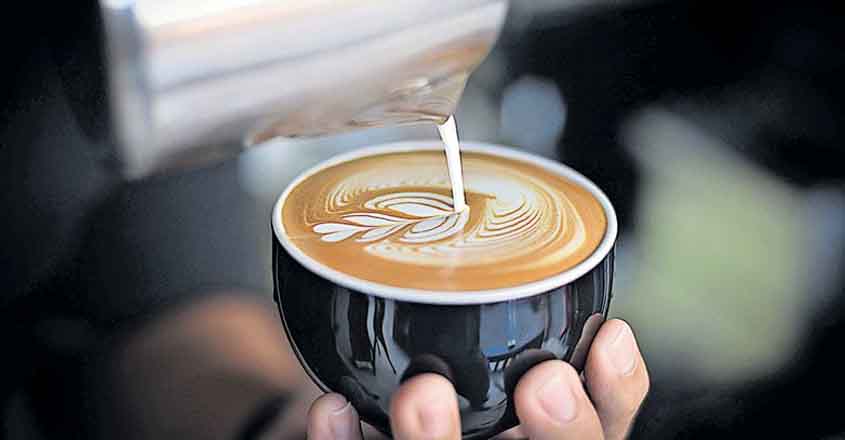
Coffee is indisputably one of the most favourite and widely consumed beverages in the world. It is estimated that more than 200 crore cups of coffee are consumed by people around the globe on a daily basis. The coffee plants originated in the African continent, and Arabica and Robusta are the most commonly grown varieties.
The tale of coffee
There are many legendary accounts related to the origin of the coffee. The most popular among them is the tale of Kaldi, the Ethiopian shepherd, who noted how his goats have become excited and active after eating the leaves of a plant which bore red shiny seeds. He took the leaves and seeds of this plant to the nearby monastery to know more about it. It is said that the monk at the monastery brewed a special drink using the seeds brought by the shepherd. After drinking the concoction, the monk discovered that he could indulge in his works with renewed energy and remain wake at night to offer prayers. So many believe that the first cup of coffee was brewed in an Ethiopian monastery by a monk.
It was in a 9th century document that coffee was mentioned for the first time. Crassus, a Persian apothecary has written about a drink called bunchum. It was noted that bunchum was brewed from a fruit called bun, which means coffee beans in the Ethiopian language. Historians thus surmise that Craussus had mentioned about coffee brewed from coffee beans. In the meantime, Arab merchants had begun cultivating coffee plants in Yemen, which were brought from Ethiopia. Their coffee cultivation was based on the hilly areas in the south western parts of Yemen. This coffee variant, known as Arabica, had reached almost all the Arab countries as well.
Turkish brew
Ozdemir Pasha, the Turkish Ottoman governor of Yemen had taken tons of coffee to Istanbul. He, in fact, is credited for introducing coffee to Turkey. It was the Turkish people who brewed the coffee, for the first time, in the way in which it is consumed today. They roasted the coffee seeds, ground it to fine powder and then mixed in hot water to make the beverage. As per the historical records, the Ottoman emperor Suleiman had created a special title called the ‘chief coffee maker,’ and the person who bore that title enjoyed a special position in his royal court as well. It was during the reign of the Ottoman Empire that coffee reached various parts of the world and became one of the most prominent drinks.
Unique flavour
In this image taken on May 13, 2013, glasses of cold-brewed iced coffee for summer are shown served on a tray in Concord, N.H. (AP Photo/Matthew Mead)
By the 17th century, coffee had become popular in Europe and North America. When Britain imposed tea tax in America in 1773, the Americans resorted to coffee. The Arab merchants tried to retain their dominance in coffee export when the demand increased significantly in Europe and America. They had exported only roasted coffee beans or the seeds which were boiled in water, to prevent the cultivation of coffee in other parts of the world.
However, the Dutch, French, and the Portuguese had begun coffee cultivation at their various colonies around the globe. The Dutch had cultivated coffee in South East Asia, while the French had coffee plantations in the Caribbean islands. The Portuguese, too, had large plantations in their South American colony, Brazil. By the 1830’s Brazil became the largest exporter of coffee in the world, and still continues its leading position in coffee export followed by Vietnam and Colombia. Robusta coffee which originated in the central and western Africa is largely grown in Vietnam.
Coffee in India
It was Baba Budan, a Sufi monk who is believed to have smuggled coffee out of the Yemenese harbour town Mocha to India, while returned from a pilgrimage to Mecca. There are many portraits of Baba Budan in which he is portrayed as smuggling 7 coffee seeds by hiding them under his long beard or strapping them onto his chest. It is said that Baba Budan, who was a resident of the Chandragiri hills in Chikmanglur, Karnataka, had grown those coffee seeds here in 1670. Today, these hills are known as the Baba Budan hills. In 1870, the first first coffee plantation in India was set up near the Baba Budan hills. J H Jolly, who was the manager of the Parry and Company, had requested the king of Mysore to allot 40 acres of land for coffee cultivation. Later, the coffee reached other places in south India like Wayanadunand Nilgiri.
Indian special
Though the British had tried to cultivate coffee in India, it wasn’t as successful in the beginning.They had faced a backlash when the Arabica variety was affected by the coffee rust disease. However, in the 19th century the British had managed to grow coffee in more than 3 lakh hectares of land. In the initial stages, the coffee plantations were opened mainly in places like Mysore and Coorg, and the Robusta variety was grown here. Later they began to cultivate S795 variety of the Arabica coffee which was immune to the coffee rust disease.
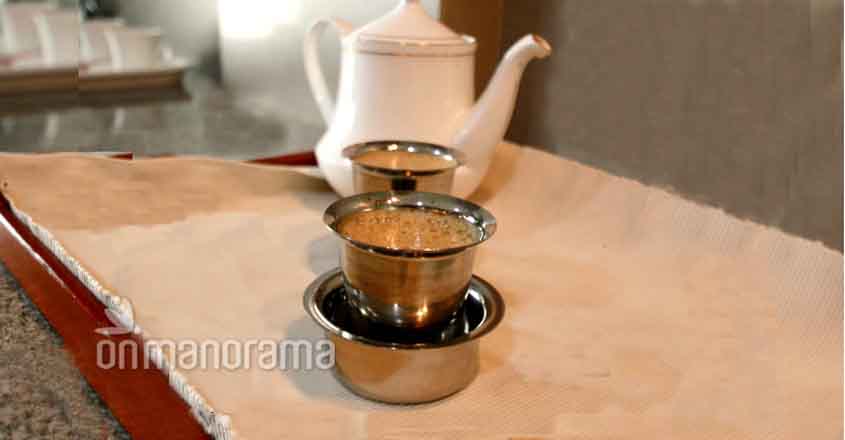
In the mid 19th century, India emerged as a leading exporter of coffee. But the market crashed due to the severe financial constraints which arose during the world wars. To effectively tackle this a coffee cess committee was formed in 1935. As per their recommendations, Indian coffee house outlets were opened in 1940. It was during this time that the renowned Indian filter coffee emerged.The filter coffee prepared by mixing roasted coffee beans, chicory, milk, and sugar became instantly in popular in South India. The Coffee Board of India was formed in 1945 to regulate the coffee exports exports and to aid the small scale coffee cultivators.
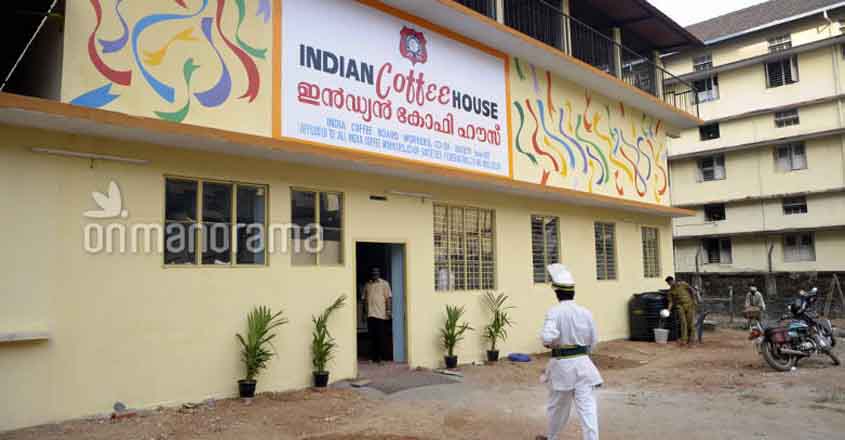
The Indian Coffee House
In the 1950’s, the Coffee Board of India decided to shut down the India coffee house outlets opened during the British era, and to terminate the labourers who worked at these outlets. However, the labourers, led by the charismatic communist leader A K Gopalan, formed the India Coffee Board Workers’ Cooperative Society on 19 August 1957 at Bangalore. The first outlet of the Indian Coffee House was thus opened, in the same year, in Delhi. The next year, the Indian Coffee House was opened in Thrissur, making it the first outlet in Kerala. More outlets of the iconic Indian Coffee House were opened at various places like Thalassery, Lucknow, Nagpur, Jabalpur, Mumbai, Calcutta, Pune, and Tamil Nadu.
Expensive brew
It is in the south Indian states that coffee is cultivated in abundance. Karnataka produces 71% of the total coffee production while Kerala has 21% and Tamil Nadu produces 5%. The Indian coffee is in great demand around the globe as coffee here is mostly grown in mixed farming, getting ample shade under the cardamom, clove, nutmeg, and cinnamon crops. The Indian Monsoon coffee has a distinct flavour and aroma. There are coffee plantations in states like Andhra Pradesh, Odisha, and many north eastern states as well.
The unique coffee produced by the tribal people of the Araku valley in Andhra Pradesh is one of the most famous organic coffee brands in the world. The Araku brand of coffee has achieved an international honour by winning the Prix Epicerie Award 2018. It is for the first time that an Indian coffee brand has won this prestigious award. The brand which sells 100% authentic Arabica coffee now has an outlet in Paris as well. Five different varieties of Araku coffee are sold at this outlet, and the premium coffee variant costs up to Rs 7000 per kilogram.
source: http://www.food.manoramaonline.com / OnManorama / Home> Food> Foodie / by M Muhammmad Shafi / November 02nd, 2018
Are you a coffee addict with a penchant for travel? Then you’ve come to the right place! From one-of-a-kind coffee academy in Brazil and elegant Italian coffee bars to Colombia’s innovative coffee themed-park, here are some of the most fascinating holiday destinations that need to be on your bucket list:
Vienna, Austria:
Austria’s capital is as renowned for its coffeehouse culture as it is for its historic monuments. Thanks to numerous coffee houses that dot the city, Vienna was declared a UNESCO World Heritage Site in 2011. From traditional coffee houses like Café Schwarzenberg, which was established in the 19th century, to progressive, third wave cafés such as Fürth Kaffee, Vienna offers something for every coffee connoisseur. The most popular vintage Viennese coffee shops include Café Central and Café Prückel. But if you like all things contemporary, hit up cafés like Sassmünd Kaffeebar, Zweitbester and Waldemar. Oh, and if you fancy enjoying brunch in the company of furry felines then Das Augustine is the place to go! The best time to visit Austria is from April to May and September to October.
Ho Chi Minh City, Vietnam:
Coffee was introduced to Vietnam by French colonialists in the 19th century. According to Topdeck Travel, Vietnamese-style coffee often includes added ingredients like egg yolk and yogurt to make the beverage more flavorful. Traditionally, the rich drink is served in a glass with sweetened condensed milk at the bottom. Shin Coffee in old Saigon is one of the best places to sample Vietnamese specialty coffee. The Coffee Ship is yet another must-visit stop for coffee enthusiasts. Housed in a boat that floats on the Kenh Te Canal, it’s hands down one of the trendiest coffee shops in the city. Meanwhile, if you dig the idea of sipping coffee in the warm embrace of nature, you cannot go wrong with Du Mien Garden Coffee. Other popular cafés in Ho Chi Minh City include Yoko Café, The Workshop Specialty Coffee and The Snap Café. For an ideal vacay in Vietnam, plan your trip between January and March.
Milan, Italy:
Among Italy’s famous culinary contributions are some of the finest coffee beverages including espresso, cappuccino, macchiato and caffè d’orzo. Moreover, it’s the Italian capital’s coffee culture that inspired former Starbucks CEO, Howard Schultz. Some of the most notable cafés in Milan are Orsonero, Marchesi, Taglio, Caffé Napoli and Moleskine Café. The city also boasts of a variety of lavish al Bancos or coffee bars such as Pavé, Bar Luce and Caffè Baglioni. The best time to visit Italy is in May. Or, in September and October, if you’d like to avoid high tourist footfall.
São Paulo, Brazil:
Brazil has been the world’s largest producer of coffee for the past 150 years. Particularly known for its Arabica and Robusta coffee, the Latin American country is one of the best destinations for coffee buffs. São Paulo is home to an array of coffee shops and roasters. From traditional gems like Sofá Café, Café Floresta and The Little Coffee Shop to contemporary cafés like Beluga and Octavio. And if you take your coffee very seriously, a visit to Coffee Lab is a must. The innovative café doubles as a microbrewery and coffee academy. Visitors can sample different kinds of Brazilian coffee, choosing from a vast selection of beans and brewing methods. Meanwhile, for a great farm to cup experience, Isso é Caffè is the place to go. Located near São Paulo Museum of Art, the brewery serves coffee made with dark roasted beans in a small glass tumbler known as cafezinho. Summer and spring is the best time for a Brazilian getaway.
Istanbul, Turkey: Strong, sweet and black as night, that’s Turkish coffee for you. The full-bodied beverage is prepared with finely ground, unfiltered coffee. It’s served in traditional porcelain cups known as fincan. With its plethora of coffee shops, Istanbul is a dream destination for avid coffee lovers. For an authentic Turkish coffee experience, check out Pierre Loti Café and Fazil Bey’s Turkish Coffee House. If you’d like to explore more trendy establishments, visit The House Café, Java Studio Istanbul and Midpoint Café. And if you prefer your cuppa joe accompanied by a stunning view, look no further than Galata Konak Café. The best time to visit Istanbul is between September and early November.
Jakarta, Indonesia: Coffee is an integral part of the Indonesian lifestyle. The South-Asian country is known for its exceptional coffee varieties, including Java, Sumatran, Toraja and Gayo coffee. More adventurous coffee aficionados might also want to try its Kopi Luwak or civet coffee which also happens to be the most expensive coffee in the world. Jakarta boasts of a rich coffee culture. The bustling capital city is dotted with coffee shops that will please every kind of coffee lover. For those looking for a cozy spot to get their caffeine fix, Lucky Cat Coffee and Kitchen will fit the bill. And if you like all things vintage, Trafique Coffee and Bakoel Koffie should be on your checklist. Meanwhile, if you’re in the mood for some exquisite specialty brews, check out cafés like Anomali and Coffee Grounds. Alternatively, for an immersive cultural experience, enjoy a glass of herb-infused coffee at one of the streetside stalls called warung kopi. If you’re planning a trip to Jakarta, the best time to go is from July to October.
Seattle, Washington, USA: Home to world’s first Starbucks located in Pike Place Market, Seattle is a perfect place for coffee snobs. Fancy elegant indie cafés? Try Elm Coffee Roasters, Lighthouse Roasters, Analog Coffee or Victrola Coffee Roasters. If Instagrammable latte art is your thing, check out Moore Coffee Shop on the 2nd Avenue. Hit up Milstead & Co, if you’d like to sample hard-to-find caffeine treats in a cosmopolitan setting. For fans of traditional establishments with an old-world charm, Café Allegro and Seattle Coffee Works’ Express Bar are highly recommended. Best time for a visit to the rainy city is in late June or between September and October.
Other must-visit destinations include Cuba, Portugal, Finland and Colombia – home to the National Coffee Park – a theme-park complete with attractions like a coffee garden, coffee museum and cable car.
So, where would you head for a caffeine-packed getaway? Let me know in the comments below!
I’ve been a digital journalist and writer for the past four years, primarily covering lifestyle and wellness. After completing my post graduation in International Journalism, I worked as a Features Writer at Cosmopolitan India where I wrote extensively on pop culture, society, and everything lifestyle. I’ve also contributed to The News Hub, Zee News, Business for People and Planet and OneWorld South Asia, among other publications. Other than that, I’m an avid reader and enjoyer of quality procedurals. When not penning articles or chasing deadlines, I like to travel, bake, dabble in poetry, and make DIY craft projects.
source: http://www.forbes.com / Forbes / Home> Lifestyle / by Nomah Nazih, contributor / October 28th, 2018
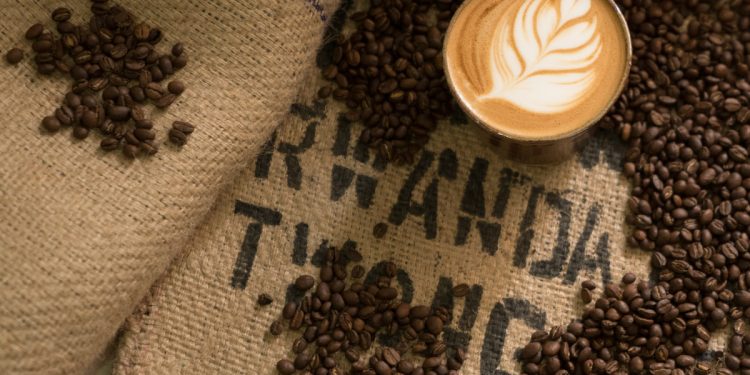
Rwanda has made strides in being competitive in the global market, producing quality cash crop.
It only came as a surprise to many who have not followed the growth of Rwandan coffee over the years.
Rwanda’s efforts to produce one of the best quality in the coffee sector has indeed paid off. Rwanda’s coffee has now scooped two awards in the 3rd annual Ernesto Illy International Coffee Awards that took place on October.
Ngororero Coffee Washing Station bagged a brace of prestigious accolades including “Best of the Best” and “Coffee Lover’s Choice” awards, marking a historical milestone. No coffee from any part of the world has ever picked up both awards, which was an achievement that will go down into the history books. Indeed the strategies to make the world’s best coffee bore fruits.
In its bid to be competitive in the international market, Rwanda has made a series of changes in the coffee sector, to ensure high-quality production of the cash crop. Last year, the National Agricultural Export Development Board (NAEB) implemented new approaches that ranked the country’s export among the best, globally.
Based on the beans’ aromatic richness, complexity, balance, elegance and aroma intensity, and strength, a jury of coffee experts in New York, USA considered Rwanda’s coffee as “Best of the Best.” The exposure was vital for the country to learn more about the global market and areas to improve to be at the top of the log.
Bagging the two awards this year, Rwanda edged top producers of coffee in the world including Brazil, Colombia, Costa Rica, El Salvador, Ethiopia, Guatemala, India, and Nicaragua. The country eased past both South American and East Asian countries that as well are potential competitors in producing top-notch quality coffee.
llycaffè S.p.A. an Italian coffee roasting company that specializes in the production of espresso announced Rwanda’s coffee milestone in the gala. The company that was founded by Francesco Illy in 1933 is a global leader in high-quality coffee, passionate about perfection.
Rwanda made its official debut at exporting roasted coffee to the USA in 2017, a ten-tonne consignment with the first shipment valued at U$77,000. The business partnership opened up other investment opportunities for the Rwanda coffee to expand its market and increase its share of export revenue. It also boosts trade in the agriculture sector between the U.S and Rwanda, furthering the partnership between America and Africa.
Rwanda seeks to export at least 24, 500 tonnes of quality coffee in a year, 1,500 tonnes more than 2017 and 2,500 tonnes more than 2016. As part of NAEB’s strategies to produce quantity and quality coffee, they aim at planting 34,000 new coffee trees by the year 2024.
Global prices should increase the export receipts given that the country sells quality cash crop. Rwanda’s total coffee export revenue rose to $59.8 million in the first 11 months of 2017, up from $53.8 million earned over the same period in 2016, registering a growth in value of 11.1 percent or $6 million.
source: http://www.exchange.co.tz / Exchange / Home> Industry & Trade> Agribusiness / by John Green / October 18th, 2018
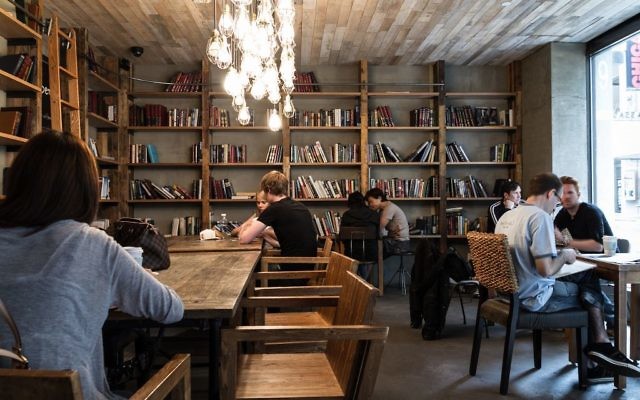
A coffee shop in Midtown, Manhattan. Flickr CC/ Neo_II www.habenbacher.at
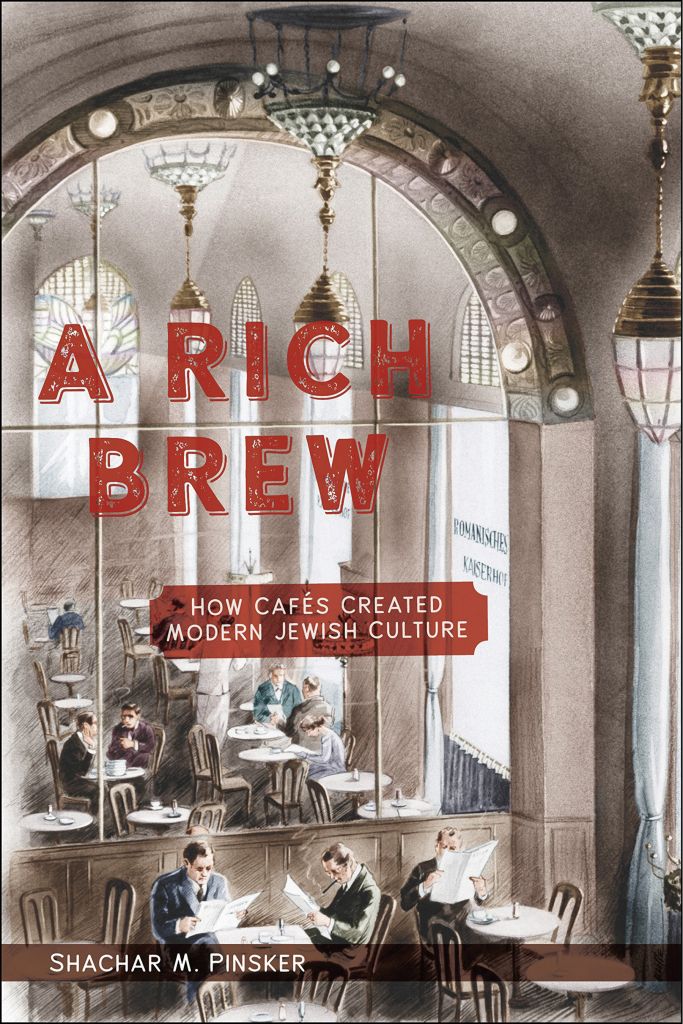
Perhaps because I’m writing this as I sit in a vibrant, quirky coffee shop in Washington Heights, its walls decorated with graffiti-inspired art and fake ivy, it strikes me that whenever I arrive in a new city, I make a beeline for the nearest independent coffee house. But it wasn’t until I read Shachar Pinsker’s new book, “A Rich Brew: How the Café Created Modern Jewish Culture” (NYU Press), that I learned that Jews and coffee shops have been connected for at least a century; Jews, especially Jewish writers, he argues, have made the café their primary gathering place and, in many cases, their collective muse. (Read The Jewish Week’s review on the book here.)
Pinsker, who teaches Hebrew literature at the University of Michigan, chronicles the history of cafés in six cities (Odessa, Warsaw, Vienna, Berlin, New York and Tel Aviv), showing that major Jewish journalists, novelists, poets and playwrights, from Sholem Aleichem to Isaac Bashevis Singer, were not just inspired by coffee shops but frequently used them as the settings for their work.
Jews have a long history with coffee. While coffee houses first sprang up in Constantinople, Cairo and other Middle Eastern cities during the mid-sixteenth century, it was a Jewish entrepreneur who brought the coffee house to Europe, opening one in Livorno in 1632. The first café in England was opened in 1651 in Oxford by one “Jacob the Jew,” who was an immigrant from Lebanon.
A Rich Brew” tells the story of how cafes “created modern Jewish culture.” Courtesy of NYU Press
As coffee drinking became popular throughout Europe, according to the late Robert Liberles in “Jews Welcome Coffee: Tradition and Innovation in Early Modern Germany,” engagements between Jewish couples were sealed by the parents over a cup of coffee rather than a drink at the local tavern. David Liss’ 2003 historical novel, “The Coffee Trader,” centers on a 17th-century Jewish refugee from the Portuguese Inquisition who tries to corner the market on coffee only to be caught up in all kinds of commercial and romantic entanglements.
The kinds of food served in cafés also often had a Jewish connection; think of the Viennese Jewish pastry maker Franz Sacher and his famous creation, Sacher Torte, or Stephen Klein, also from Vienna, a Jewish chocolatier who escaped to America in 1939 and started Barton’s Candy Corp.
Donald Schoenholt is the president of Gillies Coffee Company, the oldest coffee maker in the country. The business, which was started in 1840 by a Scottish family, was taken over by Donald’s uncle, Mac, in 1912. I first met Donald in the late 1980s, when I joined the Little Neck Jewish Center, which he served as president. It was the era of the yuppies; Starbucks (acquired in 1987 by Howard Schultz, a Jewish guy from Brooklyn) was just emerging on the scene and “specialty coffees” were all the rage. As Schoenholt put it, “People were starting to eat brie instead of Velveeta,” and they needed a more upscale coffee to go with their meals.
Schoenholt told me that Jewish merchants participated in the American coffee trade since the 18th century, and that, “with each wave of Jewish immigration, more Jews were drawn to it.” While New York was the center for manufacturing coffee, he said, the major port for the importation of coffee was New Orleans, where Jewish merchants like Jacob Aron traded in both coffee and gold. By the 1880s, Philip Wechsler, an immigrant from Austria who became a major donor to the United Jewish Appeal, had opened a coffee-roasting factory in New York. William Black (né Schwartz), who started by selling shelled nuts under a stairway in Times Square, founded the chain of luncheonettes known as Chock Full o’ Nuts. And Samuel Schonbrunn, a Jewish immigrant from Hungary, created the Savarin brand of coffee, which was served at the Waldorf Astoria.
In our time, coffee shops loom large in pop culture — think of Monk’s Café, where the characters on “Seinfeld” hang out in almost every episode, sitting in a booth near the front door. (The exterior shots were taken, of course, at Tom’s Restaurant, an actual diner at Broadway and 112th.) Ruth Cohen (that’s her real name), the cashier, appears in more episodes than any other character besides the stars. Jerry Seinfeld went on to create and host the web series “Comedians in Cars Having Coffee,” now in its 10th season; it has featured Mel Brooks, Bob Einstein and Sarah Silverman.
And who could forget “Diner,” Barry Levinson’s semi-autobiographical 1982 valentine to his hometown of Baltimore; the film is about a group of 20-something Jewish friends in the 1950s who made the local diner their gathering spot.
Even non-Jews associate coffee with the Chosen People. As a sign outside a church in Harveys Lake, Pa. (in the Poconos) asked last summer, “How does Moses make coffee? Hebrews it.”
Ted Merwin’s column appears the fourth week of the month
source: http://www.jewishweek.timesofisrael.com / Times of Israel / Home> The New York Jewish Week / by Ted Merwin / October 23rd, 2018
Silas Brasileiro, President of the Brazilian Coffee Growers’ Council, will open the Global Coffee Platform’s (GCP) Global Coffee Sustainability Conference 2018, to be held from 8 to 9 November in Belo Horizonte, Brazil.
The annual event brings together sustainability companies and representatives from nine GCP platforms around the world – Brazil, Vietnam, Indonesia, Uganda, Colombia, Kenya, Honduras, Tanzania and Peru – to discuss topics such as the future of sustainability, the role of producing and consuming countries, sustainable coffee regions, and impact investments to promote sustainability.
Other speakers include keynote speaker José Luiz Tejon, Director of Biomarketing Agência de Propaganda e Consultoria; José Sette, Executive Director of the International Coffee Organization; Marcelo Burity, Head of Green Coffee Development at Nestlé; Daniel Martz, Director of Corporate Affairs and Sustainability at Jacobs Douwe Egberts; Han de Groot, CEO of Rainforest Alliance; Steven Collet, Director of the Dutch Sustainable Trade Initiative; and Kim Elena Ionescu, Sustainability Director of the Specialty Coffee Association.
“The conference will be a unique opportunity to interact with prestigious names of the Brazilian and international coffee sectors, professionals of public and private sectors, associations, certifiers and verifiers, NGOs, people truly engaged and committed to coffee sustainability,” GCP Chairman Carlos Brando says in a release.
For more information, visit www.gcsc.coffee.
source: http://www.gcrmag.com / Global Coffee Report / October 23rd, 2018
Hockey India on Wednesday congratulated Rohini Bopanna on being promoted as FIH International Technical Official by the FIH Officials Committee. The World Governing Body for Hockey announced its decision on Wednesday. Earlier this year, Bopanna was also appointed as a Technical Official for the 5th Women’s Asian Champions Trophy 2018 held in Donghae City, South Korea, after having officiated as a Technical Official at the 9th Women’s Asia Cup 2017 in Kakamigahara, Japan.
Rohini Bopanna started her career as a Technical Official when she first officiated during the 4th Hockey India National Championship (Women) in 2014 where she was involved with the Junior, Sub-Junior and Senior categories. Being a former hockey player herself, the 38-year-old has since then officiated in various domestic and international events.
Bopanna considers her first International assignment as a key milestone in her career as a Technical Official which came when she officiated at the 12th South Asian Games 2016 in Guwahati, India. She was also assigned to officiate the 4th Women’s Asian Champions Trophy which was held in Singapore later that year.
Hailing from a family that has hockey in its roots, Bopanna also played for the state of Karnataka in all age groups – Junior, Sub-Junior and Senior level. Her husband, P. Bopanna, also used to play hockey as a Goalkeeper, and has supported the 38-year-old in her endeavor as a Technical Official.
“It is a huge honour for me to have been promoted as FIH International Technical Official by the FIH Officials Committee. Exposure at the 4th Hockey India National Championship (Women) in 2014 helped me start my career as a Technical Official, and I have been fortunate to have officiated in various domestic and international tournaments. I would like to thank my family for always supporting me and helping me in continuing with my duties of being a Technical Official.
“I would also like to extend my gratitude to the Hockey India Umpiring, Technical and Competitions Committee for believing in my abilities and for giving me opportunities to progress and grow as a Technical Official. This would not have been possible without their training, guidance and support,” an ecstatic Bopanna said.
Congratulating Rohini Bopanna on her promotion accorded by the FIH, Hockey India’s Secretary General, Rajinder Singh said, “I would like to wish Rohini Bopanna the very best for her promotion as FIH International Technical Official by FIH Officials Committee. It has been Hockey India Umpiring, Technical and Competitions Committee’s aim to train, guide and support the upcoming officials to the International level by providing them with exposure in domestic and international competitions.
“I am delighted to see several technical officials and umpires making their name through hard-work and determination in the International stage, and would like to wish Mrs. Bopanna the very best for the future.”
source: http:/www.sportskeeda.com / SportsKeeda.com / Home> Field Hockey> News / Press Release / New Delhi, October 24th, 2018
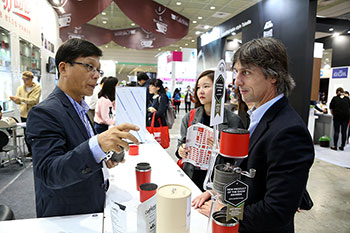
Seoul Cafe Show has announced it will launch Cafe Show Mocha Port, a one-to-one business matching and networking service to connect buyers and exhibitors at the event, taking place from 8 to 11 November.
Seoul Cafe Show expects the online meeting service to provide productive customer relationship management and communications, resulting in more business and efficient time management.
More than 600 exhibitors have already registered their products in Mocha Port, from fields such as coffee, food and beverage, bakeries, interior, machine and equipment, and start-up companies.
Approximately 6000 coffee industry buyers from about 30 countries, including Japan, China, Taiwan, Vietnam, India, Malaysia, the Americans, and Europe, will go on the pre-matching system.
Exhibitors and buyers who want to match the companies participating in the Seoul Cafe Show can register until the end of October. The online pre-matching will be processed until the end of October.
The Seoul Cafe Show will be held at Samsung-dong in Seoul, Korea.
Cafe Show Seoul will host a range of events, competitions, and seminars such as the World Coffee Leaders Forum, Seoul Coffee Festival, and World Coffee Battle.
For more information, visit www.cafeshow.com/eng
source: http://www.gcrmag.com / Global Coffee Report / October 24th, 2018
Rohan Bopanna-Divij Sharan clinch Gold in Asian Games Men’s Tennis Doubles
This is the fifth Gold medal for India in the Men‘s Doubles (Tennis) since the Asian Games started.
Indian doubles pair of Rohan Bopanna and Divij Sharan beat Kazakhstan‘s Aleksandr Bublik and Denis Yevseyev in the Men‘s Tennis Doubles on Friday to secure India‘s 6th Gold (22nd Overall) at the Asian Games.
The Indian doubles pair thrashed the Kazakhstan duo 6-3, 6-4 to win the Gold.
Earlier, Bopanna and Sharan got the better of Japan‘s Uesugi K and Shimabukuro S 4-6, 6-3, 10-8 on Thursday after a nervy tie-breaker to reach the finals.
This is the fifth Gold medal for India in the Men‘s Doubles (Tennis) since the Asian Games started.
Previously, the team that won gold for India in Men‘s Doubles (Tennis) were – Gaurav Natekar/Leander Paes (1994, Hiroshima), Mahesh Bhupathi/Leander Paes (2002 Busan), Mahesh Bhupathi, Leander Paes (2006, Doha), and Somdev Devvarman, Sanam Singh (2010, Guangzhou).
On Thursday, Prajnesh Gunneswaran ensured another podium finish for India when he beat Korea’s Soonwoo Kwon 6(2)-7, 6-4, 7-6(8) to enter the semifinals of Tennis Men’s Singles.
In Tennis, Ankita Raina had to settle for a Bronze medal on Thursday after she lost 4-6, 6(6)-7 after a tough tie-breaker against China’s Zhang Shuai.
source: http://www.hermannherald.com / Hermann Herald / Home / October 14th, 2018
WELCOME. If you like what you see "SUBSCRIBE via EMAIL" to receive FREE regular UPDATES.
Read More »