Majaa Talkies is Kannada television’s favorite comedy show. The actors and everybody else on the crew have become fans’ favorite over the years.
Shweta Changappa, who essays one of the famous roles, Rani, is pregnant and expecting her child. Recently, the actress shared the news with her fans through an Instagaram post. She also mentioned in the caption that she is due soon.
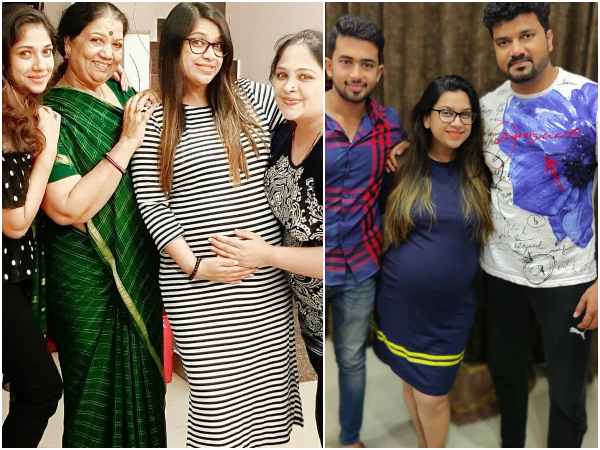
Yesterday, the Majaa Talkies members visited Shwetha Changappa at her residence for the baby shower ceremony.
She shared the pictures of the same on her social media handles.
Shwetha shared a series of pictures with Majaa Talkies family and wrote, “Just thinking 🤔 Does this POST require any QUOTES??????… Nahhhhhhhhh. U know what, These pictures says it allllllllll🤗 These are my FRIENDS who took,time off from Thier busy schedule and Came to our home☺️ All I can say is thank u guys😘 #motherhood #pregnancy #momtobe #Babybump #god’sgift #happysoul #lovemylife #loveuzindagi😍” – (sic)
Shwetha originally hails from Coorg, Karanataka. Unlike the other conventional baby showers, their tradition takes puts the mother-to-be on an eating spree.
Explaining this she said, There is a ritual that every coorgie family does to a kodavathi GIRL who is pregnant… that’s called “KOOPADI KOOLU”. Starts from her Mother and father. And continues with close family members…..Cooking special Dishes in odd numbers and serving the Mom to be🤗 we don’t Have a SEEMANTHA function..But our ritual
happens almost every weekend by our close family members.. ♥️”
“For me it stated almost 2months ago and it is still continuing … Have captured few pics and would like to share it with u alll♥️ these are the pics with our Family who made the rituals special for me by cooking variety of dishes made it for me and the little one in my tummy😍 with the special ingredient called LOVE.😘 can’t thank them enough. All I can say is I am truly blessed 🙏 LOVE YOU ALL 😍,” she added.
source: http://www.filmibeat.com / Filmi Beat / Home> Kannada> News / by Chaitra Krishnamurthy / August 03rd, 2019
Hugely acclaimed US saxophonist signs to Whirlwind Recordings for his new album, Hero Trio, released on 19 June.
Across his 25-year career Rudresh Mahanthappa has become known for his garrulous mix of fiery post bop and complex Carnatic music, which has seen him explore everything from re-cast classic bop to post M-BASE fusion.
On Hero Trio, his 16th release as a leader/co-leader, he pays tribute to his greatest influences with an album of interpretations. All of the material is presented in Mahanthappa’s wry, spontaneous and imaginative way, alongside long-time heavyweight associates François Moutin on bass and Rudy Royston on drums.
The first single: June Carter Cash wrote ‘Ring of Fire’ for her husband Johnny, and the tune connects Mahanthappa with his Colorado childhood – which you can hear on the video below.
Commenting on the song, the saxophonist says; ‘Like Dolly Parton, when you take a closer look at what they did compositionally you realise that it has a conversational flow, with odd length phrases and extra bars here and there, and I wanted to capture that freedom.”
For more info visit rudreshmahanthappa1.bandcamp.com/album/hero-trio
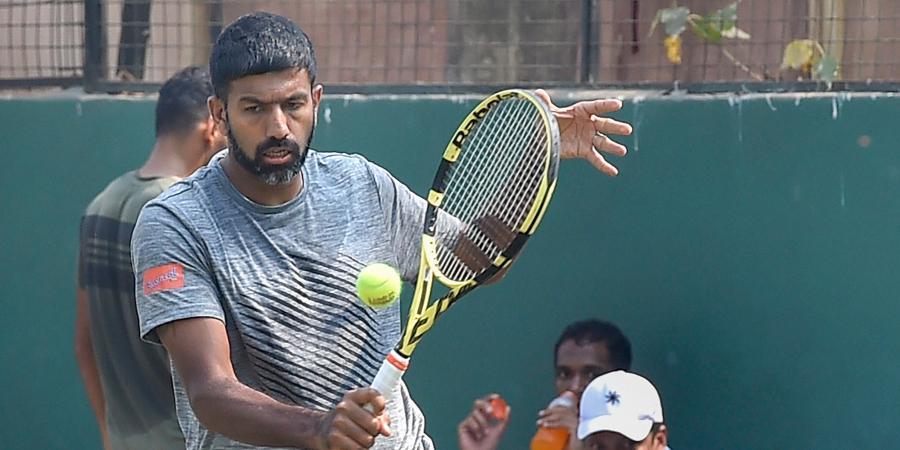
Apart from giving players a much-needed workout, the slot has given all of them something to look forward to on a daily basis. Indian tennis star Rohan Bopanna (Photo | PTI)
Chennai :
Every day at around 4.55 pm, Rohan Bopanna goes inside his room and logs on to Zoom. For the next hour, he will lose himself in core training sessions along with 20-25 others, mostly Indian players, to ensure he remains fit during the lockdown.
It’s not even remotely close to the hours logged on the court, but elite athletes have had to find creative ways to ensure they keep doing the bear minimum, fitness-wise. “That kind of has been my routine now,” Bopanna says.
Apart from giving players a much-needed workout, the slot has given all of them something to look forward to on a daily basis. “At some level, it has given us a routine, something that we know we will be doing between 5-6 pm everyday, so this thing helps us.”
At 40, he is one of the elder statesmen of the fraternity in India but he is not leading the sessions. “Ramkumar (Ramanthan) was the one who drove all of us to start doing this. It was completely his initiative. Most of the session is focussed on the core because we are sitting at home (laughs) most of the time without doing anything.”
To inspire some of the lesser-known players on the call, Bopanna once invited his regular doubles partner (singles World No 16) Denis Shapavalov to the session.
“I invited him once so that he could inspire the group and talk to the group.” Apart from training this way, his only connect with tennis has been hitting a few balls against the wall. “I do have a hit against the wall in my house every day.”
Apart from that, the doubles exponent has tried his hands at making butter the traditional way. Firstly, though, he calls this ‘break’ from the game a blessing in disguise.
“This is the first time I have stayed at home in Coorg for such a long time since I started playing at the age of 15 or 16. So around 24-25 years. In that aspect, it is special. I don’t think I have ever stayed here for more than a week to 10 days. It’s been more than a month that I have stayed here. Spending time with my 11-month old daughter, my wife and parents… it’s been good.”
He has also tried his hands at churning butter using traditional equipment. “Our house has had these tools even before I was born. A few weeks ago, I suggested to my mother let’s make some butter in the traditional manner so that’s how that idea came about.”
As the topic shifts to one of tennis’ current debates — a possible merger between the WTA and the ATP — the World No 37 wants to see how the situation develops.
“It’s been an idea that has been in the works for a long time. It will be interesting to see how it develops considering the two tours don’t have many overlapping tournaments. It’s in the discussion stage I think. Let’s give it some more time.”
source: http://www.newindianexpress.com / The New Indian Express / Home> Sport> Tennis / by Swaroop Swaminathan / Express News Service / April 30th, 2020
Lieutenant General Pattacheruvanda Chengappa Thimayya proceeded on superannuation after serving the Indian Army for nearly four decades, a defence spokesperson said.
He retired as the 21st General Officer Commanding-in-Chief, Army Training Command here, a charge that he took from Lt Gen Manoj Mukund Naravane on November 1, 2018.
The General Officer”s illustrious career included numerous Command and Staff appointments both in India and abroad. “A true gentleman and an officer,” he always upheld the motto of “service before self” till his last day in the office. He refused to have any ceremonial farewell, customary to an officer of his rank and stature, while proceeding on retirement due to the nationwide lockdown, said the defence spokesperson.
He paid his farewell courtesy to Himachal Pradesh governor Bandaru Dattatraya and Chief Minister Jai Ram Thakur over telephone and proceeded to his hometown to start his next innings.
Born on April 4, 1960 at Coorg in Karnataka, the General Officer is an alumni of Sainik School, Bhubaneswar and National Defence Academy.
He was awarded the Sword of Honour at Indian Military Academy and was Commissioned to 5th Bn, the Mechanised Infantry Regiment (14 KUMAON) on June 13, 1981.
PTI DJI RAX RAX
source: http://www.outlookindia.com / Outlook / Home> The News Scroll / by PTI / April 29th, 2020
The Karnataka district is a rich blend of history and hospitality
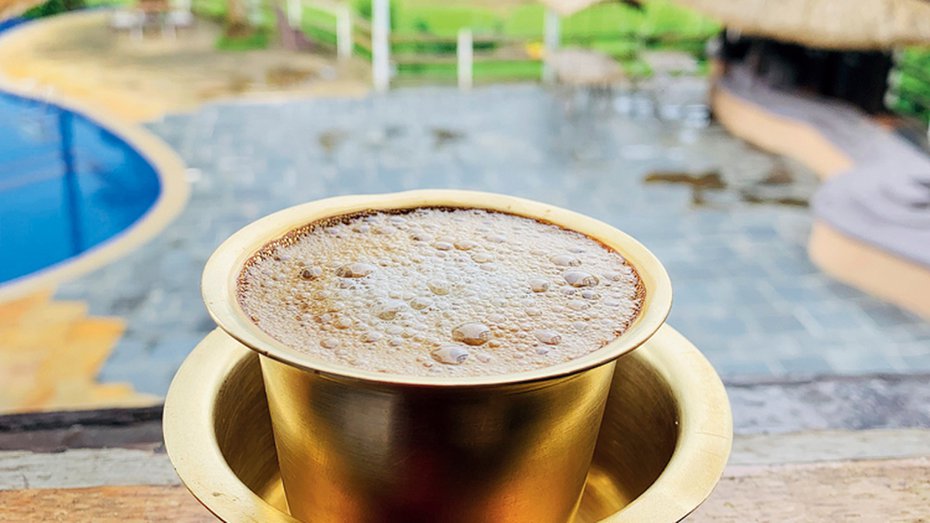
Coorg coffee is grown at a high altitude and under a well-defined two-tier mixed shade canopy / Picture: Karen Anand
I recently visited Coorg in southern India. And as my dear husband keeps saying, I immerse myself so wholeheartedly wherever I am that I invariably want to move there… or at the very least make plans to revisit very soon! Coorg is no exception.
About 250km from Bangalore, it’s an area with a sense of nobility and belonging, of dense forests, coffee plantations and some spectacular estates. The terrain is very, very different from the rest of south India. As you take the gentle climb from the plains to Coorg, or Kodagu as it is now known, you have beautiful mountainous rocks, areca palms that produce betel nut, palm trees and then paddy — it’s a really stunning scape that looks like a painting at every glance.
The capital of Madikeri or Mercara as it was called before, looks like a town like any other town in India, but as you dig a little deeper, visit the vast estates and eat with locals, you find a generosity of spirit, an unbelievably high education level (almost 100 per cent literacy) and a joy of preserving traditions… and that includes food.
Coffee and spices
Kodavas look physically very different to people from Karnataka and the neighbouring Tamil Nadu. They are traditionally warriors, hunters and now landowners. Their livelihood is mainly coffee and this area of just 5,000sq km is the largest coffee-producing area in India. History has it that there was a gentleman called Baba Budan who brought coffee beans to the Chandragiri Hills in Chikmagalur from Yemen in the 17th century. Then the British came in the 19th century and found that this was a crop that could be exploited since conditions for growing coffee were pretty perfect. That was the birth of widespread coffee plantations and coffee farming in this area.
Coorg coffee is grown at a high altitude and under a well-defined two-tier mixed shade canopy. Among the bigger evergreen trees are tall jackfruit, rosewood and wild fig trees which protect the coffee from seasonal variations in temperature and also enhance the soil by providing nutrients from deeper layers. The second layer is pepper, cardamom, cloves, orange and banana. It also protects the coffee from the harsh rays of the sun in summer. Conditions are similar in Colombia and Kenya, considered the best coffee-producing regions in the world.
Coorg is known for “spicy” food. There are lots of spices in their spice mixes — pepper, cardamom, cloves and the tiny bird’s eye chilli known as parangi. Spices are roasted and ground, which gives complexity and density of flavour to their dishes, both vegetarian and meat. Although Coorg is known for the famous pork dish, pandi curry, which is a specialty, there are a host of vegetable dishes that use local vegetables like bamboo shoot, wild mushrooms and a kind of red-leafed spinach, all quite delicious and different.
The method of most of their cooking is roasting and dry-grinding spice combinations, which are thrown into a pot of meat or vegetables with a little black vinegar from the kachampuli, a very sour mangosteen-like fruit which is dried till it’s black and from which an intensely sour vinegar is made. Rice is the staple grain and is eaten as is or made into dumplings with coconut and steamed (kadambuttu), rice rotis and rice cakes (paputtu).
Contrary to what I have up to now believed about food in five-star hotels, the cuisine at the rather magnificent and spanking new Coorg Wilderness Resort exceeded all my expectations. It was beautifully served and tasted like real home cooking. From painstakingly researched local recipes to produce wondrous Coorg lunches to the perfect Chicken 65 and velvety fish molee, chef Ranjan and his team nailed it every time. It poured while we were there but the resort itself is something quite fantastic in terms of space and facilities. So if you do want to experience the wilderness, want to have a memorable lunch set in the middle of a forest and come back from a plantation visit to the comfort of a heated bathroom floor and a glass of Paul John single malt, this is the destination for you.
Plantation life
A one-stop shop in Madikeri for all things Coorg is the utterly delightful AINMANE (www. ainmane.com). Thamoo Poovaiah and his partner Narendra Hebbar started the shop four years ago. They source local products like coffee and chocolate made from south Indian cacao beans. You’ll get a brilliant espresso here and have the opportunity to try many blends before you buy.
They produce and package pickles and squashes (passion fruit is a local delicacy), spices and the most extraordinary honey. The problem with Coorg coffee is that half the world’s great brands use Coorg beans in their roasts and blends. The Coorg plantation owners themselves seem content to sell their raw green Arabica and Robusta beans and leave it to others to create the magic, do the marketing and reap the benefits.
We went to Petu Kariappa’s enchanting 100-acre estate called Harangal in Madapur — by Coorg standards this is small. He is one of the few farmers who successfully grows the much-sought-after “diva” of coffee beans, Arabica. The beans are much more difficult to grow than the better yielding and bigger bushes of Robusta. Like many growers, he washes, removes the pulp and dries his beans and sells green coffee to bigger companies who then cure, roast and blend.
We also visited Sadat Sathak, the young man behind Old Kent Estates. One of India’s oldest coffee plantations, it was developed in the 1800s by lieutenant colonel W.R. Wright, an army officer in British India. After his death in 1898, the property remained with his family until 1964 when it was bought by its present owners. Sadat has studied abroad, speaks fluent Italian and has an MBA. It shows. He already successfully exports his beans to Italian coffee companies. The stunning little British-style bungalow has been restored and converted to a boutique hotel with spacious cottage accommodation (the bathrooms are large and built with skylights designed to allow you to have a private spa-like experience) and an English country garden.
We had lunch at the much-talked-about Evolve Back (aka Orange County Resort). It does all it promises in keeping with tradition and nature. And I must say for a 25-year-old property, it has sustained and still gives an excellent level of hospitality.
The rain unfortunately hampered our plans to see more but I will go back and so should you.
Karen Anand is a culinary consultant, food writer and entrepreneur. In recent times her name has been synonymous with farmers’ markets. Follow her on www.facebook.com/karenanand
source: http://www.telegraphindia.com / The Telegraph, online edition / Home> Travel / by Karen Anand / November 02nd, 2019
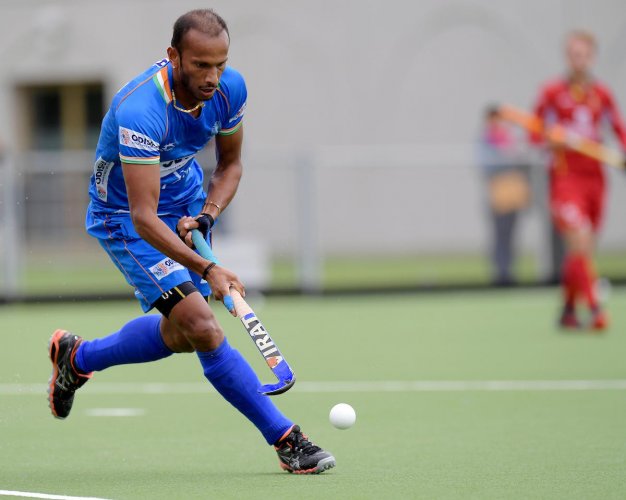
ndian star hockey player SV Sunil says he has gone through worse compared to the current situation of being locked-up with all the facilities available.
S V Sunil is well known for his speed and dribbling prowess on the hockey field. With the clock ticking fast and the score board favouring the ‘common invisible enemy’, he too agrees that countering the surging attack from coronavirus is way trickier than penetrating through the best rival defenders to score goals.
The 30-year-old forward, with 264 caps and 72 international goals, is looking at the positives to face the Covid-19 situation. Currently, the entire team is based out of Sports Authority of India (SAI) facility here with all the precautionary measures taken to ensure no outsider is allowed inside the campus and people working at the centre are being screened at the gate before entering.
Born to a humble family in Somvarpet of Kodagu district, the soft-spoken attacker is known as a fighter. With the words ‘Harder the battle, sweeter the victory’ inked on his bicep, Sunil says he has gone through worse compared to the current situation of being locked-up with all the facilities available.
“As athletes we have been through far more difficult challenges,” Sunil, who underwent two career threatening injuries in the prime of his career, tells DH. “I have had a few major injuries in my career as a player and during our recovery phase we are advised bed rest with absolutely no physical activity and this could last for weeks. I feel having been through such phases in life, sports people are better equipped mentally to deal with this kind of situation.”
The news of postponing the Tokyo Olympics broke out when the team was in the middle of a high-intensity training programme that started from the beginning of March. Sunil says the team has overcome the news that they won’t be boarding the flight to Tokyo this year. “Though we were initially disappointed, it is behind us now and we continue to be focused on our goal of winning an Olympic medal. While the hockey training is suspended, we are using this period to de-load and cool-off physically and mentally, as we spend more than 300 days a year in training and competition.”
However, the team is following a strict fitness regimen set by the coaching staff who have made significant changes in the schedule to ensure social distancing norms. “Each of us has been given independent workout charts which involves distance-running. We do individual bodyweight training in our rooms, using stretch chords and basic weights of our own and avoid using the gym. For meals in the canteen, we go in batches and sit far away from each other,” he said.
“They have also been assigned various tasks such as analysing different teams and their strategies by the coaching staff who are present in full strength. We use a software to do this and have individual video meetings with our chief coach,” he adds.
Staying away from family is not something new for the right-winger, who has had a stint as captain and vice-captain of the national team. “I decided to stay here although my wife and child live only 20 kms away from the SAI campus because it’s safe for all of us.”
source: http://www.deccanherald.com / Deccan Herald / Home> Sports> Other Sports / by Hita Prakash, DHNS, Bengaluru / April 25th, 2020
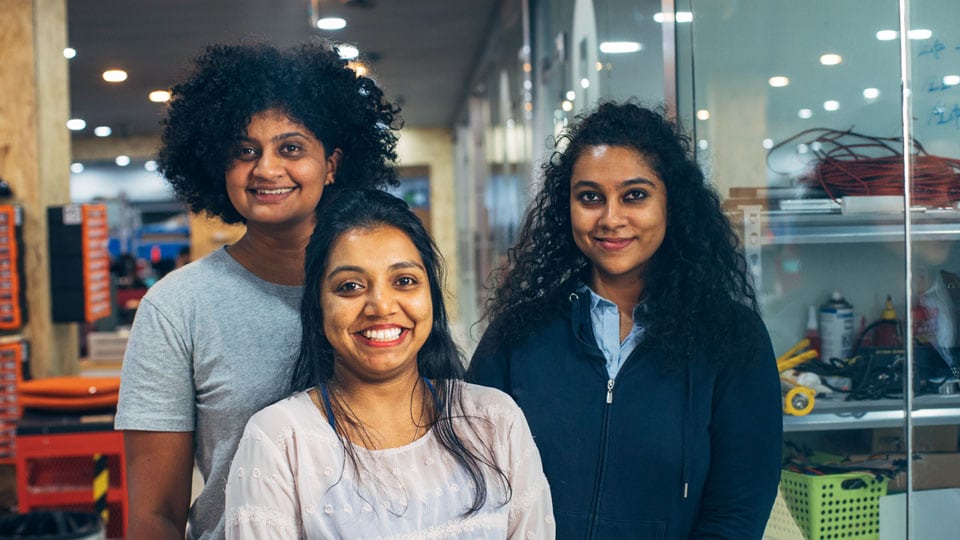
(from left) Sanchi Poovaya, Ranjana Nair and Aardra Kannan Ambili)
Mysore/Mysuru:
Unique among many medical solutions offered to combat COVID-19 is the new breathing monitor for Coronavirus patients developed by a Bengaluru-based start-up RayIoT and it is a matter of pride that a Kodagu-born and Mysuru-educated innovator is behind the device.
She is Ammanichanda Sanchi Poovaya, a young but experienced engineer, innovator and entrepreneur. She co-founded healthcare start-up RayIoT Solutions Inc. and is the Chief Operating Officer of the start-up that has already made a mark in innovative healthcare products.
Her start-up creates innovative healthcare and baby-tech products using Artificial Intelligence (AI) and Internet-of-Things (IoT) technologies. Very recently, Sanchi Poovaya and her other two co-founders Aardra Kannan Ambili (Chief Technology Officer) and Ranjana Nair (Co-founder and CEO) built a remote respiration monitoring system for COVID-19 patients that allows doctors to remotely monitor less critical patients while seriously ill ones get more attention.
Connected workflow sends alerts to the doctor in case of any abnormal variations in the patient’s vitals. With the high effectiveness of using respiration rate as a predictive vital, early detection especially among at-risk caregivers is a possibility.
“It is a non-contact, Wi-Fi enabled, affordable respiration rate monitor for Coronavirus patients that can run as mini ICU units. In its current form, RayIoT will work as a mini ICU monitoring unit. The algorithms of Artificial Intelligence will allow doctors and other health professionals to track the respiration rate of multiple patients through an app from anywhere in the world,” Sanchi Poovaya said.
In a pandemic like COVID-19 where doctors are falling ill with excessive patient inflow, and the management of quarantined patients have become difficult, the device wirelessly tracks patient’s respiration rate, heart rate, blood pressure and temperature.
Since all the devices can be connected to one central database, using RayIoT, healthcare professionals can monitor more than one lakh patients at a time continuously. By just tracking respiration rate, they will be able to intelligently categorise quarantined patients into mild, severe, and critical cases, she said.
“The idea of a remote respiration monitoring system came to us when a celebrity, who was converting his 14-room sprawling bungalow into a quarantine facility, reached out to us. His problem was remote access to doctors, nurses and medical equipment to fully equip his quarantine facility.”
The team had to come up with a low-cost solution that could monitor the vitals of hundreds of patients at any given point of time and connect to doctors through video when the patients are moving into a severe or critical stage. “The solution also helped Government Task Forces who are monitoring huge swathes of population by providing them a single source of truth with our quarantine database,” Sanchi reveals.
RayIoT has been created by same team that is behind Raybaby (the world’s first non-contact sleep and breathing monitor for babies. This product has won many awards and was mentioned in CNN as one of the must have home gadgets.
Ammanichanda Sanchi Poovaya completed her schooling at Good Shepherd, Ammathi in Kodagu, and JSS Public School, Mysuru. She completed her Mechanical Engineering at the National Institute of Engineering (NIE), Mysuru and MS in Mechanical Engineering from Cornell University, New York.
Sanchi Poovaya is the daughter of Ammanichanda Sunil Poovaya (ex-Merchant Navy) and Shiela Poovaya (Pattada, Betoli). They live in Hosur, Bengaluru.
source: http://www.starofmysore.com / Star of Mysore / Home> Covid News / April 26th, 2020
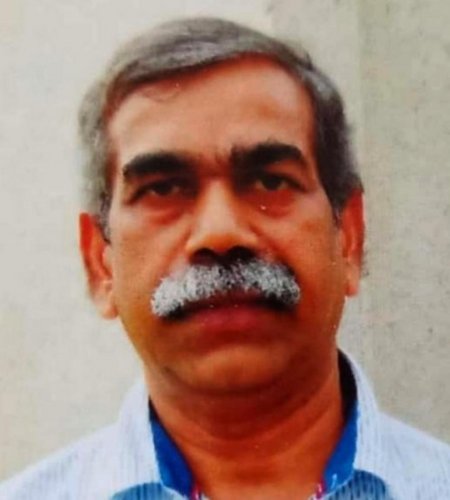
T P Shivaiah, who was serving as Deputy Conservator of Forests of Madikeri Wildlife Division, passed away on Friday. He was 59.
He had suffered a heart attack on April 19 and was admitted to a hospital in Mysuru. However, he did not respond to the treatment and breathed his last on Friday morning.
The final rites were performed with state honours at his native place in Bidalli village in Somvarpet taluk on Friday evening.
Deputy Commissioner Annies Kanmani Joy, CCF Hirelal, DCF Prabhakaran, Nagarahole DCF Mahesh Kumar, Virajpet DCF Shivashankar and other paid their respects to the departed soul.
Shivaiah is survived by wife, a son and a daughter. Both of his children could not take part in the last rites as son is based in USA and daughter in Australia.
source: http://www.deccanherald.com / Deccan Herald / Home> State> Mangaluru / by DHNS, Somwarpet / April 24th, 2020
The much-loved Rashmika Mandanna is arguably one of the most popular young actresses in Telugu/ Kannada cinema. She enjoys a strong fan following due to her charming screen presence, bindass nature and sincere performances. On Sunday, as the star turns a year older, here is a look at the films that make her everyone’s favourite ‘Kodava Beauty’.
Kirik Party (Kannada)
One of the biggest hits of 2016, Kirik Party established Rashmika as a household name and clicked with the aam janta due to its lively presentation. The film featured her as the leading lady opposite Rakshit Shetty and this created a great deal of buzz among fans. The Rishabh Shetty-helmed flick was later remade in Telugu as Kirrak Party.
Chalo (Telugu)
Chalo, which marked the young woman’s Tollywood debut, emerged as one of the biggest sleeper hits of 2018 and helped her add a new dimension to her career. The film had a strong cast that included Naga Shaurya, Vennela Kishore, Achyuth Kumar and Mime Gopi.
Geetha Govindam (Telugu)
A lively romantic-comedy, Geetha Govindam featured Rashmika in the role of lively young girl and marked her first collaboration with young hero Vijay Deverakonda. Released in 2018, it fared well at the box office and establied the young diva as a synonym for success.
Yajamana (Kannada)
While Yajamana was essentially a Darshan starrer, it proved to be a high-profile affair for Rashmika as it marked her return to Sandalwood after a hiatus. The film featured the Dear Comrade star in a desi avatar and helped her impress fans courtesy her crackling chemistry with ‘D Boss’.
Sarileru Neekevvaru (Telugu)
Arguably the biggest Tollywood film of Rashmika’s career, Sarileru Neekevvaru hit screens this Sankranti and emerged as a sensational hit despite releasing a day before the Allu Arjun starrer Ala Vaikunthapurramloo. The film featured her in a stylish avatar and marked her first collaboration with ‘Prince’ Mahesh Babu
source: http://www.deccanherald.com / Deccan Herald / Home> Entertainment> Entertainment News / by DH Web Desk / April 05th, 2020
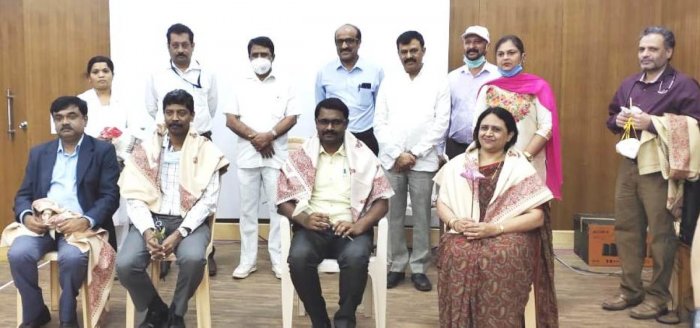
The doctors of the district government hospital were felicitated on the occassion of World Health Day, in Madikeri on Tuesday. MLA M P Appachu Ranjan, MLC Sunil Subramani and DHO Dr Mohan were present. DH Photo
Medical personnel have been working day and night to protect the health of people, by putting their own health at risk. The sacrifices made by them are invaluable, said MLA Appachu Ranjan.
He was speaking after felicitating doctors on the occasion of World Health Day observed at district government hospital in Madikeri on Tuesday.
“It is important to recognise the achievements of doctors, nurses and other medical staff. Due to the precautionary measures taken by the district administration and the efforts of health department personnel, we have been able to control the spread of COVID-19,” he added.
MLC Sunil Subramani said that the district administration, police department, medical personnel, civic workers and elected representatives in the district have been working in coordination to combat Covid-19.
District Health and Family Welfare Officer Dr K Mohan, Kodagu Institute of Medical Sciences Dean Dr Cariappa, Superintendent Dr Lokesh, Dr Aziz and Dr Manjunath were present.
source: http://www.deccanherald.com / Deccan Herald / Home> State> Karnataka Districts / by DHNS, Madikeri / April 07th, 2020
WELCOME. If you like what you see "SUBSCRIBE via EMAIL" to receive FREE regular UPDATES.
Read More »