Three top women officers are leading from the front the fight against COVID-19 pandemic in Kodagu.
Deputy Commissioner Annies Kanmani Joy, Superintendent of Police Suman D. Pennekar and Zilla Panchayat Chief Executive Officer K. Lakshmi Priya, who were in the vanguard when Kodagu was devastated by floods and landslides last year, are once again in the frontline of the campaign titled #KodaguFightsCorona.
In fact, Ms. Pennekar was serving the district when Kodagu witnessed unprecedented floods and landslides in 2018. Srividya P.I. was the Deputy Commissioner of Kodagu during the 2018 floods.
The top officers worked as a team and used to visit the affected areas together to realise the situation and provide relief accordingly.
In the fight against COVID-19 pandemic, the district administration, the district police and the zilla panchayat are again in “battle mode”.
source: http://www.thehindu.com / The Hindu / Home> News> States> Karnataka / by Special Correspondent / Mysuru – April 09th, 2020
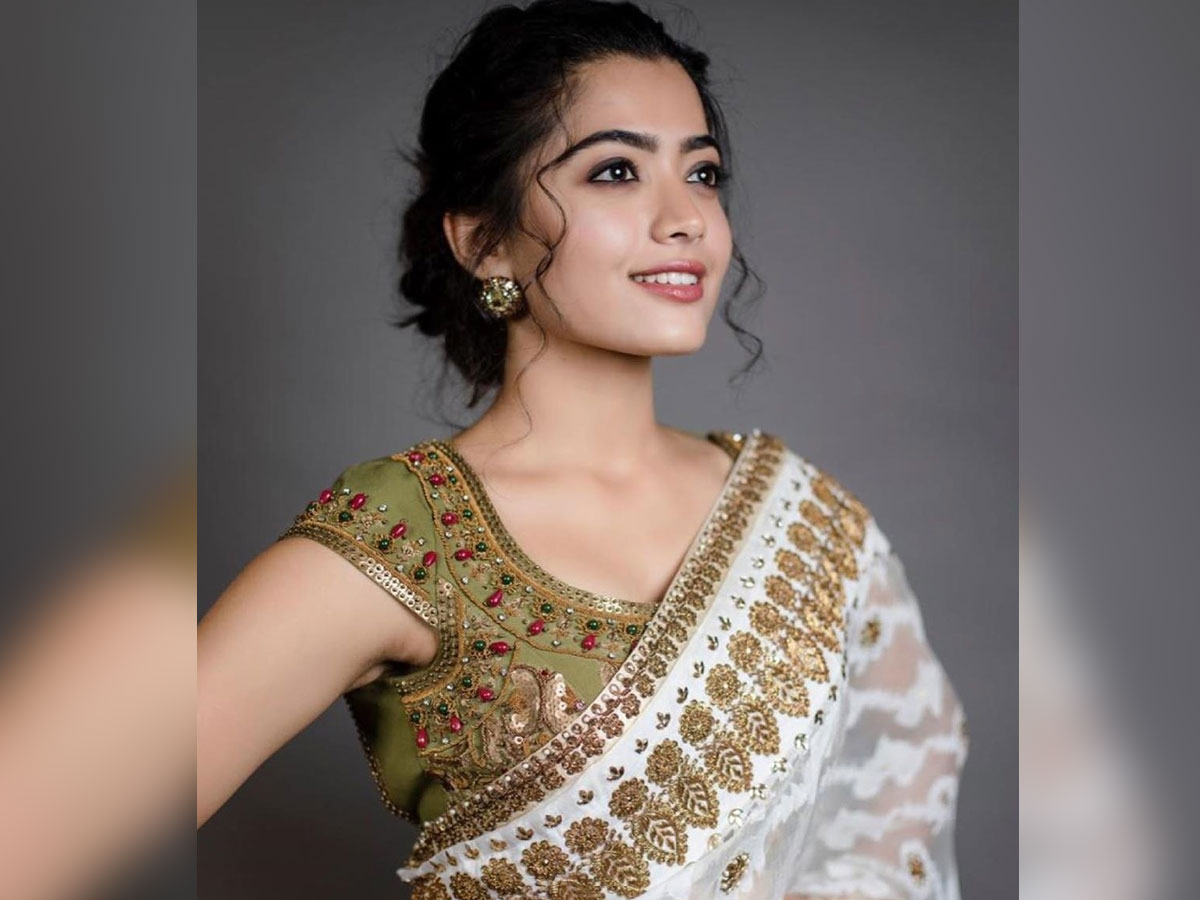
This is the first time, Kannada girl Rashmika Mandanna is going to share the screen space with Stylish Star Allu Arjun in a movie Pushpa, which will be helmed by Sukumar.
Rashmika Mandanna is turning out to be a lucky charm these days for the filmmakers. She has inevitably cast a spell on the movie lovers with her charm and gorgeousness.
According to the latest buzz in the film industry, Rashmika Mandana will be essaying a very important role in the movie, which will stand equal to Allu Arjun’ character. Now, it’s Rashmika Mandanna’ turn to acquire a new skill. Apparently, Geetha Govidnam girl Rashmika Mandanna is utilizing this lockdown period to learn the Chittoor dialect through the notes, which are being sent to her by director Sukumar via email.
Apparently, Rashmika Mandanna and Sukumar of Rangasthalam fame are in constant touch over the phone as well and the director is helping her out. The shoot of Pushpa would resume soon after the lockdown ends.
There is a rumor that Rashmika Mandanna’ name in Allu Arjun starrer is Pushpa and the plot revolves around her character, who gets murdered by goons. To seek revenge on them, Allu Arjun’ character impersonates a redwood smuggler. Pushpa is produced by Mythri Movie Makers and Muttamsetty Media, which also has Harish Uthaman, Vennela Kishore, Anasuya Bharadwaj, Prakash Raj, Jagapati Babu, and Anish Kuruvilla in supporting roles.
source: http://www.tollywood.net / Tollywood / Home> Featured / by Murali Ravi / April 17th, 2020
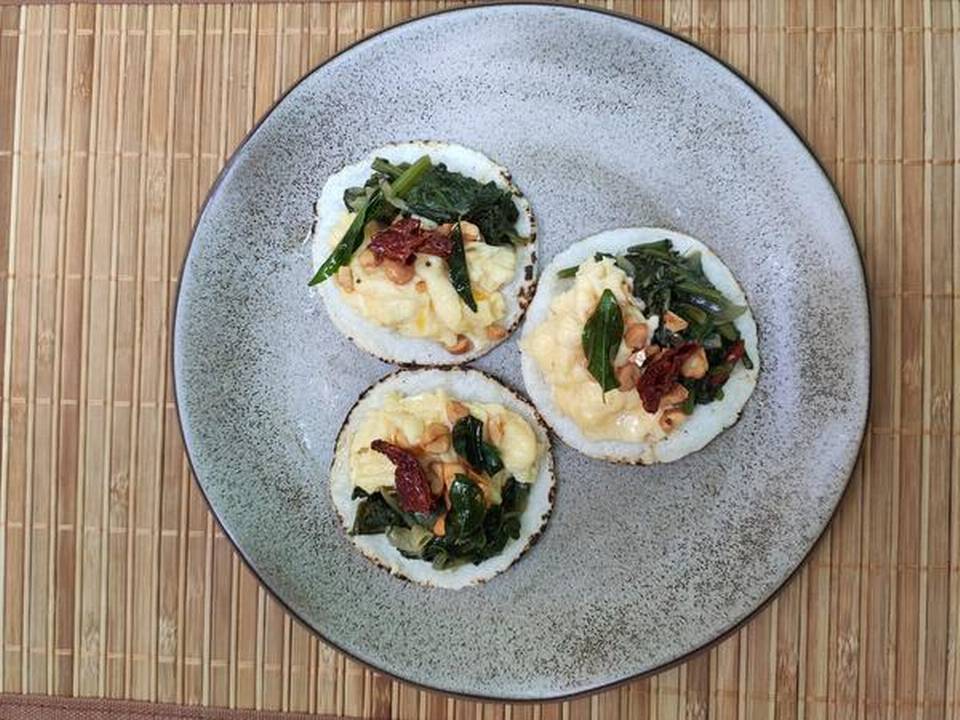
Akki roti with eggs and greens by chef Kavan Kuttappa | Photo Credit: Special arrangement
The Head of Creative Culinary at ph4 Food and Beverages, which runs The Permit Room and Toit, talks about learning from the expert in traditional Coorgi cuisine: his mother.
Chefs don’t usually get a lot of time at home. I live in a family home in Bengaluru so I am spending a lot of time with my parents. It has given us the time to bond better.
At home, it is traditional Coorgi food that we are cooking. My mom is the expert at making it. I am helping her out, brushing up (my skills) and being hands-on like never before.
My father cooks once in a while. He has his signature dishes, like pork ribs. He has not had the time and we are not getting things very easily. So, we’re trying to cook with what we have and what we saved, instead of trying to go out and buy things.
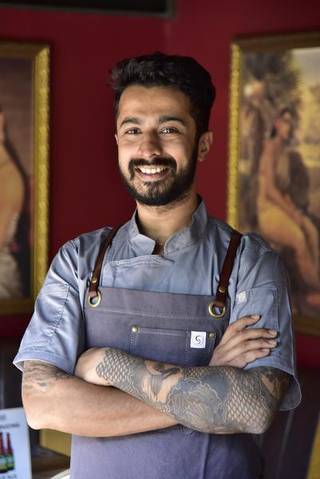
Chef kavan Kuttappa | Photo Credit: Special arrangement
The most famous staple Coorgi dish is a pork dish called pandi curry which I have been making for a while now. There are also a lot of rice accompaniments that we do that need a little bit of experience to perfect.
There is a flat rice cake called paputtu. It is like idli, but made with coarser grains of broken rice and topped off with freshly grated coconut. We made that for breakfast. Then there is a rice ball, called kadambuttu, which we are making at home.
We had preserved some small mangoes (sakkare guthi variety) in the freezer. We do that as a family; we get them in season and we keep them for the whole year. So, we made a mango curry with some mustard, curry leaves (just a basic tadka) with a bit of jaggery and some spices.
Once in a while, I whip up something with what we have at home. The other day I had a packet of instant noodles; I think it was a very mellow-flavoured one. I had some elk sausage in the fridge so that added some depth to the noodles. I had done it once before; it turns out great. I think a friend got the sausages for me from Germany a long time ago. That stuff is nuclear-war proof. Nothing happens to it (laughs).
__________________________________
Akki Roti with eggs and greens
Ingredients:
2 eggs; 1 cup cooked rice (day-old is also okay); 1/2 cup rice flour; salt to taste; 1/4 bunch spinach (can use any local greens); 1/2 sliced onions; 1 dried red chilli; a pinch of mustard; 2 tsp oil; 5-6 chopped cashews; 1 dry red chilli; 5-6 curry leaves; a pinch of mustard; 2 tsp ghee
Method:
For the akki roti : Mix the cooked rice and rice flour (in increments) to make a evenly mixed dough where you can still lightly see the rice grains. Make small rotis using a roti press and cook on a tava and finish on open fire to get the char.
For sauteed greens:
Heat oil in the pan, saute mustard, onions and chilly. Add the greens, cook till done.
To temper:
Heat the ghee in a small pan, add the mustard, red chilli and cashews. Heat till cashews turn slightly brown and crispy. Add the Curry leaves and finish.
Finally, Make a soft scramble with the eggs, once all the other components are ready. Assemble the greens and scramble on the akki roti and garnish with the cashew tempering.
Recipe by chef Kavan Kuttappa
_____________________________________
Regarding work, we had just finished trials and were about to launch a new menu at The Permit Room and then this happened. So, what I am doing right now is spending the time documenting. As chefs, we don’t like to really sit down and document recipes but I have been getting more time, so that is what I have been focusing on.
A lot of focus has also been on taking care of the staff, which I feel is very important.
Overall, our company (pH4 Food and Beverages) has about 450 employees. In Bengaluru, The Permit Room has about 50 employees who stay in staff housing and Toit, owned by the same company, has over 100 employees.
The staff stay in accommodation that the company provides. We are cooking meals (rice, dal and vegetables with egg once a week) for them at the restaurant everyday and delivering it. They are not hungry, if nothing else, and they have a roof over their heads. [Ensuring] this has been a major responsibility and task.
In this series, India’s popular chefs and restauteurs share their lockdown cooking habits and recipes with us.
source: http://www.thehindu.com / The Hindu / Home> Life & Style> Food – The Lockdown Chefs / by Aparna Narain / April 16th, 2020
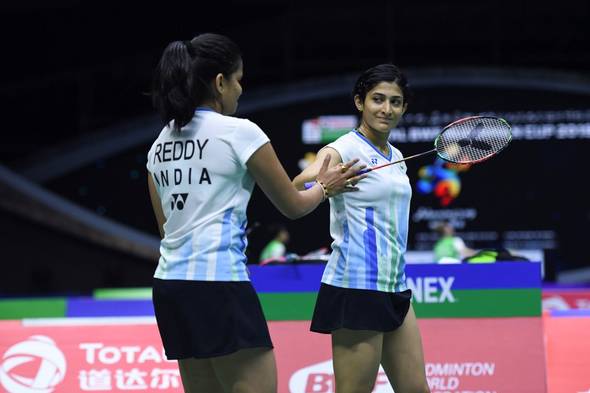
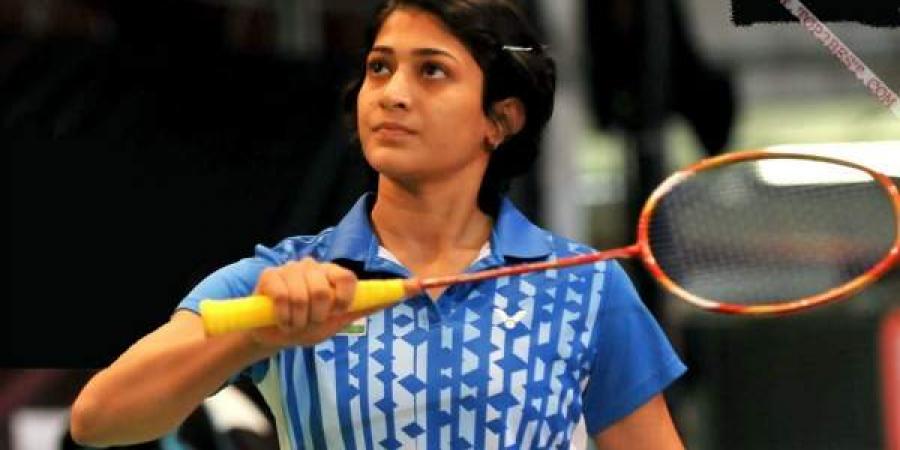
Ashwini Ponnappa and N Sikki Reddy, doubles specialists, after an underwhelming season last year, have started analysing their past performances.
N Sikki Reddy and Ashwini Ponnappa had reached the finals at Hyderabad Open Super 100 and Maldives International Challenge, last year.
India shuttlers Ashwini Ponnappa and N Sikki Reddy have finally got some time to pause and reflect due to the COVID-19 pandemic and they are making the most of it by creating a database to analyse their past performances while waiting for another shot at Olympic qualification.
The coronavirus outbreak has left over 1.2 lakh people dead and infected nearly two million globally, and brought all sports activities, including badminton, to a halt after countries imposed lockdowns.
Ashwini and Sikki are doubles specialists and endured an underwhelming season last year. The time at hand has given them a chance to analyse the past performances.
“We don’t have any one to sit and do analysis for us, so now that we have time, I’m doing some analysis of our performance. I am jotting down points, about areas where I can improve. I started with my matches and then other players on tour,” Ashwini, who represented India at the London and Rio Olympic Games, told PTI.
“You can always watch and analyse and understand the patterns but it is different when you see things on paper. It is more concrete. So trying to set up a complete database. My brother will help me out. He made an app for me in the past.”
Ashwini and Sikki fell at the first hurdle 13 times in 20 tournaments last year, and exited from the second round thrice.
Ashwini also picked up a calf injury during the Syed Modi International but the duo was still confident of qualifying by performing well in the remaining Olympic qualifiers.
But with Badminton World Federation (BWF) cancelling all tournaments due to the pandemic, their fate remains uncertain.
“The problem is we don’t know the new BWF rules regarding the qualification. There is one year left now, you can’t take a two-year-old performance to select for Olympics, it has to be present performance, so we have to wait,” said Sikki.
“In badminton, there is a ranking cut off, so how will they accommodate the cancelled qualifiers, how will they count the ranking points, everything is too messed up now,” she added.
Sikki and Ashwini had reached the finals at Hyderabad Open Super 100 and Maldives International Challenge, last year.
The Indian pair is ranked 28th and will need to be inside top-16 on April 29, 2021 — the new Olympic cut off date.
Ashwini said: “Me and Sikki were confident of doing well in the 4-5 tournaments left but now no one knows what would be the criteria of Olympic qualification and BWF can’t really say anything with things changing every moment.”
They are using the coronavirus-forced break to learn cooking, besides doing some wall practice and exercises for physical fitness.
Talking about the effects of the lockdown on mental health, Sikki said: “We have been travelling a lot all these years and now for a month, we are at home, it is fine. But what if it is for 2-3 months, then it will get tough to stay away from the game.
“So it is important to stay motivated till the lockdown is lifted because you will be in a comfortable zone in the break and then all of a sudden you will need to push yourself.”
Ashwini added: ”…now that Olympics have been postponed, nothing is certain and it is tough, you have to be really strong.”
The economic fallout has hit sports hard and Ashwini said badminton too will be affected.
“It will hit in terms of sponsors, in terms of tournaments being conducted because countries need sponsors to host events, and after this, I’m not sure what the economic status of many countries would be.
“The way things are, it is will be tough to host tournaments, it will not be easy for countries to have tournaments with many big companies shut and struggling to survive,” she signed off.
source: http://www.sportstar.thehindu.com / Sportstar / Home> Badminton / by PTI / New Delhi – April 15th, 2020
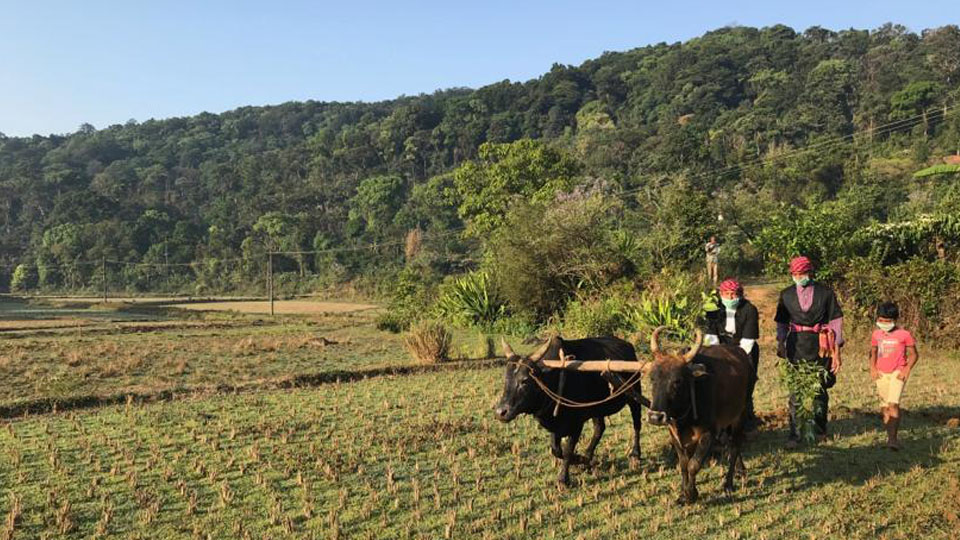
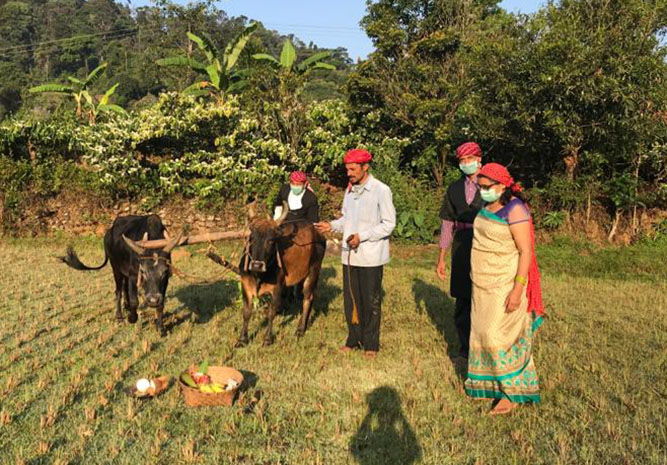
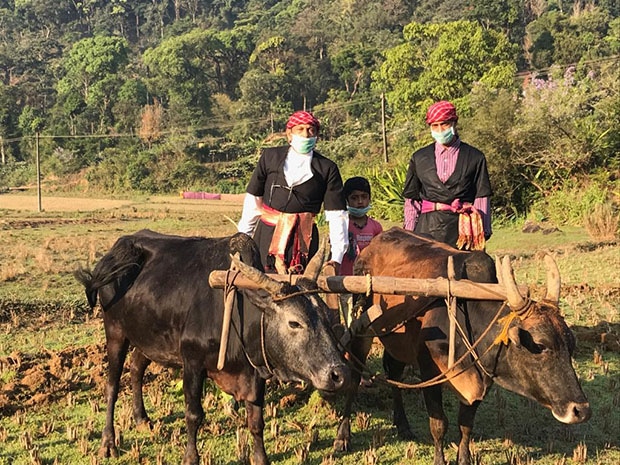
Codava National Council (CNC), which is aspiring for Codavaland Geo-Political Autonomy and ST tag for Kodava tribalism, celebrated its 26th Annual Codava (Kodava) New Year Day Edmyar-1 as per Kodava tribal almanac by ritualistic ploughing of paddy fields.
CNC President N. U. Nachappa offered prayers to Guru-Karonas at Koopadira clan and reverential prayers to Mother Earth, Sun, Moon before two bullocks named Karianna – Kulla, ploughed a few rounds in the wetlands of Koopadira clan.
To herald the unbreakable bondage of Kodava tribal world with mother soil to entire universe, CNC is determined to showcase and display the age-old folkloric cultural traits and genus of Kodava tribal ancestry. In other words, all these ancient festivities enriched the civilisation of Kodava martial tribe.
CNC also prayed for the well-being of all the people of this world that is reeling under the pandemic COVID-19. Koopadira Sabu, Koopadira Mohan Muthanna, Lt. Col. Parvathi, Kompulira Myna Purandara and Koopadira Pranam participated in the celebrations.
Due to Corona pandemic, CNC’s Annual Edmyar-1 evening’s torchlight (pombolak) procession at Gonikoppal, is not being celebrated today. Speaking on the occasion, Nachappa said, “All Codava folkloric festivities and rituals mirror the agro-pastoral commitment, hunting skills and warrior hood of Codava tribal folk from time immemorial which depicts that we are above the tenets of caste and religion who are living in the rustic hills, mountainous terrain in the midst of rivers and rivulets.”
“We are happy that the Founding Father of the Constitution of India, Dr. B. R. Ambedkar’s birthday coincides with Codava New Year. We are ever grateful to Dr. Ambedkar for his yeomen contribution of accommodating space for expressing grievances of micro-minority tribes like Codava tribe,” he observed.
source: http://www.starofmysore.com / Star of Mysore / Home> Covid News / April 14th, 2020
Coffee Growers Association President M B Devaiah said that the association will make proper arrangements for the storage of coffee if the District Central Cooperative Bank provides a loan of Rs 1 crore.
Addressing reporters in Madikeri on Wednesday, he said that following the lockdown, coffee growers in the district are not able to sell the coffee they have cultivated.
He further said that the raw coffee has not been supplied to the coffee processing unit in Hunsur, in the required quantity.
“Therefore, coffee warehouses have been given to coffee growers on rental basis, to store coffee. Still, there is a shortage of warehouses. A request has been made to provide APMC godowns in Madikeri and Gonikoppa for the growers to store coffee, free of cost.
Also, there is a requirement of an interest free loan of Rs 1 crore, through the DCC bank. The chief minister should come to the rescue of coffee growers,” he said and added that transport facility should be provided from Hunsur.
source: http://www.deccanherald.com / Deccan Herald / Home> State> Karnataka Districts / by DHNS, Madikeri / April 08th, 2020
The COVID-19 outbreak and the subsequent lockdown has meant that Ashwini is stuck at home in Bengaluru.
Indian badminton star Ashwini Ponnappa (File photo | PTI)
Chennai :
It’s a strange time for Ashwini Ponnappa. Under normal circumstances, she would have been crisscrossing the globe with her partner Sikki Reddy, attempting to qualify for the Tokyo Olympics. But then, these are not normal times.
The COVID-19 outbreak and the subsequent lockdown has meant that Ashwini is stuck at home in Bengaluru. “It’s strange to be home and not go out,” she says. “It’s strange that it’s been like that for a couple of weeks and we’re not really sure how long it’s going to be for. “I’m in Bengaluru right now. I got here immediately after the tournament (All England, where she and Sikki crashed out in the second round). I’m at home, I haven’t really met my family so it’s been just my husband and me. It’s very strange being in Bengaluru, having all this time and not really venturing out or meeting anyone. Normally, if I had the time, that’s the thing I would have done, calling people and spending time with family and friends. Fortunately, we have two dogs who are with us, so they’re keeping us well entertained.”
The Red Bull athlete, however, plans to make the most of the extra time she has and work on her fitness. “It’s all about making the most of the time you have at home,” she says. “Luckily in this day and age, there are a lot of exercises you can do at home. But I do miss going on court. As much as we can do home exercises, it’s just not the same as going on court. It’s harder when you’re at home and you have more time to be disciplined. I do try to wake up early and try and do some breathing exercises, stretches and strength training. I also do a bit of cardio. It’s all about doing things that can be done at home.”
If she needed any extra motivation, she has a steady source for that in the form of national coach P Gopichand. Ashwini and India’s other top shuttlers are in WhatsApp groups where Gopichand sends them routines to stick to. “We have our doubles group and the singles players have their own group,” she says. “The fact that we are getting daily updates and ideas as to what we can do at home is really encouraging and motivating. After that, I’ve started waking up early as before, I was sleeping really late and waking up really late. But he is quite particular that we all wake up early and stick to the routine and do our exercises. I think that really got me back on track and got me more motivated.
“Because of the fact that I have a calf muscle tear and knee tendinitis (injuries she sustained towards the end of last season), I am not following the entire routine. I need to be a little more careful when I’m home so I’ve modified it accordingly.”
After normalcy is restored, Ashwini will have her focus back on the Tokyo Games. While she is not sure how postponement of the Games will affect her and Sikki’s chances, she believes it was the right decision. “Given how bad things have been, I think it has been the right decision to postpone the Olympics,” she says.
“It is quite tough for players to focus on the Olympics. That will tempt players to do things that they wouldn’t be doing like getting outside because everyone wants to do well. Badminton, we hadn’t really finished our qualifying and we still had about 4-5 tournaments that were left.“Sikki and I, we hadn’t really qualified but we were hoping that we would fare well over the next 4-5 tournaments and there was a chance of qualifying. I think at the end of the day, it depends on what BWF decides on what the qualifying criteria are going to be.”
source: http://www.newindianexpress.com / The New Indian Express / Home> Sport> Others / by Vishnu Prasad / Express News Service / April 06th, 2020
Kodava is a small and beautiful mountain district of Karnataka and is well known in the world for coffee and its ‘brave warriors’, men and women, serving in all services.
File photos of Lt Gen CP Cariappa, Lt Gen CB Ponnappa (R) and Lt Gen PC Thimmaya (L). (Photo | KodaguConnect Twitter handle)
New Delhi :
It was a proud moment for the people of Kodava district when Lt Gen CP Cariappa took command of India’s elite 1 Strike Corps at Mathura on Friday. Lt Gen Cariappa became the Corp Commander and the District boasts of rare distinction of three Lieutenant Generals serving the army simultaneously.
Kodava is a small and beautiful mountain district of Karnataka and is well known in the world for coffee and its “brave warriors”, men and women, serving in all services. Talking only of Indian Army there are 90 posts at the rank of Lieutenant General.
Lt Gen PC Thimmaya and Lt Gen CB Ponnappa are the other two generals. Lt Gen Thimmaya is the Army Commander at the Army Training Command and Lt Gen Ponnappa is the Chief of Staff at the Northern Army Command. All three officers are a product of the National Defence Academy, Khadakwasla and joined the army at different times.
Lt Gen CP Cariappa is the junior-most among the three generals and was commissioned on 09 June 1984 into the 4th Battalion of the Rajputana Rifles. He served in UN Peace Keeping Force at Mozambique (Africa) and Iraq – Kuwait. Prior to taking over command of elite 1 Corps, he was the Military Secretary to the President of India at New Delhi. The officer on taking charge emphasized that his priority is ’fight against COVID-19 threat.’
Number of Kodava Lieutenant Generals in Indian Army at present: 3 File photos of Lt Gen CP Cariappa, Lt Gen CB Ponnappa (R) and Lt Gen PC Thimmaya (L). (Photo | KodaguConnect Twitter handle)
View image on Twitter
262
12:07 PM – Apr 4, 2020
Twitter Ads info and privacy
63 people are talking about this
_____________________________
At present Lt, Gen PC Thimmaya is the seniormost coorgi officer, who became Army Commander on 1 November 2018. He was the best cadet in pre-commission training at Indian Military Academy and was awarded the Sword of Honour. He got commissioned into 5th Battalion of the Mechanised Infantry in June 1981.
He commanded Army’s 10 Corps and was the Commandant, Army War College at Mhow before becoming Army Commander. Like the other two officers he also had UN Stint, was a Military Observer in UN Mission, Angola. He also was Defence Attache in the High Commission of India in Bangladesh. He assumed the command of Army Training Command in Nov 2018.
Lt Gen C Bansi Ponnappa is Chief of Staff of the prestigious Northern Command since Feb 2020. He was commissioned into 2 MAHAR Regiment in Jun 1985 and later commanded the same unit. The officer had two UN Tenures. He was in Somalia under UNOSOM-II and North Kivu Brigade of UN Peace Keeping Force in the Democratic Republic of Congo.
These officers follow in the footsteps of illustrious predecessors like Field Marshal K M Cariappa and General Kodendera Subayya Thimayya. Field Marshal Cariappa was first Indian Commissioned Officer, first Indian General and then first Commander-in-Chief of India.
A total of eleven officers from Kodagu have occupied top posts in the Army so far. This apart, Kodagu also boasts of having 20 Major Generals and four Air Marshals, which undoubtedly makes Kodagu, the Land of Generals.
Although, with time the numbers of people joining forces from the district have fallen, steps are being taken to regain it. The district has its own War Memorial with names of all martyred soldiers of Kodagu. A museum in the name of former Army Chief General Thimmaiah is also being constructed. The Kodava Legacy in the Army will continue.
source: http://www.newindianexpress.com / The New Indian Express / Home> Nation / by Mayank Singh / Express News Service / April 06th, 2020
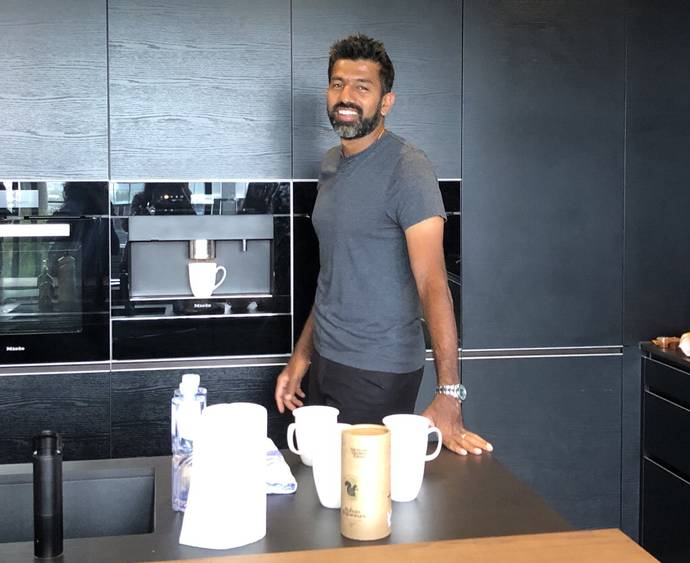
Indian tennis star Rohan Bopanna cancelled his US trip at the right time; at present, he is having a happy family time at his coffee estate in Coorg, Karnataka.
The 40-year-old Rohan Bopanna, who has a mixed Grand Slam title to his credit, is quite mature to look at the crisis scenario with equanimity. – SPECIAL ARRANGEMENT
These are difficult times, but Rohan Bopanna has no complaints. He is at his coffee estate in Coorg, huddled with family.
“We are tackling things on a day-to-day basis. It is not easy to ask the plantation workers to stop. We take precautions. One day we had only the men working. We make sure that they don’t stand close to each other. We are creating awareness. They wash their hands before they go home. It is a challenge for everybody. No matter who you are, it is not easy,” said the former world No. 3 doubles tennis player.
Bopanna, who had helped India win the doubles rubber with Leander Paes against Croatia in Zagreb in losing cause in the Davis Cup in March, feels that he was lucky to be in Coorg instead of the US.
“During the Davis Cup, everything was fine.
After the tie I was in Doha, waiting overnight for the flight to Los Angeles. Sumit Nagal and Prajnesh Gunneswaran travelled through Europe to the US. Since doubles was on Friday, I had booked through Doha. I had the option of a hotel in Doha, but stayed at the airport. Physio Gaurang Shukla had also joined me to be on the same flight. About an hour and a half before the morning flight, we got the news that Indian Wells tournament had been cancelled.
We managed to change our ticket to India, for the evening. We spent time at the airport, using the swimming pool and the gym, on a pay-and-use basis. We spent nearly 18 hours at the airport. My wife and daughter were supposed to join me in Doha for the US trip. But we had cancelled the plan because the coronavirus situation had started getting serious. We didn’t want to expose the kid,” recalled Bopanna, who was obviously thrilled to spend time with his family in the serene atmosphere of Coorg…
Read the full story when the latest issue of Sportstar magazine is available on April 8.
source: http://www.sportstar.thehindu.com / SportStar / Home / by Kamesh Srinivasan / April 04th, 2020
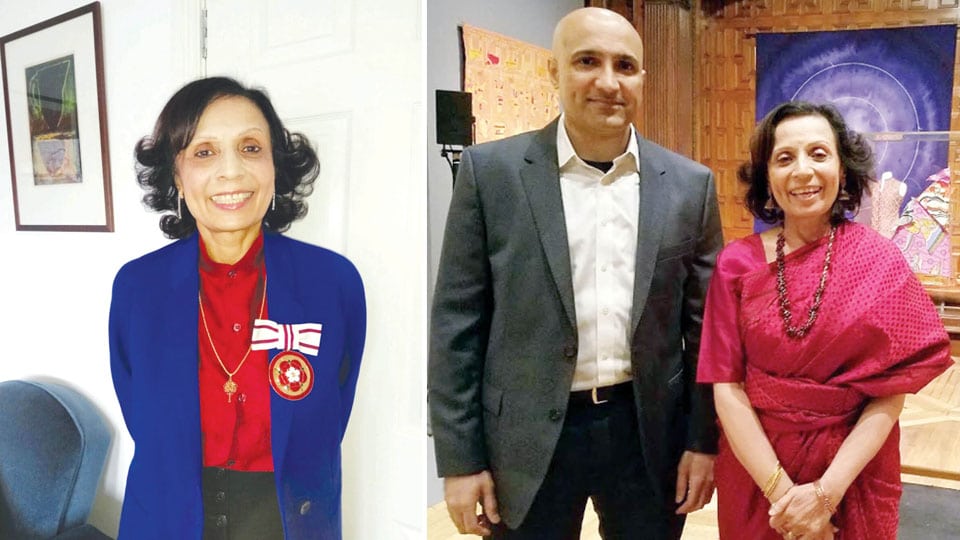
Dr. Nima Poovaya-Smith, who hails from Mysuru, was conferred the prestigious Order of the British Empire (OBE) in 2016 for her contribution in the field of Arts and Museums.
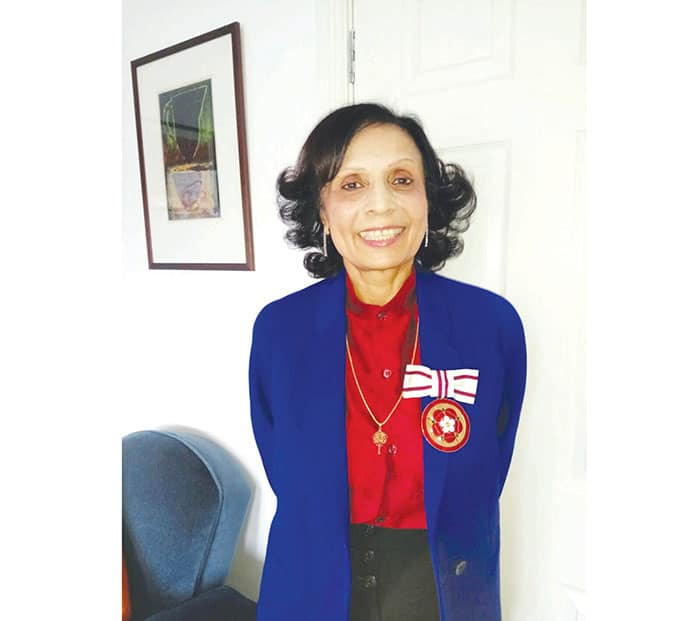
Recently, Nima was bestowed with another unique honour. She has been appointed as one of the Deputy Lieutenants (DL) of West Yorkshire County in the United Kingdom (UK).
Deputy Lieutenants assist the Lord-Lieutenant in carrying out his role as the Queen’s representative. Historically, the duty of the Lord-Lieutenant used to be in organising the county’s militia! In 1871, the Lieutenant’s responsibility over the local militia was removed.
Dr. Nima Poovaya-Smith with the insignia of Office of Deputy Lieutenant of West Yorkshire.
The current Lord-Lieutenant of West Yorkshire is Sir Ed Anderson. The responsibilities of the Lieutenancy includes making arrangements for Royal visits to the county and for hosting those visits; representing the Monarch at a wide range of events across West Yorkshire; presenting British Empire Medals and other awards; advising on submissions for honours nominations; submitting nominations for Royal Garden Parties; and maintaining close links with regional armed forces. He is assisted by the Vice-Lord-Lieutenant, the Clerk to the Lieutenancy and a team of Deputy Lieutenants.
Nima’s father Ammanichanda Poovaya and mother Biddanda Muthie Poovaya (my mother’s sister) were in Belgaum for many years and that’s where she and her siblings had their early education. The family settled in Mysuru and Nima earned her Ph.D in English literature from the University of Mysore under the mentorship of well-known academician Prof. C.D. Narasimhaiah (late). She was also a student of Prof U.R. Ananthamurthy (late).
In 1981 Nima went to the University of Leeds, UK, on a scholarship for post-doctoral studies. Nima is married to Paul Smith, who besides being a Sociologist specialising in the Sociology of Knowledge, is an authority on the Theosophical Society founded by Colonel Olcott and Madame Blavatsky.
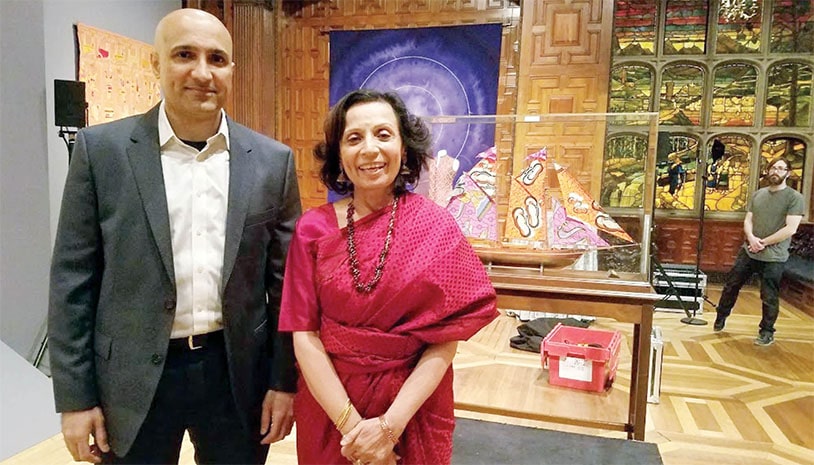
Dr. Nima Poovaya-Smith with her nephew Dr. Kodimanianda Ajit Belliappa in front of Yinka Shonibare’s acclaimed piece The Wanderer that she was instrumental in purchasing for Bradford Museums and Galleries in 2007.
Nima has been actively involved in collecting art and in curating museums. One of her assignments was collecting rare textiles for Cartwright Hall Museum, Bradford. Various noteworthy collections are currently being celebrated at the ‘2 Temple Place’ Gallery in London (till 19th April 2020). Seven top women collectors of textiles for public collections are being showcased and Nima’s contemporary South Asian collection is one of them.
For more details visit website: https://twotempleplace.org/exhibitions/unbound/
Nima is the Founder-Director of Alchemy Anew, an organisation involved in confluence of cultures. Currently, she is the Senior Visiting Research Fellow, School of Fine Arts, History of Arts and Cultural Studies, University of Leeds.
source: http://www.starofmysore.com / Star of Mysore / Home> Feature Articles / by C.P. Belliappa / April 04th, 2020
WELCOME. If you like what you see "SUBSCRIBE via EMAIL" to receive FREE regular UPDATES.
Read More »