Category Archives: Famous Personalities of Kodagu / Coorg

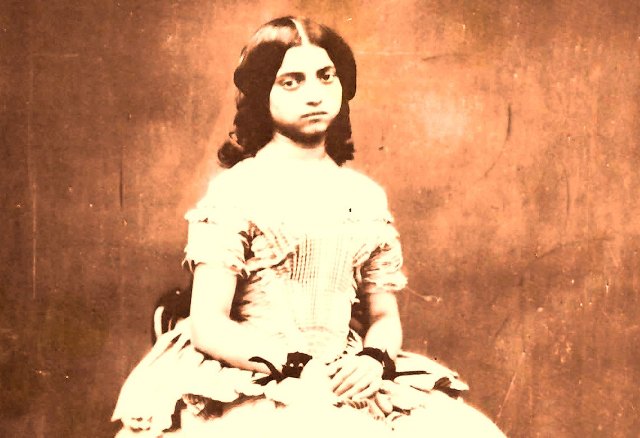
Princess Victoria Gowramma: The Lost Princess Of Coorg | #IndianWomenInHistory

PrincessGowramma01KF31jan2020

The days of March 1841 spent at Chikka Veerarajendra’s modest haveli in Benares were glazed thick with warmth, summer mangoes, and the colored rice flour that danced in the air in celebration of Holi. And for the first time in a long time, the unseated Rajah of Coorg felt a semblance of pride, after a degrading conflict with the British, while observing his favorite daughter Gowramma gurgling in the courtyard. As the mansion’s entrance gates unexpectedly rusted open, interrupting festivities, Veerarajendra was reconnected with Alamanda Somayya, an old ally to his family, who came with word of anglicized Coorg. When introduced to six-month old Gowramma, Somayya studied her tiny paint-smudged palms, prophesizing that ‘this Rajkumari will one day cross the seas’.

Although Princess Victoria Gowramma and her father were the first Indians to reach British turf in 1852, her somewhat diasporic narrative is little-known, forgotten within a bulky history of colonisation and foreign affairs. Perhaps the most articulate source on the royal is C.P. Belliapa’s novel Victoria Gowramma: The Lost Princess of Coorg, which constructs a meticulous timeline that draws on the prospective importance she held in Britain’s colonial system and the Indian religious landscape.

Being christened as the ‘lost princess’ seems fitting in respect to Gowramma’s position in contemporary Kodagu cultural dialogue – she bears our name, a rather ambiguous notability, and a beauty considered ‘exotic’ by outsiders, but upon closer exploration, was alienated from her people and heritage having been raised under the wing of Queen Victoria, and may even be considered a paradigm of what the British hoped for India.

From Benares To Britain

Gowramma’s journey begins with her father’s loss of Kodagu to the East India Company, leaving him bitter and distrusting of the ferenghis (foreigners). The pastoral simplicity of a kingdom fleshed out by generations of his ancestors now seemed fragile in the hands of the British. After being exiled to Benares, Veerarajendra began nurturing a pipe dream of his own, wherein he could restore himself to affluence by filing a legal suit against the East India Company, which would require his physical presence in London.

PERSISTENT COLOURISM SEALED GOWRAMMA’S FUTURE AS A BRITISH ROYAL – A FAIR COMPLEXION DISTINGUISHED HER FROM VEERARAJENDRA’S OTHER CHILDREN.

With the help of British doctor and close friend Dr. William Jeaffreson, Veerarajendra began crafting a trip to world’s most powerful social, economic, and technological center, under the desirable pretense of enabling a Christian education for his daughter. According to the Illustrated London News report in July 1852, persistent colourism sealed Gowramma’s future as a British royal – a fair complexion distinguished her from Veerarajendra’s other children, seeing as he’d dubbed her a “pigeon among crows”.
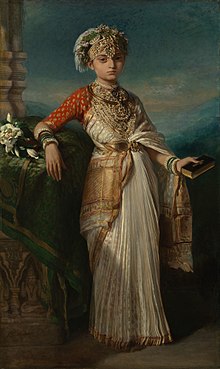
Image Source: Wikiwand

Grooming Of The Princess

Before their arrival, Dr. Jeaffreson offered a piece of advice to an anxious Veerarajendra saying, “Don’t be too hasty in taking up the legal issue on reaching London. Wait until Gowramma is well accepted by British society. A favorable public opinion is very important. I have received intelligence that the queen herself is eager to meet you and your daughter”. Governor-General at the time, Lord Dalhousie, also hoped for a publicised conversion of Princess Gowramma, which could possibly rescue the British regime’s stagnating reputation among its people.

Another motivating factor was young, recently-deposed Maharaja of Punjab Duleep Singh, who had expressed compliance in converting to Christianity after his state was annexed. The belief that a future marital alliance between Gowramma and Singh, two Christian Indian royals, could be a tool for proselytising the Indian population, had already begun gaining momentum within the monarchy. According to Belliappa, the Logins, guardians to Duleep Singh, were champions of this mentality, strongly believing in the European responsibility to spread the word of the Bible among pagan worshippers of India.

Queen Victoria, a spokeswoman for familial values, industrialisation, and social welfare herself, showed interest in Princess Gowramma’s story of passage from one of the humblest provinces of the British colony in India. Gowramma’s baptism on 30th June 1852 is remembered as an elegant occasion in which the young princess showed poise and grace.

On that day, Queen Victoria gifted Gowramma with her name, and a leather-bound bible with gold embellishments. She then entrusted the newly-christened Princess Victoria to the care of Major and Mrs. Drummond, who were to groom her in Western thought. From learning curtsying to using cutlery, Victoria grew into English ideals, and her consequent popularity in social circles and overall joie de vivre has been heavily-recorded.

Final Years

Overtime, the prospect of marriage between Duleep Singh and Victoria Gowramma began to fall out of the works, due to a lack of attraction, although they remained close friends. It was at this point in Gowramma’s timeline that royal disillusionment began to swell, as she realised her nights spent at royal balls with glasses of wine and attractive Englishmen weren’t the answer to what she wanted: a family and home to call her own.

SHE REALISED HER NIGHTS SPENT AT ROYAL BALLS WITH GLASSES OF WINE AND ATTRACTIVE ENGLISHMEN WEREN’T THE ANSWER TO WHAT SHE WANTED.

An obstacle that came in the way of Gowramma and eligible suitors was actually her father, who’d begun to earn himself the reputation of an ‘old reprobate’ in high society. It’s reasonable to conclude that Victoria’s consistent fear of upsetting the queen and consort contributed to her sad lack of autonomy, and also a naïve willingness. She ultimately married the nearly fifty-year-old Colonel Campbell, a charming friend of Duleep Singh, who was mostly attracted to her fine jewelry and 400-pound sterling allowance.

On 2nd July 1861, Gowramma gave birth to a baby girl, christened Edith Victoria Gowramma Campbell. However, this was only followed by a life of isolation in London, as Campbell was an indifferent husband, often only making contact to ask her for money – but Gowramma was not without great strength, and kept a brave face as a single mother.

In March 1864, Princess Victoria Gowramma succumbed to tuberculosis, just a few months before her 23rd birthday. Unsurprisingly, it’s suspected that Campbell disappeared shortly after her death, but not without her jewels.

Ultimately, Duleep Singh and Victoria Gowramma fell short of the grand scheme envisioned by the queen and British royalty. Perhaps India’s religious history would have shifted if a successful marriage between the Christian Indians had been fulfilled, as historians have realised the greater importance of religious propaganda as a tool of control for those colonised, rather than plain force. In respect to Gowramma herself, it’s impossible to trace her intricate lifetime of tragedy and romance without understanding the people and politics that governed her fate and sense of self.

References
1.Victoria Gowramma – The Lost Princess of Coorg by C.P. Belliappa
2. The Hindu
3. Coorg Jewellry
4. Evolve Back
5. Uk Asian

Featured Image Source: UK Asian

source: http://www.feminisminindia.com / Feminism In India – FII / Home> History / by Anoushka / December 12th, 2018
Call to cultivate Cariappa’s ideology

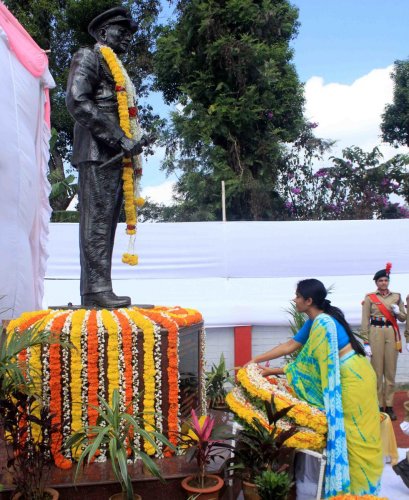
Deputy Commissioner Annies Kanmani Joy pays floral tributes to the statue of Field Marshal K M Cariappa in Madikeri on Tuesday.

Air Marshal (Retired) K C Cariappa said, “We, the people, should live as Indians first, ignoring the barriers of caste, creed and religion.”

He was speaking at the 121st birth anniversary programme of Field Marshal K M Cariappa, organised by the Department of Kannada and Culture, Karnataka Kodava Sahitya Academy and Field Marshal Cariappa and General Thimayya Forum at Field Marshal Cariappa Circle here on Tuesday.

MLA Appachu Ranjan said Cariappa used to reiterate the slogan that the nation comes first. “Cariappa believed in the values of punctuality and honesty. He was known for patriotism. All must cultivate his ideologies,” he said.

Ranjan said that he has requested the chief minister to move a proposal to the Central government to declare Cariappa’s birth anniversary as a national birth anniversary.

Deputy Commissioner Annies Kanmani Joy said that she is proud to work in the homeland Cariappa. Apart from being a land of natural resources and tourist attractions, Kodagu is also known as the land of brave soldiers, she added.

The dignitaries paid floral tributes were paid to the statue of Cariappa. Former minister M C Nanaiah, MLC Sunil Subramani, MLC Shanteyanda Veena Acchaiah, General Thimmaiah Forum President Col (retd) K C Subbaiah, convener B A Nanjappa, Karnataka Kodava Sahitya Academy chairperson Dr Ammatanda Parvathi Appaiah and Zilla Panchayat CEO K Lakshmi Priya were present on the occasion.

source: http://www.deccanherald.com / Deccan Herald / Home> State> Mangaluru / by Adithya K A / DHNS, Madikeri / January 28th, 2020

Latest trends in fashion becomes focus at Bangalore Derby 2020

While stylish hats were the traditional favourite among the women, the other fashion statements, which was a refreshing treat for the eyes, were monochrome colours, jumpsuits and pants.

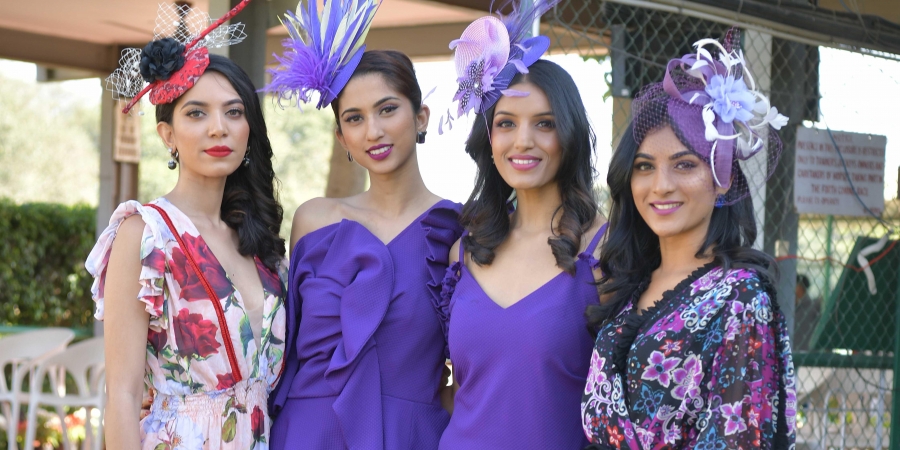
Floral prints, bright colours and summery looks were the highlight at the Bangalore Derby on Sunday. (Photo| Meghana Sastry, EPS)

Bengaluru :

While the city’s temperature soared to 30° C on Sunday, the excitement for Shree Meenakshi Sundereshwara Bangalore Derby 2020, which took place at The Bangalore Turf Club, also amped up. More than 5,000 people attended the event but the showstoppers were the eight handsome horses who participated in the race.

While stylish hats were the traditional favourite among the women, taking inspiration from Royal Ascot, the popular derby in London, the other fashion statements, which was a refreshing treat for the eyes, were monochrome colours, jumpsuits and pants.

Nishita Sivappa, daughter of Vinod Sivappa, chairman of Bangalore Turf Club, says when it comes to attending a derby, she has to go for something comfortable, in which she can enjoy the thrill of the race. “I have always loved breaking tradition. While ladies prefer dresses or skirt, which is lovely, I prefer comfortable pants and shirt, accessorised with a statement belt,” says Sivappa, who went for a co-ordinated pure white set, with a black and gold statement belt along with oversized sunglasses.

While Sivappa chose all-white, actress Shubra Aiyappa decided to got for a body-fitting jumpsuit. “I have been in that jumpsuit phase so went ahead with the instinct,” said Aiyappa, who picked the jumpsuit from a designer boutique in Dubai.

Derby without some harmless betting sounds incomplete. But actress-model Sanjjanaa Galrani says she usually does not gamble and moreover, she is working towards reducing one vice of her in a year. She was wearing a purple velvet dress, which she paired up with classy shoes, a fashionable watch and a trench.

“I added the trench so that people don’t get distracted from the race,” the actress added playfully. Celebrity fashion designer Delna Poonawalla, who comes from a famous family of horse breeders, gave a glimpse of her new collection too.

While women put on the fashion game so high, men didn’t hesitate to play along too. They showed off tapered pants, chequered suits and printed blazers. However, it was the race and good spirit that took all their attention.

source: http://www.newindianexpress.com / The New Indian Express / Home> Lifestyle> Fashion / by Monika Monalisa / Express News Service / January 27th, 2020

121st Birth Anniversary Of Field Marshal K.M. Cariappa

Kodava Samaja, Mysuru, is celebrating the 121st birth anniversary of Field Marshal K.M. Cariappa on Jan. 28 at 8.30 am at the Circle named after him in city (previously Metropole Circle).

The members will offer floral tribute to the bust of Field Marshal.

The Kodavas residing in city, Defence personnel and general public are requested to join in large numbers, according to a press release from Samaja President K.M. Belliappa.

source: http://www.starofmysore.com / Star of Mysore / Home> In Briefs / January 25th, 2020

Unbound: Visionary Women Collecting Textiles

Two Temple Place, London

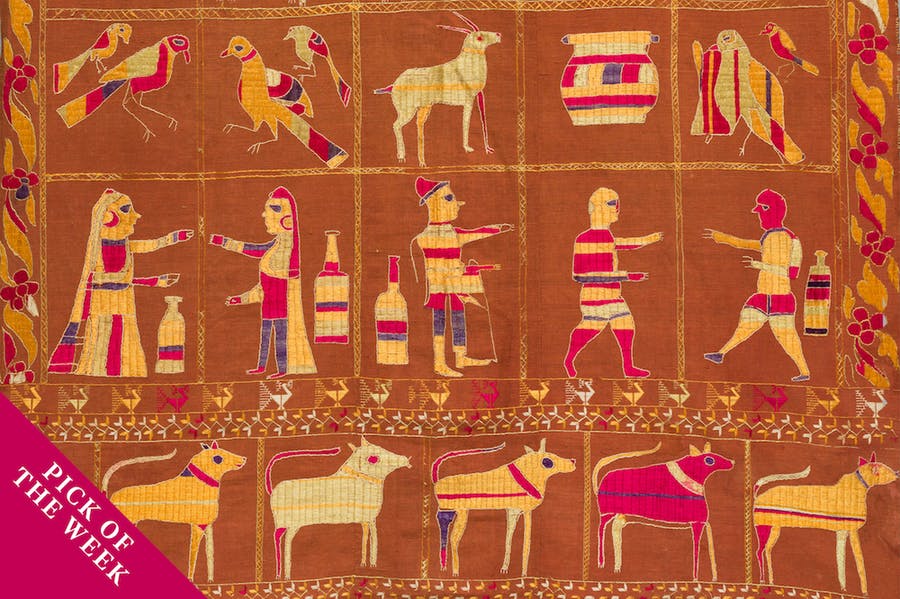
Phulkari (detail; early 20th century), unknown maker. Photo: Paul Tucker; © Bradford Museums and Galleries

Seven women who collected textiles during the 20th century are the focus of this exhibition, which considers how the collections they formed – ranging from Balkan costumes to South Asian saris – helped to assert the status of these materials as works of art. Find out more from Two Temple Place’s website.

Preview the exhibition below | View Apollo’s Art Diary here

Giubba (19th century), Albania. Photo: Calderdale Museums Collection, Halifax

The artist and writer Edith Durham (1863–1944) travelled widely across the Balkans in early 20th century, becoming renowned for her anthropological reports on life in Serbia, Albania and Kosovo. In 1935, her collection of Balkan costume and jewellery – including this giubba, a traditional robe worn by Albanian women – was donated in 1935 to the Bankfield Museum in Halifax, where it remains to this day.

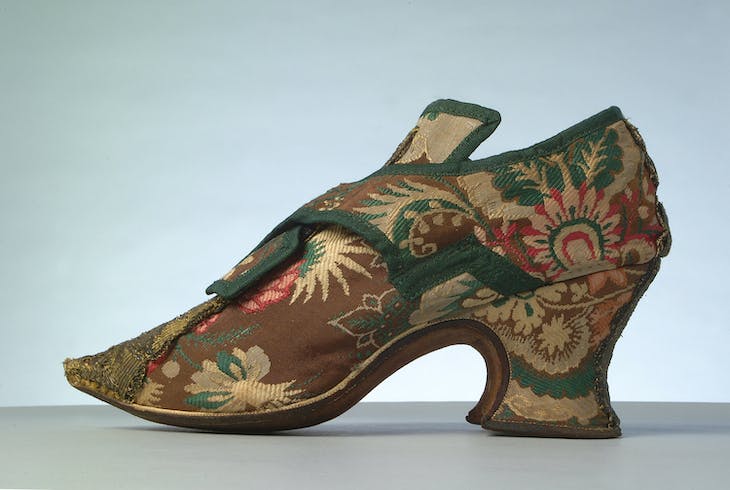
Brocade shoe without clog (1735–45), unknown maker. Photo: John Chase Photography/The Olive Matthews Collection, Chertsey Museum

Drawn to historic fashion from a young age, Olive Matthews built up a significant collection of more than 4,000 objects over the course of her lifetime – being careful always to stick to a budget of no more than £5 per item. She focused particularly on delicate needlework and embroidery – as seen on this shoe of brocaded silk from the 18th century.

Curtain with jungle repeat pattern (n.d.), Enid Marx. Photo: Harminder Judge/Compton Verney

Along with her friend Margaret Lambert, Enid Marx amassed a major collection of English folk art after 1932, although by this time she was already a renowned textile artist in her own right, having studied alongside Eric Ravilious and Edward Bawden at the Royal College of Art in the 1920s. In the exhibition, examples of her own work – such as this repeating pattern, reminiscent of animal hide – are on show alongside objects from her collection.

Phulkari (early 20th century), unknown maker. Photo: Paul Tucker; © Bradford Museums and Galleries

From 1985–98, Nima Poovaya-Smith was senior keeper of international arts at Bradford Art Galleries and Museums, during which time she established the transcultural gallery at Cartwright Hall. She built up a collection at the gallery that reflected Bradford’s history of textile manufacture and explored the influence on it of fabrics from across the world – in particular southern Asia. This colourful cloth is an example of phulkari (‘floral work’ in Punjabi), so-called because of the embroidered patterns that extend over every inch of the fabric.

Event website

source: http://www.apollo-magazine.com / Apollo / Home> Whats On / January 25th – April 19th, 2020

‘Makkada Manas’ to be released soon

The premiere show of Kodava movie—Makkada Manas—will be held in Bengaluru on January 25.

The movie will be released in theatres shortly, said script writer Dinesh Kalimada.

The movie portrays the relationship between parents and children, he told reporters. Talented persons from Kodagu such as Arjun Devaiah, Ashwini Nachappa, Josna Ponnappa are the inspiration for the movie.

The movie is directed by Suleman Koria and produced by Bollimada Dati Uthaiah.

Story writer Gangadar said the movie was shot in different parts of the district.

The movie will be released is four theatres in the district. The premiere show will be for athletes and artistes from Kodagu. There are two songs in the movie.

source: http://www.deccanherald.com / Deccan Herald / Home> State> Mangaluru / by DHNS, Madikeri / January 19th, 2020

Literary Association Will Help Enhancement Of Creativity, Says Rangayana Director

Rangayana01KF22jan2020

Mysuru:

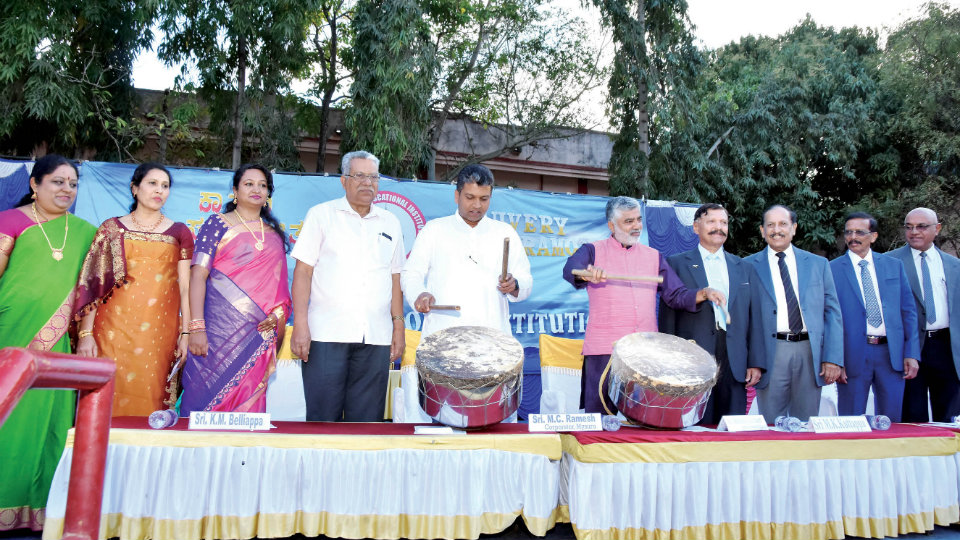
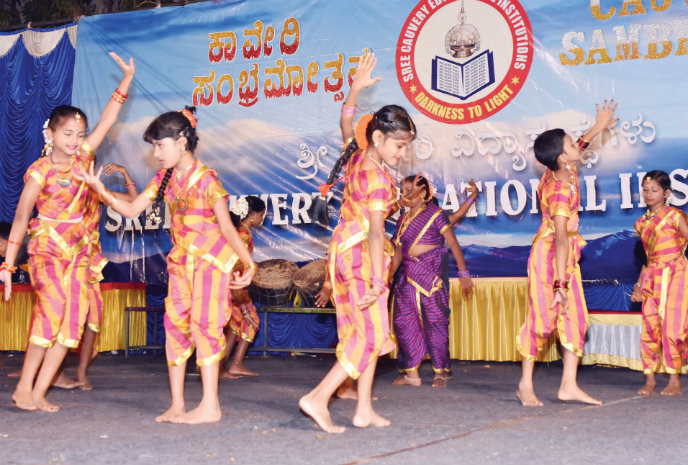
Rangayana Director Addanda C. Cariappa has said that reading novels, poems and other literary works will largely help in enhancement of creativity among people. He was speaking after inaugurating ‘Cauvery Sambhramothsava,’ the annual day celebrations of Sree Cauvery Educational Institutions (SCEI) at its premises in Kuvempunagar here yesterday.

Maintaining that students who score 98 percent marks in SSLC and PUC cannot be called as intelligent students as there are other factors that define intelligence, Cariappa said that at the same time, students scoring mere pass marks cannot be termed as duds.

Citing the example of former President Dr. Abdul Kalam, who worked as a newspaper boy in his student days and Prime Minister Narendra Modi, who used to sell tea, he said that creativity exists in every human being and improving creativity is key for achieving set goals.

Rangayana02KF22jan2020

Recalling an instance when Field Marshal K.M. Cariappa visited Ponnampet Government School about 30 years ago, where he (Addanda C. Cariappa) was a ninth standard student then and questioned the students on what they wanted to become in the future, Cariappa said that while almost every student said that they wanted to become an engineer or a doctor, a student by name Mahadeva was exceptional when he said that he wanted to drive a bullock-cart. The Field Marshal asked him to study well and wished him, Cariappa said.

Now, two years ago, he happened to visit Sedam in Kalaburagi district, when he met Mahadeva and enquired him what he was doing here. Mahadeva replied that he had become a doctor, after he drew inspiration from the Field Marshal’s encouraging words, Cariappa said.

Noting that students must always draw inspiration from great achievers and good things in life, he advised the students to become honourable persons in the society by occupying top positions in their chosen profession.

Corporator M.C. Ramesh, in his address, called upon the students to develop humanity, benevolence and sportsman spirit and to respect the elders.

Rangayana03KF22jan2020

Meritorious students who scored high marks in SSLC, PUC and Degree courses were presented ‘Pratibha Puraskar,’ while the winners of various contests organised as part of the Annual Day, were distributed prizes on the occasion.

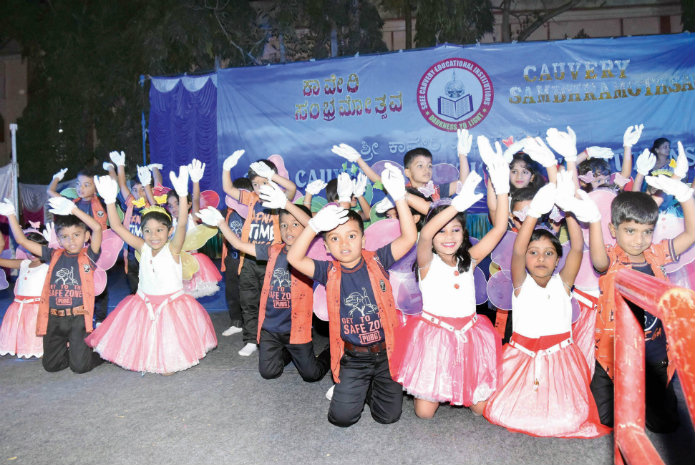
A cultural presentation by girl students and songs from old and new hits enthralled the audience.

SCEI – Kodava Samaja Education Council Chairman M.K. Kuttappa, Kodava Samaja President K.M. Belliappa, Vice-president M.M. Ponnappa, SCEI Secretary M.P. Subbaiah, Treasurer M.B. Aiyappa, Principal Krupalini S. Raj, K.M. Padmavathi, Rashmi and others were present.

source: http://www.starofmysore.com / Star of Mysore / Home> News / January 19th, 2020

Who was Field Marshal KM Cariappa?

CariappaKF22jan2020

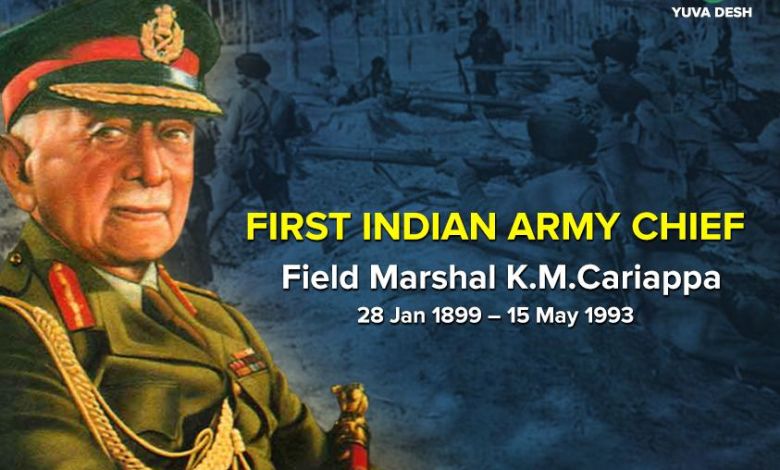
KM Cariappa is a man known for many firsts, but most importantly, he is known as the man who took charge of the Indian Army from its last British Commander in Chief, General Sir Roy Bucher. Born on January 28, 1899, in Coorg, Cariappa completed his education at Central High School at Madikeri and went on to study at the Presidency College in Madras.

However, Cariappa began his Army stint under the British and was among the few selected for the first batch of KCIOs (King’s Commissioned Indian Officers) at the Daly Cadet College in Indore and was commissioned in the Carnatic Infantry. He was in active service with the 37 (Prince of Wales) Dogra in Mesopotamia (present-day Iraq) and then posted to the 2nd Rajput Light Infantry (Queen Victoria’s Own). Cariappa went on to become the first Indian officer to undergo the course at Staff College, Quetta in 1933. In 1946, he got promoted as the Brigadier of the Frontier Brigade Group.

By Indian independence, Cariappa saw action in Iraq, Syria, Iran and Burma and became the first Indian Officer to be given command of a unit in 1942. He went on to receive many awards and accolades in his career spanning three decades. He received the prestigious Order of the British Empire (OBE) for his role in Burma against the Japanese during the Second World War.

In 1947, Cariappa became the first Indian to be selected to undergo a training course at Imperial Defence College, Camberly, UK. His role during the Partition is rarely mentioned, during which he oversaw the division of the Army. Cariappa also led the Indian forces on the Western Front during the Indo-Pak War of 1947 and successfully recaptured Zojila, Drass and Kargil and established a linkup with Leh.

On January 15, 1949, Cariappa became the first Commander-in-Chief of the Indian Army. He held the five-star rank of field marshal, the highest honour in the Indian Army, which Sam Manekshaw is the only other officer to have held.

source: http://www.defenceaviationpost.com / Defence Aviation Post / Home> Defence> Indian Army / source: Indian Express / January 20th, 2020

Kodagu Champ Selected As National Coach By Hockey India

AnkitaSureshKF21jan2020

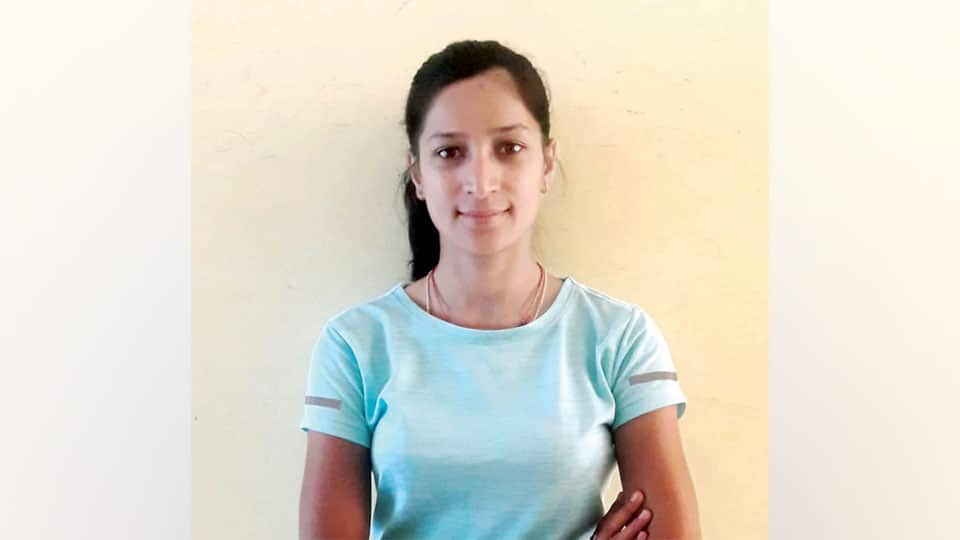
Ankitha Suresh has been selected as Assistant National Coach by Hockey India for the Indian Senior Women’s Hockey Team. She is now a member of coaching staff who is training senior hockey players at the ongoing National Coaching Camp till Jan. 21.

She will represent India as Assistant Coach and will be a part of the Indian National Hockey team (Senior Women’s Hockey) that will leave for New Zealand on Jan. 22. The New Zealand tour will begin from Jan. 23 till Feb. 6. Ankitha will be a part of the 26-member team headed by Chief Coach Sojero Marjine and Analytical Coach Janneke Schopman. 20 players are also part of the team.

Daughter of B.A. Suresh and B.S. Dharmavathi, residents of Madikeri, Honnampadi Ankitha Suresh started her sports career as an athlete and had won medals in 3,000 meter and 5,000 meter running races in national levels. While studying in Junior College in Madikeri, she stumbled upon hockey and her passion for the sport grew after she joined SAI Hockey Hostel in Madikeri for training.

She has represented Karnataka in the National level five times (twice in senior level and thrice in junior level). In the University-level (Mangalore University), she has won three Gold medals and two Bronze (Annamalai University). She has participated in All India Inter-University Tournaments five times.

Ankitha also has the distinction of being the one among the five women from Karnataka who have been selected for the Level-3 coaching course offered by Hockey India as well as only Level-2 Technical Official to be selected from India and from Karnataka for the Fédération Internationale de Hockey (FIH) World Cup Women’s Hockey.

She is currently working as hockey coach in Department of Youth Empowerment and Sports (DYES) at Ponnampet Sports Hostel and will join as national coach. A post-graduate diploma holder in e-Finance and Gym Instruction, she holds Masters in Commerce and has a Diploma in Sports Coaching (National Institute of Sports).

“N. Muthu Kumar, my coach in SAI Hockey Hostel, Madikeri, is my role model and inspiration,” she fondly says and feels grateful for all the coaches that she has worked with throughout her career. She specially mentions the name of Ponachanna Srinivas who taught her the game of hockey.

“Hockey Karnataka supported me to do the course (Hockey India Level-1, Level-2 and FIH Level-1 and 2 and now I am promoted to do FIH Level-3) conducted by Hockey India and FIH Hockey Academy,” she adds.

source: http://www.starofmysore.com / Star of Mysore / Home> Sports / January 20th, 2020

RS MP Kupendra Reddy Calls Kodava Community To Stay United On Tribal Status

CNCkf20jan2020

Madikeri:

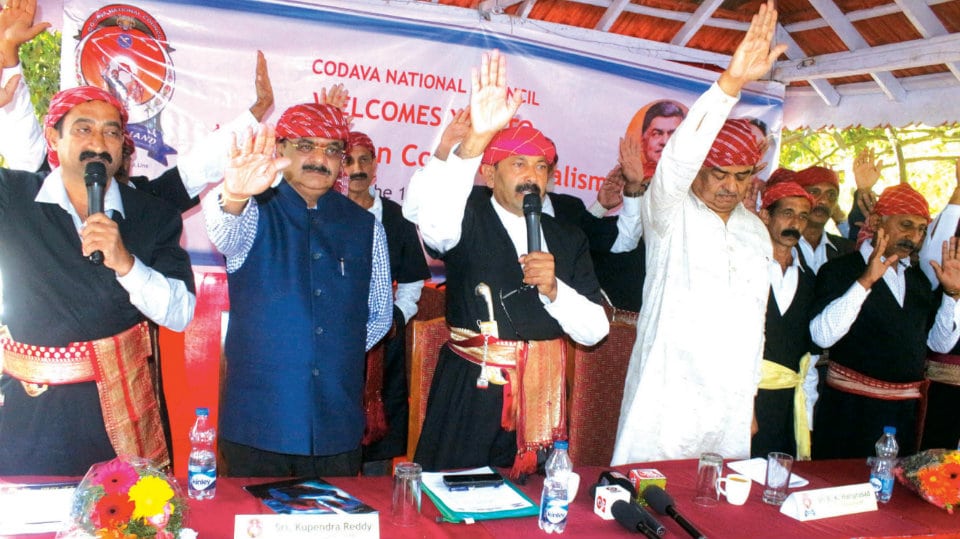
Maintaining that Kodava community has been deprived of tribal status due to lack of organised efforts and killer instinct, Rajya Sabha (RS) member Kupendra Reddy called upon Kodava community members to launch a movement for getting Constitutionally mandated tribal status.

He was speaking at a seminar on Kodava Tribal Status, organised by Codava National Council (CNC) at Capitol village on the outskirts of Madikeri town yesterday.

Stating that the richness of Kodava culture and practices are key factors in getting tribal status, Reddy said that even the British had considered Kodavas as a tribal community in a census conducted by them. But Kodavas have chosen to stay away from the status as they considered it inferior, he regretted.

Pointing out that Kodavas need tribal status to get Government posts, he lauded the fighting spirit of CNC President N.U. Nachappa, who has been waging a battle for the cause for over a decade

Reiterating that lack of unity among Kodava community had deprived the community of its rights, he appealed the community to support Nachappa in his struggles.

Another RS MP B.K. Hariprasad said that Kodava community which emanated from the banks of the holy river Cauvery is now staring at a crisis. Arguing that the Constitutionally mandated status alone can help Kodava culture and tradition to sustain, Hariprasad called upon the community members to shun a feeling of inferiority, if they have any.

Claiming that the Sanskrit speaking population, which is hardly 50,000 in number has got reservation, he wondered why the Kodava population which is multiple times higher has not got reservation. Although Kodavas were socially and academically forward, they have been deprived of opportunities, he regretted. Hariprasad further said that he had raised his voice for an appropriate status for Kodava language in Parliament.

CNC President N.U. Nachappa in his address, said that a tribal status alone can save Kodava culture, tradition and practices from becoming extinct.

Pointing out Kodava Gun Rights has never been misused for any anti-national activities, he said that the Gun Rights has remained in place even after seven decades of independence because of this fact. Nachappa warned that Kodavas will have no future if they fail to learn about tribal rights listed in the schedule of the Constitution.

source: http://www.starofmysore.com / Star of Mysore / Home> News / January 19th, 2020