Category Archives: Famous Personalities of Kodagu / Coorg

Short film ‘Nentathi Goode’ released

Karnataka Arebhashe Samskrithi Mathu Sahitya Academy president P C Jayaram releases the short film ‘Nentathi Goode’.

All of us should develop self-respect for the mother tongue, said Karnataka Arebhashe Samskrithi Mathu Sahitya Academy president P C Jayaram.

Speaking after releasing an Arebhashe short film ‘Nentathi Goode’, he said, “All languages have there own distinct feature and culture. The younger generation should conserve the language for the future generation.”

He lauded the team of youths for coming out with a short film highlighting the culture and farming system of the Arebhashe speaking community members.

Madikeri Gowda Samaja president Periyana Jayanand said, “The short film, ‘Nentathi Goode’, is a new attempt and it has highlighted the culture and tradition of the Gowda community members in Kodagu and Dakshina Kannada district. There has been a decline in movies in Arebhashe language.”

Short film director Vishnu Kalanjana said, “35 artistes from the Gowda community have acted in the short film. It was shot in and around Kodagu. The short film also makes an attempt to showcase the richness of Ainmane (ancestral homes) in Kodagu district”.

Kadya Jagrithi is in the lead role in the short film. The screenplay is written by Torera Sachin while the cinematography is by Diwakar.

CMC President Kaveramma Somanna also spoke on the occasion.

source: http://www.deccanherald.com / Deccan Herald / Home> States> Mangaluru / by Naina J A / DH News Service, Madikeri / December 09th, 2018

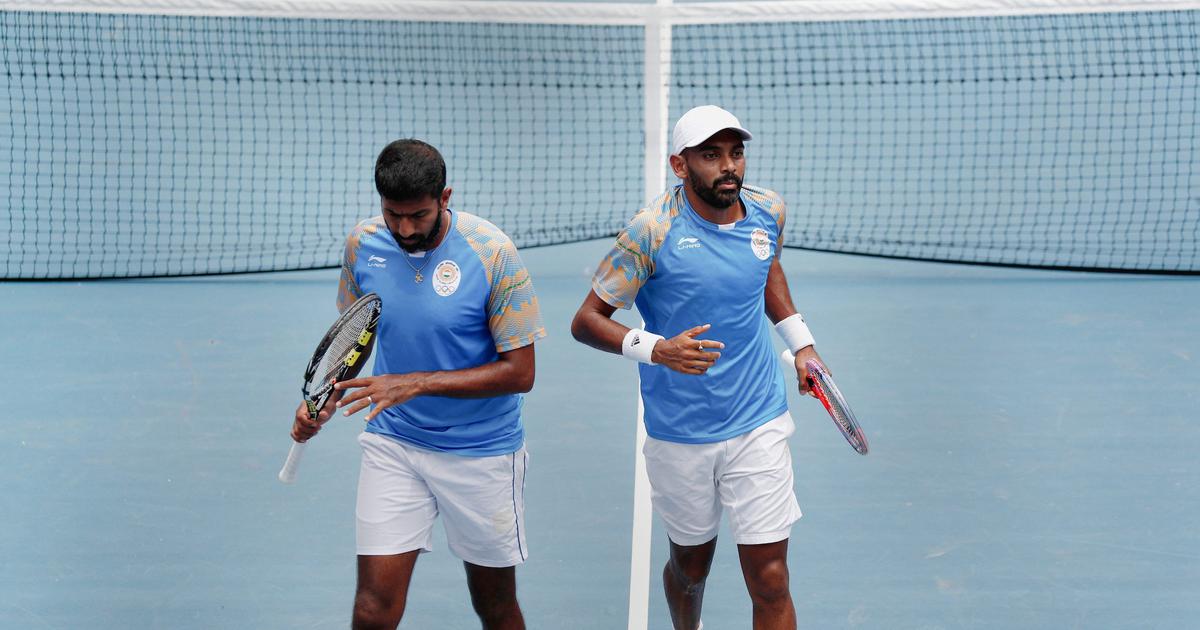
Rohan Bopanna and Divij Sharan, India’s Asiad gold-winning pair, to partner on ATP Tour from 2019

The all-Indian doubles pair will start their season at home in the Maharashtra Open.

PTI
PTI

India’s 2018 Asian Games gold medal winning pair of Rohan Bopanna and Divij Sharan has decided to form a permanent partnership and will play together on the ATP Tour from the 2019 season.

Bopanna and Sharan – ranked 37 and 39 in the ATP year-end doubles ranking respectively – will start their season at the Maharashtra Open in Pune and will play one more tournament before taking part in the Australian Open, the first Grand Slam of the year.

“We have played with each other before and we gel well. Plus we have similar rankings so we can enter the bigger tournaments together,” Sharan told Scroll.in. “Both of us are from India and it is always nice to play with someone from your country,” he added.

The idea to pair came up organically and was something both of them were keen on, especially after their title-winning run in Indonesia in August this year. “We have been in touch and were thinking about this, especially after the Asian Games. I enjoy playing with Rohan and we form a good pair,” he said.

But the partnership can also go on to be a lot more meaningful for Indian tennis with an eye on the 2020 Tokyo Olympics. An all-Indian doubles pair with the experience of playing together on the circuit will be a welcome addition the squad.

On his part, Sharan did say that playing together now will give them the opportunity to play more tournaments together for India in the future. The duo displayed good chemistry when they played together in Indonesia and more tournaments together will give them a chance to get better. Much like the pair of Leander Paes and Mahesh Bhupathi in the early part of this millennium.

After the Maharashtra Open, the pair plans to play in either Sydney or Auckland depending on the entry list and then the Australian Open. There is a strong possibility that they will team up in the Davis Cup as well, when India take on Italy in February in the qualifiers for the Finals.

The 32-year-old Sharan is a late bloomer and has had a great season in 2018, reaching a career-best 36 and was briefly the highest-ranked Indian in doubles ahead of Bopanna as well. Sharan had a host of partners in the last year, after ending his long-standing partnership with fellow Indian Purav Raja. Last year at the Maharashtra Open, Sharan had played with Yuki Bhambri while 2016 Chennai Open champions Rohan Bopanna and Jeevan Nedunchezhiyan had played together.

source: http://www.scroll.in / Scroll.in / Home> The Field> Indian Tennis / by Zenia D’Cruz / December 07th, 2018

Hockey World Cup Memories: AB Subbaiah remembers 1994 edition, where India’s chances were undone by South Africa

Playing as a goalkeeper for the Indian team, AB Subbaiah was part of the 1998 Asian Games gold medal winning side. He has been feted with the Arjuna Award. He spoke to Amit Kamath.

I was India’s goalkeeper in the 1994 World Cup, which was held in Sydney. What a memorable tournament it was!

We had a great team consisting of players like Dhanraj Pillay, Mukesh Kumar and Mohammed Riaz.

Our preparation for the World Cup was also excellent. The 1994 World Cup was one of the first coaching assignments of Cedric D’Souza and he had prepared the team really well. I remember that a lot of players came from either Mumbai or Karnataka at that time.

While most of our other coaches used to train us by working on our strengths, Cedric was the one who made us prepare by focusing on our rivals’ strengths and tactics. Cedric had a technical style of coaching which involved studying other teams. It was a modern style of training which helped us prepare for each and every situation.

We played some great hockey against the best teams in the world. That tournament saw us register wins over South Korea and Belgium in the group stage. We also had close matches against Germany and the Netherlands.

It was a great team and we had done very well but one unfortunate thing was the 2-2 draw against South Africa in the league stage. That proved to be the difference between us and Germany in qualifying for the semi-finals. At that time, just two teams from the group were to qualify for the semis.

I remember that after our last group match, we had to wait for the match between the Netherlands and Germany to end to see if we could qualify. They played out a draw, which led some of us to feel like they had an understanding.

But there were a few things which proved to be our undoing in that tournament. Against the good teams in our group we performed really well, but against an under-rated team like South Africa, we were a little slack in our approach. That was probably because we were focusing on the bigger teams in the tournament. When you play at an event as big as the World Cup, you have to prepare equally for each opponent however big or small it is.

What also hurt us was a misplaced pass by Shakeel Ahmed when we were up 1-0 against Germany. The Germans capitalised on the error, stormed into out D and equalised!

Another memory that sticks out from that tournament is the goal the Netherlands’ Taco van den Honert scored against me in our group match. At that time, players would whack or slap-hit the ball towards goal in penalty corners. But when the Netherlands played us, Taco drag-flicked the ball into the top right corner. It surprised all of us! It was the onset of the era of drag-flicks.

What also went against us was that one of our most prominent forwards, Sabu Varkey, was not available during the tournament. If he had played, he would have been a livewire at the front and the results would have been different.

Eventually, we could not qualify for the semis and had to play Argentina in the playoffs for the 5th to 8th position spots. We won that match in an exhilarating tiebreaker. We beat them comprehensively! At that time, finishing 5th and 6th was commendable because it also meant that the team would qualify for the Champions Trophy. So, on one hand, we were happy, but on the other hand, we felt that since a lot of young players had come from the junior team, so we could have done really well in this tournament.

And then we beat England for the fifth-sixth position match which made it a memorable tournament for us. Finishing fifth at that tournament was not that bad because it was just one step away from the semi-finals. We were unfortunate to miss the chance in that way. But what was more unfortunate was that at the Atlanta Olympics two years later, we again missed the semi-final cut narrowly like that.

That was what teams need to realise! We were good enough to make it to the semis at the 1994 World Cup. But it was just because of one underrated team beating us in one match that we missed out.

For the full Hockey World Cup 2018 schedule, click here

source: http://www.firstpost.com / FirstPost. / Home> Latest News> Sports News / by A B Subbaiah / December 02nd, 2018

Traditional flavour marks Kodava National Day

Kodavas take part in a programme as a part of the Kodava National Day observed by the Codava National Council in Madikeri on Sunday.

The 28th Kodava National Day is dedicated to the memory of those who lost their lives during the floods and landslides, Codava National Council (CNC) President N U Nachappa declared while inaugurating the Kodava National Day organised by CNC at Gandhi Maidan on Sunday.

Nachappa while addressing the gathering said that CNC has been fighting for the self-respect of the villagers rendered homeless by nature’s fury.

“The government should fulfil all the demands of victims at relief camps. A disaster of bigger scale is waiting to happen if Harangi dam is not rebuilt. The government should initiate an enquiry into the fitness of Harangi reservoir,” he urged.

He said that a probe should also be done into the alleged misappropriation of relief materials.

Nachappa also urged the government to establish a separate department for disaster management.

“The genocide of Kodavas in Devati Parambu by Tipu Sultan can never be forgotten. Yet the state government is observing the birthday of Tipu, hurting the sentiments of Kodavas,” he said and alleged that miscreants had been disrupting CNC’s campaign.

“The genealogy studies on Kodavas was also stopped abruptly,” he added.

Traditional celebrations were the highlight at the 28th Kodava National Day.

After the traditional Kodava ritual, a cultural procession was taken out from General Thimayya Circle to Gandhi Maidan, through General Thimayya Circle.

Youth wearing the traditional Kodava attire walked in the procession to the beats of ‘Dudikott Patt’.

‘Bolakkatt’, ‘Kattiyatt’ and ‘Kolata’ drew the attention of people.

CNC members Chandira Raja, Karavanda Saraswathi, Boppanda Bollamma Nanaiah, Hanchettira Nayak and Areyada Savitha were present among others.

source: http://www.deccanherald.com / Deccan Herald / Home> State> District / by Adithya K A / DH News Service, Madikeri / December 02nd, 2018

Office-Bearers Of Igguthappa Kodava Assn.

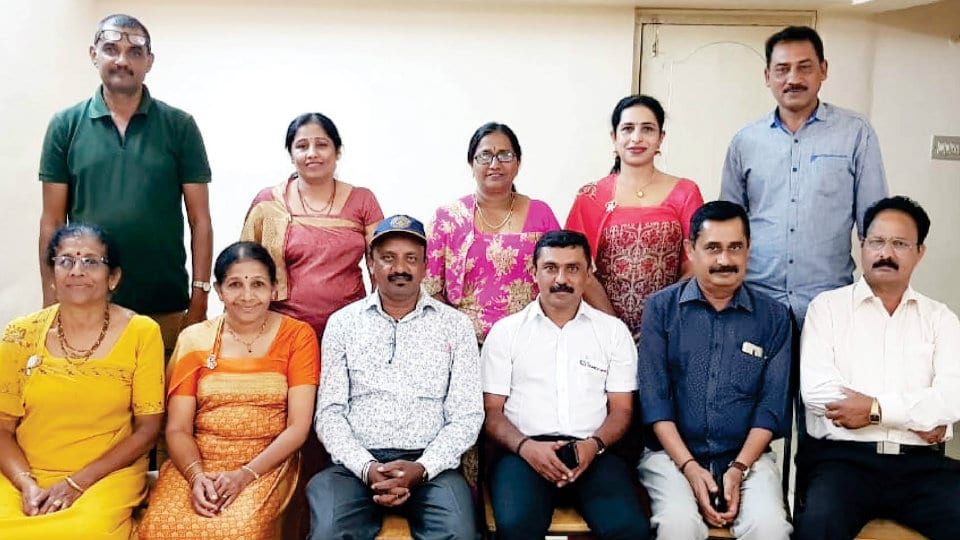
IgutthappaKodavasKF29nov2018

The Annual General Body Meeting of Sri Igguthappa Kodava Association, Vivekanandanagar, was held recently at Kodagu Sahakara Sangha in Jayalakshmipuram.

The following were elected as office-bearers and committee members for the next two years:
Ponjanda A. Ganapathy – President, Moovera Chinnappa – Vice-President, Anjanda Kumari Ganapathy – Secretary, Mundanda Sunitha – Treasurer, Kuppanda Subbaiah – Joint Secretary, Chottekalapanda Prema Uthaiah, Kotera Thammaiah, Pandira Sarala, Balyameederira Pallavi Bopanna, Chakkera Bopanna and Nandineravanda Somanna — all Committee Members.

source: http://www.starofmysore.com / Star of Mysore / Home> Photo News / September 24th, 2018

‘Who Are We Kodavas?’ By NRI Kodava To Be Released In City Tomorrow

BookWhoKodavasKF25nov2018
Mysuru:

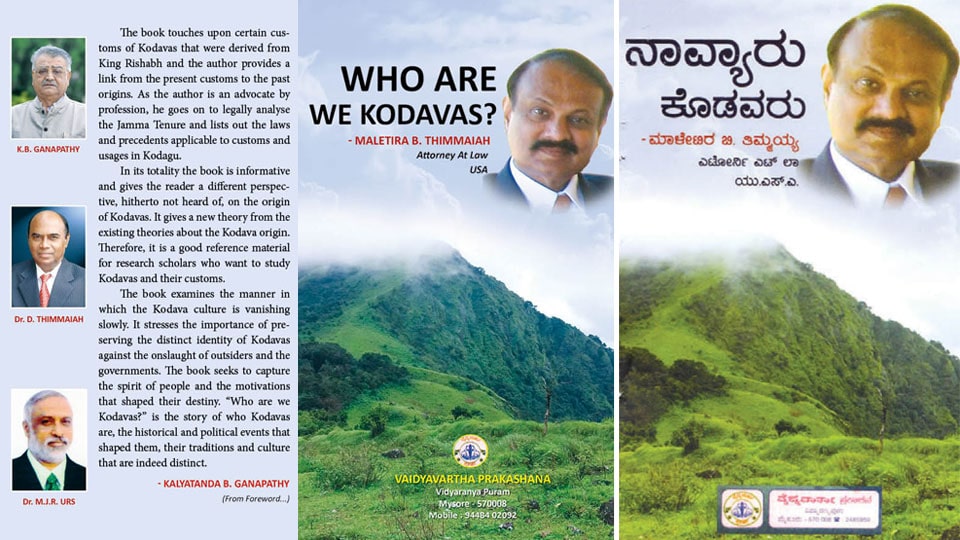
D.M. Trust has organised a function at Rotary Hall on JLB Road here tomorrow (Nov.25) at 5 pm to release the books ‘Who are we Kodavas?’ (English) and ‘Navyaaru Kodavaru?’ (Kannada), written by Maletira B. Thimmaiah, Attorney-at-Law, USA.

Star of Mysore Editor-in-Chief K.B. Ganapathy will release the books. City advocate J.M. Aiyanna will preside. D.M. Trust President Dr. D. Thimmaiah, Joint Commissioner of Commercial Tax, Shivamogga, H.G. Pavithra and Vaidya Vartha Prakashana Founder-Director Dr. M.G.R. Urs will be the chief guests.

Published by Vaidya Vartha Prakashana, the English version of the book has 84 pages while Kannada edition has 80 pages, both priced at Rs.50.

Here we publish the Foreword to the book by Kalyatanda B. Ganapathy, Editor-in-Chief, Star of Mysore and Mysooru Mithra:

This is a book about the people of Kodagu, the land inhabited by Kodavas with their own distinct identity recognised and recorded in history as unique. Written by Maletira B. Thimmaiah, Attorney-at-Law, Staten Island, New York, United States of America, the book traces the origin of Kodavas, their customs, rich history of more than 5,000 years and how a land of such uniqueness was being systematically ravaged by invaders, modern laws and urbanisation thereby depriving the future generations of the rich natural beauty and more importantly the environment.

From time immemorial, Kodavas, with their unique folklore culture, have shown affection, tolerance and respect towards the people who helped them regardless of the communities they belonged to. Showing their gratitude in the form of providing them space and work, Kodavas still regard their guests as God — ‘Athithi Devo Bhava’ and perhaps this attitude has cost them dear when it came to preserving their culture, language and properties.

Supported by extensive research on history, religious books, encyclopaedia, customs and physical features and himself as a member of Kodava community, the author Maletira B. Thimmaiah traces the origin of Kodavas and their customs from ancient times. Kodavas must prepare the future generation to stand tough in defending their heritage against intrusion of outsiders. And to stand firm against outside influence and lobby, each Kodava must know his/ her origin, he writes.

According to the author, the first advent of human habitation in Kodagu is prior to 3000 BC. Rishabh, a ruler from Magahada, abdicating the throne as King of Ganges Valley Civilisation, shared his kingdom among his 100 sons, renounced everything and travelled to Kodagu, then called ‘Kutaka’ in Sanskrit and named it ‘Kudaga’ in ‘Pali’ and other South Indian languages called ‘Prakrits.’

While the first son of Rishabh named Bharat ruled northern half with Ayodhya as capital, the second son Bahubali ruled the South with Paudanapura as capital. The rest of the 98 sons of Rishabh were given different kingdoms. The final fight between Bharat and Bahubali took place in the south and the battle resulted in Bahubali renouncing his kingdom. Later, all the sons of Bahubali went to Rishabh who lived in ‘Kutaka’ for advice. This was how an uninhabited Kodagu became the place to live for North Indian Ganges Valley people.

According to the author, Rishabh believed in ‘Shramana’ school of thought that did not have God, Soul and Creation and where the philosophy of procreation dominated — human being is procreated by his parents and in turn, parents were procreated by their parents. Thus ancestors were the reason or ‘Karana’ (cause) for the continuity of generations to generations. Explaining this theory, the author draws similarities with Kodava customs where families still worship the ‘Karana’ and ‘Gurukaranas’.

The book then touches upon Hinduism and argues how Kodavas do not belong to Indus Valley Civilisation but Ganges Valley Civilisation. Elder-oriented or elder-centric customs and practices existed in Kodagu before the advent of Hinduism to India. Priests were not involved in Kodava traditions in any manner with a major role played by elders or village ‘Thakkas’. Brahmins had to work under the ‘Thakkas’ and they did not have any supremacy. As such, Brahmins felt belittled and ignored. Hence they considered Kodavas as descendants of Kroda King, born to a ‘Shudra’ woman who was low in caste (according to Hindu caste system) and was unchaste. They called Kodavas as ‘Ugras’ and said the name Kodava was derived from Kroda king.

The book argues that this was the revenge of Brahmins or the priest class against Kodavas who did not allow them to their ‘Ainmanes’, ‘Kannikombare’, ‘Kaimada’, festivals, marriages and other auspicious ceremonies.

The author then traces Lingayat religion and kings who influenced Kodavas. Kodavas were pitted against Kodavas. They killed each other while the Lingayat Rajas watched the fun. Then came Islamic invasion led by Hyder Ali and Tipu Sultan where Tipu converted a large number of Kodavas into Islam and massacred those who did not comply with his orders.

Next came the Britishers who introduced coffee. They tricked Kodavas to part with their Jamma lands to cultivate coffee and institutions like “Consolidated Coffee Estate” was born. The book describes how the British exploited Kodavas to serve their own interests in India and world over. The physical strength and bravery of Kodavas were well used by the British and moved many Kodavas from paddy fields to war fields. While a few got acclimatised, many Kodavas died unnoticed and unsung. The British even imposed heavy land revenues and brought in land laws for their advantage. Some of the unjust and illogical regulations introduced by the British continue even today even after Kodagu State was annexed into Karnataka.

After the British rule, the elected governments, with ignorant and self-centred lawmakers, brought in more restrictive laws without understanding the ground realities. This was done with no representative from Kodagu while framing such rules. Many land laws have been questioned in the Court of Law. The book illustrates how Kodagu has become a looting place for outsiders since independence. The laws enacted by Karnataka government like Land Revenue Act, Forest Act, Management of Reserved Forest Rules and land tenures have dealt many fatal blows to Kodava customs, traditions and land holdings, says the author.

The book touches upon certain customs of Kodavas that were derived from King Rishabh and the author provides a link from the present customs to the past origins. As the author is an advocate by profession, he goes on to legally analyse the Jamma Tenure and lists out the laws and precedents applicable to customs and usages in Kodagu. Probably the author is unaware of the fact that Jamma tenure is no longer existing since 2011 following an amendment to the Karnataka Land Revenue Act, 1964.

In its totality the book is informative and gives the reader a different perspective, hitherto not heard of, on the origin of Kodavas. It gives a new theory from the existing theories about the Kodava origin. Therefore, it is a good reference material for research scholars who want to study Kodavas and their customs.

The book examines the manner in which the Kodava culture is vanishing slowly. It stresses the importance of preserving the distinct identity of Kodavas against the onslaught of outsiders and the governments. The book seeks to capture the spirit of people and the motivations that shaped their destiny. “Who are we Kodavas?” is the story of who Kodavas are, the historical and political events that shaped them, their traditions and culture that are indeed distinct.

‘Who are we Kodavas?’ by NRI Kodava to be released in city tomorrow

source: http://www.starofmysore.com / Star of Mysore / Home> News / by November 24th, 2018
Abhishek Chaubey, Honey Trehan produce Manoj Bajpayee, Gulshan Devaiah-starrer Hinterland

Honey Trehan, Abhishek Chaubey throw weight behind a film with Manoj Bajpayee, Gulshan Devaiah as leads.

Vishal Bhardwaj’s proteges Honey Trehan and Abhishek Chaubey, who have assisted the National Award-winning filmmaker on films like Makdee, Maqbool and Omkara, have joined hands to produce Hinterland.

Set in the wilderness of India, the film is an official selection in the 12th Film Bazaar Co-Production Market and will feature Manoj Bajpayee and Gulshan Devaiah in lead roles.

The film goes on the floors after Honey has wrapped up his directorial debut, Raat Akeli Hai, which features Nawazuddin Siddiqui and Radhika Apte, next year.

The drama will be directed by Rahil Patel, who has previously assisted Abhishek on Dedh Ishqiya, Udta Punjab and the upcoming Sonchiraiya that also features Manoj alongside Sushant Singh Rajput and Bhumi Pednekar.

“Hinterland is a completely untold story about a community that has not been given due justice. In the film I play a character who is torn between his love for his brother and his job, while also constantly struggling to survive. I have done a small but a significant role in Abhishek’s Sonchiraiya besides being a big fan of his work. I have also known Honey for many years,” informs Manoj adding that he found the script unique and challenging.

He will start his prep closer to the shooting date. “I don’t rely on miracles on the set, so there will be a lot of physical and mental transformation that will go into this film in terms of the prep.

Since we will be dealing with an unexplored area about which I can’t talk at length right now, the shooting is going to be quite tedious, but I am sure the result will be marvellous,” adds the actor.

Abhishek who is presently busy with the post-production of Sonchiraiya is happy to be collaborating with his longtime associate Rahil. “Hinterland has been in development for a few years now and we’re extremely pleased about its selection in the NFDC Film Bazaar. It is exactly the platform that an exciting and brave film requires,” states the filmmaker.

Honey, who is currently on the recce for his film Raat Akeli Hai, informs that Hinterland is presently in the developing stage.

“The story has a very strong message for the society and both Manoj and Gulshan suit their parts to the T. Casting for the actress is currently underway,” Honey signs off.

source: http://www.mumbaimirror.indiatimes.com / Mumbai Mirror / Home> Entertainment> Bollywood / by Avinash Lohana, Mumbai Mirror / November 20th, 2018

Sakshi Dhoni thanks Robin Uthappa for bringing her and MS Dhoni together

MS Dhoni and Sakshi had tied the knot in 2010 and have a three-year old daughter named Ziva.

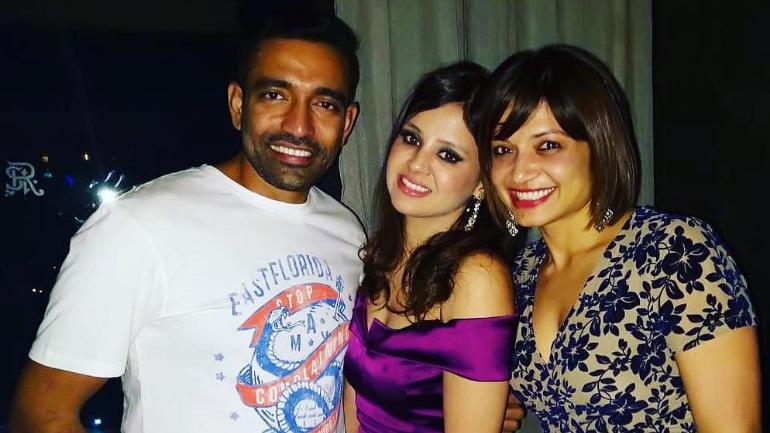
Sakshi Dhoni with Robin Uthappa and his wife Sheethal (Photo posted by Sakshi Dhoni on Instagram)

HIGHLIGHTS

– Sakshi Dhoni recently celebrated her 30th birthday with family and friends in Mumbai

– Indian cricketers Hardik Pandya and Robin Uthappa were also in attendance at the party

– Sakshi thanked Uthappa and others who attended the birthday bash
_________________________

Sakshi Dhoni has “thanked” Robin Uthappa for bringing her and MS Dhoni together. Dhoni and Sakshi had tied the knot in 2010 and have a three-year old daughter named Ziva.

Sakshi recently celebrated her 30th birthday with family and some close friends in Mumbai.

Indian cricketers Hardik Pandya and Robin Uthappa were also in attendance at the party.

Ziva was once again the star attraction of the party while Sakshi was seen cutting the cake with another individual, who shared his birthday with Sakshi.

Playback singer Rahul Vaidya entertained the crowd singing some hit Bollywood and Hindi numbers. Sakshi and Pandya also joined Vaidya in singing ‘Channa Mereya’ from the film Ae Dil Hai Mushkil.

After the party, Sakshi thanked everyone who attended the birthday bash and there was also a special mention of Uthappa in one of her posts.

“Thanks to this man here, Mahi and I are together!!! It was great meeting you Robbie and Sheethal…Thank you guys for coming and lot’s of cuddles to the little one! And Sheethal you looking Hot as ever,
__________________________
Sakshi wrote on her post on Instagram.

INSTAGRAM

sakshisingh_r

Thanks to this man here Mahi n i r together ❤️!!! It was great meeting u Robbie and Sheethal … Thank u guys for coming and lot’s of cuddles to the lil one ! And Sheethal you looking HoT as ever! 😘 and just to clear out to people mahi n r not childhood friends n first time i stepped into Ranchi was after marriage !
___________________________________

Uthappa played a key role in India’s inaugural World Twenty20 triumph in South Africa in 2007. The 33-year-old is also an important member of Kolkata Knight Riders in the Indian Premier League.

Dhoni is currently on an international break after he was left out of the Twenty20 squad for a three-match series in Australia starting November 21.

2018 has been Dhoni’s worst year in international cricket since he sensationally announced his arrival. In 19 matches this year, Dhoni managed to score only 275 runs with a highest score of 42 not out.

With the 2019 ICC World Cup a few months away, Dhoni’s form with the bat is the biggest cause for concern for the Indian cricket team.

Despite not scoring runs, Dhoni remains an important member in the team because of his experience and is still the best person in the team to take decisive decisions in crunch situations, as we have all seen in the past couple of years since he gave up captaincy.

His judgment with the Decision Review System (DRS) is unparalleled and if often seen changing the fields and sharing the tricks of the trade with Kohli during matches.

Dhoni has only a handful of ODIs left to prove his doubters wrong before India decide on their core group for the 2019 ICC World Cup.

source: http://www.indiatoday.in / India Today / Home> News> Sports> Cricket / New Delhi – November 22nd, 2018

Bridging the Gap

Bengaluru ByDesign promises handmade and cutting-edge innovation

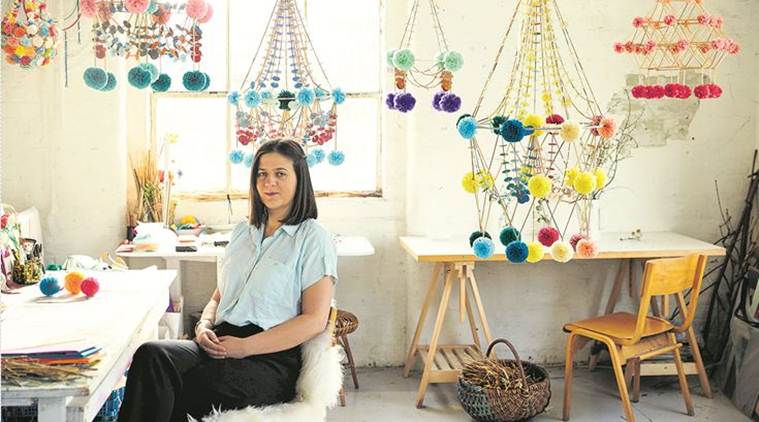
Karolina Merska Ola O Smit

Writer UR Anathamurthy was instrumental in Bangalore becoming Bengaluru. In November 2006, when the city symbolically made the shift, his intent, he wrote in an essay, was to give the city “the ability to belong to the world at large even as one is rooted in one’s Kannadaness”. Even as Bengaluru ByDesign takes over the city from November 23, the focus of the 10-day festival will be on transformations, from the handmade to technology and sustainable interventions.

From installations and exhibitions, to workshops and conferences, the festival at multiple venues in the city, hopes to bridge the gap between what is design and what people imagine to be design. Some of the highlights:

Choose Flight
Kavya Madappa’s Bluecat Paper presents Unchained Symphony – Birds, a site-specific installation. At the grand marble stairs of UB City, abstract forms of paper birds will rise towards the high-vaulted ceiling and soaring arches of the mall, symbolic of freedom and flight. “We make handmade paper from cotton, coffee and corn husks. We have nearly a 1,000 birds for the 80 steps there,” says Madappa.

Closing the Loop
At St. Mark’s Circle, Total Environment will display its strength in sustainable practices through green installations and landscaping. Designed as a twirling ribbon, the green pods will house various stages of construction, from plumbing to electrical wiring. “As a company that provides experiences in sensitively designed structures, we hope these pods will help people see the craft involved in making a home,” says Founder-Chairman, Kamal Sagar.

Everyday Design
A pop-up called “Museum of Everything” at Kafnu, curated by Sarayu Hedge, will have everything — from origami lamps to recycled cork décor, glass jewellery to organic garments.

Total Recall
London-based designer Karolina Merska honours the traditional pajaki (pah-yonk-ee) paper chandeliers, famous for drawing inspiration from architecture, costumes and flowers. “I will visit Bengaluru’s flower markets and decorate my installation at UB City with fresh marigolds instead of paper flowers,” she says.

It’s a Wrap
Bengaluru’s Town Hall has become synonymous with protests. Festival Founder Suprita Moorthy wants to change that with a makeover that will drape handmade textiles from Aadhyam around its Tuscan columns. “With pure ikats and Banarasi brocades, we will play with colour and contrast. We hope it will direct people’s gaze to its architecture and purpose,” she says.

Rajshree Pathy,
Director of the festival

What are the changes you have seen in the design industry since the inception of the India Design Forum (IDF) in 2012?
When we started IDF in Delhi, it was something very new for the city. People were aware of art but not design and conversations on design thinking were very new. Now there are several design exhibitions, events and talks, all of which is very good for designers as it allows them to present their works outside their own studios.

How has design made a difference to your life?
Design is really a way of thinking about how to make a product or create an experience. Design is not about decoration, it’s about ease of living, minimising wastage and being sustainable and affordable, otherwise design is meaningless. For me, starting IDF has been the most fulfilling experience, as I am passionate about spreading this message and removing the idea that design is elitist or about luxury.

What are the three things to watch out for at the Bengaluru ByDesign festival?
Bengaluru ByDesign is a city-wide, all-inclusive event that makes people stop and think differently about their city and its spaces. It opens up new dialogues on preservation, conservation and celebrates the city for its architecture, craft and so much more. The Town Hall pillars dressed in fabric, the UB city mall stairway clad in beautifully cut paper collage and the workshops everywhere are amazing.

How do you think design can become mainstream?
With the growth of the automotive industry, the real-estate boom, the lifestyle industry like furniture, household products, jewellery, clothing and IT, design is already mainstream, though people are not aware of it. Designers are wanted for all the above businesses. More schools need to come up across India for our fast-growing requirements.

source: http://www.newindianexpress.com / The New Indian Express / Home> Lifestyle / by Shiny Varghese / November 21st, 2018

Bopanna assures assistance to Kodagu

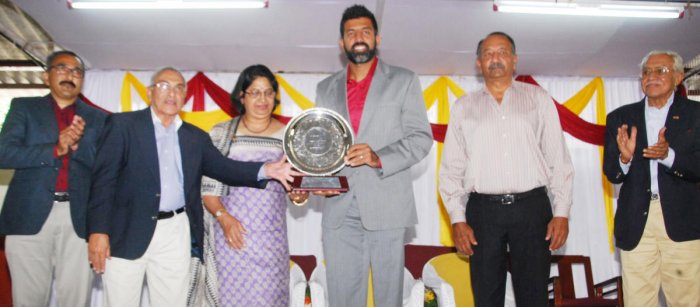
Tennis player Rohan Bopanna is felicitated during a programme held at Kodava Samaja in Madikeri on Monday.

Tennis player Rohan Bopanna has assured of providing further assistance towards the reconstruction of Kodagu district.

He was speaking after receiving felicitation during a programme, organised by Coorg Education Fund and Kodava Samaja, on Monday.

Bopanna said he was not able to visit Kodagu at the time of natural calamity. He said he had provided a little assistance to flood relief work and would extend his help in future as well, he said

“Students are being trained at Rohan Bopanna Tennis Academy in Bengaluru. The academy will also provide training to children in Kanakapura in the days to come”.

He said he was not taking part in any tournament in the near future and had come to Kodagu on vacation. Bopanna, however, stated that he was hopeful of winning international tournaments. “I felt privileged to be conferred with Arjuna Award by the Central government in 2018.”

Coorg Education Fund Chairman Kootanda Uttappa said, “Rohan Bopanna has not only made Kodagu but also India proud with his achievement in tennis.

Rohan’s parents M G Bopanna and Mallika Bopanna were also felicitated on the occasion.

source: http://www.deccanherald.com / Deccan Herald / Home> State> Districts / by Adithya KA / DH News Service,Madikeri / November 20th, 2018