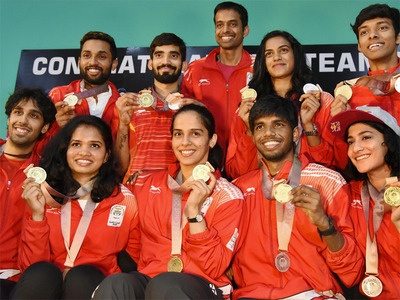
The Badminton Association of India (BAI) on Saturday handed out cash rewards to the medallists of the Commonwealth Games held in Gold Coast, Australia last month.
While Saina Nehwal was presented a cheque of Rs 20 lakh for the individual women’s singles gold medal, PV Sindhu – who lost to her in the final – was given Rs 10 lakh.
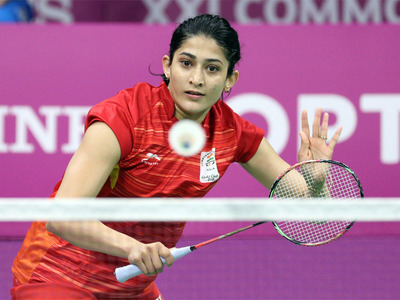
The bronze medal-winning women’s doubles specialists Ashwini Ponnappa and N Sikki Reddy were handed cheques of Rs 3.75 lakh each.
The men’s doubles team of Satwiksairaj Rankireddy and Chirag Shetty got Rs 7.5 lakh each.
The mixed team gold medal-winning squad was rewarded with a cheque of Rs 50 lakh.
source: http://www.timesofindia.indiatimes.com / The Times of India / Home> News> Sports News> Badminton News / IANS / May 05th, 2018
They say Coorgis were descendents of Alexander’s Great Greek army. Is that true? Find out more about Coorg and its aromatic society in Coorg Diary
_____________________________________
Alexander’s Army
Coorg has always fascinated me. How come this tiny area with such a small population has produced so many outstanding soldiers? Among the best known are Field Marshal Cariappa—independent India’s first army chief and also the first King’s Commissioned Officer decorated with the Order of the British Empire for “exemplary service during World War 11—and General Thimayya, an army chief as well, who famously clashed with then Defence Minister V.K. Krishna Menon. Former ladies’ national tennis champion Dechu Appiah, her musician brother, Biddu Appiah (composer of the international hit, “Kung Fu Fighting”) and famed architect Brinda Sommaiya also come to mind. And what of the Coorgis’ complexion, which is a few shades lighter than that of the people from surrounding regions? And the brown or grey eyes? Another mystery: What explains their unique customs, far removed from Hinduism? They worship their ancestors, not any Hindu gods, and don’t believe in reincarnation. One rather far-fetched theory is that the Coorgis were descendants of Alexander the Great’s Greek army. That would explain their fair features and martial tradition. But, then, Alexander only came into a part of present-day north India, far away from Coorg (though he did leave a general behind to form a kingdom). How could any descendants of that Greek army have travelled such a long distance?
___________________________________
ILLUSTRATION BY SAJITH KUMAR
All My Sons
I finally made it to Coorg (its modern name is Kodagu, and Coorgis are now Kodavas). As it happened, my hosts were the legendary Cariappa’s son, Nanda, and his wife, Meena. They live on the vast Cariappa estate in the heart of the Coorg capital, Madikeri (earlier Mercara). A short walk from their house on a mound surrounded by artistically placed stones and wild flowers is a simple black stone slab with the following engraved on it: “Field Marshal Kodandera Madappa Cariappa, 28 January 1899-15 May 1993”. This is the Samadhi where he was cremated. It still attracts his admirers from all over, many of them simple villagers who come to pay homage to perhaps their greatest son of our time. Nanda, who retired as an Air Marshal, was a fighter pilot in the 1965 Indo-Pak war. He was shot down near Amritsar on the last day of that war and captured by the Pakistanis. Gen Ayub Khan was then the President of Pakistan. He had served under Gen Cariappa and when Ayub realised his former boss’s son was their prisoner, in a gesture of friendship he offered to send him back to India, and, meanwhile, to treat him well. This prompted Cariappa to send his famous reply to Ayub Khan: “They (the Indian prisoners) are all my sons. Treat him just like them.” Nanda says he was initially kept in solitary confinement for a month, but otherwise treated well. Those were the honourable days. Ayub Khan’s son, Gauhar, even visited Nanda and gave him a tin of Capstan cigarettes and a P.G. Wodehouse book!
British Arms
Fanciful theories of Greek descent apart, the Coorgis—or Kodavas, if you will—have simply been traditional hunters, fond of their weapons. Then, when their independence was threatened, first by Hyder Ali, and then by his son, Tipu Sultan (who defeated them), they turned into fierce warriors. Tipu was extremely brutal with the Coorgis, forcibly converting many of them and transporting over 70,000 to Serangapatnam, while moving a large number of Muslims into Coorg, this affecting a demographic change in the region, which persists to this day. When the British took on Tipu, the Coorgis naturally sided with the British, helping them defeat Tipu. In gratitude, the British bestowed various favours on their Coorg allies, including the right to bear arms without licences, the only Indian community with that right, which continues even now.
Dense Aroma Society
Coorg is also synonymous with coffee, a well known fact. Somehow, the climate—not too hot, not too cold—the altitude—3,000 to 4,000 feet—and plenty of rainfall, are just right for coffee as well as a variety of spices, especially pepper. Mercara is dotted with shops selling coffee and spices. It also has a modest, charming museum in what used be a church built in the Roman Gothic style. There, a variety of arms are displayed, testifying to Coorg’s martial tradition. Considering the strong British presence of pre-Independence days, there had to be a golf course! There are two of them, both of 18 holes, as picturesque and challenging as you can get—steep slopes and plunging valleys. The mighty Cauvery river has its source just a couple of hours drive from Mercara, at Talacauvery, where a much frequented Hindu temple has sprung up. Coorg was once heavily forested, teeming with wild life. However, the timber mafia has been at its worst here, as in so many other parts of India, denuding the land of its precious trees. In some ways the Coorgis remind me of the Parsees. Both are small in number—the Parsees around 100,000, the Coorgis 170,000. Both have high literacy rates. Both tend to marry late, hence have low fertility, with declining numbers. Finally, both had a kind of mutual admiration society with the British—and still do!
(The writer is a well-known journalist)
source: http://www.outlookindia.com / Outlook Magazine / Home> The Magazine> Last Page / by Rahul Singh / June 12th, 2017
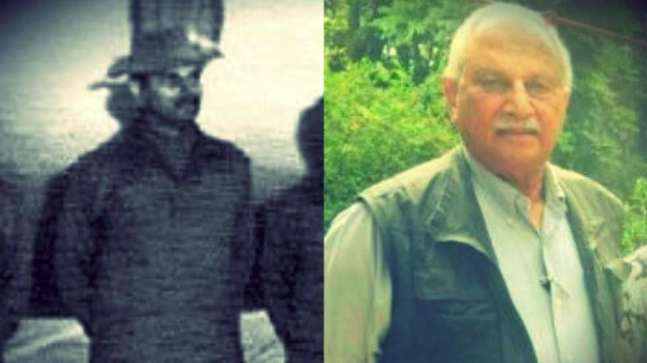
Air Marshal Cariappa in 1965 as a prisoner of war and today.
On 22 September 1965, a 26-year-old Indian Air Force squadron leader, in his Hawker Hunter fighter jet, ejected after a hail of Pakistani groundfire near Lahore ripped through his jet. Captured and taken as a prisoner of war, he would be repatriated four months later. But even in the fraternal landscape of the military, the young pilot was known for his illustrious lineage. He was “Nanda” Cariappa, son of a former Army chief who would go on to become India’s second Field Marshal, Kodandera Madappa Cariappa.
Now nearly 80, the Air Marshal lives a very quiet retired life in the hills of Karnataka’s Kodagu (formerly Coorg) at his famous father’s verdant hill abode, Roshanara, nestled between rolling hills and Madikeri town.
Cariappa Jr. and his wife Meena don’t have much time for politicians or politics, but couldn’t have been surprised when the Field Marshal’s name was invoked at a rally by Prime Minister Modi to shame the Congress, an attack that has erupted into an unsurprising controversy of its own given the errors that embellished the broadside.
For the Field Marshal’s son though, there are more urgent things to attend to than political quarrels in their state. Cariappa Jr. did, however, attempt to draw Prime Minister Modi’s attention last year, but it was to an issue that occupies the Cariappas above all else — the ecology and environment in Kodagu, the birthplace of the Cauvery, a river that local communities, including Cariappa’s own Kodavas, consider sacred.
‘Only God or you can save the Cauvery and the environment in Kodagu,’ the Air Marshal wrote in a letter to the Prime Minister in March 2017. He received a protocol reply inviting him to raise the issue with the Secretary of the Environment Ministry, and rues how the brief exchange could be indicative of a deep-rooted indifference to environmental emergencies in the country.
India Today found the Air Marshal has other concerns on his mind too, closer in keeping with his own life and career — the diminishing lure of the military upon youth in Kodagu, considered the ‘Land of Generals’, a district that has supplied generations of tough officers to the three armed forces, but primarily the Army. The Kodavas, native to Kodagu, were designated a martial race by the British in a list that included Sikhs, Marathas and Gorkhas.
“Unfortunately the lure of the armed forces has come down considerably. I’m aware of fewer young men and women who are keen on joining the army, navy or air force. It is certainly less than before,” Cariappa told India Today.
Serving on the Coorg Wildlife Society that fights an uphill battle to conserve the environment in the face of rampant tourism and commercial development, Cariappa’s eyes mist over when he’s asked what he’d like to say to the young generations of Kodagu, and indeed the rest of the country.
“All I would say to the young generation is that there is no finer profession than that of arms,” he said. “You have a sense of belonging. You live in a community where everyone cares for everybody else. Whether its at an air force base or on a ship or an army cantonment. In big cities, you may live in a ten story tower and never know your neighbours. You couldn’t care a damn. But here it’s all for one and one for all. Today the only binding force as I see it, is the integrity and loyalty engendered by the armed forces. There’s nothing else that compares.”
source: http://www.indiatoday.in / India Today / Home> News> India / by Shiv Aroor / Madikeri – May 04th, 2018
Harshika Poonacha is not one to shy away from a challenge, and reveals how the casting couch in Bollywood was the reason she stayed away. Harshika Poonacha
It has been 10 long years in the film industry for this Coorg beauty who started acting at the age of 15. She has at least 20 films to her credit across various languages including Kannada, Telugu and Malayalam. Actress Harshika Poonacha, who turned a year older on May 1 celebrated her birthday marking her decade-long special journey. She was also supposed to make her debut in Bollywood but backed off from it due to ‘casting couch’ incidents which have become a major concern in the industry, after a series of actresses came out in public, expressing their anguish against it.
Harshika speaks to Bengaluru Chronicle about her reason to opt out of Bollywood for now, and even shared her birthday plans.
“I was 15 when I started my journey in the industry. Then, I was juggling school and films, and continued to do so till I graduated in electrical engineering in flying colours. I never had the opportunity to celebrate my birthday, apart from a few charitable causes. But this time, I thought I should thank each and everyone who has been a part of my special journey with a special treat. I have been busy calling everyone to be a part of the celebration. It’s been so special that the smile on my face hasn’t disappeared for three days,” says Harshika Poonacha.
For someone with no godfather in the industry, it’s been a great achievement to survive this long. “Many have started their journey into the industry, but none survived this long. It was only Radhika Pandit who made her debut a year before me, who has stayed this long. There were several ups and downs in my career but I have managed to make an identity for myself. People, both in the industry and the lovely audience recognise me for my work, irrespective of how the films have faired at the box office,” she adds.
The actress also addresses the elephant in the room, the casting couch. “After a great experience working in the South Indian film industry, I had the opportunity to work in a couple of Bollywood films, names which I cannot reveal as I left them even before they took off. In fact, they were released and I am told that they ‘bombed’ at the box office,” she shares.
Ask her about the reason she has stayed away from an industry which is considered the best platform, she says that after finishing the photoshoot for the Bollywood projects, she was contacted by the manager and was told that they were expecting other ‘commitments’ too, and this is when she decided to drop them.
“As soon as I came to know about it, I decided to quit the project. I have worked with most of the leading production houses in the south, and I never felt such bad vibes while working with them, but unfortunately I had to come across such a thing even before I could start in Bollywood. Moreover, I have never taken any shortcuts and strongly believe in professional ethics,” Harshika adds.
Her debut Malayalam movie Charminar, has earned her appreciation even as the movie is set for a Dubai release in the coming days.
“It was only in the past four years, I have had the opportunity to work in films without also juggling studies. Previously school and college kept me busy, and I worked during breaks. Getting admission to a reputed college was another challenge as the cutoff percentage was so high. I managed both studies and films well. I would shoot in the day, and stay awake for long hours to study at night. It paid off when I passed engineering with a distinction,” she smiles.
The actress who a won state award for her supporting role in the film Tamassu, also awaits the release of her Kannada film Chitte.
source: http://www.deccanchronicle.com / Deccan Chronicle / Home> Entertainment> Sandalwood / by Shashiprasad SM / May 02nd, 2018
Coorg Assembly was constituted in 1924 and the only election was held in 1951
Though reduced to two Assembly segments after the 2008 delimitation, the hilly district of Kodagu from where the Cauvery takes its birth has a royal pedigree and boasted of its own Legislative Assembly to frame law for the local region and the people.
What is more, Coorg (as the district was then called), which was merged with Mysore State in 1956, also had its own Chief Minister to govern the province from 1952 to 1956.
The Legislative Assembly of Coorg was constituted in 1924 and the first and only election was held in 1951. The members represented 18 constituencies, which had 24 seats as six of the constituencies had to elect two members each.
The constituencies were Sanivarasanthe (2 seats), Somwarpet north and south, Fraserpet, Sunticoppa (2 seats), Mercara town, Murnad, Mercaranad, Srimangalanad (2 seats), Hudikeri, Berriathnad, Ponnampetnad (2 seats), Virajpet town, Virajpetnad (2 seats), Ammathinad, Siddapur (2 seats), Napoklunad, and Bhagamangalanad, according to the Election Commission of India data.
Of the national parties, only the Indian National Congress and the Communist Party of India were represented and 15 seats were won by the INC and Independents won 9 seats. While the 15 councillors represented the prevailing majority view that Coorg should merge with Mysore, the 9 Independents were against the merger. There were 60 candidates in fray and the number of voters was 1,38,440 of whom 87,947 exercised their franchise (63.53%).
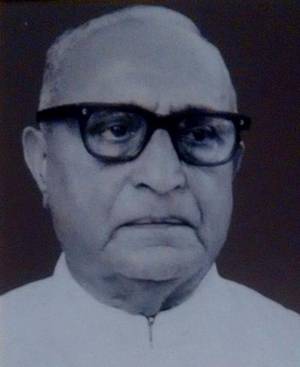
According to the district gazetteer published by the State government, the Indian Constitution recognised Coorg as a Part C State and thus it was entitled to posses a responsible government. This came into vogue in 1952 and the post of Chief Commissioner also continued and C.M. Poonacha, who was elected to the Coorg Legislative Assembly from Berriathnad, was the first and only Chief Minister of Kodagu.
When the State Reorganisation Commission recommended the merger of Coorg with the new Mysore State, Coorg became one of the districts on November 1, 1956 and Poonacha became a Minister in the S. Nijalingappa Cabinet.
He later became a Rajya Sabha member (in 1964) and was elected as MP from Mangalore Lok Sabha seat in 1969 (Kodagu was then attached to the Mangalore Lok Sabha constituency) and went on to hold different portfolios, including that of Minister of Railways.
C.P. Muthanna, son of Poonacha, recalled that there were hundreds of administrative entities, including princely States, at the time of Independence and they wanted to merge them into larger States to create a more cohesive administrative unit. “Since my father was the Chief Minister of Coorg at that time, there were many — keen on maintaining Coorg’s distinct identity — who imagine it was my father responsible for merging Coorg with Mysuru State.”
source: http://www.thehindu.com / The Hindu / Home> News> States> Karnataka / by R. Krishna Kumar / Mysuru – April 29th, 2018
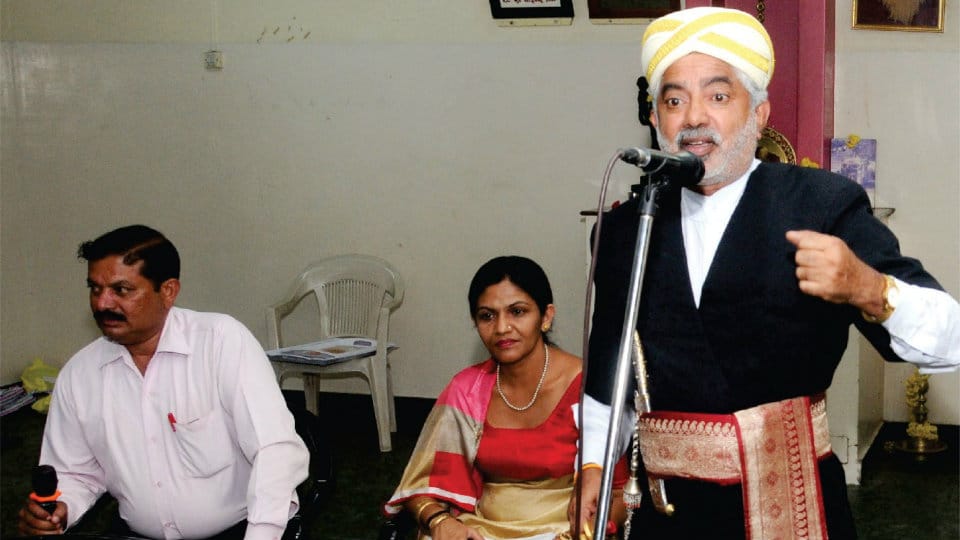
Observing that it would not be wrong to say that Appacha Kavi was a treasure of knowledge, writer Addanda Cariappa said that it was indeed a fortune to get an opportunity to speak about the great Kodava poet and writer.
He was speaking at Amara Kavya musical programme organised by city’s Shree Kaveri Kodagu Mahila Sangha as part of Appacha Kavi’s 150th birth anniversary at Kodava Samaja in Vijayanagar 1st Stage here on Sunday.
Noting that Appacha Kavi was the greatest of Kodagu poets, Cariappa said that some of the Kodagu writers’ plays were comparable with that of Shakespeare and Kalidasa.
Pointing out that Appacha Kavi is widely known as Kalidasa of Kodagu, he said that the writer was the first to script plays in Kodava language based on Mahabharatha and Ramayana epics.
Stating that Appacha Kavi’s writings were not limited to Kodagu alone, he said that the Kodava writer stands among renowned writers and philosophers of the world.
Madrira Sanju Belliappa rendered Appacha Kavi’s songs while Addanda Cariappa and Anitha Cariappa performed the musical feature.
The duo was assisted by Srinivas on the keyboard, Chandru on the tabla and Andira Kusum Madappa.
Earlier in the day, a food fest and funfair which featured a variety of entertainment including fun games was held.
Retired DCP and Kodava Samaja President Balliyamanda M. Nanaiah inaugurated the day-long event.
Kodava Samaja Cultural and Sports Club President Machimada P. Nanaiah, Shree Kaveri Kodagu Mahila Sangha President Jerry Ponnappa, Vice-President Bollu Kuttappa, Secretary Kavya Kuttappa and others were present.
source: http://www.starofmysore.com / Star of Mysore / Home> News> April 2018
Yuki Bhambri achieved a career-high rank of 83 in men’s singles and Rohan Bopanna is the French Open mixed doubles champion.
AFP
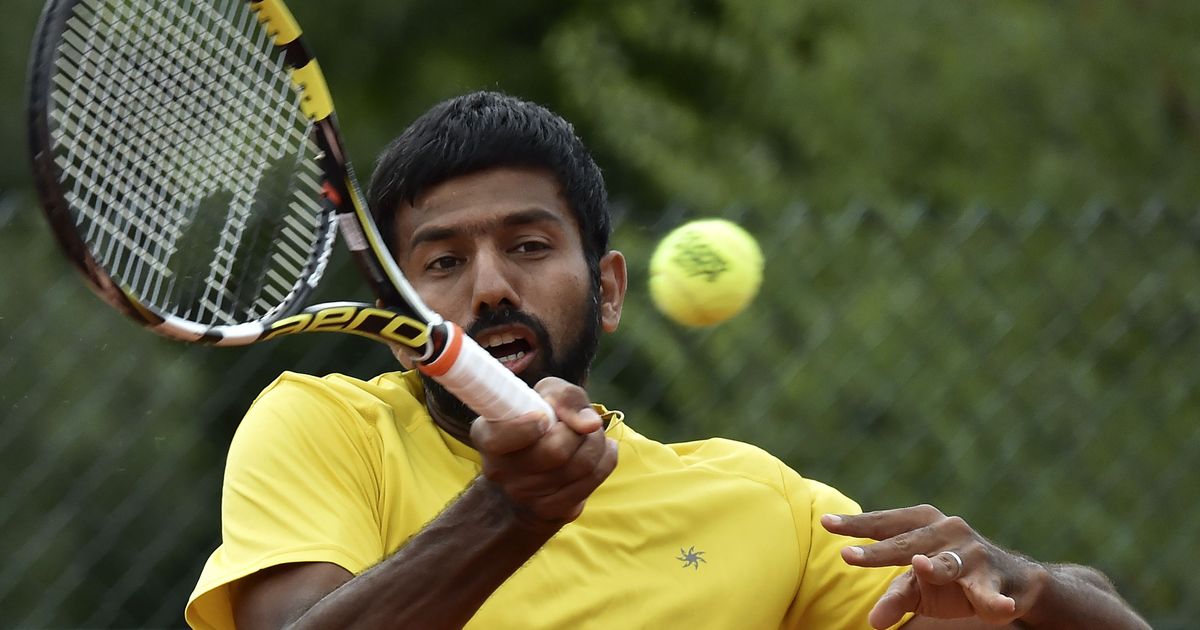
The All India Tennis Association (AITA) has nominated country’s top singles player Yuki Bhambri and doubles expert Rohan Bopanna for the Arjuna award.
AITA Secretary General Hironmoy Chatterjee confirmed that they have nominated the two players.
Yuki recently reclaimed his place in top-100 after a string of impressive performances, achieving his career-best rank of 83.
“It’s an honour to be nominated. It’s acknowledgment of my hard work,” said Yuki.
Bopanna, who had won the French Open mixed doubles title last year with Canadian Gabriela Dabrowski, was nominated last year after the deadline had passed.
Since only one athlete is presented the award from a discipline, most likely it will be Bopanna who will bag the award if a tennis player gets it this year.
Winning a Grand Slam is equal to winning a World Championship as per the points system.
“There are definitely many players who deserve it and Rohan is one of them. He has done well over the years,” said Yuki.
source: http://www.scroll.in / Scroll.in / Home> Indian Tennis> The Field / April 27th, 2018
Getting my name on the voter list was no hassle at all, especially since my parents are always on top of such things.
If we want to better our lifestyles, then voting is a huge step in that direction.
It is important to remember that the step we take in less than a month’s time (to vote) will determine what happens for the next five years at least.
It may be just one day and just one act of casting a vote, but that will decide how much the chosen candidate does to make the city safer and better to live in.
The only way to secure a better future is to vote in large numbers.
I think that doesn’t happen in big cities like Bengaluru because people don’t really know who to vote for. We read so much negative news and wonder where the people we elected are at such times, and what they are doing to ensure that these things don’t happen. I think that that attitude deters people from voting.
Having said that, voting for the right person is the only way to solve this problem.
source: http://www.timesofindia.indiatimes.com / The Times of India / News> Entertainment> Kannada> Movies> News / by Dhwani Desai / TNN / April 22nd, 2018
The issue was discussed at a meeting of Federation of Kodava Samajas at Balugodu
Madikeri:
The Federation of Kodava Samajas has unanimously decided to take over the administration of the English Medium High School at Nariyandada Village near Cheyyandane in Kodagu District. The decision was taken at the Federation’s meeting held on Apr. 12 at its headquarters at Balugodu near Virajpet.
The school was established decades ago in a 15-acre land that was donated by patrons to further the cause of education. The school has celebrated its golden jubilee and the English Medium was started five years ago. The decision of the Federation of Kodava Samajas comes at a time when there is a move to hand over the school to a religious mutt by citing lack of strength.
At the Federation meeting, President Kallichanda Vishnu Cariappa said that some vested interests were supporting the move to hand over the school to the Mutt against the wishes of the land donors.
Vishnu Cariappa said that if the school management committee passes a resolution that the school should be handed over to the Kodava Samajas instead of the religious Mutt, the Federation of Kodava Samajas is ready to take over the responsibility of taking over the school administration.
Addressing the meeting, Cheyyandane Kodava Samaja President and the President of Nariyandada High School Development Committee Chenanda Suresh Nanaiah informed the meeting about the decision of a preliminary meeting that was earlier held where a decision was taken to hand over the school to a Mutt.
Responding to this, members unanimously announced that if the school management committee hands over the school property, all the Kodava Samajas led by the Federation were ready to take over the school administration and they would not allow the move to hand over the educational institution to the Mutt.
The Bangalore Kodava Samaja offered to take over the school administration. Later the meeting decided to take a final call regarding the issue after the election.
It was also decided to hold the Annual General Body Meeting of the Federation in the month of June. This apart, the new members for Kodava Pommakkada Koota were selected.
Honorary President of Federation of Kodava Samajas Mathanda Monnappa, Vice President Malachira Bose Chittiappa, President of Bengaluru Kodava Samaja Mandeyada Ravi Uthappa, Former President Mallengada Dada Belliappa, Secretary Shankari Poovaiah, Joint Secretary Kodanda Sannu Uthappa, Editor-in-Chief of Star of Mysore and Mysooru Mithra Kalyatanda B. Ganapathy and others were present.
source: http://www.starofmysore.com / Star of Mysore / Home> News / April 2018
If there is a word that can describe Ashwini Ponnappa’s present state of mind, it would be tranquil. At the moment, the doubles shuttler is sorted in her head and clear in her heart. The recent success at the Commonwealth Games (CWG) has only contributed positively to the cause.
The Bangalore player, who impressed by playing four matches in a day and winning medals at Gold Coast, said this edition of the CWG was extra special, simply because of the way the team played and won together.
“This one was special, extremely special. We won our first team gold and the atmosphere in the team was all very positive. Everybody was giving their best, trying to do well for the country. It felt good to be a part of the team. My first CWG in 2010 was special for obvious reasons and on top of it, we had won doubles gold,” Ashwini told TOI.
However, the World Championships bronze medallist felt there was a lot more she could do.
“Although it was India’s best ever show in the CWG, personally, I could have done better. I am one of the senior-most players in the team now and I feel I could have contributed more than what I did by pushing more in my matches and sharing a lot more insights with the juniors. Personally, I feel that me and my partners could have done better,” Ashwini, who won the women’s doubles bronze with N Sikki Reddy, said.
Her efforts in Gold Coast were so remarkable that even coach Gopichand praised Ashwini in one of the felicitation functions after the Games. Gopi called Ashwini the real champion of the team.
“I am grateful to Gopi sir for saying all the good things. He was generous with his comments, but I would say the whole team did well and right feedback from Gopi sir helped all of us,” she said.
Ashwini, who had a long partnership with Jwala Gutta, now looks settled with Sikki and Satwik Rankireddy in women’s and mixed doubles respectively.
“I would say it is going good for me. I am happy with the way we played and hope to do better with them. It’s good to have left the partnership decision to the coach (Tan Kim Her). As long as he sees us having the potential to do well as partners, we’ll definitely be playing together (with N Sikki Reddy and Satwik Rankireddy).”
She admits that things were not easy after her split with Jwala, two years ago, but with time, things are falling in place for her.
“Initially it was tough as I was recovering from dengue so I was pretty low. I wasn’t feeling strong. A lot has happened during the two years. I have changed partners, got married, and become physically and mentally much stronger,” said Ashwini, who got married to businessman and model Karan Medappa last year.
source: http://www.timesofindia.indiatimes.com / The Times of India / Home> News> Sports News > Badminton News / by Tushar Dutt / TNN / April 20th, 2018
WELCOME. If you like what you see "SUBSCRIBE via EMAIL" to receive FREE regular UPDATES.
Read More »