Category Archives: Famous Personalities of Kodagu / Coorg

Rotary Club of Bangalore to celebrate Education through Art – Kala for Vidya

Annual art show at Taj West End from February 24 to 26

Bengaluru, Karnataka :

Rotary Club of Bangalore (RCB) will be showcasing its annual art exhibition Kala for Vidya on Friday, February 24, at The Taj West End – Art Corridor.

The event is to be inaugurated by Ms. Shefali Vaidya, the eminent columnist and Mr. Prasad Bidappa, the fashion guru, guests of honour.

26 prominent Indian artists have joined hands with RCB along with The Taj West End for the cause, the education of economically weaker section children. The Art Show will be on display February 25th and 26th, 2017, from 11.00 a.m. to 8.00 p.m. for art lovers to enjoy and contribute.

‘Rotary club of Bangalore has a long history of service projects. We have constructed 40 government primary schools, run our own high school, build toilet blocks, and similar projects. A successful Kala for Vidya show will mean one more step in the direction of making India free of illiteracy.

This initiative by Rotary Club is part of the larger effort to bring in underprivileged children into the mainstream through education’, said Rtn. President Ranga Rao, RCB. He further added “What is special about this show are the fine artists coming to partner with us for the cause. Well-known artists such as Gurudas Shenoy, Milind Nayak have been our source of inspiration for us to sustain the cause for over 9 years generating smiles on the faces of the children of rural India.”

Mr Somnath Mukherjee, the General Manager of Taj West End,’ The Taj West End has always aimed to showcase the finer things in life and the Art Corridor is a perfect example of it. We have partnered with RCB for Kala for Vidya in the past as well and is an extension for the support we provide for artists’.

Rotary club of Bangalore is 82 years young and has an enviable spectrum of service projects. We have partnered in running the Rotary TTK blood bank, significant dialysis presence, inculcate solar and green values in rural areas, and many other socially relevant projects.

source: http://www.indiaprwire.com / IndiaPRWire.com / Home> Healtcare-Hospital, Childrens related News / February 20th, 2017

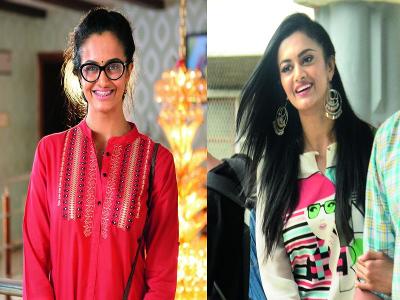
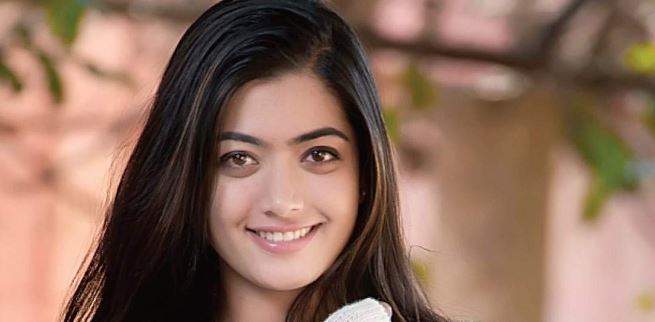
A Simple Shubra SEENasation

The lissome Coorg beauty took a breather after Vajrakaya, and is now back as the love interest in this new Kannada film.

Shubra Aiyappa
Shubra Aiyappa

Two years ago, at almost six feet, a svelte and beautiful Coorg beauty towered into Sandalwood and created waves, and “simply” wowed audiences in a song. She then went off the radar for a bit.

Now, back as the love interest of John Seena, Shubra Aiyappa hopes for some more tall claims. Her ‘John Seena’ however has nothing to do with the WWE popular wrestler John Cena. It’s just the title of the upcoming directorial venture of Simple Suni of the Simple Aag Ondh Love Story and Bahuparak fame.

The model-turned-actress Shubra makes a comeback after two years and speaks to Bengaluru Chronicle about her love for John Seena, and what made her wait for a while despite the huge popularity she attained after her short and sweet special appearance in Vajrakaya’s famous song No Problem alongside Shivanna.

“My second film in Kannada is very different from my earlier one, as an actress. I had never expected that first-ever song in Kannada featuring me along with the great Shivarajkumar Sir would become so popular, and would go onto be the number one song of that year. That is so so wonderful.”

Though, I play the love interest in my John Seena, the character I am portraying is very interesting, though revealing any more about her would spoil the whole fun of the movie,” says Shubra, adding that it will be a complete transformation for her.

On why she chose to wait for some time despite her huge popularity, the actress feels that she is not a person who will do something just because she has to, but only when she wants to. “I love my craft so much that I will be a part of something if I have a connect with it. When the first film came to me, it was very exciting. I knew that there would not be too much of a screen presence but sharing the screen space with Shivarajkumar Sir, playing his love interest, and also the song was a great debut,” Shubra says.

She admits that she did get a lot of offers, but did not accept them out of choice. “After doing a film of that level, it only made sense to either do something on par with it or to wait for something higher,” she says. In a first for her, she will be lending her own voice in John Seena.

“I got many calls and enquiries but nothing got caught my attention. The numbers are irrelevant, and also, if I choose the wrong film, it would be difficult to bounce back as history has seen such actresses typecast.

Hence, I have been a little more careful with the choice of movies, and decided to take a break for something after Vajrakaya. I got an offer that involved Suni Sir for his next directorial. He has such a great reputation since Simple Aag Ondh Love Story, and the kind of films he has been making are different. Once I heard the fantastic script, I had to accept it,” she adds.

With the shoot in progress, the actress is doing her home work for John Seena — there are strict instructions at home to speak only in Kannada, amongst a huge to-do list.

“Featuring in the No Problem song, as a beautiful girl was easier for me, as I was a model. Now working for Suni has been very great. He is quirky at work, and there is never a dull moment,” she says.

The actress thanks her modelling days for helping her to a great extent when she took up films. “I started modelling at 15, and have worked for almost all the designers in India, and walked on the international catwalk as well. I am certainly not over-confident, but modelling helped me face my fears (in front of the camera). When I started doing ads, I was identified, and I was also interested in doing films as it allows me to explore different characters and evolve,” Shubra explains.

Before signing off, the actress who loves dancing says that her parents have been the greatest support for her, and post No Problem, they have changed their caller tunes to the song that saw her catapult to fame. “Even now, they help me with rehearsals at home as they know Kannada very well,” she ends.

source: http://www.deccanchronicle.com / Deccan Chronicle / Home> Entertainment> Sandalwood / by Shashiprasad SM – Deccan Chronicle / March 01st, 2017

Prasad Bidapa does his bit for art for a cause in Bengaluru

BidappaKF28feb2017

The city’s art connoisseurs were in for a treat early this week, when US-based Sri Lankan artist Geramin Sebastian La Brie held a charity exhibition of her work.

The proceeds of the show were in aid of underprivileged children suffering from cleft lip and palate, and art lovers wasted no time in picking up the paintings.

The show was curated by Rubi Chakravarti and supported by Deutsche Cleft’s Regional Director, South Asia, Dushyant Prasad, and Lalit Sanghvi.

source: http://www.timesofindia.indiatimes.com / The Times of India / News> City News> Bangalore News / TNN / January 05th, 2017

India needs practical national security doctrine: Marshal K C Cariappa

Cariappa said the need for such a doctrine is necessary in the face of having a nuclear-armed neighbour, Pakistan.

Former Air Marshal K C Cariappa on Sunday emphasised on the need to have a “practical” national security doctrine and a “robust” nuclear policy to “reassure citizens that appropriate measures are in place to protect them.” Speaking at the second Flying Officer Nirmal Jit Singh Sekhon memorial lecture at Ahmedabad, he said a strategic defence doctrine should be put in place and endorsed by all political parties.

“We do not have a national security doctrine. The existence of such a document will dissuade adventurism and will reassure our citizens that appropriate measures are in place to protect us,” Cariappa said.
“A credible message must be conveyed to our people. A practical national security strategy and robust nuclear policy must be endorsed by all political parties,” the former Air Marshal said.

Cariappa said the need for such a doctrine is necessary in the face of having a nuclear-armed neighbour, Pakistan.

“They have created forces that destabilise our society by encouraging traditional antagonism… we need to tailor our strategic defence doctrine to create long-term measures towards a deterrent based on severe retribution as there can be no scope for indecisiveness,” he said.

Speaking on the need for a robust nuclear policy, Cariappa suggested that India’s nuclear forces must be placed under a strategic forces commander, who will be answerable to the Prime Minister, and will be the ultimate authority to launch the first strike in foreign territory.

“A command control and communication centre must be built. Our targeting philosophy must be involved and redirected to two notices, but yet the message must be loud and clear that this has been done, and that in fact our targeting policy exists,” he said.

Speaking on ‘Civil Military Relations’, former Commodore C Uday Bhaskar pointed out that there exists very little contact between India’s political establishment and military, and said the Indian Parliament exhibits “almost zero interest” in matters related to defence.

“The political establishment of India does not really have interest in military or the institution. There is a reason. Much of politics is now caught up in electoral cycle and military as an institution till recently did not represent a vote bank,” he said.

The fear of “coup” led to an understanding that the military should be kept outside the structures of formal governance, he said. “The defence ministry has ensured that military is caught in a maze of rules and regulations. And my reading is that bureaucracy does ‘Yes Minister’, keeps the fear of coup alive,” Bhaskar said at the event organised by the Air Force Association’s Gujarat chapter.
“Institutionally, Indian military has been treated as an untouchable, and unfortunately, they have not found an Ambedkar till now,” he said.

Bhaskar, however, said things have changed with OROP, and with retired military personnel becoming a force to reckon with in the Punjab Assembly elections.

“There seems to be a greater degree of politicisation of military’s retired community,” he said.

Bhaskar further said the Centre is cognisant of this and is taking into consideration various recommendations including those pointed out in the Kargil Committee Report.

Meanwhile, an expert on defence procurement, Laxman Behera, who delivered a lecture on ‘Make In India and Defence Production’, said despite government making positive efforts to involve private players to engage in defence production, a lot of concerns remains which need to be addressed.

He said government sector still wins major contracts for defence manufacturing, leaving out private players who have invested in infrastructure for the same.

“From private sector perspective, although government has undertaken a lot of reforms, no major contract has come to private sector so far. The private sector is desperately waiting for major contracts. The government will have to walk the talk and award some contracts to them,” he said.

He also said the component of capital expenditure in budgetary allocation to defence should go up, as a majority of money is spent on manpower.

“Over the last several years our budget is skewed towards our manpower. More than 42 per cent is for salary and manpower, and money for modernisation is sinking day by day,” he said.

“It is either stagnant for the last four years or is declining. So hopefully when the budget is presented in February, we will see some hike in capital expenditure, or it will be very difficult to sustain ‘Make in India’,” Behera said.

source: http://www.indianexpress.com / The Indian Express / Home> India / by PTI / Ahmedabad – January 29th, 2017

Karnataka win again

A strong all-round performance from Karnataka gave them a four-wicket victory over Services in the Vijay Hazare Trophy here on Sunday.

Half-centuries from Robin Uthappa, Pavan Deshpande, Aniruddha Joshi and a solid bowling show from pacer Prasidh Krishna spurred Manish Pandey’s side.

Having won the toss and put Services into bat, Prasidh (3/39) gave his side a good start removing opener Nakul Verma (4) and Amit Pachhara (7) with the scoreboard reading 20 for two.

Thereafter, the Karnataka bowlers continued to apply the pressure on their opponents and despite a few of their batsmen getting starts, Services could only muster 231 for seven in their 50 overs.

Karnataka were rocked in the beginning of their chase by Suraj Yadav who accounted for Mayank Agarwal (0) and R Samarth (1).

Skipper Pandey (23) and Robin Uthappa (51) rebuilt the innings before Deshpande (73) pushed them closer.

Cameos from Joshi (50 off 37) and J Suchith (24 off 18) ensured Karnataka overhauled the target with 35 balls to spare.

Brief scores

Group A: Punjab: 243 all out in 49.4 overs (Shubman Gill 121, Gurkeerat Singh 58; Pritam Das 3-59, Arup Das 3-27) lt to Assam: 247/7 in 48.4 overs (Pallavkumar Das 48, KB Arun Karthik 63, Amit Verma 65; Sandeep Sharma 3-52).

Vidarbha:
251/5 in 45 overs (Faiz Fazal 58, Apoorv Wankhede 62 n.o., Akshay Karnewar 54 n.o) bt Baroda: 229 all out in 42.4 overs (Aditya Waghmode 79, Krunal Pandya 43, Pinal Shah 36; Yash Thakur 3-64).

Railways: 252/7 in 50 overs (Pratham Singh 51, Arindam Ghosh 76; Harshal Patel 2-58, Mohit Sharma 2-60, Rahul Tewatia 2-46) bt Haryana: 181 all out in 38 overs (Rahul Dagar 57, Kadam 4-38, Amit Mishra 2-21).

Group B: Himachal Pradesh: 339/8 in 50 overs (Prashant Chopra 159, Paras Dogra 77, Sumeet Verma 36; Nitin Saini 3-63, Kulwant Khejroliya 3-61) bt Delhi: 154 all out in 37 overs (Sarthak Ranjan 37, Dheeraj Kumar 5-24, Pankaj Jaiswal 3-24).

Maharashtra: 311 all out in 50 overs (Ruturaj Gaikwad 79, Kedar Jadhav 71, Naushad Shaikh 57, Jalaj Saxena 4-51) bt Kerala: 189 all out in 39.5 overs (Mohammed Azharuddeen 50, Iqbal Abdulla 60; Pradeep Dadhe 4-33, S Kazi 3-25).

Uttar Pradesh: 159 all out in 36 overs (Sarfaraz Khan 31, Rinku Singh 37; Aswin Crist 2-38, M Mohammed 2-34, Rahil Shah 2-25) lt to Tamil Nadu: 160/3 in 27.5 overs (Dinesh Karthik 56 n.o., Vijay Shankar 58 n.o.).

Group C: Madhya Pradesh: 127 all out in 40.2 overs (Saransh Jain 56; D Siva Kumar 3-17, Bandaru Ayyappa 3-33) lt to Andhra Pradesh: 131/8 in 37.5 overs (Hanuma Vihari 58 n.o.; Ishwar Pandey 3-31).

Gujarat: 277/9 in 50 overs (Parthiv Patel 80, Priyank Panchal 57; Rituraj Singh 3-61) bt Goa: 199 all out in 45.5 overs (A Desai 61, Snehal Kauthankar 64; Rujul Bhatt 5-38, Ishwar Chaudhary 3-34).

Rajasthan: 181/9 in 38 overs (Mahipal Lormor 49; Shardul Thakur 3-47) lt to Mumbai: 184/5 in 29.1 overs (Akhil Herwadkar 50, Shreyas Iyer 41, Tajinder Singh 3-45).

Group D: Jharkhand: 243/9 in 50 overs (M S Dhoni 129, Shahbaz Nadeem 53, Anand Singh 32; Abhuday Kant Singh 4-33, Pankaj Rao 3-27) bt Chattisgarh 165 all out in 38.4 overs (Varun Aaron 3-26, Shahbaz Nadeem 3-36).

Services: 231/7 in 50 overs (Diwesh Pathania 49, Suraj Yadav 44 n.o., Abhijit Salvi 30, Shamsher Yadav 37; Prasidh Krishna 3-39 Aniruddha Joshi 2-32) lt to Karnataka: 232/6 in 44.1 overs (Pavan Deshpande 73, Robin Uthappa 51, A Joshi 50 n.o.; S Yadav 2-37).

Hyderabad: 312/7 in 50 overs (Akshath Reddy 154, Kolla Sumanth 91; Kushang Patel 3-54) bt Saurashtra: 199 all out in 38.5 overs (Prerak Mankad 104, Jaydev Shah 34; Chama Milind 4-30, Ravi Kiran 2-46, Mehdi Hassan 2-44).

source: http://www.deccanherald.com / Deccan Herald / Home> Sports / Kolkata Agencies / February 27th, 2017

Doubles ace shuttler Ashwini Ponnappa reveals reason for improved net play

Ashwini Ponnappa (File photo) (Getty Images)

The 27-year-old from Bangalore, who won a gold and a silver at the 2010 and 2014 Commonwealth Games respectively beside clinching a bronze at the 2011 World Championship along with Jwala Gutta, had a good outing at the Syed Modi Grand Prix Gold recently.

Indian women’s doubles shuttler Ashwini Ponnappa on Thursday said former coaches Tom John and Indonesian Yusuf Jauhari believed in her capability and played a major role in improving her net play.

“There are two coaches who have influenced me a lot to improve my net play over the years. Initially it was Tom sir and then Yusuf sir played huge roles in this regard. The best thing about them was they believed in my capability as a net player,” she said. The 27-year-old from Bangalore, who won a gold and a silver at the 2010 and 2014 Commonwealth Games respectively beside clinching a bronze at the 2011 World Championship along with Jwala Gutta, had a good outing at the Syed Modi Grand Prix Gold.

Ashwini, who decided to split with Jwala and pair up with Sikki Reddy in women’s doubles, reached the finals at the Lucknow event and also stunned World No. 4 Denmark pair of Joachim Fischer Nielsen and Christinna Pedersen in the semifinals of mixed doubles event along with her partner B Sumeeth Reddy.

Ashwini said though the Malaysian doubles coach Kim Tan Her has played a huge role in improving her game, but there are many other coaches who have done the same. “Of course, Tan has played a huge role, but there are other coaches who have also played their roles. In fact, a lot of people has a role in developing a player,” she said.

Ashwini said a lot of junior players are going to benefit from Tan because he has the experience and his training is doubles specific. “A lot of junior players are definitely going to benefit a lot from Tan. He has got the experience and his training is doubles’ specific,” he added.

Talking about Sikki Reddy, Ashwini said both of them were still trying to figure out their style of playing. “We are still in the process of figuring out, for we have played just four tournaments so far, and playing with left-handed player like Sikki is a different experience. We are still figuring out whether to rotate a lot or play at the nets vice versa,” she said. “We have a good understanding at the court and it is only going to get better in the future.”

Talking about her encounter against Carolina Marin in singles match in Premier Badminton League, Ashwini said: She could have been stumped as she did not expect I would give a good fight to her,” she said. Ashwini also said it could have been difficult for Carolina to prepare for the match against her as she did not have any knowledge of her singles capability.

source: http://www.dnaindia.com / DNA, Daily News & Analysis / Thursday – February 09th, 2017

Ibnii Coorg first resort in India to be IGBC Platinum certified

Ibnii Coorg is nestled on 120 acres of which 50 acres is being used for coffee plantation

Ibnii Coorg, an eco luxe resort located in Coorg (Kodagu) district of Karnataka, has become the first hospitality project in India to receive the IGBC Platinum certification for energy and resource-efficient, sustainable, cost-effective buildings.

source: http://www.financialexpress.com / The Financial Express / Home> Lifestyle> Travel Tourism / by Steena Joy, Madikeri / February 21st, 2017

Ibnii Coorg, an eco luxe resort located in Coorg (Kodagu) district of Karnataka, has become the first hospitality project in India to receive the IGBC Platinum certification for energy and resource-efficient, sustainable, cost-effective buildings that impose minimal stress on the environment. The resort is also gearing to get its LEED (Leadership in Energy & Environmental Design) certification by April.

The Indian Green Building Council (IGBC), part of the Confederation of Indian Industry (CII) was formed in the year 2001.The rating systems are based on the five elements of nature (Panchabhutas) and are applicable to all five climatic zones of the country.

Ibnii Coorg is nestled on 120 acres of which 50 acres is being used for coffee plantation. The resort has just finished with its first coffee harvest. Speaking exclusively to FE Online, Dr Sherry Sebastian, director, Ibnii Coorg, informed, “In the last 60 years, no pesticides have been used on this land. So it is an ecological and biodiversity hotspot. Very few trees were cut during construction of Ibnii Coorg. We are also very actively involved in rainwater harvesting as we have three large water catchment areas. We harvest nearly five million litres of water every year. Apart from a waste management plant, we have a state-of-the-art Sewage Treatment Plant (STP) too to further minimise our dependency on fresh water. The treated water is used for landscaping and other utilities. Ibnii is also a vehicle free zone with only electric buggies used for internal movements. Guests are encouraged to walk around the resort.”

The resort also has introduced other ecological initiatives such as an inhouse tailoring facility where many articles are created out of recycled materials like shopping bags out of used cement sacks and bubble wraps; use of steel fruit and vegetable crates in the kitchens instead of the conventional plastic crates; use of drop pops in the restaurants in place of finger bowls for washing hands. The resort is also part of a new project with Madikeri town for making a road using recycled plastic from the resort.

Ibnii Coorg also has TieCop, its Environment Conservation Programme.

Dr Sebastian added, “We also want our supply chain to be eco sensitive – so we source only from vendors who have the same sensitivity towards the environment. Presently, we source the coffee for the resort from Halli Berri, a fourth generation all woman owned concern coffee estate in Chikmagalur with a similar vision towards sustainability, but soon we hope to be able to use our own coffee. We have a vegetable garden where we source most of the vegetables for our salads. Another bigger vegetable garden is being created which is expected to give us around 14 tonnes of vegetables.”

The resort has a robust waste segregation system where the organic waste is used in a vermicompost to generate high-yield, organic manure which is in turn used in the green house to grow fresh organic vegetables and fruits.

source: http://www.financialexpress.com / The Financial Express / Home> LifeStyle> Travel Tourism / by Steena Joy ,Financial Express, B2B / Madikeri – February 21st, 2017

Raj Chengappa re-elected President of Editors Guild

New Delhi (PTI) :

Senior journalist Raj Chengappa has been re-elected as the President of the Editors Guild of India.

At the Annual General meeting of the Guild on Saturday Raj Chengappa was unanimously re-elected as its President and Prakash Dubey as General Secretary, a statement released here said.

The Guild also elected Kalyani Shankar as Treasurer.

At the meeting, the Guild decided to take a fresh look at the criminal defamation law in India and explore legal options for seeking its abrogation, the statement added. PTI ADS DV

This is unedited, unformatted feed from the Press Trust of India wire.

source: http://www.indiatoday.intoday.in / IndiaToday.in / Home> News> PTI feed / February 19th, 2017

Rohan Bopanna savours authentic South Indian fare in Amsterdam

India’s doubles tennis player Rohan Bopanna couldn’t have asked for a better way to start his day in Amsterdam yesterday.

Far away from home, the Bangalorean enjoyed some authentic South Indian breakfast in the Dutch capital, where he participated in the Rotterdam Open.

BopannaKF18feb2017

The south Indian posted the above picture on his Instagram account yesterday with the caption: “Best kinda breakfast just before flying out to Marseille (France).

Thanks to our friend Kris and all the wonderful chefs for opening the restaurant early just for us to have some great south Indian breakfast at Saravanaa Bhavan here in Amsterdam. @jntennis #saravanaabhavan #Amsterdam #lifeontheroad #idly #filtercoffee.”

source: http://www.mid-day.com / mid-day.com / Home> Sports News> Tennis News / by A Correspondent / February 18th, 2017

Are Kodavas, who belong to a unique race, Hindus?

KodavasKF17feb2017

Are Kodavas (Coorgs) Hindus? The answer is both ‘yes’ and ‘no’. If one defines Hinduism as a way of life, then Kodavas are Hindus. If one looks at Hinduism from a rigid caste-centric angle, then Kodavas are not Hindus.

Sarvepalli Radhakrishnan (1888-1975), former president of India, who was one of the most erudite scholars of all times, had said: “Hinduism is not a religion, but a commonwealth of religions. It is more a way of life than a form of thought. The theist and the atheist, the sceptic and the agnostic may all be Hindus if they accept the Hindu system of culture and life. Hinduism insists not on religious conformity but on a spiritual and ethical outlook of life. Hinduism is not a sect but a fellowship of all who accept the law of right and earnestly seek for the truth.”

The concept of Hinduism as propounded by Radhakrishnan was lofty and incorporated the essence of the ancient Indian civilisation. But in the present era of ‘Mandal’ and ‘Kamandal’ politics, it is caste which determines the Hindu identity.

Kodavas are a unique race of people who live in Kodagu (Coorg, as the British called it), the smallest district in Karnataka. Very little is known about the origin of this community of warriors who have lived on the slopes of the Western Ghats of South India from time immemorial. This land-owning community known for its martial traditions, has a distinct culture that is strikingly different from that of the neighbouring cultures.

If caste is used as the yardstick to ascertain whether Kodavas are Hindus, then this small community, numbering less than two lakh, are certainly not Hindus because they do not belong to any Hindu caste and there is no caste system among the Kodavas.

Another important factor which characterises the Hindu caste system is the belief in the supremacy of Brahmanism. Judged from this yardstick too, Kodavas are not Hindus because there is hardly any role for Brahmins in the various Kodava ceremonies related to birth, marriage and death. It is the elders in the community who conduct all rituals.

Kodavas are basically ancestor and nature worshippers. Every Kodava is a member of a patrilineal okka (clan) that has descended from a common ancestor. The Karanava, the first ancestor of the clan, is revered as a god, and Kodavas worship the ancestral spirit, their Guru Karona.

While their ancestors are their guiding spirits, Kodavas consider their elders as their living guides. The youngsters greet their elders by touching their feet three times and the latter invoke their ancestors when they bless them.

Every ancestral home (ainmane) invariably has a kaimada, a small shrine nearby, where prayers to ancestors are offered. The ancestral homes face the east, and Kodavas start their daily chores by opening the main door of the house and saluting the sun in prayer. And idol worship is non-existent. A lamp (bolcha) or hanging lamp (thook bolcha) is lit, both at dawn and dusk, to invoke the blessings of the ancestors. The lamp is kept in the nellakki nadu bade (central hall in the ancestral home).

The sacred area around the lamp is empty and no idol or photograph adorns the space. The same goes for the space where meedi (offerings to the ancestors) is kept. Most of the important decisions are solemnised in front of the lamp. However, in recent years, in some ainmanes, framed photos of Hindu gods are kept in these sacred spaces.

There are no idols in the kaimada, the central place of ancestor worship, where the annual ritual of Karonang Kodpo is held in memory of the ancestors. A few kaimadas have figurines resembling humans, to represent their ancestors. To sum up, Kodavas believe that there is a direct link between the living and their ancestors.

Major deviation
Kodavas worship river Kaveri as water and not as an image. During Kaveri Sankramana to celebrate the birth of the river, goddess Kaveri is symbolically represented by a decorated coconut or cucumber.

Another major deviation from mainstream Hinduism is the practice of meedi offerings for ancestors which consist of food items, including non-vegetarian dishes like pork, the signature dish of the Kodavas. Along with the food, liquor is also offered to invoke the blessings of ancestors. This practice is inconsistent with the rigid notions of ‘pollution’ practiced by orthodox Hindus.

Though Kodavas had maintained their own religious identity of ancestor and nature worship, things began to change after 1600 AD with the advent of the Lingayat or Haleri kings in Kodagu. The Haleri Rajas built Hindu temples and appointed deva thakkas (temple headmen) to propagate their faith among the Kodavas. Tulu and Kannada-speaking Brahmin priests were brought from outside Kodagu to perform pooja at these temples.

Over the years, temples dedicated to deities such as Bhagavati or Muthappan have come up in Kodagu. These deities mainly belong to the neighbouring Kerala. Igguthappa, the god dedicated to rain and harvest, was also one such belonging to Kerala. Kodavas also worship a few spirit deities like kulika, pashana murthi etc who belong to Tulunad or Kerala.

In today’s circumstances, it is essential that we maintain our Kodava identity instead of trying to embrace mainstream Hinduism where we do not belong. The belief in ancestor and nature worship is much more rational and scientific, compared to belief in myths and rituals which are alien to Kodava religious practices. It is best they tribe remains Kodavas and not Hindus.

(The writer is a senior journalist and author based in Bengaluru)

source: http://www.deccanherald.com / Deccan Herald / Home> Panorama / by P T Bopanna / February 17th, 2017