Category Archives: Famous Personalities of Kodagu / Coorg

Minns names Charishma Kaliyanda as new digital and customer service parliamentary secretary, NSW Australia

Charishma Kaliyanda (second from right) is NSW’s new parliamentary secretary for customer service and digital government, emergency services and youth justice. (Photo: Facebook)

NSW Premier Chris Minns has appointed lower house member Charishma Kaliyanda as the state’s new parliamentary secretary for customer service and digital government, emergency services and youth justice, replacing Anthony D’Adam, who was sacked a month ago after labelling the state’s police commissioner a liar.

Elected to Parliament in 2023, Kaliyanda’s appointment comes as Minns and NSW Labor attempt to fend off growing criticism in several parts of Western Sydney that many local members simply don’t reflect the communities in their electorates or make it to junior ministries let alone cabinet.

While there are some high-profile exceptions like Treasurer Daniel Mookhey, Jihad Dib (Kaliyanda’s senior minister) and Industrial Relations Minister Sophie Cotsis, the composition of the first Minns ministry was notable for its Anglo-Celtic weighting.

Community diversity and preselection of state and federal candidates, especially from southwest and western Sydney, have become an increasing friction point across the Australian political spectrum, with Labor losing once safe seats like Fowler to local independent candidates like Dai Le after locals were sidelined for so-called captain’s picks like Kristina Keneally.

Fairfield, where Le whittled down Labor’s margins to just a couple of points as a Liberal state candidate, is somewhat of a case study in how and why migrant communities abandon major parties, with former Fairfield Labor mayor Frank Carbone also quitting his party to run for council on an independent ticket.

You can’t undo years of electoral neglect overnight, but you can make an effort to listen.

Indian diaspora is one of Australia’s fastest-growing migrant communities, now numbering close to 1 million, and the ties are strengthening.

Australia appointed its first consul-general in Bengaluru, Hilary McGeachy, in 2023, adding diplomatic muscle to the massive nation’s south, which includes the states of Karnataka and Telangana.

The capital of Karnataka is Bangalore (population 15 million), which positions itself, for better or for worse, as India’s Silicon Valley.

In an interview with Indian Link , a community publication founded in 1994, Kaliyanda says it “empowers and elevates the South Asian community in Australia, by telling their stories and unpacking their experiences in a nuanced and unbiased manner” reaffirmed her commitment to her community.

“I had thought deeply about what I will wear on my first day as an MP. I wore a blue sari from Karnataka, draped in the Kodava style, with a Waratah broach,” Kaliyanda told the community publication.

“I wanted to share that I will be bringing my whole self to this role and to the Parliament — my commitment to and love for my community in wearing the colours of NSW, and my pride in where I come from and the diversity of my community in wearing a sari specifically from where I was born and in the Kodava style.

“I did struggle with it because there wasn’t really a playbook for what to do and what was expected but I was encouraged to “be myself”, and so I wanted to share my authentic self with our broader community.”

Asked who gave her the best advice for the first time in the bear pit, Kaliyanda told IndianLink: “two Labor Party colleagues, Jihad Dib and Sophie Cotsis, who were very supportive and full of advice.”

“There’s a lot to learn, so take it slow and ask questions as much as you can, Jihad told me,” Kaliyanda said.

Take it slow? That just changed. Welcome to the ministry.

source: http://www.themandarin.com.au / The Mandarin / Home> Careers / by Julian Bajkowski (headline edited) / June 17th, 2024
How Smitha Kuttayya’s Kodava Dishes Bridge The Past And Present With Sustainability And Innovation

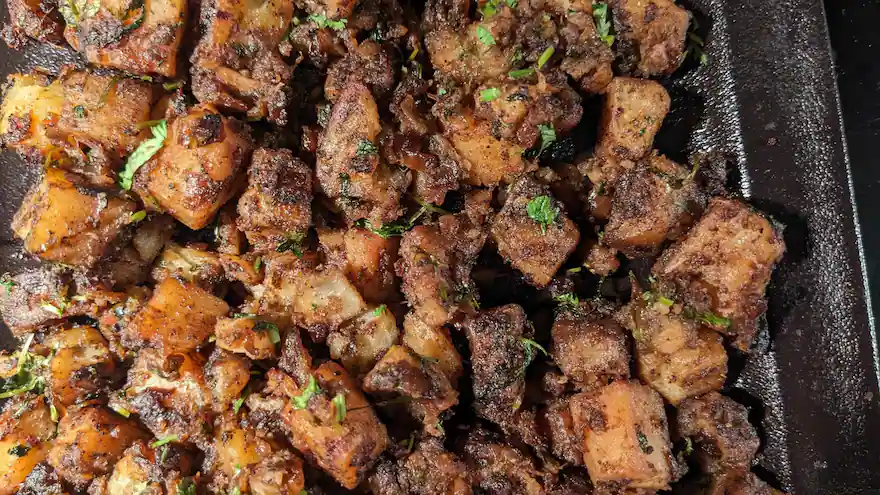
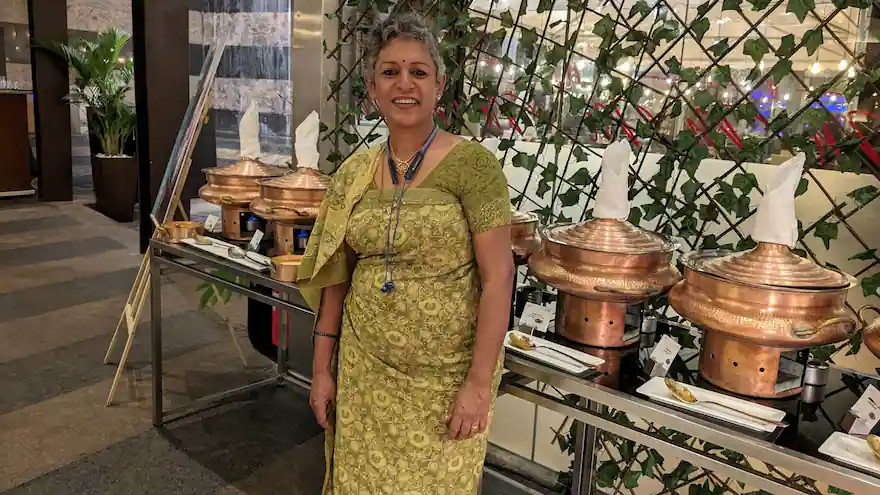
This pop-up at the Marriott had more than just the popular pandi curry or Coorgi pork curry. Drawing inspiration from yesteryear and her grandmothers’ kitchen in Coorg, home chef Smitha Kuttayya has made it her mission to keep Coorgi cooking traditions alive.   

In a world where fast food and standardised meals dominate, the value of traditional recipes and cooking methods with a focus on sustainability often seems overshadowed. Yet, for home chef Smitha Kuttayya, these traditions are more than just culinary practices; they are a bridge to the past, a way of preserving memories and cultural identity.

A native of Kodagu now residing in Chennai for 24 years, Chef Kuttayya has excelled in multiple roles throughout her career.

She is a celebrated Bharatanatyam dancer, a compelling writer, a dedicated teacher, an engaging storyteller, a successful entrepreneur, and a passionate home chef.

Each of these roles reflects her commitment to preserving her heritage while enriching her community with diverse talents. She has been a vibrant part of Chennai’s culinary landscape for over a decade and draws deep inspiration from her roots in Coorg and her grandmothers, who not only passed on their skills and recipes but also greatly influenced her passion for baking and cooking, which reflects in her brand, the Global Theeni.

Her journey from a humble baker to a champion of Coorg cuisine reflects a deep commitment to preserving culinary heritage while adapting to modern ecological needs. Drawing inspiration from yesteryear and her grandmothers’ kitchen in Coorg, Chef Kuttayya has made it her mission to keep these traditions alive. “In our family, cooking was always more than just a task—it was a form of storytelling,” she reflects. This storytelling aspect was evident in her recent Coorg cuisine pop-up at the Marriott Hotel Whitefield in Bengaluru, where Smitha Kuttayya showcased traditional Kodava dishes that included seasonal produce and were prepared adhering to sustainable practices.

Traditional Cuisines In A Modern World

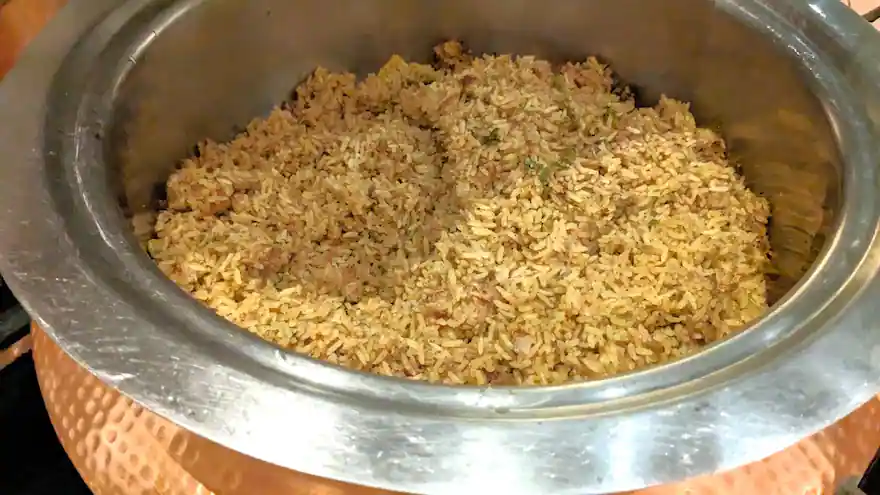
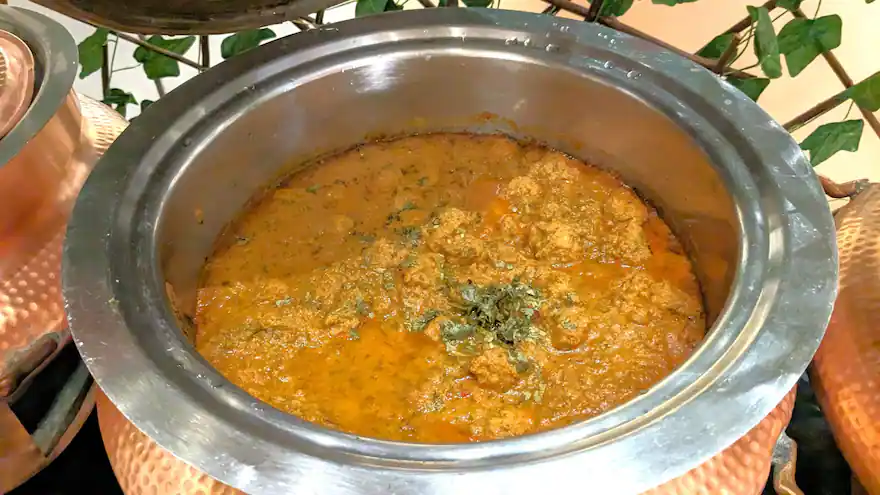
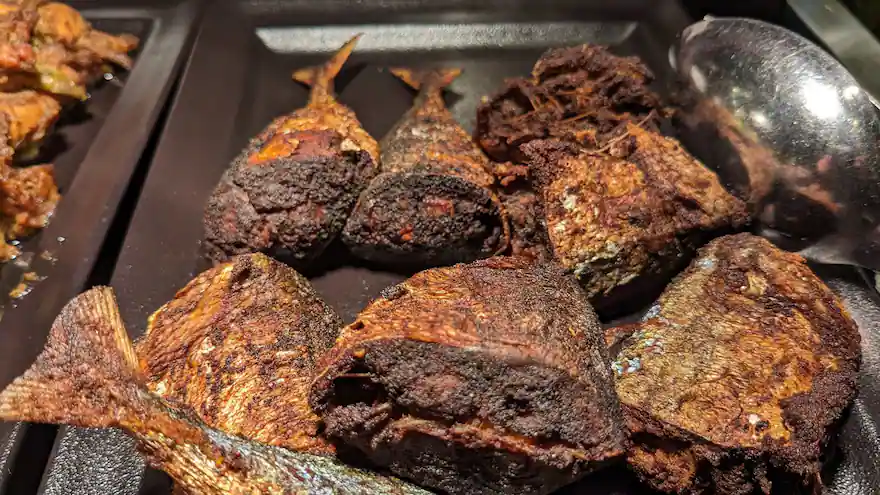
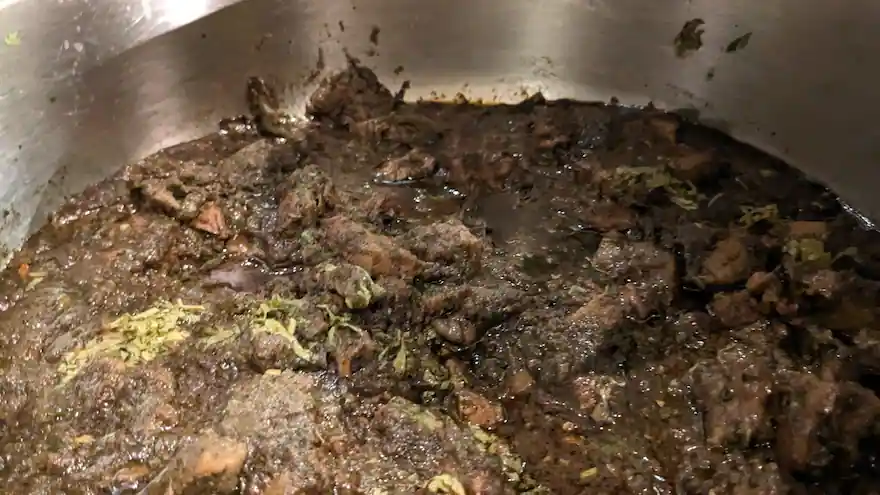
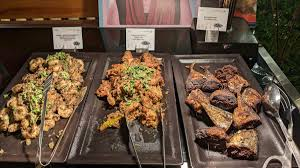
Traditional recipes, she believes, are more than just instructions for making food; they are a tapestry of memories, methods, and values passed down through generations. “These recipes are a bridge to our past,” she says. “They connect us to our ancestors and their way of life, which is why they carry such unique and irreplaceable flavours.” This pop-up at the Marriott had more than just the popular pandi curry (Coorgi pork curry). The buffet had a wide array of dishes like the koli barthad (chicken fry), fish fry (mackarel marinated in spices and kachampuli vinegar), mutton pulav, Kodava chicken curry, and, of course, the pandi curry.

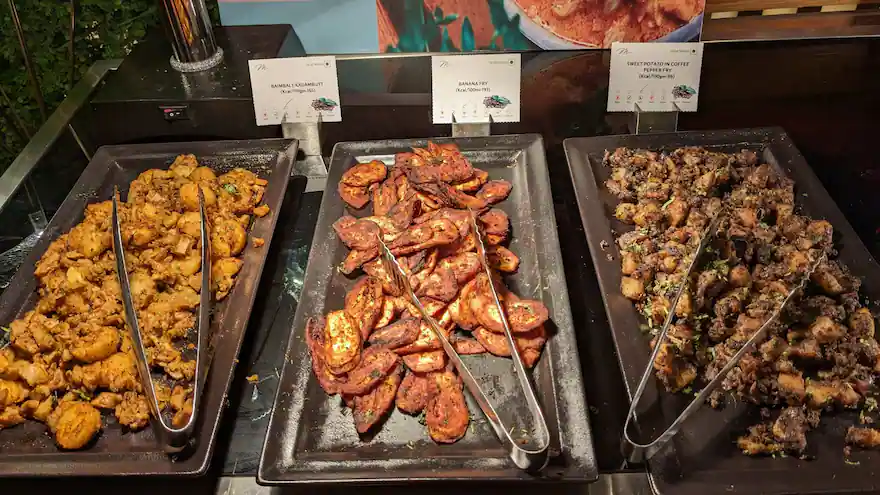
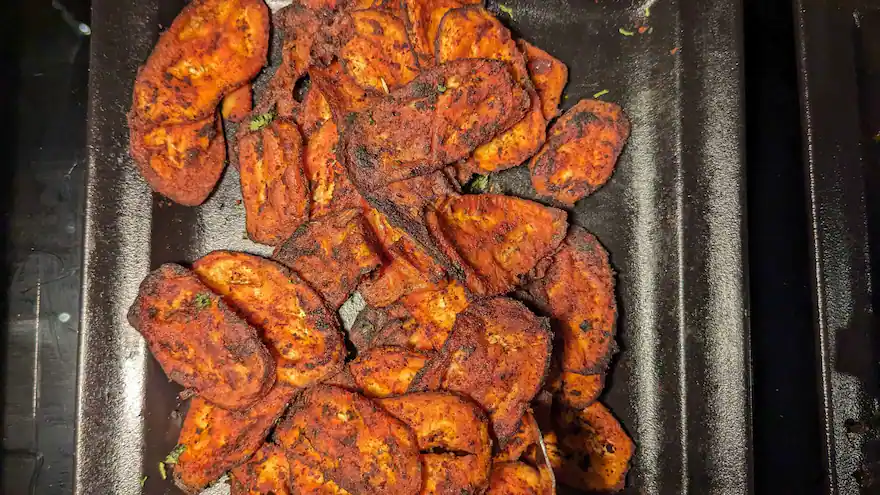
That’s not all. The vegetarians also had a wide selection of dishes that could confuse a Kodava too, as the community is well-known for their non-vegetarian fare. There was raw banana fry, which was made with the same marinade that was used for the fish fry. The baimbale curry or the bamboo shoot curry paired beautifully with the paaputtu (coarse rice semolina cake).

The seasonal kaad maange pajji, the bollari gravy (mangalore cucumber gravy), and the raw jackfruit pulav were a total hit among the diners. For her, maintaining traditional methods means adhering to the authentic ways of preparing and cooking dishes, even when modern shortcuts are available. “In Coorg cuisine, for instance, we don’t use tomatoes in our traditional recipes,” she explains. “We rely on natural souring agents like kachampuli (vinegar made from a fruit called Panapuli) or tamarind, which have been used for generations.”

Local Ingredients: The Heart Of Authenticity

Central to Chef Kuttayya’s approach is her unwavering commitment to local ingredients. For her, these ingredients, like wild mangoes, mushrooms, bamboo shoots, jackfruit, honey, jaggery, etc., are not merely components of a dish but symbols of a region’s cultural and ecological identity. “Local sourcing respects the origin and community, ensuring that what we prepare is a true reflection of our heritage,” she explains.

This philosophy aligns perfectly with her aim to offer an authentic culinary experience. In Chennai, where she has spent a significant part of her career, Chef Kuttayya found a unique demand for traditional Coorg cuisine. “Initially, people in Chennai didn’t have easy access to Coorg dishes like pandi curry, mange pajji, etc., unlike in Bangalore, where the Kodava presence is greater,” she notes. This gap led her to introduce Coorg dishes to a broader audience, not just the Coorg community but also Tamil locals eager to explore new flavours.

Seasonality And Innovation

A profound respect for seasonality guides Chef Kuttayya’s menu planning. She emphasises the use of ingredients at their seasonal peak to enhance flavour and ensure ecological balance. “Seasonal cooking supports local agriculture and ensures that what we eat is both delicious and sustainable,” she asserts. By aligning her cooking with the natural rhythms of the seasons, she fosters a deeper connection between the food and its source. “Most of our special ingredients are available only during the monsoon,” she explains. “We adapt our menu to make the most of these ingredients when they are freshest and most flavourful.”

Her wisdom of traditional cooking and baking with seasonal ingredients, intricately woven with sustainable practices, has evolved her style of cooking over the years. This time around, she presented a few dishes that could qualify as modern Kodava cuisine, like the coffee-infused chilly chicken dish, the monkey oranges and bird’s eye chilli sauce from her farm, or the coffee mayonnaise made with avocado and coffee, which was a pairing for one of the meat tarters. In her buffet, there was neer dose paired with organic jaggery and coconut, which is a classic combination. But during her pop-up tour at Marriott, she introduced neer dose alongside figs and bird’s eye chilli preserve that she prepared herself from the figs that grew plenty at her home.

While preserving tradition, Chef Kuttayya also embraces evolution in her culinary practices. She believes that traditional dishes can evolve while maintaining their core essence, making them appealing to contemporary tastes. “It’s about balancing tradition with innovation,” she notes. “You can introduce new flavours and techniques without losing the soul of the dish.” Her innovative takes include adapting traditional Coorg dishes with locally available ingredients when necessary. “Innovation doesn’t mean discarding tradition; it means enhancing it,” she asserts.

Sustainability In Tradition

The sustainable practices inherent in traditional cooking are another aspect that Chef Kuttayya values highly. “Traditional cooking relies on local, seasonal ingredients and minimal waste practices, showcasing a way of life that modern kitchens can learn from,” she states. This approach not only reduces the carbon footprint but also supports local agriculture and ecosystems, making it a model for sustainable cooking in today’s world. This dedication extends to her personal cooking practices as well.

“Every vegetable or meat that we use for cooking, I make sure it is completely utilised. Nothing goes to waste and if there is something that can’t be used, it always composts. That’s a farmer’s way. We barely use oil in our cooking. When it is meat, especially, it cooks in its own fat. I do not waste anything and there is no other way that I can do it. “I buy only organic ingredients and test everything myself. I don’t even delegate it to the help in the house,” she says with a smile.

“I’m very particular about my ingredients and the way I prepare my dishes,” she notes. “Whether it’s a pop-up event or a one-on-one cooking class, I ensure that the methods and ingredients reflect the true essence of traditional cuisine.” Her commitment to sustainability extends beyond the kitchen to her packaging choices. “I use only tin and tiffin boxes for packaging, avoiding plastic entirely; even the baking sheets I use are organic,” she says. “It may cost more, but it aligns with my values of sustainability and respect for the environment.

source: http://www.slurrp.com / Slurrp / Home> Article / by Meghana Dayananand / June 13th, 2024

What Makes an Officers’ Mess ‘Real’?

Napoleon Crossing the Alps by Jacques-Louis David is among some famous paintings that are commonly seen in Army Messes

The portraits, paintings and caricatures commonly seen in the messes across arms

“His eyes were brown, dark brown.”

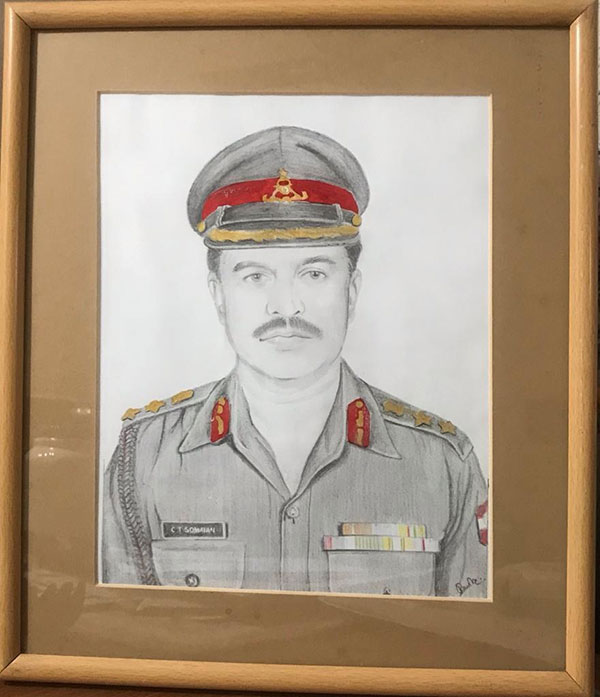
That was a detail missing from the image I had received on my phone; it was a pencil drawing.

“His moustache would cover the upper lip,” said the next message. “Couldn’t see the shape. So, only the eyes are left.”

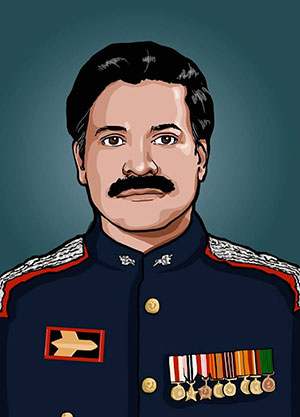
I looked at the picture again. A handsome man in his military uniform, two stars and an Ashoka emblem on each shoulder, surrounded by a buff passe-partout, sporting a mustachio markedly niftier than my memory of it. His name tag read: C T Somaiah.

Colonel C T Somaiah

I was on WhatsApp with his wife, Indra, discussing his portrait for this article. She is a naturally indulgent person and, at seventy-four, has perfected the art of generosity. Notwithstanding the questionable shape of the facial hair, she said she liked the sketch. “It brings out the essence, somehow.”

The sketch was a memento, presented to the late Colonel Somaiah by one of the two Air Defence regiments he commanded. It was a replica of his likeness that hangs in its Rogues’ Gallery.

Rogues’ Gallery. The term carries not-so-reputable connotations. Traditionally, it stood for a collection of mugshots of criminals, used by the police to identify suspects. The name is also familiar to DC fans: a group of supervillains that Batman has had to face over the years.

But the Rogues’ Gallery I am writing about features heroes.

In a military setting, it is meant to highlight the Commanding Officers, a.k.a. Tigers, of a unit. A set of portraits, typically photographs, is displayed in the office of the incumbent CO. Another set of pictures may be found in the Officers’ Mess.

The very nature of a Rogues’ Gallery evokes esprit de corps. The greatest binding force in the Army is unit cohesion, and the two institutions by which we can gauge discipline and standard are the Quarter Guard and the Officers’ Mess. The Quarter Guard is where the guidon — a flag or symbol used to represent the unit — is housed, and is the most important establishment in the unit lines. For the purpose of this article, we will focus on the Mess.

Wedded to the Olive Green — a book considered to be the vade mecum for Army wives in India — has this to say: “As an institution, it has a great influence on an officer’s life… The customs and etiquettes, which are observed, are essential for fostering pride in the Service.”

The Mess, however, is one of the most misrepresented elements of Army life in popular culture, especially cinema. The glamour — the uniforms, the legends, the mythology — proves too much to resist, and filmmakers end up depicting a fantasy world with ballroom dances and designer gowns.

Some of the films guilty of such distortion are Hum (1991), Sainik (1993), Pukar (2000), Ab Tumhare Hawale Watan Saathiyo (2004)…the list is long. Even sensible directors like Vishal Bhardwaj and Mani Ratnam couldn’t help going over the top in 7 Khoon Maaf (2011)  and Kaatru Veliyidai (2017), respectively. Films that fare much better on the authenticity scale are Prahaar (1991) and Lakshya (2004); we could add Govind Nihalani’s Vijeta (1982) to this list, but it is an Air Force film, not an Army one.

Caricatures

So, what makes an Officer’s Mess “real”?

“The Mess should be martial,” said Kuki Bawa, one of the most pukka Army ladies I know. “It must have a lot of wood, brass, and, of course, silver. Maybe some leather as well.” Jutimala Thakur, another accomplished memsahib, added vintage paintings to the list.

Some famous paintings that are commonly seen in Messes across arms are Napoleon Crossing the Alps by Jacques-Louis David, Collision of Moorish Horsemen by Eugène Delacroix, and The Combat of the Giaour and Hassan, also by Eugène Delacroix.

Then there are paintings that are specific to a battalion or regiment. “No Bengal Sappers Mess is complete without The Storming of Ghuznee Fort,” said Shabana Chowdhury Ali. As a First Lady, she has a significant role to play in matters of Mess décor. “Sensibilities are changing,” she explained. “A lot of the artwork in our Mess comes from travels of officers and veterans.”

Collision of Moorish Horsemen by Eugène Delacroix

The Combat of the Giaour and Hassan by Eugène Delacroix

Most such paintings are reproduced at Mhow, Meerut, and Kolhapur, according to artist and fauji wife Monika Tomar Saroch.

Monika was commissioned by her husband’s unit to make thirteen portraits for its Golden Jubilee of Raising. She was given oil portraits as a reference, and she replicated them in pen-and-ink. It took her about a week to complete each picture.

“What do you keep in mind while making these portraits?”

“For me, the character has to come out,” she replied. “How he was as a CO.”

Illustrator Maryam Hasan Ahmad said she looks for the most defining feature of a person. “Also, I have to be very particular about the uniform. I cannot go wrong with hard-earned medals.”

Maryam was a new bride when she saw a Rogues’ Gallery for the first time eighteen years ago. “It was a dream of mine to make my husband’s pencil sketch when and if he took over command. And my dream did come true, Alhamdolillah!”

Maryam has since made portraits for many regiments, also experimenting with canvas prints.

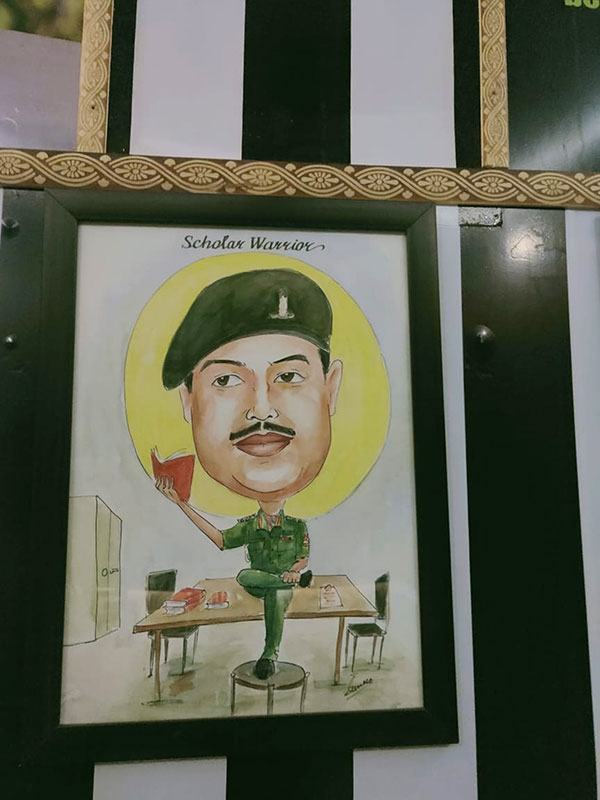
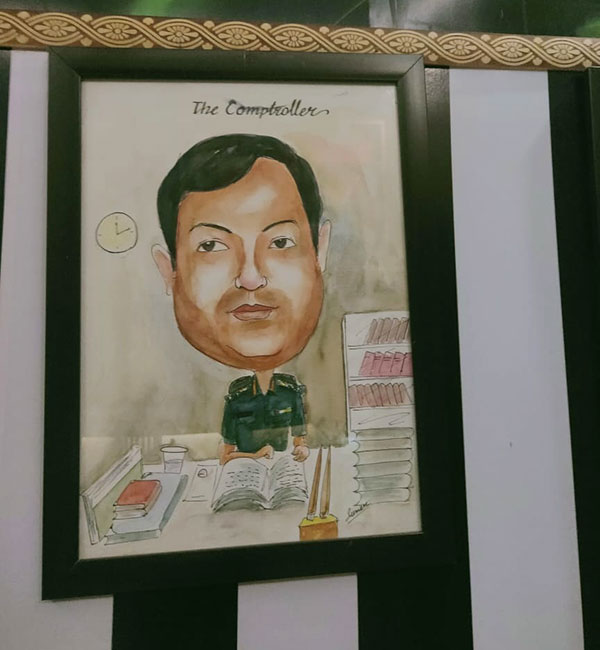
The bar in an Officers’ Mess is where one can see more such inventiveness. At one Mess, I saw caricatures, complete with playful captions: The Connoisseur, The Meditator, Scholar Warrior, Top Gun… The Commanding Officer wanted something quirky for that space.

A former CO — who wants to be identified simply as “a senior veteran who had the privilege of leading his regiment” — said that whatever the occasion or constraints, a Mess should be grand enough to make a visitor’s jaw drop. “But a Mess is not a five-star hotel. And it certainly isn’t a boudoir with floral curtains and valances.” He reiterated that the Mess is one of the bedrocks of a unit, and its folklore and traditions must be carefully documented.

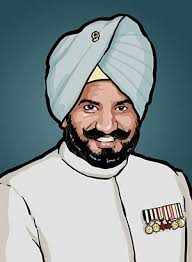
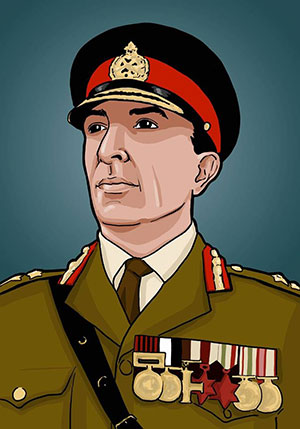
Portraits made by illustrator Maryam Hasan Ahmad 

During his tenure as a CO, he had enlisted the skills of a gifted soldier to sketch a picture of his predecessor. He had also commissioned two portraits in oils to commemorate the achievements of unit officers.

One of those paintings features a much-admired officer who was awarded the Sena Medal as a young Major. I wrote to his son, a high school student with a strong sense of history, to ask him how he feels when he sees that portrait.

“I am really glad that the unit duly honours its gallantry awardees,” replied Raunaq Singh Bawa. “It is also very heartening to see his portrait alongside the other Tigers of the unit. I feel really proud.”

As I scrolled on my phone to download Colonel Somaiah’s image, I wondered if his wife felt the same way. Mrs. Somaiah called before I could tap on Save.

“You know, Sahana?” she revealed, “This is the only picture of his that I have kept on display. Sometimes, when I am alone, I like to just stand there and gaze at him. I see only his eyes. They talk to me.”

source: http://www.thepunchmagazine.com / The Punch Magazine / Home> Non Fiction – Essay / by Sahana Ahmed / September 30th, 2020

Sainik School salutes the ‘Pioneers’

Fifty years after its inception, the cadets, staff and employees of Sainik School Kazhakoottam met for a reunion.

Sainik School principal Group Captain B Janardanan with Kannu Somaiah and former master N Balakrishnan Nair

Thiruvananthapuram :

Back then, the ‘65 and ‘71 wars had not yet happened, ‘Sholay’ was not even in the making and Raj Kapoor was still big-time. And in that once-upon-a-time era, a bunch of youngsters walked in to the newly-opened Sainik School at the Pangode barracks. That was then. Friday was now. But 50 years vanished in the blink of an eye at the Sainik School, Kazhakkoottam, on Friday afternoon as cadets, staff and general employees who were part of the school in 1962 met again after a gap of decades for a felicitation of the pioneers organised by the school as part of the golden jubilee celebrations.

“The school was first set up at Pangode, and by the end of 1963, it shifted to Kazhakkoottam,’’ recalled Col Balasubramaniam, the first school captain. “I’m the oldest Boy, but I don’t feel that old,’’ he quipped.

It’s really hard to imagine this army-moustached, stern-looking man with receding hair as a young boy trotting about in a school ground. But there it is. All around the Colonel are men who were part of his childhood, men who walked out of this school to become officers in the armed forces, film directors, technocrats or doctors.

“Four of the first batch, including me, joined the NDA,’’ Balasubramaniam, who is on his first visit in 48 years, said.

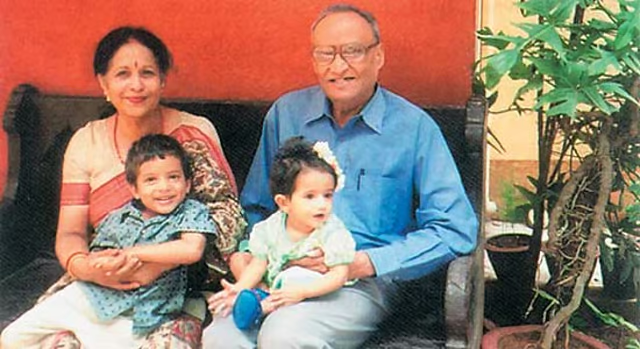
 Perhaps the one person who was the centre of attention on Friday was Kannu Somaiah, wife of the late Col Somaiah, the first principal of the school. Known to one and all as just ‘Mrs Somaiah,’ she was the ‘mother in residence’ back then – the first First Lady of the Sainik School. ‘’I left here in 1966,’’ said Kannu, who lives in Coorg and came down for the function with her sons, and alumni, Vinod and Anand. Vinod now lives in Singapore.

“We came down to Thiruvananthapuram in December ‘61 with father. The discipline that we got at the school holds us through,’’ said Vinod Somaiah, who is visiting his alma mater after 45 years.  Does he recognise anyone? “Oh yes!’’ Vinod says, as his gaze wanders to the school auditorium named after V K Krishna Menon, the Defence Minister who made it all possible back in 1962.

Three of masters were also present. The oldest of the three, K Madhavan Nair, the Physics master, George Joseph, the Biology master, and N Balakrishnan Nair, who taught Chemistry.

On Saturday, Chief Minister Oommen Chandy will inaugurate the valedictory of the golden jubilee celebrations. Minister of State for Defence Pallom Raju and Air Marshal S P Singh will be present.

Friday’s function – presided over by school principal Group Captain B Janardanan – was also followed the ‘Satish Chandran musical evening’ organised by All-India Radio.

source: http://www.newindianexpress.com / The New Indian Express / Home> Thiruvananthapuram / by TNIE Online Archives / May 16th, 2012

The Honest Always Stand Alone: A tribute to power-bureaucrat CG Somaiah

During Rajiv Gandhi’s regime in 1980s, Delhi police commissioner Ved Marwah had a “security breach” as his car had reportedly intruded in the route of the visiting Russian Prime Minister. Then home minister Buta Singh almost made up his mind to suspend the senior cop, but it was one influential IAS who persuaded Singh not to punish Marwah. He was CG Somaiah who began his career as an assistant collector in Orissa only to rise up the ladder to become Comptroller and Auditor General of India.

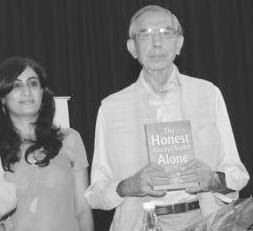
CG Somaiah is no more. Somaiah died in Bangalore  on Monday following brief illness. Somaiah, 79, is survived by wife Indira, and one son and a daughter. Incidentally, his daughter Pria (In picture with her father) is married to Nikhil Alva, son of Congress leader and Uttarakhand Governor Margaret Alva.

As the home secretary of the country during Buta Singh’s regime, Somaiah played a key role not only in fighting Punjab terror, but was instrumental in clinching a deal with student leaders from Assam who were agitating against illegal Bangladeshi migrants. He also served as Central Vigilance Commissioner and had a six-year-long tenure as Comptroller and Auditor General of India

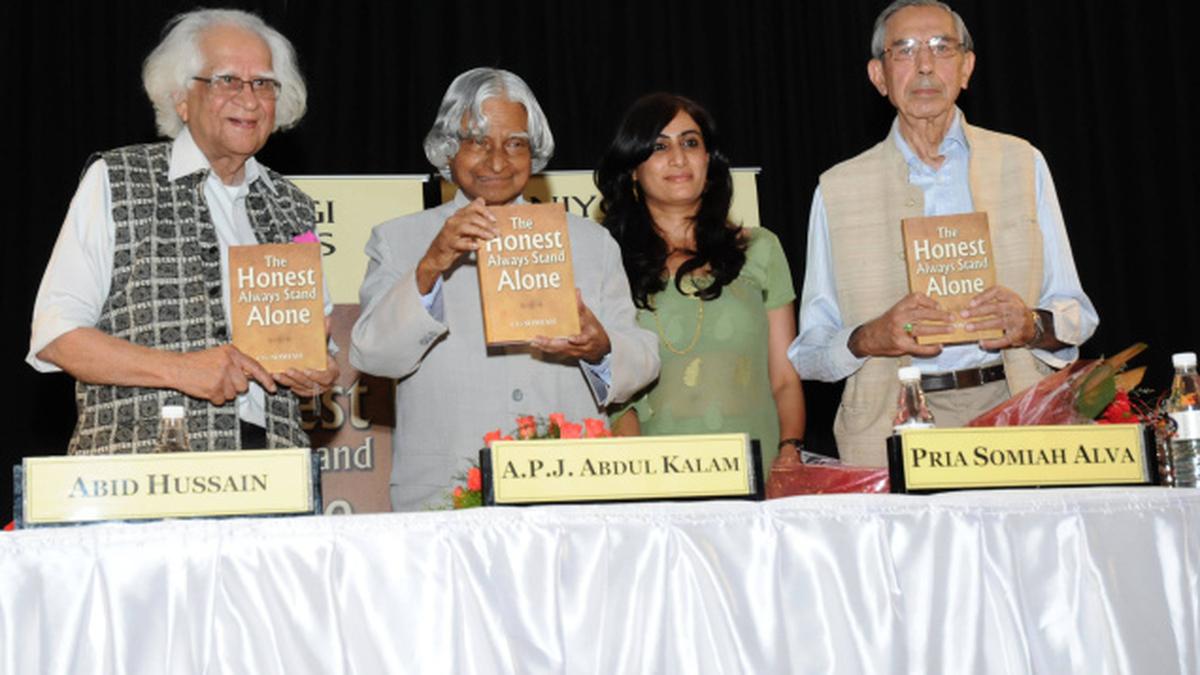
Only two months ago, Somaiah’s book titled, “The Honest Always Stand Alone”, was released in New Delhi  by former president APJ Abdul Kalam.

STANDING TALL Former President APJ Abdul Kalam releasing C.G.Somaiah’s “The Honest Always Stand Alone” / pix credit: The Hindu (July 21, 2010)

source: http://www.babusofindia.com / Babus of India / Home / posted by BOI Team / September 15th, 2010

On The Half-Tones Of Truth

C.G. Somiah’s memoirs, in both form and content, reflect his famed qualities: uprightness and modesty.

On The Half-Tones of Truth

It is perhaps an acknowledgement of whatever fairness is left in the system that C.G. Somiah managed to make it to the top echelons of the Indian Administrative Services without ever swerving from his values and convictions.

Born in 1931, Somiah joined the IAS in 1953, beginning in Orissa and ending up in Delhi. It was from his father, a forest officer to whom he was deeply attached, that he internalised the value of honesty. Later, he forged a similar companionship with his wife, Indira, whose counsel he seeks in tricky work situations.

But one wishes he was more introspective on some of the situations he describes. His struggle against the politician-contractor nexus on tendu leaves, for instance, which he won to a limited extent, is now a more serious problem in Orissa, stained with the blood of Maoist and state violence.

There are other passages that break through these self-imposed boundaries. Returning from Koraput, after the inauguration of a chromium factory, he reflects: “On the way back we passed by the Sunabeda where once a virgin forest stood!…. Instead of the twinkling lights of the new township, my eyes could only see the ancient forest that once occupied this land with majestic trees. This is the forest that I had once helped to uproot to make way for the township.” This ambivalence of the administrator, bereft of a universally accepted vision of development, still lingers. On the other hand, his spare style ensures that there is no sensationalising of the many exciting matters of state that could certainly have turned the book into a bestseller. 

Union home secretaries always live in interesting times. Somiah’s tenure seems to have been especially so, given the demands of a young prime minister in a hurry, the delicate relationship between the then home minister Buta Singh and his deputy Arun Nehru, negotiating the mistrust between the President and the PM to avoid a constitutional disaster, the successful conduct of Operation Black Thunder and fashioning the Mizo and Gorkhaland accords. Somiah describes these from his vantage point, always careful to narrate only the facts.

What stands out is his innate decency in these difficult situations. After Operation Black Thunder and the successful flushing out of terrorists from the Golden Temple in Amritsar, and when his suggestion to Buta Singh and Governor Siddhartha Shankar Ray about him visiting the Golden Temple and paying his respects is overlooked, he makes the trip with his wife, which assuaged much of the perceived hurt. As home secretary, Somiah was once caught by a Delhi constable for jumping a traffic light while returning from a dinner outing with his family. He paid the fine and got away without disclosing his identity. What is not lost on the reader is that they dined at a very modest restaurant and that the Union home secretary was driving his personal Maruti.

Somiah emerges as a deeply spiritual person, proud of his Kodava heritage.  There is no pretended conflict of interest when he, as part of the home ministry, rejects the suggestion to ban the Kodava right to possess guns—he compares it with the right of the Sikhs to hold kirpans. Of course, he also wryly notes that the first time his community chose to honour him was when he had the word ‘general’ suffixed to his name as Comptroller and Auditor General of India!

Somiah is genuinely proud of his contributions even if he recounts them in a manner that would warm the hearts of accountants. On the Shah Bano case, he acknowledges that it is the flip-flop between a decision that was right in secular India and the subsequent backtracking that led to the situation spiralling out of control.

This is an unpretentious book, without any name-dropping on matters of high state policy to suggest the author was the backroom guy who made it possible. Similarly, no pontificating on governance, the staple of many boring civil service memoirs. Instead, just as he diligently worked to excel in tennis in school and later in bridge, Somiah seems to have gone about reaching the top of his profession with his fair share of tribulations, which he takes in his stride.

“C.G. Somiah…stands by what he has written and takes full responsibility for it,” says the publisher’s note. It’s a good summation of Somiah’s approach to work and life—showing the courage to stand for what one believes in.

(R. Gopalakrishnan is additional secretary to the Prime Minister)

source: http://www.outlookindia.com / Outlook / Home> Books / by R Gopalakrishnan (see above) / Outlook Web Desk / February 05th, 2022

Shiv Cariappa

Obituary

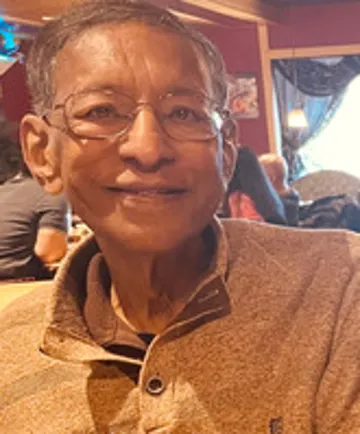
Codanda Shiv Cariappa, 72, passed away peacefully on February 9th, 2024, in Northampton (Boston), MA, USA.

Shiv was predeceased by his parents, Lt. Col. Codanda M. Cariappa (Carson) and Dr. Pearl Cariappa, (maiden name: Chendanda Muthama Ponappa), and his brother, Codanda Babla Cariappa.

Following the demise of his father at a young age, he attended Lawrence School in Lovedale and was raised in Chettalli Estate Kodagu by his mother while living together with his uncle and aunt, the late Mr. CP Appanna and late Mrs Seethama Appanna, his brother Babla, his cousin Chandanda Appanna Ponappa (Ponnu), and his grandmother Chendanda Muthama Ponappa.

Shiv Cariappa worked as a journalist for the international Christian Science Monitor newspaper in Boston, MA. Later, Shiv became a Senior Loss Prevention Analyst for the Staples Corporate headquarters in Framingham (Boston), MA. In this position, Shiv was responsible for investigative crime, particularly fraud, intervention and prevention for all Staples stores throughout the US.

Shiv is survived by his community of loving friends and family, including former wife and close friend Ellen Loos, his sister-in-law Victoria Cariappa, his aunt GM Codanda Vani; cousins Peggy Pratap Sunil, Arathi Muddaiah, Kandrathanda Harini Kariappa, Chedrimada Beena Somaya, Pattamada Seetha Kuttappa, Pattamada Kavita Muthana,Deep Chinnappa, Sumitha Somiah, the Chendanda family, Kongetira Gayathri Belliappa, Codanda Ashit, Codanda Chinnappa; and Ponnu Appana’s former wife Vipul Ponappa with their two grown children Gauri Ponappa and Sasha Ponappa.

Shiv will be deeply missed.

A public gathering to celebrate Shiv’s life will be held at Leverett Crafts & Arts Center, 13 Montague Rd., Leverett, MA. 01054 this coming Saturday, February 17, 1:00-4:00.

source: http://www.metrowestdailynews.com / MetroWest Daily News / Home> Life Story / February 15th, 2024 ( published in MetroWest Daily News, Milford Daily News)

It was the most rewarding journey: Shubra on becoming a certified yoga instructor

Actor Shubra Aiyappa went off the grid for a month to achieve her wellness dreams.

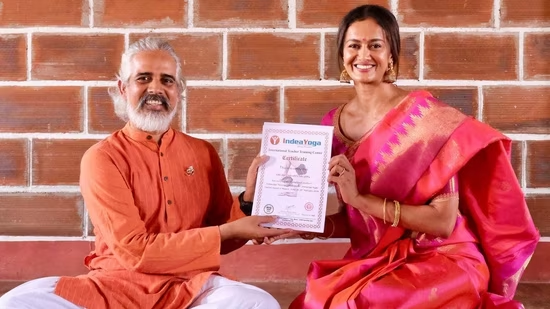
Shubra Aiyappa receives her certificate after a month of rigorous training

Actor Shubra Aiyappa recently decided to become a certified yoga instructor. Sharing her motivation around this step, she says, “I’ve been practising yoga for a few years now. The benefits of the practice drove me to go deep into it. This was definitely the most rewarding and transformative journey of my life.”

Despite the benefits, becoming a yoga instructor wasn’t an easy stint for the Thimayya & Thimayya (2022)actor. To work on her yoga practice, Aiyappa decided to cut off from the world for a month to join a yoga school in Mysuru. “We weren’t allowed to have our phones except for an hour during the day,” the 33-year-old actor shares, adding, “For the first few days, I couldn’t take this rigorous routine. I had some breakdowns and I kept asking why I chose to do this to myself. But, as time went on, I got used to it.”

In addition to the challenges at the school, Aiyappa admits she was terrified to put her acting on hold for a month. “There’s always an itch which makes you feel you’re missing a call or a scene that can change your life — It was really difficult for me to let that go. I was afraid I’d become irrelevant if I wasn’t active on social media. But that’s never the case. It was all about setting boundaries. I even put a film I’m currently doing on hold for this course,” the Prathinidhi (2014) actor quips.

The actor, now a certified yoga instructor, is happy to impart knowledge about the mind-and-body practice to her family and friends. Ask if she’s ready to take it professionally, she shares, “Teaching it professionally is not on the cards yet. I’ve always wanted to do something in the wellness space. While I don’t know how I’d execute it, I have some ongoing plans,” she signs off.

source: hindustantimes.com / Hindustan Times / Home / by Aayushi Parekh / March 06th, 2024

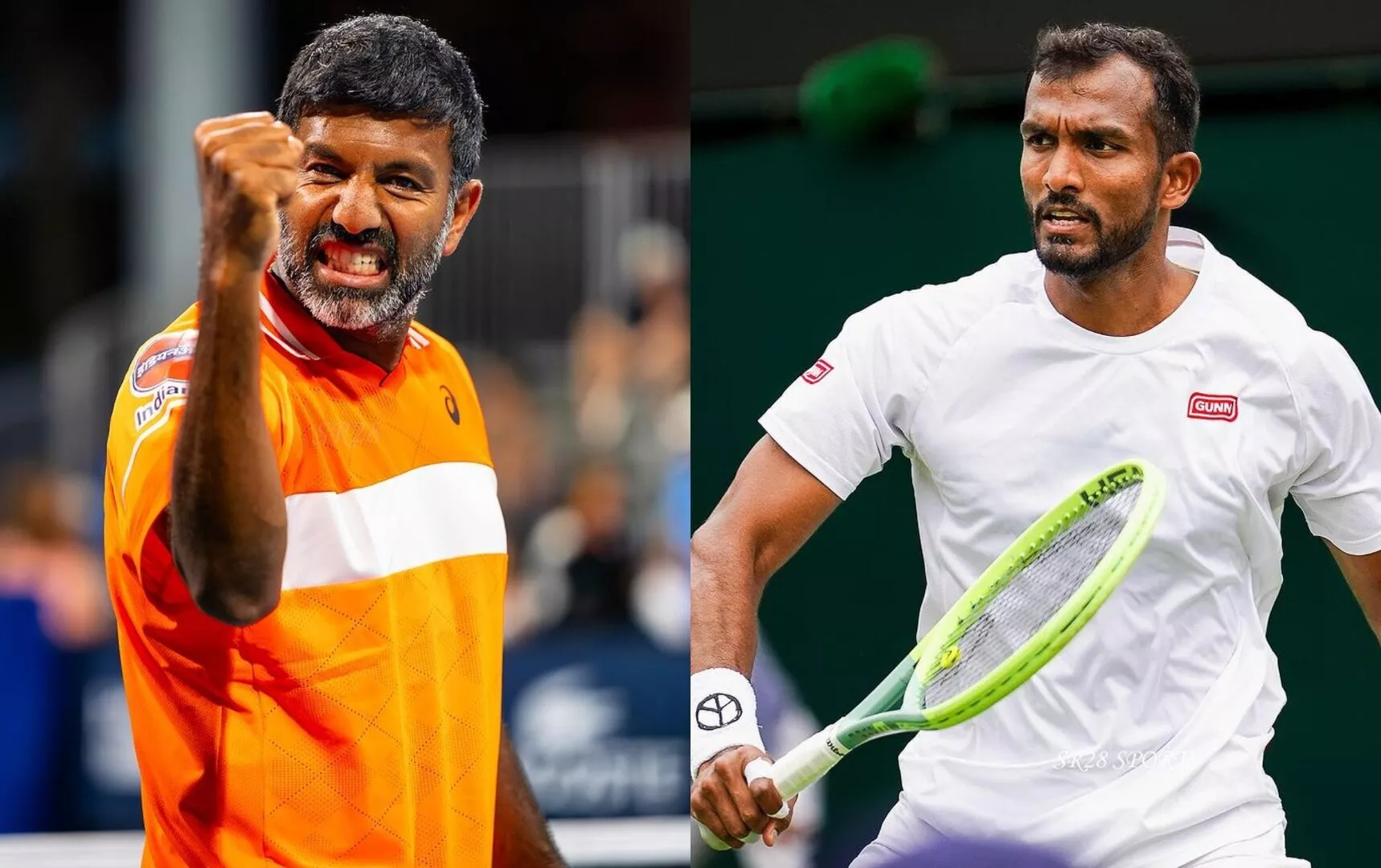
Reports: Rohan Bopanna chooses N. Sriram Balaji as doubles partner for Paris Olympics 2024

(Courtesy : rohanbopanna0403/insta and sriram.balaji/Insta)

Rohan Bopanna recently played against N Sriram Balaji at French Open 2024.

Indian tennis legend Rohan Bopanna has set his sights on the upcoming Paris Olympics , aiming for one last shot at an Olympic medal. According to reports, in an email sent to the All-India Tennis Association (AITA), Bopanna expressed his desire to partner with N. Sriram Balaji, who he recently played against in the French Open men’s doubles third round.

Bopanna’s decision comes after witnessing Balaji’s performance at the French Open 2024, where the latter and his Mexican partner MA Reyes-Varela Martinez faced off against Bopanna and Australia’s Matthew Ebden in the third round of the men’s doubles. Despite the loss, Balaji’s display convinced Bopanna that he would be the ideal partner for the Olympics.

Commenting on his decision, Bopanna told PTI from Paris, “I have sent an email to AITA,” adding that he would provide further remarks once he receives a response from the national federation.

AITA Secretary General Anil Dhupar has welcomed Bopanna’s choice, stating, “Rohan has written to us that he wants to play with Balaji, who is a good player. He played well in Pakistan also, rising to the occasion. He also did well on clay at ongoing French Open. Balaji is a big server. If Rohan wants to play with him, we have no objection to that.”

While Yuki Bhambri, India’s number two doubles player, was also considered for the partnership, the selection panel, led by former Davis Cupper Nandan Bal, has indicated their support for Bopanna’s decision.

Bal emphasized, “In my personal opinion, we should give Rohan what he wants. At the end of the day, it’s his last shot at an Olympic medal and if he feels that it is better to play with Balaji, he would be sure of the choice.”

The panel, which includes former Davis Cupper Balram Singh, Mustafa Ghouse, and Sai Jailakshmi, will convene to discuss the combination once the ITF releases the final list of qualified athletes after the French Open concludes. Bal noted, “Still we will discuss the combination whenever AITA convenes the meeting.”

The Olympic qualification process will consider the ATP/WTA rankings on June 10, with the ITF notifying all associations about their qualified athletes by June 12. National Olympic Committees have until June 19 to confirm their entries, and any unused quota places will be reallocated by the ITF on July 8.

As Bopanna, only the third Indian to win a Grand Slam title, prepares for his final Olympic appearance, he will be hoping to go one step further than his narrow miss in the mixed doubles event at the Rio Games with Sania Mirza.

source: http://www.khelnow.com / Khel Now / Home> Sports / by Ajay Gandhar / July 05th, 2024

Cheppudira Arun Machaiah Appointed As Joint Chief Of Karate India Organisation (KIO)

Former MLC and International Karate expert from Kodagu, Cheppudira Arun Machaiah has been appointed as the new Joint Chairman of the Technical Commission of Karate India Organisation (KIO).

Director of World Shitorio Karate Council and President of All India Shitorio Karate Organisation, Arun is the first Kannadiga to achieve the highest post of KIO.

source/content: starofmysore.com (headline edited)