Category Archives: Famous Personalities of Kodagu / Coorg

Gulshan Devaiah Strikes Gold With ‘Duranga’, 7 Times He Nailed His Characters With Perfection

Gulshan Devaiah began his career in Bollywood, like the majority of newcomers from outside the industry, with few roles. Nevertheless, Gulshan’s performance was recognised by the audience as well as the critics.

Image credit : Telegraph India

Gulshan Devaiah began his career in Bollywood, like the majority of newcomers from outside the industry, with few roles. Nevertheless, Gulshan’s performance was well-received by the audience as well as the critics. And he once again enchanted his fans with his most recent part in the web series ‘Duranga’.

Duranga is a suspense series that warrants your attention, and we’ll explain why. One of the most well-liked genres of television shows and films today is a thriller. Who doesn’t love the suspense and terrifying anticipation of what will happen next? The unfolding of the events keep you on the edge of your seat. Without further ado, let’s dive right into it!

Reasons Why Duranga Is Worth Your Time!

Image credit : Duranga Poster

The Duranga Plot Will Keep You Hooked Until The End

It is based on Sammit Patel and Ira’s story. Ira starts looking into several killings committed by a person she believes to be a serial killer’s accomplice, and as a result, she learns some shocking information about her husband’s dark background.

One is kept fairly engrossed in the story and on the edge of their seat by the writing and plot. The length of the episode is critical because thrillers frequently suffer from the risk of being stretched out a little too much, the duration of Duranga is just right for you to keeping yourself interested.

The series avoids trying anything new and succeeds in producing the same impression as the original with a compelling narrative and a crisp screenplay.

The Interesting Choice Of Cast

Gulshan Devaiah As Sammit Patel

Gulshan Devaiah gives his greatest effort yet in Duranga. Gulshan gives a convincing performance as a reserved character who doesn’t experience love, happiness, or grief and uses online courses to learn to grin or cry. He has aced his acting skills with each project he has done and is such an underestimated actor who deserves your time.

Drashti Dhami As Ira

Image credit : Duranga/Screengrab

Drashti Dhami, who plays a cop alongside Gulshan, has established herself in Hindi television dramas, and this is the first time she has performed such an intense and badass part of a cop, carrying a very strong character brilliantly; she has never been seen portraying a role this harsh.

The relationship between Drashti and Gulshan is not particularly endearing, but given the diametrically opposed nature of their characters, it nevertheless manages to explain the lack of blandness.

It is difficult to develop and maintain a career in the film industry, which may be ruthless at times. Gulshan, who has been a part of Bollywood for over a decade, believes that ‘being good is not enough.’

The idea that hard effort helps you sustain and that being competent at your craft is enough is appealing, but it is fiction. Gulshan believes that as an actor, one must learn to build relationships and be in the right place at the right moment.

Here are some characters played by Gulshan that need your attention

1. Ghost Stories

Image credit : Indiatimes

Despite having only 10 minutes of screen time and wearing unrecognisable make-up, the actor received some of the greatest accolades of his career for the character of a village strongman who transforms into the alpha zombie in the horror film Ghost Stories. Devaiah recalls Karan Johar and Reema Kagti complimenting Gulshan for his spooky act. Gulshan had no expectations from the movie and wasn’t sure he would be recognised at all.

Most performers would have turned down the role owing to the limited screen time or unrecognisable makeup. However, we are confident that Gulshan chose craft over fame in this role.

Watch It On Netflix

2. Afsos

Image credit : Prime video/Screengrab

In Afsos, Gulshan plays Nakul, a writer with chronic depression who hires an assassin to kill him after 11 unsuccessful suicide attempts. The plot is unusual; for example, have you heard of someone who is sick of trying to commit suicide hiring a hitman to help them? Anyways, things go wrong when Nakul decides to cancel the assignment after falling in love with his therapist.

Watch It On Amazon Prime Video

3. Goliyon Ki Raasleela Ram-Leela

Image credit : Goliyon Ki Raasleela Ram-Leela/Screengrab

For Sanjay Leela Bhansali’s “Ram Leela,” Gulshan appears in a brand-new appearance. In the film, the gifted actor plays the adversary. The character played by Gulshan is a famous member of the Jadeja clan, a group of Chandrivanshi Rajputs who currently reside in Kutch, Gujarat.

Watch It On Jio Cinema

4. Footfairy

Image credit : Footfairy/screengrab

A monster who suffocates young girls and slices off their exquisite feet to keep as his mementos is the subject of the psychological thriller. Gulshan Devaiah portrays CBI officer Vivaan Deshmukh, who trusts his intuition over anything else. He presents himself as an assured police officer. It was incredible that a film made in 2020 captured people’s attention in 2022 with an OTT distribution on Netflix.

Watch It On Netflix

5. Badhaai Do

Image credit : Badhaai Do/Screengrab

The unexpected component of Badhaai Do is Gulshan Devaiah. The actor who portrays Rajkummar Rao’s love interest in the movie, Guru Narayan, is a lawyer. His character is such a fantastic representation of the LGBTQIA population that is not ashamed to be ‘Gay.’ Though Guru’s character appears for a little moment, he plays an important role in the film.

Watch It On Netflix

6. Mard Ko Dard Nahi Hota

Image credit : Movietalkies

In Mard Ko Dard Nahi Hota, Gulshan plays the character of Karate Mani and Jimmy and is a laughing stock. It was pure joy to witness him flawlessly portray two utterly different personalities in a double role.

Watch It On Netflix

7. Shaitaan

Image credit : Shaitaan/Screengrab

Shaitan was one of the first projects to bring Gulshan the attention he deserved. It was a crime thriller, which was highly opposite of what Bollywood thought of these genres. He portrays the slightly insane, affluent brat Karan ‘KC’ Chaudhary, and his diabolical intensity in the part drew many fans.

Watch it On Netflix
Since making his acting debut in That Girl in Yellow Boots in 2010, Gulshan Devaiah has advanced significantly while consistently raising the bar with his films and web series

source: http://www.indiatimes.com / India Times / Home / by Tanishk Juneja / September 01st, 2022

Field Marshal K.M. Cariappa’s 127th birth anniversary celebrated

Mysore/Mysuru:

Kodava Samaja, Mysuru, along with the Field Marshal Kodandera M. Cariappa Fans’ Association, Mysuru, celebrated the 127th birth anniversary of Field Marshal K.M. Cariappa.

The programme was organised in front of the statue of Field Marshal Cariappa at the Field Marshal K.M. Cariappa Circle (Metropole Circle) on Vinoba Road this morning.

Former MP Prathap Simha offered floral tributes to the statue and said that celebrating the 127th birth anniversary of Field Marshal Cariappa is a matter of great pride for society. His contributions and valour have earned him immense respect across the nation. Kodagu’s contribution to the country is unparalleled.

He added that no other land could produce patriots and warriors like those from Kodagu. “Patriotism has grown there as a tradition. Though the Kodava community is small, its service to the Armed Forces is immense. It is a privilege for our land to cherish the memory of a leader like Field Marshal Cariappa, born in such a tradition,” he said.

World War II, freedom struggle

Field Marshal Cariappa’s service during World War II and the freedom struggle was exemplary to the world. The rank of Field Marshal is the highest in the Indian Army and it is a matter of pride not only for the Kodava community but also for Karnataka.

“He may not have received the Bharat Ratna, but he was honoured with the rank of Field Marshal,” Simha remarked. He further noted that Cariappa, along with General Kodandera S. Thimayya, gave democratic India a strong shape and direction.

“Even today, the Kodava community has contributed more than 30 Lieutenant Colonels to the Indian Army, five captains to Indian hockey and over 60 players to the sport. “For this, the community must feel proud and continue to grow. As the community grows, so will the nation and  patriotism,” he said.

Former MLA L. Nagendra noted that it was Field Marshal Cariappa who made the entire world turn its attention towards India.

“He must be remembered every single day. When his statue was to be installed at Metropole Circle, many obstacles arose, but all were overcome and today the statue stands tall, and this is a matter of immense pride. In the coming years, thousands from the community should gather together to celebrate Cariappa’s birth anniversary on a grand scale,” Nagendra said.

The event was attended by former Mayors M.J. Ravikumar & H.N. Srikantaiah, former Corporators Pramila Bharath & Maletira U. Subbaiah, Mysuru Kodava Samaja President Ponjanda A. Ganapathy, Kodava Samaja Cultural and Sports Club President Mukkatira C. Ashok and Field Marshal K.M. Cariappa Fans’ Association President Nayakanda Thimmaiah among others.

source: http://www.starofmysore.com / Star of Mysore / Home> News / January 28th, 2026

127th birth anniversary of Field Marshal K.M. Cariappa tomorrow

Kodava Samaja, Mysuru and Field Marshal K.M. Cariappa Fans Club, Mysuru, will celebrate the 127th birth anniversary of Field Marshal K.M. Cariappa at Field Marshal K.M. Cariappa Circle (Metropole Circle) in city on Jan. 28 at 8.30 am.

Mysuru-Kodagu MP Yaduveer Wadiyar, MLAs K. Harishgowda, G.T. Devegowda, T.S. Srivatsa and G.D. Harish Gowda, MLCs C.N. Manjegowda and K.Vivekananda, former MP Prathap Simha, former MLA L. Nagendra, former Mayors M.J. Ravikumar and H.N. Srikantaiah, former Corporators Maletira U. Subbaiah and Pramila Bharath will be the chief guests.

Kodava Samaja President Ponjanda A. Ganapathy, Kodava Samaja Cultural and Sports Club President Mukkatira C. Ashok, Field Marshal K.M. Cariappa Fans Club President Nayakanda Thimmaiah and others will  be present on the occasion.

source: http://www.starofmysore.com / Star of Mysore / Home> In Briefs / January 27th, 2026

Lives lived between shame and sunrise

The hamlet of Kesarugattu is evoked with tender fidelity: dusty lanes, temple bells, the drawing of water from wells, gossip thick as humidity, and the invisible yet unbreakable lines of caste that arrange bodies and destinies.

Rising Sons

There is something compelling about Indian fiction that returns to the soil — its memory, its violence, and its stubborn hierarchies — placing ordinary lives against the tremors of national transformation. When such fiction is also shaped by a supple, idiomatic use of language, as in Kavery Nambisan, the result is especially resonant: “No fighting the British. We must ask them gently-gently to leave.” “If a robber enters your home, and you request him to leave, by gently-gently leading him to the door, will he go, leaving behind the bag he just filled with your provisions?” The prose carries the cadence and rhythm of Indian speech, anchoring the novel firmly in its linguistic and cultural terrain.

Kavery Nambisan’s Rising Sons, set in a small village near Mysuru between the 1920s and 1940s, is a quiet yet searing account of the making of modern India — not through the grand speeches of history, but through the fragile interiors of a family trapped between caste, patriarchy, shame, and awakening. At the centre is Devaraya, a Brahmin patriarch whose pursuit of wealth and respectability masks deep fragility. His carefully curated identity begins to fissure from the opening line, when he announces — half-proud, half-playful — that he has “two sons and one-and-a-half daughters.” The “half” is Chinni, the adopted daughter whose presence inside a caste-sanctified household is both an affront to orthodoxy and a reminder that affection in such worlds is always conditional. Nambisan builds her narrative on this foundational crack.

The hamlet of Kesarugattu is evoked with tender fidelity: dusty lanes, temple bells, the drawing of water from wells, gossip thick as humidity, and the invisible yet unbreakable lines of caste that arrange bodies and destinies. Colonial rule hums in the background, but the more immediate and intimate oppressor is caste itself. Ancestral dominance and the fear of social humiliation govern every gesture inside and outside Devaraya’s house. Working in a bank as a peon in Mysuru while running a modest money-lending shop back home, Devaraya embodies the dangerous intersection of caste pride and capitalist ambition. His public face projects ritual purity; his private life is riddled with moral compromise. In a paraphrased confrontation, his younger son Anna articulates the novel’s central fracture: you speak of purity, but conceal your own stains — what kind of honour demands lies? It is a quiet but devastating rebellion, marking the first collapse of the old order.

The revelation of Devaraya’s hidden past — one that undermines the very caste purity he venerates — shatters the world he has built. The family collapses under the weight of shame; one son disappears; Devaraya is disgraced and imprisoned; the village that once deferred to him turns away with vindictive satisfaction. Inside the house, silence becomes a weapon. In another paraphrased exchange, Gowru, his long-suffering wife, speaks with restrained fury accumulated over decades: a home built on fear cannot survive a single gust of truth. The line is quiet on the page but detonates through the moral architecture of the novel.

From the family’s ruins, a new consciousness emerges. Anna is drawn into the freedom struggle. His rebellion is both political and personal — a rejection of shame as a mechanism of control. In a moment that captures the novel’s fusion of private and national liberation, Anna tells his father that if the nation must free itself, individuals must first confront older chains than those imposed by the British. Chinni, meanwhile, becomes the emotional heart of the story. Experiencing progressive hearing loss, dismissed by society and bound by deep affection to Anna, she embodies the resilience of the marginalised. Her silence is not weakness; it is resistance.

One of the novel’s notable achievements is its portrayal of how colonial capitalism intersects with caste hierarchy. In a sharply staged scene, a village priest — the former custodian of ritual prestige — visits the lending shop to deposit his money, bargaining for interest with head bowed. Devaraya’s paraphrased reflection is telling: even gods have begun to bow before Mammon. With this, Nambisan captures an India shifting uneasily from spiritual hierarchy to monetary hierarchy, neither offering dignity to the powerless.

Nambisan writes with felicity and restraint. Some readers may find the pace measured, but the emotional intelligence and historical density more than compensate. At a time when conversations around caste are often flattened into slogans or denial, Rising Sons insists on remembering.

source: http://www.deccanherald.com / Deccan Herald / Home> Features> Books / by Gurucharan Gollerkeri / January 18th, 2026

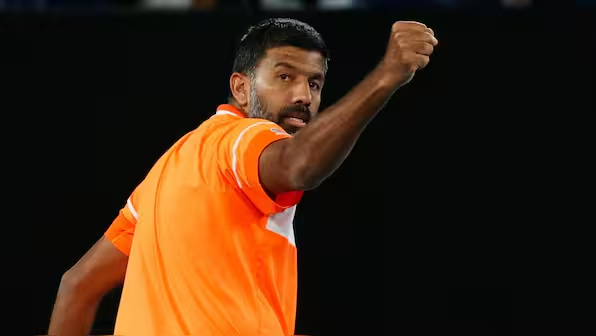
Rohan Bopanna backs Maverick & Farmer parent Good Farmer Food Concepts in $1.5 million funding round

Capital infusion to fuel café expansion, retail growth and production infrastructure.

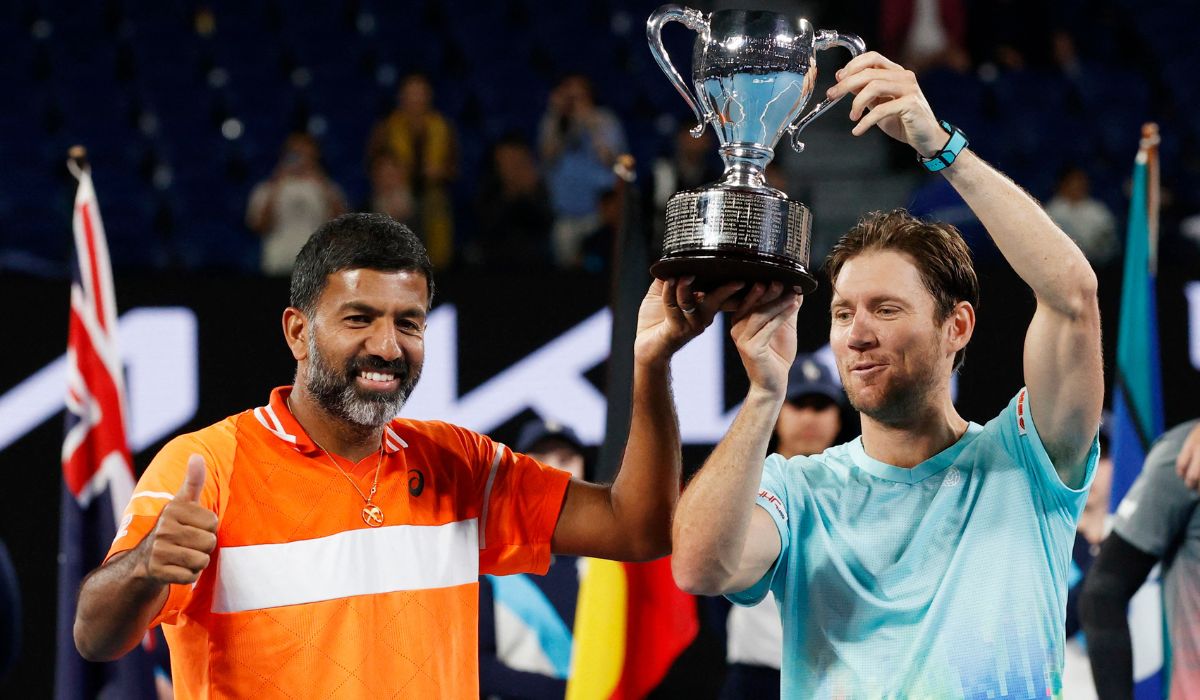
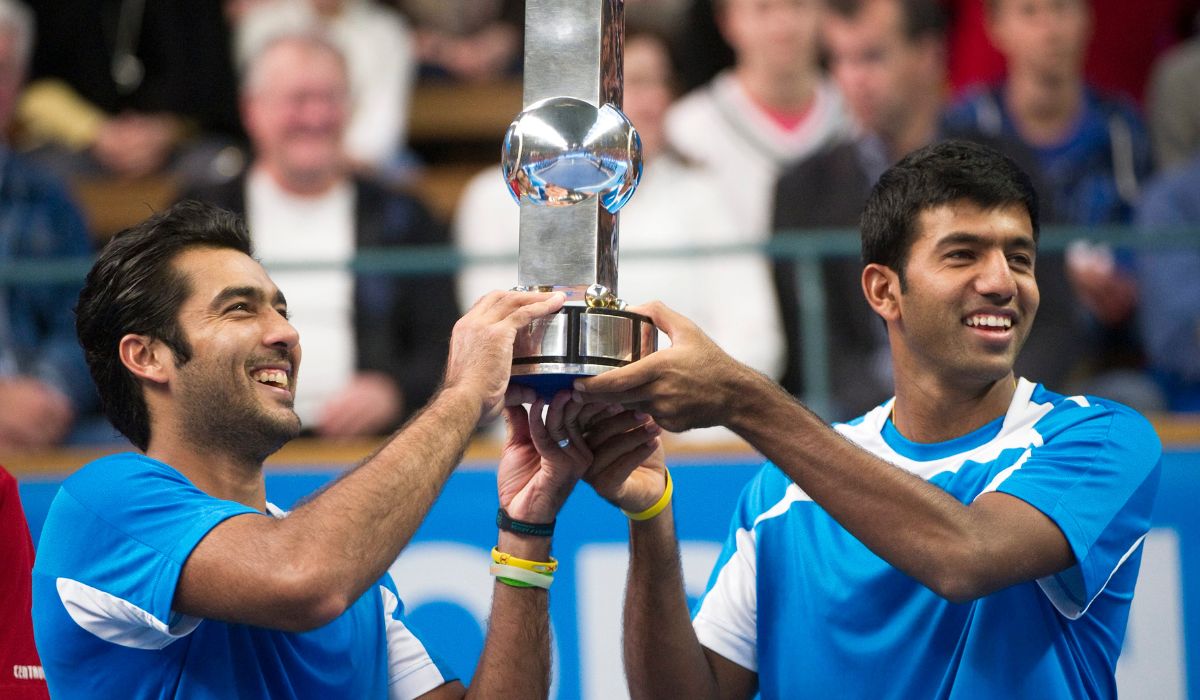
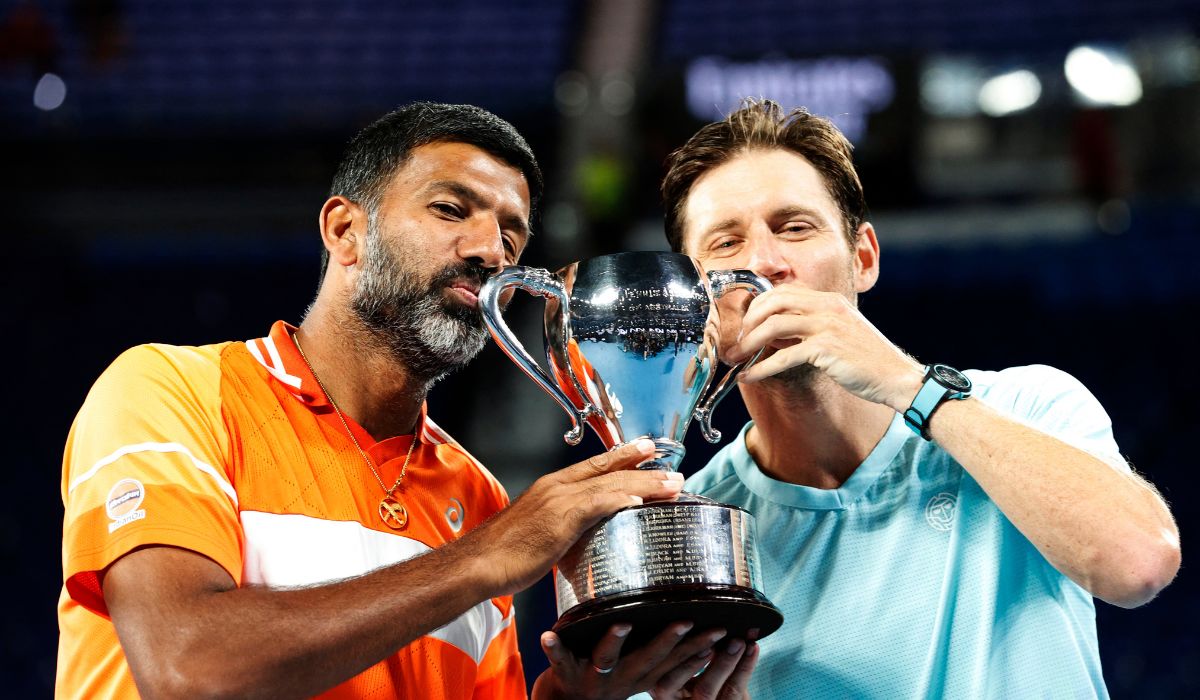
Good Farmer Food Concepts, the company that founded artisanal coffee brand Maverick & Farmer Coffee and Square Burgers & Co., has raised $1.5 million in an ongoing Pre-Series A round. The company’s first external fundraising has been led by investment firm CreedCap with participation from Indian tennis star Rohan Bopanna and former Indian cricket team captain Rahul Dravid, along with Meraki Sport & Entertainment.

Planned use of funds

The company will utilize the fresh funds to expand its national presence with its cafes, invest in R&D and production infrastructure, and bolster and grow the brand’s retail vertical. The retail segment focuses on creating various SKUs of specialty coffee roasts and nurturing the home brewer experience by curating a variety of equipment. The brand’s new outlets in the pipeline are in Mumbai, Delhi NCR, Goa, and Bangalore. The company currently operates seven outlets in Bangalore and Goa and expects to reach ten by the end of the year.

Founders and brand philosophy

Founded by Ashish D’abreo, Sreeram Gangadharan, and Tej Thammaiah, Good Farmer Food Concepts is built on a product-first philosophy and a strong focus on quality and innovation. The company blends experimentation with coffee for retail, community-driven cafes, and a health-forward take on fast food. Maverick & Farmer is known for its experimental and maverick approach to Indian coffee, while Square Burgers & Co. continues to grow as a health-first food brand.

Co-founder’s perspective

“Before expanding, we first ensured that our people and operations were completely in order. Once that foundation was set, we began exploring funding and new locations. From the outset, we knew that each Maverick & Farmer Café should tell its own story and connect with a unique community. With Square Burgers, our vision was clear—we wanted to experiment with health-forward fast food. The current round of funding has enabled us to bring these ideas to life,” said Sreeram Gangadharan, Co-founder, Good Farmer Food Concepts.

Investor association and brand support

Bopanna has previously collaborated with the brand on a signature blend called the Rohan Bopanna Masterblend and has been closely associated with its evolution over the years. Dravid, who has long supported homegrown businesses built on strong fundamentals, joins the cap table for the first time.

“I’ve watched Maverick & Farmer grow from the very beginning and what’s always stood out to me is the honesty and intent behind the brand. Their commitment to quality, experimentation and staying true to their roots is rare. I’m proud to continue supporting their journey and excited to be part of what’s in store next,” said Rohan Bopanna.

source: http://www.hotelierindia.com / Hotelier India / Home> Operations / January 12th, 2026

Military Digest | When Nehru chided General Cariappa for publicly praising his Government

With Chief of Army Staff General Upendra Dwivedi slated to hold an annual press conference ahead of Army Day, a look back at certain events that took place soon after General K M Cariappa took over as the Army chief.

General KM Cariappa and Jawaharlal Nehru

Chief of Army Staff General Upendra Dwivedi will hold an annual press conference on January 13 ahead of Army Day, January 15. It was on January 15, 1949, that General K M Cariappa (later Field Marshal) took over as the commander-in-chief and chief of army staff of the Indian Army—the first Indian to do so.

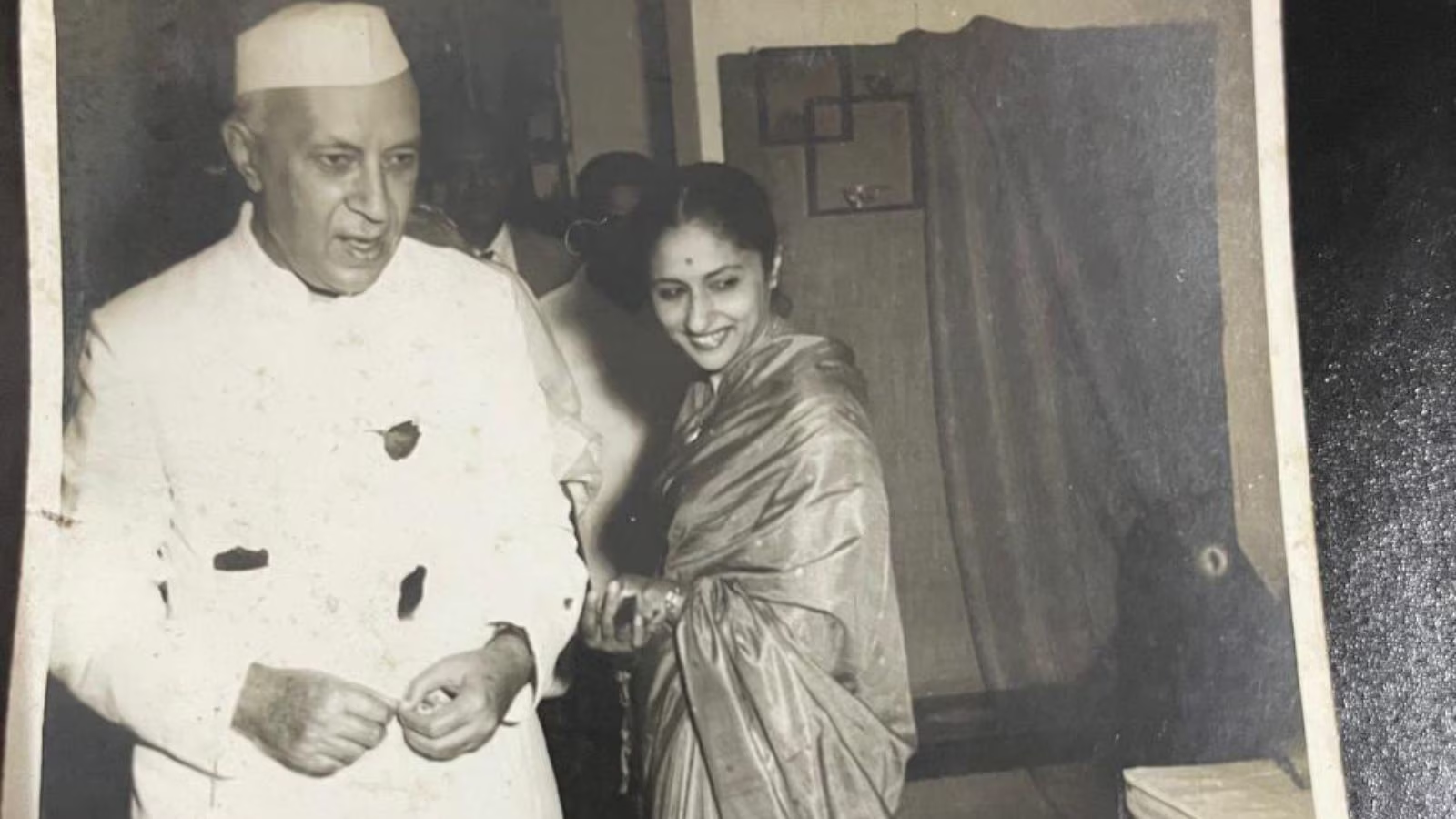
It is an apt occasion to look back at certain events that took place soon after General Cariappa took over as the Army chief, setting the tone for an apolitical Army in Independent India. The then prime minister, Jawaharlal Nehru, chided General Cariappa for having publicly praised the Government saying that it should have been avoided and that military officers should not broach political subjects in public. A letter that he wrote to General Cariappa on May 24, 1949, forms part of the Nehru Archives.

In an interview at Dehradun on May 2, 1949, Cariappa remarked, “The achievement made by the country under Pandit Nehru’s leadership in so short a period has no parallel in history.” He added that “the last Commonwealth Conference in London, when seen in clear perspective, will be found to have been a great triumph for the prime minister”. He also said that the people had not clearly appreciated the all-round progress made by the leadership.

Nehru was not pleased about these remarks made by the Army chief and conveyed his displeasure to him in no uncertain terms. “About three weeks ago, you made a statement to the press in the course of which you congratulated me for my work at the Commonwealth Conference in London. You further drew attention to the all-round progress made by the present leadership in the country. I am grateful to you for what you said. But this raises an important point, and indeed the press has drawn attention to this. Should our officers, civil or military, even including the head of the Army, express any opinion in regard to political subjects in public,” he said.

Nehru questioned whether senior officers should speak in praise of the work of the Government.

“Indeed should they deliver public speeches at all except on matters strictly confined to their own work or some social or cultural subjects? What you said was harmless enough, but there is always a danger in touching upon political questions. Obviously, it would be highly improper for an officer to criticise Government, more especially on a political issue. If this is so, then praise of Government should also be avoided,” said Nehru.

‘Avoid public statements completely’

The then prime minister said he was drawing the Army chief’s attention to this matter as Cariappa set the tone for the Army, and Nehru did not want the Army to get mixed up in any way with politics. “You yourself have made this clear on many occasions. In the past I did not like the activities of some Sikh officers who indulged in communal politics. The safest course, therefore, is for all officers to avoid public speaking or public statements completely except on strictly limited topics. Sometimes an officer may not even know the exact political significance of some issue or some remarks he might inadvertently make,” he said.

Nehru noted that the Government had the largest political party and organisation at its back.

Nevertheless, there are other parties and groups, and they might object to the Army doing or saying something in praise or in criticism of political parties or ideologies, he said.

Nehru said Field Marshal Bernard Law Montgomery, a noted British military personality of World War II, is apt to let himself go in public. “He has been repeatedly asked by the British Government not to do so. Recently, I was in Switzerland, and some members of the Swiss Federal Government told me how they had been greatly embarrassed at a rather casual remark of Montgomery in Switzerland,” he said.

In fact, Nehru and Cariappa continued to spar on various issues even after the retirement of the latter as Army Chief.

Cariappa’s unhappiness over Himachal L-G appointment

In a letter written to the prime minister in 1958, General Cariappa expressed unhappiness over the report regarding the appointment of J K Bhonsle, who had been a member of the Indian National Army, as the Lieutenant Governor of Himachal Pradesh. Cariappa had written that Bhonsle, by serving in the INA, had shown disloyalty to the then Government and had also been disloyal to the traditions of the Army.

Cariappa had also expressed his disagreement with the military guard firing a ‘feu-de-joie’ (ceremonial rifle volley), sounding of the Last Post on bugles, and so on, as is done at military funerals, at Rajghat, the samadhi of Mahatma Gandhi, on January 30. He said he found it “out of place” in that atmosphere of “sanctity, purity and solemnity”.

Nehru responded by saying that the military honours at Rajghat were decided upon after careful consideration. On the issue of Bhonsle, Nehru said that whether he did right or not when he joined the INA under very peculiar circumstances in Malaya was a subject on which there might be differences of opinion.

“You know that we have not criticised our present army officers or men because they served the then British Government in India loyally. We have spoken highly of our army. But it is another matter for us to condemn for ever a person who, in a peculiar set of circumstances, thought it his duty to serve his country in another way. I do not know what I would have done if I had been in such a position,” he said.

Nehru commented that British army officers functioned with neither ability nor courage in Malaya. “Ultimately, they meekly surrendered, having made a mess of things. In India, conditions were very peculiar, and the country generally was opposed to the British. If a young Indian was affected by this widespread sentiment in India, I certainly am not prepared to blame him,” he said.

source: http://www.indianexpress.com / The Indian Express / Home> News> Cities> Chandigarh / by Man Aman Singh Chhina / January 11th, 2026

Rashmika Mandanna Becomes Kodagu’s No.1 Taxpayer; Find Out What She Paid

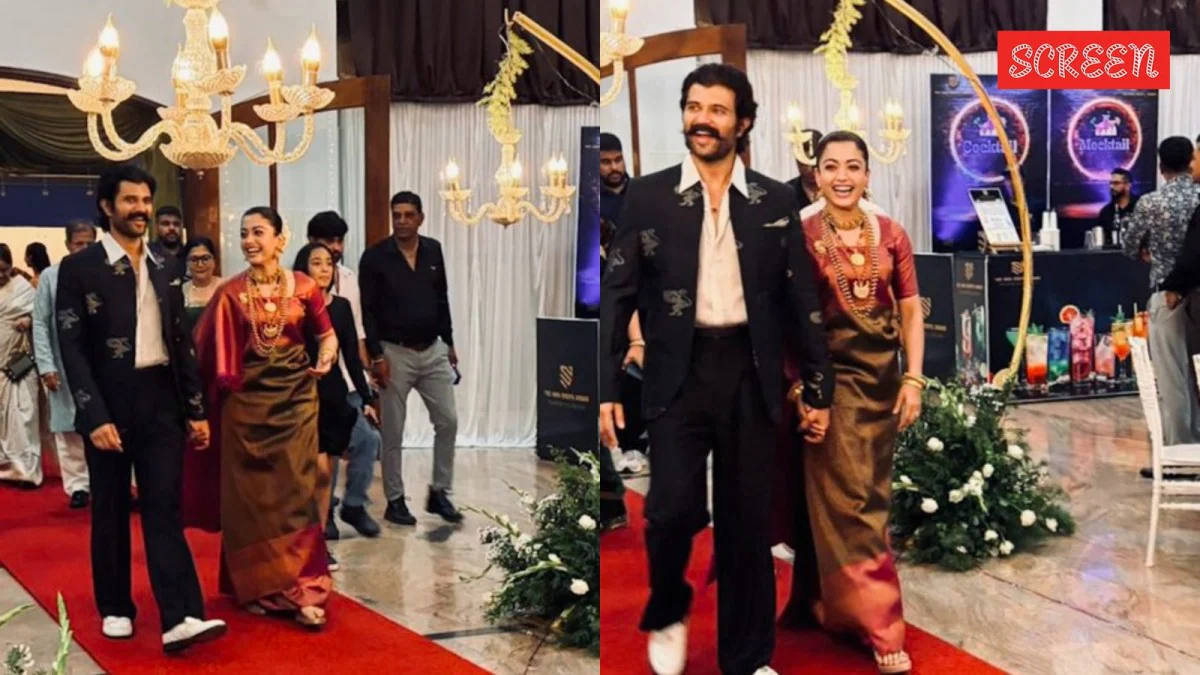
Rashmika Mandanna has added another remarkable achievement to her name by emerging as the highest taxpayer in Kodagu district, creating pride among locals and fans while proving her success goes far beyond the film industry.

From Kirik Party to National Stardom

Rashmika Mandanna, fondly called the “National Crush,” has come a long way since her breakthrough in the Kannada film Kirik Party. Today, she stands tall as one of India’s most successful actresses, making a strong impact in South cinema and Bollywood with consistent box office successes.

The Rise of a Box Office Queen

With multiple hit films across languages, Rashmika has earned the title of “Box Office Queen.” Her strong screen presence, versatility, and audience connect have made most of her films commercially successful, placing her among the most bankable stars in the Indian film industry today.

Pride of Kodagu District

Hailing from Virajpet in Kodagu district, Rashmika has become a source of immense pride for her hometown. Kodagu has produced several notable personalities, but Rashmika’s achievements have set her apart, elevating her status beyond cinema and making her a standout figure from the region.

Biggest Taxpayer in Kodagu

In a remarkable achievement, Rashmika Mandanna has emerged as the highest income taxpayer in Kodagu district. She has reportedly paid ₹4.69 crore in income tax for three quarters of the current financial year, securing the top position among all taxpayers in the district.

Marriage Buzz Continues

Apart from professional milestones, Rashmika is also in the news for personal reasons. Reports suggest she may soon marry actor Vijay Deverakonda, with rumors pointing to a February 26 wedding in Udaipur. However, no official confirmation has been made by either star yet.

source: http://www.newsable.asianetnews.com / Asianet News, English / Home> Entertainment / by Nancy Tiwari / January 07th, 2025

Why Dr. M. Soni, Kavery Nambisan, And Twisha Ray Are The Three Modern Literary Stars Of 2025

The year 2025 stands as a defining moment in contemporary literature, marked by voices that combine depth, purpose, and cultural relevance. The three modern literary stars of 2025 represent distinct yet powerful dimensions of today’s literary landscape, spanning spirituality, fiction, and poetry. Through thought leadership, storytelling rooted in lived experience, and emotionally resonant expression, these writers have shaped conversations beyond the page. Their work reflects the evolving spirit of literature in a time that values authenticity, insight, and impact, positioning them as influential figures whose words continue to inspire readers, thinkers, and future generations.

The three modern literary stars of 2025 are:

  • Dr. M. Soni
  • Kavery Nambisan
  • Twisha Ray

DR. M. SONI – Empowering Minds Through Knowledge, Purpose, and Practice

Dr. M. Soni stands among the three modern literary stars of 2025 as a respected soft skills trainer, academician, and spiritual author with more than sixteen years of experience across corporate, academic, and consulting domains. Her work focuses on empowering individuals through leadership development, effective communication, and holistic personal growth. Known for seamlessly blending traditional wisdom with modern relevance, she has trained thousands of learners and professionals, helping them unlock clarity, confidence, and purpose.

As an accomplished author, Dr. Soni has written multiple books on spirituality and has co-authored over three hundred and fifty anthologies, reflecting her wide literary influence and disciplined scholarship. Her deep passion for Indian epics and her keen understanding of human behavior come together powerfully in her latest book, Warrior’s Mindset Soft Skills from Indian Mythology. This work transforms timeless mythological narratives into practical tools for professional and personal success. Her writing speaks equally to students, young professionals, and lifelong learners, awakening the inner warrior through wisdom, discipline, and self mastery.

KAVERY NAMBISAN – A Distinguished Voice in Contemporary Literature

Kavery Nambisan is a celebrated Indian novelist and surgeon whose writing has earned her a prominent place among modern literary stars of 2025. Born in the Kodagu district of Karnataka and trained as a surgeon, she has spent much of her medical career serving rural communities across India while simultaneously building a distinguished literary legacy. Her unique perspective as a medical professional deeply informs her fiction and non-fiction work, giving her narratives both emotional depth and social insight.

Her body of work includes several acclaimed novels that explore diverse themes of identity, culture, gender, and history. Early novels such as The Scent of Pepper and Mango-Coloured Fish depict the lives and traditions of Indian society with rich, evocative detail. On Wings of Butterflies offers a powerful narrative rooted in the women’s movement in India, while The Hills of Angheri draws on her own medical experiences to portray the challenges of life as a doctor. Her later novel The Story That Must Not Be Told was shortlisted for prestigious literary awards including the DSC Prize for South Asian Literature and the Man Asian Literary Prize. A Town Like Ours extends her literary exploration to the complex social dynamics of small town India.

In 2025 she added to her remarkable catalogue with Rising Sons, a deeply reflective novel that traces the historical and social contours of village life in southern India. Beyond fiction, her non-fiction work A Luxury Called Health critically examines the Indian healthcare system while weaving personal medical narratives on ethics and care.

Kavery Nambisan’s contribution to Indian English literature is defined by its narrative strength and cultural resonance. Her ability to blend lived experience with literary sophistication continues to inspire readers worldwide and cements her status as a defining literary voice of her generation.

TWISHA RAY – Where Lyrical Depth Meets Modern Introspection

Twisha Ray has emerged as one of the three modern literary stars of 2025, earning recognition as a powerful poetic storyteller known for emotional authenticity and lyrical precision. Her writing reflects a deep engagement with self identity, transformation, and inner endurance, conveyed through vivid imagery and expressive metaphors. With a meditative approach to language, she captures the complexities of human experience in a manner that feels both intimate and universal.

By 2025, Twisha Ray has continued to expand her literary presence through digital publishing, live poetry sessions, and collaborative creative projects. Her work resonates strongly with readers who seek honesty, reflection, and emotional truth through art. Her growing influence highlights the evolving landscape of contemporary Indian literature, where poetic elegance meets raw emotional depth.

Twisha Ray was recently chosen for the Majestic Pen Award 2025 by Cherry Book Awards in recognition of her lyrical storytelling, emotional clarity, and meaningful contribution to India’s modern poetic movement. Her ability to articulate healing and transformation with aesthetic grace has set her apart as a distinctive literary voice. Representing a new generation of Indian poets, she brings authenticity, vulnerability, and innovation to the forefront, making her a compelling and deserving literary figure of 2025.

source: http://www.hindustanmetro.com / Hindustan Metro / Home> Lifestyle> Brandpost / by Abhishek Kapoor / December 23rd, 2025

I would like to see more players with me from Karnataka: Poovanna CB

Ahead of the India hockey team’s Australia tour, Poovanna CB, a first-time player from Karnataka, reflects on aspirations for the 2026 World Cup.

Poovanna CB

Bengaluru boy Poovanna CB, a 22-year-old hockey player, originally from Kodagu, has been included in the 24-member national team for the first time. “A couple of years ago, my goal was to be here in the core team. Now that I’m here, I’m just happy to play alongside those I’ve always wanted to play with,” he says, sharing his excitement. “All these players have a lot of experience in the game and I’m learning a lot. I admire Manpreet’s energy, seeing him play like that, Harmanpreet’s consistency and attitude towards the game, Hardik and how hard he plays, and Abhishek and Sukhjeet, who have made a lot of difference for the team in the last couple of years,” he adds, speaking to CE on the hockey field at the Sports Authority of India (SAI) grounds, ahead of his departure with the team to Australia for a four-match series.

The lead-up to the Australia tour has meant rigorous practice for Poovanna, with his days starting early and involving two training sessions before wrapping up in the evenings. He explains, “I get up at 6.30am, freshen up, have breakfast and mentally prepare for the intensity of the day’s training, which starts at 8.30am. Red days are high intensity, orange is a little intensive, and on green days we focus on technicalities and concentration.” In between practice sessions, the youngster has also been pursuing higher studies, “I’ve also been attending online seminars and classes for my MBA and try to read a few chapters of books in between,” he says.

Hailing from Kodagu and being surrounded by a rich hockey culture as a child was how Poovanna first got introduced to the sport. Recalling those early days, he credits his mother with pushing him to pursue the sport further, saying, “As a Kodava, we have huge hockey festivals and my dream as a kid was to play for the family team. I started in Class 5 and would play whenever I got some free time.” He adds, “It was my mom who really wanted to make me something of player. I got selected for one of the first batches in Ashwini Nachappa’s academy. Those three years really helped me grow. The coaches there taught me a lot in terms of my fitness and physicality – I think that’s when I grew up.”

Players from Karnataka and particularly Kodagu, were once a common sight in hockey teams but that hasn’t been the case for the last few years. Poovanna comments, “A few years ago, we had a lot of Karnataka players like Raghunath, SK Uthappa, SV Sunil, in the team which was really nice to see. It is sad that it’s just me now; I would like to see more players with me from Karnataka.” He speculates that the reason may be a lack of opportunities to compete. “We need more exposure tournaments where more players can play and talents can be found. There are hundreds of players and one tournament cannot accommodate them all. In Punjab, things have improved a lot, and there are many opportunities for kids to compete in and showcase their talents,” he says.

source: http://www.newindianexpress.com / The New Indian Express / Home> Bengaluru / by Mahima Nagaraju / August 12th, 2025

Field Hockey : 100 years of Indian Hockey: BP Govinda, hero of 1973 World Cup semi-final win over Pakistan, reflects on two historic victories over arch-rivals

(Courtesy : Hockey India)

India also outclassed Pakistan in the 1975 WC final.

In the last half a decade, the Indian men’s hockey team have bagged two bronze medals at the Olympic Games, and that brought a lot of joy to the fraternity.

India had to wait a bit before experiencing Olympic glory, but that was not the case for a major part of the last 100 years. With 13 medals at the Olympic Games, and three at the World Cup, India is among the most decorated teams in the sport.

Reflecting on India’s glorious history, a two-time World Cup medallist (1973 and 1975) and an Olympic medallist (1972), BP Govinda said, “It is a nice thing and a big achievement that we can celebrate such a glorious 100 years of Indian hockey.

“The journey started all the way back in 1928 with our first Olympic medal, and we are all very happy that Hockey India is making a celebration of this landmark of 100 years.”

Considered to be one of the fastest players during his era, BP Govinda was a crucial part of the Indian team. In 1973, it was his goal that helped India overcome Pakistan in a thrilling semi-final, before they went onto finish with silver.

In the next World Cup in 1975, BP Govinda again played a big role in the team’s success, scoring important goals in the tournament, as India outclassed arch-rivals Pakistan in the final to win the coveted gold medal.

Reflecting on the memories of those World Cup campaigns, BP Govinda said, “1975 World Cup we really outclassed Pakistan in the finals, but before that Malaysia gave us a very tough time in the semi-finals.”

He further added, “When we won the gold medal in 1975 in the World Cup in Kuala Lumpur, there is no words to express the feeling. All the members of the Indian team were overjoyed, and there was a lot of emotions, as it was a first World Cup gold medal, and of course we were all very thrilled to stand on the podium.”

Now as a former player, and a fan of the sport, BP Govinda believes the current generation of players should always aim high.

He said, “As a team, the Indian men’s hockey team should always expect a lot from themselves. It is important to be aiming for the top prize, the team should always aim for a gold medal. We have won two bronze medals in the last two Olympics, I hope we can make it better in the next Olympics and World Cups.”

source: http://www.khelnow.com / Khel Now / Home> Field Hockey / by Alex / November 05th, 2025