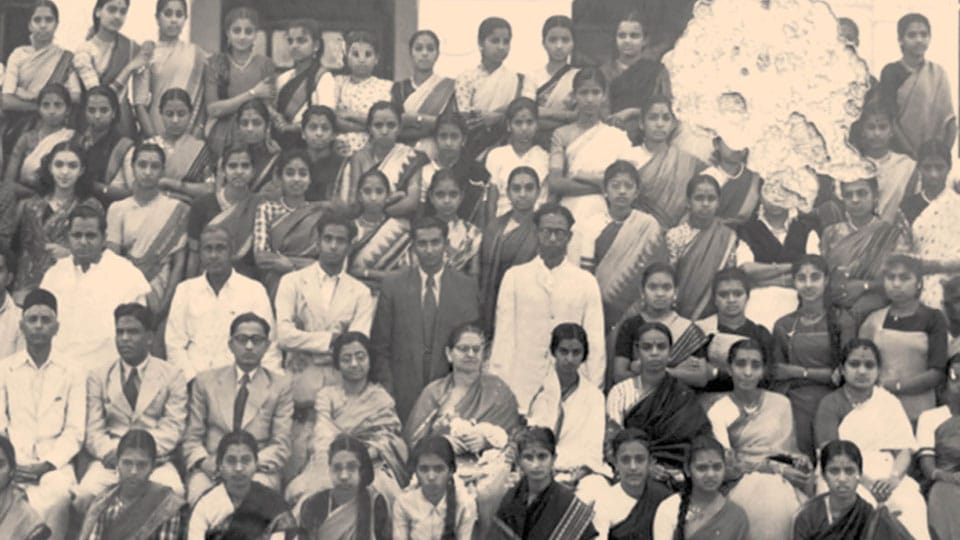
My memories of Maharani’s College, Mysore [now Mysuru], come to life whenever I pass the building where I studied seven decades ago. In the heart of the city, the College is still painted in the classic pale yellow and emerald green of old Mysore buildings. It is surrounded by old rain trees with spreading branches. Students would sit in their shade to chat or eat their lunch.
I had been a lonely, home-schooled girl until I passed the SSLC privately and could join the Intermediate College. I was nervous about interacting with my peers. Most girls in those days, wore saris or “Langa-davani” [half sari]. But I was “sensibly dressed” by my mother Mukta. She kitted me out in what was then called “Punjabi Dress”; a kurta-pyjama outfit and a “chador” [a Farsi word she had found for chunni or veil]. Naturally, I got teased. “Enu, ninu Mysuru hudugiallava? Punjab inda yavaga bande?” [Are you not a Mysore girl? When did you come from Punjab?]
The College was established by the far-sighted Maharani Kempananjammanni Vani Vilasa Sannidhana in 1917 for women’s education. Broad verandahs with arched pillars encircled the ground and upper floor. A wooden staircase with a wide bannister led upstairs, the steps worn down and polished smooth over the years by the cascading feet of many young girls. Across the road was the Hostel.
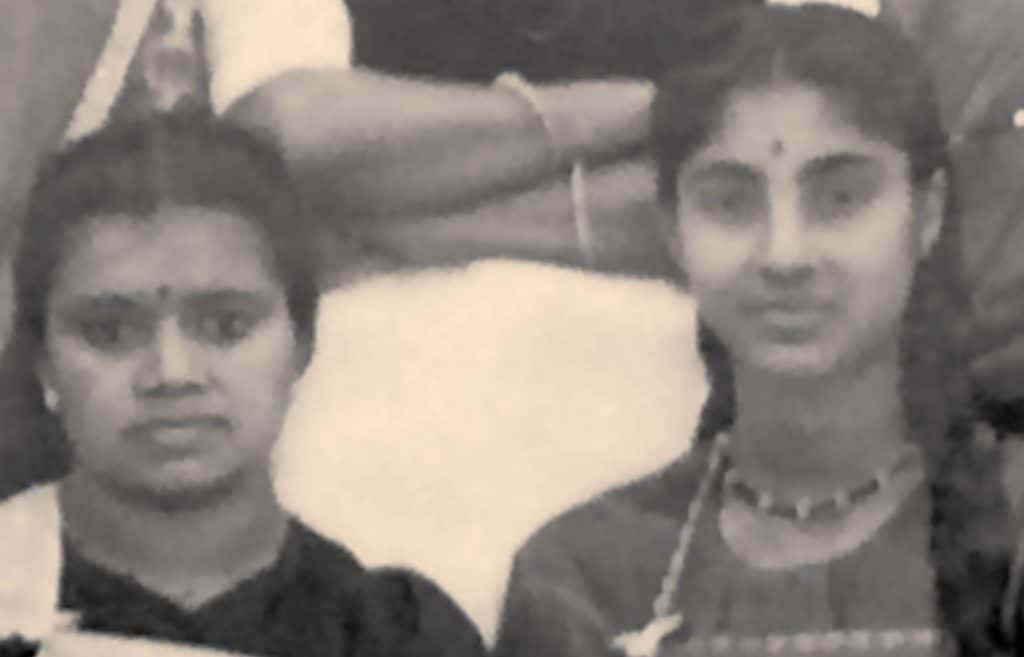
Girija’s friends Bollamma and Dechamma.
My first friend was Cauveriamma from Coorg [now Kodagu] and she introduced me to two girls in the Hostel; Bollamma and Dechamma. Bollamma was plump with twinkling eyes and a dimpled smile.
Dechamma was a beauty with a chiselled nose, arched black eyebrows and dark eyes while her cheeks were tinged with pink. They were friendly and generous, hospitably sharing treats that came from their homes in Kodagu.
The Principal was Jayalakshammanni, an Ursu lady. She was tall with an extremely “fair” complexion. Her natural reserve and imposing personality quelled the pupils without her having to speak at all.
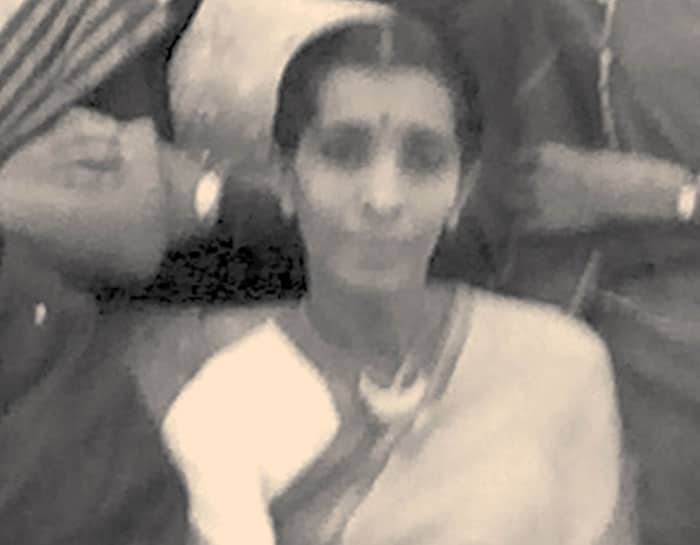
Gangamma, the History Lecturer, presided over the most interesting classes we had. She too was from Kodagu. A slender woman of medium height, she had a remarkable rapport with the class.
Gangamma, the History Lecturer.
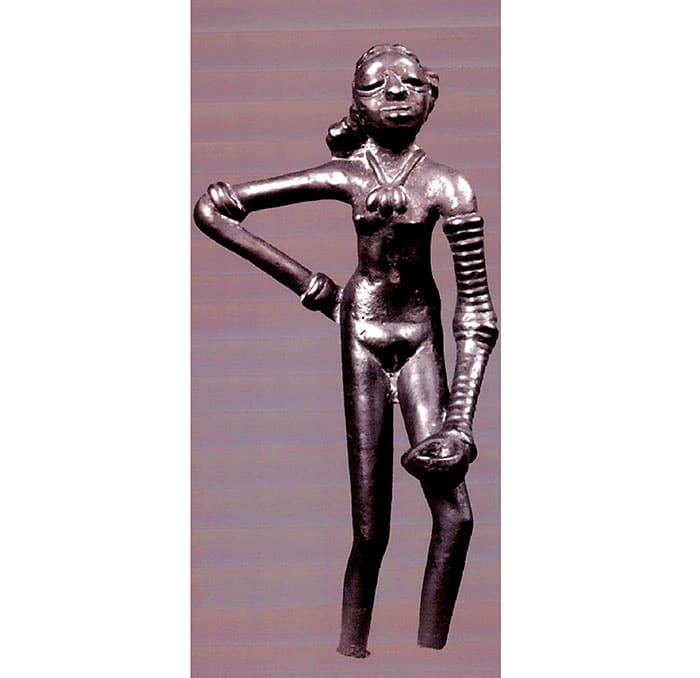
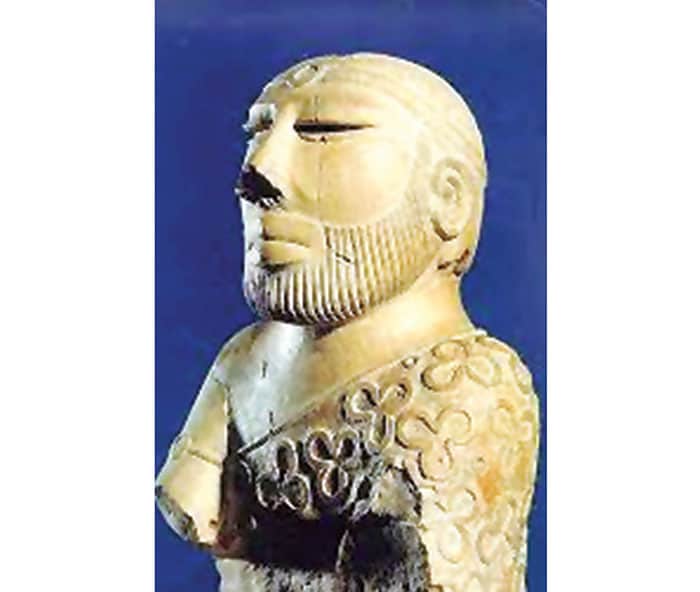
Her tasteful sarees were worn with delicate jewellery; a triangular gold pendant on a thin chain or a double tiger-claw charm, glass bangles which tinkled as she gestured during her spirited lectures. The first lesson was about Mohenjo-Daro. She roused our interest describing the bust of the Priest King of Mohenjo-Daro, his head band, the floral design on his robe. She described the famous “naked” statuette of the Dancing Girl, “She wore no clothes girls, only many bangles!” which brought the house down.
We were required to study Greek and Roman history in addition to Indian history. Even the complicated sagas of the Peloponnesian Wars, the Athenians, Spartans and other warring Greeks were enlivened by her lectures.
Logic was taught to us by H.T. Shanta, who is remembered in Mysore University circles for her erudition in philosophy. She lectured us on subjects like the Fallacies in Logic, giving us a break when the lessons became abstruse or hard to follow. With just ten minutes to the bell, she would relate funny stories or ask a good singer in the class to render a “fillum hit.”
The Dancing Girl.
Once we discussed superstitions; that it is unlucky to walk under a ladder or have a black cat cross your path. The one that appealed to her most had been taught to me by my mother. It was about crows:
“One for sorrow,
Two for joy
Three for a letter
Four for a boy
Five for silver
Six for gold
Seven for a secret never told.”
The English lecturer was Sharada. Pupils who were not proficient in English were in awe of her. After reading a poem aloud, she would ask the student to explain it line by line. I was asked to paraphrase “On Westminster Bridge” by William Wordsworth. Drilled by my mother, I already knew the poem. However, I slipped up when asked the difference between “riot” and “ryot.”
Bust of the Priest King of Mohenjo-Daro.
My second language was Hindi. I was in a class of just a few girls. Our Lecturer, R. Deve Gowda, was a big, swarthy man with crisply curling hair and a strong jaw. He had studied at the Banaras Hindu University. Apart from our serious texts, he would regale us with Hindi Dohas [couplets] from Kabir, Tulsidas or Rahim [the Sufi Abdul Rahim Khan-i-Khanan, 1556-1627, of Emperor Akbar’s court]. A Doha by Rahim on marriage ran like this:
“Rahimanbiyahbiyadi hai, sakuhu to lehubachai, Paayanbediparat hai dholbajai, bajai.” [Rahim says marriage is like an ailment, to be avoided if possible. Fetters are placed on the feet while drums are played]
Recalling it now, I began to wonder if a Sufi mystic really wrote this! The Doha was found by a helpful friend, just as I remembered it long ago…on an Osho blog !
These first two years in the University were the formative ones in our life; honing our talents, channelling our interests in the best direction. Now I see the splendid new Maharani’s College on Valmiki Road. On the pavement there, under green and white striped awnings, flower shops display ready-made bouquets or tubs of gladioli, gerberas, lilies, roses and chrysanthemums.
Until the pandemic, the bright faces of the girls going home from class and their colourful attire were a counterpoint to the floral colours. I hope that the hopes and ambitions of these young Indians are realised. Decades hence may they also think back on their days in Maharani’s College with pleasure as I do.
source: http://www.starofmysore.com / Star of Mysore / Home> Feature Articles / byGirija Madhavan / June 14th, 2021
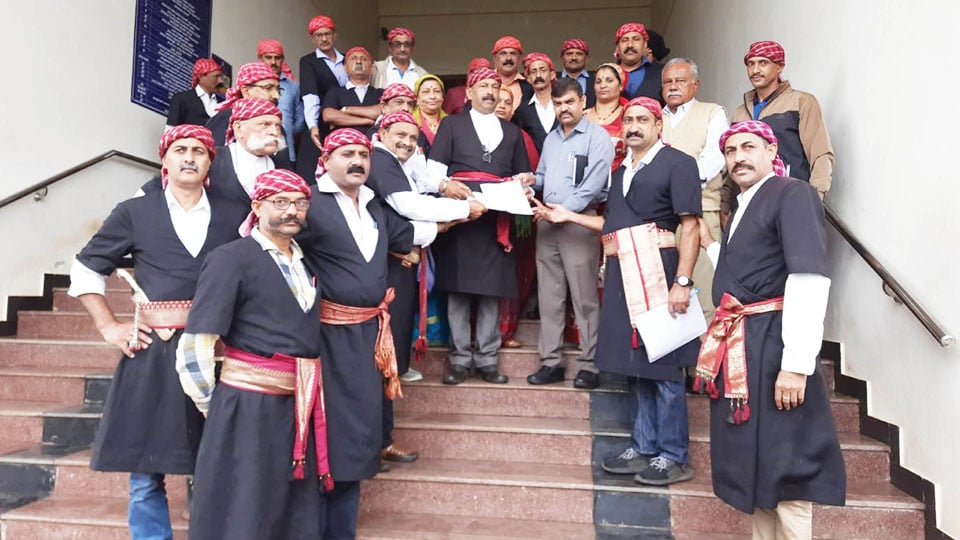
Urging the Government to facilitate the Kodava Land Geo-Political Autonomy under Articles 244, 371 (read with 6th & 8th Schedule of the Constitution) and also Scheduled Tribe (ST) tag to Kodava tribe among various other demands, Codava National Council (CNC) President N.U. Nachappa and the other Council members staged a stir in front of the Deputy Commissioner’s Office in the town yesterday.
The Government must consider Kodavas as a Scheduled Tribe community and must officially provide the ST tag at the earliest. Under the Constitution Act 25 and 26 the Kodava Gun Rights should be continued without any time restriction and also Kodava language should be incorporated in the 8th Schedule of the Constitution.
The Kodava cultural heritage should be included in the Intangible Cultural Heritage list of UNESCO, the members demanded.
“The Kodava community has its origin only in Kodagu and the people are being neglected. If this continues, all the history and culture of the community will disappear without any trace. The CNC from the past few years are fighting for the rights of the whole community,” they said and submitted a memorandum seeking to fulfillment of their demands.
Council members B. Savitha Girish, P. Swathi Kalappa, C. Jyothi Nanaiah, Ltn. Col. B.M. Parvathi, K. Prakash, B. Chippanna, P. Kalappa, A. Lokesh, A. Girish, M. Manoj and others were present.
source: http://www.starofmysore.com / Star of Mysore / Home> News / July 03rd, 2022
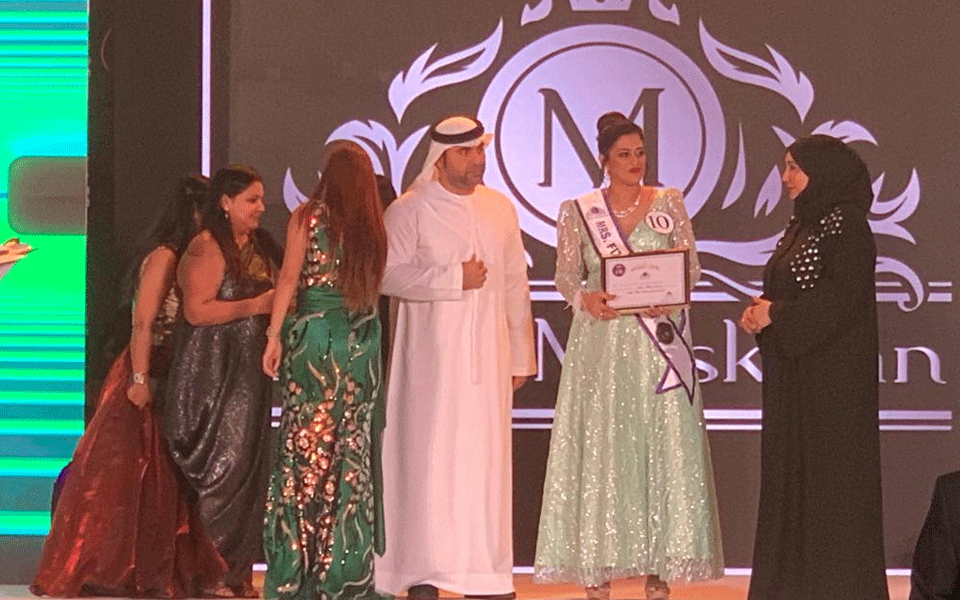
Dechamma Poonacha(Dechamma A.P) has won the Mrs Fitness Queen Title at Mrs UAE International by ‘Being Muskaan’, a leading UAE based brand launched by Meena Asrani, focused towards women empowerment.
The contest was held on June 26th at Radisson Red, Dubai Silicon Oasis and was open to all nationalities residing in UAE.
Mrs. Dechamma is currently a home maker. She is a former student of Rotary English Medium School Moodbidri and also was the student of the first batch.
She further continued her high school an PU education at Jain highschool and PU college Moodbidri.
She pursued her graduation at Sri Bhuvanendra College Karkala where she won Miss. Bhuvanendra in 1997 and Miss. Jaycee Kulyadi queen, Karlala in 1998.
She was born in Coorg but was raised in Moodbidri.
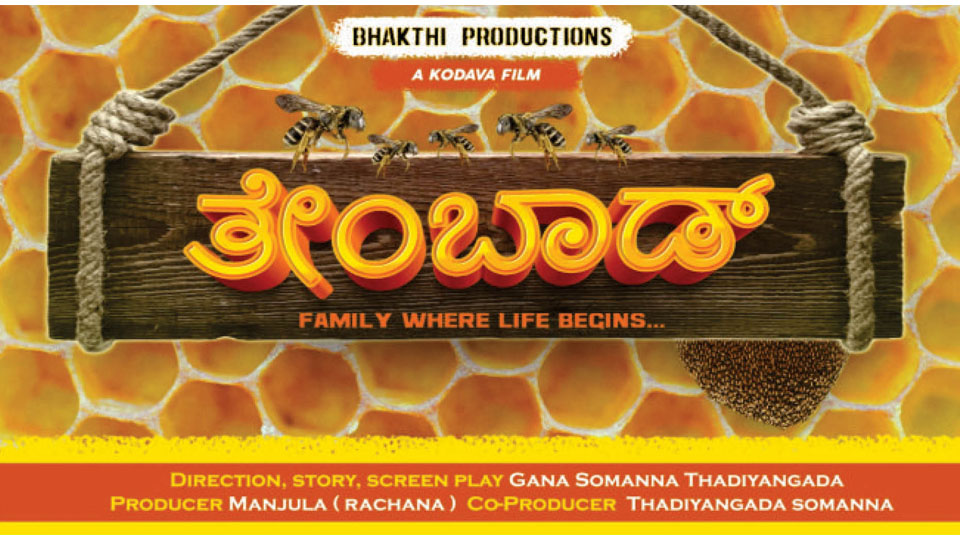
Under Bhakthi Production, a Kodava movie titled‘Thembaad’ (family where life begins) had successful shows in Kodagu and has reached every Kodava with Kodava culture shown and a message to be passed to every individual on how a family should be.
A complete family story with entertainment, comedy, suspense, emotions and culture.
The Screen Play – Story and Direction is by Gana Somanna Thadiyangada;
This movie, which was screened successfully in Gonikoppa, Virajpet, T. Shettigeri and Napoklu, will now be screened in Mysuru at Kodava Samaja in Vijayanagar I Stage on July 2 and 3 (Saturday and Sunday).
The convocation ceremony for the 72 Staff Course of the Tri-Services Defence Services Staff College, Wellington (Nilgiris), was held recently.
A total of 421 Officers from the Indian Armed Forces, 40 Officers from friendly foreign countries and five Civilian/ Paramilitary Officers graduated from this institution, on completion of the eleven-month course.
Dr. Krishan Kant Paul, Governor of Uttarakhand, was the chief guest.
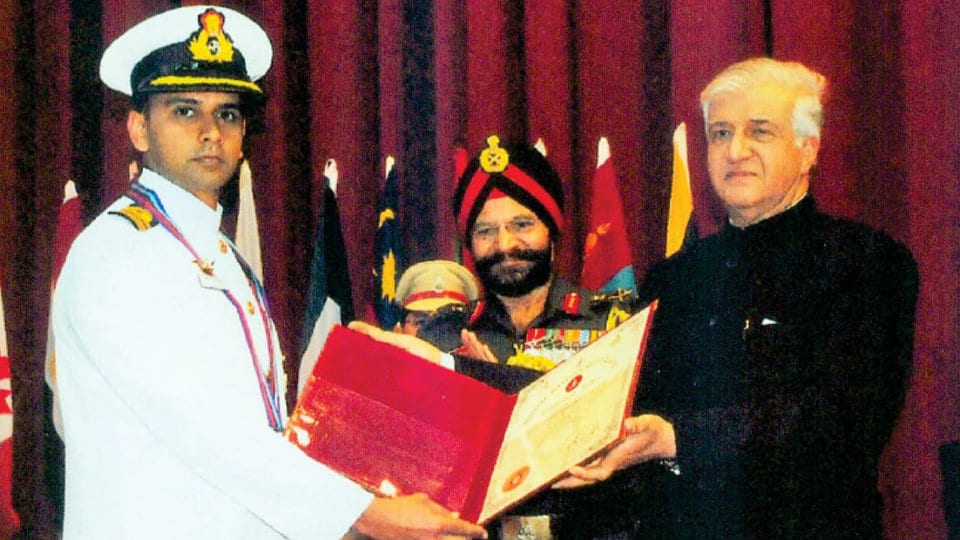
At the ceremony, Commander Battianda Kaveriappa Ponnappa was awarded the Manekshaw Memorial Medal and the Royal Purple Gorkha Brigade Medal.
The Manekshaw Medal, instituted in memory of Field Marshal SHFJ Manekshaw, MC, is awarded to the Officer standing first in the Overall Order of Merit in the course in each wing (Army, Navy and Air Force), whereas the Royal Purple Gorkha Brigade Medal is awarded to the Officer who displays the best spirit of true jointmanship in each wing.
Cdr. B.K. Ponnappa was commissioned into the Indian Navy on July 1, 2003 and is an alumnus of the National Defence Academy, Khadakvasla.
He was the only Kodava Officer among 461 Officers in this batch. At present Cdr. B.K. Ponnappa is posted at Naval Head Quarter, New Delhi.
Commander B.K. Ponnappa, son of Major (Retd.) Battianda Kaveriappa and Prema, is married to Nivya Chengappa, daughter of Kattera A. Chengappa and Roopa, residents of Mysuru.
source: http://www.starofmysore.com / Star of Mysore / Home> News / May 17th, 2017
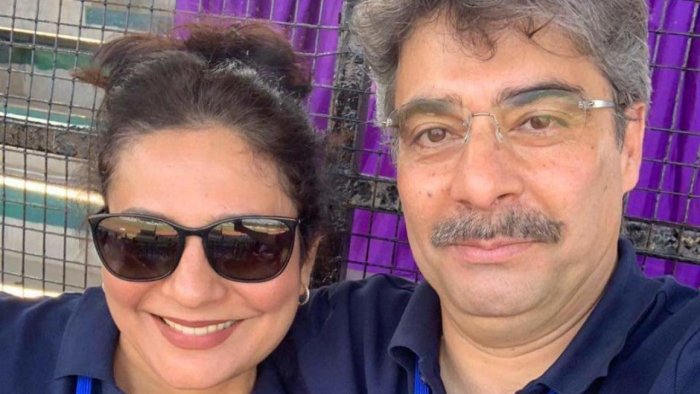
Poonam Chattoo with her husband and Real Kashmir owner Sandeep Chattoo.
Over the past couple of seasons, Real Kashmir FC have been a beacon of joy for the people in India’s northernmost union territory. A club that beat many odds to gain promotion to the I-League, mounted a title charge against all expectations in its first season in top-flight football and overcame the challenges posed by lockdown to achieve higher standards.
The men’s team has brought smiles to their people. And now it’s the women’s turn. At the helm is Poonam Chattoo, a Karnataka native who made Kashmir her home after her marriage to RKFC owner Sandeep Chattoo three decades ago.
“My parents are coffee planters settled in Kodagu after my father retired from the Food Corporation of India. It’s been a long journey from Kodagu to Kashmir, both diverse culturally, geographically and climatically, but I am grateful for the love and affection I have received,” Poonam, who gradutated from Bengaluru after schooling in Chandigarh, tells DH.
The women’s team has been in the making for a long time and the response has been overwhelming, according to Poonam, a teacher.
The requests flooded in from girls after RKFC made a name in the I-League but with so much unpredictability, they started in a small way with a She Power Programme with DPS, Srinagar. Now, the club has taken the plunge by starting registrations for building U-10 and U-14 teams. A training ground also has been identified and plans are being made to ensure they take part in national tournaments.
“(Coming from Karnataka) Sports is definitely in our blood. That mindset has helped me see things differently. All that these young girls need is just an avenue for their talents to bloom,” says Poonam.
“The past year has been dark but then the last couple of decades have not been easy either. Sport has always provided psychological, physiological and cathartic relief and I have always felt that the women have borne the bigger brunt of the circumstances. The girls just did not have an outlet.”
In her quest for understanding the difficulties, she had chats with Afshan Ashiq — captain of Kashmir football team and part of the recent virtual meeting with PM Narendra Modi for the Fit India Movement — about the trials and tribulations she faced and continues to face. Poonam also spoke to Irtiqa Ayoub who runs a rugby team in Kashmir.
“God willing, if we are able to bring hope to even a handful of young girls, I would consider it a blessing,” Poonam admits.
There are big challenges ahead, though, especially for someone as inexperienced as Poonam in the labyrinth that is Indian football.
“Yes, I have no experience of managing a football team, but having been a teacher it shouldn’t be a problem, plus we have very able coaches and a support team. And of course, we have a big brother in RKFC who we can always call for support.
“One doesn’t stop living….we just find different ways to go about our business,” she says.
Well, few are as adept at doing that at that as RKFC.
source: http://www.deccanherald.com / Deccan Herald / Home> Sports> Football / by Sandeep Menon, DHNS, Bengaluru / September 29th, 2020
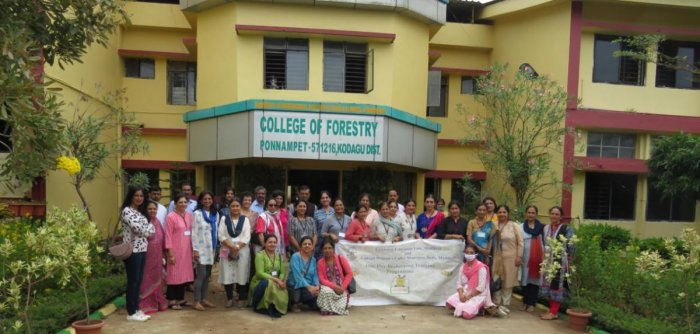
Participants at the training programme on apiculture at the College of Forestry in Ponnampet.
Apiculture helps in increasing the production of coffee and other crops, said College of Forestry head Dr Cheppudira G Kushalappa.
He was speaking during apiculture training organised by the University Of Agricultural and Horticultural Sciences and Kodagu Women’s Coffee Awareness.
There are ample opportunities for apiculture in Kodagu. The beekeeping should be taken up scientifically, he added.
Stating that honey production has declined in the district, he said there is a need to create awareness on apiculture.
Kodagu Women’s Coffee Awareness secretary Anitha Nanda said there is a need to concentrate on apiculture along with coffee plantation.
Dr R N Kenchareddy, the college extension wing head, said, “Those interested in apiculture will be given three months training. They will be given Rs 7,500 as allowance.”
source: http://www.deccanherald.com / Deccan Herald / Home> State> Mangaluru / by DHNS, Ponnampet / January 17th, 2021
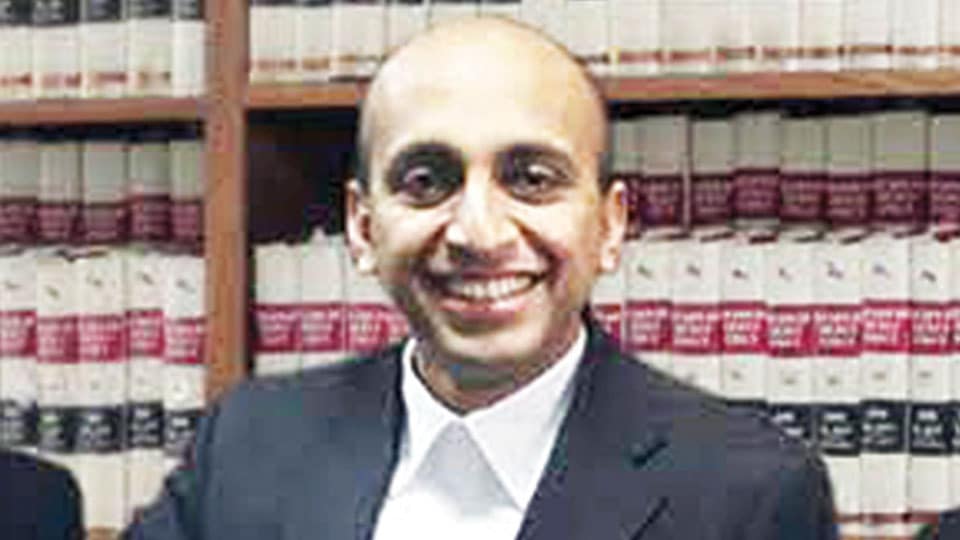
The President of India has appointed C.M. Poonacha as the Additional Judge of Karnataka High Court yesterday.
His appointment will be for two years, with effect from the date he assumes office. His service will be permanent after a two-year probationary period. With this, the strength of Judges in the HC has increased to 44 as against the sanctioned strength of 62.
The Supreme Court Collegium had first recommended the appointment of Poonacha as the Judge of Karnataka High Court in October 2021. Poonacha, who has more than 20 years of practice experience as an advocate, was recommended for the post by former Chief Justice A.S. Oka-led Supreme Court Collegium.
C.M. Poonacha commenced his career in law in the chambers of senior advocate S.K.V. Chalapathy and thereafter under his father late Cheppudira M. Monnappa, who was also a noted advocate. In 2001, Poonacha, along with Kiran V. Ron and R. Sukruta, established Lexplexus, a law firm in Bengaluru with a primary objective of providing diverse legal solutions to clients that include individuals, organisations of various types and large Corporations. The team has trained many budding advocates.
Poonacha is known as Nayan in family circles and hails from Nokya Siddapura near Thithimathi in Kodagu. He has served as Additional Government Advocate in the High Court and has been commended both by the Government and the Court for his professional approach in issues of national importance. His mother Shaila hails from Kandrathanda family.
Poonacha is married to Kanjithanda Savitha, daughter of Dr. Kanjithanda Chinnappa and Sharada couple. Savitha too practices as an advocate. The couple has a son and daughter Somaiah and Hitha.
source: http://www.starofmysore.com / Star of Mysore /Home> News / June 09th, 2022
Marking World Karate Day (June 17), Mysore Karate Association has organised ‘Karate for Self-dense’ programme at Sports Pavilion in Maharaja’s College Cricket Grounds on June 26.
Over 1,000 Karate enthusiasts from across the State will present Karate skills on the occasion.
District Minister S.T. Somashekar will inaugurate at 7 am. University of Mysore (UoM) Vice-Chancellor Prof. G. Hemantha Kumar will preside.
International Karate Master and Mysore Karate Association Hon. President Cheppudira Arun Machaiah, Mysuru SP R. Chethan, ASP R. Shivakumar, UoM Physical Education Department Director Dr. Krishnaiah, Department of Youth Empowerment and Sports Assistant Director K. Suresh, Association President Sensei V. Nagaraj and Secretary Sensei M. Sosale Siddaraju will be the chief guests.
source: http://www.starofmysore.com / Star of Mysore / Home> In Briefs / June 25th, 2022
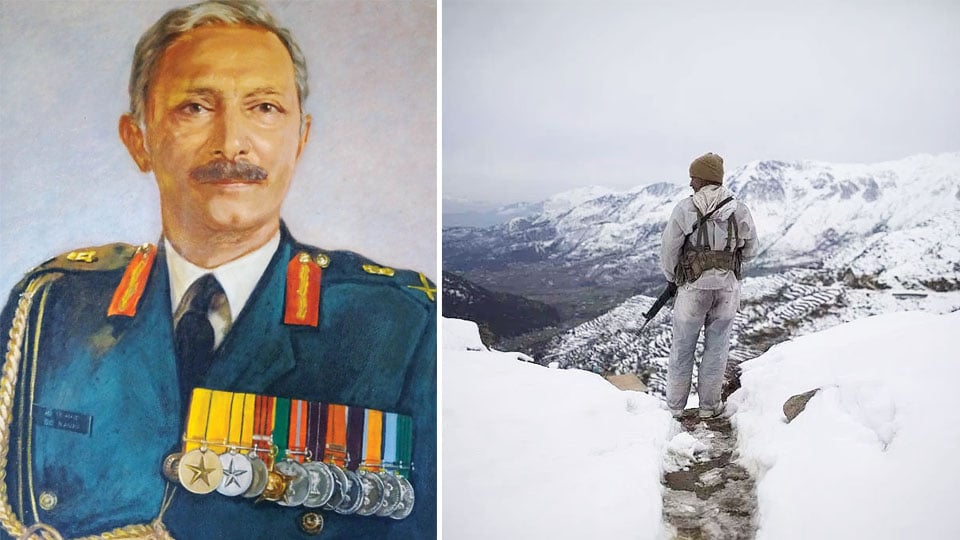
A tribute to Lt. Gen. B.C. Nanda, who recaptured Siachen, the world’s highest Army Post, from Pakistan
By Santhosh Thammaiah, Columnist and Journalist
You might be aware of the latest development. The Prime Minister’s Office has called for an emergency meeting. Senior Intelligence officers will be present and you are requested to be present with your staff with a detailed report.”
When such a fax arrived at the Delhi Army HQ from Prime Minister Rajiv Gandhi’s Office in 1987, the Army Chief was startled. Well-known as the Honest General, Gen. Krishna Swamy Sundarji knew about the situation but did not have enough time to prepare as the Chief of the Northern Command was supposed to arrive from Udhampur. It was important to sit with him and prepare for the meeting at PM’s Office in New Delhi. Which meant the Army Chief and the Chief of the Northern Command wouldn’t have time to sleep.
The next day when the Chief of the Northern Command arrived for the meeting at 10 am at the PM’s Office, the Army Chief, his deputies, Intelligence Officers, Prime Minister and the Defence Minister were all seated. After a few minutes of silence, the Prime Minister began his conversation with a mention of 1949 Karachi Treaty with Pakistan and put forth the agenda for the meeting.
The Army Chief and the Chief of the Northern Command looked at each other with an appreciation on the PM’s ability to present the situation so eloquently and thoroughly. The way he presented with historical references, the Army heads knew it was time to pull out their weapons from the barracks.
The Siachen Glacier located in the Eastern Karakoram Range of the Himalayas.
Strategic meeting
The PM had said, “We have conducted ourselves as per the 1949 Karachi Agreement and as per the agreement we have withdrawn our forces from the borders. We respected the agreement and we have even withdrawn from ‘NJ Point 9842’. But now I feel that might have been our first mistake. Because Pakistan is now planning to handover that territory to China and they are eyeing Siachen Glacier. What is disturbing is that our key post Saltoro Ridge has been occupied by Pakistan a week back. You know Chief, Pakistan has named it “Quaid Post” after Mohammad Ali Jinnah and have set up their army post.”
“Yes, Mr. Prime Minister, I understand. The strategy for the future will be explained by our Chief of the Northern Command, Lieutenant General B.C. Nanda (Biddanda),” said Army Chief Krishna Swamy Sundarji. Lt.Gen. Nanda spread a large map on the table and started presenting. “If we closely examine the new post setup by Pakistanis, it clearly indicates that they are trying to challenge us. They have violated the peace agreement and occupied our territory. Also they have named it after Jinnah. It is very difficult to recapture this post which is located at 21,153ft above the main sea level. But it is possible. We have to recapture it at any cost. Mr. Prime Minister, any country would always have an eye on a place like Siachen Glacier. They will fight even to protect even an inch of that land. The one who controls Siachen can control a key part of Asia.”
Even though the Prime Minister was in agreement, the Defence Minister seemed to feel that the nation might misconstrue and point fingers at the Congress government. He showed a sense of irritation at those suggestions, just the way Baldev Singh felt in 1947, Krishna Menon in 1962. “Lt.Gen. B.C. Nanda, you seem to be doubtful of capturing it and even if you capture do you have a plan to protect it,” questioned the then Defence Minister.
Two Army officials stood up and said, “Yes we have an answer.” They closed the historical agreement which caused such embarrassment and the meeting came to an end. The Army was all set to leave immediately to Siachen. Army General Krishna Swamy Sundarji completely trusted Lt. Gen. Nanda.
War time
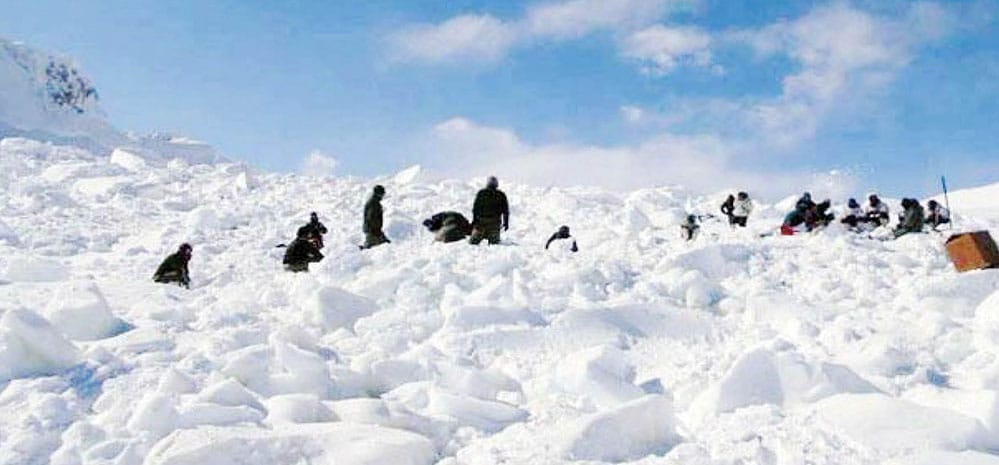
With his direct involvement in the 1962 war, Nanda had the experience of the harsh climate in Siachen Glacier. He had the freedom to pick his team. But Siachen is unlike other war zones and he knew no such battle in the world had ensued in the past. Because at such an high altitude of about 21,000 ft above the main sea level, with a freezing temperature of minus 40 degree centigrade and cold winds blowing at 45 kmph, it was a much worse enemy than the Pakistan army.
The second tallest glacier in the world had a glacier and its tributaries which few knew of its existence and approximately 75-km long. But it was impossible for a sepoy to know where it was located and which direction it flows.
Hostile weather
Interestingly, the helicopters had to survive first to ensure that human beings survived in such weather conditions. It was important to ensure that the fuel didn’t freeze. Every half hour the guns had to be heated on fire from a kerosene stove or boiled with hot water to prevent it from jamming. The human body becomes weak due to low oxygen.
More than recapturing Siachen, safety of the soldiers in such harsh weather conditions was more bothersome. But it was inevitable and Army Chief General Sundarji stationed himself at Udhampur. Just a few days back he did have a long discussion with Lt. Gen M.L. Babbar.
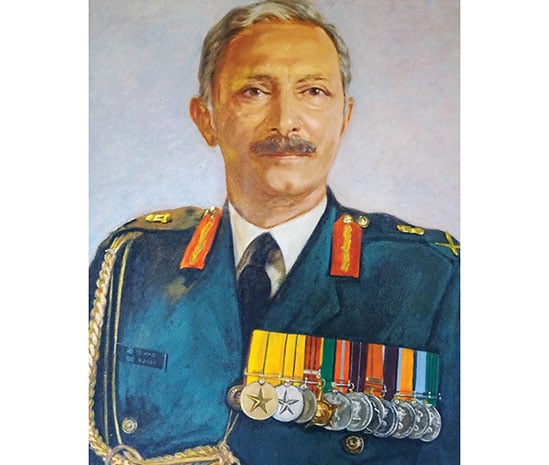
An oil painting of Lt. Gen. Biddanda C. Nanda, PVSM; AVSM.
Team Command
Finally he asked Lt. Gen. B.C. Nanda, “Where is your Best 20?” 20 Army personnel walked in hearing the bell from Lt. Gen. B.C. Nanda’s chamber. It was decided that Col. A.P. Rai would command the team consisting of Second Lt. Rajeev Pandey, Nayak Subedar Hemraj, N.S. Bana Singh and others. On June 23, the team of 20 left to Siachen in a Helicopter and their aim was Saltoro Ridge.
Death at icy mountains
At 20:30 hrs, a few soldiers of Jammu Kashmir Light Infantry left for Saltoro Ridge. It was pitch dark with freezing temperatures and the Pakistan army’s “Quaid Post” was only a few meters away. They had to take a circuitous route along the icy mountains at a height of 21,153ft. They had to walk one behind the other and had to cut through ice.
By the time one passes through a short opening, ice would fill up again. Naib Subedar Bana Singh was the tenth man and he had to undergo the agony of seeing nine of the men who were ahead of him dying. Because as they got closer “Quaid Post” they died of breathing problems. A few were killed by enemy firing.
Second Lieutenant Rajeev Pandey and N.S.Hemraj were now dead. After noticing their half-burnt body, he immediately called the command to send additional reinforcements. The next day Indian Air Force helicopter flew with 2 officers, 3 JCOs and 57 soldiers towards Sonam Post near Siachen. Thus began ‘Operation Rajiv.’ The second team took almost eight hours to cross just 150 meters. They lost two soldiers during the move.
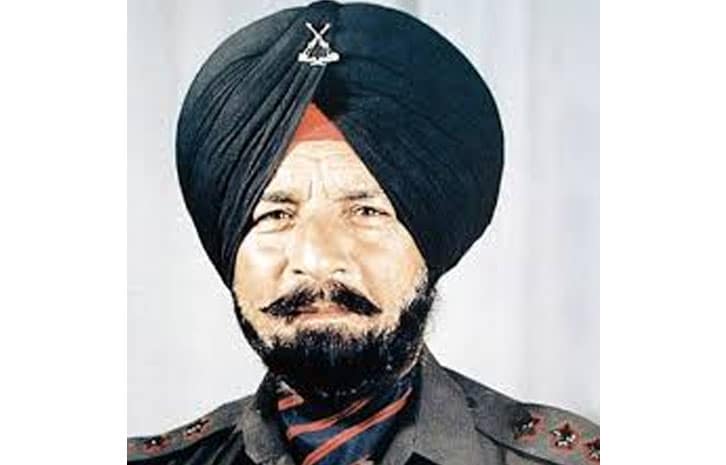
Subedar Bana Singh
First grenade hurled
On the 26th of June, the first thing Subedar Bana Singh and his team saw at sunrise was men in white uniforms — Pakistani soldiers. There was nothing the Indian Army had to wait for. Bana Singh threw the first grenade at the Pakistani bunker and it was blown into pieces. Even before the Pakistani army could realise what was happening, the Indian soldiers started firing towards them. There were a few casualties on the Indian side after heavily numbered Pakistani soldiers started firing.
Cleansing of Siachen
Col. Rai had fallen with eight bullets. Subedar Bana Singh and his companions realised that rules of the game had changed, there were no more orders. They started killing Pak soldiers indiscriminately and a few of the Pak soldiers started running away. Col. Rai asked Subedar Bana Singh to get at least a few alive. He replied that they anyway were not his cousins to save them. In a few minutes, Siachen was cleansed.
Bana Singh Post
Subedar Bana Singh applied bandage on Col. Rai’s arm. By then, four helicopters landed at Siachen. Army Chief Sundarji and Lt. Gen. B. C. Nanda arrived. By the sight of it, they realised the intensity of the fight in the steep ice walls. Army General asked Subedar Bana Singh, where was “Quaid Post” located. The damage was such. Lt. Gen. Nanda replied, “Sir, that is now Bana Singh Post” and hugged Bana Singh. Even today ‘Bana Singh Post’ exists in Siachen. Bana Singh is Siachen and Siachen is Bana Singh, the brave fight at the highest glacier in the world stays as a symbol of bravery.
Decisive battle
This is how Lt. Gen Nanda groomed fine soldiers like Subedar Bana Singh. On that eventful day, B.C. Nanda may not have been there on the battlefield but he decided the fate of that battle. Nanda, who often suggested all through his career that every valour of the brave soldiers should be awarded, sent a recommendation to the Government for one Paramveer Chakra, one Mahaveer Chakra, seven Vir Chakras and one Sena Medal.
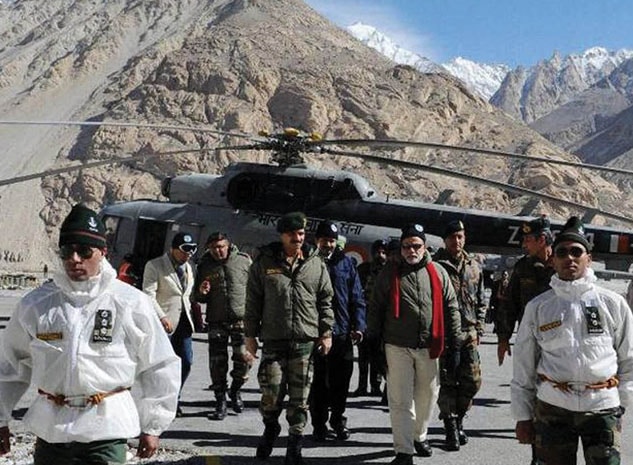
Prime Minister Modi during his surprise visit to Siachen in 2016 to celebrate Diwali with the soldiers.
Military honours
After the recapture he was entrusted with the task of modernising the base at Siachen. He increased the troop size at Siachen and ensured higher pay for troops stationed at Siachen and also brought a policy that troops can only be posted there for short-term. And today Siachen is not just world’s highest Army post, but also the well-equipped post. Siachen for Lt.Gen. Nanda was not just another Himalayan Army post, but he shaped it like a new-born baby.
For his contribution to India’s military might, Lt. Gen. Nanda was honoured with Param Vishisht Seva Medal (PVSM) and Ati Vishisht Seva Medal (AVSM).
During his tenure as the Chief of the Northern Command, he visited Siachen every month along with his wife to mingle with soldiers, share food with them and trying to distract their loneliness — because he always knew India will remain safe only if Siachen is safe. Wonder what his thoughts were when he left for his heavenly abode on Dec.12, 2018 at the age of 87. But he must have been proud that now the Prime Minister of India can freely visit Siachen.
He was called ‘Fake Environmentalist’ by greedy mafias in Kodagu
All through his life, Lt. Gen. Biddanda C. Nanda looked upto his maternal uncle Field Marshal Kodandera M. Cariappa as his role model and after his retirement he decided to settle down in Kodagu like his uncle. After his retirement and until the death of K.M. Cariappa, ‘Roshanara’, the residence of Cariappa in Madikeri had become Lt.Gen. Nanda’s centre of learning.
He learnt the importance of preserving nature and environment of Kodagu from Cariappa. By then Kodagu had begun its journey towards mindless development and destruction. Cariappa’s death was a big relief for many who were into looting the natural resources of Kodagu. Now their last obstacle was forever gone. The dance of demons towards destruction in the name of development had by then begun.
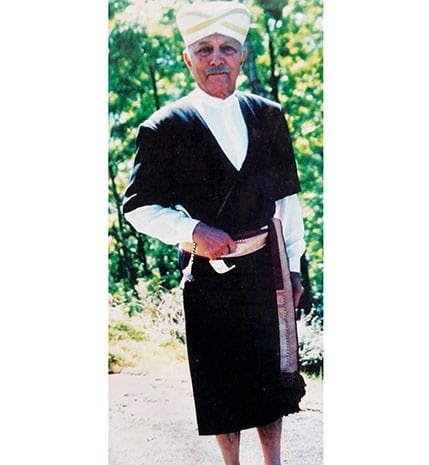
Lt. Gen. B.C. Nanda in traditional Kodava attire.
Cariappa-Thimmaiah Forum
Lt. Gen. Nanda brought together like-minded citizens and started to energise Coorg Wildlife Society. He started environment awareness programmes across the district and personally donated one acre of his land to Coorg Wildlife Society. He tried to make others realise the importance of Cariappa-Thimmaiah Forum for the overall development of Kodagu.
Hundreds of retired Army personnel from the district joined the movement under Cariappa-Thimmaiah Forum. He invited many Army officers to the district and ensured to sort the problems of the ex-servicemen from the district. B.C. Nanda had a plan to protect the environment of Coorg through discipline and dedication of the ex-servicemen of Coorg. But sadly, the district did not take notice of Nanda’s concern. He was now getting older. He stood by the protestors when thousands of trees were being axed for the high tension powerline project to Kerala through Kodagu. He demanded that the truth of environmental reports should be placed before the people.
Unfortunately everything stopped working as per his plan. Political interests and mafia started labelling him as ‘Fake Environmentalist.’ The man who planned to recapture Siachen for India couldn’t ensure his home district is protected from the powerful mafia within. With such meticulous planning he could chase the heavily armed Pakistanis at the border, but he could not stop the people who were looting his home district Kodagu. His cries “The district has reached its threshold, don’t mess with the Western Ghats,” went unheard.
About the author: Manippanda Santhosh Thammaiah hails from Nadikeri in Ponnampet, South Kodagu. At present, he is working with ‘Aseema,’ a nationalistic monthly magazine, as an Executive Editor. His weekly column ‘Haadu Hoguva Haalegalu’ is being published in ‘Hosa Diganta’ on every Wednesday.—Ed
source: http://www.starofmysore.com / Star of Mysore / Home> Feature Articles / by Santosh Thammaiah / December 26th, 2018
WELCOME. If you like what you see "SUBSCRIBE via EMAIL" to receive FREE regular UPDATES.
Read More »