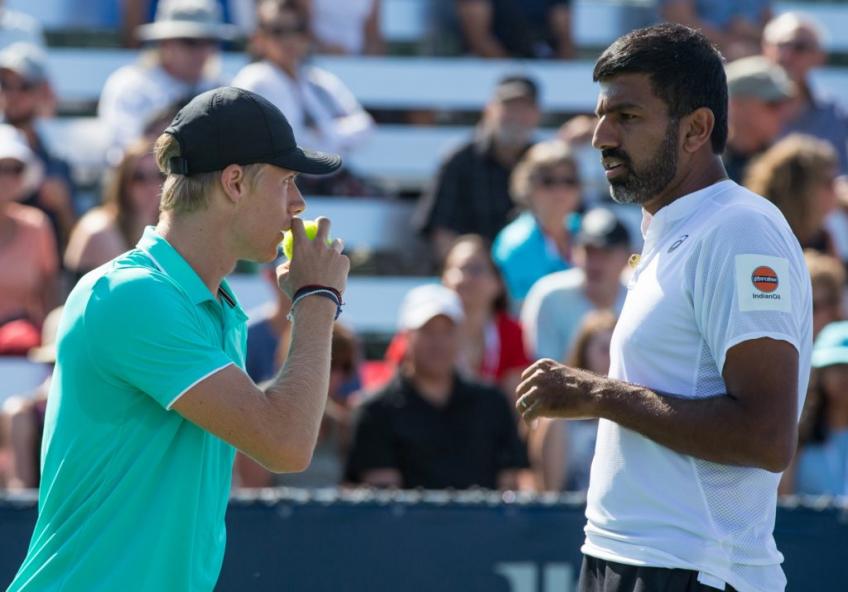
Indian doubles star Rohan Bopanna, 40, was desperate for a partner at the Indian Wells Masters last year, and when he saw that Denis Shapovalov was available to play, he hit him up. Bopanna, a 19-time doubles champion, was positively surprised by the quick response from rising Canadian star Shapovalov, who accepted to play.
Since then, Bopanna and 21-year-old Shapovalov have played together at 14 more events. Shapovalov, who is enjoying a career-high ranking of No. 10, is focused on his singled career but he occasionally plays doubles with Bopanna since the two have a good connection.
“My partnership with Denis is truly unique, given he is almost 20 years younger than me(laughs),” Bopanna told the Indian Tennis Daily. “It all started at Indian Wells last year when I was looking for a partner and you need to combine rankings to get into the doubles draw.
All the doubles specialists already had partners so I was checking on as to which singles players I can play with. I saw Denis’ name and decided to send him a text. And Indian Wells is an event where all singles players end up playing doubles as well.
So it was nice of him to say yes. Right away, from the first match, we enjoyed the camaraderie between us. “I think I bring in special experience into the doubles format. And his super-fast speed, power and flamboyance, helped my game tremendously as well.
So that combination worked for us. Slowly, we started committing to more events – be it 250, 500 or Grand Slams. Slowly, we started to enjoy each other’s company, and I got to know him a lot better. He’s a fantastic guy and he’s doing so much for tennis.
It has transformed into an honest friendship and as long as we enjoy playing together, that is what gives us success at the end of the day.
source: http://www.tennisworld.org / Tennis World / Home> Tennis News> Tennis Interviews / by Dzevad Mesic / September 29th, 2020
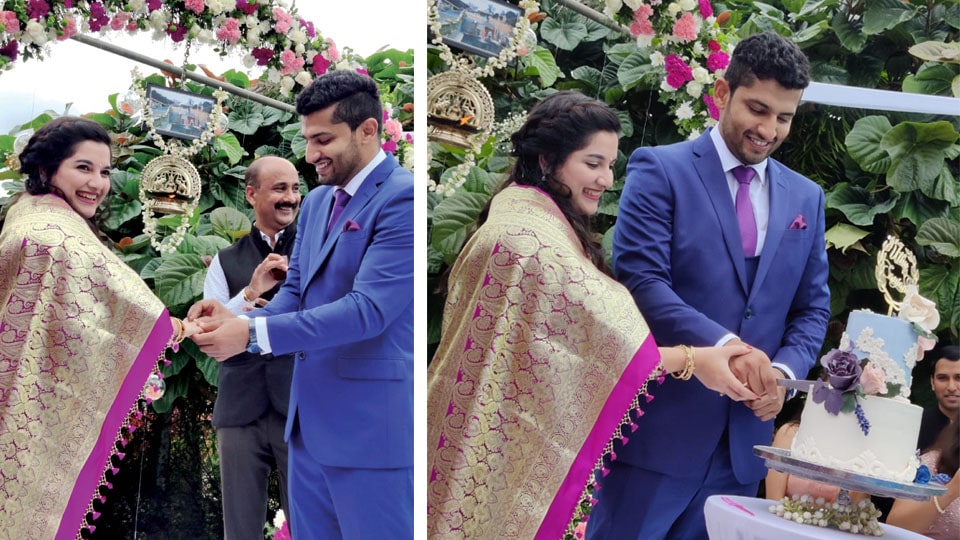
Olympian Sannuvanda Kushalappa (S.K.) Uthappa got engaged to Puttichanda Sanjana at Yellow Bamboo Resort in Balaji village, South Kodagu, yesterday. Only family members of the couple and close relatives were part of the simple engagement ceremony and the marriage (Dampathi Muhurtha) will be held this evening.
Daughter of Puttichanda Uthappa and Leela couple of Bollarimad village, Sanjana is working at a private firm in Bengaluru.
S.K. Uthappa’s father Sannuvanda Kushalappa of Devarapura village, mother Niraj, brother Chinnappa and his wife were present during the engagement.
Uthappa made his international debut in hockey against South Africa in 2012 and scored a total of three goals in the five-match series. He was then picked to play at the 2012 Olympics Qualification Tournament where he exhibited good game.
Uthappa captained the side for the first time at the 2016 Asian Champions Trophy in Malaysia, in a league game against Pakistan, in the process of rotation of captaincy the team followed after the 2016 Rio Olympics. His side won the game 3-2.
An Ekalavya Awardee, he has played a total of 164 international tournaments.
source: http://www.starofmysore.com / Star of Mysore / Home> Sports / September 27th, 2020
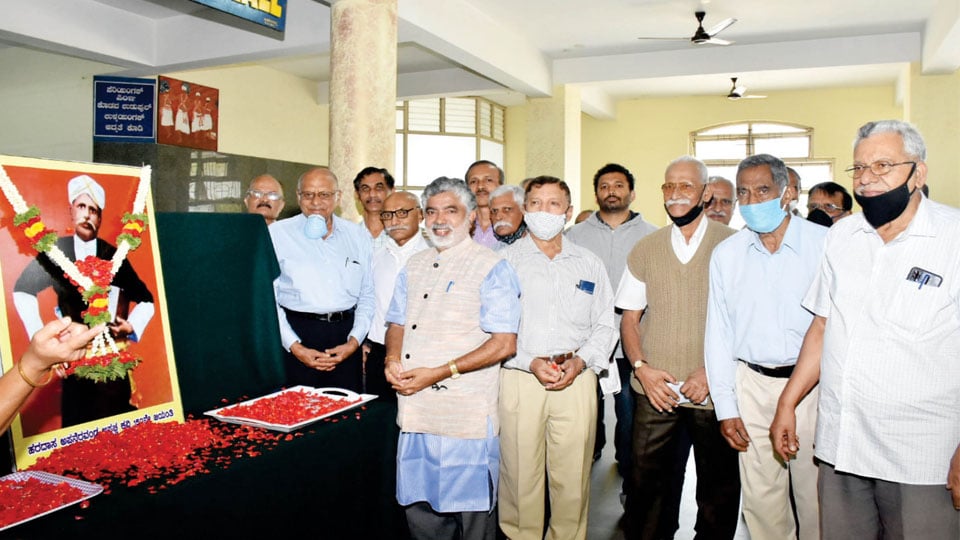
Mysuru Kodava Samaja celebrated the 152nd birth anniversary of Haradasa Appaneravanda Appacha Kavi as Kodava Thakk and Sahitya Divasa at Field Marshal K.M. Cariappa Bhavan in Vijayanagar here yesterday.
Rangayana Director Addanda C. Cariappa, Nellamakkada B. Kaveriappa of Bharani Art Gallery and Chenanda Uthappa spoke about the life and achievements of Haradasa Appacha Kavi and also about the lifetime achievements of litterateurs Dr. I.M. Muthanna and B.D. Ganapathy in their centenary year of celebration.
Maintaining that Appacha Kavi was not limited to just one community, they said that everyone should read the works of the great poet in order to have a deeper understanding of his contributions to the society.
Pointing out that Appacha Kavi is credited with scripting the first Kodava play and also acting in it, they opined that the great poet is very aptly called as Adikavi of Kodava language.
Mysuru Kodava Samaja President K.M. Belliappa, Secretary M.M. Ponnappa, Vice-President M.M. Ponnappa, Treasurer M.B. Jeevan, former Presidents Dr. A.A. Kuttappa, K.A. Kariappa, M.M. Karumbaiah, M.K. Kuttappa, B.M. Nanaiah and others were present.
source: http://www.starofmysore.com / Star of Mysore / Home> News / September 22nd, 2020
Author PT Bopanna says while there are a number of theories on who the Kodavas are, none are scientific enough to establish the origin of the race
After retiring from journalism in 2010, with four decades in the field, PT Bopanna has championed the cause of Kodagu (Coorg) district in Karnataka. Bopanna’s passion to showcase Kodagu’s beauty, culture, cuisine and people serves as a mirror to the hilly region.
“I have documented the lifestyle, language and cuisine of Kodagu beyond the well-known akki rotti and pandi curry,” says 70-year-old Bopanna, who runs five Kodagu-centric websites, has published seven books and produced a documentary on Kodagu. Bopanna’s latest book, My Coorg Chronicles, (Rolling Stone Publications) traces his journey from journalism to activism, and his efforts to chronicle the unknown facets of Kodagu. My Coorg Chronicles has colourful photographs, illustrations and a caricature of Bopanna by cartoonist Ponnappa.
Bopanna speaks to MetroPlus about the many aspects of his journey.
Excerpts.
Would you describe yourself as a journalist, activist or chronicler?
After studying journalism at Bhavan’s College of Journalism in Mumbai, I started my career in 1981 as the Coorg Correspondent of The Hindu. I registered my first domain www.coorgtourisminfo.com in 2005. Initially the traffic to my website was not encouraging. So I decided to bring out the content from the website as a book in 2006. Discover Coorg was a runaway success. I brought out two more editions of the book, adding more content with each edition. It was also translated into Kannada.
Your research reveals Kodavas as being different from the rest of Indians…
Kodava women are highly educated. There is no dowry system, and women drape their saris opposite to the style adopted by the rest of India. The customs are unique. Kodavas are Hindus, but priests have no role in their marriages. Kodavas revere the Cauvery River, they worship nature and guns. The Keil Murtha festival is dedicated to guns. The harvest festival, Puttari, is ushered in with a gunshot. When I realised that the land has a rich culinary tradition and I compiled traditional recipes in the website, coorgrecipes.com in 2006.
Who exactly are the Kodavas?
This is a riddle that ethnologists are yet to crack. There are any number of theories on who they are, but none scientific enough to establish the origin of the race. One theory says they are the descendants of Alexander the Great, while another traces their origins to a band of Kurds from Iraq.
Why did you bring out a video on Kodagu?
During the course of my work I realised there was a lack of documentation on Kodagu. This was mainly because Kodava language does not have a script. The language is a mixture of Kannada, Tamil and Malayalam. Any documentation was only after the British annexed Coorg in 1834. They kept records and maintained diaries. After Independence, especially after Coorg merged with Mysore State (Karnataka) in 1956, there wasn’t any documentation. I decided to produce a video on various aspects of Kodagu and in 2014 brought out a DVD, Discover Coorg. The video features tourist spots, homestays, jewellery, hockey and golf, Kodava marriages and traditional folk dances.
source: http://www.thehindu.com / The Hindu / Home> Society / by Ranjani Govind / Bengaluru – August 18th, 2020
Amid all the discussion about the existence of a ‘mafia’ in Bollywood, Gulshan Devaiah has a funny take on it. He penned a humorous poem on it and quipped about all the supposed perks, but ‘only for members, exclusively’.
“One for all, & all for one. The pay is good, & so’s the fun. The drugs are free, So’s plastic surgery. But only for members, Exclusively. If you’re thinking, Oh! I want in, Eat some s**t, You jealous cretin. #jest,” he wrote.
Kangana Ranaut has been talking about the ‘movie mafia’ and how she has been targeted by it. She recently alleged that Maharashtra chief minister Uddhav Thackeray colluded with them and got her office in Mumbai demolished. She also said that a few years ago, the mafia tried to destroy her financially as well as her standing in society. She claimed that it got so bad that she wanted to shave her head and disappear at one point.
Earlier this month, Kangana warned the ‘movie mafia’ and said that their attempts to harm her will only backfire. “Movie Mafia today you might break my face n my house using your powerful friends, it will give you momentary happiness but if you are clever you will know my end is my beginning, you will end me here I will rise somewhere else … trust me it will hurt you even more,” she wrote on Twitter.
Kangana has also talked about a ‘drug racket’ in Bollywood and claimed that 99% of the people in the industry have been exposed to drugs. Several members of the film fraternity have condemned these remarks. Jaya Bachchan, in her speech in the Parliament, raised objection to the negative portrayal of the film industry and urged the government to discourage it.
Sometime back, the Producers Guild of India addressed the attempt to ‘defame and slander the film industry and its members’. “A picture has been painted of the industry as a terrible place for outsiders to aspire to; a place that treats those who dare to enter it with contempt and derision; a murky den of substance abuse and criminality. This narrative is salacious enough for the media to exploit to great effect in order to boost its ratings, readership and page views. But it is not the truth,” the guild said in an open letter.
source: http://www.poptimesuk.com / Pop Times / Home> Entertainment India / by Pop Times News Team / September 19th, 2020
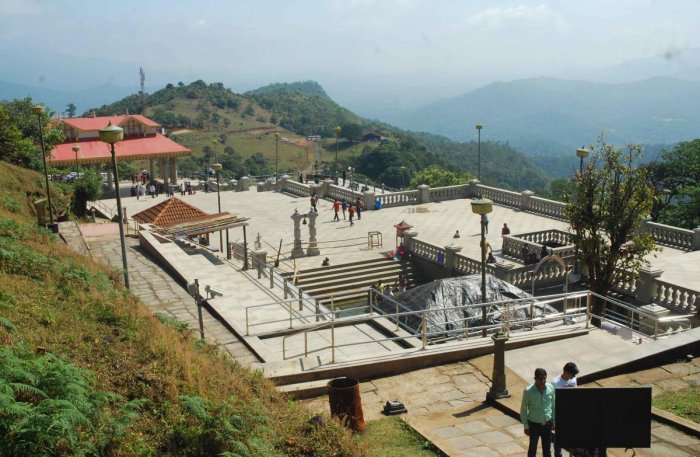
Kodagu Gowda Samajagala Okkuta has decided to support fully the priests who perform puja at Talacauvery Kshetra.
The decision was taken during a meeting held in the presence of Gowda Federation Youth wing, said Okkuta president Somanna Soorthale.
Okkuta office-bearers said, “The unscientific works at Gajagiri Betta led to its caving in. A delegation will be taken to the state government shortly demanding action against those who were responsible for such activities. At a time when the death of the Talacauvery priest and family members is still fresh in our mind, a few have been trying to recreate the history of Talacauvery, which is condemnable move.”
A few are trying to disrupt peace in peace-loving district, Somanna alleged. Kodi and Ballada families have been discharging their duties at Talacauvery and Sri Bhagandeshwara Temples for several centuries.
“We condemn all the unscientific activities that are carried out within 10-km radius of the Kshetra and all those that affect the sanctity of the Kshetra. However, we can not accept those who have been trying to harass those who are carrying out business activities in Talacauvery. Goddess Cauvery is worshiped by all. It is sad that a few are trying to distort the history of Talacauvery kshetra,” he added.
It is good that Akhila Kodava Samaja is planning to conduct Shatarudrabhisheka at Talacauvery on September 21. It would have been good if all the communities were invited for the same.
The meeting also condoled the death of Chief Priest Narayana Achar and four others in landslide at Gajagiri Betta in the first week of August.
source: http://www.deccanherald.com / Deccan Herald / Home> State> Karnataka Districts / by DHNS/ September 20th, 2020
With this move, Entri expects to accelerate its user adoption across India and especially in the Hindi belt.
This is Entri’s first major campaign across India and marks the on-boarding of a local language ed-tech player on the Dream 11 IPL 2020.
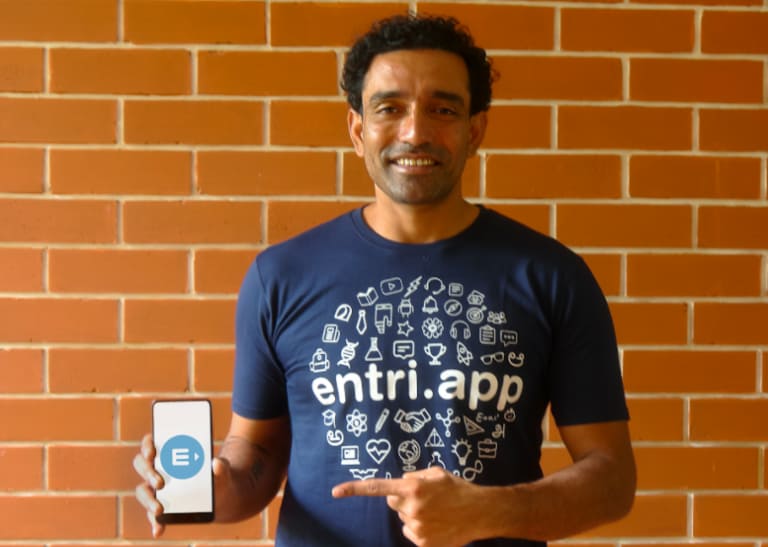
Local language learning app for jobs – Entri, has signed up former Indian and current Rajasthan Royals cricketer Robin Uthappa as its brand ambassador. It has also partnered with Hotstar to run ad campaigns in 5 different languages throughout the upcoming IPL 2020 season.
With this move, Entri expects to accelerate its user adoption across India and especially in the Hindi belt.
This is Entri’s first major campaign across India and marks the on-boarding of a local language ed-tech player on the Dream 11 IPL 2020.
“Robin was an easy choice because he was an early backer of Entri and also the fact that he could speak 4 different languages that Entri had courses in, helped make the decision. The user demography we are targeting are cricket crazy and we believe campaigns with Robin on Hotstar during the upcoming Dream 11 IPL season would help Entri grow faster across India,” Mohammed Hisamuddin, Founder & CEO – Entri.
The startup claims that it has doubled its revenue to $2.5 million ARR this quarter compared to the previous quarter. With Robin campaigns on Hotstar during the Dream 11 IPL, Entri aims to double the revenue again to reach the target of $5 million ARR by the end of this year.
The startup claims it has 3 million users out of which 90,000 are paid users and is now adding 10,000 users every day.Entri is a learning app for jobs in India that provides different types of learning content (mock/adaptive tests, flashcards, video lessons) in local languages for job aspirants, that prepares them to get a government or private job.
source: http://www.cnbctv18.com / CNBCTV18 / Home> StartUp> Business / by Palak Agarwal / September 16th, 2020
Ex-Sergeant Deranna Gowda, who handed over a pistol to A.B. Devayya, shares his experience
Madikeri:
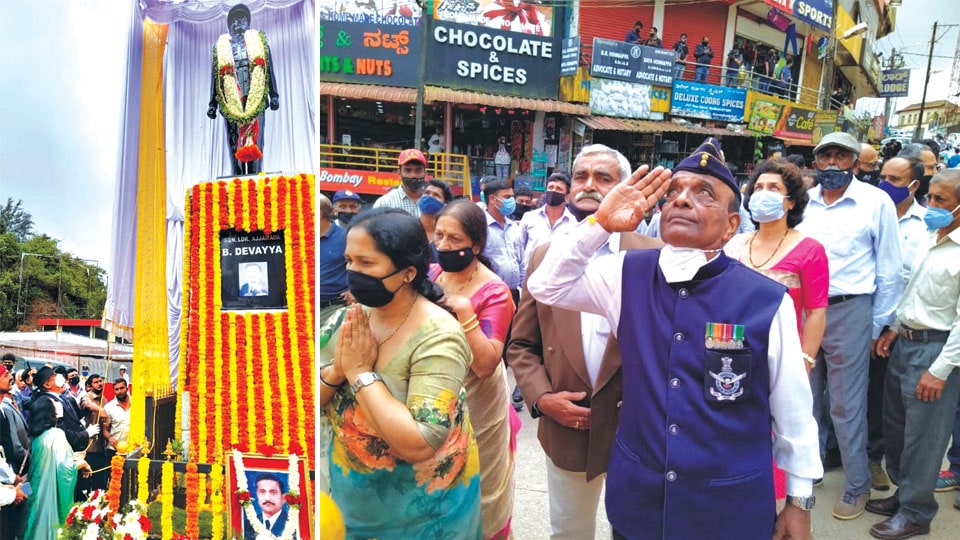
The bronze statue of Squadron Leader Ajjamada Bopayya Devayya was unveiled at Madikeri in Kodagu district this morning. The 6-feet-9-inch statue has been installed at the Old Private Bus Stand Circle and was unveiled by Air Marshal (Retd.) Kodandera C. Nanda Cariappa today, the day Devayya was martyred 55 years ago. The Circle will henceforth be officially called Squadron Leader Ajjamada B. Devayya Circle.
Squadron Leader A.B. Devayya is the only Indian Air Force (IAF) Officer to be posthumously awarded the Maha Vir Chakra (MVC). During the 1965 India-Pakistan War, Devayya (called ‘Wings of Fire’) was part of a strike mission (on the Pakistani Airbase Sargodha). During the war, Devayya shot down a US-made PAF (Pakistan Air Force) F-104 Starfighter on Sept. 7, 1965 while flying an inferior Mystere of French make.
The bronze statue weighs 600 kg and Rs. 20 lakh has been spent on getting the statue carved at Kengeri near Bengaluru. Devayya’s wife Sundari and daughter Preeth were present during the statue inauguration this morning. Also, ex-Sergeant Deranna Gowda from Sullia, a retired Non-Commissioned Officer, who was present when Devayya was seen off on Sept. 7, 1965 before Devayya took off to the skies, was among the dignitaries.
Sharing his experiences, ex-Sergeant Deranna Gowda said, “When Fourth Pakistani Air Force started bombarding the Jalandhar Air Base, Devayya came to the Armoury to collect his weapons to fight the enemy, I handed him a pistol and strapped the weapon around him. Kudupaje Bhojappa was also present. Later, Devayya sat on Mystere aircraft and took off to the skies.”
Addressing the gathering, Air Marshal Nanda Cariappa, who himself is a war veteran and son of Field Marshal K. M. Cariappa, said that it was a matter of pride for Kodagu as Squadron Leader A.B. Devayya and Major Puttichanda Somaiah Ganapathy (later promoted as Lieutenant Colonel) received the honour of Maha Vir Chakra, next only to the supreme Defence award Param Vir Chakra.
While Devayya received the honour for shooting down a Pakistani plane and martyring for the cause of the Nation, Puttichanda Ganapathy was awarded Maha Vir Chakra for his combat role in 1987 Operation Pawan in Sri Lanka (launched by Indian Peace Keeping Force) against the LTTE.
MLC Veena Achaiah, Kodagu Deputy Commissioner Annies Kanmani Joy, Superintendent of Police Kshama Mishra, Field Marshal K.M. Cariappa and General Thimayya Forum President Col. (Retd.) Kandrathanda Subbaiah, Convener Major (Retd.) Biddanda Nanjappa, Kodava Makkada Koota President Bollajira Aiyappa, Ajjamada family President Ajjamada Lava Kushalappa, Squadron Leader Ajjamada Devayya Memorial Trust members and President of Mysuru-based VeKare Ex-Servicemen Trust Mandetira N. Subramani were present on the occasion.
source: http://www.starofmysore.com / Star of Mysore / Home> News / September 07th, 2020
Frayed Lines, directed by Kannada film director, Priya Belliappa, won the best short film award in the Karnataka competition section of the 10th edition of the Bengaluru International Short Film Festival (BISFF).
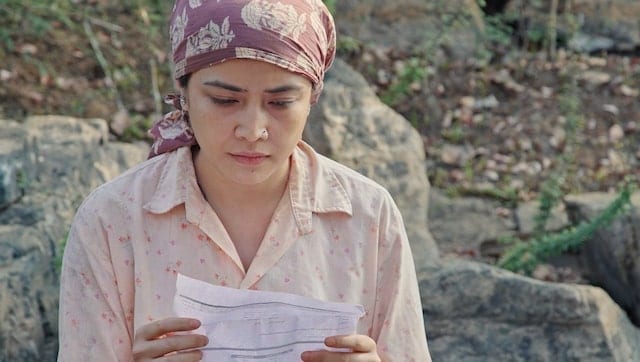
Tabu, an Assamese migrant worker, who has journeyed 2,000 km to work on a Coorg coffee plantation, frets that she has no documents to prove her citizenship back home. “I don’t even know the identity of my parents, where will I get a birth certificate?” she asks herself bitterly, worried that she may be forced to leave her country.
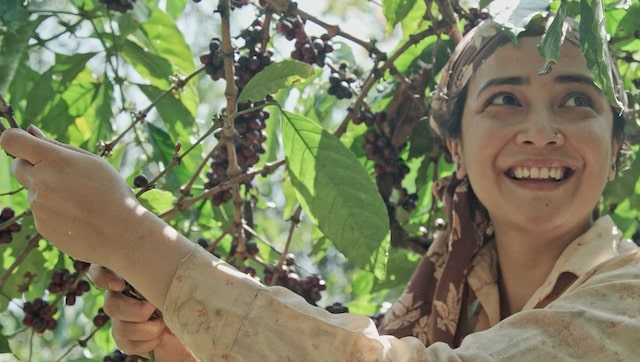
A young Kadappa, who has a PhD and comes from a poor Kodava (as people from Coorg are known) family, prefers to work on a coffee plantation plucking coffee seeds, earning Rs 700 a day rather than getting a job in the big city.
These two characters who don’t speak a common language strike up a silent ‘connection’ and set off on a journey to migrate to the city. This is the crux of the multi-layered, nuanced short film, Frayed Lines, directed by Kannada film director, Priya Belliappa that won the best short film award in the Karnataka competition section of the 10th edition of the Bengaluru International Short Film Festival (BISFF). “It was an obvious choice,” said Anand Varadaraj, festival director, who adds that the festival entries got more traction this year.
This Oscar Academy accredited film fest, held completely online for the first time, had nearly 6,500 viewers who had logged in to watch the 150 films streaming on their website. (as compared to the 1,000 registrations for their offline event last year).
In a conversation with Firstpost, Frayed Lines director, Priya Belliappa too admits that she was surprised by the ‘amazing response’ she had received from the four-day online fest as opposed to a theatre screening, which would be limited to a geographical location.
“It is also not a straight-forward narrative but still people understood the film’s premise, the silences and spaces and connected with it,” remarks the director, who made her debut in Kannada cinema with a commercial movie, Ring Road, based on a high-profile crime involving a young law student, Shubha Shankarnarayan, who was found guilty of masterminding the murder of her fiancée.
Frayed Lines, which is a slice-of-life movie, was shot in early 2019 much before the contentious National Register of Citizens (NRC) had become a national conversation. While researching for her film, Beliappa had met Assamese migrants who felt helpless without proper documents and she wanted to capture that ‘helplessness’.
The character of the troubled Assamese migrant worker, portrayed brilliantly by talented actress Gitanjali Thapa, reflects on her surreal situation with these words: ‘In these uncertain times of blurred and broken lines, strange is the land that you don’t belong. Stranger that I have lived within these boundaries all my life.’
Gitanjali Thapa in a still from Frayed Lines
According to Belliappa, her film however is not a direct comment on the ‘complex’ issue of the NRC. “I just wanted to tell the story of people who don’t have official documents for various reasons. I wanted to explore their emotional state of mind as they grapple with being suddenly told they don’t belong in their own country.”
Belliappa had stumbled upon the subject when she was exploring the coffee estates on a visit to her hometown Coorg, after she had completed her first feature film. She had built up a visual diary of people working on a coffee plantation and found enough material to make a film. The film also draws attention to the language dilemma migrant workers face in the coffee plantations, where people largely converse in Kodava takk.
The short film effectively captures the local flavor of a Coorg coffee plantation with real labourers working beside the two protagonists, which includes Kannada actor, Avinash Mudappa. For that reason, it is a ‘fiction immersed in reality’, explains Belliappa, who expects to take the story of the same couple in Frayed Lines forward when she makes her feature film.
The short film gave her the opportunity to explore the subject in all its dimensions. “Shorts give you creative freedom but unfortunately are not recognised in India like in Europe. Slowly, however that is changing with more festivals and more experimentation in the digital medium,” says Belliappa, who is comfortable in any format as long as she is wielding the camera.
Belliappa, who has a background in design and has beenan art director for O&M in Sri Lanka made a career switch mid-way after enrolling herself in FTII in Pune in 2003. Incidentally, Belliappa’s diploma film, Hazy Grey Skies, which has been screened in international fests, including the Karlovy Vary, featured actors like Nawazuddin Siddiqui and Pataal Lok protagonist Jaideep Ahlawat. The film is about a monsoon-drenched day in the life of a Mumbai taxi driver, played by Siddiqui.
Belliappa is a film-maker who loves to challenge convention and age-old prejudices. She is an admirer of British comic actress Phoebe Waller-Bridge and her series Fleabag. “I love the way she is able to say the unpleasant without squirming. Her characters are flawed but she shows them for who they are. I want to be able to break down my prejudices and freely explore negative dimensions of a person without restraint,” says Belliappa, who is further inspired by Waller-Bridge’s brilliant writing and for breaking the glass ceiling barriers in Hollywood. She is one of the co-writers for the latest James Bond film, No Time to Die. (Waller was brought in by actor Daniel Craig to liven up the script) “Women in Hollywood too are fighting for their space in a male-dominated industry,” she points out wryly.
Back in 2015, Belliappa too defied convention in south Indian cinema and roped in an all-women crew to make her film, Ring Road. It didn’t take her long to realise that she was the only woman on set while working as an associate director in a Kannada film, I am Sorry Mathe Banni Preethisona, which went on to win state awards.
“This effort started a conversation in a male-dominated industry. Many people would drop by our set to comment on how well the crew was managing the set,” she says, adding the rider that it is however talent and hard work that matters and not gender.
source: http://www.firstpost.com / FirstPost.com / Home> Entertainment News / by Kavitha Shanmugam / September 06th, 2020
WELCOME. If you like what you see "SUBSCRIBE via EMAIL" to receive FREE regular UPDATES.
Read More »