Category Archives: Famous Personalities of Kodagu / Coorg

The Amara Sullia uprising, 20 years before 1857

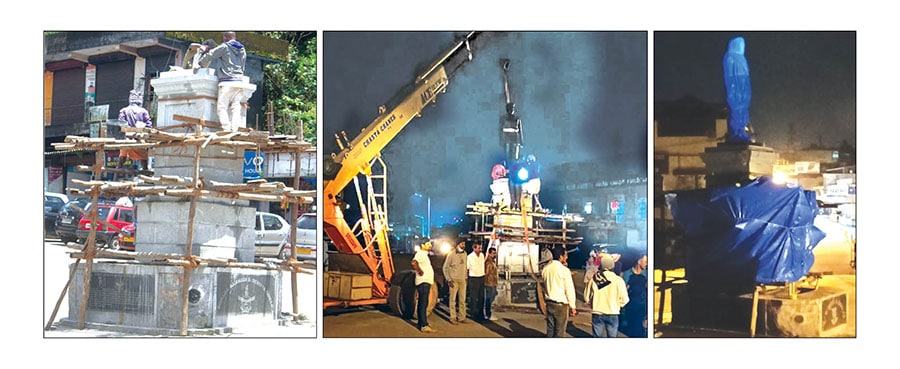
Photos for Spectrum
Photos for Spectrum

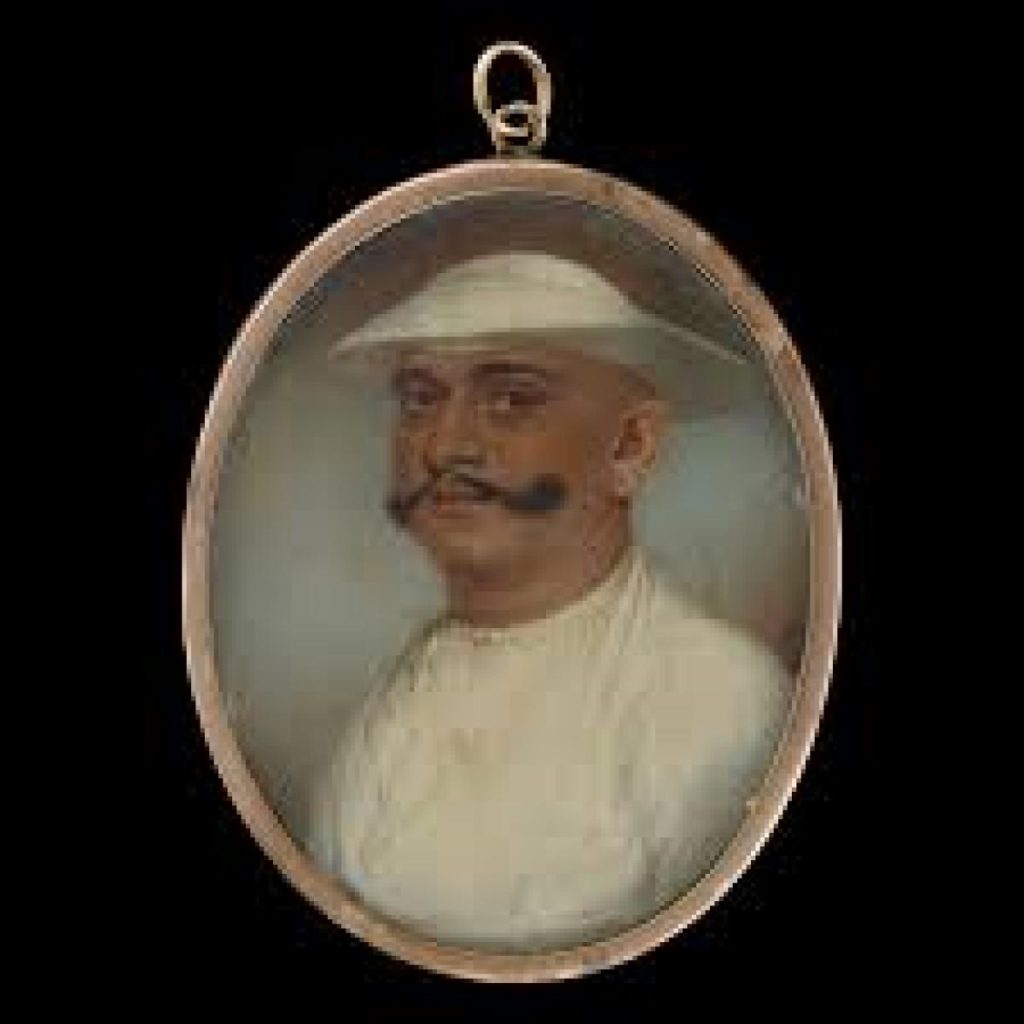
Twenty years before the First War of Independence in 1857, there was the ‘Amara Sullia Dange’ or Kodagu- Canara Mutiny against the British government. This fight, which was labelled ‘Kalyanappana Katakayi’ (Loot of Kalyanappa), to tone down its significance, received unprecedented support from people in today’s Kodagu, Dakshina Kannada districts of Karnataka and Kumble region in Kerala.

After Tipu Sultan’s death in 1799, South Canara (Dakshina Kannada) passed into British hands. Neighbouring Kodagu, however, still maintained a precarious independence.

In 1834, the East India Company resolved to invade Kodagu, which was ruled by King Chikkaveera Rajendra of Haleri dynasty. On April 11, 1834, the political agent of the British at Mercara (Madikeri), Lieutenant Colonel J S Fraser, issued a proclamation annexing Kodagu into the British administration. Fraser also resolved to respect the social and religious customs of the locals, but the promise remained on paper.

The British introduced major economic, social, and even territorial changes in Kodagu, for their administrative convenience. Amara Sullia was separated from Kodagu and made part of South Canara district, which was then part of the Madras province. What further incensed the people was a change in the mode of tax payment, which was now to be made entirely in cash. The farmers were used to giving part of their produce as the tax, but the new system only added to their burden. Now, many of them refused to pay the tax outright.

After Kodagu’s annexation, there was a resistance movement planned. In 1835, Swamy Aparampara, a Jangama saint, appeared in Manjarabad in Hassan district and claimed that he was a legal heir to the Haleri throne.

Madikeri Fort
Madikeri Fort

His plan was to attack and occupy Madikeri Fort on December 5, 1836. The people of Kodagu believed him to be the son of Appaji, who was the uncle of Chikkaveera Rajendra. Aparampara planned a resistance movement with the help of other rebellions including Kalyanaswamy, Kedambadi Rame Gowda and Guddemane Appayya Gowda. Aparampara visited Subrahmanya and met Kujugodu Appayya Gowda and Mallappa Gowda, the representatives of the Ikkeri dynasty. From there, they marched towards Madikeri with a battalion.

The British got wind of the plan and imprisoned Aparampara, with the aid of Kodagu’s Dewan, Cheppudira Ponnappa.

Now, the responsibility of the movement shifted onto the shoulders of Kalyanaswamy. He claimed to be the second son of Appaji and therefore, a member of the Haleri dynasty. Declared a king by his men, he popularised the movement by proclaiming that if he became the king, he would stop collecting revenue for the first three years and abolish the duties on commodities.

Dewan Ponnappa proved that Kalyanaswamy didn’t belong to the Haleri dynasty. However, the rebel leader remained popular and enjoyed support from local leaders.

Kalyanaswamy slowly extended the movement to Sullia and other parts of South Canara. Kedambadi Ramegowda of Sullia was primarily responsible for the organisation of rebellion in South Canara. When Kalyanaswamy was travelling from Kodlipet to Wayanad, he was captured by the British forces, though his imprisonment was concealed. His friend Putta Basappa posed as Kalyanappa and continued the rebellion.

Meanwhile, the resentment against the new tax policy continued, and Kedambadi Ramegowda and Nanjayya decided to start a rebellion in Sullia. They killed Atlur Ramappaya, the Amaldar (Agent) of Sullia, who was loyal to the British.

The battalion, headed by Kalyanappa (Putta Basappa), Kedambadi Ramegowda and others reached Bellare and attacked the British treasury. The rebels then reached Mangalore and hoisted the Haleri flag in ‘Bavutagudda’ on April 5, 1837, to mark their victory over the British.

In response, the British brought in reinforcements from Kannanur, and attacked the rebels. Several leaders were captured and killed, while a few others escaped. Putta Basappa and Appayya Gowda were hanged.

The British Commissioner Cotton, who submitted a report on the Canara Insurrection to the government in 1839, mentioned the movement was a furtherance of the Nagar Peasants’ Revolt of 1830-32, in present-day Shivamogga. “The Amara Sullia insurrection has the features of primary resistance, as well as peasants’ movement; the main intention was to drive away the colonial intruders,” says K R Vidyadhara, a lawyer in Madikeri who has studied the uprising.

A few scholars have conducted extensive studies on the Amara Sullia mutiny, with the incident even being portrayed in a Yakshagana performance called ‘Kalyanappana Katakayi’.

source: http://www.deccanherald.com / Deccan Herald / Home> Spectrum> Spectrum Top Stories / by Charan Aivarnad / August 15th, 2020

‘Get acquainted with Kodava tradition’

Kodava Education Society Joint Secretary Chiriyapanda Raja Nanjappa inaugurates 'Kodavame Padipu' programme at CIT PU College in Ponnampet on Wednesday. Karnataka Kodava Sahitya Academy Chairperson Dr Parvathi Appaiah, Academy member Dr Mullengada Revathi
Kodava Education Society Joint Secretary Chiriyapanda Raja Nanjappa inaugurates ‘Kodavame Padipu’ programme at CIT PU College in Ponnampet on Wednesday. Karnataka Kodava Sahitya Academy Chairperson Dr Parvathi Appaiah, Academy member Dr Mullengada Revathi

People are busy in agricultural activities during the month of Kakkada and also it keeps raining during the month. Hence, our ancestors imposed restrictions on holding auspicious programmes during Kakkada month, opined Kodava Sahitya Academy member Dr Mullengada Revathi Poovaiah.

Speaking during ‘Kodavame Padipu’ programme, organised by Karnataka Kodava Sahitya Academy, at Coorg Institute of Technology (CIT) in Ponnampet on Wednesday, she said that the youth should understand the reasons behind the religious rituals. “Our elders gave a lot of importance to indigenous food and used them during the rainy season. They planned their food according to the seasons,” Revathi added.

Inaugurating the programme, Kodava Education Society Joint Secretary Chiriyapanda Raja Nanjappa said it is believed that the Kodava tribe was present during the origination of River Cauvery and called upon the present generation to get acquainted with the local tradition and culture.

He further said, “The Jamma land is not government land. It is inherited by Kodavas from generations. Also, the gun is used for religious rituals in Kodava culture. However, our ancestors did not use a gun for fighting. Gun rights of Kodavas should be preserved, he added.

During the programme, the resource persons spoke on the importance of ‘Kakkada Padinett’, ‘Kakkada Tingalra Pudume’, ‘Kodava Namme’ and ‘Kodava Takk.

Karnataka Kodava Sahitya Academy Chairperson Dr Ammatanda Parvathi Appaiah, member Padinjaranda Prabhukumar, CIT PU College Principal Dr Sannuvanda Rohini Thimmaiah, Thookbolak Kala Sahitya Vedike convener Madhosh Poovaiah and others were present.

Students of CIT PU College watched the programme online.

source: http://www.deccanherald.com / Deccan Herald / Home> States> Karnataka Districts / DHNS, Kodagu / August 14th, 2020

When Kodagu merged with Mysore: A short political history of the region

An erstwhile independent state, Coorg was merged with Mysore after the States Reorganisation Act was passed in 1956.

TemplePriest02KF12aug2020

It was S Nijalingappa’s death anniversary on August 8 and I was reading about the unified Mysore state’s first Assembly elections in order to get some insights about the first and one of the longest serving Chief Ministers of our state. One article led to another and I found myself in the middle of several articles about Coorg’s merger with Mysore. It was such an interesting revelation that I kept hopping from one article to another and got deeper into the rabbit hole.

Since most of us outside of Kodagu are informed just in passing in our textbooks about how Coorg was an independent state before the unification, I thought this was a story worth telling.

After more than a century of direct British rule since its annexation from its last ruler Chikka Veera Rajendra (in 1834), Coorg became an independent (Type C) state within India along with other small, hilly, erstwhile princely states like Himachal Pradesh. Coorg had a strong Congress party presence and participated enthusiastically in the freedom struggle, with even stalwarts like Gandhi visiting the state on a few occasions to mobilise the immensely patriotic people from the land of coffee, commanders and Kaveri.

But the Congress leadership within Coorg was heavily divided over whether to remain an independent state or to join the larger neighbouring state of Mysore. While one faction led by the Gandhian CM Poonacha was more pragmatic in seeing the impracticality of a tiny state like Coorg being allowed to remain independent in a country as large as India and being open to the idea of merging with Mysore since Kannada was already the language broadly used in education and administration within Coorg, the other faction led by another Gandhian Pandiyanda Belliappa was , staunchly against the merger. The loyalty of both factions and leaders, however, lay with the Congress.

When the legislative assembly elections were announced in late 1951, to be held along with the first ever election to independent India’s parliament, the Pandiyanda Belliappa faction moved away from the Mysore-sympathetic Congress and formed the Thakkadi Party (weighing machine), contesting as independents on the plank of Coorg’s continuation as an independent state.

In what was a Brexit style election to decide the future of Coorg state, the Congress emerged victorious, winning 15 seats in the 24-member Coorg Assembly, while the Thakkadi Party won the remaining 9 seats. Questions were raised about the fairness of the elections as allegations surfaced that voters were sent from the neighbouring towns in Mysore to vote for the Congress, in effect for Coorg’s merger with Mysore. Poonacha, however, took oath as Coorg’s first and only elected Chief Minister and ruled till 1956 with a two-member Cabinet.

In 1956, the States Reorganisation Act was passed in the Parliament by the Nehru government, allowing Coorg’s merger with Mysore. Several efforts were made by key dignitaries from Coorg to secure an independent state status, including the decorated Field Marshal KM Cariappa, who was then serving as India’s High Commissioner to Australia and New Zealand. He wrote a letter to President Rajendra Prasad, making a case for Coorg to remain an independent state. But it proved too little, too late as the Nehru-led Congress government remained committed to the Act and reined in dissent within the party units across states.

When the bill was taken up to be voted by Coorg’s Assembly as it required ratification by state assemblies before becoming a legislation, 22 out of 24 legislators, including Pandiyanda Belliappa, voted for Coorg’s merger with Mysore. The first and only elected legislative assembly and government of Coorg was thus dissolved, paving the way for its integration with the unified Mysore state.

Poonacha went on to serve both the Mysore and central governments in various capacities as cabinet minister holding various important portfolios, and also served as the Governor of Odisha and Madhya Pradesh. He was also Coorg’s representative in the Constituent Assembly. Coorg also sent two members to independent India’s first elected Parliament. After its merger with Mysore, however, Coorg was clubbed with Mangalore earlier and Mysore later into a single parliamentary constituency. It sends two legislators to the 224-member state assembly of Karnataka.

Many people in Coorg are still divided and emotional over the issue of Coorg’s merger with Mysore. The Codava National Council, under the leadership of NU Nachappa, fought for the restoration of statehood for Coorg for several decades. But it has now toned down its demand to that of an autonomous development board exclusively for Coorg within Karnataka, with many other perks similar to those offered to other sparsely populated hilly regions and tribes in the Himalayas and the North East.

Kodagu, the official name of the district, is one of the most developed districts of Karnataka across most parameters of development. With an HDI of 0.817, it is only behind Bengaluru, Dakshina Kannada and Udupi in terms of human development. As it reels under another bout of floods this monsoon, let us keep the beautiful Coorg in our prayers and cherish its less known history.

Rakshith S Ponnathpur is a financial and economic policy researcher with a keen interest in Karnataka history and politics.

source: http://www.thenewsminute.com / The News Minute / Home> News> History / by Rakshith S Ponnathpur / August 12th, 2020

Anandatheertha, the sage who lived for Kaveri, dies

Anandatheertha lived a life of intense commitment to the Kaveri. He died in landslide in Talakaveri on August 6.
AnandateerthaKF10aug2020

Regular trips to Talakaveri, located near Bhagamandala in Kodagu district, Karnataka, are fond for river Kaveri. A temple to Goddess Kaveri, also dedicated to Shiva as Agasthyeswara and Ganesha, overlooks the ancient tank that collects water from a nearby wild spring there.

For the devotees, the tank was the origin of the east-flowing river of peninsular India. According to the legends, the river disappears in its birthplace — only to take rebirth at Bhagamandala located a little away at the foothills.

I met Swami Anandatheertha (died at 76) for the first time one September evening about a decade ago. The meeting was followed by a long conversation about the mighty river, the lifeline of vast stretches of Karnataka and Tamil Nadu.

Several conversations followed over time — and each one of them gave me the impression that he was no less than a living encyclopaedia — not just on the Kaveri but all the rivers on Earth.

It was this school teacher-turned-sage who showed me the exact origin of the river. Anandatheertha lived in Mumbai for long and taught at a school there, but returned to his native place three decades ago to become the traditional trustee and administrator of the temples in Talakaveri and Bhagamandala.

He lived a spartan life in a small house in Talakaveri, located in the Brahmagiri range of Western Ghats at an elevation of 1,341 metres. His brother-in-law was the chief priest of the temple. He lived with his sister and her husband.

A scholar with strong social and political concerns, Anandatheertha was a secular person. Between sacred and profane, he lived a life of intense commitment to the river and the surrounding forests.

In the 1980s, he was among the members of the Save Western Ghats March — a major environmental protection initiative involving scientists, anthropologists, sociologists, activists, journalists and local communities.

He marched together with others for 100 days along the length of the ghats, highlighting the socio-ecological challenges the area grappled with. He had actively engaged with almost all attempts to save the Western Ghats and the Kaveri from human encroachment and destruction.

He travelled extensively across the length and width of the river, urging local communities to save the river. He found comfort in the role of a low profile environmentalist with extreme devotion to the cause.

Journalist and filmmaker O K Johnny, who authored Kaveriyodoppam Ente Yathrakal (Journeys Along Kaveri), pointed out that Anandatheertha was always anxious about the fate of the Kaveri.

Except for the little stretch in his small locality, the river is on its deathbed. For Anandatheertha, Western Ghats and the river were integral to his existence. In a way, he always spoke in the river’s voice.

It was the place where sage Agasthya was blessed by Brahma, Vishnu and Ganesha while meditating under the ashwaththa tree. Saptarishis, or the seven great sages, had performed their yajna or ritual sacrifices at the Brahmagiri peak.

He also spoke about Lord Brahma’s daughter Lopamudra, who was rechristened as Kaveri later. Kaveri eventually turned herself into a river to serve the humankind.

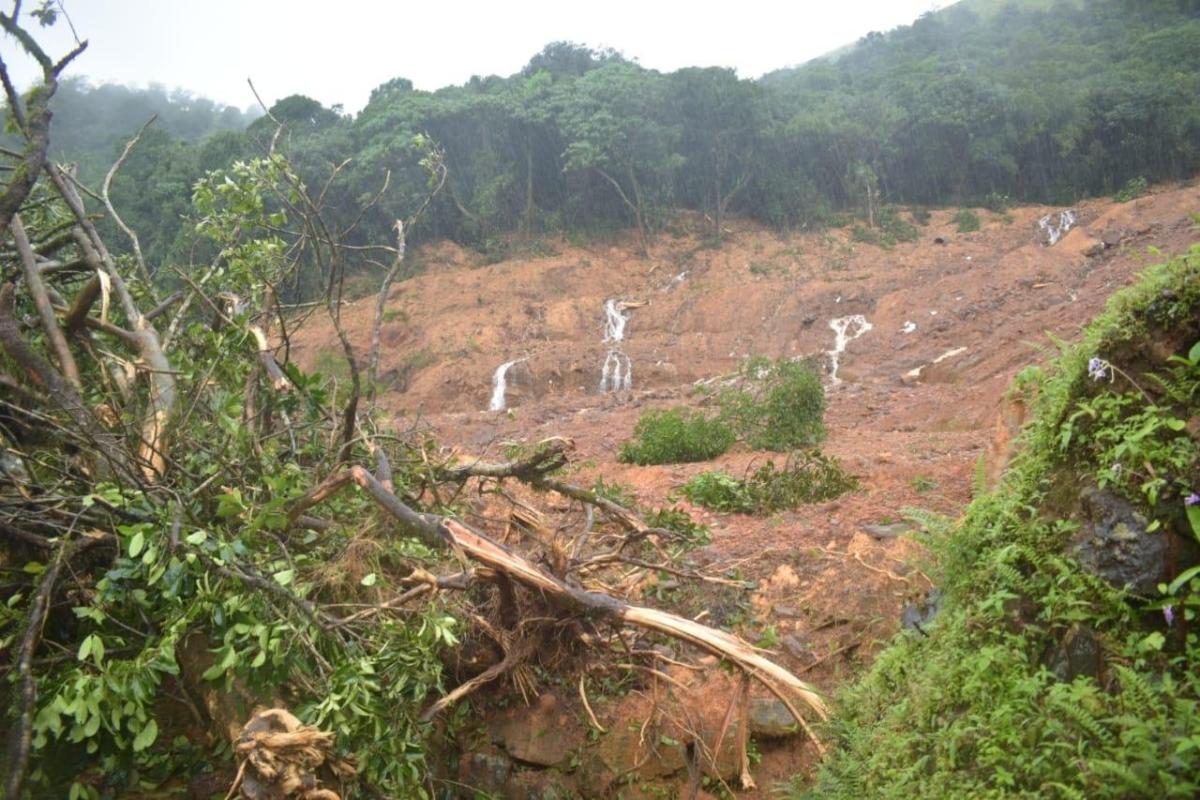
Everything is a fond memory now. On August 6, 2020, Anandatheertha failed to turn up at Talakaveri temple along with the chief priest to conduct the morning rituals. One of the security guards at the temple went to check the priest and found the priest’s house buried in mud.

According to available information, the development officer of the local Grama Panchayat had issued a notice to Anandatheertha, directing him and the family of the head priest to move away from the place for the hill was prone to landslides; Anandatheertha was living at the foothills.

However, Anandatheertha refused to move away. Even the cowshed he had with over 20 bovines was buried deep in mounds of mud and rubble. The area surrounding the priests’ houses is now inaccessible, according to Kodagu district commissioner Anies Kanmani Joy.

A portion of the Brahmagiri Hill collapsed on the two houses where Anandatheertha and the priest were living. At least five people are missing as of August 7.

Other than Anandatheertha, his sister Shantha Narayana (68), her husband and temple’s head priest T S Narayanachar (70) and relatives Ravikiran Bhat and Pavan Bhat are missing.

Mud came crashing down on the two houses Wednesday midnight; around 30 acres of the mountain range collapsed. The Geological Survey of India (GSI) had predicted possibilities of landslides in Talakavery, in the close vicinity of the temple, after detecting surface cracks during last monsoon.

It had conducted extensive field study in Kodagu following the two subsequent floods since 2018 and discovered slope modification without proper precautions as the major cause of landslides.

Unbridled construction of houses by carving hill slopes resulted in land destabilisation in the region. Unsupported slope cuts for road widening also contributed to the tragedy.

A spiritual leader who always expressed concern over change in land use patterns in Brahmagiri hills and the mushrooming illegal constructions has now turned its victim.

He was always against large-scale capital investments to convert Talakaveri as a concrete jungle in the name of spiritual tourism. The encyclopaedia on rivers is no more.

source: http://www.downtoearth.org.in / Down To Earth / Home> Environment / by K A Shaji / August 07th, 2020

Having right mindset important for Team India in next 1 year, says Raghunath

Bengaluru :

The Indian men’s hockey team must treat the next one year as a countdown to the Olympic Games in Tokyo, feels former drag-flick specialist VR Raghunath.

“I think the team must take this period as a one year countdown, and forget everything that’s happened in the last 6-8 months. It is time to start afresh,” said Raghunath.

The former defender, who was part of some of India’s finest victories including the 2014 Asian Games gold medal and FIH Champions Trophy silver medal in 2016, further said that the six-week break would have helped the players recharge.

“The six-week break was ideal for the players to return to the national camp feeling fresh. The Indian team’s fitness is top class and they will continue to build on this plus point the next one year but having the right mindset in their approach and staying mentally positive will be very important,” he said.

Putting things into perspective, Raghunath explained, “How the players cope mentally in this new scenario, how they approach every day mentally and once they start training and playing matches, how they will cope with the pressure and the results will matter a lot.

“Usually in the lead up to the Olympics, the last 6-8 months pass by really fast and the team must be absolutely prepared physically and mentally.”

Commenting about the team’s defence, Raghunath said India’s current backline can challenge the best teams in the world.

“They are very experienced and the current set of defenders have about 50-80 caps together. They know each other very well and I don’t see them having any problems even when they are put in a tough match-situation against any top team in the world,” said the Coorg-lad who continues to actively take part in domestic hockey.

He further highlighted that young dragflicker Harmanpreet Singh has matured as a player and with good support from senior compatriot Rupinder Pal Singh, India can produce lethal PC attack.

“Having two top dragflickers who can play full match is an advantage for India. Both Harmanpreet and Rupinder are equally good and they have completely different execution and qualities.

“Having various options and combinations in drag flick is always good. Plus, India has good options in Varun Kumar and Amit Rohidas who can be great support when one of the two top flickers are having a rough day,” opined Raghunath.

source: http://www.daijiworld.com / Daijiworld.com / Home> Sports / by IANS / August 06th, 2020

The Joshna Chinappa interview | ‘It’s exciting to be back on court’

The World No 10 in squash, who resumed practice at the Indian Squash Academy in Chennai on Monday after more than four months.

Indian squash star Joshna Chinappa (File | PTI)

Chennai :

Joshna Chinappa heaved a sigh of relief when the Tamil Nadu government announced last week that athletes can train at the stadiums.

The World No 10 in squash, who resumed practice at the Indian Squash Academy in Chennai on Monday after more than four months, feels it’s important not to burn out in order to get back in shape too quickly.

In an interview with The New Indian Express, the 33-year-old opens up on finding purpose in training, staying focussed for the 2022 Commonwealth and Asian Games and the role of her sports psychologist during these difficult times. Excerpts:

How different was the training this time?
Having access to the academy and squash court is a relief. Right now, we are training solo. It’s just one of us on the court hitting the ball. In the last four months, everything was shut. Predominantly, my training was only at home, basic fitness training. It’s exciting to be back on the court.

Is there a sense of fear or paranoia even though in Chennai there are signs of things improving?
It (fear) is always there at the back of your mind and we should not take things like wearing a mask and sanitising your hands for granted. I just try and remember these because it’s easy to forget once you train in a public place. It’s about being more aware. But I know when I go to play, it’s a safe and secure environment.

How is your body responding to this increase in training load?
Doing fitness is different from playing. My body is pretty bruised up (laughs). It is slowly getting used to it. But I just feel, in another few days or in a week’s time, I should be able to play a bit more fluently. I think I need two weeks of consistent practice and strength training to get back into rhythm.

What are the challenges of starting afresh?
For me, it’s about finding the purpose of training right now. (And decide) Should I push myself hard or keep my fitness at a good level or play squash as much as I can. It’s important not to burn out when I train hard every day. But there is no tournament in sight currently. The challenge is in figuring out how to train correctly and efficiently so that I can look after my body and when the Tour does start, I will still be fresh to play for a few years.

You said a month ago, there was no motivation to train…
I believe things will start again, if not this year, at least by January. For me, Commonwealth Games (CWG) and Asian Games have always been the biggest motivation for the last few years. I’ve a plan to train and compete at the 2022 CWG and Asiad. It’s important to keep training and stay focussed.

Did having a sports psychologist help you get through this phase?
Having a sports psychologist has played a huge role in my game. I’ve worked with someone for the last 10 years. He is also a squash player, so he understands my game. For me, there are two people that I trust with my game – my coach and psychologist (both based in the UK). It’s nice to have someone to speak to, to bounce ideas off and to keep your perspective as positive as possible. Especially, during times like this when things are challenging, mentally.

When do you think Indian players will be okay with taking part in events abroad?
Right now, things are looking hard. Travel is not sorted out. Our Tour is trying to put together something from September or October onwards. But again, nothing is confirmed. Things are changing every couple of weeks. I personally don’t feel like competing till October or November, if at all. Some tournaments have been cancelled. It’s a little grey.

Do you see tournaments happening in India this year?
I actually asked the federation about this. They are keen to start something when things get better. As I said, it’s all about how the situation is – travel, quarantine period and safety measures have to be considered. All it takes is one person to stop the tournament completely, be it domestic or international. It’s important to try and wait a little bit. Let people first get back to training. Hopefully, when the situation gets better, we can start off with low-key domestic tournaments.

source: http://www.newindianexpress.com / The New Indian Express / Home> Sport> Others / by Srinidhi PR / Express News Service / August 05th, 2020

Harangi Dam Full: Madikeri MLA Appachu Ranjan Offers ‘Bagina’

AppachuRanjanKF04aug2020

Kushalnagar:

Following copious rains across Kodagu district, the Harangi reservoir is almost full. The dam is two feet short of reaching its maximum level of 2,859 feet at 2,857 feet this morning.

Before the crest gates were opened, Madikeri MLA M.P. Appachu Ranjan offered ‘Bagina’ to River Cauvery after performing puja to the statue of River Cauvery located at the base of the reservoir this morning.

Executive Engineer Rajendra, Harangi Reservoir Assistant Engineer Nagaraju and other BJP leaders were present on the occasion.

This reservoir is the main source of water for KRS dam in Mandya district. Irrigation Department Executive Engineer Rajendra said that water from the Harangi reservoir is now being released into the river.

AppachuRanjan02KF04aug2020

Following heavy flow in recent days, water is also being released into irrigation canals.

The right bank cannals feeding irrigated lands in Hunsur and KR Nagar taluks of Mysuru district are getting 1,500 cusecs of water every day while 400 cusecs of water is being released to left-bank canals feeding lands towards Hassan district. The inflowing water is much clear compared to last year.

Experts opine that this is probably due to growth of vegetation at the areas of landslides, which had caused heavy damage in the region, last year.

Harangi Dam provides irrigation facility to thousands of acres of farmland in Periyapattana, Hunsur and KR Nagar of Mysuru district, Arkalgud taluk of Hassan district and Kodagu district.

The Harangi Dam can hold 8.5 TMC of water.

source: http://www.starofmysore.com / Star of Mysore / Home> News / July 31st, 2020

Five-time MLA Appachu Ranjan stakes claim for ministerial berth

Five-time MLA Appachu Ranjan on Friday said he too is an aspirant for a berth in the Chief Minister B.S. Yeddiyurappa-led BJP Ministry in the State.

Speaking to reporters after offering bagina at Harangi reservoir in Kodagu district, Mr. Ranjan, who represents Madikeri Assembly constituency, said he is among the senior MLAs of the BJP in the State and hence is aspiring for a ministerial berth.

However, he said the party high command will be taking a decision in the regard. Mr. Ranjan had served as Minister for Youth Services and Sports during the regime of Jagadish Shettar as Chief Minister.

source: http://www.thehindu.com / The Hindu / Home> News> States> Karnataka / by Special Correspondent / Mysuru – July 31st, 2020

Somashekhar assures financial support to Asha workers

Cooperation Minister S T Somashekhar distributes the cheques to Asha workers during a programme held at the Zilla Panchayat auditorium in Kodagu on Thursday. DH Photo

A scheme will be launched by the government to provide financial stability to Asha workers in the state, Cooperation Minister S T Somashekhar said.

He was speaking after distributing financial assistance of Rs 3,000 each to Asha workers, provided by the Department of Cooperation, in the district during a programme held at Zilla Panchayat Bhavan on Thursday.

“Meetings have been held at the government level for providing loans to the Asha workers on the lines of self help groups and Stree Shakti groups. The decision will be taken soon. Around 42,000 Asha workers are working in the district and 21,000 of them have been given financial assistance,” he said.

Lauding the efforts of the Asha workers in collecting the details from people with international travel history, Somashekhar said that the workers had played a big role in containing novel coronavirus.

Rs 20,000 crore loans

The minister said there was a target to provide Rs 20,000 crore loans to the farmers in the state next year. A whopping Rs 13,500 crore loans were provided to the farmers during last year. Loans to the tune of Rs 14,500 crore will be provided to the farmers this year, he said.

Somashekhar said, “A letter has been written to the Department of Finance to extend the date of repayment of farmer’s loans till December this year. A discussion in this regard was held with the chief minister as well.”

Minister S T Somashekhar called on veteran politician M C Nanaiah, at the residence of the latter in Kodagu on Thursday. DH Photos

Services lauded

MLA K G Bopaiah, MLA Appachu Ranjan and MLC Sunil Subramani too appreciated the valuable service of the Asha workers.

Relief fund

Two ventilators will be purchased with an amount of Rs 8 lakh. Various cooperative societies have raised an amount of Rs 33 lakh and have handed it over to the relief fund, he added.

Kodagu Zilla Panchayat Vice President Lokeshwari Gopal, DCC Bank Vice President Ketolira Harish Poovaiah and Deputy Commissioner Annies Kanmani Joy were present on the occasion.

source: http://www.deccanherald.com / Deccan Herald / Home> State> Top Karnataka Stories / DHNS / July 04th, 2020

After Almost Five Months Of Forced Break, Joshna Seeks Access To Squash Court

India’s highest-ranked squash player Joshna Chinappa is hoping to get access to courts sooner than later after almost five months away from the game.
JosnaKF31jul2020

India’s highest-ranked squash player Joshna Chinappa is hoping to get access to courts sooner than later after almost five months away from the game even though the sport’s national body has ruled out any activity till September due to the COVID-19 pandemic. Last month, Squash Racquet Federation of India (SRFI) secretary and former national coach Cyrus Poncha had told PTI that he does not see any tournament being conducted before September. According to him, chances of resumption of training at the Indian Squash Academy in Chennai were also very low.

Joshna seeks access to squash court

” Joshna is, however, keen to get back to the courts.

“It is not easy, not being able to get back on court. It is soon going to be five months since I have not been on a court. I personally love training at the academy (ISA). Just hope that as top athletes, we do get to train before September.

“It is important because we are preparing for something really big eventually (2022 CWG and Asian Games). It is important to be able to be to connected to the game. Hope we are allowed to play in a controlled atmosphere, an hour a day or something like that,” said Joshna, who broke back into the world’s top-10 earlier this month. ”

The coronavirus case count continues to rise rapidly in the country but a lot of top athletes have resumed training under strict safety protocols set by the Sports Authority of India. Mumbai, Delhi and Chennai have been badly hit by the virus and all three are major squash centres. Following the central government guidelines on the resumption of training, the Tamil Nadu government too allowed the reopening of stadiums and sports complexes without spectators. However, most sporting facilities in Chennai, including the ISA, remain shut. Joshna, who entered the world’s top 10 for the first time in 2016, is back in the group following the unexpected retirement of world number one Raneem El Welily last month.

” It is my hardwork and a bit of luck that has got me here but I want to prove it on court, beating the top players consistently,” said the 33-year-old, who has been on a strict fitness regime since the began lockdown in March.

Image credits: Twitter / PTI

source: http://www.republicworld.com / RepublicWorld.com / Home> Sports News / by Press Trust of India / July 18th, 2020