Tollywood actress Rashmika Mandanna may he a household name in Telugu right now. But essentially, she’s a Kannadiga. This coorgis beauty made her debut in Kannada with Rakshit Shetty who she later got engaged to and broke up too. But that’s a story for another day.
Rashmika was seen in hit Telugu movies like Vijay Deverakonda’s Geetha Govindam and Dear Comrade, Nithiin’s Bheeshma and recently in Mahesh Babu’s Sarileru Neekevvaru. While the movie hit upon soldier sentiment, another parallel plot was a love story even though it was one-sided.
Rashmika plays a girl who falls head over heels with Mahesh and tries several means to win his heart. Those who watched the movie must be familiar with Rashmika’s song for Mahesh ‘He’s so sweet, hot and handsome’.
Now, what if we told you Rashmika was even heard using a Kannada pick up line to woo Mahesh?
source: http://www.thehansindia.com / The Hans India / Home> Entertainment> Sandalwood / by Manjula / Hans News Service / July 25th, 2020
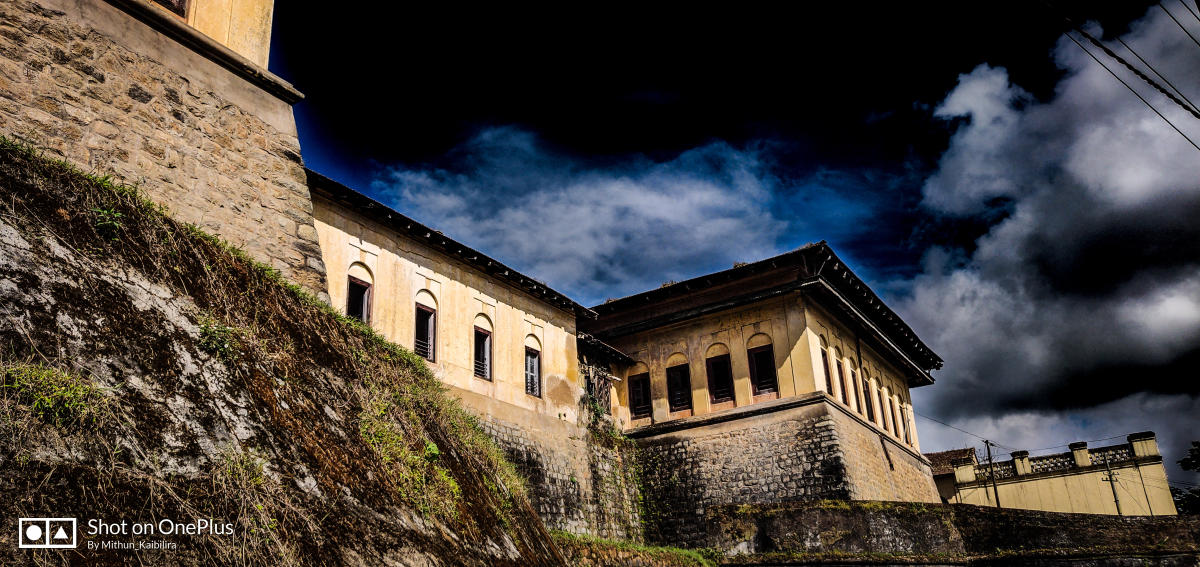
With the State Cabinet on Thursday sanctioning Rs. 8 crore for the renovation of the historical Madikeri Fort, the works on which has been taken up by the Archaeology Department, Madikeri MLA Appachu Ranjan has batted for retention of old architecture and heritage characterisitics of the structure, while also giving a modern touch to it.
Speaking to presspersons after inspecting the ongoing renovation works of the Fort located in the heart of Madikeri City, Appachu Ranjan, who is also a former Minister, said that as an MLA earlier too, he had raised the Fort renovation and development issue a number of times in the Assembly..
Pointing out that the renovation works has been taken up following a High Court order, he said that now the State Government has sanctioned Rs. 8 crore for the works and it is satisfactory to note that the works have been taken up at last.
Asserting that Madikeri Fort and the associated Palace is symbolic of Kodava tribe, he said that it was important to develop the Fort as a Museum, while retaining the original architectural characteristics of the structure.Underlining the need for installation of Sound and Light system in the Fort premises once the renovation works are completed, he said that the richness and uniqueness of Kodava culture, customs and traditions must be portrayed through this system, just as being done in the case of freedom fighters such as Veer Savarkar and Bhagat Singh at Andaman Jail.
Earlier, Appachu Ranjan received inputs on the progress of works from the Department Engineer, who said that 5mm metal sheet has been cemented to the roof of the Fort. Expressing displeasure at the quality of the sheet, he asked the authorities to ensure quality of tiles, wood and other construction materials being used for renovation.
source: http://www.starofmysore.com / Star of Mysore / Home> News / July 28th, 2020
Air Marshal Nanda Cariappa pays rich tributes to martyred soldiers
Madikeri:
“Kargil Vijay Diwas is a symbol of India’s pride and valour. I bow to the soldiers who, with their indomitable courage, drove the enemy from the inaccessible hills of Kargil and waved the Tricolour there again. The country is proud of the heroes of India, who are dedicated to protecting the motherland. We remember the courage and determination of our Armed Forces, who protected our nation in 1999 and continued protecting us and their sacrifices will continue to inspire generations,” said Air Marshal Kodandera Nanda Cariappa.
He was speaking at Sunny Side War Memorial — the house of General K.S. Thimmayya — at Madikeri yesterday on the occasion of Kargil Vijay Diwas. The event was organised amidst COVID pandemic by Field Marshal K.M. Cariappa and General Thimmayya Forum. “It is a special and a sacred milestone in the history of Indian Armed Forces,” he said after laying a wreath at Amar Jawan Memorial at Sunny Side.
Field Marshal K.M. Cariappa and General Thimmayya Forum President Col. (retd.) Kandrathanda Subbaiah, Lieutenant Colonel (retd.) Chengappa, Major (retd.) Biddanda Nanda Nanjappa and others paid rich tributes. Ajjinanda Thamoo Poovaiah of Kodagu Ekikarana Ranga, Kokkalera Cariappa, entrepreneur Arun, Sukumar of Hindu Vedike and others were present.
Kodagu Sainik School Principal Col. G. Kannan paying homage to war heroes at the War Memorial.
Sainik School pays tribute
The supreme sacrifice by the brave Indian soldiers was remembered by the Kodagu Sainik School fraternity by paying homage to war heroes at the War Memorial. Principal Col. G Kannan laid the wreath. Lt. Col Seema Tripathi, Vice-Principal and Sqn. Ldr. R.K. Dey, Administrative Officer also remembered the sacrifices.
Associate NCC Officers of the School also paid floral tributes at the Memorial. The Principal addressed the cadets and shared a video to the cadets about the event and told them that the School, under Ministry of Defence and with the support from Government of Karnataka, is committed to prepare them to be future leaders not only in defence forces but in all walks of life.
Owing to the COVID pandemic, the programme and competitions were held online. Cdt. Amogh and his team of other cadets performed a role play titled “Yeh Dil Mange More!” a tribute to Capt. Vikram Batra, Param Vir Chakra awardee, through video conference. Online quiz, poster-making contests were held and e-certificates were also awarded to the winning cadets.
source: http://www.starofmysore.com / Star of Mysore / Home> News / July 27th, 2020
Undeterred by the absence of much fanfare or grand fashion shows, designer Aviva Bidapa launches her second swimwear collection.
Model in Aviva Swimwear
Bengaluru :
A grand launch was what Aviva Bidapa had planned for the launch of the second collection of her swimwear line.
But her plans took a completely different turn due to the Coronavirus outbreak. But taking things in her stride, the fashion designer is now promoting her new collection digitally, even getting a shoutout from actor Anushka Sharma on Instagram.
“Anushka has always been a gem of a person. I had just sent her a box containing some of my work as a gift. But she posted it on social media, and that meant so much to me. She didn’t have to do that but it was a sweet gesture from her side,” says Bidapa, the daughter of popular fashion consultant Prasad Bidapa.
Talking about her new collection, which was supposed to come out in March-end, she says it has been designed keeping every body type in mind. “If someone picks a swimwear that means they want to wear something easy and have a good time.
I wanted to come up with something that fulfilled those two primary requirements. That’s why some of my pieces have full sleeves or some of them are one-piece suits to keep the tummy area covered,” says Bidapa, whose swimwear line is called Aviva Swimwear. Having been exposed to the fashion industry at an early stage, Bidapa has worked with models with ‘perfect’ bodies, but she has no qualms in admitting that she too grew up with body image issues.
“While growing up, I was always a chubby kid and struggled with my body. I used to dread going to poolside parties. Now, I don’t want to be the one who tells people if their body is suitable for swimwear or not,” she says, adding that the best part of her collection is that people are free to pick the top and bottom of different sizes according to their body.
The venture was started by her father, but Bidapa says she took to it like fish to water, doing her own research and working with various designers to understand the basics of designing swimwear. “My father clearly told me that for this venture I am on my own. So I did my research by working with designers like Ajai Vir Singh, who runs his swimwear label called Pigeon Island in Sri Lanka and has been one of the main persons behind Colombo Fashion Week,” say Bidapa, who also wanted to bridge the gap between street-style brands and designer collections through he collection.
“I wanted the collection to have a designer feel and an affordable price,” she says, adding that the collection priced starting at Rs 1,000. Though the Covid-19 outbreak has become a spoiler for the launch, she is sure that people would not mind shopping now since “they are classic pieces which are a must-have in the wardrobe”. Bidapa was gearing up to launch her next collection in December this year, but due to the pandemic, she now hopes that it will be out in March 2021.
source: http://www.newindianexpress.com / The New Indian Express / Home> Cities> Bengaluru / by Monika Monalia / Express News Service / July 13th, 2020
Even though coffee and pepper are the prominent commercial crops in Kodagu, several farmers have been growing both agricultural and horticultural crops in integrated farming method, thereby, contributing to food security.
Somengada Ganesh Thimmaiah from Nallur village of Ponnampet in Virajpet is one such agriculturist who has scripted success through his innovative methods in farming.
Somengada Ganesh Thimmaiah was felicitated by Virajpet MLA K G Bopaiah. DH Photos
He is the winner of the National-level Babu Jagjivan Ram Krishi Samman award this year. Indian Council of Agricultural Research (ICAR), New Delhi, conferred the prestigious award on Thimmaiah during a function held recently on the occasion of its 92nd Foundation Day.
Thimmaiah has been following the integrated method in agriculture where he grows areca, coffee and paddy as main crops and a variety of vegetables and fruits and sub-crops.
Along with agriculture, he is also into apiculture, poultry and pisciculture, which gives him additional income. Thimmaiah has also been growing the ‘Beth’ plants required for honey bees.
He has successfully experimented with more than 60 paddy varieties and has implemented a mechanised system in agriculture and his paddy field is tech-savvy.
The annual produce of paddy on his farm is 350 to 400 quintal while that of coffee is about 200 bags. He said that pepper also is one of his main sources of income. He has also been cultivating butter fruit, sapota, mango, jackfruit, orange, egg fruit and rambutan as well.
A lot of youth have been visiting Thimmaiah’s farm and seeking his guidance in farming to which he says youth showing interest in agriculture and horticulture is a good sign.
Virajpet MLA K G Bopaiah visited Thimmaiah’s farm and felicitated him for winning the much-coveted award.
Forestry College, Ponnampet, too, honoured Thimmaiah. College Dean Dr Cheppudira G Kushalappa, Extension Unit Head Dr R N Kenchareddy, Agricultural Officer Teetamada Meera were present on the occasion.
source: http://www.deccanherald.com / Deccan Herald / Home> State> Karnataka Districts / by Aditya K A, DHNS, Madikeri / July 22nd, 2020
In Nov 1948, Thimayya moved Stuart tanks in utmost secrecy by dismantling their turrets and used them in direct firing role that led to the capture of Zoji-la which had evaded capture on previous instances. It was because Zoji-la was in our hands that liberation of Kargil was possible in 1999.
General KS Thimayya
There were three elements to India’s largely unknown role in the Korean War 1950-1953. This is the second in a continuing series on that conflict. For the earlier story on the 60th Para, click here (https://bit.ly/2DW0PHS)
India became a member of the United Nations when the organization was founded on October 24th, 1945. Established to ensure world peace—among other goals— after a ruinous World War, the UN has had a mixed track record. One of its successes, however, was the bringing of the Korean War to a close. India played a unique role in bringing the conflict to a speedy conclusion by advocating against a policy being debated at the UN which could have led to the war’s prolongation or escalation. That war was also the first commitment to a UN assignment by an independent India and the Indian Army. This contribution and the men who made it a success are still celebrated as heroes for their commitment and courage.
The Korean War began on 25th June 1950 and would rage for three long years between the Western alliance—led by the USA under a UN resolution called the UN Command—and a Socialist alliance of North Korea and China (known as the Korean People’s Army (KPA) and the Chinese People’s Volunteers (CPV)) supported by the Soviet Union. The two sides reached a military stalemate by the middle of 1953 and had agreed on the terms of a ceasefire. In truth, the war would have come to an end in 1952 if the peace talks held at Panmunjom on October 25, 1951 could have reached a decision on the question of prisoner swaps. This was a contentious topic, and one where India finally found the solution—a solution accepted nearly unanimously by the UN, allowing for the signing of the Korean Armistice Agreement on July 27, 1953. India’s efforts to find a compromise failed more often than not, increasing tensions between India and the United States, and even South Korea. The US had reasons to suspect Indian neutrality as we were among the first countries to recognize China diplomatically, even advocating for their seat at the UN in 1950.
A major issue that defied agreement was how to deal with a large number of Korean and Chinese prisoners—about two hundred thousand of them—held by the UN Command. Many prisoners refused to return to their original countries. There were also a few similar UN prisoners, mostly Americans, held by the Korean People’s Army (KPA) and the Chinese People’s Volunteers (CPV))
The Armistice agreement stipulated that a Neutral Nations Repatriation Commission (the NNRC) would be established with two countries from each bloc, and headed by India—underscoring our nation’s reputation as a neutral country. Thus the NNRC had Czechoslovakia and Poland from the Eastern Bloc, and Sweden and Switzerland from the West. India was also tasked with providing a brigade of soldiers to provide security for the prisoner exchange.
The NNRC decided the fate of the remaining 20,000 POWs —and their repatriation—also called the Big Switch. It followed Operation Little Switch in April-May of 1952, which saw the exchange of wounded and sick soldiers held by both sides. The solution included handing over these prisoners to the NNRC headed by India. A full Indian contingent of nearly 6000 called Custodian Force of India (CFI) were to take over physical custody of these prisoners; this was our nation’s initiation into peacemaking and conflict resolution.
Led by General Thimayya as Chairman, and Ambassador B.N. Chakravarty, IFS, as the Alternate Chairman, the Neutral Nations Repatriation Commission (NNRC) was a task that many did not think Indians would be able to handle or deliver, because of its layered complexities and intrigue.
The Indian government had made sure to send their best medical unit 6oth Para Field Ambulance earlier ( https://bit.ly/2CrHWfn) and now, in sending General KS Thimayya—later to be the COAS— they displayed the same intent.
The force behind the NNRC
Kodandera Subayya Thimayya was one of three brothers born to a rich coffee planter of Cheppudira clan in Madikeri in the district of Kodagu. He joined Bishop Cotton School in Bangalore before enrolling at the Prince of Wales Royal Indian Military College (RIMC) in Dehradun; he was one of six Indian cadets later chosen to attend the Royal Military Academy at Sandhurst along with Gen PN Thapar who would later succeed him as the Chief in 1961 and be made a scapegoat for failures in 1962. Gen Thimayya’s brothers too joined the Army and his elder brother Ponnappa later joined the INA inspired by Subhas Chandra Bose and his younger brother died in the first war in Kashmir.
Thimayya graduated from Sandhurst in 1926 and received a commission into the British Indian Army, going on to become the first Indian to command an Infantry brigade: the 268th Indian Infantry Brigade—part of the post-World War II British Commonwealth Occupation Force in Japan. He received the British Distinguished Service Order for his service for the British military during World War II.
General Thimayya was also chosen to lead the counter offensive in Kashmir and headed the Jammu Kashmir force from April 1948 . The J&K force was split as Srinagar and Jammu Division, Gen Thimayya headed the Srinagar Div in May 1948 . Immediately he set about recapturing territories lost to the marauders with his daring and dynamic brigade commanders – Brig LP Sen of 161 brigade in Uri Sector, Brig Atal of Para Brigade tasked to recapture Zojila and Harbaksh Singh in command of 163 in Handwara – Kupwara . They were on a recapturing spree when Nehru decided to unilaterally declare suspension of operations as the case was referred to the UN much to the protestations of the army brass. Fortunately Pakistan didn’t comply with the UN resolution allowing the re – commencement of operations. This window of opportunity saw the consolidation of Ladakh with the capture of Zojila Dras and Kargil. Leh a weakly held garrison was saved by the sheer audacity and courage of Thimayya and Air Cmde Mehar Singh who landed in a Dakota together for the first time in Leh paving the way for beefing up troops that saved Leh from enemy hands . In another audacious move for capture of Zojila tanks of 7 Cavalry was used in a direct firing role which completely destroyed the enemy morale leading to its capture . Thus Ladakh was saved in the nick of time by November 1948 before winter set in . Seeing the change in pace and tempo of operations Pakistan quickly agreed to the terms of the UN resolution calling for a ceasefire before it lost all other territories held by them. The rest is history but what stood out is the sheer character and audacity which made him a national hero for saving Kashmir .
Another anecdote that revolves around him is the detention of a senior politician’s son after he and some goons passed lewd remarks and even tried to molest the wife of an Army officer of 5 JAT in Amritsar in 1959 . With the personal involvement of none less than that of the CM Of Punjab the ripples of this action went up to Parliament. General Thimayya was summoned for an explanation and his response that silenced the opposition was “If we cannot defend the honour of our women, how can you expect us to defend the honour of our country?”
His ability to project India’s honor was on full display during his handling of the NNRC in Korea.
The NNRC through CFI was responsible for gathering non-repatriated prisoners into camps; that included nearly 170,000 prisoners held by UN forces who didn’t want to return to either China or North Korea.
In the face of Chinese demands for the forceful repatriation of their soldiers, the UN and the CFI worked hard to explain to each prisoner their rights and privileges; they could then choose to go home or remain with the side that captured them.
This called for compassion, fairness, and neutrality on the part of the Indian Custodian Force, who rendered yeoman service during the entire span of their mission from September 1953 to March 1954. On several occasions, intricate situations were resolved only because of the patience and tact of General KS Thimayya and Major General SPP Thorat. They proved their mettle, earning well-deserved praise for their command and for India.
It was an unenviable task; in the end only less than 100 who wished not be repatriated to either country came back to India once the NNRC and CFO concluded their operations. A few Koreans chose to resettle in India, while others were repatriated to Brazil.
General Thimayya is not only an Indian military hero he is also a hero of the Korean War . It has been 66 years since the end of the Korean war but even till day he is remembered by Koreans with gratitude and affection. He was awarded a Padma Bhushan in 1954 for his service in Korea.
General Thimayya went on to become the COAS from 1957-1961. After his retirement the UN again requested for his service in 1964 to command UN troops operating on Cyprus in keeping with his reputation of impartiality displayed in Korea . He would however die of a massive heart attack on December 18, 1965 at the age of 59.
————–
Col ( Dr) Divakaran Padma Kumar Pillay, Shaurya Chakra, PhD is a Research Fellow, with the Manohar Parrikar Institute for Defence Studies and Analyses. His twitter id is @dpkpillay12.
—————
source: http://www.economictimes.indiatimes.com / The Economic Times / Home> National> Business News> News> Defence / by ET Contributor – Col.(Dr)Divakaran Padma Kumar Pillay / July 21st, 2020
India’s ace squash player Joshna Chinappa (left) recently broke into the top-10 of the women’s world ranking. FILE PHOTO
Joshna Chinappa has experienced a hankering to return to the squash court once before. It was when she tore her ACL (anterior crucial ligament) in 2012. She was out of action for 10 months then.
This time, by admission, the 18-time national champion is at her fittest – reflective in her jump to No.10 in the latest issue of world rankings – and yet, all she can do is attach therapeutic significance to household chores while hoping for the Covid-19 pandemic to subside.
“Initially, it was fine because as an athlete you console yourself, saying it’s the break you deserve, and that it’s all going to return to normal soon,” Joshna tells DH. “…but after the first few weeks, it became very hard because of all the uncertainity.Trying to stay fit in a small space isn’t easy. More importantly, you don’t even know what you’re training for. Usually, you have a tournament, a goal you’re working towards. This time, there isn’t one, but you do it because you don’t want to start from scratch when the sport returns.”
Going by Professional Squash Association’s announcement from a few of weeks ago, the tour should restart mid-August. By that, Joshna, who last played in Egypt in March before hurrying back to India upon news of the virus outbreak, will have not have played in five months. She, however, reckoned it’s going to be a lot longer before resumption.
“It will take some time to get back, especially a sport like squash because there is quite a bit of contact with the opponent. There are so many guidelines which need to be followed if we’re back to competing again,” says the 33-year-old.
“I don’t see us returning to the court till October or November, and even then it will be vastly different from what it used to be.” she adds.
While the PSA has remained tight-lipped about its SOPs, Joshna offered glimpses, saying the tour is likely to enforce stringent testing measures and play without crowds.
“I also think they will host several tournaments in one location. What that does is keep all the players and support staff in one area. This way we can be monitored better,” she says. “Even then there will be a fear among athletes to compete. It’s going to be difficult to break away from that but I think we should just get on with it.
“I don’t think we’re properly safe until they come up with a vaccine, but we can’t endlessly wait for that to start living once again,” she opined.
source: http://www.deccanherald.com / Deccan Herald / Home> Sports> Other Sports / by Roshan Thyagarajan, DHNS-Bengaluru / July 13th, 2020
Joshna Chinappa, who has not played since March due to the COVID-19 pandemic, moved up a spot to be in 10th position.
Indian squash star Joshna Chinappa (Photo | Joshna Chinappa Instagram)
New Delhi :
India’s squash star Joshna Chinappa has broken back into the top-10 of the PSA world rankings following the shock retirement of Egyptian world number one Raneem El Welily.
Joshna, who has not played since March due to the COVID-19 pandemic, moved up a spot to be in 10th position.
The 33-year-old had entered the top-10 for the first time in 2016.
Dipika Pallikal is the other Indian female player who has achieved the feat.
Egypt’s Nouran Gohar is the new world number one following Raneem’s retirement.
Raneem had held the top spot for 19 months before announcing a sudden retirement last month.
India’s top male player Saurav Ghosal remains 13th in the latest rankings.
The PSA tour is suspended until at least mid-August due to the coronavirus outbreak.
source: http://www.newindianexpress.com / The New Indian Express / Home> Sport> Other / by PTI / July 08th, 2020
Everyone has some or the other ambition or dream to achieve when they are in college but very few of them live their dreams or choose the career they wished. Mysuru-based Coluvanda Punya Nanjappa has achieved her childhood dream or call it passion to be a fighter jet pilot.
She has been selected for the training and once she completes it, she will be a fighter pilot, a rare distinction for a woman who has her roots in Kodagu, a land of defence personnel. Though the district has achieved the fame of producing a Field Marshal, a General and innumerable Lieutenant Generals, Brigadiers and Majors in the Indian Army and their equal ranks in the Navy and the Air Force, it is for the first time a woman fighter pilot is emerging from the tiny district.
In fact, she will be the only second woman from Karnataka to be a fighter jet pilot after Meghana Shanbough from Chikkamagalur and is the lone woman in her ongoing training course where there are 40 future fighter pilots.
Last year, Punya became the only women cadet from Karnataka to be selected for the flying branch training at the Indian Air Force Academy. The training for cadets who are selected for the flying branch is divided into three stages. Punya has already completed the Stage-1 of her training at the Academy in Dundigal in Telangana and has been selected to join the fighter stream where she will undergo Stage-II training at Hakimpet, again in Telangana.
The training stages are vivid and is a combination of adventure, skill and deft manoeuvring. They will be trained to engage in air-to-air combat, air-to-ground combat and sometimes electronic warfare while in the cockpit of a fighter aircraft. Fighter pilots undergo specialised training in aerial warfare and dogfighting (close range aerial combat).
After Stage-II, Punya will be commissioned as an officer to undergo Stage-III training. She is likely to be commissioned as an officer in the next passing out parade in December. Punya has always wanted to join the fighter pilot stream and her childhood dream has been realised. A resident of Vijayanagar in city, Punya was selected as a Trainee Pilot of IAF Flying Branch last year.
Punya with her batch-mates at the Training Academy in Telangana.
She is the daughter of Anuradha Nanjappa (a teacher at St. Joseph’s Central School) and late Coluvanda P. Bala Nanjappa (he was serving as the Manager of Prabha Theatre), native of Chambebellur in Virajpet taluk of Kodagu district.
Punya completed her schooling at St. Joseph’s Central School in Vijayanagar, pursued her PUC at Vijaya Vittala PU College in Saraswathipuram and Engineering at NIE, Mysuru. Punya then took up Air Force Common Admission Test (AFCAT) — an officer recruitment gateway in three branches of Air Force — Flying Branch (Short Service Commission only), Technical branch (Permanent and Short Service Commission) and Ground Duty Branch (Permanent and Short Service Commission).
source: http://www.starofmysore.com / Star of Mysore / Home> News / July 03rd, 2020
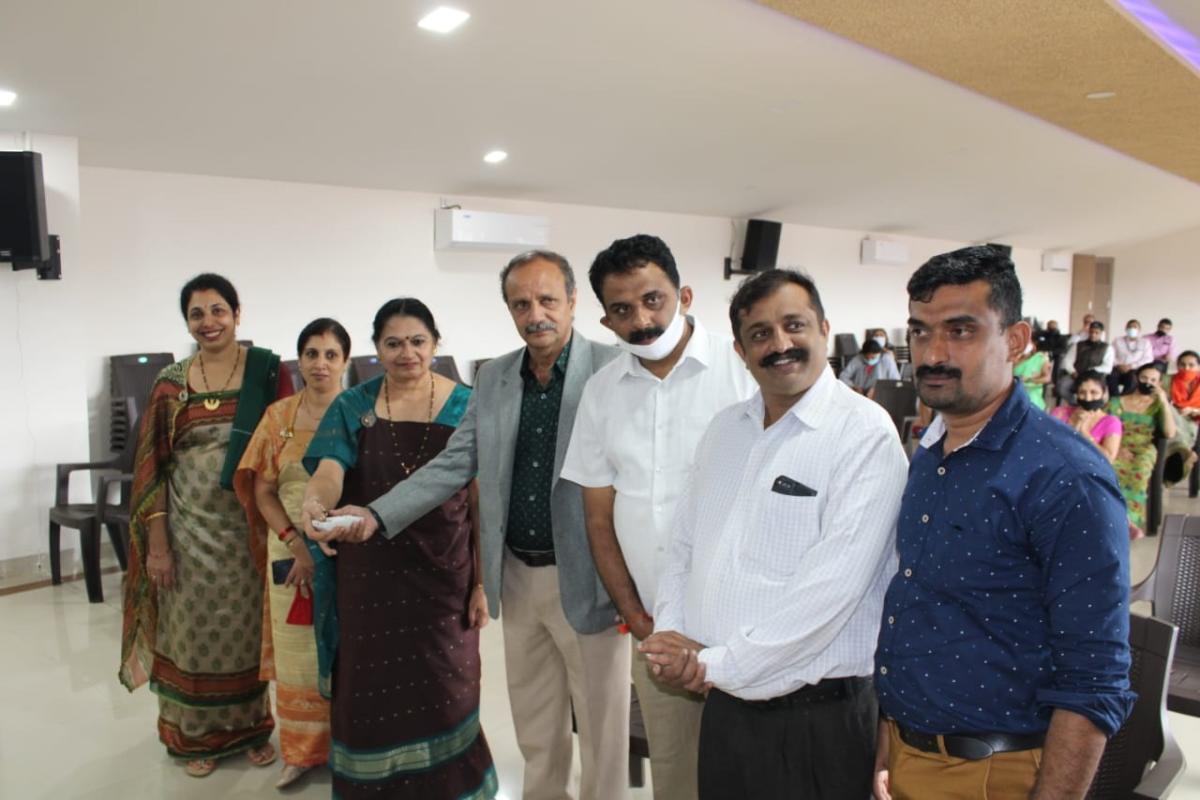
Congress leaders and workers watched the installation ceremony of D K Shivakumar as Karnataka Pradesh Congress Committee (KPCC) president, through a live session on zoom application, at Coorg Community Hall in Madikeri and various other places in the district on Thursday.
The programme was aired live at the gram panchayat levels as well.
Congress leaders and workers took oath on the occasion, towards strengthening the party further.
In the leadership of Congress leader Nandakumar, ration kits were distributed to 200 families on the occasion. Senior leader Chandramouli said that everyone should lend a helping hand to the needy.
The programme at the Coorg Community Hall was inaugurated by Kodagu District Congress Committee President K K Manjunath Kumar. MLC Veena Acchaiah, leaders Appu Ravindra, Kolyada Girish and K P Chandrakala were present.
source: http://www.deccanherald.com / Deccan Herald / Home> State> Top Karnataka Stories / DHNS, July 03rd, 2020
WELCOME. If you like what you see "SUBSCRIBE via EMAIL" to receive FREE regular UPDATES.
Read More »