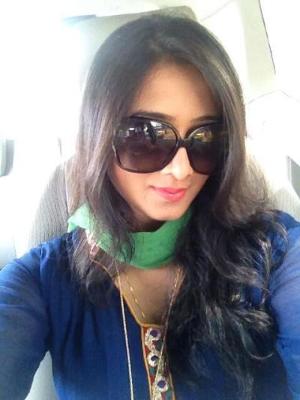
Harshika Poonacha went back to college today — and no, it was not to complete a degree or start a new one. The actress was at Don Bosco college in Bangalore to inaugurate a festival on the campus.
“Good morning twps. I’m sorry as I cudn reply u all,Yes I’m coming and I’m on my way to Don Bosco college. Gonna inaugurate d Fest fr You al (sic),” she tweeted on Tuesday morning. She then followed that up with a selfie, which she captioned, “Fun to be at College Fests. Takes me back to college.”
Harshika has a busy 2014, with as many as five films lined up — Meetru, Beet, Crazy Krishna, Anandha Thollai and Panipuri.
source: http://www.timesofindia.indiatimes.com / The Times of India / Home> Entertainment> Kannada> Movies / TNN / April 29th, 2014
The indomitable duo of Jwala Gutta and Ashwini Ponnappa, ranked 41st in the world now, are back with a bang. They achieved another high when they won the women’s doubles bronze in the recently concluded Asian badminton championship at Ghimcheon in Korea.
Former national coach Syed Mohammad Arif says that the two are one of the best doubles combinations from India ever.
“They have got all the potential to beat anybody on their day. But unfortunately, they lost that momentum after the Commonwealth Games and World Championship because of the unnecessary controversies. They were low on their confidence and they had to make a comeback of sorts. Mind you, it is not easy in the world circuit,” Arif said.
source: http://www.newindianexpress.com / The New Indian Express / Home> Sport / by N Jagannath Das – Hyderabad / April 29th, 2014
Anupama Puchimanda Mundanda, 33, is the first woman referee from India to officiate in 88 international hockey matches and three Commonwealth games. She was awarded the Best Umpire (Women) India by Sardar Gyan Singh Memorial Hockey Society in 2007. She was selected by the Federation International Hockey as one of the youngest umpires among ten men and women in the world. She is in the city to officiate at the fourth National Junior Hockey Championship-2014. She spoke to TOI about her success in a male-dominated field and her goals. Excerpts.
What motivated you to get into hockey?
Hockey is popular in Kodagu and enjoys good support. My father and mother played hockey. When I was nine years old, I started my sports career as an amateur athlete in Kudige. At 13, I joined the Sports Authority of India, Madikeri, where I got into hockey. I represented the state in sub-junior and senior national championships several times.
What made you choose umpiring?
Since my childhood I wanted to do something unique. Umpiring is a field where we have bright opportunities. In 2001 I took the exam. I first officiated as an umpire at Cheppudira Family tournament, Kodagu. Since then I have never looked back.
What are the qualities that umpiring demands?
A referee needs a lot of concentration, has to maintain calmness. We need to study team strategy. It is the complete study of the game. When we manage the game well, everything will fall into place.
How was the journey?
I am blessed to have the support of my husband Mandanna Mundanda and parents and relatives.
Is it difficult for woman to achieve success in the male-dominated umpiring field?
I don’t want to comment on it. Personally, I went step by step with the support of my well-wishers, friends and seniors.
How is the performance of Indian hockey players?
The national hockey team and the state hockey team are performing well. The Hockey India league has been instrumental in promoting the game among the youth.
What is your next goal?
My aim is to be an Olympics umpire. But my immediate goal is to officiate at my 100th international umpiring which will be a landmark in world hockey umpiring. It will be a tribute to my father, who passed away recently.
Your advice to young players, aspiring umpires?
When we start doing anything from our heart, success automatically follows.
How do you feel umpiring at the ongoing National Junior Hockey Championship in Mysore?
I am very happy to be umpiring near my hometown. This is the first tournament I am officiating in Karnataka.
source: http://www.timesofindia.indiatimes.com / The Times of India / Home> City> Mysore / TNN / March 12th, 2014
Shalini says oduputtu is a favourite / by Special Arrangement
Coorg food blogger Shalini Nanda shares her recipes and memories of food. And reminds us that with any traditional cuisine, so much depends on the terroir
If you are a recipe seeker on the Internet you couldn’t have missed the site Coorg Recipes that takes you into the world of the Kodava community who love their food and drink and celebrate the produce they grow in their inimitable cuisine.
The newly re-launched avatar of the site features more than 40 traditional recipes from the Coorg region of Karnataka. P.T. Bopanna, a Kodava who’s been running the site says there is a “recipe of the month” section featuring recipes from contributors that’s been made interactive.
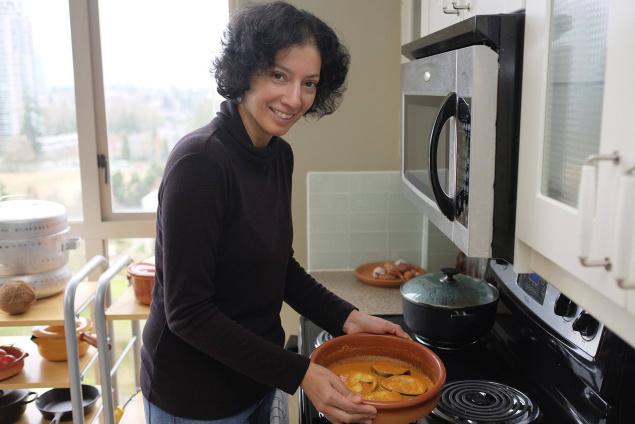
The new recipes come from well-known Coorg food blogger Shalini Nanda Nagappa, who now lives in Canada. “Growing up in an Army family, we were stationed in and travelled to various places in India. This provided wonderful opportunities to indulge my natural curiosity about all things related to food. My mother’s interaction with ladies from around the country, and abroad, invariably led to recipe exchanges that fed this fascination,” says Shalini in an e-mail interview.
At every opportunity she travelled home to Coorg to her maternal grandparents’ home. Under the watchful eye of her indulgent grandmother she enjoyed whipping up cakes and desserts for family. She self-published a cookbook in 2010, called A Cookery Year in Coorg (she runs a blog by the same name). Excerpts from an interview:
What is it about Coorg cuisine that sets it apart from others? What’s its distinguishing characteristic?
As with any traditional cuisine, much depends on the terroir, so to speak. Rice, grown in the fertile valleys of Coorg, is the staple, and it was eaten at every meal. I think there is an amazing number of ways in which rice is transformed into flatbreads, crepes, noodles, steamed cakes and more. Some are echoes of preparations found in the cuisines of neighbours in coastal Mangalore, North Kerala and Malanad. Others are quite unique, like paputtu, maddputtu, and oduputtu.
Rice and puttus are accompanied by curries of mutton, poultry, pork, (both fresh and preserved), salt fish, freshwater fish and crab, bamboo shoot, and wild mushrooms. Farmed produce like pumpkin, and fresh and dried beans are popular too. The recurring notes in these preparations tend to be that of fragrant cassia, cloves and cardamom, the brightness of fresh green herbs and green chillies, the sweetness of fresh coconut, the deep warmth of pepper, and dark roasted coriander, cumin and mustard.
Add to this the clarifying effect of sharp citrus, or powerful kachampuli, (a souring agent made from Garcina gummi-gutta). In all these, every cook has a unique take on how, and how much. With changing social norms and the physical environment, some significant elements of Kodava cuisine like wild game, once abundant in the forests of Coorg, are no longer viable. Foraged potherbs, and the use of coconut oil and lard are also not as widespread today. The cuisine continues to evolve, though, with cooks recreating traditional dishes by making use of what is readily available. For example, if one does not have access to wild bamboo shoot one can substitute with farmed bamboo shoot, imported from Thailand. It’s not quite the same, but it works.
Why is it that the “pandi cury” has become almost a synonym for Coorg cuisine, outside the Kodava community?
The short answer to that would be “because it’s so good!” Joking aside, for the uninitiated, a quick glance through the range of recipes on coorgrecipes.com should tell anyone there is much more to discover. Still, the combination of dark roasted spices, pork, and the unique sharpness of kachampuli combine in pandi curry to create something special.
What made you take to cooking? What kind of dishes do you like to cook?
I’ve always loved food, so I suppose it was natural to hang around in the kitchen picking up on the goings on. I’ve also always been curious about the entire process of preparing food, even before I was old enough to handle things on my own. My maternal grandmother indulged that interest and encouraged me. When I was young I was always whipping up cakes and desserts for the family. I enjoy most cuisines and like to cook anything that catches my fancy. I love seafood, and living on the coast of the Pacific NW, I am privileged to have access to some of the best out there. I also have a particular interest in the vast range of regional Indian cuisines.
Among the recipes you have shared, which are your most treasured ones, and why?
I feel every recipe has some special association, whether it evokes memories of meals past, was shared by a friend, or is just some fun innovation. Oduputtu is a particular favourite. I didn’t eat this when growing up, and it isn’t commonly made these days. I would hear my mother recall how she and her siblings were welcomed home from school long before they actually reached the house, by the delicate fragrance of the resin used to scent this unusual rice pancake. Her descriptions spurred me to seek out the clay pan it is traditionally cooked in, season it, and set about practicing getting the batter just right.
With the kaipuli recipes, I enjoyed the process of testing how exactly to substitute one locally found citrus fruit with another that is more widely available where I live and has a similar flavour profile, but different physical characteristics. Palya, which is the simplest style of preparation of vegetables, is applied to a variety of wild greens that once were commonly eaten, each for known health benefits. It’s been wonderful discovering some of these, like thaaté thoppu (Cassia tora), for myself.
For people living outside Coorg, will ingredients/cooking apparatus you have featured in recipes in coorgrecipes.com be easy to come by?
Coming from an army family and having lived outside Coorg for much of my youth, and now living in North America, I am familiar with many of the limitations as well as the possibilities in recreating recipes. Many ingredients are specific to the Coorg region, but on my blog I make it a point to try out, and offer what in my opinion may be the closest substitutes for both ingredients and equipment wherever possible. In India, there are online sources like coorgshoppe.com to help source ingredients like kachampuli and spices.
source: http://www.thehindu.com / The Hindu / Home> Features> MetroPlus> Food / by Bhumika K / Bangalore – April 24th, 2014
Nidhi Subbaiah may have moved to Bollywood but she is still known here as the Pancharangi girl.
The bubbly character she played in Pancharangi follows her wherever she goes. Nidhi shares that as an actress, she has never really planned her career.
Whatever has happened and is happening is all by chance, she quips.
“People ask me what my next project is and I say I don’t know. They’re awestruck and wonder why this answer but that’s true. I don’t plan anything and simply take things as they come,” says Nidhi.
A Mysorean, Nidhi lives and works in Mumbai.
She shares that she is now more than comfortable with the City and slipped into the ethos and the culture pretty well.
She made her acting debut with Abhimaani in Kannada and later did Anna Bond.
And before she knew it, she was hand-picked to play the lead in Ajab Gazabb Love.
“I was shooting for Anna Bond in Spain when I got a call from a friend in Mumbai who said that I had been chosen for Ajab Gazabb Love and that I had to give my dates immediately. It was a mixed feeling of excitement and anxiety. But that film gave me a good break,” she recalls.
Nidhi thinks that her strength lies in her ability to easily adapt to situations and roles.
“I want to dip my fingers into as many varied roles as I can which is what I have done in all the projects that I’ve worked in so far. In Vara, I played a quiet character. It was the opposite in ‘Krishnan Marriage Story’ and I played a extrovert in Pancharangi. Thankfully, I have been remembered for most of them,” she notes.
Work has always come to Nidhi. She recollects that she has never been in a situation where she has had to go looking for projects.
“I’ve never been pushy to bag as many projects as I can. And I have no regrets for the many projects that may not have come my way. I don’t take myself too seriously. I take things as they come,” reasons Nidhi.
Nidhi has been listening to a few scripts in Kannada and she says that she is likely to approve at least two or three projects.
source: http://www.deccanherald.com / Deccan Herald / Home> Supplements> Metrolife / DHNS – by Nina C. George / April 21st, 2014
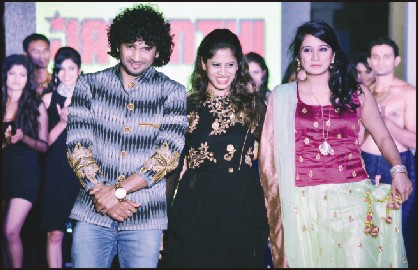
Actor Bhuvan Ponnanna and Harshika Poonacha walk the ramp along with designer Jayanthi Ballal in city last evening. Mysore :
The sharp showers last evening did not deter the enthusiasm of fashion lovers who gathered at Jayachamarajendra Golf Club here yesterday to witness the fashion show organised jointly by Fashion Designer Jayanthi Ballal and Country Inn.
The catwalk and sashaying of lissome models was delectable to watch. The combination of male and female models attired in black dress received a good applause by the discerning gathering of fashion lovers of city.
The star attraction of the show was actor Harshika Poonacha and Bhuvan Ponnanna who came on the ramp together. The models comprised college students from city and Bangalore.
Most of the fashion shows usually play western tunes to enthuse the models during catwalk. To beat the monotony, old Hindi songs were played during the ramp show to arrive at a new trend without compromising on glamour and glitter.
Speaking on the occasion, Harshika opined that compared to Hollywood and Bollywood, a good platform was rarely available in the South for fashion shows despite the presence of promising models here. She commended Jayanthi Ballal in hosting a good show opening vistas for upcoming models.
Addressing the gathering, Jayanthi said that she has been arranging fashion shows for the last three years in city to provide a platform for budding models and fashion designers. However, she opined that the people of city were still a bit conservative and situation should improve gradually. She said that it was heartening that some parents were willingly encouraging their children to participate in fashion shows. She reiterated that it was a wrong notion that modelling and fashion shows would drive youngsters astray.
source: http://www.starofmysore.com / Star of Mysore / Home> General News / April 20th, 2014
Since I last shared snippets of my old lady life with readers, it’s been a month of charming and also sad events. While these happened at different times and in different places, the common factor was that they all related to books, a topic on which as everyone knows, I can natter on till the monsoons arrive.
I attended the book reading of my friend Dr. Latha Muthanna, who has produced a quaint and most enjoyable translation of her mother’s memoirs originally written in Kodava dialect. Very simply and honestly told, she let on to us that some of her huge family in Coorg were aghast at her frankness and questioned whether certain things needed to be mentioned? She however was quite firm about painting the whole picture and the result was “Lopamudra’s Daughter: Memoirs of a Kodava Lady.” It is the kind of book you’d like to have at your bedside, to calm your psyche after an overdose of thrillers. I tend to read thriller after thriller till something forces me to stop.
At the reading, while Latha was fielding questions from the audience, I was struck by the fact that doctors often make excellent writers. Offhand I can name at least three who have written best-selling novels — Abraham Verghese (Cutting for Stone), Robin Cook with a long list of thrillers, and Kalpana Swaminathan, a surgeon in Mumbai whose ‘Lalli’ series of murder and mayhem has become immensely popular. Despite their famously bad handwriting, doctors churn out pretty readable stuff, wouldn’t you say? And going back in history, can we forget Dr. Arthur Conan Doyle, creator of Sherlock Holmes?
A couple of weeks ago we were privileged to host Aroon Raman, bestselling author, who talked about his latest book ‘The Treasure of Kafur.’ The select audience at the Sankalp Central Park Library was treated to a splendid history lesson complete with slides and a riveting commentary on the life and times of medieval India and the reign of Akbar, when the action of the story takes place. While there are not many Indian authors today who deal in magic realism [defined by Wikipedia as “what happens when a highly detailed, realistic setting is invaded by something too strange to believe”], Raman has no qualms about introducing talking animals, magic healers and such, to create a pretty marvelous tale of adventure and romance. I definitely will be waiting for a sequel, as the story has ended at a critical juncture.
By now many things nice and not so nice have been said about the late Khushwant Singh, man of letters, historian, celebrity sardar, a man whom you either adored or viewed with dislike. I thought he was great. He never minced words, his vision was crystal clear and whatever his political views may have been, he was a captivating writer. It takes courage in India to write about taboo topics, and he just went right ahead, never giving a damn about what critics thought, always with a wicked gleam of irreverence in his attitude. Khushwant Singh’s readership is a broad spectrum, from those who just pick up his compilations of jokes to read on journeys to those who read his collections of short stories and novels. On the serious side, his history of the Sikhs and his biography of Maharaja Ranjit Singh are profound works.
A friend of ours from Muscat had sat in a goods train on piles of gunny sacks, and travelled from Jalandar to Lahore as a refugee in 1947 when she was eight years old. Spending the rest of her life in Lahore, she yearned always to visit Jalandar once again but now in her seventies and confined to her wheelchair she felt it was no longer possible. We attended the launch of her autobiography organised by her son who lived in Muscat. At the launch she requested us to get her a copy of Khushwant Singh’s Train to Pakistan which she had not found anywhere in the bookshops in Lahore. So we did get her a copy much to her delight and she read it with great emotion, as though her own life was being described.
So there we have it — the new authors who will go a long way; and the sadness of the passing of a literary giant who left his mark on Indian writing for always. It so happens that I have with me some books written by modern authors like Anthony Horowitz and Sebastian Faulks. They are based on characters we know and have loved over the decades. While Horowitz has written a Sherlock Holmes mystery called The House of Silk, Faulks has written Jeeves and The Wedding Bells, bringing back to life the inimitable creation of PG Wodehouse. Can the masters be successfully imitated? Are the stories the same in quality? You might be surprised.
[e-mail:raolalitha@hotmail.com]
source: http://www.starofmysore.com / Star of Mysore / Home> Feature Articles / April 20th, 2014
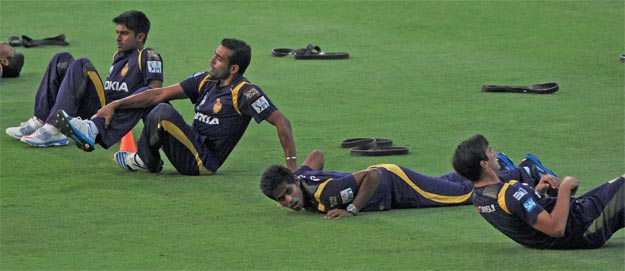
Former India player has undergone an amazing transformation Robin Uthappa (second left) practises with the Kolkata Knight Riders’ team at the Shaikh Zayed International Cricket Stadium. — KT photo
Robin Uthappa is not just looking leaner and fitter, he is also in a good mental space. Ever since the dashing opener, who went on a 10-day break to Belgium last July, before returning to India and hiring former India batsman Pravin Amre as his personal coach, there has been an amazing transformation in the Karnataka batsman. Yes, the ruthlessness in still there in his batting, just that there is more discipline and a price on his wicket.
Uthappa went through a whole make-over in his bid to make a comeback into the Indian team. And the road towards that began with a trophy-laden domestic cricket campaign with Karnataka and continues with the seventh edition of the IPL which begins on Wednesday.
Uthappa, who began with Mumbai Indians before moving to Royal Challengers Bangalore and the now defunct Pune Warriors, will be parading his wares for the Shahrukh Khan-owned Kolkata Knight Riders (KKR) this season.
Uthappa, who made his ODI debut against England in April 2006, and had scored 86 in India’s win, last played an ODI against Sri Lanka in the Asia Cup final in Karachi, in July 2008. He made his T20 debut against Scotland in the T20 World Cup in Durban in September 2007 but that match was abandoned. His last T20 was against South Africa in Johannesburg in March 2012.
Uthappa felt that his time out of the Indian team has helped him learn a lot. “It has been challenging for sure. But I have been able to embrace difficult times and learnt from it because it has brought me where I am today and helped me grow not just as a cricketer but also as a human being. Trials and tribulations helps one grow and I have used it in a very positive way. I think I have grown and matured a lot,” Uthappa said.
There might be a massive waiting list for a slot in the Indian team but Uthappa said he still had age on his side. “I’m not that old. I’m only 28. Thing is I started at the Under-19 level and you guys have seen me for so long that you think I’m old. I’m only 28 and it would be good to be back in the team and be part of the set up. It is about putting runs at the right time and if you can contribute to the team. I’m very happy that I have been able to contribute to the teams that I have played with because that becomes meaningful and that’s when you are valued and you value your performances. And people begin to trust you and put that faith in you,” he said.
Uthappa was pleased with the domestic showing. “As a team, Karnataka created history. We won the Ranji Trophy. We won the Irani Trophy and the Vijay Hazare Trophy. No team has done that in domestic cricket in India. We all feel a lot of pride. It has been good and satisfying to be a meaningful contributor to those victories. So, very satisfied with the way things are going,” said Uthappa.
Karnataka won a seventh Ranji Trophy title before lapping up a fifth Irani Cup against the Rest of India. They also won the Vijay Hazare Trophy where Uthappa accumulated 536 runs, including three centuries. Uthappa repeatedly mentioned discipline which has helped him transform into a better cricketer.
“It has been a journey over the last couple of years. I have just got more disciplined with my food. I have become more disciplined towards the sport. I got a bit distracted because of some personal issues. But then, common sense prevailed. I got in line with my goals. It took a bit of time,” he said.
Uthappa felt that the strong showing has put him back in the reckoning for a return to the Indian team. “It is pretty clear for me. I played for India ‘A’ last year. I scored a 100 and I was in the reckoning. Unfortunately, I had an injury and it took me 10 weeks to be back. I played six games of the Ranji Trophy. But I came back and was able to contribute to the team.” Uthappa said. “I have changed a lot on my technique. I value my wicket a lot more right now,” he added.
source: http://www.khaleejtimes.com / Khaleej Times / Home> Sport Home> IPL 2014 / by James Jose (james@khaleejtimes.com) / April 13th, 2014
In his films, he is always the not-so-regular guy. In real life, he doesn’t speak in a diplomatic manner unlike other Bollywood actors. Gulshan Devaiah has a theory about his tribe too. “People who choose to become actors are somewhere insecure about themselves,” he says. He candidly shares a recurring personal childhood dream which gives an insight into his own insecurity. “I used to have this dream, where I am waiting for the school bus and when the bus arrives, I realise I have no pants on,” he says. Over the years he has learnt to get a grip on his insecurity and focus only on the acting. “I have learnt things. Hopefully I am wiser now. I am not as insecure as I used to be when I was 18 years old,” says the 35-year-old actor.
Currently on a career high post Goliyon Ki Rasleela Ram- Leela, Devaiah is now looking forward to his forthcoming film Hunter, which is the directorial debut of Harshavardhan Kulkarni, who wrote Hasee Toh Phasee. Devaiah plays a sex addict in the film and it’s turning out to be quite a trip. “I play this ordinary sort of a character, something like what Amol Palekar used to play. He’s even more ordinary in the sense that Amol Palekar used to sing songs but this guy doesn’t even do that. He’s not a head turner at all but he likes to sleep with women. He is sort of a sex addict. He can’t give up his urge even after he gets married. It’s like nicotine. He wants to be loyal, but he gets this khujli. Hunter deals with this subject but treats it in a lighthearted manner,” he says.
There’s another film that he’s deeply invested in — Vasan Bala’s Peddlers, which went to the Cannes Film Festival in 2012, but is yet to see a cinema release in India. “Peddlers is my most intense performance,” says Devaiah. He will also be seen in Pooja Bhatt’s Cabaret and a horror film.
His priorities as an actor are clear — he selects roles based on his instinct but one thing he is very clear about — no television. “I have nothing against TV actors, but the only reason I don’t do TV is because I think it’s really boring. I can’t do it for the money,” he says. Even the idea of doing commercials doesn’t excite him. “I can’t do commercials. I used to get offers. Now they have stopped calling me also because they know I am going to say no,” he says.
source: http://www.indianexpress.com / The New Indian Express / Home> Entertainment> Play / by Ranjib Mazuder / Mumbai – April 18th, 2014
Nara Rohit-starrer Pratinidhi is heading for release on April 25. The film is done with the shooting part and is currently in post production. Tipped to be a political thriller, Pratinidhi has debutant director Prashanth Mandava wielding the megaphone while Anand Ravi penned the script.
The film’s trailer and audio, which were released a couple of months back, received good response. Shubra Aiyappa is playing the leading lady.
source: http://www.timesofindia.indiatimes.com / The Times of India / Home> Entertainment> Telugu Movies / TNN / April 13th, 2014
WELCOME. If you like what you see "SUBSCRIBE via EMAIL" to receive FREE regular UPDATES.
Read More »