Category Archives: Famous Personalities of Kodagu / Coorg

A fine performance by Pooavamma

The qualification marks for the World Athletics Championships continued to be elusive, but M.R. Poovamma lit up the evening with a fine performance in the women’s 400 metres in the second Asian Grand Prix at the NIS Complex in Patiala on Saturday.

With a battery of technical officials in operation, and manual timings as a back-up, the meet was a smooth affair, even as triple jumper Renjith Maheswary and Om Prakash in shot put improved their performances, in promising a better fare in the Federation Cup to be staged at the same venue after a fortnight.

Returning to competition after a bout of typhoid, the 22-year-old Poovamma clocked 53.59 seconds in outclassing a weak field. Pleased with her strong start for the season despite having trained for a few days only, she expressed confidence about improving her time in the meets ahead.

Having won two titles in the Asian Grand Prix last year, Poovamma felt that better competition would help her improve on her best time of 52.94.

Coach N. Ramesh was also confident that Poovamma would improve quickly and go under the qualification mark of 52.35. Of course, the athletes have the chance to win the Asian championship and become automatic ‘A’ standard qualifiers for the World Championship, but the question mark about the event coming off continued to dangle despite attempts to host it in Jharkhand.

Renjith had only two good jumps but managed to reach 16.78 metres, better than his mark of 16.67 last week. He said that the delayed start, by about an hour on the jumping pit, had spoilt his preparation, and he could not strike any rhythm.

However, that did not stop him from competing in long jump as well, and bagging a bonus bronze.

In shot put, the other Olympian in the fray, Om Prakash won with a throw of 18.65 metres. He had two other throws of 18.19, and 18.54 — better than his last week’s effort of 18.12. However, the qualification mark was a bit away at 20.10.

Arokia Rajiv continued to shine as he won the 400 metres ahead of Kunhu Mohammed and S.K. Mortaja, with an improved time of 47.22 seconds. He also won the silver in the 200 metres, and felt that it had taken a bit of sting away from him for the 400 metres.

Coach Mohd. Kunhu who trains all the three at the Army base in Pune assured that Rajiv would go under 46.5 soon.

With the third Grand Prix having been postponed owing to the Annual General Meeting of the Athletics Federation of India (AFI), the athletes will next assemble at the same venue on April 23 for the Federation Cup.

The results: Men: 200m: 1. Bhartinder Singh 21.66; 2. Arokia Rajiv 21.72; 3. Bala Murugan 22.19.

400m: 1. Arokia Rajiv 47.22; 2. Kunhi Mohammed 47.44; 3. S.K. Mortaja 47.69.

800m: 1. Manjit Singh 1:52.55; 2. Pranjal Gogol 1:52.97; 3. Vikash Latyeya 1:53.59.

3000m: 1. Kheta Ram 8:06.33; 2. P. Suresh Kumar 8:06.43; 3. V. L. Dangi 8:18.27.

400m hurdles: 1. Jithin Paul 51.72; 2. Binu Aquito 53.14; 3. Gurinder Singh 59.21.

Long jump: 1. Arshad 7.56; 2. Bhartinder Singh 7.54; 3. Renjith Maheswary 7.27.

Triple jump: 1. Renjith Maheswary 16.78; 2. Arpinder Singh 16.46; 3. Rakesh Babu 15.89.

Shot put: 1. Om Prakash 18.65; 2. Jasdeep Singh 17.95; 3. Satyender Singh 17.50.

Javelin throw: 1. Devender Singh 76.77; 2. Dinesh Kumar 73.44; 3. Samarjit Singh 72.71.

Women: 200m: 1. Asha Roy 24.23; 2. Merlin K. Joseph 24.83; 3. Sini S. 25.13.

400m: 1. M.R. Poovamma 53.59; 2. Anju Thomas 55.27; 3. Saraswati Chan 55.70.

800m: 1. M. Gomathi 2:11.99; 2. Jhuma Khatun 2:12.66; 3. Fulan Khatun 2:16.62.

3000m: 1. O.P. Jaisha 9:37.49; 2. Swati Gadke 10:13.87; 3. Kiran Rani 10:23.36.

Long jump: 1. V. Neena 5.95; 2. Amitha Baby 5.57; 3. Niksy Joseph 5.50.

source: http://www.thehindu.com / The Hindu / Home> Sports> Athletics / by Kamesh Srinivasan / Patiala, April 07th, 2013
Ale team apologizes to Harshika Poonacha

(Harshika )
(Harshika )

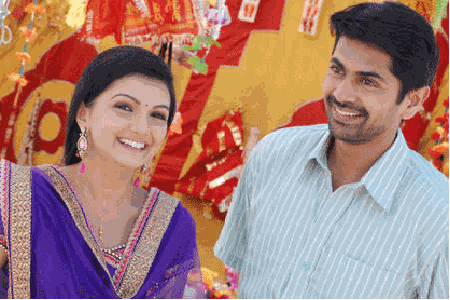
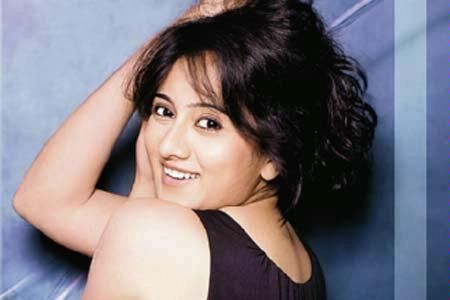
The female cast of the upcoming Kannada film found themselves in the midst of a controversy recently, when lead actress Harshika Poonacha took offence to promotional material that prominently featured Aviva Bidapa, who is only doing a cameo in the film. Harshika, in fact, voiced her disappointment when she saw Aviva’s pictures showcased in such fashion. Sources say that Harshika refused to associate herself with the film since then.

However, a clarification note recently issued by the film’s team seems to have put things in the right perspective, as far as Harshika is concerned. “Harshika Poonacha is the only female lead in our film. All the other characters appear either in guest or supporting roles,” states the notice issued by the production house. “Some of the initial posters did feature Aviva, but that led to unnecessary misunderstandings which we have rectified now,” confirms filmmaker Kiran Kumar Reddy.

The actress herself, seems a lot more relaxed after the team issued a public clarification. “A film’s poster should have the heroine, not someone who appears in a cameo. I don’t think it is fair if a film unit does otherwise. I just insisted they do the right thing. The team has apologized and we have now put behind all our differences,” says Harshika. Kiran also tells us, “We will not be using any of Aviva’s photographs or stills from the film anymore. She will only be seen as part of the movie, playing her cameo.”

source: http://www.articles.timesofindia.indiatimes.com / The Times of India / Home> Entertainment> Regional / by Kavya Christopher, TNN / April 14th, 2013

Coorg by birth, Chennaiite at heart

There are only a handful of Kodava families in Chennai; at any point in time, their numbers were between 150 and 200 families. With a diverse culture and beliefs that bear little resemblance to any other community in India, the Kodavas of Chennai have made their mark in every possible field right from government services to sports.

P M Belliappa IAS (Retd), MBE says, “You could trace the beginning of the shift from Coorg to Madras in the 1930s. Many came here to study at Madras Christian College and since the city was also a centre for administration, they eventually got jobs here and settled down,” he says.

Belliappa, who has lived in many cities across India during his service in the Indian Administration Service, zeroed in on Chennai to settle down post-retirement. “The city has always been hospitable to everyone,” he adds.

Kodavas or Coorgs as they are referred to are Hindu-Kshatriyas (the warrior clan). However, they are known for being non-ritualistic and believe in ancestor worship.

Pravin Aiana, the president of Coorg Association of Madras and an architect by profession, explains, “Every Coorg name consists of a family name followed by the father’s name and the person’s name. The language we speak (Coorgi) is a mix of South Indian languages including Kannada, Malayalam and a little bit of Tamil. Coorgi is a dialect and we use the Kannada script for writing.”

With a dominant presence in government services, armed forces and sports, especially hockey among others, there has been a significant art connect as well. Rani Pooviah, one of the prominent names in the world of art, taught at the Government College of Fine Arts in the 50s.

Pooviah made a huge contribution to the Madras Movement spearheaded by KCS Panicker, who founded the Cholamandal Artists’ Village in the 60s. Noticing the absence of any of her works in Panicker museum, Belliappa and the Coorg Association of Madras donated one of her works to the museum last month.

It is a fact that Coorgs and hockey are inseparable. Aiana says, “Yes, of course. We are in the book of records for producing the largest number of hockey teams. Back in Coorg, every year there is a tournament between families who compete against each other in hockey matches. The winner gets to host the next year’s event.” There has been a Coorg and cricket connect in Chennai, much before Robin Uthappa wrote history in the annals of Coorg, after being selected for the Indian cricket team in 2006. P K Belliappa led the Tamil Nadu cricket team in the 60s.

In the recent times, another name that has made a mark in sports (squash) is city-based Joshna Chinappa. She says that she owes her sport achievements to her family. “I guess it runs in my family and I cannot imagine being anything else but a sports person,” she adds. Ask her if she has had a stint with hockey too, she laughs, “Yes, I have held the hockey stick and tried playing, but it is way too intense a game.”

People like Pratika Appaiah have had the best of the both worlds, as they put it. “I have lived in Chennai all my life and it is very dear to me, but I will always be a Coorg at heart! If it wasn’t for studying in Chennai, I wouldn’t have had the drive to pursue my studies,” she says.

Another highlight of the Coorg culture is their cuisine that is replete with dishes made of pork, bamboo shoots and rice. “The variety in Coorg food even for vegetarians is amazing. There are so many dishes with rice as base and probably this is one of the few Indian cuisines that uses bamboo shoots. Our love for pork is a known fact. But, personally, we here in Chennai love the dosas and idlis so much that we can even have them for lunch,” says Priya Aiana, an architect.

Vilma Appaiah, who has been in the city for the last 30 years, sums up, “When in Rome be a Roman is the belief we follow. Through the association we meet quite often and connect with things related to our culture,” she says. Vilma is all set to attend the Hockey tournament in Coorg this month.

source: http://www.newindianexpress.com / The New Indian Express / Home> Cities> Chennai / by Janani Sampath / ENS – Chennai / April 15th, 2013

Gunning for their birthright

Joshna Chinappa | EPS

When you hear that possessing arms is a privilege that a person in the Kodava community is born with, you cannot help but look at them in wonder. However, for them it is a way of life, something that is a part and parcel of their existence and culture.

It is a special license that was bestowed upon them by the British, who exempted the community from the Arms Act. Today, the Kodavas or the Coorgs are among the few communities in India who can possess weapons without having to go through the formal procedure of obtaining a license. Under Section 3 and Section 4 of the Indian Arms Act, 1959, Kodava people who come under the categories ‘Coorg by race’ enjoy the privilege.

Squash champion Joshna Chinappa explains, “I have held the weapon, but never fired it. Having been raised in a family of army people, I have been aware of the privilege that Kodavas are entitled to. But we also know that the privilege comes with a lot of responsibility.”

Interestingly, the community also has a festival to celebrate the significance of weapons in their life. Kailpold, which is similar to Ayudha puja, involves festivities including shooting competitions.

Chennai-based Vilma Appaiah explains the ubiquitous role of arms in the life of a Kodava. “When a male child is born, the family fires in the air to announce the news. Arms are like heirlooms; every family displays the weapons they own in the hall.”

Zarina Uthappa, who originally hails from Ooty and has settled in Chennai for the last 12 years, acknowledges that she has never fancied firing, adding, “Everybody who comes home wants to know the make and the features of the arms that we have at our place. Invariably, the conversation is about single-barrel, double-barrel, pistol and revolver. However, for any Coorg household it is a legacy that we pass on to the next generation.”

source: http://www.newindianexpress.com / The New Indian Express / Home> Cities> Chennai / by Janani Sampath / ENS – Chennai / April 15th, 2013

A 1960’s Coorg artiste works find a place in Chennai

Chennai :

It’s been years since he chatted about art and life while eating Coorg food with his friend, the late painter Rani Nanjappa, but artist S G Vasudev remembers it as clearly as if it was yesterday. “My late wife Arnawaz and I spent most of our evenings at her house. We were extraordinarily close,” he says.

On Thursday, he will be returning to those years during a function organised by the Coorg Association of Madras to remember one of the few women painters of Madras of the 1960s. Former IAS officer P M Belliappa will donate one of Nanjappa’s paintings to the museum at Cholamandal Artists’ Village.

“Coorg has few artists of repute and I felt it was a glaring omission that Rani’s work was not in the museum, which traces the Madras movement she was part of,” says Belliappa, who knew Nanjappa as a child. Belliappa bought two of her works recently and decided to donate a figurative canvas from 1962 to the museum, while retaining the abstract she did later in her life.

Born Rani Pooviah in the early 1940s, she studied art in Chennai at Stella Maris and College of Arts and Crafts. She was one of principal K C S Paniker’s favourite students and taught at the college later. “She was vivacious and well-read with a wonderful sense of humour and brilliant organisational skills,” says Vasudev.

Her student, sculptor S Nandagopal, remembers her as vivacious and striking personality who made art fun. “I was a physics student and never planned to be an artist,” he says. “But Rani was so passionate about art and could spot talent and inspire people.” Nanjappa moved to the US in the 1970s after she got married and continued to hold shows there. “She wanted to return. Looking back to India can be problematic for an artist,” says Vasudev. In March 1982, she went into a coma following a serious car accident, from which she never recovered.

Nanjappa’s work is described as being balanced and contemplative yet full of energy and colour. She drew inspiration from large kolams and colourful rangolis. Writing for Illinois Art Council in Chicago, she said, “The complex geometric patterns of kolam in white, pure and strong and the colour contrast in the rangoli helped me discover geometric forms in Indian dance and music. For example, in Bharatanatyam, besides the graceful rhythm, there are strong angular movements, giving ideas of geometrical patterns traced in the air. These are my inspiration.”

source: http://www.articles.timesofindia.indiatimes.com / Home> City> Chennai> Art and Life / by Shalini Umachandran, TNN / March 21st, 2013

Cariappa library open only three days in a week!

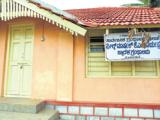
K M Cariappa’s ancestral house which houses a public library is not much use to the public. How many of students and general public are benefited from it is a big question. Teachers and students have expressed displeasure as the library remain open only on a few days.

cariappaLibraryKF13apr2013
It was former Chief Minister J H Patel who inaugurated the library in 1999.

Prior to the library, the building was functioning as a Nada Kacheri. It was the ancestral house of first commander in chief of Indian army Field Marshal Cariappa.
The board which is hung outside the building reads as Field Marshal K M Cariappa Memorial building.

The board reminds us that the house was the place where Cariappa was born. A few wants the building to remain as a library. However, a few wants to install a bust in front of the house.

If the library continue to function, then it will help the public, said teachers.
There are over 10,000 books in the library. The library has 281 members. The membership fee is Rs 30. There is one librarian. The library purchases newspapers.
However, it remains closed throughout the day. It will be open only on three days in a week till 12.30 pm.

The public said it would be better if the library is kept open in the evening.
Rangubai Vittalrao, member of the library said “there are good books available in the library. However, many in the town do not have habit of reading. The timings of the library is not suitable for the general public. It should remain open on all the days in a week after 2 pm.”

R K Narayana, a member of K M Cariappa memorial library for the last 15 years said “the library has not been much use to the public. Out of 281 members, only 50 visit the library regularly.”

source: http://www.deccanherald.com / Deccan Herald / Home> District / Shanivarasanthe, DHNS – March 19th, 2013

Badlapur Boys

Credits

Director: A Muthu
Cast: Nishan Nanaiah, Saranya Mohan, Annu Kapoor, Aman Verma, Kishore Sahani, Pooja Gupta, Ankit Sharma, Boloram Das Shashant Udapurkar, Sushant Khandiya ,Shashi Chaturvedi Nitin Jadhav, Mazar Khan , Preet Saluja, Varun Kashyap Banner: Karrm Entertainment Producer: A. Muthu, Salim Tanvar Story, Screenplay: Shailesh Verma Background Music: Monty Sharma Music: Sachin Gupta, Sameer Tandon, Raju Sardar Lyricist: Sameer Anjan Choreographer: Vickas Sharma Costume: Supraba Jain Editor: A Muthu Cinematographer: Sanket Shah Action: Parvez Khan Art: Nitin Wable Genre: Social, Family Drama, Sports

( Badlapur Boys )
( Badlapur Boys )

Synopsis

Film ‘Veenila Kabadi’, a Tamil super hit film which was directed by Susindran in 2009 is
now being remade in bollywood and it will be called ‘Badlapur Boys’. Bollywood editor A Muthu who has edited more than 50 films like Sadak, Deewana, Balwan, Raja Babu, Judwa, Ziddi, Haseena Maan Jayegi has taken the remake rights of film ‘Veenila Kabadi’ and turns producer with this film.

Badlapur Boys deals with a plot of social family romantic drama with sports as a backdrop and the lead hero Nishan states it’s a very simple film and people who have dreams of being successful will surely connect with the subject.

source: http://www.articles.timesofindia.indiatimes.com / Home> Entertainment> Previews / TNN / April 01st, 2013

Eagle eye on birds of prey

Kiran Pooncha.
Kiran Pooncha.

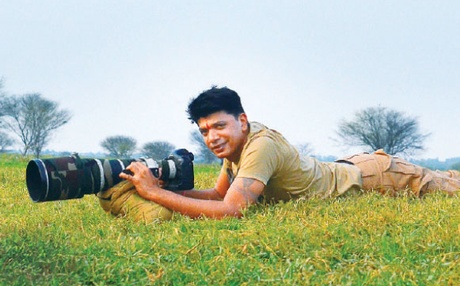
From sketching to photography could be considered a natural transition, but switching from land acquisition to bird photography and conservation is a paradigm shift. Kiran Poonacha from Bangalore has not only made that shift but also crowned it with international laurels and appreciation from the world’s best bird photographers.

Known as the raptor man of India, Pooncha is a born conservationist, rescuing and carrying out documentation work on raptors, especially eagles in various corners of India. It also gives him an opportunity to capture the majestic birds in action. Says Pooncha, “I love their temperament, their style, their enormous power and majesticity. I want to share my moments with these powerful yet graceful birds with everybody.”

Unlike visualisation by other photographers, his image of the winged wonders stands out because they are captured when in action and that is what gives life to the pictures. The birds taking off, flying, diving, swooping, hunting, feeding, nurturing, he has caught all these with the right background and foreground, surreal lighting, great precision and artistic imagery. “Capturing birds in flight is technically very challenging but it is such rare movements that interest people and also stays in their memory. I’m also pursuing my passion in my hometown Coorg. This is a tribute to what I have been exposed to during my early years while growing up in Madikeri. I sincerely hope my photographs will help influence people conserve birds by restoring their natural habitat,” says Pooncha with a smile.

Hailing from a family of nature lovers and born and bred in the hill district of Coorg, a place abounding with rare and beautiful species of birds, Pooncha was inspired to start birding at the tender age of seven. Chikkaballapur, where he did his schooling and a nearby place called Gudibande with rocky terrain and scrub forests that support a variety of avians, played an important role in igniting his interest. Midway for 15 years, he missed nurturing these winged wonders in their habitat as he was busy with his education and professional duties but now nothing seems to stop him in his pursuit.

“I patiently bided for the time when I could go back to the world of birds. In 2006, Neeta, my wife and birding partner, gifted me a camera and that is when my passion for capturing my love for birds began. Coinciding with this, I met a couple of people through a social networking website who shared similar interests. These incidents gave me a second chance to pursue my passion to visualise birds in a permanent frame,” says Pooncha.

Pooncha became a member of India Nature Watch that supports well-known photographers from across the country for sharing their work on their website. This exposure played an important role in helping him to improve his photographic skills. He purchased his first DSLR camera in 2007 and his dear friend and boss Kumar Babu gifted a zoom lens and that is when he started concentrating on his chosen hobby, bird photography.

“I have done extensive studies on birds since childhood. I have raised pigeons, kites, parakeets, and sparrows, looked after injured birds, tending to their broken wings and spoon-fed them. Not all survived, however, one injured black kite would not part from me even after two years,” says the raptor man. Pooncha proudly adds, “I can tell you the spots where ea gles can be found, where they hunt, breed and Bangalore is filled with raptors—tawny eagles, snake eagles, boneless eagles, Indian spotted eagles and many more species.”

Now, every holiday and weekend is taken up by trips to scrub forests and wetlands around Bangalore in search of eagles. His favourite haunts on the outskirts of the city include Hessarghatta, T G Halli, Bannerghatta forests, Gudibande and Hoskote.

Over the years, his portfolio on raptors has attracted international attention and awards as some of the images are pretty rare, hitherto never captured on camera. Dedicated to studying these birds, Pooncha says, “My social life is a big zero as all my time is taken up either following them through thorny jungles or standing in slimy wetlands for days together, hoping for the best shot.”

Recollecting his experiences, he says, “Once I was following a Bar Headed Geese near Talkad near Mysore when a snake wound up around my leg. My position was so treacherous that neither could I leave my subject nor ignore the reptile. But fortunately, after two hours, the snake slinked away. Another time, I had to sit in the water for hours together to get a Little Grebe in action. Some images like two snakes fighting for territory at Hessarghatta, a snake eagle hovering between death and new life and falcons at Kolar for whom I waited for three years are still fresh in my mind.”

Pooncha’s dream project, a birding resort on a 30-acre land surrounded by Pushpagiri Hills near Madikeri will soon be a reality. He is hoping to bring renowned experts like Arthur Morris, popularly called “father of bird photography”, Doug Brown and others for workshops on bird photography apart from giving an opportunity to youngsters to know more about birds.

Decrying the nation’s obsession with big mammals, Pooncha appeals, “Birds need our help. They play a very important role in the food chain, pollination and of course, they are the natural scavengers of the earth. We have to look beyond tigers and elephants as India has thousands of species that needs protection at all levels. If I can convince hundred people to conserve nature in and around Bangalore, it will be a small beginning to save these helpless avians.”

source: http://www.newindianexpress.com / The New Indian Express / Home> Magazine / by Meera Bhardwaj / March 31st, 2013

A valued legacy

Heart For Art: Rani Pooviah /  Special Arrangement / The Hindu
Heart For Art: Rani Pooviah / Special Arrangement / The Hindu

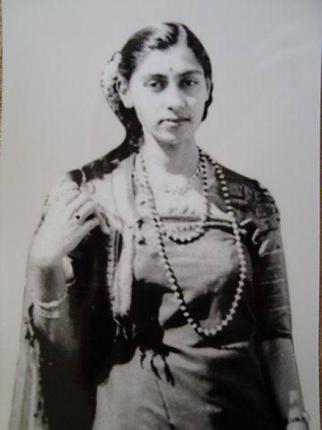
A painting by Rani Pooviah now finds a place in the K.C.S. Paniker Museum of the Madras Movement, thanks to a donation

Over 50 years ago, a young artist named Rani Pooviah lived in Chennai, and taught at the Government College of Fine Arts. One of very few women in the field at that time, she was a gifted artist, a beloved teacher, and an integral part of the group of visionary artists, led by K.C.S. Paniker, who founded Cholamandal Artists’ Village in the 1960s.

A tragic accident cut short her life and her career, but not before she had made a significant contribution to the Madras Movement. That contribution was in danger of being forgotten, but now, her legacy has been enshrined in the K.C.S. Paniker Museum of the Madras Movement, in the form of a painting donated by P.M. Belliappa, in association with the Coorg Association of Madras.

One of Rani Pooviah's works / Special Arrangement / The Hindu
One of Rani Pooviah’s works / Special Arrangement / The Hindu

GLARING OMISSION

“I’ve been working at finding her works for some time,” said Belliappa, who knew Rani and her family personally. “Last year, I finally did. It had been haunting me that her paintings weren’t a part of the Museum. It was a glaring omission, a serious lacuna.”

“Rani and I both come from the area of Kodagu in Coorg, and she’s the only artist of such distinction to have come from there,” he adds. “So this donation was meaningful to me in more ways than one.”

For S. Nandagopal, who runs the museum, seeing this painting was a journey back in time. “When I joined the college as a student, Rani was teaching History of Art,” he says. “I remember, the first thing she said in class was that we weren’t going to talk about Greek or French art history, but about what some of our own great artists such as Janakiraman had done. That was a wonderful thing.”

Both men recall her being a vivacious and beautiful woman. “She was so exuberant, and she talked to us about a lot more than just art,” says Nandagopal.

After nearly a decade at the College, she got married and left for the U.S. That was where tragedy struck — Rani was in a car accident that left her in a coma for 13 years, never to recover.

“Her husband sent us some slides of works she did in the U.S.,” says Nandagopal. “They were incredible. If only she’d lived, she would have done some truly great work.”

The painting that has been donated to the Museum is one done by Rani in 1962, and captures her own particular style.

“When you look at her paintings, you see pure art, not bogged down by commercialism,” he says. “How sad it would be if younger artists never even knew who Rani was.”

Making sure the work of the Madras Movement artists is not forgotten is the purpose behind the Museum. “We’re in the process of acquiring more and more older works to try and fill the gaps and document the Movement completely,” says Nandagopal.

Thanks to the generosity of Belliappa, one important gap has been filled, and the memory of a pioneering young woman artist, captured for posterity.

source: http://www.thehindu.com / The Hindu / Home> Features> Friday Review> Art / by Divya Kumar / Chennai, March 29th, 2013

RB and HP in ‘Premaya Namaha’

HarshikaKF07apr2013
Two sweet looking heroines Ramya Barna and Harshika Poonacha have been finalized for ‘Premaya Namaha’. In addition to it the new hero Fayaz Khan son of former minister of Karnataka Jamir Ahmed a strong Janata Dal Secular politician a right hand of former chief minister HD Kumaraswamy is making debut.

Fayaz Khan has taken training from Anupam Kher School of acting in Mumbai and gearing up for a love story film. Bhuvan is another hero of the film.

Meanwhile Producer Niyaaz Khan who announced ‘Enidu Manasali’ in the last year coming from Mumbai is introducing Ankith as music director and Harish Nayak is the cameraman.

A politician son becoming hero is not for the first time in Kannada cinema. Kumar Bangarappa, Madhu Bangarappa, Ajay Gundu Rao, Rakesh son of Siddaramaiah are some of the examples already in the pages of history of Kannada cinema.

Jamir Ahmed former minister in JDS ruled Karnataka state son Fayaz Khan is new addition.

source: http://www.indiaglitz.com / Home / Saturday, April 06th, 2013