Category Archives: Famous Personalities of Kodagu / Coorg

‘Acting is liberating’

NananiahKF12msr2013
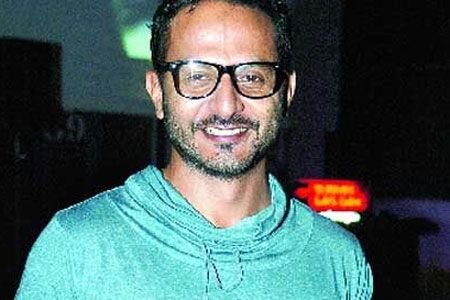
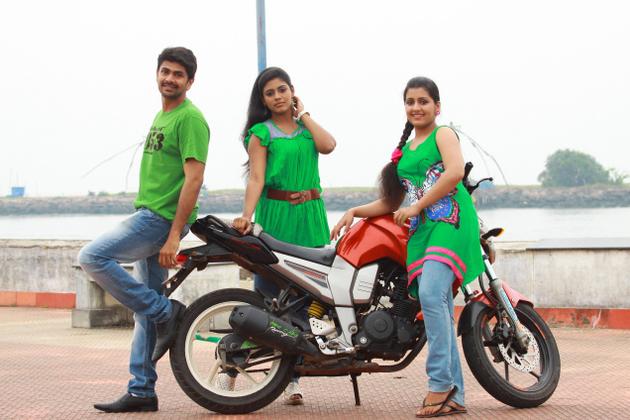
Nishan Nanaiah in a scene from Radio / The Hindu
Actor Nishan Nanaiah says he is at home in Mollywood and is game for challenging roles

“I never thought that I’d last so long in the Malayalam film industry,” says Nishan Nanaiah with a chuckle. “Though a non-Malayali (he belongs to Coorg in Karnataka), I am surprised and happy that people here appreciate my work,” says the actor who made his debut as the endearing Sarat in Syamaprasad’s Ritu (2009). He followed it up with an impressive performance in Sibi Malayil’s Apoorvaragam and topped it with a brilliant act playing the charming seducer Rustam in Ee Adutha Kalathu (EAK). Last seen in the bi-lingual movie David and 10.30 a.m. Local Call in Malayalam, his latest release is Umer Mohammed’s Radio.

Radio is about Swetha (Iniya) and Priya (Sarayu). The movie stresses on how a woman has to find her inner strength and rise to the occasion. “It is a women-centric story. These girls come from different strata of the society and I happen to be a part of their lives,” says Nishan.

An alumnus of the Film and Television Institute of India (FTII), Nishan believes Malayalam films are closer to real life, with enough scope for subtle acting. Also, he isn’t much worried that many of his movies didn’t do well in the box office. “At FTII we are taught to be true to the character you play and I feel it is in Malayalam cinema that I could stick to that. I do just one movie at a time, sometimes my choices go wrong. After all what you read in the script needn’t come out the same way on screen. I’ve no regrets about any movies I did in any language. It has been a great journey, during which I could share screen space with good artistes. Like Vikram in David,” says the actor over the phone from Jaipur where he is currently shooting for a movie.

All said and done, he is still waiting for a challenging role like that of Rustam. “When Arun (Arun Kumar Aravind, director of EAK) came up with the role, I had no second thoughts about accepting it because I was waiting to break free from the lover boy image I had till then,” he says.

He still gushes about the reception he got for the role. “A lot of housewives became my fans!” Nishan says, breaking into a hearty laugh.

“I think many women could relate with the housewife (played by Tanushree Ghosh). They are perhaps unhappy in their lives and crave for attention and care. It was after doing Rustam that I realised so many women go through this rejection in their lives,” he says. He also dubbed for the movie “since that was the accent expected of Rustam. My Malayalam hasn’t improved beyond that, though!”

As he looks forward to work with big names in Mollywood, Nishan is taking each role as it comes. “Acting is what I’ve always loved to do. I was crazy about movies from childhood to such an extent that I could remember the release date of important movies by relating it to something in my personal life. It was a shock for my parents when I decided to become an actor, because I was good in studies and sports (he was a state-level tennis player). They are worried about the unpredictability of the profession. But I tell them that I’m doing something I enjoy. I might earn less, but I find this profession liberating!” Nishan signs off.

source: http://www.TheHindu.com / Home> Featurs> Cinema Plus / by Athira. M / Thiruvananthapuram, March 08th, 2013

Account of an uprising

KodavasKF11mar2013The Kodavas put up a brave fight against the British in 1837, three years after the latter invaded Kodagu. Mookonda Kushalappa narrates the story of the resistance.

In 1834, the British East India Company had resolved to invade Kodagu and annex it. The Company sent in an army of 6,000 sepoys, divided into four columns, into Kodagu — one column was to enter from the east, one to enter from the north and two to enter from the west. They were to march into the capital Madikeri. The northern column marched towards Harangi (now famous for the dam) to meet the eastern column. A village in the woods at the base of a mountain pass lay in their path.

This village was the chief base of the resistance in Kodagu led by an official called Mathanda Appachu. He had secured the village with thick wooden palisades. Behind the wooden palisades through the arrow-slits of the palisades, the Kodavas aimed their guns at the British and shot at them. The column couldn’t hurt them. It was a fierce battle which raged on for four-and-a-half hours. Col. Mills tried to attack the village from the flank. But he was shot dead in the process. Forty eight soldiers, including three officers, were shot dead and 118 were left wounded on the East India Company’s side. There were no known casualties on the side of the natives. The East India Company was forced to retreat and take a different route.

The western column also met with some resistance. Its men marched towards Virajpet but came across several palisades. After some persistence, the palisades fell to the column’s attack one by one and the men marched on. But the column counted a dozen dead, including a lieutenant, and 36 wounded by the time they made their way through. Elsewhere as well, the Kodavas provided some resistance but were eventually forced to retreat. The eastern column which arrived through Kushalnagar brought in howitzers. Six Kodavas were killed on the banks of the Cauvery. The remaining retreated and the Company troops proceeded. The war ended when the last Raja of Kodagu sent his dewans to surrender to the east column and escort them into Madikeri. Within three days, the Raja emerged from hiding in his private palace at Nalknad, also known as Nalnad, and surrendered.

Amara Sulya

In the 18th century, Amara Sulya was given to the Raja of Kodagu by the Raja of Nagara. The Raja of Kodagu had aided the Nagara Raja in collecting tribute from another raja. As a symbol of their friendship, the Nagara Raja gave Amara Sulya to the Kodagu Raja. From this region, a regular supply of coconuts would arrive at the temple of the river goddess Cauvery. Immediately after Kodagu came under the East India Company in 1834, Amara Sulya was separated from it and made part of South Canara (now Dakshina Kannada) district of the then Madras province.

Cause for the insurgence

Under the Kodagu Rajas, the people of Sulya paid their revenues in kind. But now they came under the District Collector of Mangalore, who demanded that they pay their taxes in money. They were now placed under the mercy of those who gave them money in exchange for their produce. For three years, they paid their revenue in money but in 1837, they were unable to pay the money. The agriculturists expressed their inability to pay the revenue. Instead they had their agricultural produce which they could give.

The District Collector of Mangalore and his shrestidhar (clerk) arrived at Puttur in March. They were accompanied by a troop of over 150 soldiers and three officers. The Collector and his shresthidar tried to intimidate the people by warning them that only money would be accepted. They had nothing to do with agricultural produce. If the taxes weren’t paid on time then their cattle and lands would be confiscated.

Meanwhile two monks, Aparampara and Kalyanaswamy, claimed the thrones of Kodagu and Nagara respectively. They took advantage of the agriculturists’ grievances against the Company to start the insurgence.

On March 29, 1837, Atlur Rammappayya, a local officer, was killed by unknown people. This is seen as the start of the insurgence.

Capture of Mangalore

People were enraged with the Collector and gathered at a jungle clearing in Puttur. Some 500 of them go together, and took up sticks, oidekattis (Kodava war knives) and guns. That day the Bellare treasury was ransacked. The mob chased the Collector and his men who were resting at the travellers’ bungalow.

On seeing the irate mob, the Collector and his men left for Mangalore in the middle of the night. It was March 30, 1837.

Along the way government offices were attacked and treasuries captured. On April 2, the insurgents reached Bantwal. Here three local chieftains, Lakshmappa Banga of Nandavar, Manjappa Hegde of Dharmasthala and Chandrashekhara Chowta of Mudabidri, joined them with their men and resources.

Fifty-nine soldiers among the Collector’s men were killed in those few days. The Collector and his surviving men arrived at Mangalore on April 3. On April 4, the European military and civilians stationed at Mangalore resolved to leave the town’s port by boats to Cannanore (Kannur) port in Malabar (Kerala). As there were few boats, the women and the children were sent away first, while some of the men, especially the soldiers stayed back. The Judge of Mangalore and his assistant led the fleeing people to a ship called the Eamont.

The Eamont set sail towards Cannanore on April 5. The ammunition depot in Mangalore caught fire and blew up. That day in the afternoon Mangalore was occupied by the mob. The prisoners in Mangalore jail were released. The flag of the natives was flown at Mangalore.

When Eamont reached Cannanore, its passengers informed the authorities about the situation in Mangalore.

Troops were sent from Cannanore to Mangalore. They arrived in the evening of April 6 to reinforce the European garrison. On April 7, the native mob returned but were driven out and killed in large numbers. More European troops arrived in from Cannanore, Mumbai, Bangalore and Madikeri.

By April 16, the British had taken control of Mangalore. Troops were stationed at the place who remained there until December 12, 1837.

Leading lights

In Kodagu, the insurgence had three leaders: Guddera Appaiah (or Guddemane Appaiah/Appayya) of Kodagu Balamuri, Mandira Uthaiah of Nalnad and Mallaiah of Shantali. On April 14, proclamation letters seeking support for the movement had reached several parts of Kodagu. Plans were made to capture Madikeri fort. The Kodavas of Nalnad and Tavunad immediately rose and followed Subedar Guddera Appaiah and Subedar Mandira Uthaiah. Kodavas from Beppunad and other parts were unsure about what needed to be done so they consulted the dewans at Madikeri. One of the three dewans, Laxminarayana supported the revolutionaries. Laxminarayana was captured by the British and imprisoned.

Superintendent LeHardy was the British officer in charge of Kodagu. He instructed the two remaining dewans, Bopu and Ponnappa, to support him. LeHardy accompanied Bopu’s men to scout the parts of Kodagu towards Sulya. However they didn’t find any of the revolutionaries there. Only then that LeHardy came to know of the involvement of Uthu (Mandira Uthayya), Subedar of Nalnad. Some of dewan Bopu’s own relatives and friends supported the movements cause. LeHardy suspected Bopu, an old man, and charged him of treason because it was his sources who had misinformed them. Bopu wept before him and pleaded innocence. The native police was then mobilised to suppress the revolt.

Then Bopu and his police force went towards Sulya. The men had armed themselves with sticks and two of them proceeded before Bopu because Chetty-Kudiya, a revolutionary, had promised to shoot down Bopu on seeing him. They went a little beyond Madikeri when they met Muddayya and Appayya, one a former Subedar and the other a former Parpatyagara. They were two of Bopu’s friends who secretly supported the insurgence. They had been responsible for misinforming Bopu and thus embarrassing him before LeHardy.

The dewan’s men beat them up and left them for half dead. Further on the march, the force met insurgent Kodavas from Nalnad. They were beaten up severely and their leader Subedar Mandira Uthayya, who was among them, was made to surrender.
A regiment of Europeans and natives arrived under Col. Williamson to Madikeri. On April 16, the people of Yedavanad in Kodagu had planned to take over Madikeri as instructed by the proclamations. But LeHardy and Williamson had their troops stationed at Madikeri and they sent men towards Yedavanad to eventually thwart these plans. The Yedavanad people who were involved in the insurgence were made to surrender.

The battle at Sulya

Bopu marched into Sulya with his native policemen. There were skirmishes between his men and the revolutionaries. Dr. Palmer, an assistant surgeon, and his family had been made captives by the revolutionaries for 18 days.

When the revolutionaries were fleeing, Bopu caught up with them near Udoor and got Palmer and his family released. Later Bopu got Devappa of Mangalore, a minor government official who was held prisoner by the insurgents at Puttur, released as well.

While Bopu was already in Sulya, a Company officer, Col. Green, led his troops into the region. The revolutionaries were cornered and this culminated into the battle of Katkai Sulya. Subedar Guddera Appayya was captured and the treasury was recovered. Col. Willamson then entered Sulya from Madikeri. By April 26, the revolt had ended in Kodagu and Sulya.

source: http://www.DeccanHerald.com / Home> Supplements> Spectrum / March 05th, 2013
Karavalli at The Gateway Hotel, Bangalore Awarded one of the Top 50 Best Restaurants in Asia

The legendary Karavalli, the well-known South Western Coastal cuisine restaurant, at The Gateway Hotel, Bangalore has been voted 44th of the top 50 restaurants in the Eleventh annual listing of The S. Pellegrino World’s Best Restaurants.
KaravalliKF09mar2013
Karavalli at The Gateway Hotel, Residency Road

Bengaluru, Karnataka :
The legendary Karavalli, the well-known South Western Coastal cuisine restaurant, at The Gateway Hotel, Bangalore has been voted 44th of the top 50 restaurants in the Eleventh annual listing of The S. Pellegrino World’s Best Restaurants.

This list organized by William Reed media, a British trade publishing house celebrates the top 100 restaurants of the world annually, a credible indicator of the best places to eat in different parts of the world. The list of Asia’s best restaurants was voted for by The World’s 50 Best Restaurants Academy, made up of 936 voters from the hospitality industry.

Chef Natarajan Kulandai, Corporate Chef, The Gateway Hotels & Resorts, acknowledged the recognition and said, “Being 44th on the Asia’s 50 Best Restaurants list is a great honour for us as this is also the highest rank and recognition achieved by any restaurant from Bangalore. Critics, gourmets and celebrities across the world celebrate Karavalli. The chefs at this culinary destination continue to delight diners with exceptional meals, using the wealth of local spices, red chillies, coconut, pepper, fresh fish, meats and vegetables unique to these coastal regions. It reiterates our place among gourmands at the global platform, and is testament to the highest standard of an authentic culinary experience that we offer our guests”.

Chef Naren Thimmaiah, Executive Chef, The Gateway Hotel Residency Road Bangalore adds, “We are delighted and proud to be voted among the best in Asia. Karavalli captures the essence of 22 years of extensive research, reflecting the culinary legacy of the coastal regions of south west India We have been exploring the mystique of the region and have been fascinated by the bouquet of flavours of the south western coast It gives us immense joy to share these epicurean pleasures with you at Karavalli.”

Having embarked on a journey in 1990 to offer guests traditional and authentic cuisine of the South Western Coastal region, Karavalli promises to give connoisseurs and gourmands a rejuvenated epicurean experience. Authenticity is the hallmark at the iconic Karavalli, where well-researched home-food recipes come together to ensure an experience like never before – be it a refreshed blend of novel additions to the menu which includes a distinctive compilation of vegetarian and non-vegetarian delicacies with extensive culinary journeys ranging from the best of the Mangalorean Bunts and Konkani’s, Kodavas from Coorg, Malayalees, Calicut Muslims and Syrian Christians of Travancore, Havyaka Brahmins of Vitla and the Portuguese of Goa; innovative desserts or unique dining proficiencies. Another acclaimed highlight of the restaurant is its West Coast Seafood Grills section in the alfresco area, which gives guests the opportunity for an interactive session with the chef and co-creation in the cooking experience.

Asia’s 50 Best Restaurants list features the restaurants in Asia that have received the most votes from The World’s 50 Best Restaurants Academy. The S. Pellegrino World’s Best Restaurants List 2013 also included restaurants like Narisawa (Tokyo), Wasabi (Mumbai), Nahm (Bangkok), Ultra Violet (Shanghai), Varq (New Delhi) and others from the world over.

source: http://www.indiaprwire.com / Home> Restaurants, Awards / India PRWire / March 01st, 2013

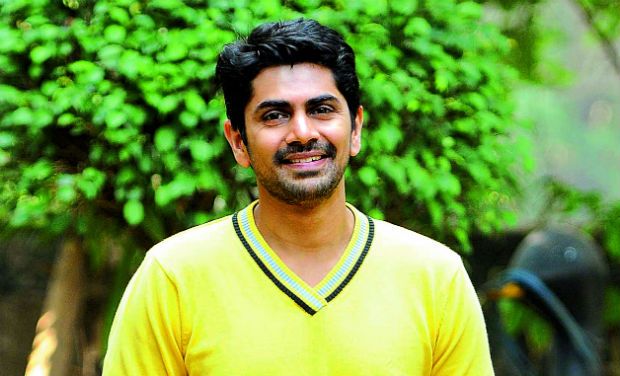
DJ is not meant to play your favourite requests at party: Nikhil

Veejay and DJ Nikhil Chinappa was in Ahmedabad recently for an event performing a gig for Amdavadis, and he appeared very articulate and full of love for his music. In an interview, he tells us why he does not like it when someone asks him for favourite requests at a party and how playing music for him is a journey than just an entertaining event!

What do you like about the crowds in Ahmedabad?

I have done some really nice parties in Ahmedabad. The crowd are very open and appreciative of good music, unlike bigger cities like Mumbai where people are sometimes ‘too cool’ to enjoy good music. They often don’t dance on the floor thinking that their make-up will go away, their hair is sweating so gel will go and all that! Amdavadis do not have such frills when they come to a party! At my gig I will be playing House music because that’s what crowds like here.
NikhilKF07mar2013

What puts you off when you play music?
Another thing I don’t like about people when I play at some places is that they expect a deejay to play their favourite requests. I play only what I love and it is my responsibility to entertain the crowds. But if you are wanting to listen to a Punjabi song in the middle of some interesting English songs I am playing, then you should go home or your car and play your song. The minute you play a favourite request the person will go home! Why would I want that? I like people who have high levels of energy. Unlike to what people think, the last gig I enjoyed the most was in Indore.

Will you pursue acting in films? Why did you connect with the masses?

I like Bejoy (Nambiar) so I worked in Shaitan and David. I think I connected as a deejay or veejay with the masses because I was very cool about my what I liked and what I didn’t like. I hated maths, I loved chemisty and I said it! I didn’t take off my clothes on stage to look cooler but I loved my music and digged my heels into it and did it right.

I started deejaying 10 years back and people are loving electronic dance music now. I even know that I am not a great deejay and there are many better deejays in the country. But I got many good deejays to perform for my company.

Don’t you feel people miss the shows on MTV where VJs presented music?

Not at all. MTV is a youth channel and a major research goes into what they show on television. In the past 6 years, trends have changed. When I was in college, TV played music constantly, and you waited for your veejay to play or recommend new songs ….now its Youtube and Internet. I feel MTV is 100 percent right on the content andyes the number of people who want VJs are much smaller today. Nobody wants to watch veejays recommend songs on television.

Do you feel that there was a greater recall value for the kind of western music played at gigs before than now?
Every generation has felt that their music is the best but change is constant, today a cold play band song has an enormous following like Eric Clapton had its followers in his time. In fact I am constantly fascinated by the variety of bands and singers who are emerging on the party scene. There is a lot of new disco that s coming out here. When I started my own company and my first party we threw in a club that had 800 capacity and we only had 42 people on the floor. But we had so much fun playing for them, and we did what we felt right. Today my company is doing 7 gigs in 2 days in 2-3 different cities.

source: http://www.articles.timesofindia.indiatimes.com / Home> Music> Entertainment / by Tanvi Trivedi, TNN / February 28th, 2013

Karthik to lead South Zone in Deodhar Trophy quarterfinal

Tamil Nadu’s Dinesh Karthik will lead a 15-member South Zone squad in their quarter-final match against East Zone in the Deodhar Trophy in Guwahati on Sunday.

R Vinay Kumar of Karnataka has been named the vice-captain.

Six players from Karnataka, including Robin Uthappa and Abhimanyu Mithun have been included in the side.

South Zone squad: K Dinesh Karthik (capt, Tamil Nadu), R Vinay Kumar (vice-capt, Karnataka), Robin Uthappa (Karnataka), K L Rahul (Karnataka), Sachin Baby (Kerala), Stuart Binny (Karnataka), C M Gautam (wk, Karnataka), B Aparajith (Tamil Nadu), Abhimanyu Mithun (Karnataka), B Sudhakar (Andhra Pradesh), K Srikar Bharat (Andhra Pradesh), S Sandeep Warrier (Kerala), Ashish Reddy (Hyderabad), G H Vihari (Hyderabad) and Sanju S Viswanathan (Kerala).

Reserves: Rohan Prem (Kerala), Sagun Kamat (Goa), Rahil S Shah (Tamil Nadu), Prasanth Parameswaran (Kerala).

Team Officials: M Senthilnathan (Coach), R Ananth (Physio), K Manoj Kumar (Trainer) and K Sriram (Manager).

source: http://www.Business-Standard.com / Home> PTI stories> National> News / by Press Trust of India / Bangalore, March 05th, 2013

Fate of the insurgents

The two monks who played a role in the Kodagu uprising were later captured, while they were trying to escape, and sent away for imprisonment. Kalyanaswamy was tried and hanged on June 19. Aparampara was imprisoned for thirty years in Bangalore.

Many other insurgents were imprisoned and tried by the courts.

Lakshmappa Bangarasu of Nandavar (in South Canara) was sentenced to death on May 23, 1837. Kumble Subbaraya Hegde of Kasaragod was hanged in Mangalore. Guddera Appaiah was hanged in Madikeri on October 31.

Manju of Uppinangady was also hanged in Mangalore. Kukanur Chennayya of Bellare, Subraya of Kayartody in Bantwal and Kedambadi Annaiah of Bantwal were awarded the death sentence. Kedambadi Rama Gowda, Chetty Kudiya, Kurta Kudiya and Peraje Krishnaiah were deported and imprisoned rigorously, probably for life.

Subedar Uthaiah of Nalknad, Shantaiah and Mallaiah were awarded imprisonment for fourteen years.

Much of these events were mentioned in the letters written by the Company government officers of South India.

The 1834 events that occurred in Kodagu are mentioned in Richter’s book, ‘The Gazetteer of Coorg’.

The events that occurred in Dakshina Kannada are narrated in B S Rao’s book ‘South Kanara, 1799-1860’.

source: http://www.DeccanHerald.com / Home> Supplements> Spectrum / March 05th, 2013

Language is no barrier

NishanKF03mar2013
Nishan Naniah’s claim to fame? He gave the very respectful term chechi a sexual undertone! Many by now would have connected the dots to the obvious reference to Nishan’s character in Ee Adutha Kaalathu. His quaint accent in speaking the Malayalam language and his rakish charm endeared this Mumbai boy to a whole lot of women.

After a brief lull, he is back with 10.30am Local Call in which he plays the lead. A suspense thriller, he has his fingers crossed about the outcome of the film. Talking about being selective while choosing roles, he says that his prime criteria has always been his interest level from the point of view of the audience and of course, the credentials of the producer and the director. The defining factor would be the script he says, “I take up only those roles which are scripted well. There is many a slip between the cup and the lip! Sometimes the script that gets translated on screen is so very different and I have made those mistakes before!”

Nishan is elated at having shared screen space with Vikram for the multi-lingual David and says that it was wonderful to share screen space with an actor who was hassle free and down to earth. The Mumbai boy says that the language barrier never stopped him from attempting films in the South. In fact, his first film was in Telugu, after which he got offers from Malayalam. Nishan very candidly says, “Hindi is a language I think in and I love but that has never stopped me from branching out! My only principle is that I will do only one film at a time; I prefer to sit idle than sign six films simultaneously.”

An eclectic interest in books has shaped this intelligent actor’s thoughts and he is a firm believer in destiny. Nishan stoically believes that whatever is intended for him will come to him; otherwise it will pass him by. Supporting his theory he reveals, “ For most of my films, I was never the first choice but circumstances converged to ensure that I do those roles.”

Nishan is also very confident about his talent and why not? Notwithstanding the fact that he is a Film Institute product, he says that he has never accepted any role for the sake of the greenbucks and adds, “I do not want to compromise on my work, I work hard and put my heart and soul into my performances which is why I am not insecure about my talent.” It is his confidence in his craft that made him sign a woman-centric film like Radio.

source: http://www.DeccanChronicle.com / Home> Entertainment> Mollywoood / DC, by Priya Sreekumar / February 25th, 2013

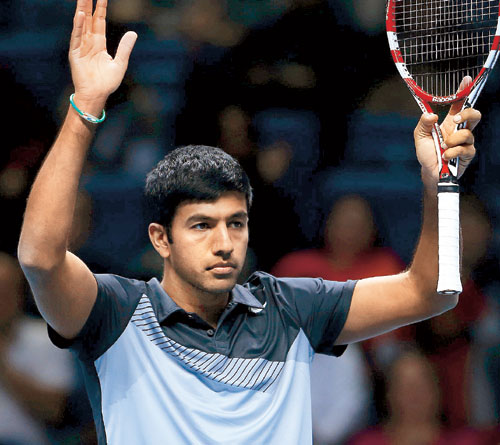
Was sure I wouldn’t be picked: Bopanna

India’s doubles star Rohan Bopanna is undergoing mixed feelings right now. While on one hand, he is happy to clinch his first title of the year — the Marseille Open, with Brit partner Colin Fleming on Sunday, on the other, he is upset at being left out of India’s squad that takes on Indonesia in the Asia-Oceania Davis Cup tie in April. However, the All India Tennis Association’s (AITA) decision to not pick him and Mahesh Bhupathi in the squad that includes singles players Somdev Devvarman and Yuki Bhambri, and doubles players Leander Paes and Sanam Singh, hasn’t surprised the Bangalorean
BopannaKF28feb2013

In an interview with MiD DAY, Bopanna spoke of his joy and sorrow. Excerpts

The Marseille title being the first of the season for you, must be special.
It’s always special to win a title. At the highest level and with the current format for doubles on the ATP circuit, the outcome of matches hinges on three to four points. So, it’s great to string four matches in a row and win.

The timing of the win should be special too, given its come a day after the announcement of the Davis Cup squad. Was the selection on your mind?
Honestly, I never looked at getting the timing right while winning the tournament. I just tried to do my best. And speaking of the selection, while on court, I only try to focus on the match at hand, and not think of anything else. However, I was very sure I would not be picked for this Davis Cup tie anyway.

You must be upset at not being considered for the Davis Cup
.
Yes, of course! Not being selected to play for India is a big disappointment, especially since the tie is going to be held in my hometown.

Has this disappointment overshadowed your joy of winning in Marseille?

No… the Marseille win is a big achievement for me. It won’t be overshadowed by the disappointment over Davis Cup selections.

Do you think you’re paying the price (maybe like Mahesh too) for being one of the senior India players to be associated with the newly formed Indian Tennis Players Association?
Absolutely not! The ITPA has been formed for the betterment of tennis, and to improve things for the current as well as future players. We all are trying to be part of this movement so that India can produce more successful tennis players.

Your partnership with Colin is brand new, but you guys seems to have gelled perfectly.
Winning the title at Marseilles definitely means that Colin and I have gelled really well on court. I have known Colin for a couple of years now and we are friends off the court as well. The camaraderie we share has definitely helped us complement each other on court.

source: http://www.mid-day.com / Home> Sports> Mumbai / by Ashwin Ferro / February 26th, 2013

This school is 100 years old

Ponnampet Government Higher Model Primary School near Gonikoppa is completing 100 years of existence.

A programme to mark the celebrations will be held on April 7 and 8.

The school was started in 1861. It is one of the English Kannada Medium School started by the British in Kodagu.

The school has 1.28 acre land and was donated by Maneyapanda Monnappa.
Cheppudeera Madayya and his son Rao Bahaddur Thimmaiah Subedhar constructed the building in memory of his father and grand father Diwan Cheppudeera Ponnappa.

Acchiyanda Kalamayya was the first head master of the school. A health centre was constructed adjacent to the school in 1912. The land for the health centre was donated by Chetrumada family. The centre was constructed in the memory of King V George.

As the time rolled, a separate school was started for female children. The land for the school was donated by Sundar Singh. Later, the school was upgraded as composite high school in 1944.

A hall was constructed behind the school in 1936. The compound walls have been constructed utilising the funds available under MGNREGA. Retired head teacher M S Kushalappa has given drinking water facility to the school.

At present, 600 children are pursuing their education in the school. The school is getting decked up for the centenary celebrations. The students are getting ready to present cultural programmes.

Shathamanotsava Samithi president M S Kushalappa said that old students association has been constituted. In the memory of centenary celebrations, an open stage at a cost of Rs 12 lakh is being constructed.

source: http://www.DeccanHerald.com / Home> District / DHNS / /Gonikoppa, February 26th, 2013

Colin Fleming wins Marseille title with Rohan Bopanna


Britain’s Colin Fleming claimed his second ATP doubles title of the year as he teamed up with Rohan Bopanna of India to win the Open 13 in Marseille.
The pair beat Pakistan’s Aisam-Ul-Haq Qureshi and Dutchman Jean-Julien Rojer, the top seeds, 6-4 7-6 (7-3).

Fleming joined forces with Bopanna in the absence of regular partner Ross Hutchins, who is recovering after being diagnosed with cancer in December.
The Scot, 28, has now won seven ATP doubles titles, three with Hutchins.
“It’s a great day for us,” said Fleming. “We beat one of the best teams in the world. They played the Barclays ATP World Tour Finals last year and I’m sure they’ll end up there again this year.”

Bopanna added: “It’s always tough to play against friends. Then, I also want to thank my partner. He wasn’t feeling well this morning but he came out and played a great match.”

Fleming began the year playing alongside Jamie Murray in Brisbane and then won in Auckland with Brazil’s Bruno Soares, before a disappointing first-round exit with Murray at the Australian Open.

A burgeoning partnership with Wimbledon doubles champion Jonny Marray was then interrupted when the Englishman suffered a calf injury in Rotterdam earlier this month.

The singles title in Marseille went to Frenchman Jo-Wilfried Tsonga, who beat Czech top seed Tomas Berdych 3-6 7-6 (8-6) 6-4.

source: http://www.awaztoday.com / Home> Latest News / February 25th, 2013