Category Archives: Famous Personalities of Kodagu / Coorg

KODAVA YOUTH’S ENTERPRISING JOURNEY


Meet Theethira Vineeth Devaiah, Co-Founder & CEO of TeliportMe
With strong will and dedication, any youth can find a way to excel. As if to prove this, a youth from Kodagu has created a tech investing system that went on to gain popularity all over the world and has now become a billion dollar company.

Meet the 26-year-old Theethira Vineeth Devaiah, who has developed a company from scratch. He is the Co-Founder and Chief Executive Officer of TeliportMe, Bangalore, which lets one explore places through the images and panoramas taken by users through the Android app 360. His system facilitates crowd-sourced panoramic images to build a community.

TeliportMe’s most-sought-after app 360 allows a person to press a button on the camera and take a circular shot of the world around, generate a panoramic, full-circle, hi-resolution picture of the surroundings and share it on Facebook or Twitter as well as TeliportMe’s website.

TeliportMe has outrun other leading apps like Photaf, Occipital, Dermandar and Photosynth and is now the choice for Android users. According to Vineeth Devaiah, the app’s fan base is growing rapidly by 2,000 new users a day with 8,00,000 users already logged in.

Vineeth Devaiah created his first website when he was just 10. He exited his first successful startup at 15, and has been involved in various technological and non-technological startups as a consultant. He graduated from Cornell University and headed the US and International Business Development at Terracycle Inc. which was called The Coolest Little Start-Up in America by Inc. Magazine.

Vineeth was mentored by Bala Manian, a US-based serial entrepreneur in optics space, whose inventions were picked up by George Lucas’ Industrial Light and Magic to make the film Return of the Jedi, which bagged an Oscar for technical advances.

Other investors in TeliportMe include venture capitalists from America millionaire Dave McClure (Chairman of 500 Start-ups), Bill Gross (Idealab), Alessandro Piol (Vedanta Capital), etc.

Hailing from Thyla village in Kutta, South Kodagu, Vineeth is the only child of Subramani and Latha. His father, a law graduate, worked with HAL for some time and was posted as the Deputy Financial Advisor in Port Trust, Goa. His mother is the daughter of Ammanichanda Appachu.

It was in Goa that Vineeth took the first steps towards starting his business ventures. He studied in Naval Public School there. Vineeth once stumbled upon the National Centre for Antarctica and Ocean Research just around the corner and soon started bugging them for data. Scientists were mystified, but were encouraging. They gave him access to weather patterns for the past 50 years on floppy discs and Vineeth began reverse-engineering a programme that could work with the data. An entrepreneur was born.

He ended up coding a programme that predicted weather patterns fairly accurately, attracting the attention of Infosys, which paid $1 million for it, eventually putting Rs. 65 lakh in his pocket. Vineeth did his undergraduate degree in engineering at REC, Surathkal in Mangalore, completed a Master’s in Bio-medical Engineering at Cornell University in the US, got admission for a Ph.D programme at Harvard but decided not to pursue it. While working at waste-to-products firm Terracycle, he met an old friend and entrepreneur Abhinav Asthana, whose technology inspired the duo to dream up TeliportMe.

Google approached them with a buyout offer for TeliportMe that was in the $15-20 million range, but its offer was turned down by the enthusiastic entrepreneurs who wished to take the company forward. At present, this billion dollar company is at the right place at the right time. —SH

source: http://www.StarofMysore.com / Home> Feature Articles / December 11th, 2012

Heaps of broken images

HERITAGE
Mookonda Kushalappa visits Moribetta in Kodagu and discovers that the hilltop has numerous megalithic structures. It is thought that these were more of commemorative value, built in remembrance of the dead.

In the north of Kodagu district, on the way from Madikeri towards Hassan is Moribetta, the ‘hill of the Maurya’. Local people are, however, not very familiar with that name. They know well the name of a sacred lake and a temple near the same hill, both dedicated to Goddess Honnamma.

As one approaches the place, one can spot two huge granite hills touching the sky. The bigger one is Gavibetta, while the smaller one is Moribetta. Green foliage surrounds the serene place. Coffee and other plantations make up the agrarian areas. The road leads one towards the large lake that lies between the two hills. This lake happens to be the largest one in the district. It is called Honnammana Kere, the lake of Honnamma. On the right side of the road are a couple of temples; the larger one is newly built and painted while the smaller one is in ruins. In fact, the older one is hardly distinguishable from the rocky background.

The ancient temple is built of stone blocks. Amidst these blocks which are overgrown with plants is an open doorway which is not quite discernable. In the darkness within is a stone nandi, the bull that carries Shiva, and a linga. The more modern temple is the temple of the goddess in front of the lake. Both the lake and this temple are named after the local goddess, Honnamma.

The lake temple
Legend has it that Honnamma was the youngest among an influential man’s daughters-in-law. When the father-in-law told his daughters-in-law that one of them had to sacrifice her life for the common good, it was only the youngest, Honnamma, who complied. She jumped into the lake and drowned. Ever since, the lake has never gone dry. It is after her death that she was revered as goddess Honnamma, the golden deity.
On the occasion of Gowri habba, a day before Ganesh Chaturthi, the place has throngs of people. As part of the festival, a bagina or an offering is made to the goddess. This is left afloat on the lake.

During this annual temple festival, pilgrims trek up Moribetta until they reach a spot marked by a flag near its summit. The lesser-known name of the village is Doddamalte. Gavibetta has a few caves and a stairway that leads to the summit. Villagers refrain from speaking much about the ‘other hill’, Moribetta, because of talk about it being an ancient site for human sacrifices.

Shrouded in mystery
Mystery shrouds the Moribetta hill. There are numerous megaliths, although in disarray, on the hilltop. There are 50 short dolmens or portholes on the granite hill. Each of them is an arrangement of four upright flat stones with a capstone and the eastern wall has a circular porthole. These granite slab dolmens stand around four or five feet high and the circular portholes are a little more than a foot in diameter.

While some are intact, others have been broken down. Many of these dolmens have been dismantled and destroyed by treasure hunters, grave diggers, stone cutters or neighbouring farmers. Some of them have taller orthostats (large stones standing upright) beside them. Interspersed between them are cairns or piles of stones.

No human remains were found in the portholes. Broken stone circles can also be found on the granite hilltop.

These structures on Moribetta didn’t hold any remains of the dead nor were they habitable. They were like miniature houses, but these abodes were too small to live in. They contained miniature utensils and goods. Some claimed that a pygmy race lived in them. In a 19th-century published article titled ‘Rude stone monuments in all countries’, Fergusson was mesmerised by these ‘miniature toys’ of Moribetta but doesn’t give an explanation for their size.

However, as no human remains were found in the place, it is thought that these were more of commemorative value, built in remembrance of the dead. To reduce expenses, all these that were built for the dead would have been made on a miniature scale, as they were not used for practical living purposes. Historians like B L Rice, Mackenzie, Rob Cole and K K Subbayya have already explored the hill extensively. Some locals call the structures on Moribetta Kodava Kote, ‘fort of the Kodavas’.

Epic connection
These cromlechs were associated with the Pandavas, the demigod heroes of the Mahabharatha. Locals called them ‘Pandava Pare’ as well, in the past. The same name is used for large stones that were used to lay steps that led to temples and large country houses in Kodagu. Now, however, it’s a forgotten place visited only during the annual temple feast of Honnamma on Gowri festival, a day before Ganesh Chaturthi.
Six miles from Somwarpet is another place called Morikallu, also known locally as ‘Pandava Bande’. This is a small granite hillock with six dolmens, of which four were well preserved and surrounded by paddy fields. Stone circles surround all these dolmens. The shrine of Male Sartavu, another Kodava temple, has six stones; they are said to have been dedicated to the five Pandava brothers and their wife Draupadi.

In South India, anything ancient or unknown would be quickly attributed to Brahma (Brahmagiri, the ‘hill of Brahma’ or Brahmadesam, the ‘country of Brahma’), the mythical Pandavas (places called ‘Pandava Pare’ or ‘Pandava Bande’) or the historical Mauryas (Moribetta ‘hill of the Maurya’ or Morikallu, ‘rock of the Maurya’).

According to Rob Cole’s book, Kodavas have an ancient belief that the Pandavas were the original owners of the earth who rented out land to agriculturists. On Bisu Changrandi (Vishu), also called Edmyaar 1, the new year of the Kodava calendar, Kodavas start farming their lands without fail. This is because they believed that if they don’t, then the Pandavas would come down from their celestial abode to reclaim their lands.

In his 1870-book ‘Gazetteer of Coorg’, Richter speaks of this picturesque tank, Honnammana kere, which is three miles from Somwarpet, but doesn’t mention its name. He talks of a version of the legend associated with the place. Malla Shetty of Yelusavirashime was the father-in-law who vowed to build this tank.

Sacrifice

But after its construction, there was still no water. It was suggested that animals be offered in sacrifice to appease the gods but to no avail. Goddess Ganga appeared in front of the merchant and asked him for a sacrifice. So he approached his daughter-in-law Akkony whose husband was away. Akkony took leave of her child and parents and entered the tank to drown in the rising water.

Her parents and husband got upset upon hearing this. Richter also writes about a stone inscription found in the place. It reads in Kannada, “King Andany has ordered this tank to be built on Tuesday the tenth day of the month of Phalguna in the year Parthiva.

“This was written by Venkadasya Mallia Bomarsia at the time of Basawalinga Deva Raja Vodea”.
Lately this stone inscription has been cemented on the ground in front of the new Honnamma temple.

King Andany mentioned here must have been a local ruler while the person mentioned at the end must have been the Lingayat (Basawalinga) Raja Devappa (Deva Raja Wodeyar, 1770-1774) of the Haleri dynasty

source: http://www.DeccanHerald.com / Home> Supplements> Spectrum by Mookonda Kushalappa / November 26th, 2012

Bopanna ties nuptial knot

Bangalore, Nov 25 (PTI)

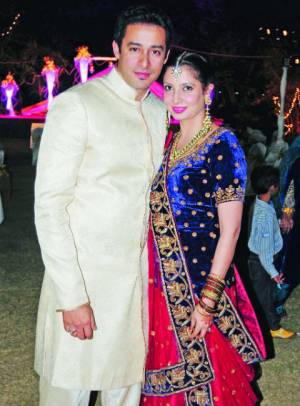
Indian tennis doubles star Rohan Bopanna today married Supriya Annaiah at his hometown of Kodagu, some 200 km away from here.

The wedding was attended by several Indian tennis players, including Mahesh Bhupathi along with his celebrity wife Lara Dutta, Somdev Devvarman and former Davis Cupper Mustafa Ghouse.

Bopanna’s former doubles partner Aisam Ul-Huq Qureshi was also present at the wedding.

source: http://www.ptinews.com / Press Trust of India / Home> National / by Staff Writer / November 25th, 2012

Sajan Poovaiah is State Addl. AG-II


Bangalore, Nov.24
Advocate Sajan Poovaiah has been appointed Additional Advocate General II (AAG) for the Karnataka Government with effect from Nov.22.

He, along with the team consisting of the Advocate General and another Additional Advo- cate General, will advise and represent the State Government on legal issues in the Karnataka HC and the Supreme Court.

source: http://www.StarofMysore.com / General News / November 25th, 2012

M.A. Ponnappa is Media Academy Chairman again


Caption: M.A. Ponnappa, Anantha Shayana, Amshi Prasanna

Bangalore, Nov. 24
The State government issued an order yesterday revamping the Karnataka Media Academy with senior journalist M.A. Ponnappa (Kodagu) being continued as its Chairman.

Amshi Prasanna Kumar, the former President of Mysore District Journalists’ Association, has been nominated on behalf of the Karnataka State Working Journalists’ Association while B.G. Anantha Shayana of Shakti Kannada daily in Kodagu, represents All India Newspapers Confederation.

Other members of the Academy are: Parvathi Menon, Sarju Katkar, K. Raja Rao, U.B. Rajalakshmi (from journalist fraternity), K.N. Tilak Kumar, Manoj Kumar Sontalia (from Indian Newspaper Society), T.G. Adaveshappa, Gangadhara Hiregutti, Mohammed Younis, B.T. Amudam (from All India Newspaper Confederation), Gangadhara Mudaliyar, Rama Managuli, Channabasavanna, Malappa Adasale (from Karnataka Working Journalists’ Association), Directors of Information Department and Akashavani and Heads of Department of Journalism in the Universities of Mysore, Dharwad and Gulbarga.

source: http://www.StarofMysore.com / General News / November 24th, 2012

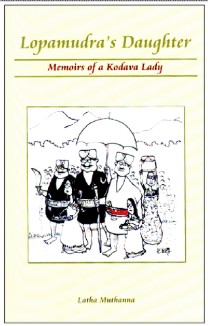
Singular vice: A daughter’s loving tribute to her mother


This is a very unusual book, almost a rarity, wherein a daughter pens her mother’s memoirs in first person. While a memoir is a sub genre of autobiography, Gore Vidal differentiates the two thus, “a memoir is how one remembers one’s own life, while autobiography is history, requiring research, dates, facts double-checked.”

The mother in question is Malavanda (Biddanda) Gowramma Achaiah. She decides to pen her life, which in her words, “was as richly eventful as it was lively” and is about a generation “before these mechanised, chaotic times.” She offers her life “as an open book” to the readers. It was originally written in Kodava language in Kannada script. In view of the fact that this did not make for easy reading, her daughter Dr. Latha Muthanna, a well-known physician in the city of Mysore, decided to render it in English.

What initially began as a translation underwent a sea change as more information came in through her daily interviews with her mother. Gow-ramma read the manuscript and approved it but for some minor issues. The end product is a very readable book written in admirable English.

The book is written in the reminiscential mode. It is loosely structured, does not strictly follow chronology and focuses on the dear and near ones who come into her life. What we have in the book is a portrait of a bygone era, an insight to the way of life of the times and the memorable descriptions of different persons, all of whom who form her large family with its tentacles reaching far and wide.

We read about Chonira Mu-thamma, the first woman to join the Indian Foreign Service in 1948. It saddens one to learn how she was discriminated against because of her gender. She was overlooked for the position of Foreign Secretary in 1980. The assumption was that a female married diplomat cannot be trusted to keep State secrets. The author tongue-in-cheek remarks that the male diplomat was, “after all — for want of a better expression — leak proof!”

We have a fully rounded picture of her grandfather, Nadikerianda Chinnappa, fondly called, Dada. Incidentally, it was he who wrote the Kodava folk classic Pattole Palame. Gowramma gives us interesting tit-bits about the manner in which her Dada went about collecting the songs, folk tales, gossipy ballads, allegories and riddles and inscribing them. Dada found that the folklore faithfully carried little-known Kodava history and culture of ancient times. The 500-page volume was published in 1924 and is widely regarded as the first among such a collection of folklore to be published in Kannada. The English version of this magnum opus is now available, thanks to the efforts of Bovverianda Nanjamma and Chinnappa.

Another major influence on her was her grandmother, whom she affectionately called, Chachavva. She remarks, “I got from her the value of hard work, the futility of idle gossip. I learnt hospitality, how to be prepared for unexpected guests. I learnt to care for servants and their families. Most of all, I learnt how to run a home in times of want and to use home-grown resources to their fullest potential. Also, like my grandmother before me, I abhor waste.” These were invaluable lessons for the young Gowramma and they came in handy later in her life.

She had her schooling at Cheyyandane, Kakkabe and Virajpet. It is difficult to imagine the challenges that the young girl enco-untered in her desire to pursue her education. There is a curious encounter that she had with a raging bull in the wilds. She was able to find her way back home due to the help of a Good Samaritan. It is indeed satisfying that she becomes a successful teacher and works for nearly three years until she gets married to Malavanda Achaiah in 1943.

We have a 14-page long description of her wedding. These were well before the days of marriages where we have catering and what is needed is a little planning and lots of money to make it a success. The hustle bustle of the wedding is captured in vivid detail. It was entirely a family event and each member gladly and wholesomely contributed to its celebration. Every aspect of the wedding like the food, sweetmeats, jewellery, various rituals is highlighted.

Gowramma offers the reader a very intimate picture of her married life. Nothing is held back from the reader and one could easily describe them as a ‘Made for each Other Couple.’ However, I would like to allow her the last word: “He was the quintessential free spirit. Were we compatible, to use a modern term? I have not the faintest idea — but I miss my husband very much.”

An important figure in the book is her husband’s maternal uncle, Kollimada Karumbaiah. He was a true Gandhian, was a vegetarian, never smoked or drank and wore only khadi. He was largely responsible for Harijans and Yeravas taking part in the non-cooperation movement, perhaps the first example of its kind in the country.

There is a detailed presentation of Mahatma Gandhi’s visit to Kodagu. Gandhiji addresses the crowd and spoke of the manner in which the British siphoned off the nation’s wealth. He appealed to them to contribute generously and help win our freedom quickly. The women were all dressed in their best silks and heavy jewellery. They slowly but surely respond to Gandhiji’s appeal and gave away their jewels to the Mahatma. Gowramma’s fourteen-year-old sister-in-law, Akkamma gives her gold earrings, the only piece of jewellery she had. And she went about bare eared until she got married. Such was the young girl’s conviction.

Gowramma’s family along with her husband’s twin brothers move on to Chikamagalur and a new life opens out to her. Bringing up a large family gets delineated in some detail. Nevertheless, the life in the different surroundings poses peculiar problems in view of the women wearing their sarees differently. Her honest confession makes for a healthy attitude towards life: “Many were the times when I was tempted to change and conform to the majority, but I am glad that I did not, in the end. An eclectic society is so much richer; besides, I am indeed proud of my Kodava origins!”

She makes a name for herself because of her selfless service to the underprivileged sections of society. While trying to answer the question as to what drew her to social service, she remarks in her typically disarming manner, “Well, I simply wanted to do more.” In recognition of her contribution, the State government honoured her with the Kittur Rani Chennamma award. The Kasuriba Sadan was started in 1962 with Gowramma as its Founder-President. Fittingly, it went on to win the same award a couple of years later.

The narrative reads well. Even though the perspective is that of a ninety-year-old, the language is contemporary and hence has a greater appeal to the modern reader. The style is lucid and makes for interesting reading. It is embellished by figures of speech like similes in the text. Let me illustrate with a few examples: “The result was a young woman who emerged from her bath looking like a boiled prawn,” “tender shoots (of bamboo) would start erupting, their bald heads shiny and glistening like inverted glass bowls” and “when the harvest moon hangs heavy and round, glowing like a pregnant woman, in the cold winter sky.” There is a marvellous freshness about each one of them.

Let me conclude on a personal note. There is a referen-ce to the Editor-in-Chief’s father, Kalyatanda Bopaiah, her class teacher. He was an excellent Maths teacher and the first left-handed person she had seen in her life. He was very kindly disposed towards Gowramma which she acknowledges gratefully. Incidentally, Gowramma was my father’s classmate at Kakkabe. During my meetings with her in Assam where she stayed with one of her sons, Ganesh, she shared with me some of her memories of my father.

Dr. Latha Muthanna could not have thought of a more fitting tribute to her dear mother.

e-mail: belliappa_kc@rediffmail.com

source: http://www.StarofMysore.com / Home> Feature Articles / by K. C. Belliappa / November 19th, 2012
A grand gesture by a Grand-Old-Man

Rotary spirit in action, Rtn. PDG Col. B.M. Chengappa dontates Rs. 2 lakh

Caption: Rtn. PDG Col. B. M. Chengappa (centre) is seen with (from right) Rtn. Joseph Mathew, Rtn. Sunil Baliga, President, Rotary West School, Rtn. B.S. Sridhara Raj Urs and Rotary West School Head Mistress Latha Shivkumar.

Mysore, Nov. 20 :
At 94, he is as sprightly as a man in his thirties. With an ever-cheerful and positive attitude towards life, Col. B.M. Chengappa, after a distinguished Army career, has been actively engaged in running his cardamom plantation in Virajpet, Kodagu.

An ardent Rotarian, he served as the District Governor of Rotary Dist. 3180 in 1983-84 and continues to be a member of the Rotary Club of Mysore West.

Col. Chengappa was invited to visit Rotary West Schools run by Rotary West Association (RWA) in Saraswathipuram and Kanakadasa Nagar here on Nov. 16. He was taken around Kanakadasa Nagar campus by RWA President Rtn. Sunil Baliga where RWA is building a PU College apart from running a Higher Primary School.

Rtn. B.S. Sridhara Raj Urs explained to Col. Chengappa the workings of the institution and the need for funds to carry on the activities. In a grand gesture, Rtn. Col. Chengappa announced a donation of Rs. 2,00,000 on the spot to RWA. He also announced that he would contribute Rs. 1 lakh every year as long as he could. May his tribe increase.

source: http://www.StarofMysore.com / Home> General News / November 20th, 2012

The ‘first’ Diwali high

The first celebration is always the best and most memorable. As newly-wedded couples from the city gear up to celebrate the festival of lights with great gusto, we speak to them on their sparkling plans this Diwali.

Zulfi and Sheena celebrate their first Diwali together
For celeb couple Sheena Verma and model Zulfi Syed who tied the knot this year, it’s going to be a chilled out and peaceful Diwali at the Anjuna beach in Goa. Zulfi says, “After Diwali tomorrow, we both get back to work as I’m in the final stages of launching Café Lambretta at the Anjuna beach in Goa. I’m shuttling between Bengaluru, Mumbai and Goa these days. During the week, I will be in Bengaluru and Sheena will go to Mumbai to celebrate Diwali with her parents.”

Actress Esha Deol and Bharat Takhtani, who got married this year, are going all out with their family celebrations. Esha says, “On our first Diwali, there will be a puja followed by a feast with the whole family. We are not going to burst crackers.”

Newlyweds Akshar and Nishita Peerbhoy, who tied the knot last year, are looking forward to their most cherished gift this Diwali. “We are expecting a baby soon. This being the first Diwali after being married, celebrations will consist of dinners with family, drinking sessions with friends, sweets, watching people lose money over teen patti, staying away from crackers and most importantly lighting up my house with diyas in preparation for the puja. Also, now being married means more work for a brighter future,” says Akshar of Maa Communications.

Swati Gupta of Bodycraft who recently tied the knot with Sidharta Viswanath says, “Diwali is definitely a big deal for us and the whole family. It is, in fact, one of our biggest festivals and it’s about parties, get-togethers and taash. This festival brings together family and friends.

“Tomorrow evening, we will be performing the puja at all our centres, followed by a puja at home. This year, since it’s my first Diwali after my wedding, I will be doing puja in both my houses, with my parents and my husband where we will pray for love, happiness and positive vibes in our homes. We have already bought new clothes, jewellery and have planned a special festive feast.”

Daughter of Uday Garudachar, owner of Garuda Malls, Prerana who also works with her dad is excited forms and sizes of diyas. She says, “My husband Abhijit Harnahalli is a busy advocate and both of us have had a really hectic working week, so we are looking forward to catch up on a Diwali holiday. It’s my first Diwali with his family after our wedding, so we are hosting a grand feast. We’re going eco friendly and aren’t bursting crackers, but will be doing our Laxmi puja and have invited friends and family over for dinner.”

Wedding celebrations will shift to Diwali celebrations for the just-married couple Dr Chytra and Ajay . “Our celebrations with our friends have already start ed with cards parties; black jack and teen patti. Ajay is a fab cook and has paneer flown in from Delhi, so he is going to cook and we will have a few close friends over for a meal. I have a lot of clothes from the trousseau that I am able to use, than God for Diwali. Our main festival is on 14th, which we shall celebrate in Mysore with our family. In the morning, we have an oil bath, followed by lowed by lighting of lamps, puja and bursting fire works.”

source: http://www.DeccanChronicle.com / Home> Tabloid> Bengaluru / by Namita Gupta, DC, Bangalore / November 12th, 2012

‘Create awareness on secularism’

Virajpet (Kodagu dist):

There is a need to create awareness on secularism to conserve democracy. A community can progress, only when its members respect and love their community, said Assembly Speaker K G Bopaiah.

Speaking at the golden jubilee of Baithoorappa Sangha of Puggera family at Devanageri near here, he said the government has released Rs 60 lakh for the Kodava Sahitya Academy. Kodava Study Centre has been set up in Mangalore University, to encourage Kodava culture, tradition and literature.

Academy president A C Cariappa said Puggera family was responsible for conserving Bolakat and Ummathat dance forms. District in-charge minister Appachu Ranjan, Kodava Centre coordinator Kodeera Lokesh, Puggera family seniors K Subbaiah and Appayya were present.

source: http://www.DeccanHerald.com / Home> District / by DHNS / November 17th, 2012

Rajyotsava in Kodagu

A variety of dances by school children, attractive march past by men in uniform, Naadageethe and Raita Geethe sung in unison marked Kannada Rajyotsava, organised by the district administration at the fort here on Thursday.

Amid drizzle that drenched the earth in the morning, district in-charge minister Appachu Ranjan hoisted the national flag and Kannada flag and inaugurated the celebration. In his inaugural address, the minister gave a call for the people to unitedly work towards preserving Kannada language and culture. Kannada language, which we speak today, has a history of 2,000 years. Apart from shouting slogans hailing Kannada, we should work in the ground level to preserve and promote the language. Specially, the emphasis should be laid on schools and colleges where they should be taught the skills of reading and writing Kannada.

“Language is a symbol of the richness of life and it reflects the culture. Kannada could be developed only when each of us dedicate ourselves and work proudly for the language and culture. The Central government has already given the classical status to Kannada. We should make an organised effort to gain all profits that the status would bring to the language,” he said.

Award Winners

Kodagu Zilla Rajyotsava award was conferred on several achievers from different fields on the occasion. The awardees are as follows: B S Lokesh Sagar (light music); B N Mohan Palegar (folk song); Roopa Srikrishna Upadhya (Bharatanatyam); Addanda Anitha Kariyappa (drama and cinema); B R Sathish (art); C N Boapaiah, Kayapanda Shashisomaiah, Nandagujar, Umesh (journalism); P M Appaiah, K Aine Asmakhanam, (sports); Dr Korana Saraswati Prakash, Paradanda Changappa (literature); Jeevan T B, P Mahadewaswami (education); Koodakandi Kaveramma Somanna, Manavattira Kaveriyamma Poovanna, Prakash B N, N S Kandadevaiah, P M Ravi (social service).

Kodagu zilla panchayat president B Shivappa, vice-president Usha Devamma, CMC president H M Nandakumar, deputy commissioner Dr N V Prasad and others were present.
Arogya Shri soon
Minister Appachu Ranjan announced that Vajpayee Arogya Shri scheme which helps the BPL families to avail free medical check-up and treatment at select facilities will be launched at Virajpet taluk on November 17.

source: http://www.DeccanHerald.com / Home> District / Madikeri, DHNS, November 01st, 2012