Category Archives: Famous Personalities of Kodagu / Coorg

Puneet croons for ‘Ale’

Sandalwood is filled with many talented actors who can sing as well. One such is Puneet Rajkumar, who has lent his voice to many of his films, much like the way his late father, Dr Rajkumar, used to sing songs in his soundtracks. Puneet has recorded a song for the upcoming film Ale.

Ale, starring youngsters Thanush and Harshika Poonacha in the lead, is slated for a year-end release. An excited Harshika put up a status on her Blackberry messenger about Sandalwood’s Power Star singing a song for her upcoming film. Puneet had previously sung for his brother’s films, like Mylari, but his participation in films of youngsters shows his support for Sandalwood’s gen next and has encouraged the team.

Previously, Harshika had worked with Puneet in the hit film Jackie, where she played a youngster from Puneet’s village who gets trapped in a flesh trade racket and the film is about how the protagonist rescues her.

source: http://www.articles.timesofindia.indiatimes.com / Home> Entertainment> Regional> Kannada> Film / by Sunayana Suresh, TNN / September 24th, 2012

Over a cup of evening tea: A Ballad from a Village Belle

By Dr. K. Javeed Nayeem, MD

My association with the Kodavas, the people from the hilly neighbourhood district of Coorg, now Kodagu, is almost as old as I am. Ever since my early childhood we have had Kodava managers and writers in our coffee plantation in distant Chickmagalur. Their choice as overseers of our coffee growing enterprise was a natural one as they are themselves age-old coffee growers, with the art simply running in their blood. Two of them who grew very close to me as I grew up were P. M. Pemmaiah and K. K. Ganapathy both of whom joined duty within days of one another, even as they themselves were both young lads, barely out of their teens.

While the former, an absolute teetotaler, with a very quiet temperament, retired after many decades of faithful service and left to look after his own family holdings, the latter, a hard-drinking meat-eater and boisterous merry-maker but no less faithful, somehow retired into an ashram, becoming a sanyasi of sorts, completely shunning liquor, his first love and becoming a total vegetarian. During the daytime they would teach me to use a catapult with deadly effect and also to speak their native dialect Kodava thakk. In the even-ings they would feed me with interesting nuggets from the fascinating folklore of Coorg and spell-binding stories of the valour of the Kodavas, a warrior tribe.

When I arrived in Mysore to commence my education, at the turn of the sixth decade of the last century, this smattering knowledge of Kodava thakk and the folklore of Kodagu,stood me in good stead in my interaction with the many Kodava boys and girls who happened to become my schoolmates. Many of them continue to be my closest friends even to this day. With good English schools being very scarce in all the Malnad districts, it was then common for most children from well to do families to be put in schools either in Mysore, Bangalore or Ooty.

While I then used my Kodava thakk only to impress the girls in my school, as some of them might still remember, or at least recollect as they read this, I now use it only in elusive bits and pieces, thanks to a lack of practice, only to converse with my most elderly Kodava patients. I do this, not to impress them, because they are long past their impressionable ages but only to calm and reassure them as the bondage that the use of any language establishes with its speakers is instant nd very strong.

There are not many books, at least in English, about Kodagu and the Kodavas themselves and I have read almost all those that exist, including some of the ones that are now out of print. While all of them are very interesting and informative, I think none of them can make up for what I just finished reading just two days ago. It is a book that is unfortunately not yet available in print but one which I hope will soon find a ready publisher and many readers consequently.

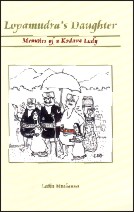
Authored by Dr. Latha Muthanna, a close friend and a fellow physician, who is settled in Mysore, it is a first person narrative in the words of her recently deceased mother Malavanda (Biddanda) Gowramma Achaiah, a well-known social worker who was born in the year 1920 and who spent much of her married life in and around Chickmagalur. It was first written by her in Kannada script in Kodava thakk which lacks a script of its own and later expanded and rendered into English by the daughter who seems no less of a writer or historian herself.

Written in a style and language which I never knew my friend was capable of, despite our close friendship (and intense professional rivalry) over more than thirty years, the book is immensely readable with an ample sprinkling of humour and is therefore ‘unputdownable.’ It has a very apt and fitting title: Lopamudra’s Daughter, with Lopamudra being one of the main tributaries of the Cauvery, a river which we all know is holy to most Hindus in general and the Kodavas in particular.

While the book deals mostly with the lives of a cluster of close relatives from a few families of Kodagu spanning over four generations, it throws much light on many little known but very significant nuggets from the history and folklore of the land and its people. That is what is likely to make it very unique and also perhaps render it a keepsake for anyone interested in the history of Coorg or simply in a bygone era. To the uninitiated however, keeping track of the various protagonists in the narrative, especially with their tongue-twisting family names, may seem a slightly daunting task.

While the book has interesting cartoons by the well-known Kodava cartoonist Ponnappa,I feel the final print edition would do well with some photographs related to the many places that find a mention therein. The visit of Gandhiji to Coorg and his impact on the freedom movement there, the travails of the ordinary women who would without exception unfailingly turn into extraordi- nary home-makers immediately upon exchanging marriage vows, the poignant and recurrent tragedies brought on by the lack of health care facilities in a land tormented by rain and storm for a greater part of the year, are all there in vivid detail to stir the feeling heart.

Since I also happen to be from the Malnad hinterland where life is not very dissimilar from what it is in Coorg I could instantly recapitulate, visualise, smell and even taste the sights, smells and tastes that the writer talks about when she describes the traditions, the weddings, the festivals, or even the seasonal delicacies like mushrooms, honey and bamboo shoots, that come and go with different times of the year.

Reading the book was like finding the key that suddenly unlocked the door of nostalgia to my own past and childhood. I am sure it will do the same to the others who happen to read it too.

source: http://www.StarofMhysore.com / Feature Articles / September 21st, 2012

Gulshan Devaiah: Working with Sanjay Leela Bhansali is a dream come true


The Shaitan actor is gung ho about working in the Ranveer Singh-Deepika Padukone starrer, Ram Leela. And no, it is not the role everyone thinks it is!

Thanks to his unusual choice of roles, actor Gulshan Devaiah has earned himself the moniker of ‘Bad Boy of Bollywood’. His performances in Shaitan, That Girl In Yellow Boots and more recently Hate Story have been appreciated. And now he has bagged a role in Sanjay Leela Bhansali’s Ranveer Singh-Deepika Padukone starrer, Ram Leela. Gulshan is reportedly playing a negative role in the film. But he himself has a different story to tell.

Though excited about doing a Sanjay Leela Bhansali film, Gulshan seems rather irked by the rumours about him playing a baddie in Ram Leela. He explains, “Though I can’t say much about my role in Ram Leela at this moment, it is not a negative role, as reported in the papers. Everyone has grey shades, be it the hero or heroine. It is an important part and the role just fell into my lap. I didn’t have to audition for it. I used to think that some day I will work with Mr Bhansali, but I didn’t know my dream would come true! I have started shooting for the film and it feels great to be working with the biggest director of India.”

While we like this gung-ho attitude, we are still curious. Sure, he is not the bad guy and no one is all white or all black, but what will an actor of Gulshan’s calibre do in a film that has commercial hot-shots Ranveer and Deepika in it? We wonder…

source: http://www.bollywoodlife.com / Home / by Keyrun Rao / September 20th, 2012

A lavish Sindhi meal for Nidhi Subbaiah


Sindhis are known to be food connoisseurs. And when producer Vashu Bhagnani came to know that South actress Nidhi Subbaiah has never tasted Sindhi cuisine, he took it upon himself to organise a special meal for her

Our source says, `The Kannada actress, who is making her Bollywood debut in Vashu’s film, took everyone by surprise when she mentioned she has never tasted Sindhi food. They settled on an off day and Nidhi was invited to the Bhagnani residence for a full-fledged Sindhi meal.`

Sources add that the meal consisted of Sindhi kadhi and tuk, three kinds of papad, sai bhaaji, sai aloo, dal pakwaan, tivan mutton, koki, and sev barfi for dessert! A birdie chirped to say Nidhi almost had a gastronomic orgy at the dining table!

Courtesy: Mid-Day.com

source: http://www.santabanta.com / Home> Bollywood> Titbits / Friday, September 14th, 2012

Composer of the year

Vishal Dadlani talks to Ritika Arora about making music for Karan Johar’s forthcoming film

Nazia Hassan’s popular song Disco Deewane, composed by Biddu, is once again topping the music charts. Though the song has never been out of public memory but its remake avatar by Vishal Shekhar, which is a part of Karan Johar’s Student Of The Year, is a recent addition to many Djs’ playlists.

“We have twisted the desi number. Hip hop has been added to it, to make it more appealing. We have just used the phrase disco deewane and have changed the lyrics totally. Student Of The Year is light fun-filled film. The song was perfect for the prom party,” said Vishal.

This is the duo’s first full-fledged project with Johar as a director. “We share a good rapport. I and Shekhar have previously worked with him in I Hate Luv Storys and Dostana. Karan is very easy to work with.” Vishal has also sung Ratta Maar and Vele along with Shekhar.

“Before making music for the film it’s important to understand the script. This film revolves around youngsters. Even the cast is new. We wanted to make masti songs and not heavy emotional numbers. The tracks sit perfectly with the scenes and situations in the film,” added Vishal who is also the co-founder of the rock band Pentagram.“I have grown up listening to RD Burman and Pancham Da. I am heavily inspired by their work.”

Vishal feels our music industry has evolved over the years.“It’s so exciting and fulfilling to work with artists like AR Rahman, Shankar Ehsaan and Loy, Pritam, Amit Trivedi. They have taken music to an altogether different level. They make such refreshing music. I love the songs from Barfi. Nowadays a lot of bands are coming in, youngsters are getting a platform to showcase their talent. Earlier things were different.”

Vishal ended by saying that he has number of Bollywood projects lined up. “Everything is in its initial stages. Alongwith my band members, I am working on the next album,” he concluded.

source: http://www.dailypioneer.com / Home> Vivacity / Saturday, September 08th, 2012

I’m thrilled: Ashwini Ponnappa

Did you expect the Arjuna award this year?
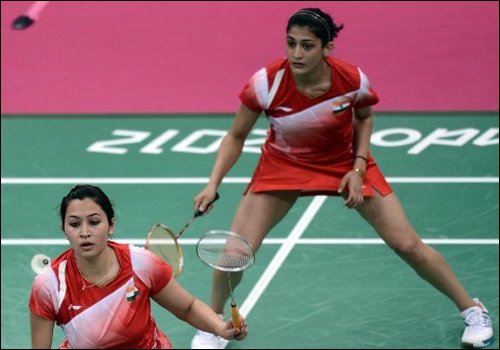
Honestly, I didn’t think about it. I’ve been training extremely hard and trying to do my best in the game. I think my hard work paid off when Jwala and I won gold during the Commonwealth Games and then the bronze at the World Championship. My aim was to win a medal for the country during the London Olympics, but unfortunately that could not happen…

When Jwala and you missed out on the quarterfinal berth by a difference of just one point despite winning the match, it seemed as though the two of you had no clue as to what happened?
Yes, Jwala and I were unaware that we failed to make it to the quarterfinals despite winning the match. We knew we had to win by a certain margin, but the exact number eluded us. It was much after the match that we got to know of our fate. Plus, there was so much drama happening around that time…

Drama?
To be honest, a few countries did not play fair and we had to bear the consequences. The Chinese and Indonesians have always ruled the roost in badminton. Post our ouster, we lodged a formal protest, but it fell on deaf ears. Of course, the complaint was lodged a little late in the day. Gopi sir (Pullela Gopichand) too was very vocal about the issue. However, the decision was completely unfair. We have to work so hard to book a berth for ourselves at the Olympics. But there are countries like Australia, South Africa, Canada and others, who don’t really have to qualify as they get in through the Continental spot.

Heard that you won’t be teaming up with Jwala in the future?

That story is completely wrong. I’m not planning on changing my doubles partner. It’s just that Jwala is taking a break now and since I’ll be playing, I have to pair up with other players. We’ll be back soon.

What about playing singles?
It’s not easy to shift gears from doubles to singles and vice versa in a blink of an eye. Both formats need a lot of training and different sets of disciplines. I’m happy playing
doubles for now.

Saina, Jwala and you are credited with making the sport glamourous.
I’m flattered when people call me glamourous. When Saina broke into the scene, she brought along a lot of new fans of the sport. Ditto with Jwala and me. One has to be a good performer to get people into watching a sport which is not cricket. It’s nice to be well-dressed on court. Of course, people have loved watching us play and that’s a great thing.

source: http://www.articles.timesofindia.indiatimes.com / Home> Sports> More Sports / by Sarah Salvadore, TNN / August 30th, 2012

Chase your dreams with a passion

Bangalore:

It’s important for youngsters to chase their dreams, but equally important to have a back-up plan, felt Indian cricketer Robin Uthapppa. Concurring with him was singer Vasundhara Das, but actor-director Pavan Kumar felt a back-up plan means you don’t chase your dream with passion.

They shared their thoughts at Headtable, a student leadership forum organized by Inexcel in association with Times NIE at Bishop Cotton Boys’ High School. Head boys and head girls from 226 city schools fired questions at panelists Robin Uthappa, activist Jasmeen Patheja, Pavan Kumar and entrepreneurs Shruti Shibulal and Pallav Nadhani.

Uthappa said several factors made him choose cricket as a career but passion was a driving force. Nadhani said as a 17-year-old, his passion for programming drove him to experiment and set up FusionCharts, a company that has earned the trust of US President Barack Obama.

For Shruti, success meant coming out from the shadow of her well-known father and establishing an identity for herself. For Patheja, on the other hand, it’s quantified by the public’s understanding about sexual harassment. She set up Blank Noise to bring about a change of attitude in both men and women. Pavan Kumar added that men must educate fellow men that harassment of women cannot be justified, and that each one should play a role towards this end.

The panelists added a brushstroke each to a blank canvas later completed as a work of art by Ranjana Ramchandran. The program was compered by Vasundhara Das and the discussion moderated by consultant Sam Selvakumar.
Quote hanger

Robin Uthappa

When you wake up, the first thing you think about is what you are passionate about.

When you have dream, tell the important people in your life – family, friends, and teachers – about it and they will help you achieve it.

It’s important to build a support system around you and they’ll push you in the direction of your dream.

Do your best. That way, even if you fail, rest assured you’ve given it your best shot, your everything.

Have a back-up plan, but that too must be something you enjoy doing. My back-up plan was to be a driver.

Pallav Nadhani

It’s important to find unconventional ways if one has to succeed in life.

The advantage of being young is that you can fluctuate between different goals. Experiment and figure out what you love doing best and then follow it up.

Luck is a combination of opportunity and sweat. If you work hard, luck will favour you.

When you’re young, your mistakes are forgiven and forgotten, so don’t be afraid to experiment.

Jasmeen Patheja

Everybody is a survivor because everybody has been a victim at some point in time.

Everyone has to fight battles based on their inner convictions. We must have a sense of purpose and follow it through.

Pavan Kumar

People may dissuade you from pursuing your passion, because they are concerned for you. Do not be discouraged or lose focus. Enjoy the experience of climbing to the top as it can be tough getting there.

Failure was my first girlfriend. If you embrace failure and learn from your mistakes, she will break up with you and push you to success.

Don’t be afraid of being different, laughed at or alone. Take it in your stride. However, be genuine. Don’t deliberately try to be different.

Shruti Shibulal

All of us at some time may have to give up one thing for another. We have to make choices depending on situations.

Give the present your all without worrying too much about what you will be doing in the future.

It’s true women have to work harder to prove themselves to be taken seriously. But once, you achieve that, you gain the respect of your peers.

Education is just a guideline, experiential learning is what will help you understand what you want to do.

Vasundhara Das

Negotiate with your parents when they don’t agree with your dreams.

Having a back-up plan empowers you to go all out in chasing your dream.

source: http://www.articles.timesofindia.indiatimes.com / Home> City> Bangalore / TNN / September 02nd, 2012

Jwala takes a sabbatical, Ashwini looks for a partner

New Delhi:
India’s famed badminton doubles exponent Jwala Gutta has decided to go on a sabbatical, telling her partner Ashwini Ponnappa to look out for a partner.

Photo: AFP

There is uncertainty over how long Jwala will be out from competitive badminton.

Jwala told IANS that it is indefinite, though she hopes to be back on court as early as in six months’ time.

What has heightened the curiosity is that Jwala has asked Ashwini to quickly find a new partner and carry on playing the doubles till her return

What might put speculation at rest is that Jwala at 29 feels she is good for one more Olympics, but she doesn’t want Ashwini to be hamstrung waiting for her.

“I will be back but don’t know when. I have taken time off as I want to come back fresh and fitter. I needed a break after playing continuously for 6-7 years. I have had a chat with Ashwini about it and she understands my position,” Jwala told IANS.

Ashwini, for the time being, will concentrate on mixed doubles with Tarun Kona and look out for a women’s doubles partner.

Jwala-Ashwini, the bronze medallists at the last World championships, are easily India’s most successful doubles team on the circuit, and would not like to give it up. Both hope to be back together.

Jwala thinks it is crucial for Ashwini to carry on in her absence even though it is going to be a tough task considering India’s bench strength.

“Having said that, she has just started playing and I would tell her to find another partner to continue playing in my absence. It will be tough for her as the second string is way below our level. It is time she started mentoring a junior player who is interested in playing doubles, like the way I did with her,” she said.

Ashwini is receptive to Jwala’s idea and says she would take a call after her mixed doubles commitments in China and Japan next month.

The options available to Ashwini are reigning national champions Pradnya Gadre and Prajakta Sawant.

“I can play with either of them but I have not given a serious thought to it. I will take the call once I am back from China and Japan,” 23-year-old Ashwini told IANS.

Talking about reunion with Jwala, Ashwini hopes the two will pair up again, though she is not looking too far ahead, not even till the 2016 Rio Olympics.

“I can’t really say anything about how long we are going to be together. We would take a call after Jwala’s return. As of now, my focus is on mixed doubles with Tarun,” Ashwini told IANS .

The Jwala-Ashwini pair, ranked 23rd in the world, was unlucky at the London Olympics where they failed to make the quarters despite faring better than those who made the cut.

“Who knows we might be there together at the next Olympics, but we are not really thinking about it. Personally, my next targets are to do well in the Commonwealth and Asian Games in 2014.”

Asked whether age will be a factor in deciding their future, Ashwini said: “Jwala is a gutsy character and she could play for as long as she is passionate about the game. I will be close to 27 and Jwala 33 by Rio. But as I said, Rio is a long way off. No one knows what is going to happen before that.”

What is going on in Jwala’s mind?

“I am not really a planner. I would want to play with Ashwini at Rio, but four years is a long time. I am not growing any younger. Probably, I would have wanted to quit after getting an Olympic medal in London but to try for it all over again, I need to come back highly motivated.”

source: http://www.sports.in.msn.com / MSN Sports / by IANS / Friday, August 31st, 2012

Fishing for compliments

At the Coorg table, you can immerse your tastebuds into a dark, tangy fish curry, with spice tones reminiscent of the famous pandi curry, but thinner and sharper. No coconut here — just ground onions, garlic and a few grains of raw rice as a thickener, a faint, pleasing bitterness from fenugreek seeds, dark roasted spices. Sharp, clear flavours emerge from the earthenware cooking pots. For a land locked, hill people, we eat a lot of fish in Coorg. The streams and rivers offered a generous supply of fresh water crabs and fish, like the sweet-fleshed bare meen.

Fishing trips had a touch of the theatrical — fire-lit or lamp-lit men, balancing along the mud embankments of the fields, or river-banks, to spear or trap fish. Bamboo traps were laid in cold, swift flowing streams. In season, the flooded paddy fields were full of crab and the prized, tiny koile meen.Fresh catch from the sea was just a day -trip away and, centuries of trade with the Malabar coast established a tradition of fresh and dried fish finding their way into Coorg homes, in sawdust-lined tin boxes, carried by Mapilah traders, to be haggled over in backyards. Salted fish was set aside for the monsoon months, or pickled in a thick layer of spices, immersed in baranis (earthenware jars).

To the fish and crustaceans of the sea and their own highland streams, the Coorgs brought their typical spice mixtures that added beguiling flavours. Whole mackerel, sardines, or slices of sweet-tasting river fish were lightly marinated in red chilli powder, turmeric and the indispensible kachampuli (Coorg vinegar), dipped in rice powder, and fried crisp on cast iron tawas. The contrast of the crunch of crisped exteriors, the lingering levels of spice in the firm flesh and a squeeze of lime was always perfect. There were plump morsels of pickled fish, and curries and pickles of prawns. Some days, an estate worker would come by with a catch of slender, flashing fish, a couple inches long, from the paddy fields. Fiddly to clean of the grit and mud, we spent ages rubbing slippery mounds with ash or salt for curry, or my favourite — clusters of koile meen, mixed with spices, for ‘cutlets.’

Fresh crab, caught in streams or fields were quick fried, or curried with finely ground coconut into a sour-spicy curry. Served with hot akki ottis and melted ghee. As we sat around a small, dining table, crunching crab claws and sucking out tender meat, my mother-in-law would explain which phases of the moon brought the crabs heavy with meat and, the knack of catching live crabs without receiving a painful pinch. I would nod enthusiastically, but left that particular task to the experts.

RECIPE
Coorg Fish Curry
Ingredients
* 1kg fish (seer works very well) cut into ½ inch thick steaks
Grind together to a fine paste
* 4 large onions
* 1 inch ginger
* 8 pods of garlic, peeled
* 1 ½ tsp jeera
Dry spices
* Red chilli powder to taste
* 2 tsp coriander powder
* 1 level tsp turmeric

For seasoning
* 1 tsp mustard seeds
* 2 green chillies
* 2 onions, sliced thin
* 8-10 curry leaves

For the roasted masala
* 1 tsp whole cumin (jeera)
* 1 tsp mustard seeds (rye)
* ¼ tsp fenugreek seeds
* ¼ tsp raw rice
* ½ tsp black peppercorns kachampuli, or malt vinegar

Slow roast the above spices separately on a hot tawa until they release their aromas and change colour. Allow them to cool, and crush to a powder, separately, and then mix.
* Salt to taste
* ½ cup oil
* 2 cups hot water

Method
Wash and dry the fish fillets or steaks.
Mix the kachampuli (or malt vinegar), the turmeric, chilli powder, salt into the fish, and set aside.
Heat the oil in a deep pan, or kadai, add the mustard seeds. When they begin to splutter, add the curry leaves, the sliced onions and the green chillies, and fry gently until softened.
Add the coriander powder, chilli powder, and ground paste of onions. Cook slowly, until the raw smell disappears.
Add 2 cups hot water, or more according to gravy required, and when simmering add the fish, and cook uncovered, until almost done.
Add the dry roasted, powdered spices, and simmer until done.
Optional — you can thicken the curry with a small amount of tamarind paste too.

– The writer is an anthropologist and independent author based in the city, who delves in to food, wine, travel and heritage. She is also behind A Gourmet’s Table In Coorg (http://coorg.com), a blog exploring the fascinating traditions of Coorg cuisine, food lore and special meals.

source: http://www.DeccanChronicle.com / Home> Channels> LifeStyle> Dine o Mite / by Kaveri Ponnapa, DC / September 06th, 2012

Serving the Kodava cause


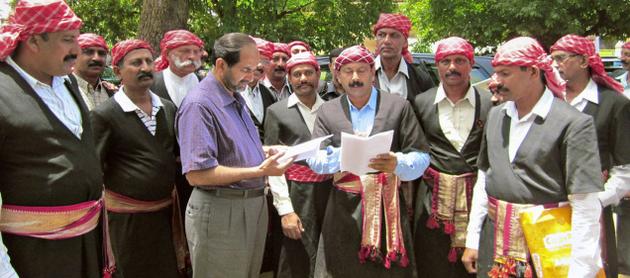
File photos of (left) CNC members led by N.U. Nachappa presenting a memorandum to the Kodagu district administration representative and (right) Kodavas staging a protest to highlight their demands.— / Photos: Nanda kumar, Sampath Kumar G.P./ The Hindu

Will the two-decade-old struggle of the Codava National Council (CNC), demanding an autonomous Kodava homeland, succeed? This is a debatable point. The CNC led by its president, Nandineravanda U. Nachappa, initially was demanding a separate Statehood, but later scaled it down to seek an autonomous homeland. Mr. Nachappa has been able to keep the organisation alive and make its presence felt, both at the State and the national level, by organising protests, demonstrations and other conspicuous events.

The main demand of the CNC is a full-fledged Kodava Autonomous Region, encompassing the 45 ancient traditional ‘naads’ (‘nad’ is a group of villages), on a par with the Darjeeling Gorkhaland Territorial Administration.

Mr. Nachappa says that the Central Government must accord ethno-linguistic tribal minority status to the Kodavas under the Constitution and extend reservation facilities in the fields of education, economic and employment. It should also ensure Constitutional special guarantee for the land tenures and customary personal laws of the Kodavas without any interference, on the lines of Jammu and Kashmir and Northeast States of India under Articles 370 and 371 of the Constitution.

The Government must facilitate the CNC to establish a Central University to propagate “Kodavalogy” on the lines of North-Eastern Hill University, Aligarh Muslim University and Banaras Hindu University, Mr. Nachappa demands. Kodava language must be included in the VIII Schedule to the Constitution and implemented as one of the three administrative languages in Kodagu.

The exemption under the Indian Arms Act to hold firearms to the ‘Kodava by race’ people should continue without any hindrance, Mr. Nachappa argues. In the same manner, the land rights being enjoyed by the Kodava people, thanks to privileges such as ‘Jamma’, must stay, he demands.

The CNC opposes the Dilip Singh Bhuria report submitted to the Centre that wanted Virajpet taluk to be declared as a Scheduled Area for the benefit of tribal people who live in that taluk. Mr. Nachappa argues that it would adversely affect the Kodava people, whose roots could be traced to Virajpet taluk and parts of Madikeri taluk.

Submitting memoranda

Memoranda are being submitted to the State and the Central Governments time and again by the CNC to further its cause. The Central and the State Government authorities too have been acknowledging them. But, there are many who look at its struggle sceptically. The movement lacked political support and the backing of the entire populace of Kodagu, they say. They also term it as an unpopular movement which does not cover populace other than a group of Kodava people in the district. But Mr. Nachappa maintains a hard stand, stating that cause of the struggle was important and it was achievable irrespective of numbers or backing by the majority.

He says that the struggle was totally peaceful and well within the bounds of the Constitutional framework. The CNC had also forged alliances with 13 other like-minded organisations across the country to achieve its goals in the past, including the Darjeeling Gorkha Hill Council and the Jharkhand Mukti Morcha.

The CNC claims credit for a series of development works that were initiated in Kodagu in the last one-and-a-half decades, including roads and bridges, plus release of special grants. It also says that the credit for the proposed move of the State Government to write to the Centre recommending establishment of a Central University in Kodagu, should go to the organisation.

Guests

Mr. Nachappa’s effort to rope in the support of political leaders and heads of other organisations is worth a mention here. During the previous Annual Day celebrations of the CNC in Madikeri, the AICC general secretary, Oscar Fernandes, Additional Advocate-General of Haryana and Supreme Court advocate, Brijesh Kalappa, and Karnataka High Court advocate, M.T. Nanaiah, were the guests. Gorkha leader Dawa Pakhrin, JMM leader Shibu Soren, and intellectuals Balveer Arora and T.K. Oommen, among others, have been guests in the past.

Mr. Nachappa has reiterated the demand of the CNC to establish the proposed Central University at the ‘Kodava Kund’ (Kodava Hill), a location identified by the CNC near Kakkabe.

The CNC delegations have submitted memoranda to the State Governors and met the Chief Ministers of Karnataka several times in the past.

Census

The CNC has been appealing to the Kodagu Deputy Commissioner to direct the caste census enumerators to enlist the Kodava people separately under the columns of the ‘Kodava’ caste, and not as ‘Kodagaru’ or ‘Kodaga’ or ‘Coorgi’ in the census sheets. This move would enable the minority Kodava people to assert their identity and uphold the dignity of the community whose people had been serving the nation admirably well in various fields, it felt. Some success was achieved in this regard in Kodagu.

To bolster its base, the CNC has been organising ‘Ain Mane’ (ancestral home) programmes in select Kodava families since a few years. It has been coming up with ‘human chain’ programmes in the entire district, mainly targeting the areas dominated by the Kodava populace.

Other causes

The CNC, apart from taking up the causes of the Kodava people, has also been observing World Indigenous Peoples Day, World Minorities Day, and ‘Black Day’ on November 1, coinciding with Kannada Rajyotsava.

Mr. Nachappa argues that ‘Kannada Nadu’ could not be complete without the creation of an autonomous homeland within the State of Karnataka.

Mr. Nachappa, who has not groomed a deputy so far in his nearly two-decade existence, has preferred to change the nomenclatures of his organisation several times. What appeared to be a broad-based organisation encompassing a few other communities as well in the beginning has come to patronise only Kodavas in the recent times. The ‘Kodagu Praja Vedike’ which took birth only to counter the CNC has now fizzled out.

Mr. Nachappa hopes that the Kodava Autonomous Region would become a reality along with Telangana.

Jeevan Chinnappa

A full-fledged Kodava Autonomous Region, a Central University to propagate ‘Kodavalogy’, special land rights… the CNC has a whole list of demands

source: http://www.TheHindu.com / Home> Features> District Plus / by Jeevan Chinnappa / September 08th, 2012