The district-level committee formed to do a reality check of the deemed forest land in Kodagu district will convene its first meeting in a week and is likely to submit a comprehensive report to the government within six months.
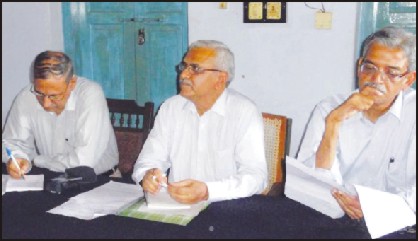
The committee chaired by the deputy commissioner comprises of the deputy conservator of forest, deputy director of land records and officers from revenue and forest departments.
In order to verify the report submitted by an experts committee on deemed forest in 2002, the State government has formed district committee in district level, zonal committee in revenue level and state committee in state level.
According to sources, the district committee will conduct a survey in the district and prepare a report on deemed forest scenario in Kodagu. The functioning of the district committee will be supervised by the zonal committee and state committee on a time bound manner and give suggestions as and when required.
What is deemed forest
If a land has the features of forest, where trees are grown outside the purview of government recognised forest land, it is called as deemed forest. The experts committee formed in 2002 had put the deemed forest land figure in the State at 9,94,881 hectare. About 69,205 hectare deemed forest land identified in Kodagu district, also comprises of Bane, Paisari, Kumki Malai, C and D land and plantation.
It all started with the Supreme Court directing all states to provide information about the forest land, during the hearing of Godavarman Thirumalapad case in 1995. As per the order, the Karnataka government formed the first experts committee, which submitted the report to the government on April 2, 1997.
While submitting the report before the apex court, the government stated that it has completed the process of identifying the area which has been officially declared as forest land. The government requested additional time for identifying the forest land which has not been officially declared.
On observing the delay by the Karnataka government in submitting the report, the Central Empowered Committee of the SC took the government to task, following which the government revised the experts committee.
This second committee identified 33,24,854 hectare land as notified forest and 9,94,881 hectare as deemed forest. The committee, in fact, included even the barren forest land as deemed forest. It also included C and D land, Bane and Paisari.
Due to identifying even Paisari land as deemed forest in various districts including Kodagu, the government is neither able to take up various projects in this land, nor it can make sites to be distributed to poor. Even the work on providing basic facilities like construction of road can not be taken up.
In several cases, the revenue land (Paisari) which has been sanctioned to beneficiaries under Akrama Sakrama, is also considered in the list of deemed forest, due to which RTC can not be made in the name of beneficiaries. To solve the impeding problem the new committee has been formed for conducting a joint survey.
source: http://www.deccanherald.com / Deccan Herald / Home> District / by Shrikanth Kallammanavar / Madikeri, DHNS – June 19th, 2014
Kodagu residents oppose the project The three-member Technical Experts’ Committee seen gathering public opinion in Madikeri on Thursday.
Madikeri :
A three members Technical Experts’ Committee visited Kodagu district on Thursday to study the possibilities of finding an alternate route to lay 400 KV hi-tension line from Kozhikode in Kerala to Mysore. This has come up in the backdrop of stern opposition from the people against the electricity line passing through Kodagu district.
The committee members visited the places in and around Maldare where the project is implemented and collected public opinion. Representatives from various organisations, including Viju Biddappa from Maldare, Kaveri Sene President Raghu Machaiah, Convener Ravi Chengappa, K.C. Subbaiah, Basavana Devana Bana Trust President B.C. Nanjappa, Chennayyana Kote Gram Panchayat member Shyam, Coorg Wildlife Society President Colonel C.P. Muthanna and others, shared their opinions.
They all said that thousands of trees will be felled if the line passes through Kodagu. This will have negative impact on the environment, wildlife and coffee growers. Therefore, an alternate route has to be found out for laying the wires, they insisted.
Speaking to reporters after the meeting, Committee Head R.S. Shivakumar Aradhya said that a lot of factors like environment and technical feasibility and project expenditure has to be taken into consideration while finding an alternate route. “We will submit the report to the government within a month. We will visit Kutta and surrounding region on Friday and examine the problem,” he said.
The government formed the Committee chaired by Shivakumar Aradhya, in response to the continuous opposition and protest by villagers and various organisations opposing the project. Forest Department senior officials Ajay Mishra and elephant expert Sukumaran are the other two members of the Committee.
source: http://www.starofmysore.com / Star of Mysore / Home> General News / June 14th, 2014
India has become known for the congested traffic and crowds of the cities. To escape the madness, Indians head to Coorg, a land of lush beauty, traditional food, and—sigh—tranquility.
On a recent family visit to Delhi, with its acrid air and evil traffic, my mother suggested an escape—a long weekend in Coorg, some 1,400 miles away in a tiny corner of the southern Indian state of Karnataka, just north of Kerala. In spite of its unprepossessing size, Coorg, which the British called the Scotland of India, is a region of intense pride and history. Many Indians regard it as a quasi-mythical place, a land of lush hills, temperate climate, martial men, and handsome women. Its ample rain and still-thick forests, not to mention its low population density, make it one of the few remaining Shangri-Las in over-peopled India.
Tyrannical rajahs ruled Coorg until the British, who knew a promising escape from the heat when they saw one, annexed it to the East India Company’s territory in 1834. The British established farms there, recruited the famously valorous Coorg natives for their Imperial mission, and, in 1947, left behind tidy settlements of Victorian-influenced cottages in shades of lavender, rose, and mint, along with graceful plantations of Robusta and Arabica coffee. Coffee flowers smell something like jasmine, and from mid-March to early April, the white blossoms add their perfume to the other scents of the region—orange, pepper, cardamom, vanilla, honey.
While venerable hill stations in other parts of India are overrun with tourists, doughty little Coorg is still putting up a fight to retain its old essence, even as it welcomes visitors with courtly hospitality. Coorg is a fashionable destination for wealthy Indian travelers hungry for places cool and green—not merely in the literal sense, but also in keeping with the eco-alert, Indo-centric new ethos of the country’s intelligentsia. Coorg is not a hippy-strewn, land-locked Goa. Nor is it a more verdant Jaipur, overrun with Bloomingdale’s buyers. It’s a more understated and introspective sort of place that honors its roots. The locals worship their ancestors, and their attachment to family land is almost visceral. Coorg isn’t easy to get to from afar, for which we should be grateful. Bangalore is the nearest international airport, a six-hour drive away. The highway is smooth and hassle-free by Indian standards, until you get close to Coorg, when you hit sinuous roads that wind through hillsides: these can range from bumpy to bone-jarring, and are best tackled at a sedate pace, all the better to take in the landscape.
“India’s cities are so insistently provocative that, for a certain class of Indian, to be under-stimulated has become the ultimate luxury.”
India’s cities are so insistently provocative that, for a certain class of Indian, to be under-stimulated has become the ultimate luxury. For some time now, members of the Indian elite who have no family connection to the place have been quietly buying land in Coorg, building vacation houses in its remote hills and valleys. Once obsessed with gleaming hotel towers and swimming pools in the “foreign” mold, India’s domestic tourists have grown infinitely more sophisticated and, even, jaded. Indians who have “been there, done that” in Sri Lanka, Singapore, and the Swiss Alps want languid escapes from their overscheduled lives. And they are deeply nostalgic for the quiet India—so recently changed—that they remember from childhood vacations.
Enter the Taj Group, with its astute understanding of the needs of the well-heeled and the well-traveled. Their hotel in Coorg, situated near the region’s capital, Madikeri, is called “Vivanta by Taj,” and it is the company’s nimble response to travelers who clamor to get off the beaten track without collapsing from weariness and worry.
With its hotel outside Madikeri, Taj promises “a haven for the curious mind,” dotted with “interpretive nature trails” set in a “model of coexistence.” The Eden theme is coupled with a celebration of modesty that seems to reflect a wider backlash against modern Indian brashness. The property comprises 180 acres of rainforest, and each of the 60-odd cottages and villas offers views of woods, cloud, and vibrant green. The buildings are beautifully unobtrusive, designed to be in hushed harmony with the surroundings. In the evenings, the lighting is subdued, almost apologetic, and this deference to nature is apparent also in the materials used: wood and local stone, the architecture seeking to emulate the Coorg vernacular.
The hotel was built on land carefully surveyed to avoid displacing trees in a rainforest teeming with some 350 species of flora and fauna. Compressed soil from the site was used to make the bricks for the resort. Most of the stone used was sourced from within a 200-mile radius of the hotel’s premises. The interiors of the cottages resemble the sort of understated living room you might find in a gracious Indian home. The roof-tiles are handmade and repurposed from dismantled houses in Tamil
Nadu, Pondicherry, and Andhra Pradesh. “Revived craft” artifacts made by indigenous tribes—like light fixtures fashioned from old-style fish traps—are incorporated into the décor, providing both authentic ambience and employment for local craftsmen. The property’s architect, Pramod Ranjan, aimed for an unobtrusive, minimalist design that allows the organic landscape to outshine the manmade artifacts. That said, the manmade and the natural do converge in a setting of utter glory: the infinity pool in the hotel’s main building, where, immersed in warm water, one can gaze upon a lush green heaven that stretches for miles before the eye.
Traditional food is also “revived with love” at the hotel. Native Coorg cuisine is a delight to savor. It revolves around a few local ingredients, such as Kachampuli (a type of vinegar), pepper, chilies, rice flour, coconut, and Maddu Soppu, a medicinal leaf believed to confer 18 healthful properties, each especially effective if delivered on a particular day of the year. Succulent pork also figures centrally in the local cuisine, along with dishes made from bamboo shoots, wild mushrooms, banana stems, and jackfruit—flavors that have not yet been appropriated by the vacation-industrial complex.
Coorg also offers its share of picturesque anthropology. The Kodavas, the people of Coorg, revere weaponry and maintain a reputation as brave soldiers well represented in India’s wars. They are tall and light-skinned, when compared with other south Indians, and some attribute their appearance to Arab blood. Others contend that Greek mercenaries who came to India with Alexander the Great left their genetic mark in Coorg. At the hotel, however, the staff reflects the variety of modern India: our bartender, whom I tested with the making of a martini, was from Himachal Pradesh, in the far north; the cheerful chatterbox who waited on us at dinner was from Orissa, in the coastal east. But the unmistakable tenor of the place was that of a Coorg bastion, a hotel in the heart of a fabled region, bathed in mist in the morning and alive with the sounds of birds at dusk. A graceful, benign getaway it was, and we wrenched ourselves from it sorrowfully at the end, hating the horror of a return to Delhi.
source: http://www.thedailybeast.com / The Daily Beast / Home> Great Escapes / by Tunku Varadarajan / March 25th, 2014
Kodaimelanadu or Kodagu or Coorg is an hour-long drive from Mysore along winding roads that take you through a collage of colours which explode into shades of greens, browns and yellows. As you squint through the green fabric, plantations of coffee, cardamom and pepper speed by, merging with larger forestscape. The hiss of the tyres accentuate the haunting solitude of the journey; no wonder Coorg is called the Scotland of the East.
Much of Coorg is about coffee and a fair amount of cardamom and pepper. Siddapur district seemed a tree-shadowed coffee estate, dotted with contradictions—a few market places, seedy bars, pork shops and elegant vegetable displays. As we travelled, we grew wiser about coffee: its history, its clandestine entry into India, and the difference between arabica and robusta. The British brought coffee to Coorg. The first estate was established way back in 1850s by an Englishman, John Frawler.
Coorg seems to be made for introverts, there is an overwhelming feeling of seclusion, where from a distance you can spot a coffee pod, but it is difficult to spot your immediate neighbour. It is an immense aviary, and home to nearly a quarter of the bird population of Karnataka. The tour guide seemed to be Coorgi Salim Ali; he knew the names of each and every bird. At times he even imitated their calls perfectly. Every hilly region has at least one well known waterfall, and in Coorg it is Abbey Falls that plunges down, separating some coffee and spice estates to join the river Kaveri. An army of clouds envelope the hill. The walk is enough to give anyone an appettite for the singular flavours of Kodava food. The central piece of Kodava cuisine is meat and rice. I tried the irresistible Pandi curry, a subtle pork dish, cooked well by adding a local fruit, Kanchampali. Dry spices are roasted before grounding them, giving a toasty flavour to the thick curry.
As night falls, the highlands of Kodagu become a magical place. The moon shines brightly and the trees are laden with millions of fireflies, as if decked up for some fat Indian wedding.
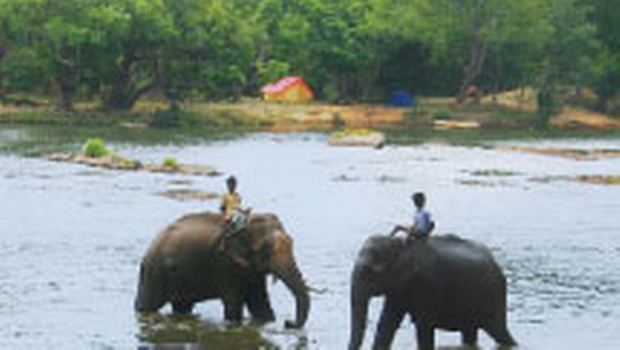
In the morning, the mist-laden verdant hills awaited in silence. The Dubare reserve encompasses 50,000 acres and is home to the elephants of the Western Ghats. Majestic rosewood, teak and other hardwood tree species stand around like sentinels. Giant parasitic vines are swathed around large banyans and other trees in a macabre bond. As Hansel and Gretel would’ve felt, the forest kept getting thicker and more enchanting. Below, the river Kaveri, flowed unmindful of the inter-state disputes. Grabbing a coracle, drifting on the green waters and gauging the moods of the river and the pristine surroundings is one way to experience Coorg.
Local myth says the invincible Coorgis descended from Alexander’s Macedonians. “Neither Tipu Sulatan, nor the British could conquer it,” said the guide. The place has a long history of war; the Madikeri fort is a living testimony to that. Built as a mud fort by Mudduraja in the 17th century, it was later rebuilt in granite by Tipu Sultan who renamed the site Jaffarabad. In the north-east corner at the entrance stand two life-size statues of elephants. A church stands in the south-east corner. The fort also houses a prison.
Among the other architectural treasures of Coorg is the Omkareshwara temple built by King Lingaraja in 1820, in a mosque-like style, with an impressive central dome and four minarets, which are surrounded by Basavas, or sacred bulls. On the top of the dome sits a gilded ball with a weathercock. The Raja’s seat is a small pavilion in a garden, offering a view of the green valley below, where it is said the kings of Coorg spent evenings with their consorts. From there, they would’ve seen the melting sun, parrot-green fields and the mountains sleeping in the mist as if time had dawdled here, mesmerised by the languid beauty of Kodagu.
To Reach: Madikeri is the nearest bus station. There are frequent buses from Mysore, Mangalore and Bangalore to Coorg.
To Stay: For luxury, the Orange Country Inn. For an authentic Coorg experience, try a planation home stay.
source: http://www.newindianexpress.com / The New Indian Express / Home> LifeStyle> Travel / by Aakash Mehrotra / May 29th, 2014
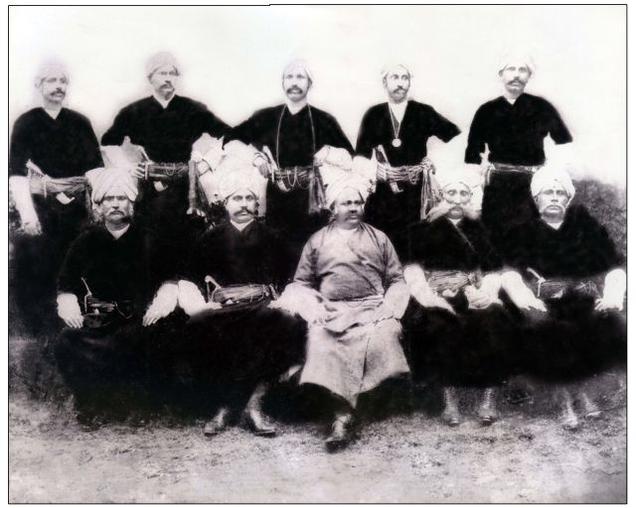
VISIONARIES: This group of 10 got together in 1863 and contributed and collected Rs. 7,305, to start the Kodava Education Endowment Fund./ by Special Arrangement / The Hindu
For a small agricultural community of approximately one hundred thousand, the Kodavas have added to India’s cultural and ethnic diversity through the uniqueness of their dress, customs, rituals, festivals, language and so on. Even more significant is the contribution of individual Kodavas to public life. They include a Field Marshal, a Chief of the Army Staff, a number of Generals, Air Marshals and senior naval officers. There have been Governors, Ministers, IFS and IAS officers, UN experts and Vice-Chancellors. They have brought credit to India in cricket, tennis, squash, athletics, and shuttle badminton as well. Rani Pooviah was part of the Cholamandal group of artists who pioneered the Madras Movement.
In this milieu, the work of the Coorg Education Fund (CEF) over a period of 150 years in the cause of education can only be described as an awesome activity initiated with remarkable foresight.
To better understand the value of the CEF it is necessary to place it in context. Coorg, or Kodagu as it is called, is today a district of Karnataka. It was ruled by local Rajas and came under British rule in 1834. Writing in Blackwoods Magazine in 1922, Hilton Brown of the Indian Civil Service, District Magistrate of Coorg, wrote of the identity of the Coorgs (now called Kodavas): “That is the standing riddle of South India ethnologists … barring all ethnology and arguing from common sense one would call Coorgs a separate people … they are a community of people whose customs, ceremonies, from birth to death, festivals, dress, language are quite different from those of other communities among Hindus.”
A survey done between 1815 and 1817 by Lt. Connor found that Coorgs were “addicted to husbandry, their only education consists in acquiring a practical knowledge of it.” It made the unflattering observation that they were an “unlettered and unaltered race.”
With the starting of an Anglo-Vernacular school and another in Kannada in 1835, the first steps towards introducing formal education were on. Subsequently more schools were opened. However, the mere opening of schools did not meet the objective of educating the community, as only children from affluent families could access them. Many bright children fell by the wayside due to lack of financial resources. To address this lacuna, a group of far-sighted and philanthropic elders of the community got together and sowed the seeds that grew into the CEF.
The credit for identifying the need to provide financial assistance to deserving children and encouraging them to enrol in educational institutions goes to Rev. Richter, the first Principal of the Mercara High School. He persuaded the British authorities to grant land that could be used to raise resources to provide financial assistance.
An extent of 150 acres was gifted, on which a coffee plantation was established in 1863. The income was used to provide student scholarships. Revenue from the estate was used to create the Mercara High School Endowment Education Fund. Separately, a group of 10 visionaries from the community got together with the idea of providing financial aid to needy students. Meeting in 1863, they made individual contributions and collected a princely sum of Rs. 7,305 which was used to establish the Kodava Education Endowment Fund. It now has a corpus of close to Rs.3 crore. They included Cheppudira Subbiah and Mathanda Appachanna.
In 1916, the two funds were merged and it became the Kodava Education Fund. It was administered by the Commissioner of Coorg assisted by eminent Kodavas. In 1954, the corpus was handed over to a committee comprising Kodavas. Thus was born the CEF. Its first president was Kodira T. Uthappa.
The CEF represents foresight and service rendered silently over the years, helping many a Kodava to blossom and contribute to society.
One of the beneficiaries of the fund was Pemanda Monappa, the father of the author. He was selected to join the police force under the British and was a well-known officer, also during the post-Independence period.
As a tribute to and recognition of the value of committed public service and integrity, this author has established a scholarship at Cambridge University in his name. Applicants should not have crossed 25 years. It is available for study leading to a Master’s in English literature, physical sciences, biological sciences (excluding medicine and veterinary science), economics, computer science, law, and technology. Details are at the Cambridge University website.
sonnabel@gmail.com
source: http://www.thehindu.com / The Hindu / Home> Opinion> Open Page / by P. M. Belliappa / May 25th, 2014
On the one hand, greens have been demanding to explore alternative routes to lay 400 kv high tension line between Mysore-Kozhikode, and on the other hand, Power Grid Corporation of India (PGCI) says that the alternative routes were discussed way back in 2009 and they were rejected.
The Members of Kaveri Sene, Coorg Wildlife Society and Kaveri Bachao Andolan have said that felling of trees will have its impact on the bio-diversity and environment of the region. Hence, the project should be kept out of the purview of the Kodagu district.
Power Grid Corporation Chief Manager C D Kishor told Deccan Herald that all the three suggestions put forth by the protesters were discussed and rejected.
The route proposed by the protesters are as follows:
Route 1—Upgrading 220 kv line that provided connectivity between Karnataka and Kerala. Upgrading of the line falls under Bandipura National Park.
After the implementation of Forest Conservation Act 1980, no development work can be initiated inside National Park where tigers habitate.
Hence, the proposal was rejected.
Route 2—Laying electric wire on D-line of Nagarahole National Park.
However, the route was rejected as the width of the D-line is only 15 metre. The width required for laying high-tension wire is 45 metres.
Hence, it would require felling of trees on minimum of 30 meter after the D-line. On an average about 17,515 trees would have been felled if the route was approved.
Hence, both the State and Central governments had rejected the suggestion.
Route3—Underground cable.
The proposal was rejected as it was an uphill task to lay underground cable for 55 kms. To lay underground cable, a separate road will have to constructed to take up repair work in the underground cable.
Present route
At present, the high-tension line will pass through Hunsur, Piriyapattana-Devamacchi forest-Maldare-Hundi-Mayamudi-Bekkesodlur-Nalkeri-Kutta-Kerala.
Delay in work
The length of Mysore-Kozhikode line is 210 kms. The line will pass through 92 kms in Kerala.
The work in Kerala and Mysore has been completed. Owing to the protest by environmentalists, the work was stalled in Kodagu district.
Technical committee
Following the protest, the State government has constituted a technical committee to explore the possible alternative routes.
The committee has been directed to submit report within 15 days.
Kaveri Bachao Andolan Convenor B C Nanjappa said “our concern is environment of the district. We had suggested three alternative routes. If it was not acceptable, then let the technical committee constituted by the government explore an alternative.”
source: http://www.deccanherald.com / Deccan Herald / Home> District / by Srikanth Kallammanavar , Madikeri / DHNS – May 06th, 2014
Nagaraju’s dogged fight over a period of 18 years for his ancestral property began from scratch
Claiming to be a descendent of the erstwhile rulers of Kodagu, a flour mill owner from Mysore has now gained possession of the historic 17th century palace and fort which is predominantly in the heart of Madikeri town.
“My efforts of 18 years have ended with the President of India ordering that the palace belongs to me,” a beaming H C Nagaraju, the owner of the flour mill in Shivarampet, told Business Standard.
He has displayed a notice in his shop that says: “As per the order of His Excellency President of India, the Mercara Palace belongs to H C N Wadeyar.” It quotes the order No.F.No.1-204/2013-RTI (Hq) dated 26-9-2013, Government of India, Janpath, New Delhi.
This is the latest notice displayed in his shop to inform his customers of his successful fight, in addition to already putting up copies of other documents and photos of his forefathers belonging to the erstwhile Haleri dynasty of Kodagu.
Nagaraju’s dogged fight for his ancestral property began from scratch, from corresponding on the issue with a number of authorities like the Departments of Archaeology, and the state and Central governments and moving the courts. Before approaching the courts, he began to acquire documents from various sources, including the British Library in London to establish that he descended from the Haleri rulers.
“My father often told me that we belong to the Kodagu royal family and the Madikeri Palace belongs to us, based on what his father and grandfather had told him,” he said, narrating how he began to establish his right over the palace and the surrounding fort in Madikeri. “To establish what my forefathers were saying, we had swords, shields, palm leaf manuscripts in our house which my father gave away, finding them of no use,” he adds.
Calling himself H C N Wodeyar, he has displayed his claim he is the Maharaja of Coorg and owner of the Madikeri Palace. According to him, his lineage starts from Queen Devajammanni, wife of Lingaraja. The palace, which witnessed rebellious uprisings against the colonial rulers in 18th century, it presently houses the Kodagu’s Deputy Commissioner’s office within the fort.
“They have agreed to shift to a new place and hand over possession to me,” he said, adding he intends to convert his ancestral palace into a tourist attraction. Beside the palace stand two life-size statues of elephants that attract people who visit the monument.
Lingaraja succeeded the famed Dodda Veera Rendra Wodeyar (1780-1809), the hero from Kodagu history, as the Coorg Raja. His successor Viraraja was deposed in 1,834 following which the British annexed Kodagu and exiled the last of the rajas, bringing an end to the nearly two-century-long reign of the Haleri dynasty that came to power in the 17th century, in the district nestling amidst the lush Western Ghats, known for coffee and oranges, besides elephants.
source: http://www.business-standard.com / Business Standard / Home> Current Affairs> News> Et cetera / by Gouri Satya / Mysore – May 04th, 2014
H C N Wadiyar, the Maharaja of Coorg, has strongly objected to opening of Balamandira inside the Mercara Palace without his permission.
In a letter to the Kodagu Deputy Commissioner, he claimed he is the owner of the palace as his ancestors did not transfer it to the then Government of Mysore or the Government of India.
He said Archaeological Survey of India officials had stated that the fort at Madikeri and two masonry elephants are being protected by the ASI, adding state government offices are still functioning in the palace.
He clarified the British government had not given any letter pertaining to the transfer of the palace to the government.
He said he wants to take over the palace soon.
source: http://www.newindianexpress.com / The New Indian Express / Home> States> Karnataka / by Express News Service – Mysore / May 04th, 2014
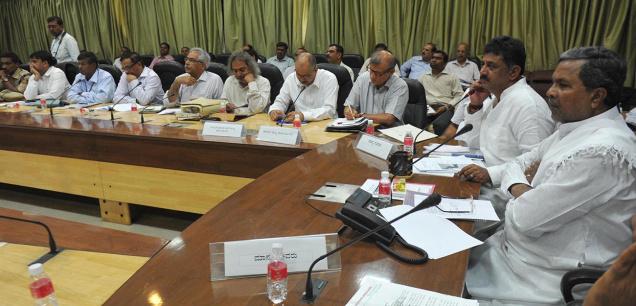
Chief Minister Siddaramaiah and Energy Minister D.K. Shivakumar at a meeting to discuss the power line project, in Bangalore on Tuesday /. Photo: Sampath Kumar G.P. / The Hindu
Expert panel to submit report in 15 days
Chief Minister Siddaramaiah has decided to constitute an experts’ committee to examine alternative possibilities to drawing a high-tension power line from the Kaiga nuclear power plant to Kerala through the catchment area of a tributary of the Cauvery in Kodagu.
The decision comes in the wake of prominent people from Kodagu opposing the project in its present form.
The proposed committee, to be headed by an expert from the Central Power Research Institute, will be given 15 days to look into the concerns of people of Kodagu and submit a report.
An assurance was given by the Chief Minister to legislators and environmental activists from Kodagu who met him at his home office here to seek a change in the route of the proposed power line pass, in public interest.
Coorg Wildlife Society president Col. C.P. Muthanna (retd.), who was part of the delegation that had more than a hour’s discussion with the Chief Minister, told reporters that the proposed committee would comprise wildlife ecologist R. Sukumar, Principal Chief Conservator of Forests, and water expert Rajendra Singh.
He alleged that the project, to be implemented by Power Grid Corporation of India Ltd., would result in devastation of 156 hectares of coffee estate and 104 hectares of paddy cultivation area near Virajpet besides 23 hectares of forests. “The area through which the proposed line is to pass has such a thick green cover that each acre of coffee plantation has 350 fully grown trees,” he said, and expressed concern that nearly 53,000 trees would have to be felled if the power line route was not changed.
He said that leaders from Kodagu had suggested that the power line be drawn underground through the “forest fire line” that runs for 23 km. This would also reduce the length of the power line, he said.
The Chief Minister assured the delegation of taking up the issue again for discussion after the experts’ committee submits its report, he said.
The former Speaker K.G. Bopaiah, MLA Appachu Ranjan and MLC M.C. Nanaiah were part of the delegation.
source: http://www.thehindu.com / The Hindu / Home> News> National> Karnataka / by Special Correspondent / Bangalore – April 30th, 2014
The glorious credentials of Kodagu, one of the smallest districts in the State, appears to be on the wane, and the land of Kodavas is literally fighting to maintain its existence in many ways.
Kodagu was a Part ‘C’ State, one of the 10 such regions carved out after the country got Independence, before its merger with the then Mysore in 1956. The others were Ajmer, Cooch Behar, Bhopal, Bilaspur, Delhi, Himachal Pradesh, Kutch, Manipur and Tripura.
Different scenario
As a State, Kodagu had proved that smaller States could ensure all-round development. The current scenario is different. People cry foul over the “imperviousness” of the elected representatives and the powers that be in terms of attention to the district’s development.
Rapid urbanisation, cash crops being affected by diseases, fluctuating prices of the crops, poor road and power infrastructure, lack of clarity on land tenures, and destruction of forests on the pretext of development haunt the people. Drinking water and regular power supply, telecommunication network and transportation facilities, educational institutions, anganwadi centres and hospitals in villages are still a far cry. Monsoon brings its own misery to the district. None is sure whether or not the next Member of Parliament representing Kodagu (which is part of the Mysore Lok Sabha constituency) would be available to sort out the district’s problems. “Look at the state of roads from Hunsur to Gonicoppa,” said P.T. Bopanna, veteran journalist who has focussed on the issue of lack of development in the district on his web portals.
Politicians cannot remain oblivious to the problems Kodagu is facing, K.G. Ajith, a resident of Madikeri, said. They ought to pay attention and be held accountable, he said.
In 1952, elections were held for the 24 seats of the Coorg legislative body amid stiff opposition to the merger plans. The Congress won 15 seats and Independents (opposing merger) won nine seats. C.M. Poonacha of the Congress became the Chief Minister and K. Mallappa was the Home Minister. Under various circumstances Coorg was merged with the then Mysore in 1956.
Merger
The merger followed the recommendations of the States Reorganisation Commission led by Fazal Ali. All through the Poonacha regime, the relationship between the government and the people was exemplary and cordial, according to C.M. Ramachandra, the former Chief of Bureau of The Hindu in Bangalore.
In 2008, the Delimitation Commission merged parts of the Somwarpet Assembly constituency with Madikeri and Virajpet constituencies, reducing the number of Assembly segments in the district to two. The reason attributed was low population figures.
After being with the Mangalore Lok Sabha constituency, Kodagu was included in the Mysore Lok Sabha constituency.
The Codava National Council led by N.U. Nachappa, which launched a struggle some 22 years ago, has diluted its demand for a statehood to Kodagu. The council now seeks an autonomous status for Kodagu within Karnataka. “The CNC will restore the glory of Kodagu,” Mr. Nachappa said.
source: http://www.thehindu.com / The Hindu / Home> News> National> Karnataka / by J. Jeevan Chinnappa / Bangalore – April 20th, 2014
WELCOME. If you like what you see "SUBSCRIBE via EMAIL" to receive FREE regular UPDATES.
Read More »