Category Archives: About Kodagu / Coorg

Speaker wants statehood for Kodagu; rips apart Unesco tag

Legislative assembly speaker KG Bopaiah disapproved of the Unesco tag for the Western Ghats and said he would vouch for carving out Kodagu as a separate state to preserve its green heritage.

Responding to presspersons’ questions on Wednesday regarding the World Heritage Site tag accorded to the Western Ghats , Bopaiah got miffed and said he hails from Kodagu and thus knows better about the issues concerning the region. He stressed that the heritage site tag was not needed as it would not have any positive impact on the region.

“We need not learn lessons from outsiders regarding protection of our forests. If we are given a separate state, we will show how well forests can be protected,” he said.

The speaker pointed out that the state government had deputed only three forest officers for the entire region. He said now the strength is five—which is still less—but the people of Kodagu have managed to save forests in the region. He said he would write to the Centre, explaining the futility of Unesco’s tag.
When he was asked about the resignation of BJP MLA from Kundapur, Haladi Srinivasa Shetty, he said he would answer such questions on the floor of the house rather than in a press conference.

Congress miffed

The Congress reacted strongly to Bopaiah’s statement about carving out Kodagu as a state. President of Karnataka Pradesh Congress Committee, G Parameshwar, said it was unfortunate that a person of Bopaiah’s stature had made a divisive comment.
“We condemn his statement. Such statements will strengthen the cry for a separate state of Kodagu,” he said, adding that the Congress would take up the issue in the legislature session. Opposition leader in legislative assembly, Siddaramaiah, too dubbed the speaker’s remark as unfortunate.

Later in the day, Bopaiah clarified his stance and said he had not made any divisive statement while talking about preservation of forests.

source: http://www.dnaindia.com / Daily News & Analysis / Home> Bangalore> Report / by DNA Correspondent / Place: Bangalore/Agency: DNA/ Thursday, July 19th, 2012

Nucleus of cultural conservation


Growing reach: The Kodava Samaja in Vasantnagar is at the centre of efforts to keep the community’s traditions alive. Photo: Bhagya Prakash K. / The Hindu
Almost coinciding with the centenary celebrations of the Bangalore Kodava Samaja last year, the Bureau of Economics and Statistics revealed population figures of Kodavas (Coorgs/Coorgis if you will), immediately giving rise to widespread doomsday theories.

If the statistics are to be believed, in 2011, there were around only 1.25 lakh Kodavas all over the world. Thereafter, stories published in newspapers went as far as to say that by 2030, the entire community would be wiped out.

MISLEADING METHODS?

P.S. Appaiah, retired professor of sociology, who is also penning a book on the history of Kodavas, disputed these claims, questioning the method of collection of figures. “It seems as if members of Kodava Samajas have been counted for the purpose of statistics; but, that excludes children below 18 years of age,” he reasoned. “Similarly, Kodava women, if not men, who have married outside the community, may not have been considered.”

However, he admitted that the numbers were declining. “Post-1950, especially 1975 onwards, the one to two children per family policy became popular. At the same time, many Kodavas started migrating to cities, several of them landing lucrative jobs in public sector units. They also followed the family planning policy more strictly.”

PRIDE IN PRESERVATION

Whether it’s because of these alarming figures being propagated in popular media or simply reverence and pride for their culture — the community is after all celebrated, perhaps stereotypically, for their strong presence in sports, particularly hockey, and the armed forces — many Kodavas, particularly those living away from Kodagu, are particular about keeping their tradition alive.

The Bangalore Kodava Samaja at Vasantnagar, perhaps the most active of the samajas across the country, is at the nucleus of this effort at conservation. In fact, flanked by Thimmaiah Road and Cariappa Road (named after General Thimmaiah and Field Marshal K.M. Cariappa), the area seems to be the centre of Kodava pride.

Early migrants from Kodagu in Bangalore established the Coorg Association in 1911. Beginning with 15 members, the association was renamed as Kodava Samaja as more members were added.

Initially, the samaja is said to have functioned from private houses or public places. In 1959, the maharaja of Mysore Jayachamarajendra Wadiyar donated an acre of land to Field Marshal Kodandera M. Cariappa, who in turn handed it over to the samaja. The Kodava Samaja was registered in 1961.

ENGAGING THE NEXT GENERATION

Sudha Muthanna, from the samaja’s cultural committee, explained the methods engaged in making youngsters part of it. “The training imparted to children in various traditional dance and art forms is done at the level of the sanghas. There are about 35 area-wise sanghas that are actively teaching youngsters traditional art forms such as ummathat and bolkat,” she said.

MORE THAN A CHOULTRY

This is not where the role of the Kodava Samaja ends. From starting out as a wedding choultry, which strictly adheres to the community rules of marriage and its rituals, the samaja has branched out to several other areas.

K.B. Jaya Chinnappa, secretary of the Bangalore samaja listed out the other functions of the organisation, which includes running two educational institutions — Cauvery school and college — under the Kodava Samaja Education Society, a death fund for members, medical and education fund (under which scholarships are given to meritorious children), a proactive sports and recreation club, and a youth wing, among others. For the future, it wants to bring more Kodavas residing in the city under its ambit.

“Of the 40,000-odd Kodavas living in Bangalore, only around 14,000 are members,” Chinnappa said. “We want to ensure that at least 25,000 of them are members of the samaja.

source: http://www.TheHindu.com / Home> News> Cities> Bangalore / By K.C. Deepika / June 27th, 2012

Dress code for Men and Women visiting Temples in Kodagu

Madikeri, June 29
A dress code insisting on decent and traditional attire will soon be in force at five places of worship in Kodagu district, coming under the Muzrai Department.

A decision to this effect was taken up at a meeting of the Talacauvery-Bhagandeshwara Temples Management Committee, held at Bhagamandala yesterday. Assembly Speaker K.G. Bopaiah presided over the meeting.

The dress code will be implemented at Talacauvery, Bhagamandala, Iruppu (near Srimangala), Omkareshwara temple (in Madikeri town) and Paadi Sri Igguthappa temple (in Kakkabe village), said Addanda C. Kariappa, President of Karnataka Kodava Sahithya Academy, speaking to Star of Mysore this morning.

As per the dress code, visitors to the holy places, including men, will be requested not to wear revealing garments like shorts or knickers, but to be well clad, preferably in the traditional attires, said Kariappa.

Local residents who participated in the meeting drew attention of the Committee towards the large number of tourists who visited the holy places, with most of them having no concern or regard towards the religious sentiments or sanctity of the place. They also alleged that several tourists consumed alcohol at Talacauvery and Bhagamandala and littered the holy places with piles of garbage.

The members then resolved to impose a dress code akin to the ones prevailing in other Hindu pilgrim centres across the country. “Devotees, especially women wearing jeans, T-shirts, sleeveless tops, shorts, knickers and other revealing dresses would be stopped at the entrance of the temples. Only the women wearing saree, chudidar and salwar kameez will be permitted to step into the holy place,” said Kariappa, adding that notice boards will be installed in front of the temples giving details about the dress code.

“The Police alone cannot enforce such discipline, especially in a religious place. The temple committee will employ the services of volunteers for this,” added Kariappa.

Temple Committee President Manu Muthappa, ZP President Shantheyanda Ravi Kushalappa, DC (in-charge) K.M. Chandregowda, Police Superintendent Manjunath Annigeri, Assistant Commissioner (in-charge) Bhaskar, ZP CEO K.B. Anjanappa and others were present.

source: http://www.StarofMysore.com / General News / June 29th, 2012

Not quite the king’s man!

HISTORY

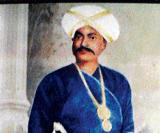
Chepudira Ponnappa was one of the four dewans in the court of Chikka Veerarajendra, the last raja of Kodagu. During his later years, he was no longer the king’s favourite counsel. However, when the British marched into Madikeri, they chose to continue the services of Ponnappa and other officials, writes C P Belliappa.

Chepudira Ponnappa was one of the four dewans in the court of the last raja of Kodagu, Chikka Veerarajendra. The other three were Dewan Apparanda Bopanna, Dewan Laxminarayana and Dewan Basavanna.

Dewan Ponnappa was a colourful personality. As a teenager, he attracted the attention of Chikka Veerarajendra’s grandfather Lingaraja, when he accompanied the raja on a hunting expedition. They were camping by the side of a stream and the raja was in a relaxed mood. At a distance, a herd of buffaloes was grazing. A crow sat on the back of one of the buffaloes. Lingaraja asked if anyone could shoot the crow without hurting the buffalo. Young Ponnappa took the challenge and impressed the raja with his marksmanship. He was immediately inducted into the army and rose rapidly in the ranks.
He was appointed an army commander during the end of Dodda Veerarajendra’s reign. When Lingarajendra succeeded his brother, Ponnappa was elevated as a dewan.

Ponnappa married Cheyyavva from the Kodendera family. By 1800, they had three sons and four daughters. Ponnappa had additional responsibilities of collecting land revenue and in enforcing law and order. For this task, he had to be away from home for long periods of time. Cheyyavva, a formidable lady, took on the responsibilities of looking after their vast paddy fields during her husband’s absence. Ponnappa had built a large house in Kirgoor, and at the time it was one of the best constructions. There is an interesting story about the carpenter who built the house. The same carpenter carried out substantial work at the raja’s palace. After settling his dues, the raja gave him a paltry bonus. The carpenter supposedly commented later, “What kind of a raja is this. His official: Ponnappa tipped me with double the number of gold coins.” The raja was furious when he heard this, but by then, the carpenter had safely returned to Kerala!

During one of Ponnappa’s extended tours, he camped in a remote village for a week. He was the guest of the village headman who belonged to the Manjera family. The headman’s beautiful young daughter Somavva was serving food to the important visitor; and Ponnappa was smitten by the attractive damsel. Ponnappa, then in his 30s, mustered all his courage to ask the headman for his daughter’s hand in marriage.
Somavva’s father and Manjera family members were elated at this offer from the powerful and prosperous Ponnappa even though their daughter would be his second wife. The village elders insisted on the marriage taking place immediately, and Somavva gave her much feigned coy assent. Ponnappa extended his stay and the villagers enthusiastically started preparations for the wedding. There was excitement all round. Their new influential ‘son-in-law of the village’ was heartily felicitated.

A week later, it dawned on Ponnappa that he now had the delicate task of facing his first wife along with his new bride! As he approached his house in Kirgoor, an unsuspecting Cheyyavva came out to greet her husband who had been away for over a month. When Cheyyavva saw Ponnappa with a demure Somavva still in her bridal finery by his side, she flew into a rage. She brandished an odi katthi (sword) and stood menacingly near the entrance. Ponnappa had to retreat, and he soon undertook construction of another house, identical to the one built earlier, to start a family with Somavva. He had four sons and three daughters with Somavva.

Disillusioned dewan

By 1830, Ponnappa was disillusioned with the erratic and despotic rule of Chikka Veerarajendra. By then, he was 66 years old and distanced himself from playing an active part in the administration though he continued as a dewan. Chikka Veerarajendra listened more to the uncouth Dewan Basavanna who was his childhood companion and a kennel-keeper. Basavanna was intensely disliked by the citizens who referred to him as Kunta Basava since he had a limp.

The young raja had gone on a collision course with the British who were well-entrenched in the neighbouring areas of Karnataka and Kerala. In 1833, Chikka Veerarajendra angered the British by taking Kulpally Karunakara Menon, an emissary of the British East India Company, as hostage. Karunakara Menon warned the raja not to antagonise the British. In Menon’s famous words: “The British had the capacity to raise troops which could outnumber the trees in Kodagu! Ill advised by Dewan Basavanna, Chikka Veerarajendra remained defiant and demanded the British to hand over his brother-in-law and sister who had been given asylum in Mysore. Chikka Veerarajendra accused his brother-in-law of hatching a plot to overthrow him. By early 1834, the British decided to attack Kodagu. British troops encircled Kodagu from Mysore, Kodlipet, Kannur and Mangalore. A besieged raja called Dewan Ponnappa for advice. Dewan Ponnappa’s counsel was to immediately and unconditionally release Karunakara Menon. He was candid that the British could not be countered militarily. This enraged Dewan Basavanna who suddenly struck Dewan Ponnappa. Seventy-year-old Ponnappa momentarily lost consciousness but soon recovered. Without uttering another word, he walked out of Madikeri fort. This was a defining moment in the history of Kodagu. Dewan Bopanna and other Kodava elders were appalled and they agreed it would be better if the administration of Kodagu was taken over by the British. They decided not to resist the impending British intervention. On April 10, 1834, the East India Company under Colonel J S Fraser marched into Madikeri fort and announced the ouster of Chikka Veerarajendra. Kodagu was annexed and the raja was permanently exiled from his kingdom.

The British very diplomatically continued the services of Dewan Ponnappa, Dewan Bopanna and many other Kodava officials. Dewan Ponnappa lived to a ripe-old age of eighty-four. Before he died in 1847, his first wife Cheyyavva extracted a promise from him and her sons. Cheyyavva wanted to be buried closer to Ponnappa’s grave than her bête noire Somavva! This wish was fulfilled. The graves of Ponnappa’s two wives are located on either side of his tomb with that of Cheyyavva being closer by a foot!

His legacy

One of Ponnappa’s sons, Madayya was very influential, and in 1866, he renamed a small hamlet known as Balelesanthe (a place famous for selling banana leaves – an important commodity those days) as: Ponnappanapete after his illustrious father. Over the years, it transformed to Ponnampet and is currently a flourishing town in Kodagu. Chepudira family members installed a statue of Dewan Ponnappa in Ponnampet when the clan hosted the Kodava Hockey Festival in the town in 2000. Not to be forgotten, of course, is the fact that in 1957, Dewan Ponnappa’s great-great-granddaughter’s son, K S Thimayya, took charge as the Chief of Army Staff of India!

source: http://www.DeccanHerald.com / Home> Supplements> Spectrum / 25th, May 2012

No UNESCO tag for Madikeri

Madikeri:

Madikeri Taluk Budakattu Krishikara Sangha president Kudiyara Muthappa said that the district will not receive the World Heritage Site tag in the near future.
He told reporters here on Wednesday that they received an official note from UNESCO’s World Heritage Committee which stated that they had received global objections to the issue, including from the district.

Hence, the highest deciding body on the tag has decided to drop the proposal.
The Ministry of Environment and Forest can submit a fresh proposal for nomination after three years in this regard, he added.

The Sangha had submitted a joint appeal to UNESCO opposing the tag in their respective areas quoting the reason as lack of implementation of the UN Declaration on the Rights of Indigenous People in the context of UNESCO’s World Heritage Convention.

The main objection raised by the Sangha was that the local people weren’t taken into confidence nor were they informed about the tag, he said.
Even after six years, the Recognition of Scheduled Tribes and Other Forest Dwellers Act-2006 had not been implemented and those who were living in the forest and adjoining areas were being evicted citing various Forest and Wildlife Acts, he alleged.

This was the main objection raised in the letter to UNESCO. Denying forest rights is a sheer violation of human rights of adivasis and other forest dwellers, he added.
Hence, the World Heritage Committee decided to defer on the nominations and called upon the Union Government to consult and collaborate with indigenous people.

He also released copies of the letter they had written and the replies too.
He also released the letter written by Union Minister for Tribal Affairs V Kishore Chandra Deo to all the Chief Ministers of the country quoting various problems in the implementation of the Recognition of Forest Act.

It may be recalled that the district was included in the list of World Heritage Sites as it is covered by the Western Ghats.

source: http://www.ibnlive.in.com / Home> South> Southern News> Karnataka / The New Indian Express, Express News Service / Karnataka, May 31st, 2012

Stories Kodagu’s tombs tell

Kings and their legacies have always captured popular imagination. While some have faded into the past, some survive in our memories. C P Belliappa narrates the story of the brave rulers of Kodagu and the significance of the beautiful mausoleums they built.
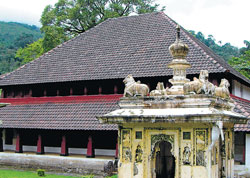
By 1791, Dodda Veerarajendra had consolidated his position in Kodagu and had successfully moved on from the Tipu Sultan era.

Dodda Veerarajendra started rebuilding his kingdom after years of conflict with Hyder Ali and Tipu Sultan. He had recaptured the important fort at Madikeri, and had constructed a modest palace in Nalaknad in the southern part of Kodagu.

At the time, Dodda Veerarajendra and his royal consort Nanjammaji had an eight-year-old daughter named Rajammaji. The raja wished for a son to inherit his throne. In accordance with rajneethi he could marry a royal consort once every twelve years.

After a long search for a suitable bride, he decided on a matrimonial alliance with the beautiful sister of his Kodava revenue official, Karanika Subbaiah. The bride was given the name Mahadevammaji.

In February 1796, Dodda Veerarajendra had a grand celebration at Nalaknad palace to commemorate the twin events of his coronation and marriage to Mahadevammaji in a specially built mantapa which stands well-preserved to this day.

However, much to Dodda Veerarajendra’s disappointment, Mahadevammaji whom he adored immensely, gave birth to three daughters in the ensuing ten years. In 1806, she was pregnant again and the raja fervently hoped he would have a son to carry forth his legacy.

He conducted several poojas, havans and homas to please the Almighty in hopes that he may be blessed with a male-heir. By then Mahadevammaji had become very weak and sickly.

Dodda Veerarajendra was aware that this would be the last chance for Mahadevammaji to endure child-birth. His worst fears came true when he had a double whammy on May 17, 1807. Days after his royal consort gave birth to their fourth daughter, a debilitated Mahadevammaji died leaving the raja totally heart-broken and deeply disappointed.

Eternal love

The grief-stricken raja chose a spot over-looking the town of Madkeri as the final resting place for his beloved wife. He named that part of the town as Mahadevpet in memory of Mahadevammaji. This name continues to this day.

Dodda Veerarajendra also started the construction of a grand tomb for his wife, the design of which had some likeness to the Taj Mahal. In his will, he gave detailed instructions that he would like to be buried next to Mahadevammaji when he would meet his end.

Dodda Veerarajendra had three sons, but they were born to his minor wives. He was now totally obsessed with who would succeed him after his demise. His first choice was his eldest daughter Devammaji born to Mahadevammaji. In 1808, when Devammaji was barely nine years old, he arranged her marriage to a young Kodava who was renamed Mallappa.

In his elaborate will, the raja wanted Devammaji’s yet-to-be-born son to be named after him and declared his successor. If Devammaji did not have a son, the eldest son born to one of her three sisters was to inherit the throne of Kodagu.

He further stated in his will that in the event his four daughters failed to produce a male-heir then the fittest amongst his three sons: Rajashekara, Shashishankara and Chandrashekara, from his minor wives would ascend the throne to continue his legacy.

In order to ensure his will was executed, Dodda Veerarajendra requested Arthur Cole, the British Resident at Mysore to be the executor of his will and also be guardian to his minor daughters.

Arthur Cole brought this to the notice of Governor General Lord Minto. Lord Minto wrote a letter in April 1809 recognising the raja’s will.

He also gave his assurance that the East India Company would ensure the will was implemented.

Dodda Veerarajendra’s health had taken a heavy toll, and on June 9, 1809 he breathed his last aged 46. In spite of all his efforts, his young daughter Devammaji could not hold on to the throne of Kodagu.

Dodda Veerarajendra’s wily brother, Lingarajendra, usurped the throne in 1811 with tacit support from the British. Lingarajendra completed the tomb of Dodda Veerarajendra and Mahadevamma.

Loyalty

There is another interesting story of a very able army commander – Biddanda Bopu – who served under Dodda Veerarajendra and took active part in their military campaigns against Tipu Sultan. After Tipu was ousted from Kodagu, Dodda Veerarajendra asked Bopu to name the reward he would like for having fought so gallantly against the enemy.

Everyone in the raja’s court expected Bopu to ask for large tracts of land, gold, silver and live-stock. But to everyone’s surprise Biddanda Bopu made a humble request: on his demise to be buried in the same premises as his beloved raja!

This Biddanda Bopu’s wish was fulfilled when he died in 1808. Years later, Bopu’s son Somaiah rose to the same rank as his father, during Chikka Veerarajendra’s reign. When Somaiah died in 1879, in deference to his wishes, the British Chief Commissioner permitted his mortal remains to be buried next to his father’s tomb. Both these tombs are intact.

When Lingarajendra died in 1820, an identical mausoleum was built by his son Chikka Veerarajendra on the right-hand side of Dodda Veerarajendra’s tomb. Another smaller tomb was built in 1834 on the left-hand side where the royal priest Rudrappa is interred.

This locale is known as Gaddige. The mausoleums are well-preserved, and currently the entire area is being landscaped and refurbished.

source: http://www.DeccanHerald.com / Home> Supplements> Spectrum / April 24th, 2012
Kodava Hockey Utsav from tomorrow

Aichettira family to host the event

The very unique hockey match of the State, Kodava Hockey Utsav, that takes place between the Kodava families every year, will begin on April 21.

The 16th annual Kodava Hockey Utsav will be inaugurated by Assembly Speaker K G Bopaiah.

The members of Aichettira family who are hosting this year’s Hockey Utsav are eagerly waiting for the festival to begin, which will be held for 25 days, till May 13.

The grand hockey festival will witness over 217 teams representing different Kodava families fighting for the prestigious cup.

Speaking to Deccan Herald, Aichettira Hockey Cup Utsav President K Anil said that national and international hockey stars like S K Uttappa, V R Ragunath, S V Sunil and M B Aiyappa are going to be the show stealers for this year.

The inauguration, first match, semifinal and final matches will be held at Ammatthi High School grounds.

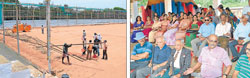
A huge gallery with a seating capacity of 25,000 is being built at the school grounds to enable spectators to watch the matches. The preparations are going on in full swing as only one day is left for the Utsav to begin.

The place surrounding the ground has been cleaned, drainages have been laid and drinking water facilities have been made for the purpose. LCD screens have been installed at three places in the ground for comfortable view of the match.

Special attraction

The special attraction of this year’s match is a special match that has been arranged between the Indian hockey team that has been selected for the forthcoming Olympics and the Coorg XI team.

The match will be held soon after the Utsav inauguration.

Aichettira family head I P Kuttappa informed that Indian hockey coach Michael Nobbs too will be present during the match.

The State government has granted Rs 30 lakh for the Hockey Utsav and several private companies too have come forward to sponsor the programme.

In addition, Cabinet Minister S M Krishna has granted Rs 12 lakh from his MP’s fund due to the effort of Prema Kariyappa who is also Aichettira family member.

The money has been utilised for the construction of toilets near the ground. The trophy and cash prize will be given to the winning teams from all categories. Aichettira K Anil said that cash prize of Rs five lakh will be given to the winners of the festival.

source: http://www.DeccanHerald.com / Home> District / by Shrikanth Kallammanavara / Ammathi (Madikeri) / DHNS, April 19th, 2012

New look for Kodava recipe website

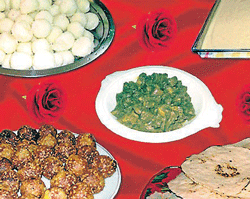
Coorg’s first dedicated website for indigenous Kodava receipes, www.coorgrecipes.com started in 2007, has been redesigned to focus exclusively on Coorg cuisine.

While retaining most of the earlier features, a few new features have been added.

Commenting on the redesign, the promoter of the website, journalist P T Bopanna said: “Earlier, the recipe website had a section for ‘Coorg jewellery.’

However, I wanted to focus totally on food. With the creation of the new jewellery website www.coorgjewellery.in, it became necessary to redesign the recipes site.”

Chef Naren Thimmaiah, of the Karavalli restaurant of the Taj Gateway Hotel in Bangalore has contributed recipes for the ‘Recipe of the Month’ section.

Among the new additions, include a link to the blog of Canada-based Kodava food blogger Shalini Nanda Nagappa on her culinary adventures in ‘A Cookery Year in Coorg.’

Another new section called ‘Coffee with Priya Ganapathy’ deals with the making of the perfect cup of coffee and varieties of coffee liqueur.

Renowned cartoonist N.S. Ponnappa’s cartoons on the obsession of the Kodavas (Coorgs) with good food and hard liquor have been retained.

source: http://www.DeccanHerald.com / Home> District / DHNS, Mysore / April 03rd, 2012

Spending time with the tribals

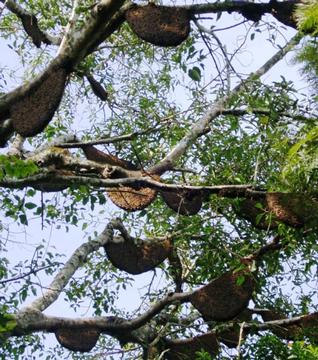
Honey hives: In the forest
It was a day to remember when school kids danced with the Soliga tribals recently at the town hall.
A recent event in Mangalore brought school students closer to Soliga culture. Many of them joined the Soligas as they danced as part of a programme held in the city’s town hall recently.

The students were from Stds. VI and VII. There were 40 students from Government Higher Primary School, Parappade, and 70 students from Government Higher Primary School, Mullakadu.

Song and dance
Enjoying ethnic beats: With the Soliga tribe
The dance was part of a week-long celebration of dances organised by the Information Departments of all the 30 districts of the state.

Most of the students said that they were seeing the dances and songs of the Soligas for the first time.

The Soligas explained to the students about life in the forest. The students asked them several questions about their food, their way of worship and how they lived in the forest.

Telling time

Raghuvir, Std. VII, Government Higher Primary School, Parappade, said, “I liked the way they described how they collect honey and how they tell the time by looking at the blooming of a flower. They should be allowed to live in their forests.”

Nirmala, Std. VII, said, “Women in the tribe have freedom.” Hithesh, Std. VII was thrilled how they could detect a snake hidden in the foliage.

Dhanaraj, Std. VII admired the way they dressed, their views on animals, their ornaments made from what is available and the variety of their dances

Mamatha, honorary teacher, Government Higher Primary School, Parappade, was impressed by their marriage custom, where a girl can choose her life partner and the expense of the marriage came to only Rs.12.50.

The word Soliga means “people of the bamboo”, because they believed they originated from the bamboo. They live close to nature. This is seen in their local tribal laws. They harvest fruits and berries only from trees that has lots of flowers. They leave the overripe ones for the birds.

They cultivate land only for five to seven years. Then the land is left untouched for 50 to 75 years, so that the forest takes over again.

source: http://www.TheHindu.com / Life & Style> Kids / by Renuka Phadnis / April 02nd, 2012

A true blue Ghat trip


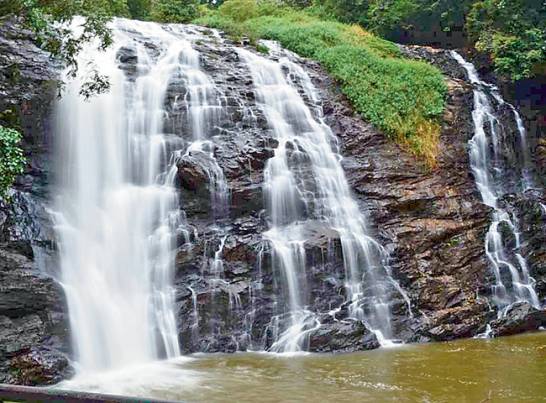
Abbey fall provide the perfect picturesque view.
Madikeri (aka Marcera) is a hill town in Karnataka and is the headquarters of Kodagu district. This place is named after King Mudduraja who ruled Kodagu from 1633 to 1687.

I was new to Karnataka, an intern in Mysore and was just starting to understand Kannada, so I knew that this road trip was going to be a great experience for me. I had my bike, a Royal Enfield Thunderbird 2002, and I am sure no one can ask for a better ride for a road trip.

I am also a photographer, so packing up the backpack with my camera and lens, a pair of clothes, some sweaters and jerkins; I started out at around 3 pm on a Saturday from Mysore.

Stopping once to fill the tank and took the Hunsor road towards Marcera. The road goes through villages and farms, so its quiet crowded most of the time.

Kaveri Nisargadhama is a point where the river Kaveri bifurcates and flows through a stream where people can take a dip to cool off.

The Kaveri Nisargadhama is protected by the forest department that does not allow people to enter after 5 pm. So I barely made it in. There is a park and lots of deer playing around in a fenced ground.

Proceeding there I rode on to Madikeri at about 8 pm. Now, if you are a bike enthusiast then you have got to ride through the Ghats.

It’s a whole different feeling just cruising along hearing the dhup dhup dhup of your bike ringing through the woods. The roads curve beautifully, allowing you to literally glide along.

I was able to find a place to sleep at a hilltop hotel, which is behind Hotel Kaveri. After checking in, I took a stroll in the night in the mild drizzle, which is likely to happen almost night during that time of the month.

The next morning, I took a walk from the hotel to the Raja’s seat and the Madikeri Fort. The town is so beautiful enveloped in mist and dew. The roads are empty with hardly anyone around. The cold air gives you such a chill that it literally jump starts you.

The places that are worth visiting are very close, hardly 500 meters from the centre of the town. I headed for Abbey Falls, which was about nine kms from the town bus stop.

At the check post just before the falls, I was greeted by a guard who was ecstatic at the sight of the bike. He was like, “Oh! You rode from Tamil Nadu? Which year is this bike… etc.” The people of Kodagu are very humble and hospitable and are known for rendering their service to the nation. The place is known for its coffee plantations.

The coffee powder and the beans from Kodagu are a must try. My father loves coffee and simply loved the packet I got him. I left Madikeri by 2 pm and rode back to Mysore. On my way back, I stopped at Bylakuppe, the Tibetan Town. I got caught in a bas spell of rain and had to ride very slowly. I reached my room at almost 9 pm, drenched and tired. But it was one great experience.

History

Raja’s Seat is a small square platform made out of bricks and mortar is surrounded by four arched pillars. It is said that, during those times, this was the favourite spot of Kings and therefore the name of the place is Raja’s seat. The beauty from this place is impeccable especially during the sunrise and sunsets.

Trivia

Abbey fall is located between private coffee plantations with sturdy coffee bushes. The sight of this place is beauty personified as we can see trees entwining with pepper vines. If you look closely, the falls that appear suddenly quietly turn into a silent lake.

Food

Sri Krishna Bhavan is one of the most popular restaurant in Madikeri. Serving traditional North Indian and South Indian cuisine, the restaurant offers lip-smacking paneer-based dishes like palak paneer and paneer bhurji. People from Coorg make sure they visit this place.

Stars promoting their soil

When a person like Jonty Rohdes asks you to visit his country, who would refuse? The South African cricketer, a well known travel enthusiast who has travelled to almost every country is inviting more travel enthusiasts to explore the beauty of South Africa.

In a first of its kind association, South African Tourism has teamed up with renowned cricketer, Jonty Rhodes to launch the book, My South African Diary, penned by Jonty himself.

As Jonty travels through his home country, he dons the cap of a narrator in the diary and shares his varied, exhilarating experiences of the scenic beauty of South Africa.

Jonty is not the only celebrity to promote his home country. Jackie Chan did a TV series where he narrated the beauty of China, we had instances of Konkana Sen Sharma taking us through the streets of Kolkata.

Harsha Bhogle’s Travel India with Harsha Bhogle is yet another popular show where he travels across the country explaining the rich tradition and culture of the country.

There is no doubt that the tourism departments of various countries have roped in stars to promote the tourism industry.

The writer is a photographer and a travel enthusiast

source: http://www.DeccanChronicle.com / Home> Channels> LifeStyle> Wanderlust / by Venkatesh Ravi / DC / Chennai / March 29th, 2012